“Sometimes the city that changes your understanding of a country isn’t the one you planned to visit most.”
If you’ve been reading ChinaTravelBug, you’ll probably notice something.
We write a lot about Beijing (北京, Běijīng).
We write even more about Xi’an (西安, Xī’ān).
Those two cities have become the anchors of our China journeys. Beijing tells the story of imperial China, while Xi’an takes us back to where many chapters of Chinese civilisation first began.
So people often assume our adventures started there.
They didn’t.
Long before we were chasing the history of the Forbidden City (故宫, Gùgōng), walking along the Great Wall (长城, Chángchéng), exploring the ancient streets of Xi’an, or standing in awe before the Terracotta Army (兵马俑, Bīngmǎyǒng), there was another city.
Chengdu (成都, Chéngdū).
Looking back today, I honestly think it was the perfect place to begin.
We Thought We Were Going on a Holiday
When Elaine was fourteen, I simply wanted her to experience China.
There wasn’t a grand plan.
ChinaTravelBug didn’t exist.
There was no thought of writing dozens of articles or helping first-time travellers discover China.
I simply believed something my own parents had taught me years earlier—that travel teaches lessons books sometimes cannot.
The Chinese have a famous saying:
读万卷书,不如行万里路
“Reading ten thousand books is not as valuable as travelling ten thousand miles.”
At that time, I appreciated the proverb.
Today, after travelling across China with Elaine for years, I understand it much more deeply.

HELLO 成都
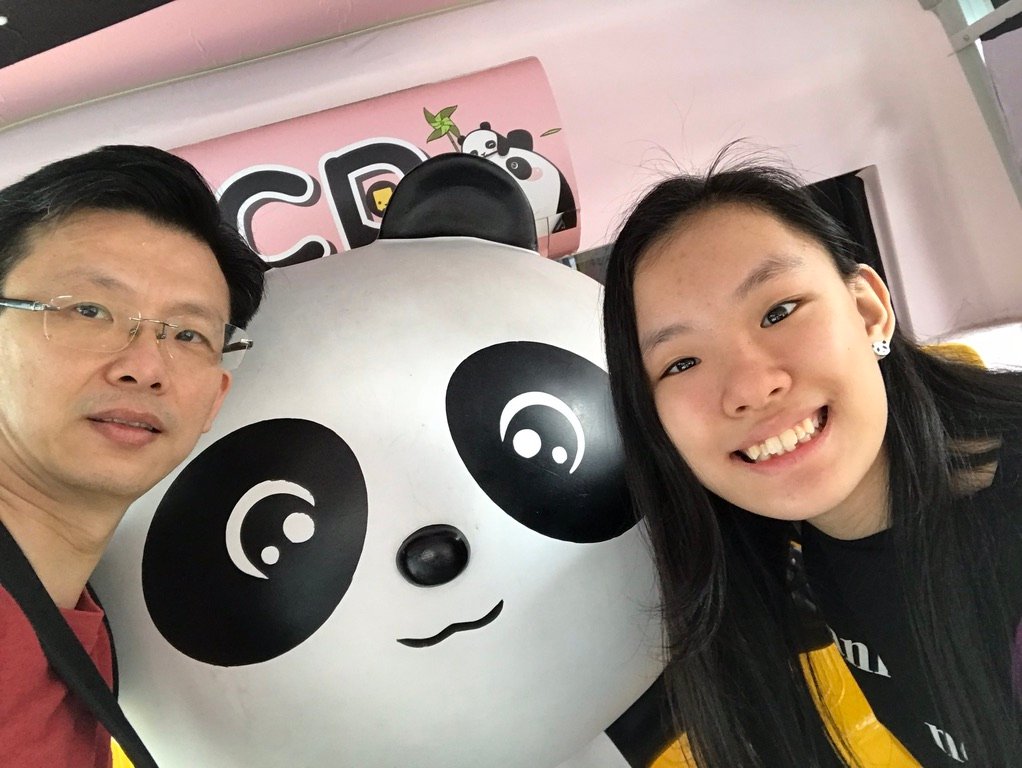
One of the very first photos from that trip still makes me smile.
Instead of posing beside an ancient temple or a famous monument, Elaine ran excitedly towards a bright yellow airport shuttle bus with a giant panda face.
Above it were two cheerful words.
HELLO 成都
That simple photograph has become surprisingly meaningful to me.
It wasn’t just saying hello to Chengdu.
Without either of us realising it, it was saying hello to a journey that would eventually take us to Beijing, Xi’an, Baoji, Tianjin, Pingyao, Hancheng, Qufu, Anyang and many other corners of China.
Sometimes life quietly begins a new chapter before you even know you’re turning the page.
“This Doesn’t Look Like the China I Expected.”
Like many first-time visitors, we made our way to Chunxi Road (春熙路, Chūnxī Lù).
It’s one of Chengdu’s busiest shopping streets.
Luxury boutiques.
Shopping malls.
Cafés.
Restaurants.
Crowds of young people.
Towering glass skyscrapers.
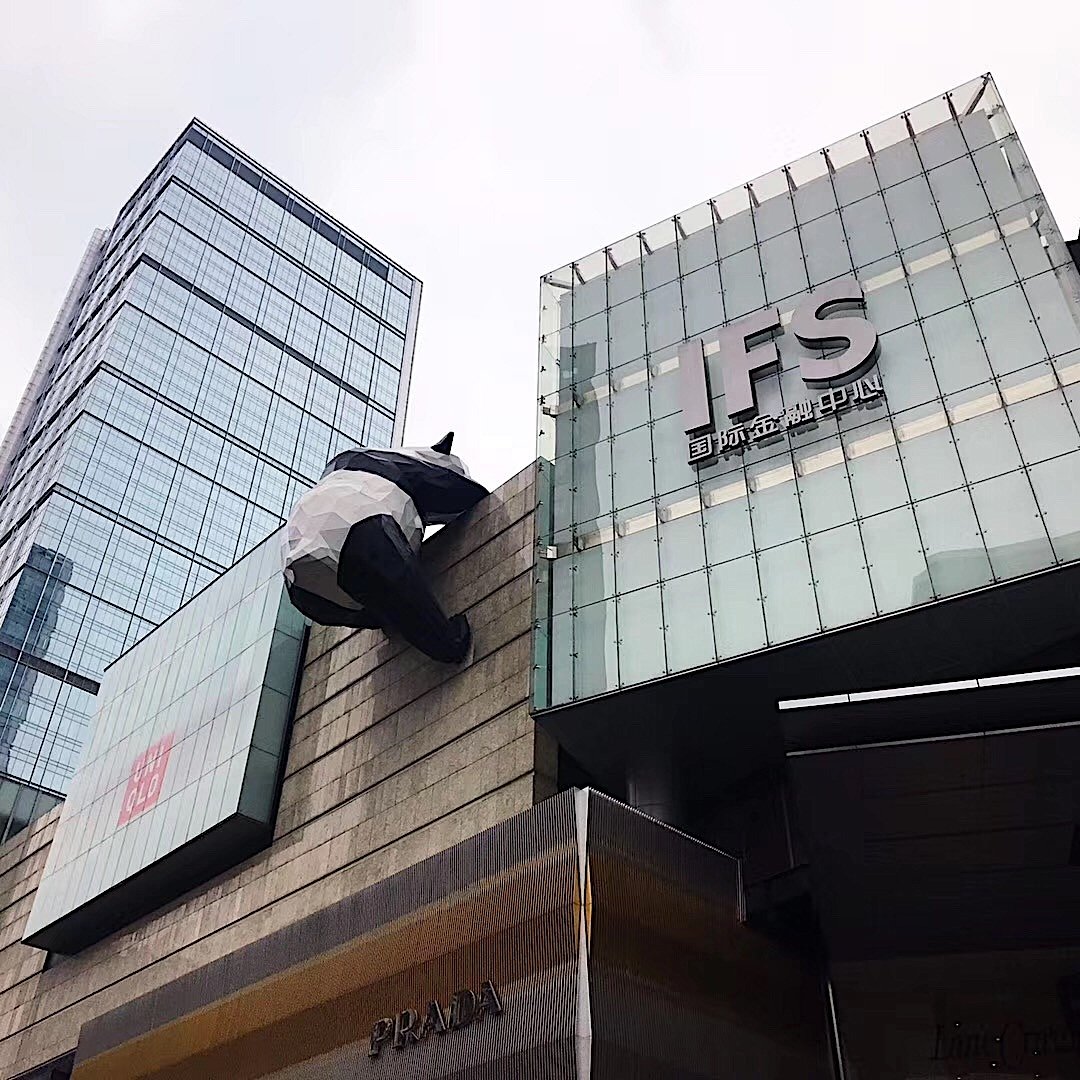
The famous panda climbing out of IFS has now become one of Chengdu’s most photographed landmarks.
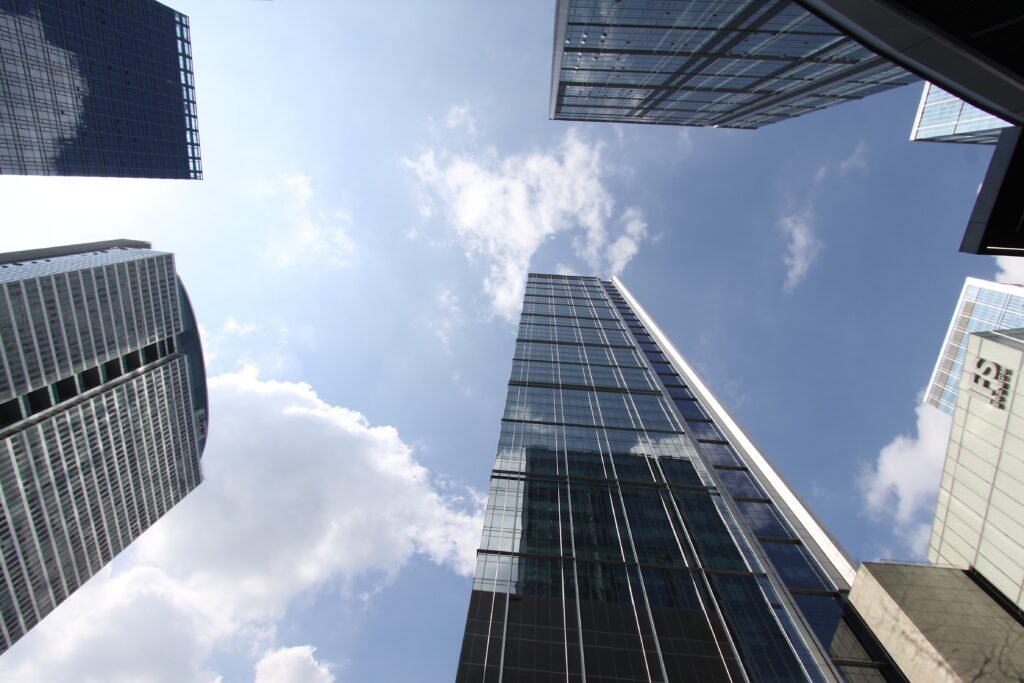
Standing there, I remember looking up between the buildings.
Blue sky.
Steel.
Glass.
Modern architecture stretching into the clouds.
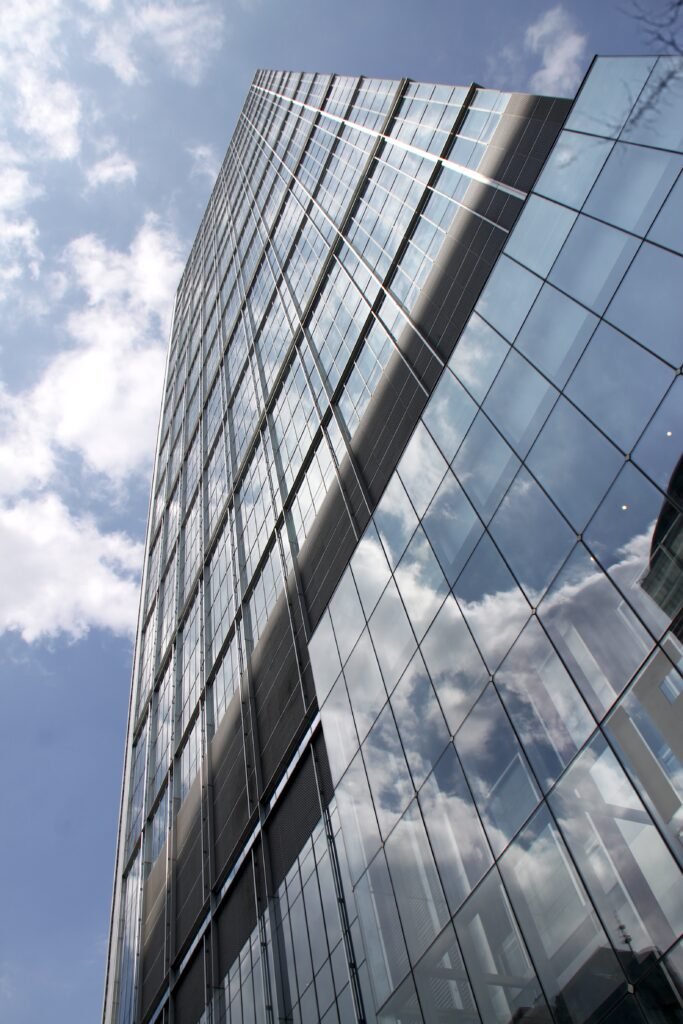
For a brief moment, I almost forgot I was standing in China.
Perhaps you’ve had that feeling while travelling too.
Sometimes we carry pictures of a country in our minds that belong to another era.
Modern China has a remarkable way of challenging those assumptions within minutes of arriving.
Then China Quietly Surprised Me.
Thousands of shoppers walked past us.
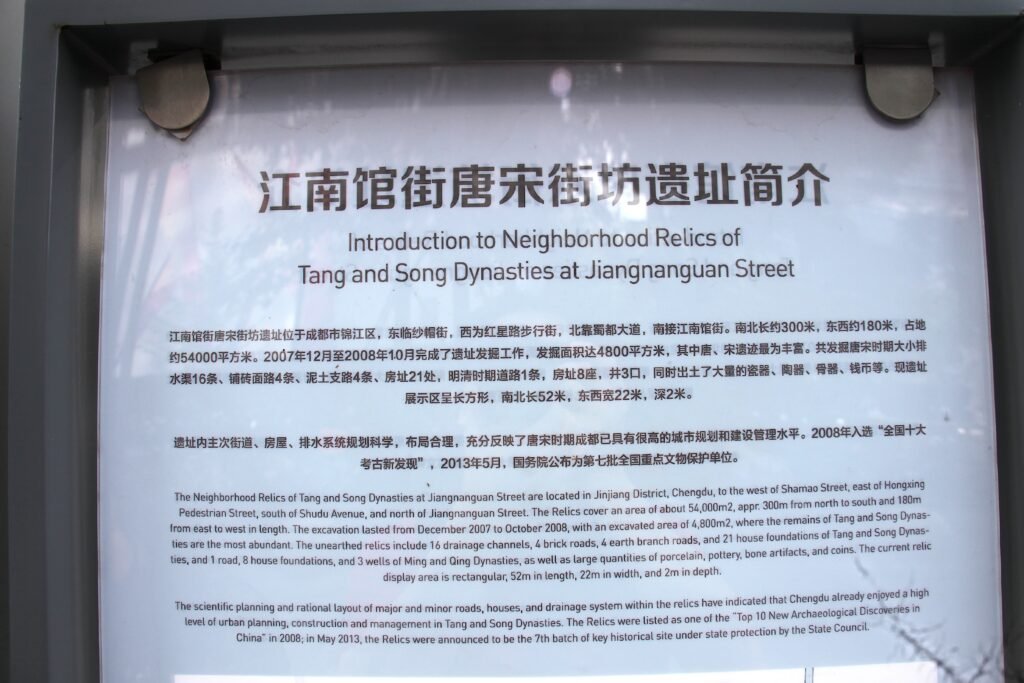
Most never noticed a rather ordinary-looking information board.
I stopped to read it.
It explained that underneath this modern shopping district were the remains of streets and neighbourhoods from the Tang Dynasty (唐朝, Tángcháo) and Song Dynasty (宋朝, Sòngcháo).
I read it again.
Suddenly everything around me looked different.
The cafés.
The shopping centres.
The luxury brands.
The busy pedestrian street.
All of it sat on top of a city that had already been alive more than a thousand years ago.
That was probably my very first “Aha!” moment in China.
China wasn’t simply ancient.
Neither was it simply modern.
It was both.
At exactly the same location.
Beneath Every Footstep
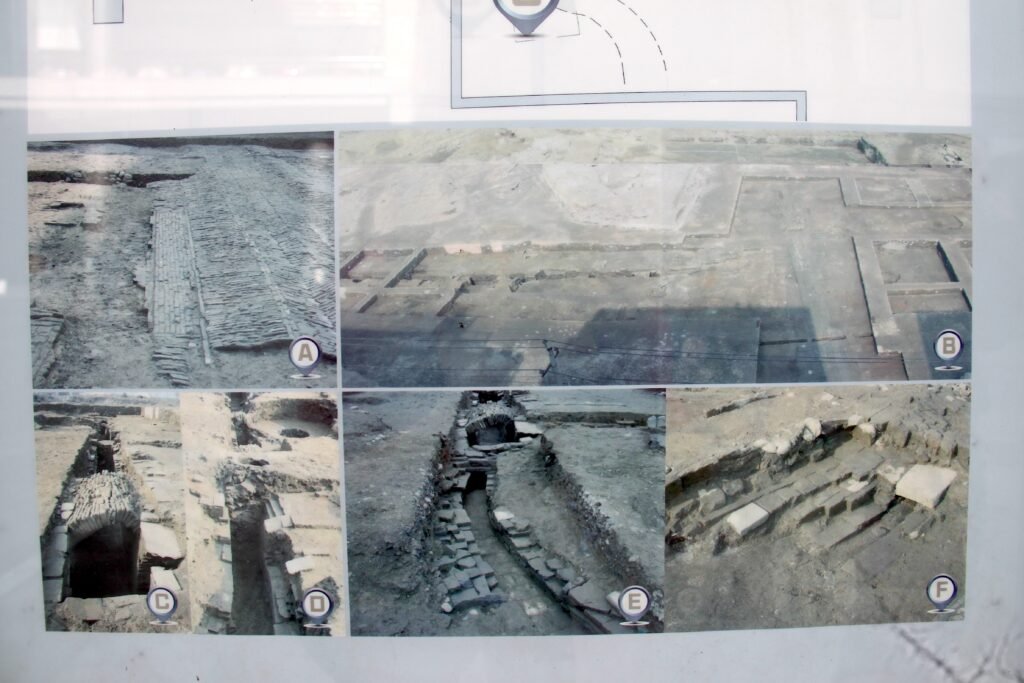
The next display showed photographs of the archaeological excavation.
Ancient brick roads.
Drainage channels.
House foundations.
Neighbourhood streets.
Interestingly, there were no emperor’s palaces or royal treasures.
Instead, archaeologists had uncovered something far more relatable.
Ordinary people’s lives.
Shopkeepers.
Families.
Markets.
Neighbours.
People buying, selling and living together—on almost exactly the same ground where thousands of shoppers now wandered between Starbucks, Apple Stores and fashion boutiques.
That small discovery changed how I travelled for the rest of our China journeys.
I stopped asking,
“What famous attraction should I visit?”
Instead, I found myself asking,
“What stories are hidden beneath what I’m looking at?”
That simple change in perspective eventually led us to explore Beijing differently.
It made Xi’an far more meaningful.
It would later send us to lesser-known places like Baoji, Hancheng, Zhouyuan and Anyang—not because they were famous, but because they helped us understand the bigger story of China.
Ironically, our China education didn’t begin in Beijing or Xi’an.
It began along a commercial street in Chengdu.
And we hadn’t even eaten our first bowl of noodles yet.
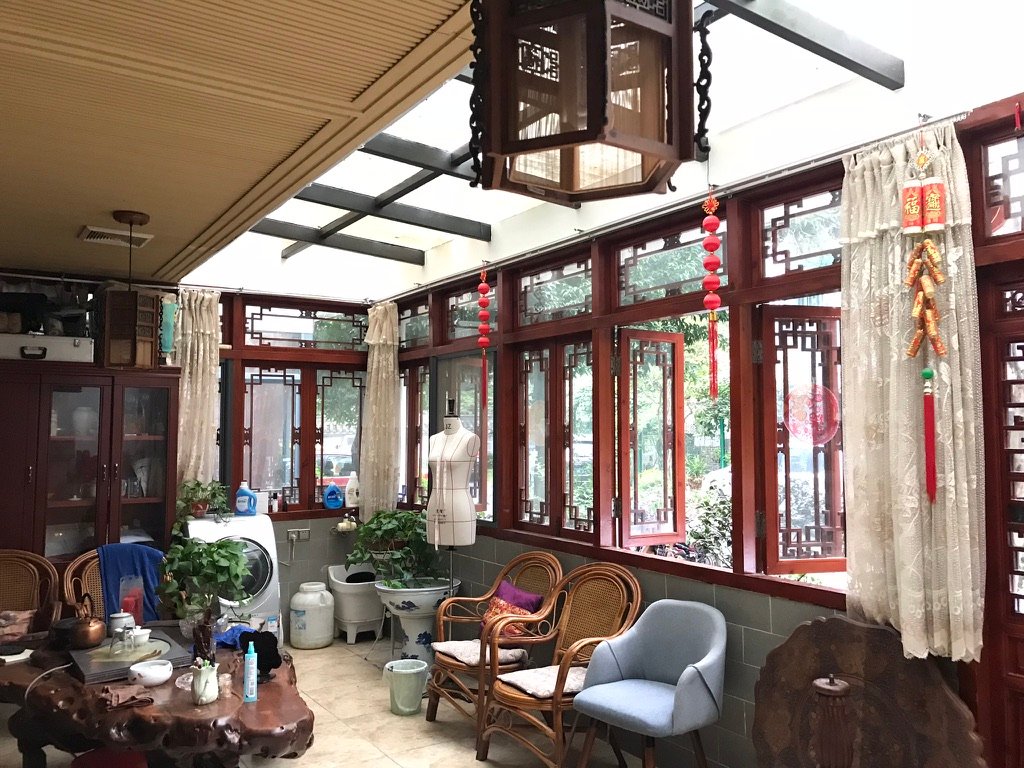
Inside our first Chinese 民宿 (mínsù) in Chengdu. Elaine specifically chose accommodation with traditional Chinese décor instead of a modern hotel. It became our first glimpse into everyday Chinese living.
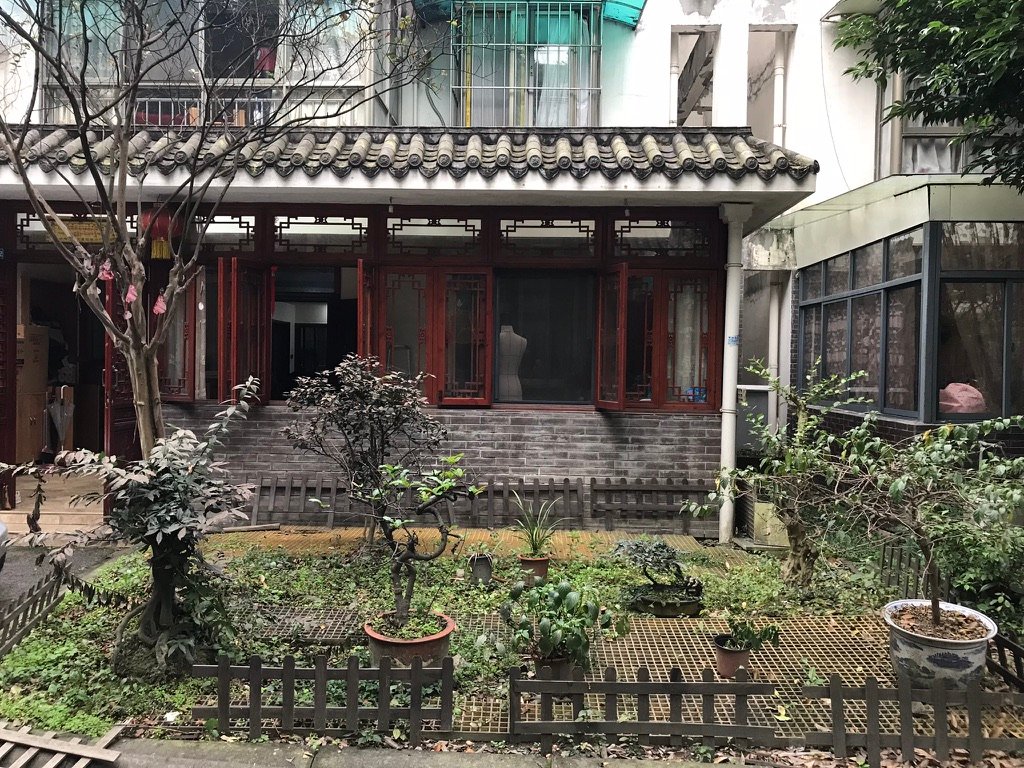
The peaceful courtyard (院子, yuànzi) outside our room. Just beyond these walls was modern Chengdu, yet inside it felt as though time had slowed down. One of our earliest discoveries was that China isn’t simply ancient or modern—it comfortably lives as both.
Our First Night in a Chinese 民宿 (Mínsù)
After a day exploring modern Chengdu, we returned to somewhere that felt completely different.
Not a chain hotel.
Not a high-rise apartment.
Elaine had one request.
“Can we stay somewhere that looks… Chinese?”
So we booked a small 民宿 (mínsù)—a Chinese homestay.
Walking through the gate, we found ourselves surrounding a quiet courtyard (院子, yuànzi).
The city seemed to disappear.
Small trees.
Potted plants.
Grey brick walls.
Traditional tiled roofs.
Wooden lattice windows (花窗, huāchuāng).
Instead of hearing traffic, we heard birds.
It felt less like checking into accommodation and more like being welcomed into someone’s home.
That evening, I realised something.
Many first-time visitors think travelling in China means choosing between ancient sights and modern cities.
But here, we were experiencing both at the same time.
Outside the gate stood one of China’s fastest-growing modern cities.
Inside the courtyard, life slowed to a pace that probably hadn’t changed very much for generations.
Perhaps that was the beginning of ChinaTravelBug.
Without knowing it, we had started looking beyond famous attractions and asking a different question:
How do ordinary Chinese people live?
That simple question would later take us far beyond Chengdu—to Beijing’s hutongs (胡同, hútòng), Xi’an’s old neighbourhoods, Baoji’s quiet streets, and many places tourists rarely visit.
We Didn’t Stay Where Most Tourists Stay
Most first-time visitors stay near Chunxi Road (春熙路, Chūnxī Lù) or Tianfu Square (天府广场, Tiānfǔ Guǎngchǎng).
We didn’t.
Our little 民宿 (mínsù) was tucked away in Jinniu District (金牛区, Jīnniú Qū).
That turned out to be one of the best decisions we made.
Every morning we walked through ordinary neighbourhood streets.
There were grandparents chatting outside small shops.
Children cycling home from school.
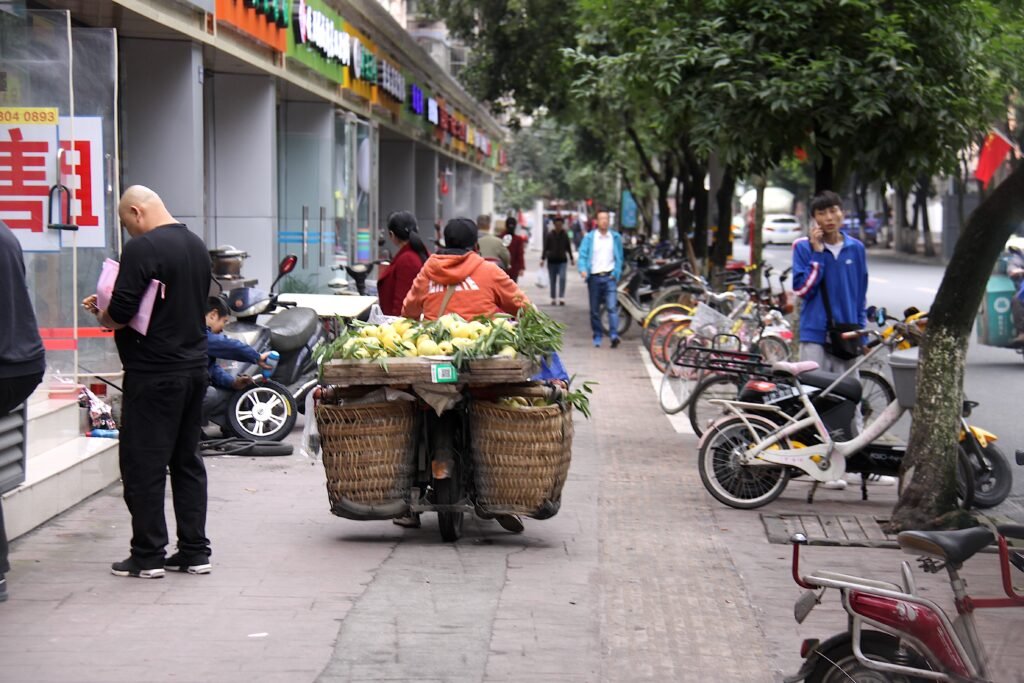
Fruit sellers balancing baskets on electric tricycles.
People carrying vegetables home for dinner.
Nobody paid any attention to us.
We weren’t visiting an attraction anymore.
For a few days, we simply became part of the neighbourhood.
That was exactly the China I had hoped Elaine would experience.
One Bicycle Changed My Perspective
One photograph from Jinniu has stayed with me ever since.
A fruit seller slowly pedalled past us.
Two enormous woven baskets hung on either side of the bicycle.
Fresh pears overflowed from the back.
Around him, everyday life continued.
People queued outside neighbourhood shops.
Shared bicycles waited neatly beside the pavement.
Someone chatted on the phone.
Another neighbour walked home carrying groceries.
Nothing extraordinary was happening.
Yet, looking back today, this has become one of my favourite photographs from Chengdu.
Why?
Because this is the China most tourists never stop to notice.
No ticket office.
No entrance gate.
No famous landmark.
Just ordinary life unfolding on an ordinary afternoon.
Ironically, these are often the moments I remember most.
I later realised many Chinese cities have two completely different personalities.
One is built for visitors.
The other is built for the people who actually live there.
ChinaTravelBug gradually became less interested in the first—and much more fascinated by the second.
Looking Back, Chengdu Was Never “Just Another Trip”
When Elaine and I boarded the plane for Chengdu (成都, Chéngdū) in 2019, this wasn’t simply a holiday.
It was a reward she had earned.
For months, we had been working together on a history project at home, building a timeline of Chinese emperors and dynasties. We called it the Emperor Timeline Project.
Instead of rewarding her with another gadget or toy, I promised her something different.
“Let’s go and see China for ourselves.”
That reward became a one-week journey to Chengdu, followed by another week in Xi’an (西安, Xī’ān)—our first visit to both cities.
At that moment, I thought I was simply rewarding my daughter for her hard work.
I had no idea that the trip would end up educating both of us.
Learning Beyond the Classroom
Looking back today, I realise Chengdu quietly changed the way we travelled.
Instead of rushing from one famous attraction to another, we slowed down.
We noticed the quiet courtyard outside our traditional 民宿 (mínsù).
We watched fruit sellers cycling through Jinniu District (金牛区, Jīnniú Qū).
We wandered through Chunxi Road (春熙路, Chūnxī Lù), surprised to discover that beneath one of Chengdu’s most modern shopping districts lay the remains of a Tang and Song Dynasty commercial street.
We shared steaming hotpot.
We learned to use 支付宝 (Zhīfùbǎo, Alipay).
We discovered neighbourhood supermarkets filled with foods we had never seen before.
Little by little, China stopped feeling like a foreign country.
It simply became… fascinating.
Then Came Xi’an
A week later, we boarded one of China’s remarkable High-Speed Rail (高铁, gāotiě) trains to Xi’an.
We thought we were travelling to another city.
In reality, we were travelling thousands of years back in time.
If Chengdu introduced us to everyday China, Xi’an introduced us to the civilisation that shaped it.
Looking back now, I realise something else.
The greatest reward wasn’t the trip I gave Elaine.
The greatest reward was discovering a new way for a father and daughter to learn together.
And, without either of us knowing it, that two-week journey in 2019 would eventually grow into ChinaTravelBug.