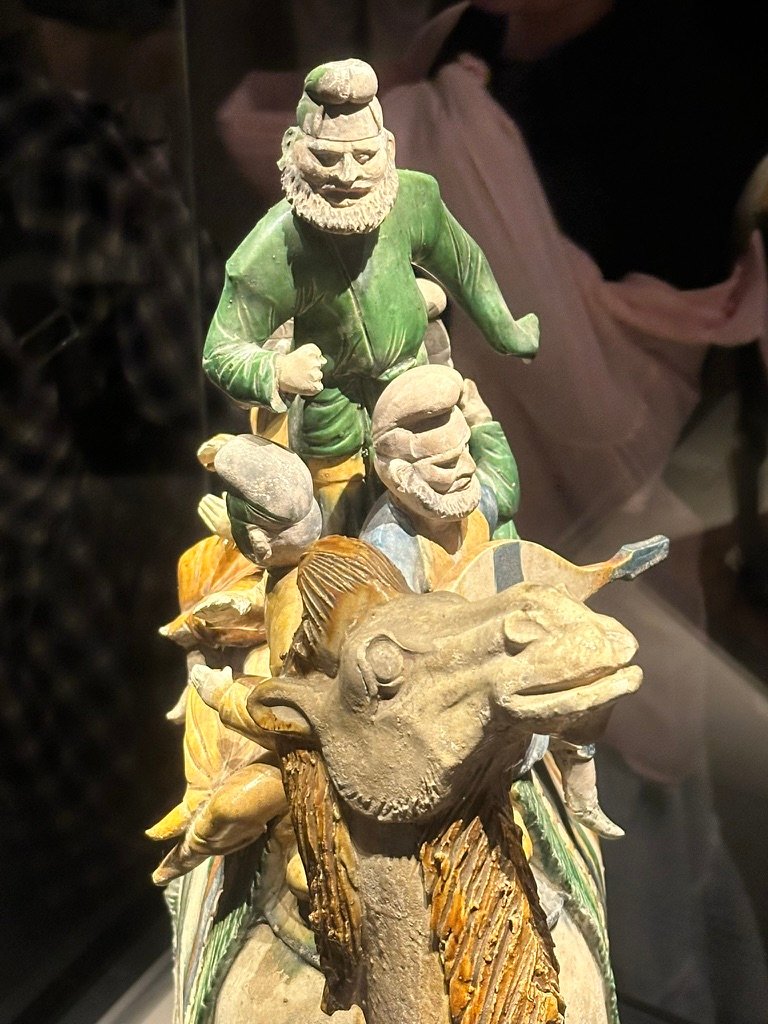
Discovering the Colourful Side of Ancient China
After spending hours inside the National Museum of China (中国国家博物馆) in Beijing, Elaine and I slowly travelled through thousands of years of Chinese civilisation.
Of course, we were not actually travelling with a time machine.
We were walking through museum halls.
Although sometimes…
A great museum feels exactly like a time machine.
From ancient pottery, mysterious jade objects, massive bronze vessels and early Chinese writing, each exhibit slowly revealed another chapter of China’s story.
Then suddenly…
Something changed.
The colours became brighter.
The faces became more lively.
The serious world of ancient bronze rituals transformed into a world of music, travel, horses and international connections.
🐞 Cheers looked around:
“Wait… where did all the serious bronze pots go? Why is everyone suddenly having a party?”
Good observation, Cheers.
We had arrived in the Tang Dynasty (唐朝).
Tang Dynasty — When Ancient China Connected With the World
The Tang Dynasty (618–907 AD) is often remembered as one of the golden ages of Chinese civilisation.
Its capital was Chang’an (长安), today’s Xi’an (西安).
At its peak, Chang’an was one of the largest and most international cities in the world.
Through the Silk Road (丝绸之路), people, products and ideas travelled across thousands of kilometres.
Merchants arrived.
Diplomats arrived.
Monks arrived.
Musicians arrived.
Different cultures met in China’s ancient capital.
And surprisingly…
One of the best storytellers of this incredible period was not a book.
It was a camel.
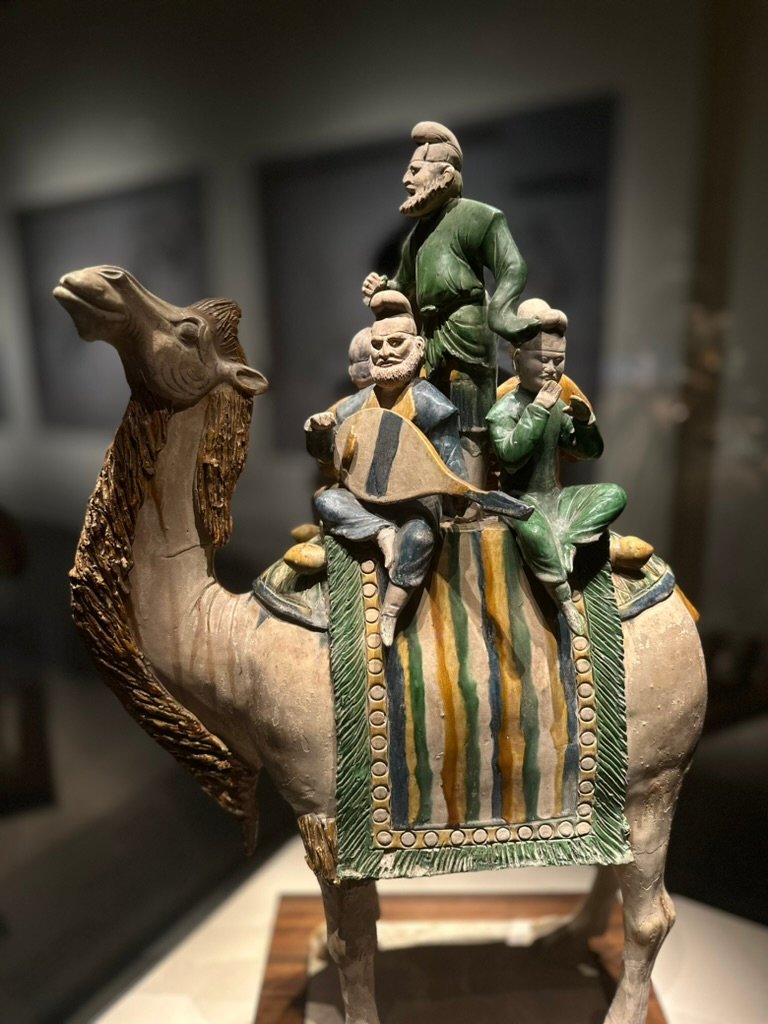
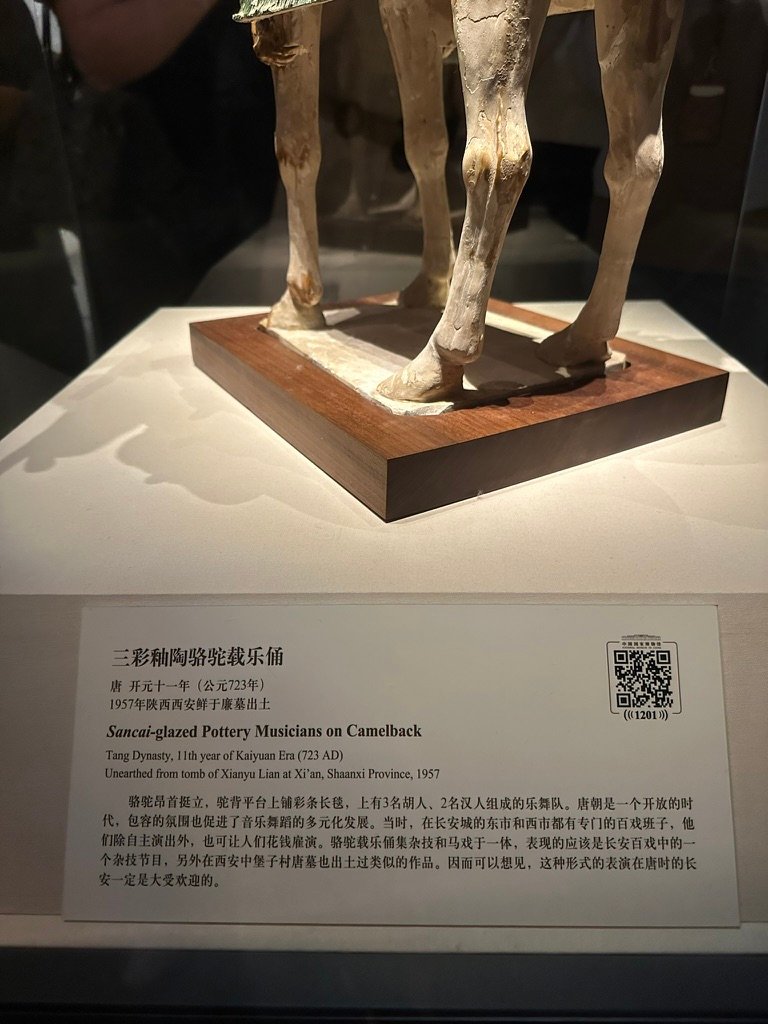
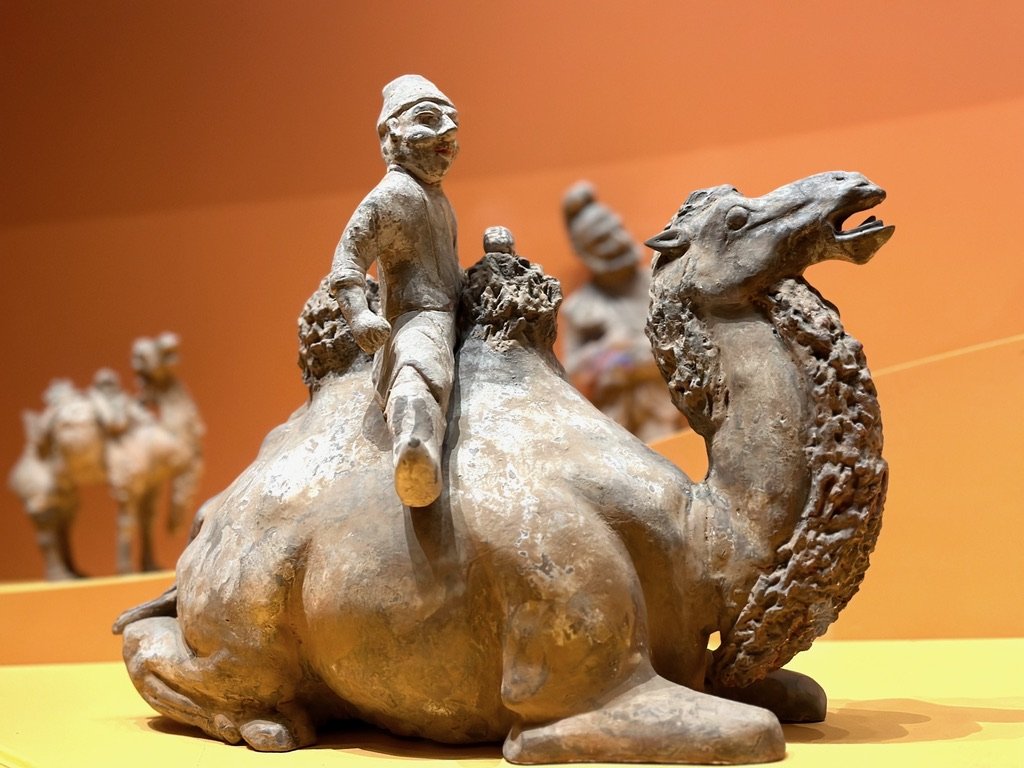
A Camel Carrying the World — 三彩釉陶骆驼载乐俑
The first Tang treasure that stopped us was this magnificent:
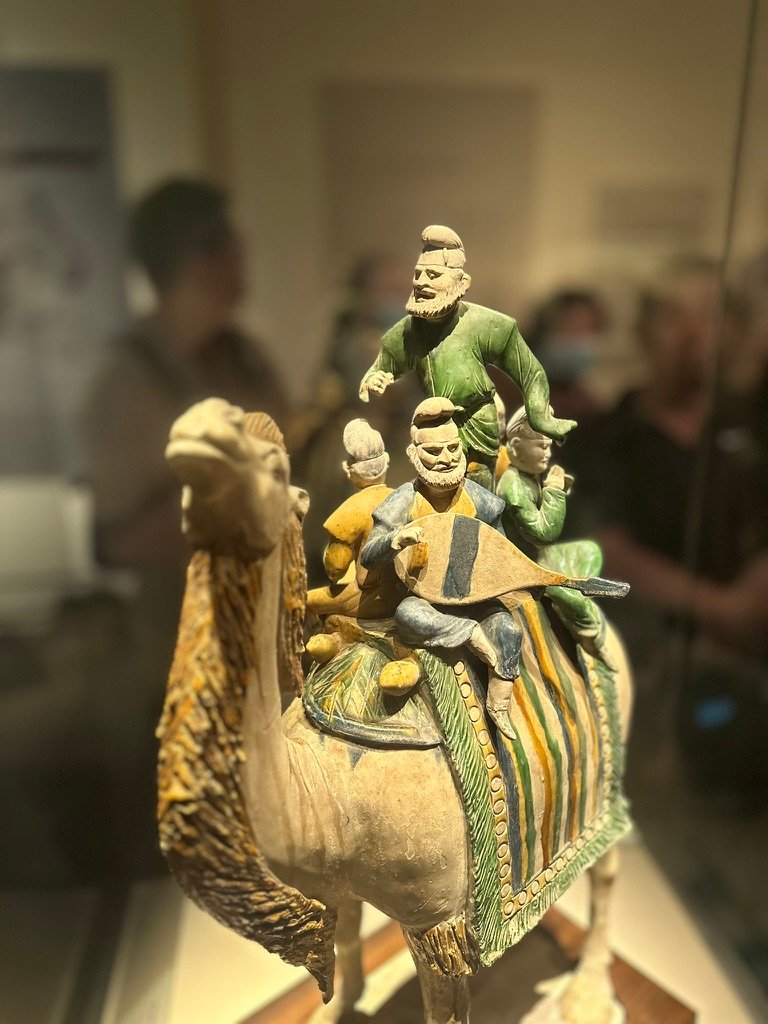
Sancai-glazed Pottery Musicians on Camelback
(三彩釉陶骆驼载乐俑)
Created during the Tang Dynasty, in the 11th year of the Kaiyuan Era (开元十一年, 723 AD), this masterpiece was unearthed from the tomb of Xianyu Lian (鲜于廉墓) in Xi’an, Shaanxi Province.
Standing about 58 cm tall and 43 cm long, it is not the biggest artefact inside the National Museum.
But wow…
It has personality.
Actually, it has many personalities.
I normally take one or two photos of museum objects.
Not this time.
Front view.
Side view.
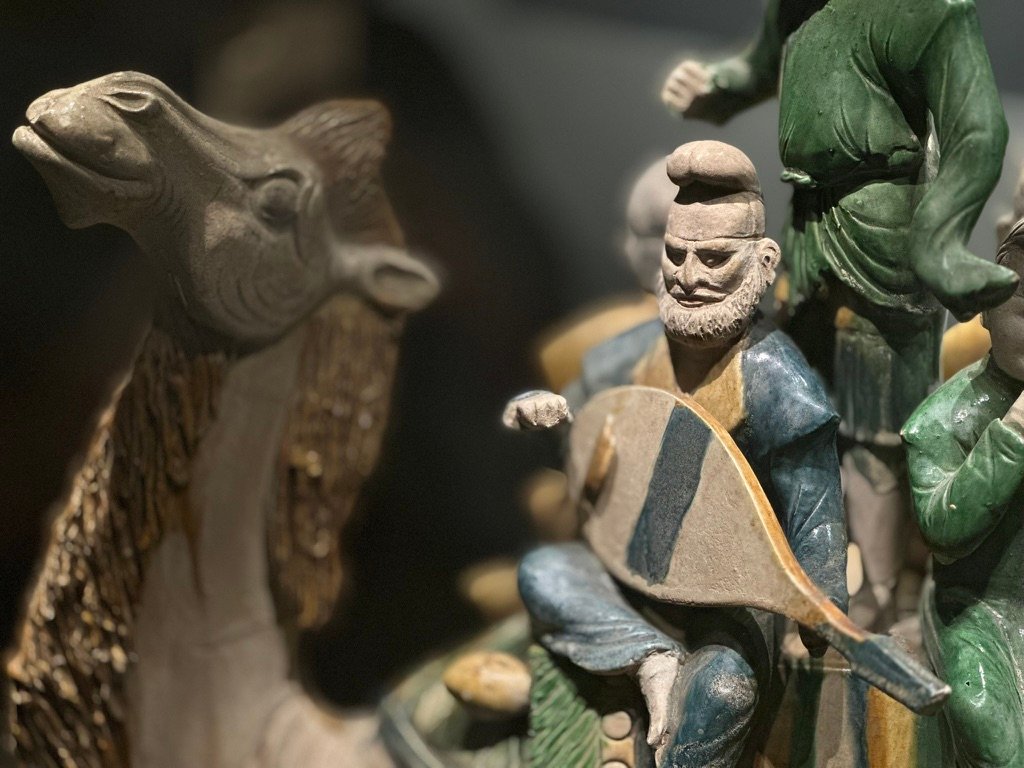
Camel head.
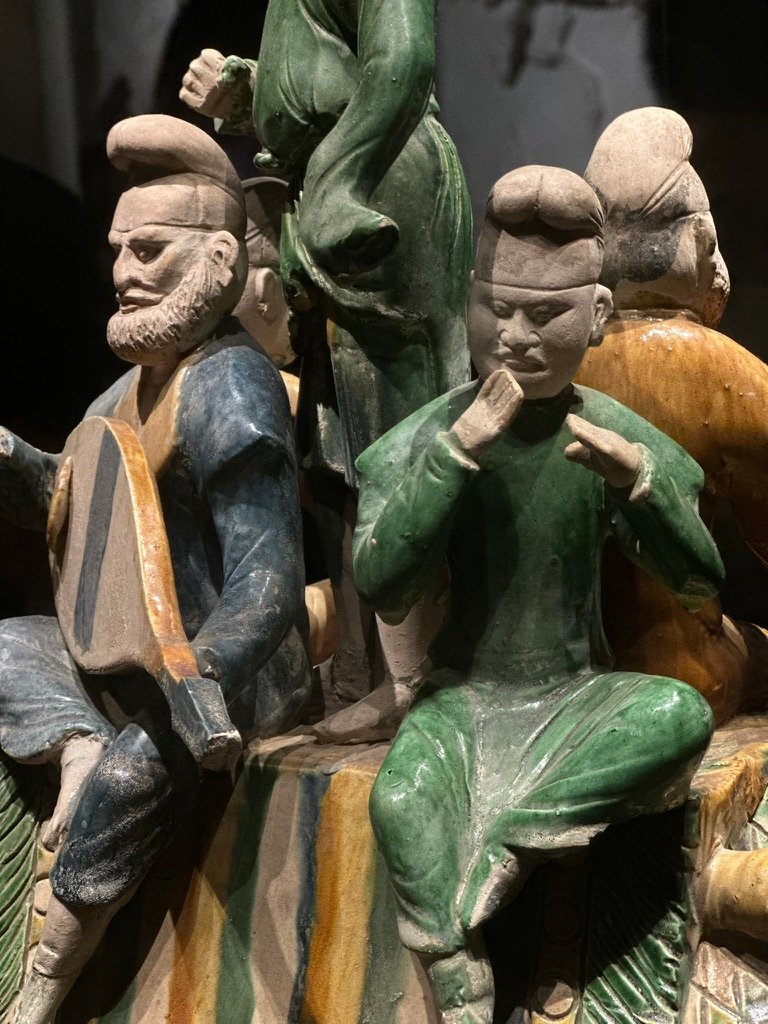
Musicians.
Closer.
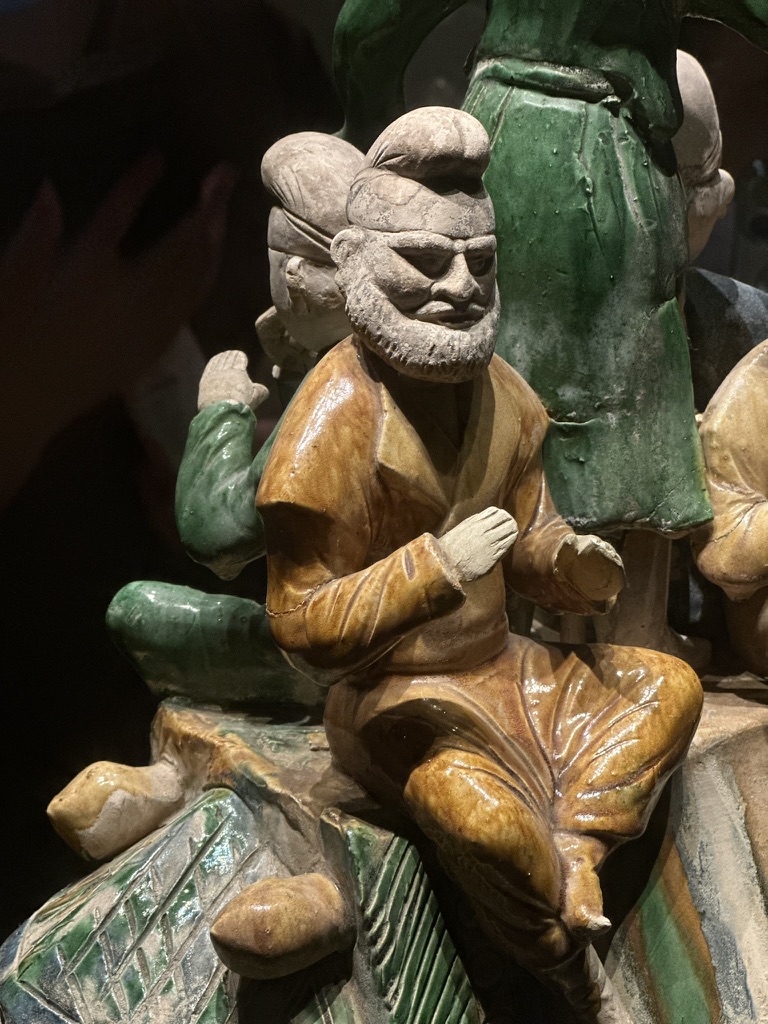
Closer again.
Elaine probably wondered:
“Dad… how many photos does one camel need?”
Answer?
When the camel is carrying an entire civilisation…
Quite a few. 😄
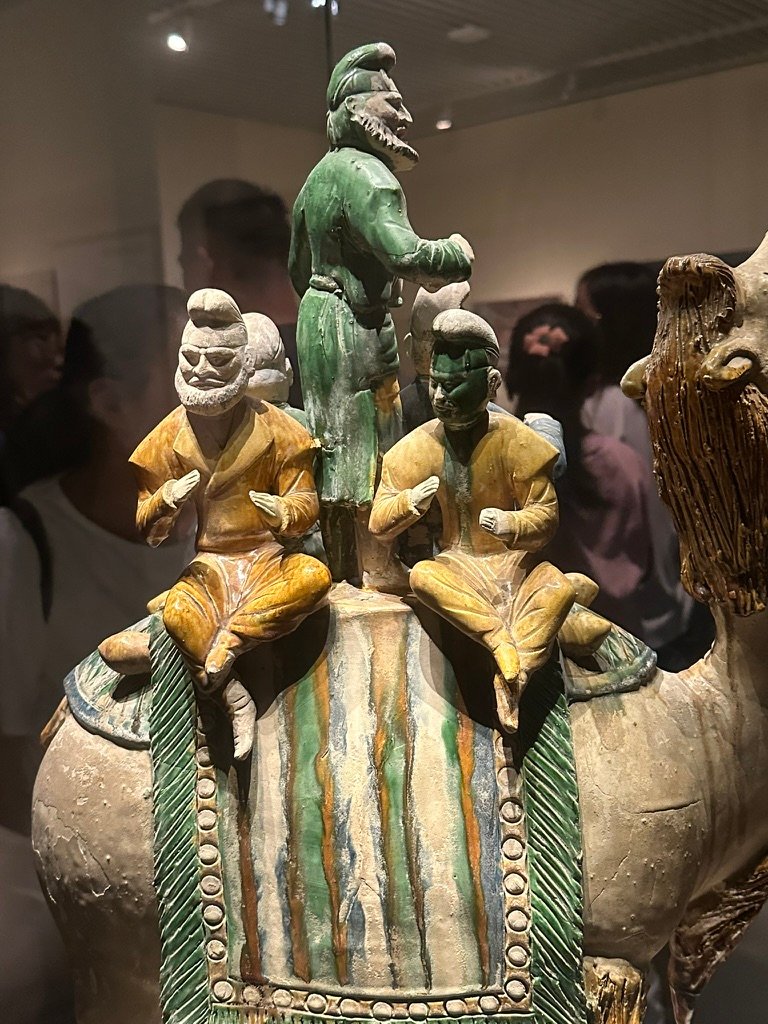
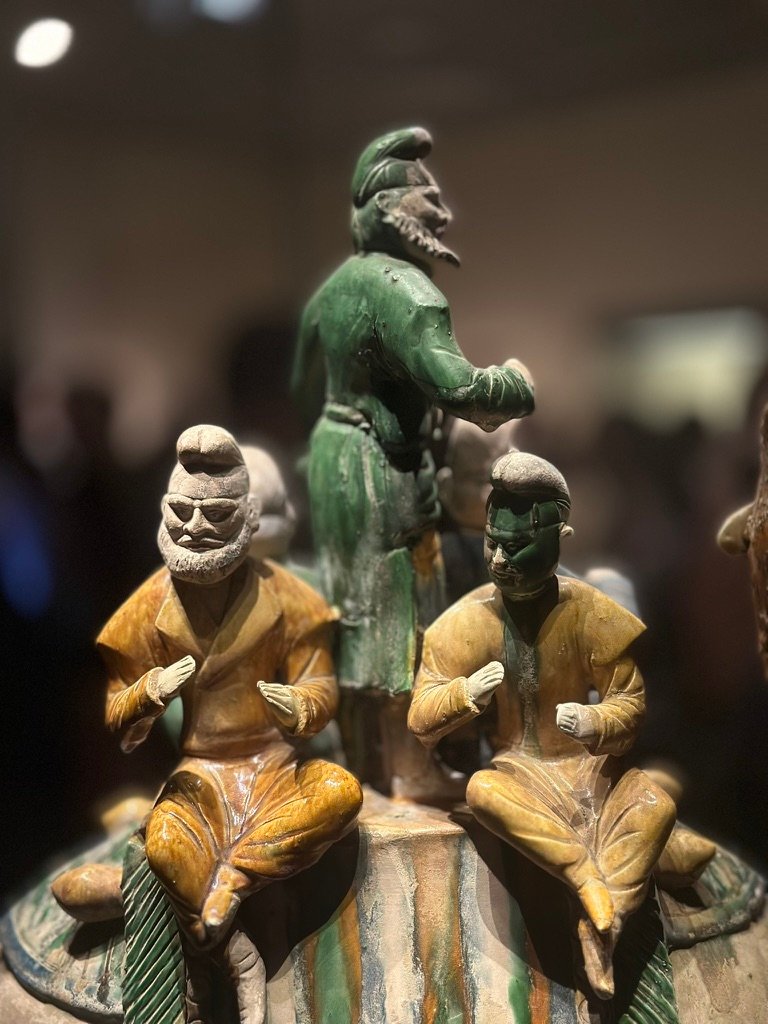
Look Carefully — These Are Travellers to Chang’an
The amazing part is not only the camel.
Look at the people riding on it.
Their faces.
Their clothing.
Their expressions.
The musicians are not simply decorations.
They represent the multicultural world of Tang China.
Some figures show features and styles associated with Central Asian peoples who travelled along the Silk Road.
Ancient Chinese records often referred to many western and Central Asian peoples as Hu people (胡人).
These travellers brought music, goods, food, fashion and ideas into Chang’an.
More than 1,000 years ago, foreigners were already walking through the streets of China’s capital.
Ancient China Was More Open Than Many People Imagine
Today, many foreign travellers may have a simple picture of China:
Great Wall.
Forbidden City.
Ancient emperors.
A civilisation separated from the outside world.
But history is far more interesting.
Tang China was confident because it was connected.
Chang’an welcomed international influences.
Different languages could be heard.
Different styles of clothing appeared.
Different religions and cultures existed together.
When I visited places like Topkapi Palace in Istanbul, I had a similar feeling.
Great civilisations were rarely isolated.
They became great because they connected.
Rome connected worlds.
Constantinople connected worlds.
Chang’an connected worlds.
And somehow, a small pottery camel preserved that story for 1,300 years.
🐞 Cheers:
“So this camel was basically Tang Dynasty’s international tour bus?”
Actually Cheers…
That is not a bad description. 😂
Elaine’s Tang Dynasty Lightbulb Moment — From Xi’an to Beijing
For Elaine, this was not actually her first encounter with Tang Dynasty treasures.
Years earlier, in 2019, we visited the Shaanxi History Museum (陕西历史博物馆) in Xi’an.
That museum is one of the best places in China to understand the Tang Dynasty.
Why?
Because Xi’an WAS Chang’an.
The story happened there.
Elaine had already seen many beautiful Tang Sancai (唐三彩) pieces during that trip.
So when we visited the National Museum of China in Beijing in 2023, the connection appeared.
“Dad… these are like the ones we saw in Xi’an!”
Exactly.
Another lightbulb moment.
💡
History stopped being separate objects.
The dots started connecting.
Xi’an showed us the stage.
Beijing helped us understand the whole timeline.
The Second Tang Superstar — A Magnificent Sancai Horse
Just when we thought the camel had stolen the show…
Another Tang treasure appeared.
A horse.
But not an ordinary horse.
A magnificent:
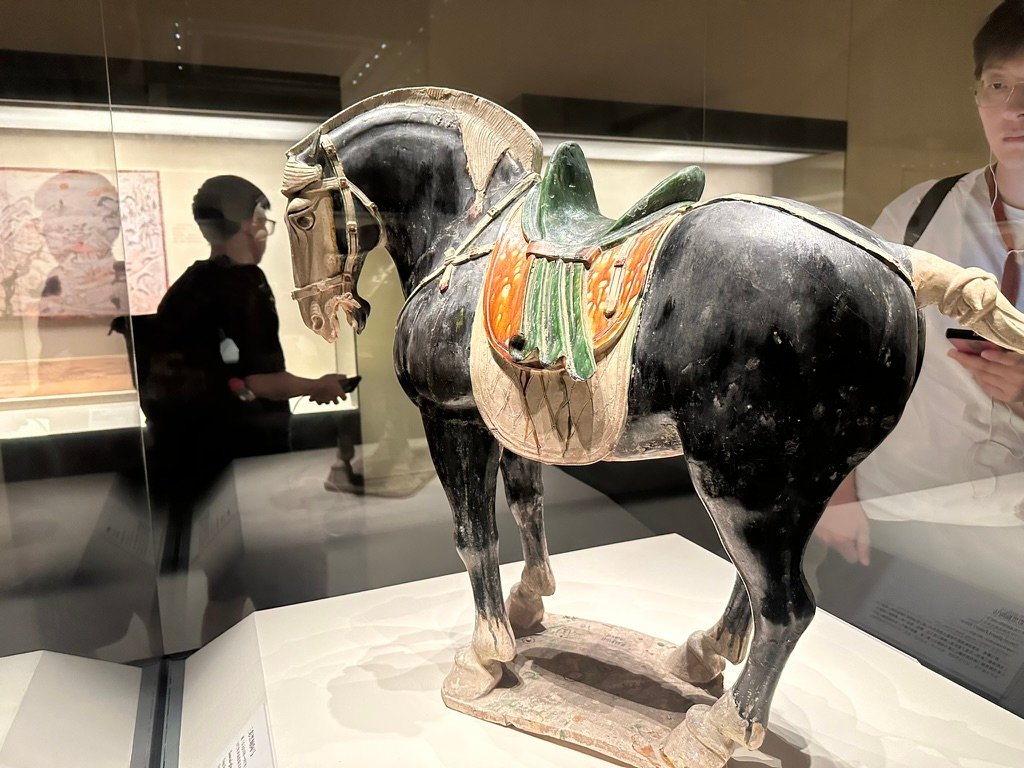
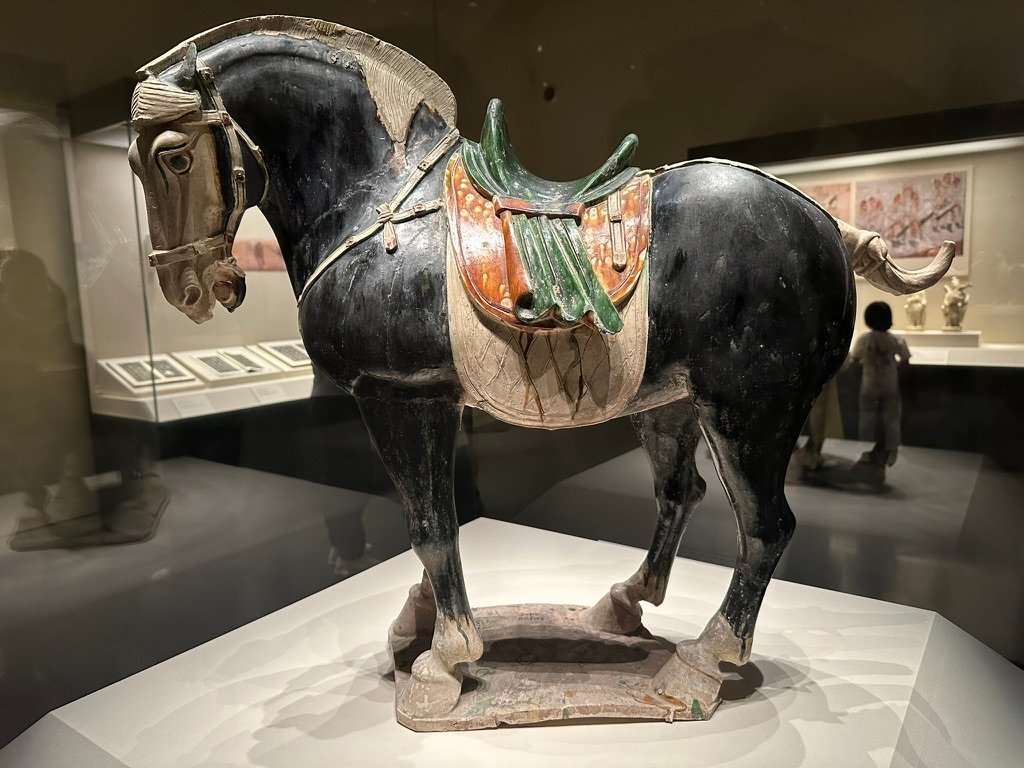
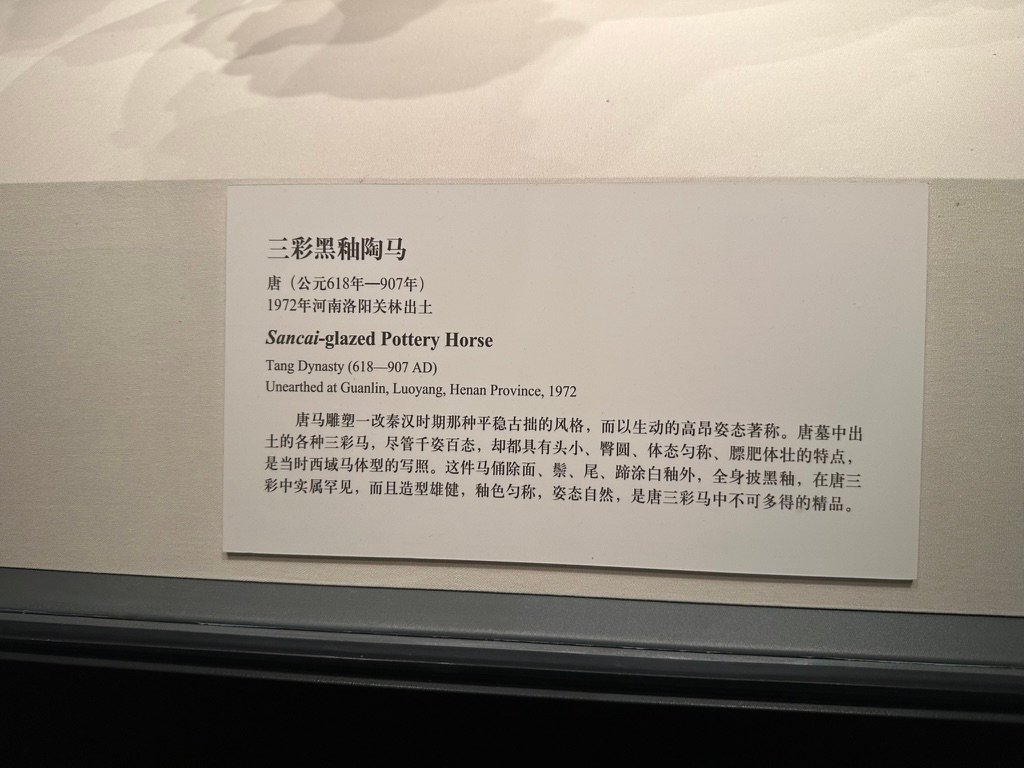
Sancai-glazed Pottery Horse
(三彩黑釉陶马)
Unearthed in Luoyang, Henan Province in 1972, this horse represents another side of Tang civilisation.
Power.
Beauty.
Confidence.
Standing in front of it, the first reaction is:
“How was this created more than 1,000 years ago?”
The body.
The posture.
The colours.
The craftsmanship.
Everything feels alive.
Why Horses Were So Important in Tang China
During the Tang Dynasty, horses were symbols of power and status.
Before cars.
Before airplanes.
Before Elaine and I could travel around China using high-speed rail (高铁)…
The horse was the ultimate transportation technology.
🐞 Cheers:
“So basically this was Tang Dynasty’s Ferrari?”
Well…
A Ferrari that eats grass.
But yes. 😄
Good horses meant military strength.
They meant communication.
They meant connection across long distances.
Tang emperors especially valued powerful horses from Central Asia.
The horse itself became a symbol of the empire’s international connections.
Tang Sancai 唐三彩 exhibit phographed in Xi’an Museum in Xi’an.
The Magic of Tang Sancai 唐三彩
Both the camel and horse were created using the famous Tang Sancai (唐三彩) technique.
“Sancai” means “three colours”.
But it does not mean every object only has three colours.
It refers to the colourful glazing style usually involving colours such as:
- amber yellow
- green
- cream white
- sometimes darker colours such as black
The craftsmen applied mineral-based glazes onto pottery.
During firing, the colours melted, flowed and blended naturally.
That is why Tang Sancai objects feel alive.
No two pieces are exactly identical.
It was art.
It was science.
It was Tang creativity.
Why You Must Visit Xi’an to Understand Tang China
The National Museum of China gives visitors an incredible introduction.
But if these Tang treasures excite you…
Go to Xi’an.
Because Xi’an is where the story happened.
The Shaanxi History Museum contains many more Tang Dynasty treasures discovered from the region around ancient Chang’an.
Walking around Xi’an after seeing these objects feels different.
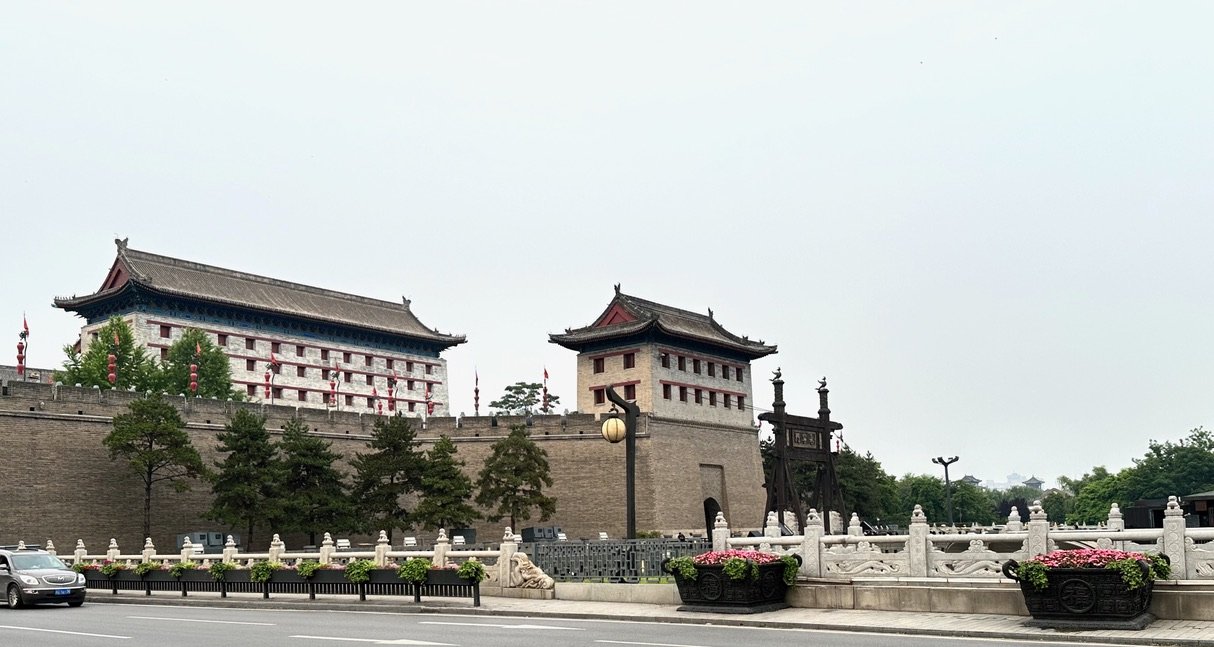
The city wall.
The ancient streets.
The archaeological discoveries.
Suddenly you realise:
This was not just history.
People lived here.
Travellers arrived here.
Cultures met here.
Why Elaine Wanted to Return Again
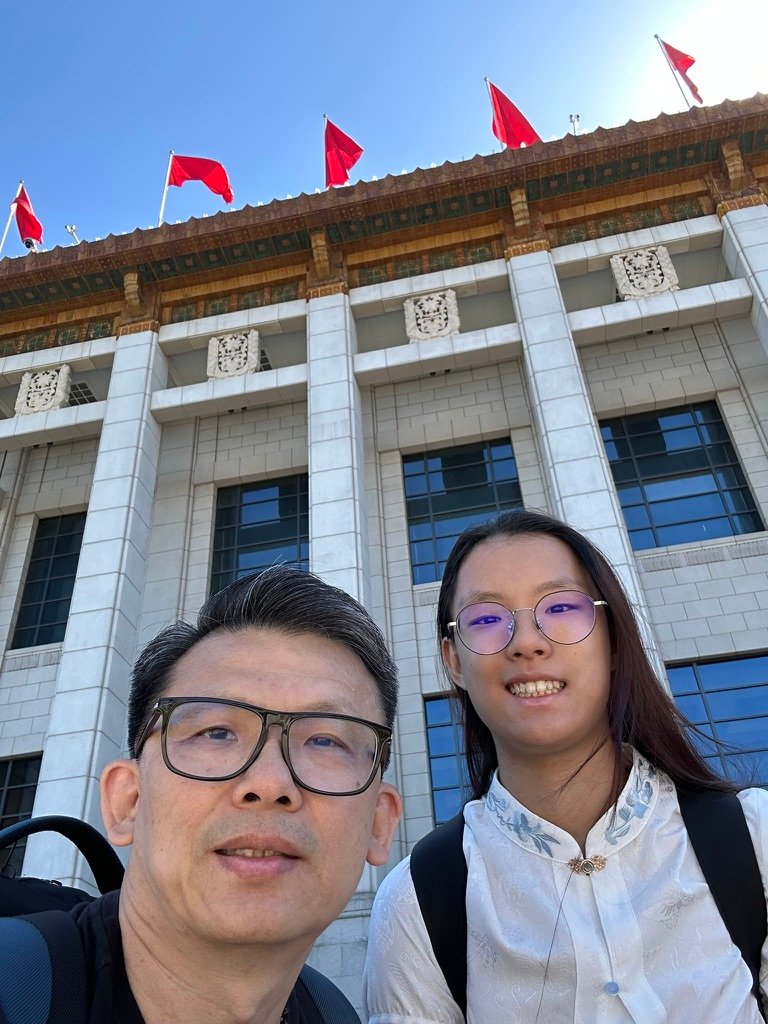
After our 2023 visit to the National Museum of China, Elaine wanted to return again when we came back to Beijing in 2025.
Why?
Because great museums change as you change.
The first time:
You see objects.
The second time:
You discover stories.
The third time:
You connect civilisations.
🐞 Cheers:
“So museums secretly have different levels like a game?”
Exactly.
Level 1:
“Beautiful horse.”
Level 2:
“This is Tang Sancai.”
Level 3:
“This horse connects Xi’an, the Silk Road, Central Asia and one of the greatest periods of Chinese civilisation.”
Achievement unlocked.
And that is why we continue exploring China.
Because China is not just a list of tourist attractions.
It is a story.
And sometimes…
A camel and a horse can tell that story better than a textbook.
Continue Exploring Beijing
If this is your first time visiting China’s capital, you might also enjoy our guides to:
Visiting Great Wall of China from Beijing:
Beijing Travel Guide: Discover China’s Ancient Capital, Local Life and Future China
Returning to Qianmen Street (前门大街): Beijing’s Historic Walking Street
Wangfujing (王府井): Beyond Beijing’s Famous Shopping Street
Beijing Hutongs (胡同): Discovering Everyday Life in the Capital
More articles below:
Xi’an Travel Guide: More Than Terracotta Warriors — Discover Where China Began
National Museum of China Beijing: Starting A 5,000-Year Journey With Breakfast First!