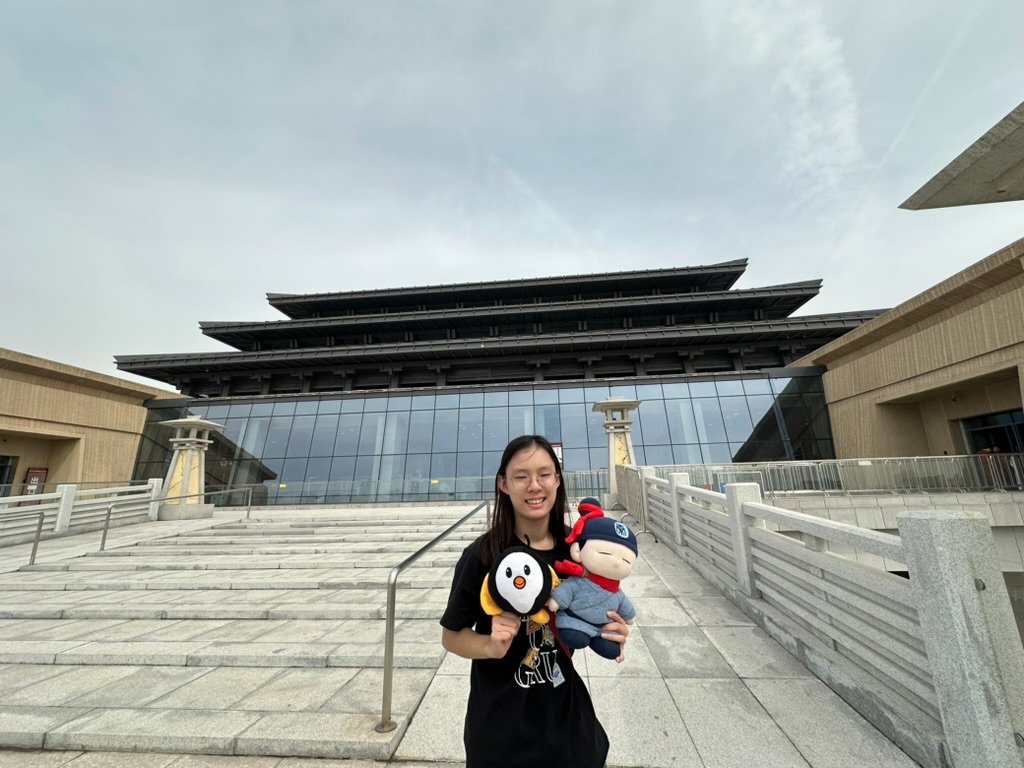
Why Xi’an’s Qin-Han Museum in Xi’an Tells a Bigger Story Than the Terracotta Army
Imagine walking into the museum expecting another exhibition about Qin Shi Huang (秦始皇).
Perhaps another display about the Terracotta Army (兵马俑).
Perhaps another story celebrating China’s first emperor.
Instead, the museum quietly tells a completely different story.
The first gallery does not begin with an emperor.
It begins with an idea.
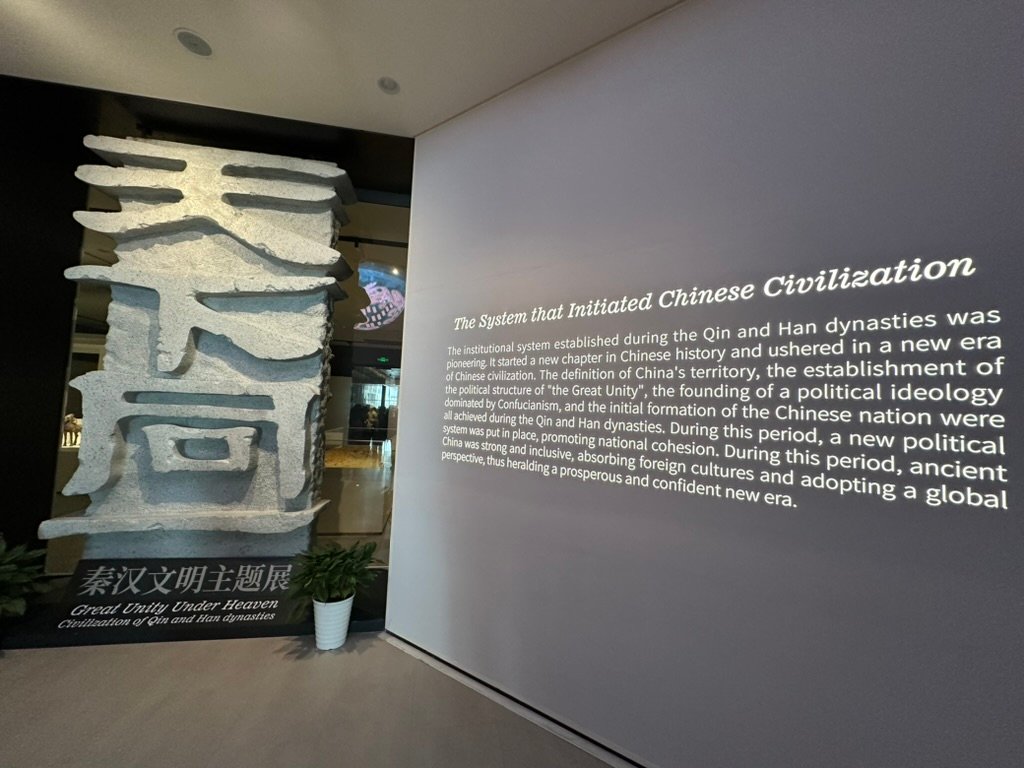
On one wall are the words “The Era of Great Transformation” (大变革的时代). Further inside, another exhibition introduces “The System that Initiated Chinese Civilization” (肇基文明). Finally, the central exhibition carries the title “Great Unity Under Heaven” (秦汉文明主题展 / 大一统).
At first, these seemed like ordinary museum slogans.
But as Elaine and I walked through the galleries, we realised the museum was making a far more ambitious argument.
This was never meant to be a museum glorifying Qin Shi Huang.
It was explaining how the Qin and Han dynasties created institutions, ideas and systems that would shape Chinese civilisation for more than two thousand years.
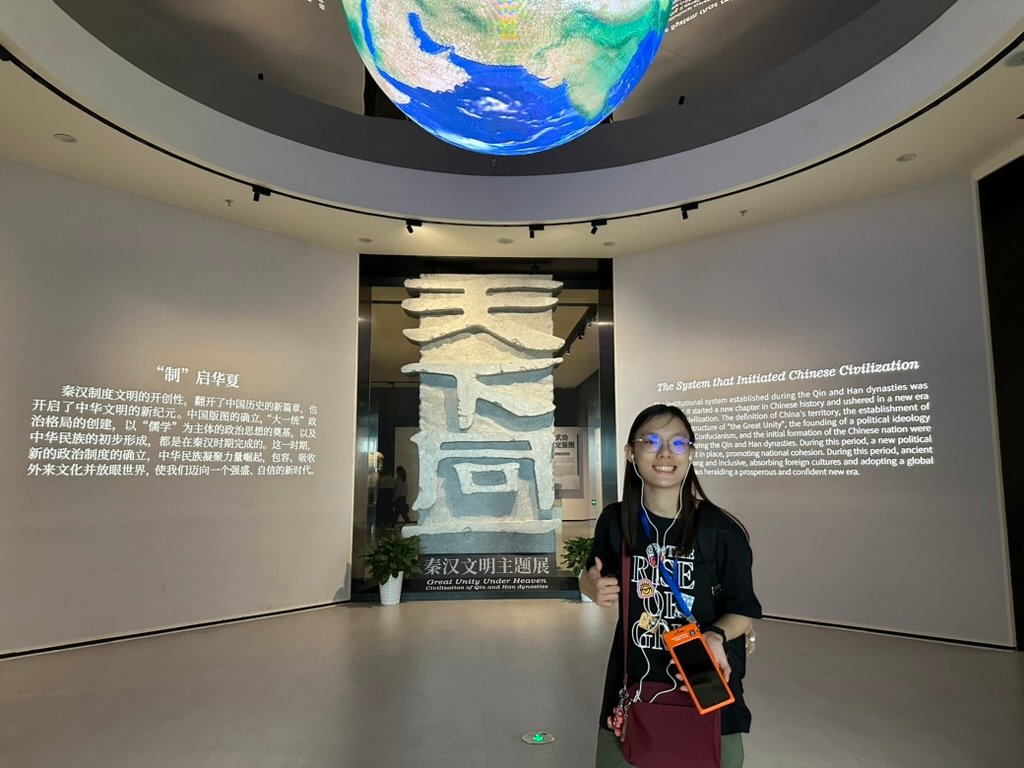
Why this museum is different
Nearly every visitor arrives expecting history to revolve around powerful rulers.
Qin Shi Huang.
Han Wudi.
Great generals.
Magnificent palaces.
Yet the Qin-Han Museum keeps returning to something else.
Not personalities.
Not military victories.
But systems.
Political systems.
Administrative systems.
Cultural systems.
The exhibition argues that great civilisations are not built by remarkable individuals alone. They endure because they create institutions that continue functioning long after those individuals are gone.
That is a remarkably modern idea.
This Museum Isn’t About Emperors. It’s About Civilisation.
Walking into the Qin-Han Museum (秦汉馆), I initially expected what many first-time visitors would probably expect—a museum celebrating Qin Shi Huang (秦始皇), the First Emperor, and the powerful rulers who followed him.
Instead, the museum immediately challenged that expectation.
Three exhibition panels, placed near the beginning of the galleries, quietly reveal the museum’s central message. They do not focus on famous emperors, legendary battles or spectacular treasures. Rather, they explain a much larger story: how China evolved from competing states into a civilisation supported by enduring institutions.
The first panel introduces “The Era of Great Transformation” (大变革的时代). It explains that during the Spring and Autumn (春秋) and Warring States (战国) periods, centuries of political competition drove profound reforms across society. States experimented with merit-based administration, legal reforms, military reorganisation, taxation, land ownership and systems of governance. Long before China was politically united, the foundations of a new order were already being laid.
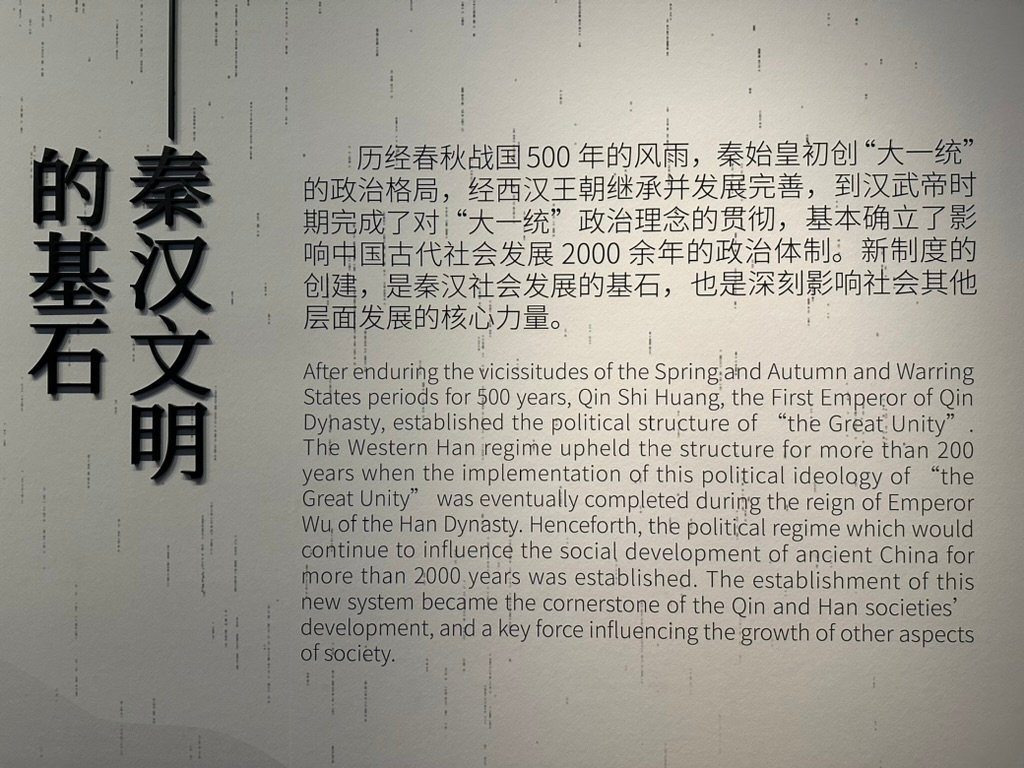
The second panel shifts to the idea of “Great Unity” (大一统). Here, the museum argues that Qin Shi Huang achieved far more than military conquest. By unifying the competing kingdoms under a single political authority, the Qin Dynasty established a new framework for governing a vast territory. Yet the panel also reminds visitors that this was only the beginning. The Han Dynasty (汉朝) inherited, refined and expanded this framework, transforming a newly unified empire into a stable and enduring civilisation.
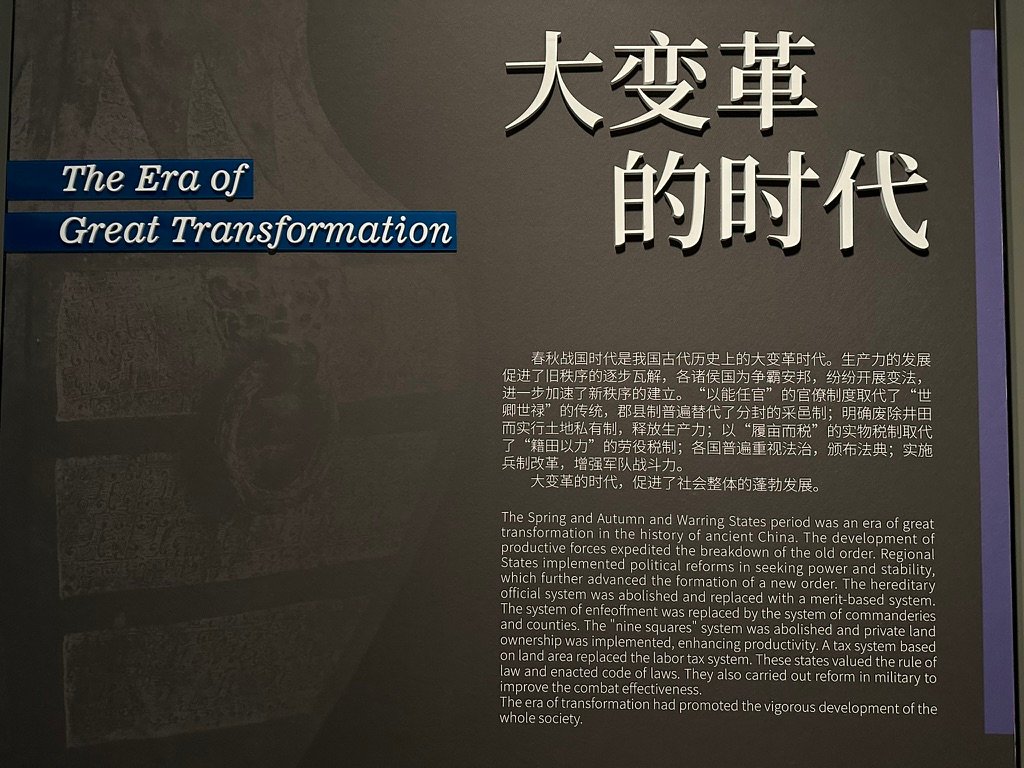
Finally, visitors arrive at perhaps the museum’s most thought-provoking concept: “The System that Initiated Chinese Civilisation” (肇基文明). The wording is deliberate. The museum is not claiming that Chinese civilisation began with Qin and Han—China’s history stretches back through the Zhou (周), Shang (商) and even earlier archaeological cultures.
Rather, it argues that during the Qin and Han period, many of the political, administrative and cultural institutions that would shape China for the next two millennia were brought together into a coherent and lasting system.
This distinction is subtle, but profoundly important.
The museum is not asking visitors to admire great rulers.
It is asking a far more interesting question:
How does a civilisation become strong enough to endure for more than two thousand years?
As Elaine and I continued through the galleries, we realised that every exhibition, every artefact and every explanation was helping answer that single question.
Bing Ma Zai’s History Break
Bing Ma Zai whispers…
The institutions protected a civilisation.”
“People think my Terracotta Army made Qin famous.
But the museum keeps telling us something different…
The soldiers protected an empire.
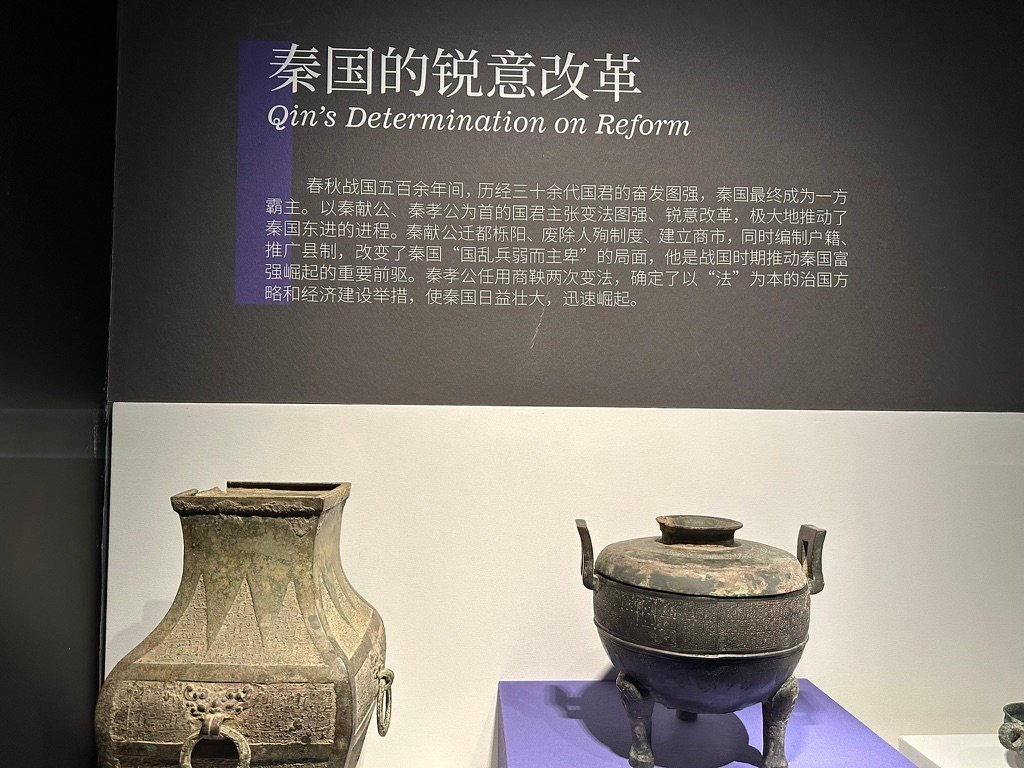
Qin’s Determination on Reform (秦国的锐意改革)
One of the museum’s next messages is refreshingly clear: Qin did not become China’s first unified empire by accident.
Long before Qin Shi Huang (秦始皇) conquered the rival states, the State of Qin (秦国) had already spent generations transforming itself from within.
🐧 Cheers’ Travel Analogy
That’s roughly the challenge ancient China was trying to solve.”
Cheers looks at the China map…
“Imagine travelling from Scotland to Italy without crossing a border…
According to the museum, over more than five centuries of the Spring and Autumn (春秋) and Warring States (战国)periods, successive Qin rulers pursued bold reforms that steadily strengthened their state.
The museum highlights Duke Xiao of Qin (秦孝公) as one of the turning points. He moved the Qin capital to Xianyang (咸阳), abolished outdated institutions, established markets, introduced household registration, and promoted the county (县) administrative system. These reforms reversed Qin’s earlier weakness and laid the foundations for a far stronger state.
Dad’s side note:
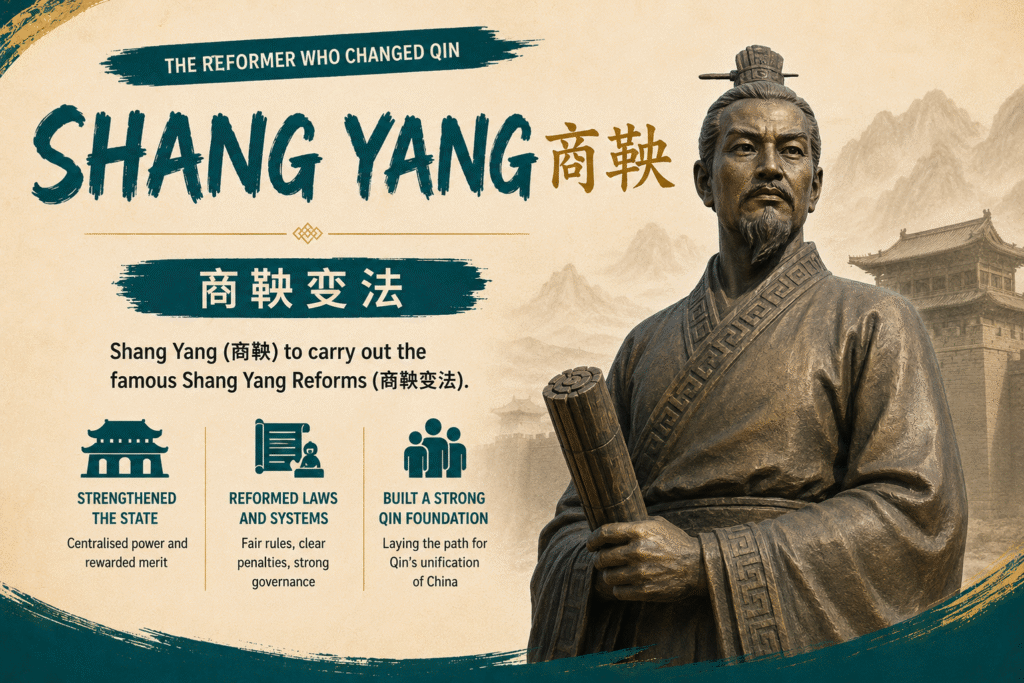
His successor, King Huiwen of Qin (秦惠文王), continued this momentum by appointing Shang Yang (商鞅) to carry out the famous Shang Yang Reforms (商鞅变法). These reforms established governance based on law (法), reorganised the economy, rewarded merit over hereditary privilege, and greatly increased Qin’s military and administrative effectiveness.
For Western readers, this is one of the museum’s most valuable insights.
Many people remember Qin only because of the Terracotta Army or Qin Shi Huang. Yet the museum argues that the emperor inherited a state that had already been transformed through decades of institutional reform. Military victory was the visible outcome; the real story had begun much earlier.
It is another reminder that throughout the Qin-Han Museum, the focus is rarely on individual rulers alone. Instead, the galleries repeatedly return to a larger theme: lasting civilisations are built on institutions, not simply on extraordinary individuals.
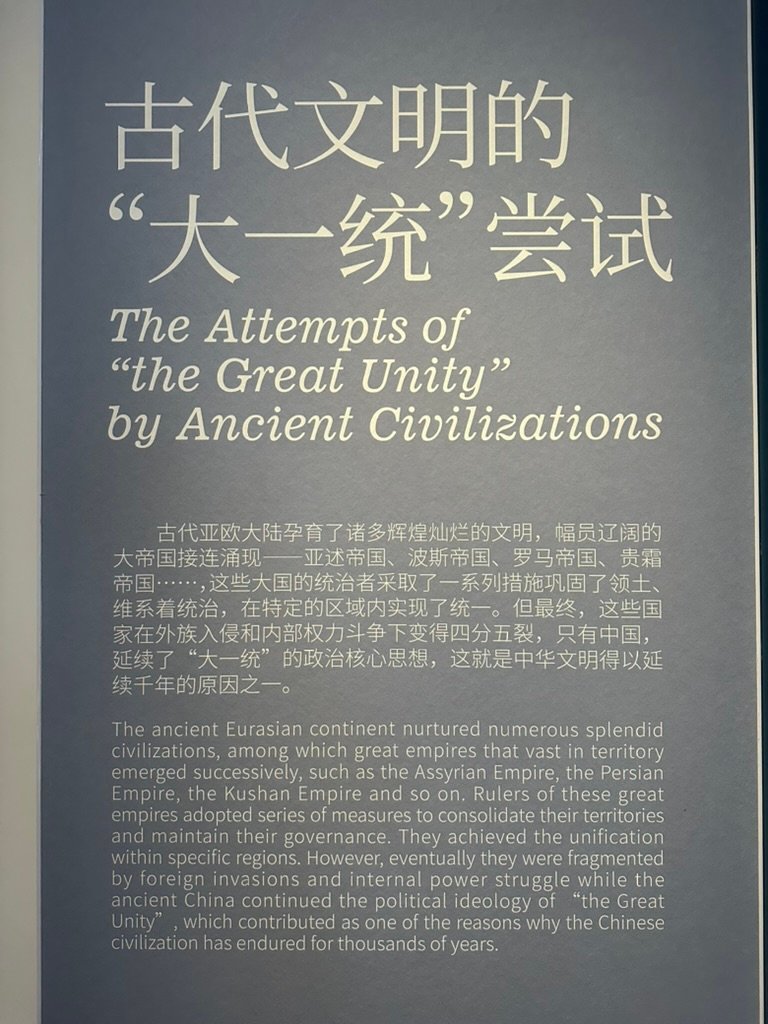
Diversity in Unity: A Political Model That Outlived Qin (多元一体的国家格局)
If the previous gallery explains how Qin became powerful, this section explains why Qin’s influence survived long after the dynasty itself had fallen.
The museum points out an irony of Chinese history. Although the Qin Dynasty (秦朝) lasted only fifteen years, many of the institutions it created endured for centuries, even millennia.
🐧 Cheers’ Lightbulb Moment
Cheers says…
That’s like using a phone for only a week… but everyone keeps using the operating system for the next two thousand years!”
“Wait… so Qin lasted only 15 years, but the system it built lasted over 2,000 years?
Quoting the Han Shu (汉书, Book of Han), the exhibition explains that by the late Zhou Dynasty (周朝), the old feudal order had fragmented into competing states, each pursuing its own reforms and ambitions. Qin’s eventual unification did more than end centuries of warfare—it established a new political framework that later dynasties would inherit rather than dismantle.
Instead of returning to the hereditary feudal system of the Zhou, the Han Dynasty (汉朝) largely preserved Qin’s centralised administration. The museum highlights several key features: a central government led by high officials, a nationwide system of commanderies and counties (郡县制), and an increasingly merit-based bureaucracy that sought capable administrators from different regions.
This is the idea captured by the exhibition’s title: “The Pattern of Diversity in Unity” (多元一体).
China was never a nation of identical peoples or regions. It encompassed different cultures, languages, customs and local traditions. Yet beneath this diversity, successive dynasties shared a common administrative framework that held the empire together. According to the museum, this balance between regional diversity and political unity first took recognisable shape during the Qin and Han period.
Elaine’s Note
Elaine’s Note
“When I first saw ‘Diversity in Unity’ (多元一体), I thought it meant everyone became the same after Qin united China.
But the museum actually says the opposite.
People remained different—different regions, customs and cultures—but they shared one administrative system.
It made me realise that unity doesn’t always mean uniformity.“
For many Western visitors, this may be one of the museum’s most thought-provoking messages.
The exhibition is not celebrating conquest for its own sake. Rather, it suggests that Qin’s greatest achievement was creating a system capable of governing diversity at an unprecedented scale—a system that the Han refined, later dynasties inherited, and modern China still bears traces of today.
Once again, the museum shifts the spotlight away from emperors and towards something far more enduring: institutions that outlasted the men who created them.
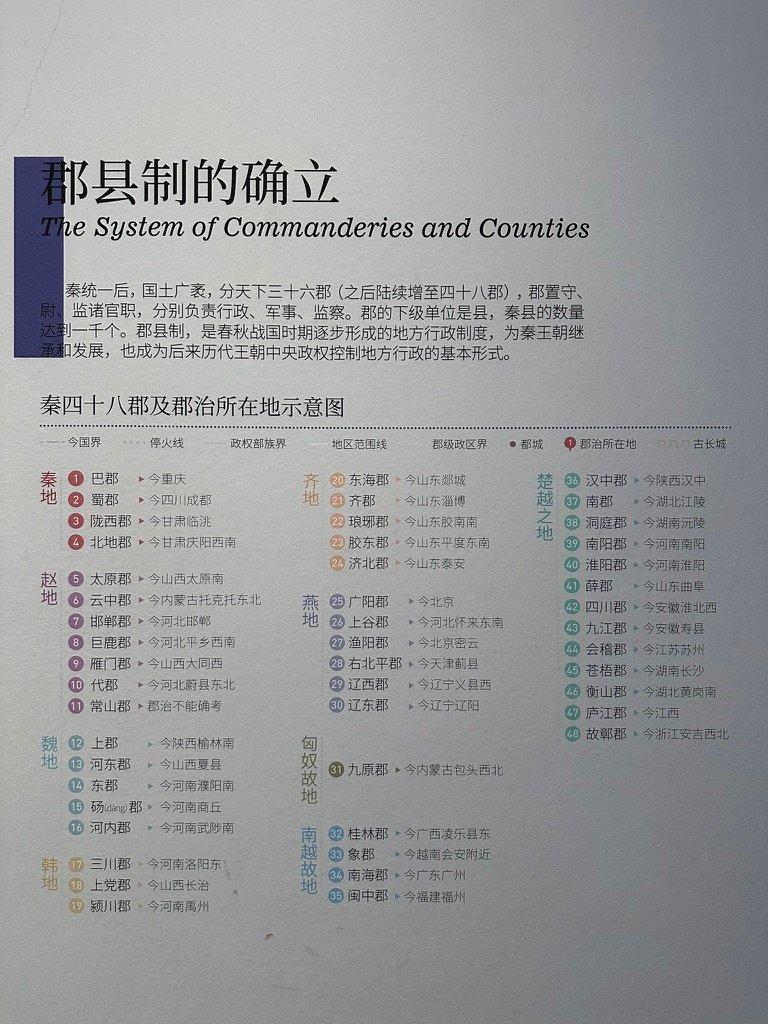
The Commandery and County System: Governing a Vast Empire (郡县制)
Military victory alone could not hold a newly unified empire together. The museum explains that after Qin unified China, it reorganised the country into a nationwide system of commanderies and counties (郡县制). Officials appointed by the central government—not hereditary local rulers—were responsible for administration, military affairs and supervision. Beginning with 36 commanderies and later expanding to 48, this system provided a practical framework for governing an empire stretching across diverse regions. More importantly, it became the administrative model that later Chinese dynasties continued to build upon for centuries.
Dad’s side note:
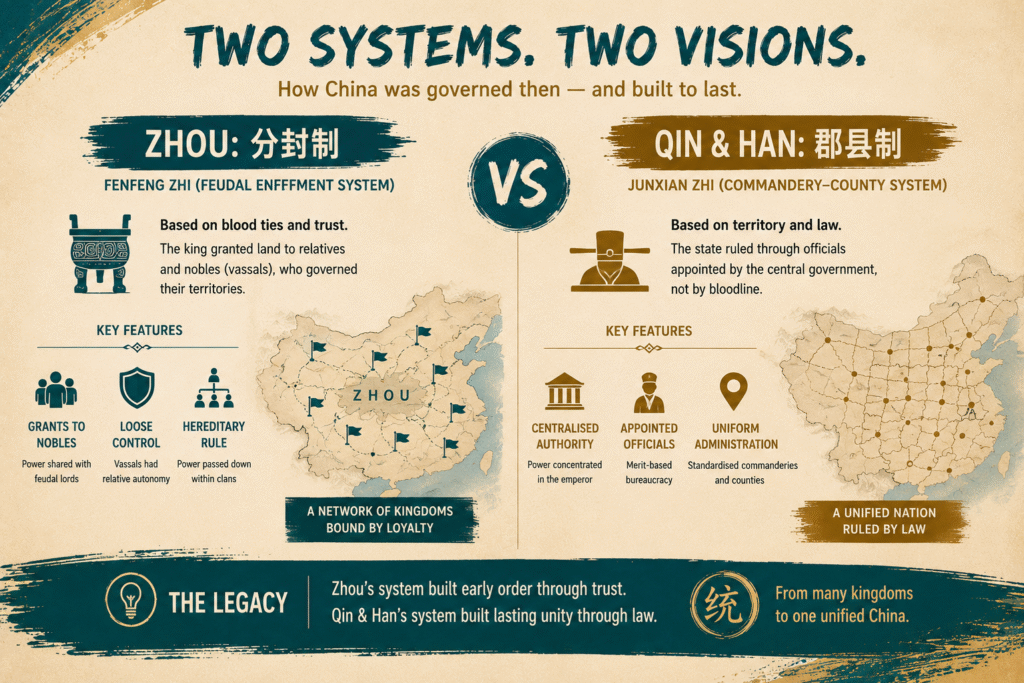
They redesigned how an entire country was managed.”
🐧 Cheers hums…
“So Qin didn’t just draw new borders…
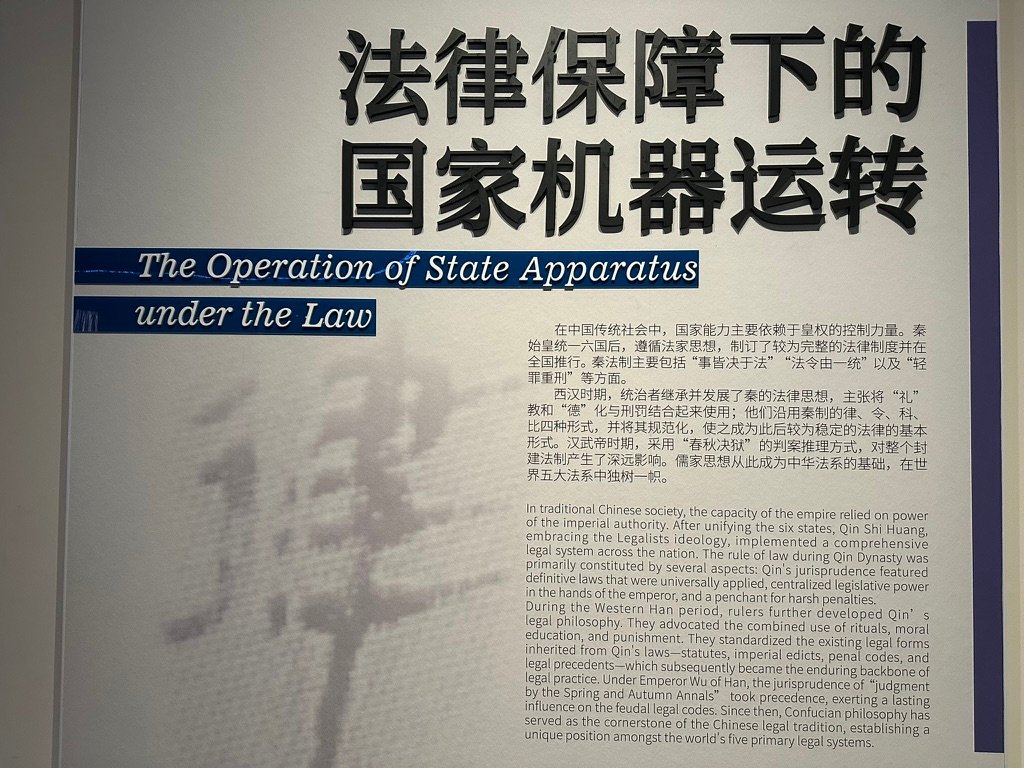
The Rule of Law: Keeping an Empire Running (法律保障下的国家机器运转)
Winning an empire was one challenge. Governing it every day was another.
The museum argues that one of the Qin Dynasty’s greatest legacies was not simply military conquest, but the creation of a comprehensive legal system capable of keeping an enormous state functioning. Inspired by Legalist (法家) principles, Qin established laws that applied across the empire, centralised legislative authority, and created clear legal procedures for administration.
Yet the exhibition also highlights an important evolution.
Rather than merely preserving Qin’s strict Legalist approach, the Han Dynasty (汉朝) gradually blended law with Confucian (儒家) ideas of morality, education and ritual. Existing legal codes—including statutes, imperial edicts, penal regulations and judicial precedents—were refined into a more stable legal tradition. By the reign of Emperor Wu of Han (汉武帝), legal interpretation increasingly drew upon the Spring and Autumn Annals (《春秋》), while Confucian philosophy became the ethical foundation underlying China’s legal culture.
Instead of replacing Qin’s institutions, the Han humanised them.
The museum suggests that this balance between legal authority and moral governance became one of the defining characteristics of imperial China for the next two thousand years.
🐧 Cheers scratches his head…
“Wait…
Qin built the engine.
Han didn’t throw it away—they tuned it.”
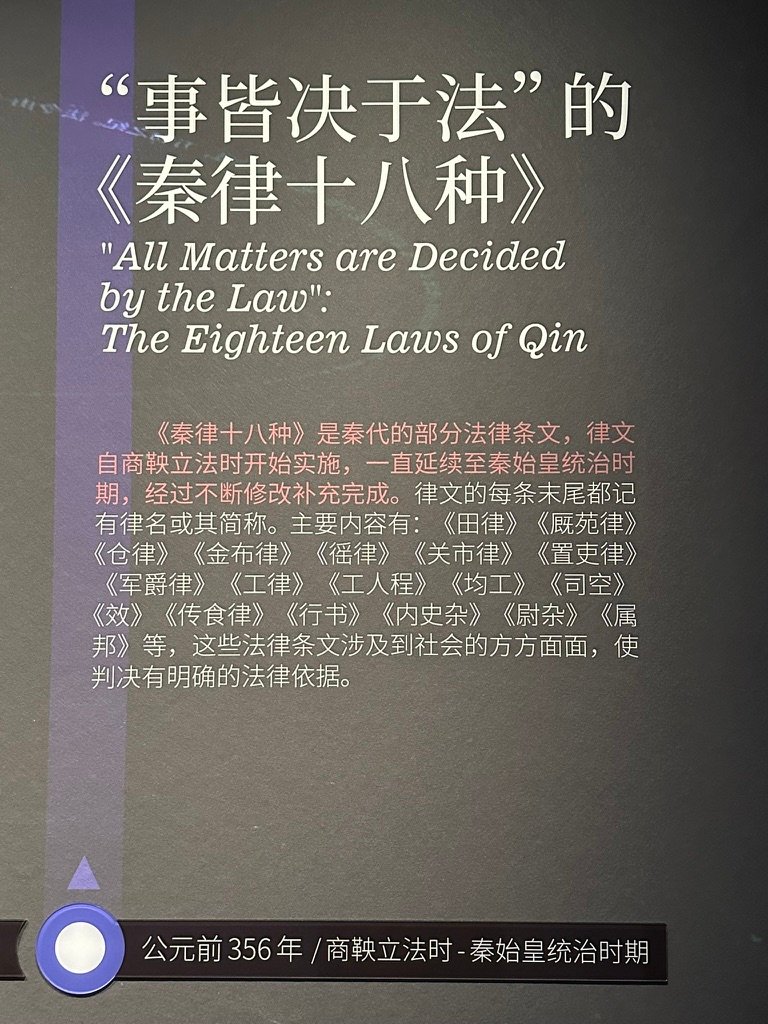
“All Matters Are Decided by the Law” — The Eighteen Laws of Qin (《秦律十八种》)
To show how deeply law reached into everyday life, the exhibition introduces The Eighteen Laws of Qin (《秦律十八种》).
These legal texts first emerged during the reforms of Shang Yang (商鞅) in 356 BC, long before Qin unified China, and continued to evolve until the reign of Qin Shi Huang (秦始皇). Rather than covering only crimes and punishments, the laws regulated almost every aspect of society.
The surviving titles reveal their remarkable breadth. There were laws governing agriculture, granaries, currency, markets, official appointments, military affairs, public works, craftsmen, transport, food supply, and local administration. In other words, the Qin legal code was not simply a criminal code—it was an operating manual for an empire.
For modern visitors, this is perhaps the biggest surprise.
When many people hear the word “law,” they imagine judges, prisons and punishment. The Qin saw law much more broadly. Law was the framework through which officials governed, taxes were collected, roads were built, markets were regulated, soldiers were supplied and public projects were organised.
The museum’s message becomes increasingly clear: Qin’s greatest innovation was not that it ruled through law, but that it attempted to make almost every aspect of governing predictable through written law.
They’re showing us how an empire worked—not just who ruled it.”
🐧 Cheers hums thoughtfully…
“No wonder the museum keeps talking about institutions…
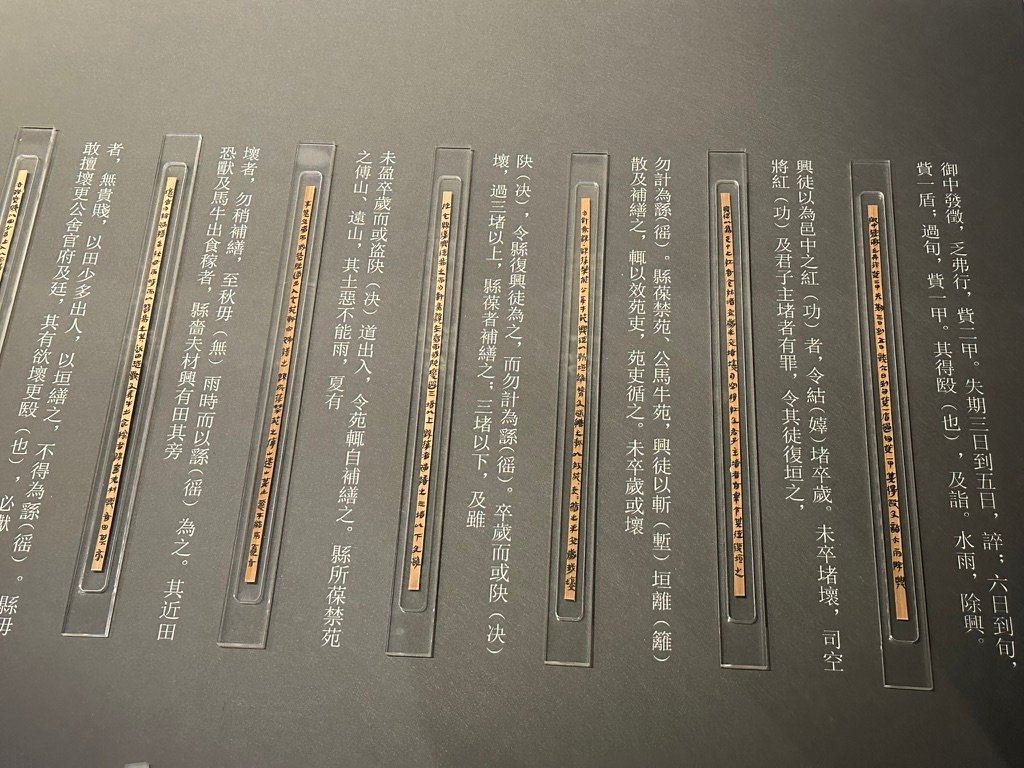
Seeing Qin Law in Its Original Form
One of the museum’s most fascinating displays is surprisingly modest.
Instead of displaying a magnificent bronze vessel or an imperial seal, it presents replicas of Qin legal texts written on bamboo slips (简牍 jiǎndú)—the way official documents were recorded more than 2,200 years ago.
Before paper became widespread, laws, government orders and official records were written by hand on narrow strips of bamboo tied together with cords. This was how county officials, administrators and judges would have consulted the law.
Looking closely, these are not dramatic criminal trials or famous political speeches. They are practical regulations governing everyday administration.
Several bamboo slips deal with the maintenance of embankments (堤) and irrigation works. One clause rewards labourers who complete repairs properly, while others prescribe penalties for negligence, damaged embankments or officials who fail to carry out their responsibilities. The message is strikingly modern: public infrastructure was too important to depend on personal judgement alone—it required written rules that everyone was expected to follow.
Holding an empire together, the museum suggests, depended as much on these ordinary regulations as on armies and emperors.
“Exactly. Real governments spend far more time managing everyday life than fighting wars.”
🐧 Cheers leans closer to the bamboo slips…
“I thought ancient laws would be about kings and punishments…”
“…but these are instructions for repairing dams!”
Dad smiles.
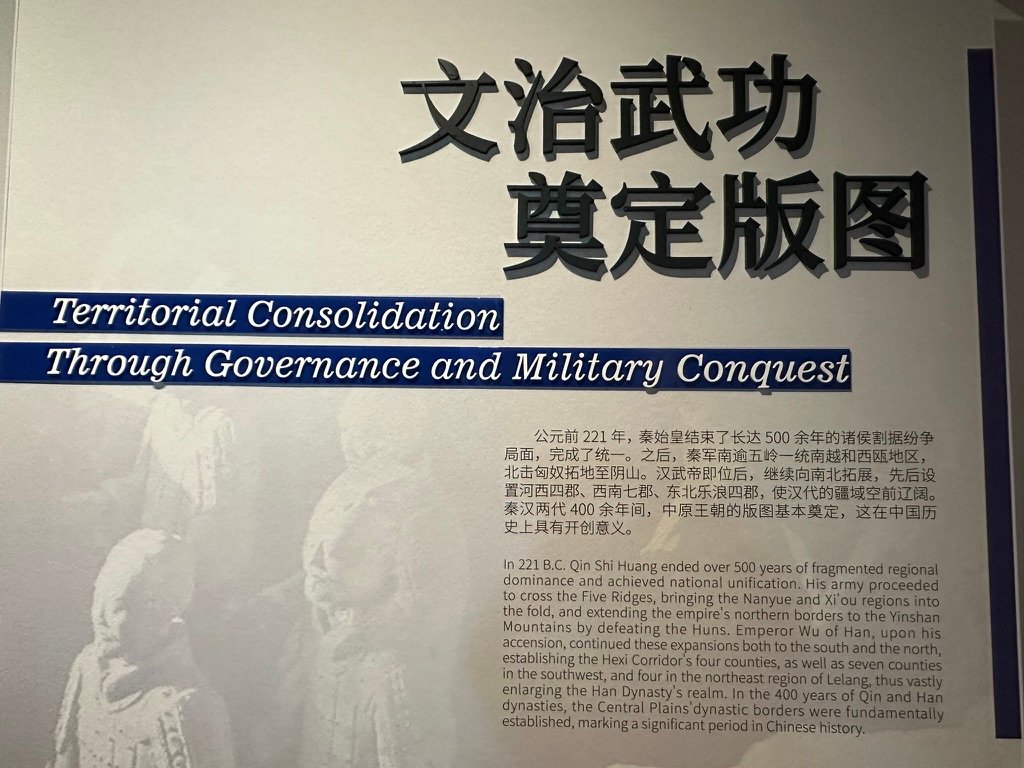
Territorial Consolidation: More Than Winning Wars (文治武功奠定版图)
Empires are often remembered for the battles they fought. The Qin-Han Museum encourages visitors to think instead about what happened after the battles were won.
Dad’s side note:
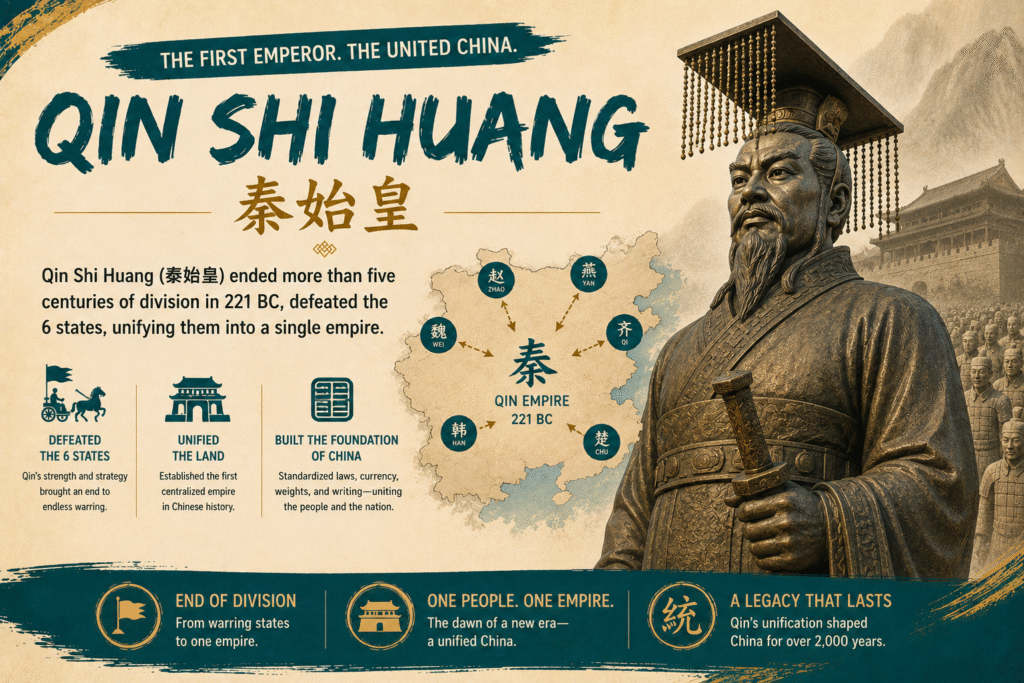
According to the exhibition, Qin Shi Huang (秦始皇) ended more than five centuries of division in 221 BC, unifying the rival states into a single empire. Yet unification was only the beginning. Qin continued expanding south across the Five Ridges (五岭) into present-day Lingnan, incorporated the Nanyue (南越) and Xi’ou (西瓯) regions, and pushed its northern frontier towards the Yinshan Mountains (阴山).
The Han Dynasty (汉朝) did not simply preserve these gains—it extended them. Under Emperor Wu of Han (汉武帝), new commanderies were established in the Hexi Corridor (河西走廊), the southwest and the northeast, bringing vast new territories into the administrative framework created during the Qin.
The museum makes an important distinction here.
Territory was not secured by military conquest alone. It was consolidated through governance—by establishing commanderies, appointing officials, enforcing laws and extending the institutions that visitors have encountered throughout the exhibition.
In the museum’s view, the combined Qin-Han period, spanning roughly four centuries, laid down the territorial foundations of what later became imperial China. It was not simply about making the empire larger, but about making it governable.
🐧 Cheers squints at the map…
“So every time the empire got bigger…”
“…they also had to build a bigger government?”
Dad nods.
“Exactly. An empire isn’t held together by soldiers forever. Eventually, it survives because someone collects taxes, repairs roads, settles disputes, and keeps the administration running.”
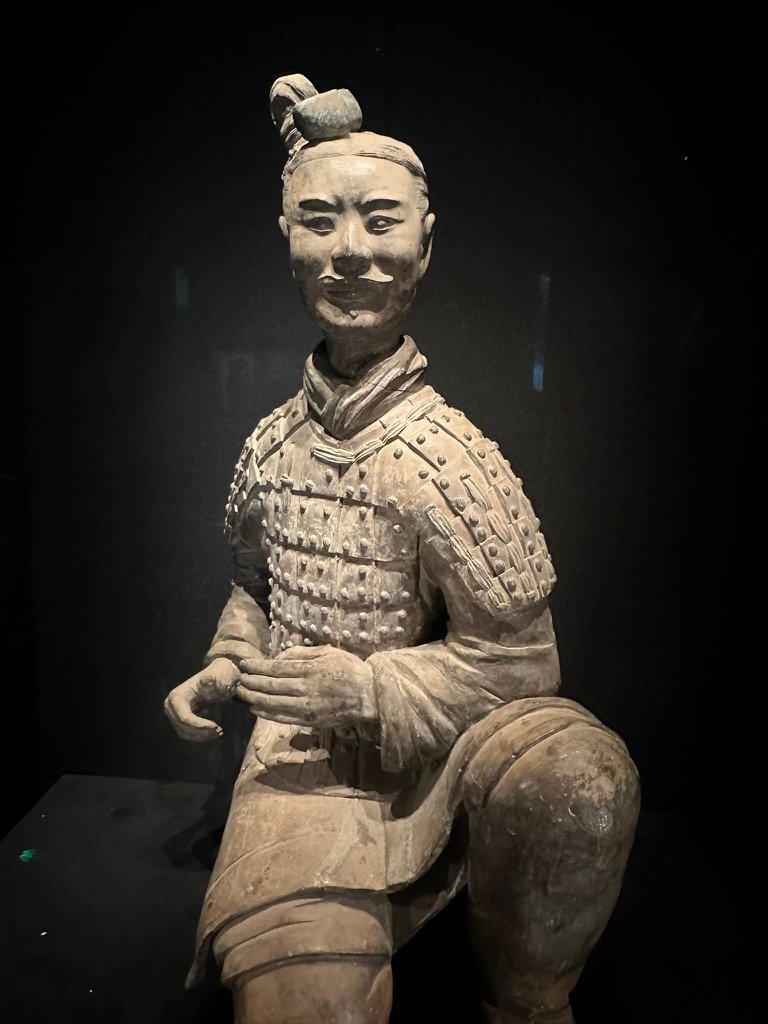
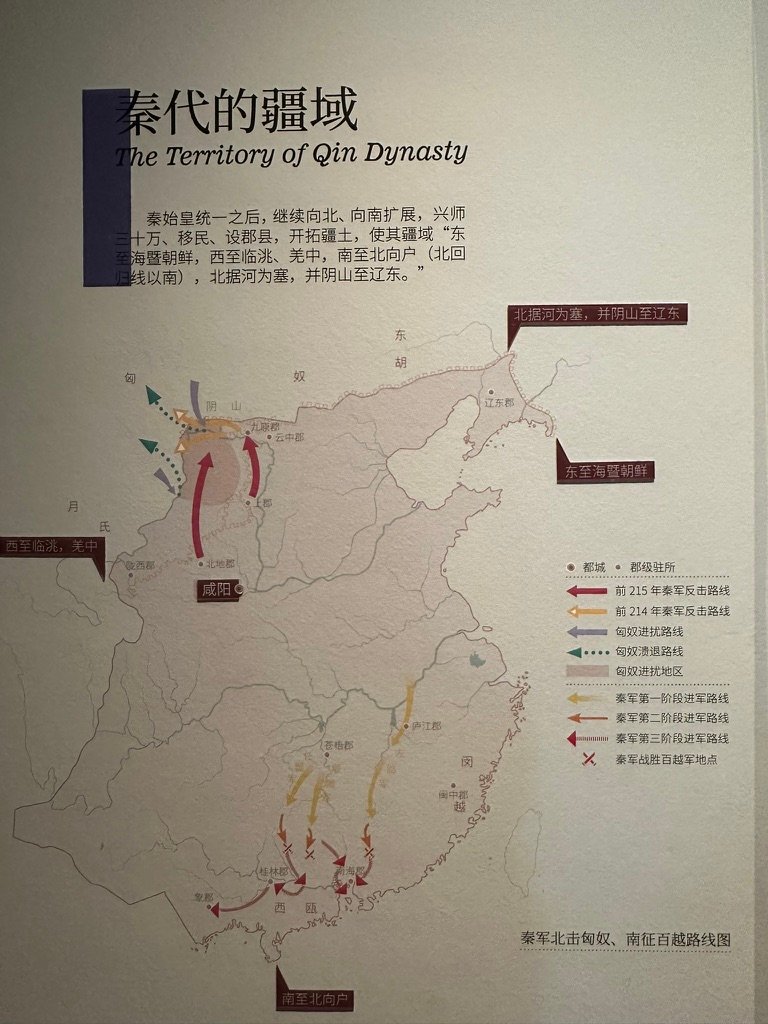
The Han Dynasty Pushes the Frontier Further (汉代的疆域)
While the Qin laid the foundations of a unified empire, the Han Dynasty (汉朝) demonstrated how durable those foundations had become.
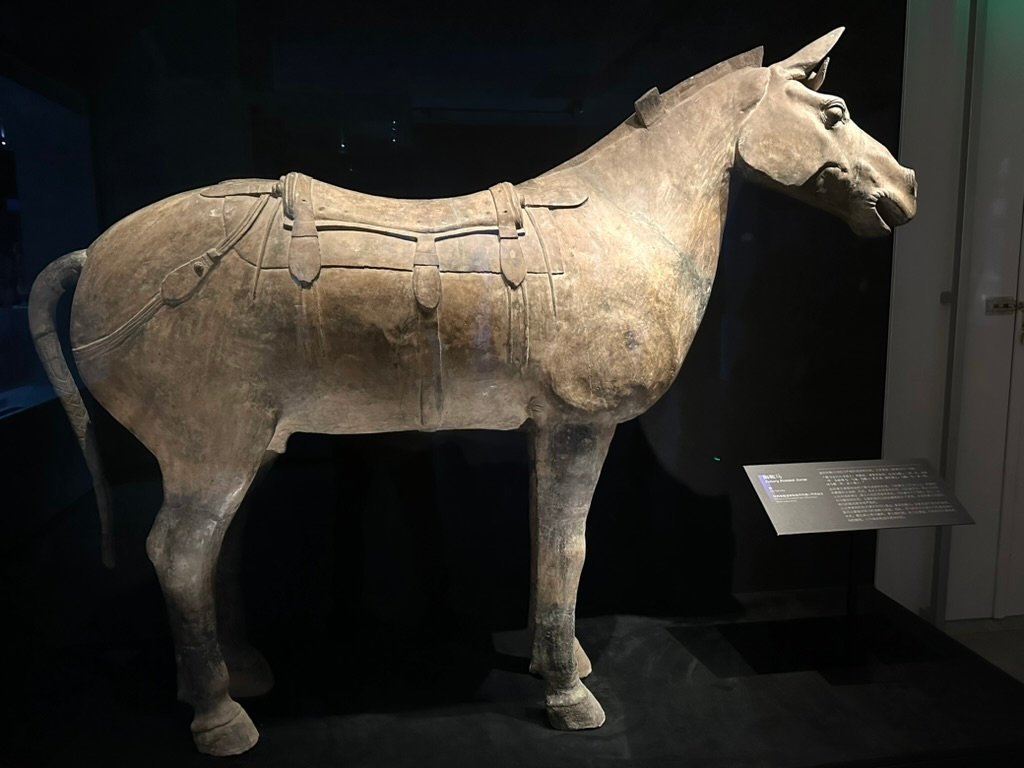
This map highlights the reign of Emperor Wu of Han (汉武帝, r. 141–87 BC), one of China’s most influential rulers. Rather than remaining within the borders inherited from Qin, Han armies pushed the empire’s frontiers further north against the Xiongnu (匈奴), west into the strategic Hexi Corridor (河西走廊), and deeper into the south.
Dad’s side note:
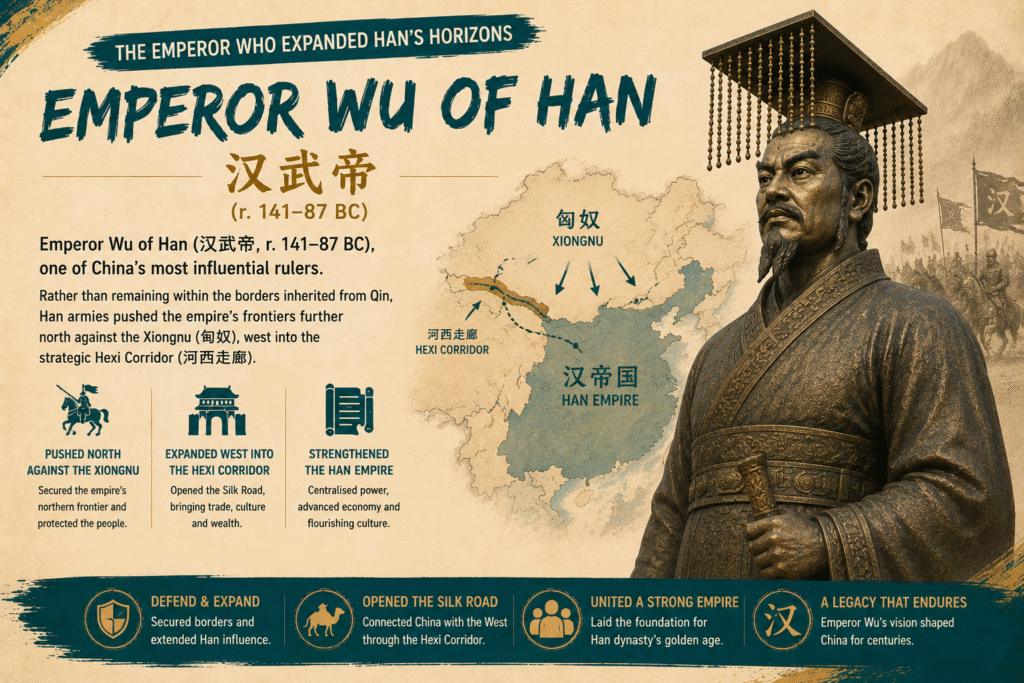
The exhibition traces several major military campaigns between 127 BC and 119 BC, showing how victories against the Xiongnu secured northern China and opened the route towards Central Asia. These successes eventually laid the groundwork for what would later become the Silk Road (丝绸之路).
Dad’s side note:
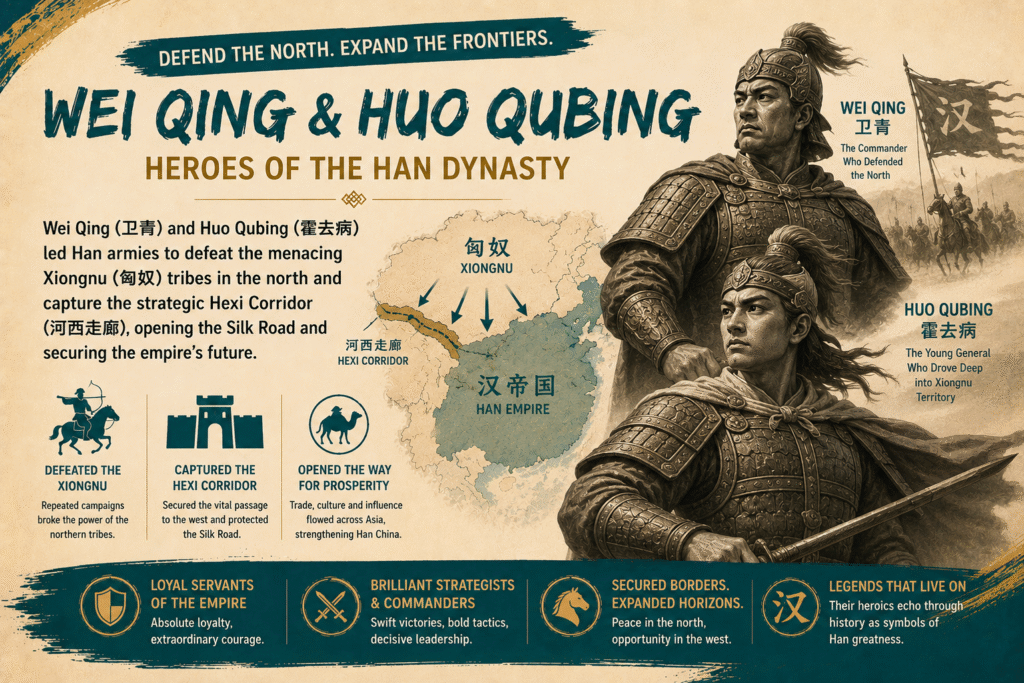
Securing the Frontiers: Wei Qing and Huo Qubing
Building roads, standardising laws and improving agriculture were only part of the Han Dynasty’s success.
None of these achievements could fully benefit the empire unless its frontiers were secure.
During the reign of Emperor Wu of Han (汉武帝, r. 141–87 BC), two remarkable generals helped make that possible: Wei Qing (卫青, ?–106 BC) and his nephew Huo Qubing (霍去病, 140–117 BC).
For generations, the powerful Xiongnu (匈奴) controlled much of the northern steppe, launching raids into Han territory and threatening the vital routes leading towards Central Asia. Through a series of brilliant cavalry campaigns, Wei Qing and the young Huo Qubing pushed the Xiongnu back, securing the Hexi Corridor (河西走廊)—the narrow but strategic gateway between the Chinese heartland and the Western Regions (西域).
Their victories achieved far more than military glory.
A secure frontier meant merchants could travel more safely, officials could administer newly established commanderies, and diplomatic missions such as Zhang Qian’s (张骞) famous journeys to the West became possible. In time, these routes evolved into the Silk Road (丝绸之路), linking China with Central Asia, Persia and eventually the Mediterranean world.
In many ways, Wei Qing and Huo Qubing protected the conditions that allowed the Han Dynasty’s political reforms, economic prosperity and cultural achievements to flourish.
💡 Elaine’s Note
“When people think of the Han Dynasty, they usually remember Emperor Wu of Han.
But I realised something while reading this gallery.
An emperor may have the vision, yet he still needed talented people to turn that vision into reality.
Wei Qing defended the empire.
Huo Qubing expanded its frontiers.
Zhang Qian opened diplomatic doors.
Together, they helped transform the Han Dynasty from a powerful kingdom into a civilisation connected with the wider world.”
🐧 Cheers’ Corner
Cheers studied the campaign map carefully.
“So before traders could carry silk…”
“…someone first had to make the road safe?”
Dad nodded.
“Exactly.”
Bingmazai smiled proudly.
“History remembers the Silk Road.”
“But before there was a trade route…”
“There had to be a secure route.”
Cheers grinned.
“So… they were the world’s first highway patrol?”
“On horseback,” Elaine laughed.
Yet once again, the museum returns to its central theme.
Expansion alone was not enough. Every newly acquired territory had to be incorporated into the same administrative system of commanderies, counties, officials and laws that visitors have encountered throughout the exhibition. In other words, the empire did not simply become larger—it became more governable.
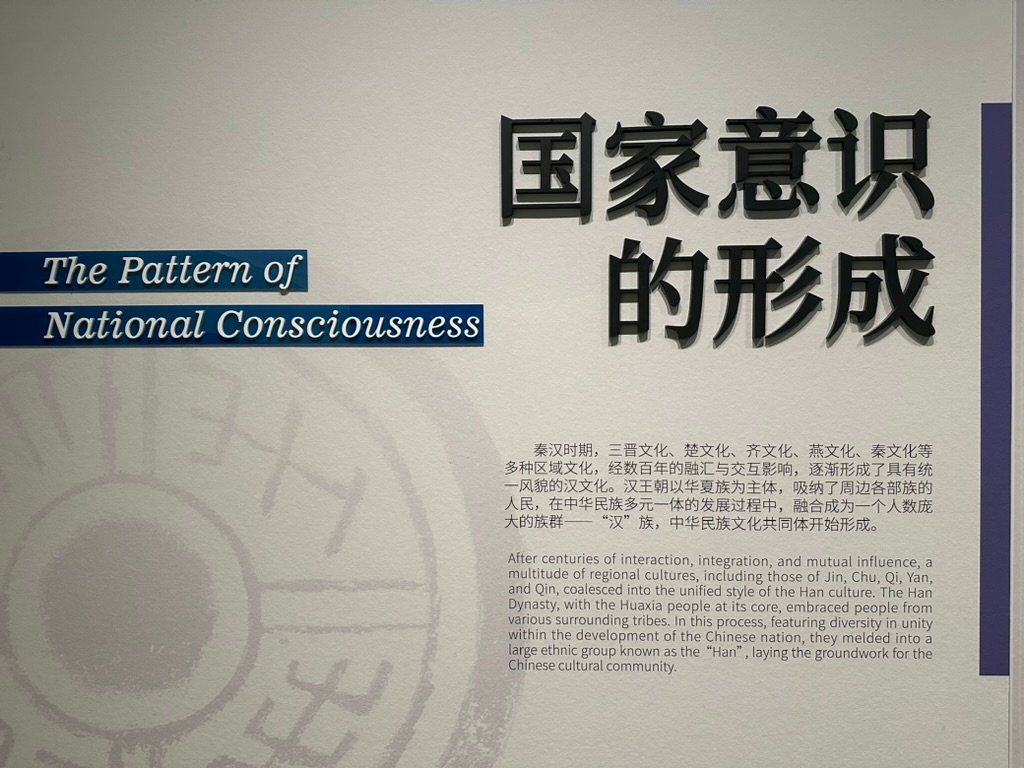
National Consciousness: When a Civilization Begins to Think of Itself as One (国家意识的形成)
The museum’s final message moves beyond emperors, armies and institutions to something far less tangible—but perhaps even more enduring.
It asks how a civilisation develops a shared identity.
According to the exhibition, the Qin and Han period (秦汉时期) witnessed centuries of interaction between the regional cultures that had once belonged to separate states—Jin (晋), Chu (楚), Qi (齐), Yan (燕) and Qin (秦). These traditions did not disappear overnight after unification. Instead, they gradually influenced one another, eventually forming what the museum describes as a common Han culture (汉文化).
The exhibition also explains that the Han Dynasty (汉朝) embraced neighbouring peoples alongside the Huaxia (华夏)cultural core. Over time, different communities became increasingly integrated into a larger cultural and political whole. It was during this long process that the identity known today as the Han people (汉族) gradually emerged, laying the foundations of what the museum calls the broader Chinese cultural community (中华民族文化共同体).
This is a subtle but important distinction.
The museum is not suggesting that everyone suddenly became identical.
Rather, it argues that different regional traditions continued to exist while increasingly seeing themselves as participants in the same civilisation.
For visitors from countries built through immigration or political unions, this idea may feel surprisingly familiar. Unity, the exhibition suggests, does not require uniformity. It requires a shared framework strong enough to accommodate diversity.
🐧 Cheers pauses…
“Dad… so everyone became Han?”
Dad smiles and shakes his head.
“Not quite.”
“Think of it like joining the same school.”
“Different students still come from different families, speak differently at home, and have their own personalities. But once they wear the same school uniform, follow the same rules and celebrate the same school traditions, they slowly begin to feel they’re part of one community.”
Cheers thinks for a moment.
“So… they didn’t become the same people…”
“…they began sharing the same story?”
Dad nods.
“Exactly.”
Elaine’s Note
Maybe that’s why many Chinese people today still refer to themselves as Han Chinese (汉族)—not simply because of one emperor or one dynasty, but because of a cultural identity that took centuries to form.
This panel changed how I thought about history.
Earlier galleries explained how China became united politically. This one explains how people gradually came to imagine themselves as belonging to the same civilisation.
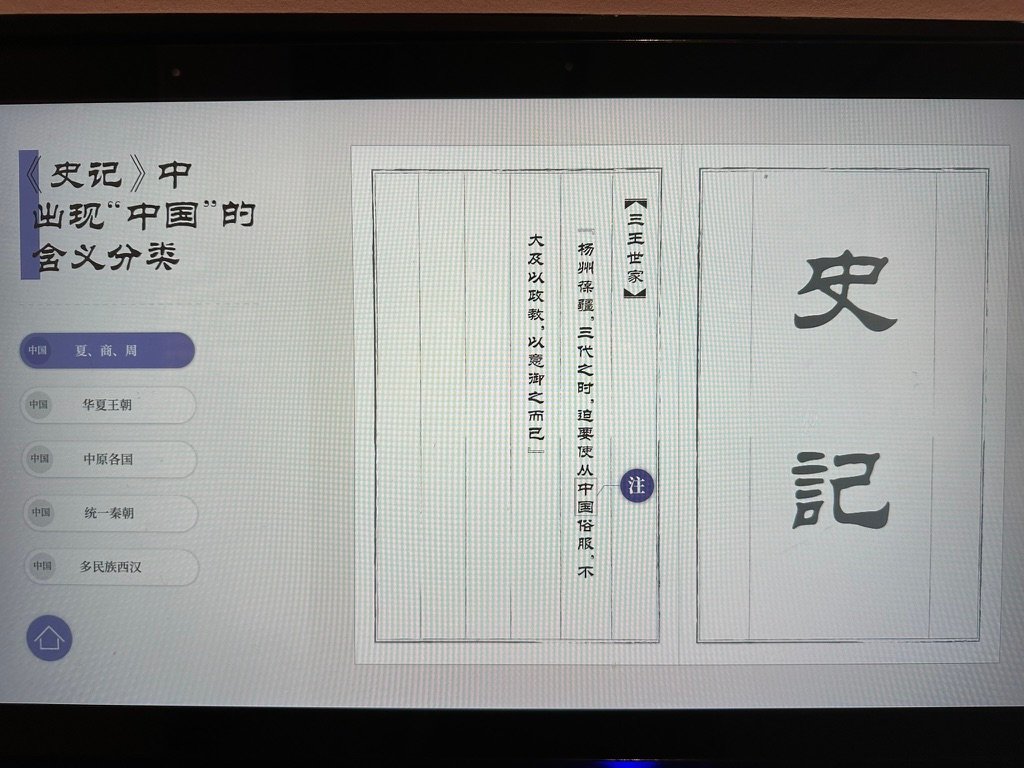
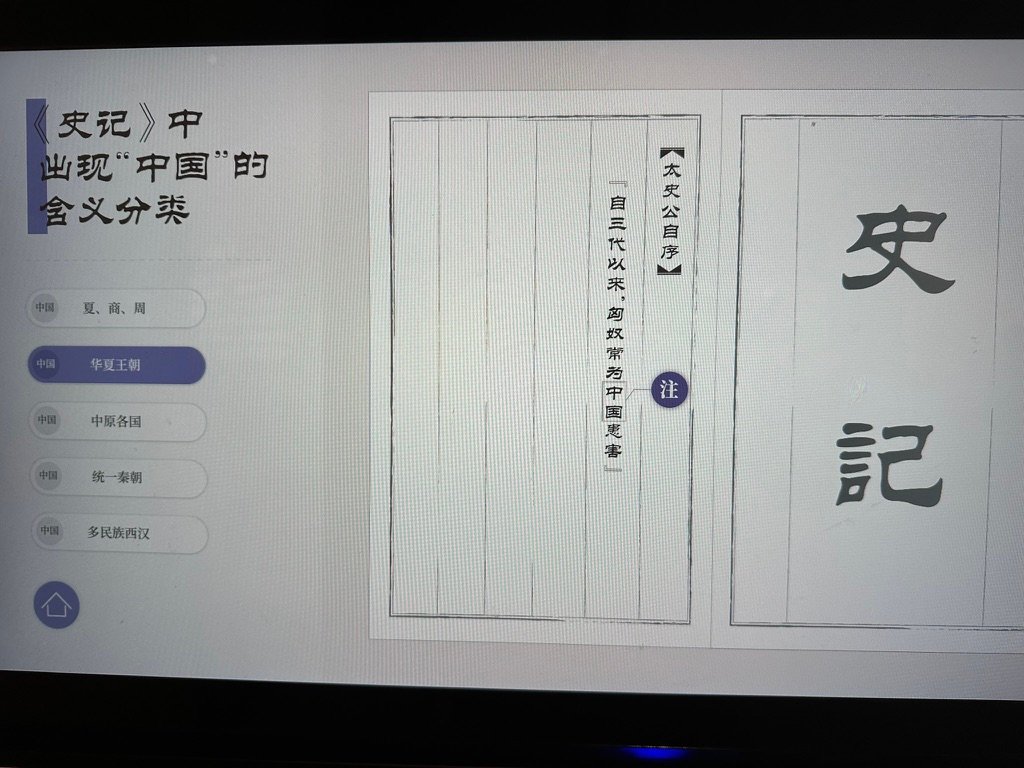
“China” Wasn’t Always “China”
One of the museum’s most fascinating digital exhibits isn’t about an emperor or a battle.
It’s about two simple characters:
中国 (Zhōngguó).
Elaine immediately whispered,
“Dad… we’ve seen this before!”
She was right.
Days earlier, at the Baoji Bronze Museum (宝鸡青铜器博物院), we stood in front of the famous He Zun (何尊)bronze vessel, whose inscription contains what many scholars regard as the earliest known written appearance of the words “中国”, dating to the early Western Zhou Dynasty (西周)..
Dad’s side note:
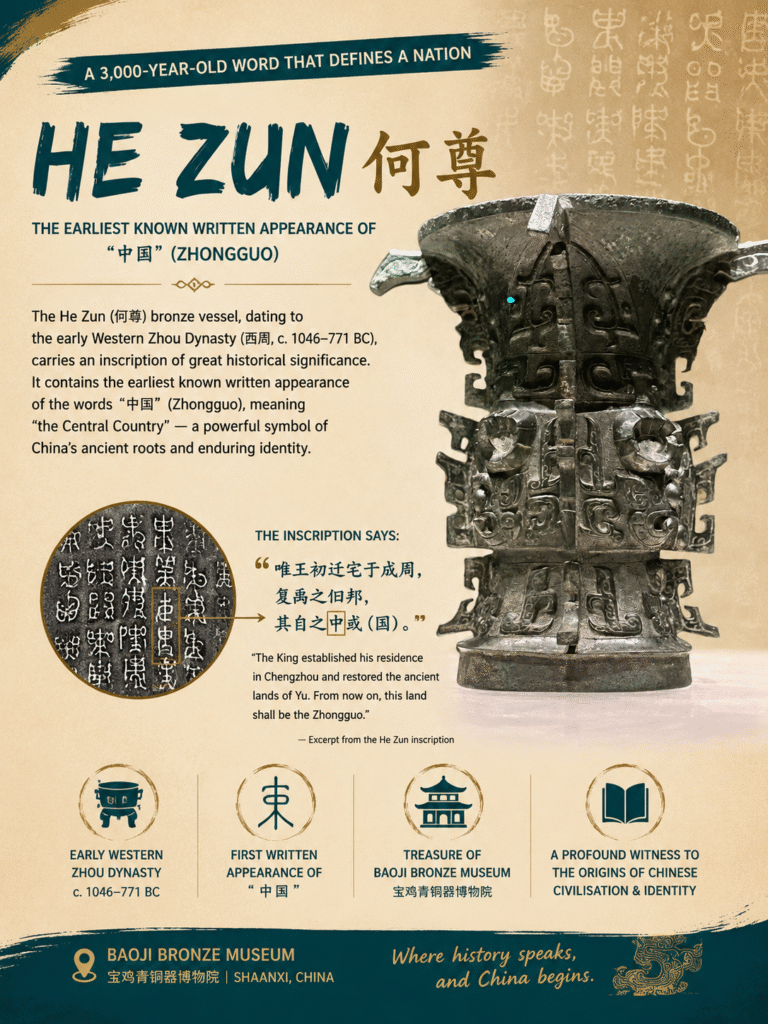
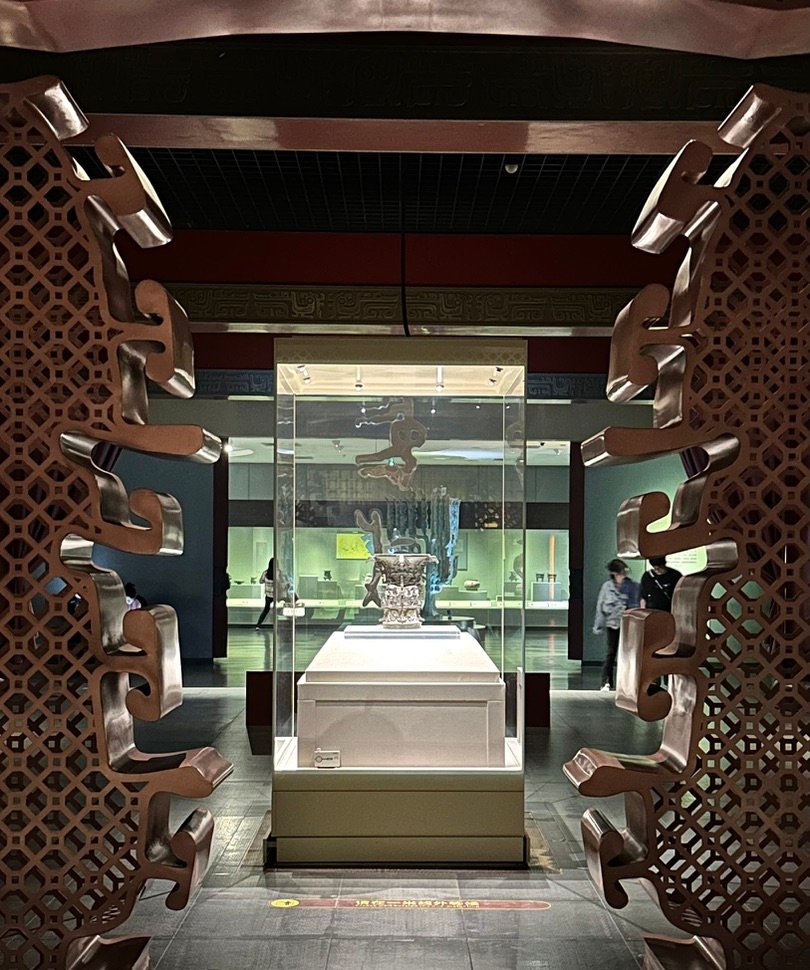
Back then, however, “China” did not yet mean the country we know today.
This interactive exhibit at the Qin-Han Museum explains exactly how that meaning gradually changed over the centuries.
The Meaning of “China” Kept Growing
Drawing from Sima Qian’s Records of the Grand Historian (《史记》), the exhibition classifies several different meanings of “中国”.
During the Xia, Shang and Zhou (夏商周) periods, the term referred broadly to the central cultural realm distinguished by its rituals and political order.
In passages describing the Huaxia (华夏) kingdoms, “中国” referred more specifically to the lands ruled by the central royal states.
During the Warring States (战国) period, it could describe the collection of competing states occupying the Central Plains.
Only after the Qin unification (秦统一) did “中国” begin to acquire the meaning of a politically unified realm.
By the Han Dynasty (汉朝), especially as the empire expanded and incorporated many different peoples, the concept evolved even further—from describing a central kingdom into a civilisation embracing multiple regions and ethnic groups.
In other words, the word stayed the same, but what it represented kept expanding.
🐧 Cheers looks confused…
“Wait… so ‘China’ kept changing its meaning?”
Dad nodded.
“Imagine someone saying ‘Europe’.”
“Sometimes they mean a continent.”
“Sometimes they mean the European Union.”
“Sometimes they mean Western Europe.”
“The word stays the same.”
“The meaning depends on the period you’re talking about.”
Cheers scratched his head.
“So… ‘China’ also had versions?”
“Exactly.”
The museum isn’t teaching visitors when the word first appeared.
It’s showing how people understood that word differently across different periods of history.
Elaine’s Note
“China” didn’t suddenly appear with its modern meaning. It gradually evolved over centuries, just like the civilisation itself.
Seeing this exhibit made me smile because it connected with something we’d learned much earlier.
At Baoji, we discovered the earliest known written appearance of “中国”.
Here at the Qin-Han Museum, we discovered something even more interesting:
words have histories too.
Conclusion: A Museum About Ideas, Not Emperors
When Elaine and I first walked into the Qin-Han Museum (秦汉馆), we expected another museum centred on Qin Shi Huang (秦始皇) and the famous emperors of the Qin and Han dynasties.
Instead, we discovered something far more thought-provoking.
This museum is not really about emperors.
It is about institutions.
Gallery after gallery, the museum quietly argues that the true legacy of the Qin and Han was not simply military conquest or political power. Their greatest achievement was creating systems capable of holding together a vast and diverse civilisation—systems of administration, law, governance, shared identity and political order that continued to evolve long after the Qin Dynasty itself had disappeared.
Standing at the end of the exhibition hall, I realised the museum had been asking a much bigger question all along:
What makes a civilisation endure?
Its answer was surprisingly simple.
Not great emperors alone.
Not famous battles.
Not magnificent palaces.
But institutions strong enough to outlive the people who created them.
🐧 Cheers looks around the final gallery…
“Dad… so this museum isn’t really about the Qin Dynasty?”
Dad smiled.
“Not really.”
“It’s about how a civilisation learned to organise itself.”
Cheers thought for a moment.
*”So… we’ve only finished learning how China was built?”
“Exactly.”
“And now comes an even more interesting question…”
“What was it actually like to live in it?”
Dad nodded.
“Let’s keep walking.”
Continue the Journey…
If this article explains how the Qin and Han built the foundations of Chinese civilisation, the next galleries explore something equally fascinating:
- Why Qin Shi Huang (秦始皇) standardised writing, currency, weights and measurements.
- How improved farming tools fed a growing empire.
- Why the Han Dynasty (汉朝) established the state monopoly of salt and iron.
- How Confucianism evolved from the learning of a few scholars into the educational foundation of an empire.
- The flourishing of art, science, technology and traditional Chinese medicine.
- And how the Qin-Han world gradually opened itself to the wider world through the Silk Road (丝绸之路).
Those stories deserve an article of their own.
Continue with Part 2: How the Qin and Han Changed Everyday Life