Great Wall, Forbidden City or Terracotta Warriors? Discover how China’s two greatest ancient capitals tell one amazing civilisation story.
Planning your first trip to China and wondering:
“Should I visit Beijing or Xi’an first?”
You are definitely not alone.
For many travellers preparing their first China vacation or holiday in China, these two cities usually appear at the top of every China travel itinerary.
And for very good reasons.
Beijing. 北京 (Běijīng).
The characters literally mean “Northern Capital”.
北 (běi) — north
京 (jīng) — capital
A fitting name for the capital of China today.
Beijing is home to some of the most famous places in China:
Then there is Xi’an. 西安 (Xī’ān).
西 (xī) means west.
安 (ān) means peace.
The name carries the meaning of “Western Peace”.
But before Xi’an received its modern name, the ancient city was known as:
长安 (Cháng’ān). “Long-lasting peace.”
For centuries, Chang’an was one of the greatest capitals in human history.
The city of:
emperors,
scholars,
merchants,
travellers,
and Silk Road connections.
So which city should you choose?
Beijing?
Or Xi’an?
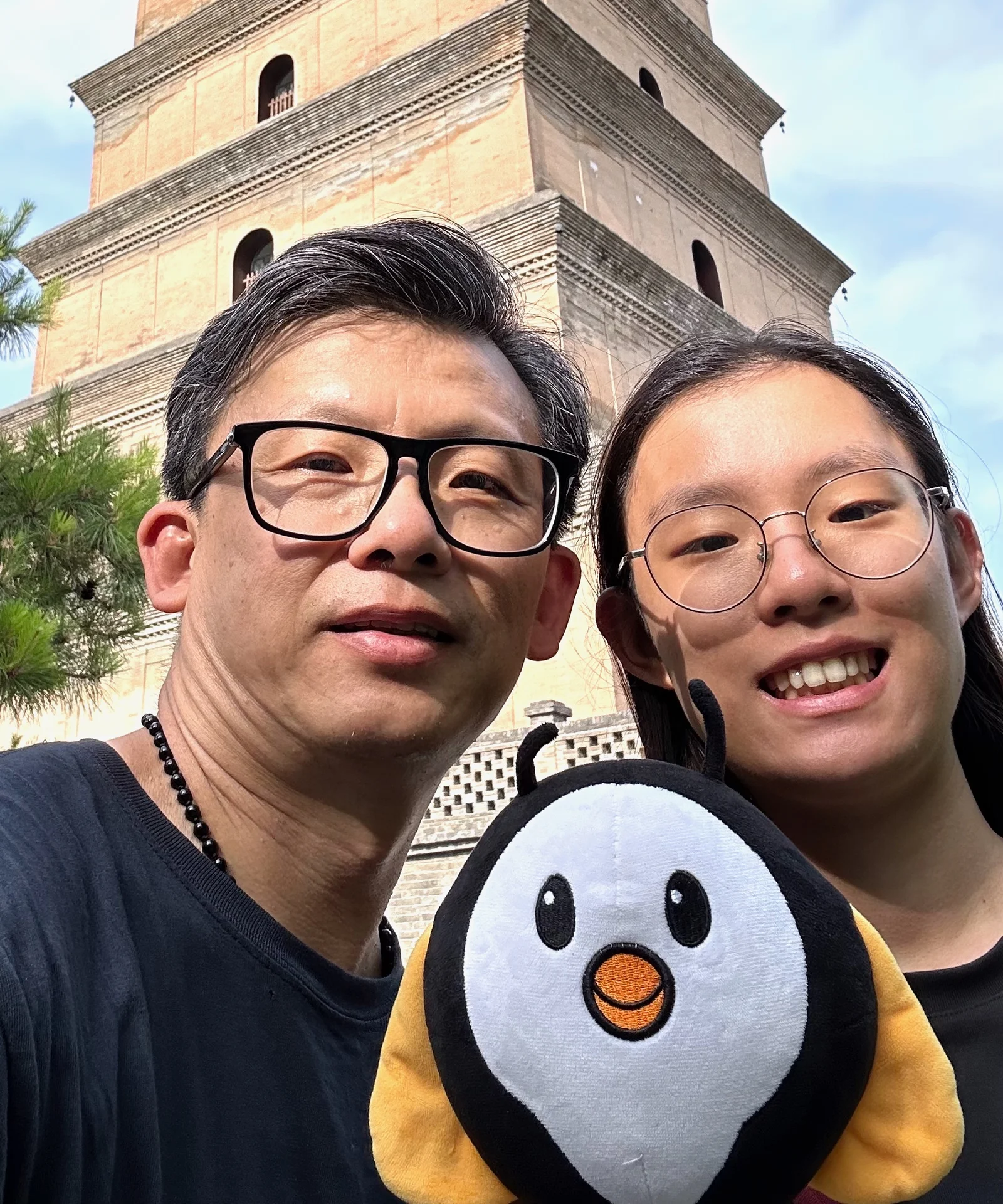
After travelling across China many times with my daughter Elaine, our answer slowly changed.
Because we discovered something:
Beijing and Xi’an are not really competitors.
They are two different chapters of the same incredible story.
One shows what Chinese civilisation became.
The other helps explain how many important parts began.
But instead of letting me explain…
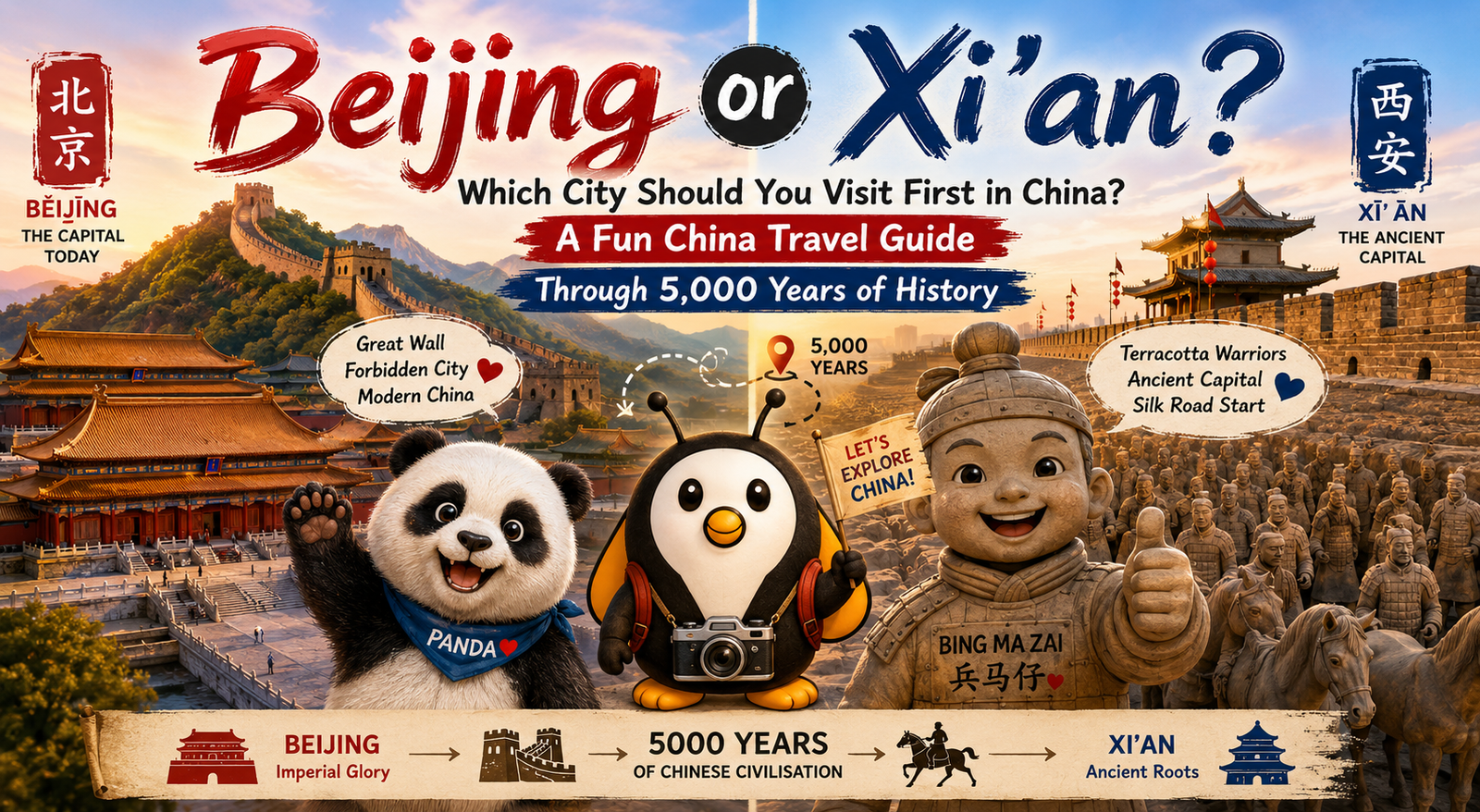
Let us ask three little friends from ChinaTravelBug.
A Beijing panda.
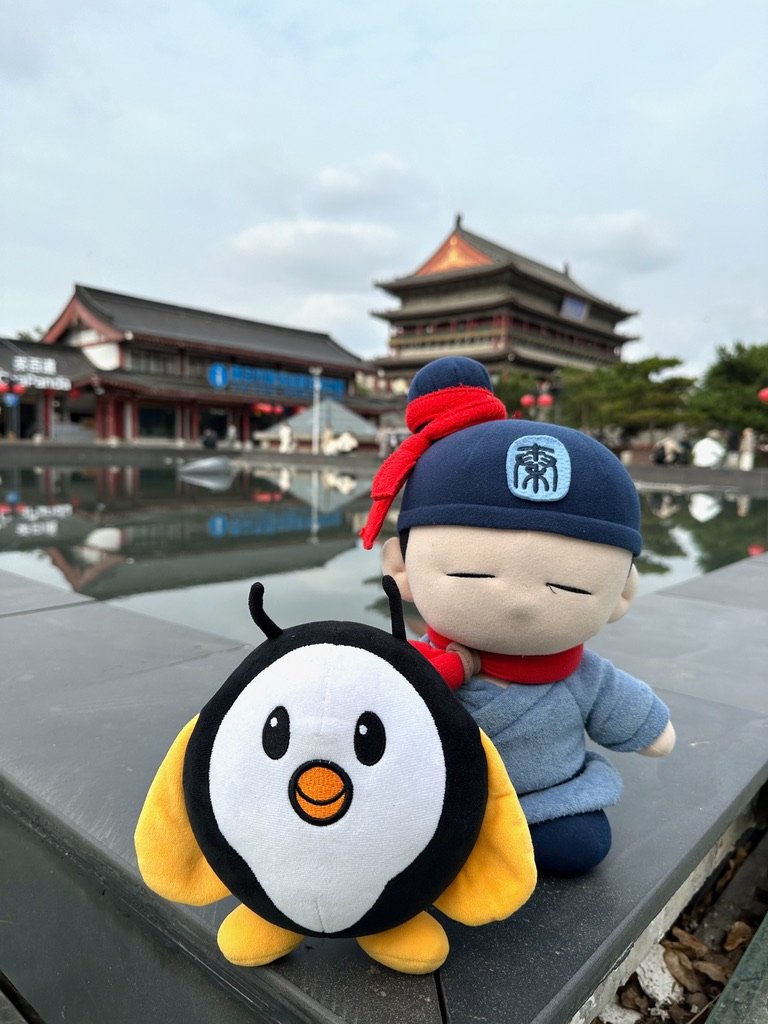
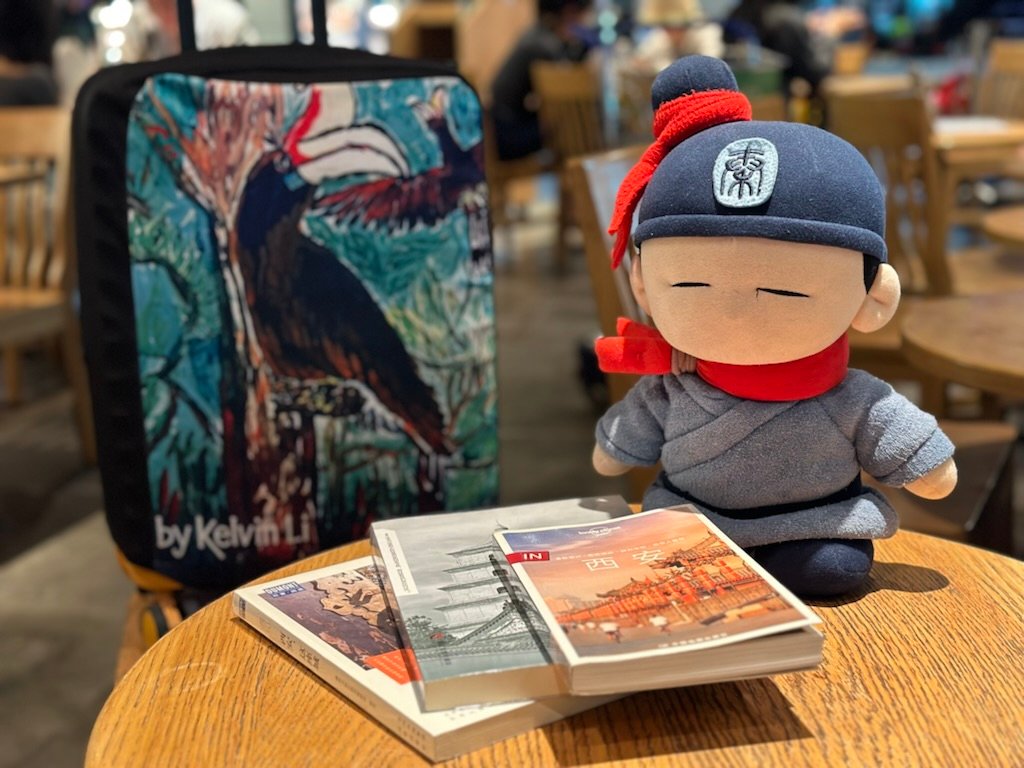
Our little Terracotta Warrior called Bing Ma Zai. 兵马仔 (Bīng Mǎ Zǎi).
兵 (bīng) — soldier
马 (mǎ) — horse
仔 (zǎi) — little one
Our little soldier who carries memories from ancient Xi’an.
And Cheers — the curious little explorer who believes every place has a story waiting to be discovered.
Round One: First Impressions — Panda Says Beijing Wins
“Easy answer,” Panda smiled.
“Start with Beijing!”
And honestly?
Panda has a strong argument.
For many international visitors, Beijing China travel is the perfect introduction.
The city is easy to reach, with international flights arriving through Beijing Capital International Airport and Beijing Daxing International Airport.
More importantly, Beijing gives travellers an immediate feeling of China’s scale.
Few cities in the world combine:
ancient history,
modern development,
imperial architecture,
traditional neighbourhoods,
and global importance
like Beijing.
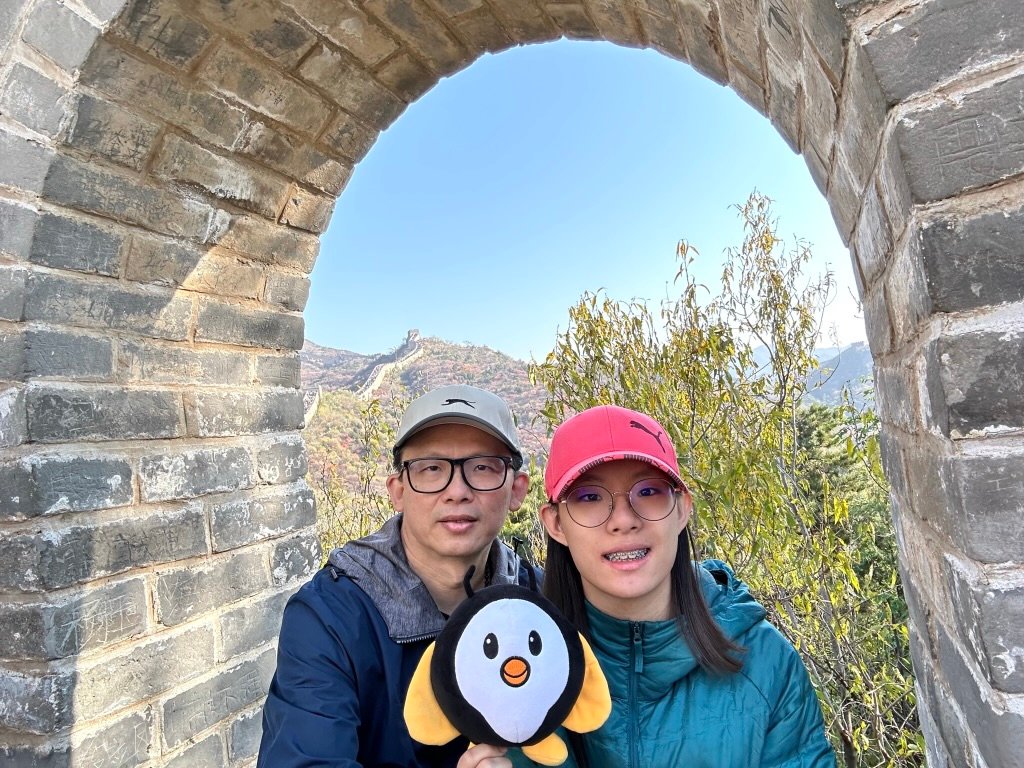
The Great Wall of China From Beijing — A Dream for Many Travellers
Panda proudly continued:
“Where else can travellers walk on one of the greatest China wonders?”
Of course, he meant:
The Great Wall of China. 长城 (Chángchéng).
长 (cháng) means long.
城 (chéng) means city wall or defensive wall.
A simple name: “The Long Wall.”
But when you stand there watching it stretch across mountains, suddenly the simple name feels perfect.
For many visitors searching for Beijing things to do, travelling to the Great Wall of China from Beijing is the number one dream.
And yes. It deserves that reputation.
Standing on the mountains and watching the wall continue into the distance is unforgettable.
But after Elaine and I returned to the Great Wall many years later, we realised something.
The Great Wall is not only about size.
It tells a deeper human story.
How does a civilisation protect itself?
How do people respond to challenges?
How does geography shape history?
A wall becomes much more interesting when you understand the people behind it.
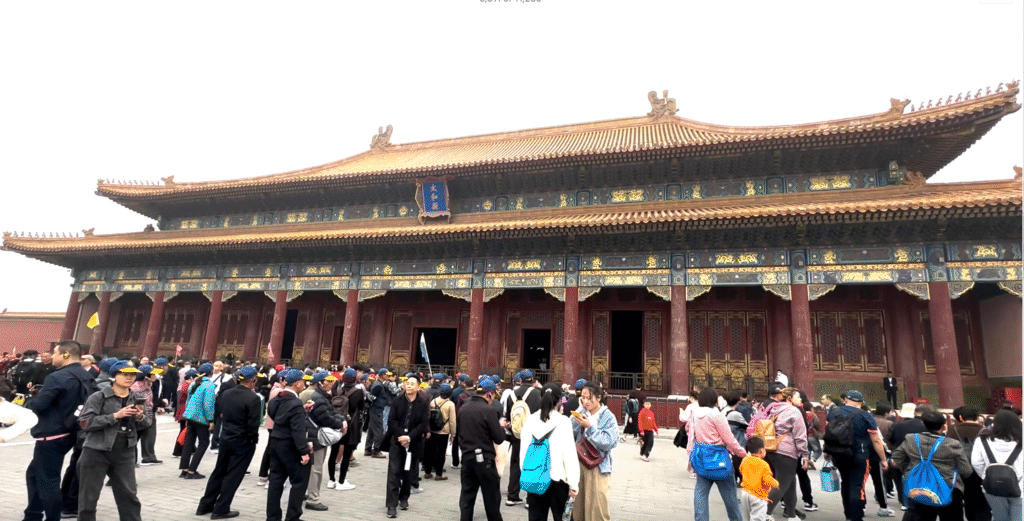
Forbidden City Beijing — Understanding Imperial China
Panda was not finished.
“What about The Forbidden City?”
Good point.
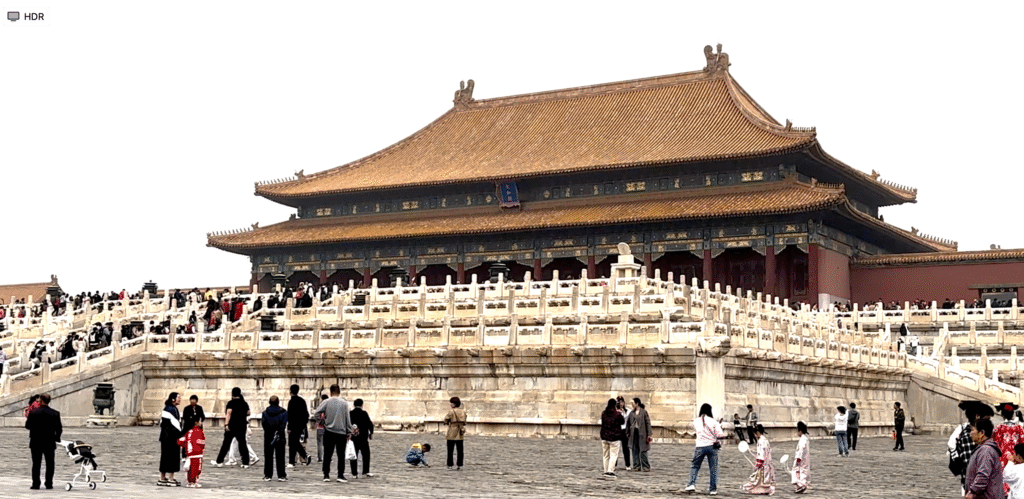
The Forbidden City. 故宫 (Gùgōng).
故 (gù) means old or former.
宫 (gōng) means palace.
The “former palace”.
For almost 500 years during the Ming (明) and Qing (清) dynasties, this was the centre of imperial China.
Many travellers visit because it is beautiful.
Red walls. Golden roofs. Huge courtyards.
But when you understand the story behind it, everything changes.
The Forbidden City represents:
government, power, tradition, and how a huge civilisation organised itself.
It is not only a palace.
It is a window into how China was ruled.
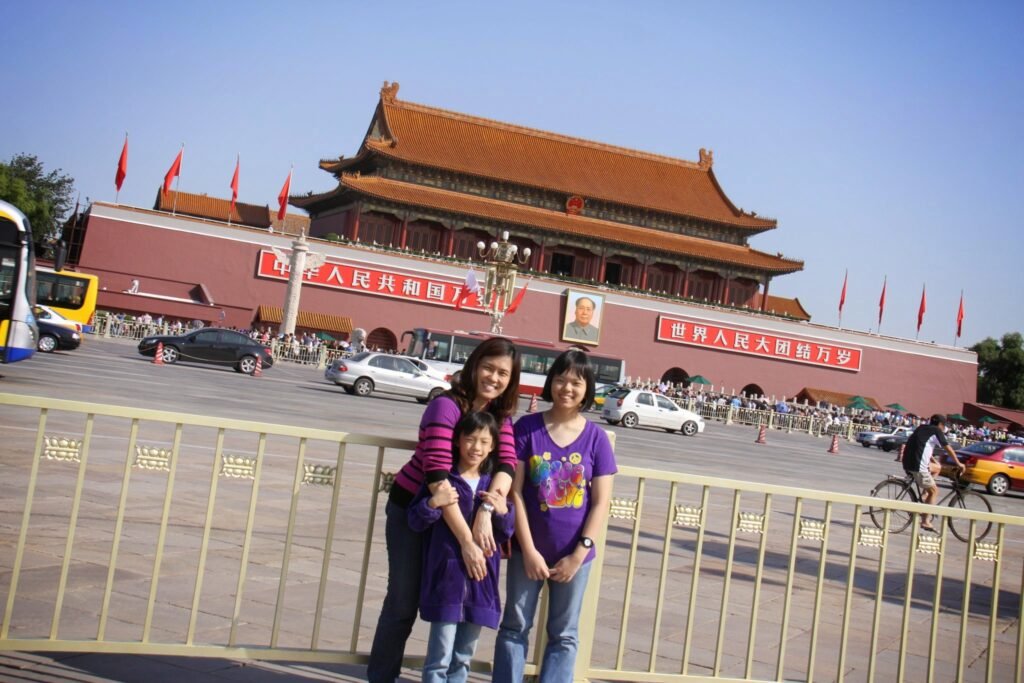
Our Own Beijing Story — Where Elaine’s China Journey Started
For us, Beijing is also personal.
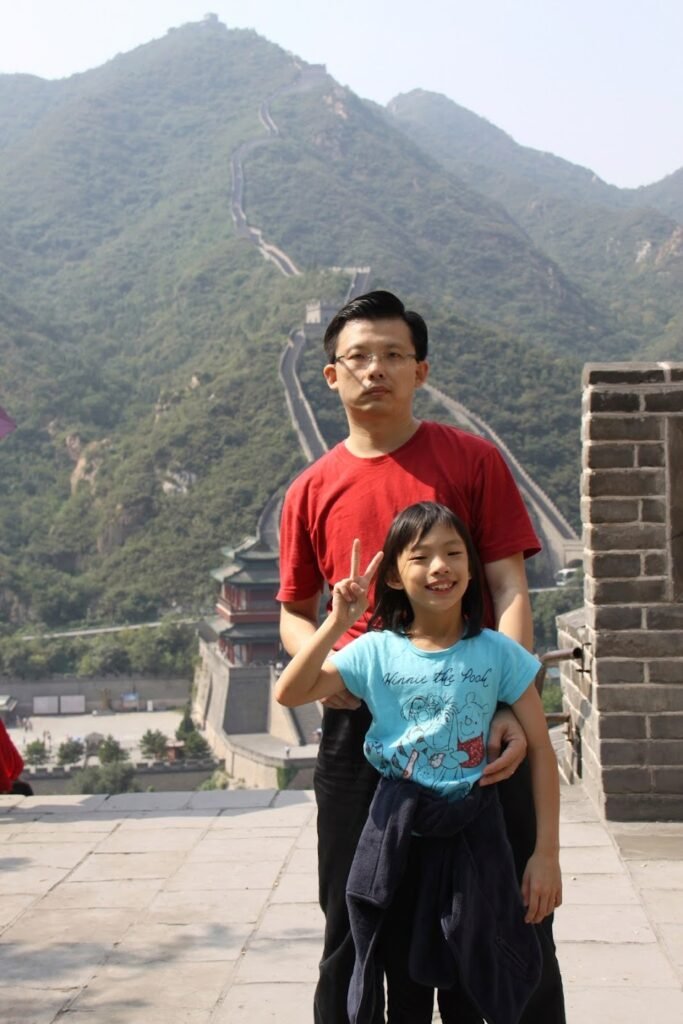
In 2013, Elaine was only eight years old when she visited China for the first time.
Beijing was her first doorway.
She stood at:
Tiananmen Square. 天安门 (Tiān’ānmén).
She climbed the Great Wall.
She walked through The Forbidden City.
She visited Beijing Zoo. 北京动物园 (Běijīng Dòngwùyuán).
And brought home a little panda friend.
At that age, China was not about history lessons.
It was about curiosity. 好奇心 (hào qí xīn).
Wonder. A new world. But sometimes curiosity is where learning begins.
More than ten years later, when Elaine returned to Beijing, she saw the same city differently.
The buildings had not changed.
She had changed. That is: 成长 (chéng zhǎng). Growth.

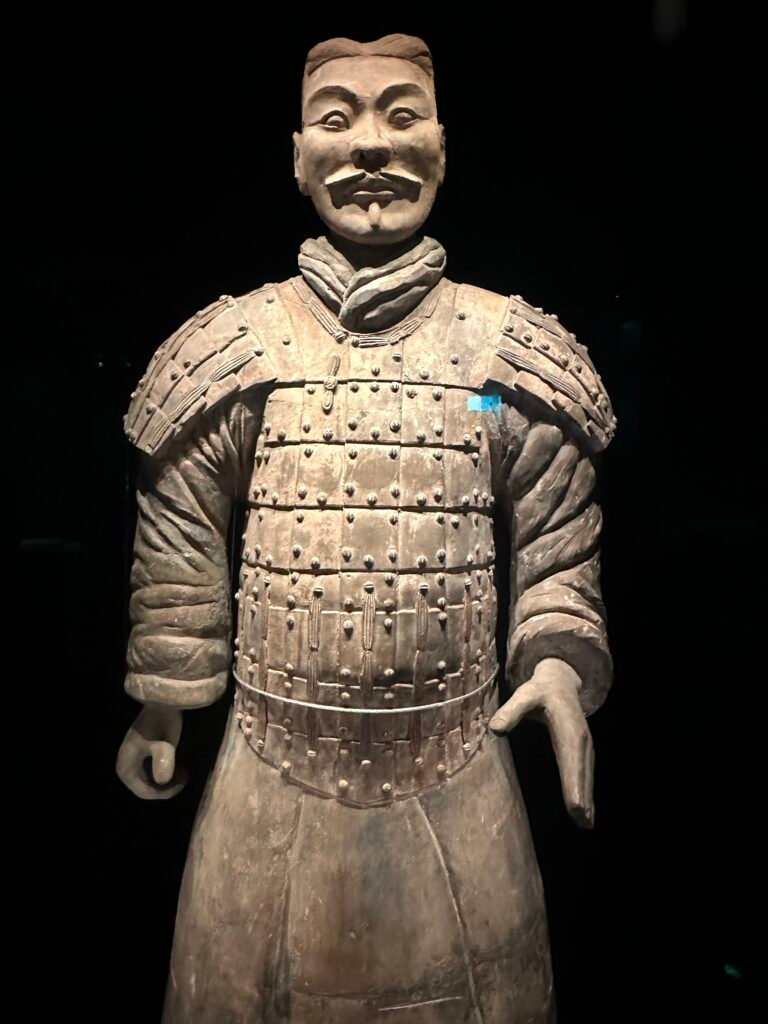
Round Two: Bing Ma Zai Interrupts — Wait! Xi’an Is Where the Earlier Story Begins
Suddenly, our little Terracotta Warrior could not stay quiet.
“Beijing is amazing…”
“But you are reading the final chapters first!!”
“If travellers want to understand where many important Chinese stories began, they must visit Xi’an!”
Before Beijing became the capital of China…
there was Chang’an. 长安 (Cháng’ān).
And Chang’an was once one of the greatest cities on Earth.
Xi’an China — The City That Explains Ancient China
Many travellers search for Xi’an attractions because of one famous discovery:
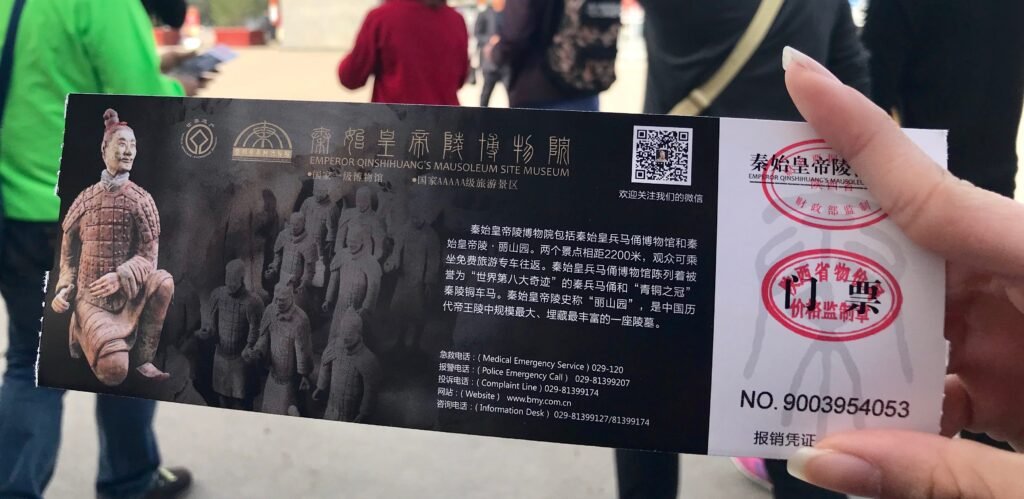
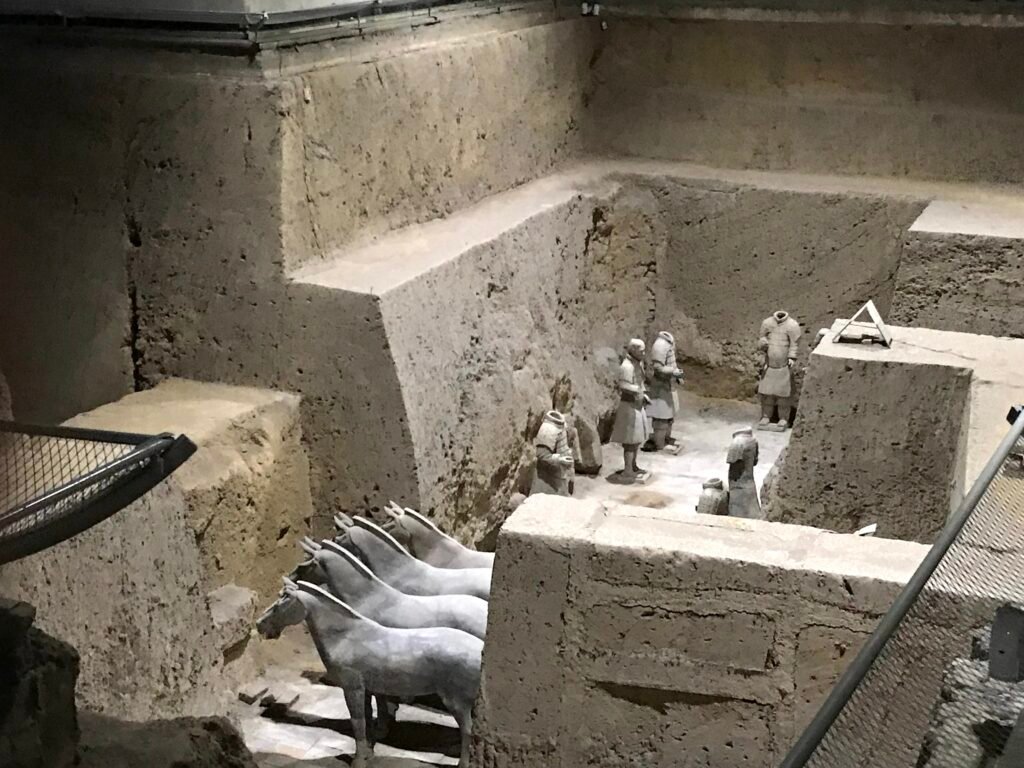
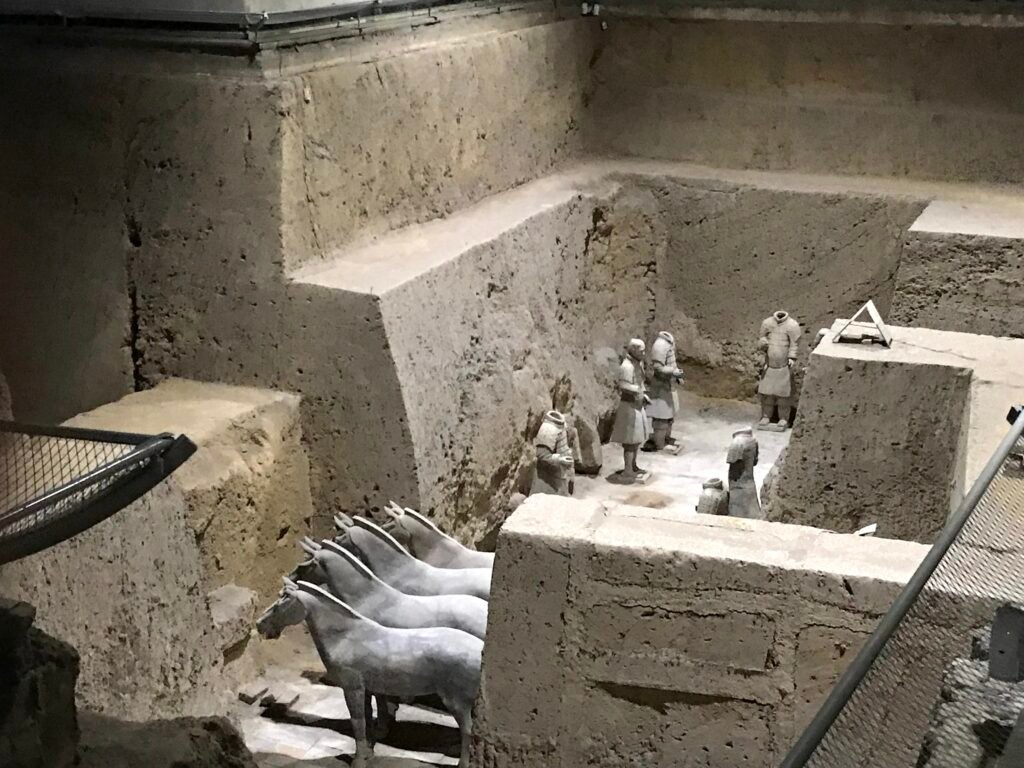
The Terracotta Warriors. 兵马俑 (Bīngmǎyǒng).
Thousands of soldiers created more than 2,000 years ago to guard the tomb of Qin Shi Huang.
秦始皇 (Qín Shǐ Huáng).
秦 (Qín) — Qin Dynasty
始皇 (Shǐ Huáng) — First Emperor.
But Xi’an is not only about Qin Shi Huang.
That was one lesson Elaine and I slowly discovered.
Xi’an is where different layers of Chinese civilisation connect.
Going Beyond Xi’an — The Discovery That Changed Our Understanding
Many travellers think:
Xi’an = Terracotta Warriors = Qin Shi Huang.
But Chinese history did not begin there.
Travelling beyond Xi’an changed our understanding.
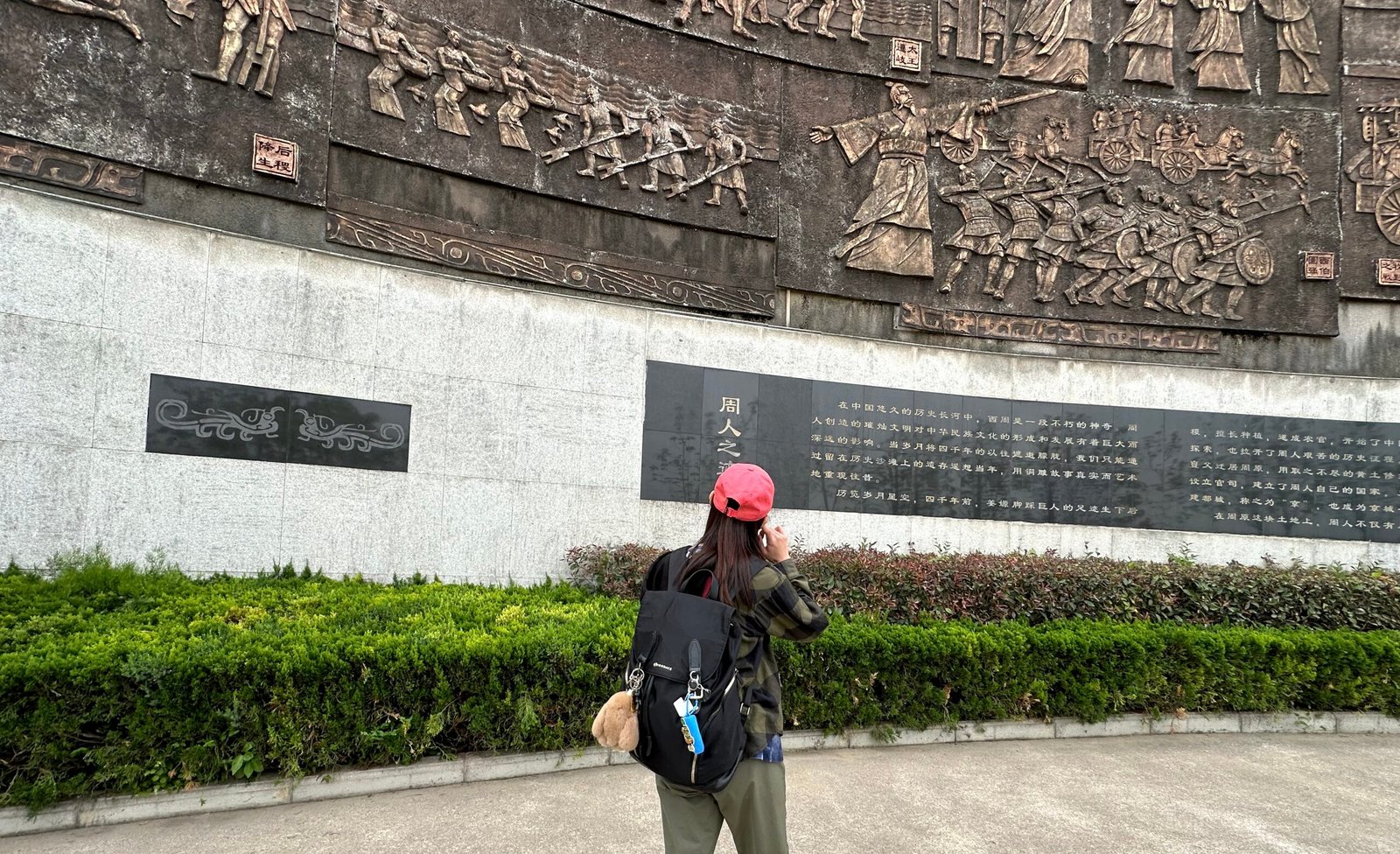
Introduced us to Western Zhou civilisation. 西周 (Xī Zhōu).
Zhouyuan. 周原 (Zhōuyuán).
Helped us feel history from 3,000 years ago.
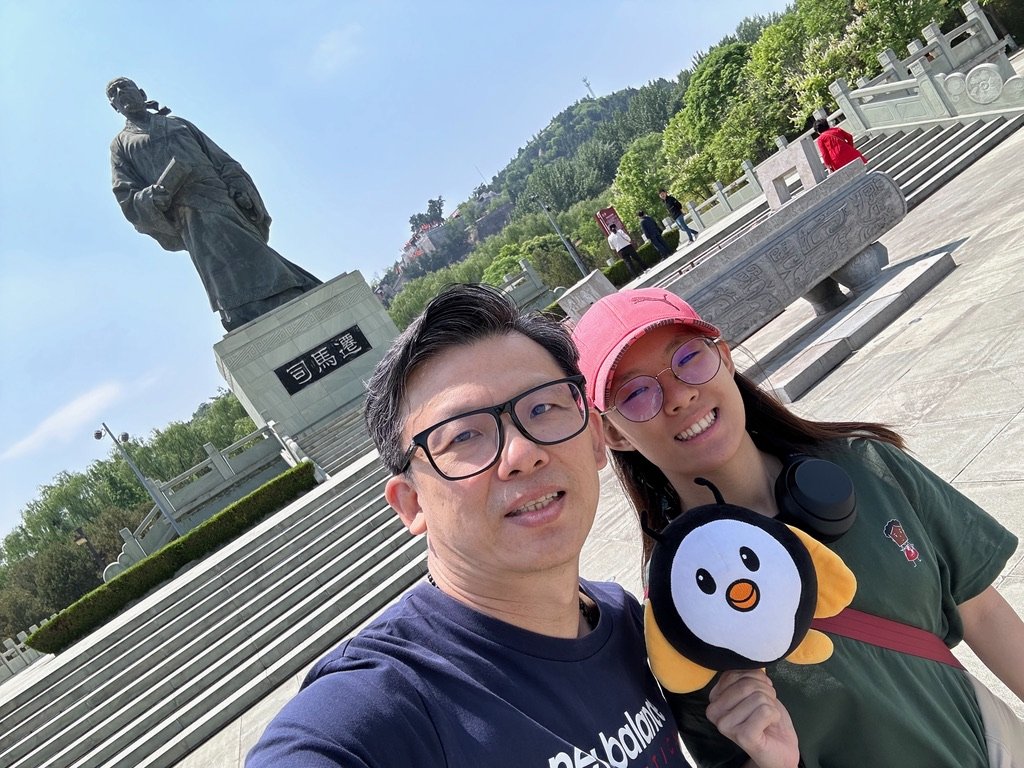
Hancheng. 韩城 (Hánchéng).
Introduced us to Sima Qian. 司马迁 (Sīmǎ Qiān).
The historian who preserved China’s memories through:
《史记》(Shǐjì) Records of the Grand Historian.
Suddenly the timeline connected.
周 Zhou.
秦 Qin.
汉 Han.
唐 Tang.
China became a story. Not separate attractions.

Cheers Steps In — Beijing or Xi’an? Maybe We Are Asking the Wrong Question
By now, Panda and Bing Ma Zai were getting very excited.
“Beijing has the Great Wall!”
“Xi’an has the Terracotta Warriors!”
“Beijing has the Forbidden City!”
“Xi’an has Chang’an!”
The debate could continue forever.
Finally, Cheers, our little ChinaTravelBug explorer, jumped between them.
“Wait…”
“Maybe travellers are asking the wrong question!!.”
“Beijing and Xi’an are not enemies.”
“They are two chapters of the same book.”
And Cheers was right.
After multiple trips of travelling through China with Elaine, we discovered something important.
To understand China, you do not compare Beijing and Xi’an like two competing holiday destinations.
You connect them.
Because together, they tell a much bigger story.
A story called:
中华文明
(Zhōnghuá Wénmíng)
Chinese civilisation.
Beijing vs Xi’an — What Is the Real Difference?
Many first-time visitors planning their China travel itinerary ask:
“Which city has better history?”
But the answer depends on what part of history you want to experience.
Here is the simplest way Elaine and I understand it:
| Beijing 北京 | Xi’an 西安 | |
|---|---|---|
| Represents | Imperial China | Ancient China foundations |
| Famous landmark | Great Wall, Forbidden City | Terracotta Warriors |
| Historical feeling | Yuan, Ming, Qing dynasties | Zhou, Qin, Han, Tang dynasties |
| Main story | How China was governed | How China developed |
| Best experience | Palaces, walls, hutongs | Ancient capitals, archaeology, Silk Road |
| First-time friendly | ⭐⭐⭐⭐⭐ | ⭐⭐⭐⭐⭐ |
“So Beijing shows what China became?”
Exactly.
Bing Ma Zai nodded.
“And Xi’an explains how China became China?”
Exactly.
Beijing — Understanding the Later Chapters of Imperial China
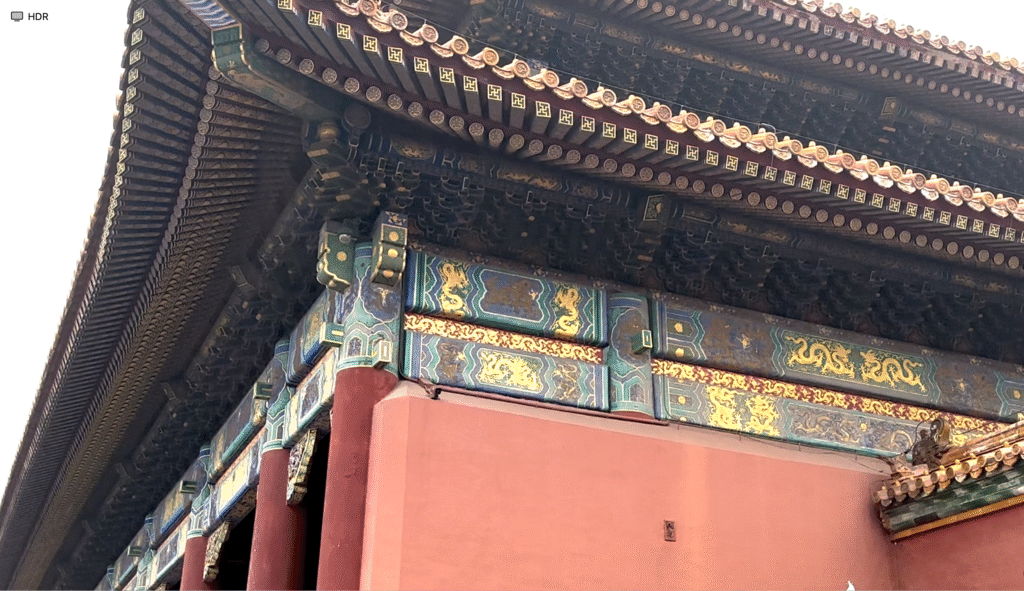
When you walk through Beijing, especially the Forbidden City, you are mainly walking through the later chapters of imperial Chinese history.
The Yuan. 元 (Yuán).
The Ming. 明 (Míng).
The Qing. 清 (Qīng).
For hundreds of years, emperors ruled from Beijing.
Government decisions travelled from The Forbidden City across an enormous country.
Foreign visitors arrived.
Officials gathered.
Dynasties rose and ended.
That is why Beijing feels powerful.
Grand. Organised. Imperial.
It shows how thousands of years of Chinese civilisation eventually developed into one of history’s largest and most sophisticated states.
Xi’an — Travelling Back to the Earlier Chapters
But when you travel from Beijing to Xi’an…
you travel backwards in time.
Xi’an opens earlier chapters.
The Zhou. 周 (Zhōu). The Qin. 秦 (Qín). The Han. 汉 (Hàn). The Tang. 唐 (Táng).
These dynasties shaped many ideas people associate with China today.
Government systems.
Writing traditions.
Cultural identity.
Trade routes.
International exchange.
Even the Chinese name for Chinese people: 汉人 (Hàn rén) comes from the Han Dynasty.
The word many overseas Chinese use: 唐人 (Táng rén)
such as Chinatown: 唐人街 (Táng rén jiē) comes from memories of the Tang Dynasty.
Suddenly, Xi’an is not just another tourist city.
It becomes a key to understanding China.
From Beijing to Xi’an by High-Speed Train — A Journey Through Time

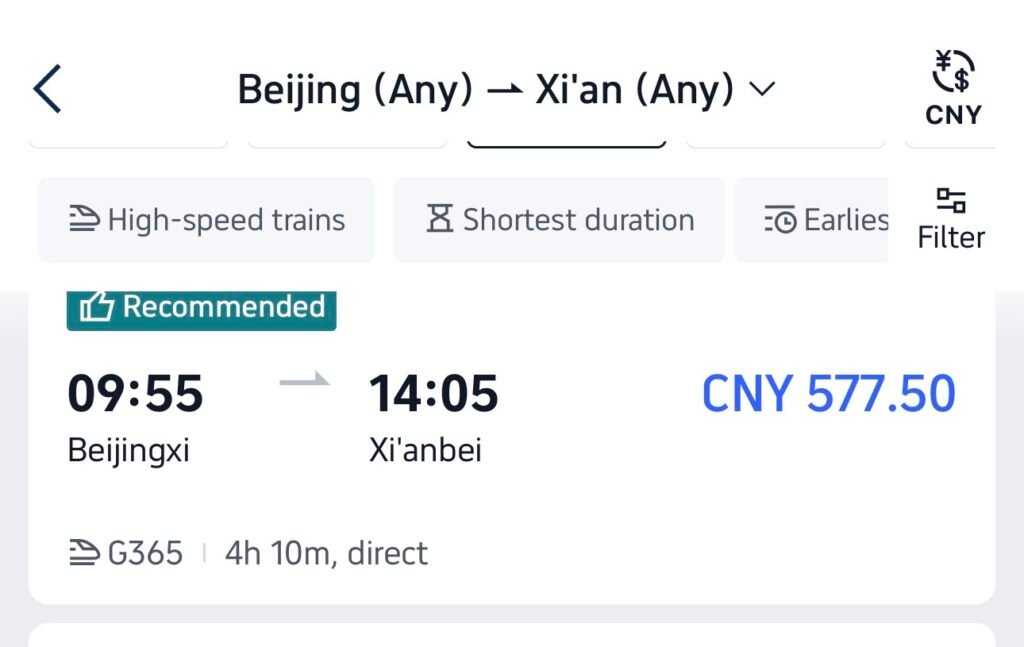
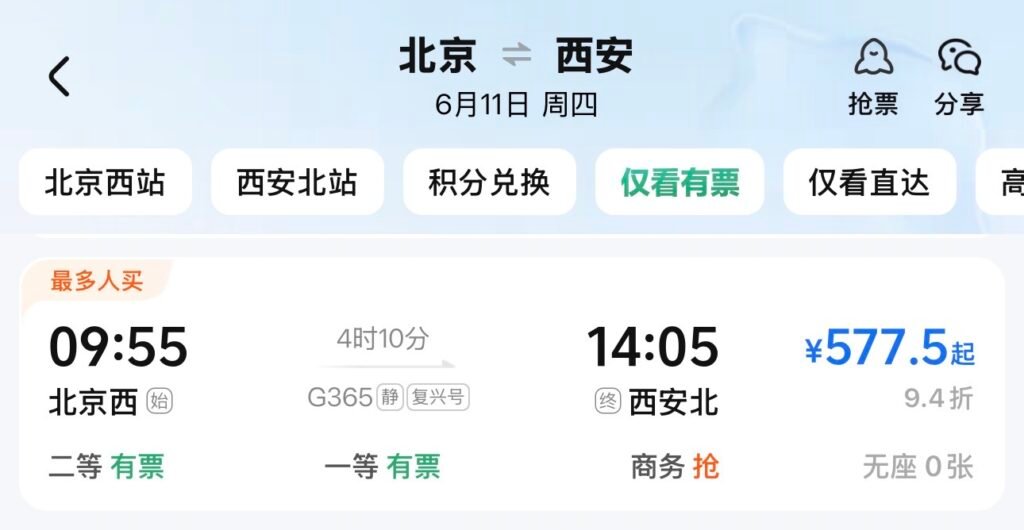
One of the amazing things about travelling in China today is how easily visitors can connect these two cities.
Modern China’s high-speed rail system makes a Beijing and Xi’an trip very practical.
You can wake up in Beijing…
and a few hours later arrive in Xi’an.
But historically?
You have travelled across centuries.
From:
Forbidden City 故宫
↓
back to
Terracotta Warriors 兵马俑
↓
back to
Chang’an 长安
↓
back into the earlier chapters of Chinese civilisation.
This is why we love travelling China by train.
Outside the window is modern China.
But every destination opens another historical layer.

Suggested China Travel Itinerary: Beijing + Xi’an Together
If this is your first China vacation, our suggestion is:
Do both.
Do not rush.
China is too large and too deep to experience only through checklists.
Day 1–5: Beijing China Travel
Start with:
Great Wall of China 长城
One of the greatest China wonders.
A must for almost every first-time visitor.
Forbidden City 故宫
Understand emperors, government and imperial China.
Tiananmen Square 天安门
See where historical and modern China meet.
Summer Palace 颐和园
Experience Chinese garden philosophy and beauty.
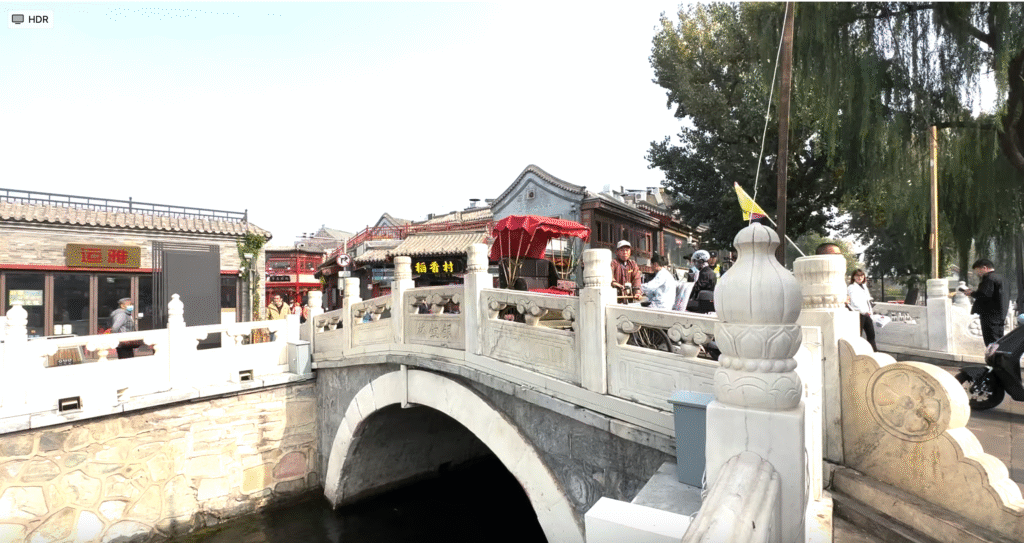
Shichahai 什刹海 & Hutongs 胡同
Discover ordinary Beijing life.
Wangfujing 王府井 & Qianmen 前门
Explore old and new Beijing.
Then Continue to Xi’an China
Spend another 4–5 days if possible.
Xi’an Terracotta Warriors 兵马俑
Meet the army created for China’s First Emperor.
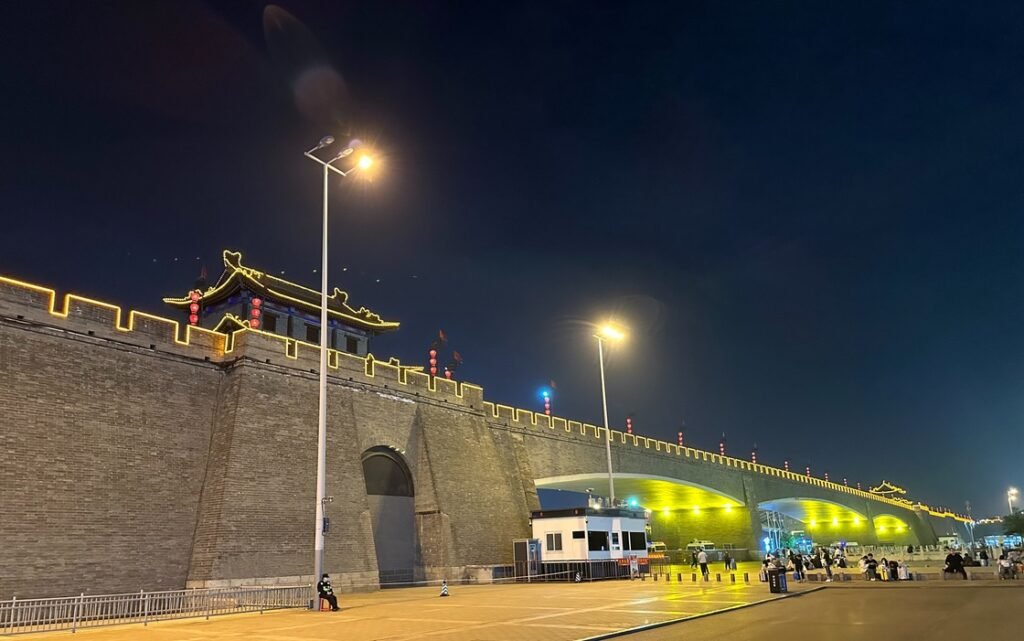
Xi’an City Wall 西安城墙
Walk above one of China’s best-preserved ancient city walls.
Xi’an Museum 西安博物院
Understand daily life, culture and history.
Xi’an Muslim Quarter 回民街
Experience the influence of Silk Road connections.
Beyond Xi’an — If You Have Extra Days
This is where ChinaTravelBug discovered some of our favourite stories.
Where we felt Western Zhou history come alive.
Where we paid respect to Sima Qian, the historian who preserved Chinese civilisation’s memory.
Xianyang 咸阳.
Where Qin Shi Huang built the first unified empire.
These places may not appear on every tourist list.
But they helped us connect the story.

So Who Wins — Panda or Bing Ma Zai?
Finally, Cheers asked:
“So… who wins?”
Panda looked at Bing Ma Zai.
Bing Ma Zai looked at Panda.
Both smiled.
Because after travelling through China, Elaine and I discovered:
There is no winner.
Beijing helps you admire China.
Xi’an helps you understand China.
北京让你看见中国的辉煌。
(Běijīng ràng nǐ kànjiàn Zhōngguó de huīhuáng)
Beijing lets you see China’s greatness.
西安让你了解中国的根。
(Xī’ān ràng nǐ liǎojiě Zhōngguó de gēn)
Xi’an helps you understand China’s roots.
Together, they tell one continuous story.
Xi’an helps you understand China’s roots.
Together, they tell one continuous story.
Why We See Beijing and Xi’an Differently — Our ChinaTravelBug Journey
When Elaine and I first visited Beijing in 2013, we travelled like most first-time visitors.
We wanted to see the famous places.
The Great Wall.
The Forbidden City.
Tiananmen.
The places everyone dreams about when planning a China vacation.
And there is absolutely nothing wrong with that.
Every journey begins somewhere.
But over the years, something changed.
The more we travelled across China, the more we became curious.
We started asking different questions.
Not only:
“Where should we go?”
But:
“Why does this place matter?”
为什么?
(Wèi shén me?)
Why?
That simple question changed everything.
A Terracotta Warrior was no longer only an amazing archaeological discovery.
It became a doorway into understanding Qin Shi Huang and the first unified Chinese empire.
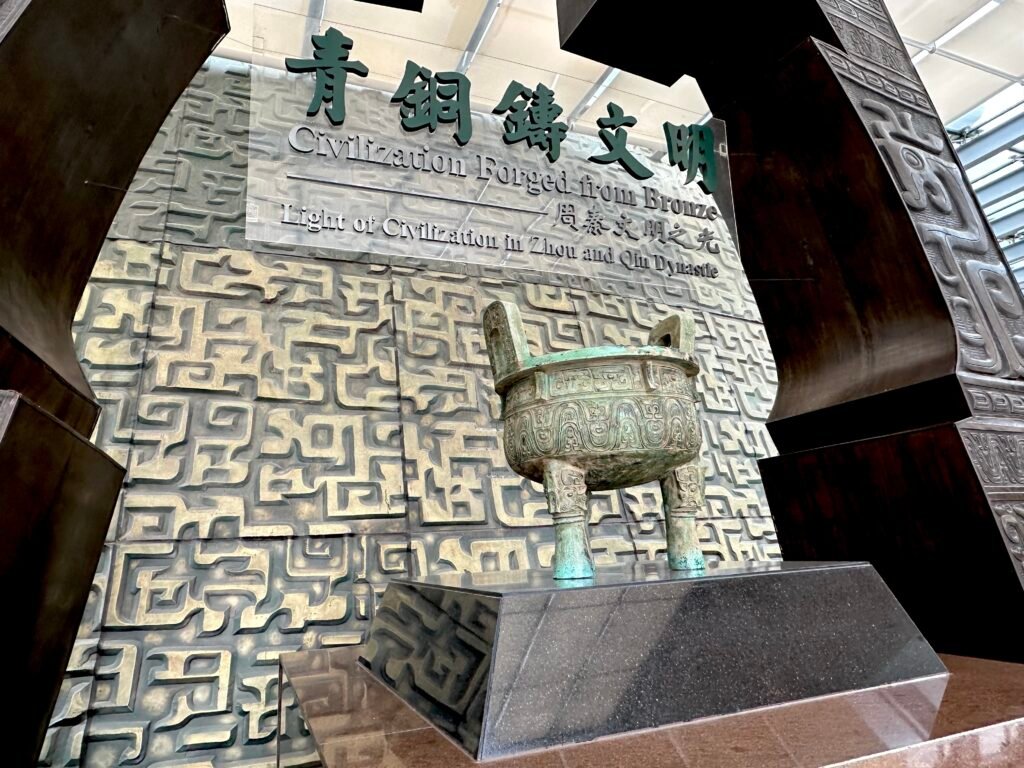
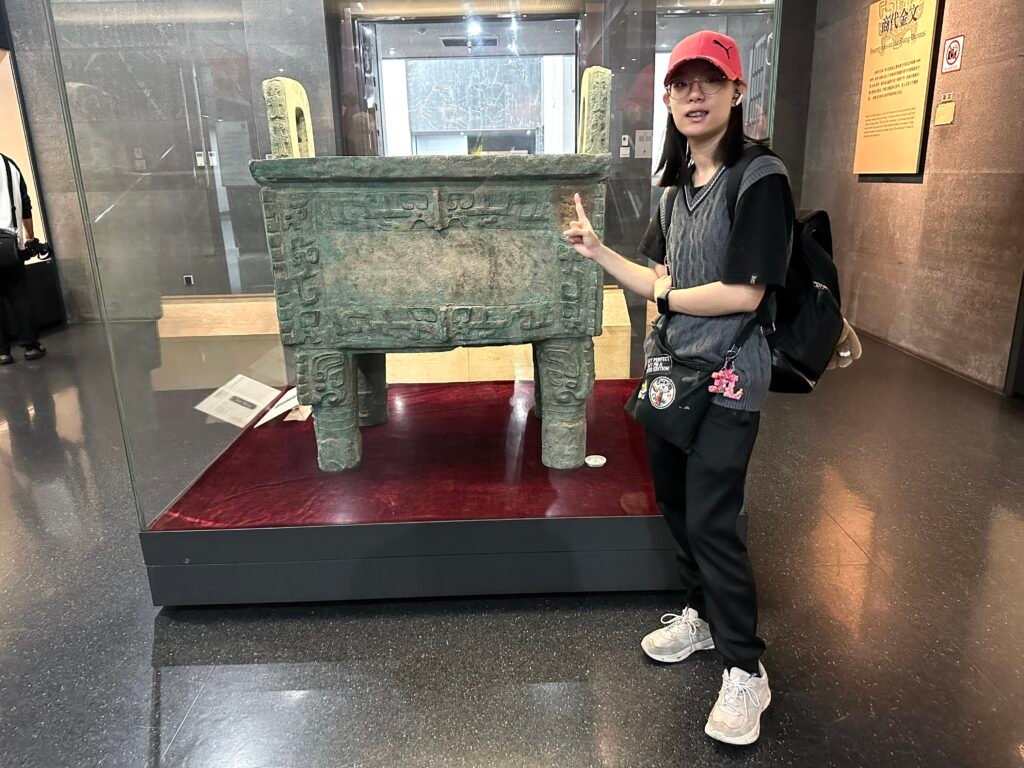
A bronze vessel in Baoji was no longer only an ancient object.
It became a message left behind by people who lived 3,000 years ago.
A street in Beijing was no longer just a shopping street.
It became a place where generations of ordinary people lived, worked, and adapted.
That is when travelling became more meaningful.
Our Simple ChinaTravelBug Way of Exploring China
Afte multiple trips of travelling China, Elaine and I developed our own way of discovering China:
1. Learn Before You Go
了解 (liǎo jiě) Understand. A little background changes everything. You do not need to become a historian.
But knowing a simple timeline:
Zhou 周
↓
Qin 秦
↓
Han 汉
↓
Tang 唐
↓
Ming 明
↓
Qing 清
makes museums, temples, palaces, and ancient cities come alive.
2. Walk Slowly When You Arrive
慢慢走 (màn màn zǒu) Walk slowly. Sometimes the best travel moments are not the famous photo spots.
They are:
a conversation with a local auntie,
a small neighbourhood street,
a morning market,
a quiet corner of an ancient city.
Those are the moments we remember.
3. Connect the Stories After You Return
Every journey adds another piece.
Beijing helped us understand imperial China.
Xi’an helped us discover ancient China.
Baoji helped us feel the world before Qin.
Hancheng helped us appreciate how history was preserved.
The more pieces we collected… the BIGGER picture became ..CLEARER.
*********************************************************************************************************
Beijing or Xi’an Travel FAQ — Questions First-Time Visitors Often Ask
After sharing our Beijing and Xi’an journeys, Panda, Bing Ma Zai and Cheers realised something.
Many travellers are not really asking:
“Which city is better?”
They are actually asking:
“How do I plan my first China trip?”
So here are some common questions we often hear from travellers discovering China for the first time.
Is Beijing or Xi’an Better for a First Trip to China?
If this is your very first visit to China, Beijing is usually the easier starting point.
Why?
Because Beijing immediately introduces you to some of the most famous places in China.
Within a few days, you can experience:
- Great Wall of China 长城
- Forbidden City 故宫
- Tiananmen Square 天安门
- Summer Palace 颐和园
- traditional Beijing hutongs 胡同
It gives travellers a powerful first impression of Chinese history, culture and modern development.
Beijing answers:
“What did Chinese civilisation become?”
But Xi’an answers another important question:
“How did Chinese civilisation develop?”
That is why we believe the best answer is:
Start with Beijing.
But continue to Xi’an.
How Many Days Do You Need in Beijing?
For a first-time Beijing China travel itinerary, we recommend at least:
5 to 7 days if possible.
Many visitors try to complete Beijing in 2 or 3 days.
You can.
But you will mostly collect photos.
Beijing rewards slower travel.
A meaningful Beijing itinerary can include:
Day 1:
Tiananmen Square + Forbidden City
Walk from modern China into imperial China.
Day 2:
Great Wall of China from Beijing
Spend one full day.
Do not rush one of the greatest China wonders.
Day 3:
Summer Palace + traditional gardens
Experience the softer, artistic side of Chinese culture.
Day 4:
Discover everyday Beijing.
Day 5:
Wangfujing + Qianmen
See how old Beijing meets modern China.
And if you have more time:
Slow down.
Walk.
Observe.
Because sometimes the best Beijing memories happen between famous attractions.

How Many Days Do You Need in Xi’an?
For Xi’an China, we recommend:
At least 4 to 5 days.
Many travellers visit Xi’an only for one reason:
The Xi’an Terracotta Warriors.
But after returning to Xi’an many times, Elaine and I realised this ancient city deserves more.
A meaningful Xi’an itinerary:
Day 1:
Walk above history and understand how ancient Chinese cities were designed.
Day 2:
Terracotta Warriors 兵马俑
Meet the army of Qin Shi Huang.
秦始皇 (Qín Shǐ Huáng)
The First Emperor who unified China.
Day 3:
Xi’an Museum + Big Wild Goose Pagoda
Discover Han and Tang Dynasty culture.
Day 4:
Muslim Quarter 回民街 + Old Streets
Understand how Chang’an connected with the world through the Silk Road.
Extra days?
Go beyond Xi’an:
Xianyang.
That is where hidden chapters begin.

Can You Visit Beijing and Xi’an in One China Trip?
Absolutely.
In fact, this is probably one of the best first China travel routes.
Beijing → Xi’an
北京 → 西安
Modern high-speed trains make this journey easy.
But emotionally, it feels like travelling through time.
You begin in Beijing:
Ming.
Qing.
Imperial China.
Then arrive in Xi’an:
Zhou.
Qin.
Han.
Tang.
Thousands of years of civilisation connected by one train journey.
This is one reason we love China rail travel.
A railway line becomes a timeline.
Is the Great Wall Near Xi’an?
This is a common question.
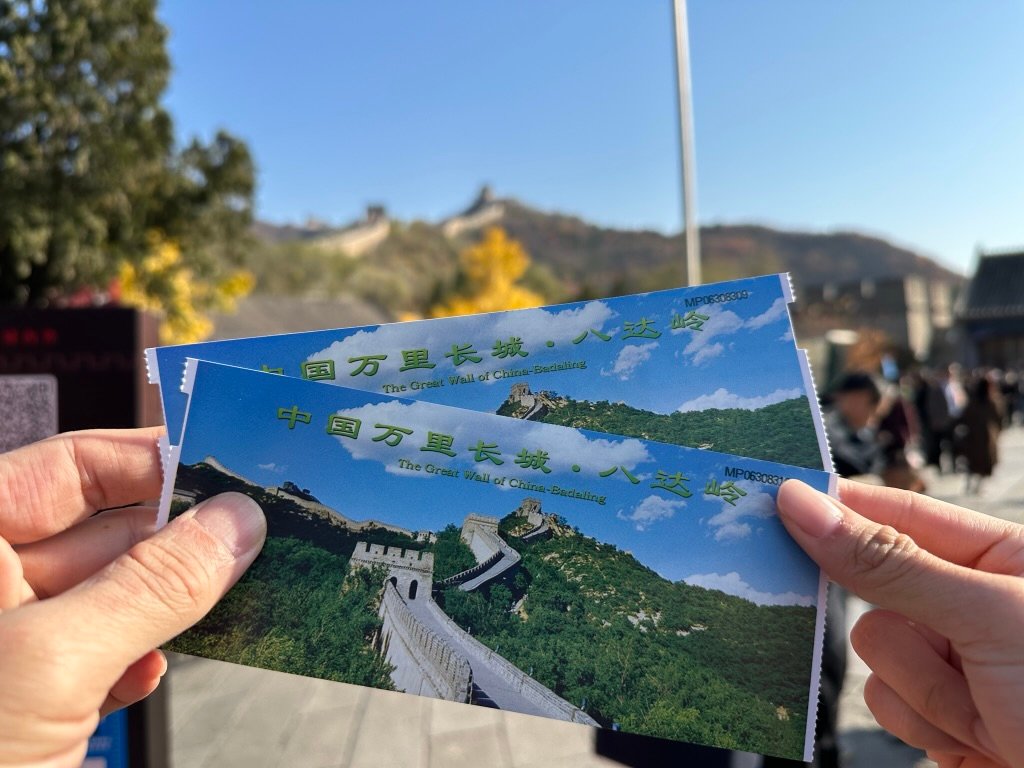
The famous sections of the Great Wall most international visitors see are near Beijing.
Popular choices:
- Badaling Great Wall 八达岭长城
- Mutianyu Great Wall 慕田峪长城
Xi’an does not have the famous Great Wall experience most travellers imagine.
Instead, Xi’an gives you something different:
Ancient capitals.
Terracotta Warriors.
Silk Road history.
Early Chinese civilisation.
Different experiences.
Both important.
Are the Terracotta Warriors Worth Visiting?
Bing Ma Zai immediately jumped:
“Of course!”
And we agree.
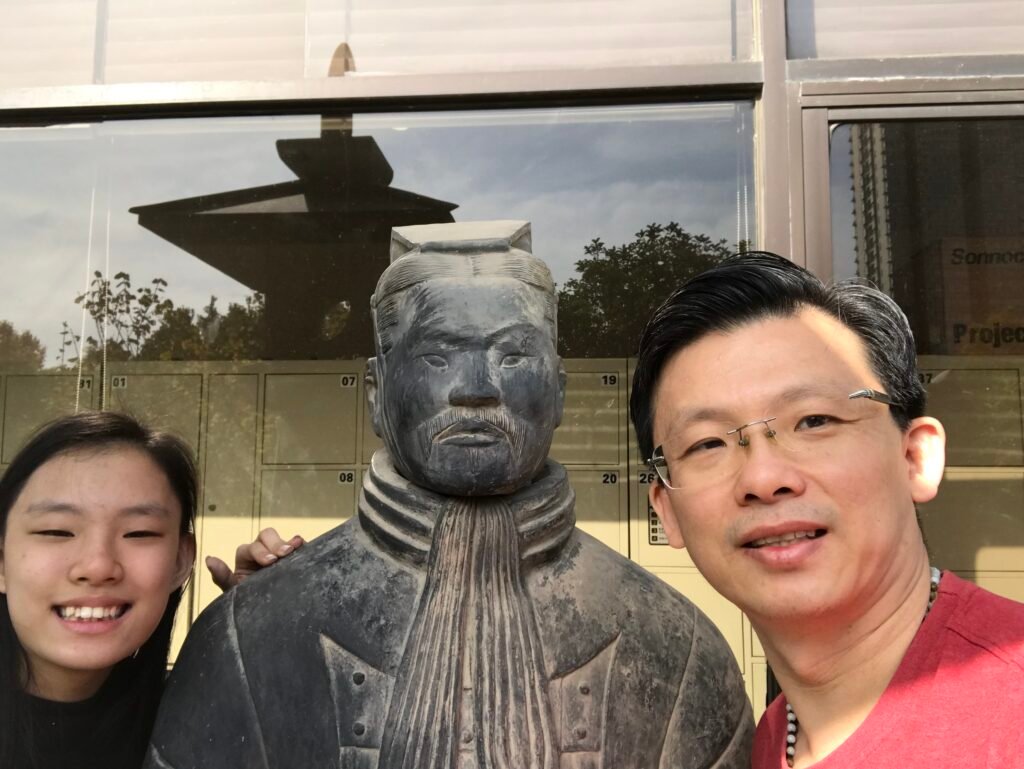
The Terracotta Warriors are one of the most incredible archaeological discoveries in the world.
But here is our suggestion:
Do not visit them only as statues.
Understand the story.
Who was Qin Shi Huang?
Why was Qin important?
How did China become unified?
When you understand the background, thousands of clay soldiers suddenly become much more meaningful.
Beijing or Shanghai? Why We Still Recommend Beijing First for History Lovers
Another common question:
“Should I visit Beijing or Shanghai first?”
Shanghai is amazing.
It shows:
modern China,
international China,
commercial China.
But Beijing gives first-time travellers a deeper introduction to Chinese history and culture.
For ChinaTravelBug, our recommendation:
If you want to see China’s future:
Visit Shanghai.
If you want to understand China’s story:
Start with Beijing and Xi’an.
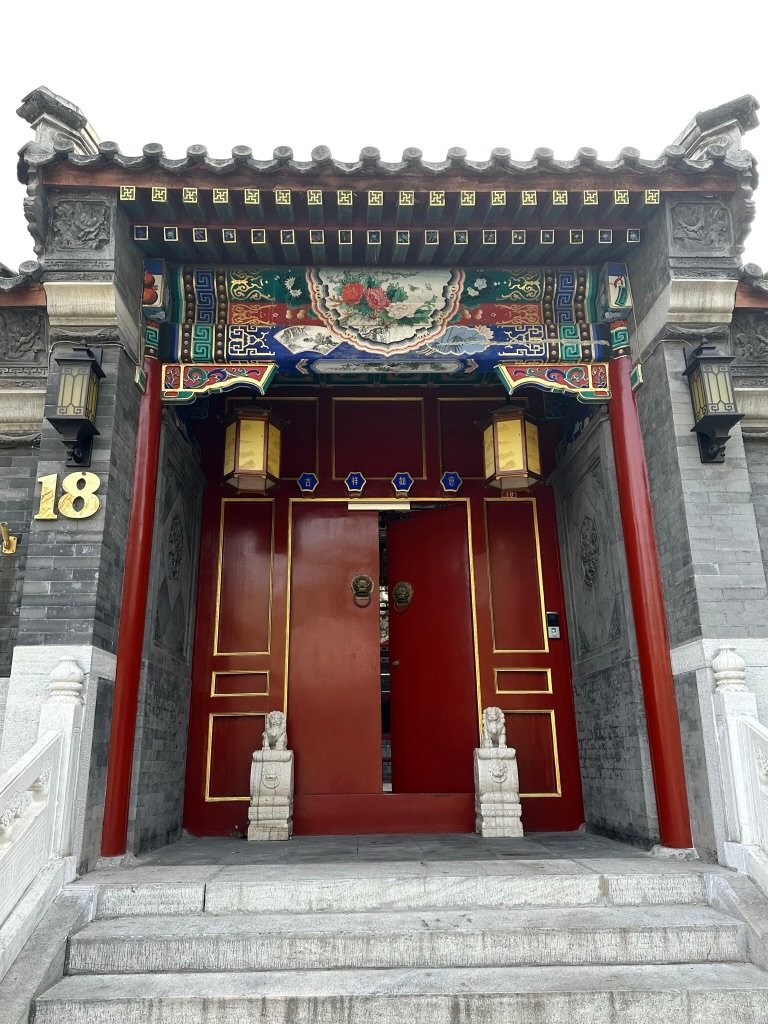
Our ChinaTravelBug Answer — Don’t Just Visit China, Understand China
After many years travelling with Elaine, our view of travel slowly changed.
At first, we visited places.
Then we started asking questions.
Why was this built? Who lived here? What happened before?
What can we learn?
慢慢了解中国。 (Màn màn liǎojiě Zhōngguó)
Slowly understand China.
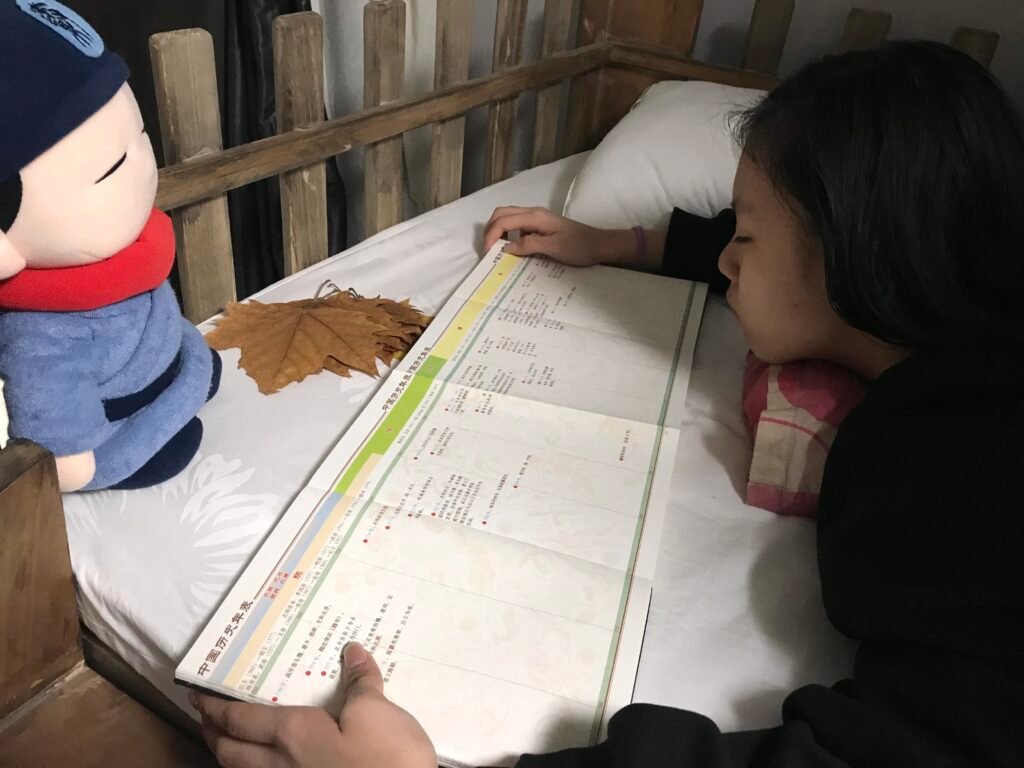
Understanding China.. Elaine’s way. Study and compile her own China’s Dynasties & Emperors’ TIMELINE
Beijing gave Elaine her first memories.
A panda from Beijing Zoo. A walk on the Great Wall. A first glimpse into China.
Xi’an gave us deeper questions.
Who was Qin Shi Huang? What happened before Qin?
How did Chinese civilisation continue?
And the more we travelled, the more we discovered. China is not one story.
It is thousands of stories connected together.
Final Words From Panda, Bing Ma Zai and Cheers
Panda smiled:
“Come to Beijing. I will show you the Great Wall and Forbidden City.”
Bing Ma Zai proudly replied:
“Come to Xi’an. I will show you where many stories began.”
Cheers laughed:
“Why choose?”
“Follow curiosity.”
“Every place has a story waiting to be discovered.”
And maybe that is the best answer.
Beijing or Xi’an?
Visit both if you can.
Because one helps you see China’s greatness.
The other helps you discover China’s roots.
Together, they open the door to one of humanity’s longest continuing civilisation stories.
And that journey is only beginning.
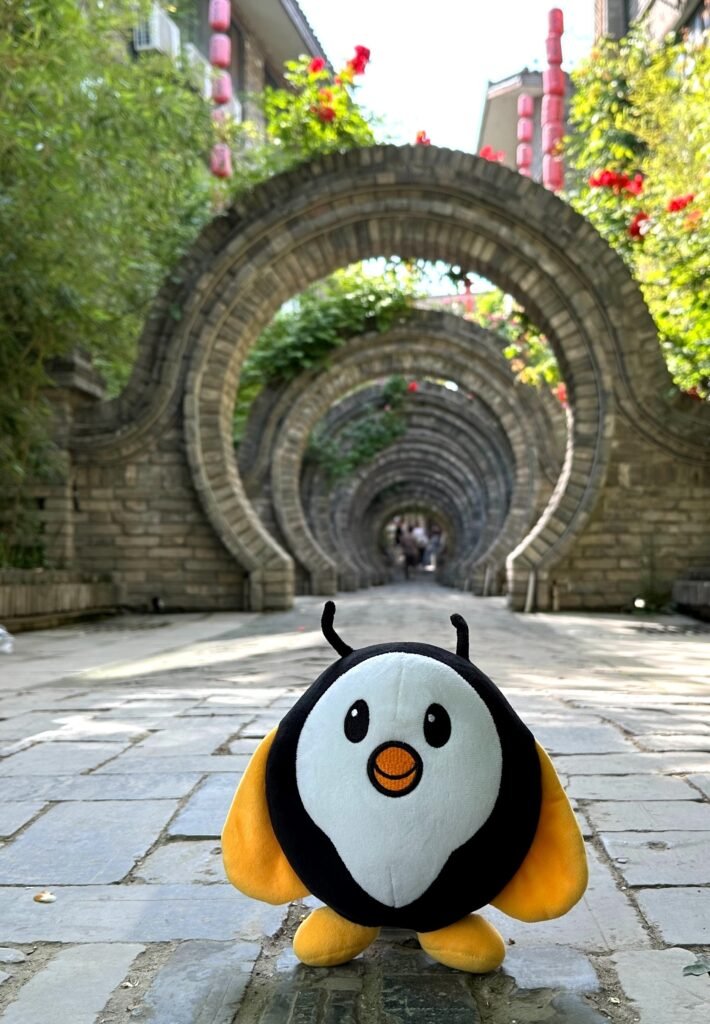
Our Journey Continues
China is too large.
Too old.
Too complex.
No single trip can explain everything.
And perhaps that is the beauty of travelling here.
Every visit opens another question.
Every city reveals another chapter.
Every person you meet adds another memory.
For Elaine and me, China is not a checklist.
It has become an open classroom.
A place where history, culture, people, and personal memories come together.
From an eight-year-old girl standing on the Great Wall for the first time…
to a young adult walking through ancient capitals, museums, and forgotten historical towns…
the journey continues.
And through ChinaTravelBug, we hope to share that journey with you.
Not only where to go.
But why these places matter.
Because behind every wall…
every city…
every ancient object…
there is a story waiting to be discovered.
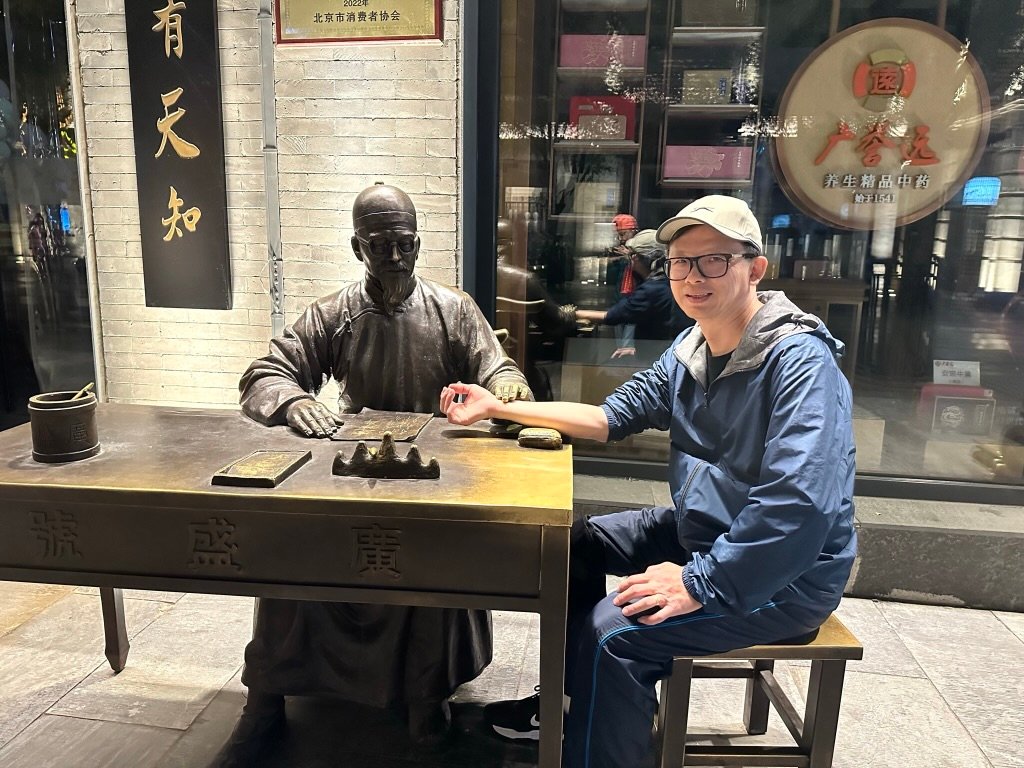
Continue Exploring Beijing:
- Revisit Qianmen Commercial Street and Wangfujing
- Walking Through the Great Wall of China From Beijing After 10 Years
- Walking With Emperors Inside The Forbidden City
- Old Beijing Hutong Journey
- Summer Palace
Continue Exploring Xi’an:
- Beyond Terracotta Warriors: Discovering Xi’an China
- Walking the Xi’an City Wall
- Xi’an Muslim Quarter Night Journey
- Beyond Xi’an: Baoji and the Lost Zhou World
- Hancheng: The City That Helped Us Understand 3,000 Years of Chinese Civilisation
Planning Your First China Trip: How Many Days for Beijing and Xi’an?
For many first-time travellers planning a China vacation, Beijing and Xi’an make one of the easiest and most rewarding China travel routes.
A comfortable first journey could be:
Beijing 北京 (4–5 days)
Explore the Great Wall of China from Beijing, Forbidden City, Tiananmen Square, Summer Palace, Hutongs, and the historic heart of the capital.
High-Speed Rail Journey 高铁 (4.5–5.5 hours)
Experience modern China by travelling comfortably from Beijing to Xi’an.
Xi’an 西安 (3–4 days)
Discover Xi’an Terracotta Warriors, Xi’an City Wall, Xi’an Museum, Muslim Quarter, and the ancient story of Chang’an.
Together, these two cities allow travellers to experience both the peak and the roots of Chinese civilisation — from imperial Beijing to ancient Xi’an.
Read more Beijing/Xi’an travel tips here