What We Experienced in Xi’an: After spending most of the day at the Qin-Han Museum, Dad and Elaine walked to Qingong Metro Station and tried Xi’an’s metro instead — with Elaine using Alipay on her phone to scan straight through the gate.
Dad likes taking the easy way when it makes sense.
But Dad also likes trying another way. 😂
Earlier that day, we’d taken a DiDi (滴滴) to the Qin-Han Museum of the Shaanxi History Museum (陕西历史博物馆秦汉馆).
Simple.
Car arrives.
Get in.
Arrive at the museum.
Then we spent hours inside.
So many hours, in fact, that we forgot about lunch and Elaine had to rescue Dad with instant noodles from a vending machine.
By the afternoon, we’d finally finished.
Now we had to get back.
Dad looked at Elaine and suggested:
“We came by DiDi. Why don’t we try the metro going back?”
Different transport.
Different experience.
So we started walking.
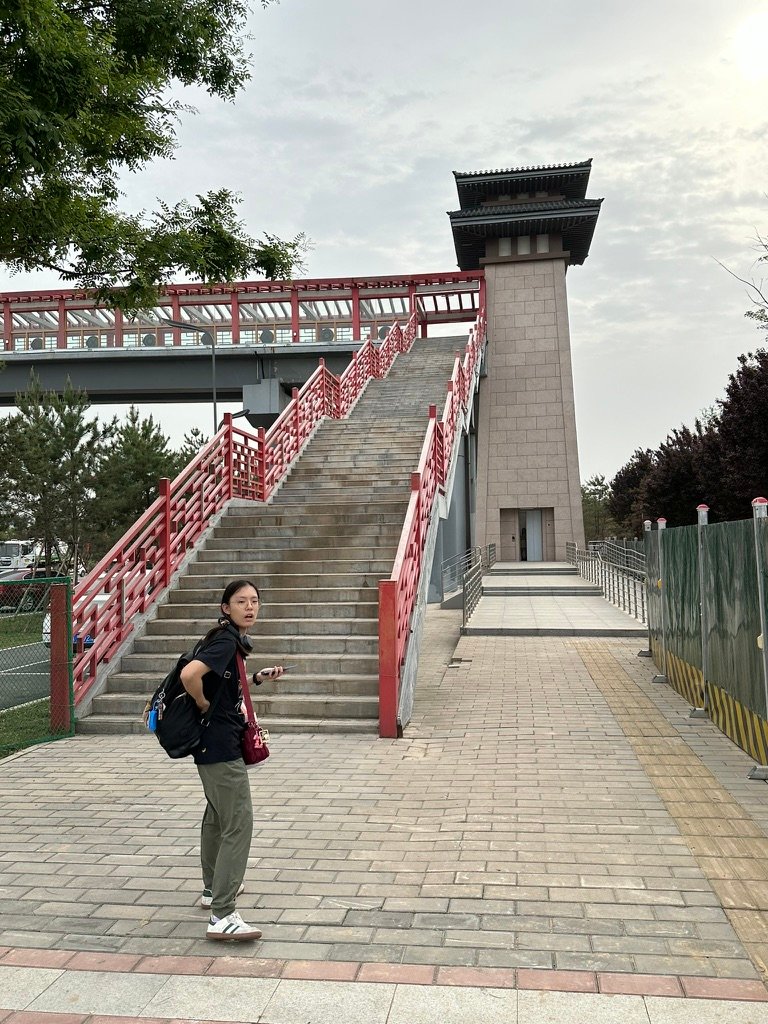
🚶 First, We Had to Find the Metro
After several hours walking around a museum, this probably wasn’t the suggestion Elaine most wanted to hear.
😂
But nearby was Qingong Metro Station (秦宫地铁站, Qíngōng Dìtiě Zhàn).
The Chinese is useful for international travelers:
秦宫 (Qíngōng) — Qingong, literally “Qin Palace”
地铁 (dìtiě) — metro/subway
站 (zhàn) — station
So:
秦宫地铁站 = Qingong Metro Station
And eventually we found it.
📍 This Is the Station You’re Looking For
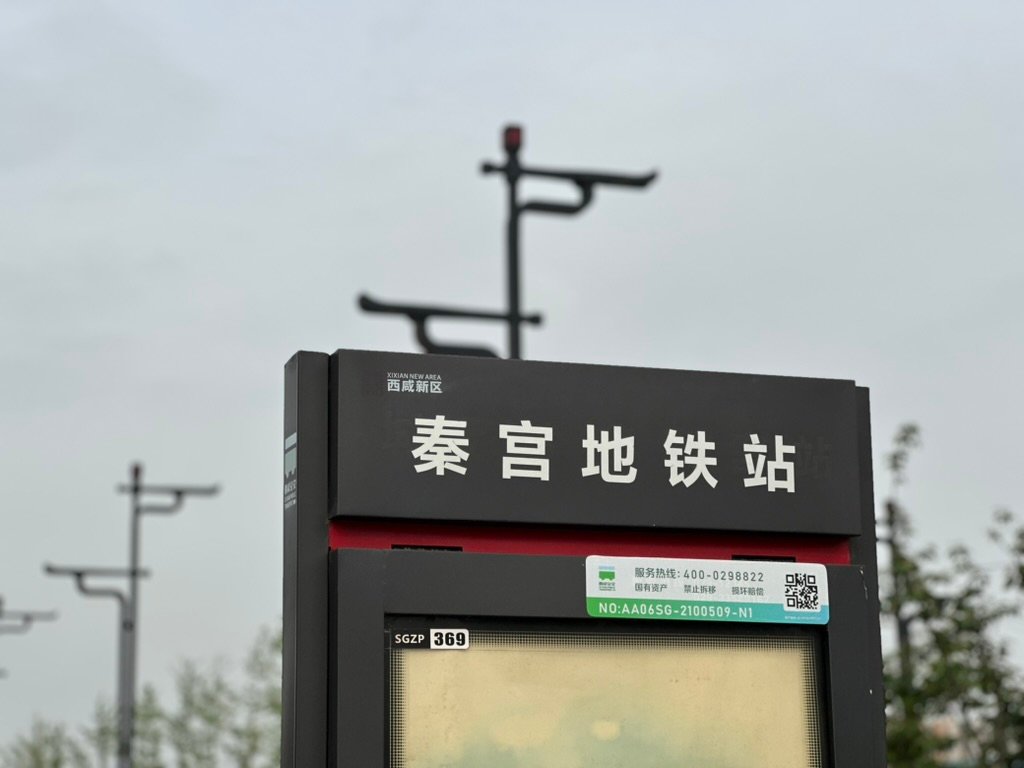
For visitors to the Qin-Han Museum, this is a useful name to recognize:
秦宫地铁站
Qíngōng Dìtiě Zhàn
The station is outside central Xi’an, in the broader Qinhan New City area.
And that matters.
The Qin-Han Museum isn’t sitting beside the Bell Tower in downtown Xi’an.
If you’re visiting from central Xi’an, you need to think about how you’re getting there and how you’re getting back.
We chose two different answers.
Going there: DiDi
Coming back: Metro
Then Dad Looked at This
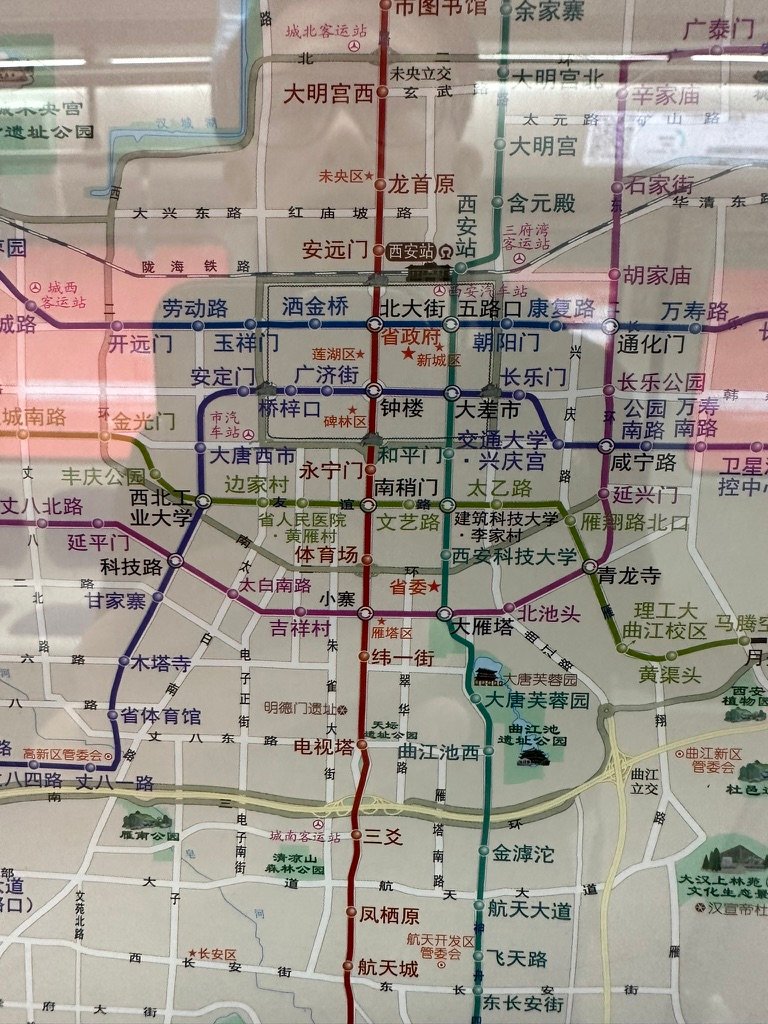
Dad likes metro maps.
😂
Because one glance tells you something about modern Chinese cities that can be difficult to appreciate from inside a car.
Scale.
Look at Xi’an’s network.
For many international travelers, Xi’an means:
the City Wall,
the Bell Tower,
the Muslim Quarter,
and the Terracotta Warriors.
But modern Xi’an (西安, Xī’ān) spreads far beyond the historic center.
Its metro system connects a much larger urban region.
And we were about to use it.
The Station Even Tells You Where You Are in the Bigger Network
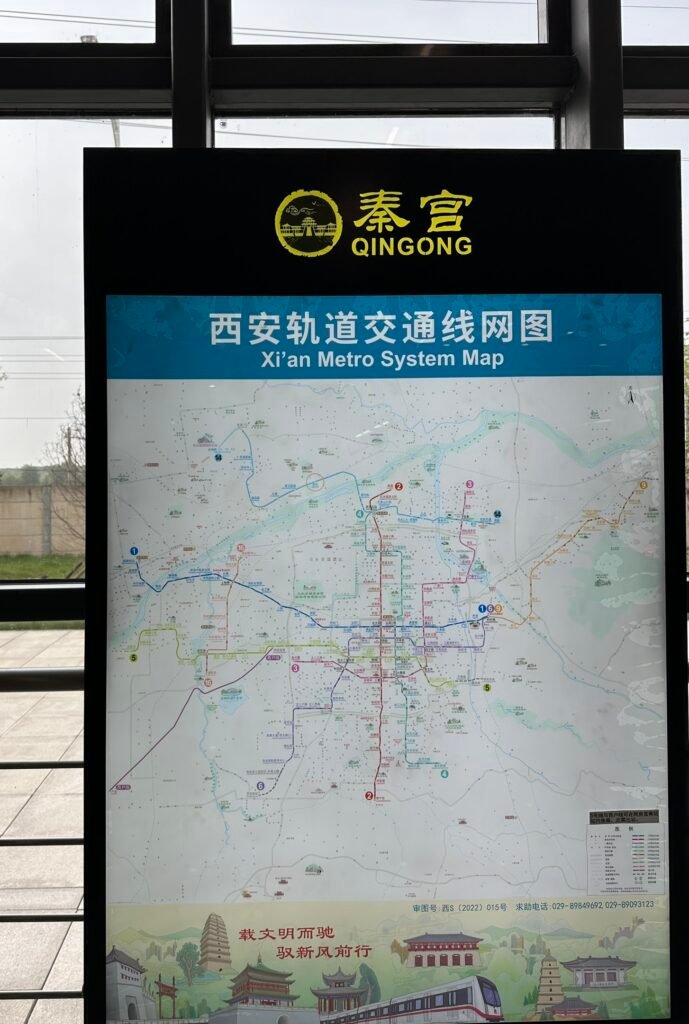
At Qingong Station, Dad photographed the station diagram.
There’s 秦宫 — Qíngōng.
Nearby you can see:
秦汉新城 (Qínhàn Xīnchéng) — Qinhan New City
and farther along:
机场 (jīchǎng) — airport.
These little signs are worth photographing when you’re traveling independently.
Even if you can’t read much Chinese, station maps usually give you enough visual information to orient yourself.
And if you’re ever uncertain…
take a photo.
Dad does. 😂
Then Elaine Took Over
This is where the story gets particularly useful for first-time China travelers.
Dad didn’t buy Elaine a little paper ticket.
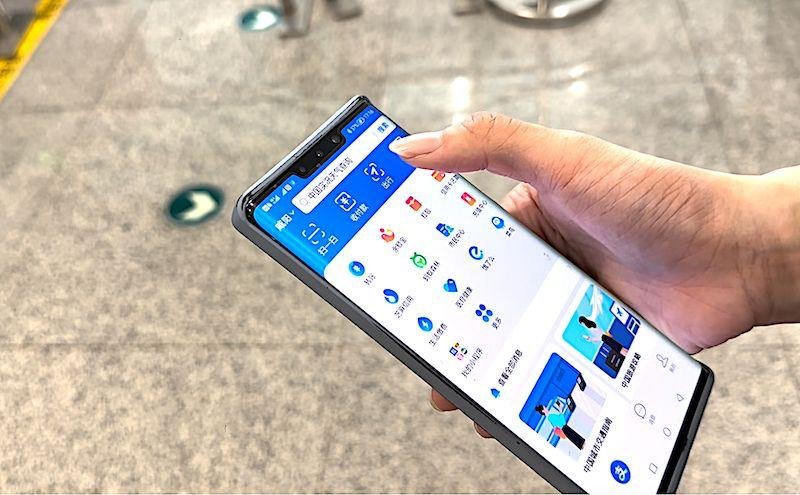
Elaine took out her phone.
Opened Alipay (支付宝, Zhīfùbǎo).
Found her metro transit QR code.
And walked toward the gate.
🎥 Watch Elaine Take the Xi’an Metro
Look how little drama there is.
Phone out.
QR code ready.
Approach gate.
Scan.
Beep.
Gate opens.
Elaine walks through.
Done.
😂
🚇 Wait… No Metro Ticket?
That’s one of the things first-time travelers sometimes find surprising about urban transport in China.
You may be able to use a transport QR code (乘车码, chéngchē mǎ) on your phone instead of repeatedly buying individual tickets.
Elaine already had Alipay set up.
So once the appropriate metro transport code was available on her phone, the process was beautifully simple.
Scan in.
Take the train.
Scan out.
The system calculates the fare.
For us, this was far more convenient than Dad trying to work out which ticket Elaine needed every time we entered a metro station.
A Useful Chinese Word: 乘车码
International travelers don’t need to learn dozens of Chinese transport terms.
But this one is useful:
乘车码 — chéngchē mǎ
It means a ride/transit QR code.
You’ll encounter QR-based transport systems in many Chinese cities.
The exact setup can vary by city, so don’t assume that activating a metro code in one city automatically means everything is configured for the next.
But once it’s working?
What Elaine does in the video is basically the whole lesson.
Open. Scan. Walk.
Dad’s Favorite Part Is How Normal Elaine Makes It Look
Look at the video again.
Elaine has:
a backpack,
a takeaway bag,
her phone,
and Dad filming her.
She’s not standing nervously in front of the gate trying to decode China.
She’s just…
taking the metro.
That’s something Dad particularly likes about these trips.
Things that initially sound intimidating become ordinary remarkably quickly.
First time:
“How do we use China’s metro?”
Later:
“Elaine, wait for Dad!” 😂
🚕 So Which Is Better in Xi’an — DiDi or Metro?
For us, the answer isn’t one or the other.
We use both.
DiDi is wonderful when:
you’re tired,
you have luggage,
the destination isn’t conveniently beside a station,
or you simply want door-to-door convenience.
The metro is wonderful when:
traffic is heavy,
your destination is near a station,
you want predictable transport,
or — like Dad —
you simply want to try another way.
The important thing is not to decide before your trip that you must use only one form of transport.
China’s cities give travelers options.
Use whichever makes sense at that moment.
Going to the Qin-Han Museum?
Our museum was:
Qin-Han Museum of the Shaanxi History Museum
陕西历史博物馆秦汉馆
Shǎnxī Lìshǐ Bówùguǎn Qínhàn Guǎn
It is in Qinhan New City (秦汉新城, Qínhàn Xīnchéng), part of Xixian New Area (西咸新区, Xīxián Xīnqū) outside central Xi’an.
For the full museum experience, practical details and why we think first-time Xi’an visitors should seriously consider it:
🚕 Going by DiDi
Use the full Chinese museum name:
陕西历史博物馆 – 秦汉馆
Don’t simply enter “Shaanxi History Museum.”
There is another Shaanxi History Museum in central Xi’an, and you don’t want to end up at the wrong one.
🚇 Using the Metro
The station we used after our visit was:
秦宫地铁站 — Qingong Metro Station
Check the current Xi’an Metro route and operating information when planning your visit, because transport networks can change as new lines and stations open.
ChinaTravelBUG’s Take
Dad could have opened DiDi after the museum.
Tapped a few buttons.
Car arrives.
Done.
There would have been absolutely nothing wrong with that.
But we had already come that way.
So Dad thought:
Why not see how Xi’an works another way?
We walked to Qingong Station.
Looked at the metro map.
Found our route.
Then Elaine pulled out her phone.
Opened Alipay.
Scanned.
And disappeared through the gate while Dad was still filming.
😂
That’s one of the things we’ve learned again and again traveling around China:
China Usually Has Another Way.
DiDi isn’t the metro.
The metro isn’t the bus.
The bus isn’t high-speed rail.
And none of them has to be the only way you travel.
Sometimes the best way to become less nervous about traveling independently in China…
is simply to try the next one.
Dad suggested the metro.
Elaine scanned the QR code.
The gate opened.