The day Elaine and I stopped collecting attractions—and started discovering China
“Reading ten thousand books is not as rewarding as travelling ten thousand miles.”
读万卷书,不如行万里路
(Dú wàn juàn shū, bùrú xíng wàn lǐ lù)
There is an old Chinese saying that has quietly guided generations of scholars, travellers and explorers. Literally translated, it means “Reading ten thousand books is not as valuable as travelling ten thousand miles.”
When Elaine and I first planned our journey through China, we appreciated the saying—but we didn’t truly understand it.
Not until we arrived in Beijing (北京, Běijīng).
Only later did we realise that Beijing wasn’t simply introducing us to China’s capital.
It was teaching us how to learn China.
Quick Answer
Most first-time visitors travel through China by collecting famous attractions.
The Temple of Heaven.
There’s absolutely nothing wrong with that.
In fact, Elaine and I began exactly the same way.
But somewhere during our journey, we stopped asking,
“What should we visit next?”
Instead, we began asking,
“What is this place trying to teach us about China?”
That single question transformed the way we travelled.
It may transform the way you travel too.
We Nearly Travelled Like Everyone Else
Months before our flight, our dining table slowly disappeared beneath maps, guidebooks and notebooks.
Elaine highlighted museums she wanted to visit.
I carefully planned transport routes and opening hours.
Our itinerary looked wonderfully organised.
Every famous attraction was included.
Every day had a schedule.
Looking back now, we realised something rather amusing.
We weren’t planning to understand Beijing.
We were planning to complete Beijing.
Like many first-time visitors, we thought a successful trip meant ticking off as many famous places as possible.
We didn’t yet realise that the greatest discoveries are often the ones that never appear on a checklist.
Fortunately, Beijing had other plans for us.
The Moment Beijing Changed Us
Surprisingly, it didn’t happen inside the Forbidden City (紫禁城, Zǐjìnchéng).
It didn’t happen while standing on the Great Wall.
It didn’t even happen inside a museum.
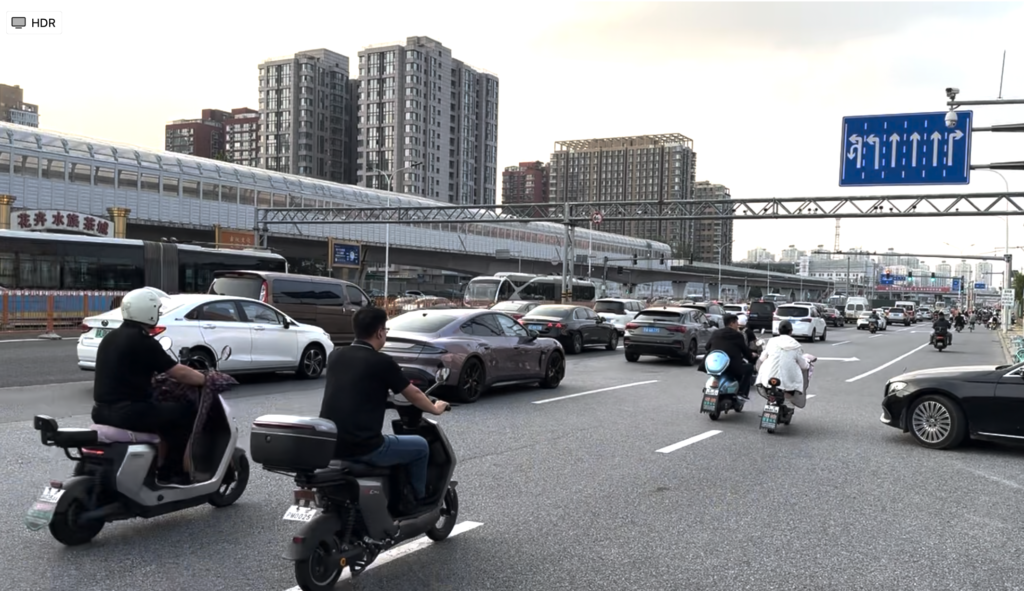
It happened while crossing an ordinary street.
Thousands of vehicles streamed past us.
Buses.
Taxis.
Private cars.
Delivery vans.
Yet something felt strangely unfamiliar.
There was almost no roar of engines.
No lingering smell of petrol.
No clouds of exhaust fumes.
The city moved with remarkable quietness.
I looked at Elaine.
She looked back at me.
“Most of these are electric,” one of us finally said.
It was such an ordinary observation.
Yet it quietly dismantled years of assumptions we had unknowingly carried about modern China.
That moment taught us our first lesson.
China rewards observation, not assumptions.
If we had hurried from one attraction to another, we might never have noticed it.
Curiosity Replaced Our Checklist
After that afternoon, something changed.
Instead of asking,
“Is this attraction famous?”
we started asking,
“Why does this place exist?”
That tiny shift changed everything.
Every attraction stopped being a destination.
It became an answer.
Every Place Answered a Different Question
Suddenly, Beijing no longer felt like one enormous city.
Instead, it became a collection of fascinating questions waiting to be answered.
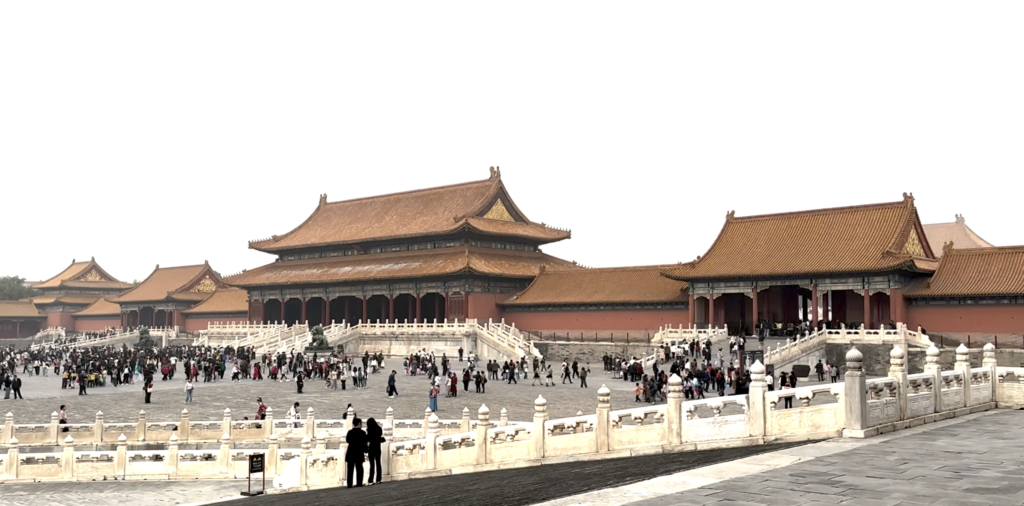
The Forbidden City (紫禁城, Zǐjìnchéng)
Most visitors naturally ask,
“How big is it?”
We found ourselves asking something different.
How did emperors govern one of history’s largest civilisations from here?
Even its Chinese name tells a story.
紫 (zǐ) means purple, referring to the Purple Star (the Pole Star), believed in ancient Chinese astronomy to be the celestial residence of Heaven’s supreme ruler.
禁 (jìn) means forbidden.
城 (chéng) means city.
The name wasn’t chosen because visitors weren’t welcome.
It reflected the belief that the emperor ruled from an earthly palace that mirrored Heaven itself.
Suddenly, walls became symbols.
Courtyards became political spaces.
Architecture became philosophy.
The Temple of Heaven (天坛, Tiāntán)
The Temple of Heaven raised an entirely different question.
Why would the most powerful man in China leave his magnificent palace to pray?
Its Chinese name also offers a clue.
天 (Tiān) means Heaven.
Not simply the sky, but the moral and cosmic order governing the universe.
坛 (tán) means an altar or ceremonial platform where important state rituals took place.
The emperor wasn’t merely a political ruler.
He was expected to maintain harmony between Heaven, Earth and the people.
This reflects a traditional Chinese idea often expressed as:
天人合一 (Tiān rén hé yī)
“Harmony between Heaven and humanity.”
To many Western visitors, this may seem unfamiliar.
To ancient China, it was central to good government.
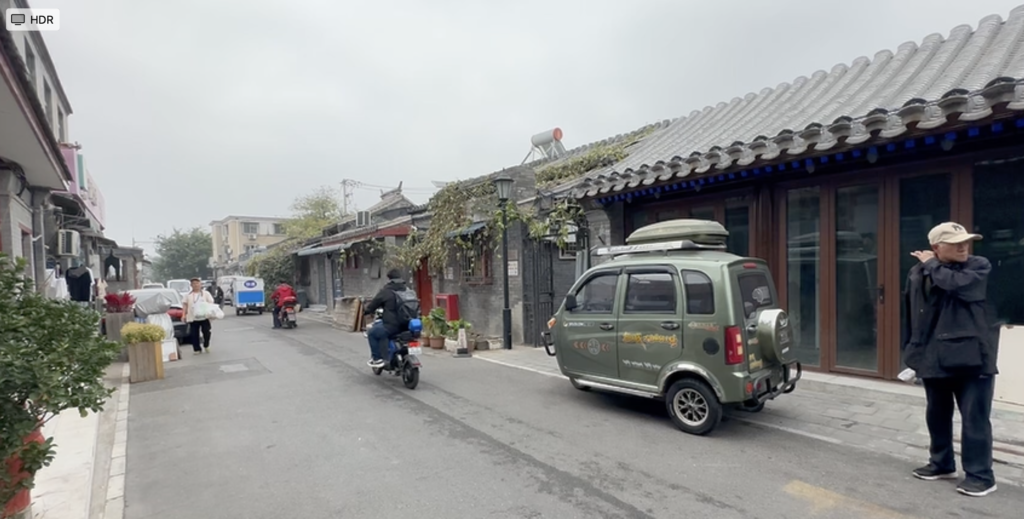
The Hutongs (胡同, Hútòng)
The hutongs looked wonderfully ordinary.
Children played.
Neighbours chatted.
Cyclists passed quietly.
Laundry hung outside old homes.
But another question emerged.
How did ordinary Beijingers live while emperors ruled just a few kilometres away?
Interestingly, the word 胡同 (Hútòng) probably isn’t originally Chinese.
Many historians believe it entered Chinese during the Yuan Dynasty from the Mongolian language, reminding us that Beijing has always been shaped by different peoples and cultures.
History wasn’t locked inside museums.
It was still quietly alive.
Even Breakfast Had Something to Teach Us
One morning, we decided to try Beijing’s famously divisive breakfast drink:
豆汁 (dòuzhī).
The aroma reached us before the bowl arrived.
Elaine smiled cautiously.
I wasn’t feeling especially confident either.
One sip later…
We completely understood why Beijingers often joke that people either become lifelong fans—or never willingly drink it again.
We politely finished enough to say we’d experienced it.
No, we didn’t order a second bowl.
But that breakfast taught us something unexpectedly valuable.
Understanding another culture sometimes begins with trying something unfamiliar, even if your taste buds never fully agree.

Reading Ten Thousand Books, Travelling Ten Thousand Miles
The more we travelled, the more often we thought about the old Chinese saying:
读万卷书,不如行万里路
Reading teaches us facts.
Travel gives those facts colour, emotion and perspective.
Before visiting Beijing, the Forbidden City was simply a chapter in a history book.
After walking through it, those chapters suddenly made sense.
The same happened throughout our journey.
We read before travelling.
We observed while travelling.
We returned home and read again.
Each journey enriched the books.
Each book deepened the next journey.
Perhaps that is the true meaning behind this famous proverb.
Travel doesn’t replace learning.
It completes it.
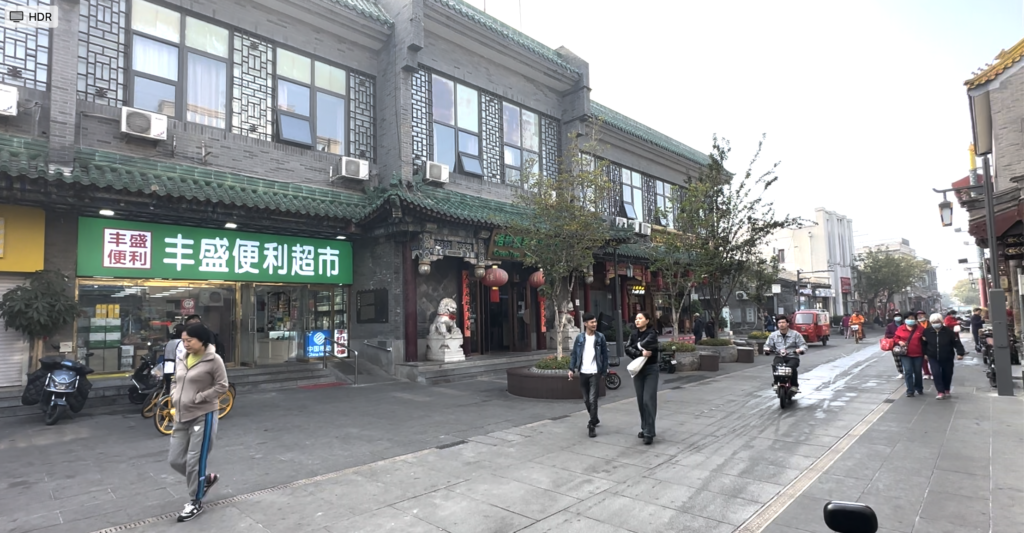
Beijing Taught Us How to Ask Better Questions
By the time we left Beijing, we noticed something remarkable.
We had stopped asking tourist questions.
Instead of asking,
“Where should we go next?”
we found ourselves asking,
“What question will the next destination answer?”
That simple habit changed every city we later visited.
Xi’an (西安, Xī’ān)
The name itself means “Western Peace.”
But Xi’an asked a far bigger question.
How did many competing kingdoms become one empire?
Zhouyuan (周原, Zhōuyuán)
Long before the First Emperor unified China, another important idea emerged here.
What is the Mandate of Heaven?
The Chinese term is:
天命 (Tiānmìng)
天 (Tiān) means Heaven.
命 (mìng) means mandate, commission or decree.
Ancient Chinese rulers believed Heaven granted the right to govern—but only as long as rulers governed wisely and morally.
Lose virtue.
Lose the Mandate.
Lose the dynasty.
It remains one of the most influential political ideas in Chinese history.
Anyang (安阳, Ānyáng)
Another question.
How do we know what happened over three thousand years ago?
The answer lay in oracle bones.
Ancient inscriptions.
The earliest surviving Chinese writing.
History suddenly became tangible.
Hancheng, Linfen and Yuncheng
These cities rarely appear on first-time tourist itineraries.
Yet together they quietly ask another question.
Where did Chinese civilisation begin taking shape?
Without learning to ask questions in Beijing, we might easily have driven straight past them.
Instead, they became some of the most rewarding places of our journey.
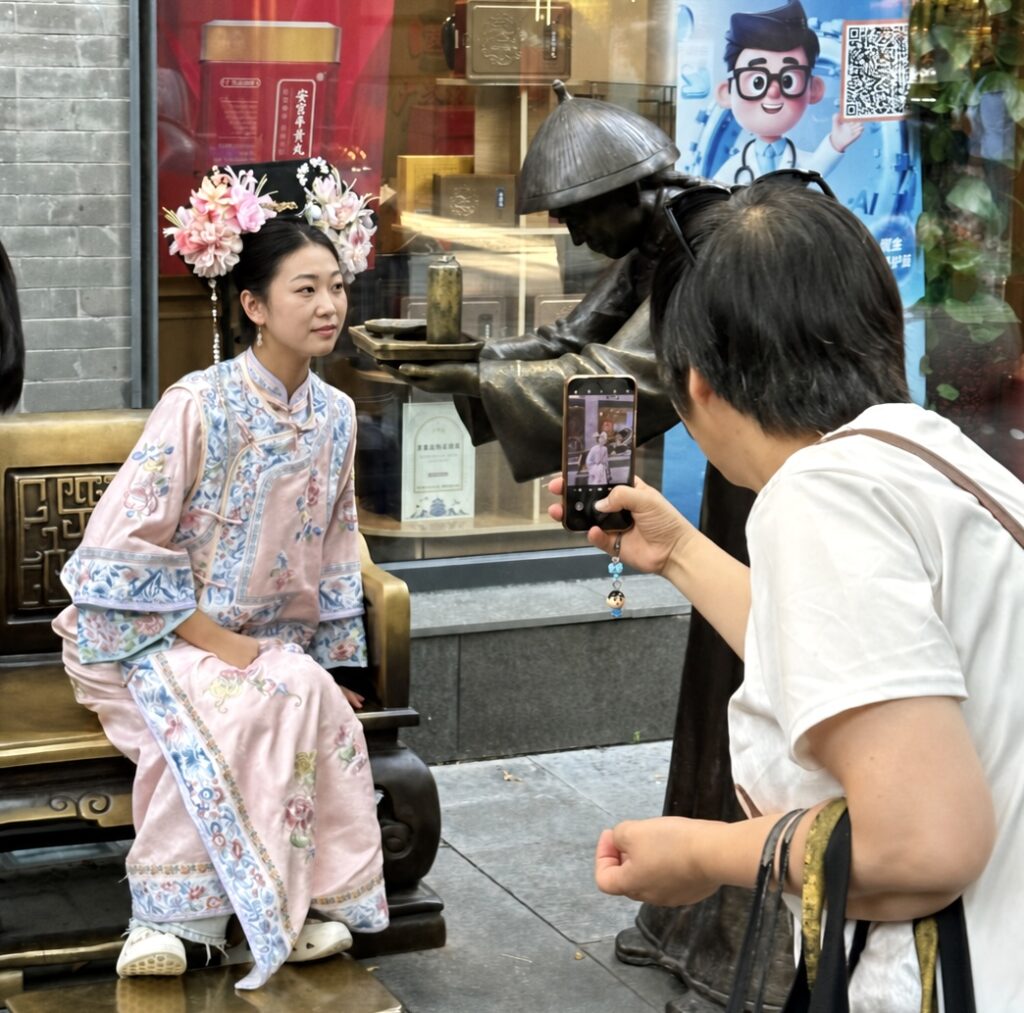
A Different Way to See China
Many travel guides organise destinations by popularity.
ChinaTravelBug prefers organising them by CURIOSITY.
Every destination should answer one meaningful question.
Every city should teach one lasting idea.
Every journey should leave you understanding China a little more deeply than when you arrived.
You don’t need to become a historian.
You don’t need to memorise dynasties.
You simply need to remain curious.
China has been telling its story for thousands of years.
The traveller’s job is to keep OBSERVING.
What We Learnt
One Chinese word stayed with me long after we returned home.
领悟 (lǐngwù).
It means more than simply learning something.
It describes a gradual moment of insight—a deeper understanding that slowly dawns through experience.
That perfectly describes what happened to Elaine and me.
We didn’t suddenly become experts on China.
We gradually 领悟 China.
Our greatest souvenir wasn’t a photograph.
It wasn’t a museum ticket.
It wasn’t even a favourite meal.
It was learning to see familiar places through unfamiliar questions.
Looking back, Beijing never asked us to admire it.
It invited us to understand it.
And once we accepted that invitation, every city that followed became part of a much larger conversation stretching across thousands of years of Chinese civilisation.
That, perhaps, is the greatest gift China can offer any traveller.
Not simply wonderful places to visit—
but new ways to think.
Where Your Journey Continues
If Beijing taught us how to ask better questions, the Forbidden City (紫禁城, Zǐjìnchéng) answers one of the greatest questions of all:
How did emperors govern one of the world’s longest-lasting civilisations from behind its crimson walls?
That is where our journey continues next.