Hong Kong (香港, Xiānggǎng) creates a dangerous temptation for first-time visitors.
You open Google.
You make a list.
Victoria Peak.
Star Ferry.
Big Buddha.
Mong Kok.
Temple Street.
Central.
Tsim Sha Tsui.
Ngong Ping.
Tai O.
Disneyland.
Macau.
Twenty-seven food stops.
And suddenly you’ve designed a four-day holiday that requires nine days.
😂
There’s another way.
For your first Hong Kong trip, don’t try to collect attractions.
Try to experience several different sides of Hong Kong:
the harbor
the dense city
the neighborhoods
the food
the mountains and islands
and the history behind what you’re seeing
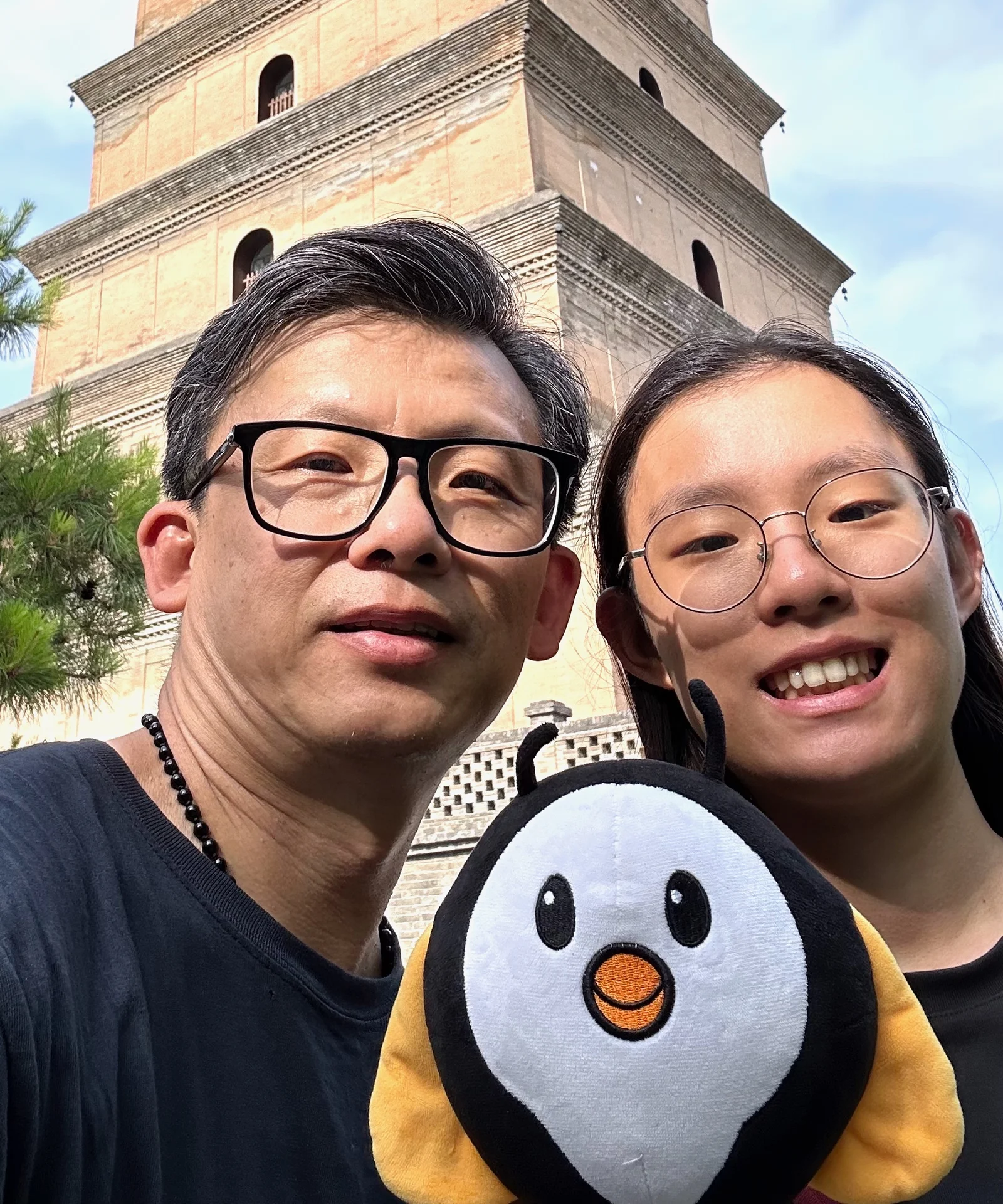
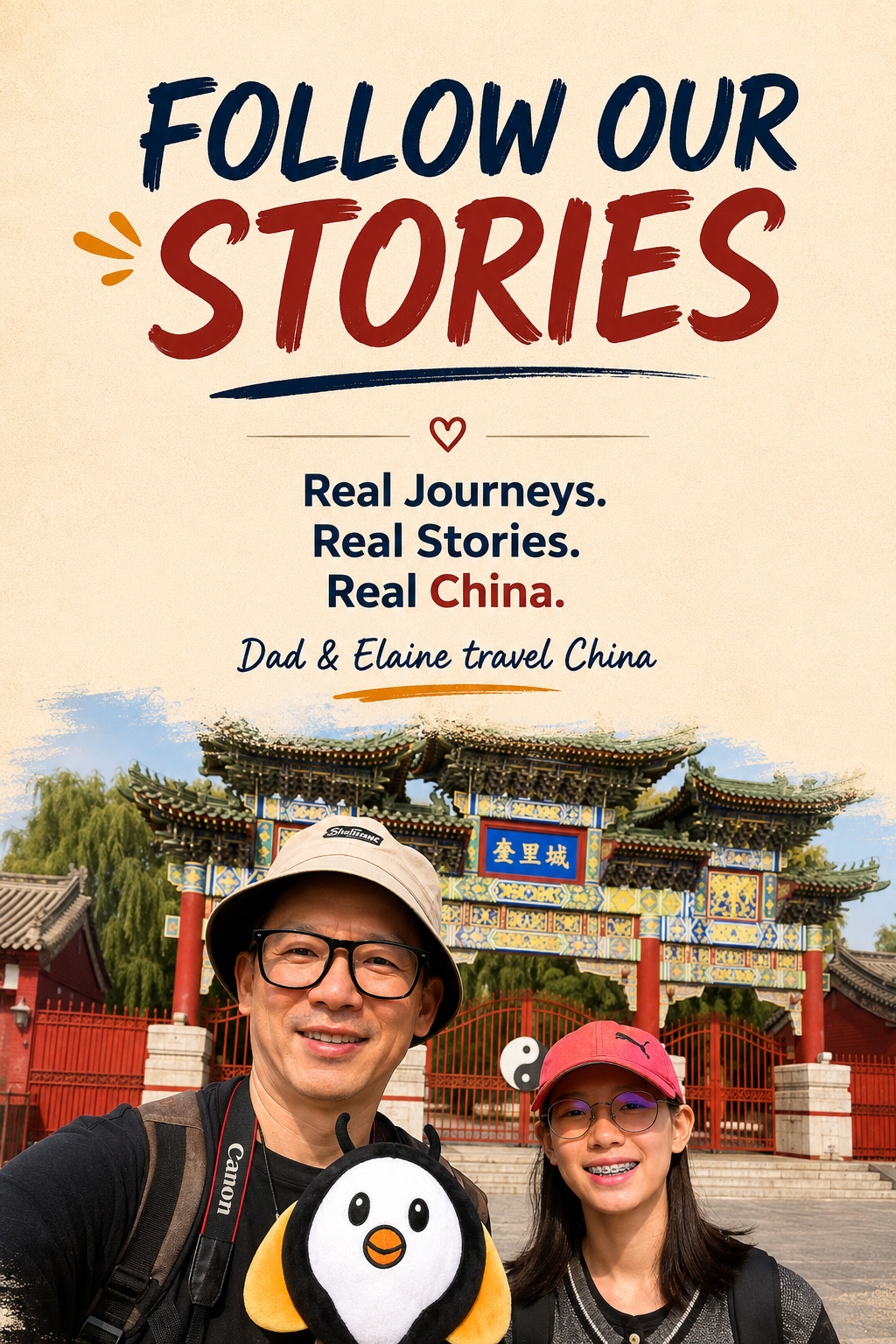
That’s how Dad and Elaine like to travel too.
So this isn’t a giant Hong Kong bucket list.
It’s a realistic framework for deciding what is actually worth doing on your first trip — and how to fit it together without exhausting yourself.
1. First: How Many Days Do You Have?
This determines almost everything.
For most first-time visitors, we’d think roughly like this:
2–3 days
Concentrate on Hong Kong itself.
Don’t try to do everything.
4 days
You can cover the major urban experiences and add something beyond the dense city.
5 days
This is a very comfortable first-trip length.
You can potentially combine:
- Victoria Harbour
- Hong Kong Island
- Kowloon
- Victoria Peak
- neighborhood exploration
- Lantau Island
- local food
and perhaps Macau.
6–7 days
Now you have space to slow down, explore farther and possibly add Disneyland, hiking, beaches, outlying islands or Macau without sacrificing most of Hong Kong.
🐞 Our preference: fewer places, experienced properly.
2. Don’t Build Your Trip Around Attractions — Build It Around Areas
This is one of the easiest ways to avoid wasting time.
Hong Kong may look compact on a map, but repeatedly crossing the territory because you’ve grouped attractions randomly makes no sense.
Instead, build days around geographical clusters.
For example:
Kowloon day
Tsim Sha Tsui → Jordan → Yau Ma Tei → Mong Kok
Hong Kong Island day
Central → Sheung Wan → tram → Victoria Peak
Lantau day
Tung Chung → Ngong Ping → Big Buddha → Tai O
Much better than:
Tsim Sha Tsui → Big Buddha → Central → Mong Kok → Peak → back to Lantau because you forgot something
😂
3. Experience Victoria Harbour First
For many first-time visitors, this is where we’d begin.
Go to the Tsim Sha Tsui (尖沙咀, Jīm Sā Jéui) waterfront.
Walk.
Look across Victoria Harbour toward Hong Kong Island.
See the skyline you’ve probably seen in photographs for years.
But don’t only take the photo and leave.
Stand there for a while.
Watch:
- ferries
- boats
- traffic on the water
- buildings on both sides
- people moving along the promenade
Hong Kong exists because of geography.
The harbor isn’t just a backdrop.
It’s one of the reasons Hong Kong developed the way it did.
That’s where SEE becomes ASK.
4. Then Cross the Harbor
Don’t only admire Victoria Harbour.
Cross it.
The Star Ferry is one of the simplest Hong Kong experiences we’d recommend to almost every first-time visitor.
You get transportation and sightseeing at the same time.
From Tsim Sha Tsui, take the ferry across toward Hong Kong Island.
Suddenly the skyline you were looking at becomes the place you’re entering.
🐞
This is exactly the kind of transportation journey we like because the journey itself becomes part of the experience.
For our complete transportation guide:
👉 Getting Around Hong Kong: MTR, Octopus, Buses, Trams, Ferries & Taxis
5. Explore Central — But Look Beyond the Skyscrapers
Central (中環, Zhōnghuán) is one of Hong Kong’s most recognizable urban districts.
You’ll find:
- office towers
- luxury shopping
- restaurants
- transportation hubs
- historic buildings
- steep streets
- elevated walkways
But don’t experience Central only at street level between famous buildings.
Look at how Hong Kong uses vertical space.
Walkways connect buildings.
Roads climb hills.
Escalators move people upward.
Old streets survive beside modern towers.
That’s one of Hong Kong’s recurring themes:
very old and very new occupying remarkably little space.
6. Walk From Central Into Sheung Wan
Next door is Sheung Wan (上環, Shànghuán).
Dad and Elaine stayed here, so this became part of our everyday Hong Kong rather than simply another sightseeing stop.
This is why we like staying in neighborhoods.
You begin seeing:
- people going to work
- breakfast places opening
- traditional businesses
- dried seafood shops
- temples
- cafés
- residential buildings
- trams passing outside
You don’t need a checklist.
Walk.
Look.
Stop when something interests you.
Some of the best travel experiences begin with:
What’s that?
🐞
7. Ride a Hong Kong Tram
At least once, don’t take the fastest route.
Take the tram.
Hong Kong Island’s double-decker trams — often nicknamed Ding Dings — give you a completely different experience from traveling underground.
If you can, sit upstairs.
Then watch Hong Kong go past.
This is slow transportation.
That’s the attraction.
The MTR helps you move through Hong Kong.
The tram helps you look at Hong Kong.
There’s a difference.
8. Go Up to Victoria Peak
Victoria Peak (太平山, Tàipíngshān) is famous because the view can be extraordinary.
From above, Hong Kong’s geography suddenly makes more sense.
You can see:
- the dense urban development
- Victoria Harbour
- Kowloon
- surrounding hills
- the relationship between land and water
But there’s an important practical point:
Weather matters.
A perfectly planned sunset means very little if cloud has swallowed the view.
If the Peak is important to you, retain some flexibility.
Check conditions.
Then decide.
9. Morning or Sunset at Victoria Peak?
Both can work.
Morning
Potential advantages:
- potentially fewer visitors
- cooler conditions at some times of year
- more flexibility afterward
Late afternoon / evening
Potential advantages:
- daylight view
- sunset if conditions cooperate
- nighttime skyline afterward
But sunset is naturally popular.
So don’t assume:
Sunset = automatically better.
Sometimes:
clear morning = much better than cloudy sunset.
The weather gets a vote too.
😂
10. Give Kowloon More Than One Waterfront Photo
A common first-trip mistake is treating Kowloon merely as somewhere to stand while photographing Hong Kong Island.
Kowloon deserves exploration.
From Tsim Sha Tsui, move north.
You’ll gradually encounter different neighborhoods and a different feel.
Consider exploring:
Jordan (佐敦, Zuǒdūn)
Yau Ma Tei (油麻地, Yóumádì)
Mong Kok (旺角, Wàngjiǎo)
Walk some of the distance instead of moving underground for every journey.
That’s when you’ll notice Hong Kong changing block by block.
11. Experience Mong Kok
Mong Kok is not subtle.
😂
It’s dense.
Busy.
Commercial.
Full of people.
Full of signs.
Full of food.
Full of things competing for your attention.
For some visitors, that’s exhilarating.
For others, it’s exhausting.
Either reaction teaches you something about Hong Kong.
Don’t go expecting a peaceful heritage neighborhood.
Go because you want to experience another expression of Hong Kong’s urban intensity.
12. Eat Your Way Through Part of the Trip
Hong Kong food deserves more than a paragraph called:
Where to Eat
Food is one of the ways you experience the place.
Try things such as:
- dim sum
- wonton noodles
- roast meats
- congee
- Hong Kong-style milk tea
- pineapple buns
- egg tarts
- local bakeries
- cha chaan teng (茶餐廳) meals
But don’t turn every meal into a famous-restaurant mission.
Some of the most enjoyable travel meals happen because you walk past somewhere busy and think:
Shall we try this one?
13. Eat Where Hong Kong Eats
This doesn’t mean blindly following crowds.
But pay attention.
If a small restaurant is busy with local customers at lunchtime, that’s useful information.
If a bakery has people continuously walking in and out, perhaps look inside.
Travel becomes more interesting when you stop treating food merely as:
Breakfast 8:00
Lunch 12:00
Dinner 7:00
and start asking:
What do people here actually eat?
That’s another way to understand a place.
14. Spend One Day Outside the Dense Urban Core
This is one of our strongest recommendations for a first Hong Kong trip of four or five days.
Because Hong Kong isn’t only:
skyscrapers + shopping + MTR + crowds
A large part of its territory looks completely different.
You have:
- mountains
- country parks
- islands
- beaches
- villages
- hiking trails
For many first-time visitors, Lantau Island (大嶼山, Dàyǔshān) is the easiest introduction to that contrast.
15. Ngong Ping and the Big Buddha
One of Lantau’s best-known attractions is the Tian Tan Buddha (天壇大佛), commonly called the Big Buddha.
Many visitors combine it with:
- Ngong Ping 360
- Ngong Ping Village
- Po Lin Monastery
- Tai O
The cable car itself can become part of the experience.
You’re leaving dense urban Hong Kong behind and seeing a very different landscape.
That’s exactly why we wouldn’t squeeze Lantau into a spare two-hour gap.
Give it room.
16. Add Tai O If Time Allows
Tai O (大澳, Dà’ào) gives you another contrast.
Instead of skyscrapers and shopping centers, you’re encountering a fishing community associated with stilt houses and a very different relationship with the water.
This is where travel becomes more interesting.
In the same Hong Kong trip, you can experience:
Central
and:
Tai O
Then ask:
How can both of these places be Hong Kong?
That’s a much better travel question than:
How many attractions did I finish today?
17. DIY Lantau or Take a Tour?
Both approaches can work.
DIY makes sense if you:
- enjoy planning
- are comfortable with public transportation
- want flexibility
- don’t mind figuring out connections
A tour may make sense if you:
- prefer structured logistics
- want a guide
- are short on planning time
- don’t want to manage transportation yourself
We’ve answered this specific traveler question separately.
👉 Ngong Ping 360, Big Buddha and Tai O: DIY or Book a Tour?
🎟️ Prefer to compare organized activities?
👉 Check Hong Kong tours & activities on Trip.com
ChinaTravelBUG may earn a commission if you book through our Trip.com links, at no extra cost to you.
18. What About Hong Kong Disneyland?
Hong Kong Disneyland can absolutely be part of a first trip.
But we’d treat it as a major day, not something casually added between Central and Mong Kok.
Whether Disneyland belongs in your itinerary depends on:
- whether Disney matters to you
- whether you’re traveling with children
- how many days you have
- what else you want from Hong Kong
If you have only three days and have never seen Hong Kong before, giving one entire day to Disneyland has a significant opportunity cost.
If you have six or seven days and love Disney?
Completely different decision.
🐞 The question isn’t:
Is Disneyland worth it?
It’s:
Is Disneyland worth one of my limited Hong Kong days?
19. Traveling With Children? Slow Everything Down
Hong Kong is very manageable for family travel.
But don’t build an adult itinerary and simply add children.
😂
For younger children, we’d rather plan:
one major experience
plus:
one flexible experience
per day.
For example:
Morning: Ngong Ping / Big Buddha
Later: continue only if everyone is still happy
rather than:
Big Buddha → Tai O → Central → Peak → night market → family mutiny
Traveling slowly isn’t wasting time.
Sometimes it saves the trip.
👉 Hong Kong and Macau With a 4-Year-Old: Can You DIY the Trip?
20. Should Macau Be Part of Your Hong Kong Itinerary?
Macau (澳门, Àomén) is close enough to make a day trip possible.
But don’t add it automatically.
If you have:
2–3 days in Hong Kong
We’d concentrate on Hong Kong unless Macau is particularly important to you.
4 days
Possible, but you’ll be giving up a significant chunk of Hong Kong.
5 days
Macau becomes much easier to justify.
6–7 days
You have considerably more flexibility.
Remember that Macau involves immigration procedures and transportation time.
It’s not the same as taking the MTR to another Hong Kong neighborhood.
21. 🐞 Dad and Elaine Actually Did the Macau Day Trip
We decided to experience both major transportation approaches.
We traveled:
Hong Kong → Macau by ferry
Then returned:
Macau → Hong Kong by bus across the Hong Kong–Zhuhai–Macau Bridge
So this is one trip we can describe from firsthand experience.
We documented the transportation, border crossings and what the day was actually like.
👉 Hong Kong to Macau Day Trip: Ferry to Macau, Bus Back to Hong Kong — Step by Step
And if you’re still deciding whether Macau deserves one of your days:
👉 Is a Macau Day Trip on Your Own Doable and Worth the Time?
22. A Realistic 3-Day Hong Kong Itinerary
If you only have three full days, keep it simple.
Day 1 — Victoria Harbour + Hong Kong Island
Start around Tsim Sha Tsui.
Walk the waterfront.
Take the Star Ferry.
Explore Central and Sheung Wan.
Ride a tram.
Consider Victoria Peak later if conditions are good.
Day 2 — Kowloon
Explore Tsim Sha Tsui, Jordan, Yau Ma Tei and Mong Kok.
Eat.
Walk.
Look around.
Don’t turn the entire day into an attraction race.
Day 3 — Choose Your Priority
Choose one:
Lantau
or:
Disneyland
or:
more Hong Kong neighborhoods
or another experience that matters particularly to you.
We would not automatically add Macau to a first three-day Hong Kong trip.
23. A Realistic 4-Day Hong Kong Itinerary
Now you have more breathing room.
Day 1 — Victoria Harbour + Central + Sheung Wan
Day 2 — Kowloon neighborhoods
Day 3 — Lantau: Ngong Ping + Big Buddha + Tai O
Day 4 — Your Choice
Possibilities include:
- Victoria Peak if not already visited
- Causeway Bay
- more neighborhood exploration
- hiking
- Disneyland
- slower food/shopping day
This is already a substantial first Hong Kong trip.
24. A Realistic 5-Day Hong Kong Itinerary
Five days is where we’d start feeling much more comfortable.
Day 1 — Tsim Sha Tsui + Victoria Harbour + Star Ferry
Day 2 — Central + Sheung Wan + tram + Victoria Peak
Day 3 — Kowloon neighborhoods
Day 4 — Lantau Island
Day 5 — Macau OR another Hong Kong day
Notice the word:
OR.
😂
Don’t interpret five days as permission to add twelve more attractions.
Use the extra time to travel better.
25. What If It Rains?
Don’t assume rain destroys the trip.
Hong Kong gives you plenty of:
- restaurants
- cafés
- shopping centers
- museums
- covered connections
- indoor attractions
And weather can change.
Keep some flexibility.
If the Peak disappears into cloud, perhaps don’t stubbornly go up simply because your spreadsheet says:
3:30 PM — PEAK.
Move it.
Travel plans should serve you.
You shouldn’t serve the spreadsheet.
😂
26. Don’t Schedule Every Meal
We understand the temptation.
Hong Kong has famous restaurants everywhere.
But if every meal requires:
reservation + journey + queue + exact arrival time
you’ve created another itinerary inside the itinerary.
Choose a few places that genuinely matter to you.
Then leave room for discovery.
Sometimes:
What’s that place?
leads to a more memorable meal than:
According to my spreadsheet, Restaurant #17 has 4.6 stars.
27. Leave One Empty Space Every Day
This sounds inefficient.
We think it’s the opposite.
Leave an hour.
Or two.
Maybe you discover a neighborhood you like.
Maybe Elaine wants to shop.
Maybe Dad sees something historical and disappears down another rabbit hole.
🐇
Maybe you’re tired.
Maybe the weather changes.
Maybe lunch takes two hours because you’re having a good time.
A realistic itinerary has space for reality.
28. Where You Stay Changes What You Can Do Easily
Your itinerary and accommodation should be planned together.
If you’re staying in Tsim Sha Tsui, your evening experience will naturally be different from staying in Sheung Wan.
If you’re staying near useful transportation, you’ll have more flexibility.
If your hotel is far from everything you want to do, you’ll spend more of the trip commuting.
That’s why we created a separate accommodation guide.
👉 Where to Stay in Hong Kong: Best Areas for First-Time Visitors
🏨 Comparing Hong Kong hotels?
👉 Check Hong Kong hotels & current prices on Trip.com
ChinaTravelBUG may earn a commission if you book through our Trip.com links, at no extra cost to you.
29. And Transportation Determines Whether Your Itinerary Actually Works
Two attractions may look close.
Then you discover:
mountain
or:
harbor
or:
three transport changes
😂
Before finalizing your itinerary, understand the basics of:
- MTR
- Octopus
- buses
- trams
- ferries
- taxis
👉 Getting Around Hong Kong: MTR, Octopus, Buses, Trams, Ferries & Taxis
30. Our First-Time Hong Kong Formula
If we had to reduce the whole article to one formula, it would be:
1 Harbor Experience
Victoria Harbour + Star Ferry
1 Hong Kong Island Day
Central + Sheung Wan + tram + Peak
1 Kowloon Experience
Tsim Sha Tsui + neighborhoods farther north
1 Beyond-the-City Experience
Lantau, hiking, island or another side of Hong Kong
1 Flexible Day
Macau, Disneyland, shopping, food, another neighborhood — or simply slowing down
That’s a much better foundation than:
TOP 37 THINGS YOU MUST DO BEFORE LEAVING HONG KONG!!!
😂
31. The ChinaTravelBUG Way: Don’t Just See Hong Kong
Our travel method is:
SEE → ASK → CONNECT → UNDERSTAND → FOLLOW
See the skyline.
Then ask why the harbor mattered.
Ride the tram.
Notice how neighborhoods change.
Walk through Sheung Wan.
Ask why traditional businesses survive beside modern cafés and towers.
Visit Tai O.
Then compare it with Central.
Cross to Macau.
Notice how the architecture, food and history change again.
This is where travel becomes more interesting.
You’re not simply moving between attractions.
You’re beginning to understand how the pieces connect.
32. Real Travelers Ask Better Questions Than “Top 10 Things to Do”
That’s why ChinaTravelBUG has been collecting actual traveler questions.
People ask us things such as:
Can I DIY Hong Kong?
Should I stay in Tsim Sha Tsui or Central?
How do I get from the airport to my hotel?
Can I do Ngong Ping, the Big Buddha and Tai O myself?
Is Macau worth a day?
Can I manage Hong Kong and Macau with a four-year-old?
These questions are often much more useful than another generic attraction list.
👉 Browse our Hong Kong & Macau Real Traveler Questions — Answered
33. Planning the Whole Hong Kong Trip?
This itinerary guide is only one part of the picture.
Start with our Hong Kong master planning guide:
👉 Planning Your First Trip to Hong Kong: A Complete Guide for First-Time Visitors
Then use these specialist guides when you’re ready to make the individual decisions:
👉 Where to Stay in Hong Kong: Best Areas for First-Time Visitors
👉 Getting Around Hong Kong: MTR, Octopus, Buses, Trams, Ferries & Taxis
🐞 ChinaTravelBUG’s Bottom Line
For a first Hong Kong trip, don’t try to see everything.
See enough to experience the contrasts.
Harbor and mountains.
Skyscrapers and old streets.
MTR and tram.
Central and Tai O.
Famous attractions and ordinary neighborhoods.
Eat something you’ve never tried.
Ride the ferry even when the MTR might be faster.
Leave some time unplanned.
And occasionally put the phone away and just look around.
Because the goal isn’t to return home saying:
We completed 28 Hong Kong attractions.
It’s to return home feeling:
Now I understand Hong Kong a little better.
That’s a much better first trip.
🐞
ChinaTravelBUG — See China. Understand It Better.