🌎 Where East Truly Met West
Long before the Renaissance lit up Europe, the Tang Dynasty’s capital, Chang’an (today’s Xi’an), stood as a glowing beacon of civilization, multiculturalism, and trade. At its peak, Chang’an was the eastern terminus of the Silk Road, welcoming foreigners, ideas, religions, and goods from Persia, Arabia, India, and beyond.
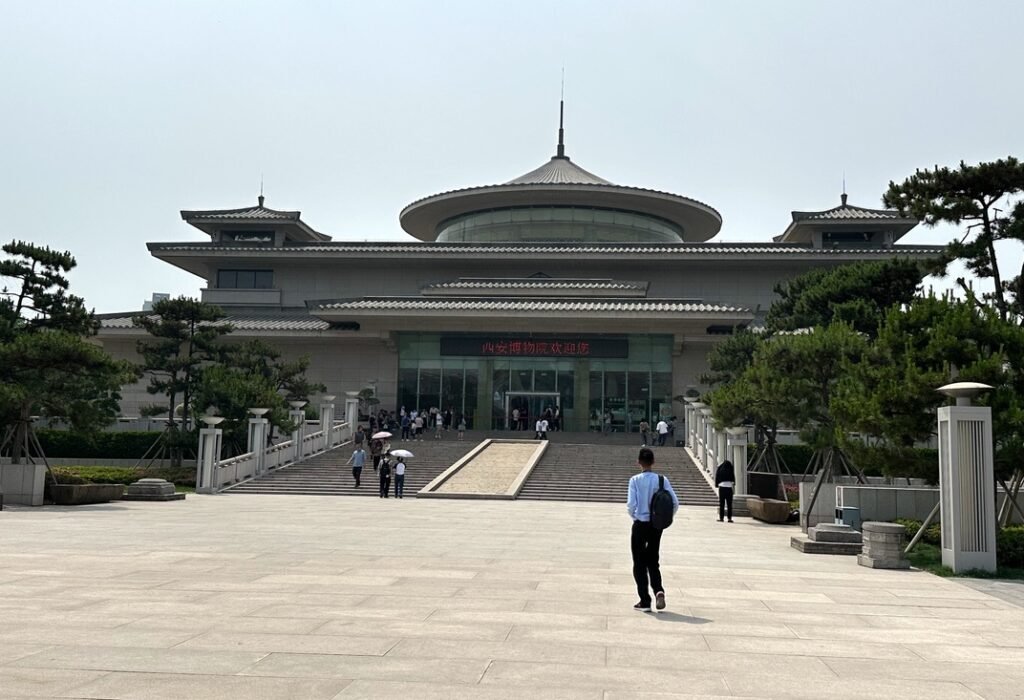
To truly understand how this ancient city flourished, a visit to the Xi’an Museum (Xi’an Bowuyuan 西安博物院) is essential. Unlike the larger Shaanxi History Museum, this city museum is compact, peaceful, bilingual, and follows a clear timeline of Xi’an’s evolution from a frontier settlement to one of the most powerful metropolises on Earth.
📍 Location & What to Expect
- 🏠 Address: 72 Youyi West Road, Beilin District, Xi’an
- 🕕 Hours: 9:00 AM to 5:00 PM, closed on Tuesdays
- 🌐 Language: Chinese & English signage throughout
- 🏋️ Admission: Free (passport or ID required). Online registration needed.
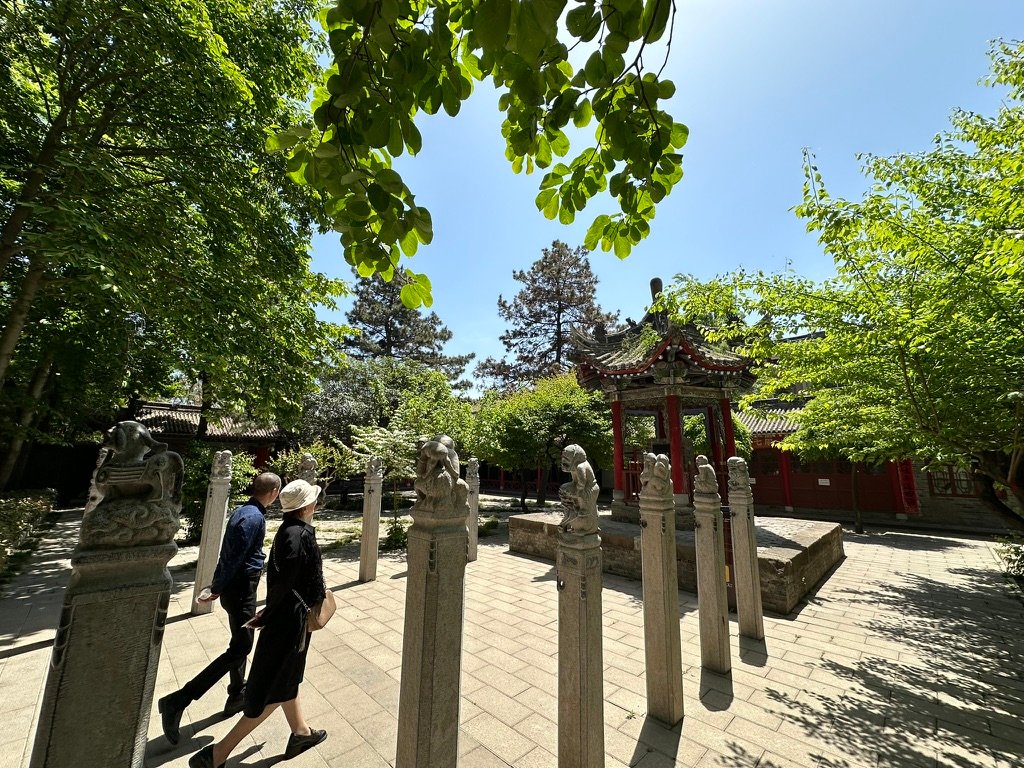
- ✨ Bonus Stop: Next to the tranquil Small Wild Goose Pagoda and traditional gardens
This museum is perfect for travelers who want:
- A structured, easy-to-follow history of Xi’an
- A less-crowded alternative to larger museums
- Visual storytelling through well-preserved artifacts
- Insight into Xi’an’s multicultural legacy, especially during the Tang Dynasty
🪨 Building the City – Foundations & Architecture
⛏️ Early Building Materials
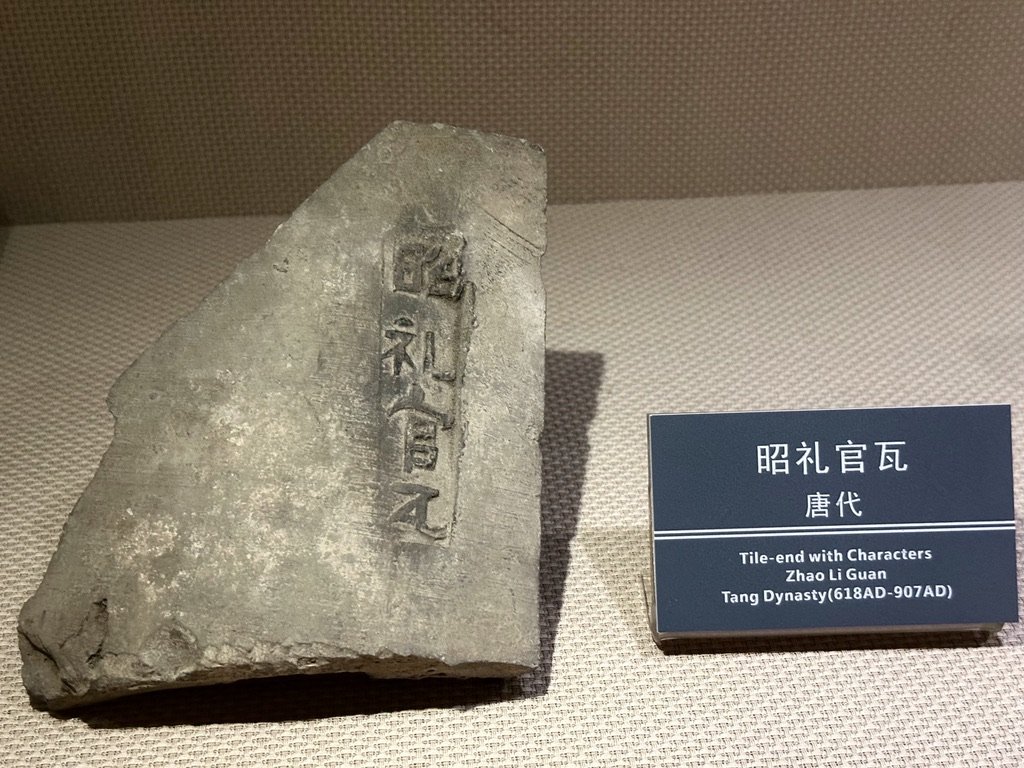
The journey begins with Xi’an’s earliest construction tools, carved stones, and roof tile fragments. These artifacts may seem mundane but speak volumes about the birth of a city.
🏛️ Han Dynasty Tile Ends (WǍa Dāng 瓦当)
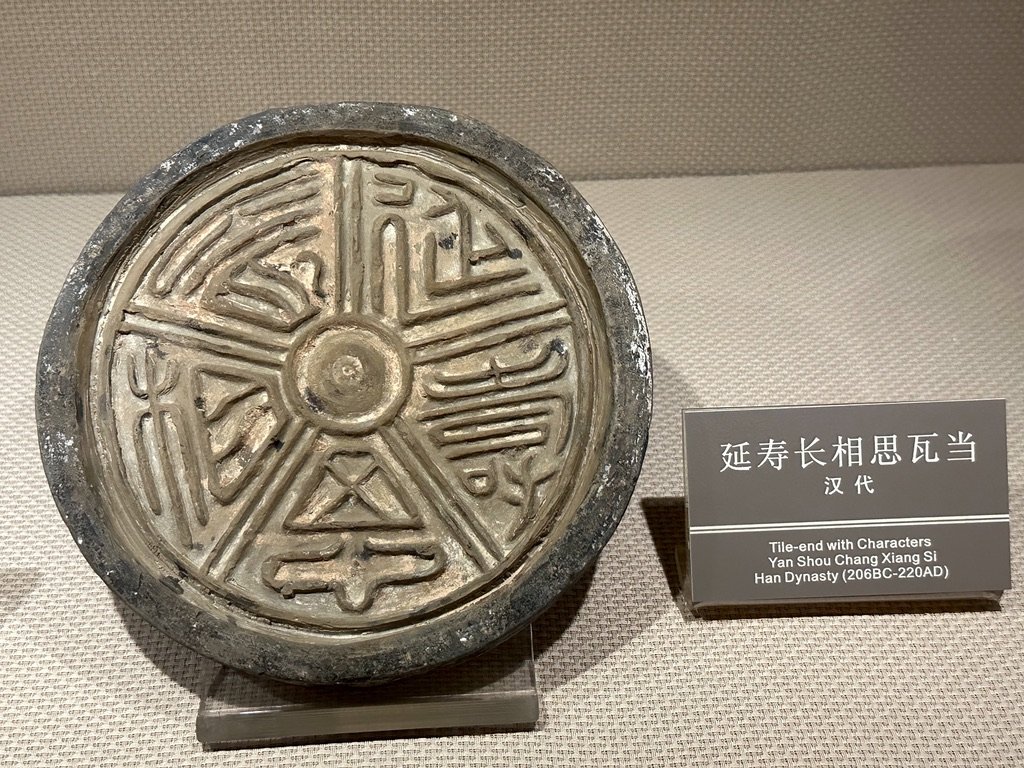
These round tiles, often displayed in neat rows, were used to cap the ends of eaves. Many carried auspicious inscriptions like “延寿长相思” (Yan Shou Chang Xiang Si) meaning:
“May we live long and remember each other always.”
Such sentiments from 2,000 years ago offer a surprising emotional connection to the past.
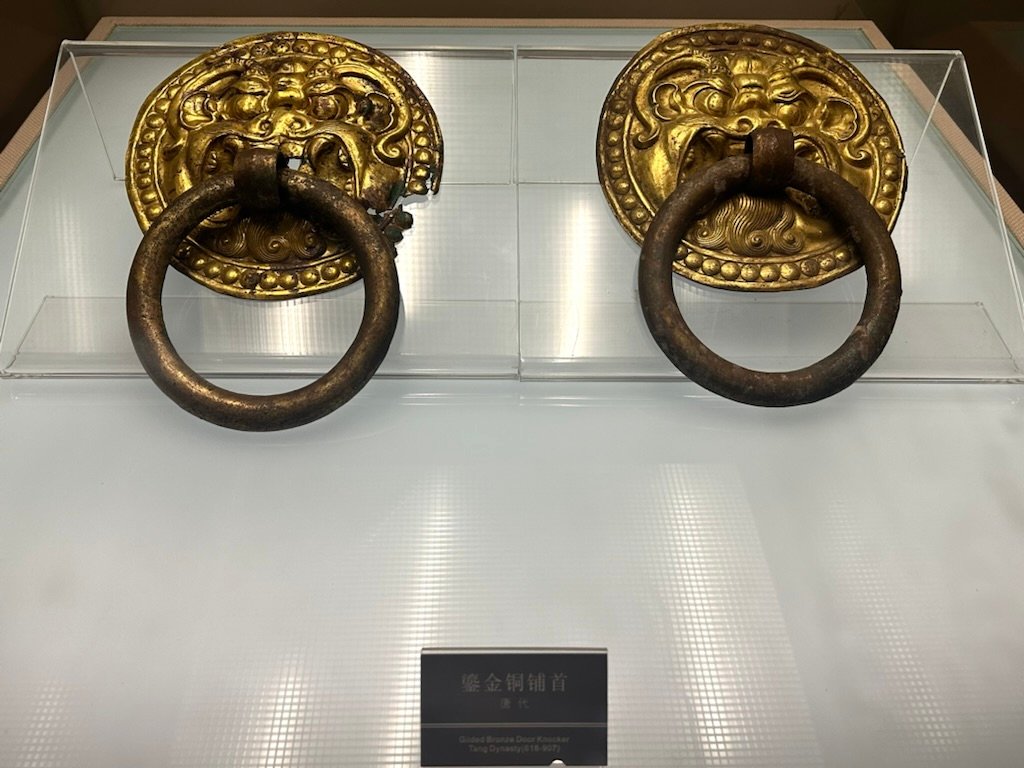
🔮 Gilded Bronze Door Knockers
Majestic Tang Dynasty door knockers shaped like lion heads are on display — fierce symbols of status and protection. Imagine walking up to a courtyard home in ancient Chang’an and knocking with one of these.
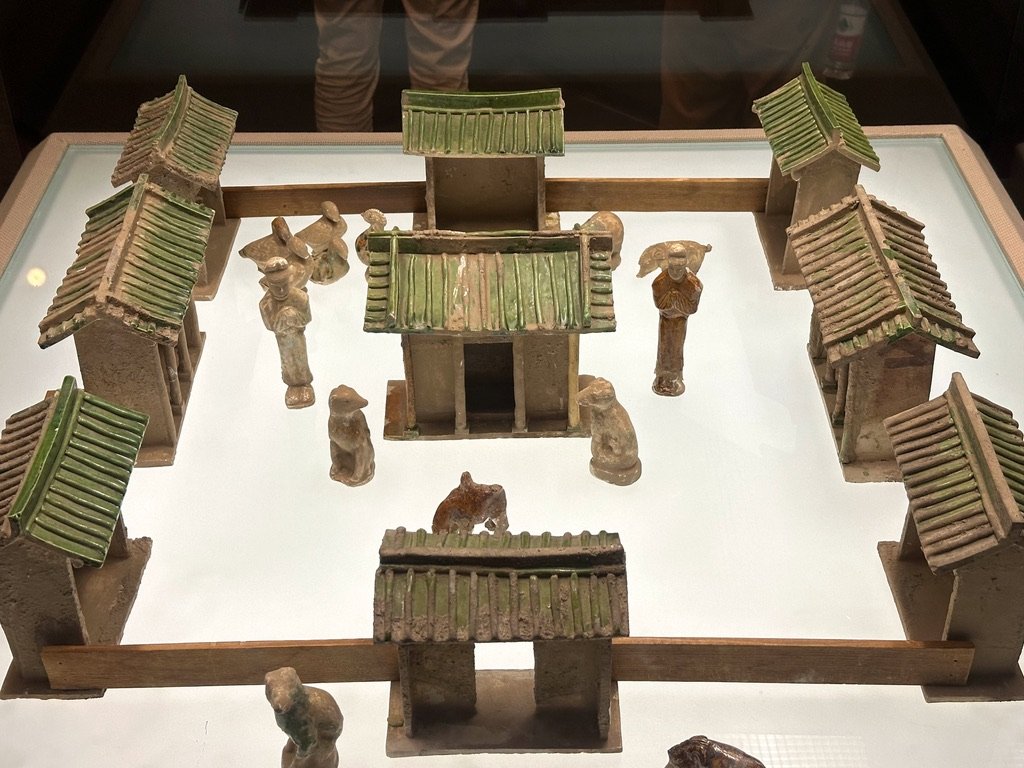
🏡 Inside the Homes of Chang’an
🏠 Model of a Tang Dynasty Courtyard (Siheyuan 四合院)
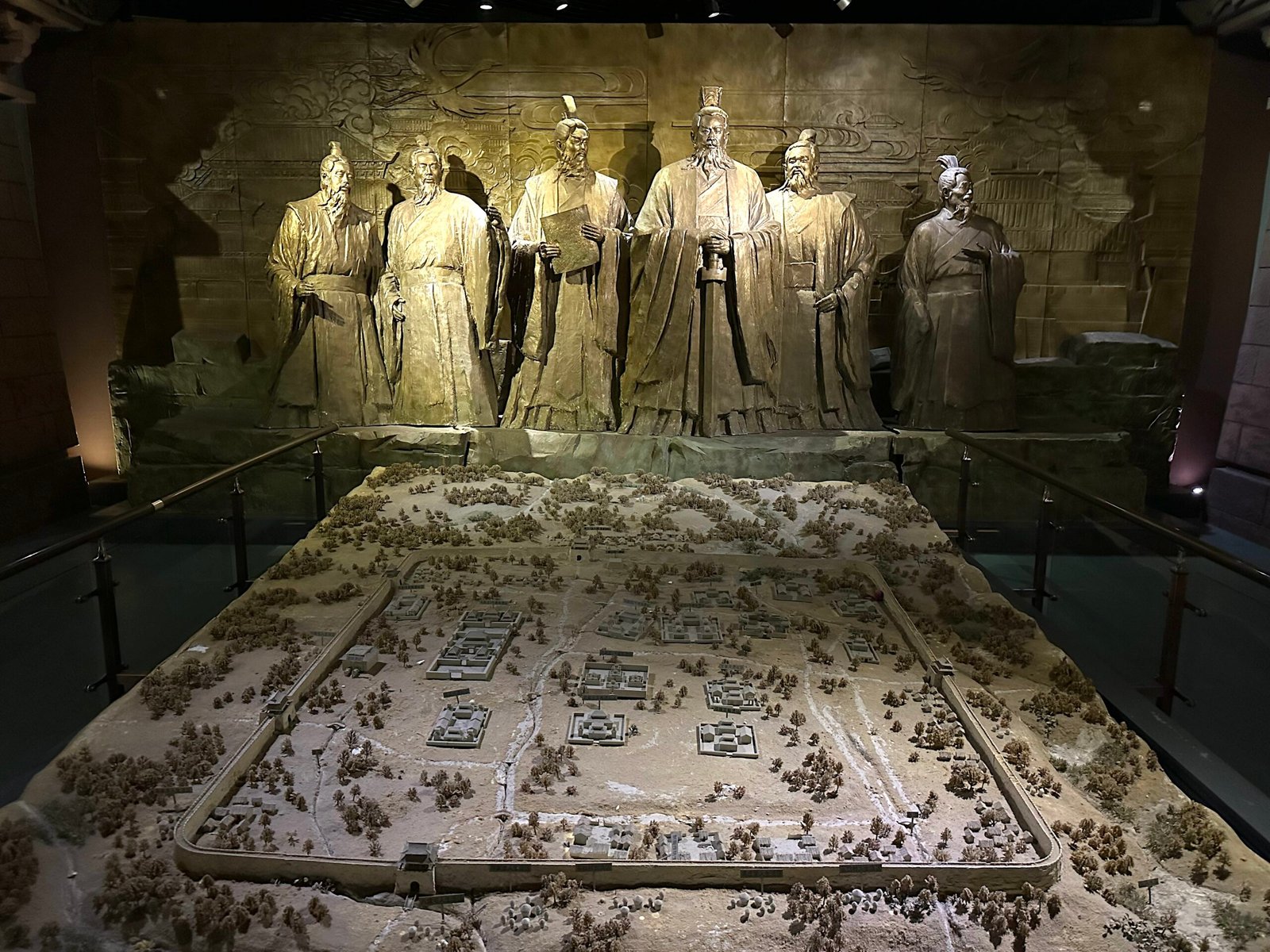
This detailed miniature shows how families lived in quadrangle-style houses, with rooms built around a central courtyard. These homes were quiet, inward-facing, and ideal for multigenerational living — the blueprint of Chinese domestic architecture for centuries.
Elaine leaned in close to study the figures around the courtyard:
“It feels like they’re about to serve dinner,” she whispered.
🚚 Trade and the Tang – A Multicultural Metropolis
During the Tang Dynasty (618–907 AD), Chang’an was not just a Chinese city — it was a global one. Foreigners in this era were referred to as “Hu” (胡), a general term for people from the west or outside China.
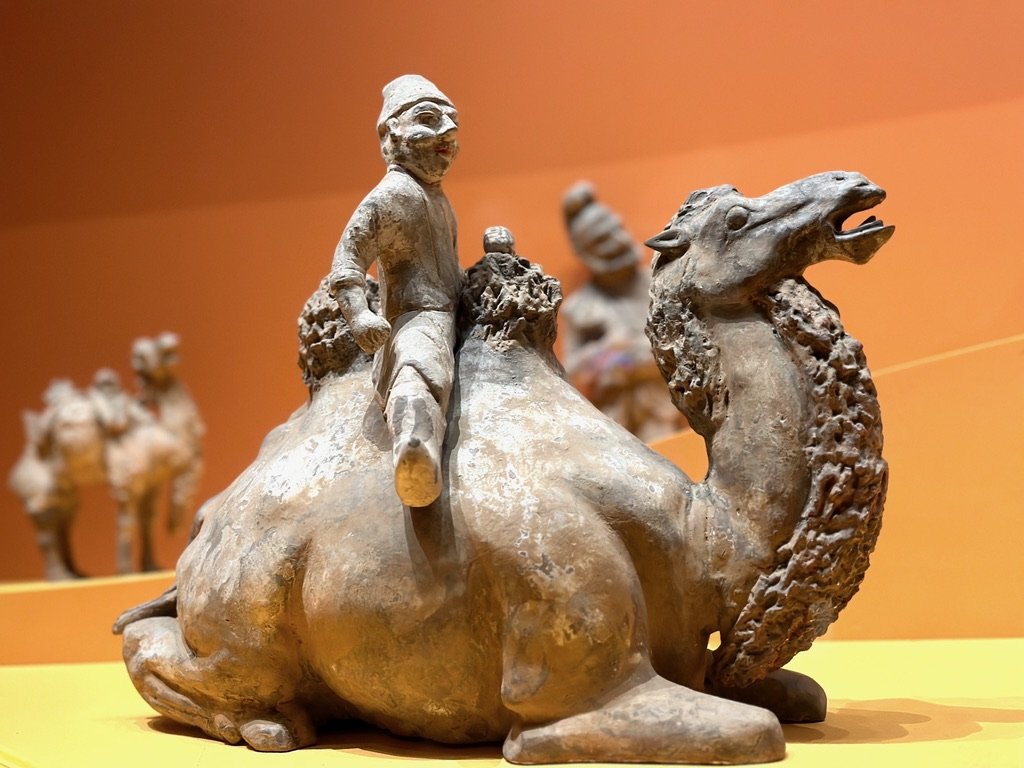
At the Xi’an Museum, evidence of these multicultural interactions appears vividly in the figurines of camel caravans, foreign merchants, and exotic animals.
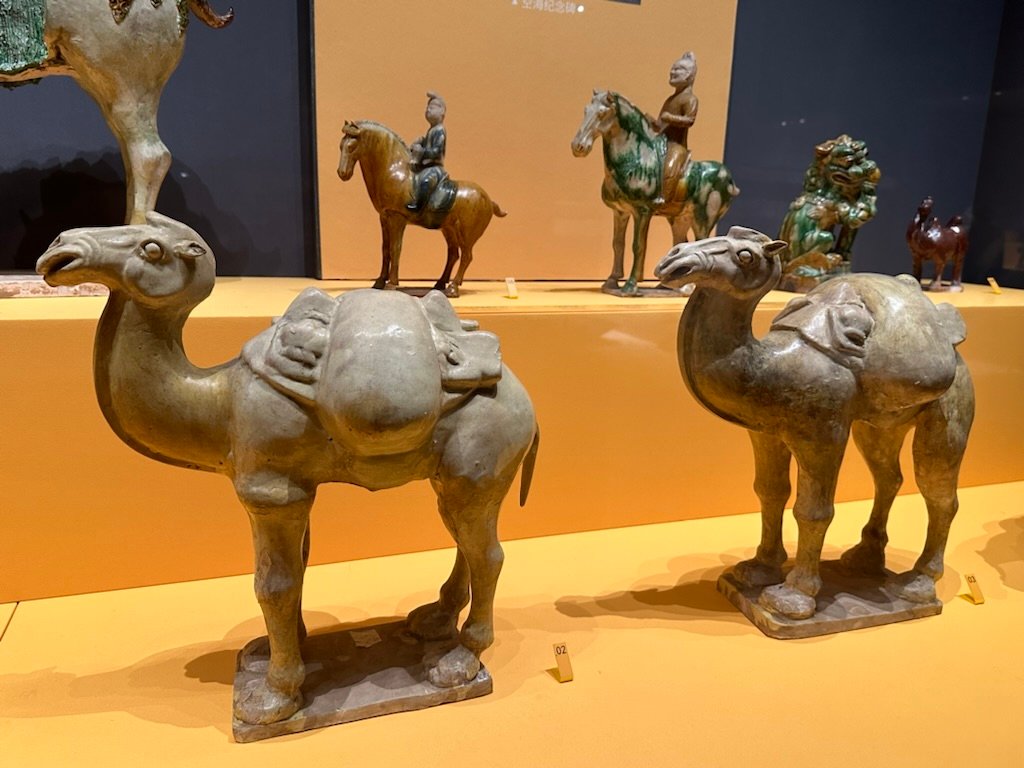
🐪 Camels of the Silk Road
Camels were the cargo carriers of the desert, and Xi’an was their eastern destination. Figurines in various poses show them resting, standing, and loaded with goods — including silk, jade, and spices.
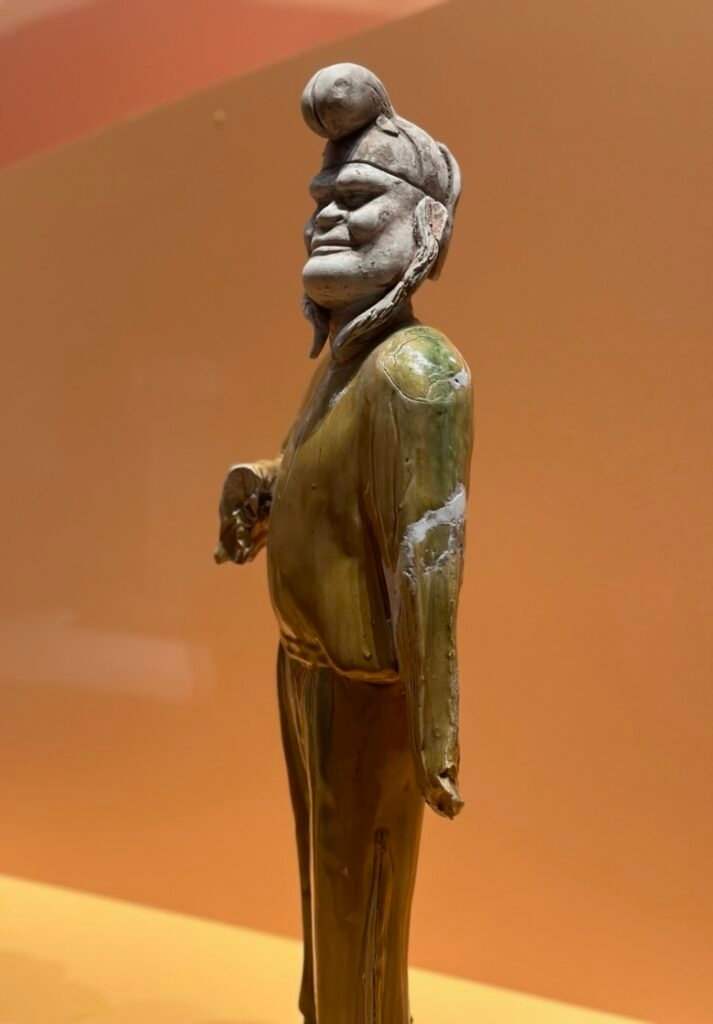
👨 Foreign Riders & Merchants
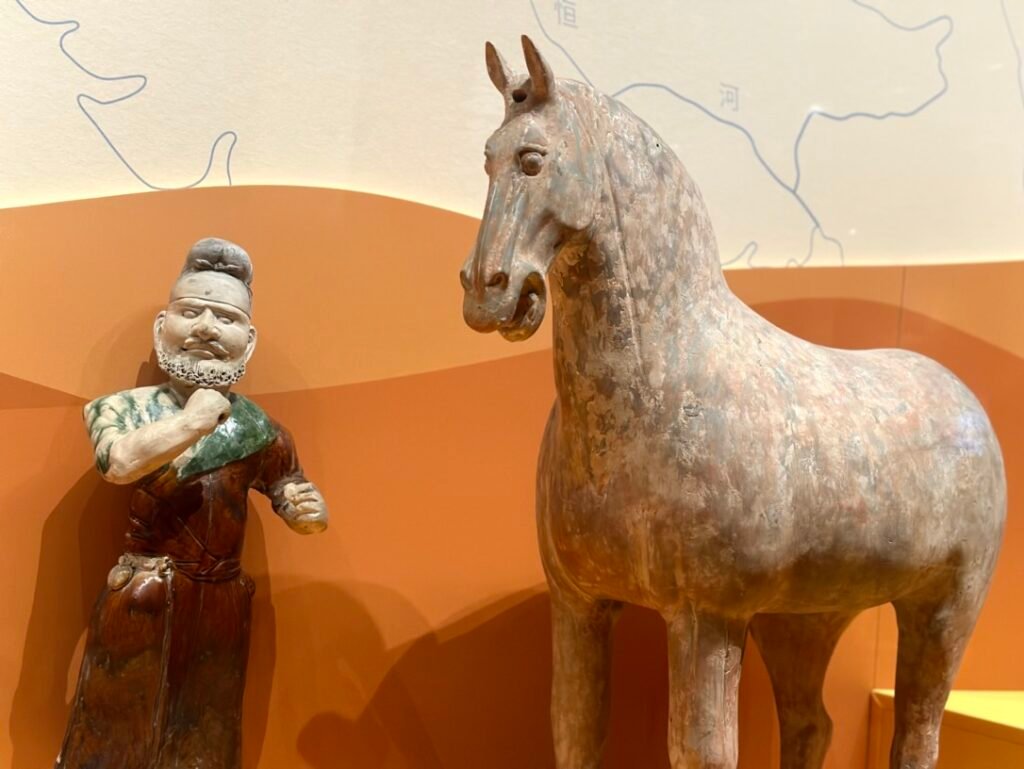
These Tang Dynasty clay statues show clear Central Asian facial features, distinctive beards, and foreign attire. Their proud stances and expressive poses prove their importance in society, not just as visitors but as residents and contributors.
“That looks like a Sogdian trader,” Elaine said, referencing a Central Asian group known for their influence along the Silk Road.
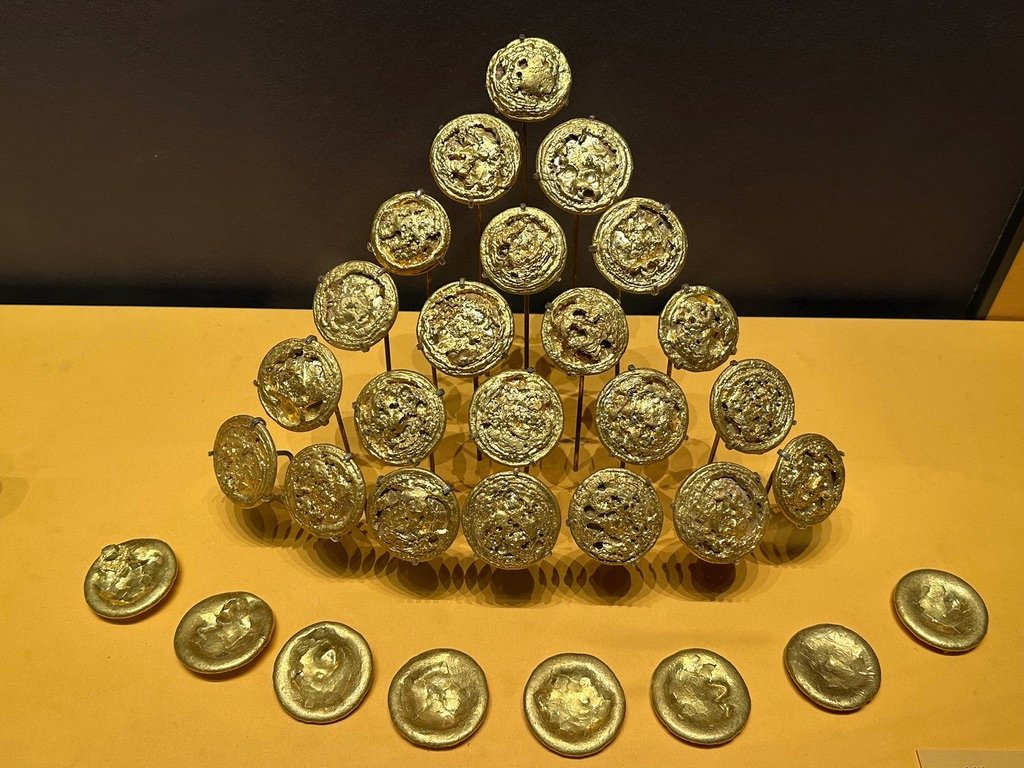
💰 Tang Dynasty Gold & Silver Ingots
These aren’t mere displays of wealth — they are currency in its purest form. The rectangular gold ingot and the curved silver ingot (a rare reproduction) show how traders carried value across empires.
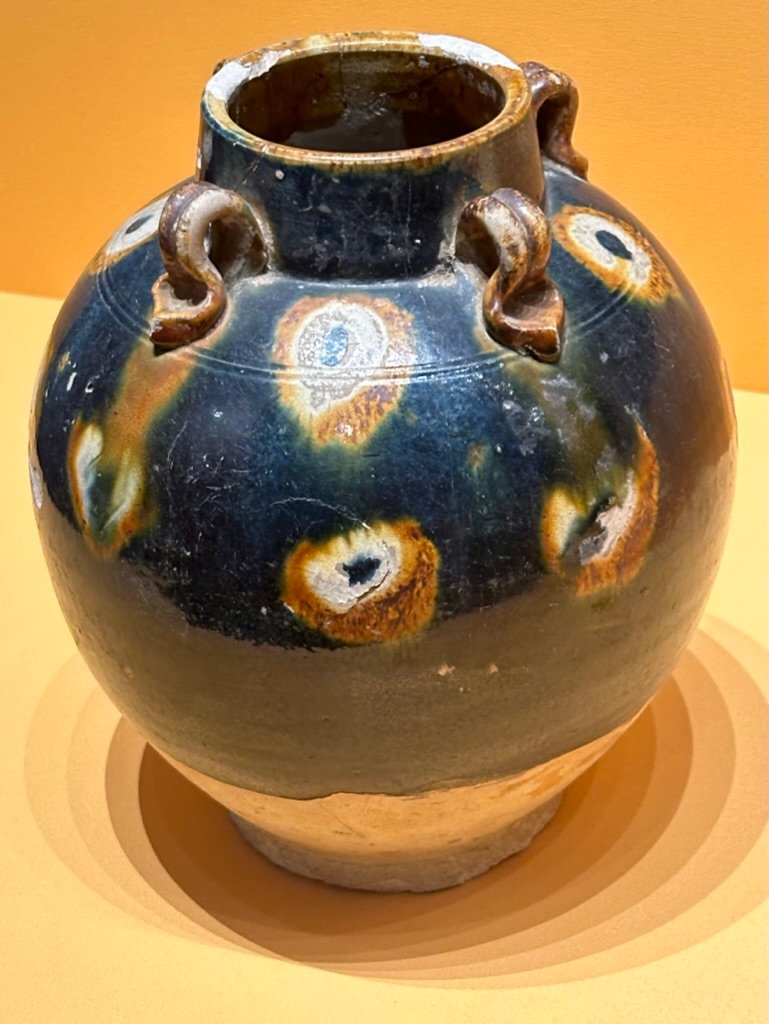
🖋️ The Colorful World of Tang Pottery
🎨 Glazed Jars and Vessels
This black glazed jar with multicolored patterns wasn’t made for royalty. It belonged to everyday households — people who valued art, beauty, and craft even in their daily tools.
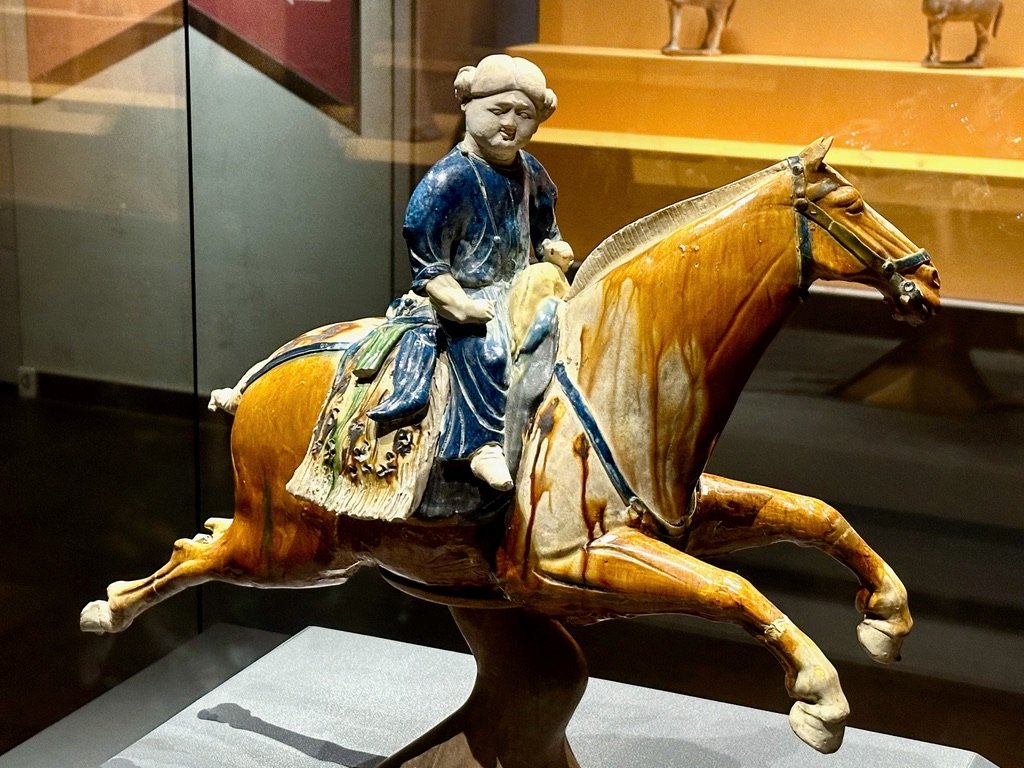
🚄 Tang Ladies & Equestrian Elegance
Two figurines of Tang Dynasty court ladies, with soft curves, strong faces, and expressive stances, revealed the changing ideals of beauty and confidence in that era.
Elaine looked at one and said, “She looks like she has an opinion.”
Indeed, she does. The Tang Dynasty was a period when women could ride horses, wear flowing robes, and sometimes wield surprising political power.

🦖 Guarding the City – Warriors & Watchmen
Look out for strong clay figurines of warriors — some posing with clenched fists, others beside massive warhorses. These weren’t only symbolic — they reflect real military strength protecting the capital.
📸 Pro Tips for Visitors
- ✅ Go early in the day to avoid small school groups
- ✅ Pair your visit with the peaceful Small Wild Goose Pagoda garden next door
- ✅ Spend 90 mins to fully appreciate the museum’s layout and bilingual captions
- ✅ Bring kids or homeschoolers — the artifacts are expressive and educational
- ✅ Take photos freely (no flash) — the figurines are very photogenic!
🎓 Why Western Travelers Should Visit the Xi’an Museum
This museum provides a gentle, meaningful introduction to Chinese civilization, particularly through the lens of the Tang Dynasty:
- It connects Western visitors to the city’s role in global history
- It shows clear signs of foreign influence and integration in art
- It uses visual storytelling through pottery, statues, and architecture
- It presents ancient China not as isolated, but as diverse and dynamic
And perhaps most importantly, it reminds us that the world was more connected than we think.
“This isn’t just Chinese history,” Elaine said. “It’s world history.”
🌄 Final Thoughts: The City That Never Forgot
In a single visit, the Xi’an Museum invites you to walk through time — from early brickwork and engraved tiles to camel caravans and golden trade.
The city once called Chang’an wasn’t only a capital of China — it was the heart of a world that flowed through its gates.
If you want to understand Xi’an beyond tourist checklists, come here first. Let the clay figurines speak. Let the architecture whisper. And let the Silk Road stories remind you:
The world has always been more connected than we imagine.