Some places are not meant to be visited only once.
The first time you visit, you probably see what everyone sees. You take photos of the famous buildings, follow the recommended walking routes, try some popular food, and happily tick another attraction off your travel list.
But when you return again, something interesting happens.
You slow down.
You notice things you missed before.
A street sign. An old shop. A familiar childhood snack. A small souvenir sitting quietly on a shelf.
Suddenly, the place begins telling you a different story.
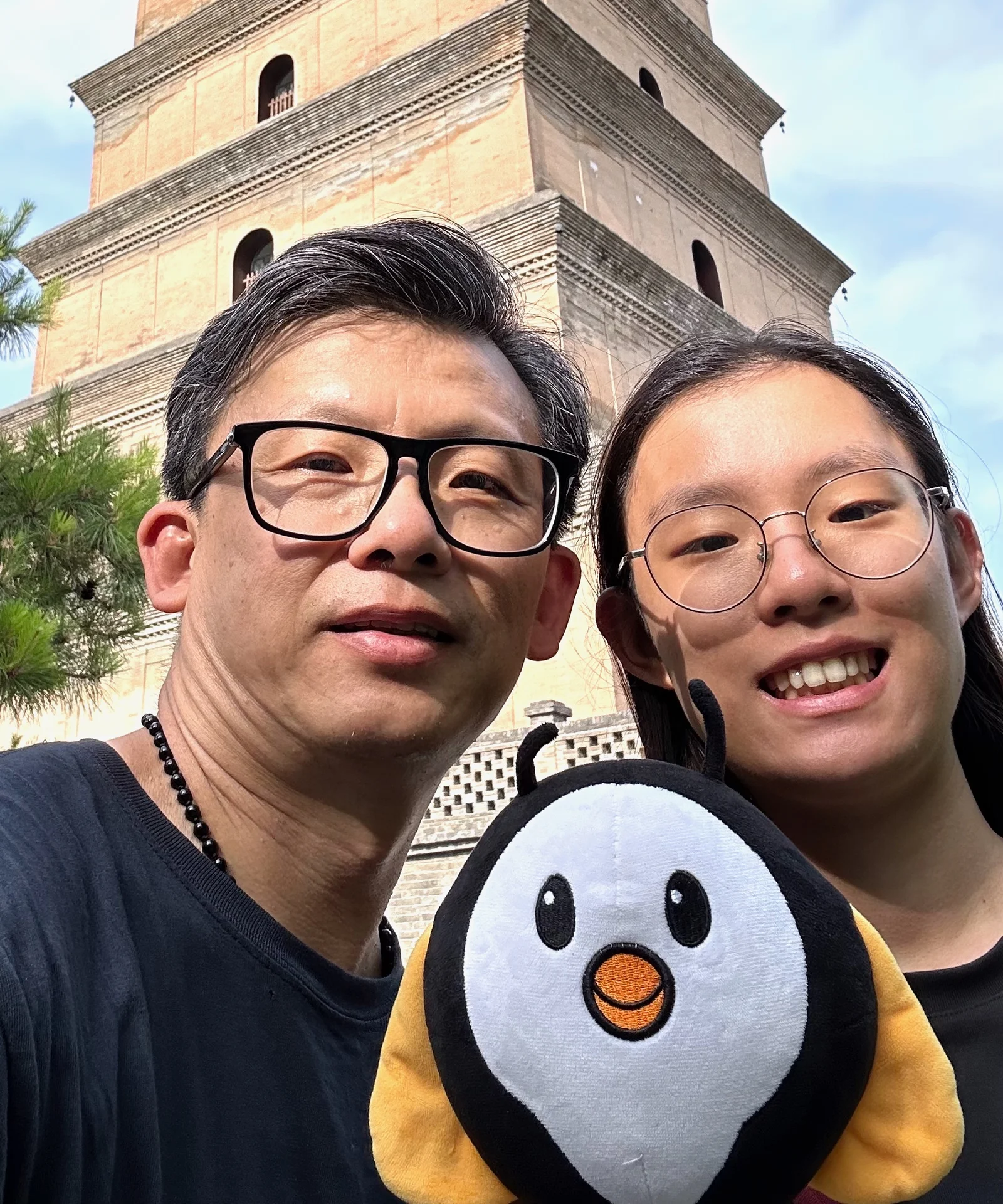
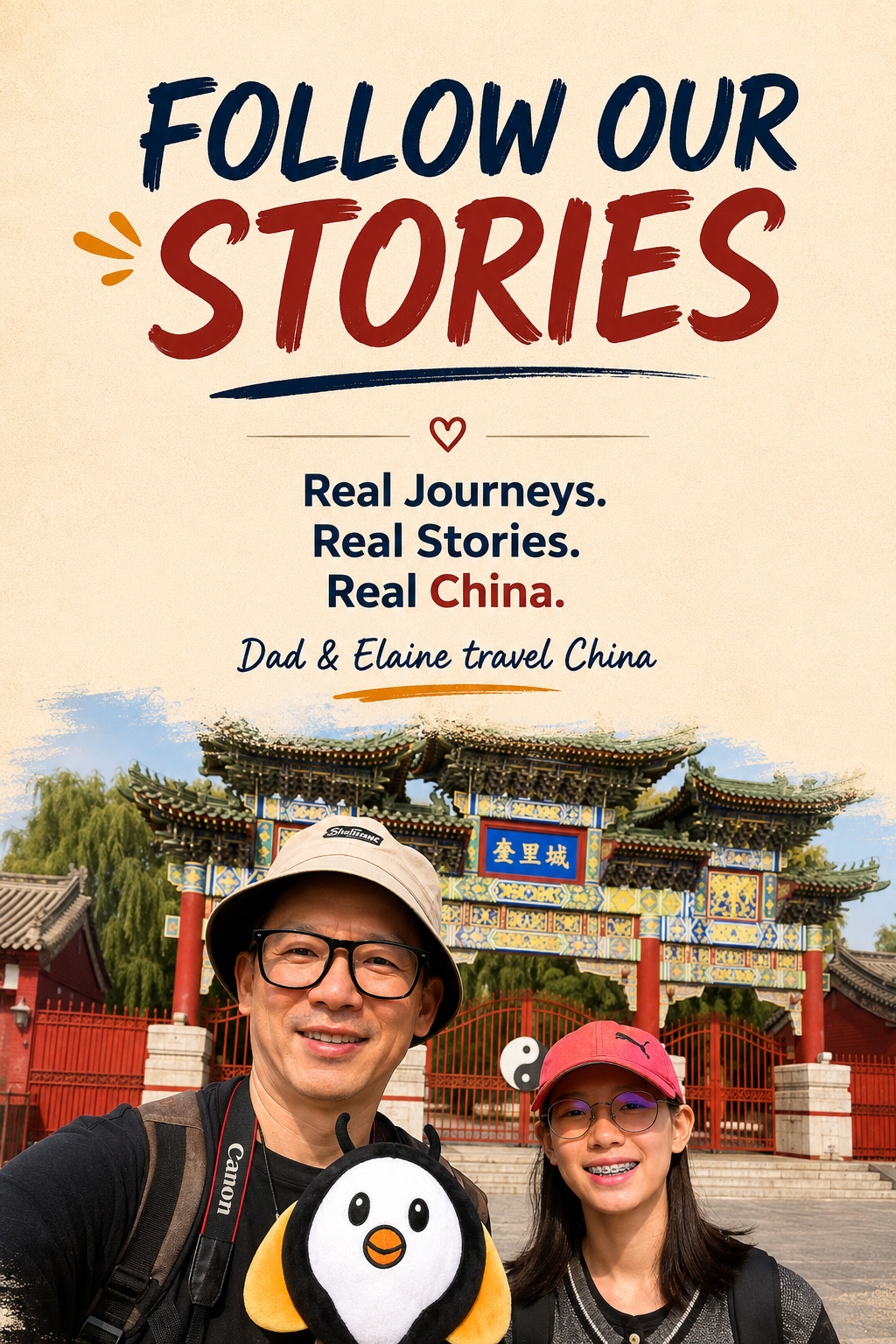
For Elaine and me, Beijing is one of those special places.
Our journey with Beijing started more than ten years ago, when Elaine was only nine years old. It was her first visit to China, and like many first-time travellers, we were excited to see the places we had only read about before — the Great Wall (长城 Chángchéng), Tiananmen Square (天安门 Tiān’ānmén), and the Forbidden City (故宫 Gùgōng).
Everything felt huge.
Everything felt impressive.
But as a father, I secretly hoped Elaine would discover something deeper. I wanted China to become more than a collection of tourist attractions. I wanted her to become curious about the stories behind the walls, the people behind the names, and the history behind every place.
Because once curiosity begins, learning happens naturally.
And interestingly, Elaine’s journey into Chinese history started with something very small.
A little box of cards.
A Small Souvenir That Opened the Door to Chinese History
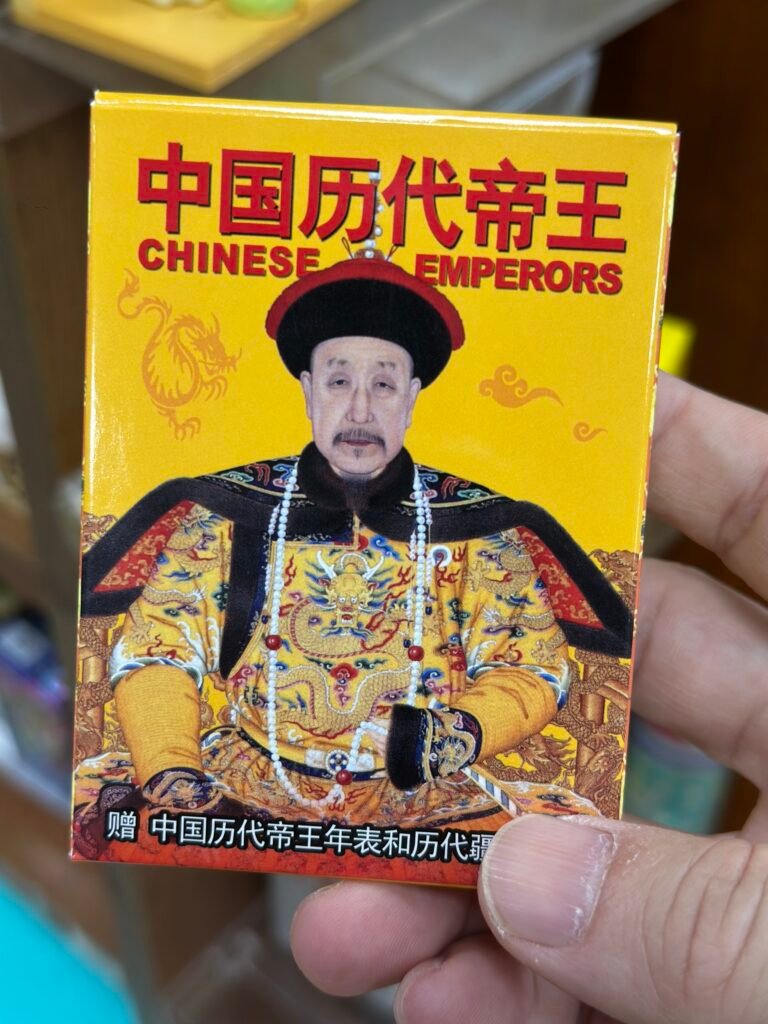
During that first Beijing trip, I bought Elaine a small yellow box called:
中国历代帝王
(Zhōngguó Lìdài Dìwáng)
Chinese Emperors Throughout History.
It was actually my little fatherly trick.
A cheeky one.
How do you make a nine-year-old child interested in thousands of years of Chinese civilisation?
Probably not by asking her to memorise dynasty names and historical dates.
So instead of a thick history book, I gave her something that looked like a game.
A set of cards.
Pictures.
Names.
Stories.
A simple question:
“Who was this emperor?”
That was enough.
The Chinese call this:
好奇心
(hàoqíxīn)
Curiosity.
Sometimes curiosity is a better teacher than any textbook.
Through these cards, Elaine slowly discovered historical figures such as Qin Shi Huang (秦始皇 Qín Shǐ Huáng), the first emperor who unified China in 221 BC, and rulers from different dynasties — Han (汉朝 Hàn Cháo), Tang (唐朝 Táng Cháo), Yuan (元朝 Yuán Cháo), Ming (明朝 Míng Cháo), and Qing (清朝 Qīng Cháo).
These were no longer just names.
They became characters.
They became stories.
Many years later, Elaine even created her own Chinese history timeline.
Looking back, perhaps that little souvenir from Beijing quietly planted the first seed.
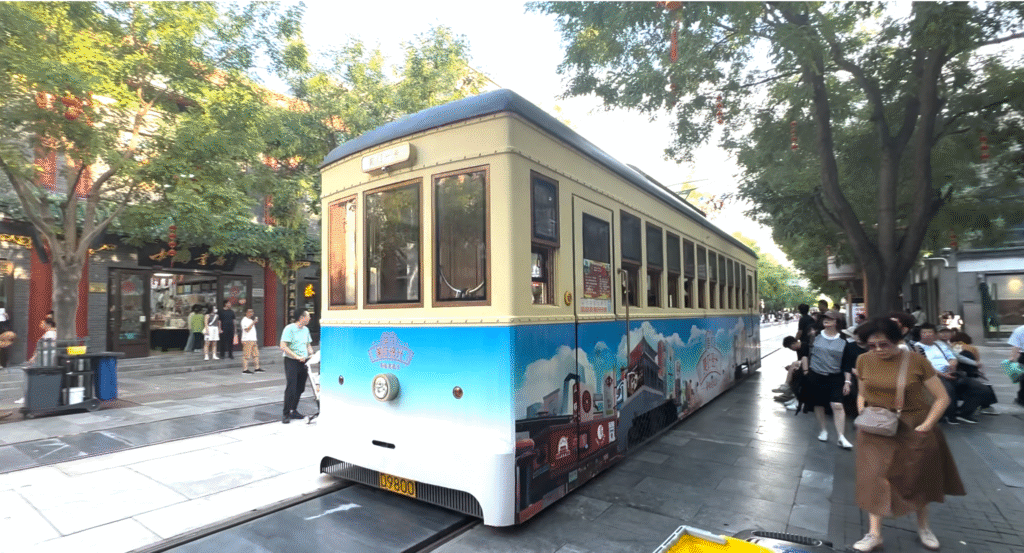
Nine years later, in October 2023, Elaine and I returned to Beijing.
This time, she was no longer the little girl discovering China for the first time. She was a young adult exploring a country she had slowly grown interested in.
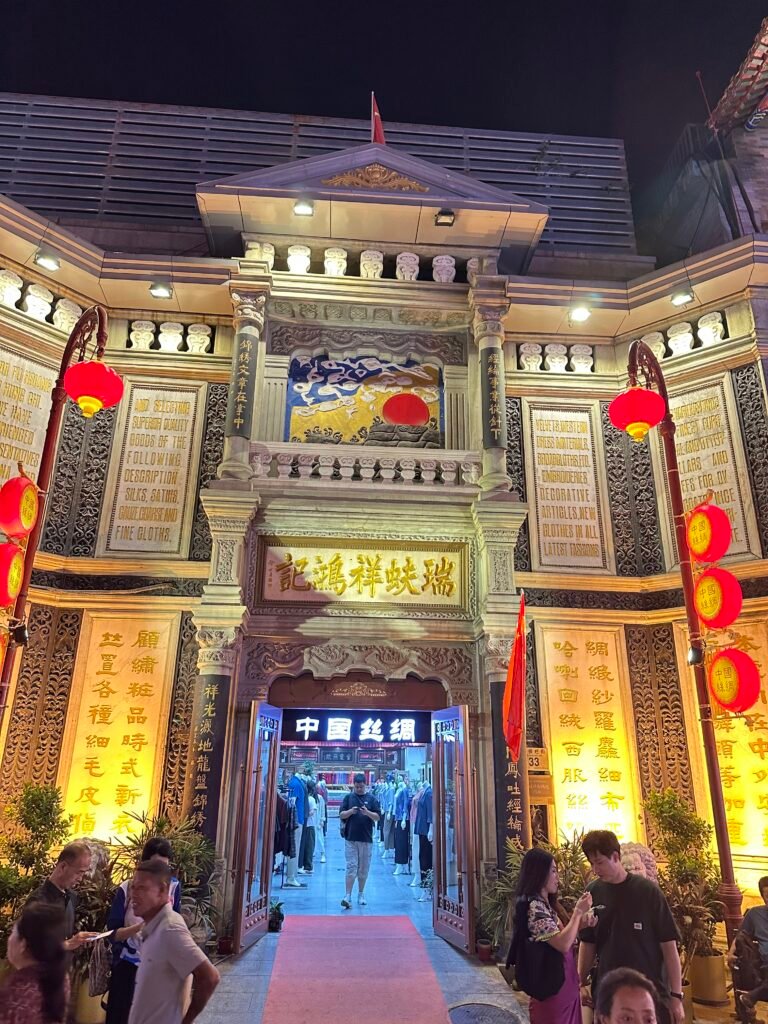
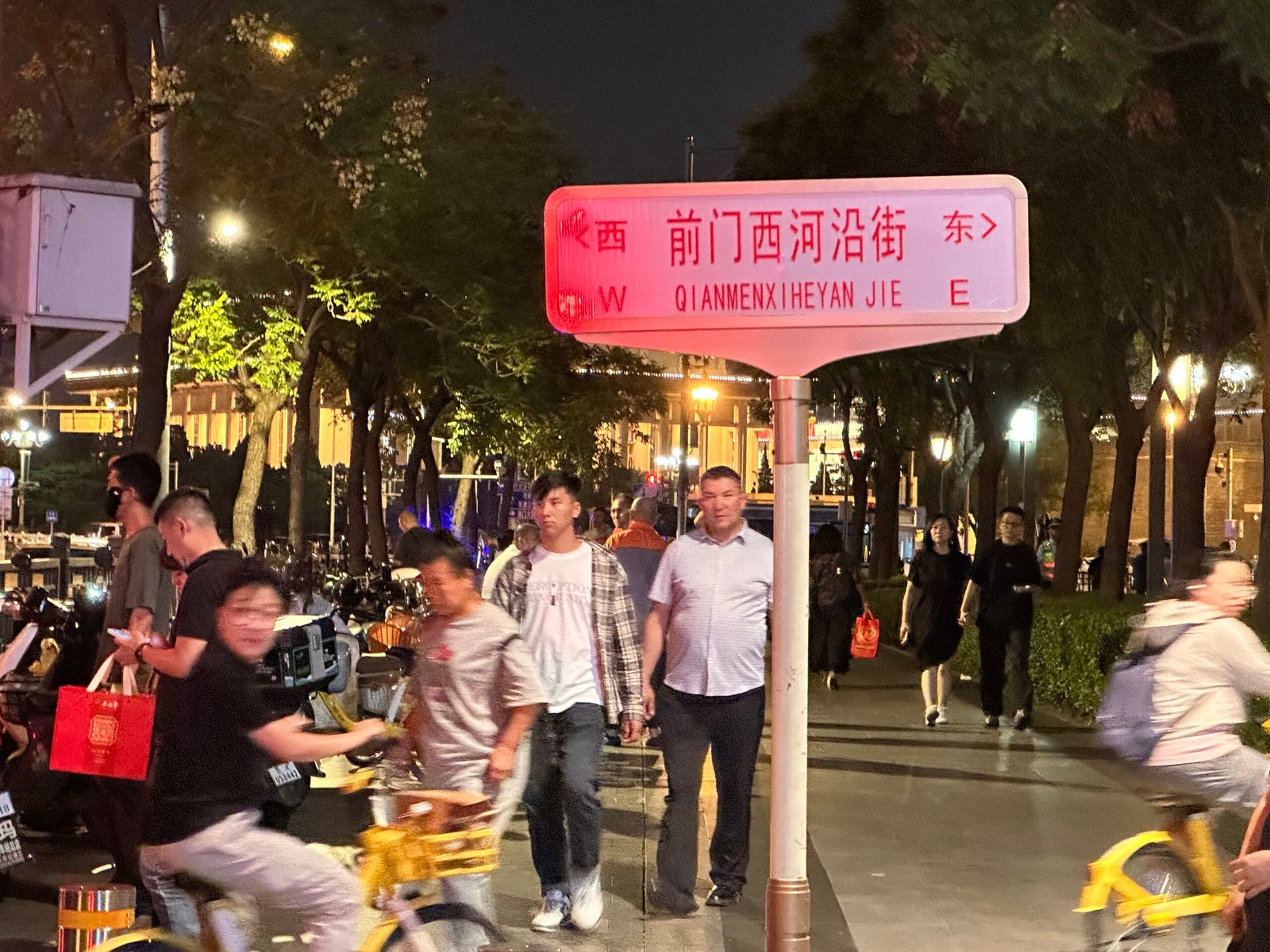
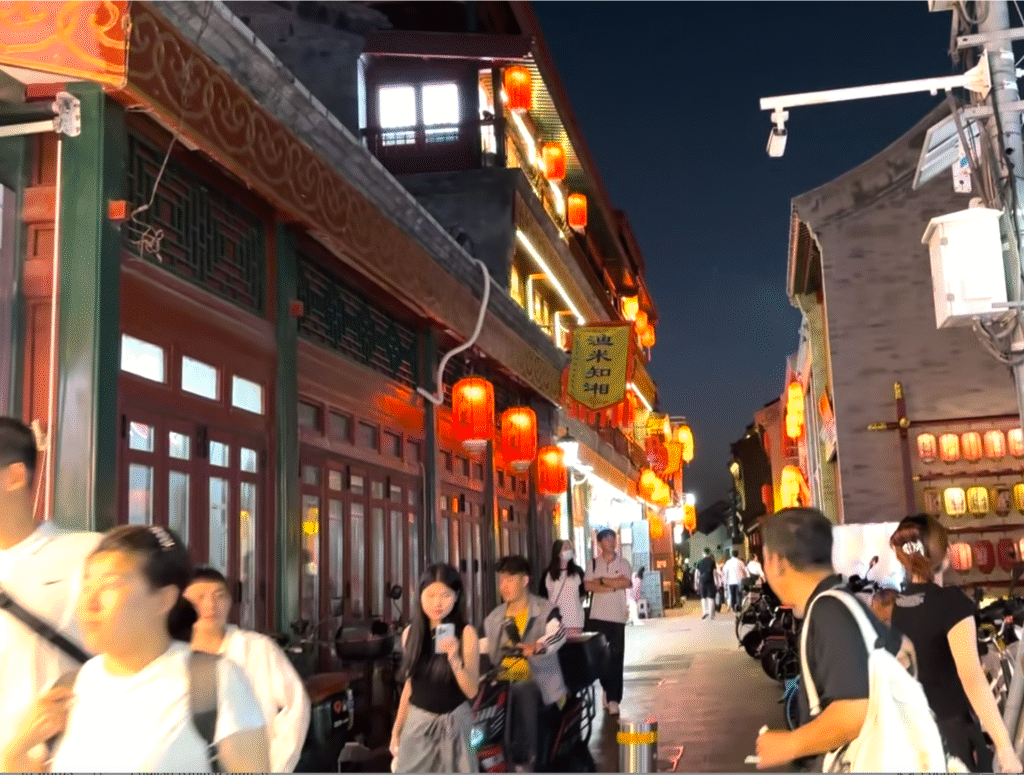
During that journey, we walked through three of Beijing’s most famous historical commercial streets — Qianmen (前门), Wangfujing (王府井), and Dashilan (大栅栏).
Those walks eventually became some of our first ChinaTravelBug.com stories.
Back then, we were exploring these streets from the perspective of travellers:
Which one should you visit?
What makes each street special?
How should a first-time visitor experience old Beijing?
Then in September 2025, we returned again.
Same city.
Same streets.
But we saw Beijing differently.
This time, we were not trying to visit more places.
We wanted to understand more stories.
There is a beautiful Chinese phrase:
旧地重游
(jiù dì chóng yóu)
Returning to a place you have visited before.
The place may be the same.
But the person returning has changed.
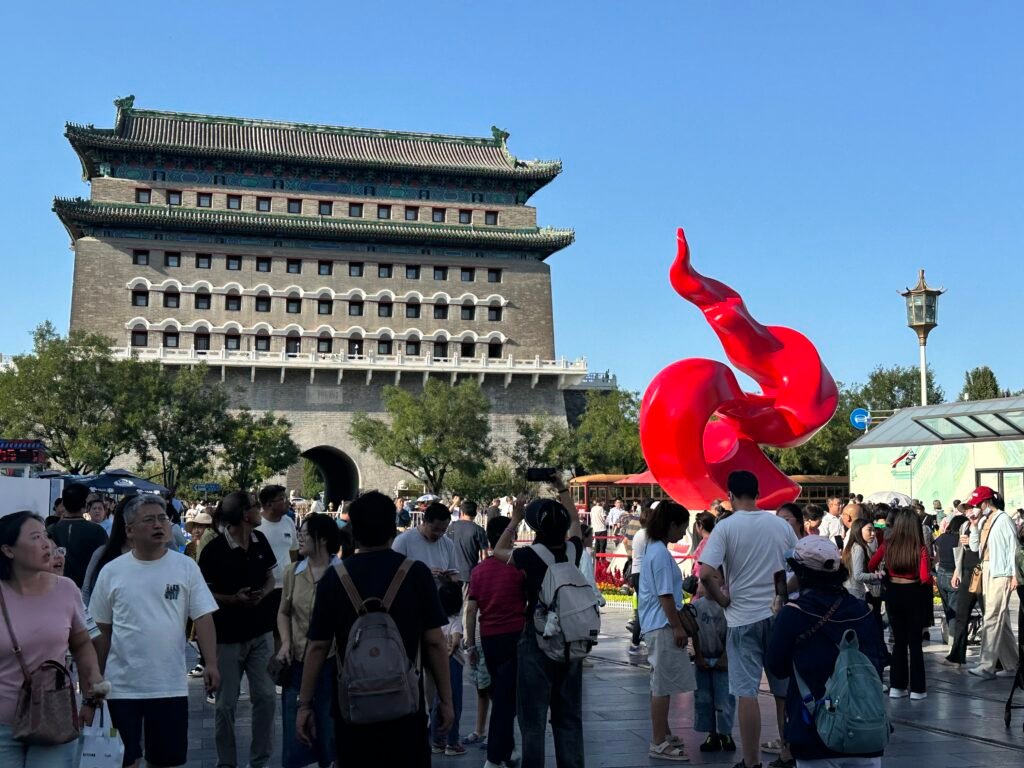
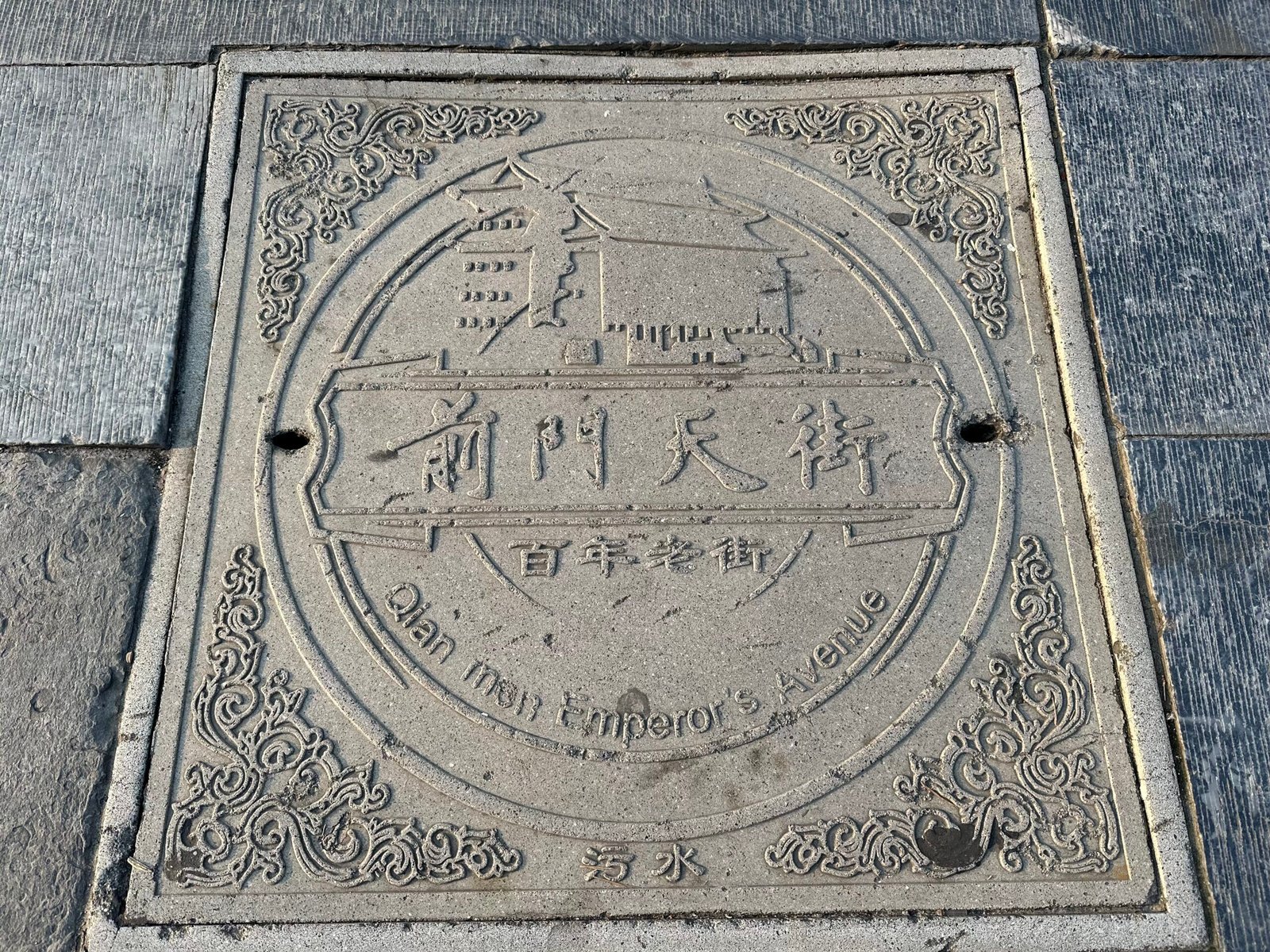
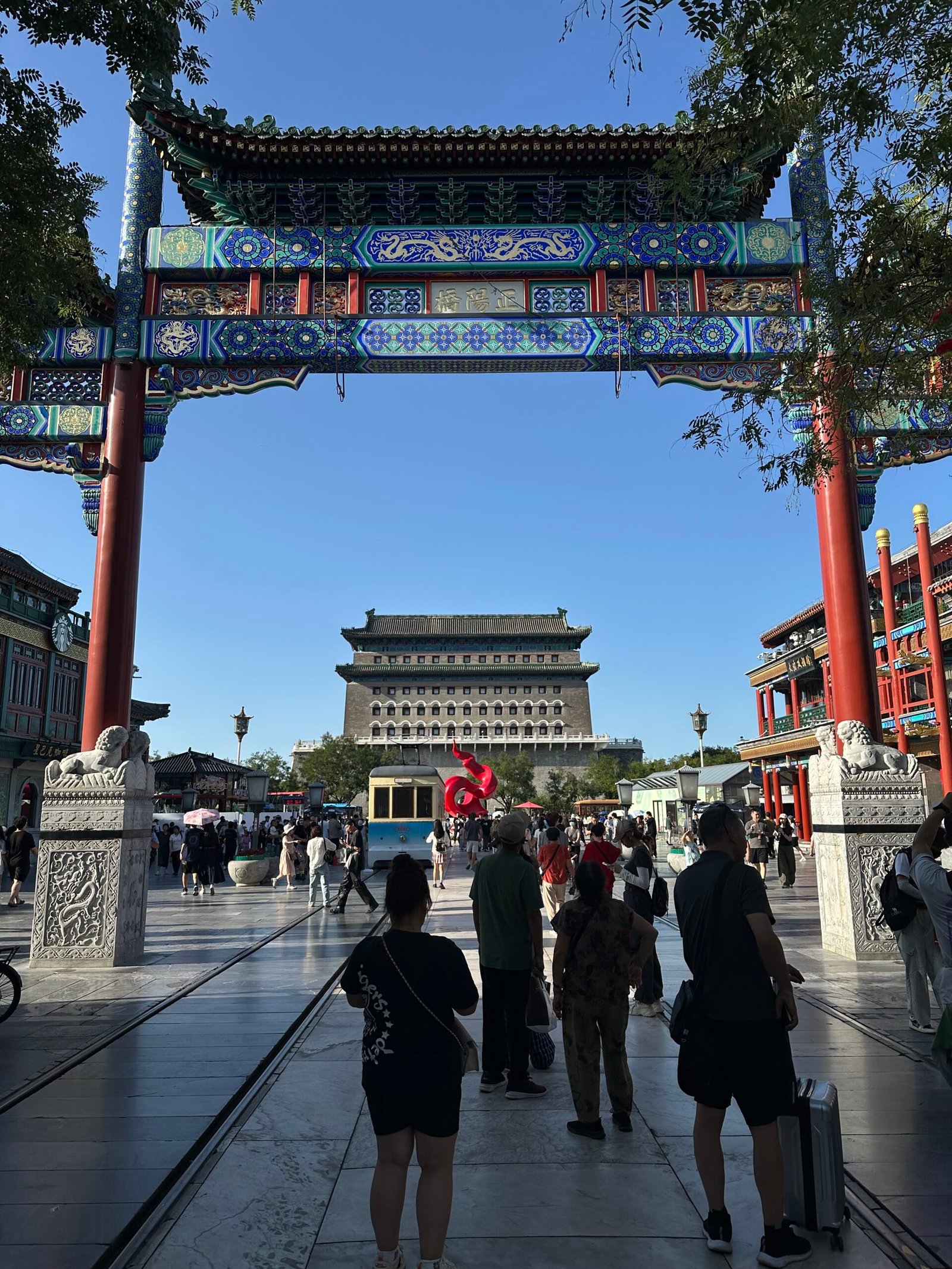
Walking into Qianmen Street (前门大街 Qiánmén Dàjiē) again, the first thing you notice is still the magnificent view towards Zhengyangmen (正阳门 Zhèngyángmén).
Many people know this area simply as Qianmen, meaning “Front Gate”, but Zhengyangmen is the historical name of the city gate.
During the Ming Dynasty (明朝 Míng Cháo), Emperor Yongle (永乐皇帝 Yǒnglè Huángdì) rebuilt Beijing as the imperial capital. Completed around 1420, Zhengyangmen became one of the most important gates of old Beijing.
Standing here, I always imagine two different worlds meeting.
Behind the gate was imperial Beijing.
The emperor.
The Forbidden City.
Ceremonies and officials.
But outside the gate was another Beijing.
The Beijing of ordinary people.
Restaurants.
Tea houses.
Merchants.
Families.
Everyday life.
This is what makes Qianmen special. It is not only about emperors. It is about the people who made Beijing alive.
Beijing’s story, however, started even earlier.
Before the Ming and Qing emperors, there was the Yuan Dynasty (元朝 Yuán Cháo).
In 1271, Kublai Khan (忽必烈 Hūbìliè) established the Yuan Dynasty, and its capital Dadu (大都 Dàdū) became one of the great cities of the world.
The Beijing we walk through today carries many layers.
Yuan.
Ming.
Qing.
Modern China.
All existing together.
In 2024, Beijing’s Central Axis (北京中轴线 Běijīng Zhōngzhóuxiàn) was recognised as a UNESCO World Heritage Site. This historical line connects many of Beijing’s most important landmarks, including the Forbidden City, Tiananmen, Zhengyangmen and the surrounding historical areas.
Standing in Qianmen today means standing inside hundreds of years of city planning and memories.
During our September 2025 visit, Elaine and I tried to do something simple.
Walk slower.
慢慢走
(màn màn zǒu)
Because Qianmen’s real charm is hidden in:
小细节
(xiǎo xìjié)
the little details.
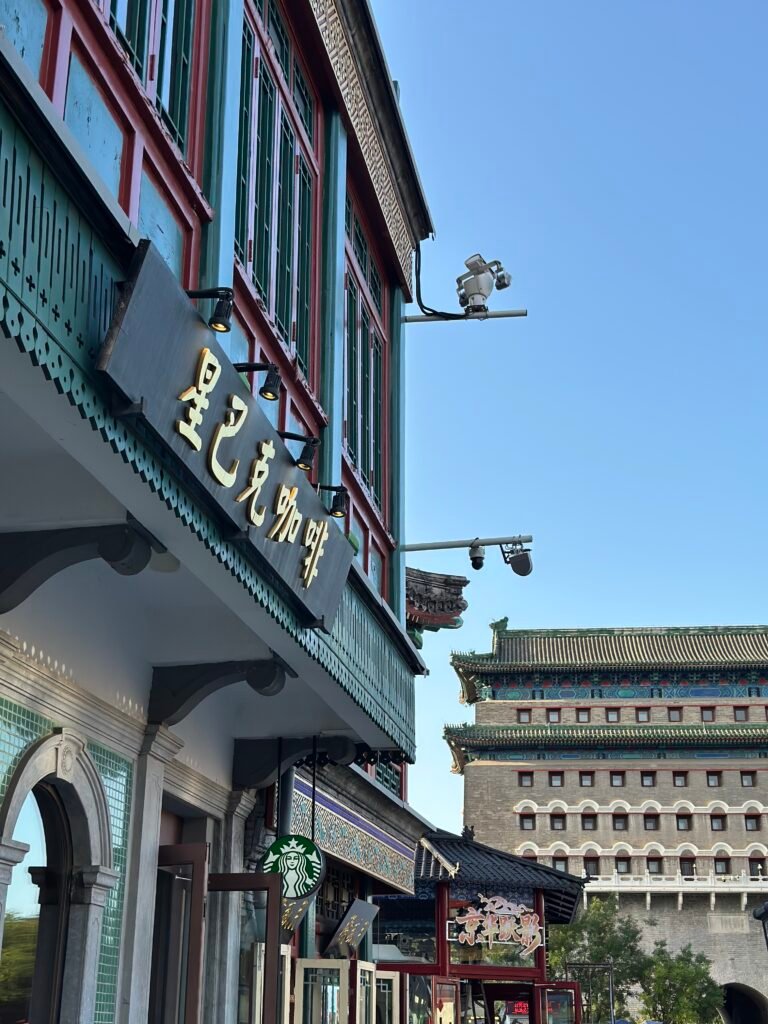
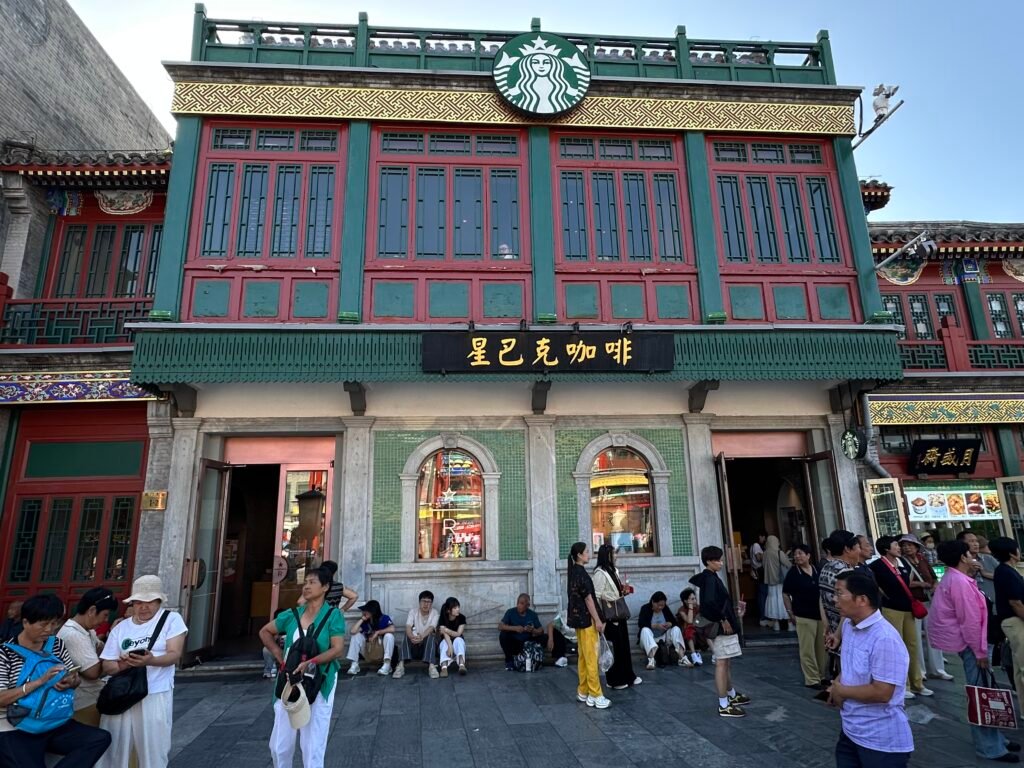
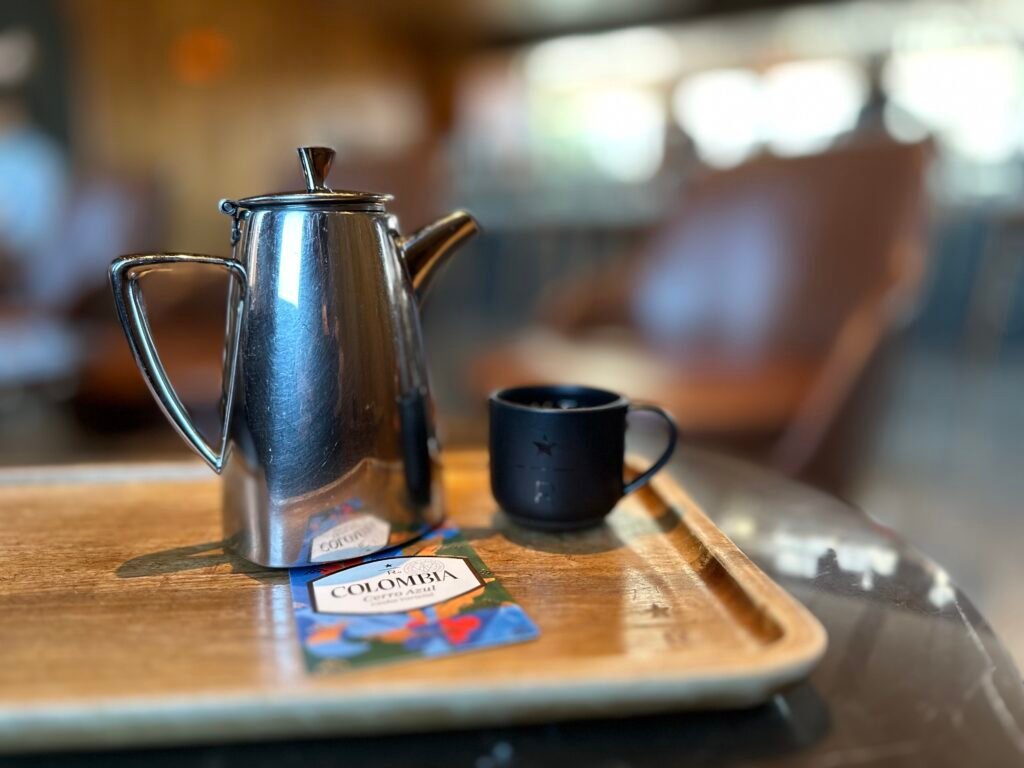
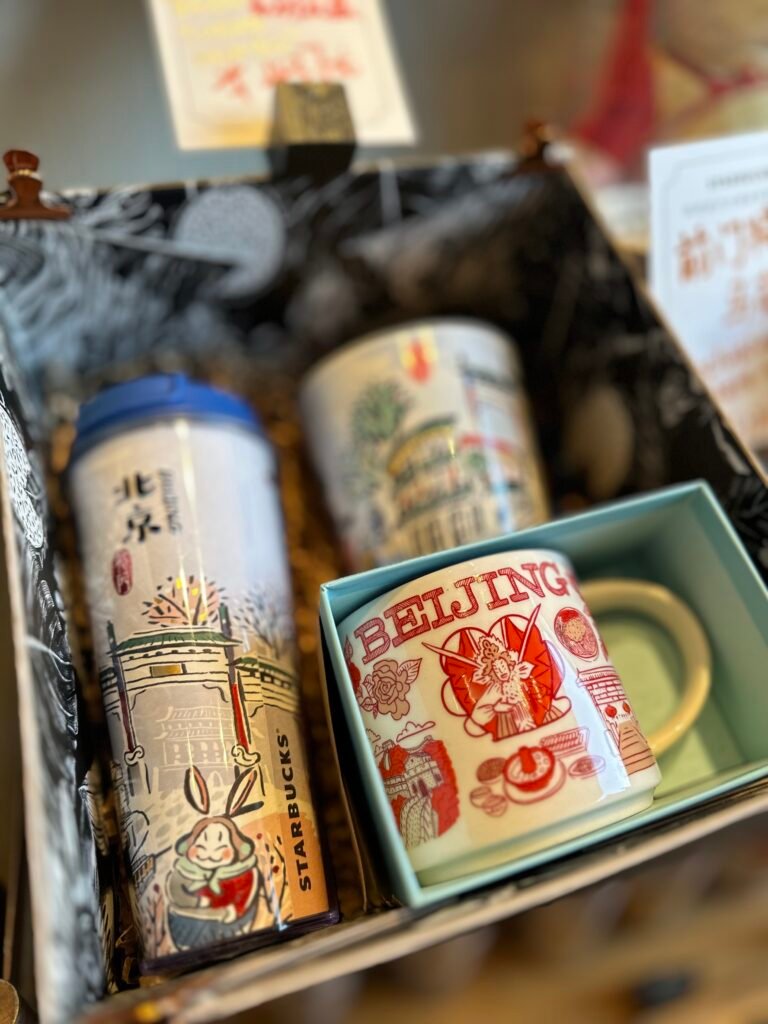
One of the photos I took was actually of something very familiar — Starbucks.
At first, it seems strange.
Why take a photo of Starbucks in Beijing?
But look closer.
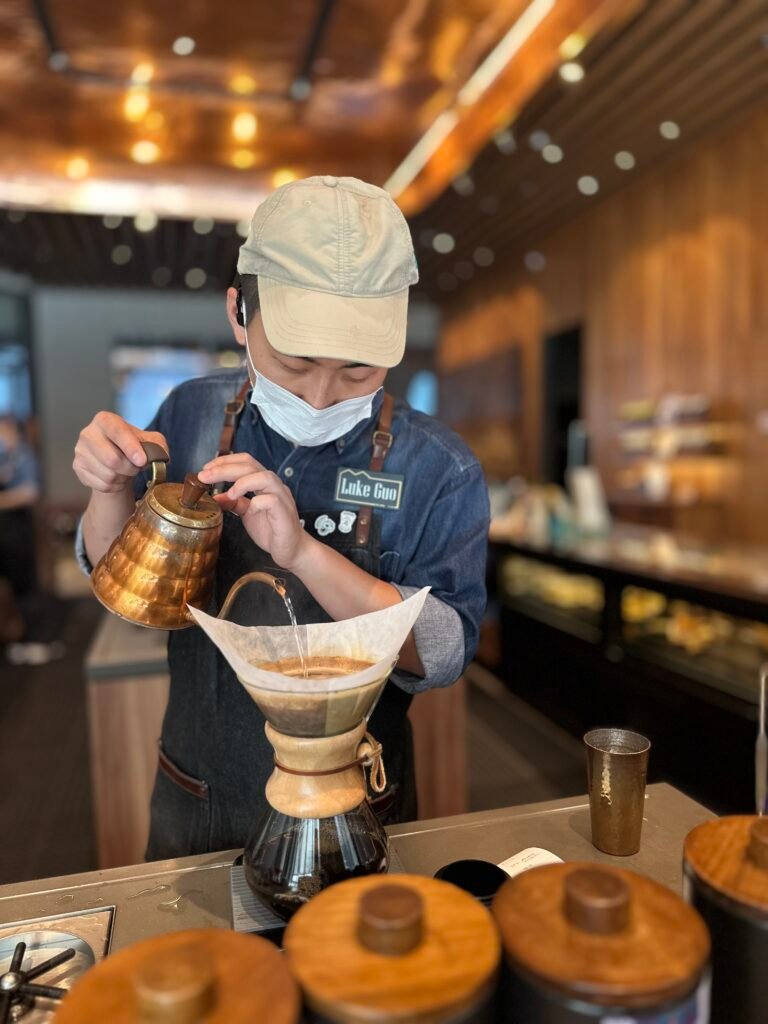
The Starbucks sits inside traditional Chinese-style architecture. The outside respects old Beijing’s appearance, while inside people enjoy modern coffee, conversations, and everyday life.
That is today’s China.
Not replacing the old.
Allowing the old and new to live together.
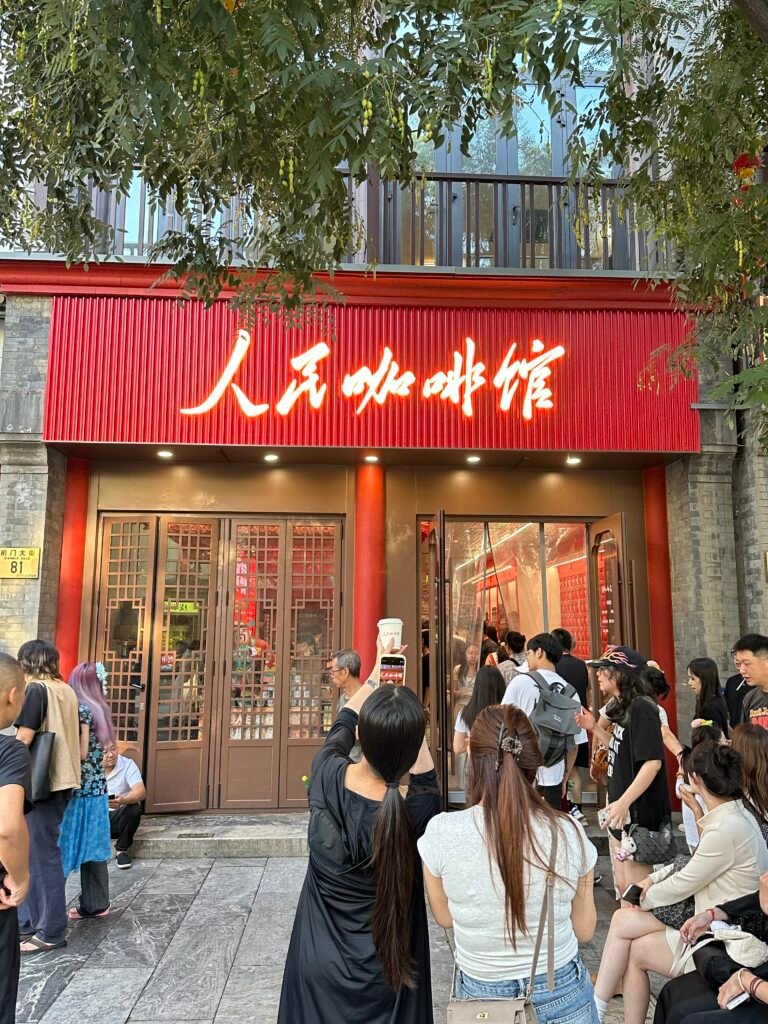
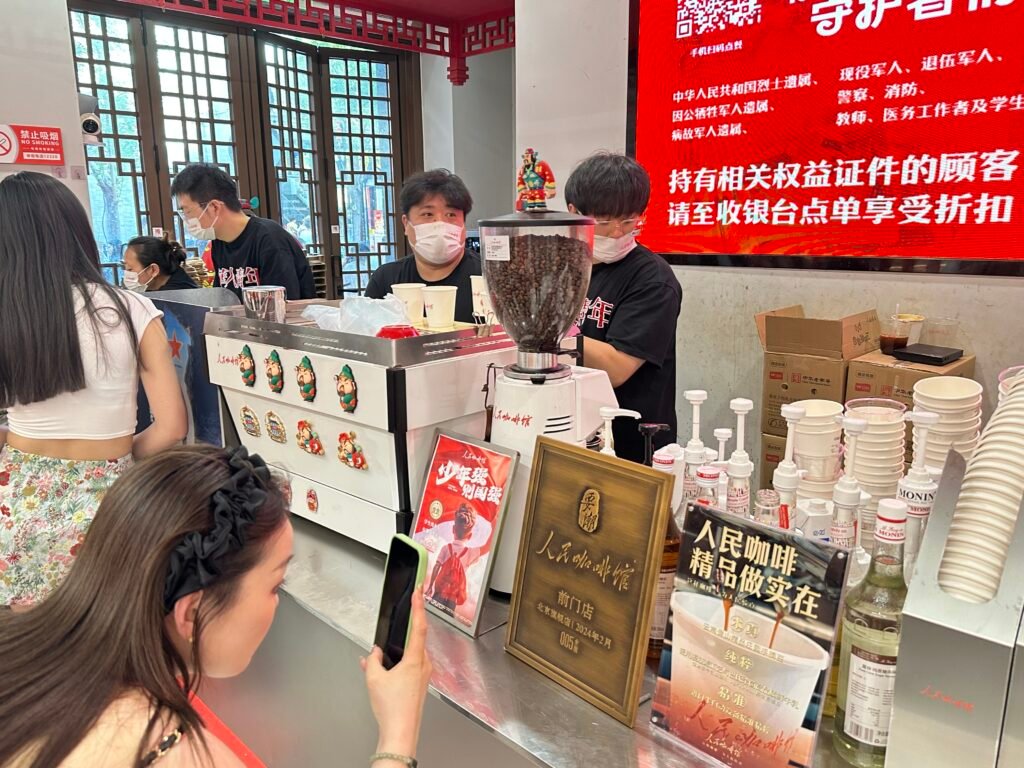
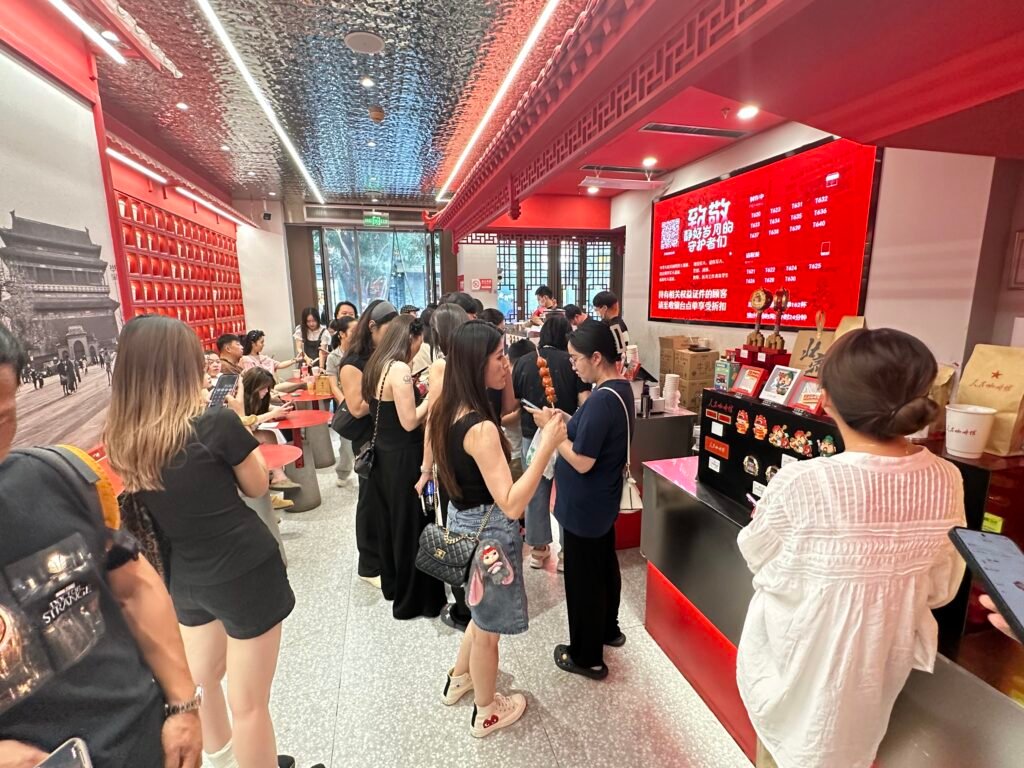
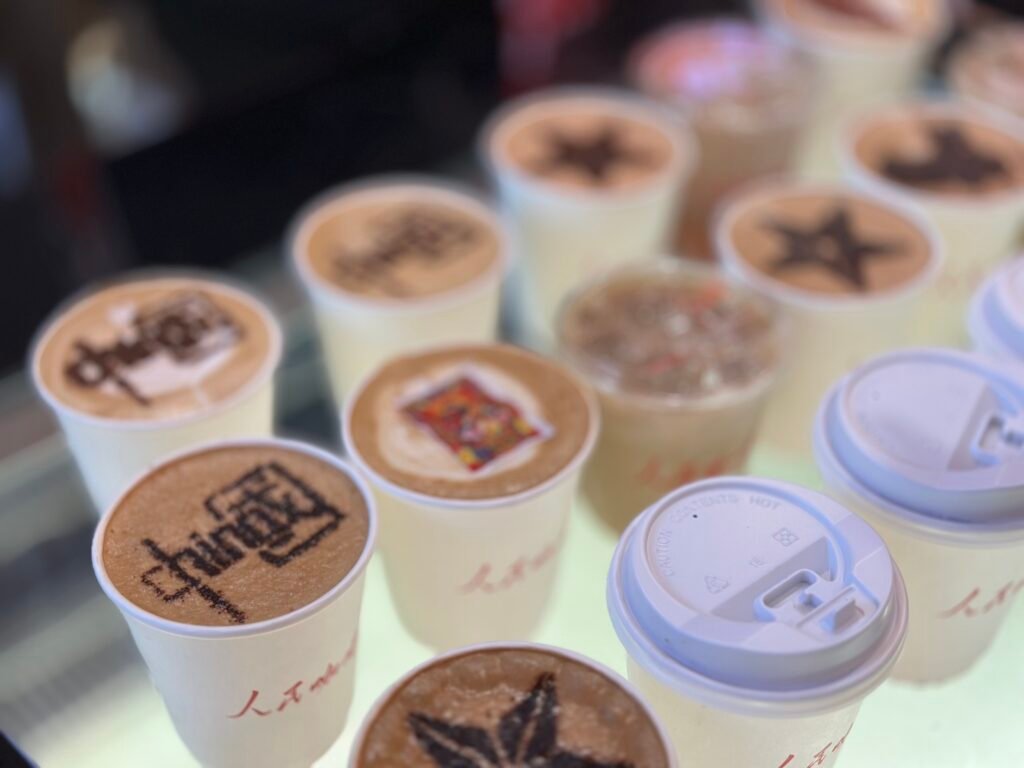
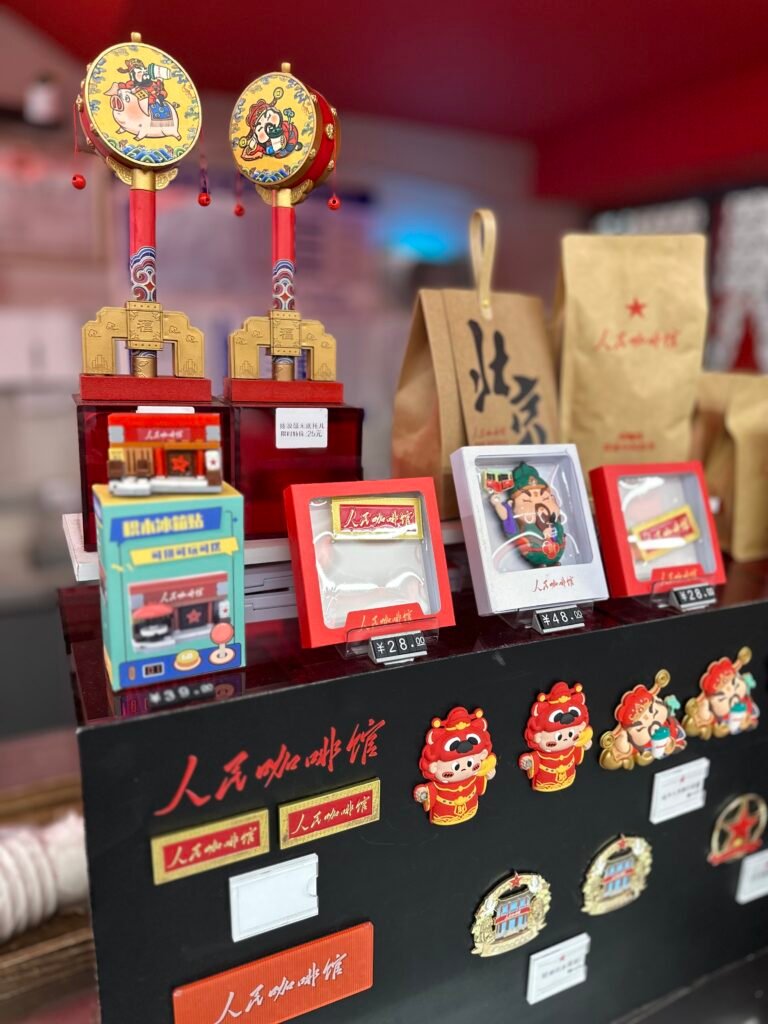
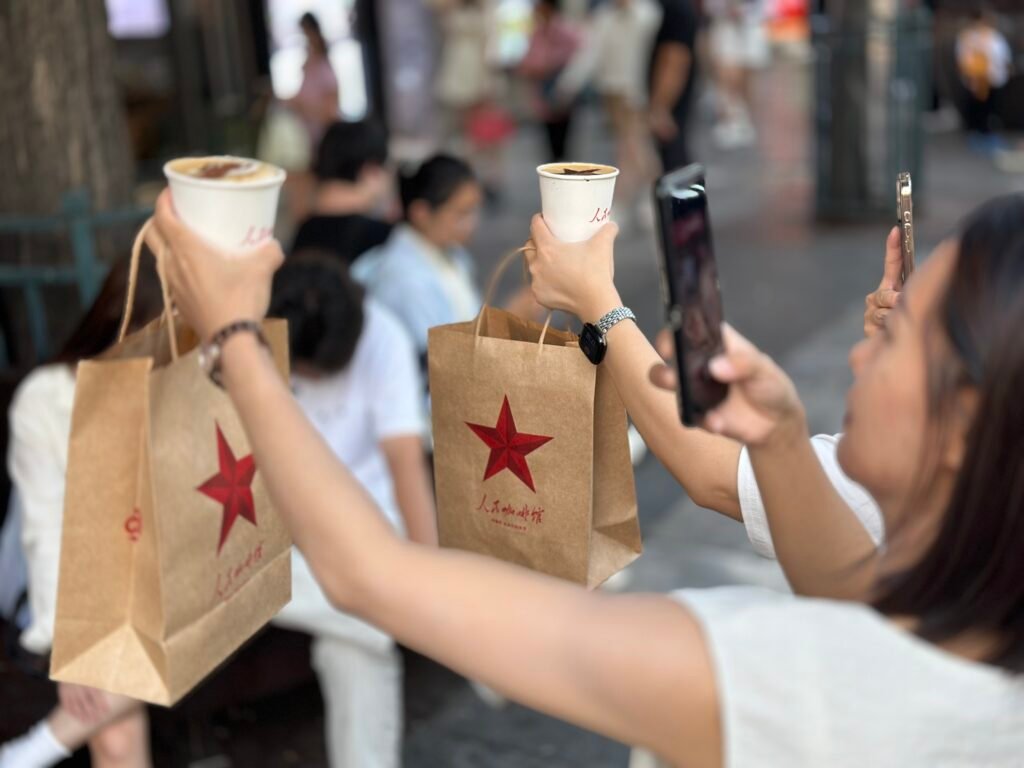
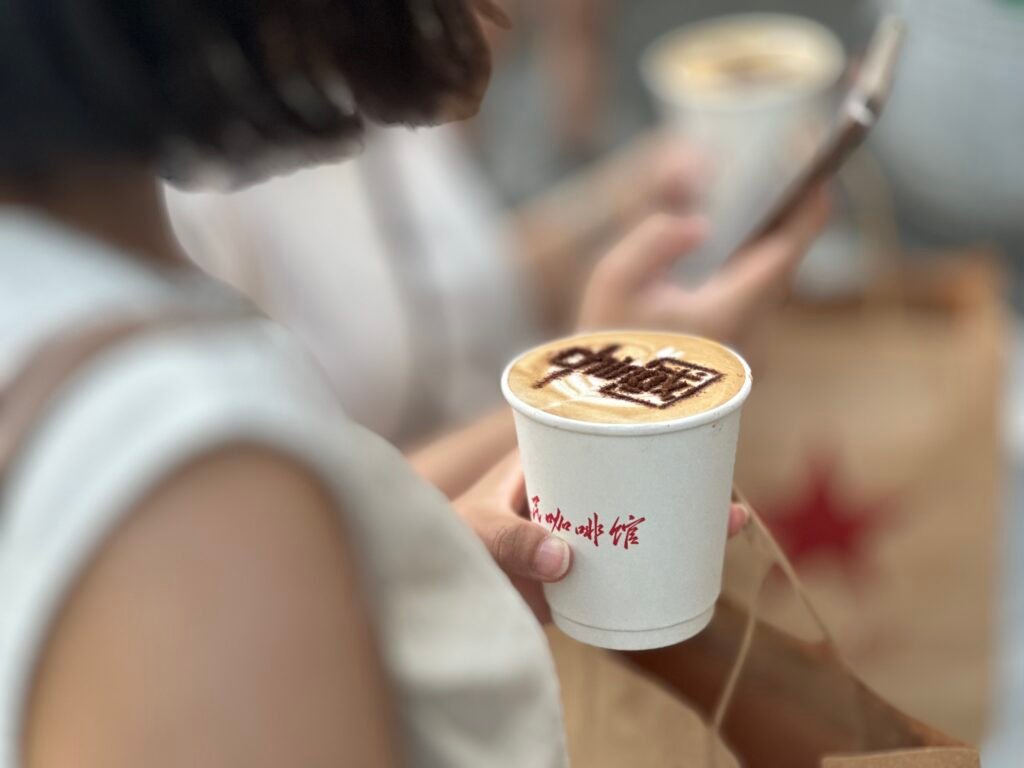
Another small discovery was 人民咖啡馆 (Rénmín Kāfēiguǎn), People’s Coffee House.
The red colours, Chinese characters, and nostalgic design immediately caught our attention.
The word 人民 (rénmín), meaning “the people”, appears throughout modern Chinese history.
Yet here it appears on a coffee cup.
A simple coffee shop became a small cultural story.
That is why we enjoy walking slowly.
🎥 Video Note — Snacks & Ice Cream on Qianmen Street
A quick look at the colorful snack stalls along Qianmen Street (前门大街, Qiánmén Dàjiē) in Beijing. The video shows 文创雪糕 (wénchuàng xuěgāo) — creative ice creams shaped like famous Beijing landmarks such as Tiananmen and the Temple of Heaven — selling for ¥20, alongside traditional Beijing yogurt (北京酸奶) and fresh sugarcane and watermelon juice for ¥8.
Dad’s camera also catches classic sweet snacks including 驴打滚 (lǘdǎgǔn), a sticky rice roll traditionally filled with sweet bean paste, and 龙须酥 (lóngxūsū), or Dragon Beard Candy.
With mist rolling across the counter and the busy Qianmen pedestrian street behind it, it’s a lovely little glimpse of how traditional Beijing snacks and modern tourist-friendly food souvenirs now sit side by side in Old Beijing.
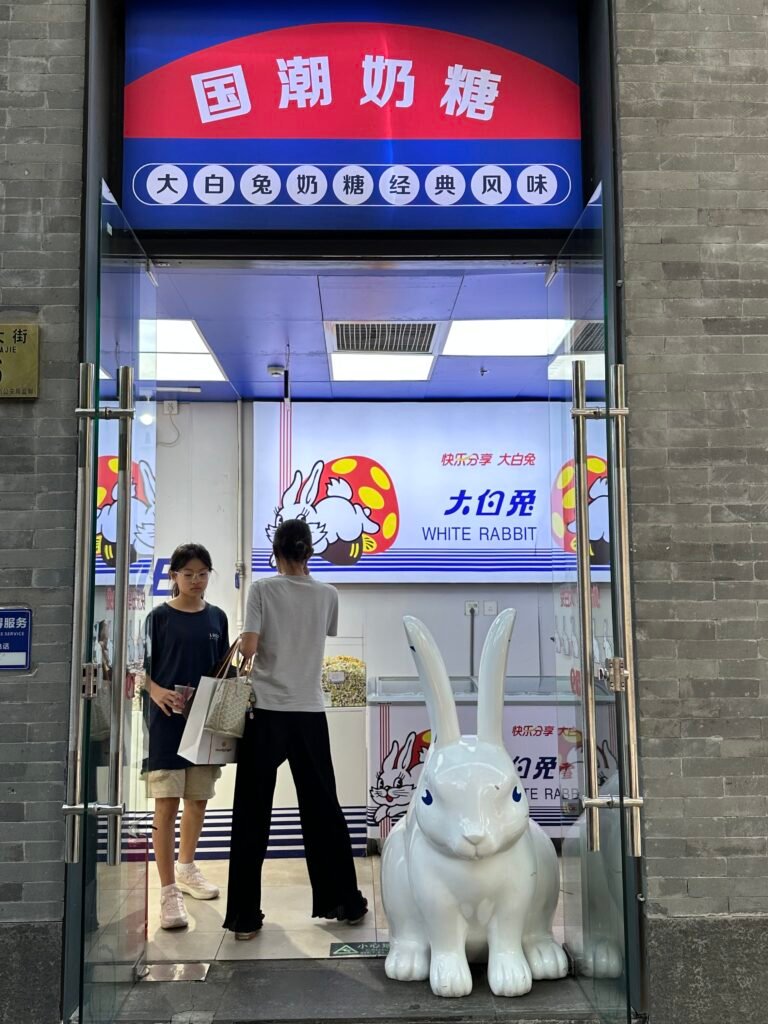
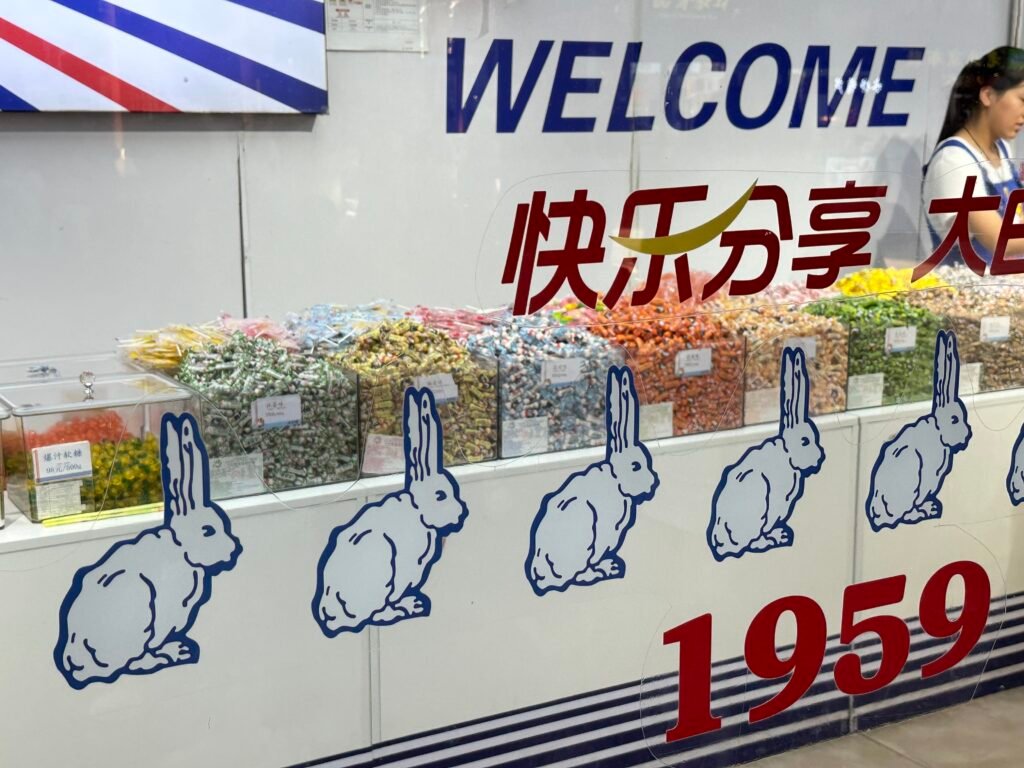
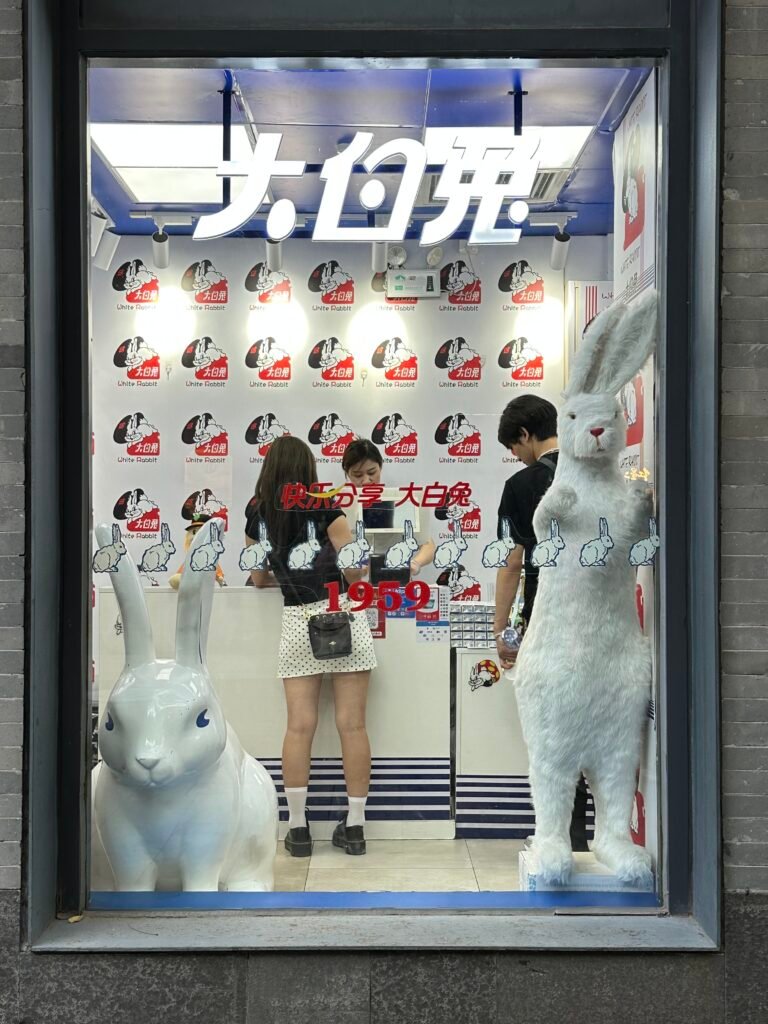
Then came something many Singaporeans and Malaysians may immediately recognise.
大白兔奶糖
(Dàbáitù Nǎitáng)
White Rabbit Milk Candy.
For many overseas Chinese families, this is not just candy.
It is childhood.
A small sweet wrapped with memories.
Created in Shanghai in the 1950s, White Rabbit has now found a new life among younger generations through creative shops and products.
Walking into the store felt like seeing an old friend wearing a new outfit.
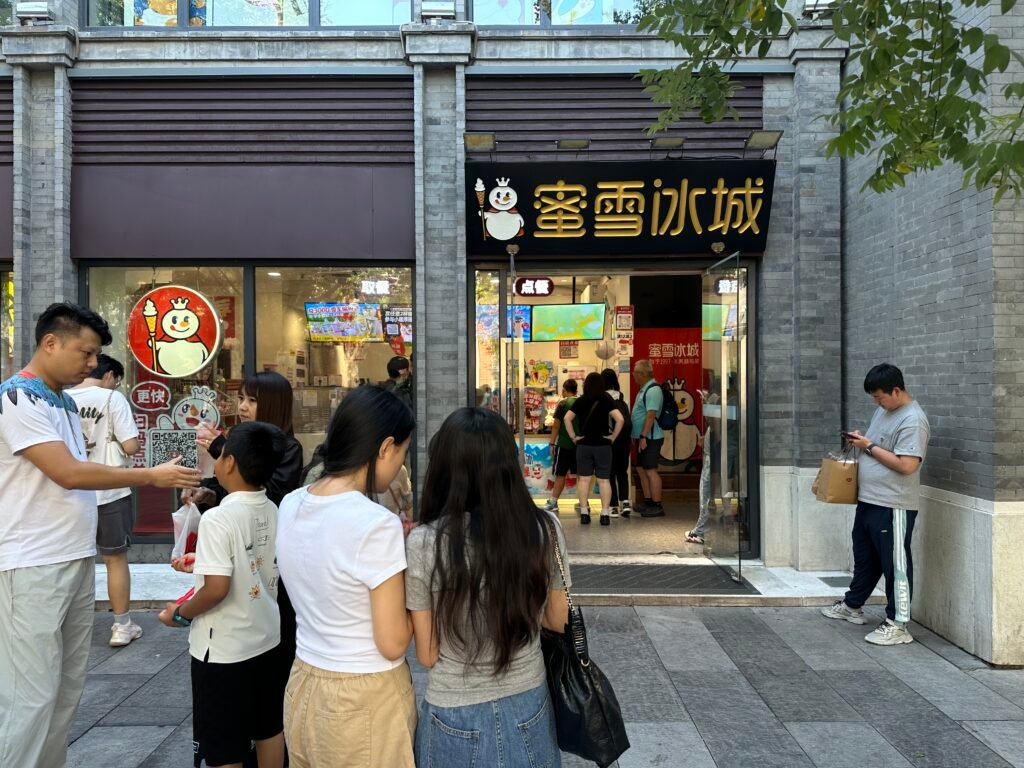
Mixue 蜜雪冰城 — The New Generation of Chinese Brands
Just a few steps away, another very different Chinese brand appeared:
Mixue (蜜雪冰城, Mìxuě Bīngchéng).
Unlike White Rabbit, which represents nostalgia, Mixue represents the energy of modern China.
Affordable drinks.
Young customers.
A fun mascot.
A brand expanding rapidly across China and internationally.
Seeing both White Rabbit and Mixue on the same historical street tells an interesting story.
One represents memories of the past.
One represents China’s younger generation.
Both exist together in Qianmen.
That is why this street is fascinating.
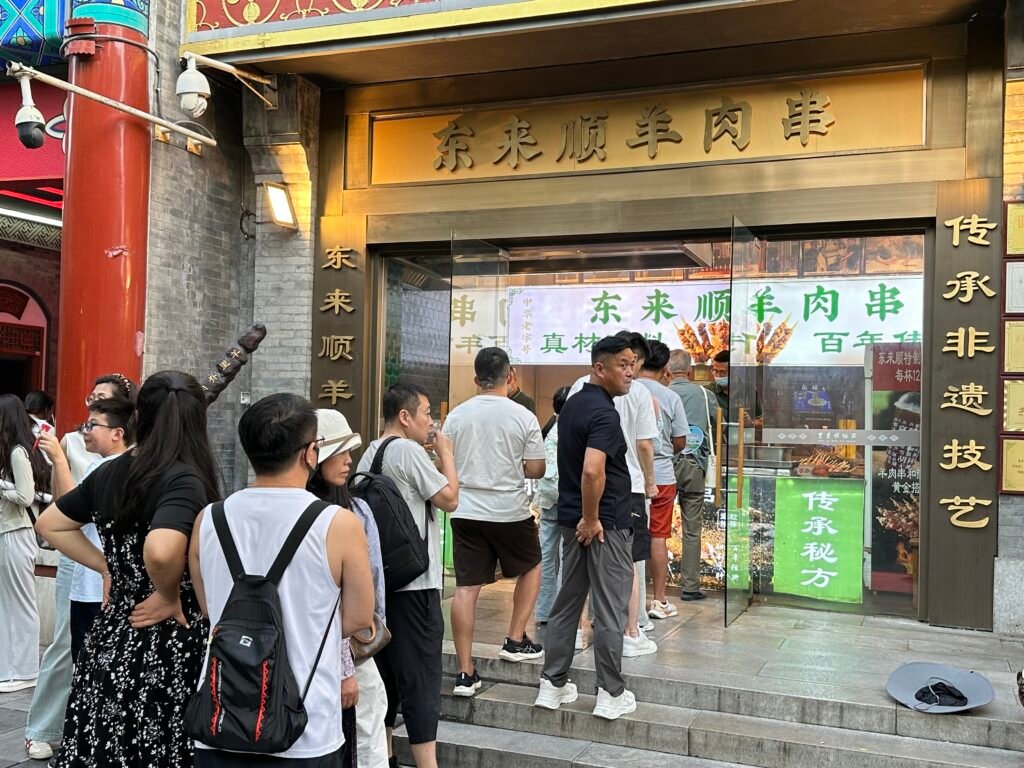
Along Qianmen, we also passed famous old Beijing names like 东来顺 (Dōngláishùn).
Founded in 1903, Dong Lai Shun is famous for Beijing-style instant-boiled mutton:
涮羊肉
(shuàn yángròu)
Food in China is rarely just food.
It carries family memories.
Local identity.
Generations of stories.
The Chinese call it:
老北京味道
(lǎo Běijīng wèidào)
The taste of old Beijing.
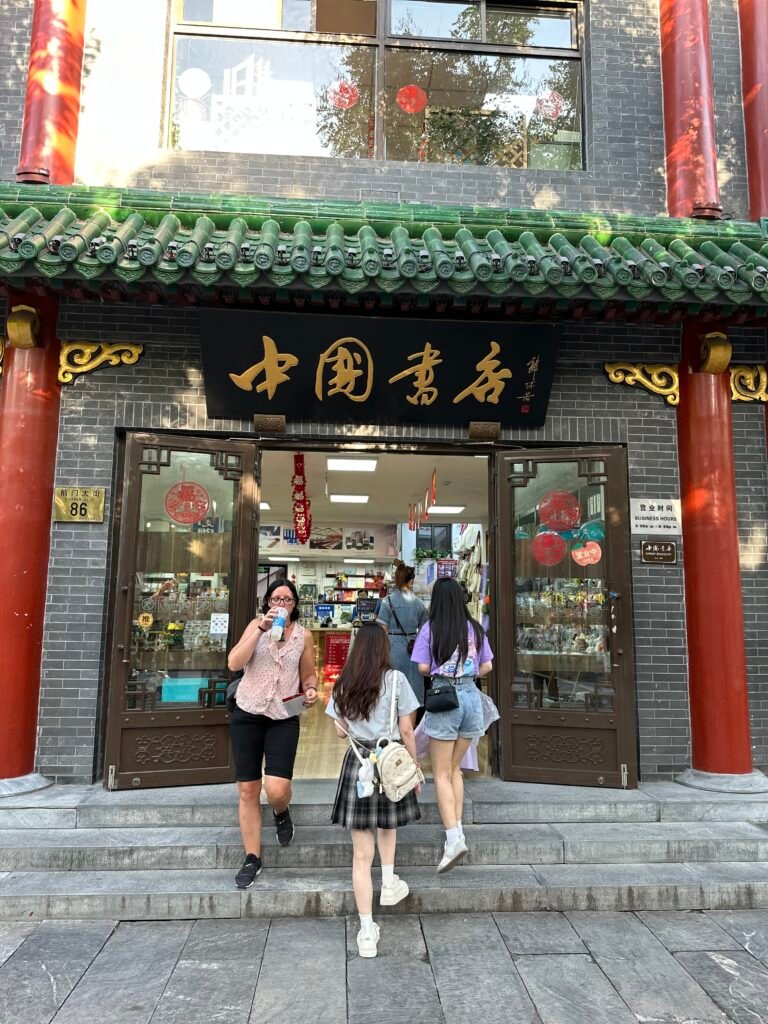
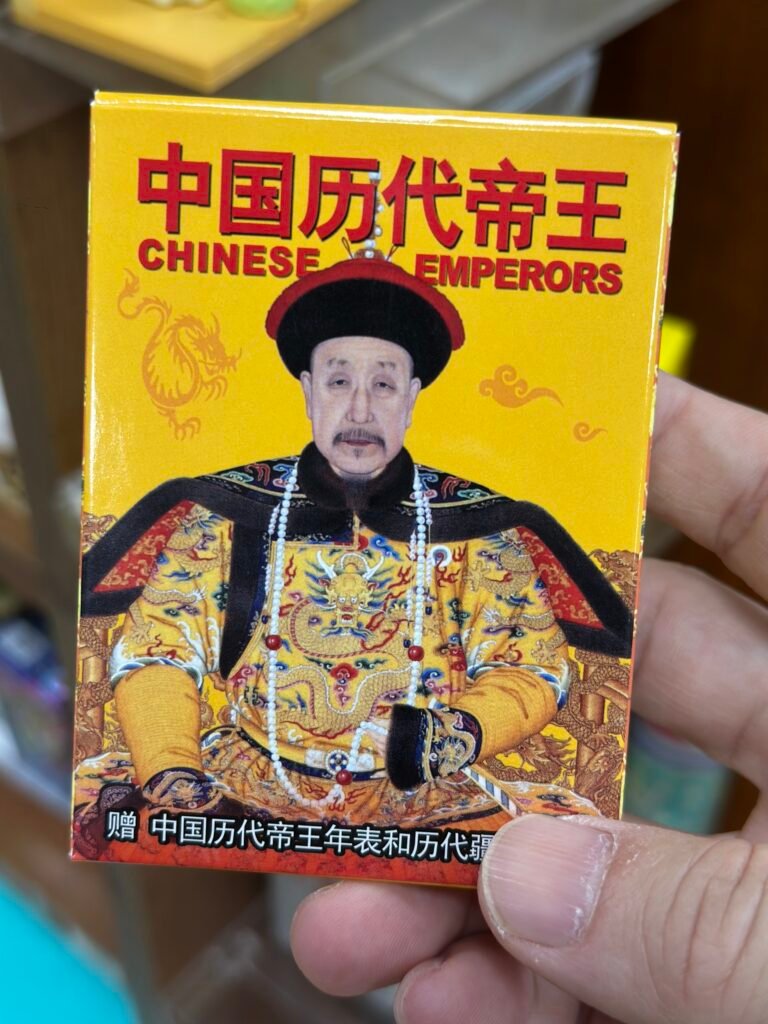
But the biggest surprise came when we entered 中国书店 (Zhōngguó Shūdiàn), China Bookstore.
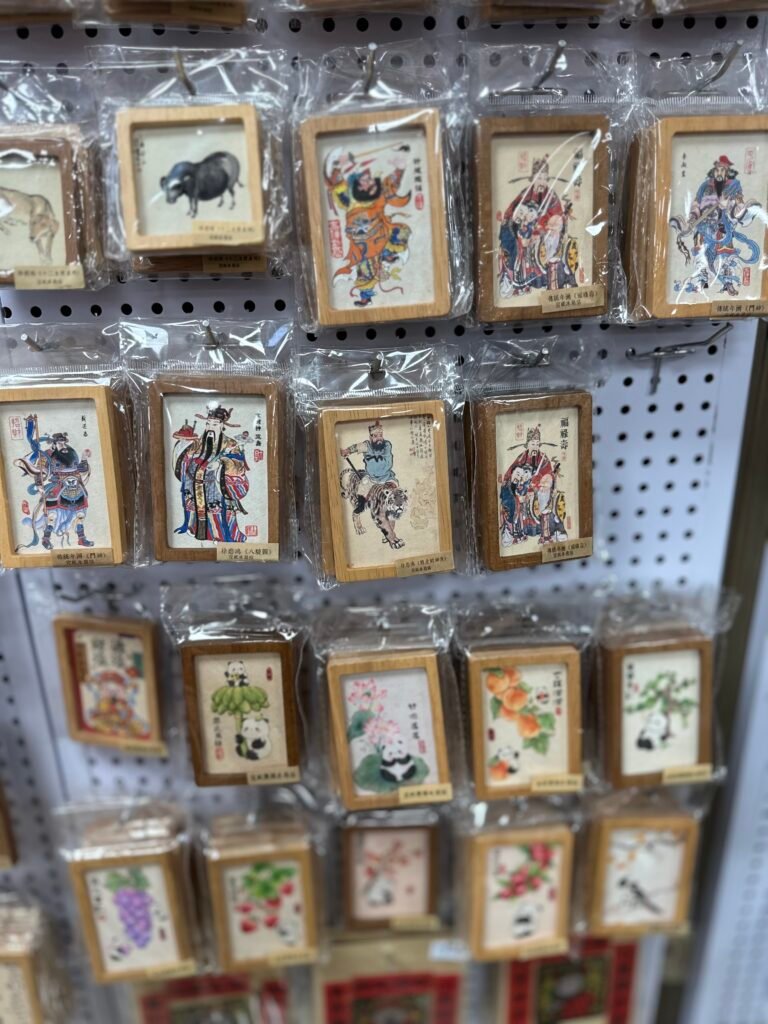
There, sitting quietly on the shelf, was the same emperor card set I bought Elaine 11 years earlier.
中国历代帝王.
For other visitors, it was just a souvenir.
For us, it was a reminder.
A reminder of a nine-year-old girl beginning her China journey.
A reminder that learning sometimes starts from something small.
A reminder of how far our father-daughter travels had come.
Dressing Like Ancient China — 汉服 (Hànfú) and Travel Photography
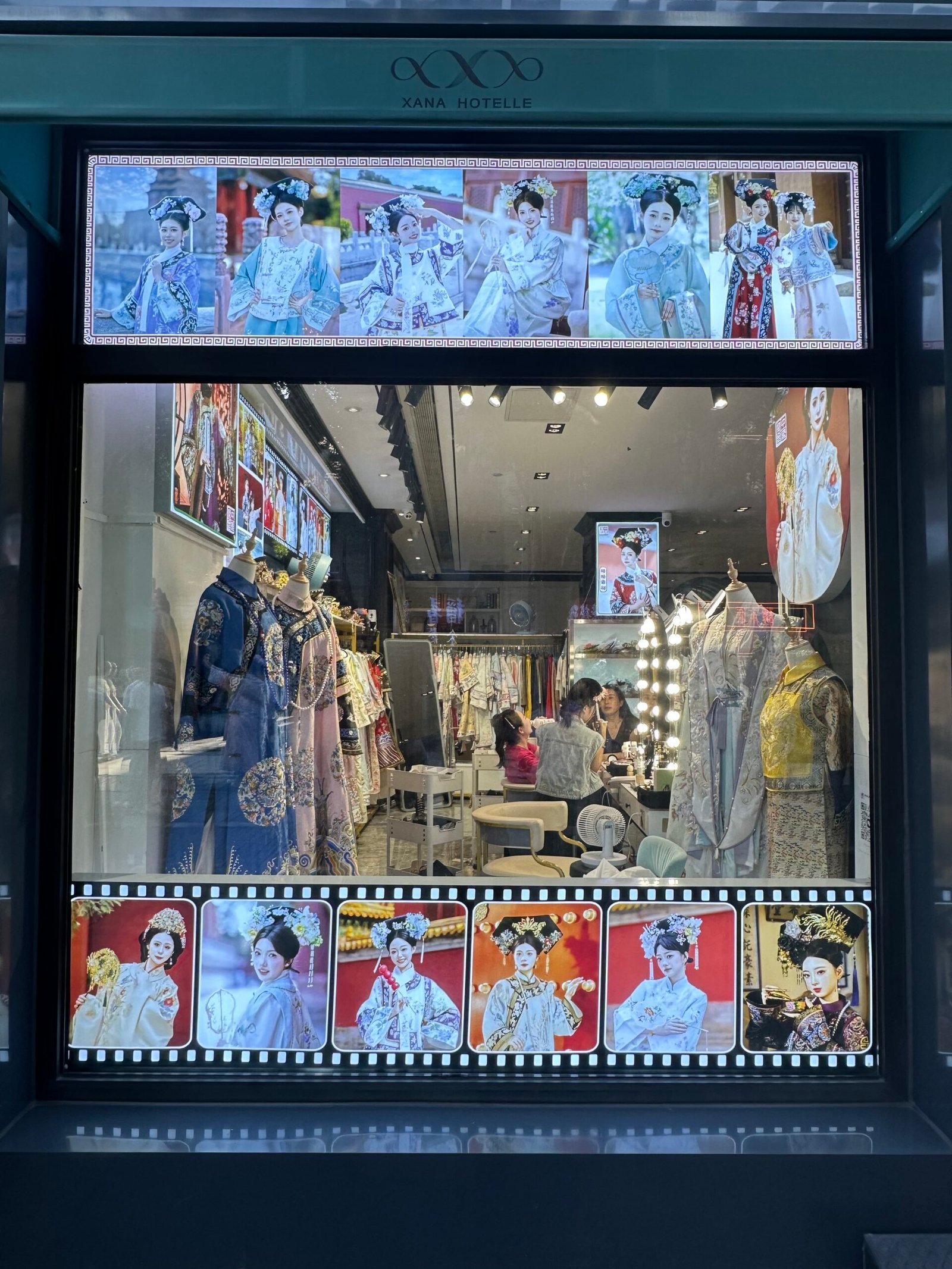
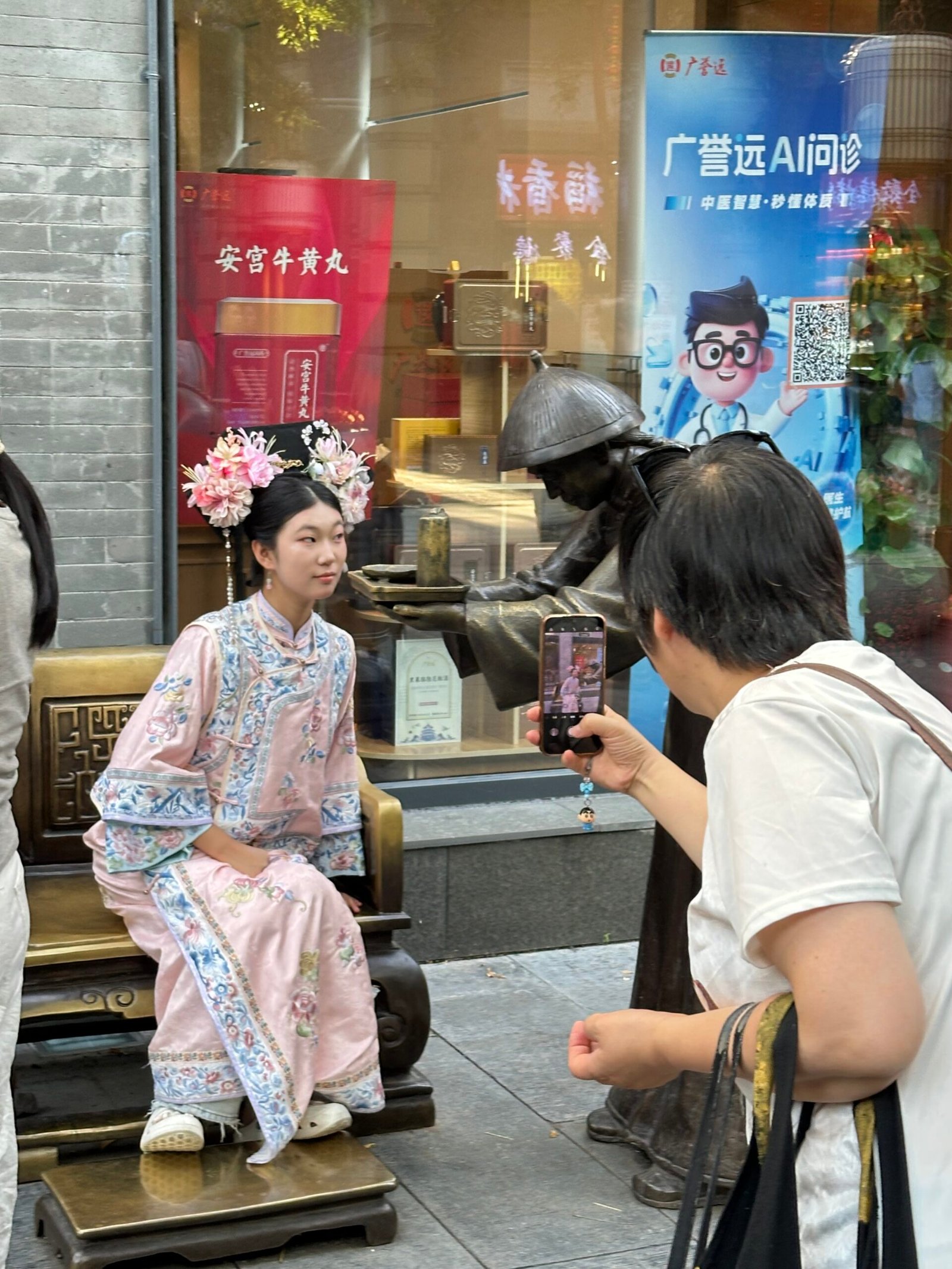
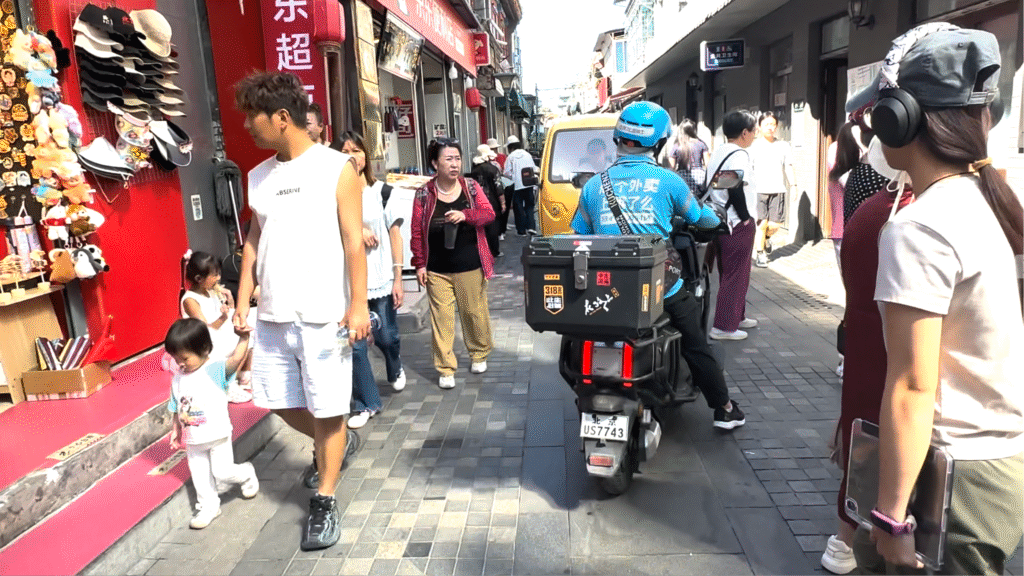
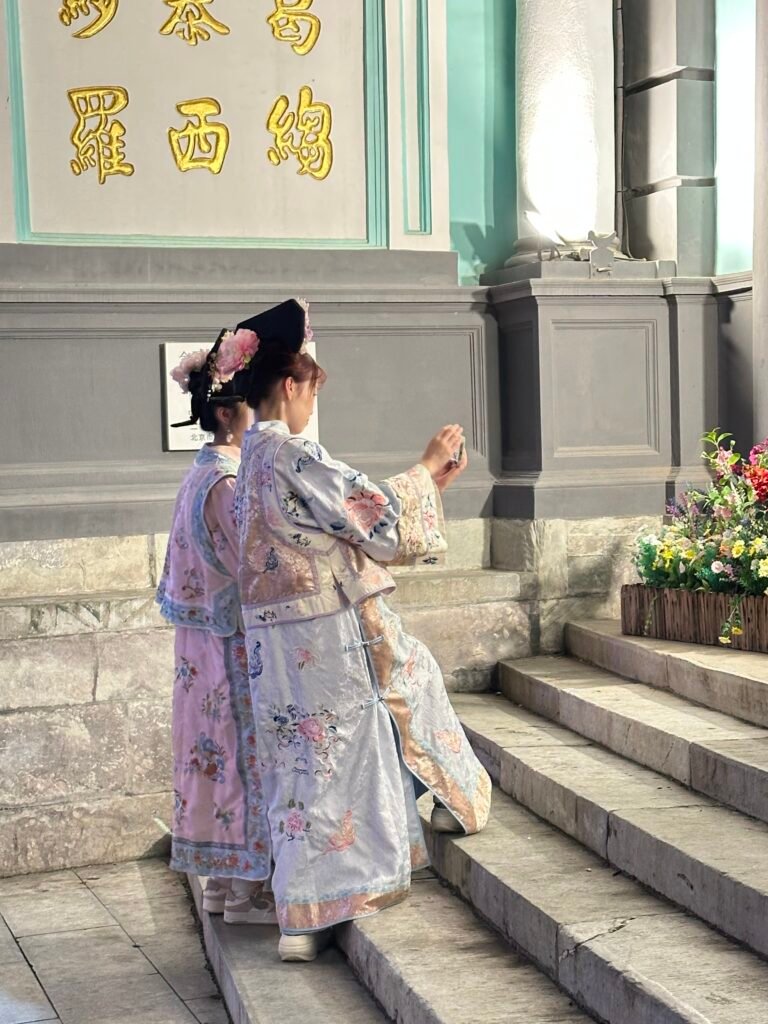
One of the biggest changes we noticed during our recent China trips is the popularity of traditional Chinese clothing photography.
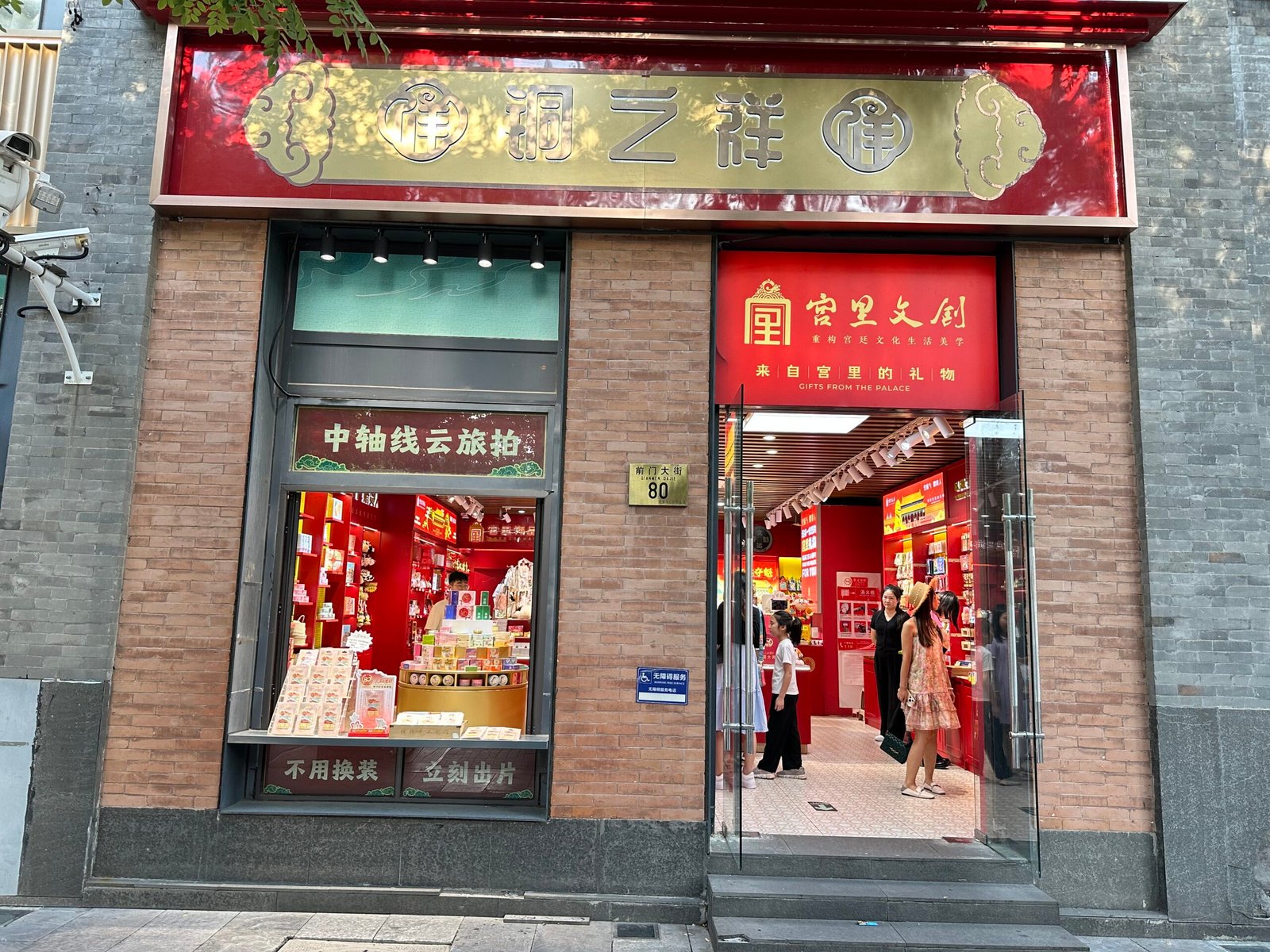
Around Qianmen, visitors can rent beautiful costumes, have professional makeup done, and take photos against old Beijing backgrounds.
The Chinese word is:
汉服 (Hànfú) — traditional Han Chinese clothing.
But you may also see visitors wearing styles inspired by different periods, including the Qing Dynasty (清朝 Qīng Cháo).
Some people may see it simply as dressing up.
But for many young Chinese today, it represents something deeper:
A renewed interest in their own history and culture.
The younger generation is not only looking forward.
They are also rediscovering the past.
Watching young people happily taking photos around Qianmen, it felt like history had become interactive.
Not something locked inside museums.
Something people can experience.
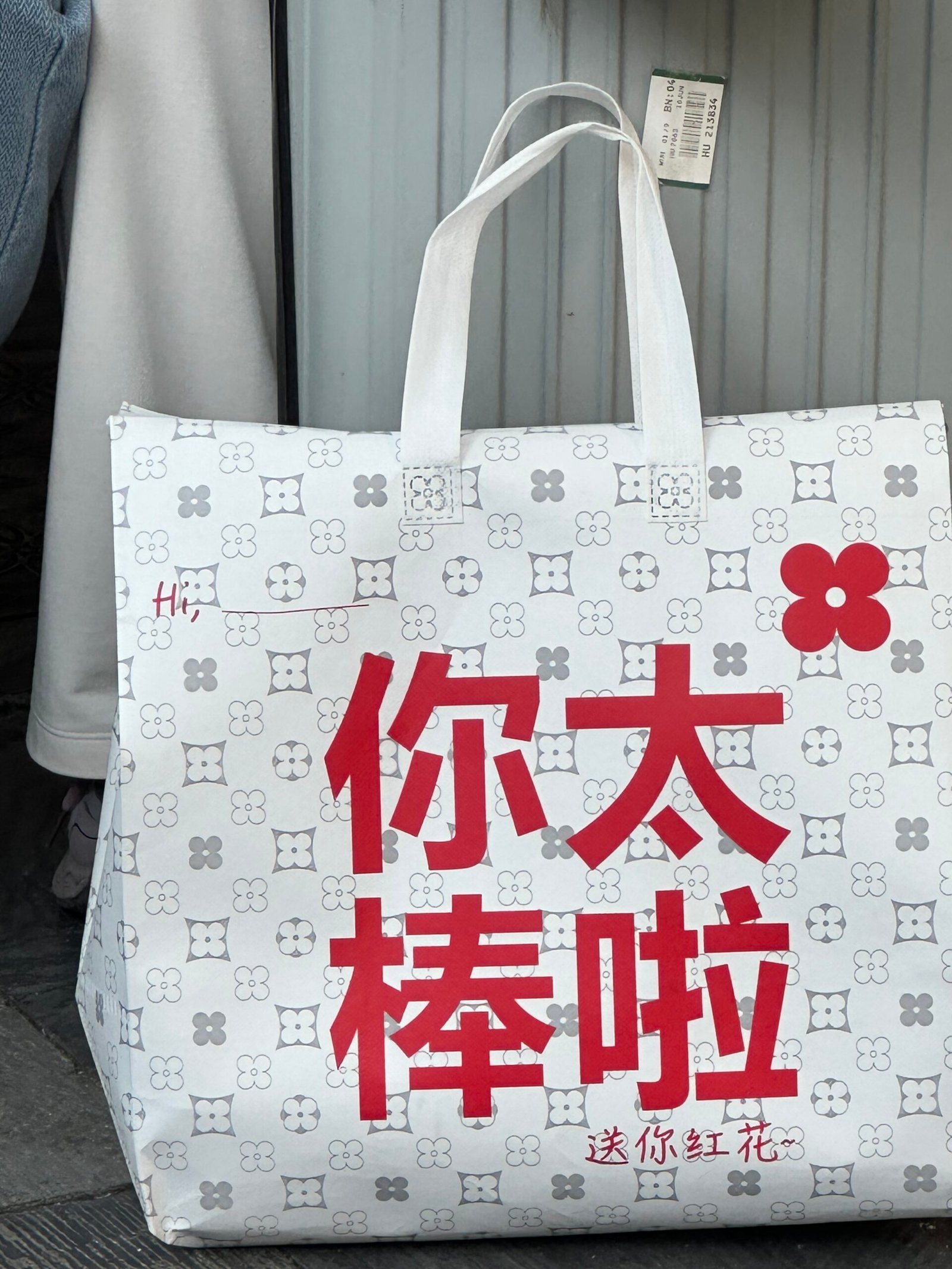
你太棒啦 (Nǐ Tài Bàng La) — Small Words That Make You Smile
Sometimes, the smallest things make the biggest impressions.
While walking around, we noticed a shopping bag with big red Chinese characters:
你太棒啦!
(Nǐ tài bàng la!)
It means:
“You are amazing!”
For Chinese language beginners, this is actually a fun phrase to learn.
你 (nǐ) — you
太 (tài) — very
棒 (bàng) — great / awesome
A simple shopping bag suddenly became a mini Chinese lesson.
And this is what Elaine and I love about travelling in China.
You don’t only learn Chinese from textbooks.
The language surrounds you.
Street signs.
Menus.
Advertisements.
Conversations.
Everywhere becomes a classroom.
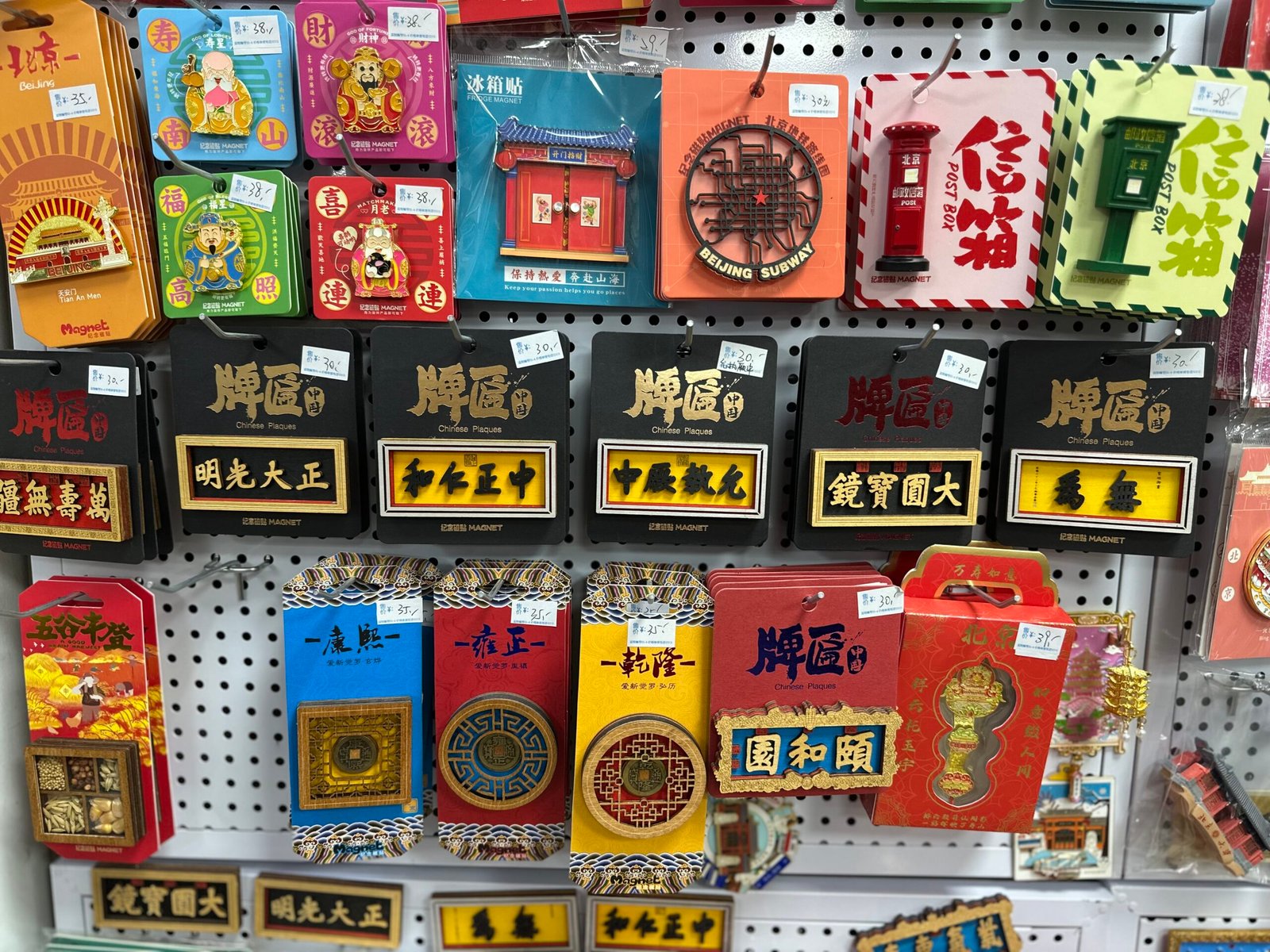
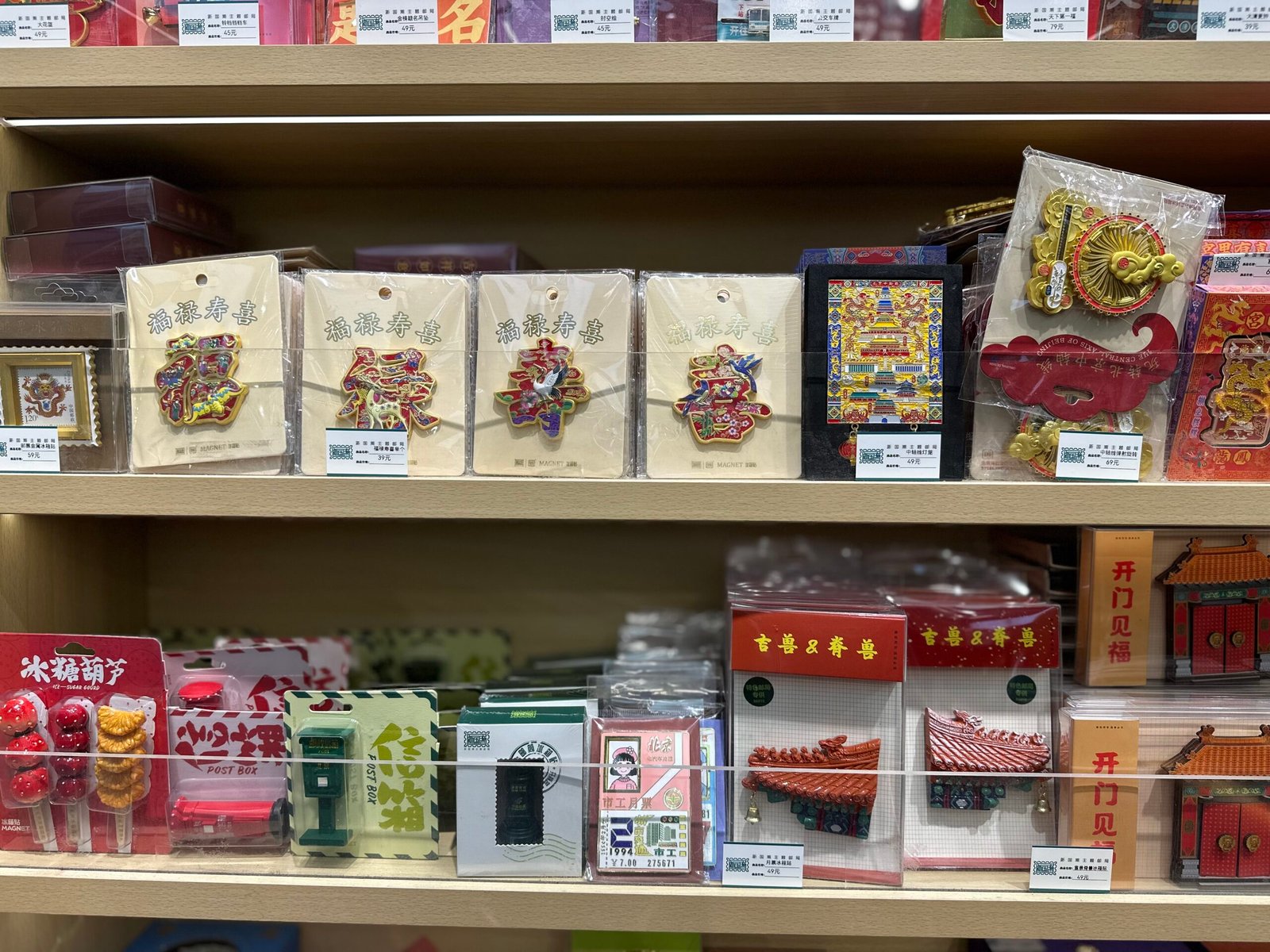
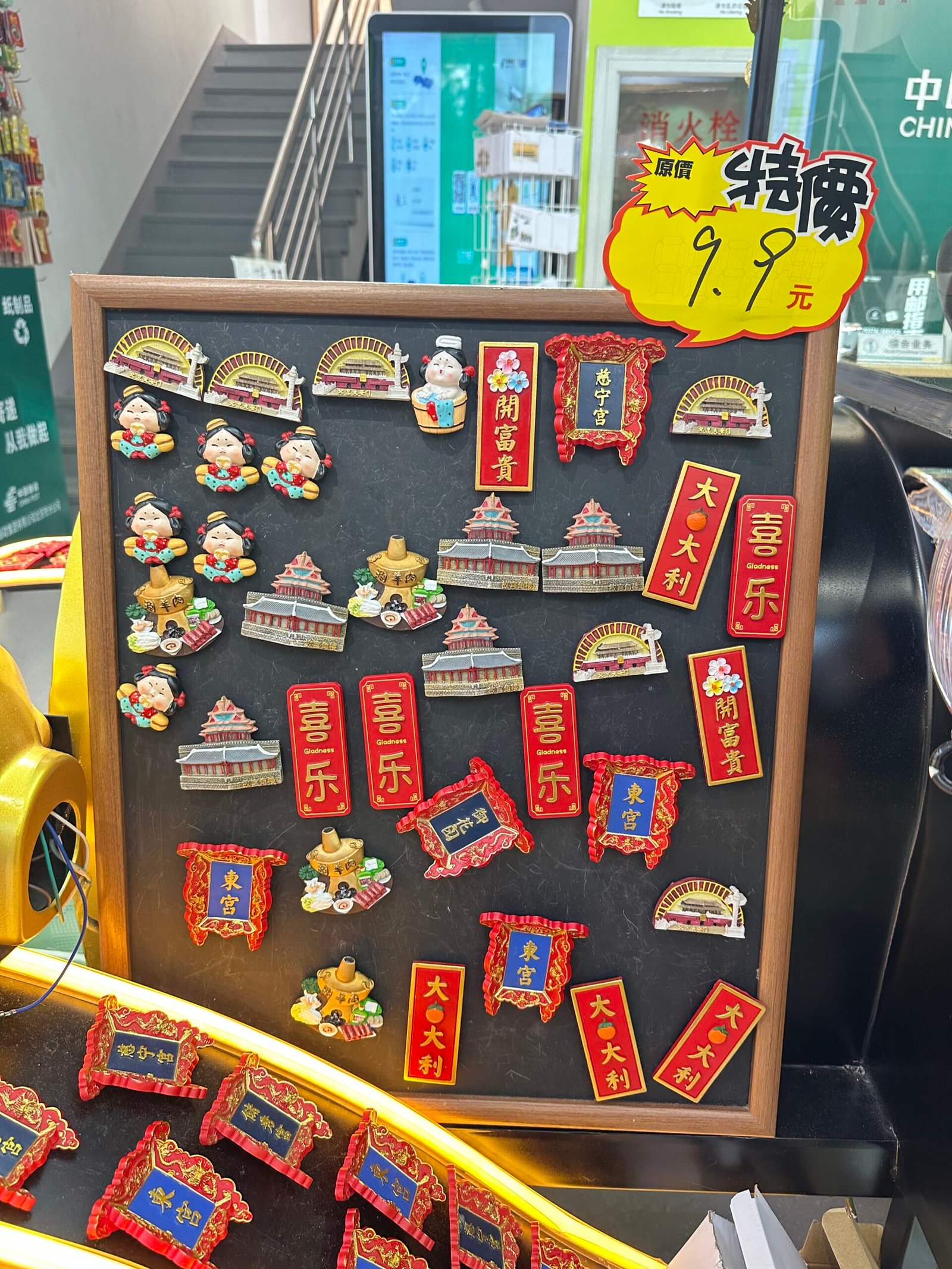
Taking Home Memories — 纪念品 (Jìniànpǐn)
Before leaving Qianmen, we spent time looking through small souvenirs.
Some travellers may see them as ordinary tourist items.
But we always enjoy looking at the stories behind them.
Magnets showing:
Forbidden City designs.
Beijing subway memories.
Traditional Chinese patterns.
These phrases are not random decorations.
They come from China’s long cultural history.
A small magnet becomes a doorway into understanding Chinese civilisation.
The Chinese word:
纪念品 (jìniànpǐn)
means souvenir.
But 纪念 (jìniàn) also means “to remember”.
A good souvenir is not only something you buy.
It helps you remember a moment.
A place.
A story.
More Than a Tourist Street — A Classroom Without Walls
For Elaine and me, China has always been more than sightseeing.
It has become our open classroom.
When we travel, we are not only asking:
“What place is this?”
We ask:
“Why did this place become important?”
“How did people live here?”
“How has it changed?”
Qianmen is perfect for this kind of learning.
From one street, you can discuss:
Architecture.
History.
Business.
Culture.
Branding.
Tourism.
Economics.
How many classrooms allow you to experience all these at once?
Why Foreign Visitors Should Spend More Time at Qianmen
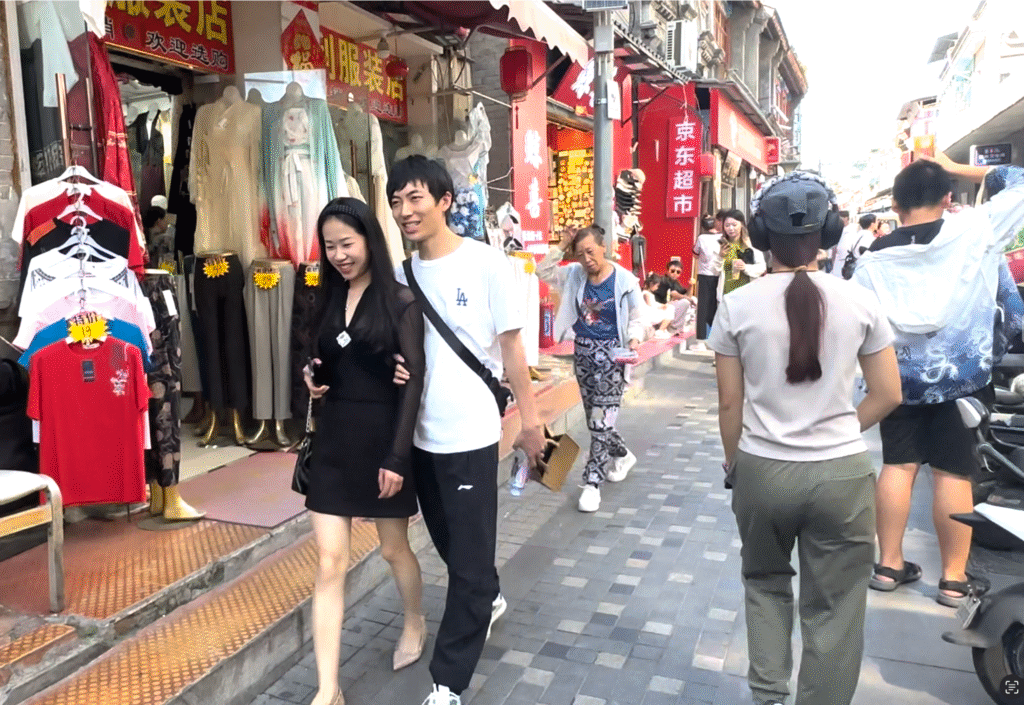
Many first-time travellers to Beijing follow a predictable route:
Morning:
Forbidden City
Afternoon:
Tiananmen Square
Evening:
Back to hotel
But my suggestion?
Stay longer around Qianmen.
Slow down.
Walk into the side streets.
Visit Dashilan (大栅栏, Dàshílàn).
Try traditional snacks.
Look at old shops.
Return at night.
Return again in daytime.
You will discover different versions of Beijing.
Qianmen Travel Tips for First-Time Visitors
Chinese name: 前门大街
Pinyin: Qiánmén Dàjiē
Nearby attractions:
-
- Tiananmen Square 天安门广场
-
- Forbidden City 紫禁城
-
- Zhengyangmen 正阳门
-
- Dashilan 大栅栏
Best time to visit:
Late afternoon until night.
You get both:
-
- beautiful daylight photography
-
- evening atmosphere when lights come on
How much time needed?
Minimum: 1–2 hours
Recommended: Half a day if you enjoy slow travel.
Final Thoughts — Why We Returned to Qianmen
After visiting Beijing several times, Elaine and I realise something.
The more we return, the less we chase famous attractions.
Instead, we enjoy discovering the layers behind each place.
Qianmen is one of those places.
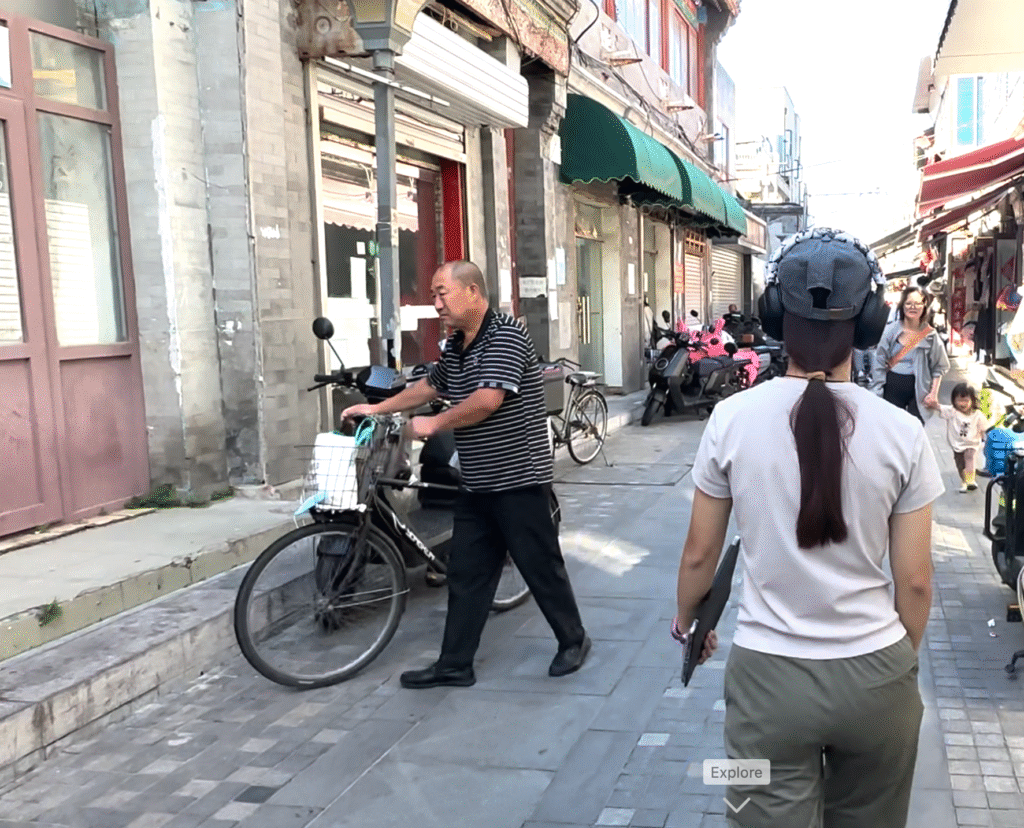
At first, you see a beautiful ancient street.
Then you see history.
Then you see people.
Then you see how a city continues changing while remembering where it came from.
Perhaps that is why we returned.
And perhaps when we visit Beijing again in the future…
we will probably walk through Qianmen one more time.
Because some streets are not meant to be visited once.
They are meant to be rediscovered.