From an 8-year-old’s first China vacation to discovering Beijing, Chinese history, culture, and the stories behind one of the greatest China wonders
There are many unforgettable places to visit in China.
Ancient cities.
Beautiful mountains.
Traditional streets.
Modern skylines.
But for many travellers planning their first trip to Beijing China, there is usually one destination sitting right at the top of their dream list.
The Great Wall of China.
长城 (Chángchéng).
In Chinese, 长 (cháng) means “long”, and 城 (chéng) refers to a city wall or defensive wall.
A simple name.
The Long Wall.
But when you finally stand there and watch the stone walls climb across endless mountain ridges, you understand why this remains one of the greatest China wonders.
For many visitors, travelling to the Great Wall of China from Beijing is a once-in-a-lifetime experience.
For Elaine and me, it became something different.
It became the beginning of a much longer journey.
Because Elaine did not visit the Great Wall only once.
She came back.
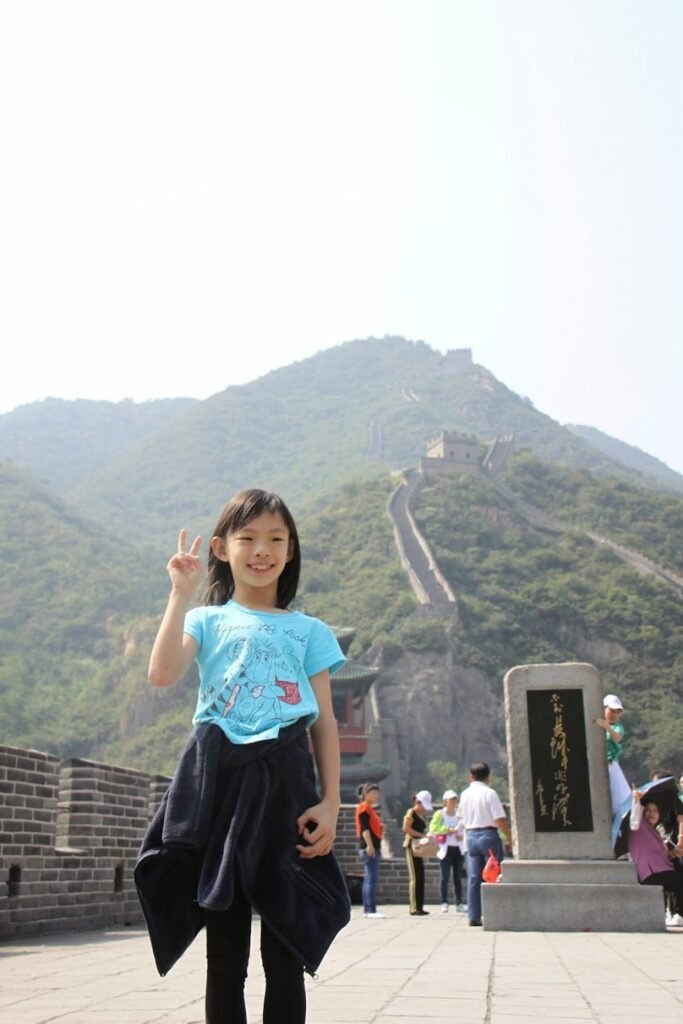
The first time Elaine stood on the Great Wall was in 2013.
She was only eight years old.
It was her first visit to China.
A little girl discovering Beijing for the first time.
More than ten years later, we returned.
Same Great Wall.
Same mountains.
But a very different Elaine.
Because between these two visits, China slowly changed from a travel destination into her biggest classroom.
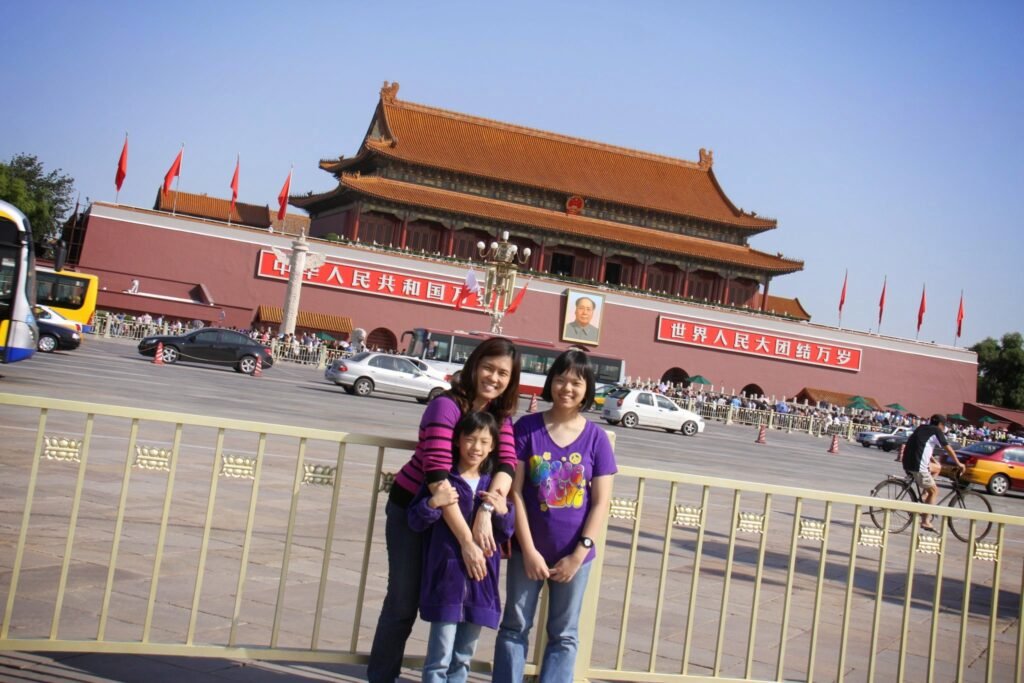
Our First Beijing China Trip — Where Everything Started
[Insert 2013 Tiananmen Square photo]
Looking back, I think Beijing was probably the perfect introduction to China.
For anyone planning a China Beijing tour, the capital of China offers an amazing first experience.
Beijing introduces travellers to:
Chinese history.
Culture.
Food.
Architecture.
Daily life.
Thousands of years of civilisation.
Our first Beijing itinerary covered many famous Beijing China tourist attractions that visitors still love today:
- Tiananmen Square 天安门 (Tiān’ānmén)
- Forbidden City 故宫 (Gùgōng)
- Beijing Zoo 北京动物园
- The Great Wall 长城
At eight years old, Elaine was not thinking about dynasties.
She was not asking about emperors.
She did not understand the full story behind the Forbidden City or the Great Wall.
She was simply experiencing.
体验 (tǐ yàn).
To experience.
And sometimes, experience comes before understanding.
Children do not always fall in love with history because someone gives them a textbook.
Sometimes they fall in love because a place gives them a beautiful memory.
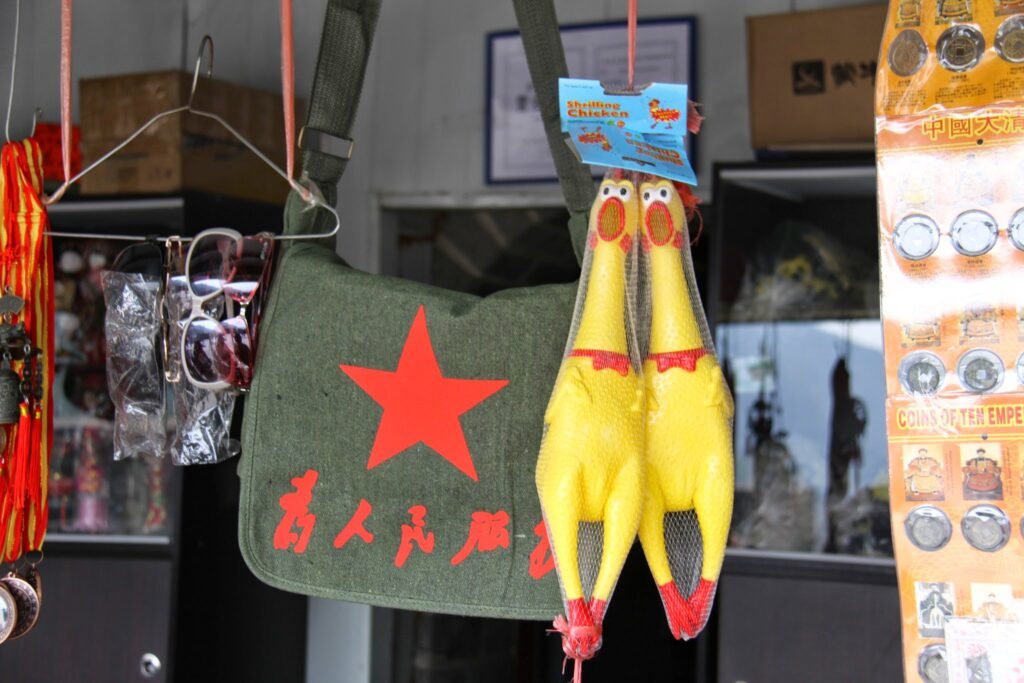
The Great Wall Through a Child’s Eyes — A Funny Little Yellow Chicken
[Insert squeaky chicken souvenir photo]
Everyone talks about the greatness of the Great Wall.
The armies.
The emperors.
The thousands of years of history.
But Elaine’s childhood memory of the Great Wall included something much smaller.
A little yellow toy chicken.
At the tourist rest area near the Great Wall, Elaine discovered these funny chickens hanging at a souvenir stall.
They looked silly.
They looked cute.
And when squeezed…
They made a funny squeaky sound.
For an eight-year-old child visiting China for the first time, that little chicken became part of her Great Wall memory.
And perhaps there is a lesson there.
Before knowledge comes curiosity.
好奇心 (hào qí xīn).
Curiosity.
A child first discovers:
“This place is interesting.”
Only later do they ask:
“Why was this built?”
“Who lived here?”
“What happened before us?”
That little spark is where learning begins.
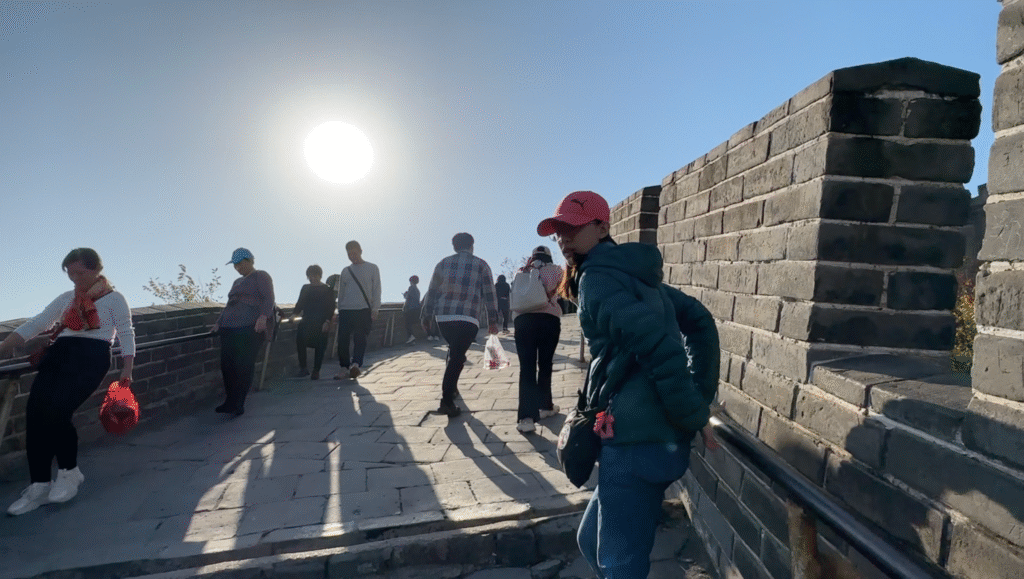
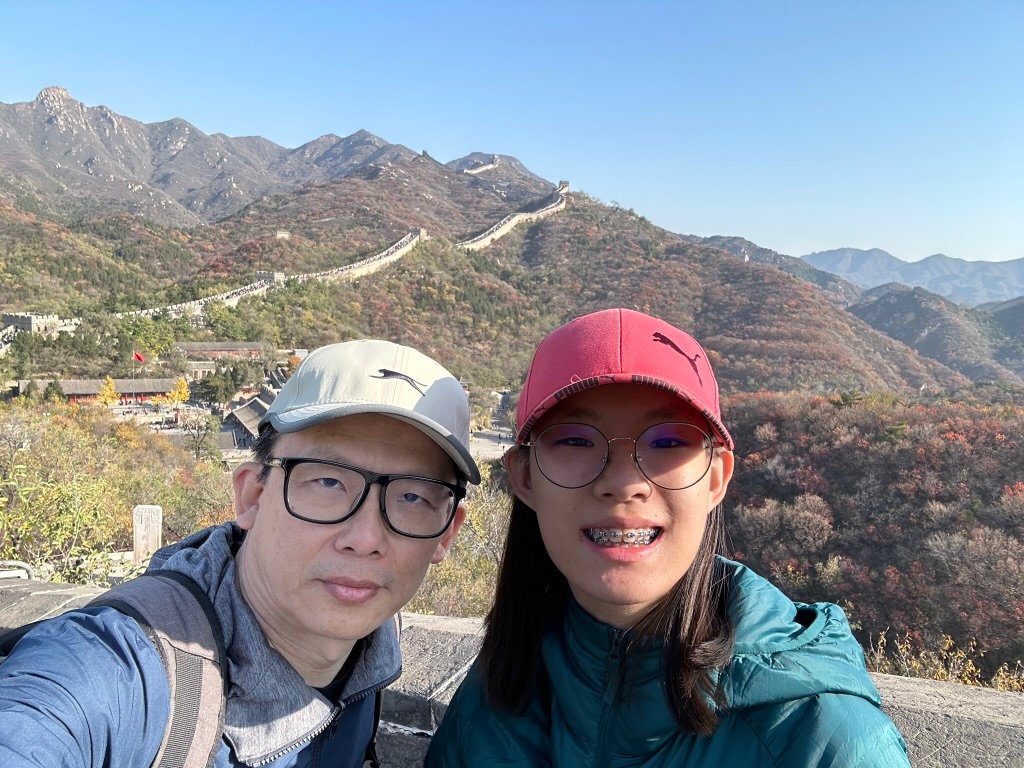
Returning to the Great Wall After 10 Years — Same Place, New Understanding
[Insert 2023 Great Wall photo]
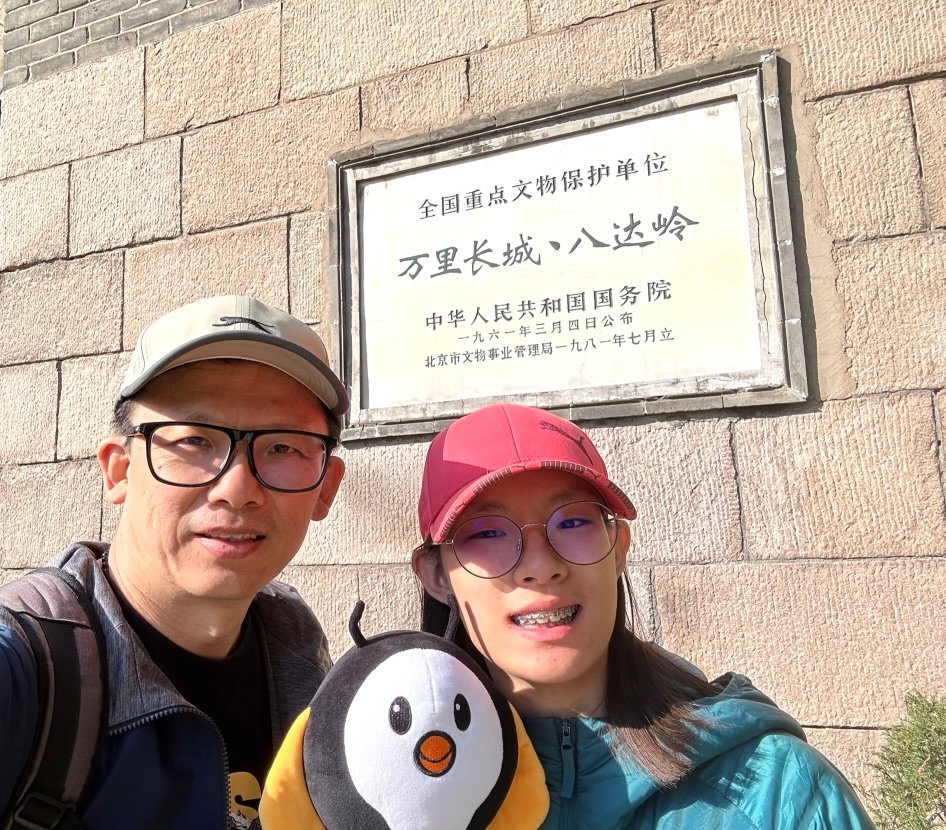
More than ten years later, Elaine and I returned to Beijing.
We walked on the Great Wall again.
The stones had not changed.
The mountains had not changed.
But we had changed.
There is a beautiful Chinese word:
成长 (chéng zhǎng).
Growth.
Because when people grow, they can return to the same place and see completely different stories.
Between those two Great Wall visits, our China journey had expanded far beyond ordinary sightseeing.
We travelled across China trying to understand the stories behind the places.
Xi’an China became one of our favourite historical cities.
We walked through:
- Xi’an Terracotta Warriors
- Xi’an City Wall
- Xi’an Museum
- Xi’an Muslim Quarter
We visited Anyang (安阳) to discover oracle bone writing — 甲骨文 (jiǎ gǔ wén), one of the earliest Chinese writing systems.
We explored Baoji and Zhouyuan, discovering Zhou civilisation and bronze inscriptions.
We travelled to Hancheng, the hometown of Sima Qian, the historian who preserved thousands of years of Chinese history in Records of the Grand Historian 《史记》.
Slowly, China became Elaine’s open classroom.
A Chinese saying describes this perfectly:
读万卷书,行万里路
(dú wàn juàn shū, xíng wàn lǐ lù)
“Read ten thousand books, travel ten thousand miles.”
Returning Again to Beijing — Meeting Our 2013 Tour Guide
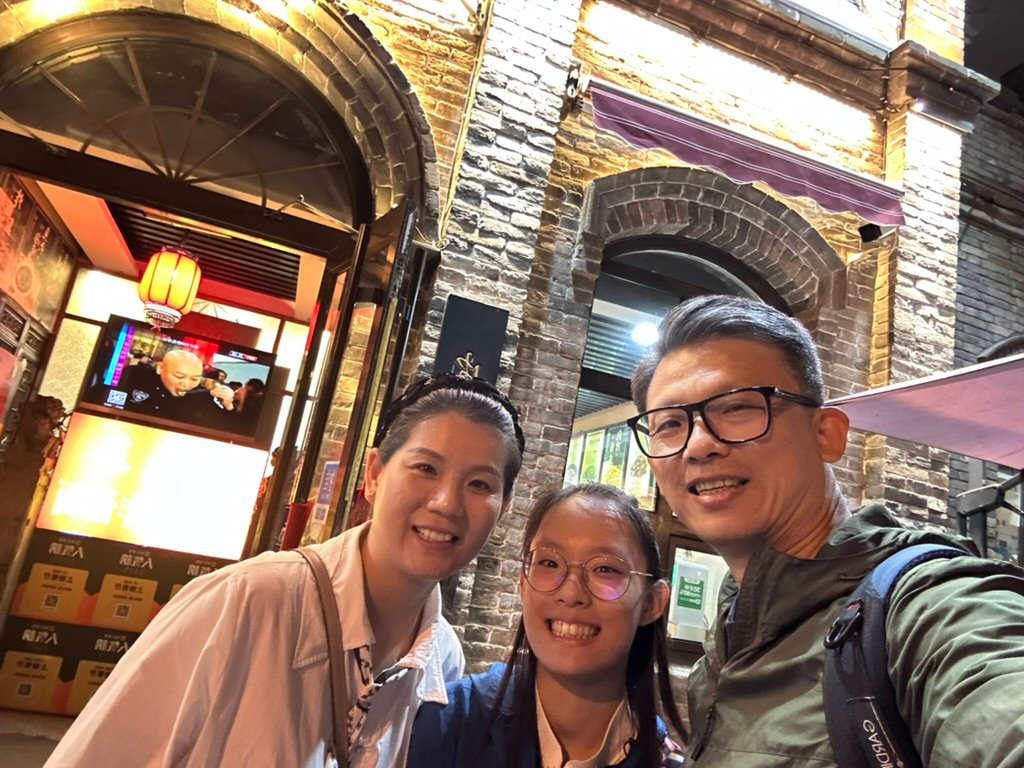
[Insert Beijing auntie reunion photo]
But travelling is never only about historical places.
Sometimes the most beautiful memories come from people.
During our 2025 Beijing visit, something special happened.
We reunited with our Beijing tour guide from our very first China trip in 2013.
The Beijing auntie who guided Elaine around the city when she was only eight years old.
More than ten years had passed.
The little girl had grown up.
Beijing had changed.
But the connection remained.
Chinese has a beautiful word:
缘分 (yuán fèn).
A special connection between people.
Something that brings lives together.
Many visitors search for famous places in Beijing:
The Great Wall.
Forbidden City.
Summer Palace.
Shichahai.
Wangfujing.
Qianmen.
All these places deserve to be visited.
But sometimes the people we meet become the memories we treasure most.

The Little Girl Who Needed Guidance Became Someone Helping Other Travellers
[Insert helping Hong Kong American couple photo]
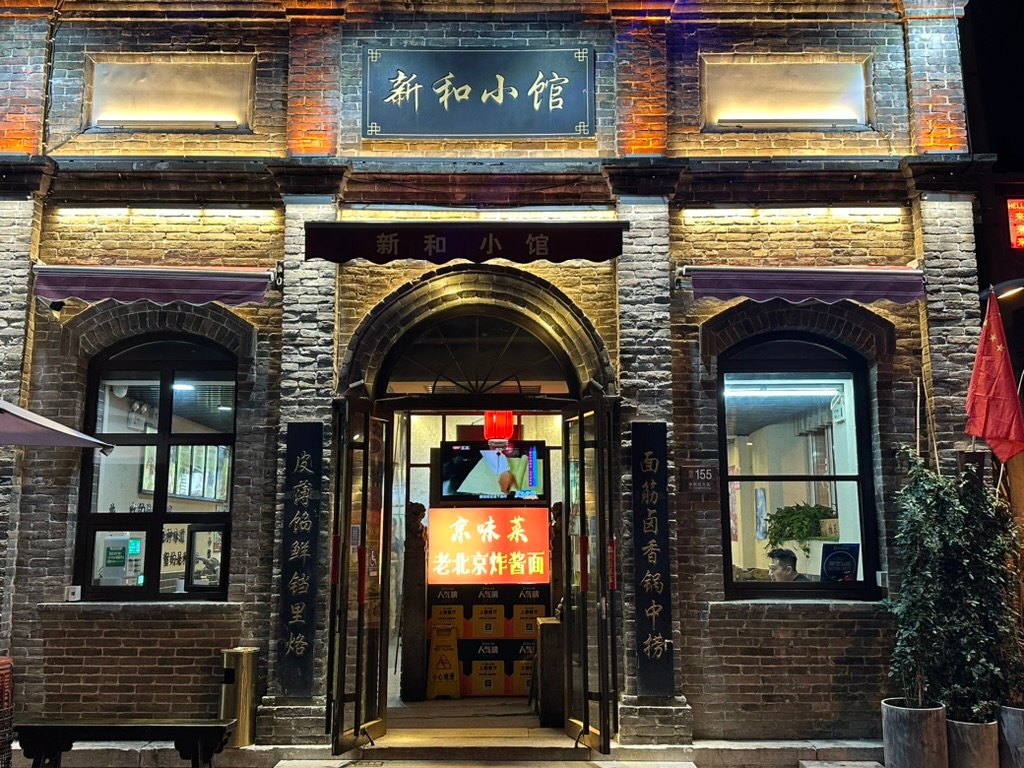
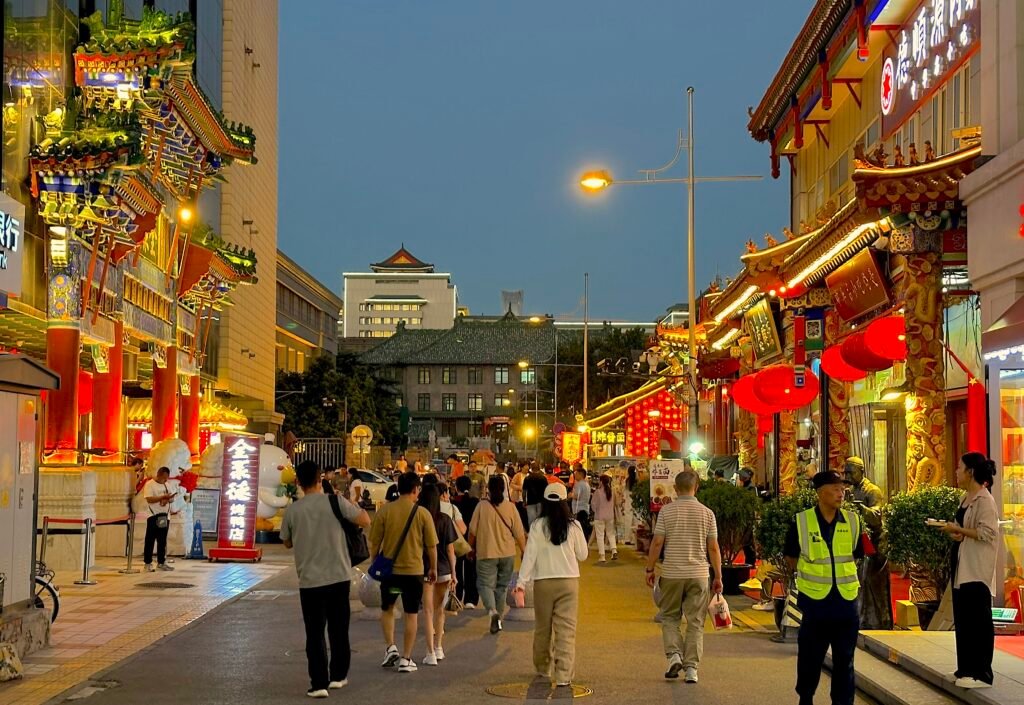
After dinner with our Beijing auntie, we walked along a busy Beijing commercial street.
Then we noticed an elderly couple needing help.
They were visitors trying to call a taxi using a Chinese mobile app.
Modern China can surprise many travellers.
Mobile payments.
QR codes.
Transport apps.
Digital services everywhere.
For first-time visitors, it can feel confusing.
Then Elaine heard something familiar.
Cantonese.
广东话 (Guǎngdōng huà).
They were Hong Kong-born Americans.
So Elaine helped them.
Speaking Cantonese.
The funny thing?
Elaine never formally studied Cantonese.
She picked it up herself after years of watching TVB Hong Kong dramas.
At that moment, I quietly smiled.
The eight-year-old girl who once needed a guide in Beijing…
had become someone helping other travellers in China.
Why Beijing Is Still One of the Best Places to Begin Your China Travel Journey
Many travellers planning a China vacation ask:
“Should I visit Beijing or Shanghai first?”
Both cities are amazing.
Shanghai shows you modern China.
But Beijing helps you understand China.
If you are interested in Chinese history and culture, Beijing is one of the best starting points.
A good Beijing travel itinerary can include:
The Great Wall — understanding ancient defence and China’s northern frontier.
Forbidden City — discovering imperial China.
Tiananmen Square — experiencing modern Chinese history.
Summer Palace — exploring royal gardens.
Shichahai and Hutongs — walking through old Beijing neighbourhoods.
Wangfujing and Qianmen — seeing how traditional and modern Beijing meet.
Do Not Just Visit China — Feel China
After more than ten years of travelling China with Elaine, I realised something.
The places are important.
But the stories are what stay.
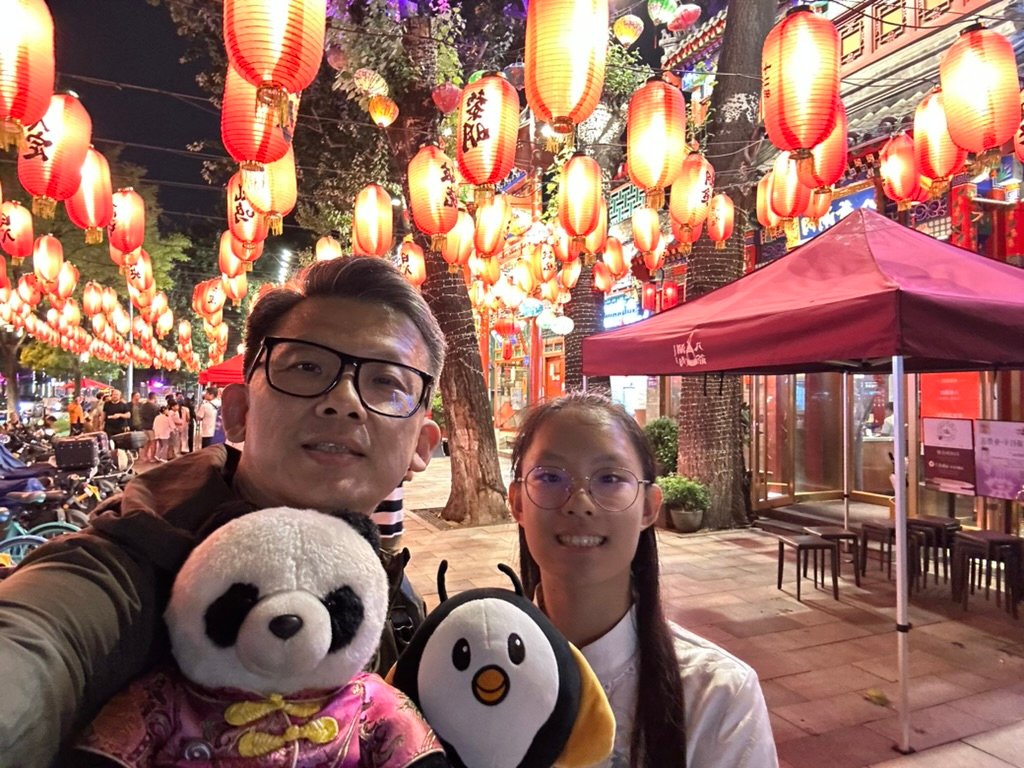
A panda bought from Beijing Zoo.
A funny squeaky chicken from the Great Wall.
A reunion dinner after twelve years.
A conversation with strangers on a Beijing street.
Small moments become lifelong memories.
The Great Wall is made from stone.
But our China journey is built from experiences.
感受中国 (gǎn shòu Zhōngguó).
Feel China.
Because the best journeys are not only about discovering new places.
Sometimes they are about discovering how much we have grown along the way.
Travel Tips:
Visiting the Great Wall of China From Beijing — A First-Time Traveller’s Guide
A Night Stroll Beneath the Lantern Glow – Discovering Xi’an City Wall with My Daughter Elaine