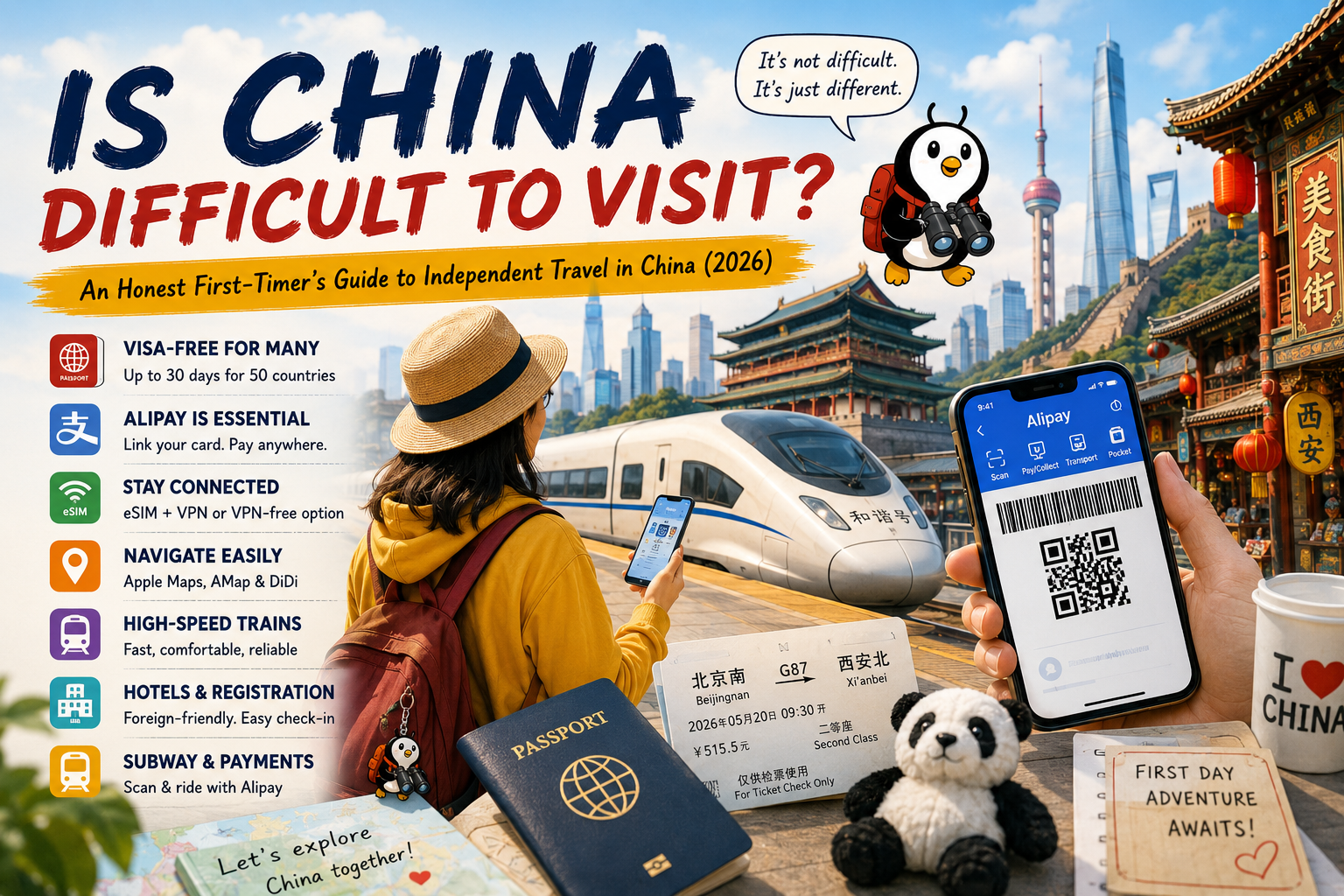
An Honest First-Timer’s Guide to Independent Travel in China (2026)
“Everyone told us China would be difficult.”
No Google.
No cash.
Apps you’ve never heard of.
A language you can’t read.
It sounds intimidating.
Yet after several independent trips across Beijing, Xi’an, Chengdu, Shenzhen, Hong Kong and many other parts of China, we discovered something surprising.
China isn’t difficult.
It’s simply different.
Once you understand a few key systems, travelling around China becomes remarkably smooth, safe and efficient.
Here’s what we wish someone had told us before our first trip.
1. First, Do You Even Need a Visa?
For many travellers, the answer in 2026 is…
Maybe not.
China has dramatically relaxed its entry rules.
Citizens of around 50 countries, including Australia, the United Kingdom, Canada and most European Union countries, can currently enter China visa-free for up to 30 days for tourism.
If you’re from the United States, different rules currently apply, so check before booking.
CTB Tip
Visa policies change.
Before buying your flights, always confirm the latest rules with the Chinese embassy or official government website.

2. The Biggest Surprise: China is Almost Cashless
This is usually the biggest culture shock.
In many countries, carrying cash is normal.
In China?
Many people don’t.
Even buying a bottle of water often means scanning a QR code.
Fortunately, this is no longer a problem for international visitors.
Today, Alipay and WeChat Pay both allow many foreign credit cards.
For first-time visitors, we generally recommend Alipay because the registration process is simpler.
Before you leave home
✔ Download Alipay
✔ Verify your passport
✔ Link your Visa or Mastercard
Do this before boarding your flight.
It makes your first day in China dramatically easier.
Elaine’s Note
I prefer using Alipay through Apple Pay on my iPhone. Once everything is linked, paying for food, metro rides and even convenience stores becomes almost effortless.
3. The Internet Works…
Just Not the Internet You’re Used To
This is where many first-time visitors become confused.
China has its own internet ecosystem.
Google.
Facebook.
Instagram.
WhatsApp.
YouTube.
These normally won’t work on mainland Chinese networks.
What should you do?
There are two common approaches.
Option A
Choose an international eSIM whose data is routed outside mainland China.
Some providers (such as Airalo, Ubigi and BuzzyBee) currently allow access to Google services without requiring a separate VPN.
Option B
Use a normal travel eSIM together with a VPN.
Important
Install and test your VPN before arriving in China.
Downloading VPN software after entering China can be difficult.
4. “If Google Maps Doesn’t Work…How Do I Find Anything?”
This worried us too.
Fortunately, navigation turned out to be much easier than expected.
iPhone users
Apple Maps works surprisingly well inside China.
Android users
Most locals use AMap (Gaode Maps).
Although mainly in Chinese, it is extremely accurate.
Need a taxi?
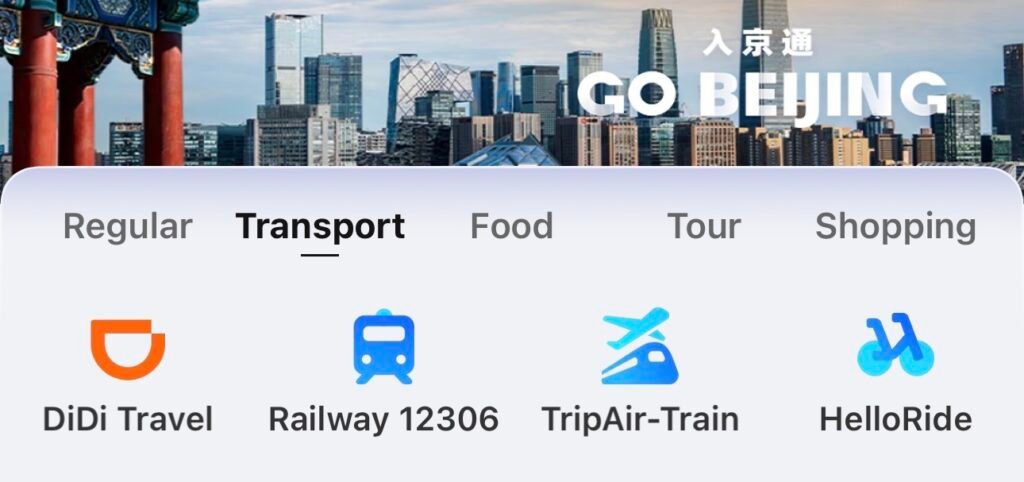
China’s Uber equivalent is DiDi.
The easiest method is simply launching DiDi inside the Alipay app.

5. China’s High-Speed Rail is Amazing
Many travellers come expecting crowded trains.
Instead, they discover one of the world’s most impressive railway systems.
Travelling from Beijing to Shanghai…
1,300 km
…takes only about 4½ hours.
For most visitors, trains are often faster than flying once airport security and transfers are considered.
Booking is easy
We recommend Trip.com because:
- English interface
- accepts international cards
- foreign passport friendly
- excellent customer support
Your passport normally acts as your ticket.
Simply scan it at the station gates.
A Small Detail That Confuses Many Visitors
Chinese stations often appear under different names.
For example:
Train ticket:
Guangzhou Dong
Metro:
Guangzhou East Railway Station
Chinese:
广州东站
They’re exactly the same station.
Whenever you’re unsure, compare the Chinese characters.
6. Choosing Hotels
One question we often hear is:
“Can foreigners stay anywhere?”
Today, most hotels listed on major international booking platforms accept foreign guests.
Booking through Trip.com is usually the easiest option.
Hotels automatically register your passport with the local police during check-in.
If you’re staying in a private apartment or Airbnb, registration requirements may differ.
7. Public Transport is Easier Than You Think
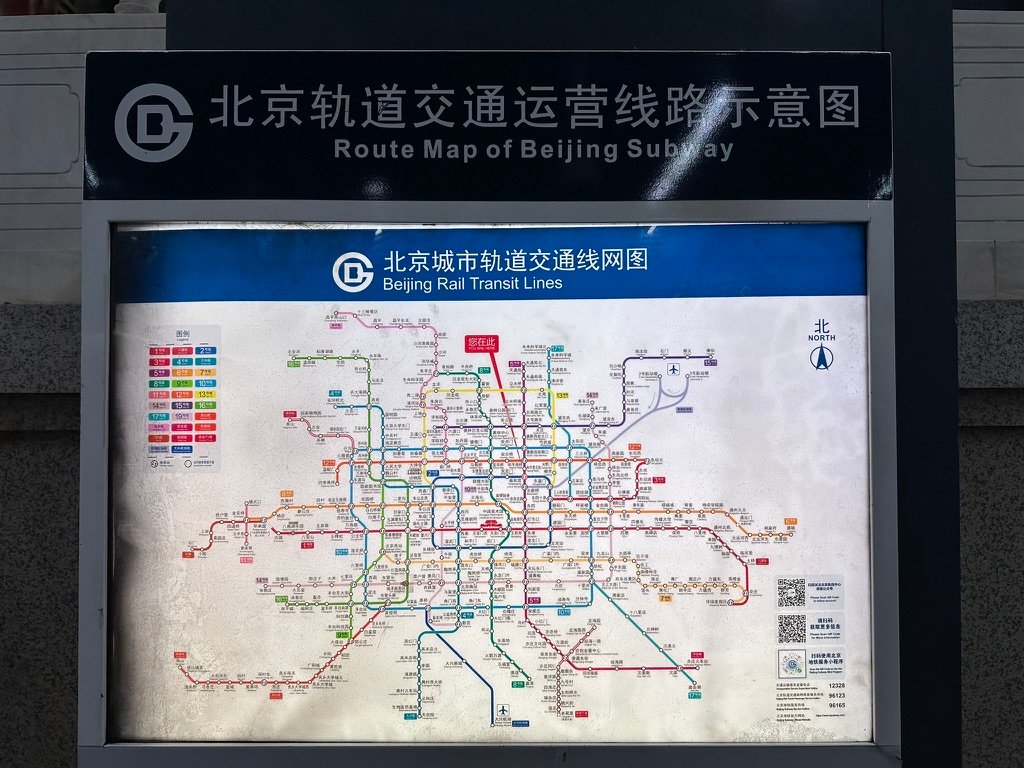
China’s metro systems are clean, fast and inexpensive.
In many cities you don’t even need to buy tickets.
Simply open:
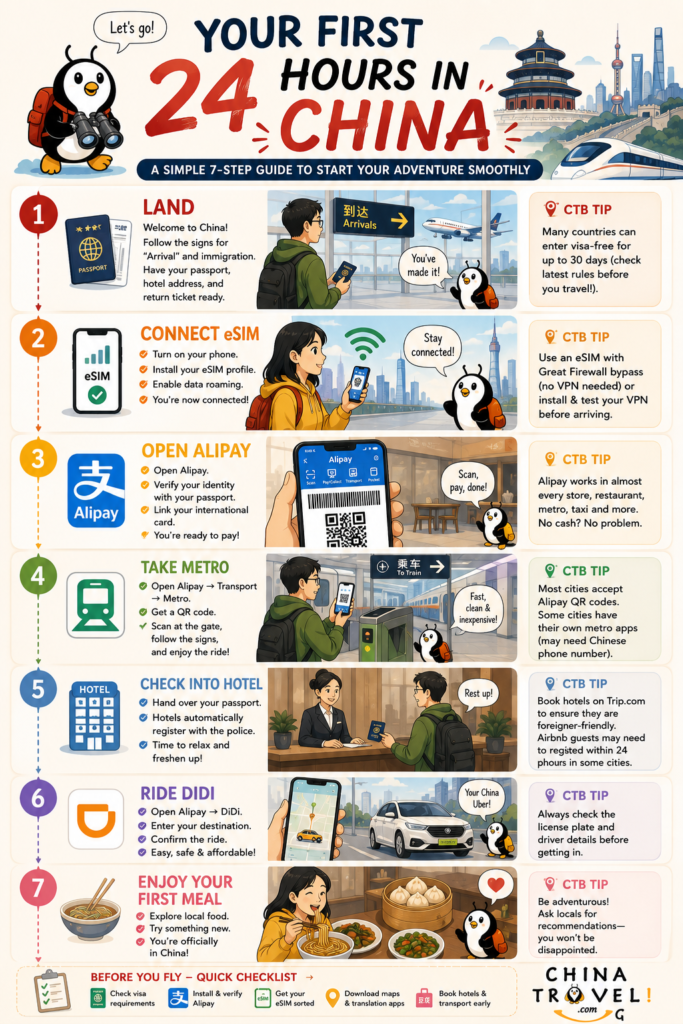
Alipay → Transport → Metro
Generate your QR code.
Scan.
Walk through.
Done.
Some cities also have their own transport apps, although these sometimes require a Chinese mobile number.
One of the Travel Tools Dad & Elaine Actually Use
When Elaine and I travel around China, Trip.com is one of the platforms we genuinely use ourselves. Over our journeys together, we’ve used it to book hotels, flights, trains, attractions and tours — in China and elsewhere.
It has helped us many times while planning our trips, and we’ve had good experiences with it. So when friends or ChinaTravelBUG readers ask us “Where do you actually book?”, Trip.com is one of the places we’re comfortable recommending because we use it too.
✈️ 🏨 🚄 🎟️ Explore and plan your China trip on Trip.com →
Affiliate link — ChinaTravelBUG may earn a small commission at no extra cost to you.
Before You Fly
Here’s our recommended checklist.
✅ Confirm your visa requirements.
✅ Install Alipay and verify your passport.
✅ Link your international credit card.
✅ Download an offline translation app.
✅ Download Apple Maps or AMap.
✅ Decide on your eSIM strategy.
✅ Book hotels and train tickets early.
✅ Pre-book popular attractions where possible.
So…Is China Difficult?
Our honest answer?
No.
China has one of the steepest learning curves before your trip.
But once you understand its digital ecosystem, travelling becomes surprisingly smooth.
The metros are efficient.
High-speed trains are world-class.
Cities are clean.
People are generally helpful.
And despite what many first-time visitors expect, China is one of the safest countries we’ve travelled in.
The hardest part isn’t travelling in China.
It’s preparing for China.
Once you’ve done that, you’re free to focus on what really matters—
discovering one of the world’s oldest civilizations, tasting incredible regional food, and experiencing a country that constantly surprises you.
China Travel Bug Tip
Don’t aim to learn everything before your first trip.
Just learn the first day.
Once you successfully order your first meal, pay with Alipay, ride your first metro and board your first high-speed train, you’ll realise something we did too:
China isn’t difficult. It’s simply different.