You’re standing beside a busy road in China looking for a taxi.
Cars keep passing.
Meanwhile, the person beside you looks at their phone, taps a few times…
and a car arrives.
“Wait… how did they do that? 😂”
🥟 The Quick Bite
In Chinese cities, ride-hailing (网约车, wǎngyuēchē) has become a very common way to get a car.
Instead of standing beside the road hoping an empty taxi appears, passengers can enter their destination in an app, request a ride and wait for the assigned driver.
One of the best-known platforms is DiDi (滴滴, Dīdī).
🌍 If You’re Trying to Place It…
Think:
Uber or Grab — Chinese-style.
You enter where you want to go.
The app matches you with a driver.
You can see the vehicle details and follow its approach on the map.
Same basic idea.
📱 Why Is It So Useful in China?
For an international traveler, there’s one particularly nice advantage:
you can enter the destination on your phone.
That can remove the awkward moment of trying to pronounce a Chinese hotel or attraction name perfectly to a driver.
Your destination is already in the system.
👀 A Few Chinese Words You May See
网约车 (wǎngyuēchē) — app-booked / ride-hailing car
出租车 (chūzūchē) — taxi
司机 (sījī) — driver
上车点 (shàngchē diǎn) — pickup point
That last one can be particularly useful.
At a huge railway station, shopping mall or airport, your driver can’t necessarily stop wherever you’re standing.
The app may direct you to a specific 上车点 — pickup point.
🚕 So Have Ordinary Taxis Disappeared?
No.
Traditional taxis still operate in Chinese cities, and you may still hail one or use a taxi rank.
Ride-hailing is simply another very common option.
For many people, the convenience of seeing the route, entering the destination digitally and requesting a car from the phone makes it an easy choice.
🥟 One Last Bite
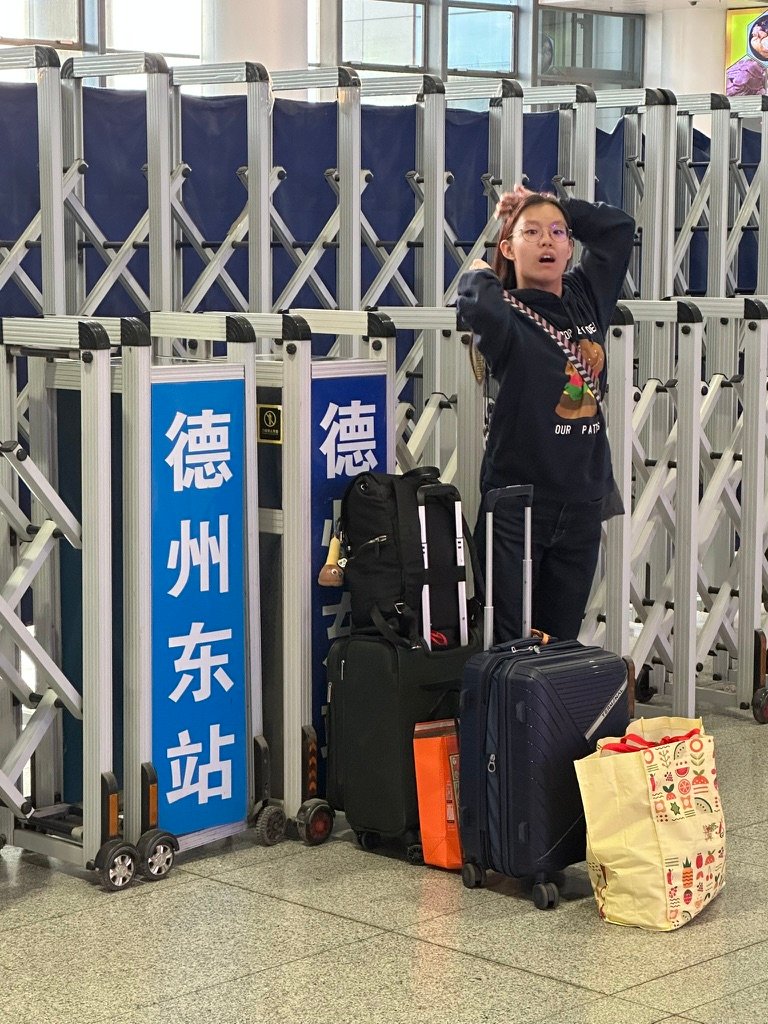
When you see everybody staring at their phones outside a Chinese railway station, they may not be lost.
They may all be waiting for their cars. 😂
Once you’ve learned:
open app → enter destination → find pickup point → check number plate → get in
another piece of everyday China suddenly becomes much easier.
See China. Understand It Better.