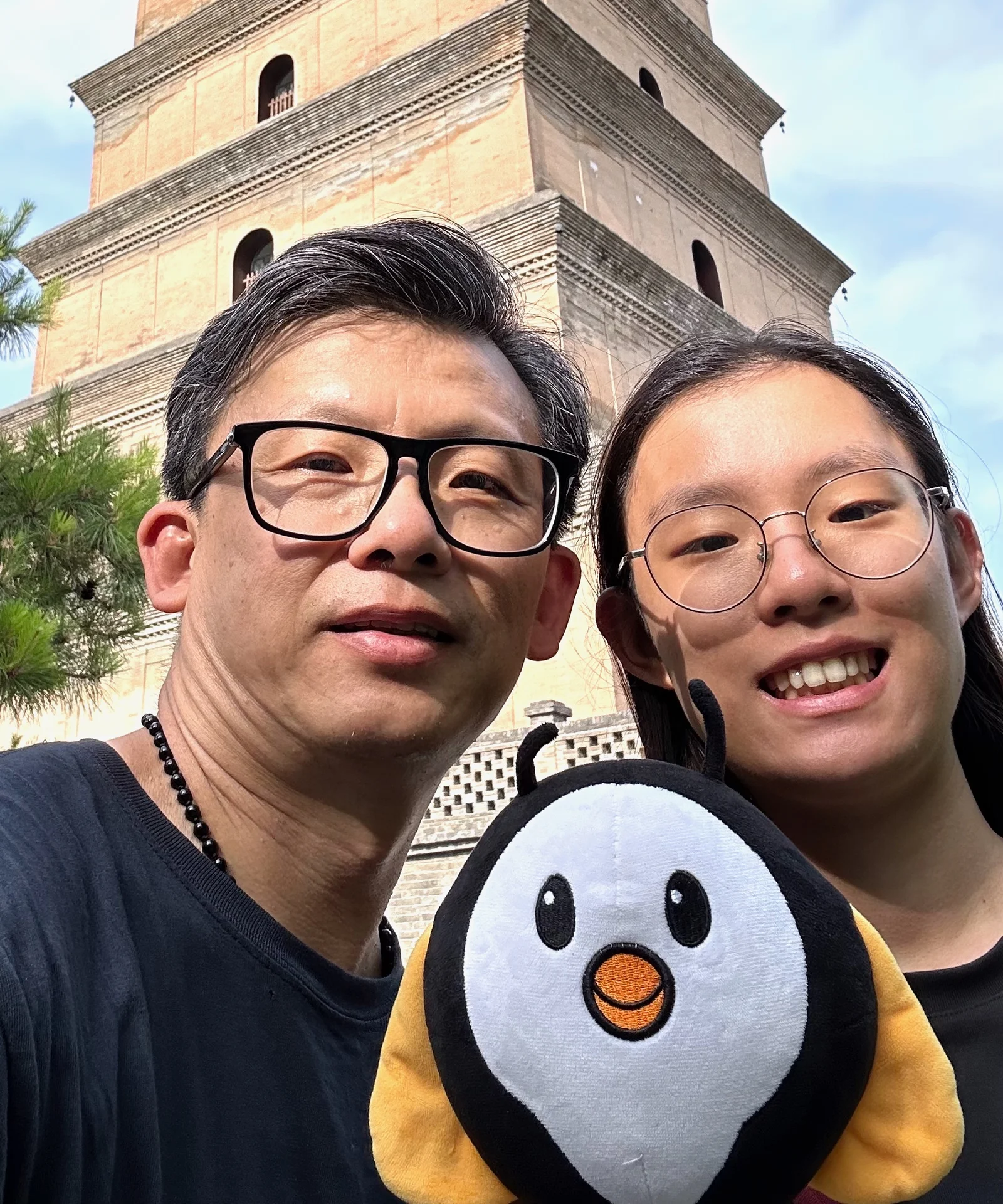
Dad & Elaine have taken high-speed trains across China again and again.
And one thing kept striking Dad.
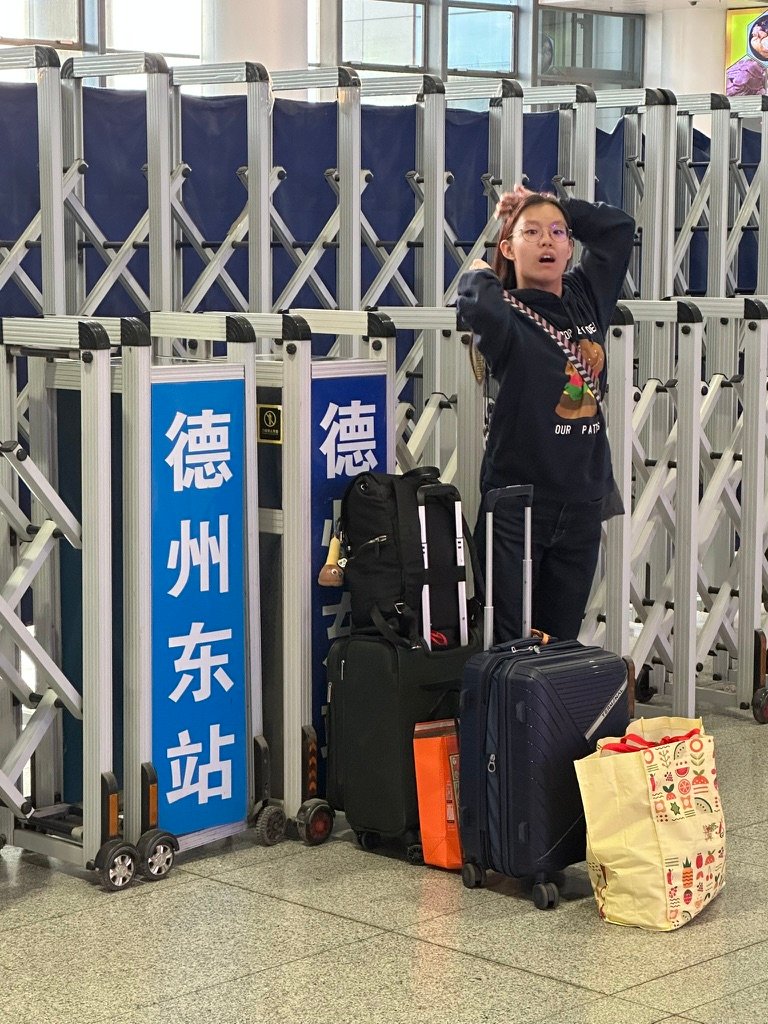
The trains can be packed.
The stations can be enormous.
Waiting halls fill with people.
Then hundreds of passengers board one train while another few hundred are waiting for the next.
Dad started wondering:
“Where is everybody GOING? 😂”
🥟 The Quick Bite
China doesn’t only have an enormous population.
It has an enormous population that moves.
People travel between cities for:
work + business + university + family + appointments + holidays + visiting friends + getting things done.
And China’s railway network makes that movement visible.
In 2025 alone, China’s railways handled about:
4.6 BILLION passenger journeys.
😳
That’s not 4.6 billion different people, of course.
It’s passenger trips.
But it gives you some idea of the scale.
🌍 If You’re Trying to Place It…
Think about a busy airport terminal.
Now imagine that same feeling appearing at railway stations across an enormous country.
Except people aren’t only making special long-distance journeys.
For many passengers, the train is simply:
how you get to another city.
That’s when Dad started seeing China’s HSR differently.
Not as a tourist attraction.
As everyday national infrastructure.
📷 Dad & Elaine’s China
When Dad & Elaine first took China’s:
高铁 (gāotiě) — high-speed rail
the exciting part was:
“Wah! 300 km/h!” 😂
After enough journeys, Dad started noticing something else.
The people around us weren’t standing there admiring the train.
Someone was going to work.
Someone was visiting family.
Someone had luggage.
Someone had almost nothing.
Students.
Older passengers.
Business travelers.
Families.
People eating instant noodles and looking at their phones.
For us, the HSR journey was part of travelling China.
For many people around us:
it was simply life.
🚄 And They Really Do Use the Trains
This isn’t just Dad’s impression from a crowded waiting hall.
China’s railways carried about 4.6 billion passenger journeys in 2025.
And in 2024, journeys on 动车组 (dòngchēzǔ) — China’s electric multiple-unit trains, which include the country’s high-speed services — accounted for about three-quarters of all railway passenger journeys.
That’s an extraordinary amount of movement.
Suddenly those enormous stations make more sense.
💰 But HSR Isn’t “Cheap” to Everybody
This needs some nuance.
For an international traveler converting a Chinese train fare into euros, dollars or ringgit, HSR can sometimes feel surprisingly affordable.
But Chinese passengers aren’t earning international-traveler incomes.
A high-speed ticket can still be a meaningful expense for some households.
And China still operates much cheaper conventional railway services.
Dad & Elaine have taken those too.
The familiar:
绿皮火车 (lǜpí huǒchē) — “green trains.”
They’re slower.
Less glamorous.
Often considerably cheaper.
And people use them.
So China’s railway system isn’t simply:
everybody takes the fastest train.
Different passengers make different trade-offs between:
time + price + comfort + availability.
👀 Look Around the Station Next Time
Don’t only look at the departure board.
Look at the people.
A useful Chinese word is:
出行 (chūxíng) — to travel / get around / make a journey
Another:
出差 (chūchāi) — business trip
And:
回家 (huíjiā) — go home
Those three words alone explain a lot of people in a Chinese railway station.
😂
Not everyone is:
旅游 (lǚyóu) — travelling for tourism.
They’re moving because life requires movement.
🤯 That’s What Dad Hadn’t Fully Appreciated
China’s HSR is impressive because:
the trains are fast.
But after travelling repeatedly, Dad began thinking the more interesting thing was:
how many people actually use them.
The railway connects an enormous country filled with cities, jobs, universities, families and businesses.
So the packed waiting hall isn’t merely:
“Wow, China has lots of people.”
It’s evidence of something more interesting:
China has a lot of people going somewhere.
🥟 One Last Bite
The first time Dad rode China’s high-speed rail, he watched the speedometer.
300 km/h.
Very exciting. 😂
After many journeys, Dad started watching the passengers instead.
Where are they going?
Why are they travelling?
How often do they do this?
That’s when the HSR stopped looking like a piece of futuristic technology.
It started looking like something much more important:
part of the machinery of everyday China.
See China. Understand It Better.