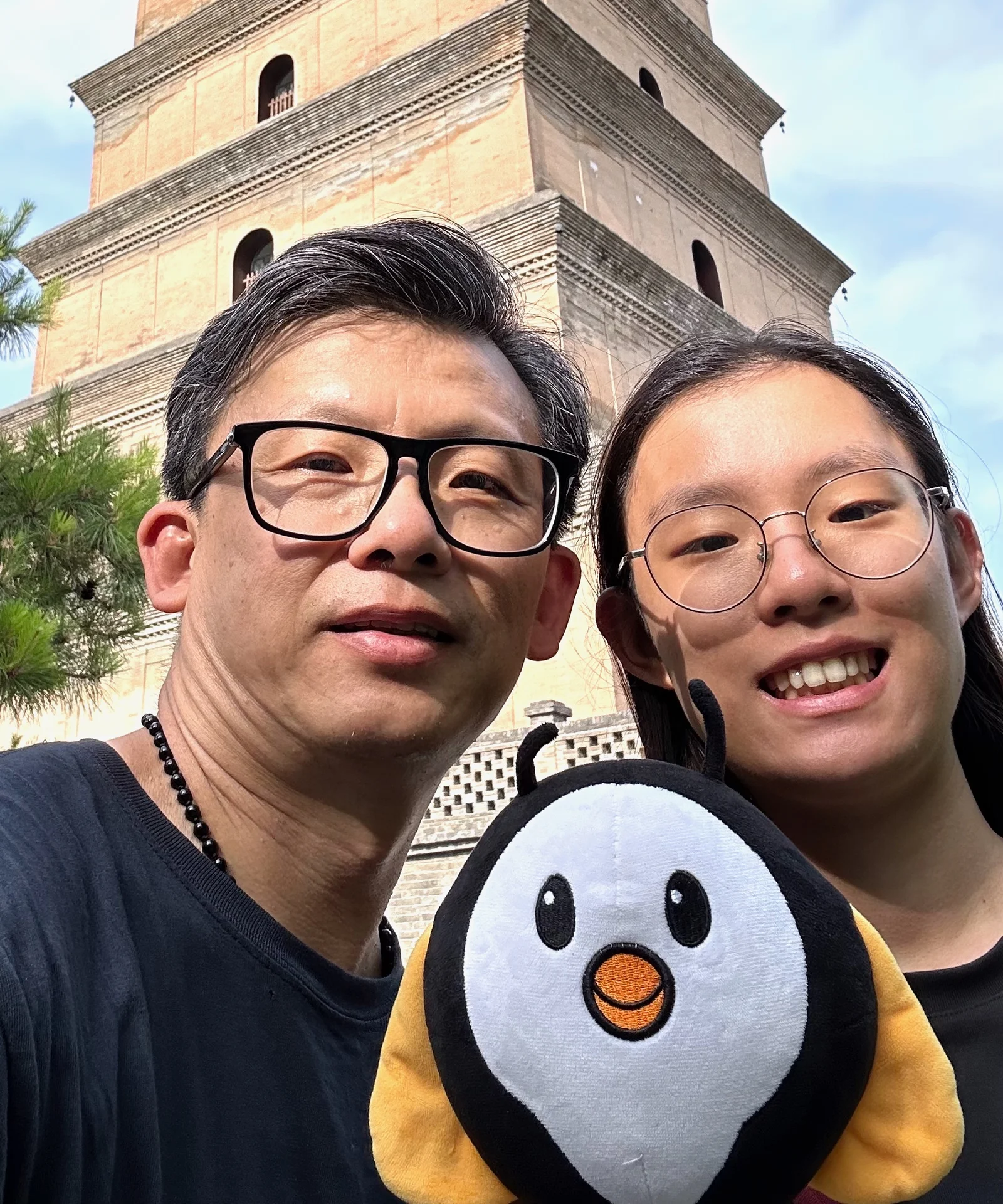
There are two ways Dad & Elaine can travel Beijing.
One is:
Go. Go. Go.
Forbidden City.
Temple.
Museum.
Next attraction.
Check the map.
Walk another 15,000 steps.
😂
And then there are days like this one.
We took the Beijing Metro (北京地铁, Běijīng Dìtiě) to the Qianmen area with a much simpler plan:
hang around.
No guide.
No tour bus.
No ambitious sightseeing checklist.
We wanted to spend the day around Qianmen Street (前门大街, Qiánmén Dàjiē), wander when we felt like wandering, sit when we felt like sitting…
and watch Beijing go by.

☕ Our Day at a Glance
Place: Qianmen, Beijing
How we got there: Beijing Metro
Travel style: Independent and deliberately slow
Morning base: Beijing Fun / Beijing Fang (北京坊)
Our little oasis: Coffee + PAGE ONE bookstore
Later plan: Wander Qianmen, people-watch, eat and stay into the evening
Main objective: None. 😂
🚇 Panda Came Along on the Metro
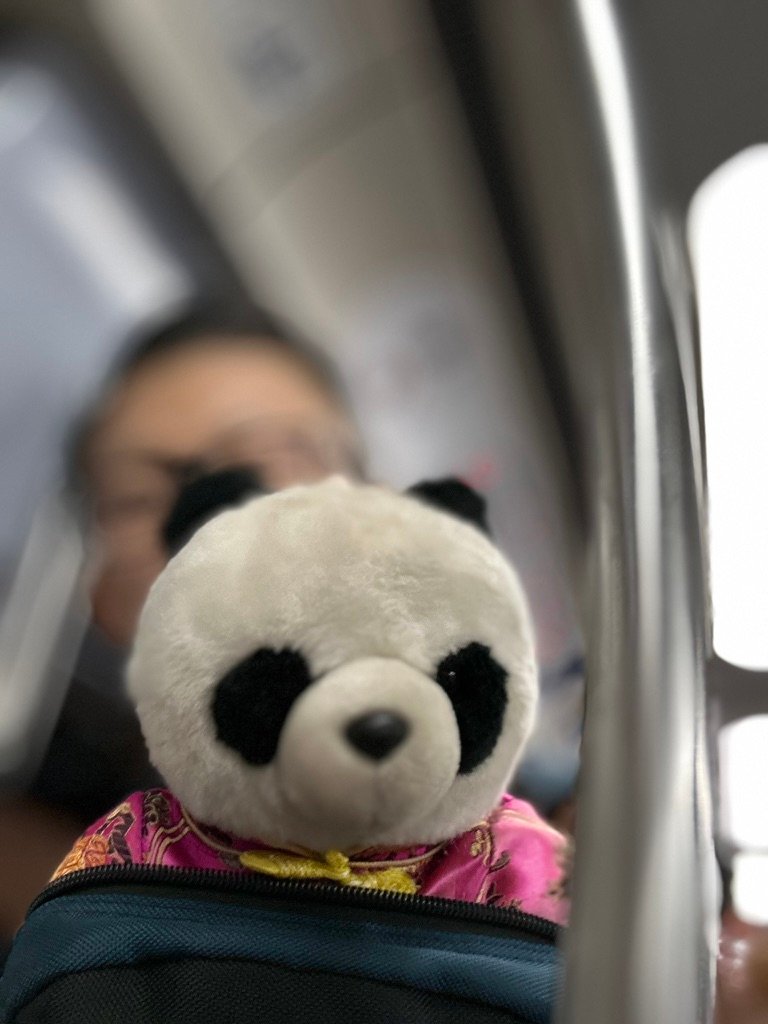
Yes.
Panda came too. 😂
This is Elaine’s childhood panda — bought during one of our much earlier China journeys and still occasionally dragged back around Beijing with us.
Getting to Qianmen was again very ordinary:
hotel → Beijing Metro → Qianmen area → walk.
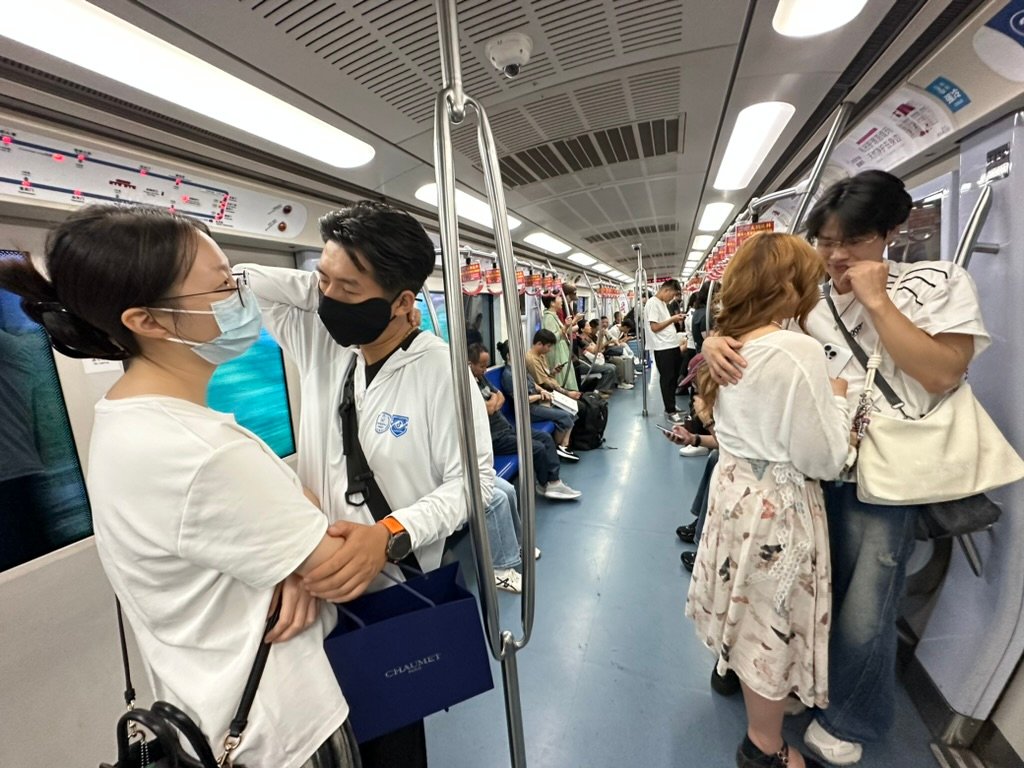
By this stage of our travels, taking the Metro wasn’t an attraction.
It was simply:
how we got somewhere.
And that changes the way you experience a huge city like Beijing.
Instead of asking:
“How are we going to cross Beijing today?”
the question becomes:
“Which station are we getting off at?”
Then you go.
🏙️ Qianmen Was Busy — So We Found Somewhere to Breathe
Qianmen is popular for a reason.
The historic commercial area sits close to some of Beijing’s biggest first-trip sights, and the pedestrian streets draw plenty of visitors.
Shops.
Restaurants.
Old Beijing names.
Souvenirs.
Tour groups.
Families.
Phones taking photographs everywhere.
Plenty to look at.
But Dad & Elaine weren’t interested in marching continuously up and down the street all day.
It was still warm in Beijing.
And we had time.
So instead of immediately joining the flow along the main street, we turned off.
👀 This Turn Is Easy to Miss
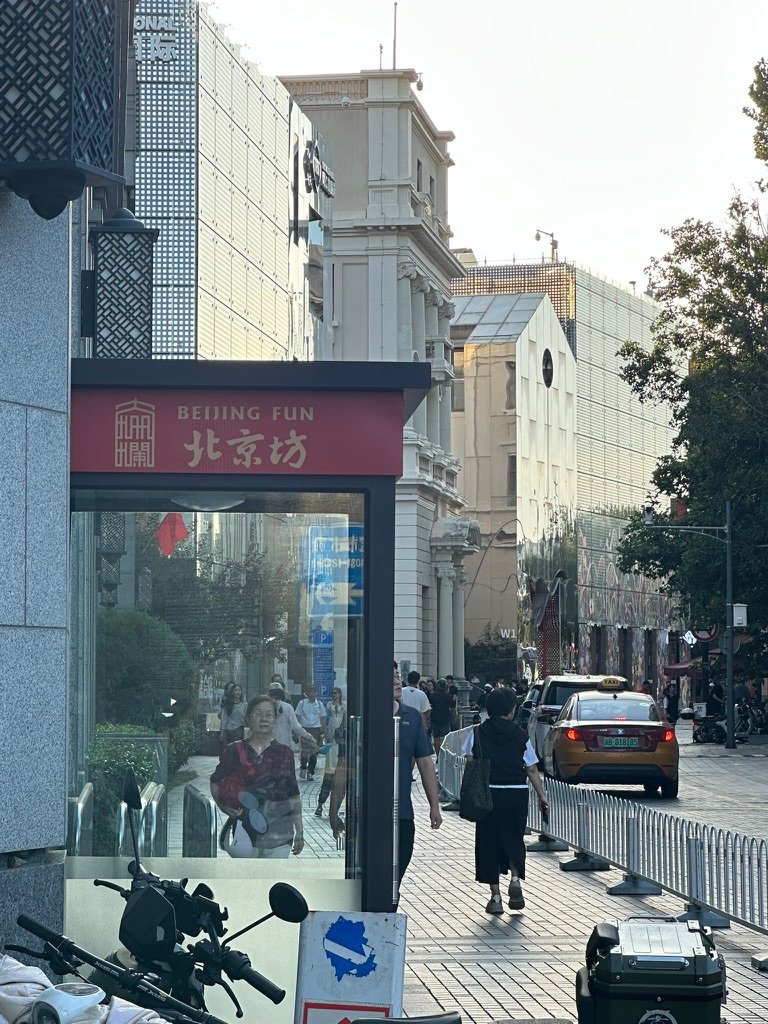
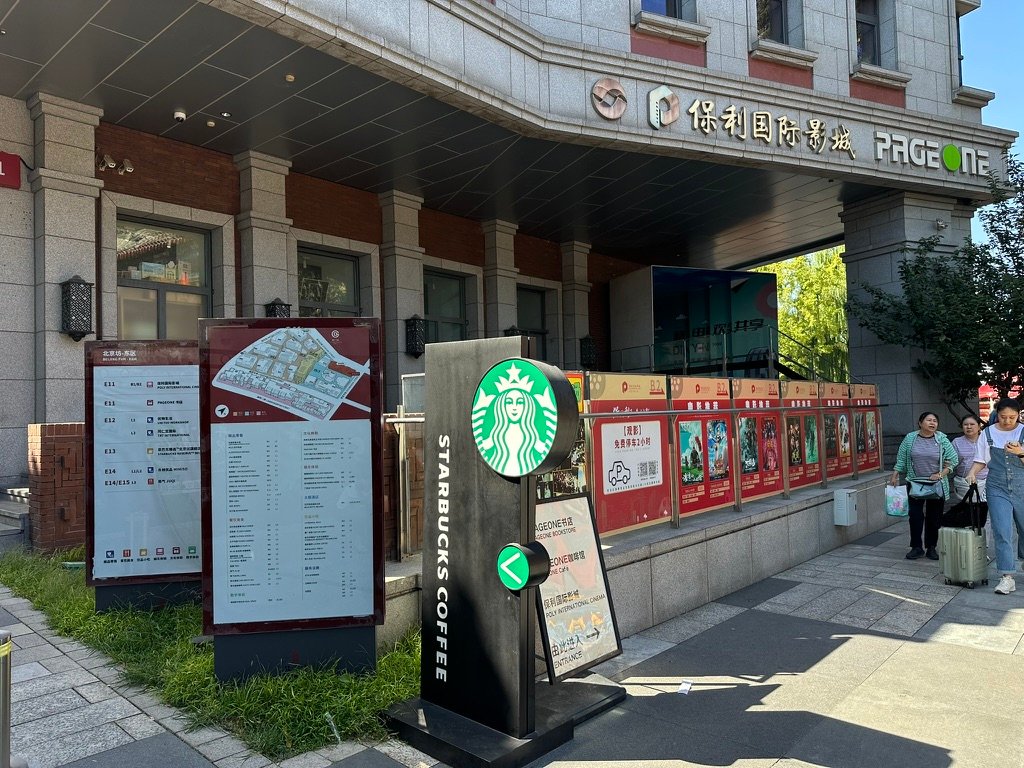
This photograph is worth remembering.
From the main tourist street, you could easily just keep walking straight.
But we turned into:
Beijing Fun / Beijing Fang (北京坊).
And the atmosphere began to change.
The busy tourist street was still nearby.
But tucked behind it was somewhere Dad & Elaine could slow the whole day down.
We found:
PAGE ONE bookstore
and a large Starbucks Reserve.
That became our base.
☕ Our Little Oasis Behind Qianmen
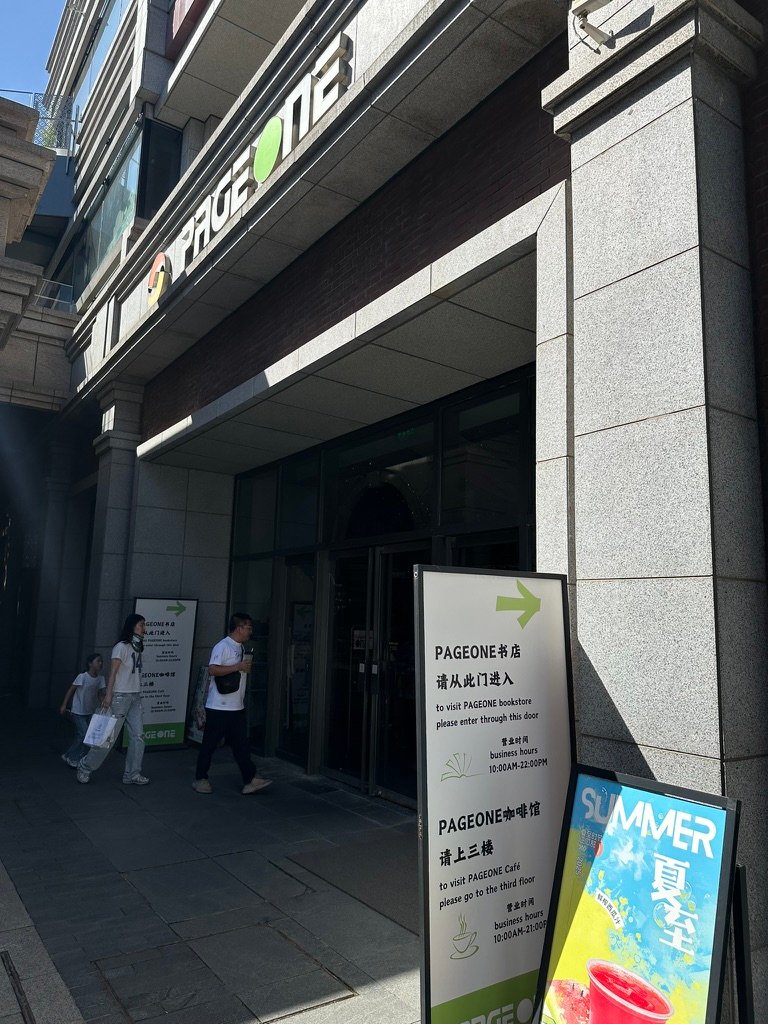
Dad didn’t travel all the way to Beijing because he desperately needed to discover Starbucks.
😂
That’s not the story.
The story is what this place did for our day.
It was:
spacious
comfortable
air-conditioned
and most importantly…
somewhere we could sit.
Really sit.
Not:
“Rest for seven minutes because Attraction #6 starts at 1:30pm.”
We could stay.
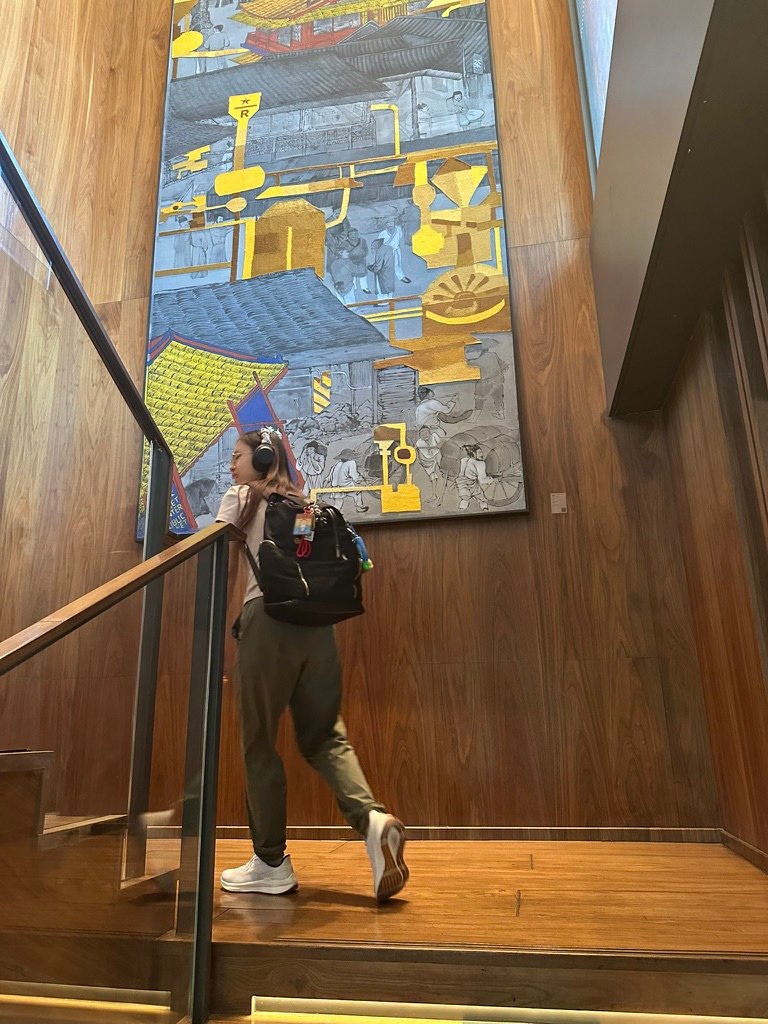
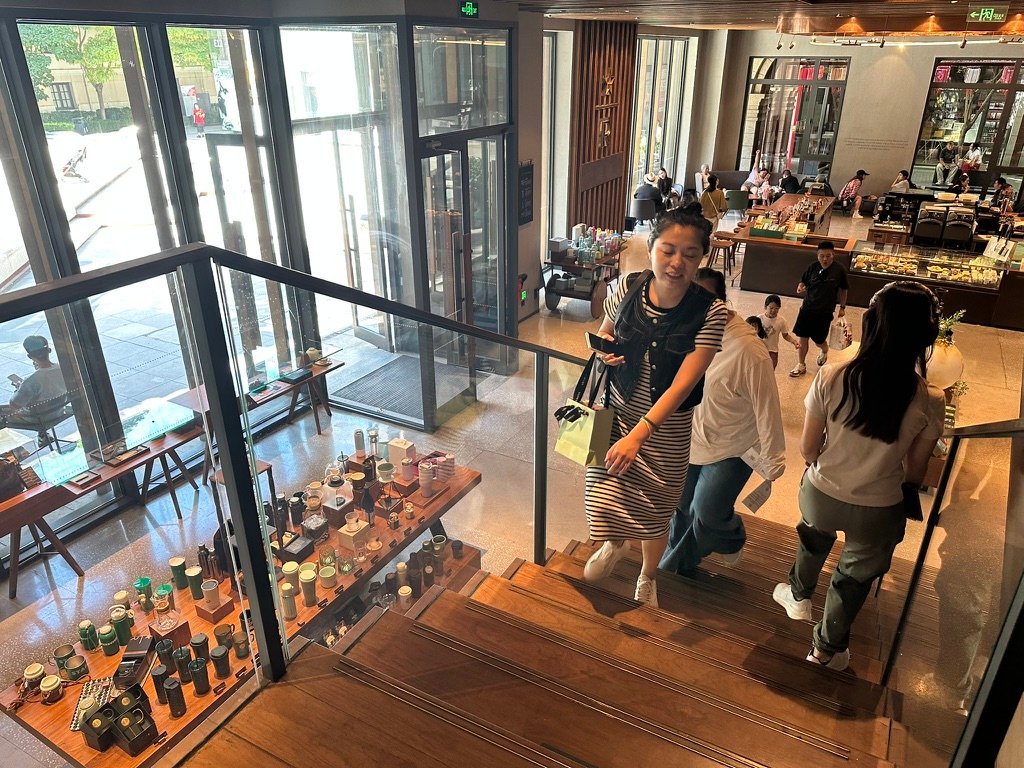
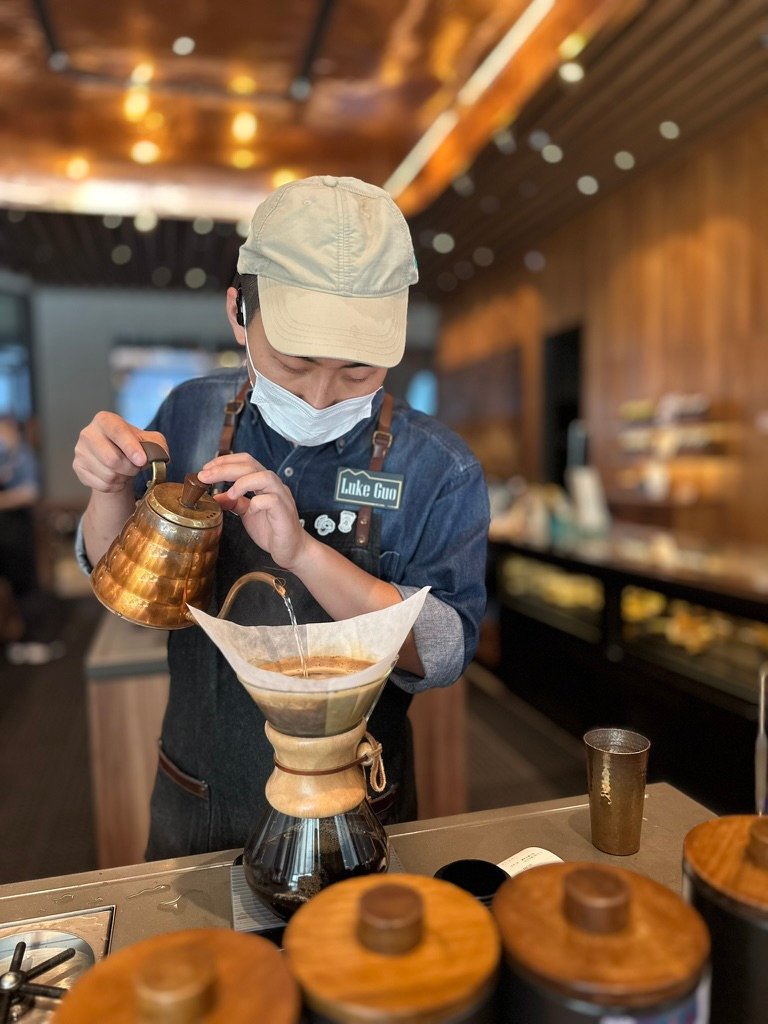
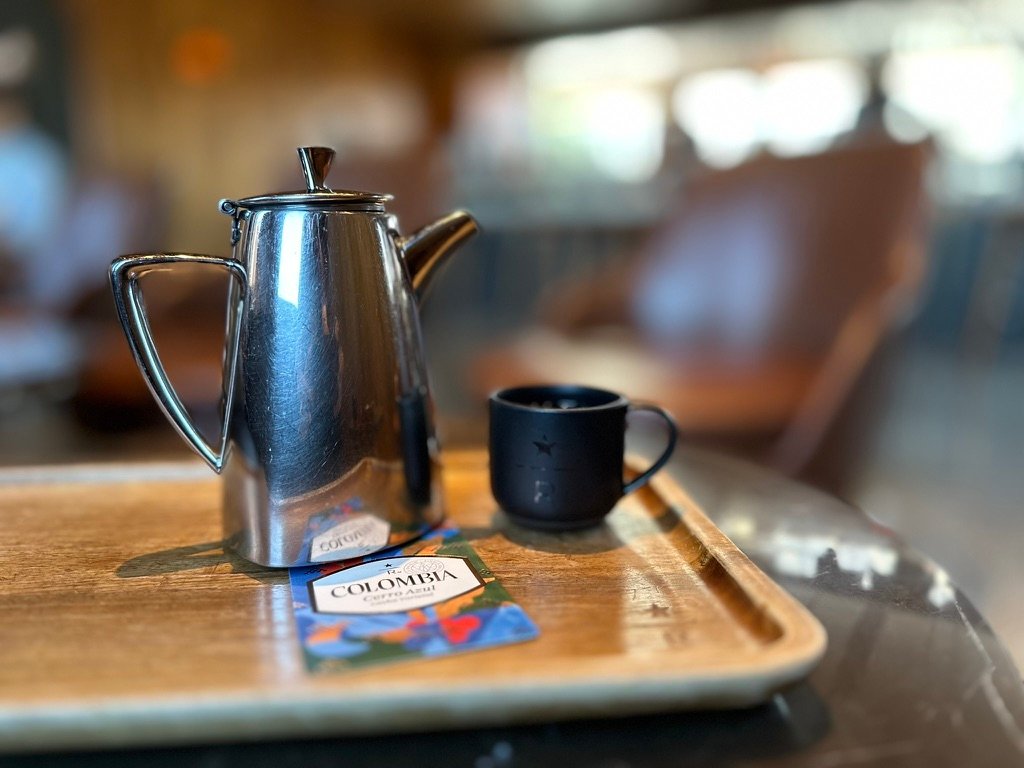
Coffee for Dad.
A comfortable chair.
No rush.
Outside, one of Beijing’s busiest visitor areas continued doing what busy visitor areas do.
Inside:
Dad slowed down.
☕
This became our little oasis behind Qianmen.
And once we started thinking of it as a base, the day became wonderfully easy.
We could:
go out
→ wander
→ look around
→ people-watch
→ come back
→ sit
→ drink something
→ browse books
→ decide what we felt like doing next
→ go out again.
No timetable required.
📚 Conveniently, Our Oasis Had Another Huge Bookstore
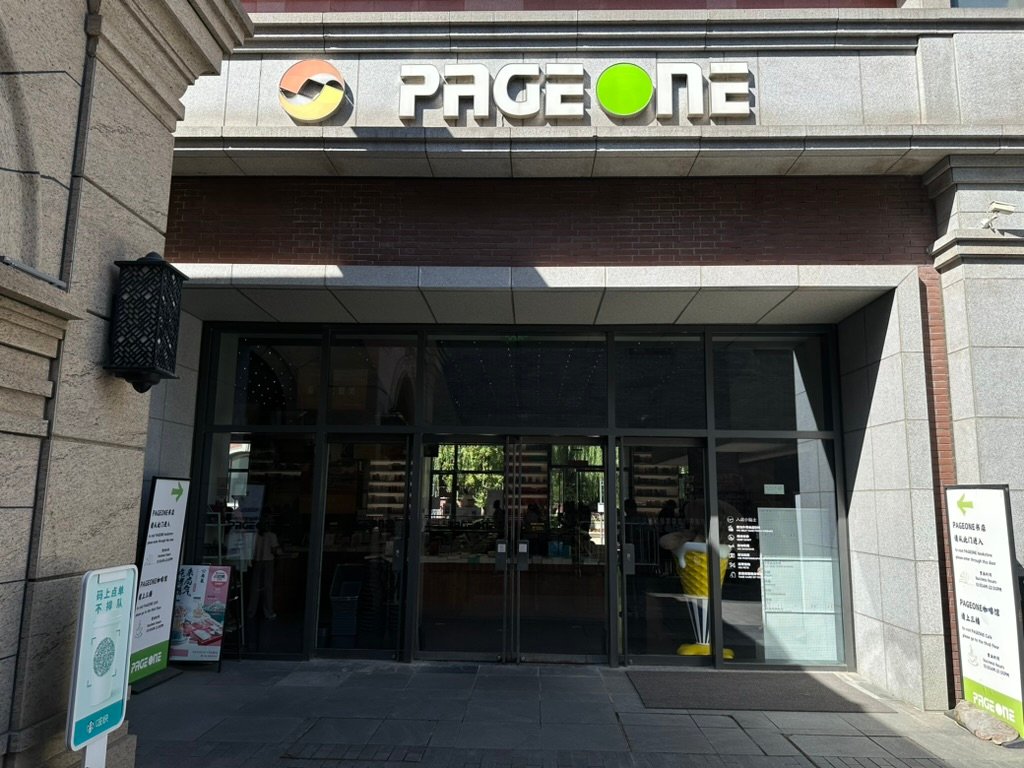
Apparently our Beijing journeys have developed a bookstore problem.
😂📚
On another day, Elaine had deliberately taken Dad back to Wangfujing Bookstore (王府井书店) because she’d remembered it from our previous trip.
Now, near Qianmen:
another large bookstore.
PAGE ONE occupied several levels, giving us plenty of room to wander without going anywhere very far at all.
And we noticed something useful for international visitors.
The selection felt quite different from Wangfujing Bookstore.
At Wangfujing, most of what we’d encountered was in Chinese.
Here, Dad’s rough impression was that perhaps around 20% of the books we saw were in English.
That’s not an official inventory figure.
Just what it looked like to us while browsing.
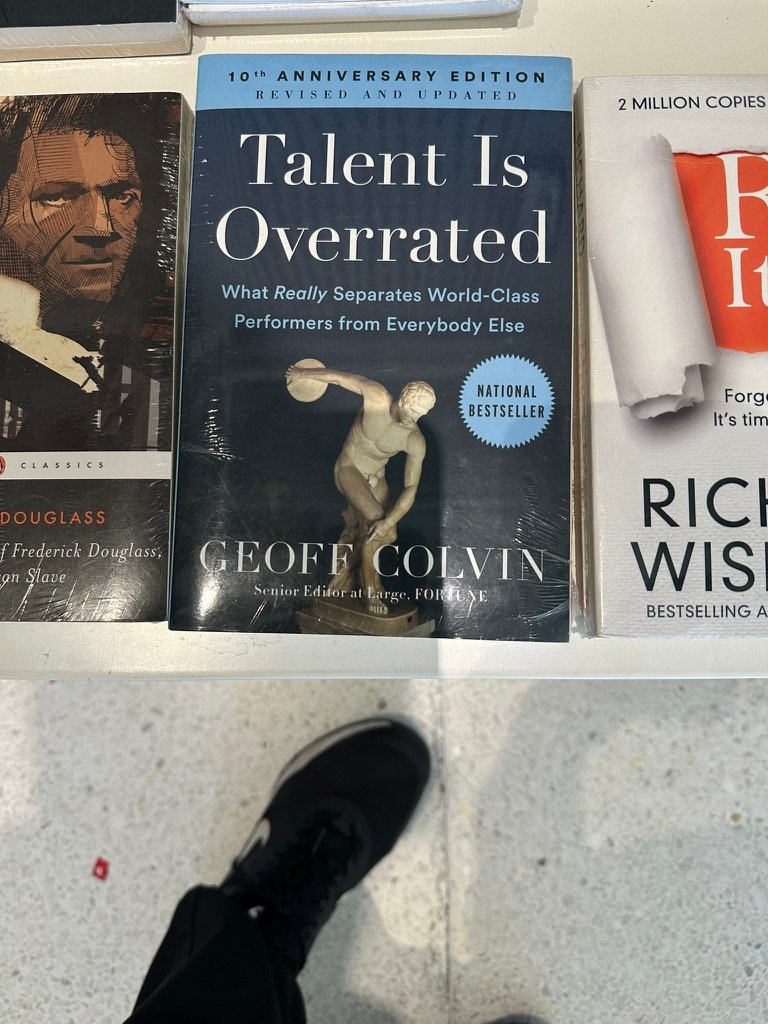
And of course Dad managed to find:
Talent Is Overrated.
😂
Even on holiday, Dad apparently cannot stay completely away from books about performance, business and ideas.
Elaine browsed her things.
Dad browsed his.
Nobody was telling us:
“Ten minutes left! Bus leaving!”
That’s one of the luxuries of traveling independently.
☕ Then We Did… Not Very Much
And this is important.
😂
We didn’t immediately leave the bookstore and attack the next attraction.
We stayed around.
Sat.
Looked.
Talked.
Rested.
Watched people.
Decided what we felt like doing next.
For some travelers, that may sound like wasting valuable Beijing time.
Dad sees it differently.
Beijing is not going anywhere.
And after enough trips, we’ve learned that enjoying a city isn’t necessarily proportional to the number of attractions you manage to squeeze into one day.
Sometimes slowing down is what allows you to notice the city at all.
🌤️ We Were Waiting for Beijing to Cool Down
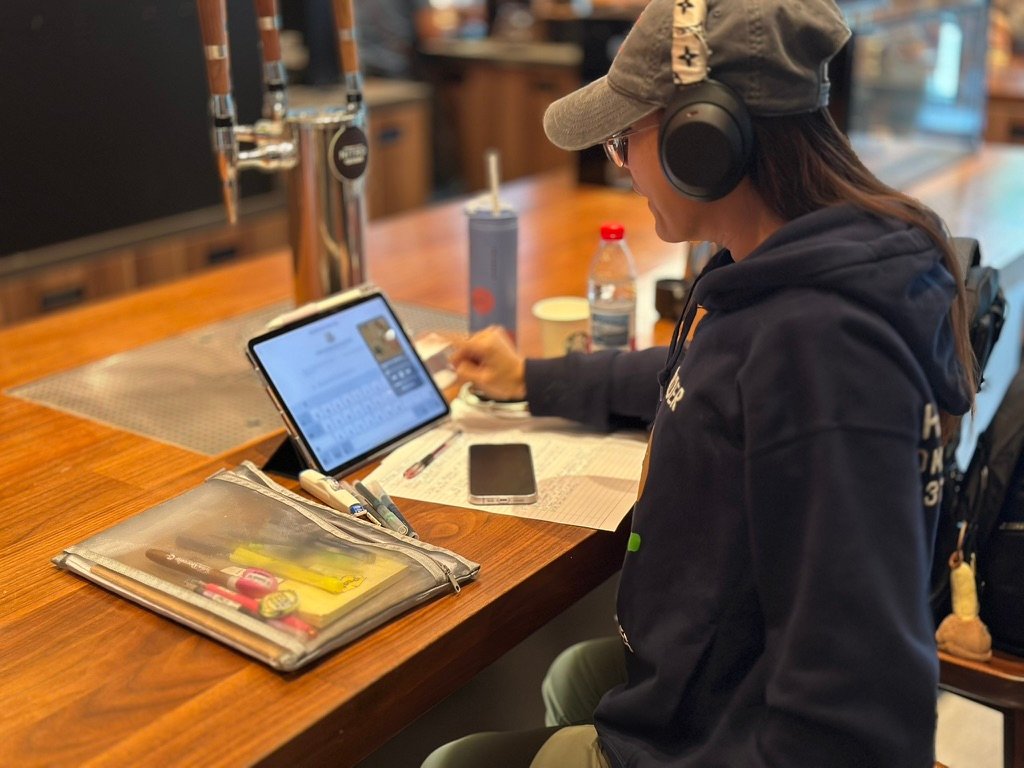
It was early September.
The middle of the day was still warm enough that Dad & Elaine were perfectly happy to spend part of it inside.
That gave our accidental “base camp” another advantage.
Why force ourselves to wander the streets during the warmer part of the day?
We had coffee.
Books.
Air-conditioning.
Comfortable seats.
And nowhere urgent to be.
So we waited.
Later in the afternoon, the temperature began to feel more comfortable.
And that was our signal.
Time to go back outside.
🚶 Now Let’s Go See Qianmen
We left our little oasis and headed back toward the streets.
But this time we weren’t going out to:
complete Qianmen.
We were going out to:
watch it.
The light was changing.
More people were appearing.
Families.
Visitors.
People eating.
People shopping.
People posing for photographs.
People doing absolutely nothing worth putting into a guidebook.
Perfect.
😂
Because that’s when Qianmen became most interesting to Dad & Elaine.
Not as:
“Beijing Attraction #7.”
But as somewhere we could simply spend an afternoon and evening.
🏯 What Are We Actually Looking At Here?
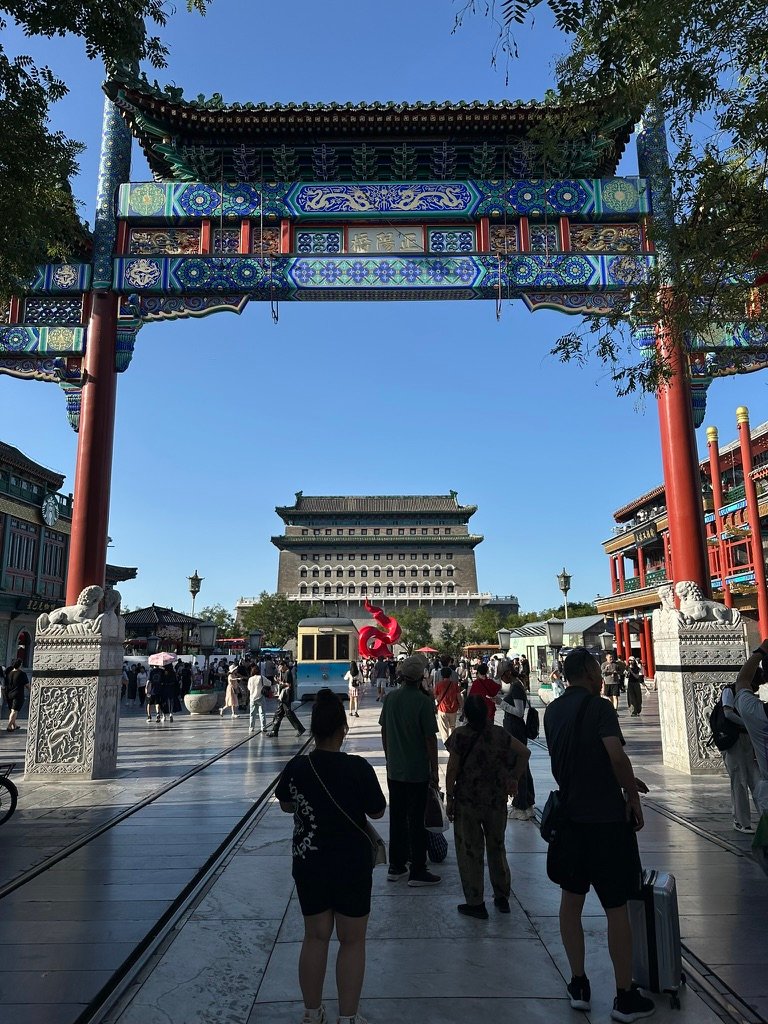
There are two things worth noticing in Dad’s photograph.
First, the colorful archway we’re standing beneath.
This is the Wupailou (五牌楼, Wǔpáilóu) — the ornamental gateway marking the Qianmen streetscape. The structure visitors see today is reconstructed, recalling an older archway that once stood here.
Second, look straight through the archway.
That huge grey fortress-like building in the distance is the Zhengyangmen Archery Tower (正阳门箭楼, Zhèngyángmén Jiànlóu).
That’s the important one for understanding Qianmen.
It formed part of the fortified southern entrance into old Beijing’s Inner City.
🏯 That Big Grey Building? It Was Part of Beijing’s Front Door
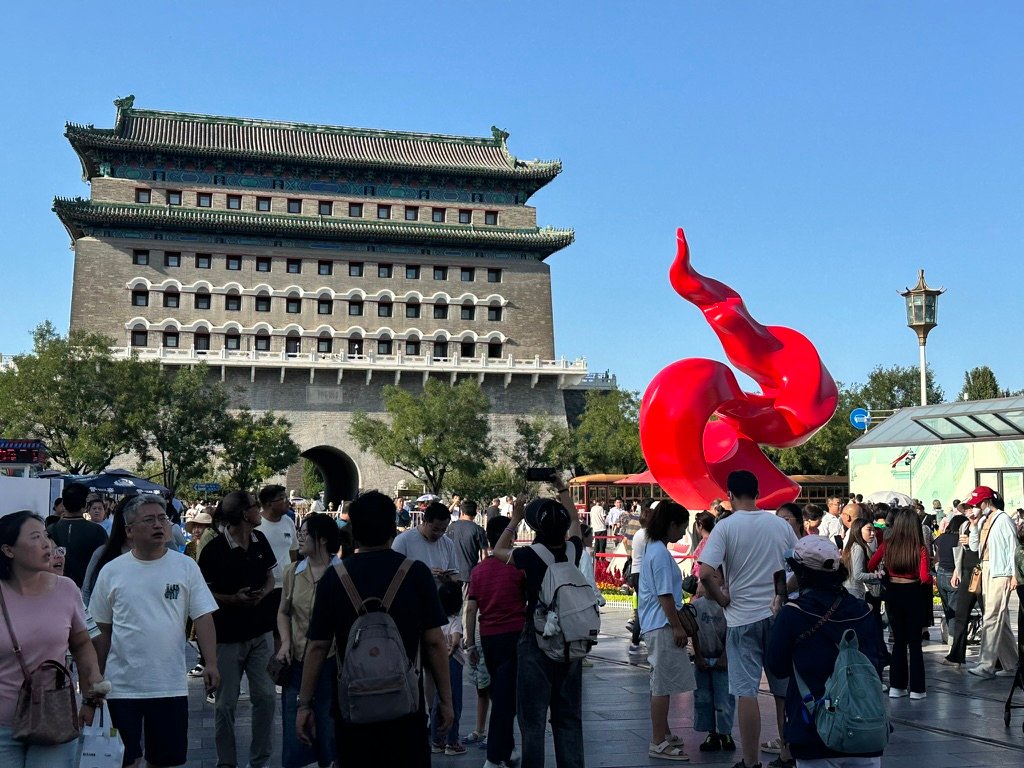
That enormous grey building dominates the view at the northern end of Qianmen.
It is the Zhengyangmen Archery Tower (正阳门箭楼, Zhèngyángmén Jiànlóu) — part of what was once one of the most important fortified entrances into old Beijing.
During the Ming (1368–1644) and Qing (1644–1912) dynasties, Beijing was surrounded by city walls. Zhengyangmen guarded the main southern entrance to the Inner City, on the great north–south route leading toward Tian’anmen and the imperial heart of Beijing.
The structure Dad photographed wasn’t simply built to look impressive.
It was defensive architecture.
Those rows of openings in the massive grey walls are a clue: this was an archery tower, designed as part of a fortified gate complex protecting the approach into the city.
Historically, there was more here than what we see today. The Archery Tower worked together with the main Zhengyangmen Gate Tower farther north, walls and an enclosed defensive space between them.
Much of that larger fortification disappeared as Beijing modernized.
But this huge tower survived.
So why do we call this place “Qianmen”?
Here’s the easy part to remember:
前 (qián) = front
门 (mén) = gate
Qianmen (前门) literally means “Front Gate.”
Zhengyangmen became popularly known as Beijing’s Front Gate, and the busy commercial district immediately south of it inherited the name.
That also helps explain why commerce flourished here.
For generations, people and goods moved through this important entrance to Beijing. Shops, restaurants, inns and businesses developed along the approach south of the gate.
Centuries later, Dad & Elaine were standing in almost the same geographic relationship:
great gate ahead → commercial street behind us → crowds everywhere.
😂
The walls have mostly disappeared.
The defensive purpose has disappeared.
But Qianmen is still full of people coming, going, eating, shopping and meeting.
Old Beijing gave the place its shape. Modern Beijing keeps filling it with life.
If you’d like to follow this history a little farther, Dad & Elaine have also written about returning to Qianmen and following its connections into Beijing’s history, our earlier journeys and Elaine’s childhood curiosity about China.
✉️ Elaine Found Another Place She Loves to Stop
History lesson over. 😂
We continued wandering down Qianmen Street.
Then Elaine spotted somewhere that usually slows her down:
China Post (中国邮政, Zhōngguó Yóuzhèng).
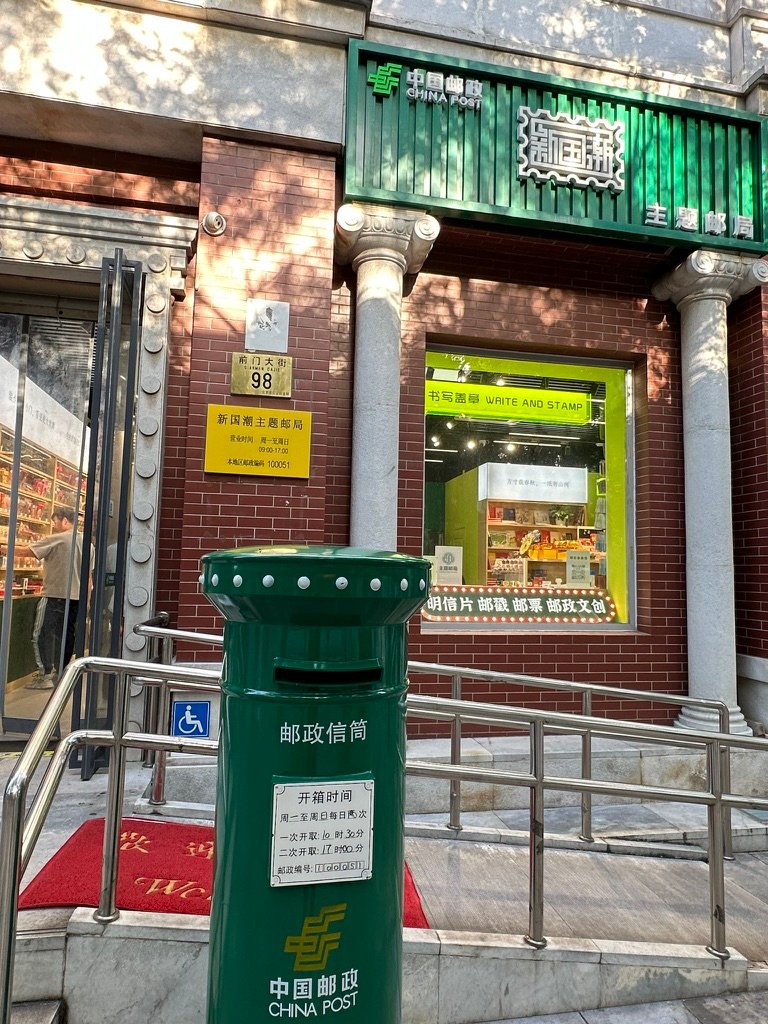
Elaine enjoys visiting China Post’s philately shops when we come across them.
Not because she urgently needs to mail Dad somewhere.
😂
She likes looking through the stamps, postcards and postal-themed souvenirs.
And some of these shops are much more fun than Dad once imagined a post office could be.
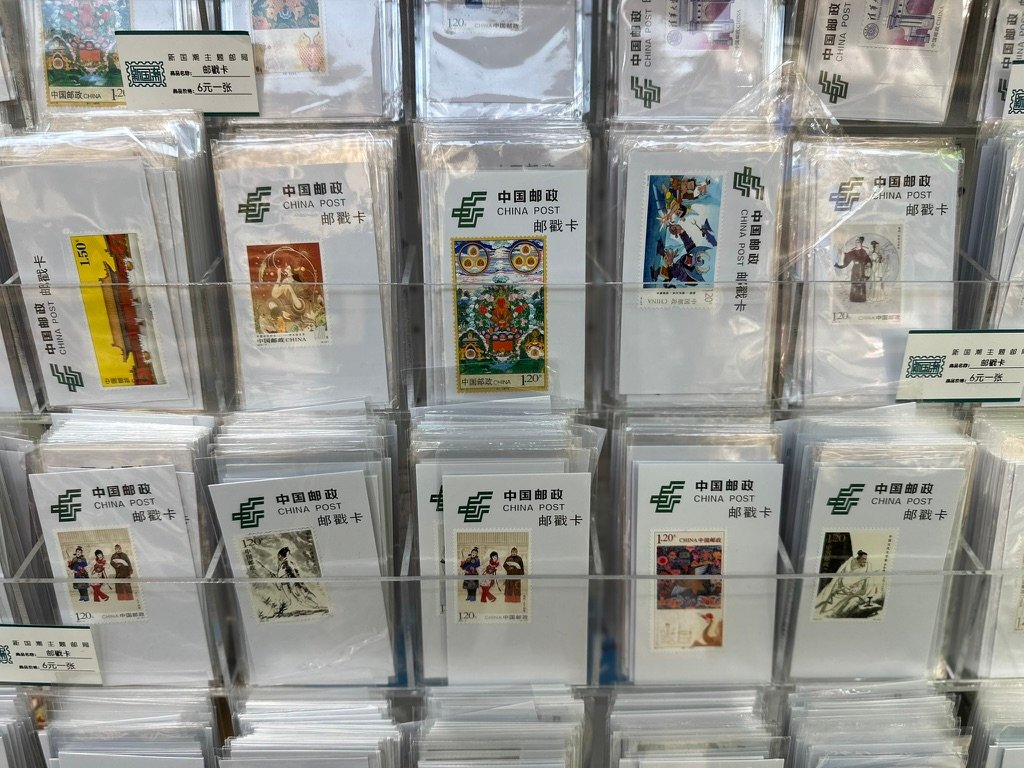
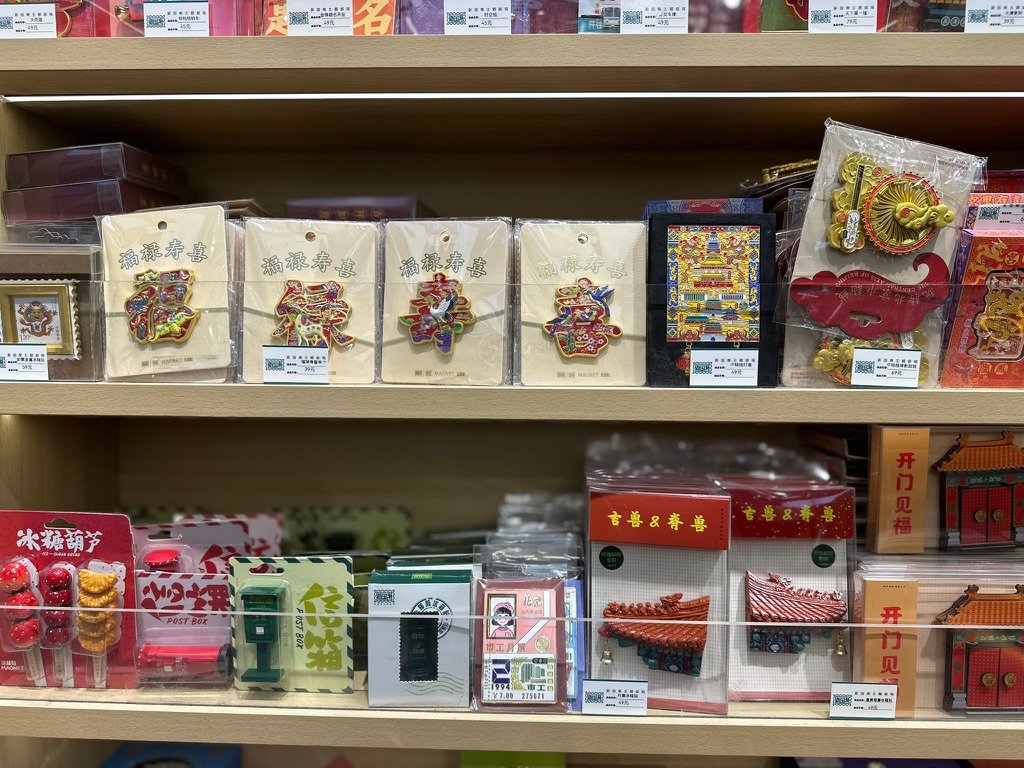
There were inexpensive little keepsakes featuring familiar Beijing imagery — the sort of small thing you can bring home without adding another kilogram to the suitcase.
But Elaine was interested in something else too.
🔖 Collecting a Little Piece of the Journey
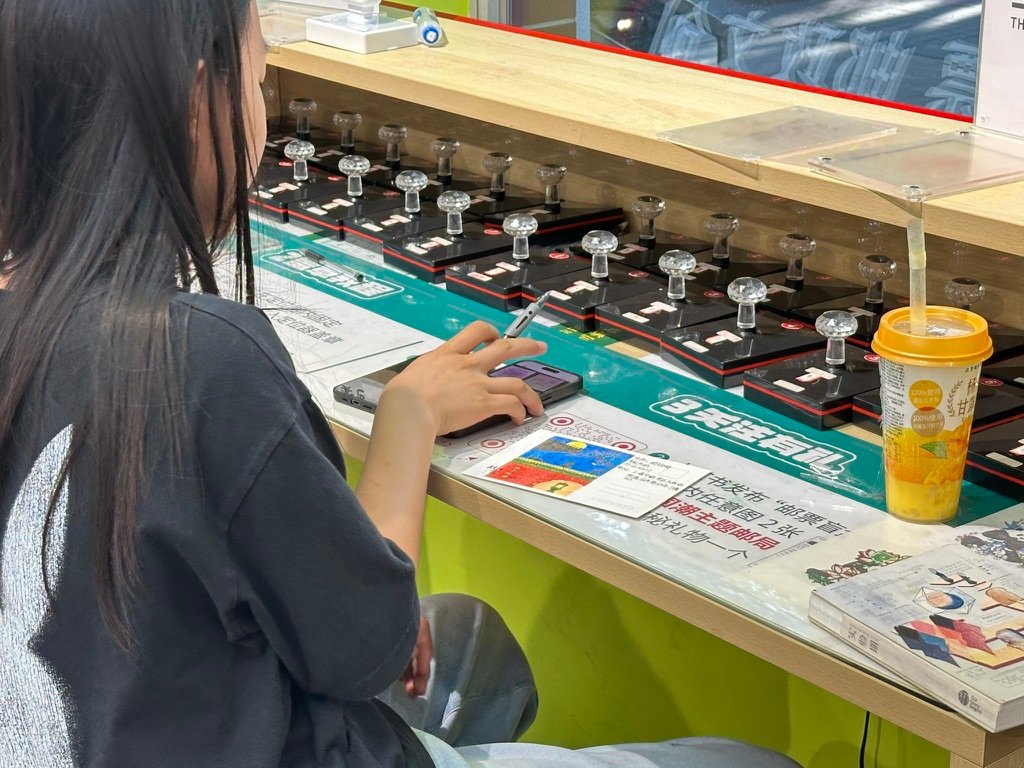
At the counter were a row of stamps.
Elaine could line up her card or paper…
stamp.
Move to another design…
stamp.
And gradually collect different impressions connected with the place.
It’s a small activity.
It doesn’t appear on Dad’s list of:
TOP 10 MUST-SEE BEIJING ATTRACTIONS!!!
😂
But that’s precisely the kind of thing Elaine enjoys discovering while we travel.
A photograph records what a place looked like.
A little stamped card records:
I was here. I found this. I made this while I was here.
And unlike another generic souvenir, she had participated in creating it herself.
📚 Apparently One Bookstore Wasn’t Enough 😂
Back out on Qianmen Street, Dad & Elaine found another bookstore.
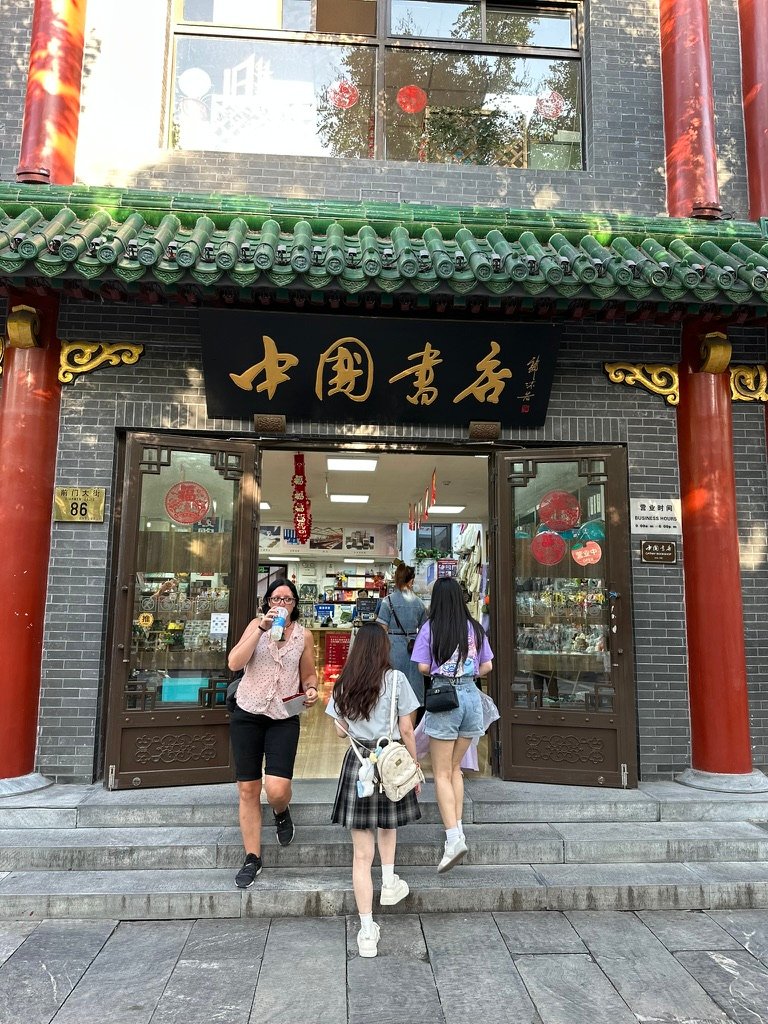
This one felt different from PAGE ONE.
Most of what caught our eye was Chinese-language material, but there were also plenty of things an international visitor could enjoy simply browsing:
Beijing travel books
illustrated guides
postcards and souvenirs
magnets
and small reminders of places we’d already visited.
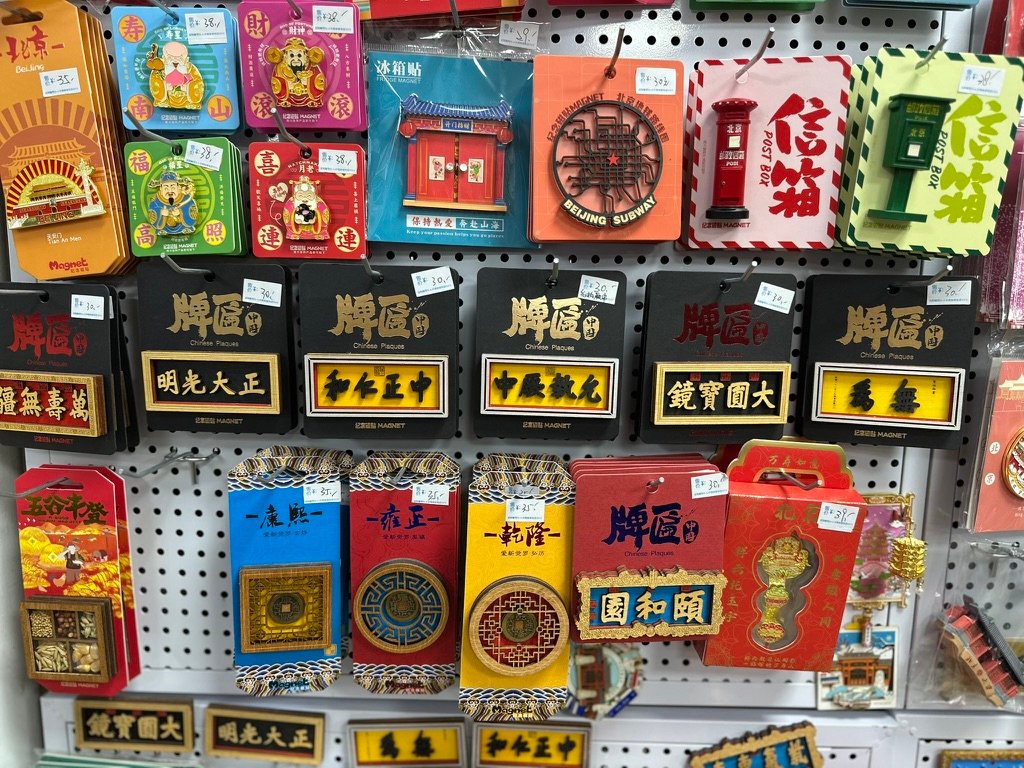
Dad particularly liked these.
Not because we needed another fridge magnet. 😂
But because even the souvenir shelf became a miniature Beijing:
Tian’anmen
Beijing subway
traditional plaques
old-style post boxes
and familiar architectural details.
Then we found something even more interesting.
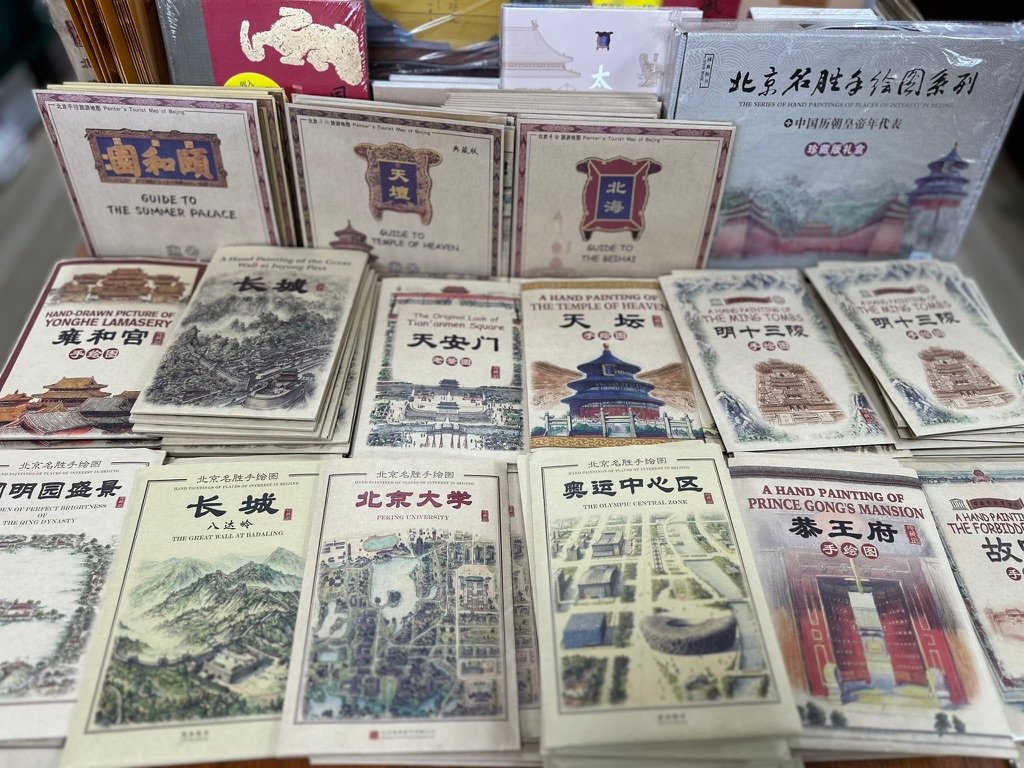
There were small illustrated guides to many of Beijing’s famous places:
Great Wall
Temple of Heaven
Summer Palace
Ming Tombs
Prince Gong’s Mansion
and more.
Dad & Elaine had already been to several of them.
So instead of looking at the books and thinking:
“Where should we go?”
we sometimes found ourselves thinking:
“Ahhh… we’ve been there.”
That’s another small pleasure of returning to a city.
On your first trip, the names are destinations on a map.
After a while, some of them become memories.
❤️ Then Dad Found Something He Remembered
And then Dad stopped.
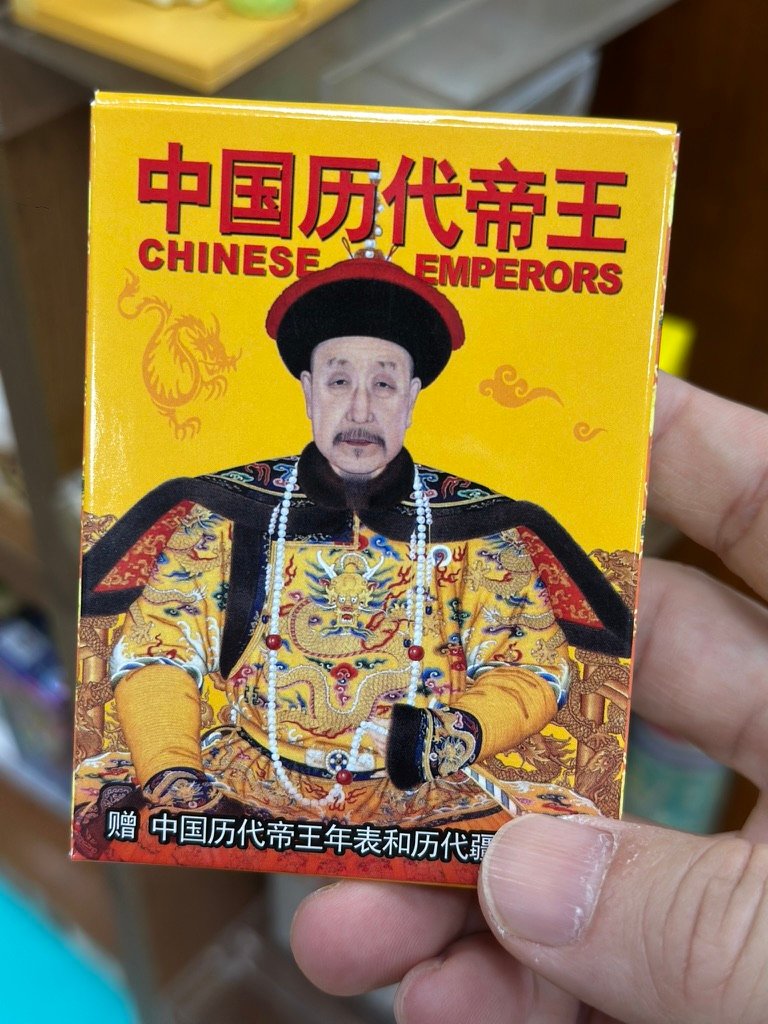
Sitting among the books and souvenirs was this little box:
中国历代帝王 — Chinese Emperors.
Dad knew it immediately.
Because more than a decade earlier, during our family’s first trip to Beijing, Dad had bought this same set of cards for Elaine.
She was eight years old.
At the time, it was simply a small souvenir for a little girl.
But Dad remembers what happened afterward.
Elaine started looking through the cards.
Who was this emperor?
What did he do?
Why was he famous?
One emperor led to another.
One question led to another.
And somewhere along the way, China stopped being only somewhere our family had visited.
Elaine became curious about it.
That little box eventually opened much bigger questions about China’s emperors, dynasties and history — rabbit holes Dad & Elaine now follow much more deeply in our DEEP China stories.
🐇 One Little Box Opened a Very Long Rabbit Hole
Looking at the same cards again in Qianmen all these years later felt strangely emotional for Dad.
Because by then we knew where that childhood curiosity had taken us.
We had returned to Beijing.
Then returned again.
We traveled farther across China.
We visited places connected with emperors, dynasties and stories that eight-year-old Elaine had once encountered only as names and pictures.
And now here we were:
Dad and a grown-up Elaine, back in Beijing, standing in front of the same little box of emperor cards.
Funny how journeys begin.
Sometimes it’s a famous monument.
Sometimes it’s a history lesson.
And sometimes…
Dad buys his eight-year-old daughter a cheap box of cards.
You don’t realize at the time that you’ve just opened a door.
❤️
🐇 Then Another Childhood Memory Appeared
A little farther along Qianmen, Dad & Elaine saw a rabbit.
Not a Beijing rabbit this time.
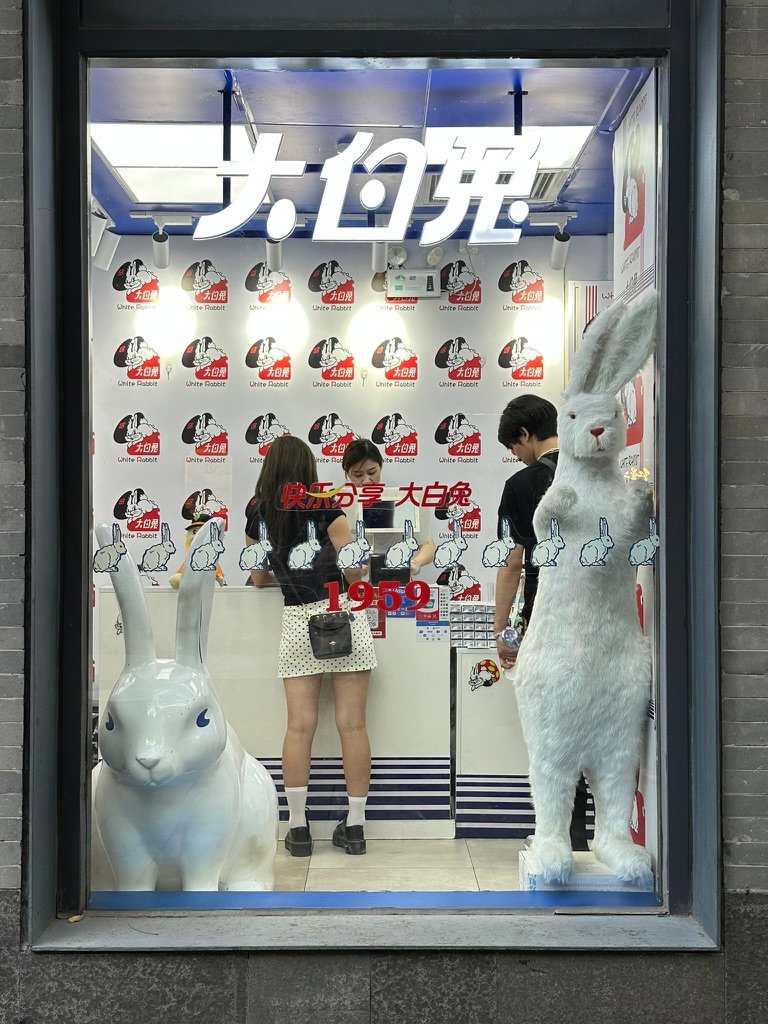
大白兔奶糖 (Dàbáitù Nǎitáng) — White Rabbit milk candy.
For many international visitors, it may simply look like another colorful Chinese sweet shop.
But show that rabbit to generations of Chinese people and overseas Chinese families…
and you may get a very different reaction:
“I know that!”
😂
White Rabbit milk candy was launched in Shanghai in 1959, and over the decades became one of China’s best-known traditional candy brands.
The classic candy is simple:
milky, chewy and sweet, wrapped in that familiar red-white-blue paper.
And inside the wrapper is another little surprise many people remember from childhood:
a thin edible rice-paper layer around the candy.
Dad knew White Rabbit too.
For many overseas Chinese families, Chinese foods and sweets didn’t necessarily stay inside China.
They traveled.
A packet brought home.
Something bought from a Chinese grocery shop.
Something grandparents kept.
Something children were given.
Different country.
Same rabbit.
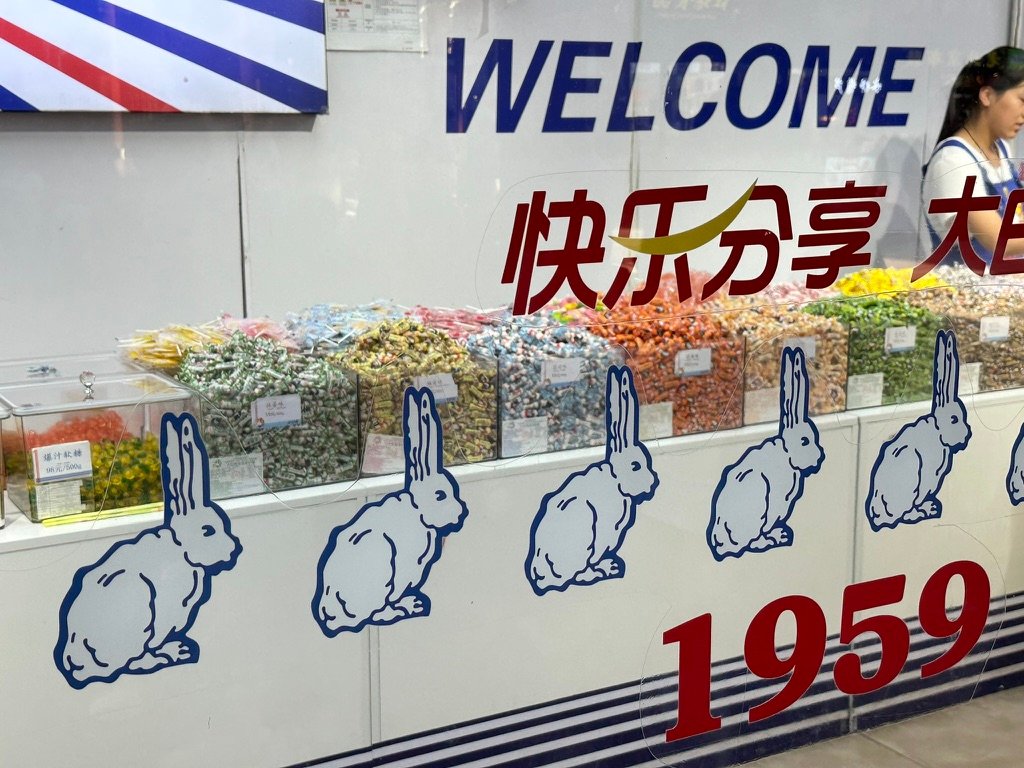
That’s why brands like this are interesting when we travel.
To Dad & Elaine, the shop wasn’t an attraction.
We didn’t come to Qianmen because:
“Today we must visit White Rabbit.”
😂
We simply walked past it.
But an international traveler might see:
Chinese candy.
Someone else might see:
childhood.
And that reminded Dad of what Elaine had noticed earlier about China’s old local brands.
Sometimes food carries a city.
Sometimes it carries a generation.
And sometimes it travels far enough that even people who grew up outside China recognize the taste.
Qianmen had given us another little reminder:
You don’t always need a museum to bump into somebody’s history.
Sometimes it’s sitting in a sweet wrapper.
☕ Wait… Why Is Everyone Crowding Around This Coffee Shop?
We kept walking and then Dad noticed a crowd.
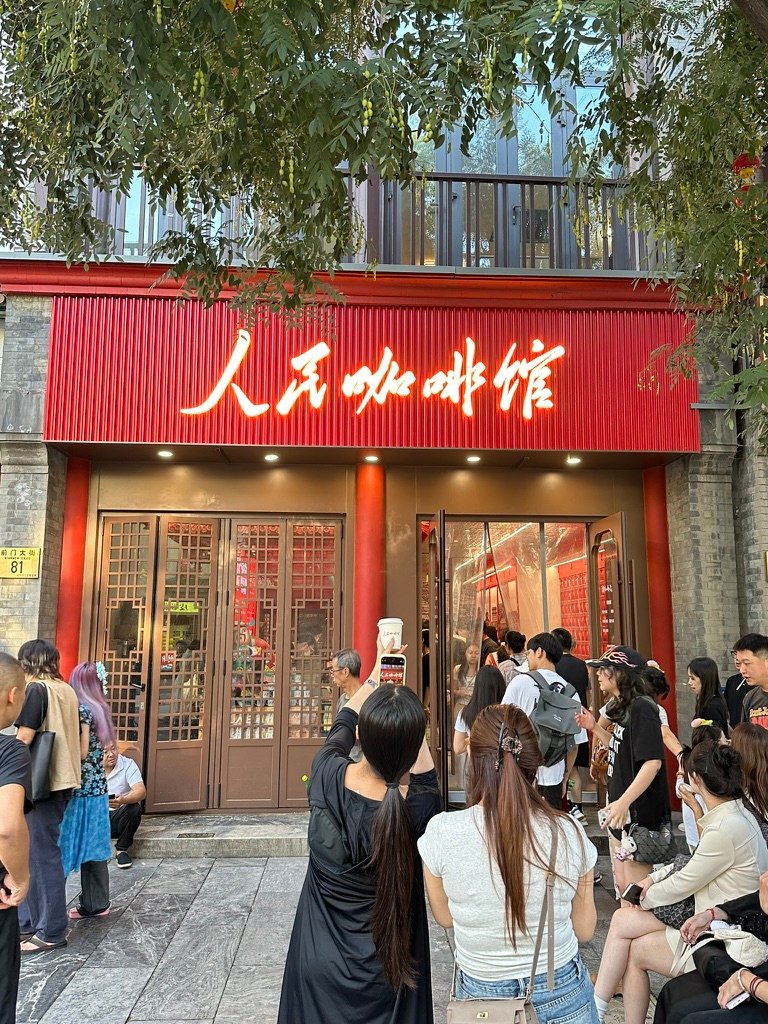
There were young people standing outside.
People going in.
People coming out carrying coffee.
Phones everywhere.
Dad became curious.
What’s going on in there?
So Dad went inside.
😂
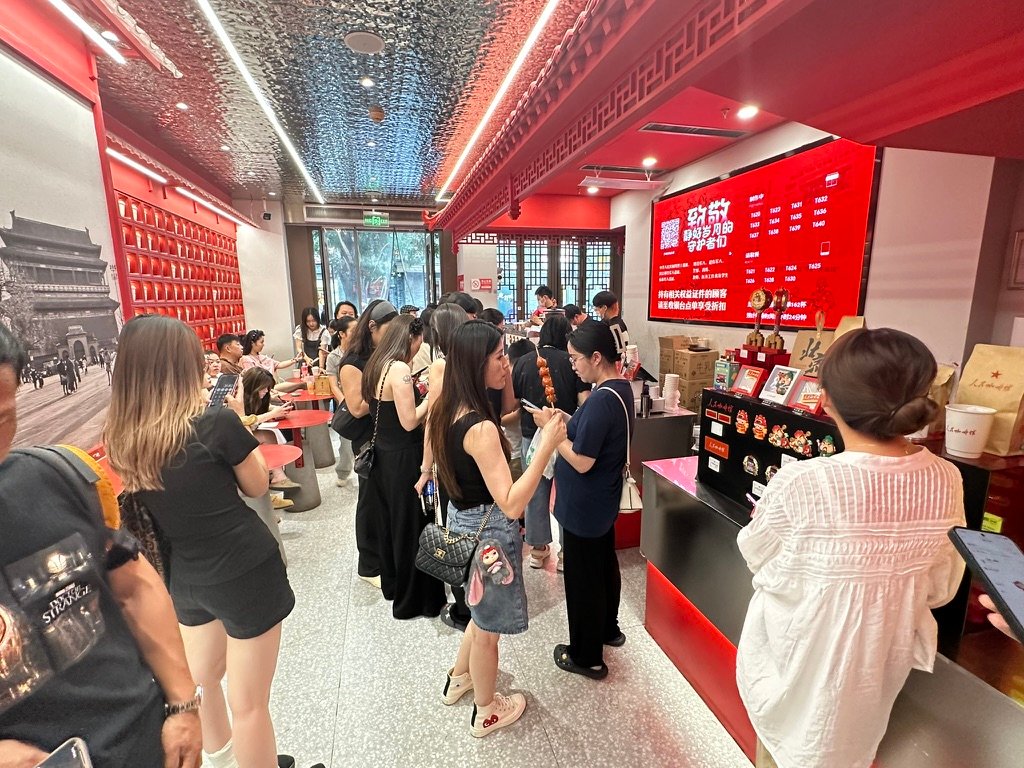
The answer:
more people.
The place was packed.
This was People’s Coffee House (人民咖啡馆, Rénmín Kāfēiguǎn), which opened its Qianmen shop in 2024.
But what interested Dad wasn’t simply that young Chinese people were drinking coffee.
We’d already spent our morning drinking coffee ourselves.
It was how Chinese the experience had become.
Coffee Came In. China Started Playing With It.
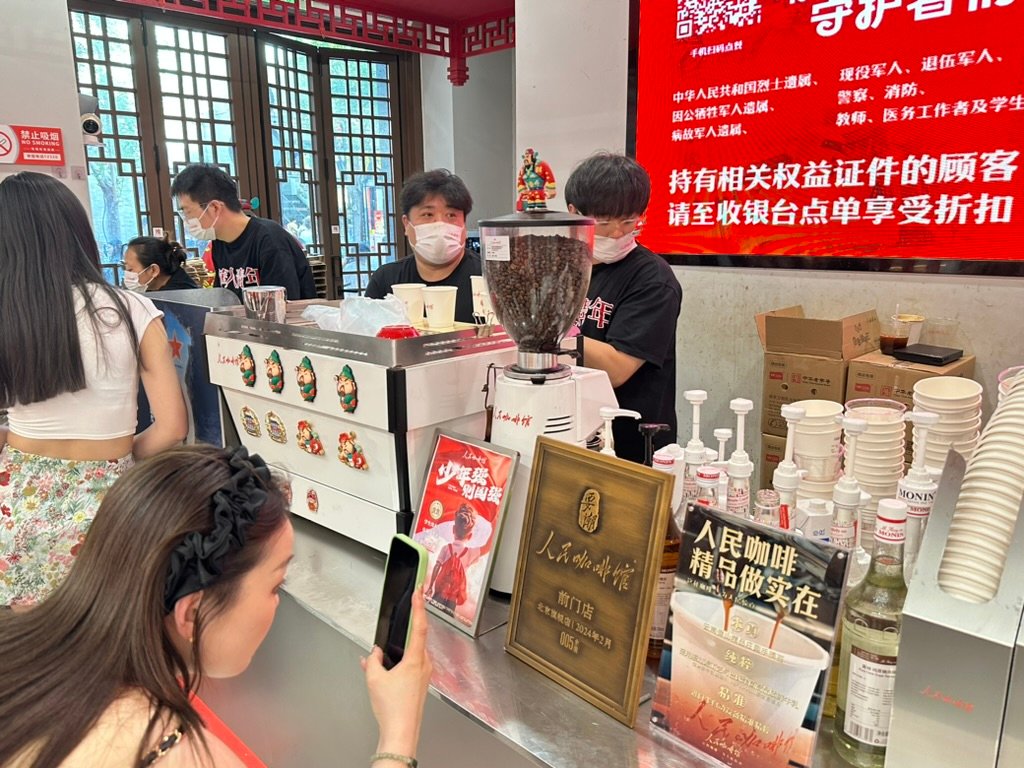
The shop was bright red.
Five-pointed stars.
Chinese imagery.
Beijing-inspired souvenirs.
Even the coffee itself had become part drink, part photograph.
Look at the cups Dad photographed.
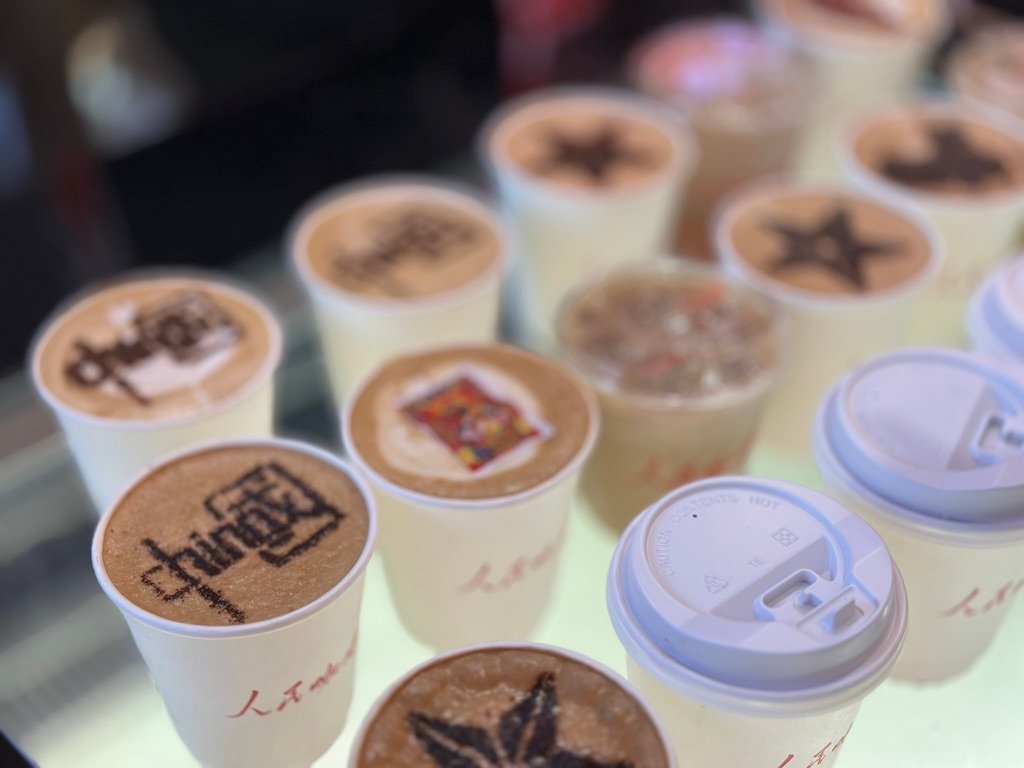
Some had Chinese characters.
Some had stars.
Some carried auspicious designs.
And customers weren’t simply drinking them.
They were holding the cups up…
phone out → photograph → another photograph → then drink.
😂
Dad suddenly understood why there had been a crowd outside.
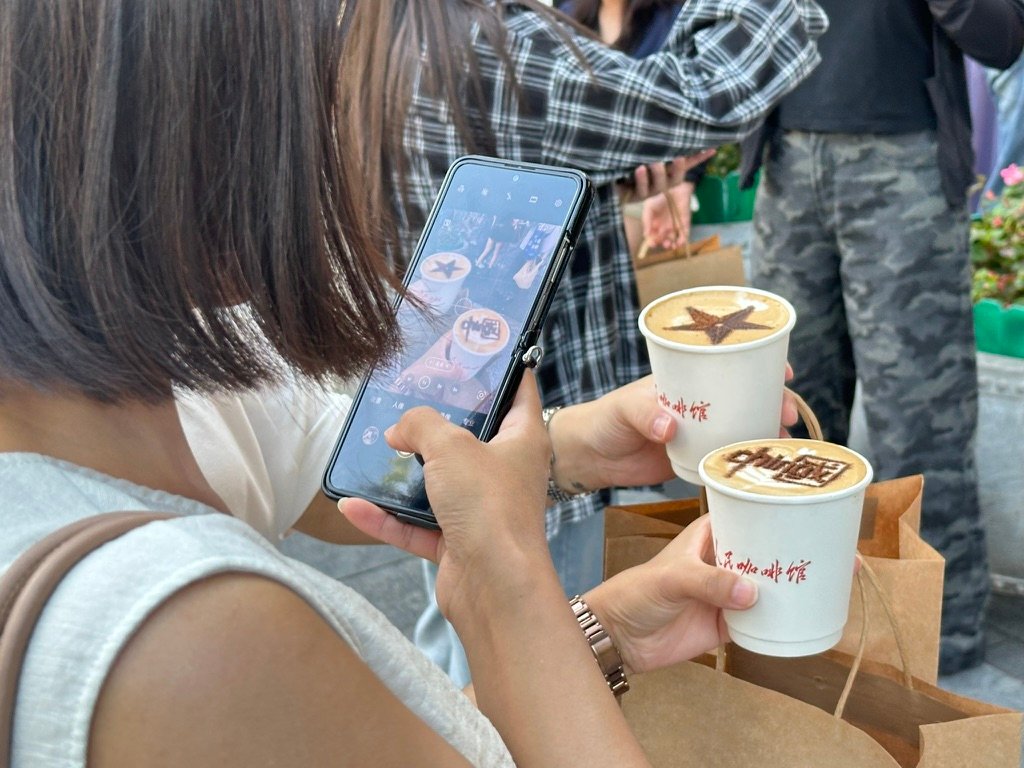
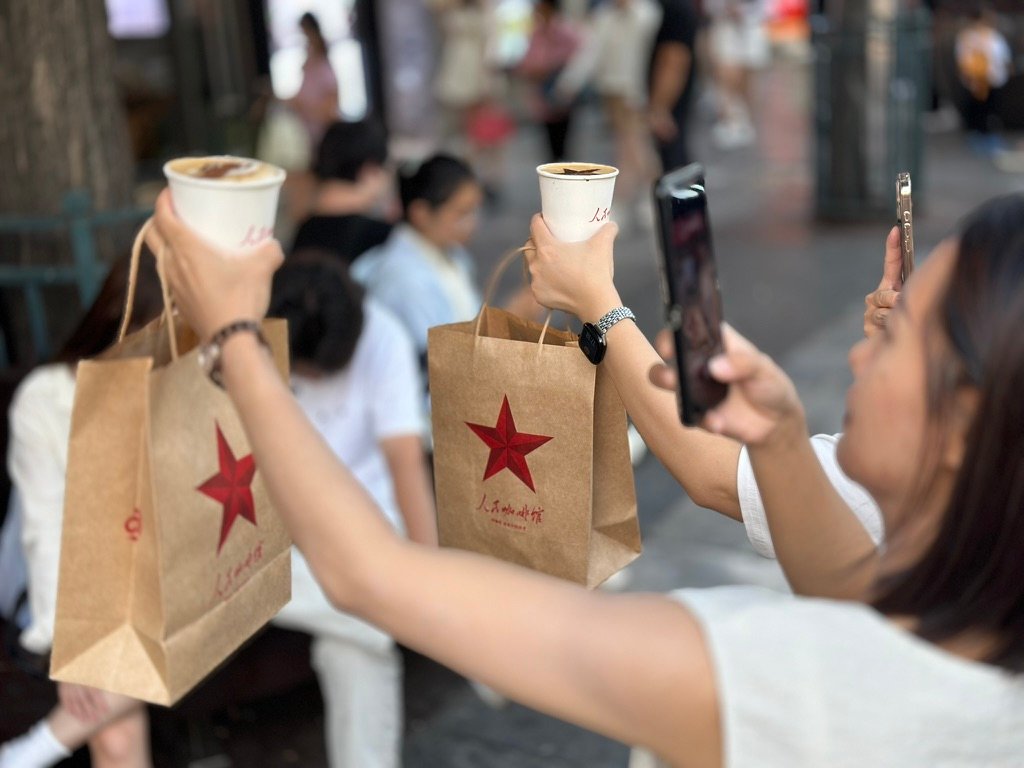
This wasn’t just:
“Let’s get a coffee.”
It was also:
“Let’s get THAT coffee — and take a picture with it.”
☕ Starbucks in the Morning. This in the Afternoon.
And that’s what made Dad smile.
That morning, only a short walk away, we’d made a huge Starbucks Reserve our quiet little oasis from busy Qianmen.
A global coffee brand.
Familiar.
Comfortable.
Then later the same day, we encountered this.
Coffee again.
But now wrapped in:
Chinese visual culture
local humor
auspicious symbols
souvenirs
social-media 打卡 culture
and a very different atmosphere.
China hadn’t merely adopted coffee.
It was beginning to make the coffee experience its own.
👀 Maybe That’s the More Interesting China Story
Coffee culture in China isn’t simply:
West → China.
Walk around cities today and you’ll find international chains alongside fast-growing Chinese coffee brands, independent cafés and shops experimenting with very Chinese flavors and imagery.
And Qianmen itself has become a good place to see that mixture. Recent reporting describes dozens of different cafés in and around the historic street.
Old commercial street.
Young customers.
Smartphones.
Coffee.
Chinese motifs.
Everyone photographing everything.
😂
That’s modern China happening right in front of us.
Dad hadn’t planned to research Chinese coffee culture that afternoon.
He’d simply wondered:
“Why are all those young people standing outside?”
Sometimes that’s enough reason to walk in.
🍜 6:00 PM — Beat the Dinner Crowd 😂
After wandering for most of the afternoon, Dad & Elaine made another very practical decision:
eat early.
Qianmen was already busy, and we knew what would happen once the normal dinner crowd arrived.
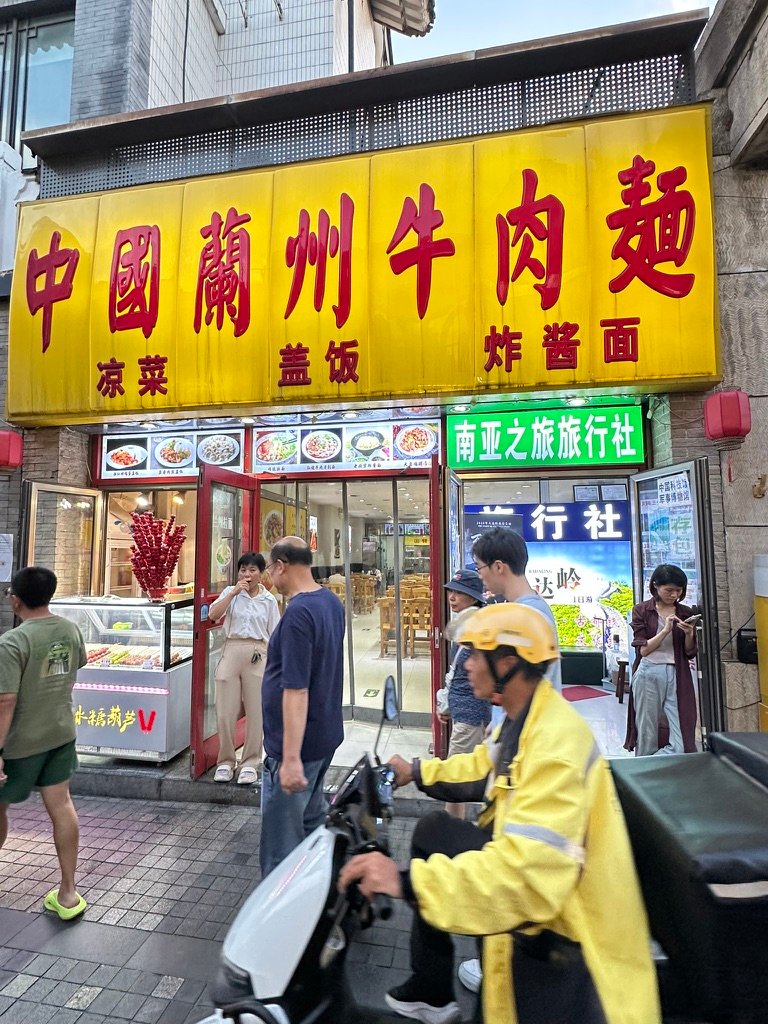
So at around 6:00 PM, we slipped into a Lanzhou beef noodle shop.
Nothing fancy.
No famous restaurant reservation.
No “must-eat Beijing restaurant” checklist.
Just somewhere that looked straightforward for dinner.
Dad ordered a bowl of clear-broth noodles (清汤面, qīngtāng miàn).
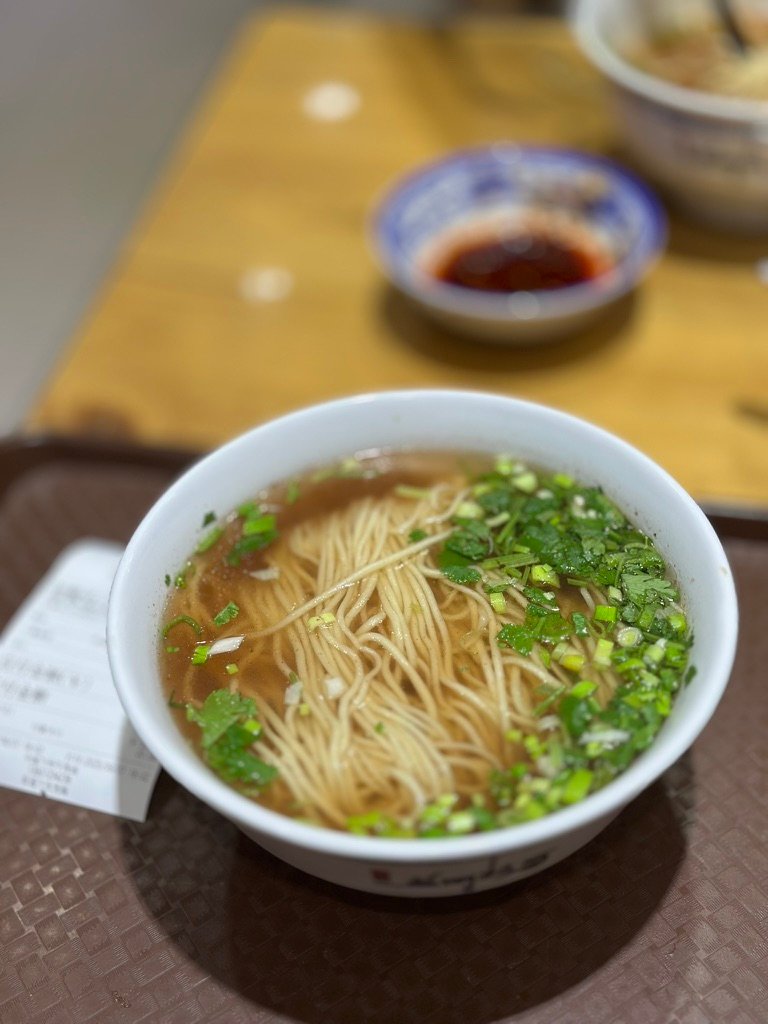
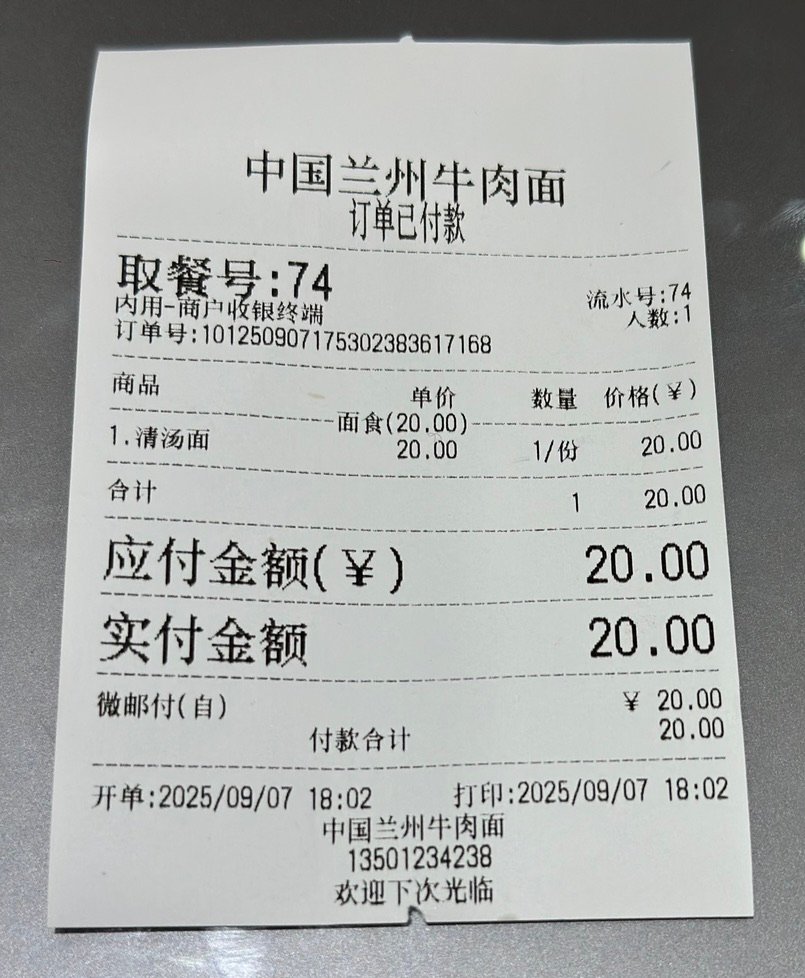
And this time Dad has documentary evidence. 😂
One little travel habit that has worked well for us in busy Chinese tourist areas is:
if you’re hungry anyway, eat before everyone else does.
At around 6 PM, we could sit down, eat slowly and avoid turning dinner into another queue.
We weren’t looking for a culinary event.
We needed:
a seat + a hot meal + rested legs.
RMB 20 did the job nicely.
And when we stepped back outside…
Qianmen was beginning to change again.
The afternoon light was fading.
More people were arriving.
The lights were coming on.
Dad & Elaine had eaten.
Our legs had recovered.
Now we could simply watch Qianmen turn into evening Beijing.
📷 Photo Note — Coffee Beside Old Beijing
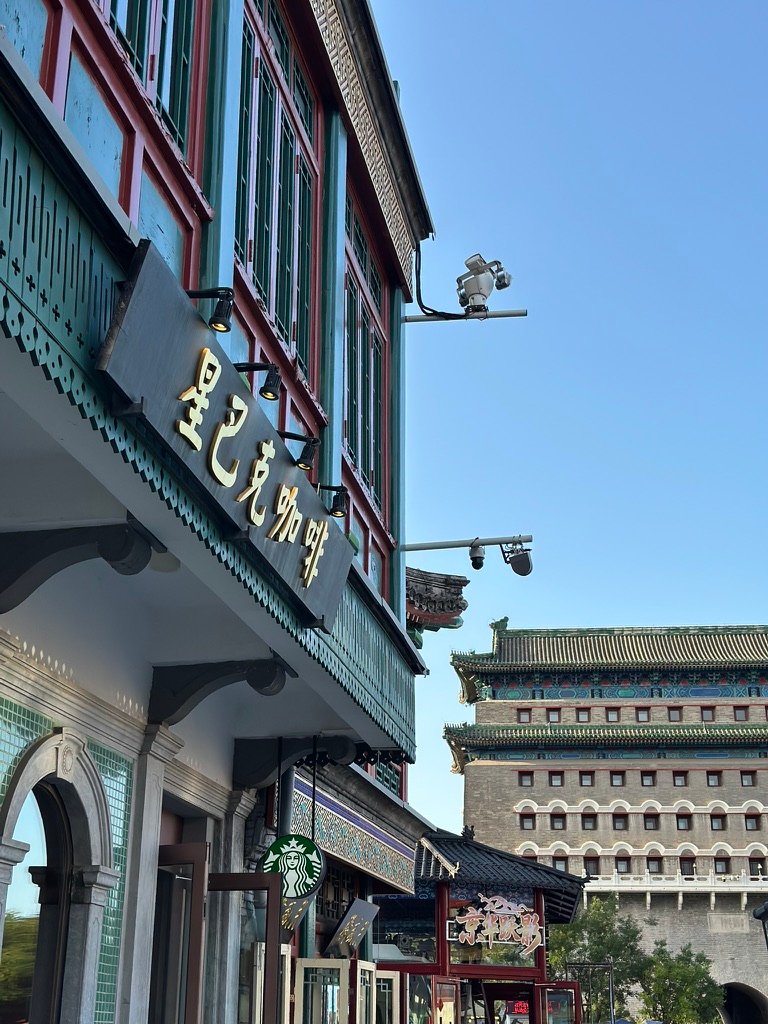
Dad liked this view because it captured something we’d been noticing all afternoon.
Old Beijing and modern Beijing aren’t always separated.
Here was an international coffee brand operating from a traditional-style historic Qianmen building.
And almost immediately behind it stood the huge defensive tower we’d been looking at earlier — part of the fortified entrance to old Beijing.
One frame:
coffee culture → restored commercial street → centuries-old city gate.
That mixture is very Qianmen.
And after dinner, Dad & Elaine weren’t finished with it yet.
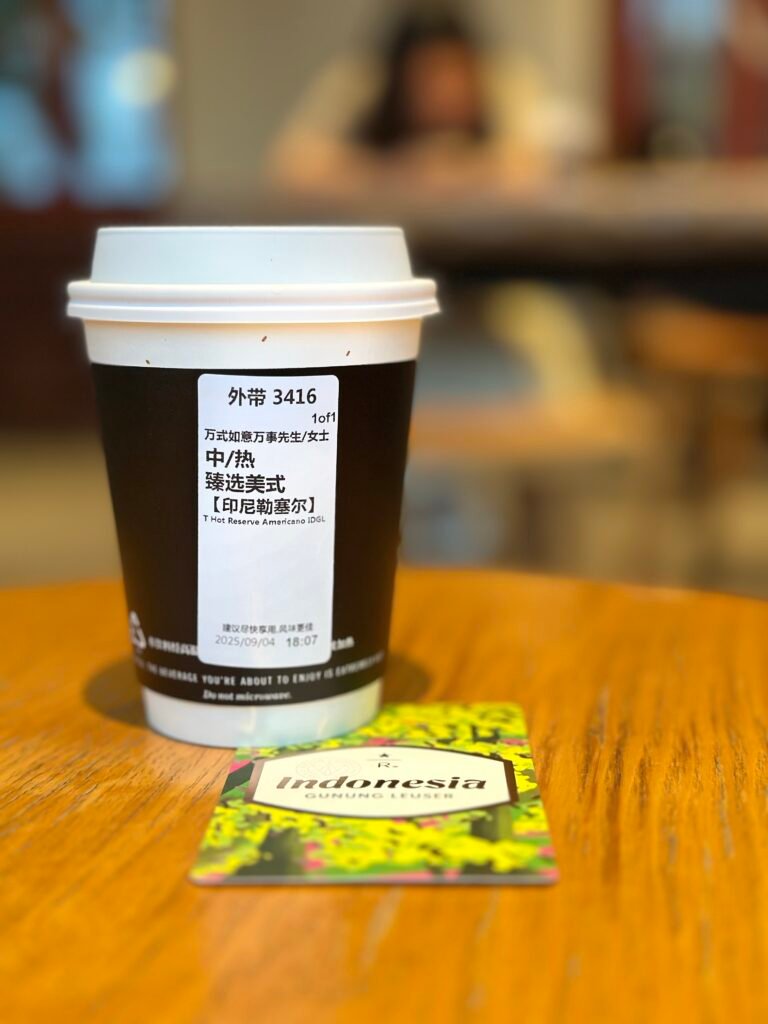
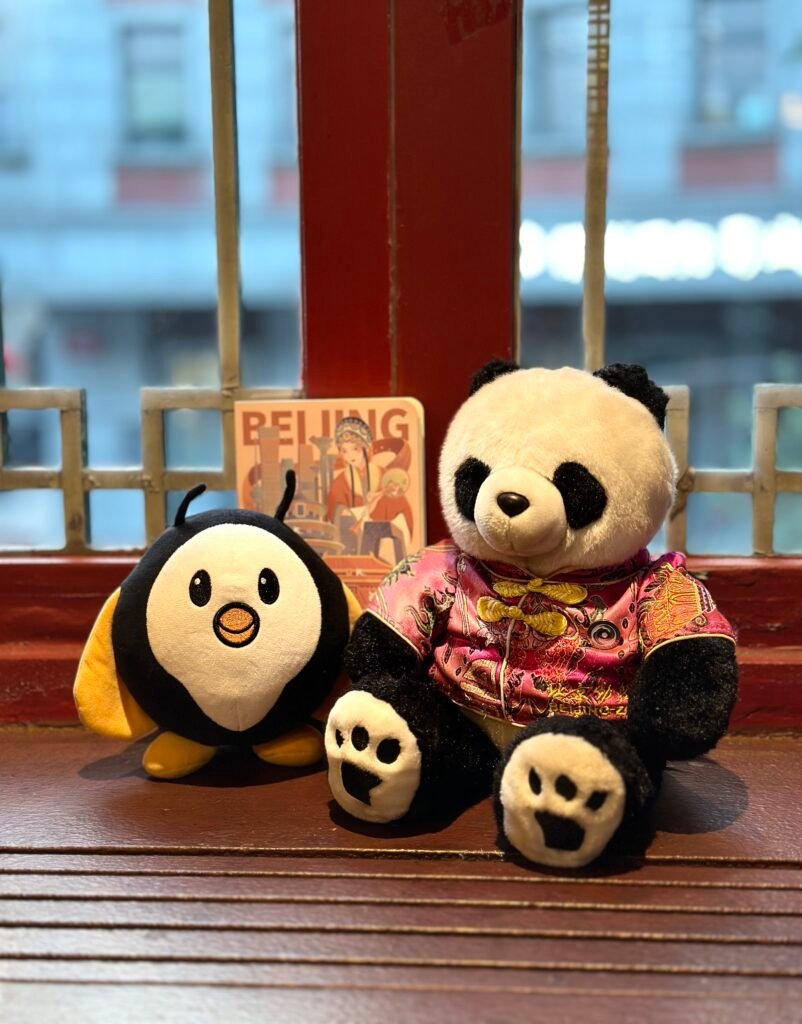
We went inside for one more coffee.
And finally let Panda and Cheers out of the bag. 😂
🌙 When the Sun Went Down, Qianmen Changed Again
We finished our coffee and stepped back outside.
By now, the sun had gone down.
And Qianmen felt different.
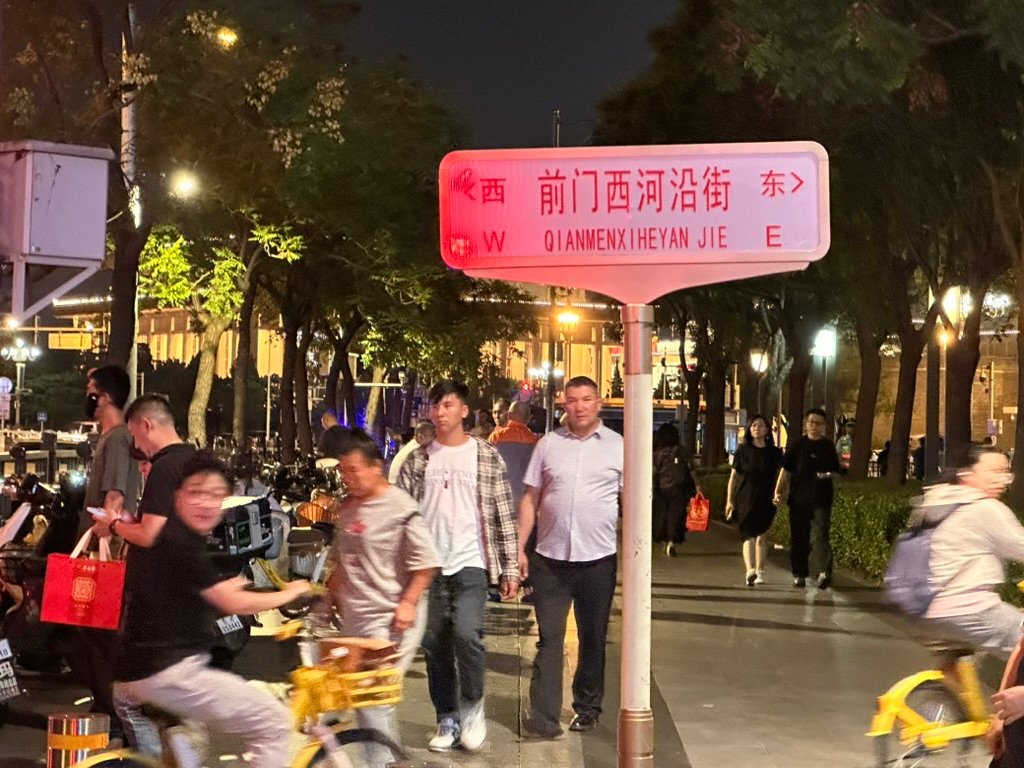
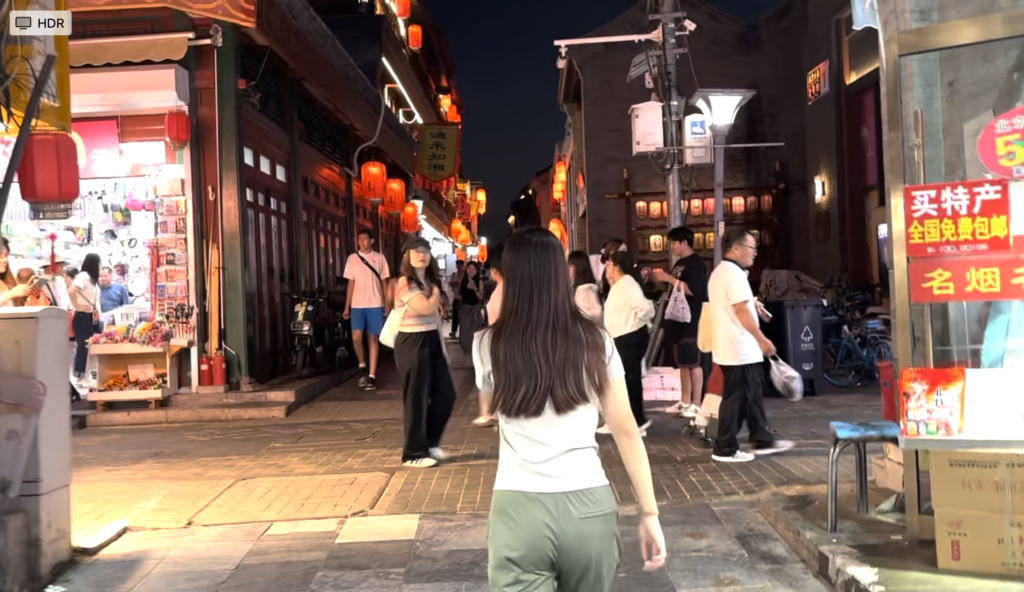
Red lanterns were glowing above the lanes.
Small shops spilled light onto the pavement.
The daytime heat had eased.
People were still eating, shopping, taking photographs and wandering through the smaller streets.
And suddenly there was even less reason to hurry.
Dad & Elaine kept walking for a while — through Qianmen and into nearby Dashilan (大栅栏, Dàshílàn).
But we’ve already told those nighttime stories separately.
🌙 Continue walking with us:
A Night Stroll Along Qianmen Street (前门大街) — One of Beijing’s Famous Old Commercial Streets
🏮 Then turn into Dashilan with Elaine:
Elaine’s Night Stroll Through Beijing’s Oldest Commercial Street: Dashilan (大栅栏)
So we’ll leave the nighttime wandering to those stories.
This story was really about something else:
what happened when Dad & Elaine gave Qianmen an entire day — and didn’t try very hard to “do” anything. 😂
🤝 One Last Little Qianmen Moment
And somewhere during our evening wandering, we stopped again.
Not for a shop.
Not for food.
Not for another coffee. 😂
A couple of international travelers were having trouble with something on their phones.
Elaine stopped to help.
A local Beijinger joined in too.
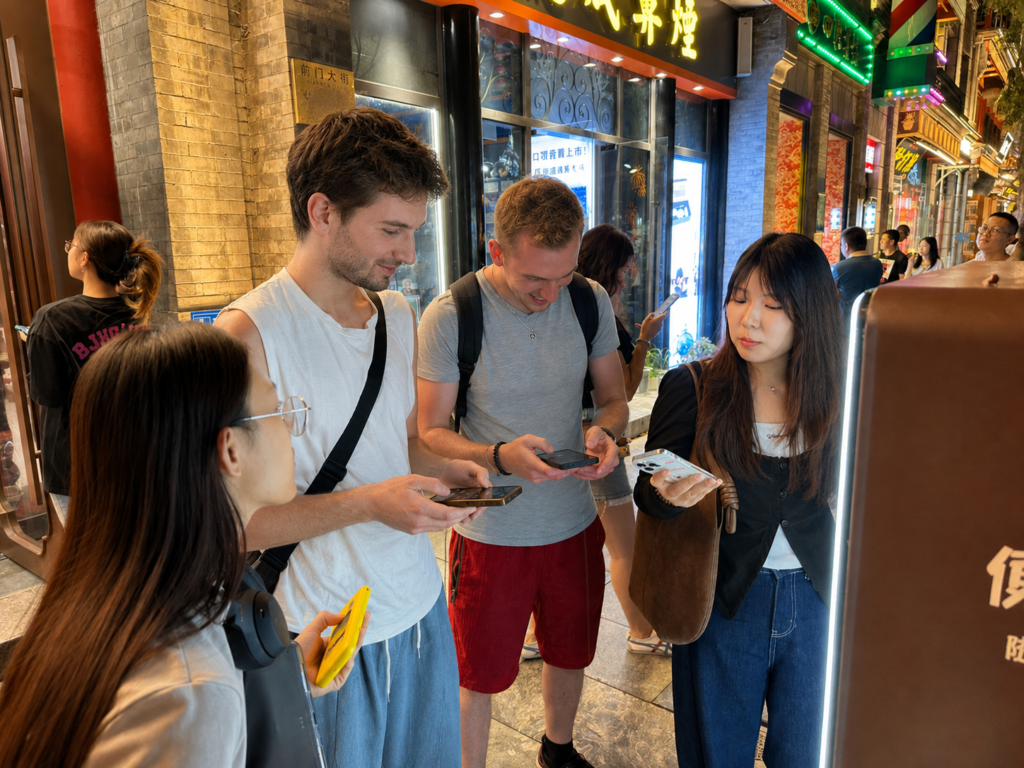
For a few minutes, there were people from different places standing together on a busy Beijing street, staring at the same few phone screens and trying to work out the problem.
Dad stood nearby and took this photograph.
We don’t even remember this as some big dramatic travel incident.
Someone needed help.
So people stopped and tried to help.
That’s all.
But perhaps that’s also why Dad likes this photograph.
We had spent the whole day noticing Qianmen’s buildings, shops, old brands, books, food and little pieces of history.
And near the end of it, the thing Dad photographed was simply:
people helping other people.
Then everyone continued on their way.
☕ We Didn’t Really “Do” Qianmen
Looking back, Dad & Elaine didn’t accomplish very much that day.
😂
We didn’t have a checklist.
We didn’t rush from one famous sight to another.
We found a quiet coffee shop and stayed longer than planned.
Elaine browsed bookstores.
We wandered into China Post.
Dad unexpectedly found the same little set of emperor cards he’d bought for eight-year-old Elaine more than a decade ago.
We noticed old childhood sweets, watched young people photograph their very Chinese-looking coffees, ate a simple RMB 20 dinner, let Panda and Cheers out of the bag, and eventually watched daylight disappear over Qianmen.
Somewhere in between, we learned a little more about the old gate that gave this neighborhood its name.
None of those things, by themselves, sounds like a big travel experience.
Together?
They became our day in Beijing.
❤️ Maybe Leave Some Empty Space in Your China Itinerary
First-time travelers understandably arrive in Beijing with a long list:
Forbidden City.
Great Wall.
Temple of Heaven.
Summer Palace.
You should see them.
But Dad would leave a little empty space too.
A morning.
An afternoon.
Maybe even an entire day when you don’t have to reach the next attraction by 3:30 PM.
Pick a neighborhood.
Walk.
Sit down when you’re tired.
Follow your daughter into another bookstore.
Go inside somewhere simply because you’re wondering why everybody else is going inside.
Look at things that aren’t in your itinerary.
And stay long enough to watch the same street change from morning to afternoon to night.
Because sometimes the China you remember most isn’t the China you planned to see.
It’s the China you had enough time to notice.