Some restaurants charge extra for the view.
Dad & Elaine found another version in China.
Our table was tiny.
Our chairs couldn’t be moved.
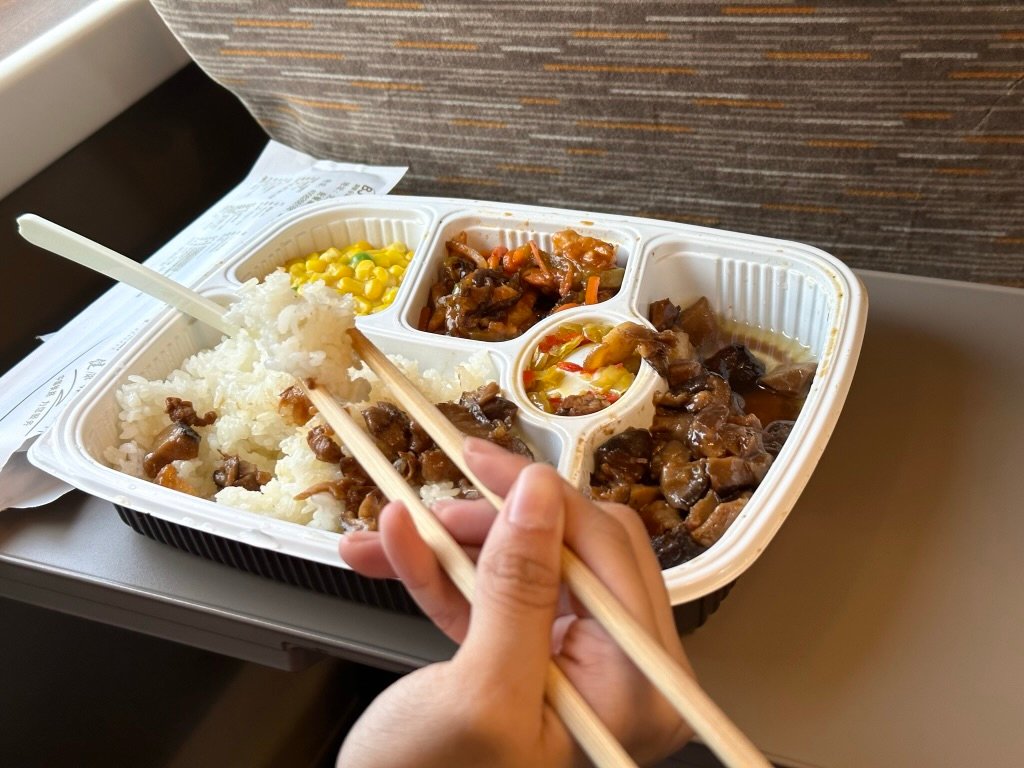
Lunch came in a plastic box.
And Dad remembers paying:
more than RMB 50. 😬
Expensive for a simple meal in China?
Yes.
But our restaurant had one rather unusual feature.
It was traveling across China at almost:
200 km/h. 😂
☕ Our Meal at a Glance
Where: On a China high-speed train
高铁 (gāotiě): high-speed rail
What we ate: Chinese-style boxed meal
盒饭 (héfàn): boxed meal
Dad’s remembered price: RMB 50+
How Elaine ordered: QR code on the seat armrest
Speed Dad photographed: 199 km/h
Best part: The view kept changing
🚄 Our Restaurant Was Moving at 199 km/h
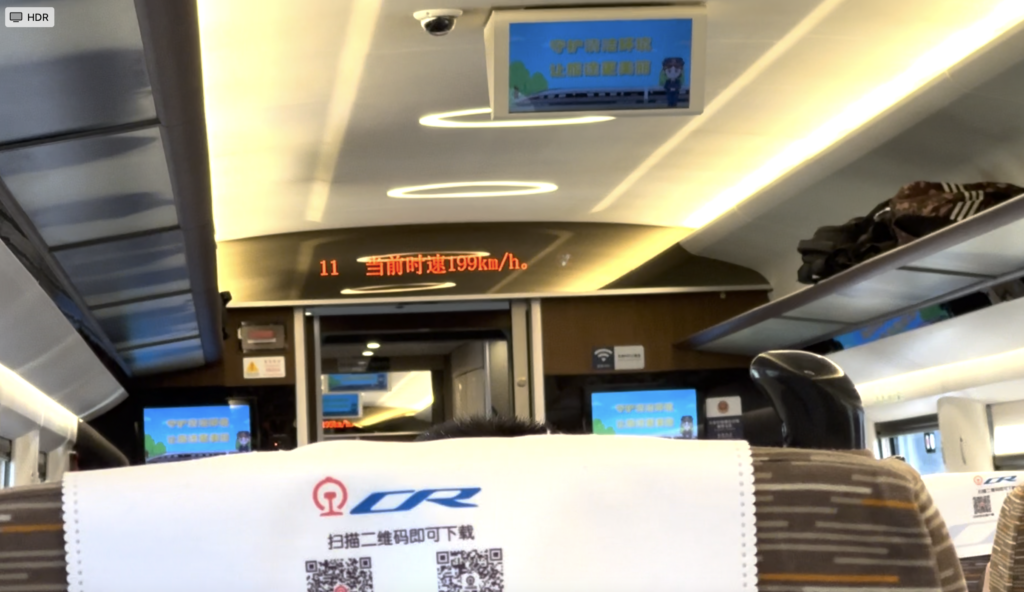
Look at the display above the carriage:
当前时速 199 km/h
当前时速 (dāngqián shísù) means:
current speed.
199 km/h.
And Dad & Elaine were simply sitting there.
That’s one of the strange things about China’s high-speed rail.
You know you’re moving quickly.
But inside the carriage?
People are sitting.
Looking at phones.
Resting.
Eating.
Doing ordinary things.
And outside the window…
China keeps moving past.
🏞️ Lunch Came With a Moving View
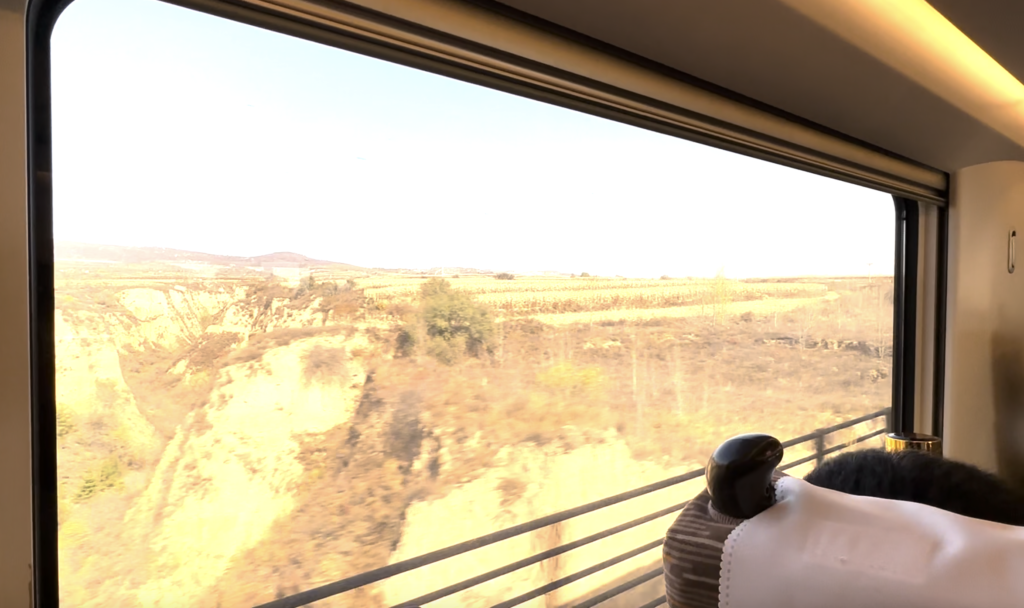
Fields.
Villages.
Hills.
Farmland.
Then something different.
Then something different again.
😂
No need to ask:
“Can we have the table beside the window?”
Elaine already had one.
And unlike a restaurant with a mountain or river view, ours changed every few minutes.
Then Elaine became hungry.
📱 Wait — We Can Order Lunch From HERE?
Elaine noticed a QR code on the armrest beside our seat.
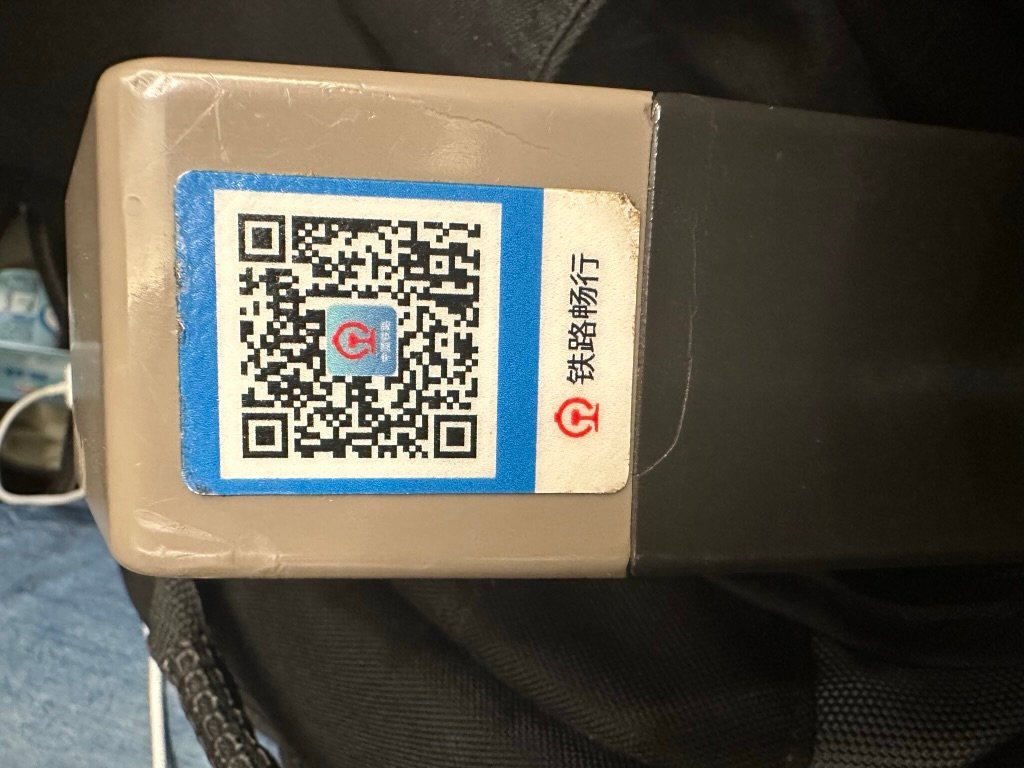
So she scanned it.
扫码 (sǎomǎ) — scan a QR code.
The food-ordering service opened on her phone.
Elaine could look through the available choices…
choose what she wanted…
place the order…
and then:
stay in her seat.
😂
No walking through the train trying to find the dining car.
No standing somewhere wondering what food was available.
The little QR code beside us had effectively become:
our menu.
🔌 And Of Course Elaine Was Charging Her Phone 😂
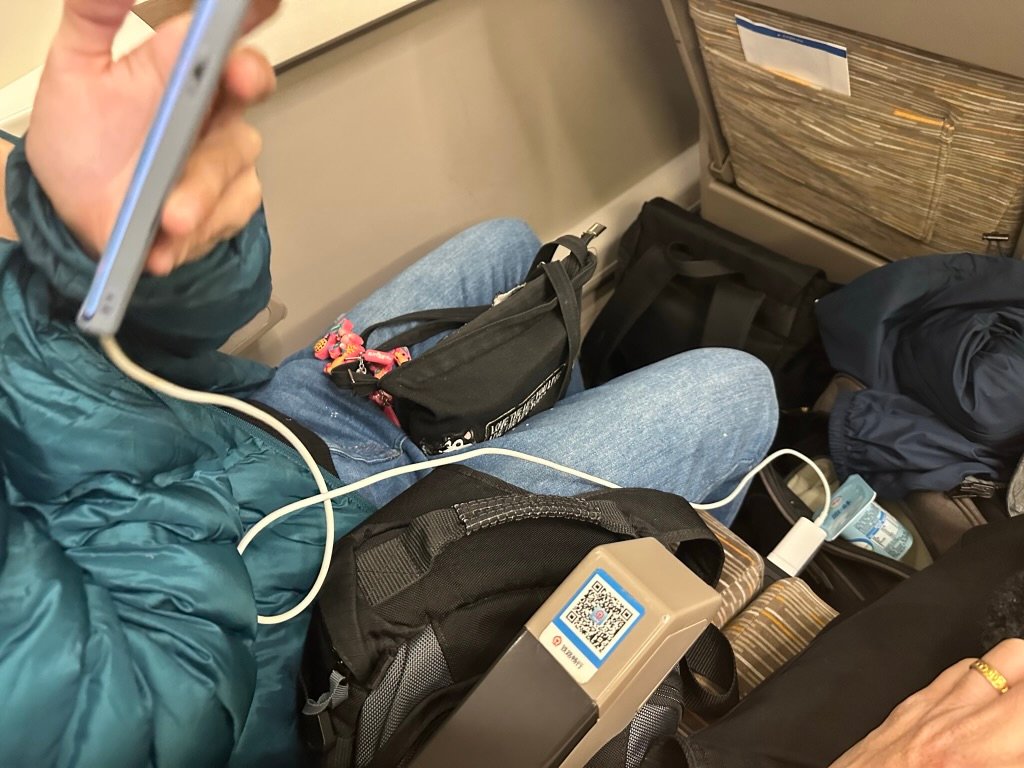
This photograph makes Dad smile.
Think about what the phone was doing during our China travels.
It could help with:
payments
maps
translation
transport
train information
and now…
ordering lunch.
Meanwhile the train itself provided somewhere to charge it.
For a traveler in China, keeping the phone alive can become surprisingly important.
Dad calls it:
battery anxiety. 😂
Elaine probably calls it:
normal life.
🍱 Then Lunch Arrived at Our Seat
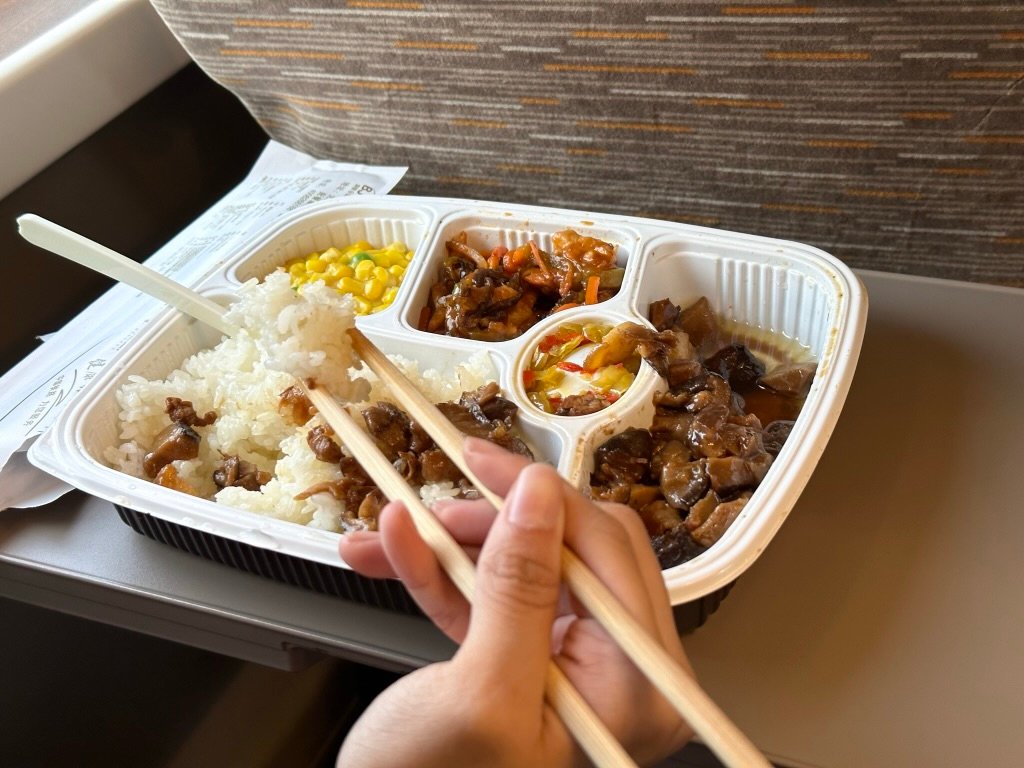
And there it was.
Lunch.
A Chinese-style boxed meal:
盒饭 (héfàn).
Rice:
米饭 (mǐfàn).
Vegetables:
蔬菜 (shūcài).
Meat and other cooked dishes arranged in separate sections.
Nothing fancy.
No beautiful restaurant plating.
No waiter carrying a silver tray.
Just:
hot food in a plastic meal box.
And Dad remembers paying more than RMB 50.
💰 RMB 50+? That’s Not Cheap for This Meal
Let’s be clear.
By the standards of the ordinary meals Dad & Elaine were eating elsewhere in China:
RMB 50+ for this simple boxed meal was expensive. 😂
We’ve eaten perfectly satisfying local meals for considerably less.
And historically, high-speed rail catering has offered meals across different price levels, with onboard meals often costing noticeably more than inexpensive everyday food on the ground.
So what were we paying for?
Not merely:
rice + vegetables + meat.
We were also paying for:
CONVENIENCE.
Elaine didn’t leave the seat.
She scanned the QR code.
Ordered on the phone.
The food came to us.
And while all this happened…
our restaurant kept moving across China.
😂
💡 What We’d Tell a First-Time Traveler
If saving money matters:
buy food before boarding or bring something with you.
Chinese railway stations usually give you opportunities to buy food and drinks before getting onto the train.
You don’t have to order an onboard meal.
But if you’re already traveling, you’re hungry, and you don’t particularly feel like organizing lunch before boarding?
The onboard option can be wonderfully convenient.
For Dad & Elaine, that convenience was worth paying for that day.
🍚 Finally, Dad Let Elaine Eat
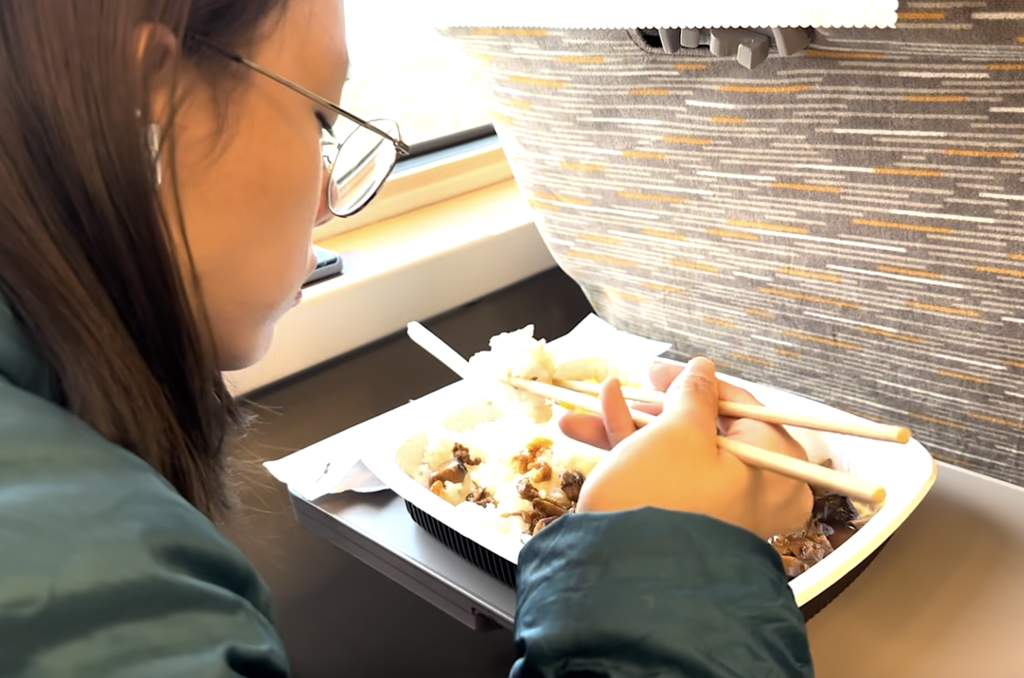
Chopsticks out.
Rice disappearing.
Scenery still moving.
Phone charging.
Dad still taking photographs.
😂
This wasn’t one of the great culinary experiences of our China journeys.
And that’s exactly why it belongs in WHAT WE ATE.
Because traveling isn’t made entirely from:
famous restaurants
signature dishes
food markets
and:
“10 Foods You MUST Try in China.”
Sometimes you’re simply hungry between two cities.
And lunch looks like this.
🀄 A Few Useful Chinese Words
高铁 (gāotiě) — high-speed rail
盒饭 (héfàn) — boxed meal
米饭 (mǐfàn) — cooked rice
蔬菜 (shūcài) — vegetables
二维码 (èrwéimǎ) — QR code
扫码 (sǎomǎ) — scan a QR code
点餐 (diǎncān) — order food
当前时速 (dāngqián shísù) — current speed
You don’t need these words to eat lunch on a Chinese train.
But Dad thinks recognizing a few of them makes traveling China more interesting.
☕ Expensive Meal With a View?
So let’s answer Dad’s original question.
Was the meal expensive?
For what was inside the box?
Yes. 😂
Dad remembers paying RMB 50+.
Could we have eaten more cheaply before boarding?
Absolutely.
But Elaine ordered lunch without leaving her seat.
The food came to us.
Her phone was charging.
And outside the window, China kept rolling past while our dining room traveled at 199 km/h.
So perhaps Dad’s final restaurant review should be:
Food: ordinary.
Price: expensive for what we ate.
Convenience: excellent.
View: constantly changing.
Restaurant speed: 199 km/h.
😂
Would Dad & Elaine pay the convenience premium again on the right journey?
Yes.
Sometimes you’re not paying only for the meal.
You’re paying to stay in your seat…
eat something hot…
and watch China go by.
Real Journeys. Real Stories. Real China.
See China. Understand It Better.