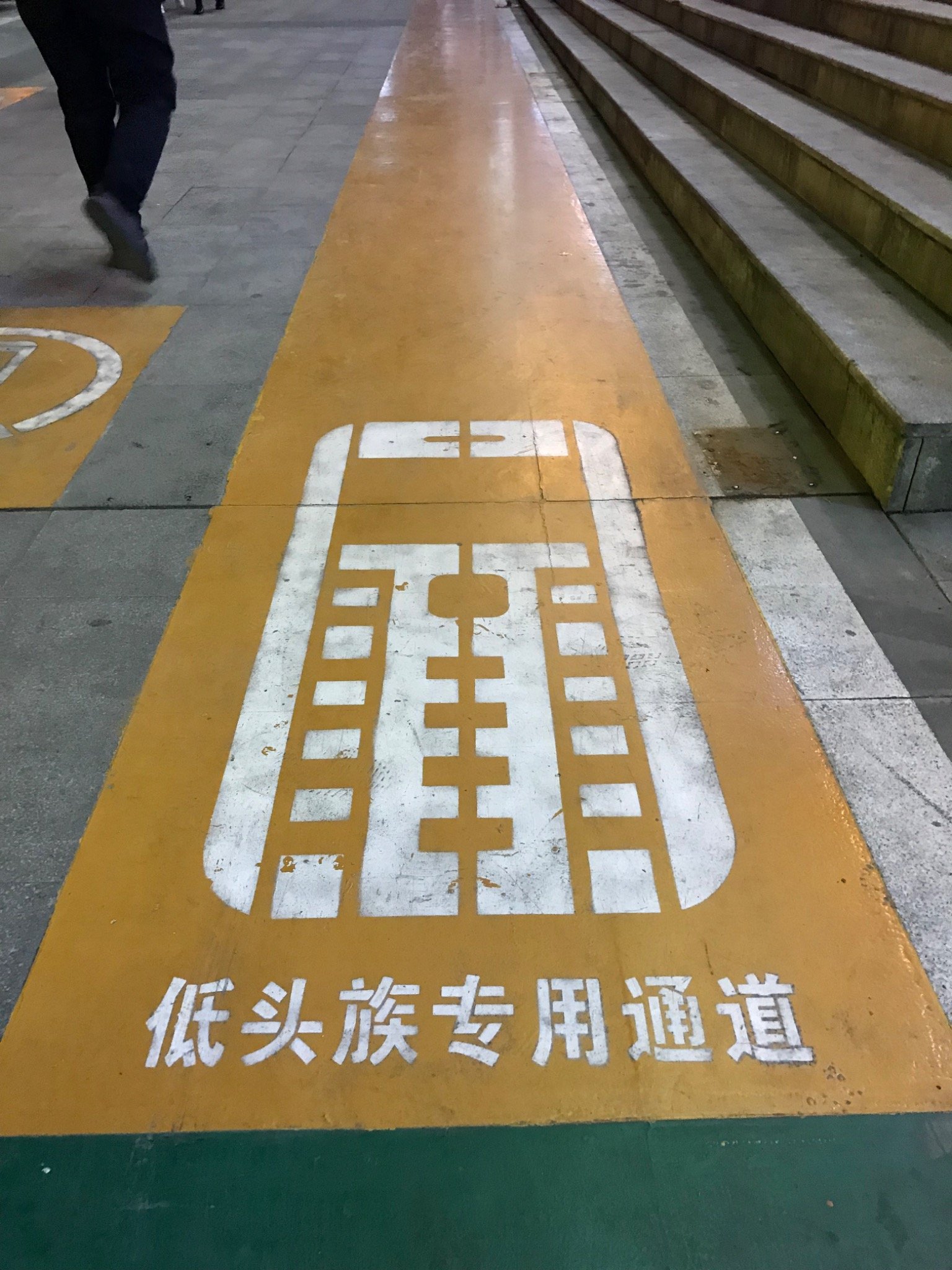

Mobile data matters more in China (中国, Zhōngguó) than many first-time visitors expect.
Your phone isn’t just for messaging. You may be using it for Alipay (支付宝, Zhīfùbǎo), WeChat (微信, Wēixìn), maps, translation, ride-hailing, train tickets, attraction reservations and navigation throughout the day.
So if you’re spending a month traveling through China and Japan (日本, Rìběn), how much data do you actually need?
One traveler had been offered 100GB of roaming data, calls and texts for $90 and wondered whether it was worth paying for—or whether a travel eSIM would make more sense.
We put the question to the ChinaTravelBUG AI Travel Planner.
The Traveler’s Question
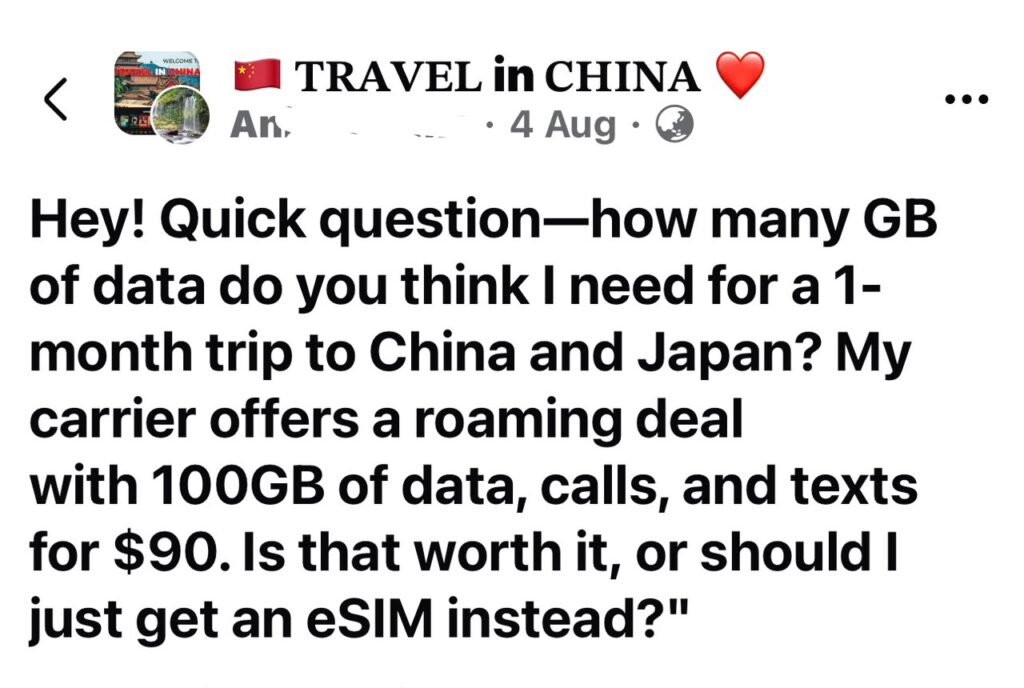
“Hey! Quick question—how many GB of data do you think I need for a 1-month trip to China and Japan?
My carrier offers a roaming deal with 100GB of data, calls, and texts for $90.
Is that worth it, or should I just get an eSIM instead?”

AI Travel Planner Answers
For a one-month China + Japan trip, 100GB is far more data than most travelers need. Unless you stream lots of video over mobile data or regularly use your phone as a hotspot, I’d expect 20–30GB to be comfortable, with 40–50GBgiving you plenty of breathing room.
The bigger question isn’t really the GB — it’s roaming versus eSIM.
For China especially, international roaming can be surprisingly convenient. Because your data is routed through your home carrier, services such as Google, Gmail, WhatsApp and Instagram may work normally without you having to think much about China’s internet restrictions. An international travel eSIM can offer similar convenience, depending on how its traffic is routed.
So I’d compare the $90 roaming package against a China + Japan regional eSIM of roughly 20–30GB. If the eSIM is substantially cheaper, I’d choose it. If the saving is only $20–30, the $90 carrier package may actually be worthwhile for a month because you keep your normal number, calls and texts and avoid managing another SIM.
One important check before buying an eSIM: make sure your phone is unlocked and confirm that the eSIM specifically works in mainland China with the international services you expect to use. Don’t choose purely on GB.
And use hotel Wi-Fi for big downloads, cloud backups and video. Maps, Alipay/WeChat Pay, translation, messaging, ride-hailing and train bookings themselves don’t consume huge amounts of data.
My choice: probably a 20–30GB regional eSIM, unless keeping your normal calls/texts is important — then $90 for a full month is quite reasonable.
Further Reading
Internet in China Made Easy — especially relevant here because it covers roaming, eSIMs and connectivity. I can’t verify an exact published article URL from the available directory, so I won’t invent one.
ChinaTravelBUG Note
There are really two separate questions here:
- How much mobile data does a traveler need?
- How should that data connect to the internet while in mainland China?
The second question is arguably more important.
China’s internet environment means that a cheap data package isn’t necessarily the most useful data package.
For a first-time international visitor, reliable access to maps, translation, messaging, payment apps and booking information can matter considerably more than whether the plan contains 30GB or 100GB.
Is 100GB Too Much?
For most travelers, yes.
Think about what you’re actually doing with mobile data while sightseeing:
- checking maps
- messaging
- translating
- ordering a DiDi (滴滴, Dīdī)
- using Alipay or WeChat Pay
- checking train times
- opening booking confirmations
- searching for restaurants
- uploading occasional photographs
Those activities don’t normally require enormous quantities of data.
What consumes data quickly is different:
- streaming high-resolution video
- watching YouTube extensively
- constantly uploading photographs and video to the cloud
- using your phone as a laptop hotspot
- downloading large files
- extensive video calling over mobile data
For an ordinary traveler, 20–30GB across a month can be perfectly reasonable.
Someone who dislikes monitoring usage might prefer 40–50GB.
But 100GB should be viewed as abundant data, not as something most tourists actually need.
Why China Changes the Roaming vs eSIM Decision
In mainland China (中国大陆, Zhōngguó Dàlù), some international internet services that travelers routinely use elsewhere are restricted on ordinary mainland internet connections.
That includes services such as Google and WhatsApp.
This is where international roaming and certain travel eSIMs can be particularly useful.
Travel eSIMs that route mobile data internationally can allow travelers to reach services such as Google, WhatsApp and Instagram without relying on an ordinary mainland connection. Recent traveler reports continue to describe this working with internationally routed eSIMs in China. (China for Travelers)
But not every product marketed as a “China eSIM” should automatically be assumed to work identically.
The routing matters.
Before buying, ask one very specific question:
Does this eSIM provide access to Google, WhatsApp and other international services while using mobile data in mainland China without requiring a separate workaround?
That question is more useful than:
“How many GB do I get?”
Why the $90 Roaming Deal May Actually Be Good
At first glance, paying $90 for mobile data sounds expensive when travel eSIMs can cost less.
But this particular package includes:
100GB + calls + texts + your existing phone number for a full month.
For a combined China and Japan trip, that convenience has value.
There is no need to:
- install another SIM profile
- switch data lines between countries
- worry about whether calls are included
- explain a temporary number to anyone
- manage separate China and Japan packages
And keeping your normal number active can be useful when receiving verification texts.
So the real comparison isn’t:
$90 roaming vs cheap eSIM
It’s:
$90 for a very large all-in-one package vs the price and inconvenience of whatever eSIM combination actually meets your needs.
If a suitable regional eSIM costs $30, the saving is substantial.
If the alternative ends up costing $60–70 once you’ve bought enough data and arranged your normal number separately, the $90 roaming package starts looking much more attractive.
A Good Setup for China
One practical setup increasingly used by international visitors is:
Home SIM → calls/SMS and your existing number
Travel eSIM → mobile data
On a compatible dual-SIM phone, both can remain active.
The home line retains your normal number while the travel eSIM handles internet access.
This can be particularly useful for China because internationally routed travel eSIMs may provide straightforward access to international internet services while your original SIM remains available for SMS. (China for Travelers)
But check your own carrier’s roaming charges carefully.
You don’t want the home SIM quietly using expensive pay-as-you-go roaming data while you think the eSIM is handling everything.
Don’t Forget Japan
The traveler isn’t spending a month entirely in China.
The trip also includes Japan (日本, Rìběn).
That makes a regional Asia eSIM covering both China and Japan more attractive than buying two unrelated country plans.
Before purchasing, check:
- Mainland China coverage
- Japan coverage
- total data allowance
- validity period
- hotspot/tethering rules
- top-up options
- whether China traffic is internationally routed
- whether calls/SMS are included or the plan is data-only
A slightly more expensive regional plan can be worth buying if it eliminates the need to change connectivity arrangements halfway through the trip.
What About Hotel Wi-Fi?
Use it—but don’t build your entire connectivity strategy around it.
Hotel Wi-Fi is useful for:
- operating-system updates
- downloading entertainment
- large photo transfers
- cloud backups
- other data-heavy activities
However, ordinary Wi-Fi inside mainland China remains subject to China’s internet restrictions. Internationally routed mobile data may therefore behave differently from the hotel’s local Wi-Fi connection. (China for Travelers)
This can produce a confusing situation where an international service works perfectly on your travel eSIM but stops working when your phone automatically joins hotel Wi-Fi.
Knowing why that happens can save a lot of frustration.
ChinaTravelBUG Verification Note
Last verified: August 14, 2026
ChinaTravelBUG checked current 2026 traveler connectivity information before publishing this article.
Recent 2026 connectivity guides and traveler reports continue to indicate that internationally routed roaming eSIMs can provide access to international services such as Google and WhatsApp while in mainland China, whereas ordinary mainland Chinese mobile and Wi-Fi connections remain subject to China’s internet restrictions. (China for Travelers)
However, eSIM providers can change their network partners and routing arrangements.
Before purchasing a China or regional Asia eSIM, verify with the provider that the specific plan:
- works in mainland China
- works in Japan
- supports your phone
- covers your full travel period
- permits hotspot use if you need it
- provides access to the international services you expect to use in mainland China
Prices and data allowances change frequently, so ChinaTravelBUG does not recommend choosing a plan purely because it currently appears cheapest.
About This Traveler Question
This question was adapted from a real traveler discussion shared in a China travel community online.
Personal identifying information has been omitted.
It’s a good example of how the obvious question isn’t always the most important one.
The traveler asked:
“How many GB do I need?”
But for China, we’d ask:
“What kind of connection will those GB actually give me?”
Having 100GB isn’t particularly useful if your connectivity setup doesn’t let you reliably use the services you need.
Likewise, obsessing over finding the cheapest possible eSIM may not be worthwhile when an easy $90 roaming package works seamlessly across an entire month-long trip.
For China travel, buy the connection you need first. Then worry about how many GB it contains.

Planning Your Own China Trip?
Wondering about eSIMs, mobile data, Alipay (支付宝, Zhīfùbǎo), WeChat Pay (微信支付, Wēixìn Zhīfù), DiDi (滴滴, Dīdī), internet access or which apps to install before arriving in China?
Tell the ChinaTravelBUG AI Travel Planner where you’re traveling, how long you’re staying and what you’re worried about.
It can help you sort out the practical side of China travel before you land.
Try the FREE ChinaTravelBUG AI Travel Planner.