Discovering a Different Side of China Beyond Beijing
For many first-time travellers planning a China trip, Beijing (北京) is naturally one of the first destinations.
And it should be.
A good Beijing travel itinerary introduces visitors to some of China’s greatest historical landmarks.
But China’s story did not end with emperors.
During our father-and-daughter journey through northern China, Elaine and I wanted to explore another question:
After thousands of years of imperial history, how did China enter the modern world?
Surprisingly, part of that answer was only a short high-speed train journey away from Beijing:
Tianjin (天津).
And hidden within Tianjin was one of the most fascinating places we discovered:
Wudadao (五大道) — the Five Great Avenues.
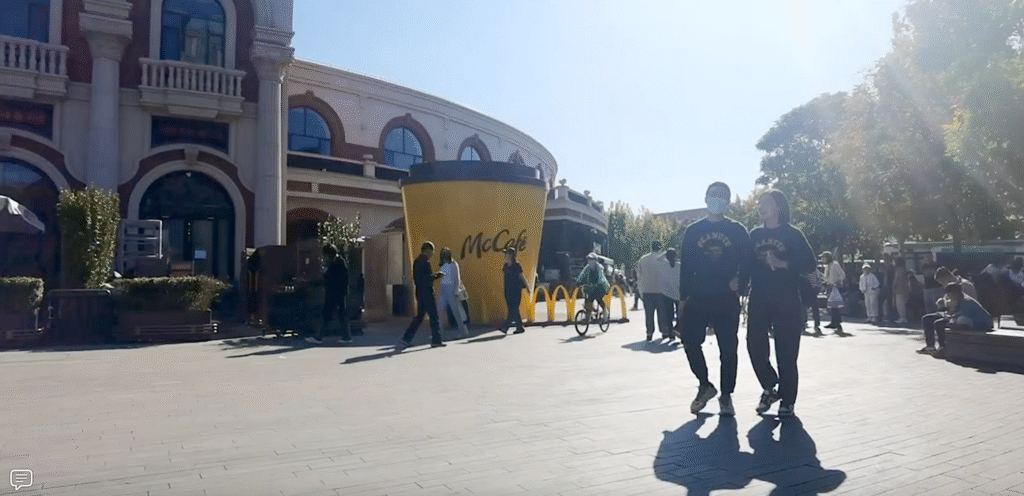
Why Visit Tianjin From Beijing?
Many travellers see Tianjin only as a nearby city.
But if you enjoy history, architecture, culture, and understanding China beyond famous tourist attractions, Tianjin deserves more attention.
A Beijing to Tianjin day trip allows travellers to experience a completely different chapter:
Beijing tells the story of:
Imperial China
Tianjin tells the story of:
China meeting the modern world.
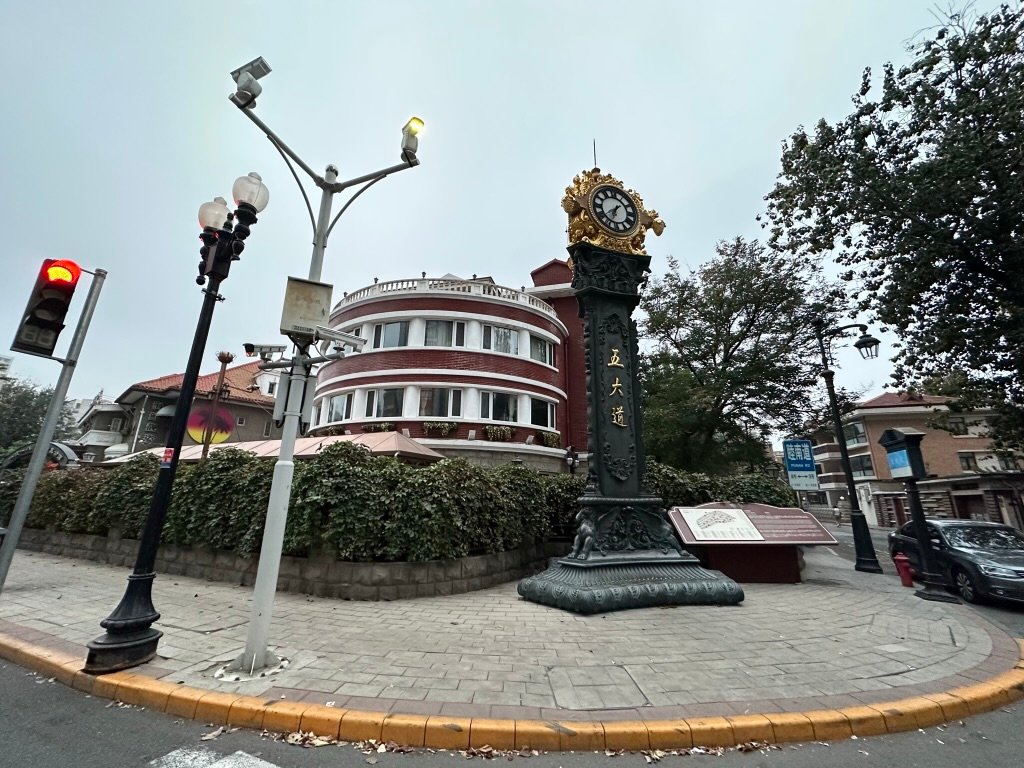
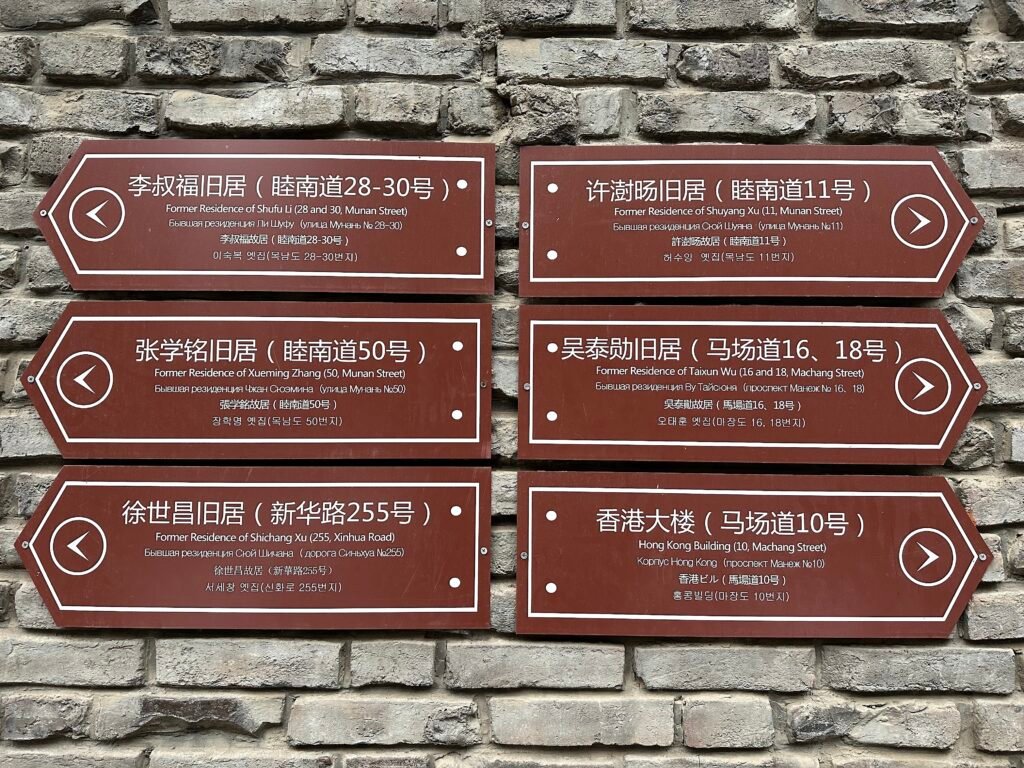
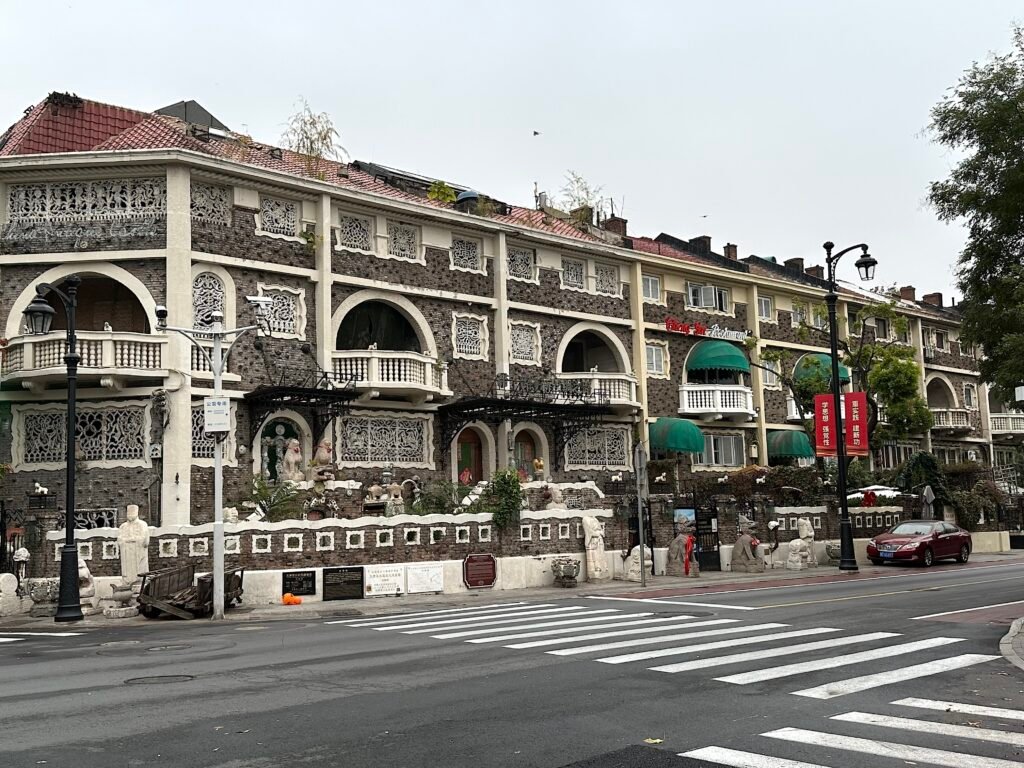
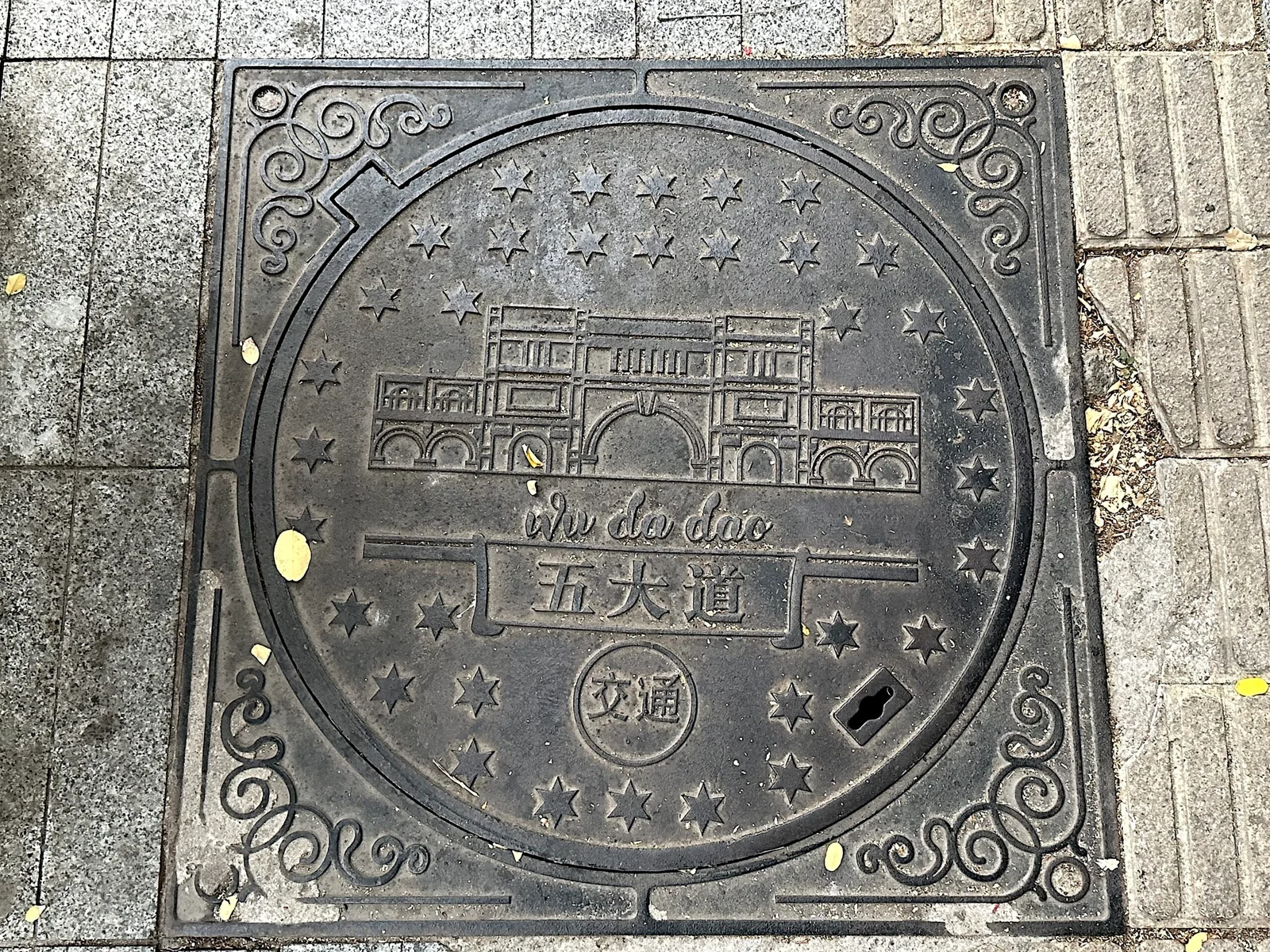
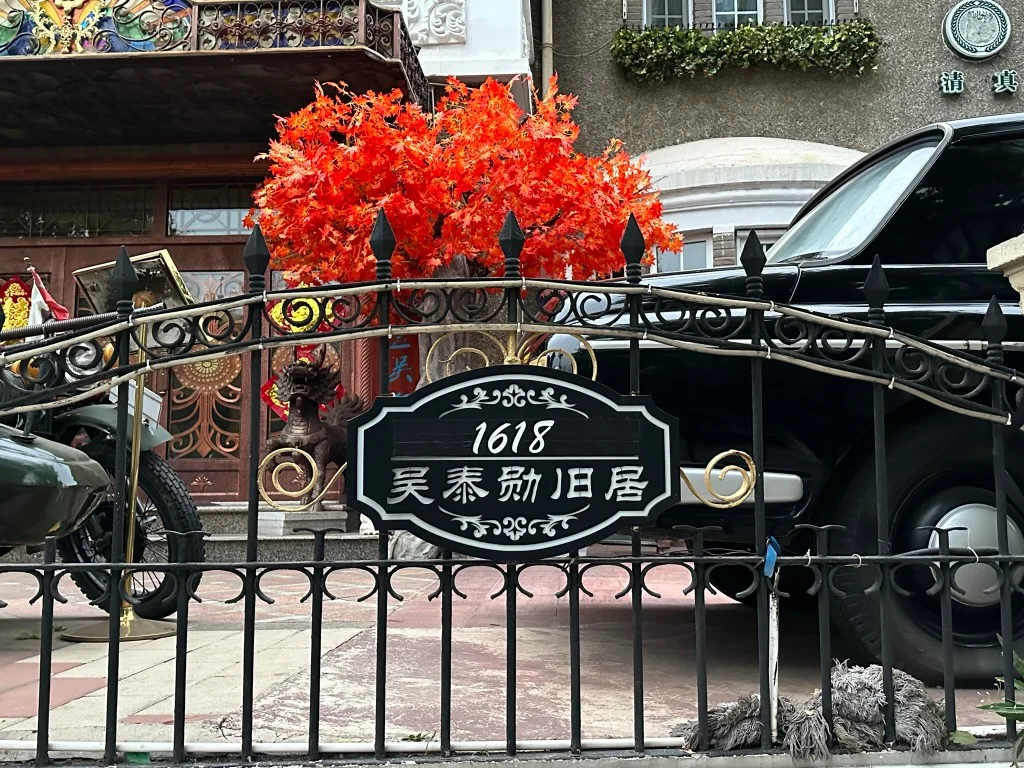
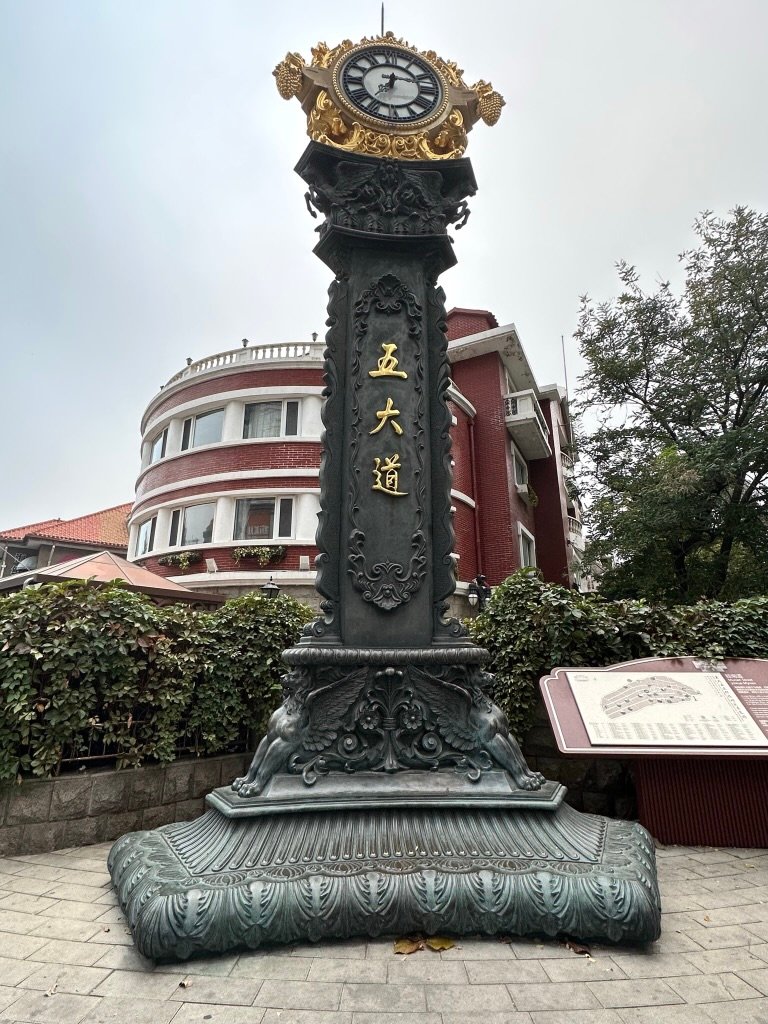
Walking through Wudadao (五大道), we discovered another side of China — not ancient temples or imperial palaces, but the streets where modern China began taking shape.
Walking Through Wudadao 五大道 — China’s European-Style Historic Streets
At first, Wudadao surprised us.
Wide streets.
Quiet neighbourhoods.
Red-roofed villas.
European-inspired mansions.
It looked very different from the China many travellers imagine.
But these buildings are not simply beautiful houses.
During the late Qing dynasty (清朝末期) and Republican era (民国时期), Tianjin became an important city where different cultures, technologies, and ideas crossed paths.
Behind these walls were stories of:
- politicians
- entrepreneurs
- diplomats
- families adapting to a changing world
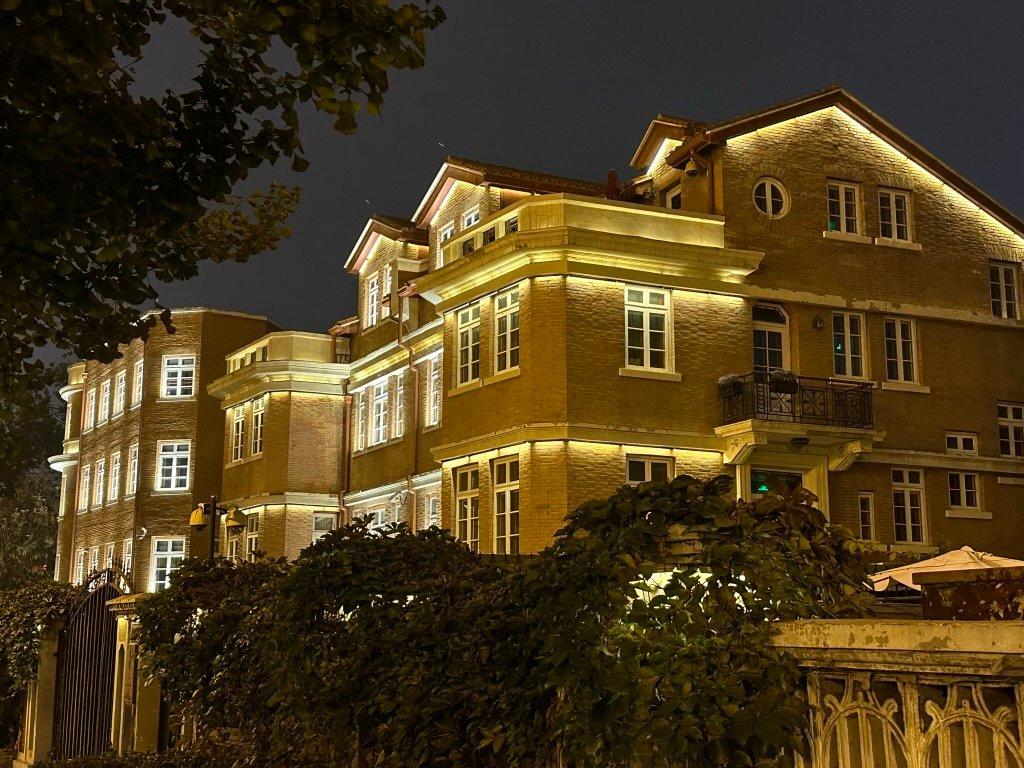
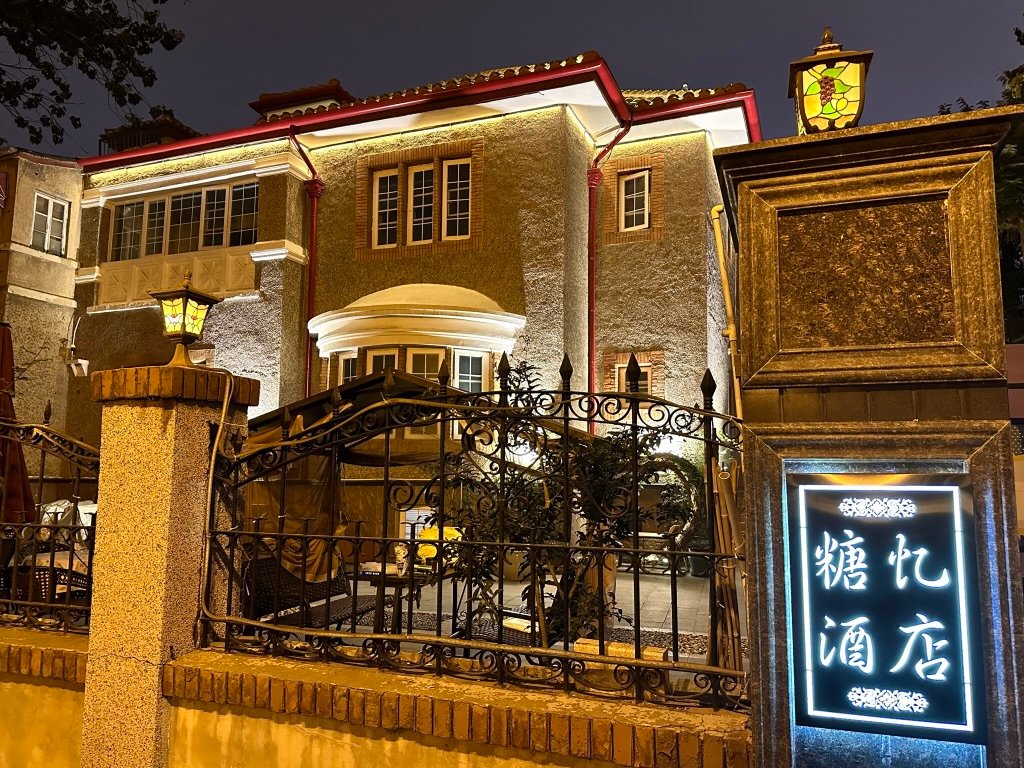
Tianjin after dark reveals why slow China travel can be so rewarding — sometimes the most memorable discoveries are away from the famous attractions.
Wudadao at Night — When Old Tianjin Comes Alive
As evening arrived, Wudadao became even more atmospheric.
The lights reflected on old villas.
The quiet streets felt almost frozen between two periods:
The China of yesterday.
And the China becoming tomorrow.
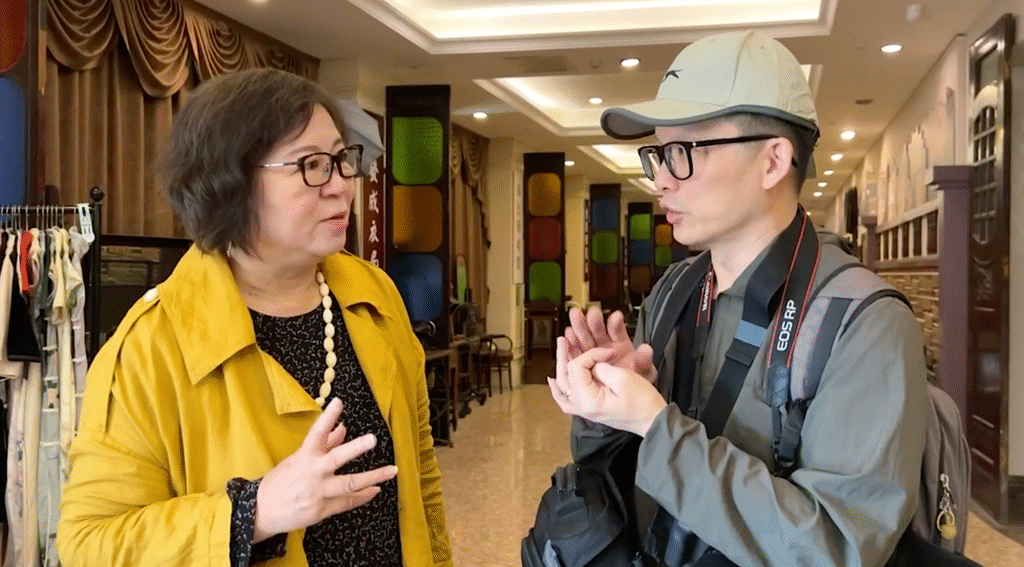
A conversation that changed our visit — the senior Wudadao Museum director noticed Dad filming Elaine’s learning journey and personally shared the stories behind Tianjin’s historic neighbourhood.
Walking Into Wudadao Museum — And Meeting the People Who Preserve Tianjin’s Stories
As we explored the Wudadao Museum (五大道博物馆), something unexpected happened.
I was quietly taking photos and filming Elaine as she studied the exhibits — old telephones, cameras, furniture and everyday objects from Tianjin’s early modern era.
To most visitors, these were simply antiques.
To us, they were clues.
Each object helped answer a bigger question:
How did China begin its journey into the modern world?
The museum director noticed something unusual.
A foreign-looking father was not just photographing displays — he was recording his daughter discovering history.
She approached us and asked about our story.
When I explained that Elaine had been following a self-directed learning journey, and that I designed our China travels as experiential education (体验式学习), the conversation changed.
This was no longer a normal museum visit.
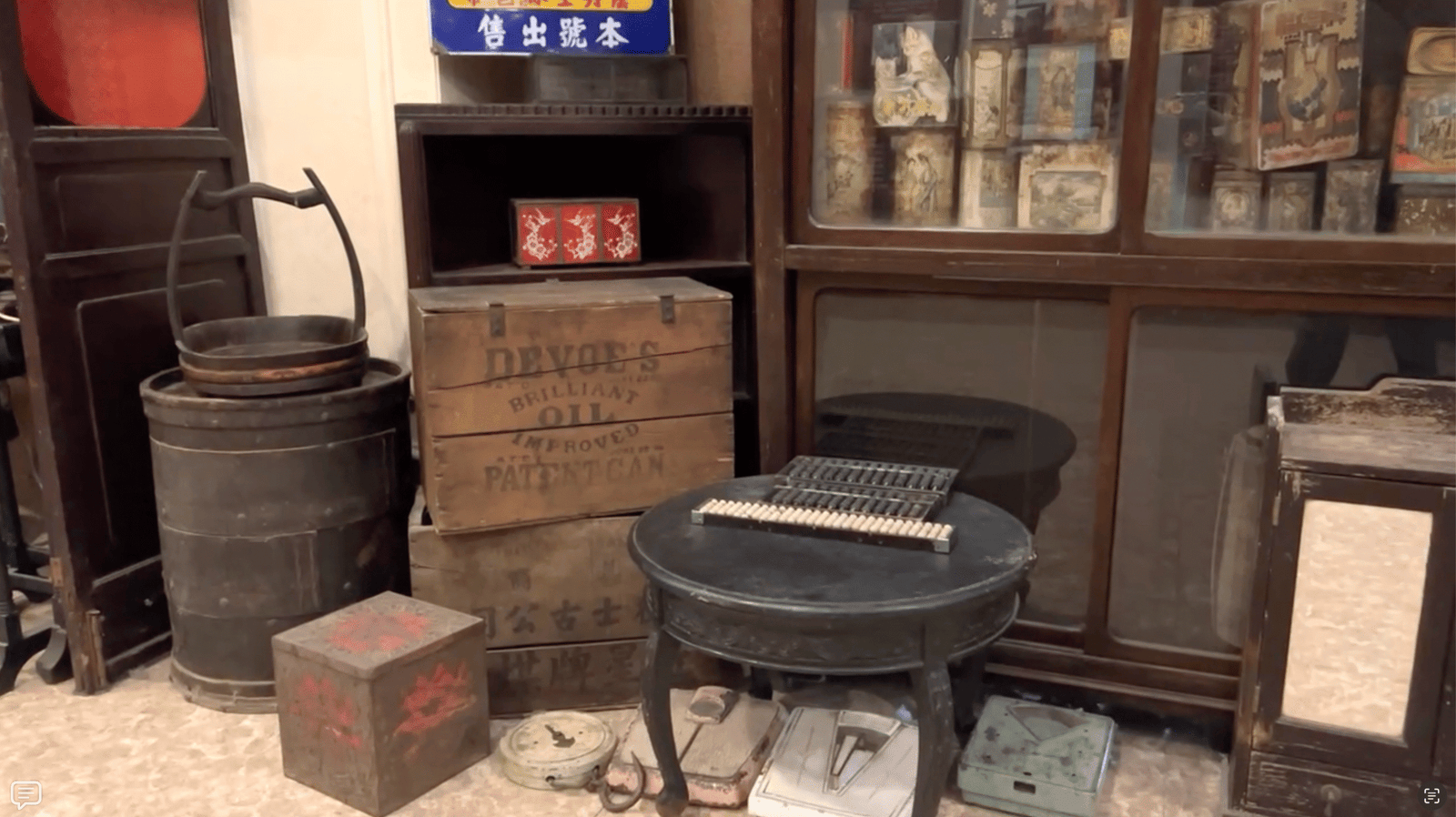
Inside Wudadao Museum 五大道博物馆 — Discovering the Lives Behind the Buildings
Many visitors come to Wudadao, take photos, and leave.
But the buildings only tell half the story.
Inside the Wudadao Museum, Elaine and I discovered the daily life of an era when China was rapidly changing.
The exhibits showed something important:
Modernisation was not only about politics.
It changed ordinary life.
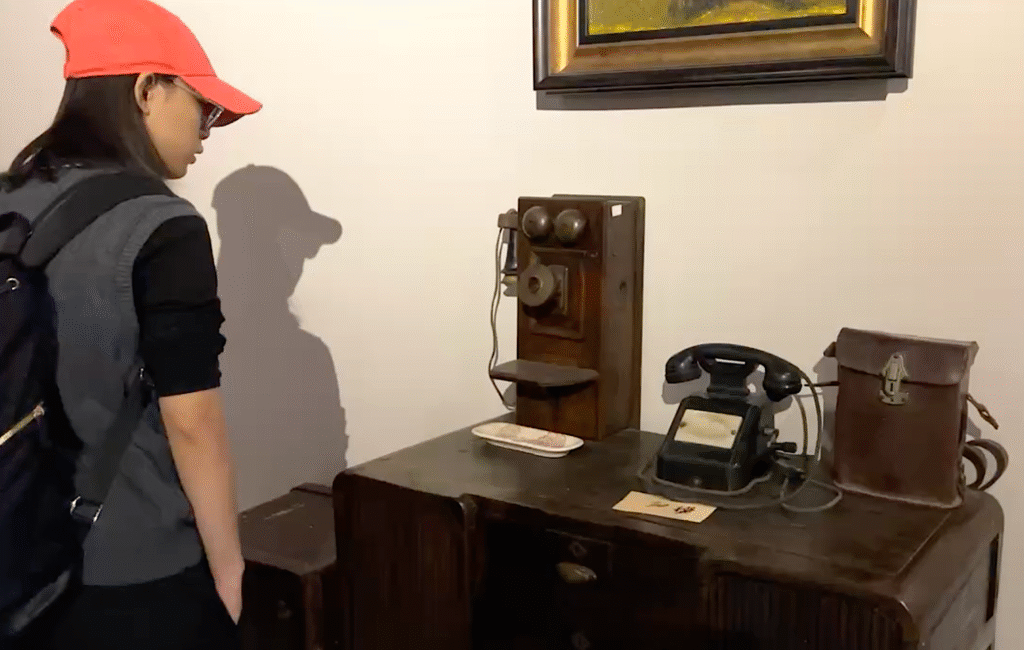
Elaine discovering an early telephone exhibit — a small object representing a huge change in how people connected.
The Telephone 电话 — When Communication Changed China
For Elaine’s generation, instant communication feels normal.
But standing in front of an early telephone reminded us:
Every modern technology was once a breakthrough.
The telephone transformed:
- business
- government
- family communication
- city life
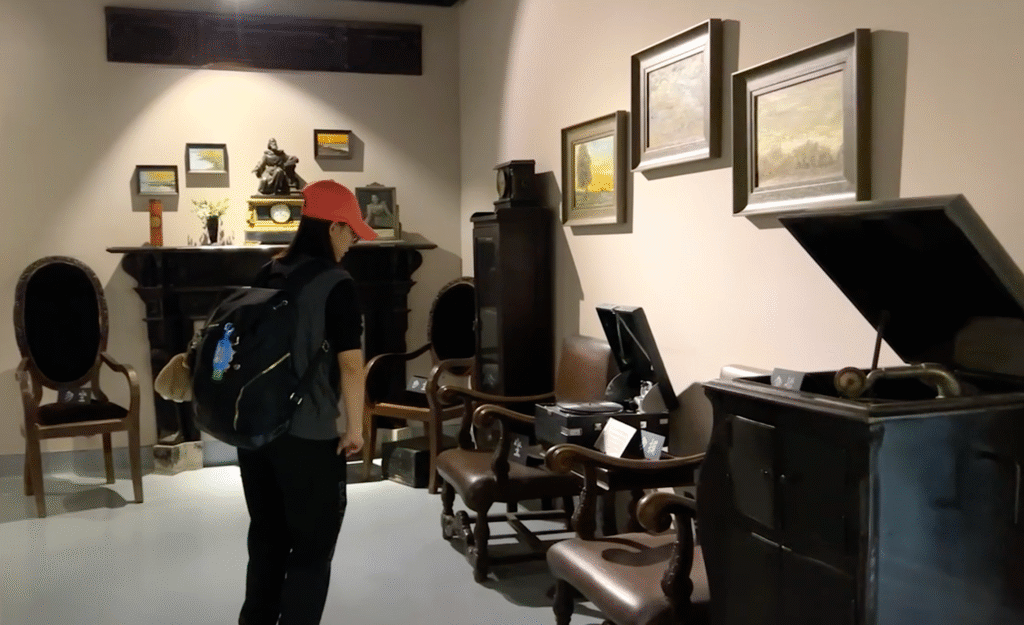
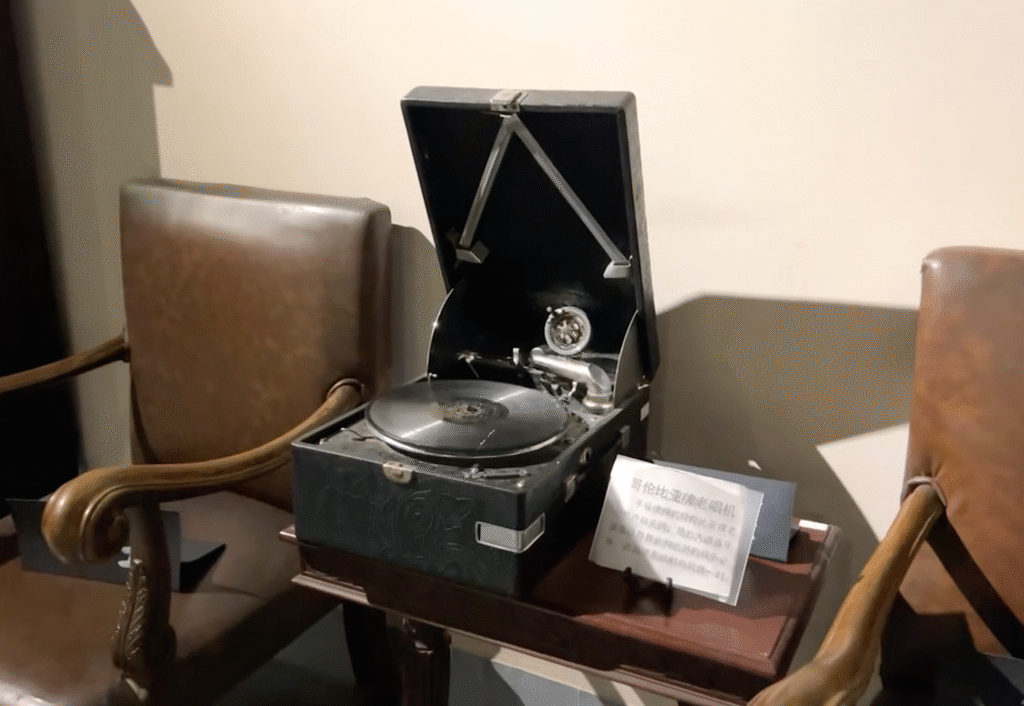
The Sound of a New Era — When Modern Entertainment Entered Chinese Homes
Walking through the rooms of the Wudadao Museum (五大道博物馆), one exhibit quietly captured our attention.
An old gramophone (留声机) sat between antique chairs, looking almost as if someone had just finished listening to music a century ago.
Today, Elaine’s generation carries millions of songs inside a smartphone.
But during the early 20th century, a machine like this represented something extraordinary.
For families living in Tianjin’s historic neighbourhoods, modern technology was not only changing how people worked.
It was changing how they enjoyed life.
Music could now enter the home.
A performance no longer existed only in theatres or public spaces — it could become part of everyday family life.
This was another side of Tianjin’s transformation:
not just factories, trade, or politics,
but the beginning of a new urban lifestyle (现代城市生活).
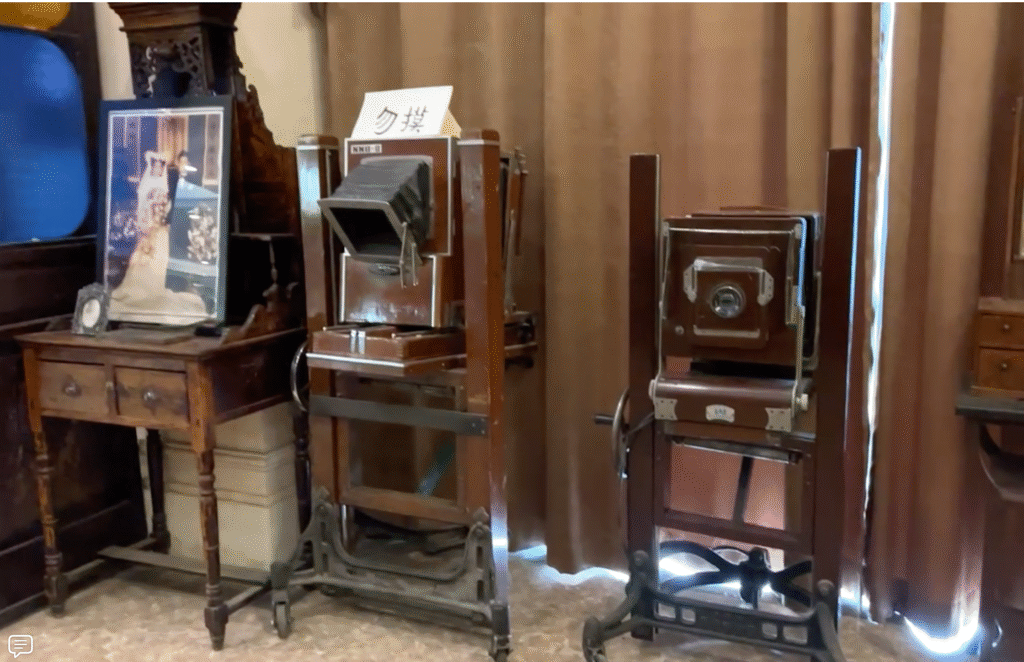
Early cameras displayed inside Wudadao Museum (五大道博物馆) — showing how photography changed the way families preserved memories during Tianjin’s journey into modern urban life.
Capturing a Changing China — Photography and the Birth of Modern Memories
Inside the Wudadao Museum (五大道博物馆), another exhibit showed something that every traveller today understands immediately:
the desire to preserve a moment.
Before smartphones and digital cameras, photography was a very different experience.
A family portrait was not just another picture saved among thousands of images.
It was an event.
People dressed carefully.
Families gathered together.
Important milestones — weddings, achievements, and personal memories — were recorded through the camera lens.
During Tianjin’s transformation into a modern city, photography became part of a changing lifestyle.
People were not only living through history.
They were beginning to record their own stories.
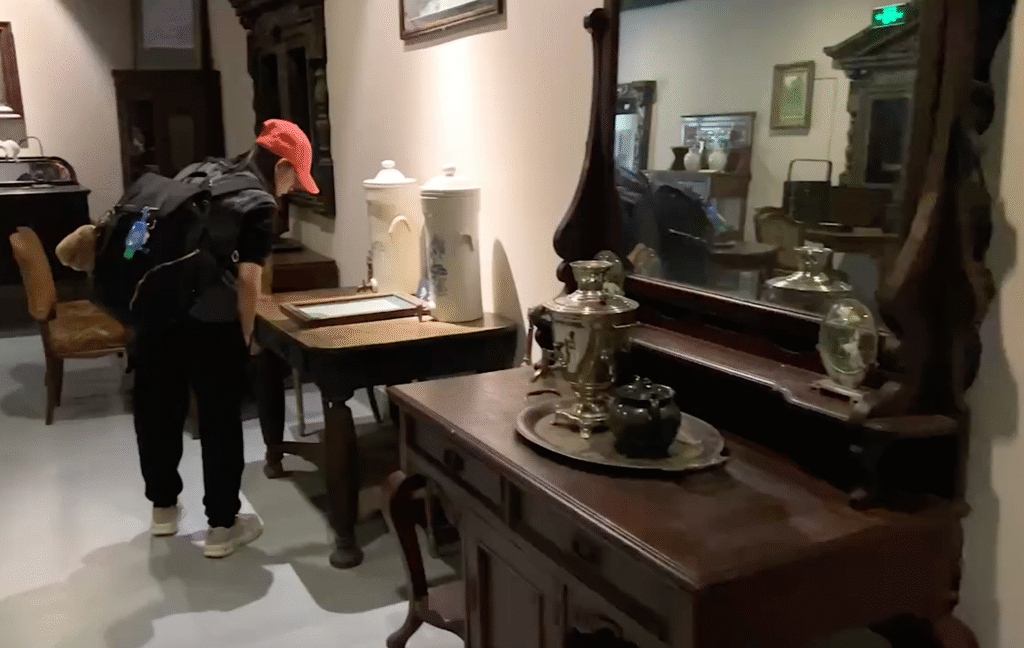
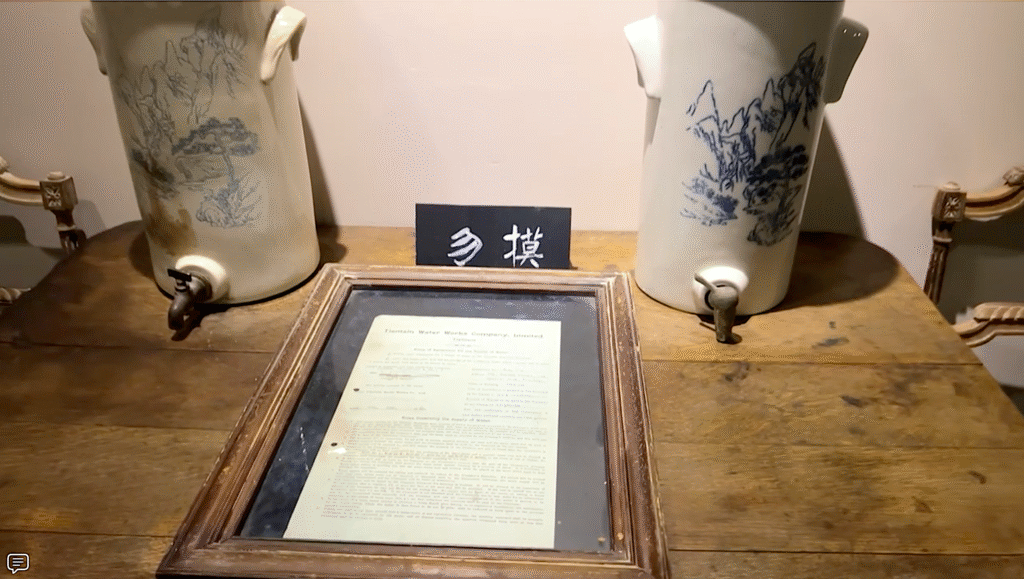
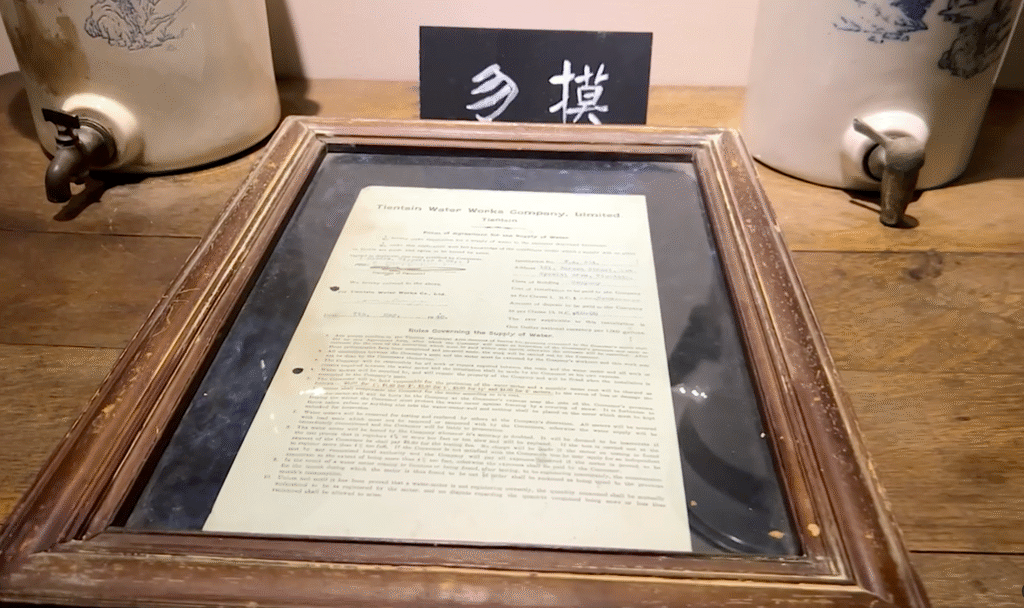
Modern China was shaped not only by major events, but also by everyday innovations that changed how families lived.
Clean Water and Modern Living — The Quiet Revolution
Some historical changes are easy to see.
Others are hidden in daily life.
A bathroom.
A tap.
A water system.
These may seem ordinary today, but they represented a major improvement in urban living.
International Stories Hidden in Tianjin — When China Met the World
One of the biggest surprises Elaine and I discovered inside the Wudadao Museum (五大道博物馆) was that Tianjin’s story was not only about beautiful European-style mansions.
It was about people.
During the late Qing dynasty (清朝末期) and Republican era (民国时期), China was experiencing enormous change.
After centuries of looking mainly inward, China increasingly interacted with the outside world through trade, diplomacy, technology and cultural exchange.
Because of its location as an important northern port city near Beijing (北京), Tianjin (天津) became one of the places where this transformation could be seen most clearly.
Americans, Europeans and people from many countries came here as:
- engineers
- architects
- businessmen
- diplomats
- educators
- athletes
Some only passed through.
Others stayed for decades.
And some left permanent marks on the city.
Walking through the museum, we realised something important:
The history of Wudadao was not simply about foreign buildings in China.
It was about people from different worlds meeting during China’s journey into the modern age.
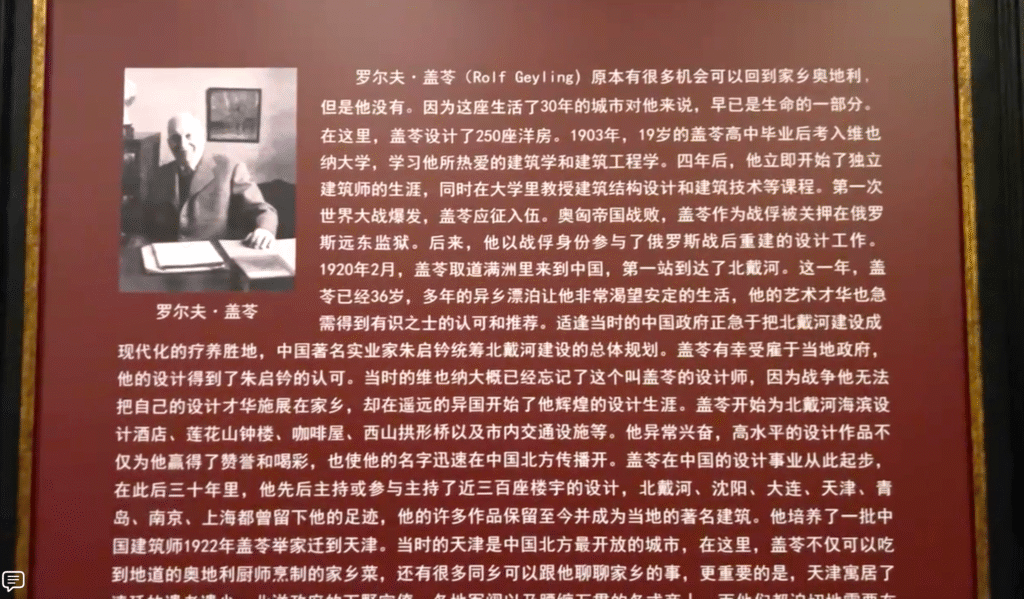
Austrian architect Rolf Geyling (罗尔夫·盖苓) was one of many international residents whose work became part of Tianjin’s urban story — leaving traces that visitors can still discover while walking through Wudadao today.
Rolf Geyling (罗尔夫·盖苓) — The Austrian Architect Who Helped Shape Tianjin’s City Landscape
Among the stories that fascinated us was Austrian architect Rolf Geyling (罗尔夫·盖苓).
Unlike many foreigners who eventually returned home, Tianjin became a major chapter of Geyling’s life.
As an architect, he contributed to the changing appearance of the city during a period when Tianjin was developing into one of northern China’s most modern urban centres.
His designs helped shape buildings and spaces that combined international architectural influences with the needs of a changing Chinese city.
Walking through Wudadao today, visitors are not simply looking at “European-style houses.”
They are seeing the results of architects, craftsmen and communities who created a unique Tianjin identity.
A city where East and West, tradition and modernity, existed side by side.
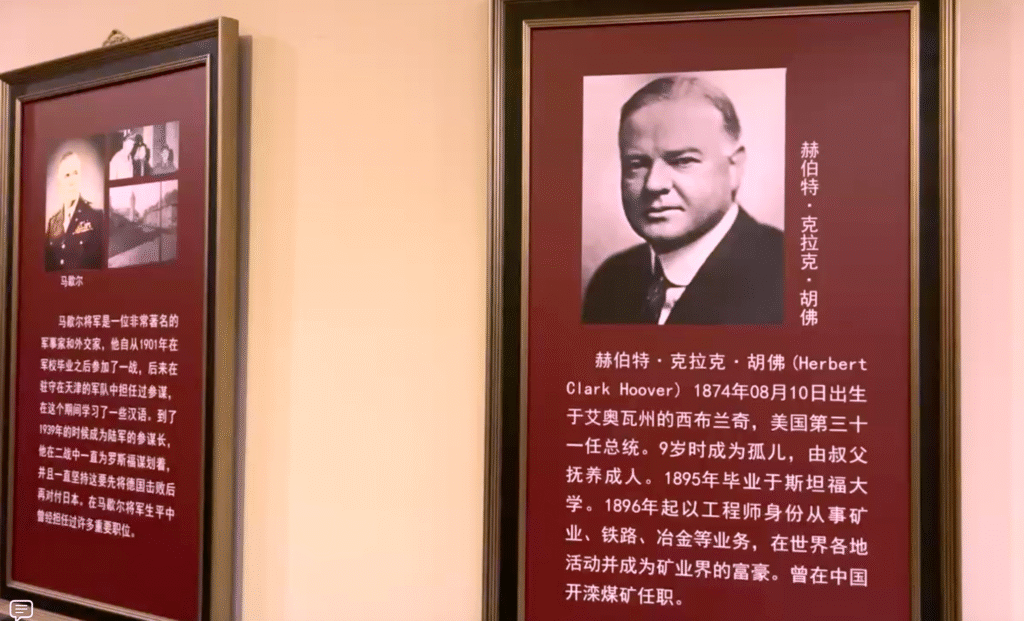
From engineers to future world leaders, Tianjin attracted people whose journeys connected China with global history.
Herbert Hoover — From China Experience to American Presidency
Another unexpected name we discovered was Herbert Hoover, who later became the 31st President of the United States.
Before entering American politics, Hoover worked internationally as an engineer and businessman, including time connected with China.
His Tianjin story reminded us how closely this city was linked with global trade, industry and international movement.
At that time, Tianjin was not a quiet neighbour beside Beijing.
It was a doorway connecting northern China with the wider world.
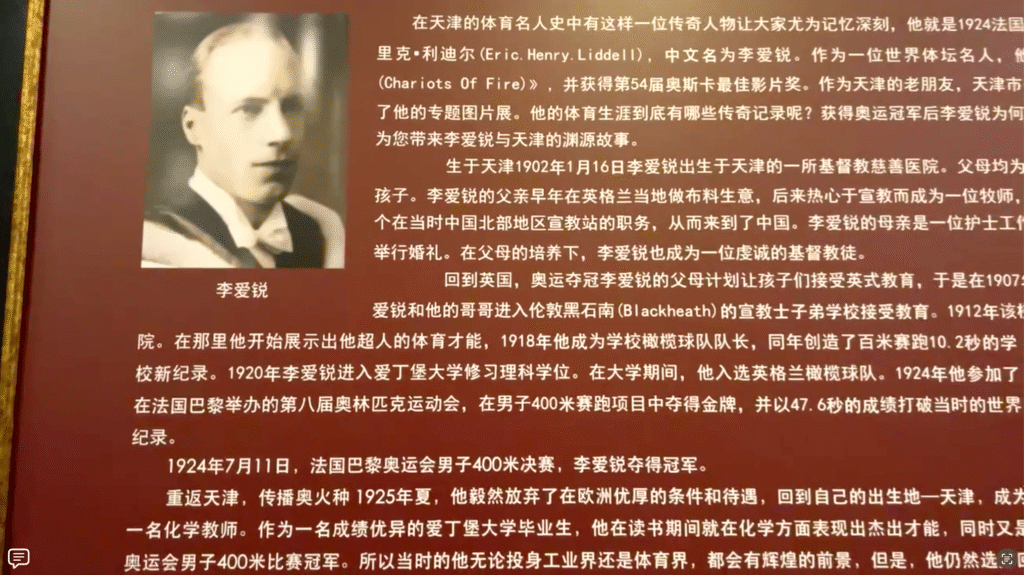
Behind Tianjin’s historic streets are human stories — people who called this city home and became part of its shared memory.
Eric Liddell (李爱锐) — The Olympic Champion Born in Tianjin
Another story that surprised Elaine was Eric Liddell (李爱锐).
Known internationally as the Olympic champion whose story inspired Chariots of Fire, Liddell was actually born in Tianjin.
His life reflected another side of the city:
Tianjin was not only a place where foreigners worked.
It was a place where families lived, children grew up, and personal memories were created.
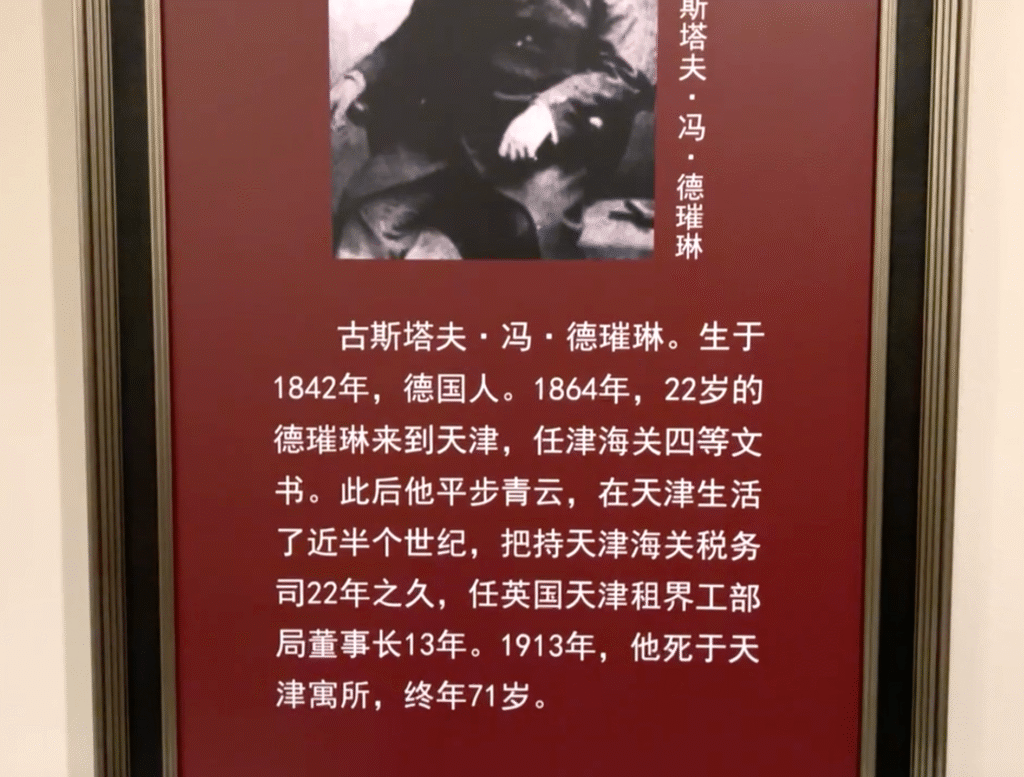
Gustav Detring (古斯塔夫·冯·德璀琳) — Building Connections Through Trade and Administration
The museum also introduced figures such as Gustav Detring (古斯塔夫·冯·德璀琳), whose career was closely linked with Tianjin’s development as a major international port.
Ports are not only places where goods move.
They are where ideas move.
Through cities like Tianjin came:
new ways of organising modern city life
new technologies
new business practices.
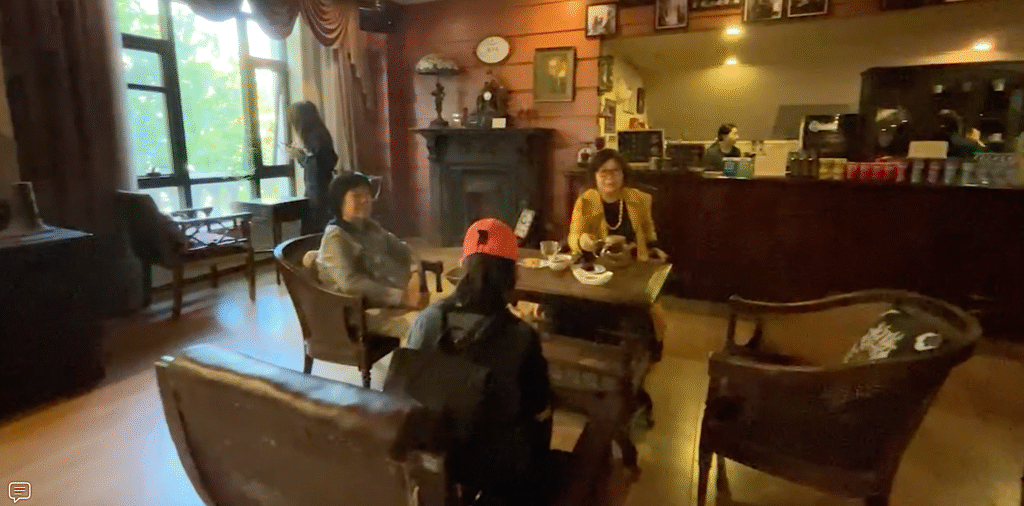
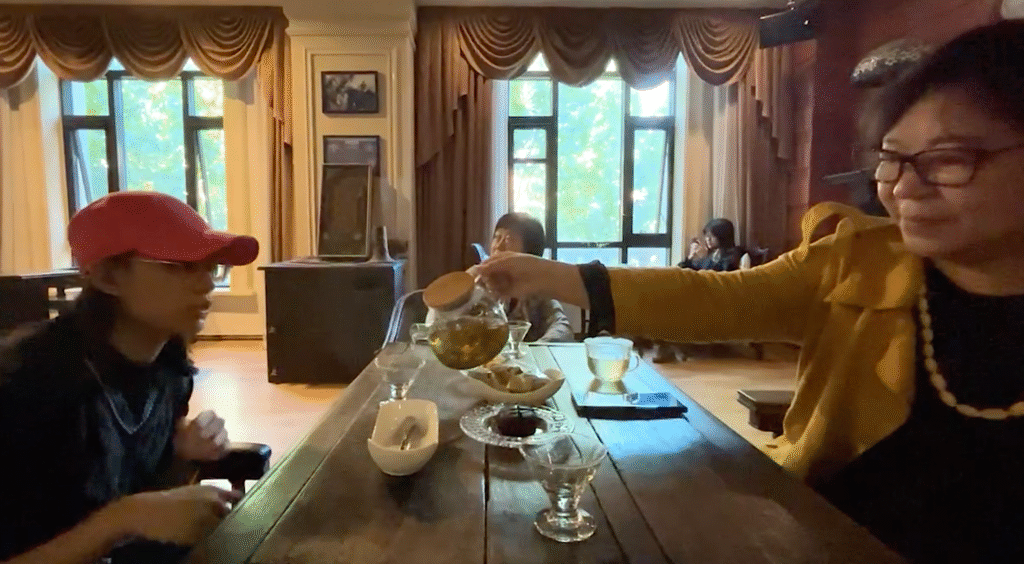
A father-daughter China journey turned into an unexpected conversation at Wudadao Museum — where history was no longer only displayed behind glass, but shared through personal stories.
Later, the director invited us to enjoy tea inside the museum café, surrounded by antique furniture collected from the Wudadao neighbourhood itself.
The chairs and tables around us were not simply decorations.
They were pieces of the same history we had just been learning about.
For Elaine and me, this became one of our most memorable China travel moments.
Not because it was famous.
Not because it appeared on a “top attractions” list.
But because someone saw our curiosity — and opened another door into Tianjin’s story.
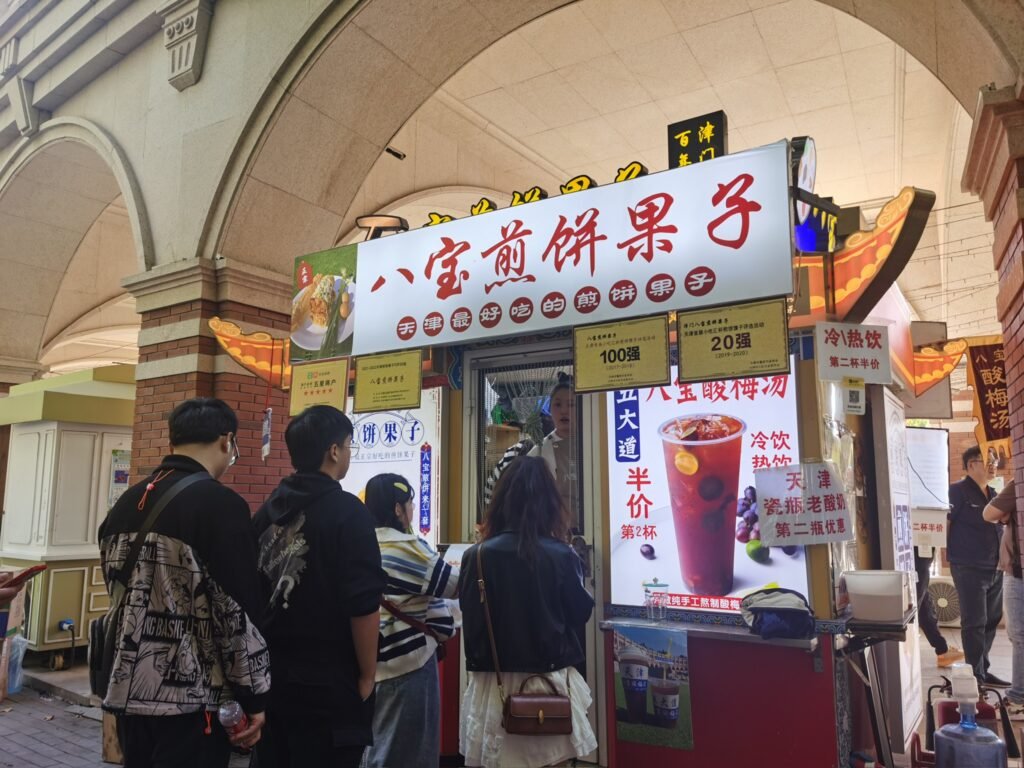
From historic mansions to local flavours — discovering Tianjin through both its past and present.
Ending Our Visit the Tianjin Way — Local Food and Everyday Life
After exploring mansions and museums, Elaine’s next discovery was simpler:
local Tianjin food.
Because China is not only history.
It is also:
- street snacks
- neighbourhood shops
- everyday conversations
Final Thoughts: Should You Add Tianjin to Your Beijing Trip?
If you are visiting Beijing and have extra time, Tianjin offers something different.
Beijing shows the height of imperial China.
Tianjin shows the transformation toward modern China.
Together, they create a richer UNDERSTANDING of China’s journey.
For us, Wudadao was not just another attraction.
It was a place where Elaine and I DISCOVERED how China’s past continues into the present.