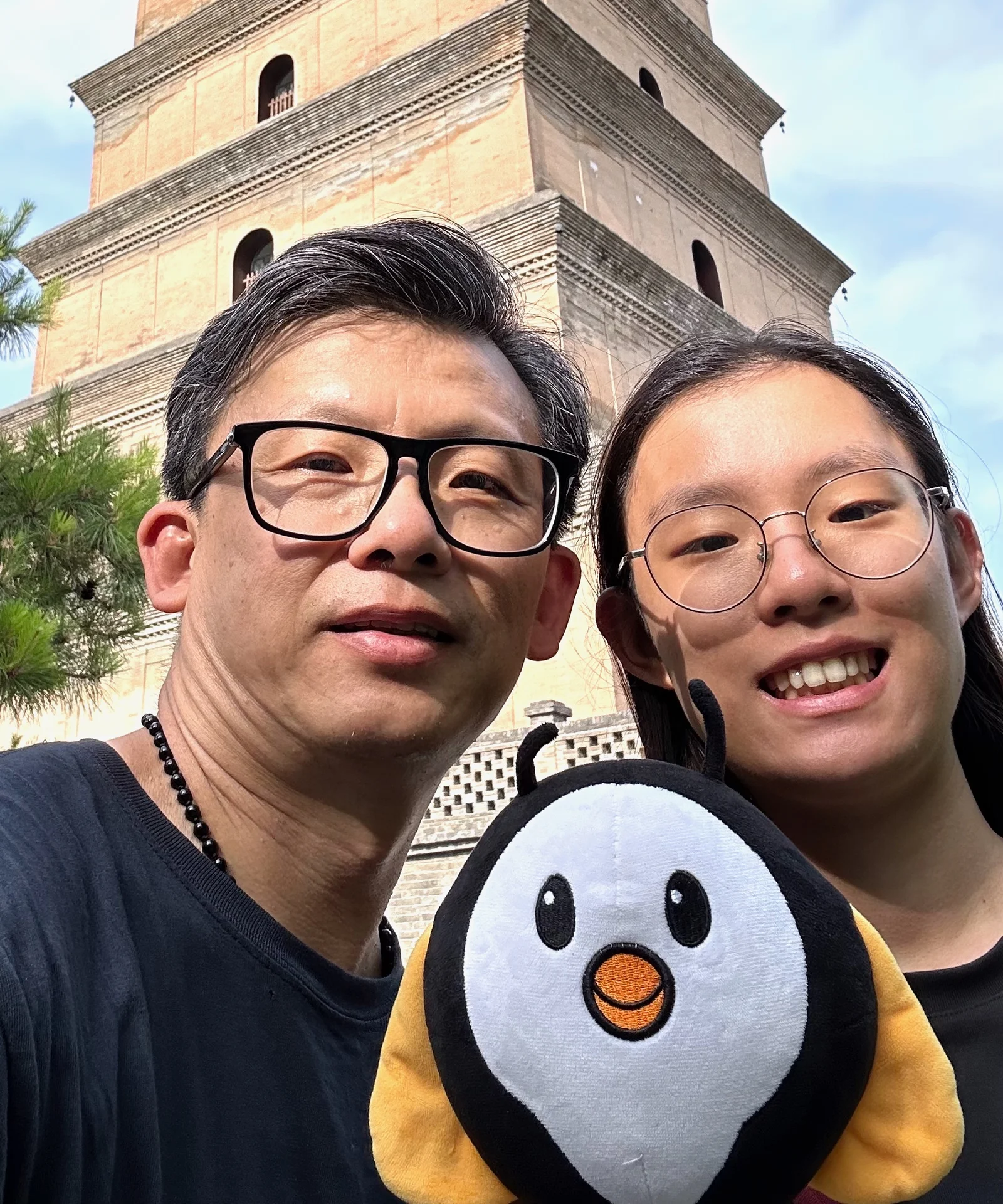
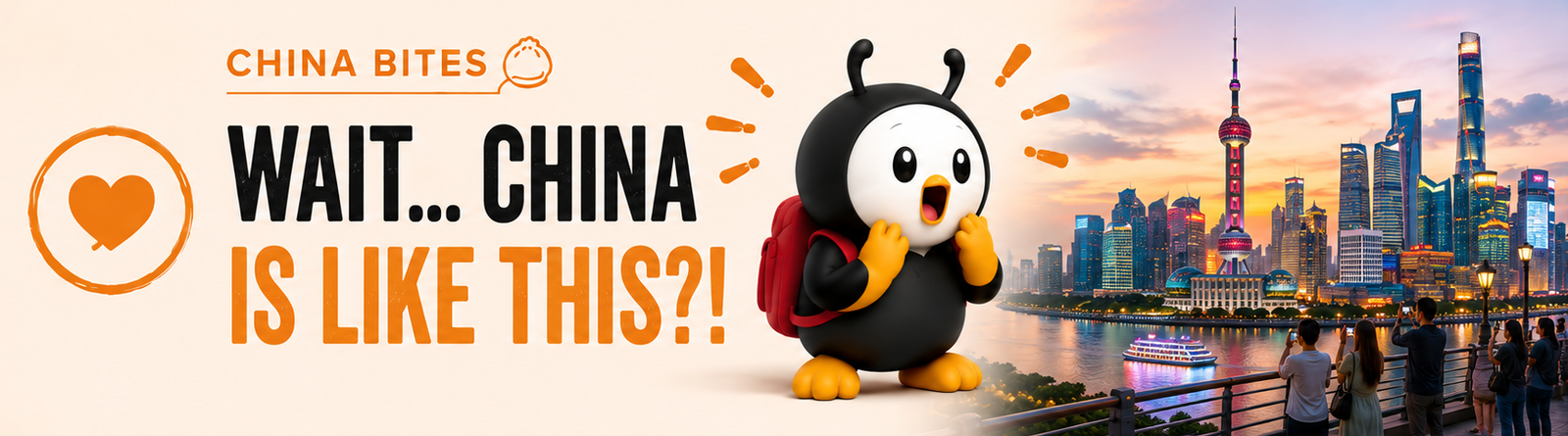
Dad & Elaine have travelled beyond China’s internationally famous tourist circuit to:
Linfen (临汾, Línfén).
Anyang (安阳, Ānyáng).
Yuncheng (运城, Yùnchéng).
Baoji (宝鸡, Bǎojī).
Zibo (淄博, Zībó).
Dezhou (德州, Dézhōu).
Taiyuan (太原, Tàiyuán).
Jinan (济南, Jǐnán).
Tianjin (天津, Tiānjīn).
Some Dad barely knew before planning our journeys.
Then we arrived.
China completely broke Dad’s definition of a “lesser-known city.” 😂
🥟 The Quick Bite
In China:
Lesser-known internationally does NOT mean small.
A city that barely appears on a first-time international traveler’s mental map can still have a very substantial urban population, huge residential districts, major railway stations, universities, museums and busy commercial centers.
Take Baoji (宝鸡).
Its wider municipality had about 3.25 million residents in 2024.
For a rough familiarity handrail, Amsterdam itself has fewer than one million residents.
But there’s an important catch before we start comparing numbers.
🌍 China’s “City” Can Mean Something Different
Chinese population statistics need careful reading.
A prefecture-level city (市, shì) can administer much more than the continuous city you see around you.
It may include:
urban districts + towns + counties + rural areas.
So if you read:
“Population: 4 million”
don’t automatically imagine four million people packed into one downtown area.
European cities draw their administrative boundaries differently too.
The useful comparison isn’t:
“Baoji is exactly X times Amsterdam.”
It’s the eye-opening realization that:
a Chinese city Dad had barely heard of can administer a population several times that of a world-famous European city.
😳
📷 Dad & Elaine’s China
We learned this repeatedly.
Dad saw Linfen on our itinerary.
Never heard much about it before.
We arrived…
big city.
Then Anyang — another city many international travelers may know little about.
Yet beside it is Yinxu (殷墟, Yīnxū), one of the most important archaeological sites in Chinese history.
Then came:
Yuncheng. Baoji. Zibo. Dezhou.
Places Dad once mentally filed under:
“smaller Chinese cities.”
😂
China gradually recalibrated Dad’s ruler.
🤯 Then There Are the REALLY Big “Lesser-Known” Cities
Dad & Elaine also travelled through:
Taiyuan (太原) — capital of Shanxi Province (山西省, Shānxī Shěng).
Jinan (济南) — capital of Shandong Province (山东省, Shāndōng Shěng).
And:
Tianjin (天津) — one of China’s four municipalities directly under the central government.
These are major Chinese cities.
Yet ask many first-time international travelers to name Chinese cities and you’ll probably hear:
Beijing → Shanghai → Xi’an → Chengdu…
long before Taiyuan or Jinan appears.
That’s when Dad realized:
“Never heard of it” tells me almost nothing about how big or important a Chinese city actually is. 😂
🗺️ International Tourism Distorts Our Map
This is part of the problem.
International travelers repeatedly hear about a relatively small collection of Chinese destinations.
So mentally:
famous = big and important
while:
unknown = small provincial town.
China doesn’t work according to our travel brochures. 😂
A city can be internationally obscure yet still be an important regional center with millions of people in its wider jurisdiction and a history stretching back centuries.
🐇 And Sometimes That’s Where the Best Rabbit Holes Begin
For Dad & Elaine, these cities weren’t interesting simply because they were big.
They opened completely different doors into China.
Anyang led us to the Shang dynasty and oracle bones.
Baoji pulled us toward the Zhou.
Linfen took us toward Yao and much earlier layers of Chinese civilization.
Zibo opened the world of ancient Qi.
Jinan became our doorway into Shandong.
The cities Dad once knew least about often gave us some of our biggest China rabbit holes.
🥟 One Last Bite
Next time somebody says:
“It’s just a smaller Chinese city…”
be careful.
Dad’s new rule is:
Never heard of it? Don’t assume anything.
Look it up.
Check what “population” actually measures.
Then go and see the place.
China may be about to recalibrate your definition of small too. 😂
See China. Understand It Better.