🌱 Elaine’s Notes
When I first started learning about Chinese history (中国历史), one of the hardest things was trying to organise everything.
There were so many dynasties (朝代).
So many emperors (皇帝).
So many names.
Xia (夏).
Shang (商).
Zhou (周).
Qin (秦).
Han (汉).
Tang (唐).
Song (宋).
Yuan (元).
Ming (明).
Qing (清).
Then later:
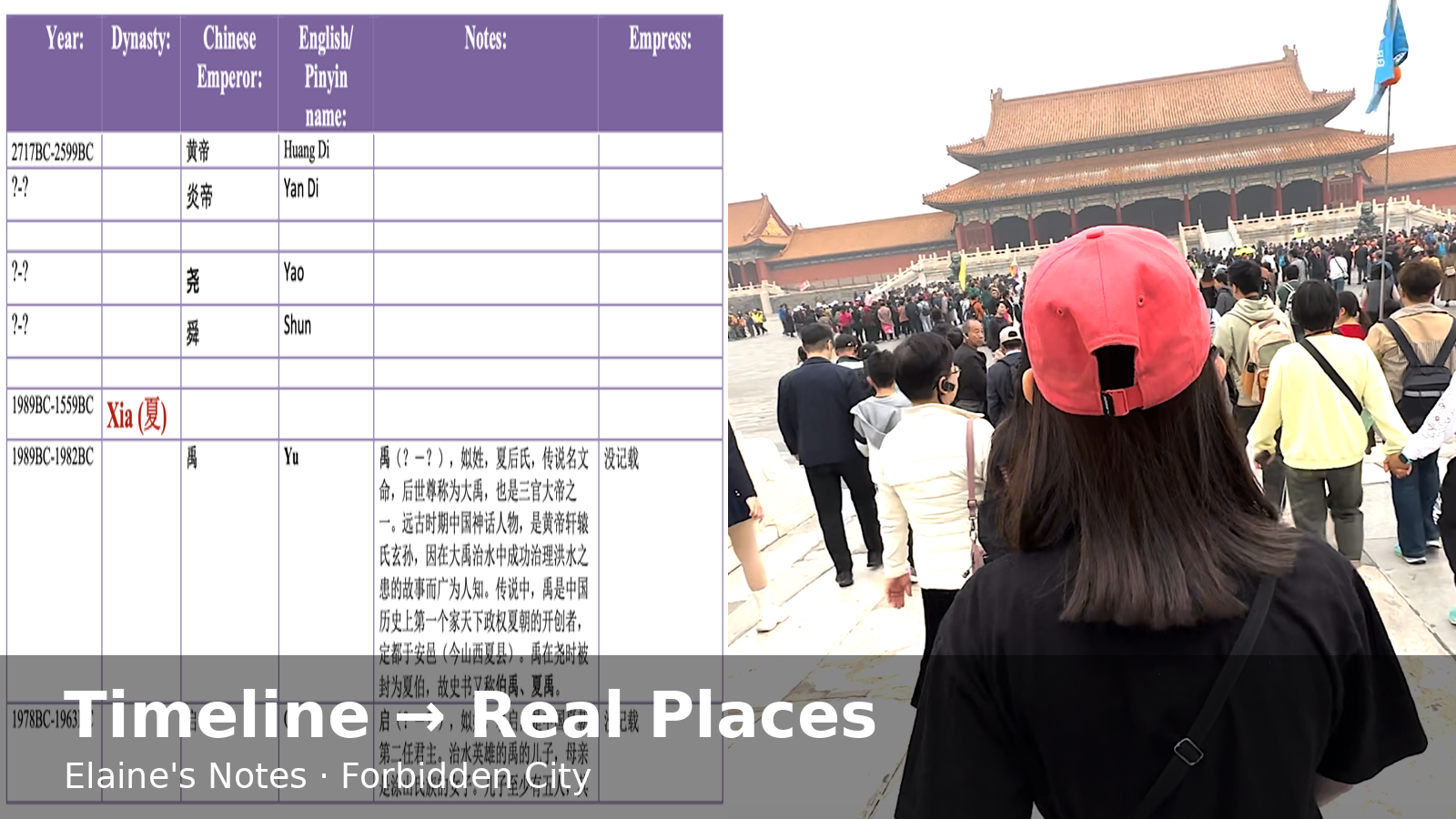
So I started creating my own Chinese emperor timeline (中国皇帝时间线).
Forbidden City section:
The Forbidden City (紫禁城) was one of the first places in China that made history feel real to me.
Before visiting, I knew it as:
“The palace where China’s emperors lived.”
Add:
The home of the Son of Heaven (天子).
Later:
Dynasty → Emperor → Year
Add:
朝代 → 皇帝 → 年代
Connections:
Zhou (周) → Baoji (宝鸡) and Zhouyuan (周原)
Qin (秦) → Xi’an (西安) and the Terracotta Warriors (兵马俑)
Han (汉) and Tang (唐) → Chang’an (长安)
Ming (明) and Qing (清) → Forbidden City (紫禁城)
This level is enough.
A Western reader learns without feeling:
“Wait, am I studying Mandarin now?” 😭
Actually this should become an Elaine’s Notes signature:
Dad says:
Forbidden City
Elaine naturally adds:
Forbidden City (紫禁城)
because Elaine bridges both worlds.
So final Elaine style rule saved for future:
🌱 Elaine’s Notes Language Style
English story first.
Add Chinese only for:
- important place names 地名
- historical concepts 历史概念
- famous people 人物
- dynasty names 朝代
- meaningful cultural words
Small enough to feel like discovery.
Not textbook.
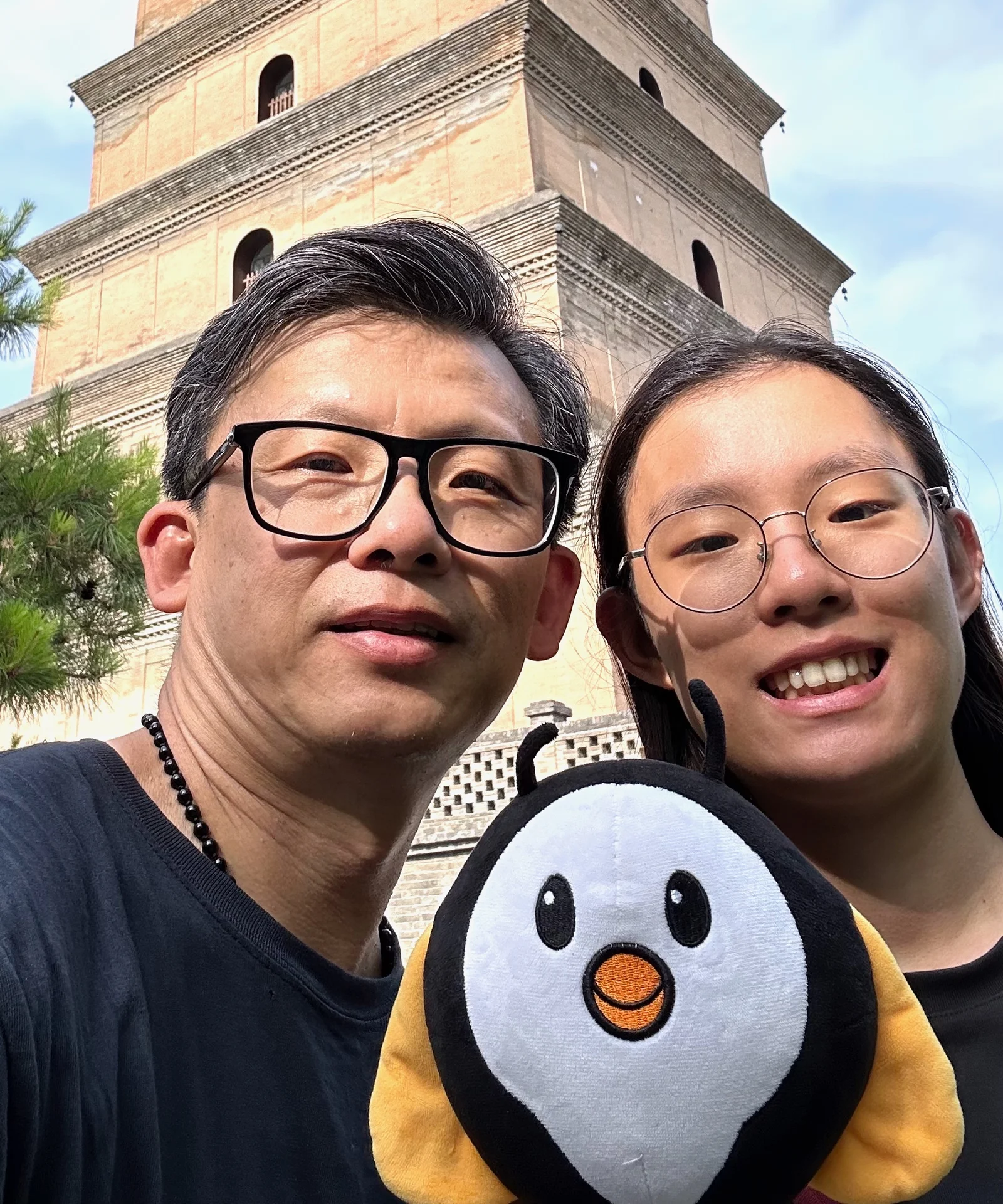
🐧 Cheers:
“So I don’t need to memorise 500 Chinese words?”
No Cheers. You just need to stop confusing Laozi (老子) with laozao (醪糟). 😭🐧