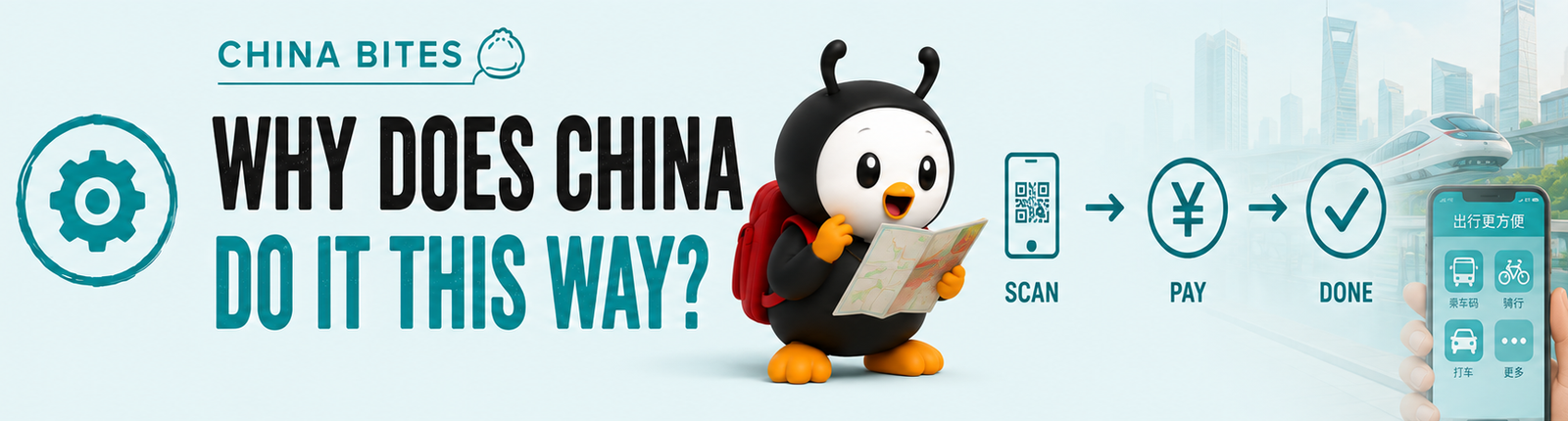
Walk around a Chinese city at lunchtime or early evening and you’ll start noticing them.
Riders in brightly colored helmets and jackets.
On electric scooters.
Outside restaurants.
Beside apartment compounds.
Checking their phones.
Why are there so many delivery riders?
🥟 The Quick Bite
China has an enormous on-demand delivery (外卖, wàimài) culture.
The word 外卖 (wàimài) literally means food or goods sold for consumption away from the premises, but in everyday China you’ll commonly hear it used for food delivery or takeaway.
Ordering a meal through your phone and having a rider bring it to your home or workplace has become an ordinary part of urban life for many people.
🌍 If You’re Trying to Place It…
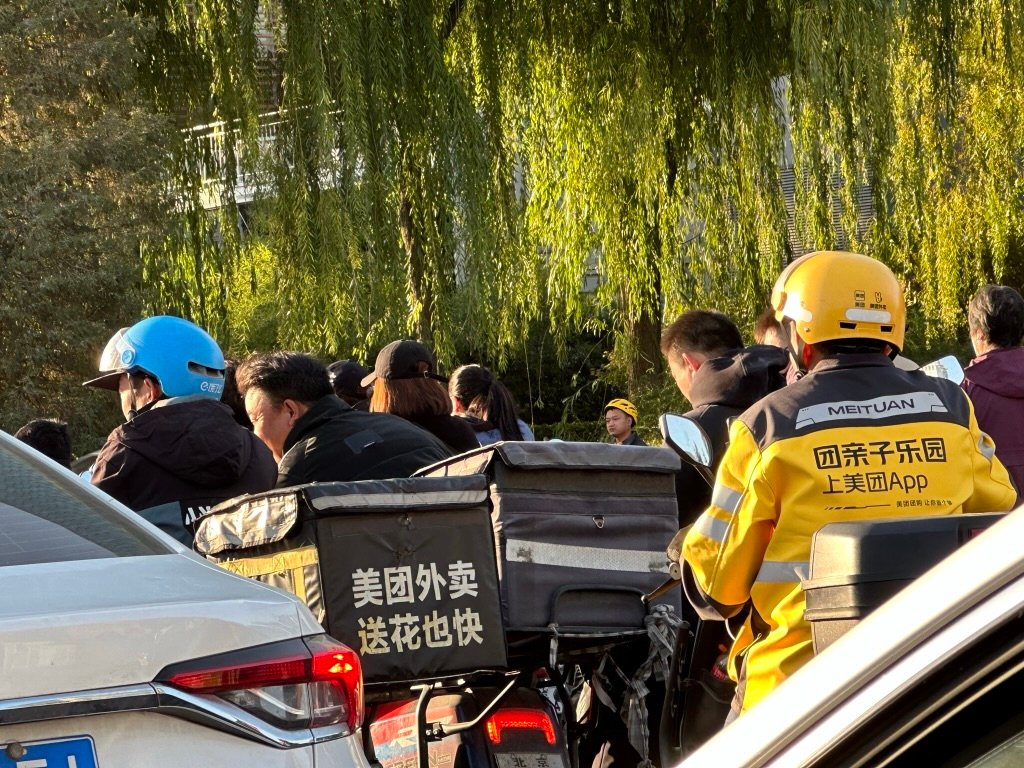
Think of services such as Uber Eats, DoorDash, Deliveroo or GrabFood.
Now imagine food delivery becoming deeply integrated into the same mobile-first ecosystem you’ve already noticed elsewhere in China.
Phone → order → pay → track rider → food arrives.
🛵 Why Electric Scooters?
Remember all those electric bikes (电动自行车, diàndòng zìxíngchē) you keep seeing?
They make sense for delivery work too.
They’re small, maneuverable and practical for repeated short journeys through dense urban neighborhoods.
So two things international travelers often notice in China are actually connected:
lots of e-bikes + lots of delivery riders.
👀 Two Useful Chinese Words
You’ll see these everywhere once you recognize them:
外卖 (wàimài) — food delivery / takeaway
快递 (kuàidì) — parcel / express delivery
They’re related, but not quite the same.
A rider carrying somebody’s lunch is doing 外卖.
That mountain of online-shopping parcels waiting for collection?
That’s 快递.
📦 Look Around an Apartment Compound
You may see delivery shelves, parcel lockers or collection points near residential communities.
That’s another clue to how much shopping and delivery happen through China’s digital ecosystem.
What looks like:
“Why are there packages everywhere?” 😂
is another part of the same story as QR codes and phone payments.
🥟 One Last Bite
The delivery rider weaving through traffic isn’t just another scooter.
They’re part of an enormous everyday system connecting:
smartphone + digital payment + restaurant/shop + electric bike + your front door.
Once you understand that system, Chinese city streets start looking a little different.
See China. Understand It Better.