Optimising Your Travel Energy to Experience China’s Greatest Capital
Quick Answer
If you’re visiting Beijing for the first time, here’s our advice in one sentence:
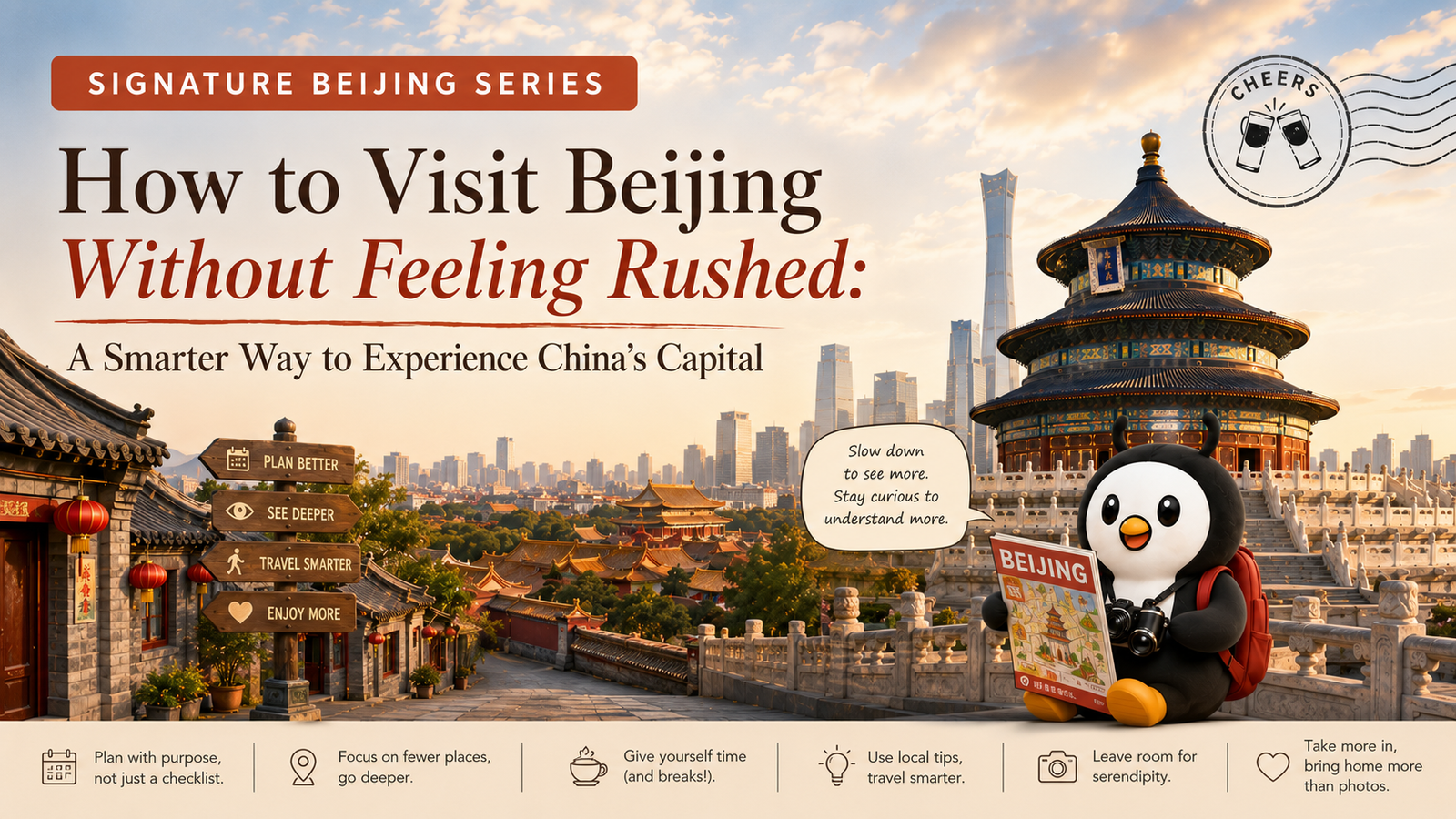
Don’t optimise your itinerary—optimise your experience.
Many first-time visitors focus on squeezing as many famous attractions as possible into four or five days. We understand the temptation. Beijing is home to an extraordinary concentration of imperial palaces, ancient temples, UNESCO World Heritage Sites, museums, parks and neighbourhoods that have shaped China’s history for centuries.
But after travelling through Beijing several times, Elaine and I realised something important.
The biggest challenge isn’t deciding what to visit.
It’s preserving enough time, energy and curiosity to actually experience the city.
In our opinion, one of the smartest decisions first-time Western visitors can make is to combine careful planning with the right travel style—whether that’s independent exploration, a well-organised sightseeing tour or, for many travellers, a knowledgeable licensed private guide for several days.
Because Beijing isn’t simply a city to see.
It’s a city to experience.
And those experiences become the memories that stay with you long after you’ve returned home.
Beijing Is Different
Almost every major city has famous attractions.
Paris has the Eiffel Tower.
Rome has the Colosseum.
London has Buckingham Palace.
New York has Central Park.
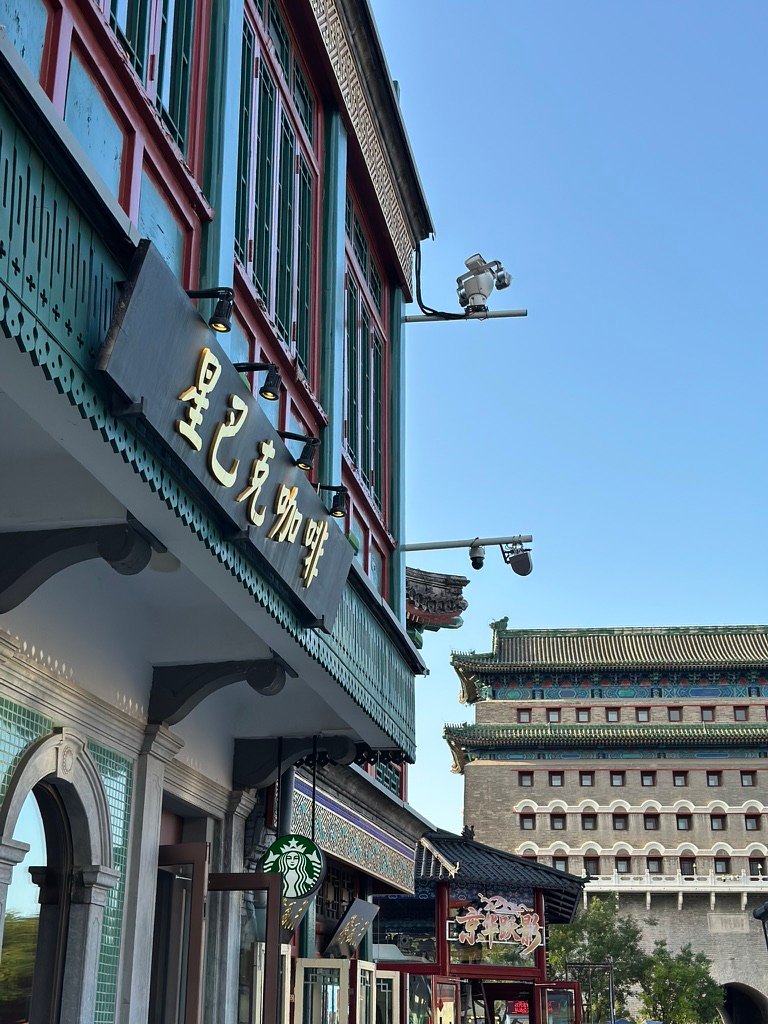
Beijing has all of those—multiplied.
Within one city you can visit:
- the Forbidden City
- the Temple of Heaven
- the Summer Palace
- the Great Wall
- the Ming Tombs
- the Lama Temple
- Tiananmen Square
- the National Museum of China
- the Capital Museum
- centuries-old Hutongs
- Olympic Park
- modern art districts
- imperial gardens
- traditional markets
Very few cities in the world offer such an astonishing concentration of places that have influenced the course of a civilisation.
Some are UNESCO World Heritage Sites.
Others aren’t UNESCO-listed but are equally significant in helping visitors understand Chinese history, philosophy and daily life.
The challenge isn’t finding things to do.
The challenge is accepting that you simply can’t do everything.
And that’s perfectly fine.
Don’t Count Attractions. Count Experiences.
Many travel guides encourage visitors to maximise every hour.
We’d like to suggest something slightly different.
Maximise every experience.
That may sound like a small difference.
It isn’t.
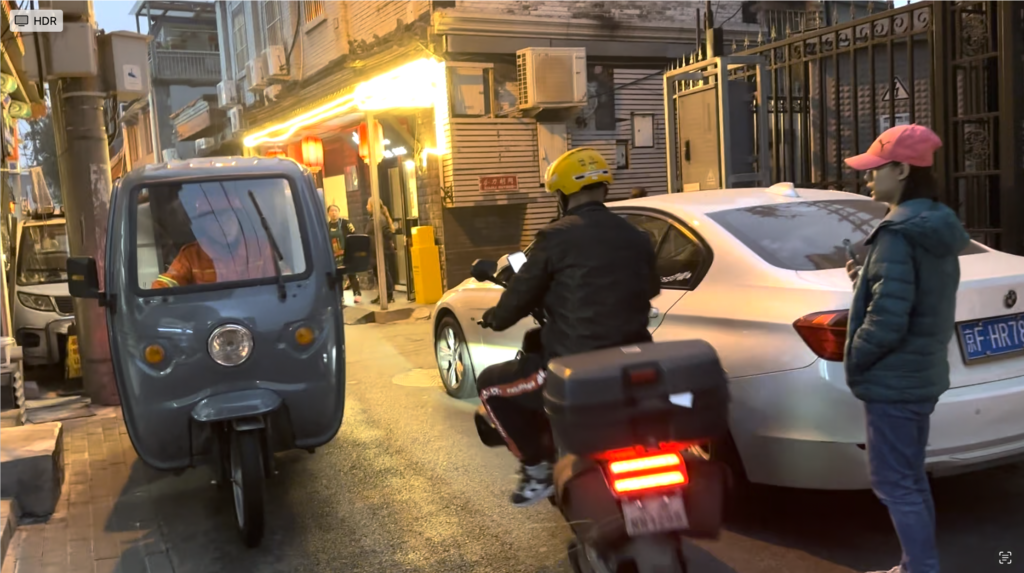
Imagine spending five days constantly checking maps.
Watching the clock.
Calculating Metro connections.
Wondering if you’ll make your timed reservation.
Trying to fit “just one more attraction” into the afternoon.
Technically, you’ll visit a lot.
But mentally?
You’ll spend much of your holiday solving logistical problems instead of absorbing Beijing itself.
After all, your brain has limits.
Every decision consumes attention.
Every unexpected detour uses energy.
By the end of the day, you may still be physically capable of visiting another attraction.
But mentally, you’ve stopped noticing what makes Beijing special.
The ChinaTravelBug Philosophy: Travel Energy Matters
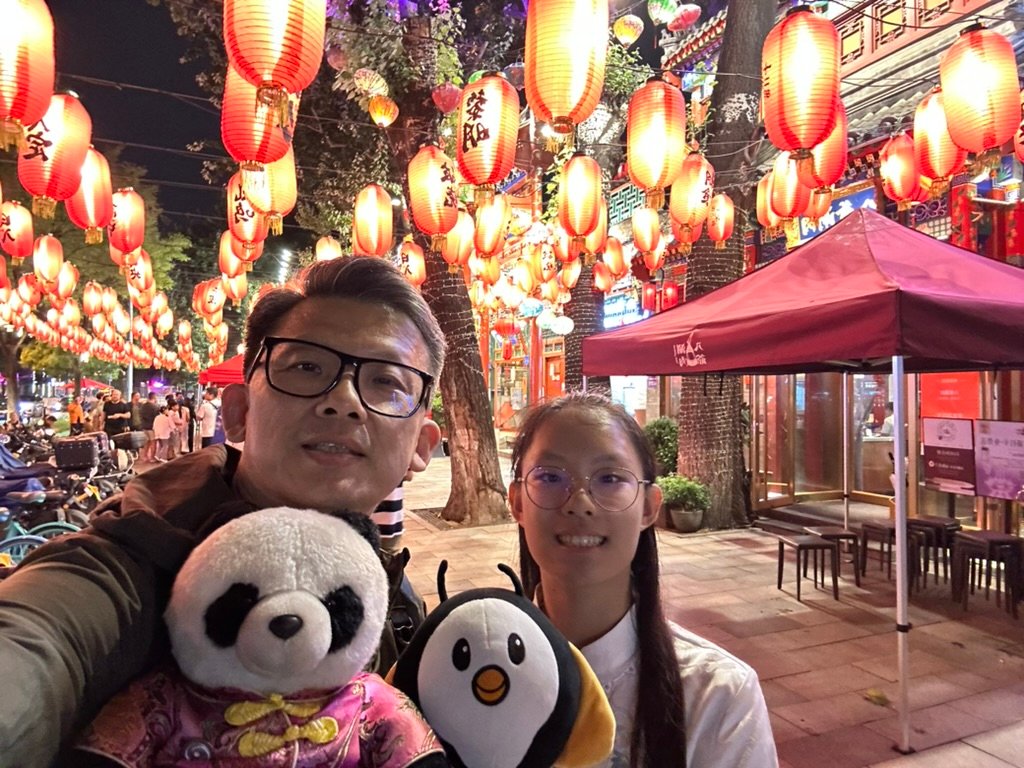
Over time, Elaine and I began thinking about something we now call Travel Energy.
Every traveller has three limited resources.
Time.
Money.
Energy.
Most travel articles talk about the first two.
Very few talk about the third.
Travel energy isn’t physical fitness.
It’s your ability to stay curious.
To observe.
To appreciate.
To ask questions.
To notice details that don’t appear on postcards.
That energy disappears surprisingly quickly when you’re navigating one of the world’s largest cities.
Good planning doesn’t simply save time.
It protects your attention.
And your attention is where memorable travel begins.
Why Beijing Rewards Good Planning
Unlike Xi’an, where many of the city’s iconic attractions are relatively concentrated, Beijing spreads its treasures across an enormous metropolitan area.
Distances are longer.
Traffic can be unpredictable.
Individual attractions are huge.
The Forbidden City isn’t a quick photo stop.
Even walking from the Meridian Gate to the Imperial Garden takes time, and that’s before you pause to appreciate the magnificent halls, courtyards and architectural symbolism that unfold along the way.
The Summer Palace deserves at least half a day.
The Great Wall deserves a full day.
Many museums require advance reservations.
Most, if not all museums close on Mondays.
Others stop admitting visitors well before closing time.
Without planning, it’s surprisingly easy to spend more time moving between attractions than actually enjoying them.
Good planning isn’t about creating a rigid schedule.
It’s about removing unnecessary stress so you can fully immerse yourself in each destination.
Independent Travel, Group Tours or Private Guides?
One of the questions we’re often asked is:
“Should I explore Beijing independently, join a group tour or hire a private guide?”
Our answer is simple.
Use the right travel style for the right experience.
Independent exploration is wonderful for Beijing’s Hutongs, neighbourhood cafés, local parks and quieter museums.
These are places where wandering slowly often reveals unexpected discoveries.
Large group tours can also work well if you’re looking for an affordable introduction to Beijing’s major highlights.
But if Beijing is your first visit to China—and especially if it may be your only visit—we believe there’s another option that deserves serious consideration.
A licensed private guide.
Not necessarily for one day.
But perhaps for two or even three days.
Why a Multi-Day Private Guide Can Be Worth Every Penny
Many Western travellers initially see a private guide as a luxury.
We used to think the same way.
Now we see it differently.
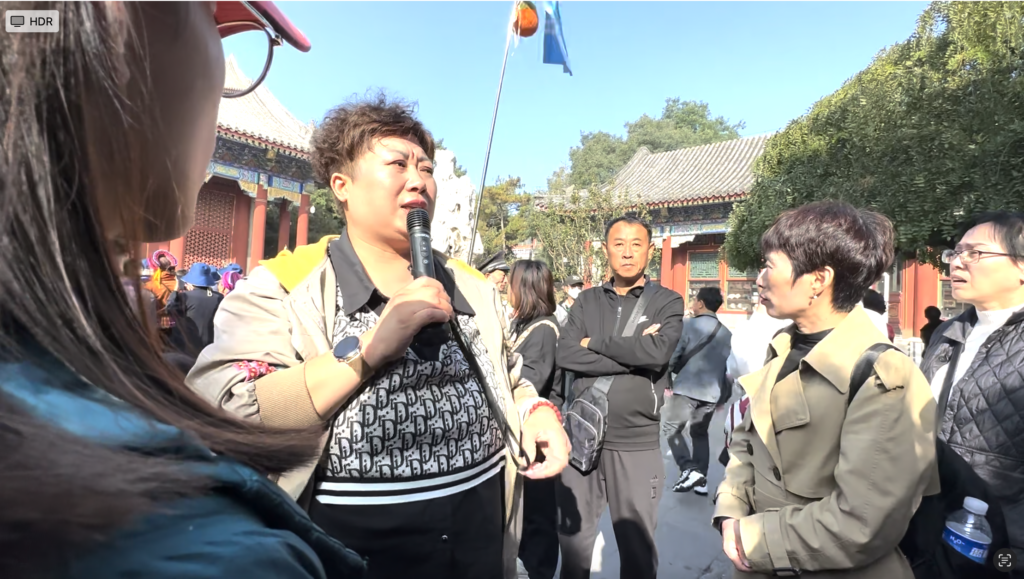
A good private guide isn’t simply someone who shows you around.
They’re someone who removes countless small decisions from your day.
They know the city’s rhythm.
They understand traffic patterns.
They know the most efficient order to visit attractions.
They adapt when crowds build unexpectedly.
They explain details that no information board ever could.
Most importantly, they transform buildings into stories.
The Hall of Supreme Harmony is no longer just an impressive wooden structure.
It becomes the stage where emperors exercised supreme authority.
The Temple of Heaven becomes more than beautiful architecture.
It becomes a place where emperors believed the harmony between Heaven and Earth determined the fate of an entire empire.
The Summer Palace becomes more than a picturesque lake.
It becomes a window into imperial life, political intrigue and the extraordinary ambitions of Empress Dowager Cixi.
That transformation—from sightseeing to understanding—is where a great guide adds the greatest value.
More Than Saving Time
The biggest benefit of a private guide isn’t efficiency.
It’s freedom.
Freedom from constantly thinking about logistics.
Freedom to linger when something fascinates you.
Freedom to ask questions.
Freedom to change your plans.
Freedom to become curious.
And curiosity is where meaningful travel begins.
The Lesson We Learnt in Macau
Our thinking changed dramatically during our visit to Macau.
Instead of joining a standard coach tour, we hired a licensed private guide who travelled with us in a private vehicle.
The difference wasn’t luxury.
It was flexibility.
We weren’t rushing because another forty passengers were waiting.
If we wanted another fifteen minutes at a historic church, we simply stayed.
If a conversation became interesting, nobody looked at their watch.
One moment perfectly captured the difference.
Elaine had read about the original Portuguese egg tart shop and wanted to visit its birthplace.
It wasn’t part of the standard itinerary.
Our guide smiled, adjusted the day’s route and took us there.
Watching Elaine enjoy that warm egg tart where the story began became one of our favourite memories of Macau.
No large coach tour could ever have created that moment.
It reminded us that the most memorable travel experiences are often the ones you never planned.
That lesson stayed with us.
And if a private guide made such a difference in Macau, a city that can comfortably be explored in a day or two, imagine the value that same flexibility can bring to a city as vast and historically rich as Beijing.
Beijing Deserves More Than a Checklist
If your goal is simply to collect photographs of famous landmarks, then any itinerary will probably do.
But if your goal is to understand Beijing—and through Beijing, begin understanding China—we believe a different approach is worth considering.
Spend less energy navigating.
Spend more energy observing.
Notice the elderly residents practising tai chi beneath ancient cypress trees.
Listen to retired Beijingers singing revolutionary songs in the parks.
Watch families flying kites near the Temple of Heaven.
Pause to admire the symmetry of imperial architecture.
Ask why dragon carvings appear everywhere.
Wonder why every palace seems aligned on a perfect north-south axis.
These moments rarely happen when you’re constantly rushing towards the next attraction.
They happen when your mind has the freedom to notice them.
The Memories You’ll Actually Bring Home
Years from now, you probably won’t remember which Metro Line took you to the Summer Palace.
You won’t remember how many escalators you climbed.
Or exactly which ticket counter you used.
What you’ll remember is standing inside the Forbidden City, imagining emperors walking the same courtyards six hundred years ago.
You’ll remember watching the morning mist drift across the Great Wall.
You’ll remember the quiet beauty of Kunming Lake.
You’ll remember a conversation with a local guide that suddenly made centuries of Chinese history feel alive.
You’ll remember Elaine’s excitement when she found the original Portuguese egg tart shop in Macau because someone local made that unexpected moment possible.
Those are the memories that stay with us.
Not because they were perfectly scheduled.
But because we experienced them fully.
What We Learned
Looking back, perhaps the biggest lesson Beijing taught us wasn’t about transport.
Or reservations.
Or Metro systems.
It taught us HOW to travel.
GOOD PLANNING isn’t about squeezing more attractions into a holiday.
Good planning creates the space to appreciate the attractions you’ve already chosen.
For many first-time Western visitors, that may mean slowing down.
It may mean accepting that you can’t see everything.
And it may even mean investing in a knowledgeable licensed private guide for several days—not because Beijing is difficult, but because Beijing is simply too important to rush.
The cost of a private guide is quickly forgotten.
The MEMORIES of an extraordinary journey are not.
At ChinaTravelBug, we believe the purpose of planning isn’t to optimise your itinerary.
It’s to optimise your experience.
Because when you leave Beijing with your curiosity still alive—not your energy completely exhausted—you don’t just return home with better photographs.
You return home with stories.
With memories.
With a deeper appreciation of one of the world’s greatest capitals.
And perhaps, just perhaps, with the beginning of a lifelong fascination with China.

Why Beijing Is the Best Place to Begin Understanding China
Many first-time visitors see Beijing as China’s political capital.
They’re right.
But Beijing is much more than that.
It is one of the very few cities in the world where more than eight centuries of a civilisation’s story remain visible within a modern metropolis.
Every dynasty that ruled from Beijing left something behind.
The Yuan Dynasty established Beijing as the capital of a unified empire.
The Ming Dynasty transformed it into one of the world’s greatest planned imperial cities, constructing the Forbidden City, the Temple of Heaven and much of the city layout that still defines central Beijing today.
The Qing Dynasty expanded and enriched the capital with magnificent gardens such as the Summer Palace, while preserving imperial traditions that continued until the early twentieth century.
Modern Beijing then became the political heart of contemporary China, where historic landmarks stand alongside high-speed rail, advanced technology and one of the world’s largest urban economies.
Few cities allow you to walk through so many different chapters of a nation’s history in just a few days.
That’s why Beijing isn’t simply a collection of famous attractions.
It’s the place where China’s story begins to come together.
The Forbidden City explains imperial government.
The Temple of Heaven reveals the traditional Chinese belief that good government depended upon harmony between Heaven and Earth.
The Great Wall tells the story of defending a vast civilisation across difficult frontiers.
The Hutongs remind visitors that beyond emperors and palaces, ordinary families have shaped Beijing’s identity for centuries.
Even Tiananmen Square helps visitors understand how modern China presents itself to its own people and to the world.
Seen individually, these are remarkable attractions.
Seen together, they become something much more powerful.
They become chapters of one continuous story.
This is why we encourage visitors not to rush from one famous landmark to the next.
The greatest reward isn’t collecting UNESCO World Heritage Sites.
It’s gradually seeing how they connect.
When those connections begin to appear, Beijing stops feeling like a list of places to visit.
It starts feeling like the gateway to understanding China itself.
ChinaTraveBug Reflection
At ChinaTravelBug, we believe travel is at its best when it satisfies both the heart and the mind.
Beautiful photographs will always remind us where we went.
But understanding why a place mattered creates memories that last much longer.
That’s why we encourage you to leave a little space in every Beijing itinerary.
Not simply to rest.
But to pause.
To ask questions.
To listen to your guide.
To sit quietly in an imperial garden.
To imagine the emperors, scholars, soldiers and ordinary citizens who walked these same paths hundreds of years before you.
Because the goal isn’t just to visit Beijing.
It’s to experience it.
And through that experience, begin understanding one of the world’s oldest continuous civilisations.
It’s where your understanding of China begins.
Beijing isn’t the end of your China journey.