Hong Kong (香港, Xiānggǎng) can be one of the easiest places in Asia to explore independently — but first-time visitors still face a surprising number of decisions.
Where should you stay?
How do you get from the airport to your hotel?
Do you need an Octopus card?
Should you stay in Tsim Sha Tsui or on Hong Kong Island?
How many days do you need?
Can you visit the Big Buddha and Tai O on your own?
And if Macau is sitting just across the water… should you add that too?
We know because travelers keep asking us exactly these questions.
So instead of creating another giant Hong Kong checklist, this guide brings together the big decisions you need to make before your first Hong Kong trip — with links to our detailed answers whenever you want to go deeper.
🐞 First: We’ve Actually Traveled Hong Kong Ourselves
ChinaTravelBUG isn’t writing about Hong Kong only from behind a laptop.
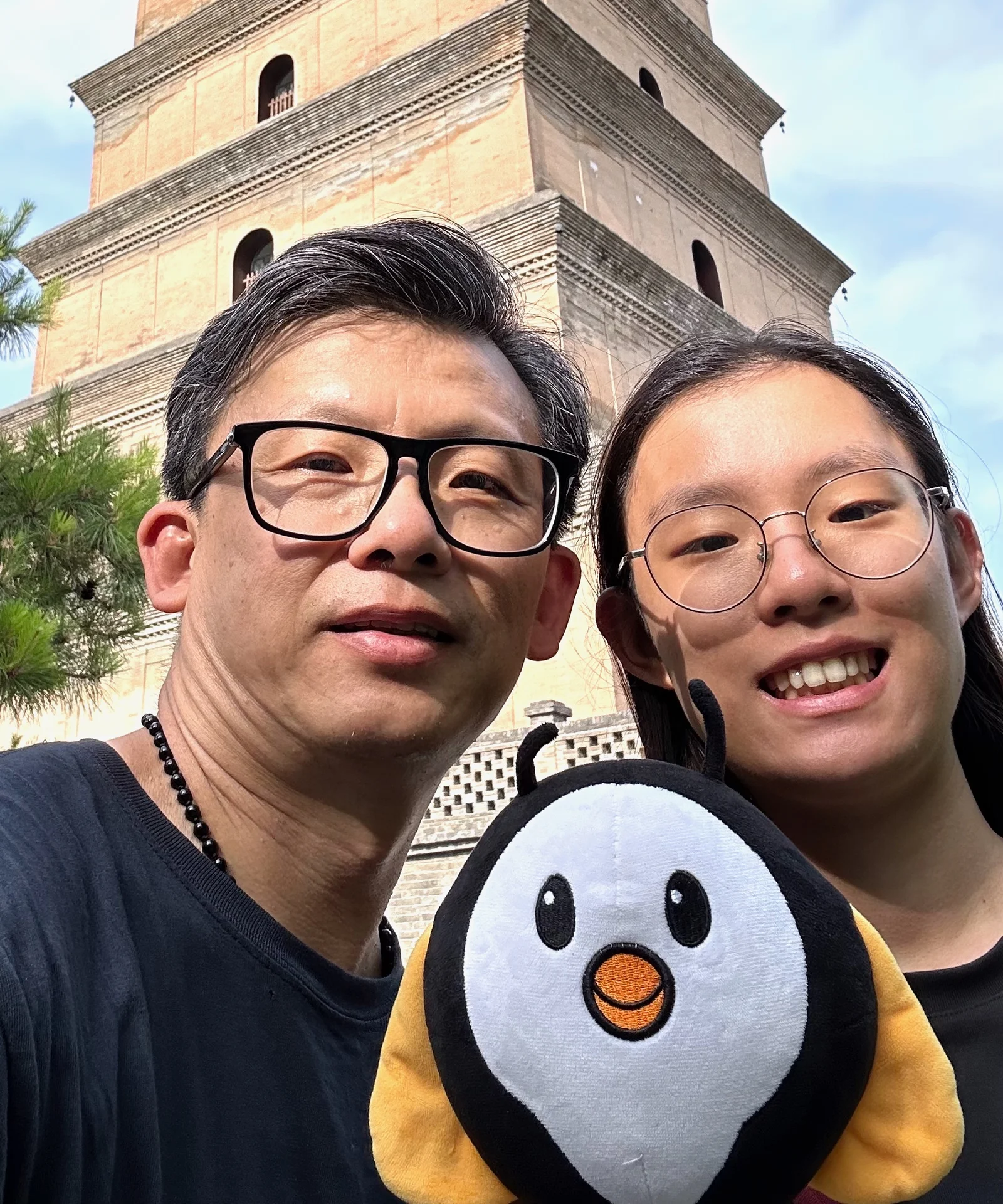
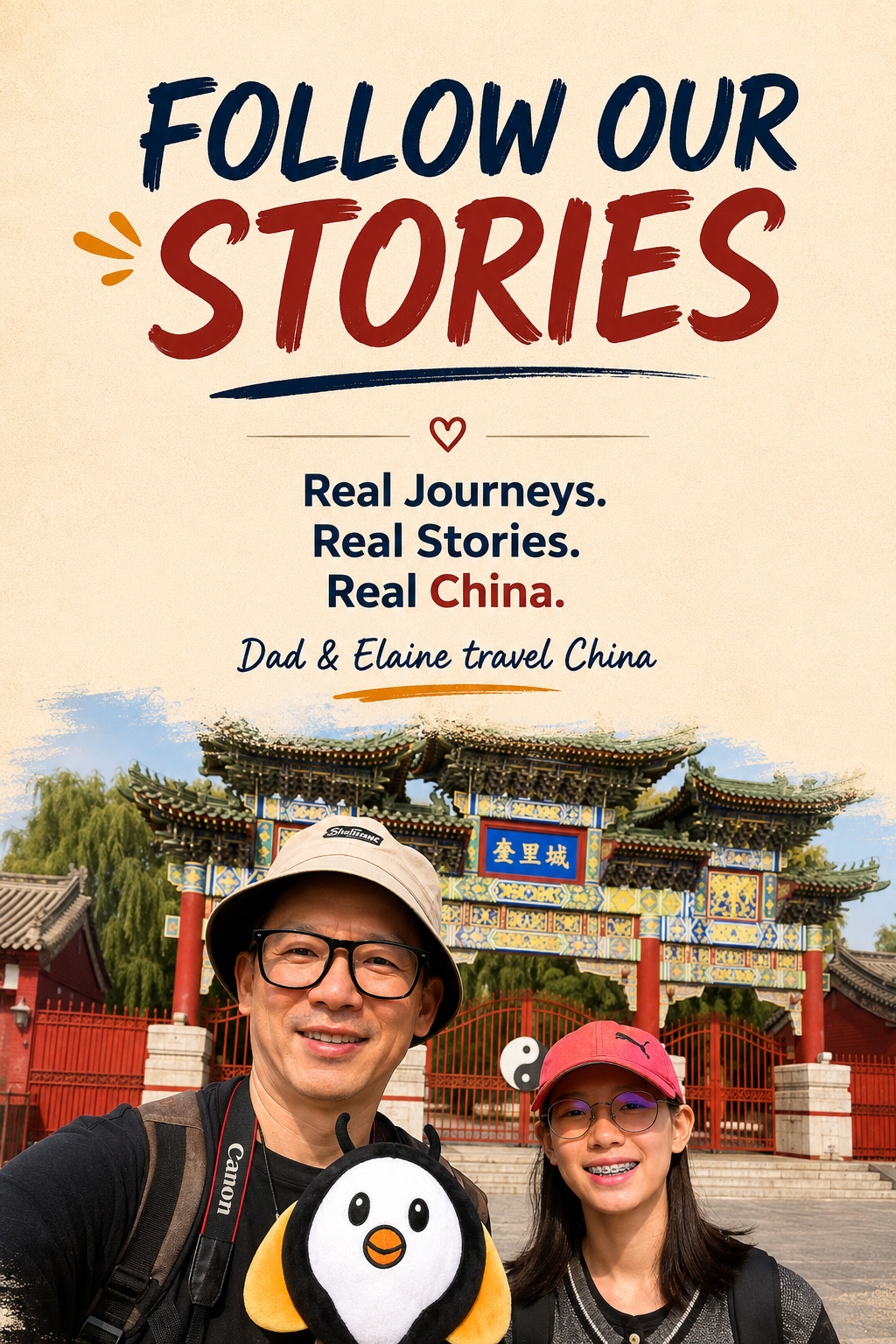
Dad and Elaine traveled Hong Kong independently, used its public transportation, stayed in Sheung Wan, explored the city and then continued to Macau (澳门, Àomén).
We went to Macau by ferry and returned to Hong Kong across the Hong Kong–Zhuhai–Macau Bridge.
Along the way, we’ve also been collecting real questions from travelers planning their own Hong Kong trips.
Those questions have taught us something useful:
First-time visitors usually don’t need more lists.
They need help making a handful of good decisions.
So let’s start there.
1. How Many Days Do You Need in Hong Kong?
For most first-time visitors, four to five days gives you enough time to experience Hong Kong without turning the trip into an attraction-collecting competition.
With five days, you could comfortably combine:
- Victoria Harbour and Tsim Sha Tsui
- Central and Sheung Wan
- Victoria Peak
- Kowloon neighborhoods
- Lantau Island
- local food
- shopping
- and perhaps a day trip to Macau
But don’t fill every available hour.
Hong Kong rewards wandering.
Take the Star Ferry.
Ride a tram.
Walk into a neighborhood bakery.
Have breakfast in a cha chaan teng (茶餐廳).
Get off the MTR and discover that the neighborhood above the station looks nothing like the one you just left.
That’s part of Hong Kong too.
👉 See our 5-day Hong Kong DIY planning guide
2. Can You Travel Hong Kong Independently?
For most visitors:
Yes.
Hong Kong is very well suited to independent travel.
The MTR handles many major journeys, buses extend the network much further, ferries connect different parts of the territory, and taxis are useful when convenience matters more than saving every dollar.
English is also widely used on transportation signage.
The more important skill isn’t knowing Cantonese.
It’s understanding how Hong Kong fits together geographically.
You’ll hear names such as:
Hong Kong Island
Kowloon
New Territories
Lantau Island
And within those are neighborhoods such as:
Central, Sheung Wan, Causeway Bay, Tsim Sha Tsui, Jordan, Yau Ma Tei and Mong Kok.
Once you stop thinking of Hong Kong as one giant city center, planning becomes much easier.
3. Where Should a First-Time Visitor Stay?
This is one of the most important decisions you’ll make.
But there isn’t one universally “best” neighborhood.
Two particularly useful first-time bases are:
Tsim Sha Tsui
Stay around Tsim Sha Tsui (尖沙咀, Jīm Sā Jéui) if you want the classic first-trip Hong Kong experience close to:
- Victoria Harbour
- Avenue of Stars
- Star Ferry
- Nathan Road
- Kowloon restaurants and shopping
- easy MTR connections
There’s something rather special about walking toward Victoria Harbour and seeing the Hong Kong Island skyline across the water.
Central / Sheung Wan
Stay around Central (中環, Zhōnghuán) or Sheung Wan (上環, Shànghuán) if you prefer Hong Kong Island and want convenient access to:
- Central
- historic streets
- trams
- restaurants and cafés
- Victoria Peak connections
- Hong Kong–Macau ferry services
Dad and Elaine stayed at Ibis Hong Kong Central & Sheung Wan, so this is an area we know from firsthand experience.
🐞 Our practical rule
Don’t choose a Hong Kong hotel by room price alone.
Compare:
hotel price + room size + walking distance to transport + food nearby + how easy it will be to return after a long day
A cheaper room isn’t necessarily better value if every day begins and ends with an inconvenient journey.
👉 Tsim Sha Tsui vs Central: Where Should You Stay in Hong Kong for a First Trip?
👉 Where to Stay in Hong Kong for a First-Time Solo Traveler: Which Areas Are Best Near the MTR?
🏨 Looking for a Hong Kong hotel?
👉 Check Hong Kong hotels & current prices on Trip.com
ChinaTravelBUG may earn a commission if you book through our Trip.com links, at no extra cost to you.
4. Arriving at Hong Kong International Airport
Hong Kong International Airport can feel remarkably manageable once you know the sequence.
Think:
Immigration → baggage → customs → Arrivals Hall → transport → hotel
You don’t need to solve everything before collecting your luggage.
Dad and Elaine documented what we actually did from landing until reaching our hotel.
👉 Read our Hong Kong Airport Arrival Guide — exactly what we did after landing
5. Airport Express, Airport Bus or Taxi?
There isn’t one correct answer.
It depends heavily on where your hotel actually is.
Airport Express
Fast and comfortable.
But remember:
Airport Express station ≠ your hotel.
If you’re staying in Tsim Sha Tsui, for example, arriving at Kowloon Station may still leave you needing another connection or taxi.
Airport Bus
Often excellent value.
If an airport bus stops only a few minutes from your hotel, it can be easier than:
Airport Express → station → luggage → taxi → hotel.
Taxi
Costs more, but sometimes convenience wins.
After a very long flight, with young children, elderly parents or several suitcases, door-to-door transportation can be worth paying for.
🐞 ChinaTravelBUG rule
Don’t compare:
airport → station
Compare:
airport → hotel room
That’s the journey you actually care about.
👉 Hong Kong Airport to Tsim Sha Tsui: Airport Express, Bus or Taxi?
6. Get an Octopus Card Early
One little card can make everyday Hong Kong considerably easier.
The Octopus (八達通) is Hong Kong’s stored-value payment system and is widely used across public transportation and many everyday merchants.
For visitors, it can be useful for:
- MTR
- buses
- trams
- some ferries
- convenience stores
- other participating merchants
If you’re arriving at Hong Kong International Airport, you don’t need to search for one before collecting your luggage.
Complete the normal arrival process first and then sort out Octopus and transportation from the public Arrivals Hall.
👉 Where Can You Buy an Octopus Card at Hong Kong Airport?
🐞 Our advice: sort out your transportation setup early. It removes one small piece of friction from almost every day that follows.
7. Getting Around Hong Kong Is Part of the Experience
Don’t think only in terms of the MTR.
Hong Kong’s transportation is part of what makes visiting the city fun.
🚇 MTR
Usually the backbone of your journey.
Fast, extensive and particularly useful for moving between major urban areas.
🚋 Tram
Slower.
And that’s exactly why you should try it.
Sit upstairs if you can and watch Hong Kong Island pass by.
⛴️ Star Ferry
Don’t dismiss this as merely transportation between Kowloon and Hong Kong Island.
For a first-time visitor, crossing Victoria Harbour by ferry is one of Hong Kong’s simplest pleasures.
🚌 Buses
Especially useful when the railway doesn’t take you where you want to go.
They’re also important for places such as parts of Lantau Island.
🚕 Taxis
Useful when you’re tired, carrying luggage, traveling with children or simply don’t want three separate transport connections.
Independent travel doesn’t mean:
I MUST USE PUBLIC TRANSPORT FOR EVERYTHING.
😂
Use the transportation that makes sense for that particular journey.
8. What Should You Actually See on a First Hong Kong Trip?
Start with the icons.
But don’t stop with the icons.
For a first visit, we’d think in experiences, not just attractions.
See Victoria Harbour
Walk the Tsim Sha Tsui waterfront.
Look across toward Hong Kong Island.
Then cross the harbor instead of only photographing it.
Experience Hong Kong Island
Explore Central and Sheung Wan.
Ride a tram.
Walk.
Look upward.
Look down the side streets.
See Hong Kong From Above
Victoria Peak is famous for a reason.
But visibility matters.
A perfectly timed sunset visit isn’t particularly useful if Hong Kong has disappeared behind cloud.
Check the weather and visibility rather than planning solely around Instagram’s preferred hour.
Experience Kowloon at Street Level
Don’t treat Kowloon merely as the place from which you photograph Hong Kong Island.
Walk through neighborhoods such as Jordan, Yau Ma Tei and Mong Kok.
Leave the Dense City
Hong Kong is not only skyscrapers.
It also has:
mountains + islands + beaches + hiking trails + villages + country parks
That contrast surprises many first-time visitors.
👉 First Trip to Hong Kong: What Should You See, Eat & Experience?
9. Should You Visit Ngong Ping, the Big Buddha and Tai O?
For many first-time visitors, yes — especially if you want to see a very different side of Hong Kong.
On Lantau Island (大嶼山, Dàyǔshān), travelers commonly combine:
Ngong Ping 360 → Big Buddha → Po Lin Monastery → Tai O
This can usually be done independently.
A tour becomes more attractive if you prefer:
- someone else organizing the logistics
- a guide providing context
- a more structured day
- less decision-making
Neither approach is automatically better.
👉 Ngong Ping 360, Big Buddha and Tai O: DIY or Book a Tour?
🎟️ Prefer to compare tours and activities?
👉 Check Hong Kong tours & activities on Trip.com
ChinaTravelBUG may earn a commission if you book through our Trip.com links, at no extra cost to you.
10. Don’t Forget to Eat Hong Kong
Food shouldn’t be something squeezed between attractions.
It is one of the experiences.
Look for things such as:
- dim sum
- wonton noodles
- roast meats
- congee
- bakeries
- Hong Kong-style milk tea
- local snacks
- cha chaan teng meals
And don’t make every meal a famous-restaurant mission.
Some of our favorite travel moments happen when we’re hungry, see somewhere busy with local people and think:
Shall we try that?
Sometimes you discover something wonderful.
Sometimes Elaine looks at Dad as if Dad has made another questionable life decision.
Both are travel experiences.
😂
11. What About Shopping?
Hong Kong has everything from luxury malls to neighborhood shops and markets.
But for expensive purchases — particularly jewelry, gold, electronics, cosmetics and branded goods — we’d prioritize reputable retailers and transparent pricing over the mysterious shop offering an unbelievable bargain.
For souvenirs, don’t overlook:
- supermarkets
- bakeries
- tea
- packaged snacks
- local food products
A souvenir doesn’t need HONG KONG printed across it to remind someone of Hong Kong.
Sometimes the edible one disappears fastest anyway.
12. What Should You Wear?
Hong Kong weather changes significantly through the year.
So there isn’t one Hong Kong packing list that works equally well in February, July and October.
In warmer months, heat and humidity can matter.
During winter, layers become much more useful — particularly when you’re outside near the harbor or in windy conditions.
The important distinction is:
historical climate tells you what Hong Kong is usually like.
The actual forecast tells you what to wear next week.
If you’re visiting during winter:
👉 Hong Kong in February: What to Do, What to Wear and Where to Shop
13. Hong Kong During Mainland China’s Major Holidays
Hong Kong has its own calendar and systems, but visitor numbers can still be affected by major Mainland Chinese holiday periods.
If your trip overlaps with a particularly busy period, don’t panic and rebuild the entire itinerary.
Instead:
- allow more time
- book important attractions earlier where appropriate
- avoid building very tight schedules
- expect popular locations to be busier
- retain some flexibility
👉 Hong Kong During China’s Golden Week: Airport to Tsim Sha Tsui, Victoria Peak Timing and Crowd Tips
14. Hong Kong With Young Children: DIY or Tour?
Hong Kong can work very well as a family DIY destination.
But there’s one important adjustment:
Don’t travel at adult speed.
With young children, we’d rather plan:
one major activity + one flexible activity
than four compulsory attractions.
Build in:
- bathroom stops
- snack stops
- slower walking
- weather breaks
- hotel resets
- occasional taxis when everyone has had enough
DIY doesn’t mean making the trip difficult simply to prove you can do it yourself.
👉 Hong Kong and Macau With a 4-Year-Old: Can You DIY the Trip?
15. Should You Add Macau?
This is where Hong Kong becomes even more interesting.
Macau (澳门, Àomén) is close enough to Hong Kong to make a day trip realistic.
But Macau shouldn’t be reduced to:
casinos + Ruins of St. Paul’s + egg tart + back to Hong Kong.
Its historic center reflects an unusual meeting of Chinese and Portuguese influences, while modern Macau can feel completely different again.
For a short Hong Kong trip, Macau isn’t compulsory.
If you have only three days in Hong Kong, we’d probably concentrate on Hong Kong.
If you have five days or longer, Macau becomes much easier to consider.
👉 Macau Day Trip From Hong Kong: Can You Do It on Your Own, and Is It Worth It?
16. 🐞 We Actually Did Hong Kong → Macau Ourselves
This wasn’t a theoretical itinerary for us.
Dad and Elaine traveled:
Hong Kong → Macau by ferry
then returned:
Macau → Hong Kong across the Hong Kong–Zhuhai–Macau Bridge
That gave us the chance to experience both major routes ourselves.
We documented the journey step by step, including the ferry terminal, immigration, transportation, our Macau experience and the return journey.
👉 Hong Kong to Macau Day Trip: Ferry to Macau, Bus Back to Hong Kong — Our Step-by-Step Journey
If you’re considering Macau, start there.
17. Hong Kong and Mainland China Are Not the Same Travel Setup
This is particularly important if Hong Kong is the beginning or end of a wider China trip.
Hong Kong is a Special Administrative Region of China, but many practical travel systems differ from Mainland China.
That can include:
- immigration arrangements
- transportation systems
- payment habits
- mobile connectivity
- commonly used apps
- currencies
So don’t assume that because something works one way in Hong Kong, it will work exactly the same way when you cross into Shenzhen or continue farther into Mainland China.
And don’t assume the reverse either.
If your itinerary is:
Hong Kong → Shenzhen → Guangzhou → deeper into China
prepare for that transition separately.
Hong Kong can be a wonderful gateway.
But the gateway and what lies beyond it are not identical.
18. A Simple First-Time Hong Kong Planning Formula
If all of this still feels like too much information, simplify it.
For your first trip, answer these questions in order:
1. How many full days do I actually have?
Not arrival day.
Not departure day.
Full usable days.
2. Which side of the harbor should I stay on?
Start by comparing:
Tsim Sha Tsui vs Central/Sheung Wan
3. How will I get from the airport to my actual hotel?
Not merely to the nearest major station.
4. What are my three must-do experiences?
Not fifteen.
Three.
5. Do I want one day outside the dense urban core?
Lantau is an obvious possibility.
6. Is Macau important enough to use one of my Hong Kong days?
If yes, plan it deliberately.
7. What should remain unplanned?
This may be the most underrated question.
Leave some space.
19. The ChinaTravelBUG Way to Experience Hong Kong
Our approach to travel is:
SEE → ASK → CONNECT → UNDERSTAND → FOLLOW
See Victoria Harbour.
Then ask why Hong Kong developed around this particular harbor.
Ride the Star Ferry.
Then notice how Kowloon and Hong Kong Island relate to each other.
Walk through Sheung Wan.
Notice temples, dried seafood shops, cafés, office workers and apartment towers sharing the same streets.
Visit Macau.
Then ask why Portuguese architecture, Chinese temples and enormous modern resorts exist within such a small territory.
That’s when a trip starts becoming more than:
I went there.
I took the photo.
Next attraction.
Hong Kong rewards curiosity.
20. Real Hong Kong Questions From Real Travelers
Still wondering about something very specific?
Good.
You’re probably not the first traveler to ask it.
ChinaTravelBUG has been collecting real Hong Kong and Macau questions from travelers — about hotels, airport transportation, Octopus cards, family travel, DIY itineraries, Lantau, Macau and more.
Instead of hiding those questions inside social-media threads, we’re turning them into useful answers other travelers can find.
👉 Browse Hong Kong & Macau Travel Questions — Answered
🐞 ChinaTravelBUG’s Bottom Line
Your first Hong Kong trip doesn’t need to be complicated.
Choose a convenient base.
Get comfortable with the transportation system.
Experience both sides of Victoria Harbour.
Eat things you’ve never tried before.
Leave the skyscrapers for at least one day.
Add Macau if you genuinely have the time and interest.
And don’t schedule every hour.
Because somewhere between the Peak, the MTR, the ferry, the noodles and the attraction you didn’t plan to visit…
Hong Kong usually finds a way to surprise you.
See Hong Kong. Ask questions. Understand it better.
🐞
More Hong Kong Guides Coming Next
This is the main planning guide in our Hong Kong series.
Next, we’ll go deeper into:
- Where to Stay in Hong Kong
- Getting Around Hong Kong
- What to Do in Hong Kong
- Hong Kong to Macau
Each guide will tackle one big planning decision in detail, while our real traveler questions answer the smaller questions travelers actually ask.
ChinaTravelBUG — See China. Understand It Better.