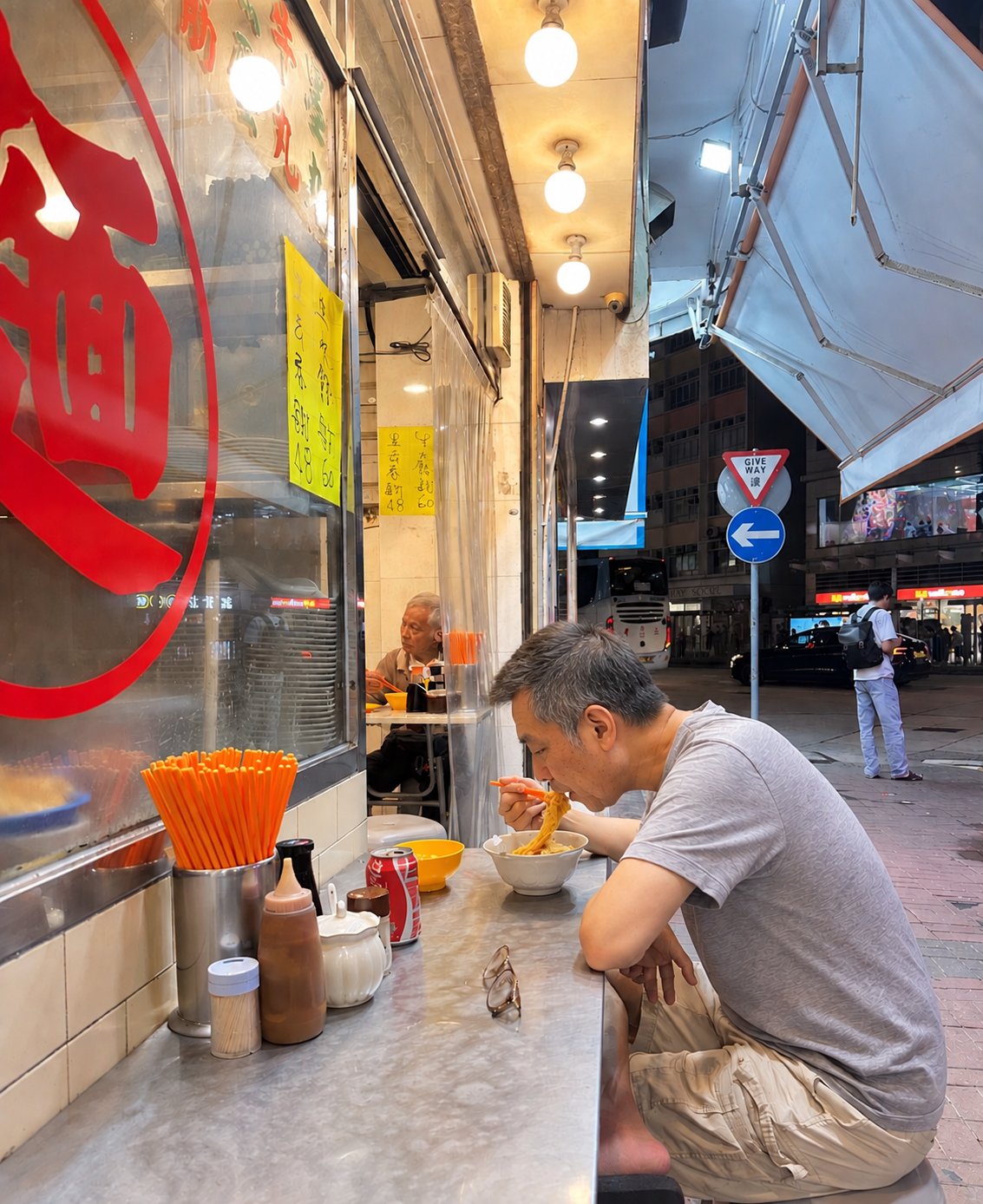
There are two ways to experience Hong Kong (香港).
You can wake up, leave your hotel and travel across the city before your sightseeing begins.
Or you can wake up…
walk downstairs…
and discover that Hong Kong (香港) has already started around you.
That was one of Dad’s favorite things about staying with Elaine in Mong Kok (旺角).
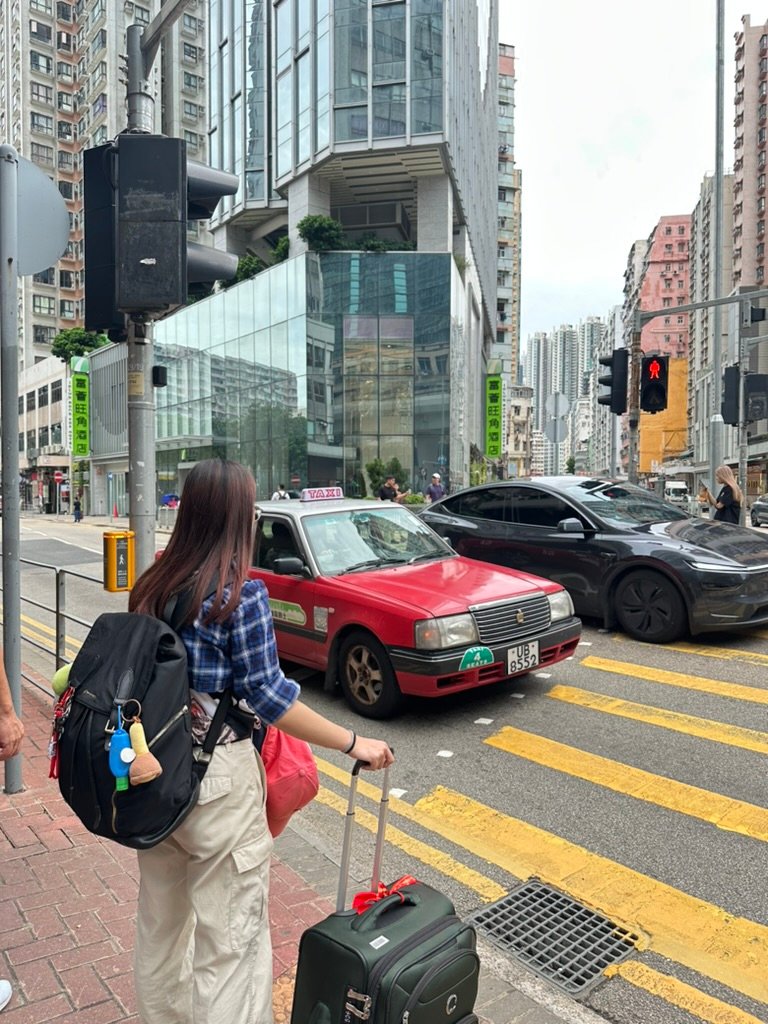
We stayed at iclub Mong Kok Hotel (旺角薈賢居), in a mature Kowloon (九龍) neighborhood where local shops, eateries, markets and everyday life were right outside our door.
One morning, Dad and Elaine simply went walking.
We found fruit sellers.
Fresh tofu.
Dried seafood.
Traditional ingredients Dad couldn’t identify.
Neighborhood bakeries and eateries.
Fresh noodles in more varieties than Dad expected.
Residents buying their morning groceries.
And a surprisingly long queue of seniors beside a kindergarten.
Dad thought he knew what they were waiting for.
He was completely wrong.
😂
Then, somewhere in the market, Dad photographed Superman pushing a bicycle.
Also unexpected.
🐞
This isn’t a list of “local Hong Kong experiences” compiled from the internet.
Dad and Elaine stayed here. We walked these streets. These are the shops, people, food and little moments Dad photographed that morning.
And the experience reinforced one of Dad’s favorite travel lessons:
Don’t just choose a hotel. Choose the neighborhood you want to wake up in.
Why Dad Chose Mong Kok (旺角)
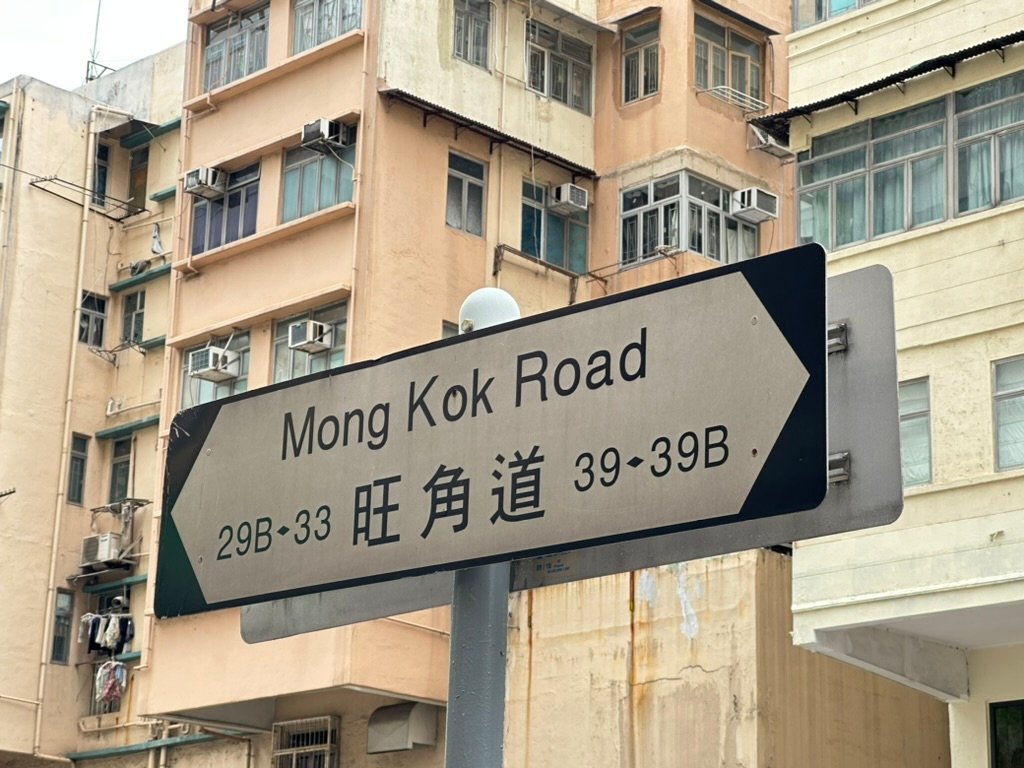
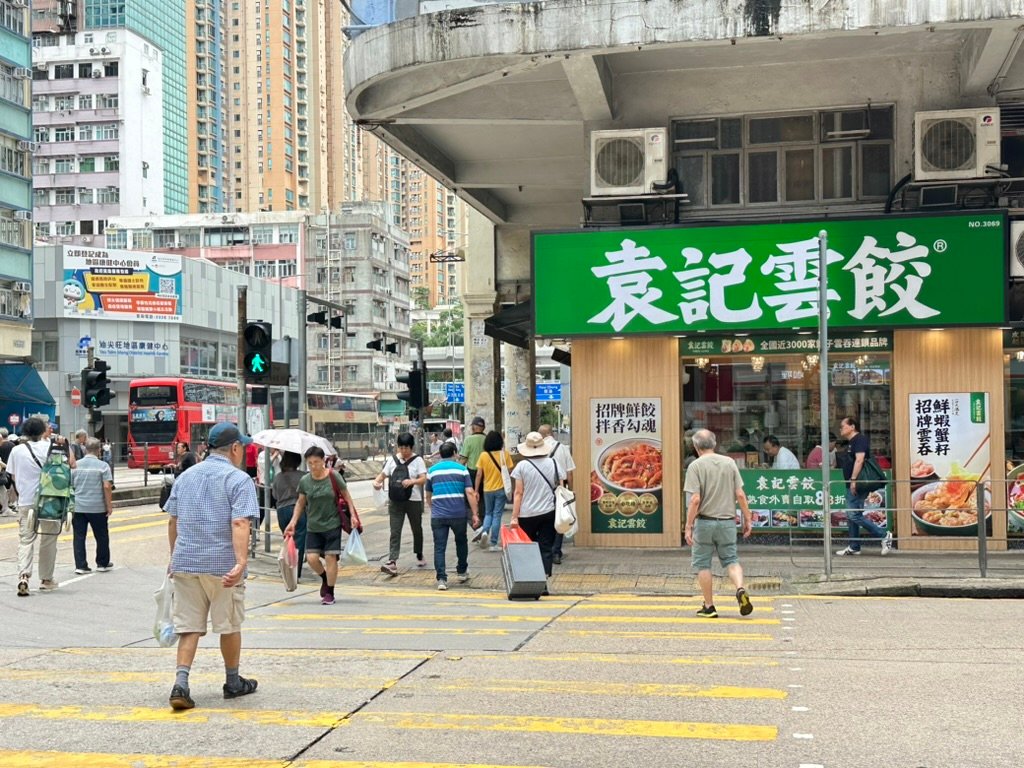
Dad doesn’t choose hotels only by room size, star rating or price.
Of course those things matter.
But increasingly, Dad asks another question:
What happens when we walk outside the hotel?
For this stay, Dad wanted Elaine to experience another side of Hong Kong (香港).
Not only the skyline.
Not only shopping malls.
Not only famous attractions.
Dad wanted her to wake up inside a mature neighborhood in Kowloon (九龍) where people actually live, shop and eat.
That’s why we chose Mong Kok (旺角).
And that’s why iclub Mong Kok Hotel (旺角薈賢居) worked so well for us.
It wasn’t simply our bedroom for the trip.
It became our base for experiencing the neighborhood.
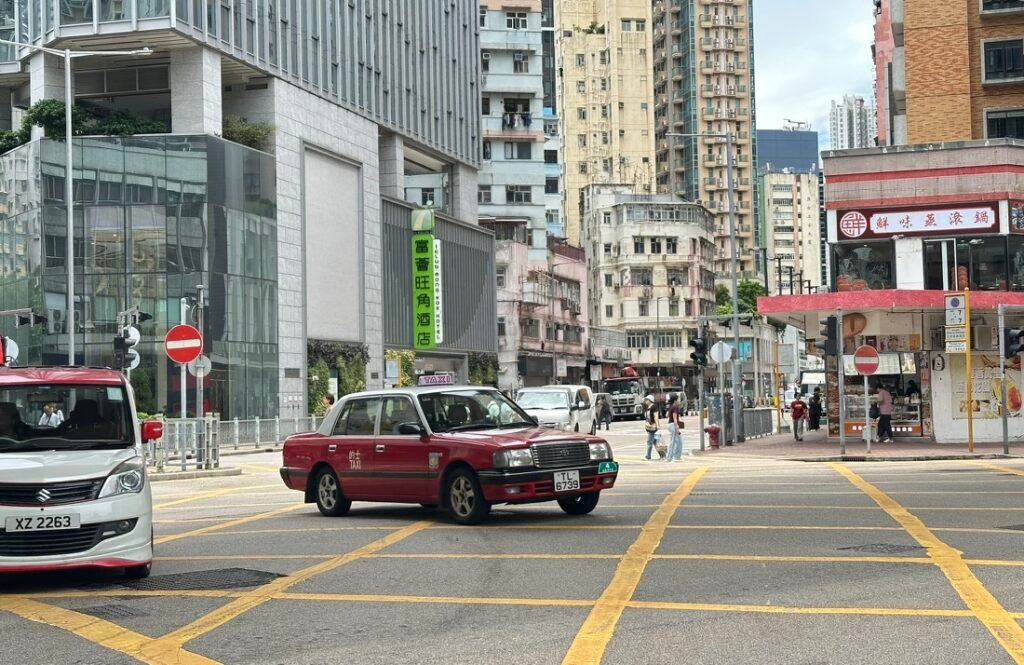
If you’re interested in why Dad deliberately chose this hotel and neighborhood, this is the companion story:
👉 We Stayed in Hong Kong’s Mong Kok (旺角) — So Elaine Could Wake Up to Everyday Kowloon (九龍)
🌅 Walk Downstairs. Hong Kong (香港) Has Already Started.
One morning, Dad and Elaine walked out.
No tour.
No attraction ticket.
No carefully planned food crawl.
We just explored the streets around our hotel.
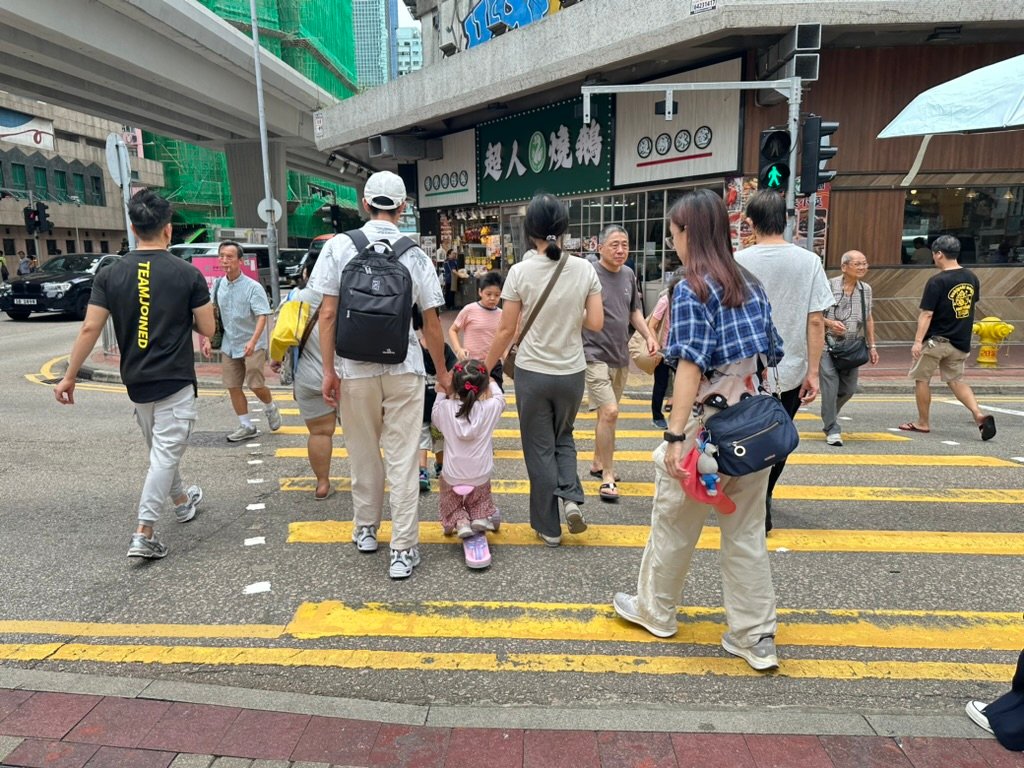
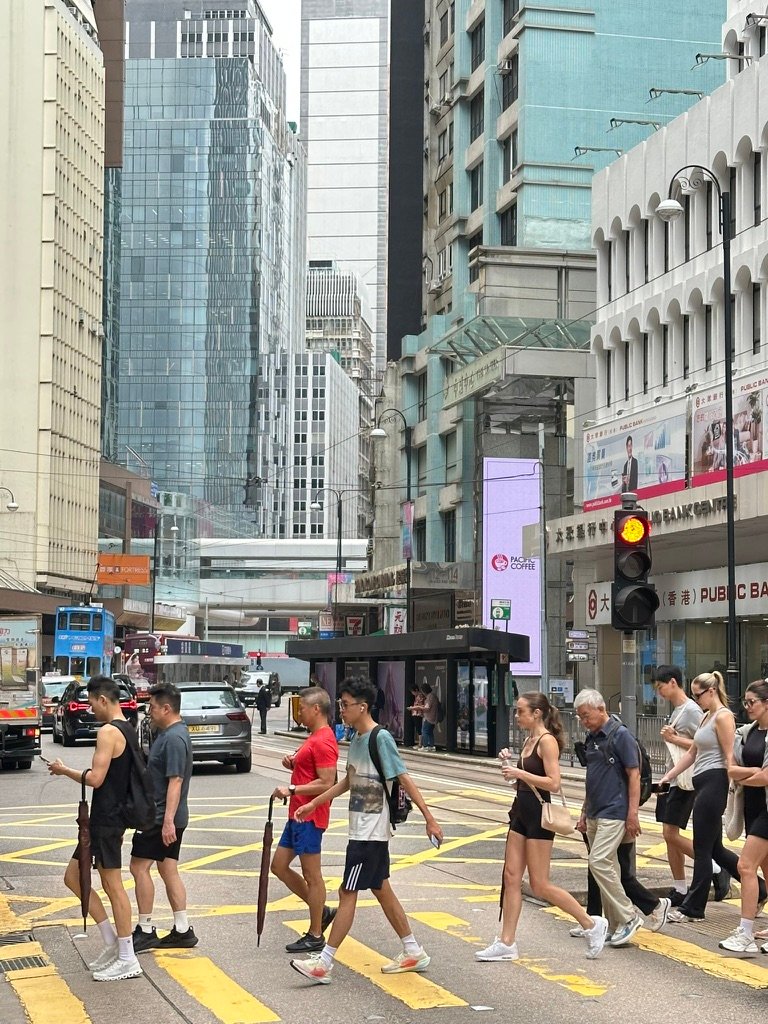
People were already moving through the neighborhood.
Shopping bags.
Trolleys.
Families.
Older residents.
Shopkeepers.
People buying breakfast.
People buying ingredients.
People getting on with their day.
Nobody was demonstrating “local culture” for visitors.
Nobody had arranged an “authentic Hong Kong experience.”
😂
This was simply Mong Kok (旺角) on an ordinary morning.
And that’s exactly what Dad wanted Elaine to see.
🥬 Then We Walked Into the Morning Market
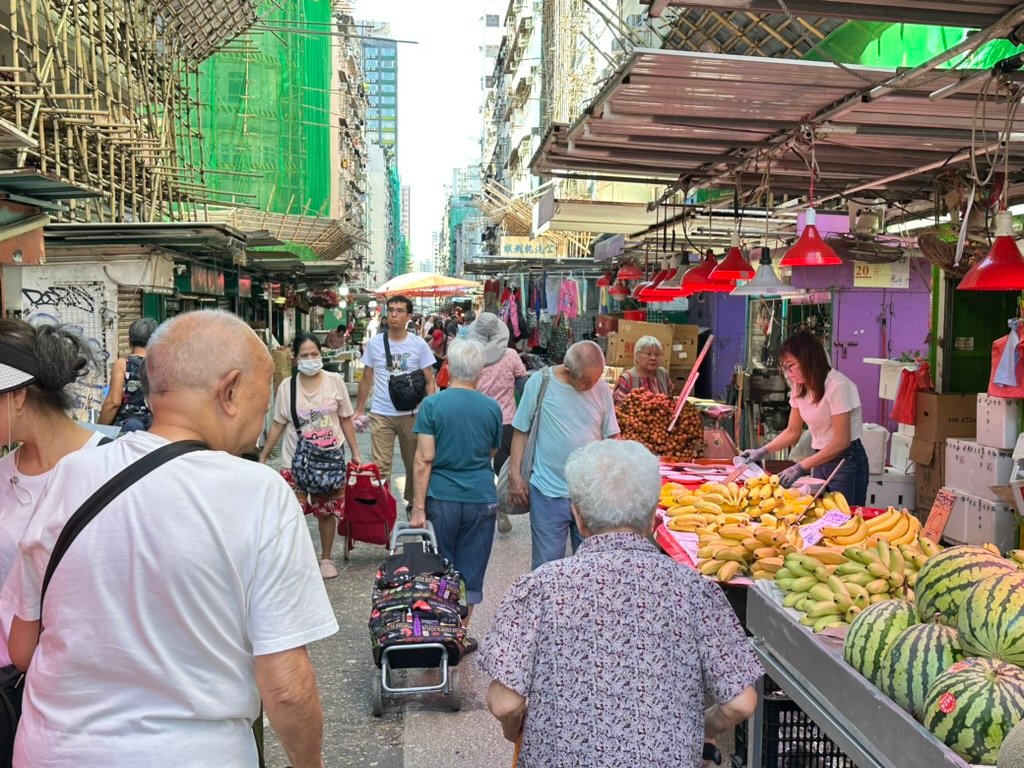
Suddenly there was food everywhere.
Fruit.
Vegetables.
Dried ingredients.
Seafood.
Handwritten Chinese price signs.
Vendors working behind crowded displays.
Residents choosing what they wanted to take home.
Dad loves places like this.
Not because every market should become another tourist attraction.
Actually, the opposite.
This wasn’t an attraction.
People needed breakfast.
People needed vegetables.
People needed noodles.
People needed ingredients for whatever they were going to cook later.
For an international traveler, that ordinary activity can be fascinating precisely because nobody is staging it for you.
👀 Dad’s Travel Tip: Don’t Just Photograph the Market
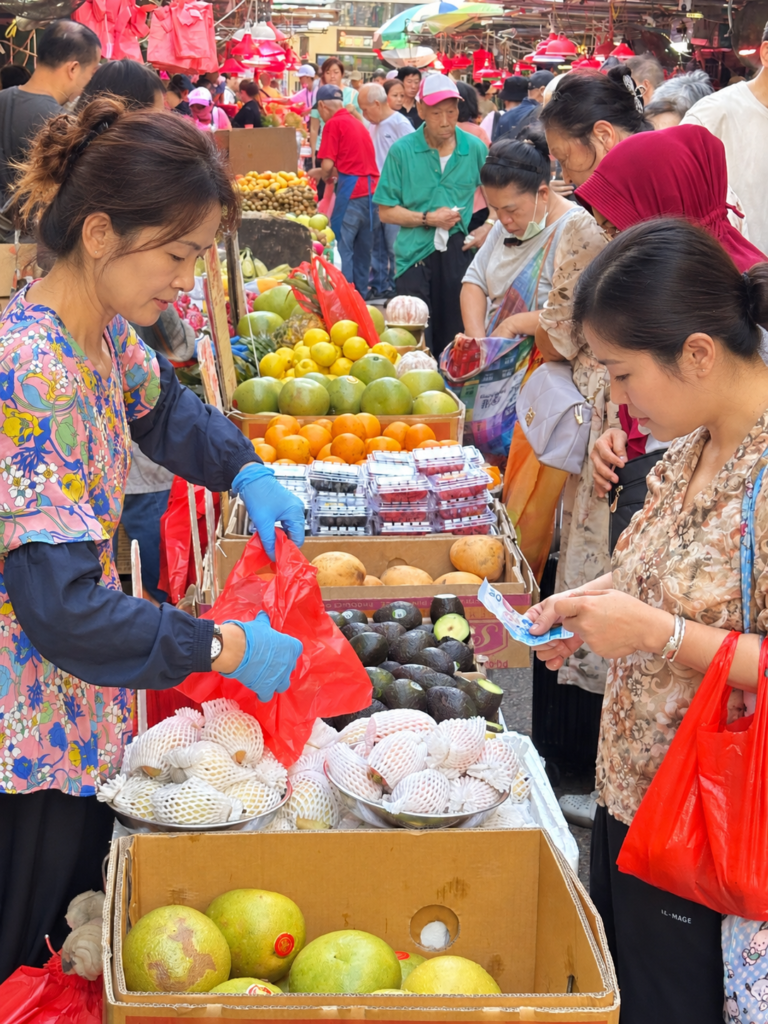
Dad photographs plenty.
Elaine knows.
😂
But there’s a difference between photographing a market and actually watching one.
Slow down.
Don’t block people who are trying to shop.
Look.
Who is buying?
What are they buying?
Which shops have queues?
What seems especially fresh?
What ingredients appear repeatedly?
What do you recognize?
And perhaps more interestingly:
What DON’T you recognize?
Dad didn’t recognize everything we saw.
That’s important.
Dad isn’t a Hong Kong food expert, and there is no reason to pretend otherwise.
Being curious is much more interesting.
SEE first.
Then ASK.
That’s where the rabbit holes begin.
🐇
🧺 Before Hong Kong Food Reaches Your Table
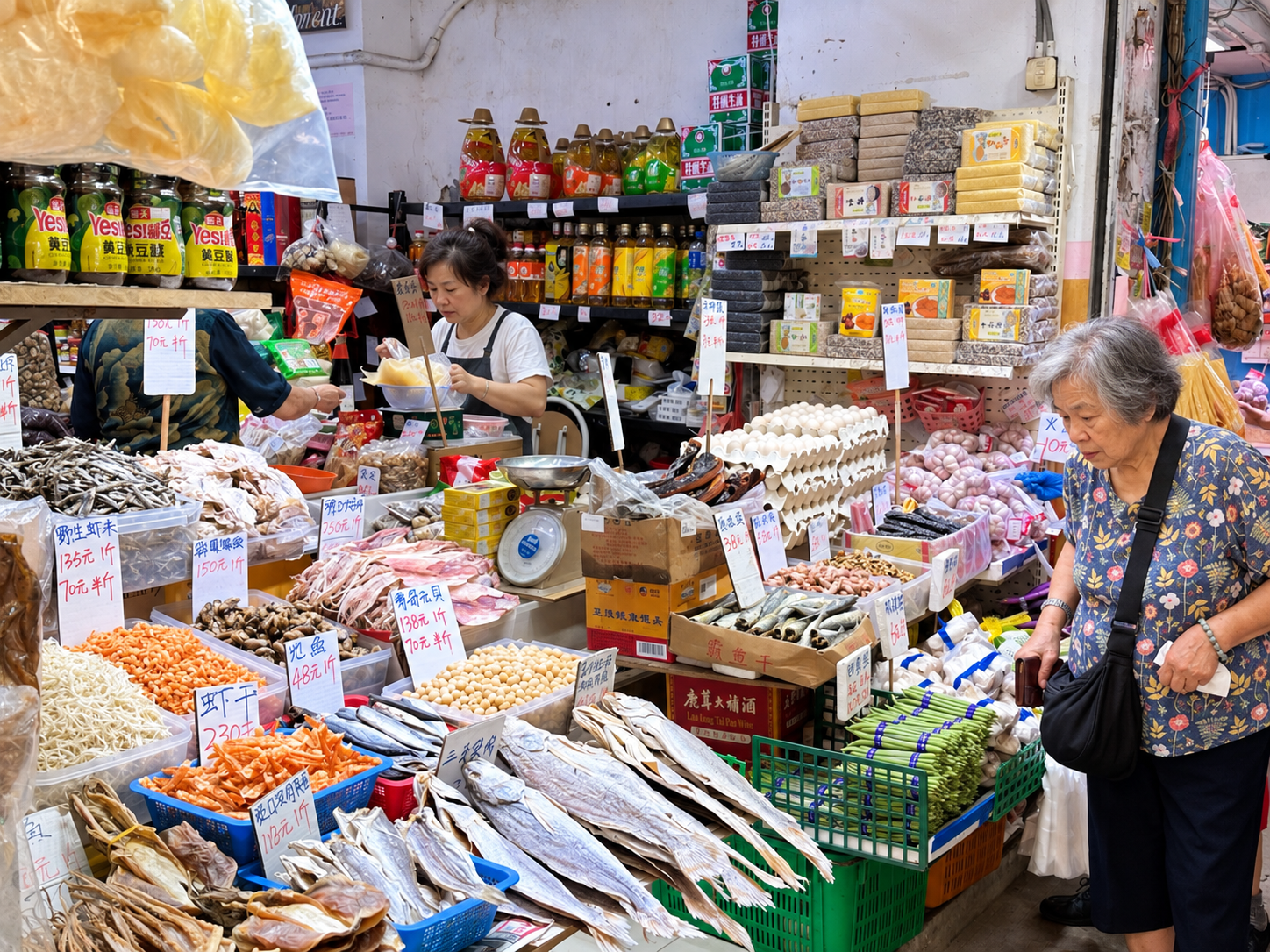
Most travelers meet Hong Kong food when the finished dish arrives.
Wonton noodles.
Dim sum.
Roast meats.
Egg tarts.
Pineapple buns.
Wonderful.
Eat them.
😂
But walking through this neighborhood showed Dad and Elaine something else.
The ingredients before they become dinner.
There were bags of grains, beans, seeds, dried plants and other ingredients.
Some were familiar.
Some were vaguely familiar.
And some produced Dad’s highly sophisticated culinary analysis:
“What is THAT?”
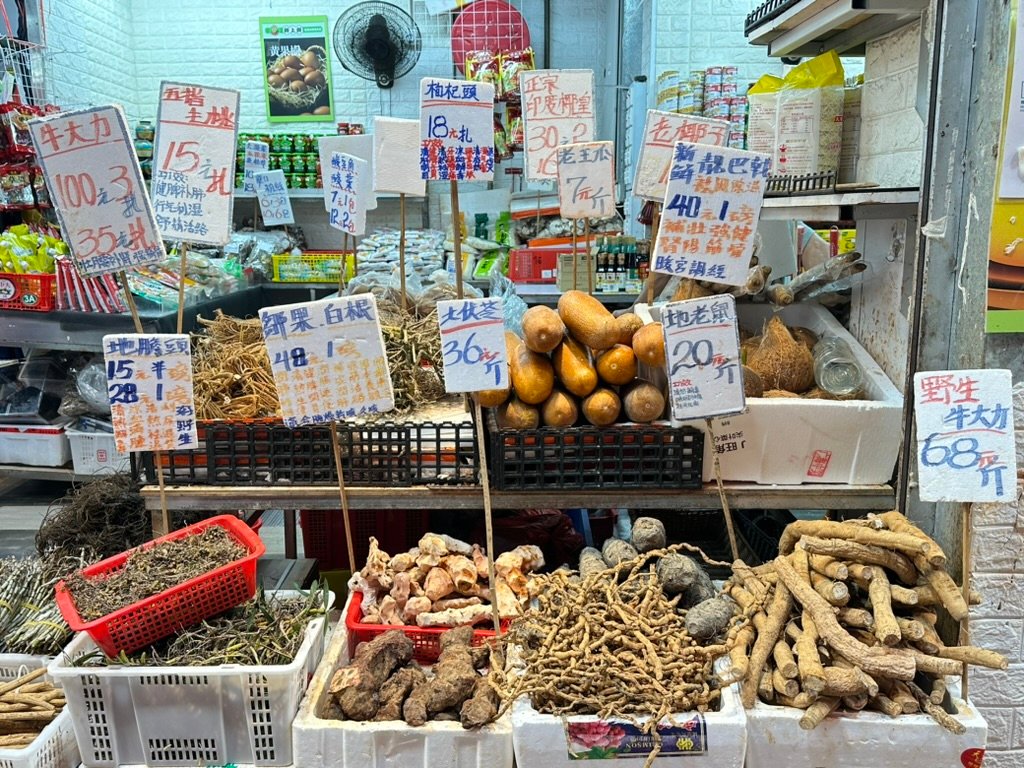
😂
That’s one reason a neighborhood market can be so interesting.
You begin seeing the food culture behind the restaurant menu.
🐟 “Dried Seafood” Suddenly Became a Very Big Category
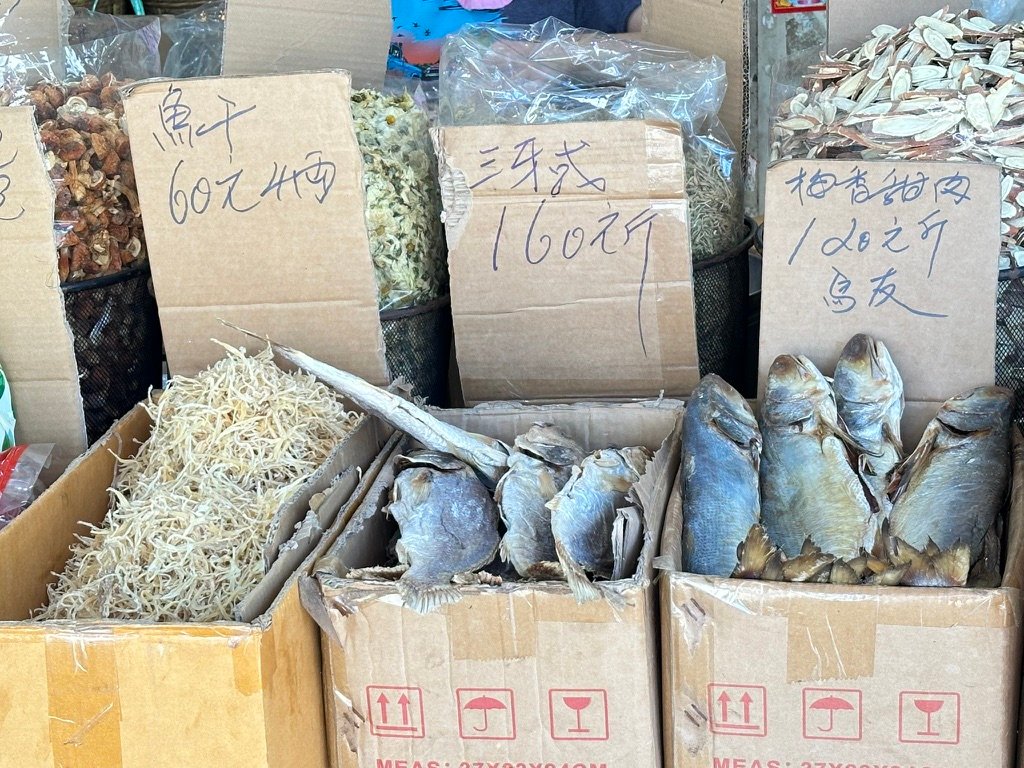
Fish.
Small fish.
Shrimp.
Different sizes.
Different textures.
Different prices.
Dad couldn’t confidently identify every product, so we’re not going to pretend we can.
But the variety itself was fascinating.
To someone unfamiliar with Cantonese cooking, it might initially look like:
Dried seafood.
One category.
But clearly the customers weren’t treating everything as interchangeable.
Different ingredients existed because they had different uses.
And Dad found himself asking a better question:
What will somebody cook with this?
Now the market becomes more than something to photograph.
It becomes the beginning of a meal you haven’t seen yet.
🥢 Even Tofu Became Interesting
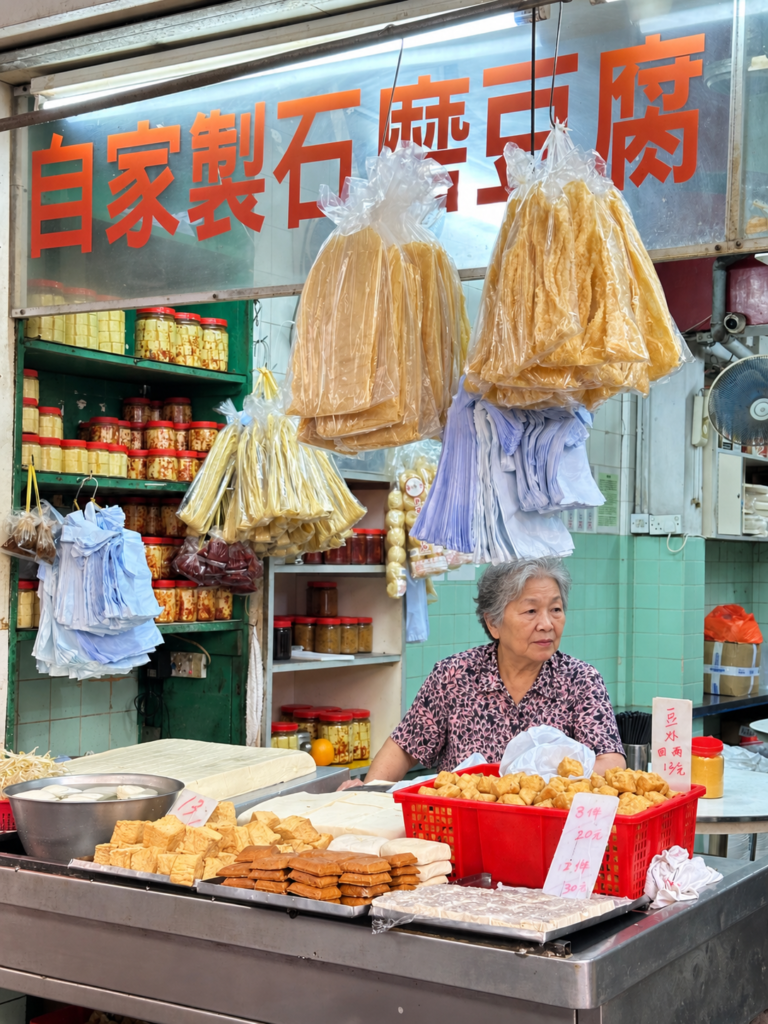
Then we found a tofu shop.
The sign read:
自家製石磨豆腐
House-made stone-ground tofu.
There were different tofu and bean-curd products on display.
Fresh tofu.
Fried products.
Bean-curd sheets and other forms.
For someone unfamiliar with Chinese food, tofu can sound like one ingredient:
Tofu.
White block.
Done.
😂
Stand in front of a shop like this and that idea quickly falls apart.
Different forms.
Different textures.
Different uses.
One humble soybean can go in a remarkable number of directions.
Another little rabbit hole.
🐇
But Let’s Be Honest — Dad Was Also Getting Hungry
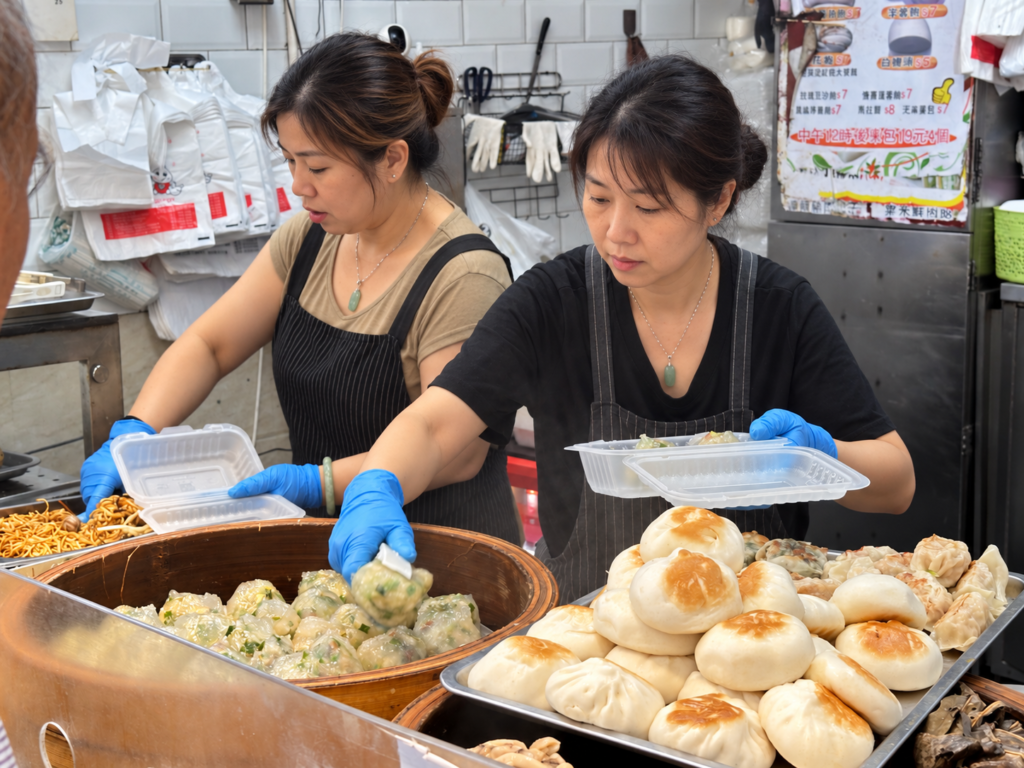
The neighborhood wasn’t only selling ingredients.
There was food ready to eat too.
Buns.
Dumplings.
Noodles.
Bakeries.
Small eateries.
A cha chaan teng (茶餐廳).
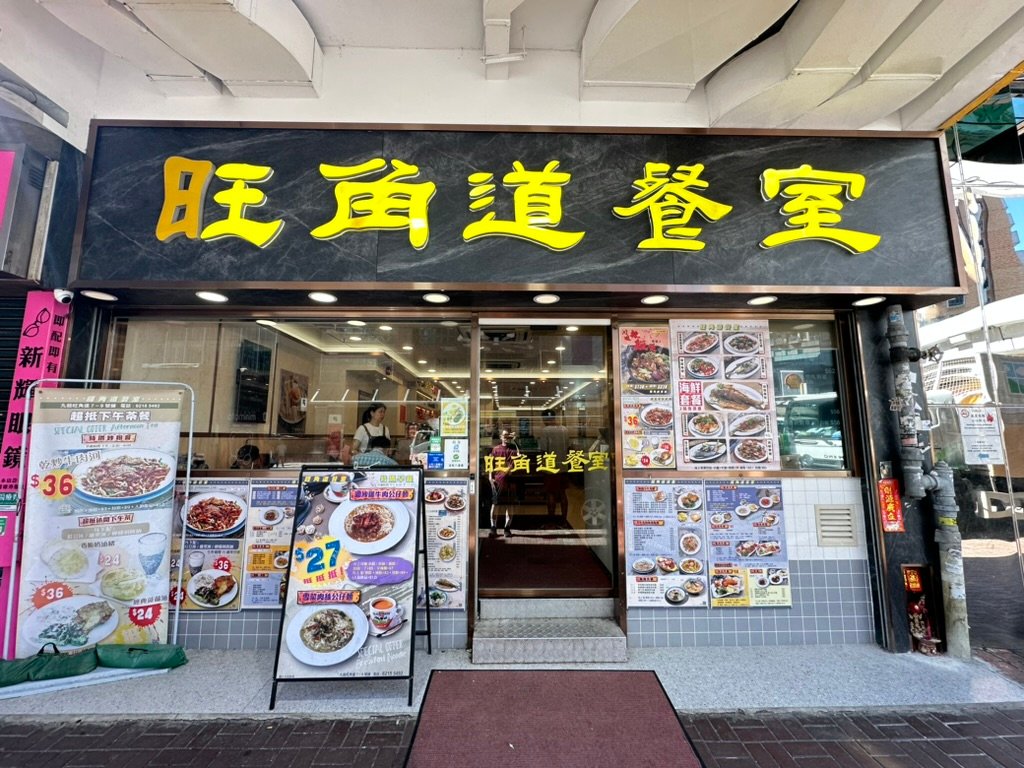
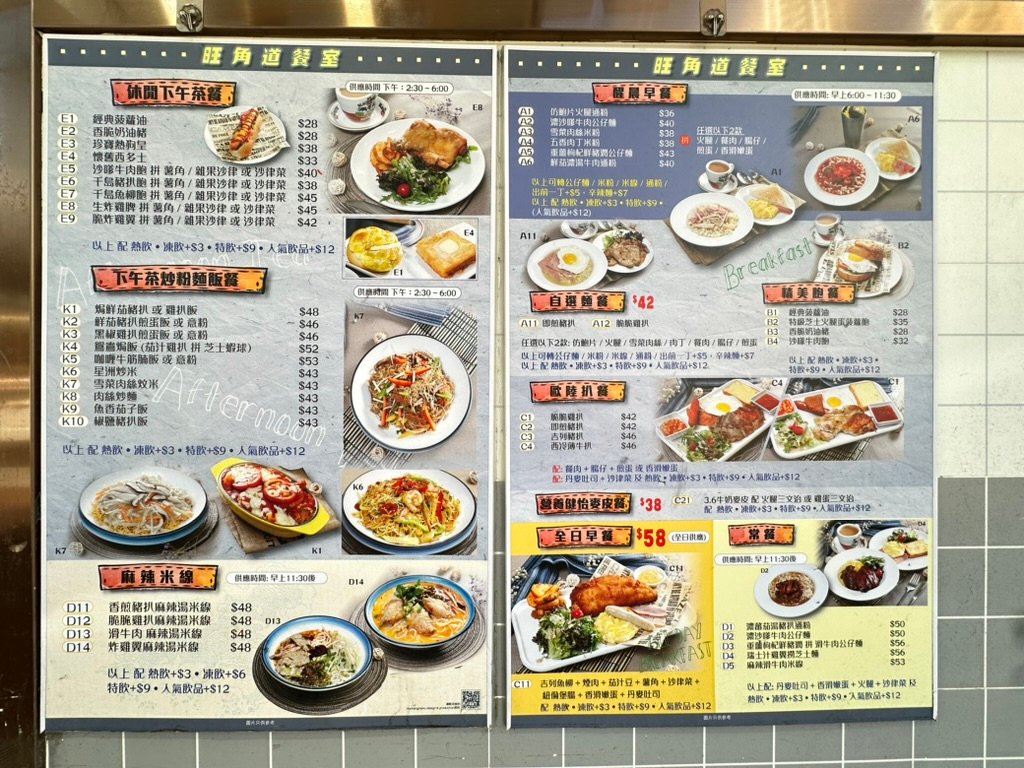
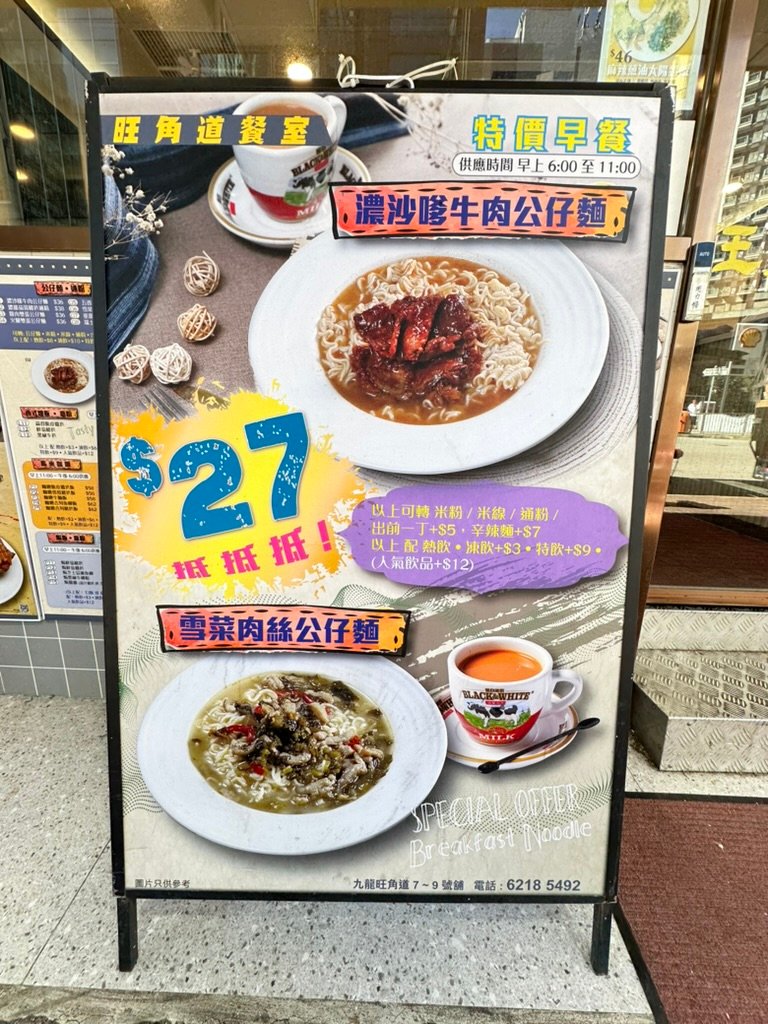
And this is where staying in a neighborhood like Mong Kok (旺角) becomes particularly enjoyable.
You don’t necessarily need to begin every meal by asking:
“What’s the famous restaurant I must travel to?”
Sometimes you can simply walk outside and ask:
What are people around here eating?
For many international travelers, that becomes part of the cultural discovery.
For travelers from elsewhere in Asia, the reaction may be more immediate:
Fresh food. Local shops. Neighborhood prices.
😂
Now we’re talking.
☕ Everyday Hong Kong (香港), Served on a Menu
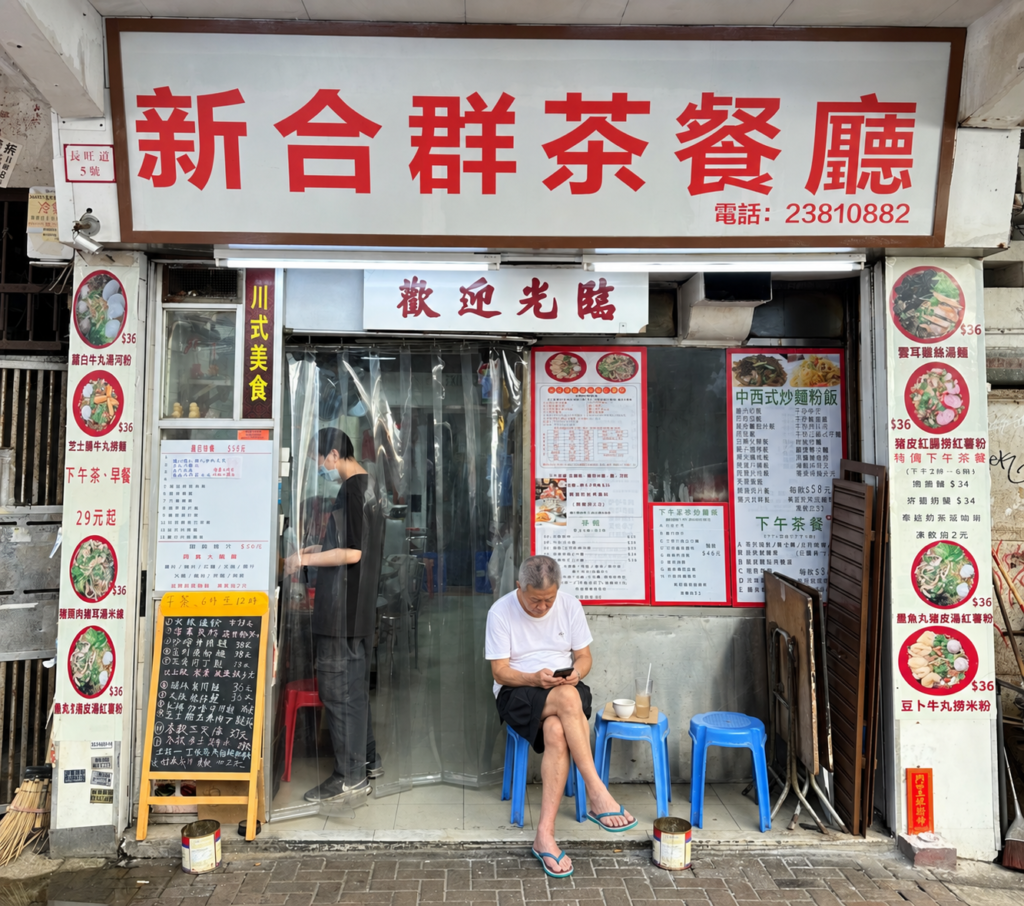
One of the neighborhood eateries Dad photographed was 新合群茶餐廳.
A cha chaan teng (茶餐廳) is one of those distinctive parts of everyday Hong Kong food culture that can be particularly interesting for an international visitor.
It isn’t quite a Western café.
It isn’t quite a traditional Chinese restaurant.
It became something distinctly Hong Kong.
The menus Dad photographed also gave us something useful:
neighborhood prices.
When we visited, some meals advertised outside were around HK$36, with breakfast offerings from around HK$29.
Prices change, of course.
And Dad isn’t mentioning them to claim this was the cheapest food in Hong Kong (香港).
That’s not the point.
The interesting part was seeing what everyday food could cost at a neighborhood business serving local customers.
For travelers accustomed to eating mainly around major tourist areas, that can be eye-opening.
😂 Then Dad Saw the Queue
This became Dad’s favorite discovery of the morning.
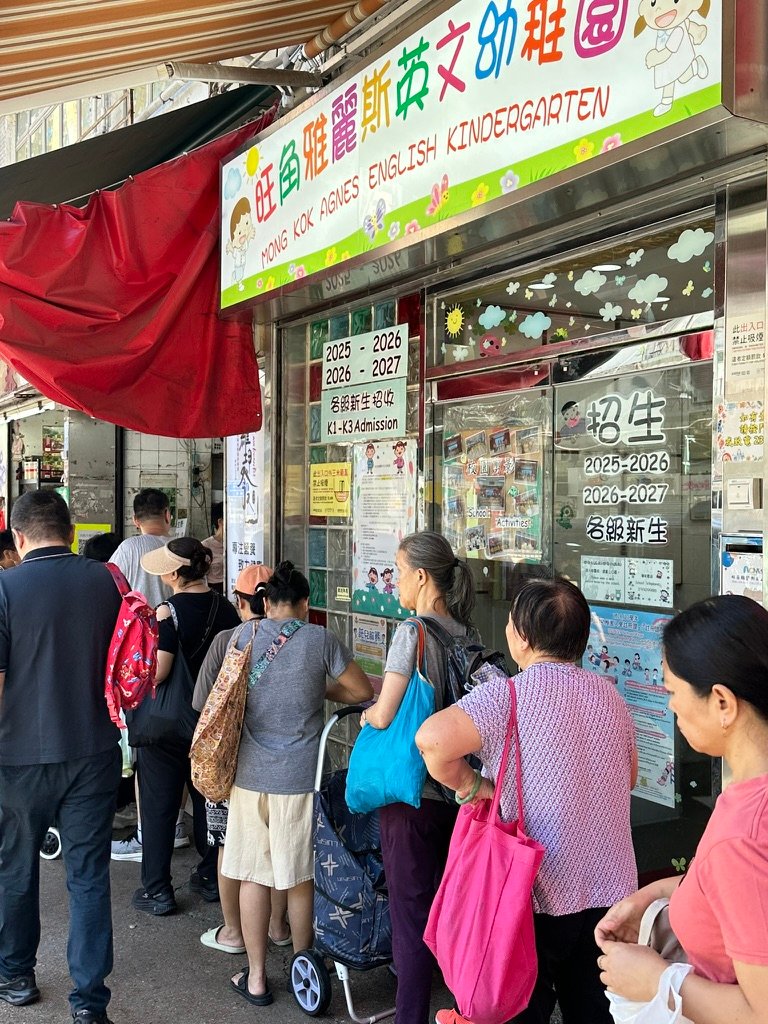
Dad saw a surprisingly long line of mostly older people.
Right beside them was Mong Kok Agnes English Kindergarten (旺角雅麗斯英文幼稚園).
Dad immediately thought:
Ahhhh.
Grandparents waiting to fetch their grandchildren.
Dad has seen scenes like this many times while traveling in Mainland China.
Older people.
School.
Queue.
Grandchildren.
Easy.
Mystery solved.
Except…
Dad looked at the time.
It was only around 9am.
🤔
Wait.
Why would grandparents be waiting to fetch children home at 9am?
Something didn’t fit.
Dad looked again.
And then he noticed the shop next door.
😂😂😂
🍜 They Were Queuing for Fresh Noodles!
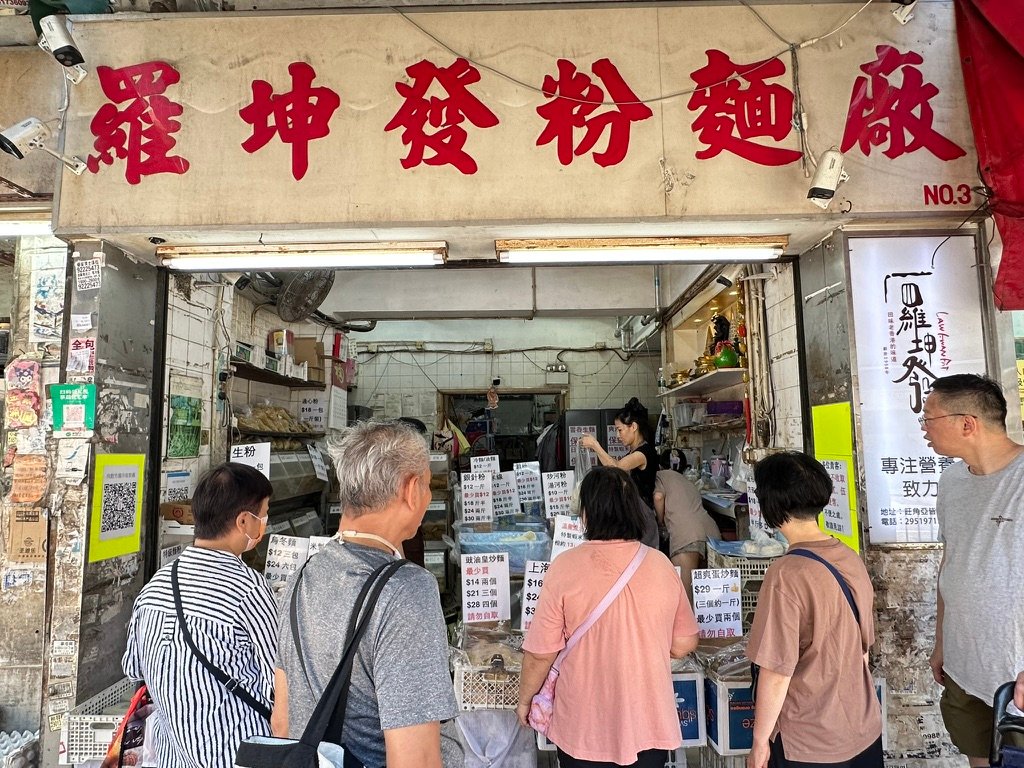
Not the kindergarten.
The noodle shop.
😂
Now Dad became interested.
What kind of noodles were worth queuing for at around 9 in the morning?
So we moved closer.
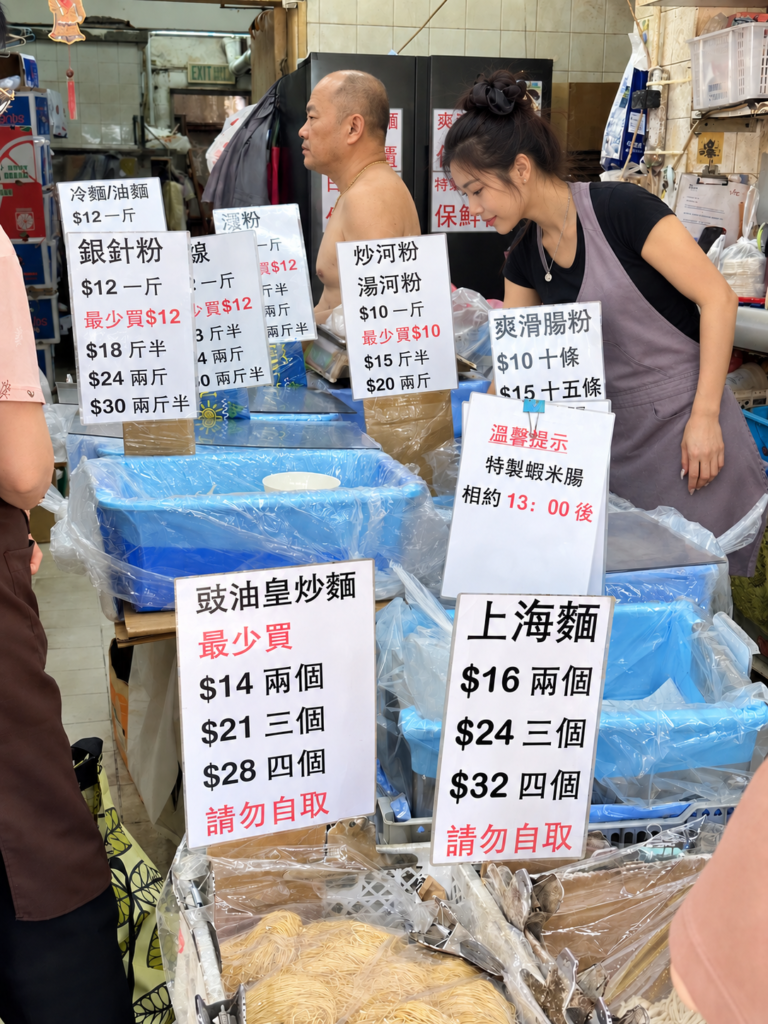
And “noodles” suddenly became another hopelessly inadequate word.
From the signs Dad photographed, we could see several noodle and rice-noodle products, including:
- 銀針粉 — silver-needle noodles
- 炒河粉 — rice noodles for stir-frying
- 湯河粉 — rice noodles for soup
- 爽滑腸粉 — smooth rice noodle rolls
- 豉油皇炒麵 — soy-sauce fried noodles
- 上海麵 — Shanghai-style noodles
There were other products too.
Then Dad noticed another sign:
特製蝦米腸 — 相約13:00後
Special dried-shrimp rice noodle rolls available after around 1pm.
😂
Apparently even fresh noodles have a timetable.
❤️ Now Dad Understood the Queue
This little scene told Dad something about the neighborhood.
People here take their food seriously.
And Dad’s impression from watching that morning was that freshness matters.
There was a supermarket nearby.
Packaged noodles would certainly have been convenient.
Yet customers were queuing at a specialist neighborhood shop for particular fresh noodle products.
Different noodles.
Different textures.
Different uses.
Different preparations.
This wasn’t a social-media queue Dad and Elaine had traveled across Hong Kong (香港) to find.
As far as we could see, these were simply neighborhood customers buying food.
That made it much more interesting.
Food culture isn’t only the famous dish.
It’s also the ingredient someone insists on buying before the dish can exist.
And Dad almost missed the entire lesson because he thought they were waiting for grandchildren.
😂
Then Dad’s Camera Got Very Busy
After the dried seafood, roots, tofu and pale noodles…
COLOR.
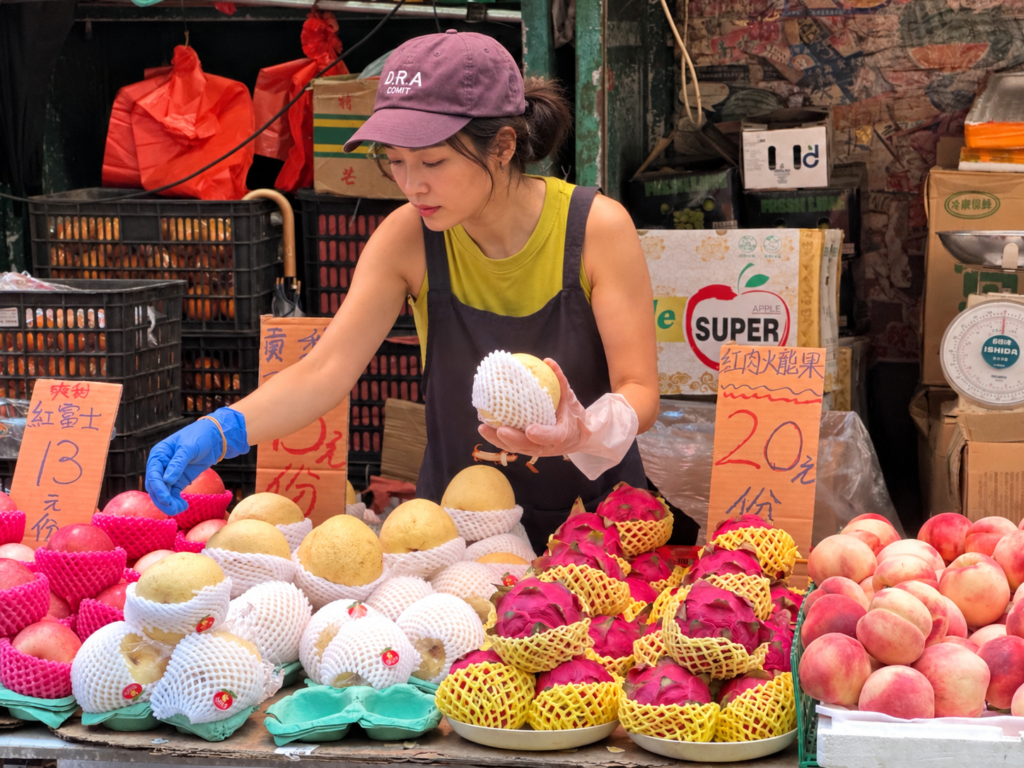
Dragon fruit.
Peaches.
Melons.
Oranges.
Longan.
Fruit carefully arranged and protected.
Handwritten price signs.
Sellers inspecting and arranging their produce.
Dad’s camera became very busy.
😂
Because markets aren’t only culturally interesting.
Sometimes they’re simply beautiful.
Don’t Only Photograph the Fruit. Watch the Moment.
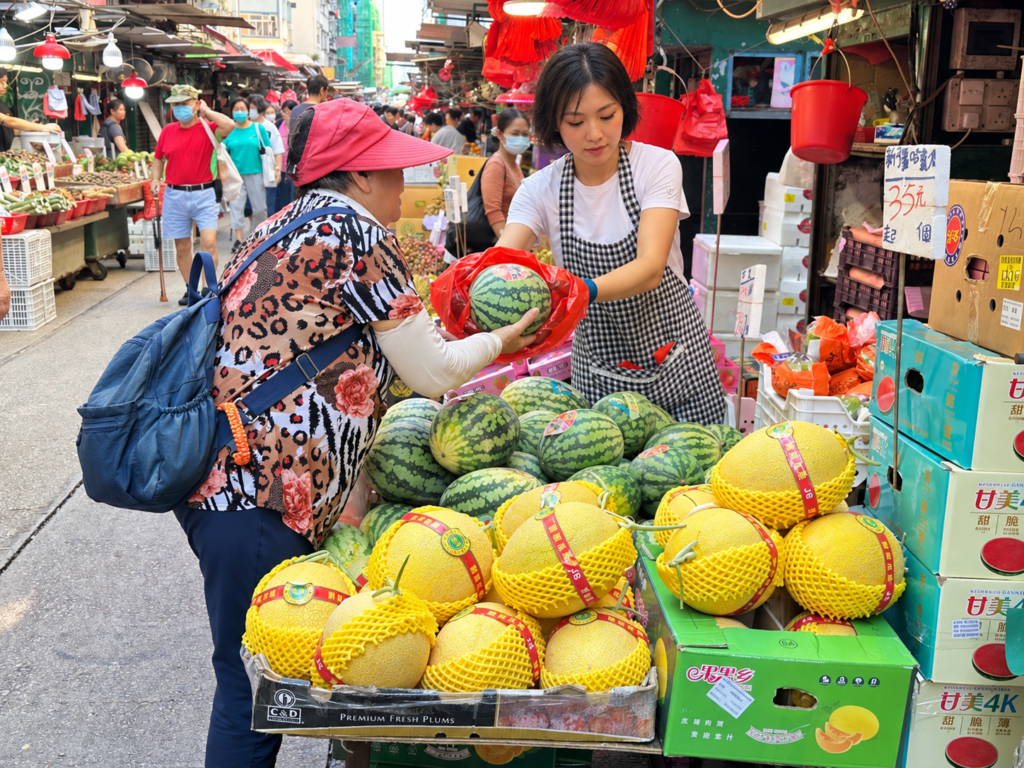
A customer chooses a watermelon.
The seller handles it.
A purchase is made.
The fruit goes home.
Nothing extraordinary happened.
That’s why Dad likes the photograph.
This wasn’t a staged food experience.
Nobody was performing for visitors.
It was just someone buying fruit.
Ordinary life can become fascinating when you’re somewhere unfamiliar.
Sometimes the Best Photograph Is the Person
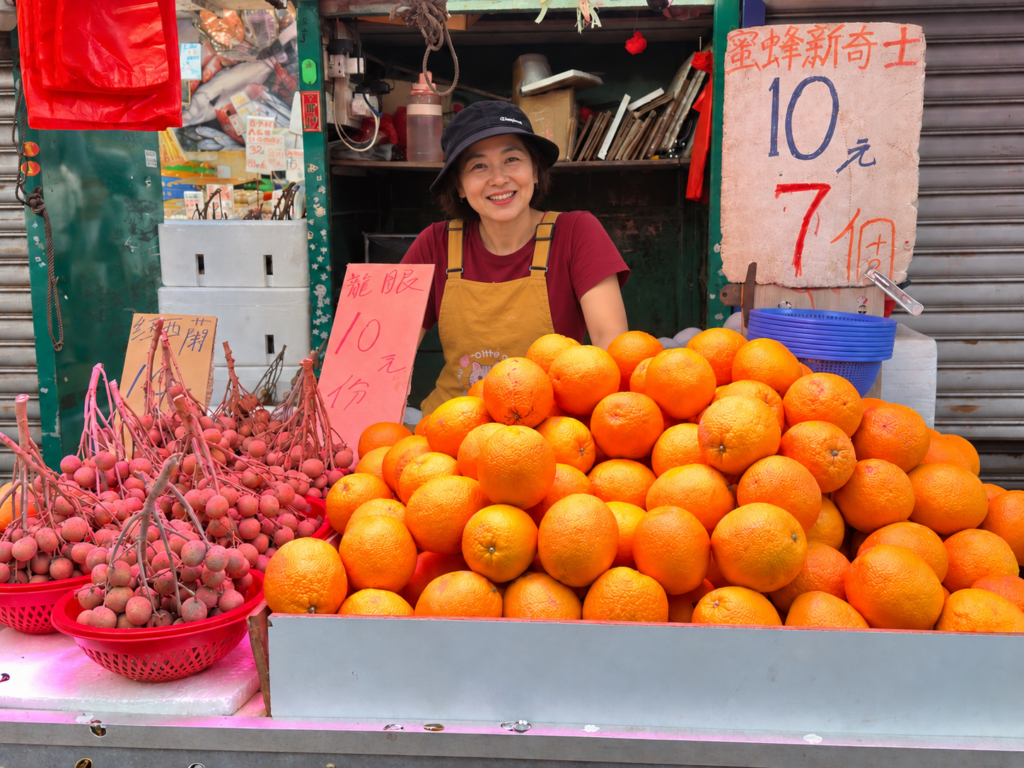
Then Dad photographed this lady.
Oranges piled in front.
Longan nearby.
Handwritten prices.
And a wonderful smile behind the stall.
Dad loves photographs like this.
Of course we photograph the famous Hong Kong skyline.
Who wouldn’t?
But years later, which photograph might bring this particular morning back?
Perhaps this one.
Because a neighborhood isn’t only buildings and shops.
A neighborhood is people.
The fruit seller.
The noodle maker.
The tofu vendor.
The person preparing breakfast.
The customer carrying groceries home.
The people who repeat these routines day after day.
They are part of the Hong Kong (香港) experience too.
🦸 And Then Dad Found Superman
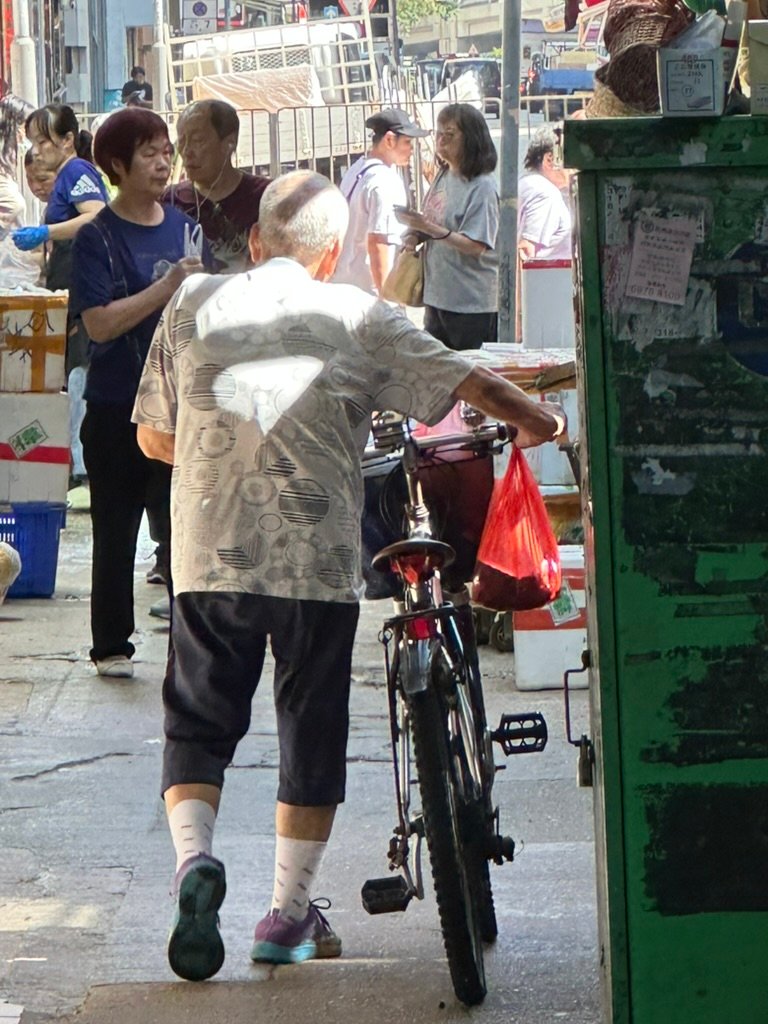
Every good morning market apparently needs a superhero.
😂
Dad photographed an older gentleman pushing his bicycle through the market.
Then Dad noticed the sunlight and shadow falling across the back of his shirt.
Look carefully.
SUPERMAN!
😂😂😂
No cape.
No flying.
No saving Kowloon (九龍).
Just a bicycle and a shopping bag.
Dad knows absolutely nothing about this gentleman, so we’re not going to invent a story about him.
But for a few seconds, he became:
Mong Kok’s Superman.
And that’s the kind of travel moment you cannot schedule.
You simply have to be there.
And notice.
🏙️ Look Up Too
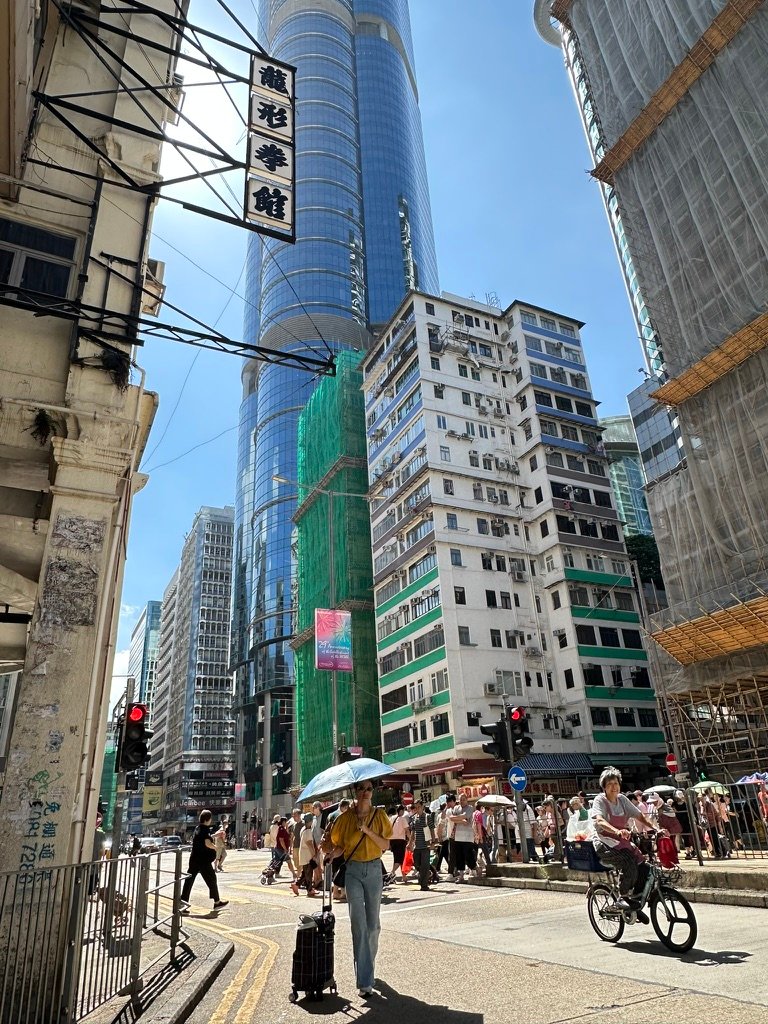
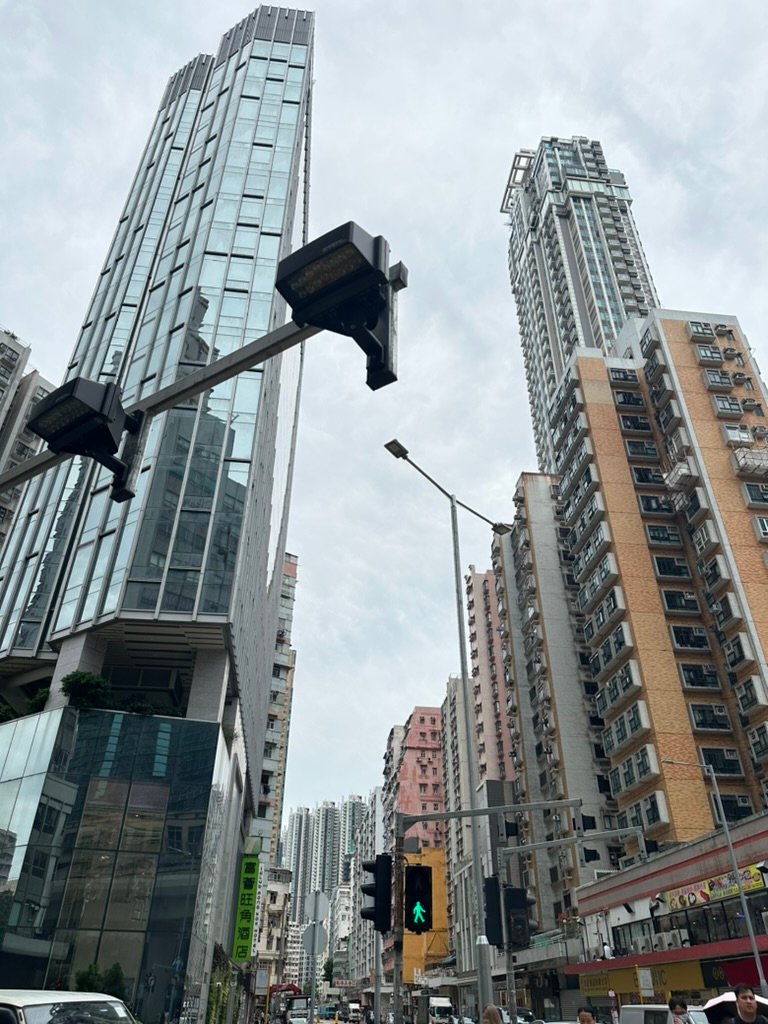
The market wasn’t some preserved “old Hong Kong” separated from the modern city.
Look upward.
Older apartment blocks.
Window air conditioners.
Shop signs.
Dense streets.
Then behind them:
Modern towers.
Glass.
Steel.
A changing skyline.
Old and new sharing the same neighborhood.
This is what Dad means when he talks about a mature neighborhood.
Not simply “old.”
A mature neighborhood is somewhere that has accumulated life.
Homes.
Schools.
Markets.
Food shops.
Services.
Transport.
Daily routines.
Generations of people using the same streets in different ways.
For Dad, that’s interesting.
And This Is Where the Hotel Matters
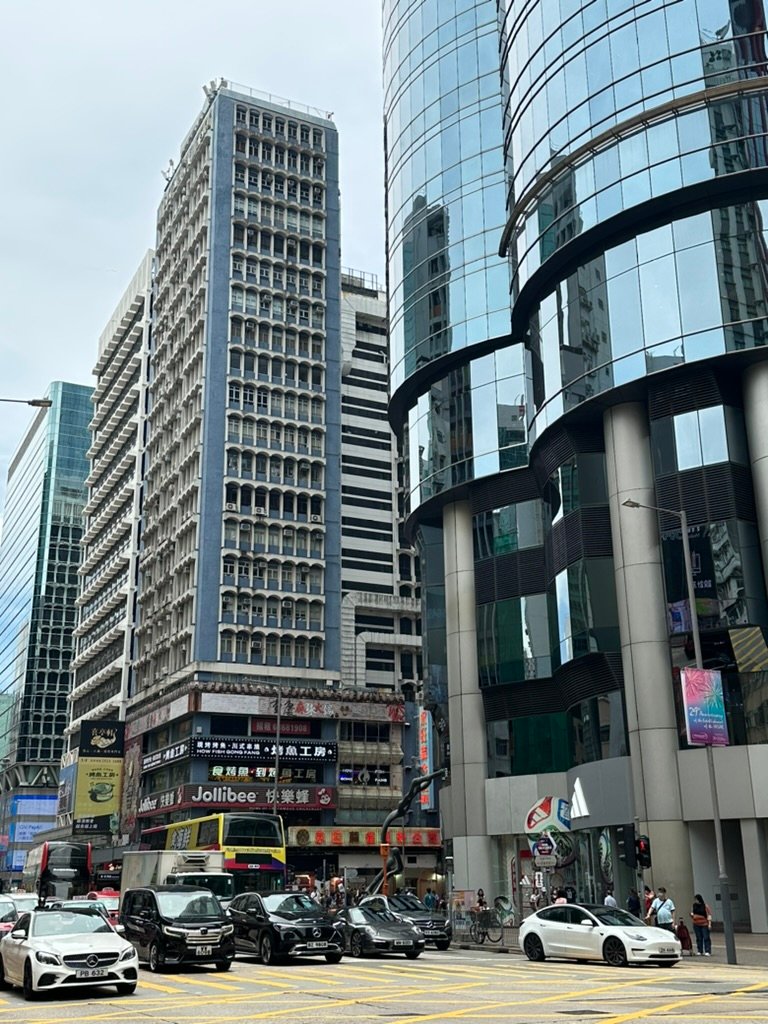
By now, you may have noticed something.
Dad hasn’t spent much time talking about the hotel room.
That’s deliberate.
😂
What Dad loved about iclub Mong Kok Hotel (旺角薈賢居) wasn’t simply what happened inside the hotel.
It was what happened when we stepped outside.
A supermarket was almost opposite.
Cross another road and there were eateries.
Walk around and there were traditional shops.
The morning market was close by.
Fresh food.
Breakfast.
Local shops.
Everyday neighborhood life.
And when we wanted to explore farther, we could head toward the MTR (港鐵) and the rest of Hong Kong (香港).
That combination is what Dad calls:
Value for money.
Not:
Cheapest possible hotel.
But:
Does what I pay improve the journey?
For Dad, iclub Mong Kok Hotel (旺角薈賢居) did.
That’s why it became:
One of Dad’s Favorite Hotels
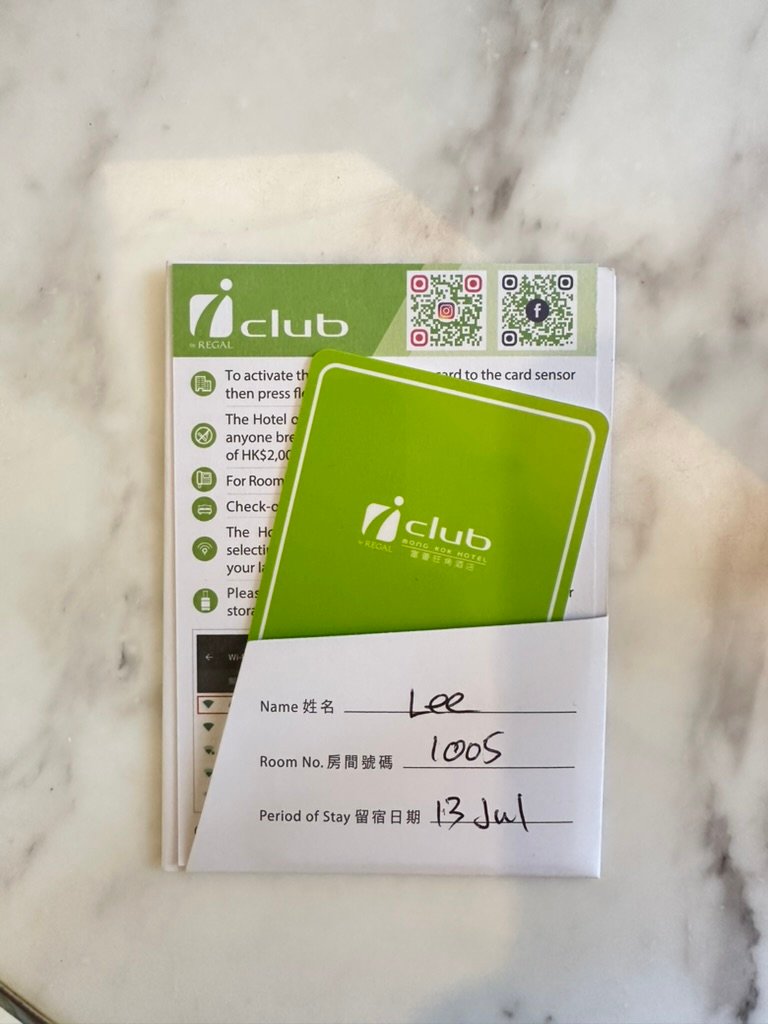
Dad and Elaine personally stayed here.
Dad would stay here again.
And if waking up in a lived-in Mong Kok (旺角) neighborhood, walking to a morning market and having local food around you sounds like your kind of Hong Kong experience:
👉 Check iclub Mong Kok Hotel (旺角薈賢居) rooms and current prices on Trip.com
ChinaTravelBUG may earn a commission if you book through our Trip.com link, at no extra cost to you.
🌏 Different Travelers May Love Mong Kok (旺角) for Different Reasons
Dad thinks this is where the neighborhood becomes especially interesting.
For many Western and other international travelers
The attraction may be the experience.
Walking through a working neighborhood market.
Trying to understand Chinese signs.
Seeing specialist noodle shops.
Discovering tofu in unfamiliar forms.
Looking at dried seafood and wondering how it’s used.
Eating in a cha chaan teng (茶餐廳).
Watching how a Hong Kong neighborhood starts its morning.
It’s a side of Hong Kong (香港) that can feel very different from home.
For many travelers from elsewhere in Asia
The reaction may be different.
😂
Fresh noodles?
Fresh tofu?
Fruit market?
Local eateries?
Traditional food?
Neighborhood prices?
Where do we eat?
Different travelers.
Different hooks.
Same Mong Kok (旺角).
🧭 Dad’s Bigger Travel Lesson: Choose Where You Wake Up
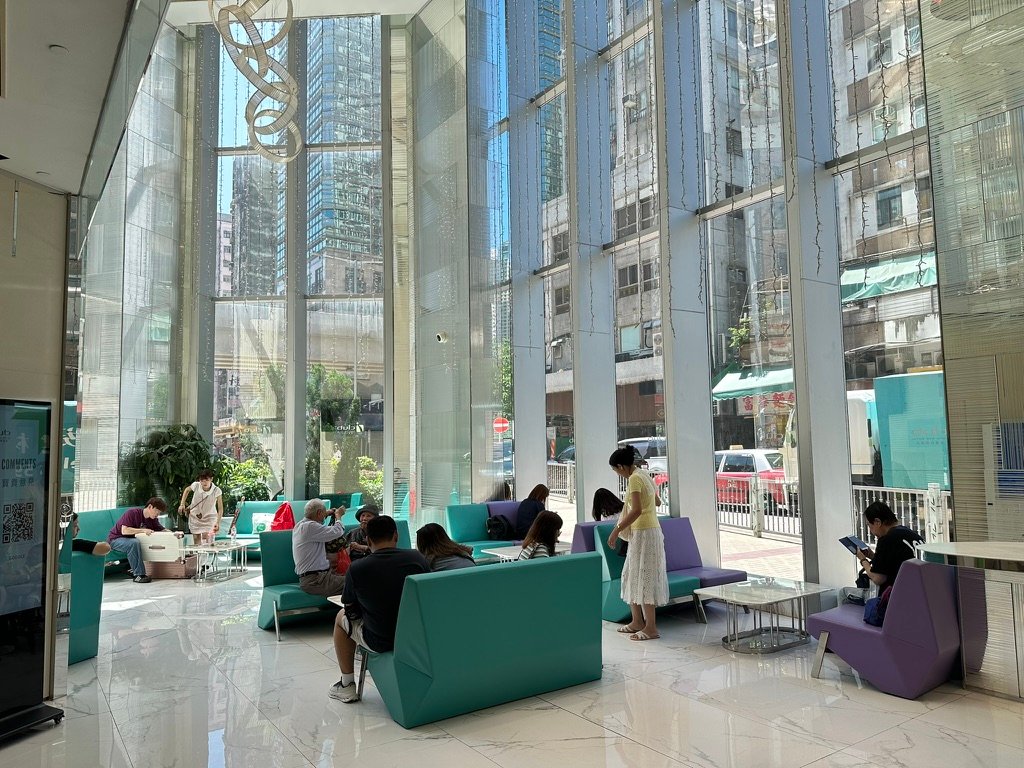
This morning reinforced something Dad has increasingly learned from traveling around Hong Kong (香港) and Mainland China.
We spend enormous amounts of time deciding:
What attractions should we visit?
Which restaurants should we eat at?
Which tours should we book?
But sometimes we don’t spend enough time asking:
Where do I want to wake up?
That decision can shape hours of every day.
Stay somewhere surrounded only by things designed for visitors, and that’s what you’ll experience when you walk downstairs.
Stay in a mature neighborhood and something else can happen.
You step outside.
You walk.
You observe.
You eat.
You get curious.
And the neighborhood itself becomes part of the journey.
Dad Travels This Way in Mainland China Too
This isn’t only a Hong Kong (香港) habit.
Dad increasingly likes staying in mature neighborhoods when traveling in Mainland China too.
In Chengdu (成都, Chéngdū), for example, Dad and Elaine explored Jinniu District (金牛区, Jīnniú Qū).
Most international travelers naturally associate Chengdu (成都, Chéngdū) with pandas.
We love the pandas too.
But the city doesn’t stop at the panda base.
Walking through a mature neighborhood gave Dad and Elaine another view of everyday Chengdu (成都, Chéngdū).
Different city.
Different food.
Different people.
Same travel philosophy.
👉 Beyond the Pandas: Discovering Everyday Chengdu in Jinniu District (金牛区)
Try Dad’s Way for One Morning
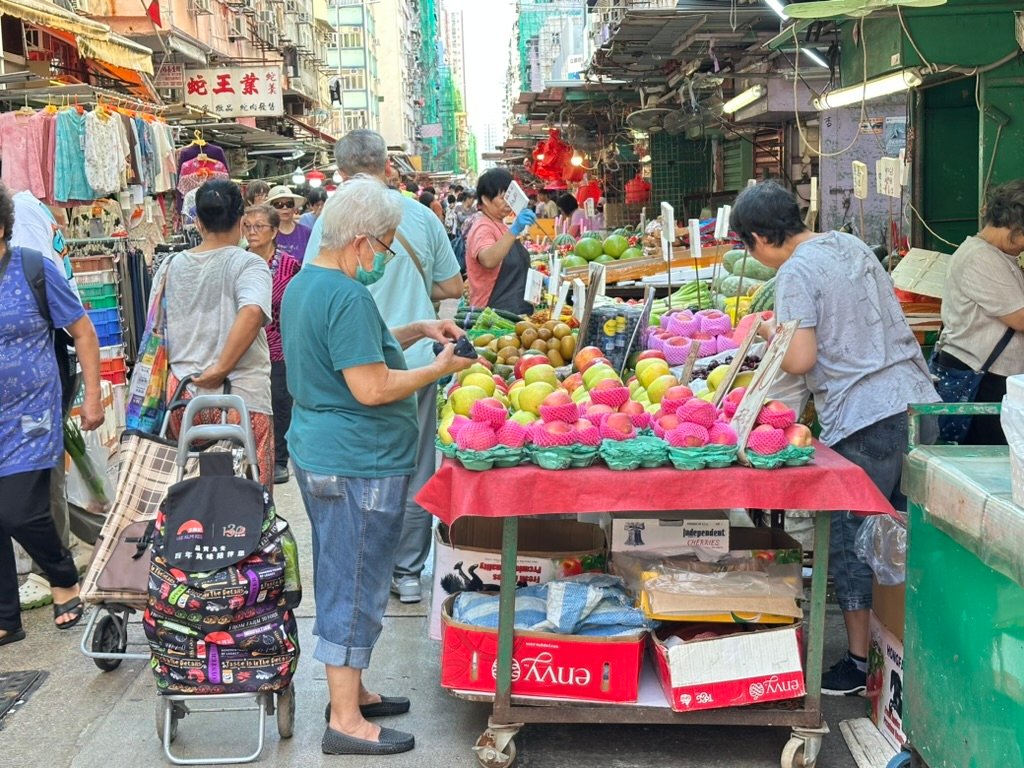
Dad is absolutely not suggesting that first-time visitors skip Hong Kong’s famous sights.
See Victoria Harbour (維多利亞港).
Ride the Star Ferry (天星小輪).
Explore Tsim Sha Tsui (尖沙咀).
Walk around Central (中環).
See the skyline.
Eat the famous food.
Do all of it.
But leave one morning slightly empty.
No tour.
No attraction at 9am.
No pressure to maximize every minute.
Walk outside your hotel.
Find breakfast.
Find a market.
Look at the prices.
Look at the ingredients.
Watch what people buy.
Follow your nose.
People-watch.
Take photographs.
Have coffee.
Notice something you don’t understand.
Ask why.
And occasionally…
get it completely wrong.
😂
Then look again.
That’s travel too.
👀 SEE → ASK → CONNECT → UNDERSTAND → FOLLOW
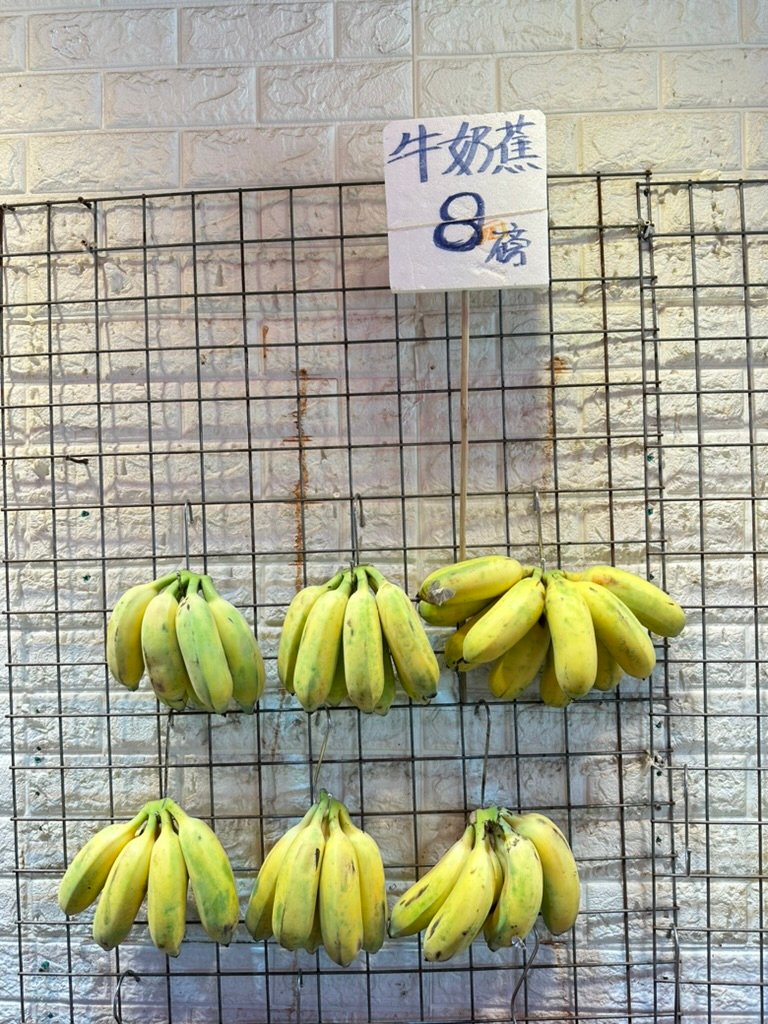
That morning in Mong Kok (旺角) became a little demonstration of the way Dad likes to travel.
SEE
A market.
Fruit.
Tofu.
Dried seafood.
Noodles.
People.
A strange queue.
ASK
What is that?
What will someone cook with it?
Why are there so many noodle varieties?
Why are all those seniors standing beside a kindergarten at 9am?
😂
CONNECT
The market.
The noodle maker.
The tofu shop.
The bakery.
The cha chaan teng (茶餐廳).
The supermarket.
The residents buying food.
They weren’t random shops anymore.
They were pieces of a living neighborhood.
UNDERSTAND
Hong Kong food culture doesn’t exist only in famous restaurants.
It lives in ingredients.
Morning routines.
Specialist shops.
Fresh food.
Family meals.
And people who know exactly which noodle they want.
FOLLOW
When something catches your curiosity…
follow the rabbit hole.
🐇
Even when the rabbit hole turns out to be a fresh-noodle shop beside a kindergarten.
❤️ The Hong Kong Dad Wants Elaine to Remember
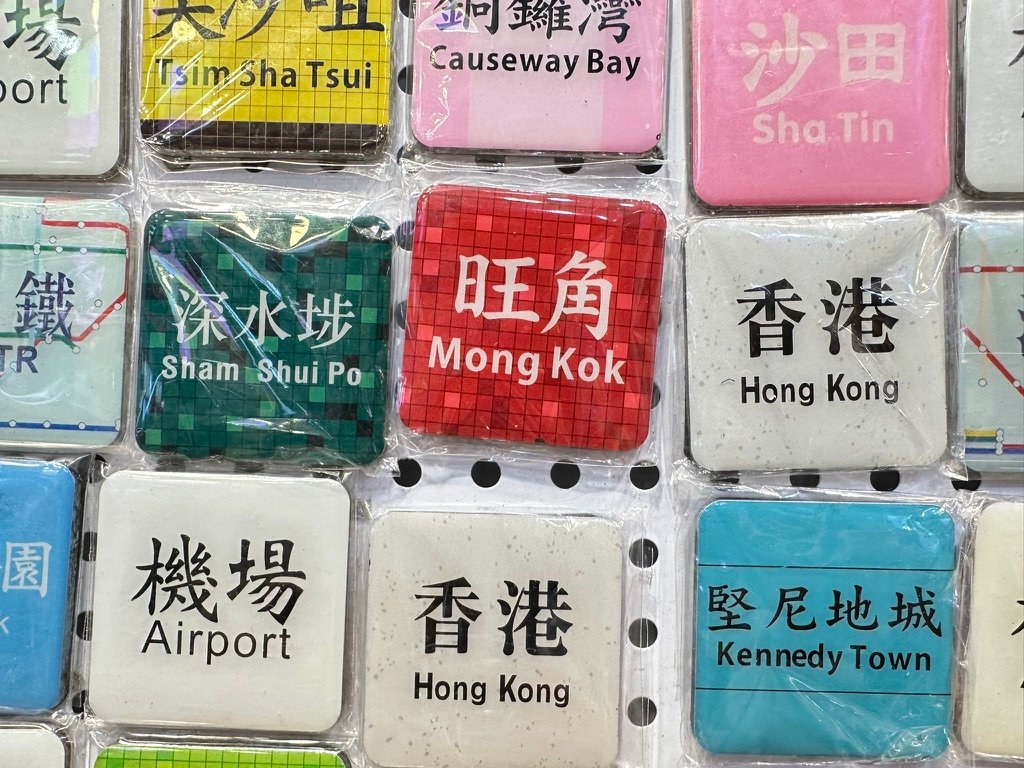
Dad wants Elaine to remember spectacular Hong Kong (香港).
The skyline.
Victoria Harbour (維多利亞港).
The Star Ferry (天星小輪).
The lights.
The famous sights.
But Dad also wants her to remember this.
Walking downstairs in Mong Kok (旺角).
The market already busy.
The unfamiliar ingredients.
The tofu shop.
The noodle queue.
The fruit sellers.
The handwritten prices.
The smiling faces.
And somewhere among them…
Superman pushing his bicycle.
😂
None of this was a famous attraction.
None of it was on Dad’s itinerary.
We didn’t travel across Hong Kong (香港) looking for a packaged “local experience.”
We chose somewhere that allowed local life to become part of our stay.
That’s why Dad loves staying in Mong Kok (旺角).
And that’s why iclub Mong Kok Hotel (旺角薈賢居) became one of Dad’s favorite Hong Kong hotels.
Not because the hotel tried to manufacture an experience for us.
But because when we walked outside…
the neighborhood was already there.
Stay Where Dad and Elaine Stayed!
Dad and Elaine personally stayed at iclub Mong Kok Hotel (旺角薈賢居).
Dad recommends it for the combination he values most:
Value for money + strategic location + neighborhood experience.
👉 Check iclub Mong Kok Hotel (旺角薈賢居) rooms and current prices on Trip.com
Want to see why Dad originally chose this hotel and neighborhood?
👉 We Stayed in Hong Kong’s Mong Kok (旺角) — So Elaine Could Wake Up to Everyday Kowloon (九龍)
Real Journeys. Real Stories. Real China.
ChinaTravelBUG — See China. Understand It Better.