23-Day China Itinerary: Is Beijing, Xi’an, Chengdu, Chongqing, Zhangjiajie & Shanghai Too Rushed? — AI Travel Planner Answers
byKC
-
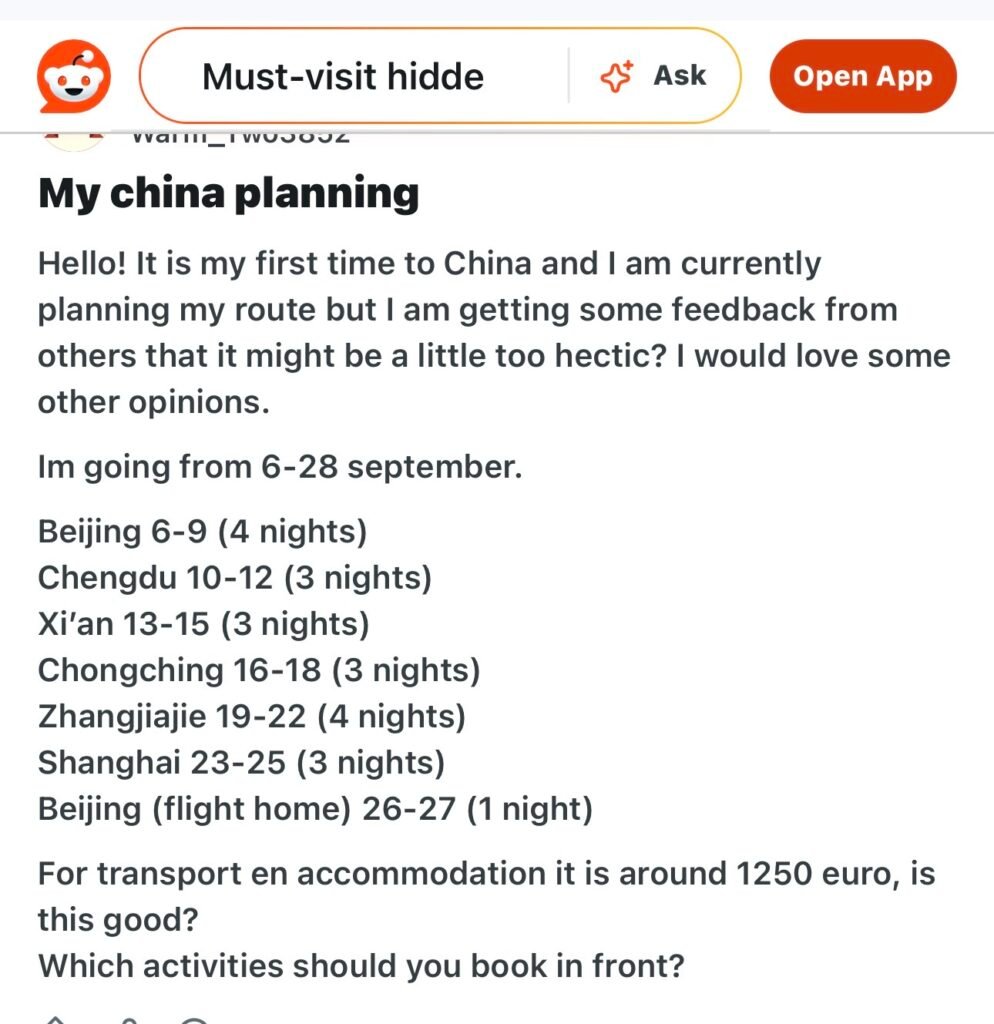
Screenshot
Planning a three-week first trip to China creates an interesting problem: 23 days sounds like plenty of time, but how many destinations can you realistically fit in before the trip starts feeling rushed?
One traveler was planning Beijing, Chengdu, Xi’an, Chongqing, Zhangjiajie and Shanghai between September 6 and 28, before returning to Beijing for the flight home. They had already received feedback that the itinerary might be too hectic.
We put their itinerary to the ChinaTravelBUG AI Travel Planner.
The Traveler’s Question
My china planning
Hello! It is my first time to China and I am currently planning my route but I am getting some feedback from others that it might be a little too hectic? I would love some other opinions.
For transport en accommodation it is around 1250 euro, is this good?
Which activities should you book in front?
ChinaTravelBUG AI Travel Planner Answer — Unedited
Yes — this itinerary is a little too hectic, but it’s very fixable. The problem isn’t 23 days in China; that’s a lovely amount of time. It’s the seven hotel stays plus some inefficient routing, which turns too many days into packing, station/airport and check-in days. For a first trip, I’d rather see you properly experience five places than hurry through six.
What I’d change
Your individual stays are mostly sensible: 4 nights Beijing, 3 Chengdu, 3 Xi’an, 3 Chongqing and 4 Zhangjiajie are not excessive. The difficulty is putting all of them together.
I’d particularly reconsider the order. Beijing → Xi’an → Chengdu → Chongqing → Zhangjiajie → Shanghai → Beijing makes much more geographical sense than bouncing Beijing → Chengdu → Xi’an → Chongqing.
That still gives you tremendous variety: imperial China in Beijing, the origins of unified China in Xi’an, Sichuan food and tea-house life in Chengdu, Chongqing’s extraordinary contemporary cityscape, Zhangjiajie’s landscapes, and finally modern Shanghai. It’s a busy trip, but no longer one I’d call unreasonable.
If nature isn’t one of your main priorities, Zhangjiajie is the place I’d remove. Those four nights could transform this from a good sightseeing trip into a much more relaxed journey.
One important problem with your dates
You’re traveling September 6–28, 2026, and this matters: September 25–27 is the Mid-Autumn Festival public holiday. ()
That means your proposed Shanghai stay coincides almost exactly with the holiday. Expect increased domestic travel and crowds. You leave before the much bigger National Day holiday beginning October 1, which is good. I’d make sure your September 25–27 accommodation and intercity transportation are secured early.
Is €1,250 for transport + accommodation good?
Potentially very good, assuming that means all your hotels plus domestic trains/flights for roughly three weeks. But price alone doesn’t tell me enough. A €35 hotel in an excellent central location can be a much better purchase than a €25 hotel requiring 45 minutes of commuting.
Before paying, I’d check hotel locations, cancellation conditions, room quality and exactly which trains/flights are included.
For attractions, don’t try to pre-book everything. Concentrate on the difficult/high-demand sights and transport first — especially Forbidden City/Tiananmen arrangements, popular museums, long-distance trains/flights, and anything with limited admission. Reservation windows and procedures can change, so verify those shortly before each booking window opens.
One thing I’d deliberately leave unstructured: half a day in Chengdu. Sit in People’s Park with tea, wander, eat, watch people playing cards and chatting. On a trip with this many headline attractions, that may end up teaching you more about everyday China than another famous sight.
Ready to Check Zhangjiajie Hotels?
Dad & Elaine have personally used Trip.com many times when travelling in China and elsewhere — for hotels, flights, attractions and tours. We’ve had good experiences with it, so it’s one of the booking platforms we use ourselves.
Affiliate link — ChinaTravelBUG may earn a small commission at no extra cost to you.
Looking for Else Where Hotels in China?
Dad & Elaine have personally used Trip.com many times when travelling across China and elsewhere — for hotels, flights, attractions and tours. We’ve had good experiences with it, so it’s one of the booking platforms we use ourselves.
Before changing the route further, what matters most to you on this trip: history/culture, food/city life, or nature?That answer would tell me whether Zhangjiajie, Chongqing, or another destination should get the extra time.
ChinaTravelBUG’s Take
We agree that the itinerary is busy—but we wouldn’t tear it apart.
The individual stays aren’t really the problem. The bigger issue is the number of transitions and the original routing.
Changing:
Beijing → Chengdu → Xi’an → Chongqing
to:
Beijing → Xi’an → Chengdu → Chongqing
is already a meaningful improvement.
Our other recommendation would be simple: don’t add anything else. Six substantial destinations across roughly three weeks already provide enormous variety.
And if the traveler discovers that they prefer a slower pace, removing one destination will probably improve the journey more than shaving individual nights from several cities.
The Bigger Lesson: Count Transitions, Not Just Nights
This is something first-time visitors often underestimate.
A three-hour train journey does not cost only three hours.
There is packing, checking out, getting to the railway station, security, waiting, boarding, the journey itself, getting from the arrival station to the next hotel and checking in again.
Repeat that six or seven times and a surprisingly large part of your holiday becomes logistics.
That’s why we generally prefer asking:
“How many times do I want to move?”
rather than simply:
“How many cities can I fit into 23 days?”
One Thing We’d Definitely Keep: Unstructured Chengdu Time
We particularly like the Planner’s suggestion to protect half a day in Chengdu.
People’s Park and a traditional teahouse aren’t spectacular in the same way as the Great Wall or Zhangjiajie’s mountains.
That’s precisely why they’re valuable.
Sit down. Have tea. Watch people chatting, playing cards and spending time together. Walk through the surrounding neighborhoods. Eat when something looks interesting.
Not every memorable part of China needs to be an attraction.
Before Booking: Check the Dates Again
The Planner correctly highlights that the itinerary overlaps a Chinese public-holiday period.
Holiday arrangements, attraction reservation systems, train schedules and booking procedures are exactly the kind of information that should always be checked again against current official sources before committing money.
The same applies to high-demand attractions such as the Forbidden City and major museums.
The itinerary advice above can help you decide what to do. Time-sensitive information should help you confirm whether and how you can do it on your particular dates.
Why We Publish the AI Answer Unedited
This article is part of our AI Travel Planner Answers series.
We take genuine questions travelers are asking about China and put them to the ChinaTravelBUG AI Travel Planner.
The Planner’s answer above is reproduced unedited.
We don’t rewrite it afterward to make the AI appear smarter. Instead, we add our own short editorial perspective and clearly separate that from the Planner’s response.
The goal isn’t to prove that AI can generate itineraries.
It’s to see whether AI can help travelers make better decisions about real trips.
Try the Free ChinaTravelBUG AI Travel Planner
Wondering whether your China itinerary is too rushed?
Give it your destinations, number of nights and travel dates. Better still, tell it what matters most to you—history, food, landscapes, photography, local life, modern cities, or simply a slower holiday.
You can ask it to review an existing itinerary, compare two routes or help you decide which destination to remove.
For transport schedules, attraction reservations, public holidays, opening hours, entry requirements and other information that can change, always verify the latest details with the relevant official source before booking or traveling.
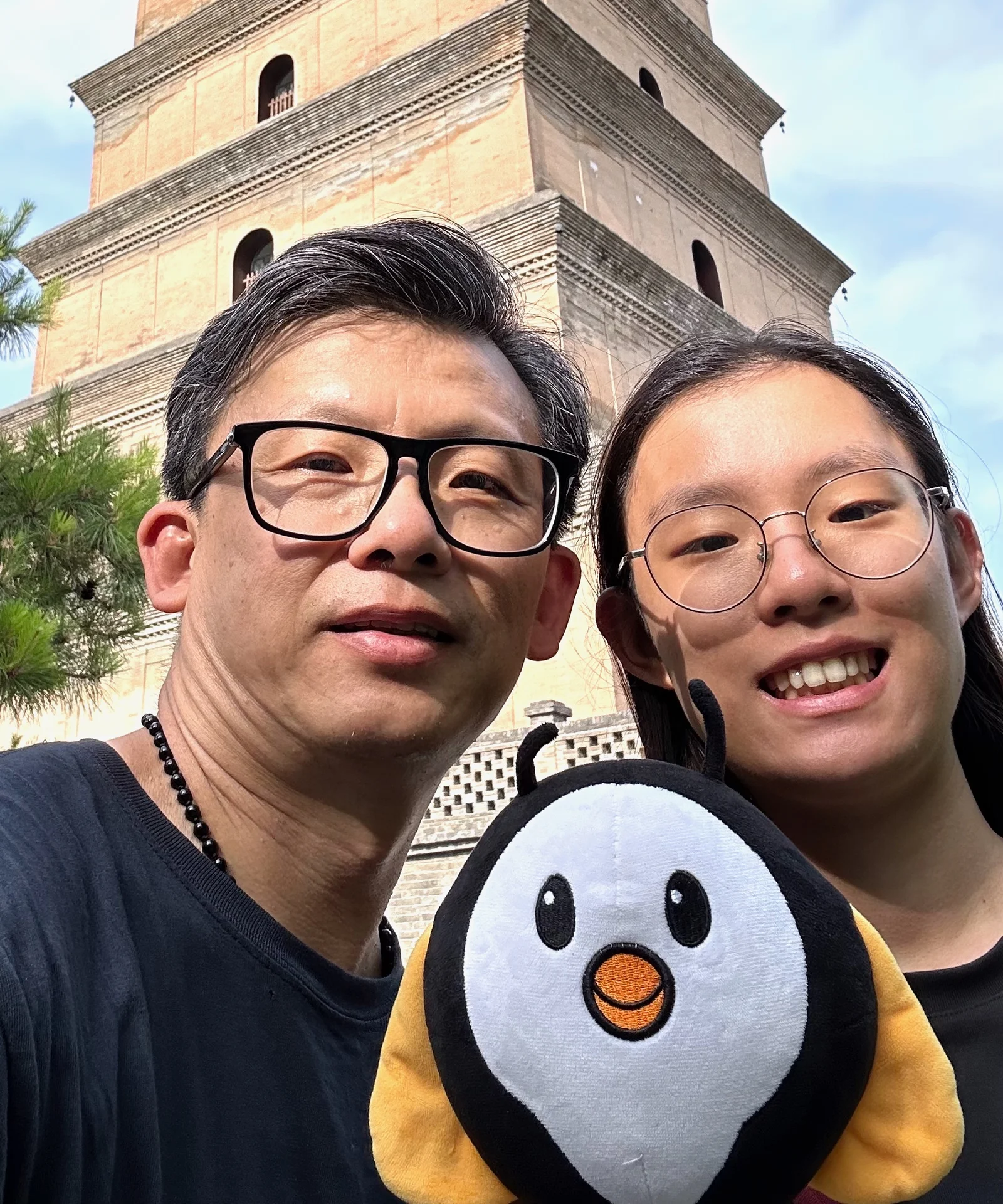
We’re a father and daughter exploring China through real journeys, real traveler questions, and the little things that make us stop and ask, “Why?”
ChinaTravelBUG.com helps you travel China — and understand it better.
Come for practical answers to plan your trip. Follow our journeys to see what traveling in China is really like. And when something makes you curious, look a little deeper into the culture, history and everyday life behind what you see.
Along the way, we share our firsthand experiences, answers to real traveler questions, and insights from licensed local guides.
Come with us — SEE China. ASK questions. UNDERSTAND it better.