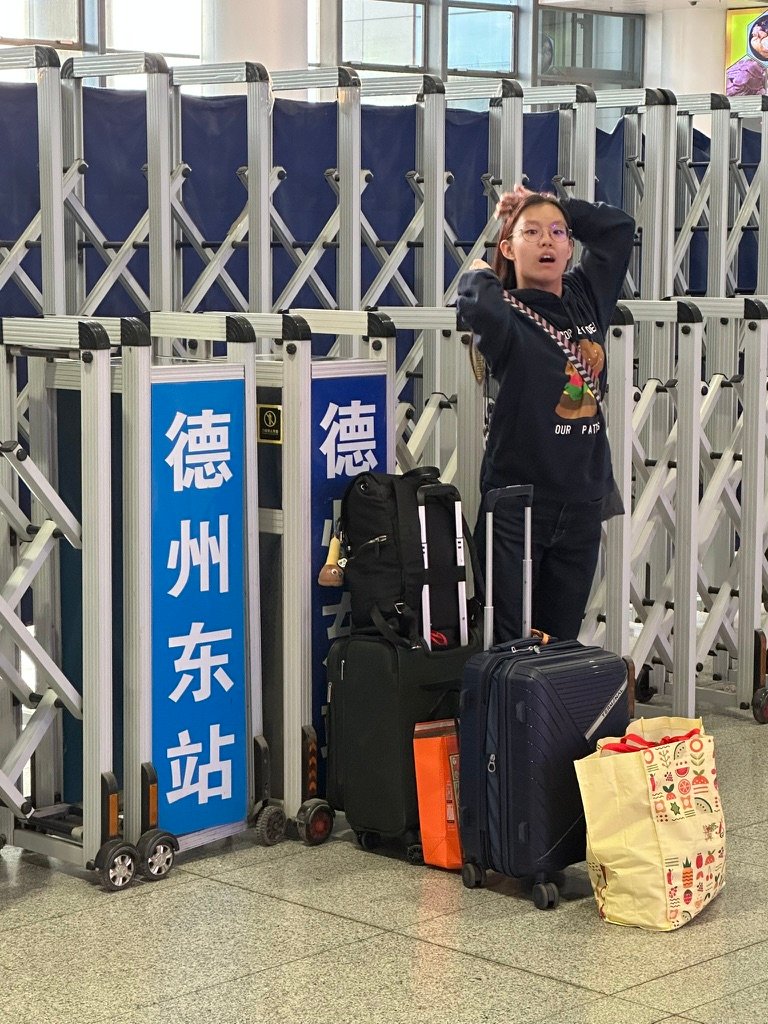
You’re waiting for a train in China when you spot what looks like a drinking-water machine.
Great.
Then you discover the water coming out is…
HOT. Very hot. 😂
Why does a railway station give passengers hot water?
🥟 The Quick Bite
Free hot drinking water (热水, rèshuǐ) has long been a familiar part of Chinese train travel.
Passengers use it to fill thermos bottles, make tea — and, very importantly on a long journey:
make instant noodles. 🍜
That’s why you’ll commonly find hot-water facilities in railway stations and on trains.
🌍 If You’re Trying to Place It…
Think of the free drinking-water fountain or bottle-refill station you might expect at a railway station elsewhere.
China’s version reflects a different everyday habit:
many passengers want their water hot.
🚰 Look for These Chinese Words
A useful one to recognize is:
开水 (kāishuǐ) — boiled/hot drinking water
You may also see:
热水 (rèshuǐ) — hot water
And be careful if you see:
小心烫伤 (xiǎoxīn tàngshāng) — Beware of scalding
That warning is there for a reason. 😂
🍜 Why Is Hot Water So Useful on a Train?
Watch what Chinese passengers do with it.
Someone fills a flask.
Someone makes tea.
Then somebody peels back the lid of a cup of:
方便面 (fāngbiànmiàn) — instant noodles.
Add hot water, wait a few minutes…
train dinner.
Suddenly the hot-water dispenser makes perfect sense.
👀 One Useful Traveler Tip
Don’t assume a hot-water dispenser is a normal cold-water bottle-refill point.
Check the signs before putting your hand or bottle underneath.
The water can be extremely hot.
If you’re unsure, ask:
“这是热水吗?” (Zhè shì rèshuǐ ma?)
“Is this hot water?”
🥟 One Last Bite
At first, free hot water at a railway station can seem like another little Chinese mystery.
Then you see:
thermos + tea + instant noodles.
And realize the station isn’t offering passengers something unusual at all.
It’s providing exactly what many of them expect.
See China. Understand It Better.