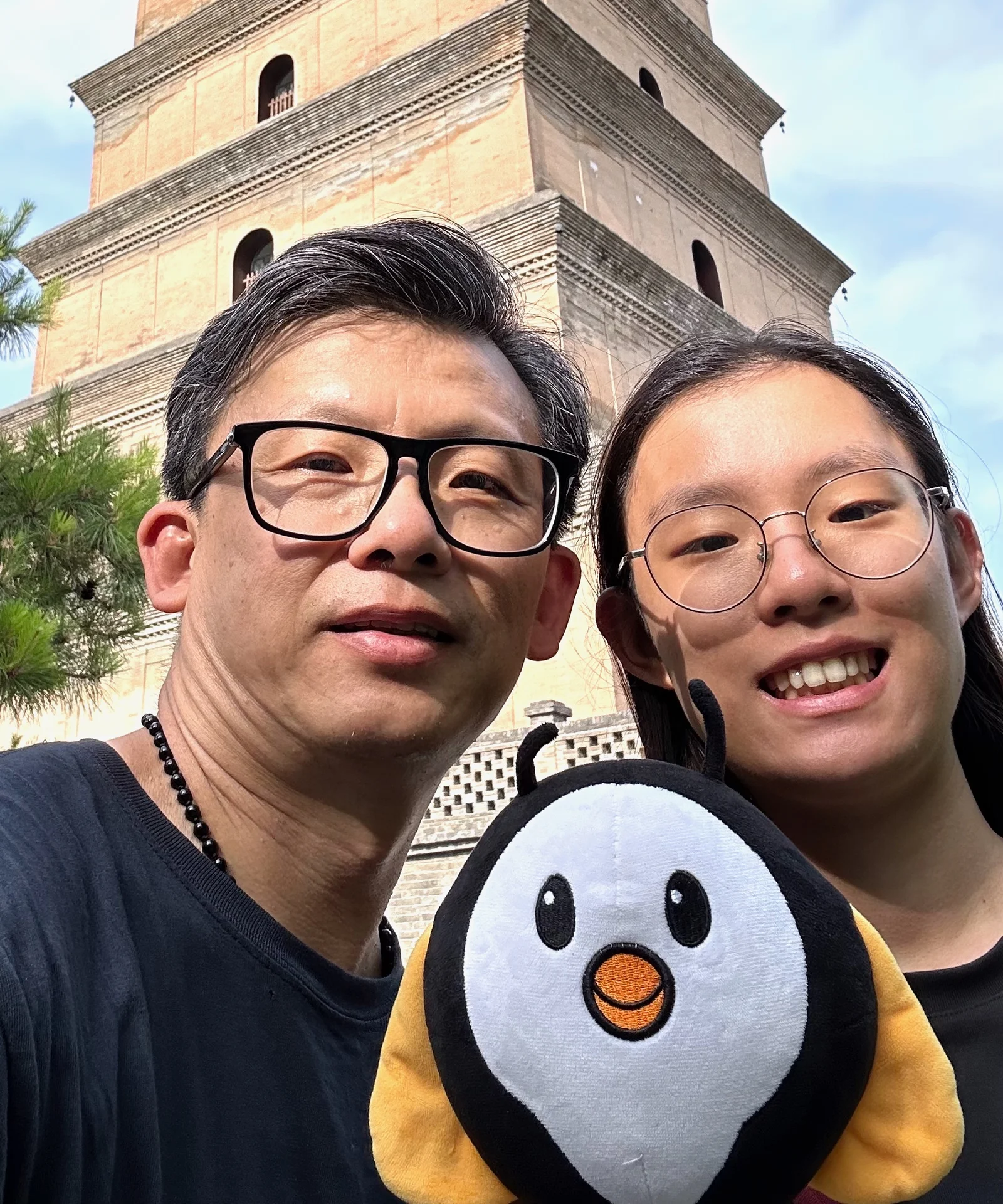
Dad & Elaine have had this experience more than once while walking through morning markets and night markets in China.
Food stalls everywhere.
Something bubbling in a pot.
Something hanging from a hook.
Something sliced beautifully on a tray.
Dad looks.
Elaine looks.
Then:
“Er… what part of the animal is THAT? 😂”
And sometimes…
we didn’t dare order it.
🥟 The Quick Bite
Chinese cooking can use a wide range of animal parts and cuts.
Depending on the region and dish, you may encounter:
tripe + intestine + liver + tongue + feet/trotters + skin + tendon
alongside more familiar cuts of meat.
These ingredients aren’t uniquely Chinese — many cuisines around the world use them.
But if they’re uncommon where you come from, seeing them displayed at an ordinary Chinese food stall can produce a genuine:
WHAT IS THAT?!
🌍 If You’re Trying to Place It…
Think of traditional foods elsewhere such as:
haggis + black pudding + tripe + liver + sweetbreads.
Someone unfamiliar with those foods might stare at them too.
Different food cultures simply have different ideas about which parts of an animal are:
familiar + delicious + worth eating.
📷 Dad & Elaine’s China
Morning and night markets made this particularly obvious to us.
In a restaurant, an unfamiliar ingredient may arrive already:
sliced + cooked + sauced + beautifully plated.
At a market stall…
sometimes you see much more clearly what you’re actually dealing with. 😂
Dad & Elaine would stop.
Look.
Try to work out what it was.
Sometimes ask.
And sometimes decide:
“Interesting. Let’s keep walking.” 😂
That’s our real travel experience.
Curiosity doesn’t mean you have to eat everything you discover.
👀 A Few Chinese Words Help
肚 (dǔ) — stomach / tripe in food contexts
肠 (cháng) — intestine
肝 (gān) — liver
舌 (shé) — tongue
蹄 (tí) — hoof / trotter
皮 (pí) — skin
筋 (jīn) — tendon
Put them together with the animal:
牛肚 (niúdǔ) — beef tripe
猪肝 (zhūgān) — pork liver
牛筋 (niújīn) — beef tendon
Suddenly:
“WHAT IS THAT?”
has an answer.
Whether Dad orders it is another question. 😂
😋 Sometimes It’s About Texture
Another thing Dad gradually learned is that identifying the animal part doesn’t necessarily explain why people enjoy it.
Texture can matter enormously.
You may hear:
脆 (cuì) — crisp / crunchy
嫩 (nèn) — tender
滑 (huá) — smooth
有嚼劲 (yǒu jiáojìn) — pleasantly chewy
An ingredient unfamiliar to you may be prized precisely for a texture local diners enjoy.
🥟 One Last Bite
Dad & Elaine still don’t order everything we see.
And that’s okay.
Travel curiosity doesn’t require:
“I must eat this.”
Sometimes it simply means:
“What IS that?”
You find out.
You learn something about how another food culture sees the animal.
Then you make your decision.
Try it?
Or…
“Very interesting. Next stall please.” 😂
Both count as travelling.
See China. Understand It Better.