Most first-time travellers prepare their passport, flights and hotels.
Far fewer prepare how they are going to experience China.
If you’ve already booked your trip, congratulations—you’ve got an incredible journey ahead of you.
Right now, you’re probably researching visas, payment apps, high-speed trains, hotels and what to pack.
Those are all important, and we’ve gathered them into our 👉 First Time Travelling to China? Start Here guide.
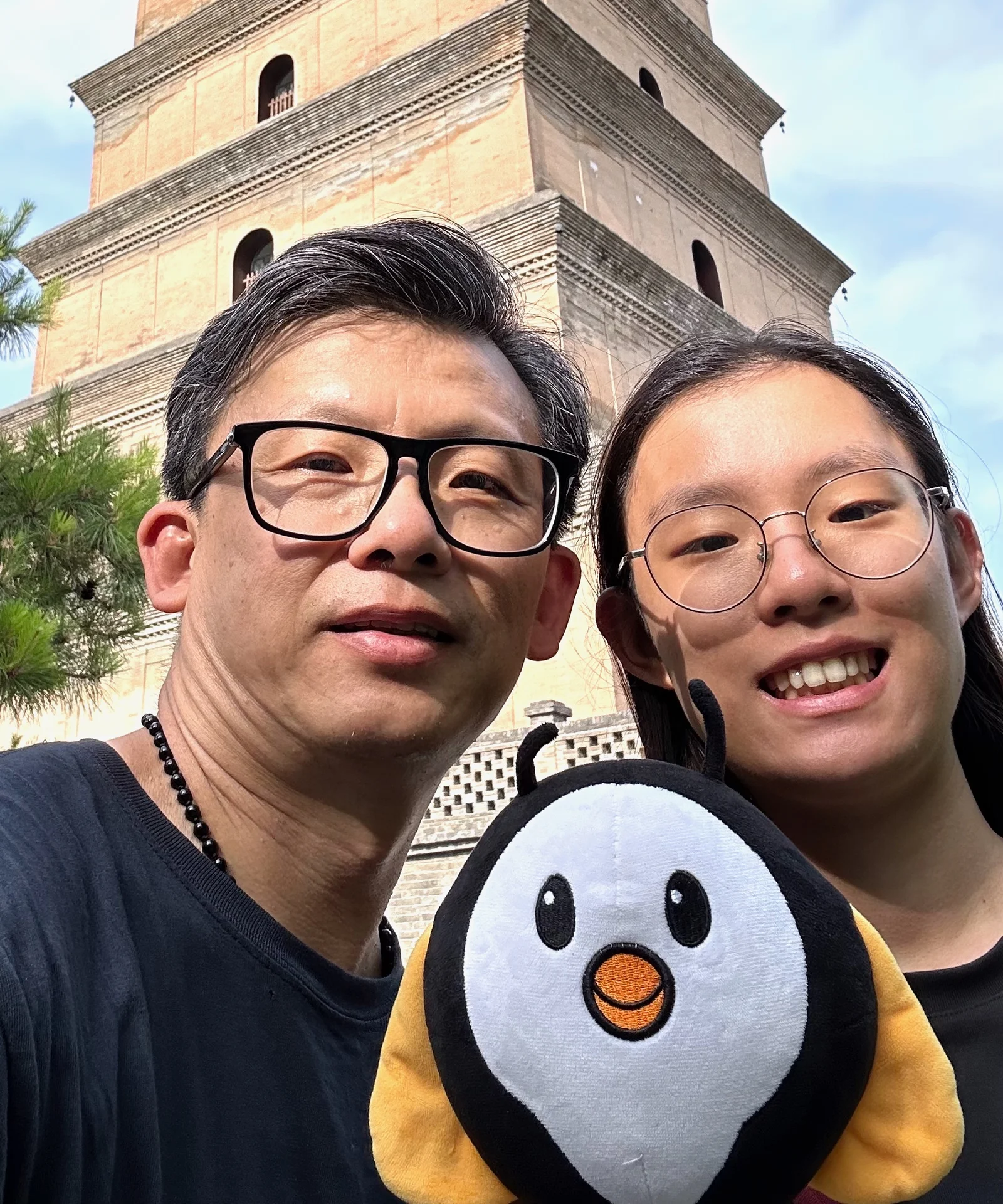
But after several trips across Beijing, Xi’an, Tianjin, Baoji and beyond, Elaine and I discovered something we wish we’d known before our first visit.
China becomes far more rewarding when you stop trying to see everything and start trying to understand something.
Here are a few lessons that completely changed the way we travel.
1. The Terracotta Warriors Were Never Really About the Soldiers
Like most visitors, we arrived excited to see one of the world’s greatest archaeological discoveries.
The first sight of Pit 1 was breathtaking.
Thousands of life-sized soldiers stood silently beneath the enormous excavation hall.
Everyone around us was taking photographs.
Elaine looked for a while before quietly asking,
“Dad… why did one emperor need all these soldiers?”
That simple question changed our day.
Instead of only admiring the sculptures, we started asking who Qin Shi Huang was, why he wanted an underground army, and how one ruler managed to unite so many competing kingdoms.
Suddenly, the Terracotta Warriors were no longer the destination.
They became the beginning of a much bigger story that eventually led us to Xianyang, the Qin-Han Museum and even Zhouyuan in Baoji.
Today, whenever we visit somewhere famous, we remind ourselves that the attraction is usually just the first chapter.
Travel Tip
Before leaving any famous attraction, ask yourself:
“What story has this place introduced me to?”
If you’d like to understand why the Terracotta Warriors changed the course of Chinese history, continue with 👉 Visiting the Terracotta Warriors: More Than Just an Army of Clay, then discover 👉 Qin & Han – The Age That Built China.
🐞 Cheers says…
“Photographs help you remember where you went.
Questions help you remember why it mattered.”
2. One Good Museum Can Save You Hours of Confusion
Before travelling to China, museums were never high on our priority list.
Now they’re often our first stop.
Why?
Because museums quietly answer questions before you even realise you have them.
When we first visited Xi’an, the city walls, pagodas and ancient streets were impressive.
But after spending time inside the Xi’an Museum, we suddenly understood why Xi’an had been the capital for so many dynasties.
The buildings outside suddenly made much more sense.
The same thing happened when we visited the Qin-Han Museum near Xianyang Airport.
Instead of simply seeing old artefacts, we began understanding how the Qin and Han dynasties shaped the China visitors experience today.
Travel Tip
Whenever possible, visit the city’s museum either before—or immediately after—its most famous attraction.
You’ll appreciate both far more.
Continue reading:
👉 Visiting Xi’an Museum – A Gateway to Chang’an’s Glorious Past
👉 Why the Qin-Han Museum Became One of Our Favourite Museums in China
👧 Elaine’s Tip
“Museums aren’t where the trip slows down.
They’re where everything suddenly starts making sense.”
3. Don’t Rush to the Next City
China is enormous.
When planning a first trip, it’s tempting to squeeze Beijing, Xi’an, Chengdu, Guilin and Shanghai into ten or twelve days.
We’ve learnt that travelling slower usually rewards us much more.
Beijing isn’t just home to the Great Wall and the Forbidden City.
It’s where we began understanding how emperors governed an empire.
Xi’an isn’t simply where the Terracotta Warriors are located.
It’s where we started discovering how China’s earliest empires were built.
Giving each city an extra day often creates the best memories—not because you visit another attraction, but because you finally have time to wander, observe and notice everyday life.
Travel Tip
Instead of asking,
“What else can we squeeze into today?”
try asking,
“What haven’t we understood about this city yet?”
For ideas on planning a balanced first visit, explore 👉 Eight Days in Beijing and our growing collection of 👉 Xi’an travel guides.
4. The Best Moments Usually Aren’t on the Checklist
Some of our favourite memories never appeared in our original itinerary.
Watching elderly residents practising tai chi in Beijing’s parks.
Discovering two simple stone tablets at Zhouling that quietly listed hundreds of years of Zhou kings.
Finding a peaceful corner of Xi’an’s old city while most tourists crowded around the Muslim Quarter.
Stopping to chat with museum volunteers who clearly loved sharing their city’s history.
None of these experiences appeared on any “Top 10 Things To Do” list.
Yet they’re among the moments we remember most vividly.
Travel Tip
Leave at least one half-day during your trip with no fixed plans.
China often rewards travellers who allow room for unexpected discoveries.
🐞 Cheers whispers…
“Sometimes the best attraction isn’t the one on your itinerary.”
5. China Rewards Curious Travellers
One thing surprised us more than anything else.
The more curious we became, the more enjoyable each journey became.
One question led to another.
The Great Wall led us to military history.
Military history led us to the Qin Empire.
The Qin Empire led us to Xianyang.
Xianyang led us to Baoji.
Baoji eventually introduced us to one of the earliest known inscriptions of the word “China” (中国) on the famous He Zun bronze vessel.
None of those destinations were part of our original travel plans.
Curiosity took us there.
That’s probably the biggest lesson China has taught us.
You don’t need to understand thousands of years of history before arriving.
You simply need to stay curious enough to ask one more question.
Before You Fly…
Prepare your passport.
Charge your phone.
Download your travel apps.
Pack comfortable shoes.
But don’t forget to pack something else.
Curiosity.
It weighs nothing.
Yet it may become the most valuable thing you bring home.
One of the Travel Tools Dad & Elaine Actually Use
When Elaine and I travel around China, Trip.com is one of the platforms we genuinely use ourselves. Over our journeys together, we’ve used it to book hotels, flights, trains, attractions and tours — in China and elsewhere.
It has helped us many times while planning our trips, and we’ve had good experiences with it. So when friends or ChinaTravelBUG readers ask us “Where do you actually book?”, Trip.com is one of the places we’re comfortable recommending because we use it too.
✈️ 🏨 🚄 🎟️ Explore and plan your China trip on Trip.com →
Affiliate link — ChinaTravelBUG may earn a small commission at no extra cost to you.
Continue Your China Journey
If you’re still preparing for your first visit, these guides may help.
✈️ Planning Your Trip
👉 First Time Travelling to China? Start Here (Your complete practical planning guide covering visas, payments, transport, hotels, apps and more.)
👉 Is China Difficult to Visit? (Why travelling independently in China is easier than many first-time visitors expect.)
👉 My First Impression of China Wasn’t Great (How culture shock became one of our greatest travel lessons.)
🏛 Discover China’s Stories
👉 Visiting the Terracotta Warriors: More Than Just an Army of Clay
👉 Qin & Han – The Age That Built China
👉 Visiting Xi’an Museum – A Gateway to Chang’an’s Glorious Past
👉 Qin-Han Museum – The Missing Chapter Most Xi’an Visitors Never See
🏯 Explore China’s Great Cities
👉 Eight Days in Beijing
👉 Xi’an Travel Guide
👉 Tianjin Travel Guide