
Understanding Culture Shock During Your First Trip to China
“I Already Want to Go Home.”
While browsing a travel community recently, we came across a heartfelt post from a solo female traveller.
She had travelled to ten countries before and had been looking forward to visiting China.
But only a few days into her journey, she admitted something many travellers are afraid to say aloud:
“I already want to go back.”
She wrote that several people she approached for directions did not respond.
She felt uncomfortable in crowded public places where strangers stood much closer than she was used to.
She also described an unfortunate misunderstanding while buying souvenirs, discovering later that some items had been removed from her purchase instead of receiving the discount she thought she had negotiated.
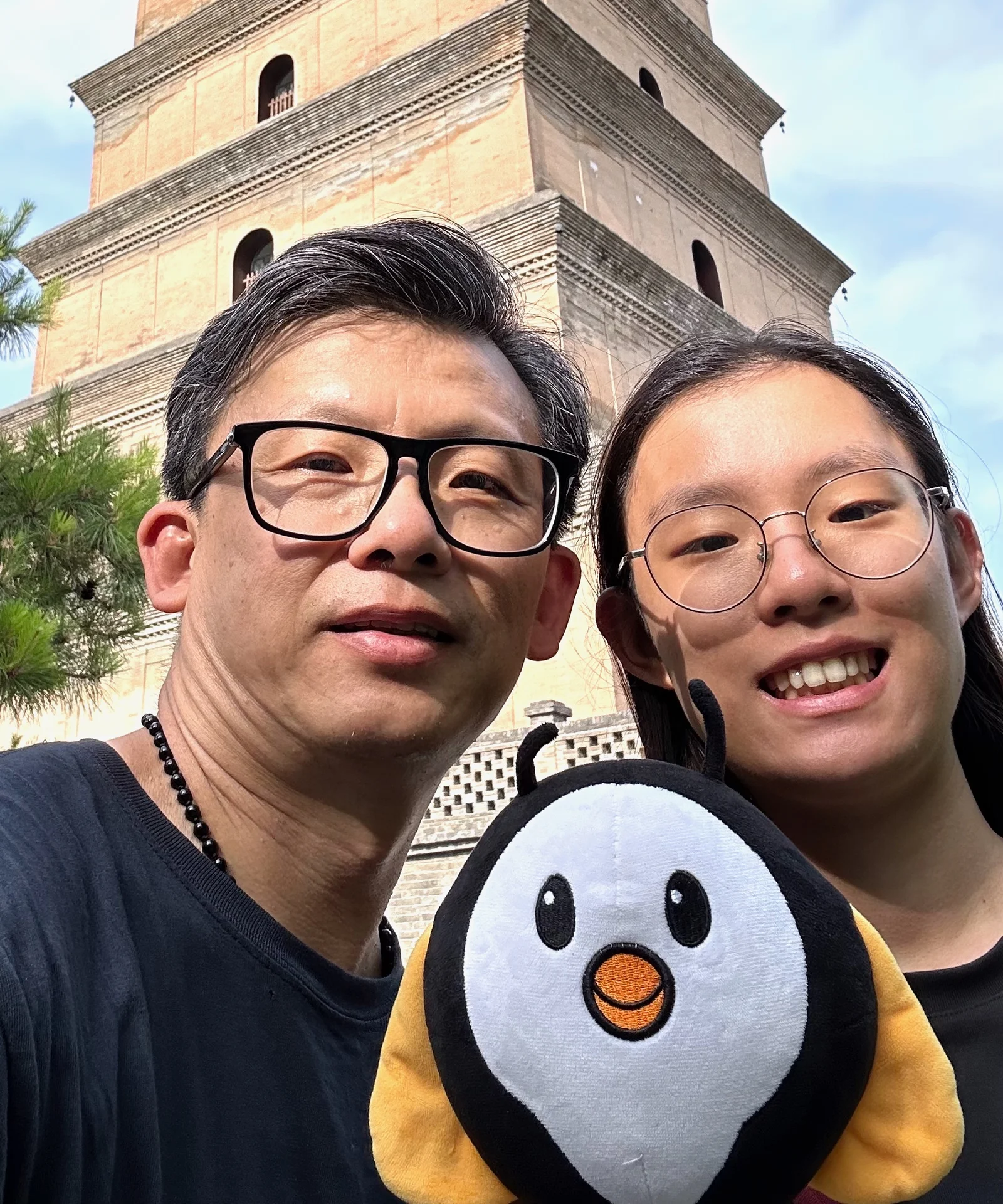
Reading her post, Elaine looked at me and asked,
“Dad… did we ever feel like that?”
I smiled.
“Actually… yes.”
Not because China was unfriendly.
But because our first few days felt very different from what we expected.
It’s Worth Saying This First
The traveller’s disappointment was real.
Travelling can be mentally and emotionally exhausting, especially during the first few days in a country with a different language, unfamiliar digital systems and different social customs!!
Feeling frustrated doesn’t mean you’re a bad traveller.
It also doesn’t mean an entire country is unfriendly.
Very often, it means you’re experiencing something psychologists have long recognised:
Culture shock.
It’s a normal process of adjusting to a new environment where familiar assumptions no longer apply.
The good news?
For many travellers, it gradually fades as understanding grows.
Why First Impressions Can Be Misleading
One lesson we’ve learnt through our own journeys is this:
First impressions are often emotional. Understanding takes longer.
When Elaine and I first travelled through China, we were also ADAPTING.
Different apps.
Different payment systems.
Different ways of asking for help.
Different expectations in public spaces.
Those differences felt noticeable at first.
A few days later, many of them simply became normal.
Why Didn’t People Answer My Question?
One of the traveller’s biggest frustrations was that several people appeared to ignore her when she asked for directions.
It’s easy to interpret that as unfriendliness.
But there are often other explanations.
Although English proficiency has improved among younger people and those working in tourism, many ordinary residents—especially outside international hotels, airports and major tourist attractions—may not feel confident giving directions in English.
Rather than risk giving incorrect information, some people simply avoid answering.
Others may genuinely be rushing to work, catching a train or focused on their own daily routine.
During our own travels, we found these people were usually the most helpful:
- hotel reception staff
- museum information counters
- metro station staff
- staff at major shopping centres
- younger people comfortable using translation apps
Elaine soon discovered that showing a destination written in Chinese using a translation app often transformed the interaction.
Elaine’s Note: One Kind Security Guard Made Our Day
During one of our earlier trips, Dad and I arrived at a Beijing subway station ready to explore the city.
There was just one problem.
For some reason, we couldn’t use our phones to buy our Beijing Subway (北京地铁 | Běijīng Dìtiě) tickets.
We tried several times, but the payment simply wouldn’t go through.
Dad looked around and approached a station security guard (安保人员 | Ānbǎo Rényuán) for help.
Although he spoke very little English, he immediately understood what had happened.
Without any hesitation, he took out his own phone, purchased two subway tickets for us using his account, and handed them over with a smile.
Dad then paid him back in cash that we happened to have in our wallet.
The whole interaction lasted only a few minutes.
As we walked through the ticket gates, Dad smiled and said,
“Sometimes, people don’t need to speak your language to understand your problem.”
That small act of kindness stayed with us long after the journey ended.
🐧 Cheers Says…
Cheers looked surprised.
“He used his own phone?”
Dad nodded.
“Yes.”
The Beijing Panda smiled.
“Most people genuinely want to help.”
“Sometimes they just need to understand what you need first.”
💡 ChinaTravelBUG Tip
If you need assistance in China, don’t be afraid to approach:
- metro station staff or security personnel
- hotel reception staff
- museum information counters
- customer service desks in major shopping centres
Even if there’s a language barrier, they’re often experienced in helping visitors and can usually find a practical solution.
Why this story matters
Looking back, we realised the story wasn’t really about buying two subway tickets.
It was about something much bigger.
Before travelling to China, many visitors worry that not speaking Mandarin means they’ll be on their own.
Our experience taught us the opposite.
People may not always speak your language—but kindness, patience and a willingness to help often communicate far better than words.
At ChinaTravelBug, these are the moments we remember most—not because they were planned, but because they reminded us that travel is ultimately about people.
Understanding Personal Space
One reply beneath the traveller’s post said:
“There is no personal space in China.”
That statement is probably too simplistic.
Chinese people certainly value courtesy and personal boundaries.
However, expectations about personal space often depend on the environment.
In cities such as Beijing, Shanghai and Xi’an, millions of people share crowded metro systems, railway stations and shopping streets every day.
Standing closer together, walking more assertively or moving quickly through crowds is often a practical adaptation to busy urban life rather than an intention to be rude.
Once we understood that, we stopped interpreting every crowded moment as a personal slight.
You’re Visiting a Living City—Not a Theme Park
This was one of the biggest mindset shifts we experienced.
Places like Beijing, Xi’an and Shanghai are world-famous tourist destinations.
But they are also home to millions of residents going about their everyday lives.
The person brushing past you may simply be trying to catch a train.
The family walking beside you may be heading home after work.
The shop assistant serving you has probably helped hundreds of customers that day.
Remembering that you’re sharing the city with local residents—not visiting a purpose-built tourist attraction—changes how you interpret many interactions.
The Souvenir Shop Incident
The traveller also described buying several souvenirs before asking whether a discount was available.
When she later returned to her hotel, she realised that some items had been removed from the purchase instead.
Without hearing the shop assistant’s explanation, it’s impossible to know exactly what happened.
It may have been a misunderstanding caused by language, different expectations about discounts or simple miscommunication.
Whatever the reason, there’s a useful lesson for all travellers.
Before leaving any shop, quickly check that your purchases match what you intended to buy!!
It’s sensible advice wherever you travel.
Elaine’s Discovery
During our own journey, Elaine noticed something interesting.
The warmest interactions often began with a smile.
Sometimes all she needed to say was:
你好 (Nǐ hǎo) — Hello
or
谢谢 (Xièxie) — Thank you
Of course, every traveller’s experience is different.
But we found that making the first friendly gesture often encouraged people to respond warmly.
Those small moments gradually reshaped our own first impressions.
Culture Shock Doesn’t Last Forever
One experienced traveller replied to the Facebook post with an observation that resonated with us.
He explained that after many visits to China, the overwhelming majority of his experiences had been positive.
The occasional difficult moments eventually became stories rather than regrets.
That reflects our own experience too.
No destination is perfect.
Every country has cultural differences, misunderstandings and unexpected challenges.
The question is whether those moments become your whole story—or simply one chapter of it.
ChinaTravelBUG Tips for Navigating Culture Shock
✔ Give yourself a few days
Your first impression isn’t always your lasting impression.
Allow yourself time to adjust before forming conclusions.
✔ Ask the right people
If you need help, hotel reception staff, museum information desks and metro station staff are often better sources of assistance than random passers-by.
✔ Use translation apps
Showing your destination written in Chinese is often far more effective than trying to pronounce it.
✔ Check your purchases before leaving
Especially in busy markets or where there may be a language barrier.
✔ Stay curious
Instead of asking, “Why are people doing this?”, try asking, “What might explain this?”
That simple change in mindset often leads to a much richer travel experience.
Dad’s Reflection
As our high-speed train quietly left Xi’an Station one evening, Elaine looked out of the window and said,
“Dad… I think I’m starting to understand China now.”
That sentence has stayed with me ever since.
Because understanding a country takes longer than seeing its famous attractions.
It requires patience.
Curiosity.
And the humility to recognise that another culture may simply organise everyday life differently from our own.
Final Thoughts
The traveller whose post inspired this article may eventually return home with mixed memories.
Or perhaps, after another two weeks, she’ll discover a very different side of China.
We simply don’t know.
What we do know is this:
Your first impression is rarely your final understanding.
China reveals itself gradually.
Sometimes through extraordinary places like the Great Wall, the Forbidden City or the Terracotta Warriors.
Sometimes through a quiet conversation in a Chengdu tea house.
Sometimes through a stranger who notices you’re lost and points you in the right direction.
At ChinaTravelBug, we believe travel is about more than collecting photographs.
It’s about learning to see the world through another culture’s eyes.
As I often remind Elaine before every journey:
“Don’t just visit China. Try to understand it.”
And more often than not, China rewards those who arrive with curiosity.
Continue Your Journey with ChinaTravelBug
If you’re planning your first trip, these guides will help you prepare with confidence:
First Time Travelling to China? The Complete 2026 Travel Checklist
Can Foreign Tourists Use Alipay in China?