Xi’an (西安, Xī’ān) → Baoji (宝鸡, Bǎojī) → Qishan (岐山, Qíshān) → Zhouyuan (周原, Zhōuyuán) → Wuzhangyuan (五丈原, Wǔzhàngyuán) → Xi’an (西安, Xī’ān)
Bronzes. 中国. The Zhou homeland. Duke of Zhou. Heaven’s Mandate. A bowl of noodles. Then Zhuge Liang crashes the dinner 1,200 years later.
Welcome back to the:
Michelin History Tasting JOURNEY
No white tablecloth required.
No dress code.
And Dad cannot promise Michelin-starred food.
😂
What we’re serving is:
Chinese history — one place, one idea and one question at a time.
You don’t need to memorise every dynasty.
You don’t need to remember 200 bronze vessels.
And there will be no examination at the end.
Our rule is simpler:
🍽️ TASTE
See the place. Take away one idea.
🐇 GO DEEPER
When something catches your curiosity, follow the rabbit hole.
⭐ GO MICHELIN
Stop sightseeing for a moment and ask the bigger question behind the place.
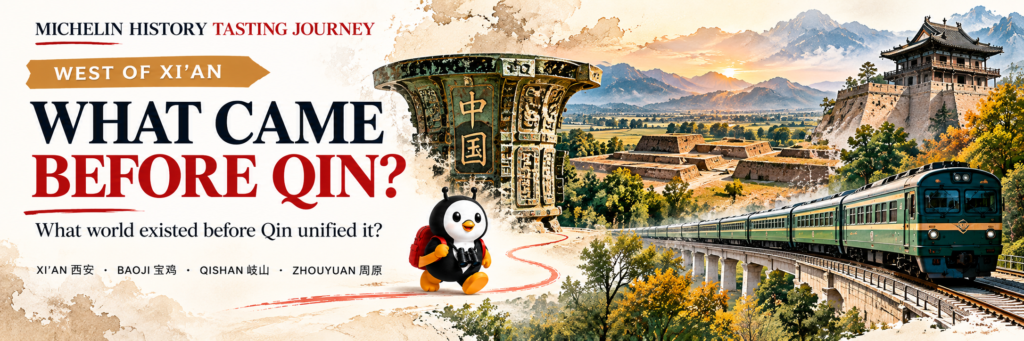
And this menu begins somewhere most international travelers already know.
Xi’an (西安, Xī’ān)
🥂 APÉRITIF — XI’AN (西安, Xī’ān)
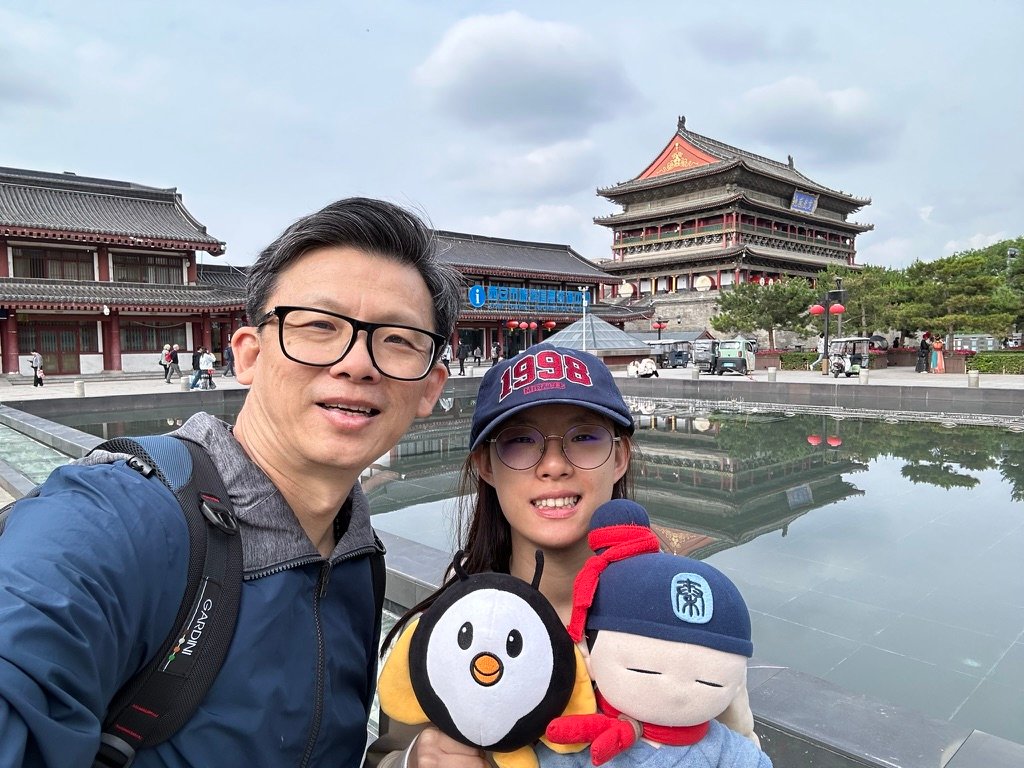
THE DISH: The China You Think You Know
FLAVOR: Qin (秦, Qín) · Qin Shi Huang (秦始皇, Qín Shǐhuáng) · Unification (统一, Tǒngyī)
⭐ THE BIG QUESTION
What came before Qin (秦, Qín)?
Most first-time travelers arrive in Xi’an (西安, Xī’ān) with one historical date waiting for them:
221 BCE
Qin Shi Huang (秦始皇, Qín Shǐhuáng) defeated the remaining rival states and created China’s first unified imperial dynasty:
Qin dynasty (秦朝, Qíncháo).
Then you see the:
Terracotta Warriors (兵马俑, Bīngmǎyǒng).
Thousands of soldiers.
An emperor.
An empire.
Unification.
It feels like a beginning.
But Dad has a problem with beginnings.
He always wants to know:
What happened before that?
If Qin Shi Huang (秦始皇, Qín Shǐhuáng) unified something…
what exactly was he unifying?
Who ruled before Qin (秦, Qín)?
What political ideas already existed?
Where did those ideas come from?
And was anyone already using the two characters:
中国
Zhōngguó
centuries before Qin Shi Huang (秦始皇, Qín Shǐhuáng)?
😳
Now we’ve been stung.
🐇
And this time, we’re not taking you east.
We’re not going north.
We’re going:
WEST.
🚄 Xi’an (西安, Xī’ān) → Baoji (宝鸡, Bǎojī)
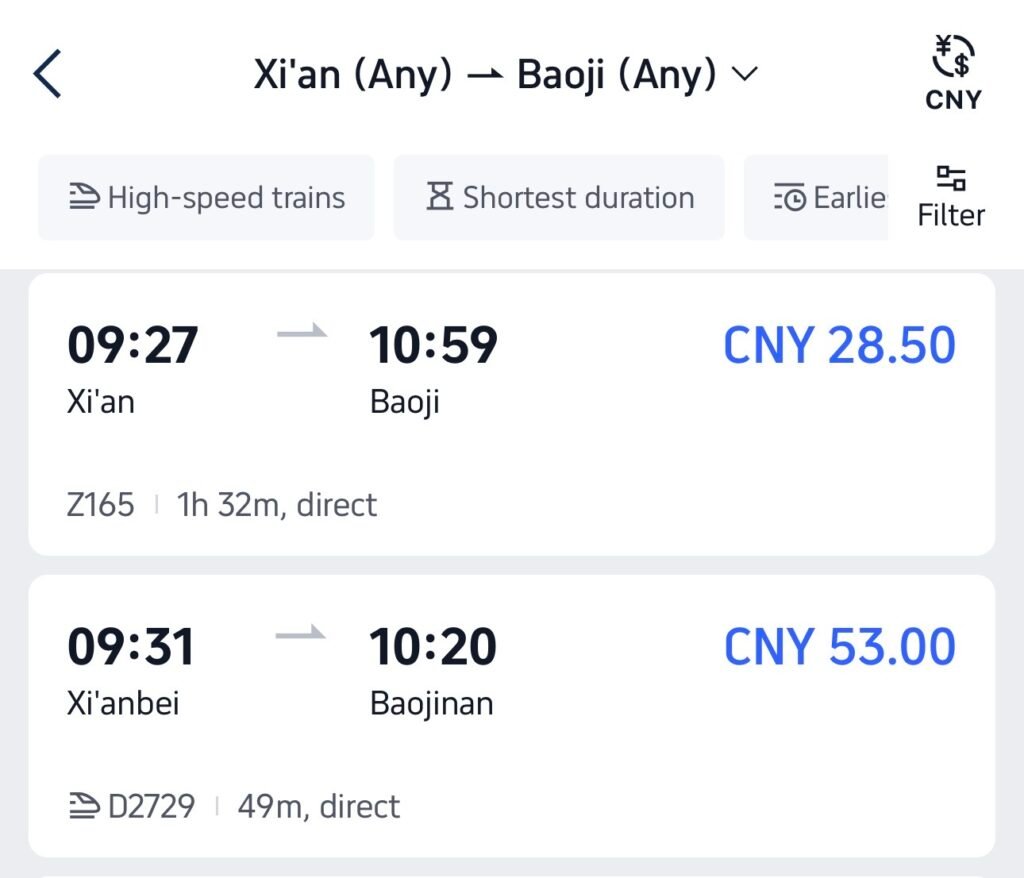
Baoji (宝鸡, Bǎojī) sits west of Xi’an (西安, Xī’ān) along the Wei River (渭河, Wèi Hé) corridor.
Today, fast trains can make the journey remarkably easy.
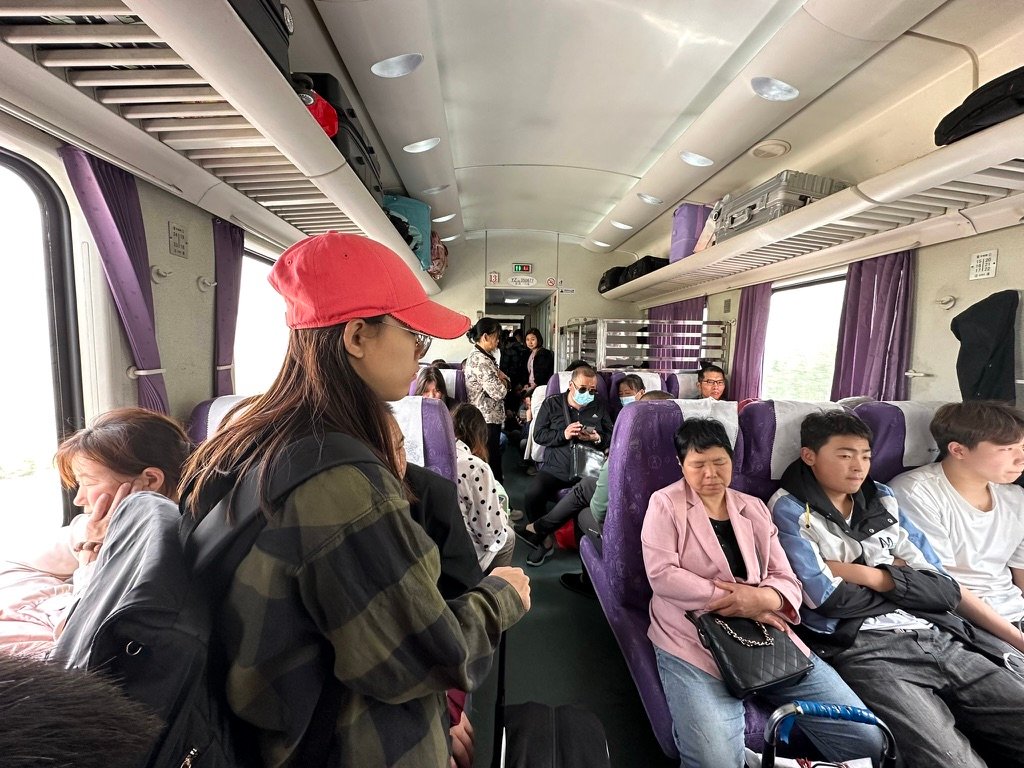
But Dad and Elaine didn’t begin this particular story with an elegant high-speed arrival.
Elaine had her first experience on a Chinese:
green train (绿皮车, Lǜpíchē).
And then we discovered…
we didn’t have seats.
😂
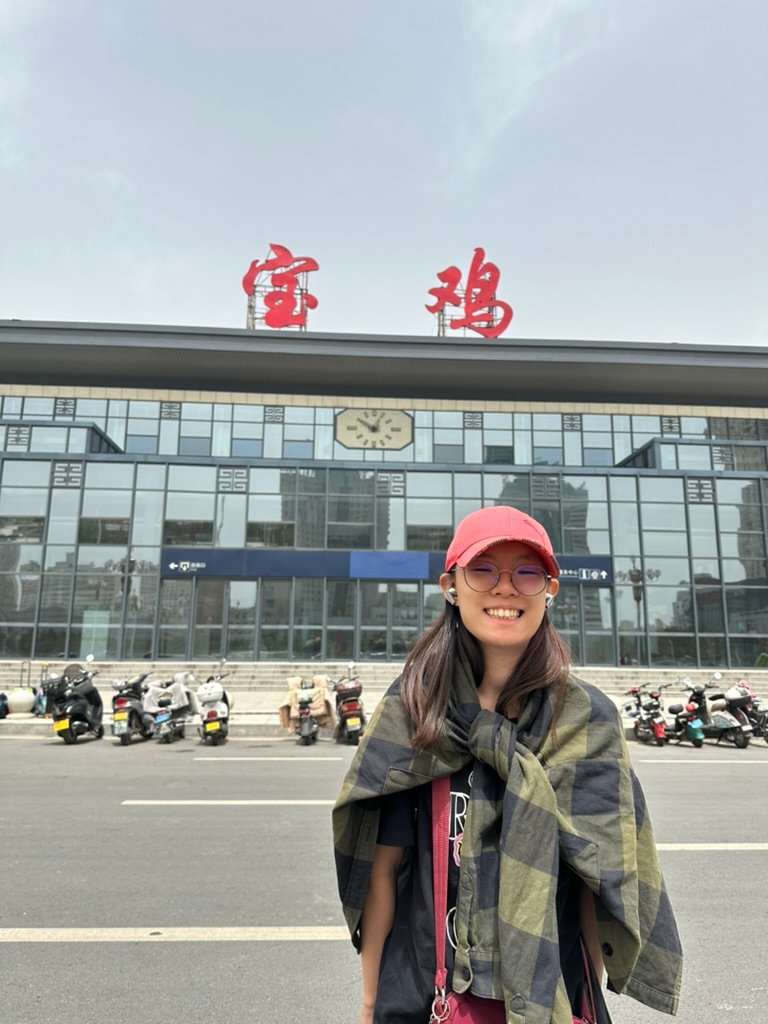
By the time we reached Baoji (宝鸡, Bǎojī), Elaine had already received her first course in practical Chinese travel.
But before Dad could start talking about:
Western Zhou dynasty (西周, Xī Zhōu),
bronze inscriptions (青铜器铭文, Qīngtóngqì Míngwén),
or:
He Zun (何尊, Hé Zūn)…
there was a more urgent matter.
Lunch.
🍜 AMUSE-BOUCHE — BAOJI (宝鸡, Bǎojī)
THE DISH: Elaine, You Order.
FLAVOR: Pulled noodles (扯面, Chěmiàn) · Raw garlic (生蒜, Shēngsuàn) · Noodle water (面汤, Miàntāng) · Dad doing absolutely nothing useful
😂
Dad and Elaine had arrived in Baoji (宝鸡, Bǎojī).
We asked our homestay owner where locals nearby actually ate.
Then Dad handed the difficult job to Elaine.
“You order.”
→ Our First Lunch in Baoji (宝鸡, Bǎojī) — Dad Made Elaine Do the Ordering
She ordered.
Dad ate.
Excellent division of labour.
😂
We had:
pulled noodles (扯面, Chěmiàn)
with:
raw garlic (生蒜, Shēngsuàn)
and warm:
noodle water (面汤, Miàntāng).
Nothing here was 3,000 years old.
Nothing required an archaeological explanation.
And that’s exactly why it belongs on the menu.
Before we ask travelers to swallow the entire Western Zhou dynasty (西周, Xī Zhōu)…
feed them.
😂
Because after lunch, Dad was taking Elaine somewhere that would completely change the flavor of this journey:
Baoji Bronze Ware Museum
宝鸡青铜器博物院
Bǎojī Qīngtóngqì Bówùyuàn
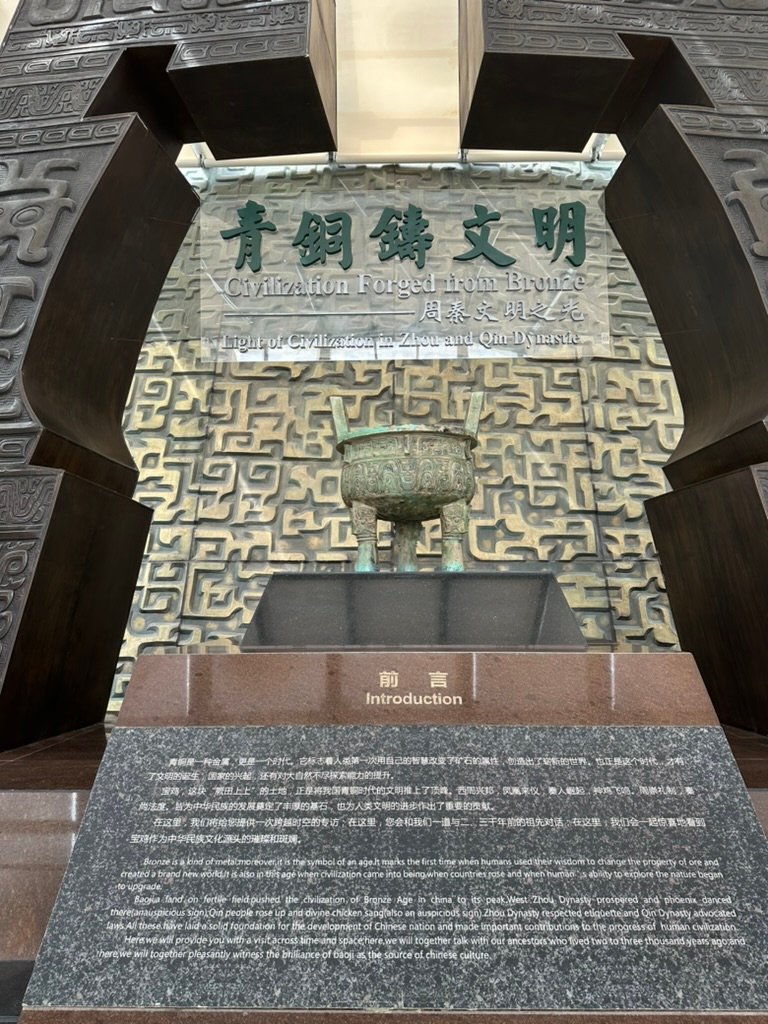
And inside was one bronze vessel.
One inscription.
And two characters every traveler in modern China already knows:
中国
Zhōngguó
🐇
🍽️ COURSE I — He Zun (何尊, Hé Zūn)
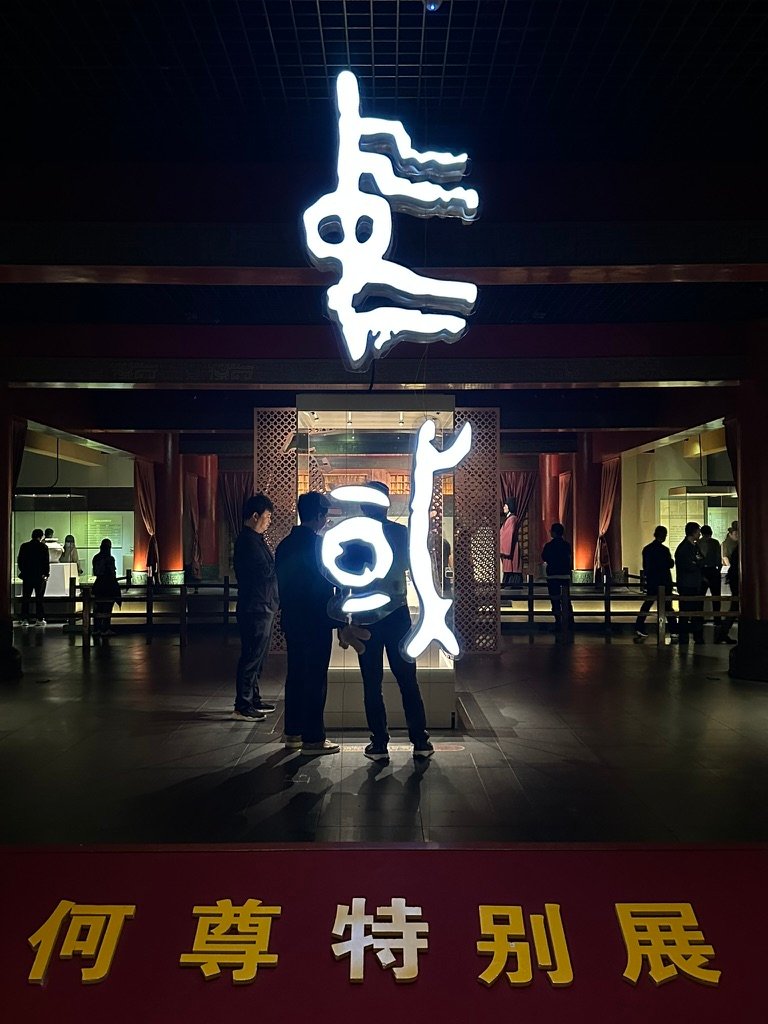
THE DISH: One Bronze. Two Characters. 3,000 Years.
FLAVOR: Western Zhou dynasty (西周, Xī Zhōu) · Bronze inscriptions (青铜器铭文, Qīngtóngqì Míngwén) · King Cheng of Zhou (周成王, Zhōu Chéngwáng) · China (中国, Zhōngguó)
⭐ THE BIG QUESTION
What did 中国 (Zhōngguó) mean before “China”?
After lunch, Dad and Elaine went to the:
Baoji Bronze Ware Museum (宝鸡青铜器博物院, Bǎojī Qīngtóngqì Bówùyuàn).
Baoji (宝鸡, Bǎojī) is famous for its extraordinary Zhou dynasty (周朝, Zhōucháo) bronzes.
You could spend hours trying to remember them all.
Don’t.
Dad has a simpler tasting rule:
One object.
Meet:
He Zun (何尊, Hé Zūn)
→ He Zun (何尊, Hé Zūn) — The 3,000-Year-Old Bronze That Bears the Characters 中国 (Zhōngguó)
🍴 TASTING NOTE — Look Inside
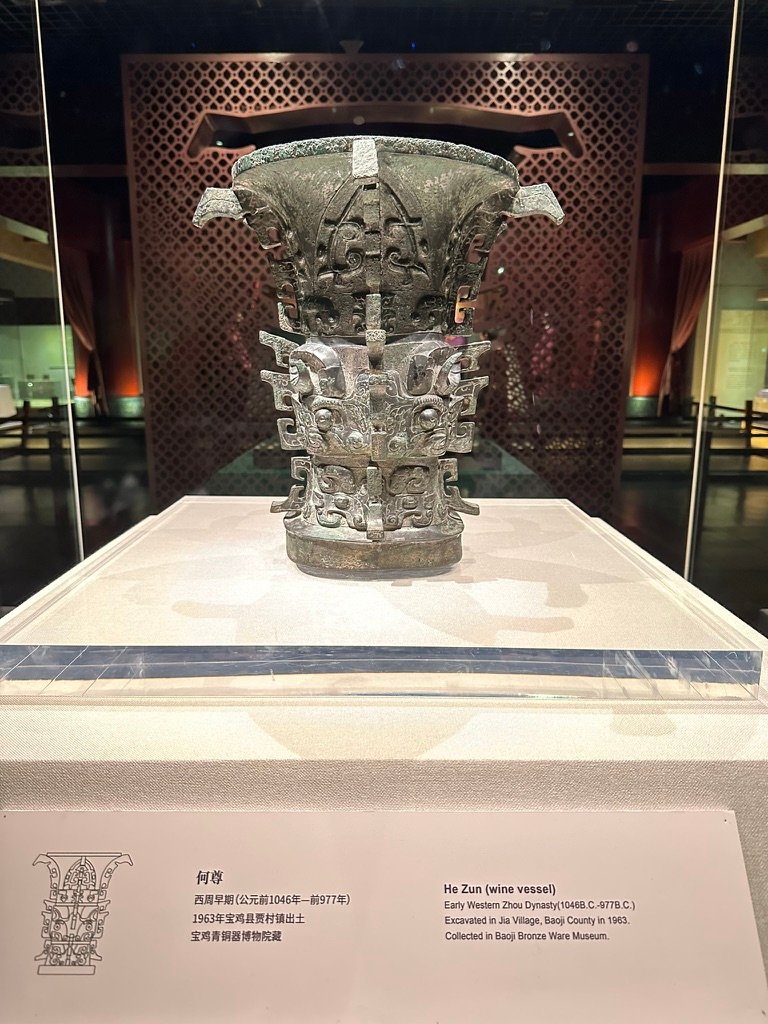
The He Zun (何尊, Hé Zūn) is a ritual bronze vessel from the early Western Zhou dynasty (西周, Xī Zhōu).
But the really interesting part isn’t only its shape.
It’s the inscription inside.
Among the ancient characters appears a phrase containing:
中国
Zhōngguó
Those are the same two characters used for China (中国, Zhōngguó) today.
😳
But don’t jump to:
“Aha! They called the modern country China 3,000 years ago.”
History is rarely that convenient.
The meaning of China (中国, Zhōngguó) developed over a very long time.
In the He Zun inscription (何尊铭文, Hé Zūn Míngwén), the term is understood in the context of a political and geographical central region, connected with the early Zhou dynasty (周朝, Zhōucháo) royal project.
Same characters.
Different historical world.
And that’s exactly why this bronze is such a wonderful rabbit hole.
From One Bronze to an Entire Landscape
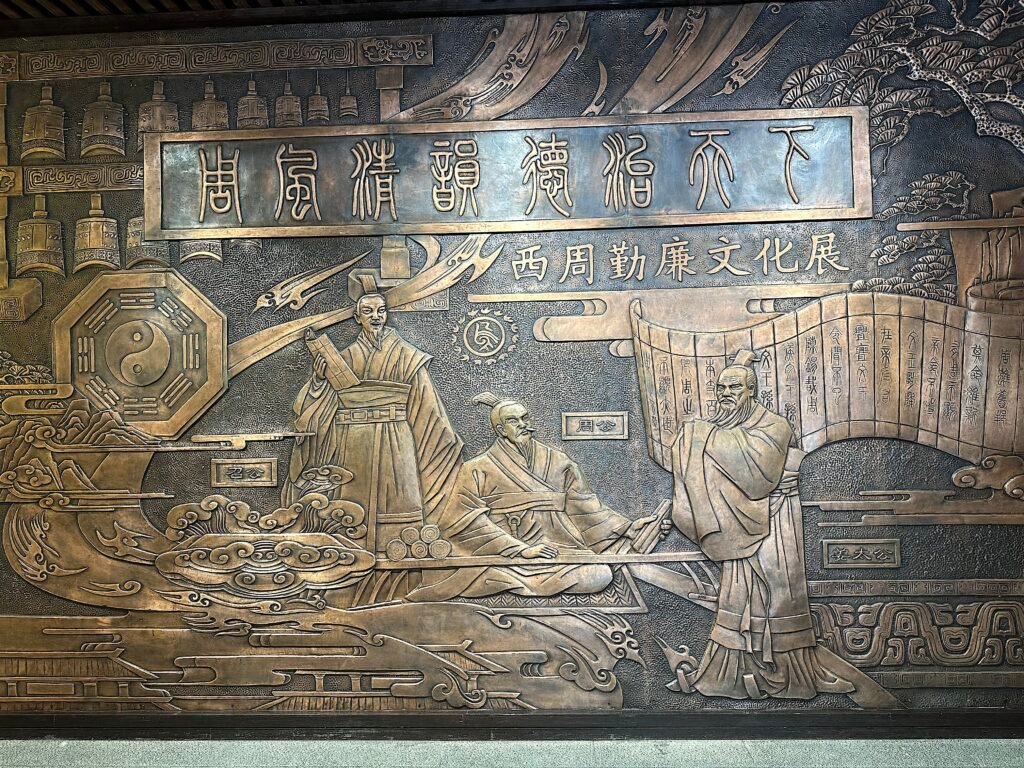
Now Dad started asking the next question.
Who were these Zhou people (周人, Zhōurén)?
Where did they come from?
Before the Zhou dynasty (周朝, Zhōucháo) defeated the Shang dynasty (商朝, Shāngcháo)…
where was Zhou?
That’s when the museum case stopped being enough.
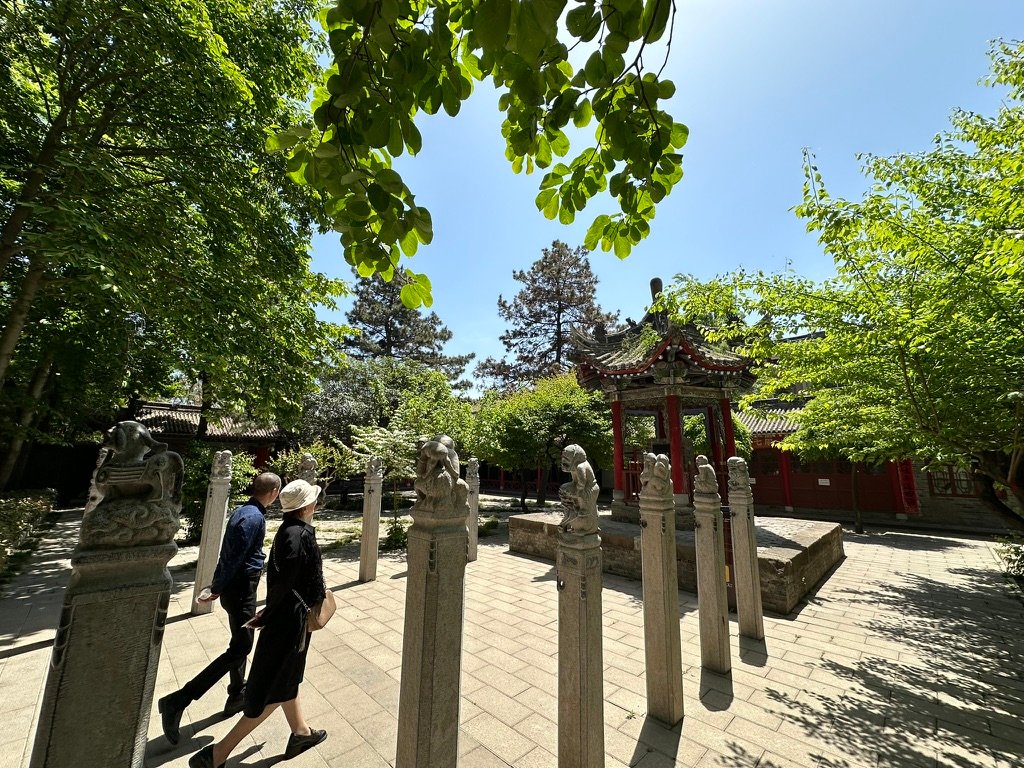
Because west of Xi’an (西安, Xī’ān), around Qishan (岐山, Qíshān) and Zhouyuan (周原, Zhōuyuán), we could actually travel through the landscape traditionally and archaeologically associated with the early Zhou world.
The Michelin technique here is simple:
OBJECT
He Zun (何尊, Hé Zūn)
↓
WORDS
China (中国, Zhōngguó)
↓
PEOPLE
Zhou people (周人, Zhōurén)
↓
PLACE
Zhouyuan (周原, Zhōuyuán)
↓
QUESTION
How did Zhou become Zhou?
🐇
⭐ GO MICHELIN
Stop looking at the bronze for a moment.
Think about what just happened.
We began this journey in Xi’an (西安, Xī’ān) with:
Qin Shi Huang (秦始皇, Qín Shǐhuáng)
→ 221 BCE
→ Qin unification (秦统一, Qín Tǒngyī).
Now one bronze in Baoji (宝鸡, Bǎojī) has pulled us centuries further backwards into the Western Zhou dynasty (西周, Xī Zhōu).
And the question is no longer simply:
“What came before Qin (秦, Qín)?”
It’s becoming:
What kind of political world had already developed long before Qin unified it?
We needed to leave the museum to find out.
→ Qishan (岐山, Qíshān) & Zhouyuan (周原, Zhōuyuán) — Walking Through the Homeland of the Zhou (周, Zhōu)
Pack your appetite.
The next course is served in the landscape.
🐇
🍽️ COURSE II — Qishan (岐山, Qíshān) & Zhouyuan (周原, Zhōuyuán)
THE DISH: Before Zhou Was a Dynasty
FLAVOR: Zhou people (周人, Zhōurén) · Mount Qi (岐山, Qíshān) · Zhouyuan (周原, Zhōuyuán) · Homeland · Archaeology (考古, Kǎogǔ)
⭐ THE BIG QUESTION
Where does a dynasty come from before it becomes a dynasty?
At the Baoji Bronze Ware Museum (宝鸡青铜器博物院, Bǎojī Qīngtóngqì Bówùyuàn), we’d seen the objects.
Now Dad wanted Elaine to see:
the landscape.
So we headed toward Qishan (岐山, Qíshān) and Zhouyuan (周原, Zhōuyuán).
→ Qishan (岐山, Qíshān) & Zhouyuan (周原, Zhōuyuán) — Walking Through the Homeland of the Zhou (周, Zhōu)
The Zhou (周, Zhōu) Didn’t Begin as a Dynasty
Most international travelers meet the Zhou dynasty (周朝, Zhōucháo) as a line on a timeline:
Shang dynasty (商朝, Shāngcháo)
↓
around 1046 BCE
↓
Zhou dynasty (周朝, Zhōucháo)
Useful.
But it hides the interesting part.
Before the Zhou (周, Zhōu) conquered the Shang dynasty (商朝, Shāngcháo)…
they already existed.
They had communities.
Leaders.
Ancestors.
Political ambitions.
And a homeland associated with the region around Mount Qi (岐山, Qíshān) and Zhouyuan (周原, Zhōuyuán).
So Dad’s question changed.
Not:
When did the Zhou dynasty (周朝, Zhōucháo) begin?
But:
How did the Zhou people (周人, Zhōurén) become powerful enough to create a dynasty?
That’s much more interesting.
🍴 TASTING NOTE — From Museum Glass to Real Geography
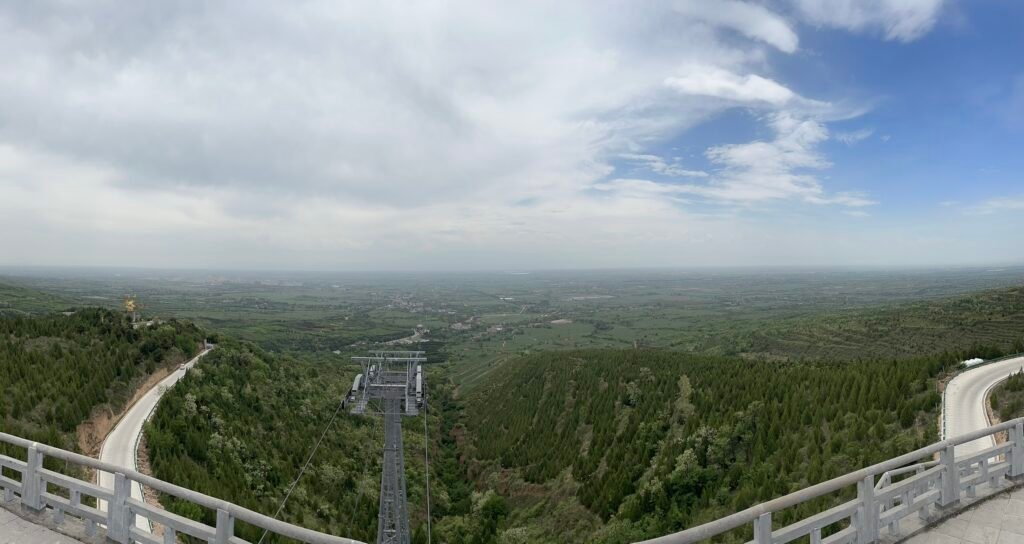
This is why Dad likes pairing museums with places.
In Baoji (宝鸡, Bǎojī):
bronze vessels (青铜器, Qīngtóngqì)
inscriptions (铭文, Míngwén)
He Zun (何尊, Hé Zūn)
Then at Zhouyuan (周原, Zhōuyuán):
land
archaeological sites
settlement
ancestral memory
geography
Suddenly the bronzes aren’t floating inside a museum case anymore.
They belong to a world.
And that world was here.
Then We Meet the Zhou Family
As the story develops, several names become important:
King Wen of Zhou (周文王, Zhōu Wénwáng)
↓
King Wu of Zhou (周武王, Zhōu Wǔwáng)
↓
the conquest of the Shang dynasty (商朝, Shāngcháo)
↓
King Cheng of Zhou (周成王, Zhōu Chéngwáng)
And beside them appears another man who is going to become very important to this menu:
Duke of Zhou (周公, Zhōugōng)
Brother of King Wu of Zhou (周武王, Zhōu Wǔwáng).
Uncle of King Cheng of Zhou (周成王, Zhōu Chéngwáng).
And eventually one of the most admired political figures in later Chinese tradition.
But don’t eat the next course yet.
😂
First notice what just happened.
We started in Xi’an (西安, Xī’ān) with:
Qin (秦, Qín).
Then He Zun (何尊, Hé Zūn) pulled us back to:
Western Zhou (西周, Xī Zhōu).
Now Zhouyuan (周原, Zhōuyuán) has pulled us further back again:
to the Zhou people (周人, Zhōurén) before they ruled a dynasty.
🐇
⭐ GO MICHELIN
Stop sightseeing.
Look at the landscape.
Then ask:
Does a dynasty begin when it wins a war?
Or does it begin much earlier?
With migration?
Agriculture?
Families?
Alliances?
Ritual?
Political organisation?
Shared ancestors?
A homeland?
The Zhou dynasty (周朝, Zhōucháo) may begin on our textbook timeline when Zhou defeats Shang.
But the Zhou people (周人, Zhōurén) had a story before that date.
That’s the flavor of Zhouyuan (周原, Zhōuyuán).
Before empire comes a state.
Before a state comes a people.
And before a people conquer somewhere else, they come from somewhere.
For the Zhou (周, Zhōu), this landscape matters.
But winning the Shang–Zhou transition (商周之变, Shāng-Zhōu Zhī Biàn) created another problem.
Conquering a kingdom is one thing.
Governing it is another.
And that’s where our next course arrives.
→ Duke of Zhou (周公, Zhōugōng) — The Man China Kept Looking Back To
🐇
🍽️ COURSE III — Duke of Zhou (周公, Zhōugōng)
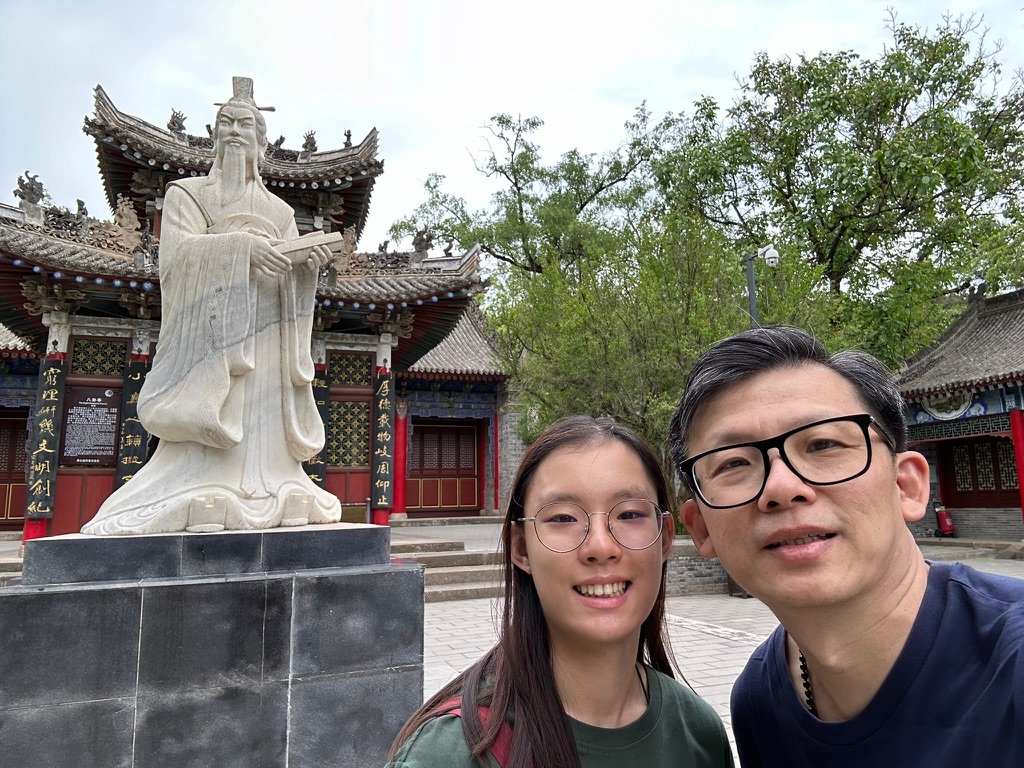
THE DISH: Winning Was the Easy Part
FLAVOR: Duke of Zhou (周公, Zhōugōng) · Political Order (政治秩序, Zhèngzhì Zhìxù) · Ritual (礼, Lǐ) · Legitimacy (正统性, Zhèngtǒngxìng)
⭐ THE BIG QUESTION
How do you turn conquest into government?
The Zhou people (周人, Zhōurén) defeated the Shang dynasty (商朝, Shāngcháo).
New dynasty.
Victory.
End of story?
Not even close.
😂
Winning a war gives you control.
It doesn’t automatically give you:
stability
loyalty
political order
or:
legitimacy (正统性, Zhèngtǒngxìng).
And that’s where another man enters our tasting menu.
Duke of Zhou (周公, Zhōugōng)
→ Duke of Zhou (周公, Zhōugōng) — The Man China Kept Looking Back To
🍴 TASTING NOTE — The Emperor’s Uncle
Duke of Zhou (周公, Zhōugōng) was a son of King Wen of Zhou (周文王, Zhōu Wénwáng) and younger brother of King Wu of Zhou (周武王, Zhōu Wǔwáng).
After the death of King Wu of Zhou (周武王, Zhōu Wǔwáng), the new ruler:
King Cheng of Zhou (周成王, Zhōu Chéngwáng)
was young.
That created a dangerous problem.
The Western Zhou dynasty (西周, Xī Zhōu) was new.
The conquered Shang (商, Shāng) world hadn’t simply disappeared.
Rebellions followed.
Power had to be consolidated.
The new political order had to survive.
Later Chinese tradition remembered the Duke of Zhou (周公, Zhōugōng) as one of the central figures who helped make that happen.
But his importance became much bigger than one political crisis.
From Political Figure to Political Ideal
Later generations increasingly associated the Duke of Zhou (周公, Zhōugōng) with:
ritual (礼, Lǐ)
political order (政治秩序, Zhèngzhì Zhìxù)
proper government
legitimate authority
and the institutions of the Zhou dynasty (周朝, Zhōucháo).
That distinction matters.
There is:
the historical Duke of Zhou (周公, Zhōugōng)
and there is:
the Duke of Zhou (周公, Zhōugōng) remembered by later Chinese civilisation.
Those aren’t always exactly the same thing.
Sound familiar?
🐇
Dad and Elaine had encountered the same problem with Yao (尧, Yáo) and Shun (舜, Shùn).
History.
Tradition.
Cultural memory.
They overlap.
But don’t automatically mix them together.
Then This Rabbit Jumps All the Way to Shandong (山东, Shāndōng)
Here’s where ChinaTravelBUG‘s history journeys begin connecting.
The Duke of Zhou (周公, Zhōugōng) was traditionally associated with the founding of the:
State of Lu (鲁国, Lǔ Guó).
And where was the State of Lu (鲁国, Lǔ Guó)?
In what is now:
Shandong (山东, Shāndōng).
Its capital was:
Qufu (曲阜, Qūfù).
And centuries later, Qufu (曲阜, Qūfù) gave us:
Confucius (孔子, Kǒngzǐ)
😳
Now look at the rabbit hole:
Duke of Zhou (周公, Zhōugōng)
↓
State of Lu (鲁国, Lǔ Guó)
↓
Qufu (曲阜, Qūfù)
↓
Confucius (孔子, Kǒngzǐ)
↓
ritual (礼, Lǐ)
That’s why our Michelin History Tasting JOURNEYS don’t really end.
One menu connects to another.
→ DEEP China: Shandong History Tasting Menu — Learn Chinese History by Traveling Through It
⭐ GO MICHELIN
Now stop looking at the temple.
Ask the political question.
The Zhou dynasty (周朝, Zhōucháo) had conquered the Shang dynasty (商朝, Shāngcháo).
But why should everybody accept that the Zhou (周, Zhōu) now had the right to rule?
Military victory answers:
Who won?
It doesn’t necessarily answer:
Who deserves to rule?
That requires something more.
A theory of legitimacy.
And the Zhou dynasty (周朝, Zhōucháo) produced one of the most influential answers in all of Chinese political history:
Mandate of Heaven (天命, Tiānmìng)
The idea was powerful.
A ruler could receive Heaven’s mandate.
But if that ruler governed badly…
could Heaven take it away?
Now we’re ready for the most philosophical course on the menu.
→ Why Does Chinese History Keep Talking About Heaven (天, Tiān)?
🐇
🍷 COURSE IV — Heaven (天, Tiān)
THE DISH: Heaven Changes Sides
FLAVOR: Heaven (天, Tiān) · Mandate of Heaven (天命, Tiānmìng) · Virtue (德, Dé) · Legitimacy (正统性, Zhèngtǒngxìng) · Dynastic Change (改朝换代, Gǎicháo Huàndài)
⭐ THE BIG QUESTION
Who gives a ruler the right to rule?
The Zhou dynasty (周朝, Zhōucháo) had defeated the Shang dynasty (商朝, Shāngcháo).
But there was an awkward question.
Why should the Zhou (周, Zhōu) be allowed to rule?
Because they had the bigger army?
Because they won the war?
That explains how power changed hands.
It doesn’t explain why the new ruler was:
legitimate (正统, Zhèngtǒng).
The Zhou (周, Zhōu) tradition offered a much more powerful answer.
Heaven (天, Tiān)
🍴 TASTING NOTE — The Mandate Wasn’t Permanent
The idea became known as:
Mandate of Heaven (天命, Tiānmìng).
Very simply:
Heaven (天, Tiān) grants the right to rule.
But that right isn’t necessarily permanent.
A ruler is expected to govern properly.
If the ruler becomes corrupt, cruel or incapable, disorder and catastrophe could later be interpreted as signs that the ruler had lost:
Heaven’s Mandate (天命, Tiānmìng).
And if the mandate could be lost…
another ruling house could claim to have received it.
Now look at what that does politically.
Shang dynasty (商朝, Shāngcháo)
↓
loses legitimacy
↓
Zhou (周, Zhōu) defeats Shang (商, Shāng)
↓
Zhou dynasty (周朝, Zhōucháo) claims legitimate rule
Conquest has become something more than military victory.
It has become:
moral explanation.
🐇
This Idea Will Follow You Through Chinese History
This is why understanding the Mandate of Heaven (天命, Tiānmìng) is worth one whole course.
Once you’ve tasted it, you’ll keep recognising the flavor.
Dynasty rises.
↓
Government works.
↓
Government deteriorates.
↓
Rebellion.
War.
Disaster.
↓
Old dynasty falls.
↓
New dynasty claims legitimacy.
↓
History explains the transition partly through:
Heaven (天, Tiān).
Not every dynastic transition happened neatly like this, of course.
Real history is much messier.
But the concept became one of the most durable ways Chinese political tradition explained why one ruling house could replace another.
→ Why Does Chinese History Keep Talking About Heaven (天, Tiān)?

A Western Handrail
For international travelers, don’t translate Heaven (天, Tiān) too quickly into the Western idea of “God.”
They aren’t interchangeable concepts.
For our tasting menu, the important point is simpler:
political power needed legitimacy.
The ruler wasn’t merely asking:
“Can I rule?”
There was also a deeper question:
“Should I rule?”
And that question takes us straight back to the Duke of Zhou (周公, Zhōugōng), political order and the world the Zhou dynasty (周朝, Zhōucháo) was trying to build.
⭐ GO MICHELIN
Now look back at our meal.
We started in Xi’an (西安, Xī’ān) with:
Qin Shi Huang (秦始皇, Qín Shǐhuáng).
Dad asked:
What came before Qin (秦, Qín)?
Then:
He Zun (何尊, Hé Zūn)
→ gave us China (中国, Zhōngguó)
Zhouyuan (周原, Zhōuyuán)
→ gave us the Zhou people (周人, Zhōurén)
Duke of Zhou (周公, Zhōugōng)
→ gave us political order
and now:
Mandate of Heaven (天命, Tiānmìng)
→ gives us a theory of legitimate rule.
We’re no longer simply collecting old places.
We’re beginning to understand the political ideas already developing centuries before Qin unification (秦统一, Qín Tǒngyī).
And just when the menu appears to be following a nice chronological sequence…
the chef does something ridiculous.
😂
We’re going to jump forward more than a thousand years.
Same broader landscape.
Completely different China.
Waiting for us at Wuzhangyuan (五丈原, Wǔzhàngyuán) is:
Zhuge Liang (诸葛亮, Zhūgě Liàng)
Welcome to the Three Kingdoms period (三国时期, Sānguó Shíqī).
🐇
🍋 CHEF’S SURPRISE — Wuzhangyuan (五丈原, Wǔzhàngyuán)
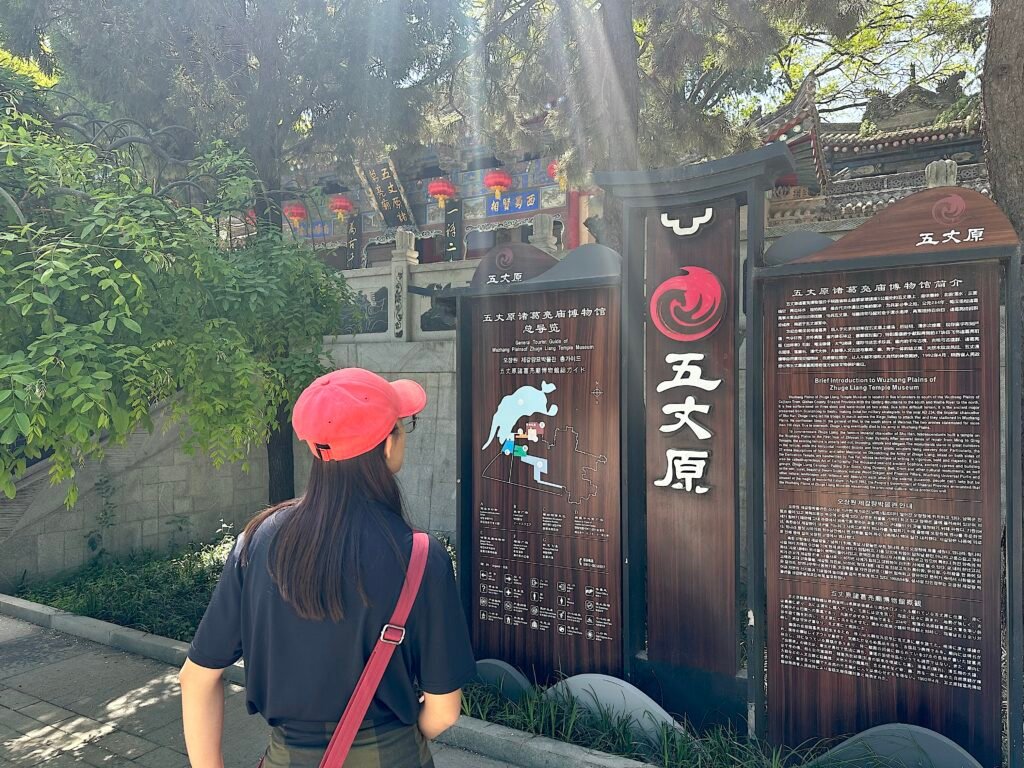
THE DISH: Sorry, We Just Jumped 1,200 Years
FLAVOR: Zhuge Liang (诸葛亮, Zhūgě Liàng) · Three Kingdoms period (三国时期, Sānguó Shíqī) · Shu Han (蜀汉, Shǔ Hàn) · Geography · Strategy
⭐ THE BIG QUESTION
Can the same landscape tell completely different historical stories?
For most of this tasting journey, Dad and Elaine had been living in the world of the:
Western Zhou dynasty (西周, Xī Zhōu).
Bronzes.
He Zun (何尊, Hé Zūn).
Zhouyuan (周原, Zhōuyuán).
Duke of Zhou (周公, Zhōugōng).
Mandate of Heaven (天命, Tiānmìng).
Then the chef changed the menu.
😂
Welcome to:
234 CE
More than a thousand years later.
And waiting for us at Wuzhangyuan (五丈原, Wǔzhàngyuán) was one of the most famous names in Chinese history:
Zhuge Liang (诸葛亮, Zhūgě Liàng)
→ Wuzhangyuan (五丈原, Wǔzhàngyuán) — Where Zhuge Liang’s (诸葛亮, Zhūgě Liàng) Final Campaign Ended
🍴 TASTING NOTE — Same Geography. Different China.
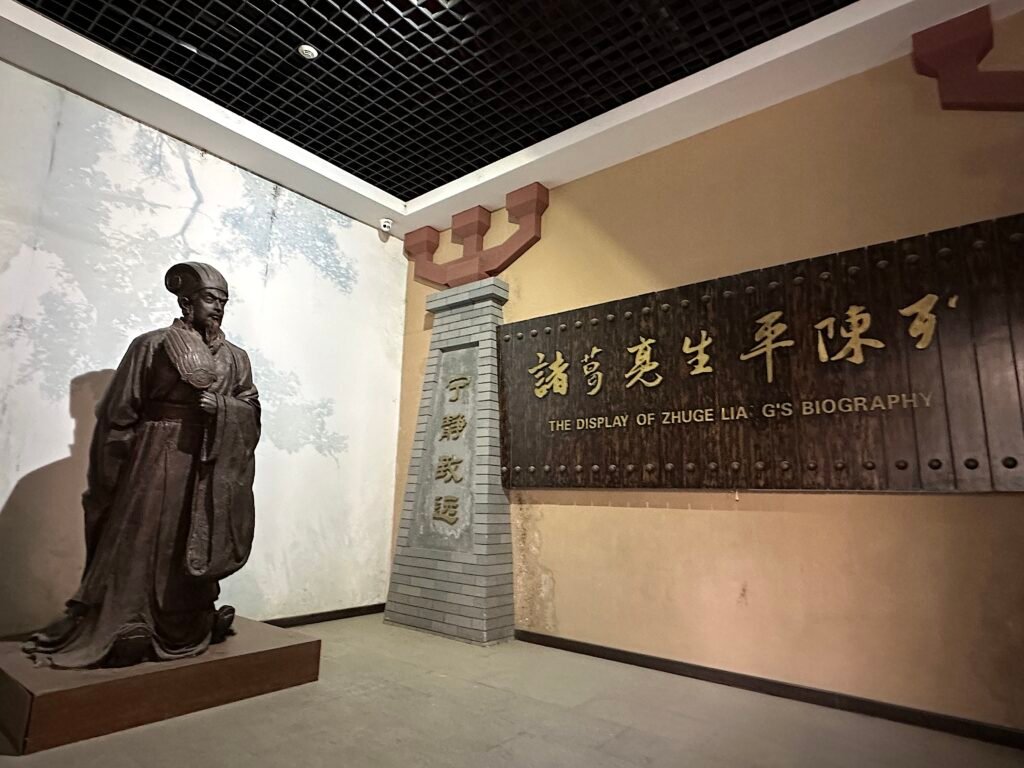
Zhuge Liang (诸葛亮, Zhūgě Liàng) belonged to the turbulent world of the:
Three Kingdoms period (三国时期, Sānguó Shíqī).
He served the state of:
Shu Han (蜀汉, Shǔ Hàn)
and led repeated northern campaigns against:
Cao Wei (曹魏, Cáo Wèi).
His final campaign brought him to Wuzhangyuan (五丈原, Wǔzhàngyuán), where he died in 234 CE.
But for this tasting journey, the bigger lesson isn’t another date.
It’s the landscape.
We had come west of Xi’an (西安, Xī’ān) looking for the world before Qin (秦, Qín).
Now the same broader region was teaching us about armies, supply routes and political rivalry more than a millennium later.
The land stayed.
The history changed.
This Is Why We Included the Surprise Course
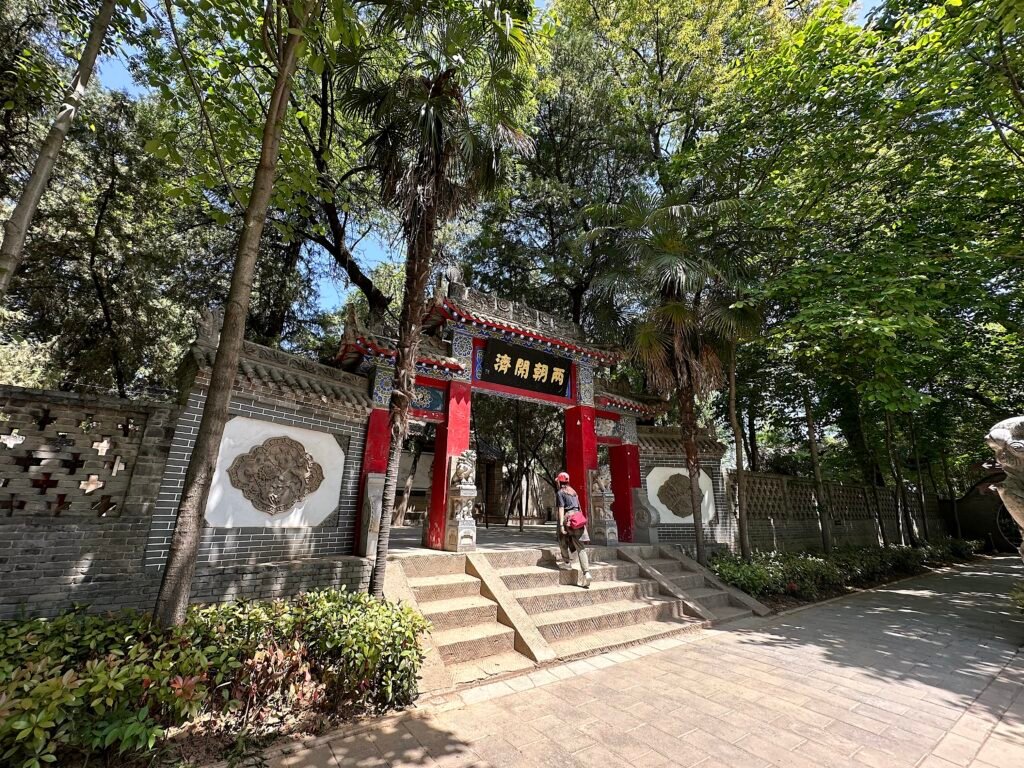
At first, Wuzhangyuan (五丈原, Wǔzhàngyuán) looks like it doesn’t belong on this menu.
Exactly.
That’s why it belongs.
😂
If every place were neatly assigned to one dynasty, Chinese history would be much easier.
But real places accumulate layers.
Qishan (岐山, Qíshān) isn’t only Zhou (周, Zhōu).
Baoji (宝鸡, Bǎojī) isn’t only bronzes.
Xi’an (西安, Xī’ān) isn’t only Qin (秦, Qín) or Tang (唐, Táng).
The same mountains.
The same river valleys.
The same strategic corridors.
Different people kept moving through them.
Different states fought over them.
Different stories accumulated on top of one another.
That’s DEEP China.
⭐ GO MICHELIN
Stop looking at Chinese history as a row of separate boxes:
Zhou dynasty (周朝, Zhōucháo)
Qin dynasty (秦朝, Qíncháo)
Han dynasty (汉朝, Hàncháo)
Three Kingdoms period (三国时期, Sānguó Shíqī)
Instead, stand in one place and ask:
What happened here at different moments in time?
That’s when geography becomes the coat rack.
And history becomes the layers hanging from it.
Wuzhangyuan (五丈原, Wǔzhàngyuán) gives us one final surprise before we head back east.
Because after spending this journey looking at:
what came before Qin (秦, Qín)
and then suddenly jumping forward to Zhuge Liang (诸葛亮, Zhūgě Liàng)…
it’s time to return to:
Xi’an (西安, Xī’ān).
Same city.
Same Terracotta Warriors (兵马俑, Bīngmǎyǒng).
Same Qin Shi Huang (秦始皇, Qín Shǐhuáng).
But after everything we’ve tasted west of Xi’an…
will Qin (秦, Qín) still feel like the beginning?
🐇
🍰 DESSERT — Back to Xi’an (西安, Xī’ān)
THE DISH: Same Xi’an. Different Eyes.
FLAVOR: Qin (秦, Qín) · Unification (统一, Tǒngyī) · Everything We Thought Was the Beginning
⭐ THE FINAL QUESTION
Does Qin (秦, Qín) Still Feel Like the Beginning?
There was only one proper way to finish this tasting journey.
Go back to where we started.
Xi’an (西安, Xī’ān)
At the beginning of our journey, 221 BCE felt ancient.
Qin Shi Huang (秦始皇, Qín Shǐhuáng).
The Terracotta Warriors (兵马俑, Bīngmǎyǒng).
The first unified imperial dynasty:
Qin dynasty (秦朝, Qíncháo).
Then Dad and Elaine traveled west.
And the menu kept adding courses.
Look What We Just Ate
🥂 Xi’an (西安, Xī’ān)
Qin (秦, Qín)
→ What came before Qin?
↓
🍜 Baoji (宝鸡, Bǎojī)
Pulled noodles (扯面, Chěmiàn)
→ Elaine, you order.
↓
🍽️ He Zun (何尊, Hé Zūn)
China (中国, Zhōngguó)
→ What did 中国 mean before “China”?
↓
🍽️ Qishan (岐山, Qíshān) & Zhouyuan (周原, Zhōuyuán)
Zhou people (周人, Zhōurén)
→ Where does a dynasty come from before it becomes a dynasty?
↓
🍽️ Duke of Zhou (周公, Zhōugōng)
Political order (政治秩序, Zhèngzhì Zhìxù)
→ How do you turn conquest into government?
↓
🍷 Mandate of Heaven (天命, Tiānmìng)
Legitimacy (正统性, Zhèngtǒngxìng)
→ Who gives a ruler the right to rule?
↓
🍋 Wuzhangyuan (五丈原, Wǔzhàngyuán)
Zhuge Liang (诸葛亮, Zhūgě Liàng)
→ Can one landscape contain many different Chinas?
↓
🍰 Xi’an (西安, Xī’ān)
Back where we started.
Except now:
Qin (秦, Qín) isn’t Chapter One anymore.
That’s Why We Travel Through History
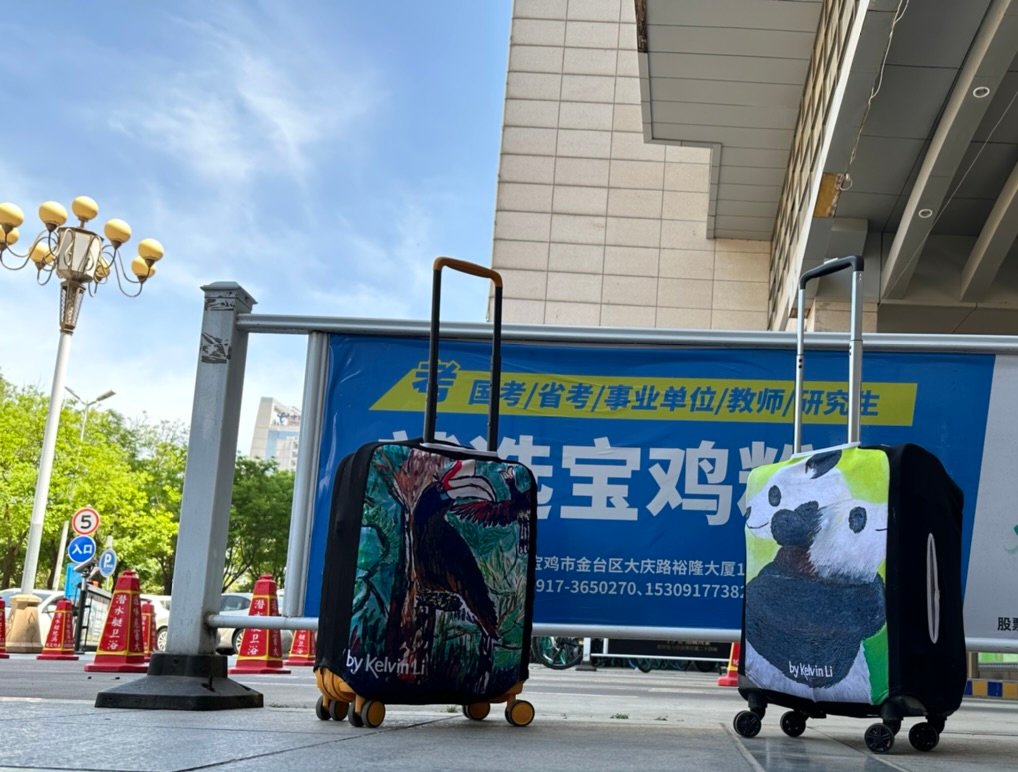
Dad could have explained all of this to Elaine with a timeline.
Shang dynasty (商朝, Shāngcháo)
↓
Zhou dynasty (周朝, Zhōucháo)
↓
Qin dynasty (秦朝, Qíncháo)
↓
Han dynasty (汉朝, Hàncháo)
↓
Three Kingdoms period (三国时期, Sānguó Shíqī)
Useful.
But not quite the same.
Instead, we saw a bronze.
We read two ancient characters.
We went looking for the people behind the bronze.
We walked through their homeland.
We met the man later generations associated with their political order.
That led us to Heaven (天, Tiān).
Then, because China usually has another layer, Zhuge Liang (诸葛亮, Zhūgě Liàng) suddenly appeared more than a thousand years later.
😂
Place → Object → Person → Idea → Big Question → Next Place.
That’s our Michelin History Tasting JOURNEY.
🧾 HOW TO ORDER THIS MENU
You don’t need to spend two weeks doing this.
The core West of Xi’an Michelin History Tasting JOURNEY works beautifully as a 3-day / 2-night extension from Xi’an (西安, Xī’ān).
The secret is simple:
Stay in Baoji (宝鸡, Bǎojī).
Use Baoji (宝鸡, Bǎojī) as your base.
Then travel outward for the different historical courses.
DAY 1 — Xi’an (西安, Xī’ān) → Baoji (宝鸡, Bǎojī)
🍜 Eat First. Then Meet the Bronzes.
Travel west from Xi’an (西安, Xī’ān) to Baoji (宝鸡, Bǎojī).
Modern fast trains make this an easy journey, although Dad and Elaine originally arrived after a rather more memorable experience on a green train (绿皮车, Lǜpíchē).
Once you’re there:
🍜 Lunch
Try some local noodles.
→ Our First Lunch in Baoji (宝鸡, Bǎojī) — Dad Made Elaine Do the Ordering
Then spend the afternoon at:
Baoji Bronze Ware Museum (宝鸡青铜器博物院, Bǎojī Qīngtóngqì Bówùyuàn)
Don’t try to memorise every bronze.
Find:
He Zun (何尊, Hé Zūn)
Look at the inscription.
Find the story behind:
中国 (Zhōngguó).
→ He Zun (何尊, Hé Zūn) — The 3,000-Year-Old Bronze That Bears the Characters 中国 (Zhōngguó)
🛏️ Sleep: Baoji (宝鸡, Bǎojī)
DAY 2 — Qishan (岐山, Qíshān) & Zhouyuan (周原, Zhōuyuán)
🍽️ Leave the Museum. Find the World Behind the Bronzes.
This is your main DEEP China day.
Travel from Baoji (宝鸡, Bǎojī) toward:
Qishan (岐山, Qíshān)
and:
Zhouyuan (周原, Zhōuyuán).
Now you’re following the Zhou people (周人, Zhōurén) into the landscape associated with their early homeland.
→ Qishan (岐山, Qíshān) & Zhouyuan (周原, Zhōuyuán) — Walking Through the Homeland of the Zhou (周, Zhōu)
Then follow the next rabbit hole:
Duke of Zhou (周公, Zhōugōng)
and the traditions surrounding:
political order (政治秩序, Zhèngzhì Zhìxù)
ritual (礼, Lǐ)
and eventually:
Mandate of Heaven (天命, Tiānmìng).
→ Duke of Zhou (周公, Zhōugōng) — The Man China Kept Looking Back To
→ Why Does Chinese History Keep Talking About Heaven (天, Tiān)?
🛏️ Sleep: Baoji (宝鸡, Bǎojī)
DAY 3 — Wuzhangyuan (五丈原, Wǔzhàngyuán) → Xi’an (西安, Xī’ān)
🍋 Let the Chef Ruin the Timeline.
😂
After two days thinking about the Western Zhou dynasty (西周, Xī Zhōu), jump forward more than a thousand years.
Head to:
Wuzhangyuan (五丈原, Wǔzhàngyuán)
and enter the world of:
Zhuge Liang (诸葛亮, Zhūgě Liàng)
and the:
Three Kingdoms period (三国时期, Sānguó Shíqī).
→ Wuzhangyuan (五丈原, Wǔzhàngyuán) — Where Zhuge Liang’s (诸葛亮, Zhūgě Liàng) Final Campaign Ended
Then return to:
Xi’an (西安, Xī’ān).
🍰 Dessert served.
🚗 One Practical Warning
Baoji (宝鸡, Bǎojī) is easy to reach by train.
The historical places around it are more scattered.
For Qishan (岐山, Qíshān), Zhouyuan (周原, Zhōuyuán) and Wuzhangyuan (五丈原, Wǔzhàngyuán), we’d favour arranging a car / driver or using local ride-hailing where practical rather than trying to force every stop into a public-transport itinerary.
This is DEEP China.
A little more effort gets you much farther away from the standard international tourist circuit.
→ Practical Guide: How to Visit Baoji (宝鸡, Bǎojī) From Xi’an (西安, Xī’ān)
⭐ Don’t Have Three Days?
Order à la carte!
ONE DAY
Xi’an (西安, Xī’ān) → Baoji (宝鸡, Bǎojī) → Xi’an (西安, Xī’ān)
Taste:
Baoji Bronze Ware Museum (宝鸡青铜器博物院, Bǎojī Qīngtóngqì Bówùyuàn)
→ He Zun (何尊, Hé Zūn)
→ 中国 (Zhōngguó)
TWO DAYS
Add:
Qishan (岐山, Qíshān)
Zhouyuan (周原, Zhōuyuán)
Duke of Zhou (周公, Zhōugōng)
That’s the core historical menu.
THREE DAYS
Add:
Wuzhangyuan (五丈原, Wǔzhàngyuán)
and let Zhuge Liang (诸葛亮, Zhūgě Liàng) crash dinner.
😂
Our Recommendation
If you’re serious enough about Chinese history to be reading this far:
order the three-day menu.
Don’t rush back to Xi’an (西安, Xī’ān) every evening.
Stay in Baoji (宝鸡, Bǎojī).
Eat locally.
Use the museum as your coat rack.
Then go out into the landscape.
Because this journey works best in this order:
OBJECT
↓
PLACE
↓
PERSON
↓
IDEA
↓
BIG QUESTION
That’s when Baoji stops being merely a city west of Xi’an.
It becomes the doorway into:
the world before Qin (秦, Qín).
🐇 Take the Rabbit Holes Home
Want to taste individual courses again?
→ He Zun (何尊, Hé Zūn) — The 3,000-Year-Old Bronze That Bears the Characters 中国 (Zhōngguó)
→ Qishan (岐山, Qíshān) & Zhouyuan (周原, Zhōuyuán) — Walking Through the Homeland of the Zhou (周, Zhōu)
→ Duke of Zhou (周公, Zhōugōng) — The Man China Kept Looking Back To
→ Why Does Chinese History Keep Talking About Heaven (天, Tiān)?
→ Wuzhangyuan (五丈原, Wǔzhàngyuán) — Where Zhuge Liang’s (诸葛亮, Zhūgě Liàng) Final Campaign Ended
Or cross China with the Duke of Zhou (周公, Zhōugōng) and continue the story in Shandong (山东, Shāndōng):
→ Shandong Michelin History Tasting Journey — Learn Chinese History by Traveling Through It
⭐ THE CHEF’S FINAL NOTE
If you only remember one thing from this menu, remember this:
Qin Shi Huang (秦始皇, Qín Shǐhuáng) unified China.
But he did not create Chinese civilisation from nothing.
Long before Qin unification (秦统一, Qín Tǒngyī), people were already building states.
Casting bronzes.
Writing inscriptions.
Thinking about political centres.
Developing systems of ritual (礼, Lǐ).
Debating legitimacy.
Looking toward Heaven (天, Tiān).
And leaving ideas that later generations would inherit, reinterpret and argue about for thousands of years.
That’s why we went west of Xi’an (西安, Xī’ān).
Not to find another Terracotta Army.
But to understand a little more about:
what came before it.
And now we’re back in Xi’an (西安, Xī’ān).
Same city.
Different eyes.
SEE → ASK → CONNECT → UNDERSTAND → FOLLOW
China Usually Has Another Way.
🐇