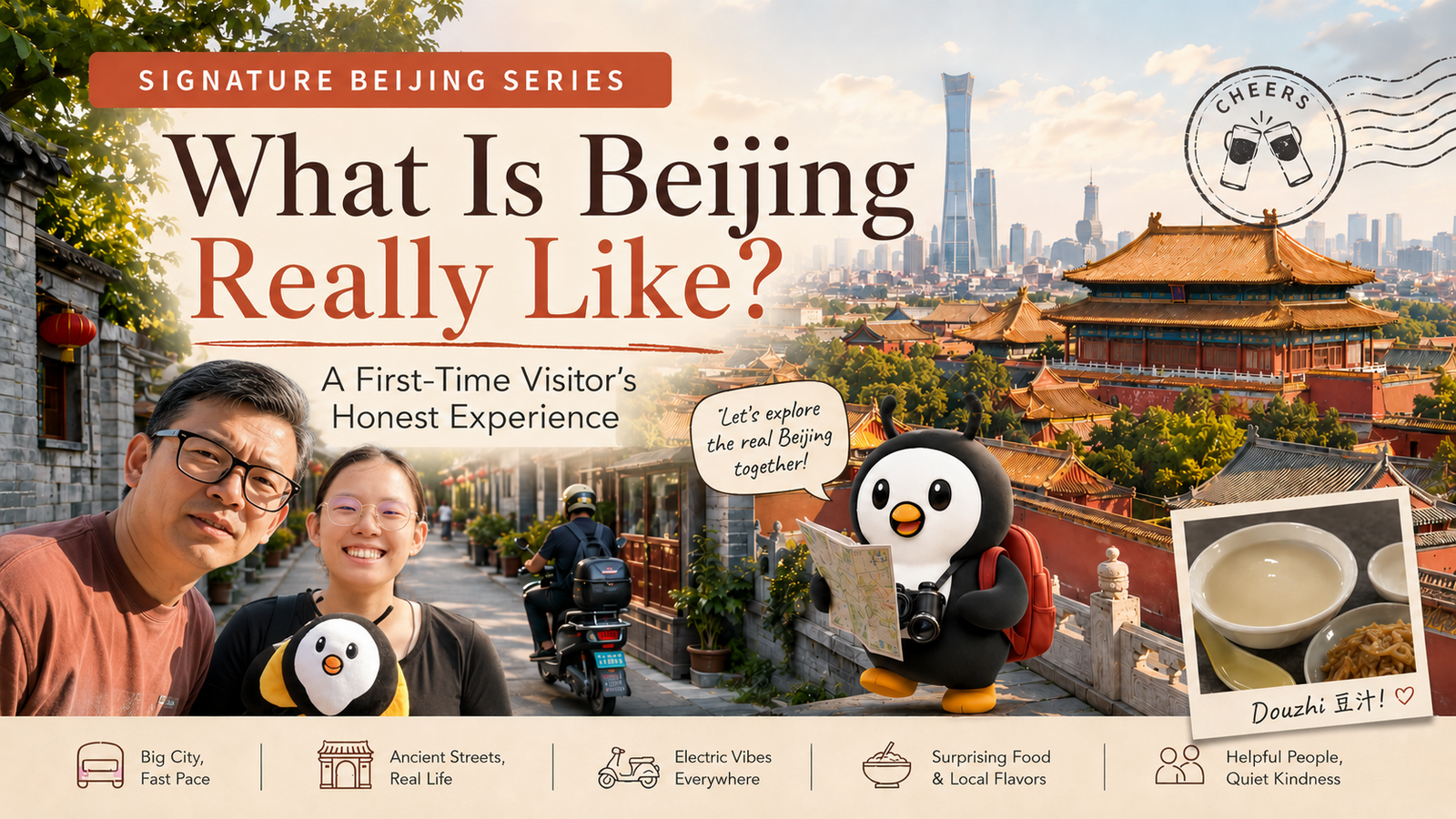
The Beijing we imagined… and the Beijing we discovered.
Quick Answer
Ask ten people what Beijing is like, and you’ll probably hear ten different answers.
Some describe it as an ancient imperial capital.
Others picture a futuristic megacity filled with skyscrapers and electric cars.
Some imagine endless crowds.
Others think of history, politics or smog.
After spending several days exploring Beijing, Elaine and I realised something.
Almost everyone is partly right.
Yet almost everyone misses the bigger picture.
Beijing isn’t a city of contradictions.
It’s a city where seemingly opposite ideas have learnt to live together.
That is what makes Beijing unlike anywhere else we’ve visited.
Before We Arrived…
Like many first-time visitors, we had unknowingly built our own version of Beijing.
It was a city of emperors.
Grey walls.
Crowded streets.
The Great Wall.
The Forbidden City.
Perhaps a little intimidating.
Certainly fascinating.
But still…
a place that belonged more to history than to everyday life.
Reality began changing that picture almost immediately.
It Felt Surprisingly Calm
One of the biggest surprises wasn’t something we saw.
It was something we didn’t hear.
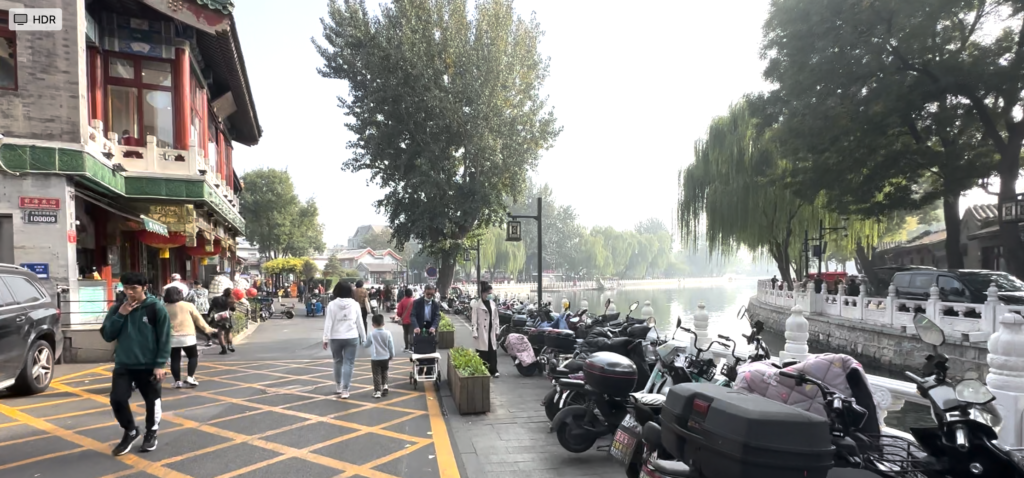
Standing beside one of Beijing’s busiest roads, I expected the familiar soundtrack of any large city—engines roaring, exhaust fumes hanging in the air, constant traffic noise.
Instead…
vehicle after vehicle glided past almost silently.
Electric buses.
Electric taxis.
Electric family cars.
The air felt cleaner than we expected.
The city sounded quieter than we expected.
It wasn’t just modern.
It felt like Beijing had quietly skipped a chapter that many other cities are still living through.
History Doesn’t Compete with Modern China
It Lives Beside It
This may be the single biggest misconception first-time visitors have.
People often imagine two different Beijings.
The ancient capital.
The modern metropolis.
But after walking through the city, we realised they aren’t separate.
One morning, we wandered through centuries-old hutongs (胡同, hútòng).
Later that afternoon, we travelled on one of the world’s largest metro networks.
The same day included imperial gates, QR-code payments, quiet courtyards and futuristic transport.
Nobody seemed to find that unusual.
Only we did.
Life Happens Between the Famous Attractions
Some of our favourite memories weren’t inside famous landmarks.
They happened in ordinary neighbourhoods.
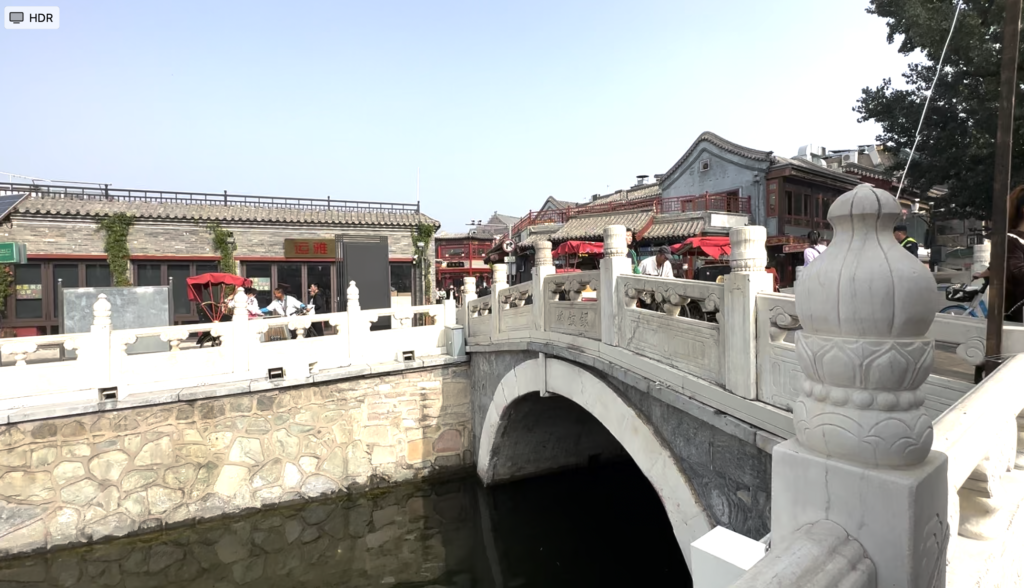
Around Shichahai (什刹海, Shíchàhǎi) we watched elderly residents exercising before breakfast.
Cyclists quietly crossed stone bridges.
Neighbours greeted one another.
Children chased pigeons through narrow lanes.
Elaine smiled.
“It doesn’t feel like a capital city.”
Exactly.
It felt like people were simply living their lives.
Those moments often taught us more about Beijing than any guidebook.
Beijing Doesn’t Feel Like a Museum
Many historic capitals preserve the past behind ropes, ticket gates and display cases.
Beijing feels different.
History isn’t separated from modern life.
It sits beside cafés.
Metro stations.
Apartment buildings.
Office towers.
You don’t leave today’s Beijing to visit yesterday’s Beijing.
You move naturally between them.
That continuity is one of the city’s greatest strengths.

Then Beijing Tested Our Courage…
…with breakfast.
Someone recommended we try dòuzhī (豆汁), Beijing’s famously fermented mung bean drink.
Its reputation had travelled long before we did.
The bowl arrived.
The aroma arrived first.
Elaine looked at me.
I looked at Elaine.
There was only one thing to do.
We drank.
Let’s just say we understood immediately why locals joke that loving dòuzhī is almost a test of whether you’ve truly embraced Beijing.
Not every cultural experience has to become your favourite.
Sometimes the best travel memories begin with laughter.

Why Do Chinese People Accept Old and New So Easily?
Many visitors notice something curious in China.
Ancient temples stand beside modern shopping malls.
Traditional courtyard houses share neighbourhoods with sleek office towers.
People happily use the latest technology while still celebrating festivals that have been observed for centuries.
To many Western visitors, this can feel like a contradiction.
To many Chinese people, it isn’t.
Chinese civilisation has often developed by building upon the past rather than replacing it. Respect for history does not necessarily mean resisting change. Likewise, embracing new technology does not require abandoning long-held traditions.
This helps explain why Beijing feels so distinctive. It is not caught between old and new—it is comfortable with both. Understanding that perspective makes it easier to appreciate not only Beijing, but many other cities across China.
ChinaTravelBug Insight: As you continue your journey through China, you’ll notice this pattern again and again. Rather than asking, “Is this ancient or modern?”, try asking, “How are these two worlds living together?” That simple shift in perspective can change the way you experience the country.
So… What Is Beijing Really Like?
If I had to answer in one sentence, it would be this:
Beijing is where China’s past and future have learnt to coexist.
Not perfectly.
Not artificially.
Simply… naturally.
That’s why no photograph, documentary or headline prepared us for the real city.
The Beijing we imagined never existed.
The real Beijing was far more interesting.
What We Learnt
By the time we left for Xi’an, we realised that Beijing had quietly changed our expectations—not just of one city, but of China itself.
We stopped looking for contrasts between “old China” and “new China”.
Instead, we began noticing how each place built upon what came before.
That small shift transformed the rest of our journey.