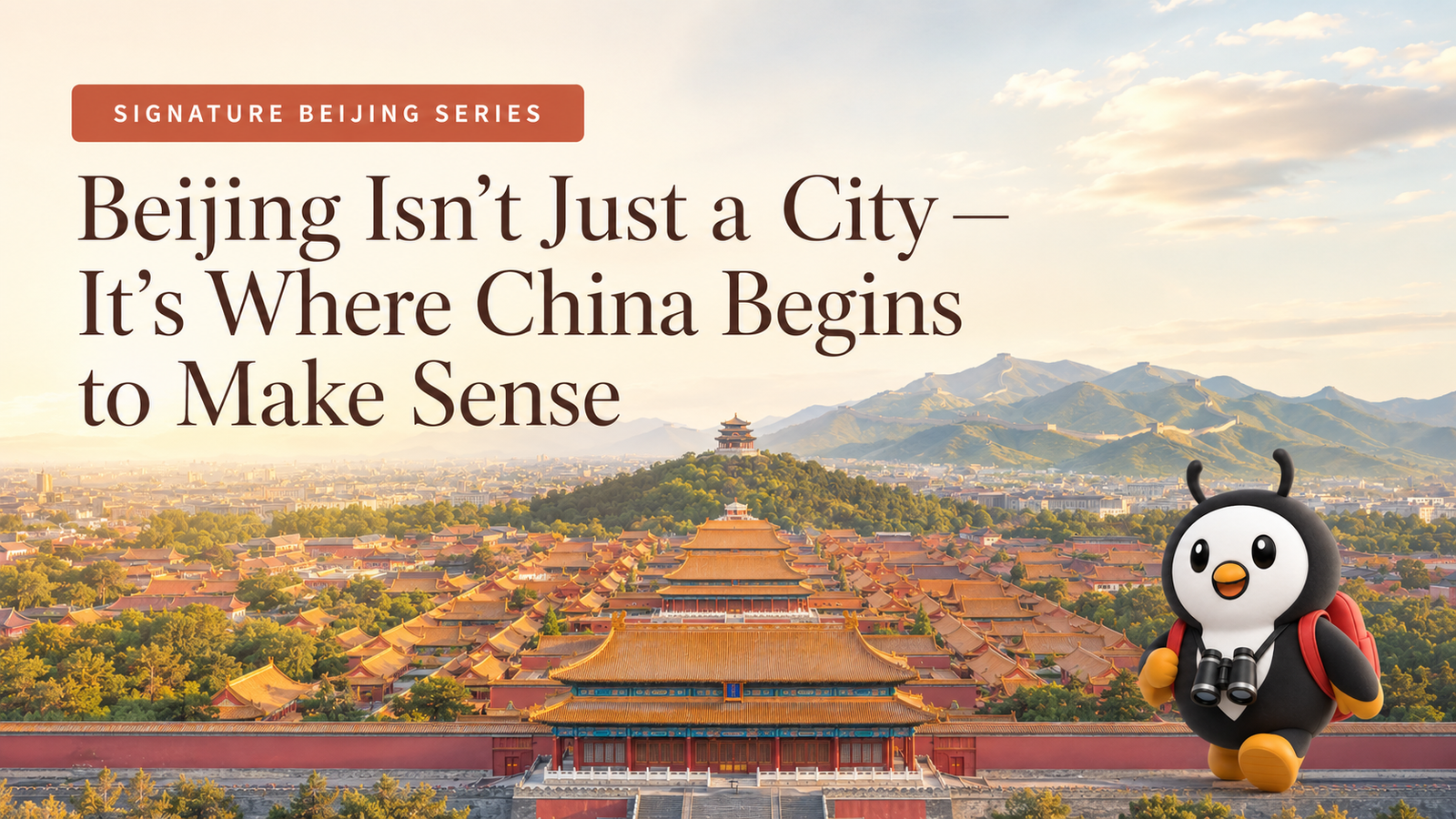
Why every first-time traveller should begin their journey to China here.
Quick Answer
If you’re visiting China for the first time, start with Beijing (北京, Běijīng).
Not simply because it is China’s capital.
Not because it is home to world-famous attractions like the Forbidden City, the Great Wall and Tiananmen Square.
Start in Beijing because nowhere else helps first-time visitors understand how one of the world’s oldest civilisations continues to shape one of the world’s most modern nations.
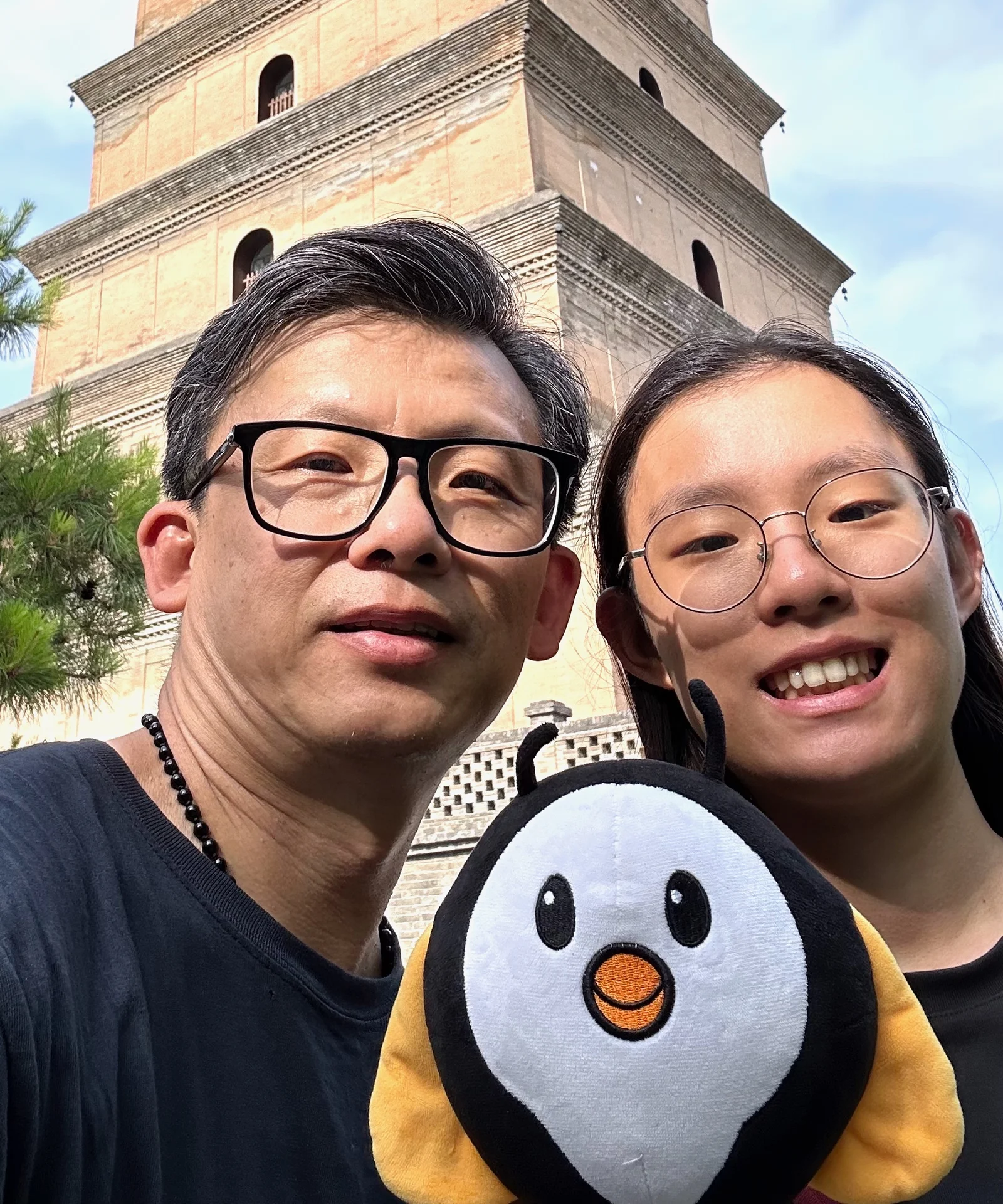
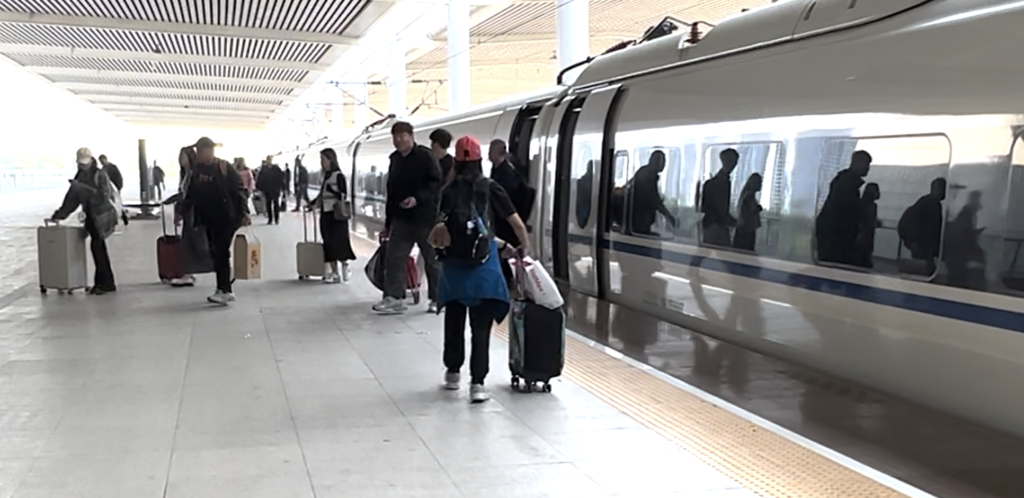
When my daughter Elaine and I finally boarded the high-speed train out of Beijing after many unforgettable days in Beijing, something unexpected happened.
We weren’t simply travelling to another city.
We were carrying a new way of looking at China.
And that changed every place we visited afterwards.
The China We Imagined Never Arrived
Every traveller arrives in Beijing carrying an invisible suitcase.
Not one filled with clothes.
One filled with assumptions.
Ours had been packed over decades.
Television documentaries. School history books.
News reports. Travel magazines.
Photographs of emperors, soldiers and ancient walls.
Somewhere in our minds, Beijing had become frozen in time.
We expected bicycles. Grey apartment blocks.
Crowded streets.
Imperial palaces. Old China.
Instead, Beijing quietly smiled…
…and began unpacking those assumptions for us.
Our First Lesson Began Before We Reached the City
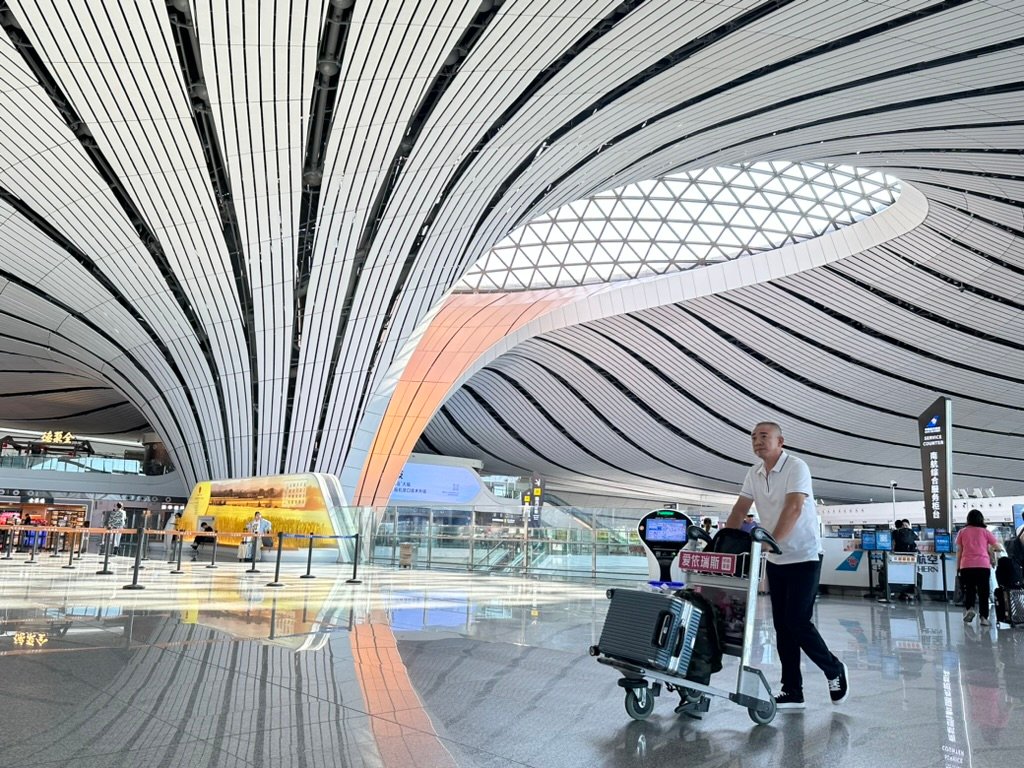
The journey from Beijing Daxing International Airport (北京大兴国际机场, Běijīng Dàxīng Guójì Jīchǎng) into the city wasn’t merely transport.
It was our first lesson.
The terminal itself was breathtaking.
Designed by the late architect Zaha Hadid, its flowing, starfish-shaped design somehow manages to feel enormous and welcoming at the same time.
Nothing felt chaotic. Nothing felt confusing.
Everything simply worked.
As we walked towards the Airport Express, I found myself thinking less about architecture and more about the philosophy behind it.
Someone hadn’t asked,
“How do we build the world’s biggest airport?”
They had asked,
“How do we make millions of journeys easier?”
Looking back, that question captures much of modern China.
Efficiency isn’t simply admired. It is designed.
Then Came the Moment That Changed Everything
Our first real “wow” moment had nothing to do with history.
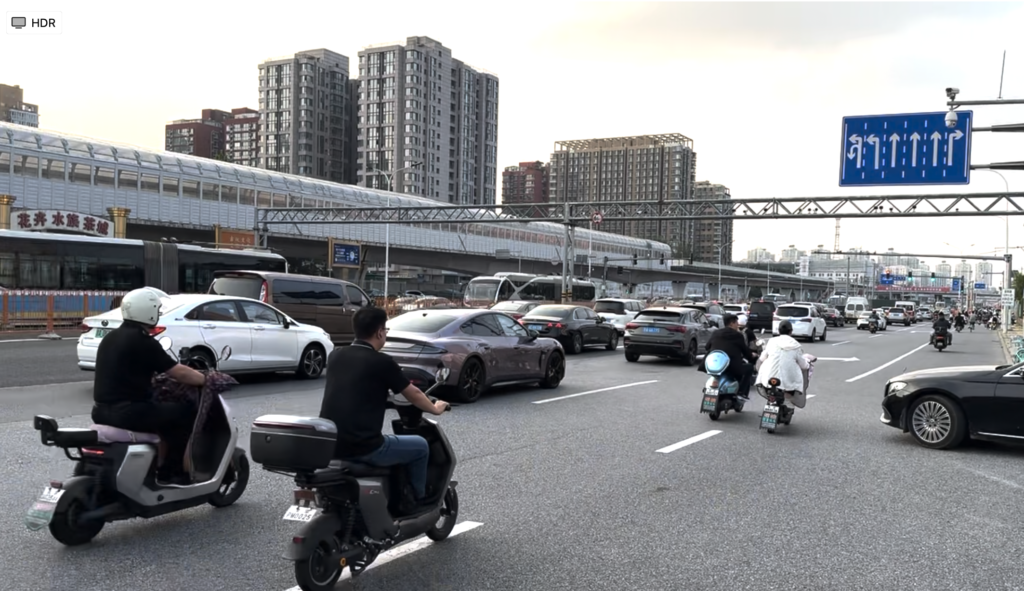
It happened beside one of Beijing’s busiest roads.
Thousands of vehicles flowed continuously through the afternoon traffic.
Buses. Taxis. Private cars.
Yet something felt strangely unfamiliar.
Then it hit me.
There was almost no smell.
Anyone who has stood beside a busy road in many major cities knows the familiar scent of petrol and diesel hanging in the air.
Here…
almost nothing.
Car after car slipped past almost silently.
Electric buses. Electric taxis. Electric private cars.
I stood there for a few seconds simply watching.
Then I turned to Elaine.
“Wow…”
This wasn’t the China I thought I knew.
It was my first glimpse of the China I had never imagined.
That one moment quietly challenged years of assumptions.
Every Visitor Discovers Two Beijings
Before arriving, we all imagine one Beijing.
After arriving, we discover another.
The imagined Beijing belongs to history.
The real Beijing belongs to history and tomorrow.
That distinction is important.
Walk through the magnificent Forbidden City (紫禁城, Zǐjìnchéng) in the morning.
Stand beneath the Gate of Supreme Harmony where emperors once ruled an empire stretching across much of East Asia.
A few hours later, tap your phone to pay for lunch.
Ride one of the world’s largest metro systems.
Watch autonomous delivery robots cross modern shopping districts.
Later that evening, wander through the narrow lanes of a hutong (胡同, hútòng) where neighbours still greet one another exactly as generations before them once did.
These aren’t different cities.
They’re different chapters of the same civilisation.
Existing simultaneously.
A Quiet Morning That Explained More Than Any Museum
One morning, Elaine and I left our itinerary behind.
No famous attractions.
No admission tickets.
No schedules.
We wandered through the peaceful neighbourhood around Shichahai (什刹海, Shíchàhǎi).
An elderly gentleman unlocked his bicycle before disappearing around the corner to buy breakfast.
A grandmother chatted with neighbours while hanging freshly washed clothes outside her courtyard home.
Children laughed as pigeons scattered across the narrow lane.
Nothing extraordinary happened. Yet neither of us wanted to leave.
Elaine finally broke the silence.
“Dad…”
“This doesn’t feel like a capital city.”
She was right. It didn’t. It felt like a community.
That morning taught us something every first-time traveller should remember.
You don’t truly understand a country by standing where emperors once stood.
You begin understanding it when you quietly observe how ordinary people live today.
Then Beijing Made Us Laugh
Travel isn’t only about profound moments.
Sometimes understanding another culture begins with laughter.
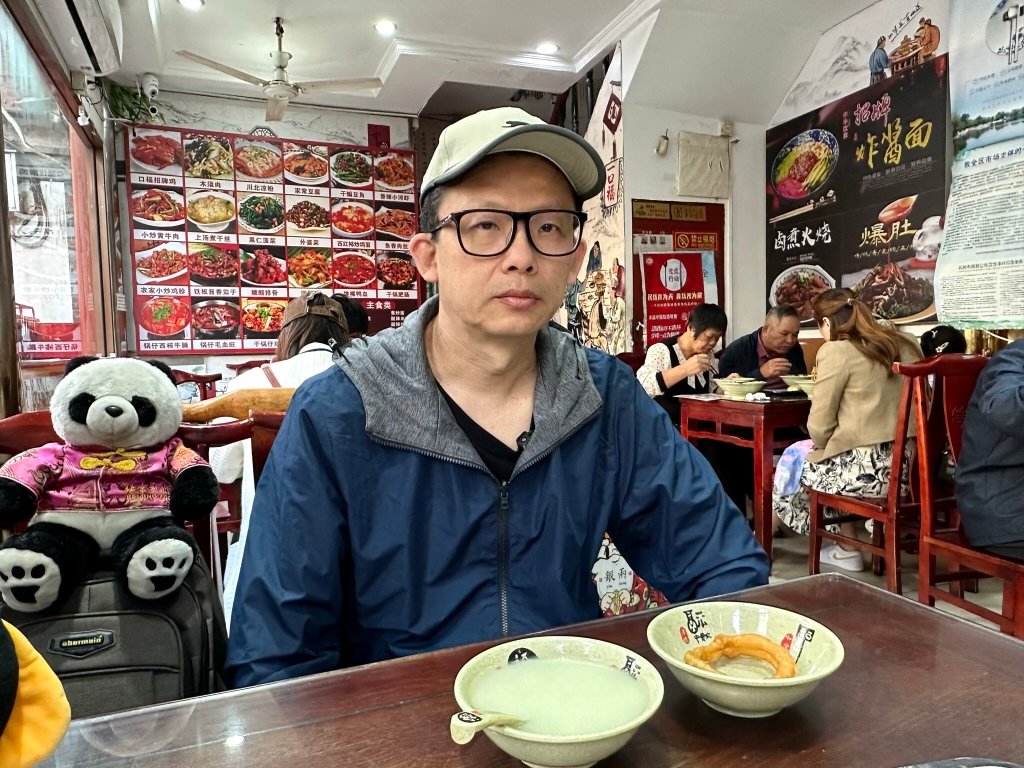
One local speciality we were told we absolutely had to try was dòuzhī (豆汁).
If you’ve never heard of it, imagine a fermented mung bean drink whose aroma has become legendary throughout Beijing.
Many visitors from other provinces approach it with exactly the same nervous curiosity as international travellers.
The bowl arrived.
The smell arrived slightly earlier, once we stepped into the shop.
Elaine looked at me.
I looked at Elaine.
Neither of us looked particularly confident.
One cautious sip later…
Let’s simply say we understood why Beijing locals often joke that loving dòuzhī is almost a badge of honour.
Would I recommend trying it?
Absolutely.
Would I promise you’ll enjoy it?
Absolutely not.
But you’ll never forget it.
And perhaps that’s exactly the point.
Travel isn’t about collecting perfect experiences.
It’s about collecting authentic ones.
Beijing Doesn’t Tell China’s Story
It Teaches You How to Read It
Many guidebooks describe Beijing as China’s political centre.
Others introduce it as the city of emperors.
Both descriptions are correct.
Neither explains why Beijing matters.
I think Beijing performs a completely different role.
It gives visitors a framework.
Inside the Forbidden City, you begin understanding how emperors governed.
At the Temple of Heaven (天坛, Tiāntán), you begin asking why rulers prayed publicly for good harvests instead of military victories.
Inside the National Museum of China (中国国家博物馆, Zhōngguó Guójiā Bówùguǎn), thousands of years of history suddenly become one connected narrative instead of isolated dynasties.
History stops feeling like memorising dates.
It becomes a conversation.
The ChinaTravelBug Perspective
Most travel websites tell you that Beijing is where your China journey begins.
I don’t agree.
China’s story began thousands of years before Beijing became an imperial capital.
Long before Beijing, prehistoric communities were already living along the Yellow River and elsewhere across what is now China. Archaeologists continue uncovering remarkable settlements that reveal increasingly sophisticated societies long before the first dynasties emerged.
Later came the traditions of the Yellow Emperor (黄帝, Huángdì), Yao (尧, Yáo), Shun (舜, Shùn) and Yu the Great (大禹, Dà Yǔ)—figures who continue to shape Chinese cultural memory, followed by the Xia, Shang and Zhou dynasties, the philosophers, the Qin Empire, the Han Dynasty and many centuries that followed.
So no…
Beijing is not Chapter One.
Beijing is the table of contents.
It is where thousands of years of Chinese civilisation suddenly begin connecting together.
That, I believe, is Beijing’s greatest gift.
It doesn’t simply show you China’s past.
It teaches you how to understand it.
The Question That Changed Our Journey
When Elaine and I first arrived in Beijing, our question was simple.
“What should we see today?”
A few days later, without even noticing it, the question had changed.
“What is Beijing trying to teach us about China?”
That one question transformed everything.
The Forbidden City became more than a palace.
The Great Wall became more than a defensive structure.
Hutongs became more than old neighbourhoods.
Museums became classrooms.
Even a bowl of dòuzhī became part of understanding Beijing’s identity.
Looking back, I don’t think Beijing gave us answers.
It taught us how to ask better questions.
Beijing Travelled With Us
When our high-speed train quietly departed Beijing South Railway Station, I believed our Beijing chapter had ended.
Looking back, I now realise it had only just begun.
Later, as we explored Zhouyuan (周原, Zhōuyuán) near Baoji, where the Zhou rulers articulated the idea of the Mandate of Heaven (天命, Tiānmìng)…
As we walked through Xianyang (咸阳, Xiányáng), capital of Qin Shi Huang’s first empire…
As we stood in Hancheng (韩城, Hánchéng), Linfen (临汾, Línfén) and Yuncheng (运城, Yùnchéng), where stories of China’s earliest civilisation still echo…
Those places no longer felt isolated.
They felt connected.
Beijing hadn’t explained everything.
It had quietly taught us how to connect the dots.
If This Is Your First Journey to China…
Slow down.
Don’t treat Beijing as a checklist.
Ride the metro.
Walk through a hutong without a destination.
Spend an extra hour inside a museum.
Watch grandparents dancing in a public square.
Try the food that makes local people smile.
Learn a few simple Chinese words.
Listen more than you speak.
And keep asking one question throughout your journey.
“What is Beijing trying to teach me about China?”
I believe that question will stay with you long after you’ve returned home.
Where Your Journey Continues
Beijing is not the end of China’s story.
It is your introduction to it.
If Beijing helps you understand emperors, Xi’an explains how the first empire came into being.
If Beijing introduces Confucian values, Qufu (曲阜, Qūfù) lets you meet the philosopher who shaped them.
If Beijing sparks your curiosity about ancient kings and early civilisation, Anyang, Zhouyuan, Baoji, Hancheng, Linfen and Yuncheng begin filling in the chapters that came before.
The deeper we travelled, the more we realised something.
China isn’t a collection of destinations.
It is one remarkably connected story.
Final Thoughts
Before arriving, I thought Beijing would introduce me to China’s history.
Instead…
it introduced me to China’s continuity.
A civilisation confident enough to preserve ancient alleyways beside futuristic transport.
A capital where the silence of electric vehicles surprised me as much as the grandeur of imperial palaces.
A city where one unforgettable bowl of dòuzhī (豆汁) reminded us that understanding another culture sometimes begins with laughter.
That is why I believe every first-time traveller should begin here.
Not because Beijing is China’s capital.
Not because it has famous attractions.
But because once Beijing begins to make sense…
China begins to make sense too.

The Mandate of Heaven (天命, Tiānmìng)
One idea appears again and again throughout Chinese history, yet many first-time visitors have never heard of it: the Mandate of Heaven (天命, Tiānmìng).
Western readers sometimes assume it meant that the emperor ruled because he was “chosen by God”. That’s not quite right.
Instead, the ancient Chinese believed that Heaven granted the right to rule only to a virtuous ruler. If an emperor became corrupt, neglected the people or governed unjustly, he could lose that mandate. A successful rebellion or the rise of a new dynasty could therefore be understood as evidence that Heaven had withdrawn its approval and entrusted it to someone else.
Unlike the European concept of the Divine Right of Kings, the Mandate of Heaven was conditional. A ruler had to earn it continually through good government, not simply inherit it by birth.
This idea first emerged during the Zhou Dynasty over 3,000 years ago and went on to shape how Chinese people understood the rise and fall of dynasties for more than two millennia. Even today, it remains one of the most important concepts for anyone seeking to understand Chinese history and political culture.
ChinaTravelBug Insight: As you travel through China—from Beijing to Xi’an, Luoyang, Anyang and beyond—you’ll encounter stories of emperors, rebellions and new dynasties. Understanding the Mandate of Heaven gives you a powerful lens through which to make sense of those stories.