Just a Few Hours From Beijing, Walk Into One of the Great Bronze Age Capitals of the Ancient World
Beijing can easily consume an entire first trip to China.
The:
Forbidden City.
Great Wall.
Temple of Heaven.
Summer Palace.
Ming.
Qing.
Imperial China everywhere.
But Dad has another slightly dangerous suggestion.
😂
TAKE THE TRAIN SOUTH.
From Beijing, high-speed rail can bring you to:
Anyang (安阳, Ānyáng)
in Henan Province (河南省, Hénán Shěng) in roughly:
2½–3 HOURS
depending on the train.
And suddenly…
the historical clock goes crazy.
You aren’t traveling back:
500 YEARS.
Or even:
1,000 YEARS.
At:
Yinxu (殷墟, Yīnxū),
you’re entering the world of the late:
Shang dynasty (商朝, Shāng Cháo)
more than:
3,000 YEARS AGO.
🎬 WALK WITH DAD & ELAINE — ARRIVING AT YINXU (殷墟)
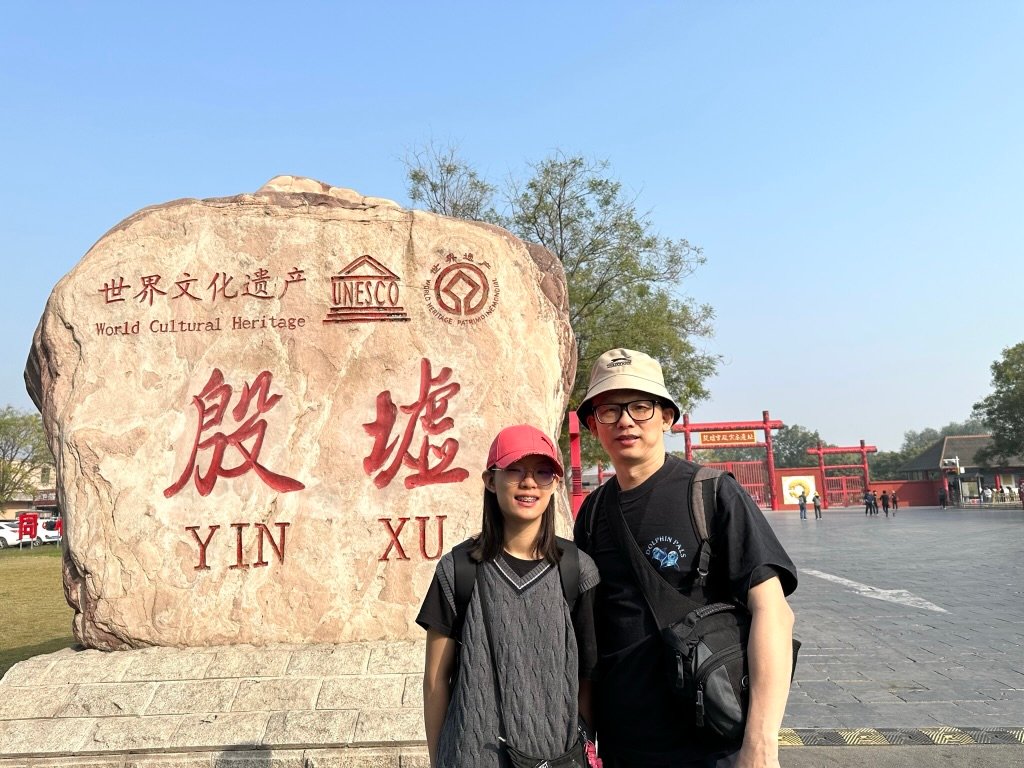
We’ve finally arrived at Yinxu (殷墟, Yīnxū) in Anyang (安阳, Ānyáng), Henan Province!
Ahead stands the striking red entrance to the Palace and Ancestral Temple Site (殷墟宫殿宗庙遗址, Yīnxū Gōngdiàn Zōngmiào Yízhǐ).
Visitors are gathering, the entrance announcement is playing, and Dad stops to examine the official archaeological site map.
Yinxu became a UNESCO World Heritage Site in 2006.
But why is this place so important?
🎥 WATCH — Entering the UNESCO World Heritage Site at Yinxu
DAD’S QUESTION: What makes Yinxu different from a temple or a reconstructed ancient town?
Here, archaeologists have uncovered actual remains of the late Shang dynasty (商朝, Shāng Cháo).
We’re entering a place where ancient Chinese history can be investigated through physical evidence.
🔥
Beijing gives you imperial China.
Anyang can take you into:
BRONZE AGE CHINA.
That is why Dad & Elaine came.

🌍 Western Handrail: How Old Is Yinxu, Really?
Chinese dates can become meaningless surprisingly quickly.
1300 BCE.
1200 BCE.
1100 BCE.
After a while Dad’s brain just says:
“Very old.”
😂
So let’s put Yinxu onto a wider world clock.
When the Shang kings were ruling from the Anyang area, the ancient Mediterranean and Near Eastern worlds were also living through the Bronze Age and its transformations.
The great:
New Kingdom of Egypt
belongs broadly to this world.
The reign of:
Ramesses II
1279–1213 BCE
overlaps the broad period associated with late Shang Anyang.
Across the Aegean, the:
Mycenaean civilization
was flourishing and then moving toward its collapse.
Classical Athens?
CENTURIES IN THE FUTURE.
Alexander the Great?
MUCH LATER.
Rome?
NOT EVEN FOUNDED YET.
And:
Qin Shi Huang?
More than:
1,000 YEARS IN THE FUTURE.
😳
Now Dad’s brain understands.
When we walk into Yinxu…
WE ARE DEEP IN THE BRONZE AGE.
🎬 TRAVEL PAPA REPORTS — WE’VE FINALLY ARRIVED AT YINXU!
In this video, Dad introduces the site, recalls our short taxi journey from our accommodation in Anyang, and explains why the late Shang capital matters.
He also introduces King Wu Ding (武丁, Wǔ Dīng), an important Shang ruler associated with the flourishing of the royal centre at Yin.
And look who’s joining us!
ELAINE AND CHEERS!
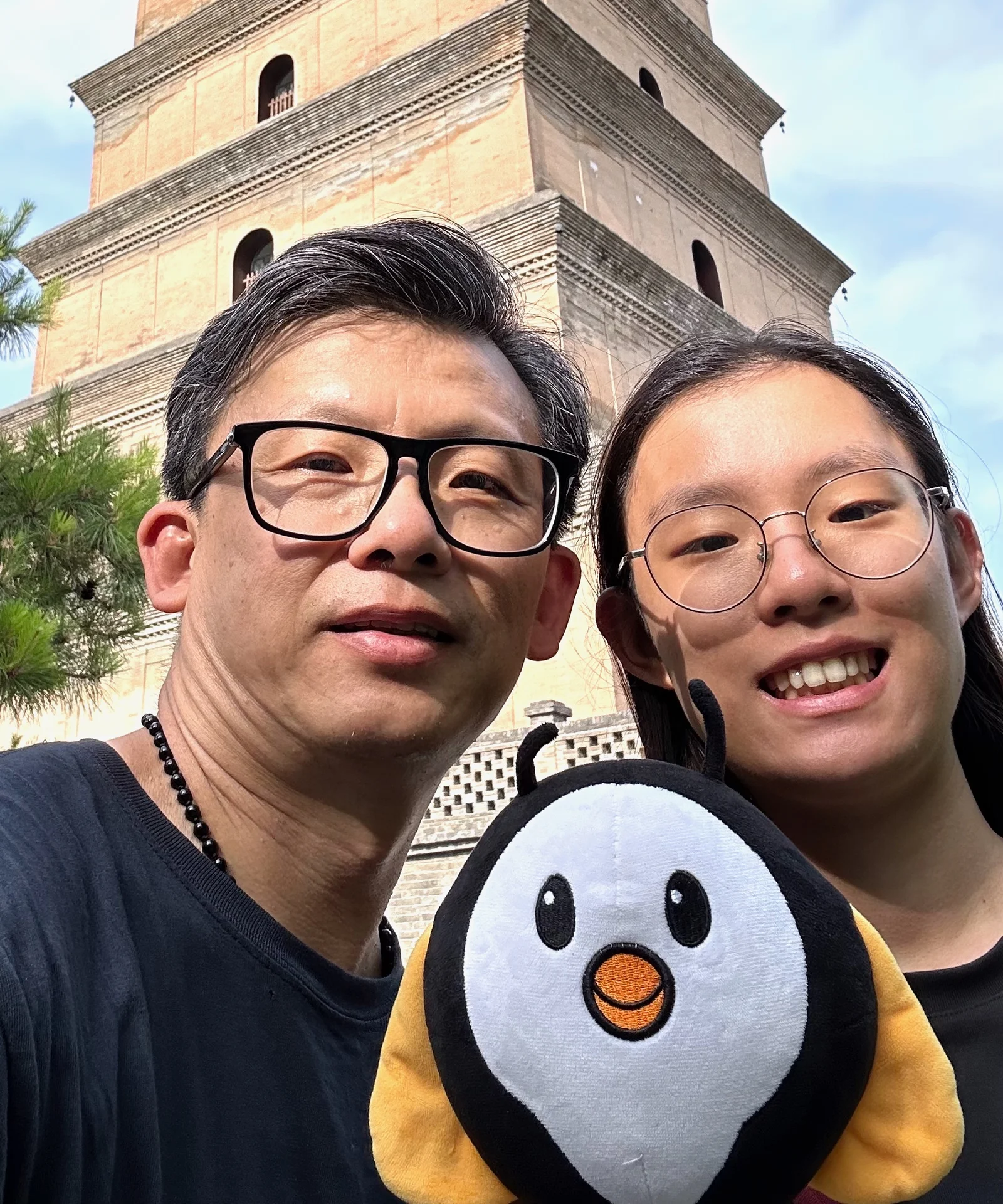
Our little panda mascot is ready for another historical adventure.
🎥 WATCH — Travel Papa Introduces Yinxu with Elaine and Cheers
DAD’S QUESTION: Why did the Shang kings establish their capital here, and how do we know so much about their world?
The Shang rulers occupied several capitals over time, but Yinxu became their best-documented late capital.
Here, archaeology and ancient inscriptions help us investigate a civilization that flourished more than 3,000 years ago.
COME ALONG. LET’S EXPLORE!

Another Western Handrail: Don’t Think “Ancient China” as One Giant Period
This is another beginner trap.
Western travelers sometimes hear:
“Ancient China.”
And mentally put:
Shang,
Confucius,
Qin Shi Huang
and:
Han
into roughly the same historical bucket.
😭😂
Don’t.
The distances are enormous.
Think about Western history.
Nobody would casually put:
Ramesses II
and:
Julius Caesar
into the same historical moment simply because both are “ancient.”
Likewise:
SHANG
is not:
QIN.
Yinxu helps make that distance physical.
You aren’t visiting:
“China before the Forbidden City.”
You’re visiting:
CHINA MORE THAN A THOUSAND YEARS BEFORE QIN SHI HUANG.
🔥
🎥 WATCH — Oracle Bone Writing and Shang Bronze at Yinxu
So What Exactly Is Yinxu?
The name:
殷墟 — Yīnxū
literally means:
“Ruins of Yin.”
Yin is another name associated with the Shang.
Yinxu preserves the archaeological remains of the major late Shang royal center around modern Anyang.
This was not:
a little prehistoric village.
😂
Archaeology has revealed evidence of a complex Bronze Age political and ritual center with:
palace and ancestral-temple foundations,
royal tombs,
elite and ordinary burials,
craft workshops,
bronze production,
roads and settlement areas
and:
an extraordinary body of ancient writing.
🔥
This was a world with:
KINGS.
ANCESTORS.
WARFARE.
RITUAL.
CRAFT SPECIALIZATION.
POLITICAL POWER.
and:
WRITING.
Now “Shang dynasty” begins to feel less like a label on Dad’s timeline.
🌏 Yinxu Is a UNESCO World Heritage Site
In:
2006,
Yinxu was inscribed on the:
UNESCO World Heritage List.
And this is worth explaining properly.
Yinxu isn’t UNESCO-listed simply because:
“It’s very old.”
Lots of places are old.
😂
Its significance comes from the extraordinary combination of evidence preserved here.
At Yinxu, archaeology gives us:
A MAJOR BRONZE AGE CAPITAL
+
ROYAL TOMBS
+
PALACE AND TEMPLE REMAINS
+
CRAFT AND BRONZE PRODUCTION
+
BURIALS AND MATERIAL CULTURE
+
WRITTEN RECORDS FROM THE SHANG WORLD ITSELF.
🔥🔥🔥
That last ingredient changes everything.
Because Yinxu doesn’t merely give us:
THE REMAINS OF A CIVILIZATION.
It also gives us:
WORDS PRODUCED INSIDE THAT CIVILIZATION.
Western Handrail: Archaeology With Subtitles
😂
Dad’s simplified version:
Imagine excavating a great Bronze Age capital.
Already fantastic.
You uncover:
buildings,
tombs,
weapons,
workshops,
ritual objects
and:
human remains.
Then somebody says:
“Oh, by the way… they also left written records.”
😳
Now the archaeology has:
SUBTITLES.
Not perfect subtitles.
Not a complete history.
Not an ancient newspaper.
😂
But words created by people who actually belonged to that world.
That’s the special power of Yinxu.
A Capital Is More Than a Palace
Another thing international travelers should notice:
Yinxu isn’t important only because:
THE KING LIVED HERE.
A major political center needs an entire society around it.
Archaeologists have uncovered evidence connected with:
BRONZE CASTING.
BONE WORKING.
CRAFT PRODUCTION.
BURIAL PRACTICES.
RITUAL.
WARFARE.
and:
EVERYDAY SETTLEMENT.
🔥
Think about what that means.
Those spectacular Shang bronzes didn’t simply appear because:
“Ancient Chinese people were good at bronze.”
Behind them were:
mining and raw materials,
craft knowledge,
specialized workers,
workshops,
organization
and:
elites powerful enough to command enormous resources.
A beautiful bronze vessel is therefore also evidence of:
A SOCIAL SYSTEM.
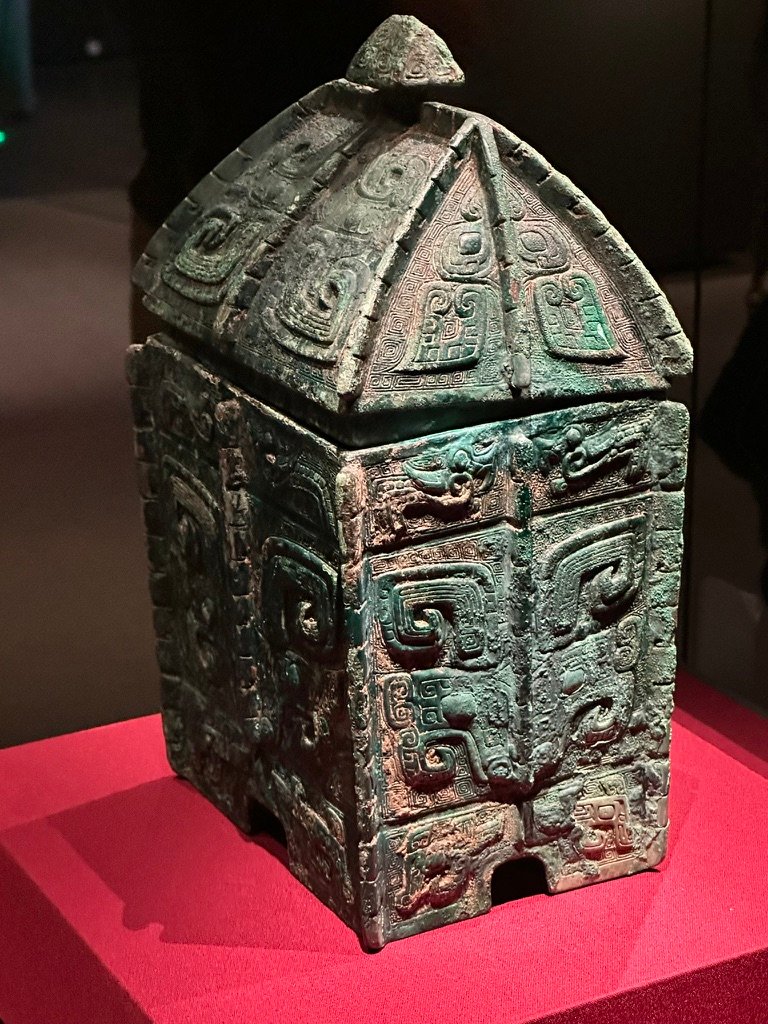
Shang Bronze: Don’t Just Look at the Decoration
If you’ve seen great Shang bronzes in Chinese museums, you’ve probably noticed:
TAOTIE 饕餮
and other extraordinary animal-mask and geometric designs.
They can look mysterious.
Powerful.
Almost modern.
But Dad’s DEEP China question is:
Who had the resources to make these things?
🔥
Large ritual bronzes required sophisticated:
TECHNOLOGY
+
LABOR
+
ORGANIZATION
+
RAW MATERIALS
+
RITUAL DEMAND.
So when Dad sees a huge Shang bronze now, he doesn’t only think:
“Beautiful.”
He thinks:
“There is a political economy hiding inside this object.”
😂
Another rabbit.
But not today.
Yinxu Was a Royal World
The late Shang kings didn’t rule only through:
military force.
Their world was deeply connected with:
royal ancestors,
ritual sacrifice,
divination
and:
communication with powerful ancestral and supernatural forces.
Politics and religion were not sitting in separate modern departments.
😂
Royal decisions could involve questions about:
war,
harvest,
weather,
hunting,
sacrifice,
health
and:
ancestral approval.
And here’s where Yinxu becomes extraordinary.
Because some of those questions:
SURVIVED.
Then There Are the Royal Tombs
Yinxu also preserves the royal cemetery area associated with the late Shang ruling elite.
These enormous burial landscapes tell us something about:
POWER.
Building monumental tombs required:
labor,
organization,
resources
and:
a social order capable of concentrating all three.
The burials also reveal a world of:
ritual objects,
weapons,
bronzes,
human and animal sacrifice
and:
beliefs surrounding death and royal ancestry.
😳
This is not comfortable history.
But it is part of the Shang world.
DEEP China doesn’t need to romanticize the past to find it fascinating.
🎬 MEET FU HAO (妇好) — A WARRIOR QUEEN OF ANCIENT CHINA!
Who says ancient Chinese history was only about emperors and kings?
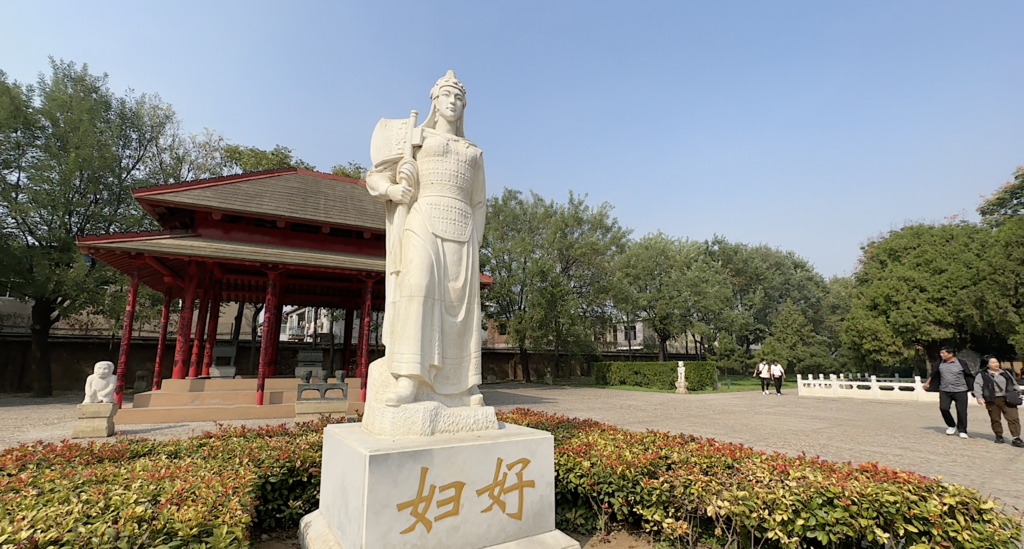
At Yinxu (殷墟, Yīnxū), Dad encounters the imposing white statue of Fu Hao (妇好, Fù Hǎo), holding a ceremonial battle-axe (钺, yuè).
🎥 WATCH — The Warrior Queen of Yinxu
WHO WAS FU HAO?
Fu Hao was a consort of Shang King Wu Ding (武丁, Wǔ Dīng) around 3,200 years ago.
She was no ordinary royal consort!
Oracle-bone inscriptions record her involvement in military campaigns and important royal rituals.
Her remarkably intact tomb, discovered at Yinxu in 1976, contained extraordinary bronze vessels, weapons, jade objects and other burial treasures.
DAD’S BIG QUESTION: How do we know Fu Hao was a real historical woman?
Because her name appears in ancient inscriptions, including the oracle bones, and archaeologists discovered her tomb!
AT YINXU, HISTORY SPEAKS THROUGH BOTH WRITING AND ARCHAEOLOGY.
Dad’s Political Science Handrail: Monumental Tombs Are Political Statements
Think of monumental burial across civilizations.
Egyptian pyramids.
Royal mausoleums.
Imperial tomb complexes.
Different cultures.
Different beliefs.
Different architecture.
But they often tell us something beyond:
“This person died.”
They can also say:
“LOOK AT THE RESOURCES THIS POLITICAL ORDER COULD COMMAND.”
🔥
Yinxu’s royal burials therefore help us ask not only:
How did Shang kings die?
but:
WHAT KIND OF SOCIETY COULD BUILD THIS FOR THEM?
That’s a much bigger question.
🚶 What Does It Feel Like to Visit?
This is important.
Don’t come expecting:
THE FORBIDDEN CITY — BUT 3,000 YEARS OLDER.
😂
Archaeological sites require a different imagination.
You may encounter:
foundations,
excavated areas,
reconstructed displays,
tombs,
museum objects
and:
landscape.
The visual spectacle isn’t always immediate.
But once you understand:
WHAT WAS HERE,
the empty spaces become powerful.
Dad likes to think:
A palace doesn’t have to survive to tell you a palace once stood here.
Archaeology gives us the footprint.
Our job is to:
READ IT.
Western Travel Handrail: Pompeii Is Not the Only Way Archaeology Can Be Powerful
Western travelers are spoiled by places such as:
Pompeii
where streets and buildings remain dramatically visible.
Yinxu is a different archaeological experience.
Don’t judge it by:
“How many walls are still standing?”
Ask instead:
What evidence survived?
🔥
Sometimes:
A FOUNDATION
tells you where power was organized.
A TOMB
tells you about hierarchy and belief.
A WORKSHOP
tells you how things were made.
A BONE WITH WRITING
tells you what somebody was worried about on a particular day more than 3,000 years ago.
That last one is difficult to beat.
Then Dad Saw the Bones
And this is where Yinxu changes character completely.
Among all the:
ruins,
bronzes,
tombs
and:
archaeological evidence…
some of the most important objects look almost disappointingly small.
Broken pieces of:
TURTLE SHELL.
and:
ANIMAL BONE.
😂
But scratched onto them are:
WORDS.
Questions.
Names.
Dates.
Ritual concerns.
Royal ancestors.
Things people wanted to know.
Things people feared.
Things kings worried about.
🔥
Suddenly the Shang aren’t merely:
PEOPLE WE EXCAVATED.
They’re becoming:
PEOPLE WE CAN HEAR.
🐢 The Shang Left Words of Their Own
This is the sentence Dad wants international travelers to remember.
Later historians wrote about Shang.
Later generations remembered Shang.
Archaeology excavated Shang.
But at Yinxu:
THE SHANG ALSO LEFT WORDS OF THEIR OWN.
😳
And those words survived for more than:
3,000 YEARS.
Now we can ask:
What did Shang kings actually write about?
What were they afraid of?
Who were their ancestors?
Can their own records be compared with what Sima Qian wrote a thousand years later?
and:
Why does one woman’s name — 妇好 — keep appearing?
🔥🔥🔥
Excellent.
Now the smoke is really coming out of the wok.
😂🧄🐢
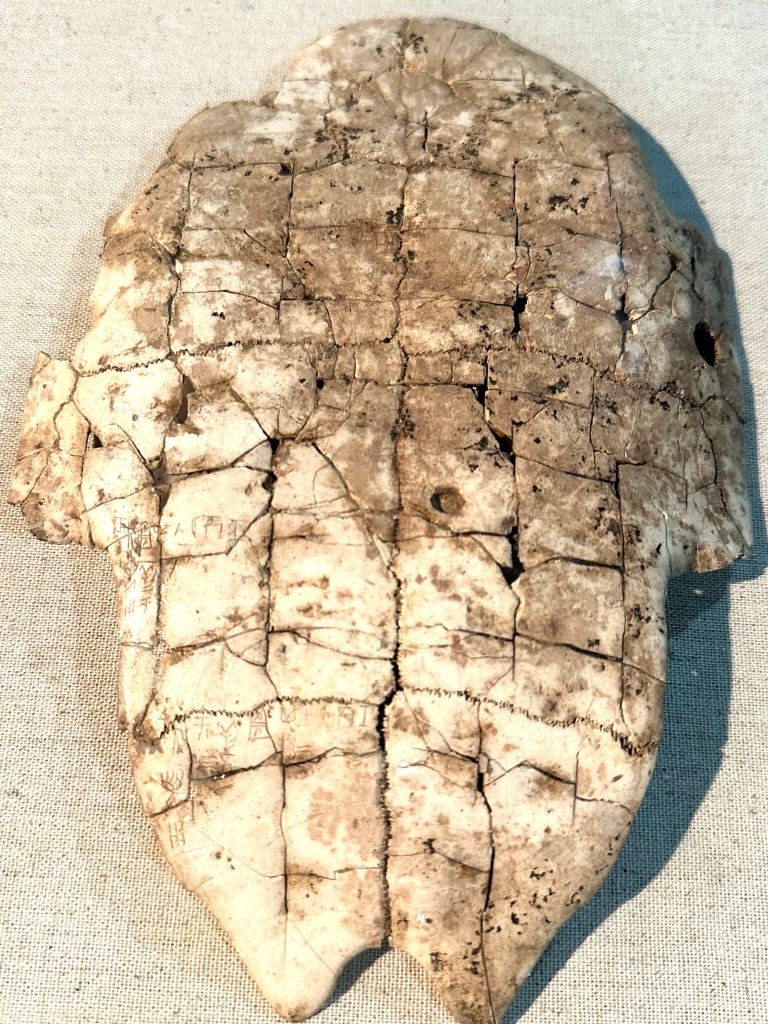
Section 2 — Oracle Bones: When the Shang Start Talking
At Yinxu, Dad & Elaine had already walked into:
a Bronze Age capital.
Palaces.
Royal tombs.
Workshops.
Bronzes.
Burials.
More than:
3,000 YEARS OF DISTANCE.
Extraordinary.
But then Yinxu gives us something even more valuable.
WORDS.
Not words written by a historian 1,000 years later.
Not a legend retold centuries afterward.
Words produced:
INSIDE THE SHANG WORLD ITSELF.
🔥
And some survived on the most unlikely historical archive imaginable:
TURTLE SHELLS AND ANIMAL BONES.
😂🐢
What Exactly Is an Oracle Bone?
The Chinese term is:
甲骨 — jiǎgǔ
Literally:
甲 — jiǎ
shell / carapace
骨 — gǔ
bone
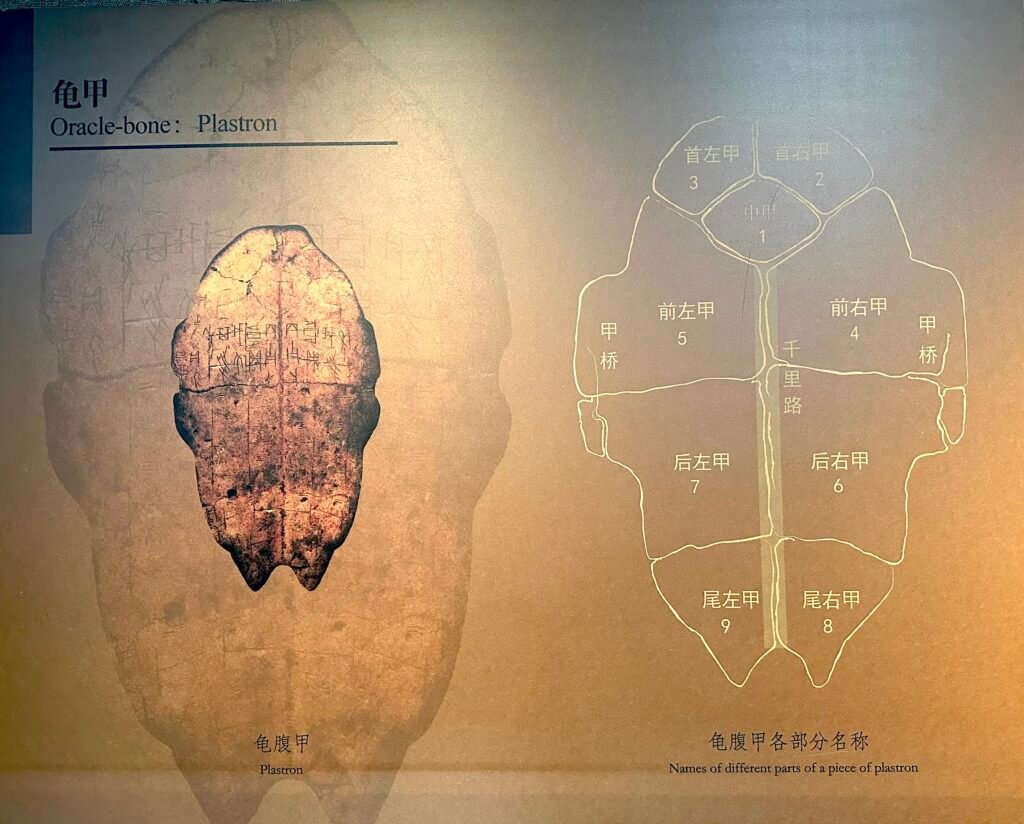
Many Shang divination records were made on:
turtle plastrons
and:
ox scapulae.
The writing found on them is called:
甲骨文 — jiǎgǔwén
oracle-bone inscriptions / oracle-bone script
These are among the earliest large bodies of mature Chinese writing known to us.
But they weren’t created because somebody thought:
“Future archaeologists will need good primary sources.”
😂
They were part of:
DIVINATION.
How Did Shang Divination Work?
In simplified form:
A question or charge was prepared.
The bone or shell was carefully treated.
Heat was applied to prepared hollows.
The heat produced:
CRACKS.
A diviner — sometimes in a royal context involving the king himself — interpreted those cracks.
And inscriptions could record elements such as:
the date,
the diviner,
the question or charge,
a prognostication
and sometimes:
what actually happened afterward.
😳
Think about that last part.
Sometimes we don’t merely get:
“Will it rain?”
We can also get evidence connected with:
“What happened?”
Now a broken piece of bone becomes:
A RECORD OF A DECISION-MAKING PROCESS.
Western Handrail: Not a Diary — More Like the King’s Question Log
Don’t imagine the oracle bones as:
King Wu Ding’s personal diary.
😂
“Dear diary, today the harvest was stressful…”
No.
And don’t imagine them as a modern government archive either.
A better beginner’s handrail is:
A ROYAL QUESTION LOG.
What questions mattered enough to take before the ancestral and supernatural world?
What did the court want to know?
What decisions required divination?
🔥
That is what makes the subjects so revealing.
😳 So What Were Shang Kings Worried About?
This is where three thousand years suddenly becomes very human.
Oracle-bone inscriptions concern questions about:
RAIN.
Will it rain?
Will there be enough rain?
HARVESTS.
Will the crops succeed?
WAR.
Should the king campaign?
Will the military expedition succeed?
HUNTING.
Will the royal hunt be successful?
SACRIFICE.
Which ancestor should receive an offering?
What ritual should be performed?
ILLNESS.
Why is somebody sick?
Will the illness improve?
CHILDBIRTH.
Will a royal pregnancy end well?
ANCESTORS.
Is a particular ancestor responsible for misfortune?
What does the ancestral world require?
🔥
Different civilization.
Different worldview.
But look at the anxieties:
WEATHER.
FOOD.
WAR.
HEALTH.
CHILDREN.
THE FUTURE.
Dad suddenly doesn’t feel quite so far away.
The Ancestors Were Politically Important Too
For the Shang royal house, ancestors weren’t simply:
dead relatives to remember fondly.
They were active parts of the royal religious and political world.
Royal ancestors could be approached through:
ritual,
sacrifice
and:
divination.
That means the oracle bones also preserve:
ROYAL GENEALOGY.
Names of kings.
Names of royal ancestors.
Relationships.
Ritual sequences.
🔥
And this is where Yinxu produces one of Dad’s favorite historical detective stories.
Because another man had also preserved a list of Shang kings.
Our old friend:
Sima Qian.
😂🐇
Sima Qian Had a Shang King List
More than a thousand years after the early Shang world, during the Han dynasty:
Sima Qian (司马迁, Sīmǎ Qiān)
compiled:
《史记》 — Shǐjì
Records of the Grand Historian
Within it is:
《殷本纪》 — Yīn Běnjì
Basic Annals of Yin
which preserves a genealogy and succession of Shang rulers.
Extremely important.
But Dad’s evidence alarm immediately goes off.
🚨😂
Because:
SIMA QIAN WAS NOT SHANG.
He lived:
ROUGHLY A THOUSAND YEARS LATER.
So historians naturally have to ask:
How much accurate information about the Shang royal line could really have survived across that enormous gap?
For centuries, that was difficult to test directly.
Then…
THE BONES CAME OUT OF THE GROUND.
🔥🔥🔥
Western Handrail: Imagine Digging Up the King’s Own Records
Imagine that historians possessed a royal genealogy written:
1,000 years after the rulers themselves.
Useful.
But obviously later.
Then archaeologists excavate records produced:
AT THE ANCIENT ROYAL COURT ITSELF.
And those records contain:
THE NAMES OF THE ROYAL ANCESTORS.
😳
Now you can do something extraordinary:
COMPARE THEM.
Later transmitted history on one side.
Contemporary ancient writing on the other.
That is essentially what Yinxu allowed scholars to do.
And Many of the Kings Matched
As scholars deciphered the oracle-bone inscriptions, names associated with Shang kings and royal ancestors emerged.
And the broad royal genealogy preserved in the oracle-bone material showed remarkable correspondence with the Shang king list transmitted through ancient texts and recorded by Sima Qian.
🔥🔥🔥
Pause here.
This deserves a moment.
SHANG COURT
records royal ancestral names
↓
roughly 1,000 years pass
↓
SIMA QIAN
records the Shang royal lineage
↓
roughly another 2,000 years pass
↓
ARCHAEOLOGISTS AT YINXU
recover Shang writing
↓
SCHOLARS COMPARE THE NAMES
😳
Three thousand years of transmission, burial, rediscovery and scholarship…
meeting on one page.
Does This Mean Sima Qian Got Everything Right?
NO.
😂
Please don’t turn the oracle bones into:
《史记》 VERIFIED ✅
History is more interesting than that.
The inscriptions allowed scholars to:
confirm important parts of the transmitted royal genealogy,
clarify royal names,
refine relationships,
study succession patterns
and:
understand Shang ancestral ritual much more precisely.
There are differences and complexities too.
So archaeology didn’t tell us:
“Everything later tradition says about Shang must be true.”
It gave historians something much more valuable:
A WAY TO TEST PART OF THE TRANSMITTED RECORD AGAINST CONTEMPORARY SHANG EVIDENCE.
🔥
Dad’s Historical Detective Moment
Now put the two sources on the table.
SOURCE 1
SIMA QIAN
Han dynasty
transmitted historical synthesis
writing long after Shang
versus:
SOURCE 2
ORACLE-BONE INSCRIPTIONS
Shang dynasty
contemporary royal records
archaeologically excavated
Then ask:
WHERE DO THEY AGREE?
WHERE DO THEY DIFFER?
WHAT CAN ONE TELL US THAT THE OTHER CANNOT?
🔥
That’s history.
Not:
TEXT OR ARCHAEOLOGY.
But:
TEXT + ARCHAEOLOGY IN CONVERSATION.
Western Handrail: The Historian Meets the Primary Source
Western readers may recognize the basic method.
Suppose a later historian tells us:
King A was followed by King B, then King C.
Centuries later, archaeologists discover contemporary:
royal inscriptions,
administrative records
or:
monuments
naming:
A → B → C.
Suddenly the later historian looks:
A LOT MORE INTERESTING.
😂
Not infallible.
Not magically eyewitness.
But now we know that at least part of the information he inherited had:
VERY DEEP ROOTS.
That is one of the great lessons Yinxu gave historians.
This Changes the Shang Dynasty
Before the discovery and decipherment of the oracle bones, Shang history depended heavily on:
LATER TRANSMITTED TEXTS.
Yinxu changed the evidence base.
Now scholars had:
CONTEMPORARY WRITING
produced within the Shang royal world itself.
That’s why Yinxu is so much more than:
“an archaeological site from a very old dynasty.”
The Shang became:
TEXTUALLY VISIBLE.
Kings weren’t only names copied in later books.
Some appeared within:
THEIR OWN DYNASTY’S WRITTEN RECORDS.
🔥
Ancient China had started talking.
And the Bones Can Be Astonishingly Specific
Oracle-bone inscriptions can preserve:
DATES
using the traditional:
干支 — gānzhī
Heavenly Stems and Earthly Branches cycle
alongside:
names,
diviners,
events
and:
ritual concerns.
For international travelers, don’t worry about learning the whole calendrical system here.
😂
The important realization is:
These aren’t merely:
“symbols scratched onto old bones.”
They belong to:
AN ORGANIZED WRITTEN RECORDING PRACTICE.
People were identifying:
WHEN
WHO
and:
WHAT WAS BEING ASKED.
That makes the voices feel startlingly close.
Imagine Holding One Question for 3,000 Years
This is what gets Dad.
A Shang king worries about:
RAIN.
Someone prepares a turtle plastron.
The court performs divination.
The question is inscribed.
Then:
3,000+ YEARS PASS.
Dynasties rise.
Dynasties fall.
Qin unifies.
Han expands.
Tang flourishes.
Mongols rule.
Ming.
Qing.
Republic.
Modern China.
And somewhere under the ground…
THE QUESTION WAITS.
😳
Then somebody digs it up.
And Dad stands in a museum reading:
“Will it rain?”
🔥
That is why archaeological writing feels different.
The question crossed:
THREE MILLENNIA.
But Don’t Call Oracle Bones “Objective Truth”
One more evidence warning.
The oracle bones are contemporary.
That makes them extraordinarily valuable.
But:
CONTEMPORARY DOES NOT MEAN COMPLETE.
They were created for particular purposes.
Mostly within:
ROYAL DIVINATION.
They tell us a great deal about:
the court,
ritual,
royal concerns,
ancestors,
warfare
and:
elite decision-making.
But they do NOT give us:
EVERYBODY’S SHANG DYNASTY.
😂
A farmer didn’t necessarily get his own oracle-bone chapter.
An ordinary craft worker didn’t write:
“Here’s what life was like for me today.”
So even a primary source has:
A VIEWPOINT.
That’s another useful historical habit.
Western Handrail: Even a King’s Diary Would Still Be the King’s Diary
Imagine finding the personal diary of:
Henry VIII.
🔥
Extraordinary primary source.
Would historians throw away every other source?
Obviously not.
Because Henry’s diary would tell us:
HENRY’S WORLD FROM HENRY’S POSITION.
Not:
EVERYTHING ABOUT TUDOR ENGLAND.
Same basic warning here.
Oracle bones are astonishing.
But they’re a window.
NOT THE ENTIRE BUILDING.
And One Reign Gives Us an Especially Large Window
A very large body of oracle-bone material is associated with the reign of:
King Wu Ding (武丁, Wǔ Dīng).
Through these inscriptions, his royal world becomes unusually vivid.
Wars.
Hunts.
Sacrifices.
Weather.
Ancestors.
Illness.
Pregnancy.
Court concerns.
🔥
And among all those names and questions…
one name keeps appearing:
妇好 — Fù Hǎo.
Fu Hao.
At first:
a name on bones.
Then:
a royal woman.
Then:
ritual activity.
Then:
military campaigns.
Then:
health and childbirth.
😳
Dad’s historical detective alarm goes off again.
Who exactly was this woman?
🐇 And Then Archaeology Did Something Wonderful
Oracle bones had already given historians:
FU HAO’S NAME.
They had already told us something about:
HER LIFE.
Then, in:
1976,
archaeologists at Yinxu discovered:
A TOMB.
An unusually important tomb.
One that had escaped the large-scale looting suffered by many ancient elite burials.
And evidence connected it with:
妇好.
🔥🔥🔥
Now the next plate is ready.
Because Section 2 has given us:
THE VOICE.
Section 3 gives us:
THE PERSON.
🎬 FU HAO’S TOMB (妇好墓) — DISCOVERED IN 1976!
Follow Elaine as we approach Fu Hao’s Tomb (妇好墓, Fù Hǎo Mù) at Yinxu.
The entrance marker and information boards introduce one of China’s most extraordinary archaeological discoveries.
Excavated in 1976, this remarkably intact Shang royal burial contained more than 1,900 objects, including bronzes, jade ornaments and other treasures.
🎥 WATCH — Entering Fu Hao’s Tomb
DAD’S QUESTION: What can one woman’s tomb tell us about life, power and wealth more than 3,000 years ago?

Sting Check
We began with:
BROKEN BONES.
Then those bones gave us:
WORDS.
The words gave us:
QUESTIONS.
The questions gave us:
A ROYAL COURT.
The royal court gave us:
KINGS AND ANCESTORS.
Those names allowed us to compare:
SHANG RECORDS
with:
SIMA QIAN’S LATER HISTORY.
🔥
And then one name refused to stay on the bone:
妇好 — FU HAO.
Because archaeology was about to give her:
A TOMB.
WEAPONS.
BRONZES.
JADE.
and:
A MATERIAL LIFE.
😳
Now Yinxu is about to do something even more extraordinary.
It is going to turn:
A NAME
into:
A PERSON.
🎬 INSIDE FU HAO’S TOMB — BRONZE TREASURES OF THE SHANG DYNASTY!
Come downstairs with Dad to explore the underground exhibition at Fu Hao’s Tomb (妇好墓).
Look at the extraordinary bronze vessels: wine containers, ritual cooking vessels, animal-shaped ornaments and enormous ceremonial battle-axes (钺, yuè).
These discoveries reveal both the sophistication of Shang bronze craftsmanship and Fu Hao’s exceptional status.
🎥 WATCH — Exploring Fu Hao’s Bronze Treasures
DAD’S QUESTION: Why would a royal woman be buried with such powerful weapons?
Because Fu Hao was not only a royal consort — oracle-bone inscriptions also record her military leadership!
🎬 LOOK INSIDE FU HAO’S ACTUAL BURIAL PIT!
Now comes the most fascinating part!
Dad looks down into the original burial pit of Fu Hao (妇好墓墓穴原址).
The reconstructed display shows how bronze vessels and other burial objects were arranged within the tomb.
Listen as a Chinese guide explains the different burial layers and the remarkable number of artifacts recovered.
The tomb also reveals a darker aspect of Shang royal burial customs: human sacrifice (人殉, rénxùn).
🎥 WATCH — Inside Fu Hao’s Original Burial Pit
DAD’S QUESTION: What do these burial objects — and the human sacrifices — tell us about power, religion and beliefs in the Shang dynasty?
AT YINXU, ARCHAEOLOGY REVEALS BOTH THE ACHIEVEMENTS AND THE HARSH REALITIES OF ANCIENT CHINA.
Section 3 — Fu Hao 妇好: When a Woman From 3,000 Years Ago Steps Out of the Oracle Bones
Section 2 ended with one name:
妇好 — Fù Hǎo
Fu Hao
At first, she’s simply:
CHARACTERS ON ORACLE BONES.
But then the inscriptions keep talking.
And the woman behind those two characters begins to appear.
🔥
This is one of Dad’s favorite moments at Yinxu.
Because archaeology is about to take:
A NAME
and slowly turn it into:
A PERSON.
👩 First: Who Was Fu Hao?
Fu Hao lived during the late:
Shang dynasty (商朝, Shāng Cháo)
more than:
3,000 YEARS AGO.
She was one of the consorts of:
King Wu Ding (武丁, Wǔ Dīng),
one of the major Shang kings associated with Yinxu.
Fine.
If we stopped there, an international reader might imagine:
“Ancient king. Royal wife. Next.”
😂
Don’t move on yet.
Because the oracle bones tell us much more.
🐢 The Oracle Bones Know Her Name
Fu Hao appears repeatedly in oracle-bone inscriptions from Wu Ding’s reign.
And the questions associated with her concern very different parts of life.
They connect her with:
RITUAL.
MILITARY ACTIVITY.
HEALTH.
PREGNANCY AND CHILDBIRTH.
and:
ROYAL AFFAIRS.
😳
That immediately gives us something precious.
Fu Hao isn’t known only because:
a much later historian told us a story about her.
Her name appears in:
WRITING FROM HER OWN WORLD.
🔥
That makes the relationship between:
TEXT
and:
PERSON
much more immediate.
Wait — Fu Hao Led Military Campaigns?
Yes.
Oracle-bone inscriptions associate Fu Hao with military expeditions against groups confronting the Shang.
She appears as someone who could exercise:
MILITARY AUTHORITY
as well as important:
RITUAL FUNCTIONS.
🔥
That makes her unusually visible in the surviving evidence.
But we should be careful with modern labels.
Calling her simply:
“China’s first female general”
sounds wonderfully clickable…
but compresses a very different Bronze Age political world into a modern job title.
Better to say:
FU HAO WAS A SHANG ROYAL WOMAN ASSOCIATED IN CONTEMPORARY INSCRIPTIONS WITH MILITARY COMMAND AND MAJOR RITUAL ACTIVITY.
That’s already extraordinary.
We don’t need to improve it.
😂
Western Handrail: Please Don’t Call Her “China’s Joan of Arc”
Western readers naturally look for familiar comparisons.
Fu Hao?
Woman + warfare?
Someone will eventually say:
“China’s Joan of Arc!”
😭😂
Please don’t.
Joan of Arc lived in:
15th-century France.
Fu Hao lived in:
Bronze Age China more than 2,500 years earlier.
Different:
political system,
religious world,
military organization,
social position
and:
historical circumstances.
The comparison actually makes Fu Hao:
LESS INTERESTING.
Because her own story is already remarkable.
Instead ask:
What could a powerful royal woman actually do in the Shang world?
Now the oracle bones can answer.
Fu Hao’s Power Wasn’t Only Military
This is important.
Modern readers tend to notice:
WOMAN + ARMY
because it feels surprising.
😂
But in the Shang royal world:
RITUAL POWER MATTERED TOO.
Fu Hao participated in important ritual activities.
And remember what we’ve already learned about Shang kingship:
ancestors,
sacrifice,
divination
and:
political authority
were deeply intertwined.
So don’t imagine:
Fu Hao the soldier
on Monday…
and:
Fu Hao doing religion
on Sunday.
😂
Those modern categories don’t map neatly onto Shang society.
Her ritual role tells us something about:
HER POSITION WITHIN THE ROYAL ORDER.
Then the Oracle Bones Become Surprisingly Personal
This is where Dad feels the 3,000-year distance collapse again.
Some divinations concern Fu Hao’s:
HEALTH.
Others concern:
PREGNANCY
and:
CHILDBIRTH.
😳
Think about that.
We began with:
“Important Bronze Age royal woman.”
Then the bones give us questions about:
whether she will be well.
whether childbirth will go safely.
Suddenly Fu Hao isn’t merely:
A HISTORICAL ROLE.
She’s a human being whose health and pregnancy worried people around her.
🔥
Three thousand years…
gone for a moment.
And Then Fu Hao Died
Fu Hao died during Wu Ding’s lifetime.
Oracle-bone evidence indicates that she continued to matter after death within the Shang ancestral and ritual world.
And somewhere at Yinxu…
she was buried.
Then:
MORE THAN 3,000 YEARS PASSED.
Dynasties rose.
Dynasties fell.
Shang disappeared.
Zhou.
Qin.
Han.
Tang.
Song.
Yuan.
Ming.
Qing.
Modern China.
And Fu Hao remained:
UNDERGROUND.
Until:
1976.
🔥
1976 — Archaeologists Find a Tomb
In 1976, archaeologists working at Yinxu discovered an important Shang tomb.
The excavation was led by archaeologist:
Zheng Zhenxiang (郑振香, Zhèng Zhènxiāng).
And this tomb had something extremely unusual going for it.
Unlike many major Shang elite and royal burials:
IT HAD ESCAPED LARGE-SCALE LOOTING.
😳
That matters enormously.
Because what archaeologists found wasn’t simply:
TREASURE.
They found:
CONTEXT.
Western Handrail: The Tutankhamun Instinct — Useful, But Stop There
Western readers may immediately think:
TUTANKHAMUN.
That’s okay…
for about:
FIVE SECONDS.
😂
Fu Hao is not:
“China’s Tutankhamun.”
Different person.
Different burial.
Different civilization.
Different historical significance.
But Howard Carter’s discovery of Tutankhamun’s largely intact tomb gives Western readers one useful archaeological instinct:
AN UNDISTURBED ROYAL OR ELITE TOMB IS EXTRAORDINARILY VALUABLE.
Why?
Because objects remain much closer to:
THEIR ORIGINAL ARCHAEOLOGICAL CONTEXT.
That lets researchers ask:
Where was this object placed?
What was buried with whom?
What objects belonged together?
What did the burial ritual look like?
🔥
Treasure impresses tourists.
CONTEXT EXCITES ARCHAEOLOGISTS.
😳 And Fu Hao’s Tomb Was Full of Evidence
The tomb contained an extraordinary collection of grave goods.
Among them were large numbers of:
BRONZE VESSELS
WEAPONS
JADE OBJECTS
BONE OBJECTS
and:
OTHER BURIAL GOODS.
The assemblage gives us a remarkable material window into:
elite Shang craftsmanship,
ritual,
warfare,
status
and:
burial practice.
🔥
But for Dad, the most exciting thing isn’t:
“Look how many treasures!”
It’s:
THE ORACLE-BONE WOMAN NOW HAS A MATERIAL WORLD.
And Her Name Appears Again
Objects from the tomb carry inscriptions associated with:
妇好 — Fu Hao
and related naming evidence.
😳
Now put the evidence together.
Before excavation:
ORACLE BONES
Fu Hao exists in contemporary Shang writing.
Then:
TOMB
an intact elite burial is discovered.
Then:
INSCRIBED OBJECTS
help connect the burial with Fu Hao.
Then:
WEAPONS + BRONZES + RITUAL OBJECTS
give material context to the kind of powerful royal woman the inscriptions describe.
🔥🔥🔥
This is historical detective work at its best.
Dad’s Evidence Board
If Dad were pinning this onto a detective wall:
😂
EVIDENCE 1 — ORACLE BONES
Fu Hao’s name.
↓
EVIDENCE 2 — ROYAL DIVINATIONS
Military activity.
Ritual.
Health.
Pregnancy.
↓
EVIDENCE 3 — TOMB
A major undisturbed Shang burial.
↓
EVIDENCE 4 — INSCRIBED OBJECTS
Names connect the burial with Fu Hao.
↓
EVIDENCE 5 — MATERIAL CULTURE
Weapons.
Bronzes.
Jade.
Ritual objects.
↓
FU HAO BECOMES HISTORICALLY VISIBLE.
🔥
That’s much stronger than:
“Ancient texts say there was once a powerful woman.”
Text + Archaeology: This Is Why Yinxu Is Special
Remember what Yinxu has already given us.
Section 1:
PLACE.
A Bronze Age capital.
Section 2:
VOICE.
Oracle-bone inscriptions.
Now Section 3:
PERSON.
Fu Hao.
🔥
And all three support one another.
PLACE
tells us where the political world existed.
TEXT
tells us what people in that world were asking and recording.
ARCHAEOLOGY
gives us their material lives.
And Fu Hao lets all three meet in:
ONE HUMAN BEING.
Western Handrail: Imagine Finding Someone Twice
Here’s perhaps the simplest way to explain why Fu Hao is so exciting.
Imagine historians first encounter an ancient woman in:
CONTEMPORARY WRITTEN RECORDS.
The records say she:
held important responsibilities,
participated in ritual
and:
was connected with military activity.
Interesting.
Then archaeologists excavate:
HER BURIAL.
And the material evidence fits the world described in those records.
😳
It’s almost like meeting the same person:
ON PAPER
and:
IN THE GROUND.
Except Fu Hao’s “paper” was:
TURTLE SHELL AND BONE.
😂🐢
Fu Hao Also Corrects Our Picture of Ancient Women
There’s another reason international readers should remember her.
When we imagine very ancient societies, we can unconsciously flatten women into:
wives, mothers and anonymous figures in the background.
Fu Hao makes that difficult.
The evidence places her inside:
ROYAL POLITICS.
RITUAL.
WARFARE.
DYNASTIC FAMILY LIFE.
and:
ANCESTRAL MEMORY.
🔥
That does NOT mean every Shang woman possessed Fu Hao’s status or authority.
Obviously not.
She belonged to the royal elite.
But her existence warns us against assuming:
we already know what women could or couldn’t do in Bronze Age China.
Let the evidence surprise us.
And Those Weapons Matter
Weapons from Fu Hao’s tomb are particularly striking because the oracle-bone inscriptions already associate her with military activity.
That’s the key.
If we found weapons alone, we would need to ask:
What exactly does their presence in the burial mean?
If we had only the written records, we would ask:
What material evidence survives?
But together:
WRITING
and:
BURIAL CONTEXT
create a richer picture.
🔥
Again:
ONE SOURCE DOESN’T HAVE TO DO ALL THE WORK.
That’s becoming Dad’s favorite historical rule.
And the Bronzes Matter Too
The tomb’s bronzes remind us that Fu Hao belonged to the elite ritual world of Shang.
These weren’t simply:
DINNER POTS.
😂
Bronze vessels could be tied to:
ritual,
ancestral sacrifice,
status
and:
royal authority.
So Fu Hao’s tomb gives us both:
MILITARY OBJECTS
and:
RITUAL OBJECTS.
Exactly the two worlds in which the oracle-bone evidence makes her unusually visible.
🔥
Now the archaeological and textual pictures start talking to one another again.
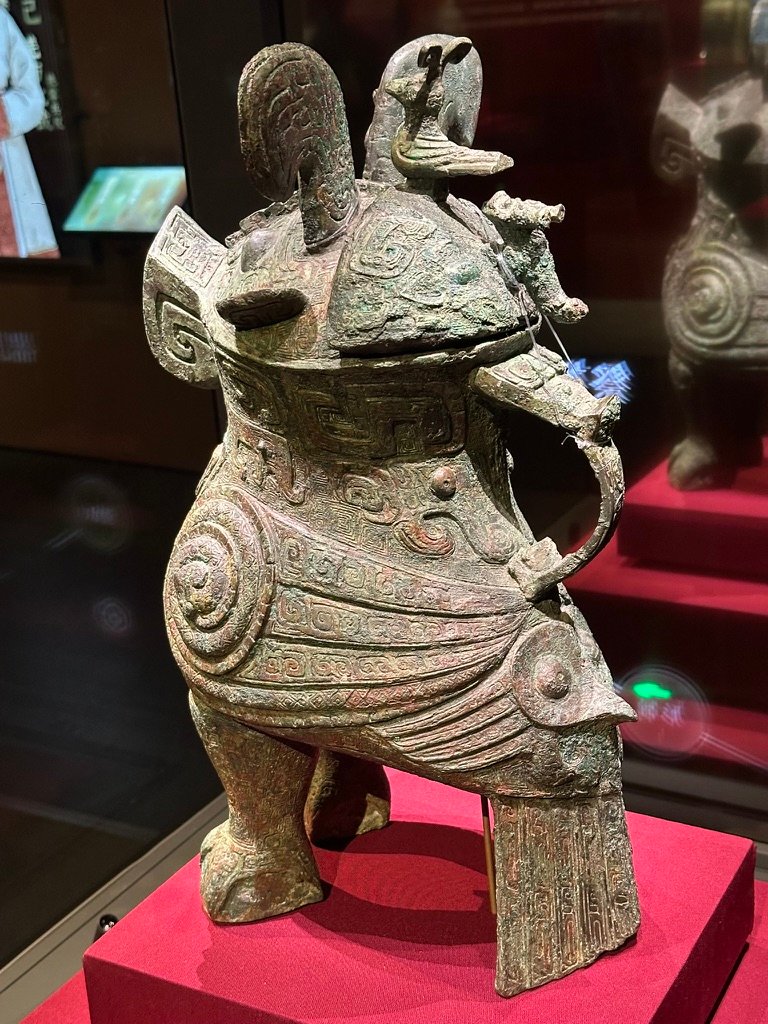
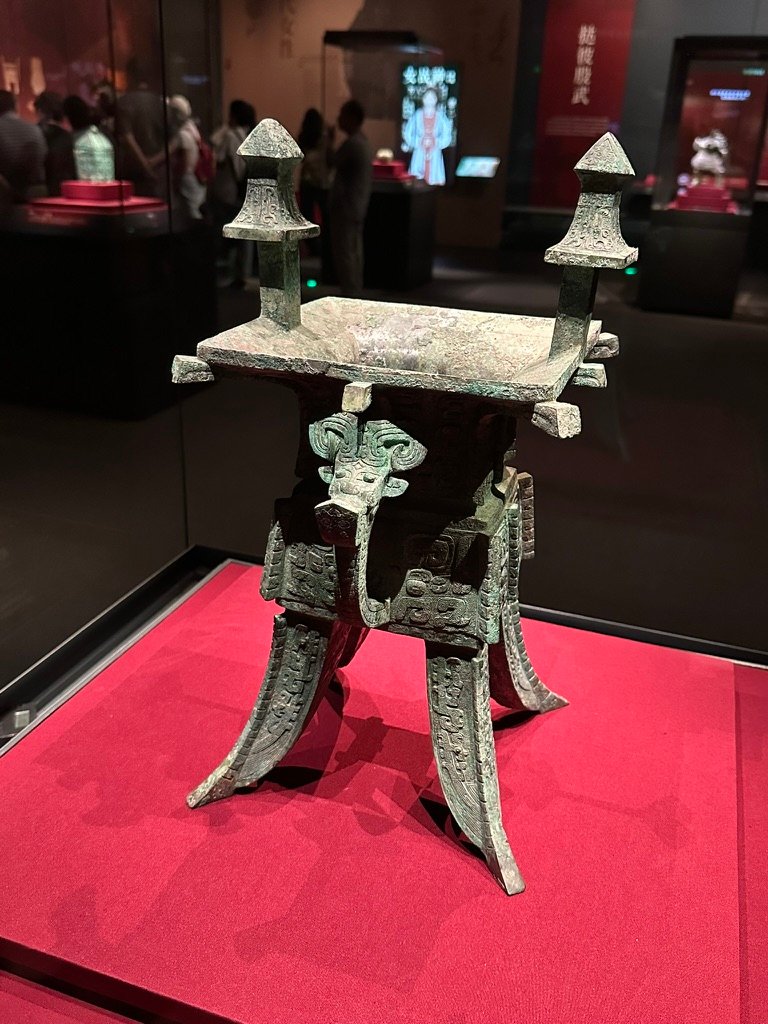
📸 PHOTO NOTE — FU HAO’S TWIN BRONZE OWLS
Dad photographed this magnificent Fu Hao Owl-Shaped Bronze Zun (妇好鸮尊, Fù Hǎo Xiāo Zūn) at a special exhibition in the Beijing Grand Canal Museum (北京大运河博物馆).
More than 3,000 years old, this Shang dynasty ritual wine vessel takes the form of an owl, richly decorated with intricate bronze patterns.
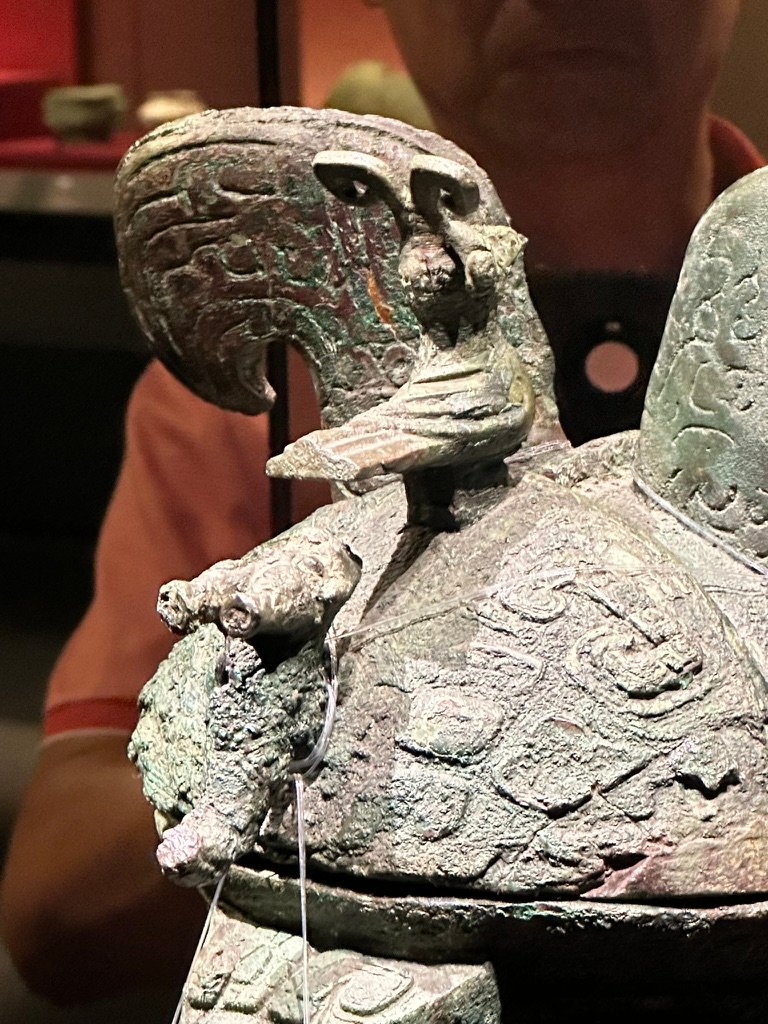
HERE’S THE FASCINATING PART!
Two matching owl-shaped bronze vessels were discovered in Fu Hao’s Tomb (妇好墓) at Yinxu in 1976.
Today, one belongs to the Henan Museum (河南博物院) collection, while its twin is held by the National Museum of China (中国国家博物馆) in Beijing.
Which twin did Dad photograph? We haven’t confirmed the lending museum for this exhibition.
DAD’S THOUGHT: Two bronze owls buried together for over 3,000 years — and today their story connects Anyang and Beijing!
🌏 And This Brings Us Back to UNESCO
Remember Section 1?
Yinxu became a:
UNESCO World Heritage Site in 2006.
Now we can understand its significance much better.
Yinxu isn’t important simply because it contains:
old ruins.
Or:
old bones.
Or:
old bronzes.
Its extraordinary value comes from how different forms of evidence survive:
TOGETHER.
A capital.
Royal tombs.
Palace and temple remains.
Workshops.
Bronzes.
Burials.
Writing.
Named kings.
Named individuals.
🔥
And with Fu Hao:
A NAMED PERSON WHO CAN BE APPROACHED THROUGH BOTH CONTEMPORARY WRITING AND ARCHAEOLOGY.
That is exceptional.
Dad Likes Fu Hao for Another Reason
Chinese history can become very:
BIG.
Dynasties.
Wars.
States.
Civilizations.
Three thousand years.
😭
Fu Hao brings it back down to:
ONE PERSON.
She lived.
People worried about her health.
They asked about her pregnancies.
She participated in ritual.
She was connected with military campaigns.
She died.
She was buried.
And more than 3,000 years later…
Dad & Elaine stood at Yinxu learning her name.
妇好.
🔥
Sometimes that’s the moment history stops being:
ANCIENT.
And starts becoming:
HUMAN.
Final Sting — What Did Yinxu Actually Give Us?
Dad came to Anyang expecting:
THE SHANG DYNASTY.
Very academic.
😂
Instead Yinxu gave us:
SECTION 1 — A PLACE
A major Bronze Age capital.
↓
SECTION 2 — A VOICE
Oracle bones written inside the Shang world.
↓
SECTION 3 — A PERSON
Fu Hao.
🔥
Then those three pieces started talking to each other.
The archaeological site tells us:
WHERE.
The oracle bones tell us:
WHAT THEY WERE ASKING.
Fu Hao’s tomb tells us:
WHO SOME OF THESE PEOPLE ACTUALLY WERE.
And the Shang royal names on oracle bones can even be compared with:
Sima Qian’s later historical record.
😳
This isn’t merely:
“VERY OLD CHINA.”
It’s:
AN ANCIENT CIVILIZATION BECOMING HISTORICALLY VISIBLE.
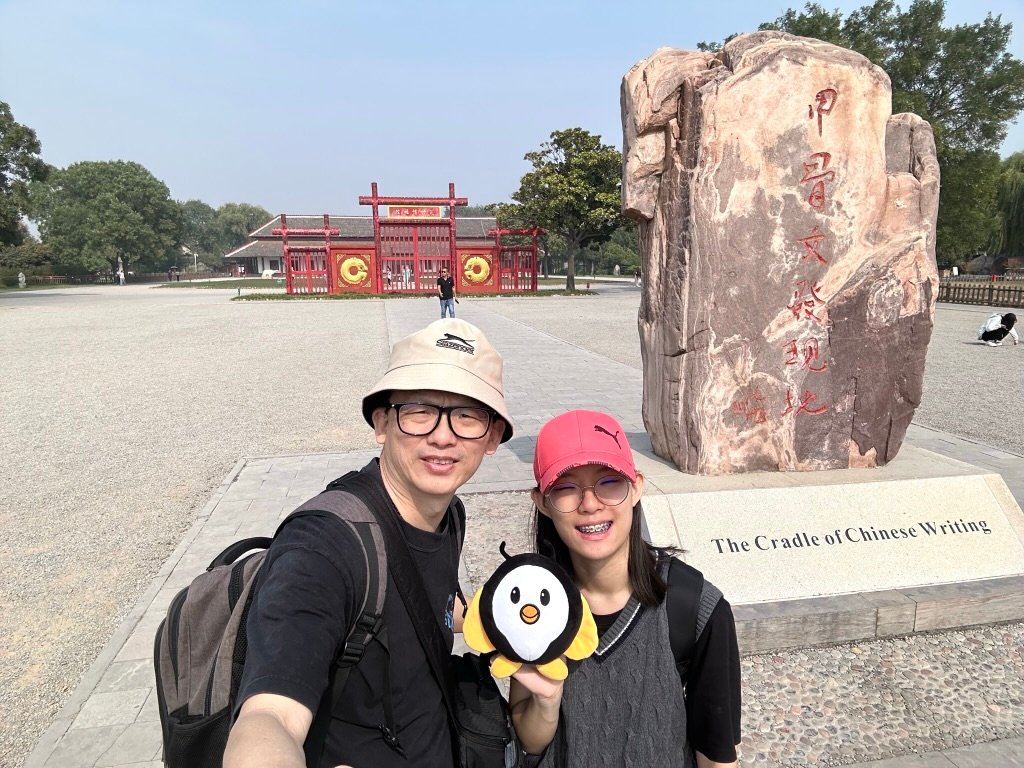
🎬 DAD EXPLAINS — WHY ORACLE BONES (甲骨文) CHANGED CHINESE HISTORY!
Standing beside the “Cradle of Chinese Writing” monument at Yinxu (殷墟, Yīnxū), Dad explains why oracle-bone script (甲骨文, jiǎgǔwén) is so important.
Recognised by Qing scholar Wang Yirong (王懿荣) in 1899, these ancient inscriptions date back more than 3,000 years to the late Shang dynasty (商朝).
They represent the earliest substantial body of mature Chinese writing yet discovered — an ancestor of the Chinese characters still used today!
🎥 WATCH — Dad Explains the Discovery of Oracle Bones
DAD’S BIG QUESTION: How can writing carved onto bones over 3,000 years ago help us understand what Shang kings actually thought and did?
But Dad Still Couldn’t Stop Looking at the Writing
Of course there was another problem.
😂
Those oracle-bone inscriptions were more than:
3,000 YEARS OLD.
Yet some of the basic ideas represented in that ancient writing tradition eventually lead us toward characters Chinese readers still recognize today.
Dad looked at:
日
月
山
水
人
and started wondering:
How can a writing tradition survive across more than three millennia of enormous political and social change?
And then another question:
Did China’s extraordinary obsession with writing, records, histories, inscriptions and texts help Chinese civilization keep talking to its own past?
😳🔥
That question is too big for the Yinxu plate.
Good.
😂
Because Anyang has another museum waiting for us:
National Museum of Chinese Writing
中国文字博物馆
And that deserves:
ITS OWN MICHELIN DISH.
🐇🔥