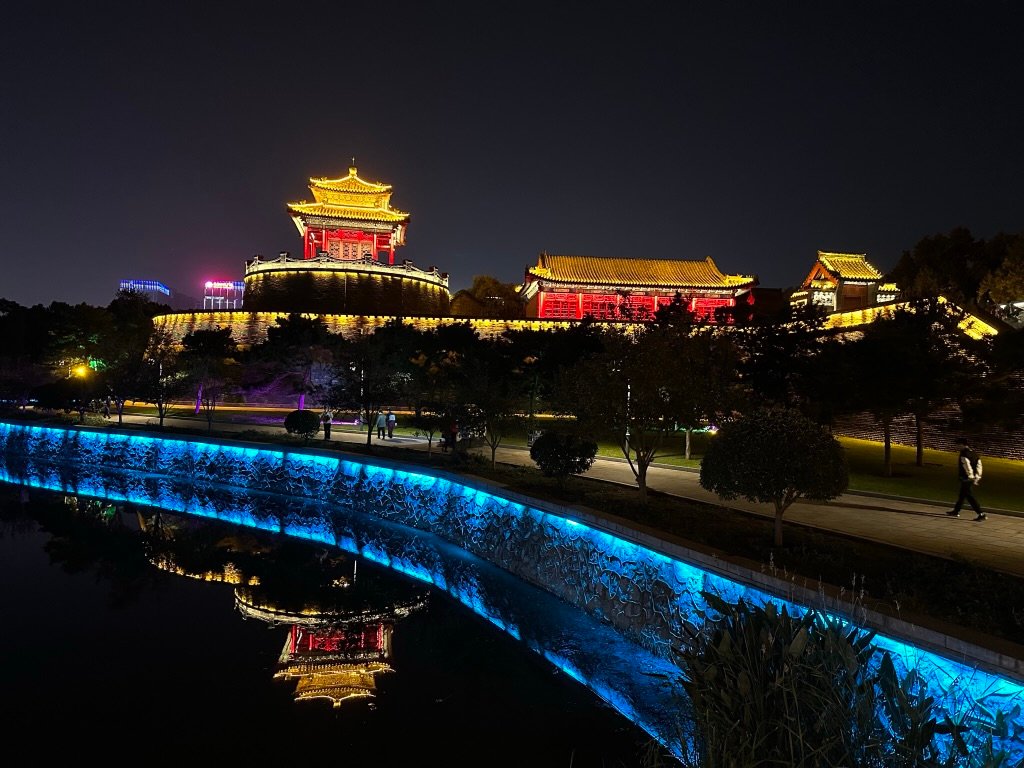
We stopped overnight in Handan on our way from Beijing toward the UNESCO ruins of ancient Shang at Anyang. We visited Congtai, took our photographs and continued south. Only later did I realize just how badly I had underestimated this city. 😂
🎬 WALK WITH DAD — Climbing Congtai (丛台), Handan’s Ancient Zhao Terrace
Imagine climbing the same historic terrace site where the rulers of Zhao once surveyed their capital more than 2,000 years ago.
Come along with Dad and Elaine as we climb the broad stone staircase of Congtai (丛台, Cóngtái) in Handan (邯郸, Hándān).
The grey-brick walls rise on either side. Ahead, traditional red gates and green-tiled roofs appear as we approach the upper platform.
Then comes the surprise.
Ancient Zhao architecture in the foreground. Modern Handan skyscrapers in the background.
Congtai is traditionally associated with King Wuling of Zhao (赵武灵王, Zhào Wǔlíng Wáng), the Warring States ruler famous for introducing húfú qíshè (胡服骑射) — adopting northern-style clothing and mounted archery to strengthen Zhao’s military.
The terrace we climb today has been rebuilt and restored over the centuries. It is not an untouched structure from King Wuling’s lifetime.
But here’s something remarkable.
Handan is one of China’s ancient cities that has kept the same name for more than 2,000 years.
When King Wuling ruled Zhao, this city was already called Handan (邯郸).
And today, more than two millennia later, we still call it Handan.
Think about that.
Dynasties rose and fell. Kingdoms disappeared. China’s political map was redrawn again and again.
But the name Handan survived.
Standing above the city, Dad couldn’t help thinking:
More than 2,000 years ago, this was the capital of one of China’s most powerful competing kingdoms.
Today, it is a public park where families come for an afternoon walk.
Same name. Same city. More than 2,000 years of Chinese history.
BUT this Deep China story begins with a confession.
When Elaine and I visited:
Handan — 邯郸 (Hándān)
we weren’t making a great historical pilgrimage to the ancient State of Zhao.
Our real target was farther south:
Anyang (安阳) and the UNESCO-listed archaeological site of Yinxu (殷墟).
I knew Anyang mattered.
Shang dynasty.
Oracle bones.
Ancient Chinese writing.
That was a rabbit hole I was deliberately following.
Handan?
We stopped for one night.
😬
We knew it was historical.
We visited Congtai (丛台).
We took photographs.
Then we continued to Anyang.
Only afterward — as I learned more Chinese history and began connecting people, places and events more clearly on the timeline — did I realize:
WAIT. We were in HANDAN 邯郸?!
😂😂😂
If Elaine and I made the same journey today, I would allocate more time.
And that is precisely why Handan belongs in ChinaTravelBUG‘s Deep China — 深度旅游 series.
Sometimes you don’t realize how many rabbit holes are around you until after you’ve gone home.
🕰️ First: Where Is Handan 邯郸 on the Chinese History Timeline?
This would have helped Dad enormously before the trip. 😂
Here’s all an international traveler really needs at first:
ZHOU DYNASTY
c. 1046–256 BCE
↓
SPRING & AUTUMN
770–476 BCE
↓
WARRING STATES
475–221 BCE ← 📍 HANDAN 邯郸 / ZHAO
↓
QIN UNIFIES THE RIVAL STATES
221 BCE
↓
HAN DYNASTY
206 BCE–220 CE
That’s the coat rack.
Now attach one important fact:
Handan 邯郸 was the capital of Zhao — 赵国
one of the famous Seven Warring States (战国七雄).
And suddenly Handan isn’t simply:
“an old city somewhere south of Beijing.”
It belongs to the dramatic political world immediately before Qin Shi Huang unified China.
If I’d had that relationship more clearly fixed in my head before arriving…
we probably wouldn’t have stayed only one night.
😂
The Familiar Ingredient: You Know Qin Shi Huang. Now Meet One of Qin’s Great Rivals.
Most first-time international travelers encounter this period of Chinese history through one man:
Qin Shi Huang — 秦始皇
China’s First Emperor.
Terracotta Warriors.
Xi’an.
Unification.
221 BCE.
Excellent.
Keep him as your historical handrail.
But now ask:
Who did Qin have to defeat before there could be a unified Qin empire?
There wasn’t simply “China” waiting patiently for Qin Shi Huang to become emperor.
The Warring States world contained powerful rival states:
Qin 秦
Chu 楚
Qi 齐
Yan 燕
Han 韩
Wei 魏
and:
Zhao — 赵
Handan was Zhao’s capital.
Now the Terracotta Warriors story becomes bigger.
Qin Shi Huang didn’t unify an empty map.
Qin conquered a complicated political world containing rival states with their own rulers, armies, cities and traditions.
Handan lets you step into the story of one of those rivals.
And Then Comes the Twist: Qin Shi Huang Was Born in Handan 邯郸
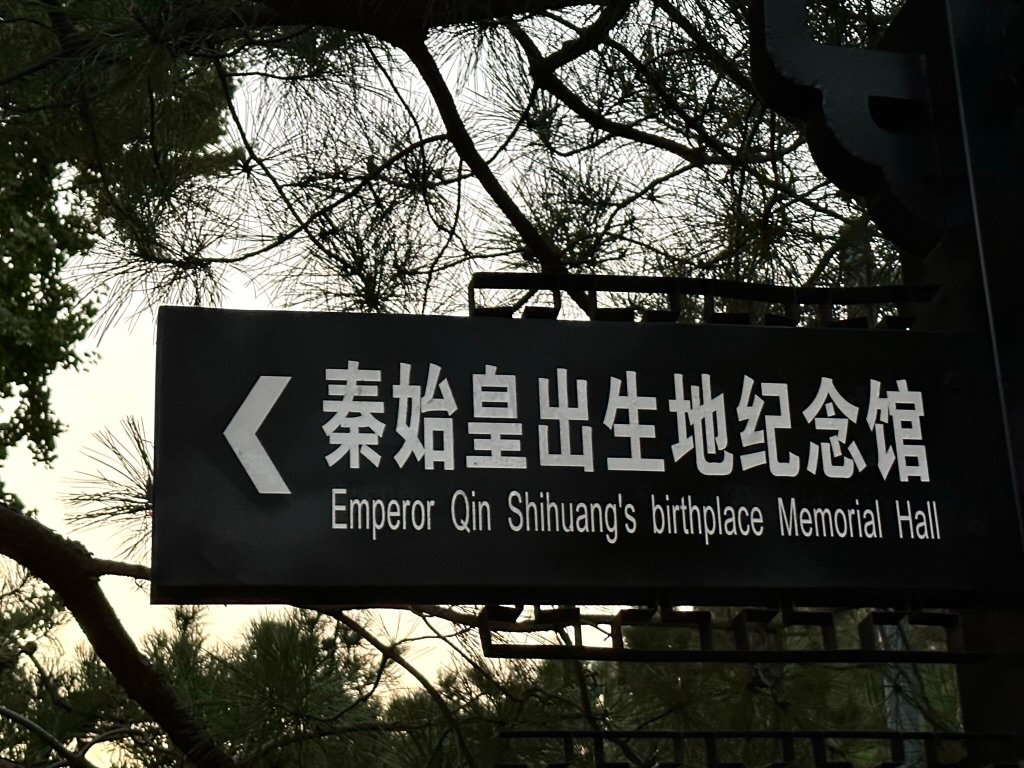
This is the fact that makes many international travelers stop.
You associate Qin Shi Huang with:
Xi’an.
Shaanxi.
Terracotta Warriors.
Qin.
But the future First Emperor was born in:
Handan 邯郸 .
😳
His father, the future King Zhuangxiang of Qin (秦庄襄王), was living in Zhao as a political hostage at the time.
The young man who would eventually become China’s First Emperor therefore began life inside the capital of a rival state.
Now Handan 邯郸 gets interesting very quickly.
And another rabbit hole opens:
🐇
How did a child born in Zhao eventually become the ruler of Qin and conquer Zhao itself?
We are NOT answering that entire question here.
😂
Remember:
Deep China is still a travel series.
But now you have a reason to care about Handan before you’ve even arrived.

Another Chronological Handrail
For Western readers trying to place this world in time:
The Warring States period overlaps broadly with the later classical and early Hellenistic worlds around the Mediterranean.
Again, these were completely different civilizations following their own historical paths.
We’re not saying:
Zhao = Sparta.
Please don’t do that to Dad. 😭😂
The comparison is only a chronological handrail.
When Alexander the Great was campaigning in the fourth century BCE, the Chinese world was also experiencing intense political and military competition among powerful states.
Different side of Eurasia.
Different story.
Same broad historical age.
Now perhaps:
Warring States
feels a little less like an abstract Chinese-history label.
What We Actually Saw: Congtai 丛台
Despite our short stay, Elaine and I did visit one place that gave us a doorway into Zhao:
丛台 — Cóngtái
Congtai
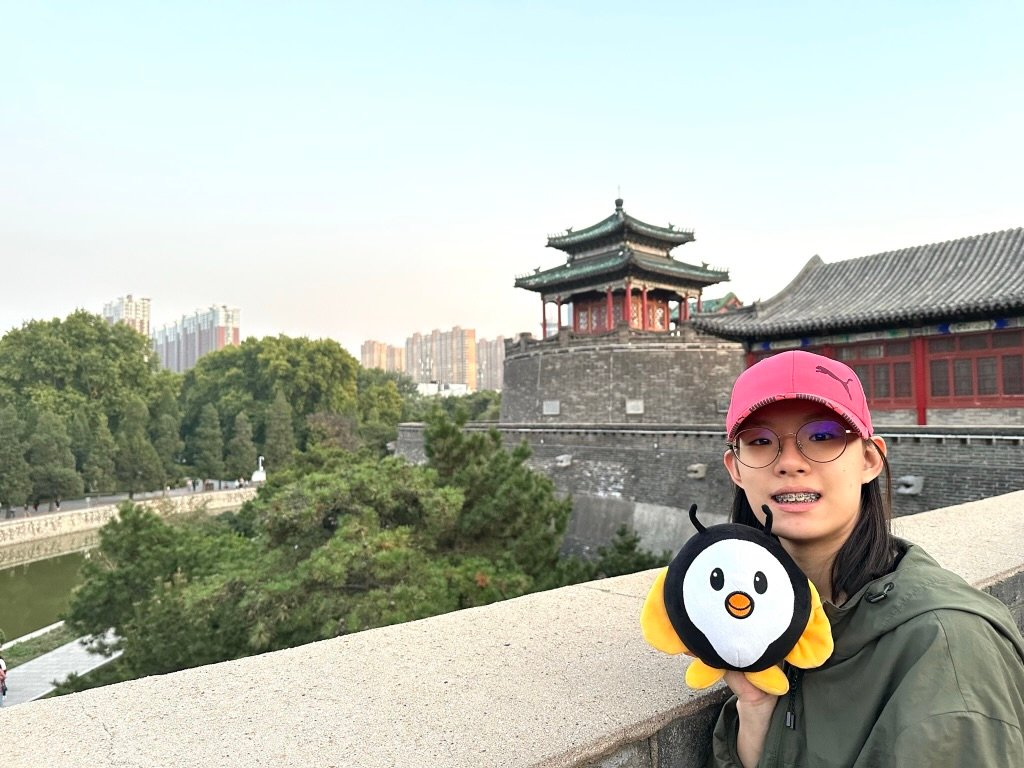
At the time, I understood that Congtai was connected with the ancient State of Zhao.
But I didn’t appreciate the full significance of the story attached to it.
One name in particular matters:
赵武灵王 — King Wuling of Zhao
And one famous phrase:
胡服骑射 — húfú qíshè
This is where our Handan rabbit hole really begins.
Because King Wuling’s story isn’t simply about an ancient ruler.
It’s about something surprisingly universal:
What happens when a society realizes it can learn something valuable from people whose customs are different from its own?
🔥
That story deserves its own section.
🐇 The Lesson We Learned Too Late
Looking back, Handan taught me something important about historical travel.
You don’t need to know everything before you go.
That would be impossible.
But knowing just enough context can completely change what you notice once you’re there.
If I’d mentally had this chain firmly in place:
Handan 邯郸
↓
Zhao
↓
Warring States
↓
King Wuling
↓
Qin–Zhao rivalry
↓
Qin Shi Huang born here
↓
Qin unification
I would have looked at Handan differently.
I would have allocated more time.
I would have asked different questions.
I would have looked for different places.
Instead:
“Nice Congtai.”
📸
“Okay Elaine, Anyang tomorrow.”
😂😭
And that’s one of the reasons we’re writing Deep China now.
We want to give you enough historical context to recognize the rabbit holes while you’re standing beside them.
You can always research them properly afterward.
Sometimes that’s half the fun.
What Would We Do Differently Today?
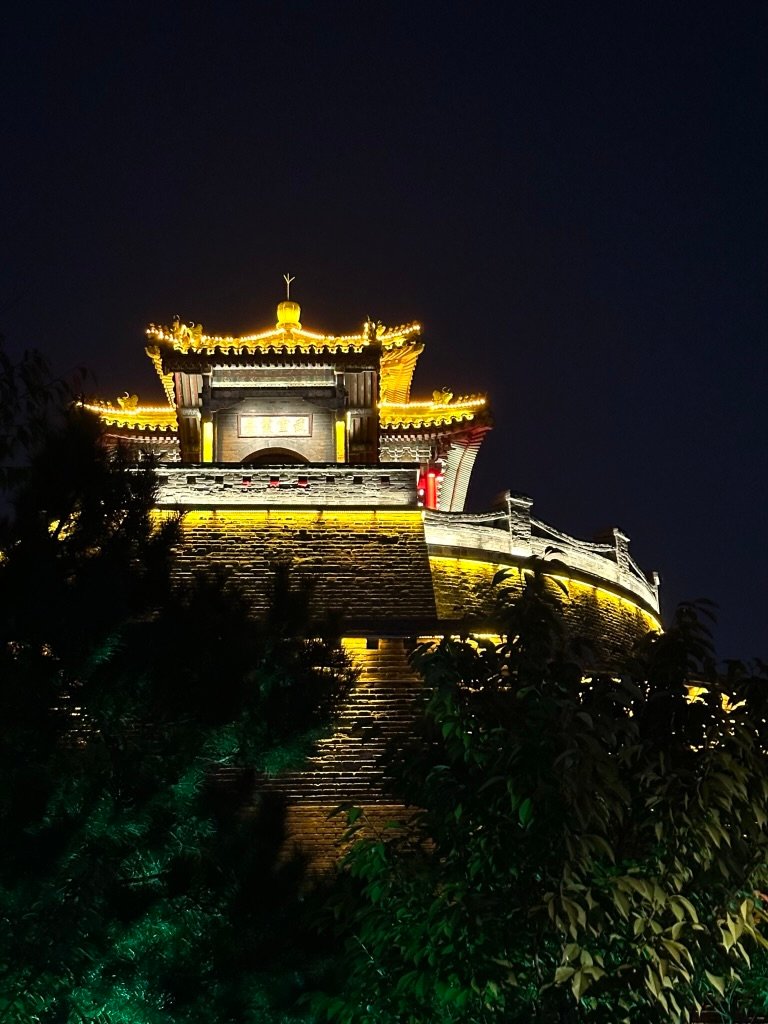
Simple.
Stay longer.
Not because Handan suddenly needs to become a compulsory stop on every first-time China itinerary.
It doesn’t.
But if you’re traveling from Beijing toward Anyang…
and ancient Chinese history has already started getting its claws into you…
🐇
don’t automatically treat Handan 邯郸 as an overnight railway stop the way we did.
Learn a little about Zhao first.
Understand where it sits on the timeline.
Know the name:
赵武灵王.
Know the phrase:
胡服骑射.
Remember that:
Qin Shi Huang was born here.
Then arrive.
You’ll probably see more than we did.
And perhaps that’s the best reason for us to tell you this story honestly.
Next: King Wuling of Zhao, 胡服骑射 — and Why Handan 邯郸 Appears in So Many Chinese Stories
In Section 2, we’ll go deeper into:
- King Wuling of Zhao;
- what 胡服骑射 actually means;
- why his reforms were controversial;
- why Handan is associated with an extraordinary number of famous Chinese idioms and historical stories;
- Qin Shi Huang’s Handan connection;
- and the rabbit holes Dad discovered after leaving the city.
Because apparently one night in Handan can keep teaching you years later.
😂🐇🐞
Section 2 — King Wuling, 胡服骑射 and Handan’s Endless Rabbit Holes
The historical figure most closely associated with the Congtai (丛台) we visited is:
赵武灵王 — King Wuling of Zhao
He ruled Zhao during the Warring States period, in the fourth century BCE.
And he’s remembered particularly for a reform summarized in four famous characters:
胡服骑射
Húfú qíshè
Literally, something like:
“Hu-style clothing, mounted archery.”
But the story behind those four characters is much more interesting than the translation.
A King Who Was Willing to Learn From His Neighbors
Zhao faced powerful rivals and interacted with peoples along its northern frontiers whose clothing and methods of mounted warfare differed from traditional practices in the Central Plains 中原。
King Wuling saw military advantages in what they were doing.
So he pushed Zhao toward adopting clothing more practical for riding and developing mounted archery.
That sounds sensible to a modern reader.
At the time, it was controversial.
Clothing wasn’t merely fashion.
Customs carried cultural meaning.
Adopting practices associated with other peoples could therefore challenge ideas about identity and proper behavior.
King Wuling’s response, essentially, was:
If something works, perhaps we should learn from it.
Now that is a historical story Western readers can immediately understand.
The Familiar Ingredient: Adapt or Fall Behind
Every society eventually faces some version of this question:
Do we preserve the familiar because it is ours — or learn from outsiders when they have something useful to teach us?
King Wuling chose adaptation.
Not because he wanted Zhao to stop being Zhao.
He wanted Zhao to become stronger.
That makes 胡服骑射 more than an ancient military anecdote.
It’s a story about:
innovation,
resistance to change,
cultural confidence,
learning from people who are different from us.
Suddenly the man associated with the place Elaine and I casually photographed becomes much more interesting.
And Dad thinks:
We stayed ONE NIGHT?! 😭😂
Standing at Congtai Means More Once You Know the Story
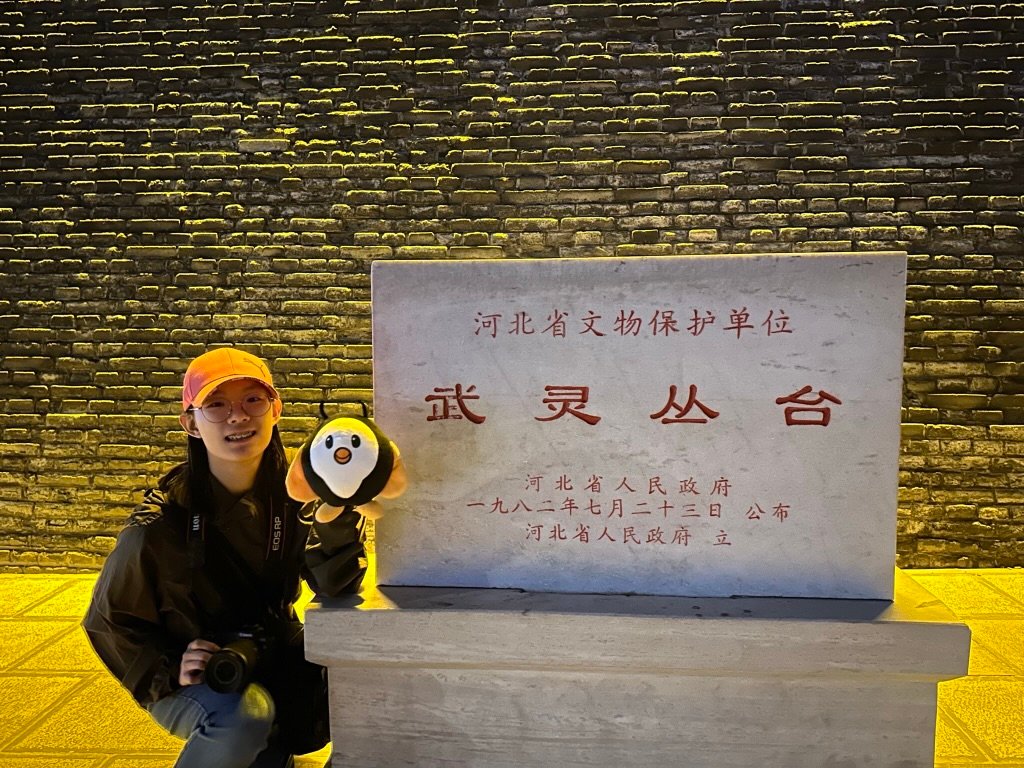
Congtai is traditionally associated with the Zhao royal world and King Wuling.
When Elaine and I visited, we saw the site.
We knew Zhao was important.
We took the photographs.
But today I would stand there asking very different questions.
What did Handan look like when it was the capital of Zhao?
How powerful was Zhao?
Why did King Wuling think military reform was necessary?
How did Zhao’s relationship with its northern neighbors shape its development?
And what happened between Zhao and Qin afterward?
That’s the difference historical context makes.
The place hasn’t changed.
What changed was what Dad knew how to see.
Then Qin Shi Huang Reappears
Remember our familiar historical handrail?
Qin Shi Huang.
He was born in Handan in 259 BCE, during the Warring States period.
His early life therefore begins not in the Qin heartland around today’s Xi’an, but in the capital of Zhao.
Later, as King of Qin, he would oversee the campaigns through which Qin conquered the rival states.
Zhao itself fell to Qin during those wars.
And in 221 BCE, the last major rival state was defeated and Qin’s ruler proclaimed himself:
始皇帝 — Shǐ Huángdì
The First Emperor
Now connect the geography:
HANDAN
Qin Shi Huang is born in Zhao.
↓
WARRING STATES
Qin and Zhao become major rivals.
↓
QIN CONQUESTS
Zhao falls.
↓
221 BCE
Qin completes unification.
↓
XI’AN REGION
Today international travelers encounter Qin Shi Huang through the Terracotta Warriors.
🔥
Handan and Xi’an are suddenly part of the same story.
That’s what we mean when we say one Deep China destination can change how you understand another.
Handan Is Also a City of idiomatic expressions 成语
Then Dad discovered something else after the trip.
Handan seems determined to follow you into the Chinese language. 😂
An extraordinary number of famous Chinese historical stories and 成语 (chéngyǔ) — compact idiomatic expressions, usually four characters — are associated with Handan, Zhao and people connected with this region.
If you’re learning Chinese, you may already have encountered some of them without realizing there was geography behind the words.
Here are just a few.
邯郸学步 — “Learning to Walk in Handan”
邯郸学步 (Hándān xué bù) tells the story of someone who admired the supposedly elegant way people in Handan walked.
He tried so hard to imitate them that he forgot how to walk in his own way.
The lesson?
Imitation can become ridiculous when you lose yourself in the process.
And yes.
The city in the idiom is this Handan.
🐇
完璧归赵 — “Returning the Jade Intact to Zhao”
Another famous expression:
完璧归赵 — wán bì guī Zhào
is connected with the Warring States story of:
蔺相如 — Lin Xiangru
and the precious Heshibi (和氏璧) jade.
The story involves diplomacy, courage, deception and the dangerous relationship between Zhao and Qin.
Today the idiom broadly conveys the idea of:
returning something intact to its rightful owner.
Again:
赵 = Zhao.
Handan’s world.
负荆请罪 — Carrying Thorns to Ask Forgiveness
Then Lin Xiangru appears again.
This time with the Zhao general:
廉颇 — Lian Po
Their famous reconciliation produced another enduring expression:
负荆请罪 — fù jīng qǐng zuì
associated with humbling oneself and sincerely asking forgiveness.
One city.
Another story.
Another phrase still used more than two thousand years later.
🐇🐇
Dad Is Stopping at Three 😂
We could continue.
Handan has enough historical idioms and stories to keep Chinese History & Stories busy for a very long time.
But remember our Deep China rule:
Enough history to make the destination meaningful. Not enough to make you sit an exam afterward.
😂
So we’re stopping.
The individual stories can become their own rabbit holes later.
That’s exactly what our future Chinese History & Stories section is for.
And This Is What We Missed
Here’s the funny part.
None of these stories suddenly appeared after Elaine and I left Handan.
They were already there.
King Wuling.
Zhao.
Qin Shi Huang.
Lin Xiangru.
Lian Po.
The idioms.
The Warring States history.
Dad simply hadn’t connected enough dots yet.
That’s why I don’t regret the trip.
Quite the opposite.
Handan became a lesson in how travel itself can continue teaching you afterward.
We went.
We saw Congtai.
We photographed it.
We moved on.
Later, I learned more.
The timeline became clearer.
Suddenly the photographs meant more than they did when I took them.
And then came the inevitable thought:
“Elaine… we should have stayed longer.”
😂
🐇 The Post-Travel Rabbit Hole
This is something we want Deep China readers to understand.
You don’t need to study everything before traveling.
Learn enough to recognize the important doors.
Then go.
Look.
Take photographs.
Read the signs.
Visit the museum.
Notice names that keep appearing.
And when you get home…
follow whatever questions stayed in your head.
Sometimes you’ll discover that:
your journey wasn’t actually finished when you boarded the train home.
Handan did that to us.
Years later, Dad is still discovering what was hiding behind that one-night stop.

Have You Been Stung Yet?
You started this article knowing:
Qin Shi Huang = Terracotta Warriors.
Now you know:
Qin Shi Huang was born in Handan.
Handan was the capital of:
Zhao.
Zhao gives you:
King Wuling.
King Wuling gives you:
胡服骑射.
Handan then gives you:
邯郸学步.
完璧归赵.
负荆请罪.
And now you’re perhaps wondering:
“What exactly happened between Qin and Zhao?”
😬
Oh dear.
🐇
You’ve been stung by ChinaTravelBUG.
There’s no known cure.
But there is another high-speed train.
Because Elaine and I were heading south to:
Anyang — 安阳
And there, instead of going forward in history…
we’re going to jump more than a thousand years backward.
To the Shang dynasty.
Oracle bones.
And one of China’s great archaeological sites.
Next: How to Go Beijing → Handan, How Long We’d Stay Now, and Why Anyang Is the Perfect Next Stop
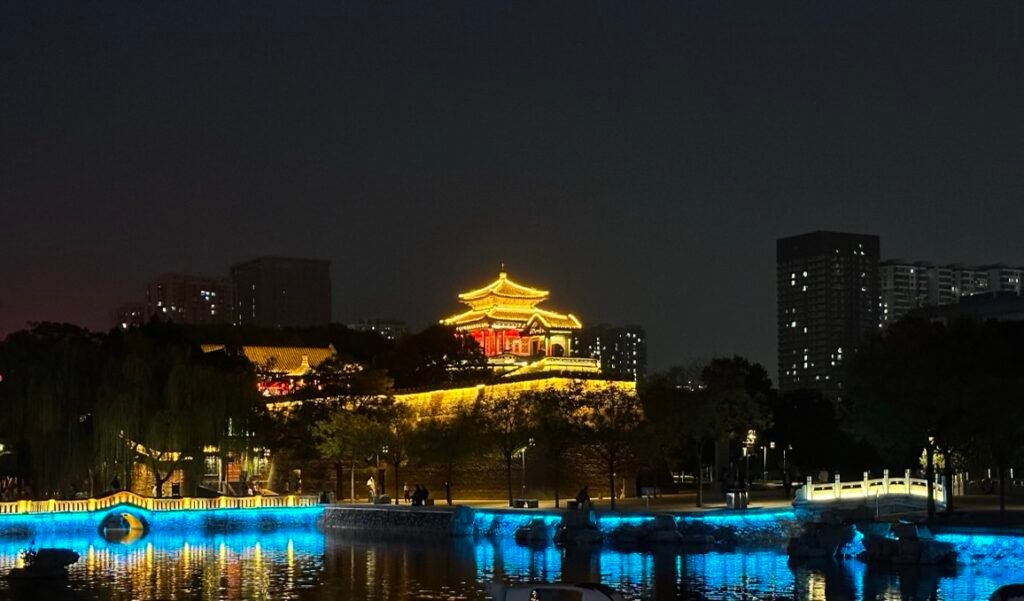
In Section 3, we’ll cover:
- Beijing → Handan by high-speed train;
- journey time and approximate ticket costs;
- getting from Handan East to the historical center;
- what we’d prioritize if we returned;
- why we’d now recommend more than our original one-night stay;
- Handan → Anyang;
- and how to turn the mistake Dad made into a much better Deep China journey for you.
Because authenticity means telling you not only what we did…
but what we’d do differently now. 😝
Section 3: How to Go: Beijing → Handan → Anyang
Now for the practical lesson from Dad’s mistake. 😂
If you’re traveling south from Beijing toward Anyang (安阳), Handan is not some difficult historical detour requiring a private expedition.
It’s right on the way.
And knowing what I know now, I would slow the journey down.
Instead of:
Beijing → overnight Handan → quick Congtai → Anyang
I’d seriously consider:
Beijing → Handan (2 nights) → Anyang
The history deserves the extra breathing room.
🚄 Beijing → Handan by High-Speed Train
For most international travelers, the easiest route is high-speed rail.
Look for trains toward:
Handan East — 邯郸东站
from Beijing.
Current schedules show numerous direct high-speed services throughout the day, with many journeys taking approximately:
1¾–2½ hours
depending on the train.
Some services are faster or slower depending on stopping patterns. Current listings show second-class fares varying by service, broadly around the RMB 200–300 range as a planning guide.
Always check the exact train, fare and departure station for your actual travel date.
China’s railway schedules change.
And remember our Deep China rule:
Use travel times and prices as planning guides — not eternal historical inscriptions carved into Mount Tai. 😂
🚕 Handan East → Central Handan
Handan East Railway Station is outside the traditional central-city area.
For most international travelers arriving with luggage, the simplest option is:
DiDi or taxi
If your first historical stop is Congtai, save:
丛台公园 — Cóngtái Gōngyuán
Congtai Park
and:
武灵丛台 — Wǔlíng Cóngtái
on your phone.
Congtai Park is in central Handan, and the historic Congtai is the principal feature associated with King Wuling of Zhao. The park itself is also a modern public recreational space — another nice reminder that historical China and everyday China often occupy the same geography.
What We’d Do Differently Today
This is where authenticity matters.
Elaine and I did not visit enough of Handan for me to pretend we’re giving you Dad’s definitive firsthand Handan itinerary.
We aren’t.
We stayed one night.
We visited Congtai.
Then we continued to Anyang.
So instead of pretending otherwise, here’s what I’d say:
Use our trip as the warning, not the template. 😂
Today, knowing Handan’s historical depth, I’d give the city:
2 nights
if your itinerary allows.
That creates time to understand Zhao rather than simply photograph one monument connected with it.
Day 1 — Beijing → Handan
Take a morning high-speed train.
Check into your hotel.
Then start with:
Congtai Park 丛台公园
and
Wuling Congtai 武灵丛台
This is where Elaine and I actually went.
Give yourself time to walk rather than treating Congtai as:
“Historical thing. Photo. Done.”
😂
Now you know what you’re looking for:
Zhao
↓
King Wuling
↓
胡服骑射
↓
Warring States
↓
Qin–Zhao rivalry
That small amount of context completely changes the visit.
Day 2 — Follow the Zhao Rabbit Holes
This is the day Dad wishes we’d had.
Rather than pretending we’ve personally visited sites we didn’t, we’d suggest using the second day to investigate whichever parts of Handan’s history interest you most.
Perhaps:
Zhao history
Qin Shi Huang’s Handan connection
Warring States archaeology
or the places associated with the famous Handan stories you’ve now encountered.
Before traveling, verify current access, opening arrangements and the historical status of individual sites.
And don’t feel obligated to chase every 成语 around the city.
😂
You are still on holiday.
🏛️ A Useful Handan Tip: Start With Context
If you’re going deeper than we did, we’d now strongly favor visiting a good local museum or historical exhibition early in the stay.
Why?
You’ve seen our method by now:
TIMELINE
↓
OBJECT
↓
PERSON
↓
PLACE
↓
🐇 RABBIT HOLE
A museum can give you the Zhao coat rack before you go looking for the individual stories around Handan.
That’s precisely the context Dad was missing.
Don’t Make Dad’s Mistake 😂
The lesson isn’t:
“Research Handan for three months before going.”
No.
That destroys the spontaneity.
The lesson is:
Know enough to recognize what you’re standing beside.
Before Handan, learn just this:
Handan = Zhao capital
Zhao = Warring States
King Wuling = 胡服骑射
Qin Shi Huang = born in Handan
That’s enough.
Go.
See what catches you.
Then let the place create the next questions.
🚄 Handan → Anyang: This Is Why the Route Is So Good
Now comes the part that makes this Deep China journey especially attractive.
From:
Handan East — 邯郸东站
to:
Anyang East — 安阳东站
high-speed trains can take only around:
20 minutes
Current timetables show many direct services taking roughly 19–21 minutes, with second-class fares around:
RMB 33
on many services.
Yes.
😂
You spend two days in the Warring States…
get on a train…
and twenty minutes later ChinaTravelBUG takes you more than a thousand years backward.
🕰️ Watch What Happens to the Timeline
In Handan:
WARRING STATES
475–221 BCE
📍 ZHAO
Then travel roughly 60 km south.
At Anyang:
SHANG
c. 1600–1046 BCE
📍 YINXU / ORACLE BONES
😳
Geographically:
Handan → Anyang 安阳
is a very short train journey.
Historically:
we’ve jumped backwards more than a millennium.
This is exactly the kind of journey that helps Chinese historical time begin sticking in your head.
You don’t merely memorize:
Shang came before Zhou, which came before Qin.
You physically travel:
Zhao / Warring States
↓
🚄 20 minutes
↓
Shang / Anyang
And your brain goes:
“Ohhhhhh.”
💡
That’s what Dad originally wanted for Elaine.
And that’s what Deep China can now do for you.
Why Anyang 安阳 Was Our Real Target
This is where our actual journey becomes slightly funny.
Dad hadn’t fully appreciated Handan.
But I did know why I wanted to go to Anyang.
The reason was:
殷墟 — Yīnxū
Yinxu
the archaeological remains of the late Shang capital.
Yinxu is a UNESCO World Heritage Site and one of the most important archaeological sites for understanding early Chinese civilization.
And then there are:
甲骨文 — jiǎgǔwén
Oracle-bone inscriptions
Among the earliest substantial bodies of mature Chinese writing known to us.
That was the historical rabbit hole I was deliberately chasing.
So we boarded the train south.
And suddenly the contrast between Handan and Anyang tells us something about the whole Deep China project:
Sometimes we know exactly why we’re going somewhere.
Sometimes we only understand why a place mattered after we’ve left.
Both experiences teach us.
🐇 Next Rabbit Hole: Anyang 安阳
Handan gives you:
Zhao
King Wuling
Qin Shi Huang
Warring States
Then Anyang gives you:
Shang kings
oracle bones
bronze civilization
archaeology
and eventually:
Wait… if Shang came before Zhou, how did Zhou replace Shang?
😬
🐇
There it is.
Again.
But we’ll save that for the next Deep China article.
Suggested Mini-Route From Beijing
If Chinese history interests you, we’d now suggest:
Day 1
Beijing → Handan
Congtai + central Handan
Day 2
Handan
Explore Zhao history at your own pace
Day 3
Handan → Anyang
Only around 20 minutes by high-speed train
Days 3–4 or 3–5
Anyang
Yinxu + museum/archaeological sites
Then
Anyang → Beijing
That creates a compact:
Beijing → Handan → Anyang → Beijing
Deep China journey.
And unlike some of Dad’s more adventurous historical rabbit holes…
this one is extraordinarily easy by rail.
Who Should Add Handan?
We wouldn’t automatically insert Handan into a first-time visitor’s short Beijing–Xi’an itinerary.
But it becomes much more attractive if:
- you’ve visited China’s headline destinations before;
- Warring States history interests you;
- you’re already traveling to Anyang;
- Qin Shi Huang has made you curious about the world before unification;
- you’re learning Chinese and recognize some of Handan’s famous 成语;
- or Deep China has already started affecting your judgment.
Then Handan is no longer an inconvenient detour.
It’s the story immediately before Qin.

ChinaTravelBUG’s Take
Elaine and I stayed only one night in Handan.
Today, I’d stay longer.
Not because the trip was a mistake.
Because I understand the city differently now.
And perhaps that’s the most useful thing our Handan journey can give you.
Historical context changes travel.
Know nothing and you may walk past an extraordinary story.
Know too much and you may turn your holiday into an examination.
😂
So find the middle.
Learn where Handan sits on the timeline.
Know Zhao.
Know King Wuling.
Know that Qin Shi Huang was born here.
Then go.
Look around.
See which story catches you.
And don’t worry if the biggest rabbit hole appears only after you get home.
Sometimes a journey continues teaching you years later.
Ours certainly did.
And when you’re ready…
take the twenty-minute train south.
Because Anyang is waiting.
🐇
See China. Understand It Better.