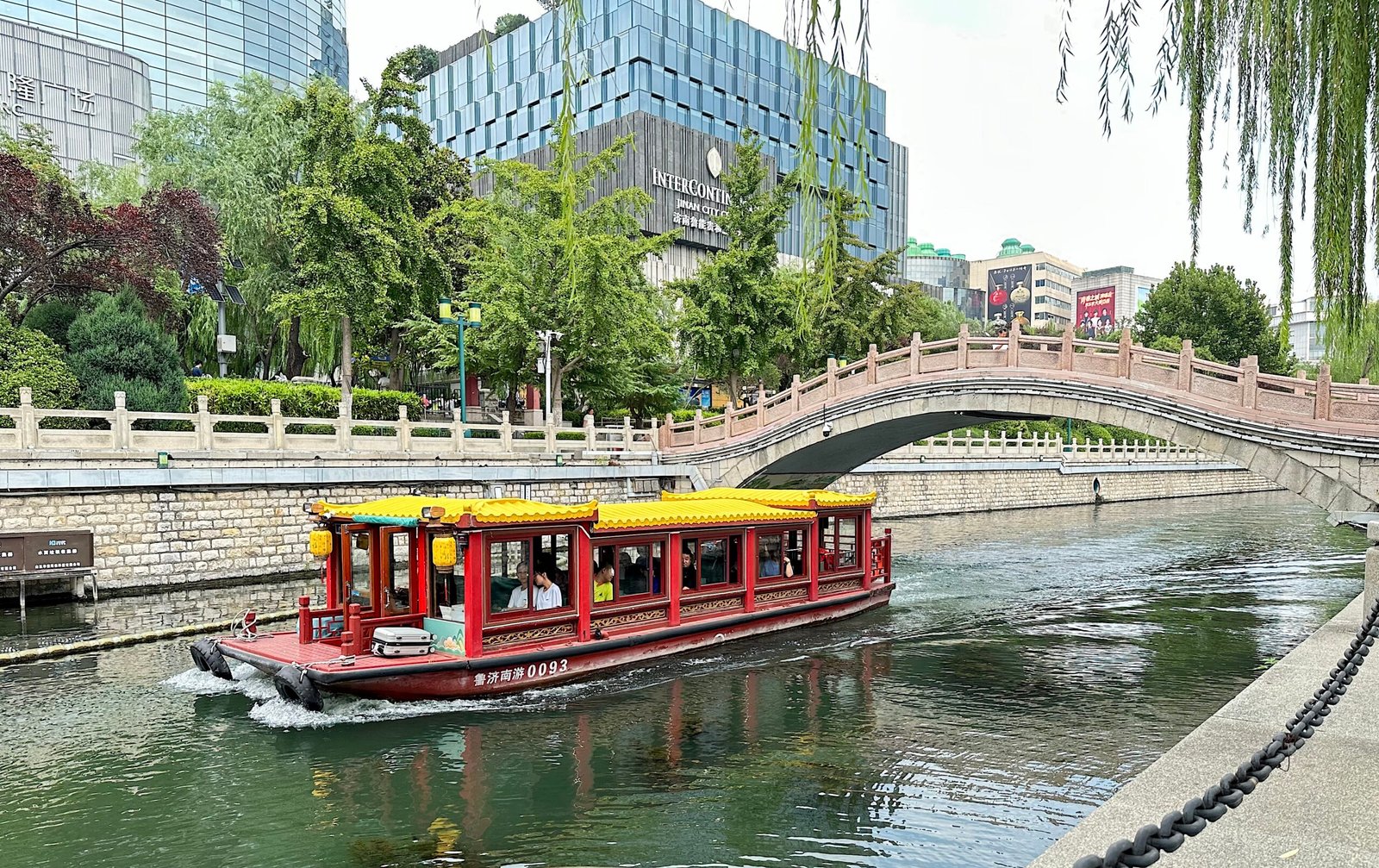
Section 1 — You Came to Jinan for the Springs. Good Place to Start.
Take the:
high-speed train (高铁, gāotiě)
south from:
Beijing (北京, Běijīng)
and before long you can be in:
Jinan (济南, Jǐnán),
capital of:
Shandong Province (山东省, Shāndōng Shěng).
For a first-time international traveler, Jinan may not have the instant name recognition of:
Beijing,
Xi’an
or:
Shanghai.
But ask many Chinese travelers what Jinan is famous for and one character quickly appears:
泉 — quán
spring
🔥
Jinan is famously known as:
泉城 — Quánchéng
the “City of Springs”
Beginner Chinese:
泉 — quán
spring
城 — chéng
city
So:
泉城
Spring City / City of Springs
Easy Chinese.
And a very good doorway into Jinan.
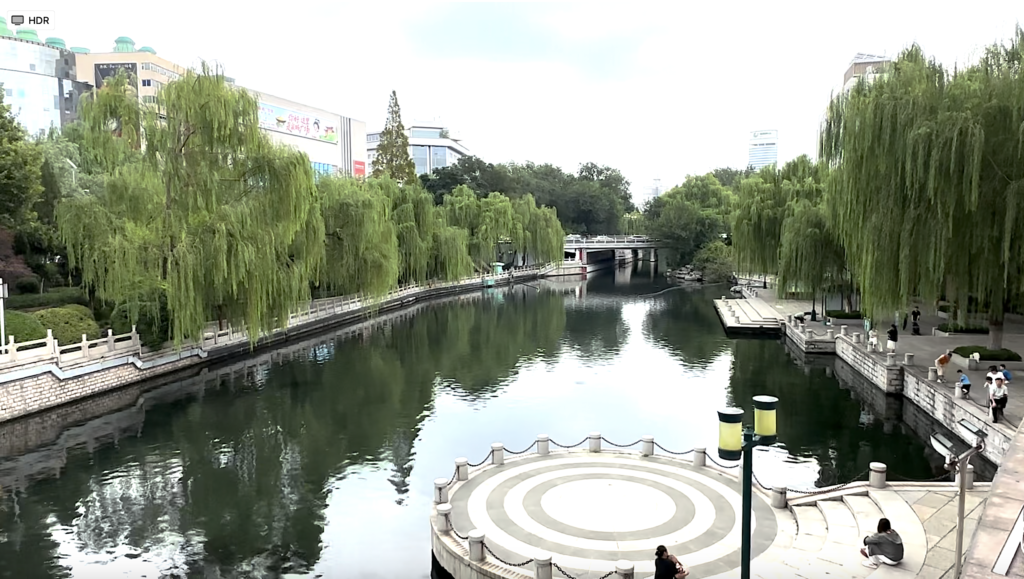
💧 Why Does Jinan Have So Many Springs?
This isn’t simply:
“Chinese people built some pretty ponds.”
😂
The springs are connected with Jinan’s:
geology (地质, dìzhì)
and:
groundwater (地下水, dìxiàshuǐ).\
🔥 Jinan Eventually Found Another Way
In December 2025, Jinan opened Metro Line 4, the first line to pass through the city’s core karst spring area.
Engineers altered routes to avoid sensitive aquifers, tunneled deeper where necessary, installed groundwater-diversion systems and continuously monitored the underground water network. At Quancheng Park Station, they even kept the station above ground specifically to avoid the aquifer beneath it.
So our driver’s comment became an unexpected little lesson in Jinan itself:
mountains → limestone → underground water → springs → city planning → metro engineering.
Suddenly Baotu Spring and the subway map are telling the same geological story.
And this is very ChinaTravelBUG:
China Usually Has Another Way.
Jinan didn’t simply choose metro OR springs.
It spent years trying to work out how to have both.
Beginner Chinese:
地 — dì
earth / ground
下 — xià
below
水 — shuǐ
water
So:
地下水
groundwater
🔥
Water from the surrounding region moves underground through permeable rock formations.
As it reaches geological conditions around Jinan that restrict its continued underground movement, groundwater is forced upward through fractures and openings.
The result:
springs.
Lots of them.
So before we’ve even opened a history book:
GEOGRAPHY
is already helping explain:
the city.
🐇 That’s Our First Tiny Rabbit
Remember the rule:
places teach.
Jinan’s springs immediately ask:
How does geography shape where cities develop and how people experience them?
That’s useful far beyond Jinan.
Rivers.
Mountains.
Plains.
Canals.
Passes.
Coastlines.
🔥
Chinese history happened:
somewhere.
And the somewhere matters.
💦 Meet the Most Famous One: Baotu Spring 趵突泉
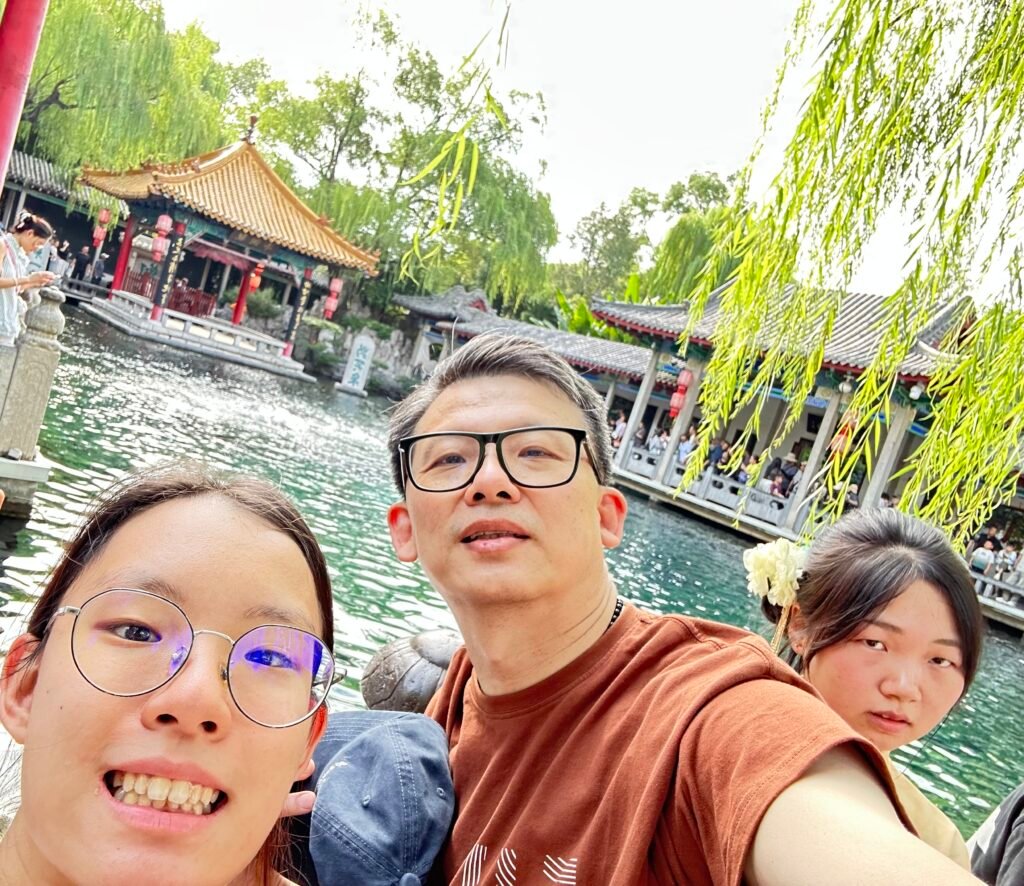
The Jinan spring most international travelers should know is:
Baotu Spring (趵突泉, Bàotū Quán).
There is our character again:
泉.
🔥
Baotu Spring is one of Jinan’s best-known historic scenic sites.
Its water wells upward into the spring pool, surrounded today by:
traditional architecture,
pavilions,
stone inscriptions,
trees
and:
crowds of people doing exactly what you’re doing.
😂
Looking at water.
Except Dad, of course…
eventually starts photographing:
the stones.
🪨 Dad’s Problem With Old Stones Continues
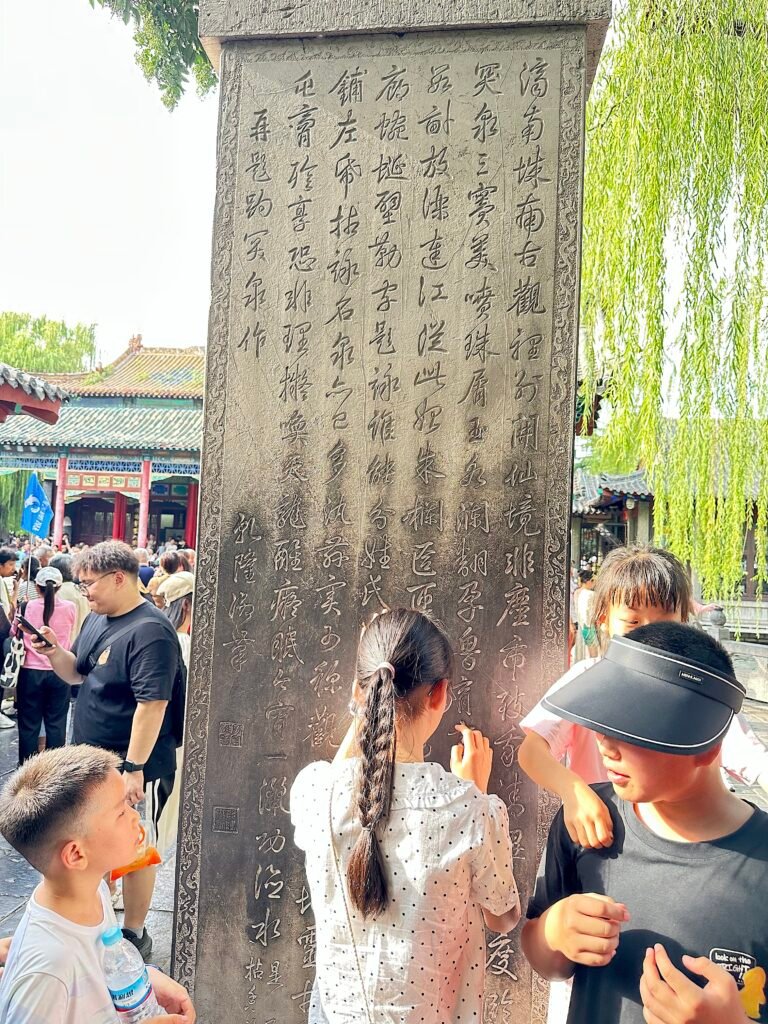
🐇 Photo Note: One Stone, Two Emperors — And a Prayer for Rain
At first, Dad photographed this because it looked like another beautiful piece of Chinese calligraphy at Baotu Spring (趵突泉, Bàotū Quán).
Then we discovered what it actually was.
This is part of Baotu Spring’s famous:
双御碑 (Shuāng Yù Bēi)
“Double Imperial Stele”
Why “double”?
Because two Qing emperors from the same family left their mark on the same stone:
Kangxi Emperor (康熙帝) — the grandfather
and
Qianlong Emperor (乾隆帝) — the grandson.
On one side is calligraphy associated with Kangxi. On the other is Qianlong’s poem 《再题趵突泉作》, written after he visited Baotu Spring again in 1771.
And Qianlong wasn’t merely saying:
“Nice spring.” 😂
He describes Baotu Spring’s famous three outlets bursting upward like pearls and jade, and calls the landscape almost an:
仙境 (xiānjìng) — an “immortal realm.”
But then the poem changes.
Shandong was suffering from drought, so Qianlong turns his sightseeing poem into something closer to a prayer for rain. Near the end he calls upon the:
天龙 (tiānlóng) — “heavenly dragon”
to awaken and send down life-giving water.
🔥 And that’s where this becomes more than poetry.
In traditional Chinese political thought, an emperor wasn’t concerned only with armies, taxes and palaces. Heaven, weather, harvests and good government were conceptually connected. Drought could therefore become an imperial concern carrying moral and political meaning.
So one stone at a tourist attraction opens several layers:
Baotu Spring
→ beautiful water
Kangxi + Qianlong
→ imperial visits
Qianlong’s poem
→ drought and prayer for rain
rain + emperor
→ the much bigger Chinese idea of the ruler’s relationship with Heaven (天, tiān).
🐇
That’s why we photograph the stones.
Sometimes what looks like decorative calligraphy beside a famous spring turns out to contain an emperor, his grandfather, a drought, a dragon—and another doorway into understanding China.
Photo by Dad at Baotu Spring, Jinan.
If you’ve been following Deep China, you know what happens next.
At:
Qufu (曲阜)
Dad says:
Read the stones.
At:
Mount Tai (泰山)
Dad says:
Read the mountain.
And at Jinan’s historic spring landscapes…
there are:
inscriptions again.
😂
Useful Chinese:
碑 — bēi
stele
碑文 — bēiwén
stele inscription
石刻 — shíkè
stone / rock inscription
题字 — tízì
inscribed or written calligraphy
🔥
A spring can be:
natural geography.
But once generations of:
poets,
officials,
scholars
and:
travelers
write about it, name it and commemorate it…
the landscape also becomes:
CULTURAL MEMORY.

Western Handrail: Nature Becomes Culture
Imagine a beautiful natural place.
People visit it.
Then:
poets write about it.
Artists paint it.
Officials preserve it.
Names accumulate.
Stories accumulate.
Inscriptions accumulate.
Generations grow up knowing:
“THIS place matters.”
🔥
Eventually you’re no longer looking at:
water coming out of the ground.
You’re looking at:
a cultural landscape built around water.
That’s Jinan.
Learn Another Useful Word: 水
You already know:
泉 — quán
spring
Now add:
水 — shuǐ
water
Then:
泉水 — quánshuǐ
spring water
湖水 — húshuǐ
lake water
河水 — héshuǐ
river water
🔥
Three simple characters:
泉 — spring
湖 — lake
河 — river
will follow us across ChinaTravelBUG.
Because Chinese history contains:
a LOT of water.
😂
Yellow River.
Grand Canal.
Jinan’s springs.
West Lake.
Yangtze.
And eventually:
the sea.
🐇🌏
🌿 Jinan Isn’t Just One Spring
This is important for first-time travelers.
Don’t arrive thinking:
See Baotu Spring. Photograph water. Leave for train station.
😂
Historic Jinan developed a broader landscape of:
springs, waterways and lakes.
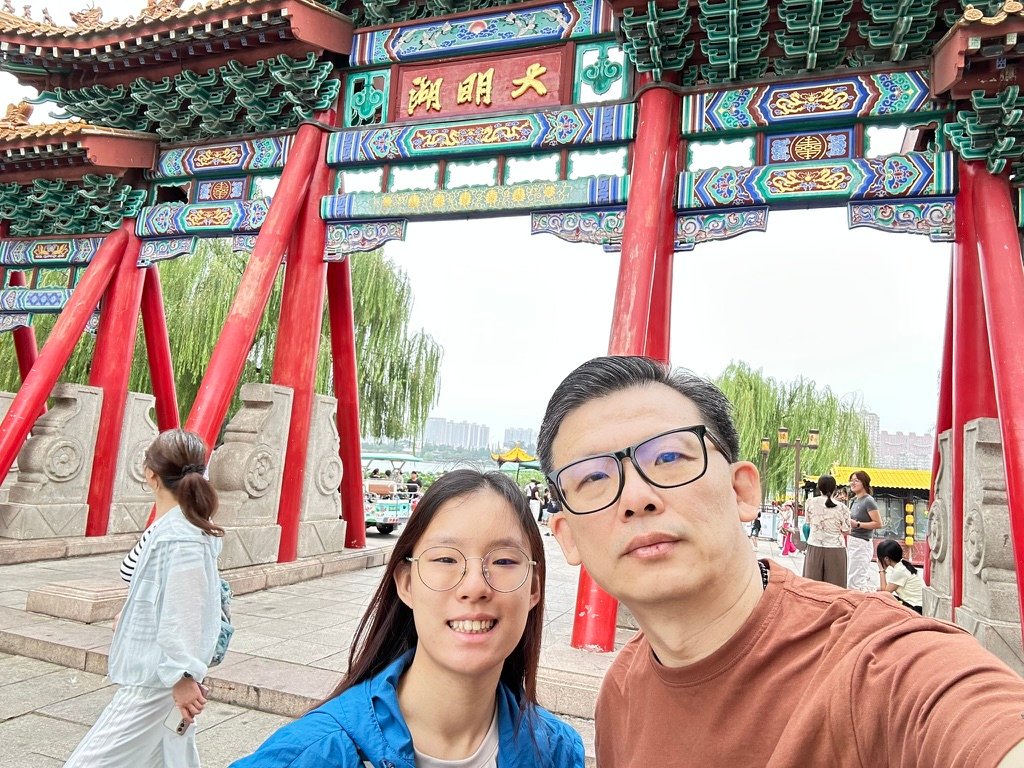
One of its most famous urban landscapes is:
Daming Lake (大明湖, Dàmíng Hú).
Beginner Chinese:
大 — dà
big / great
明 — míng
bright
湖 — hú
lake
So:
大明湖
Daming Lake
🔥
Walk Jinan slowly enough and the city’s identity as:
泉城
begins making sense.
The water isn’t simply:
one attraction.
It is part of:
the city’s personality.
📜 Then a Woman From Jinan Opens Another Rabbit Hole
And now we meet:
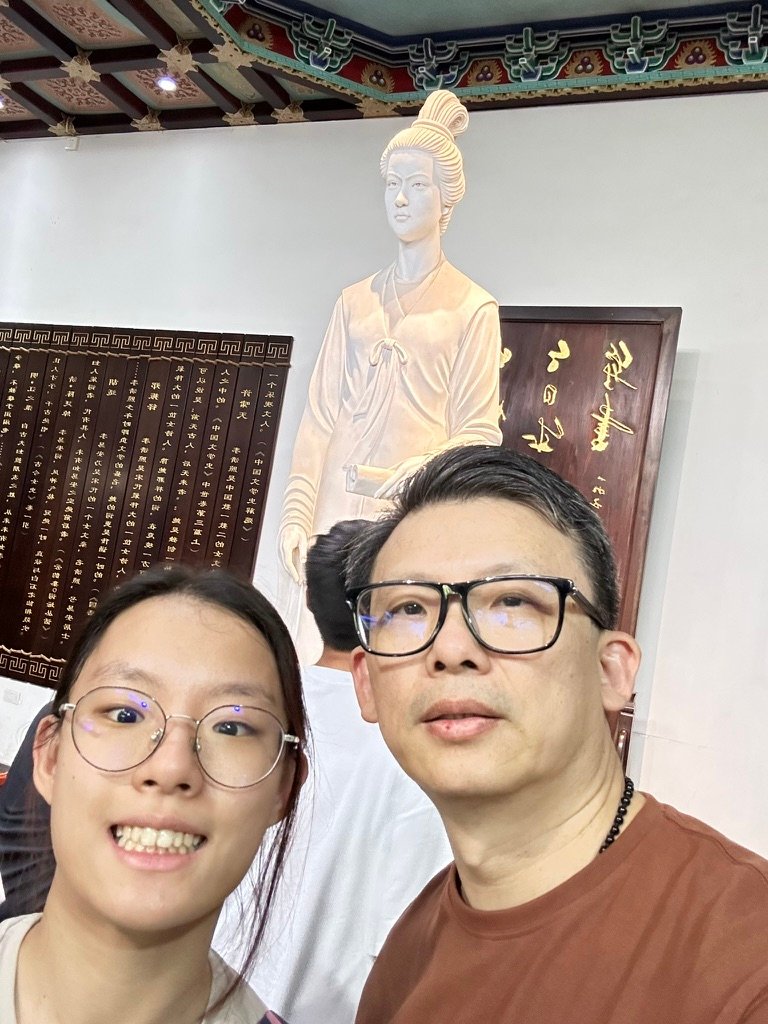
Li Qingzhao (李清照, Lǐ Qīngzhào).
If you’re a Western traveler and that name means:
absolutely nothing
right now…
excellent.
😂
That’s what Deep China is for.
Li Qingzhao lived during the:
Song dynasty (宋朝, Sòng Cháo)
and is remembered as one of the great figures of Chinese literary history.
She was associated with the Jinan region.
And importantly:
she was a woman.
🔥
That gives our Shandong journey a very different historical voice.
Meet 词 — Cí
Li Qingzhao is especially famous for:
词 — cí
a major form of Chinese lyric poetry associated particularly strongly with the Song period.
Don’t worry.
Dad is NOT turning the Jinan fried rice into:
Chinese Literature 101.
😂
Just remember:
诗 — shī
poetry / poem
and:
词 — cí
lyric-poetry form
are not simply interchangeable terms.
Chinese literary history has:
different forms
with their own histories and conventions.
That’s enough for today’s coat rack.
👩 Why Li Qingzhao 李清照 Is Worth Remembering
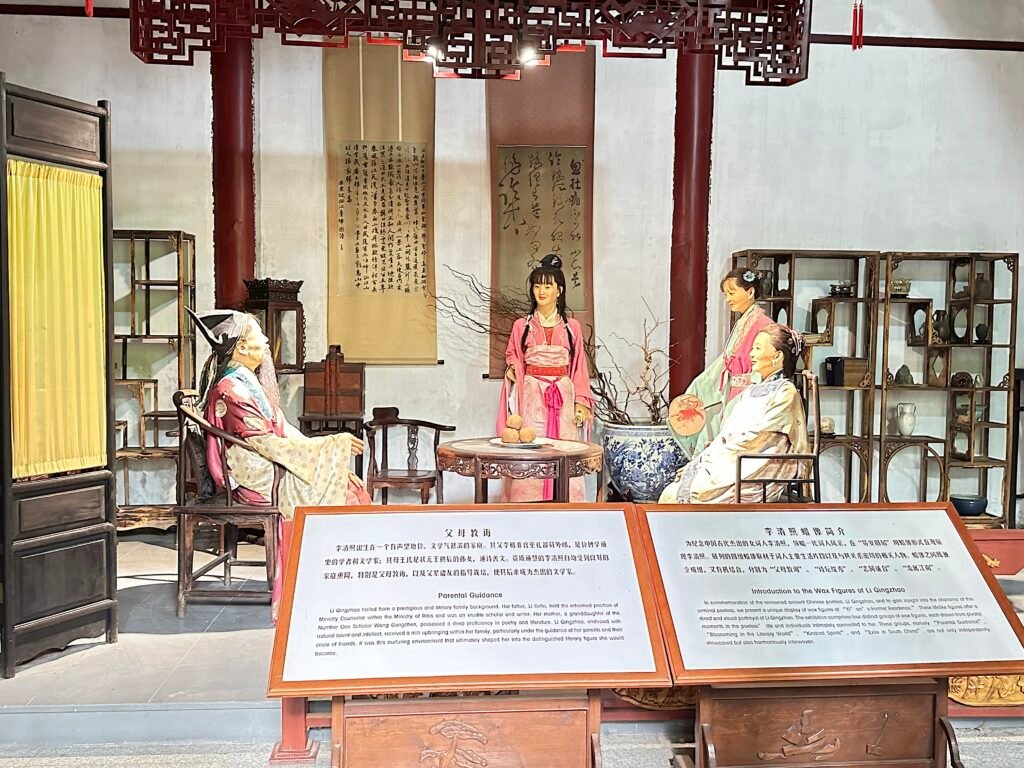
Photo Note: Meet Li Qingzhao 李清照— Her Life Told in Wax
These wax figures at Daming Lake (大明湖, Dàmíng Hú) are not simply decorative figures in period costume. They are part of an exhibition designed to introduce visitors to the life of Li Qingzhao (李清照, Lǐ Qīngzhào), one of the most celebrated women poets in Chinese literary history.
The museum tells her story through four groups of wax figures, each representing a different chapter of her life:
父母教诲 — Parental Guidance
→ her childhood in a highly educated literary family
词坛绽放 — Blossoming in the Literary World
→ the development of her extraordinary talent as a poet
伉俪情深 — Deep Affection Between Husband and Wife
→ her intellectual and emotional partnership with Zhao Mingcheng (赵明诚)
南渡之后 — After the Southern Flight
→ the much harder later years after war and political upheaval forced her south
The scene Dad photographed shows the first chapter. Li Qingzhao grew up surrounded by books, scholarship and literature: her father Li Gefei (李格非) was a scholar and writer, while her mother also came from a distinguished scholarly family.
So don’t just look at the costumes. The wax figures are giving beginners a simple visual biography:
gifted girl in Jinan → poet → marriage and scholarship → war, displacement and loss → one of China’s great literary voices.
🔥 And that’s why meeting Li Qingzhao in Jinan matters.
You are standing in the landscape where her story began.
Photo by Dad at Daming Lake, Jinan.
Her life gives us something very different from:
emperors
generals
and:
philosophers.
She wrote about:
emotion,
memory,
separation
and:
personal experience.
But her life was also shaped by:
political upheaval.
🔥
During her lifetime, the:
Northern Song (北宋, Běi Sòng)
lost its northern capital and much northern territory following the:
Jingkang crisis (靖康之变, Jìngkāng Zhī Biàn)
in the 1120s.
Li Qingzhao was among those displaced southward by the turmoil.
Suddenly:
poetry
meets:
war.
And:
personal memory
meets:
dynastic history.
🐇
This Is Why Dad Likes People Inside History
A dynasty timeline might say:
Northern Song → Southern Song.
Fine.
Memorize it.
Exam tomorrow.
😭😂
But then you encounter:
Li Qingzhao李清照 .
A real person’s life crosses that transition.
Home lost.
Objects lost.
People separated.
Memories carried south.
🔥
Suddenly:
北宋 → 南宋
isn’t merely:
two labels on a timeline.
History happened:
to people.
That’s another DEEP China lesson.
🐇 But Don’t Follow Li Qingzhao 李清照 Too Far Yet
😂
She deserves her own rabbit hole.
For this Jinan plate, just remember:
济南
isn’t only:
泉 — springs.
It’s also connected with:
李清照
and:
宋 — Song.
Landscape.
Literature.
Human experience.
Already a very good fried rice.
🔥
But Dad & Elaine were about to make a mistake.
We thought we understood what Jinan’s job in our Shandong journey was.
Photo Note: Elaine’s Other Classroom — The Supermarket
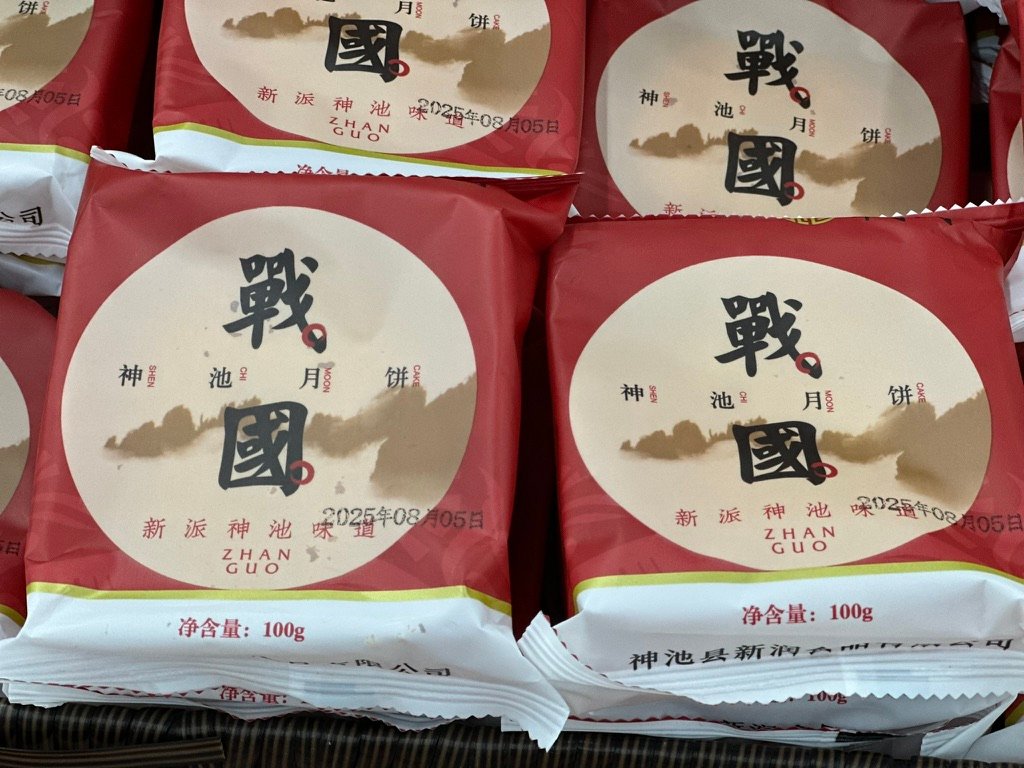
Elaine has learned that Dad’s “open classroom” isn’t limited to museums and historical sites.
Supermarkets count too. 😂
In Jinan, she spotted these mooncakes carrying two enormous characters:
战国 — Zhànguó — “Warring States”
The package reads 战国神池月饼 — Zhanguo Shenchi Mooncake. Whatever the branding story behind the snack, those two characters immediately caught our attention because 战国 is also the Chinese name for the Warring States period (475–221 BCE).
And that was almost a preview of what Shandong was about to teach us.
We would keep encountering:
Qi 齐 → Lu 鲁 → Confucius → Jixia Academy → Sun Bin → competing states → Warring States China.
Dad was looking for Chinese history in museums.
Elaine found it in the snack aisle first. 😂
That’s one reason supermarkets have become part of our open classroom: packaging, regional foods, place names and strange brand names can send the rabbit running somewhere completely unexpected.
In Shandong, apparently even the mooncakes were warning us: history ahead. 🐇
Photo by Elaine in a Jinan supermarket.
We Thought Jinan Was the WATER Dish
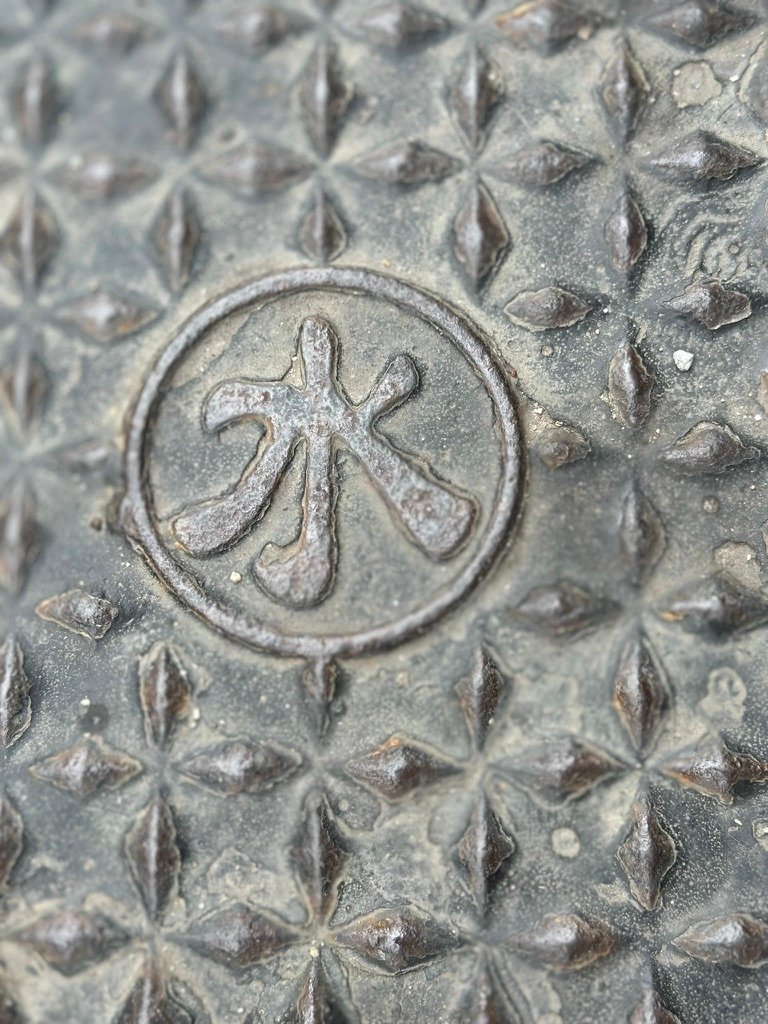
Simple.
JINAN
↓
泉水
↓
WATER 水
↓
GEOGRAPHY
↓
CITY.
Perfect.
Serve it.
😂
Then Dad & Elaine went to:
Shandong Museum (山东博物馆, Shāndōng Bówùguǎn).
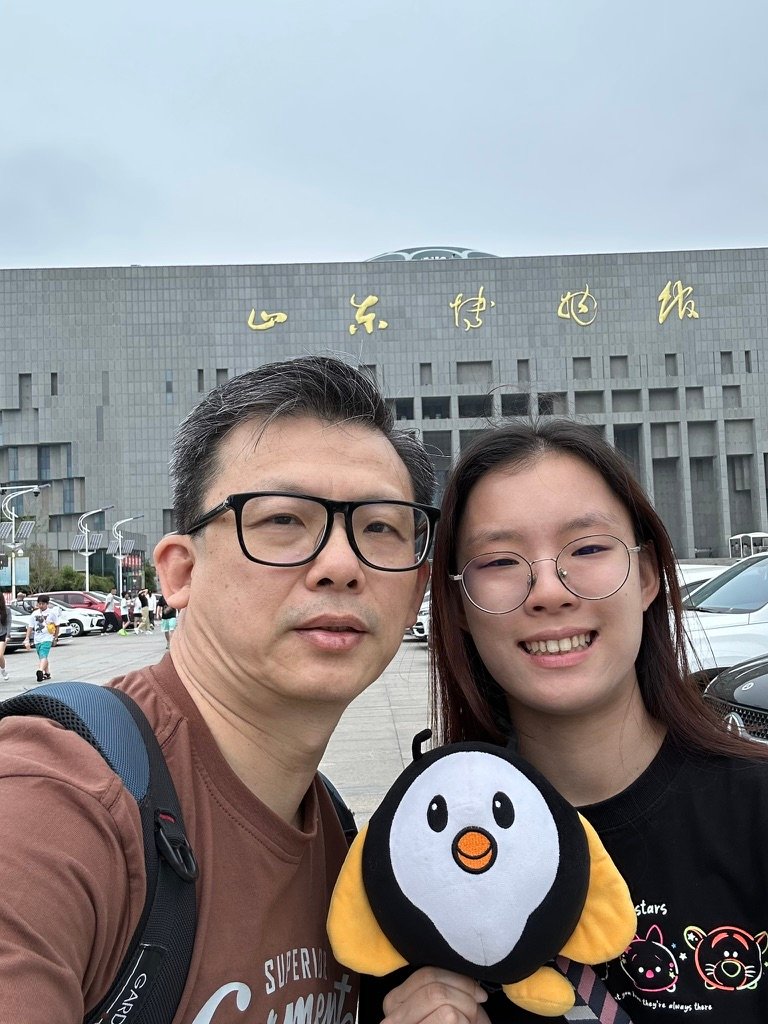
🎟️ Elaine Gets Us Into the Shandong Museum
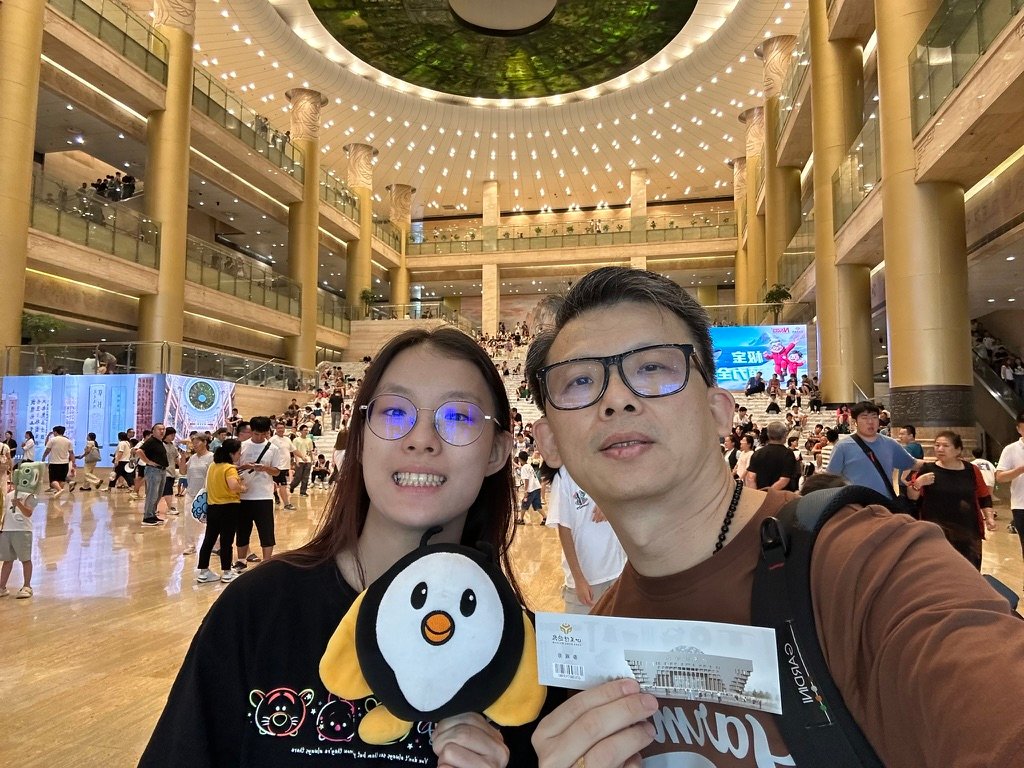
The Shandong Museum (山东博物馆, Shāndōng Bówùguǎn) was actually Elaine’s choice.
There was just one problem.
We visited in late August during the school holidays, and the museum was packed. There were long lines outside, and when Elaine tried to reserve tickets online…
no luck.
Dad was already preparing himself for Plan B. 😂
Then Elaine said:
“Wait. The website says foreigners don’t need to book. We can just show our passports at the main entrance.”
Dad: Really?
So we walked past the reservation problem, presented our passports at the entrance…
and in we went. 😁
That little moment is worth remembering for international travelers. Chinese museums often use online reservation systems built primarily around Chinese IDs, and arrangements for foreign passport holders can sometimes be different. Always check the museum’s current official instructions before assuming “sold out online” means you cannot visit.
And we were very glad Elaine had checked.
Because inside were Longshan black pottery, Zhou bronzes, the worlds of Qi and Lu, and the Yinqueshan bamboo slips that helped solve the Sun Tzu–Sun Bin mystery.
By the end, Dad had completely changed his assessment:
Elaine wanted to visit the museum.
Elaine figured out how to get us inside.
Dad got about six new historical rabbit holes. 🐇🐇🐇
😂 Good call, Elaine.
Photo of Dad & Elaine outside the Shandong Museum, Jinan.
Beginner Chinese:
山东 — Shāndōng
Shandong
博物馆 — bówùguǎn
museum
So:
山东博物馆
Shandong Museum.
Nothing dangerous there.
Just:
“Let’s learn a little more about Shandong.”
😬
That was the mistake.
The First Object Was Already a Warning
Inside the museum we encountered an extraordinary piece of:
Longshan Culture (龙山文化, Lóngshān Wénhuà)
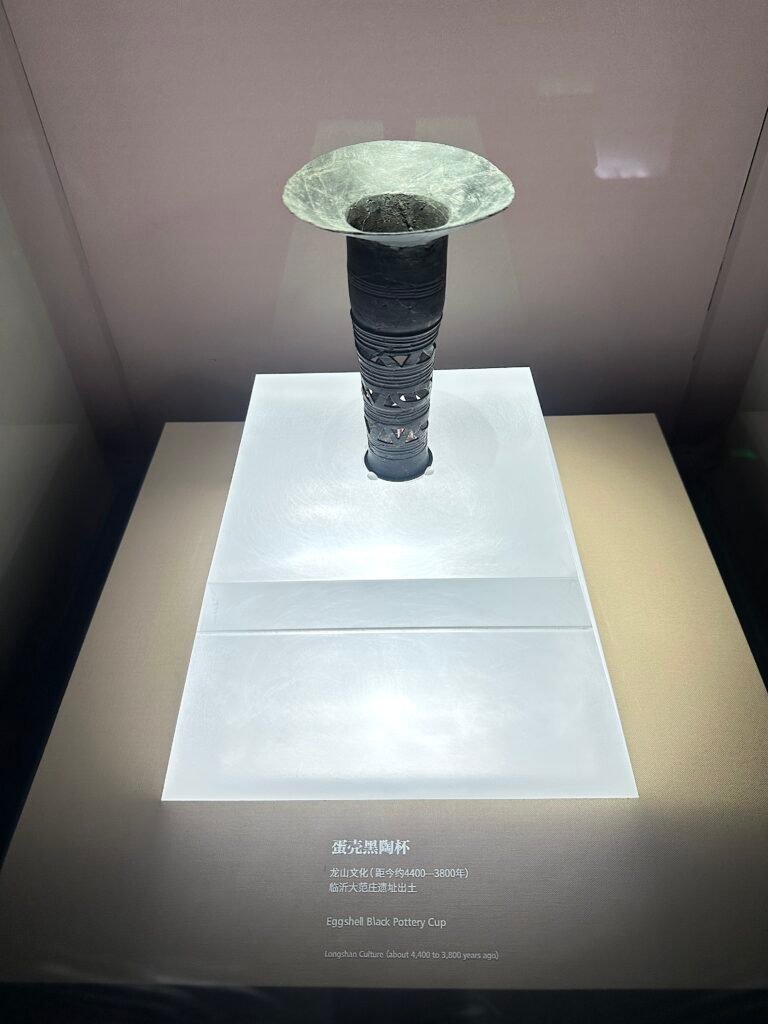
black pottery:
蛋壳黑陶高柄杯
dànké hēitáo gāobǐng bēi
Eggshell Black Pottery High-Handled Cup
🔥
Look at the Chinese:
蛋壳 — dànké
eggshell
黑陶 — hēitáo
black pottery
高柄杯 — gāobǐng bēi
high-handled cup
Why:
eggshell?
Because some Longshan black pottery was made extraordinarily:
thin.
😳
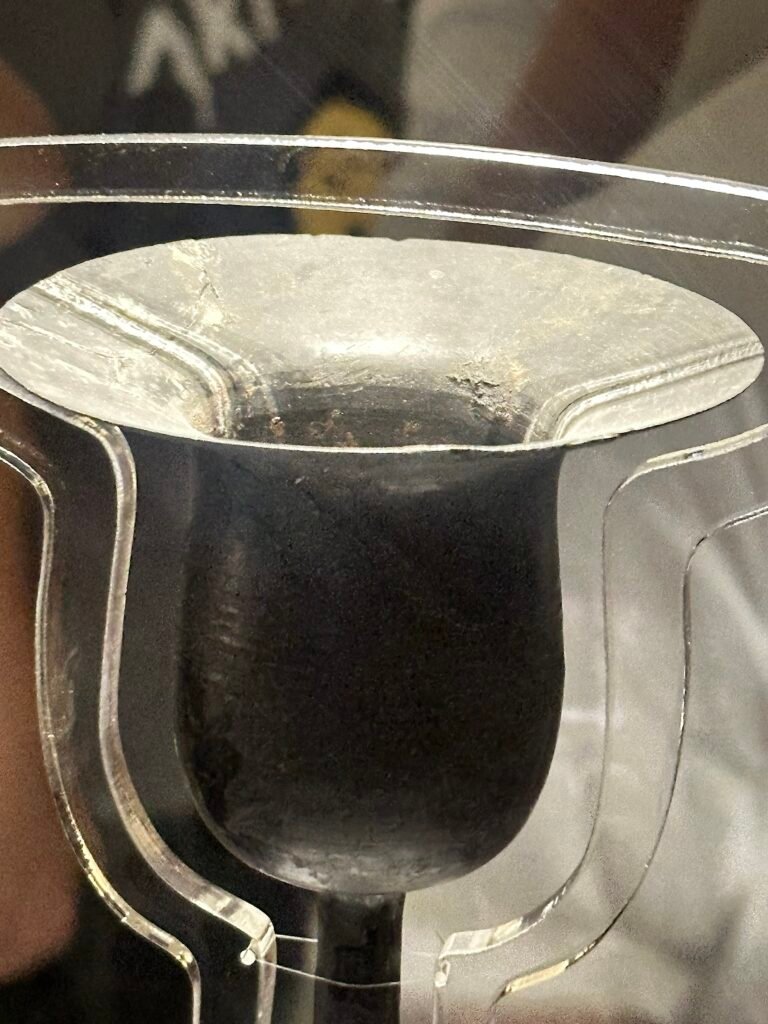
🐞 Photo Note: Before Dynasties — Meet Longshan Culture 龙山文化
This astonishingly delicate Eggshell Black Pottery Cup (蛋壳黑陶杯, Dànké Hēitáo Bēi) introduces us to the Longshan Culture (龙山文化, Lóngshān Wénhuà), an important late-Neolithic culture centered especially in the lower Yellow River region.
The museum dates this object to roughly 4,400–3,800 years ago. Longshan communities were already producing sophisticated pottery, building settlements and developing increasingly complex societies before China’s traditionally recognized historical dynasties fully emerge into view.
And the cup really is the star: Longshan eggshell black pottery could be extraordinarily thin, finely made and technically demanding. It is a wonderful reminder that “prehistoric” does not mean “primitive.”
🕰️ Where Are We in Chinese History?
A simple beginner’s handrail:
Yangshao Culture 仰韶文化
c. 5000–3000 BCE
↓
Longshan Culture 龙山文化
c. 3000–1900 BCE
↓
Erlitou Culture 二里头文化
c. 1750–1500 BCE
↓
Shang 商
c. 1600–1046 BCE
↓
Zhou 周
1046–256 BCE
🔥 So when you look at this elegant little cup, we’re already standing in the fascinating transition from Neolithic cultures → increasingly complex societies → the world of China’s early states and dynasties.
Photo by Dad at the Shandong Museum, Jinan.
We’re looking at sophisticated craftsmanship from:
prehistoric China.
Before Qin.
Before Confucius.
Before Zhou.
Before the securely documented Shang royal world at Anyang.
🐇
Uh-oh.

That’s the First Sting
We entered Jinan thinking:
“City of Springs.”
Then:
泉 — spring
↓
water
↓
geography
↓
cultural landscape
↓
Li Qingzhao 李清照
↓
Song dynasty 宋朝
↓
war and displacement
↓
Shandong Museum 山东博物馆
↓
Longshan Culture 龙山文化
↓
prehistoric China.
😬😬😬
Dad looked at Elaine.
The Jinan fried rice had escaped the wok.
😂🔥
Because once we walked deeper into the museum, we found:
Zhou inscriptions.
Then:
Qi.
Then:
bamboo slips.
Then:
Sun Wu.
Then:
Sun Bin.
Then:
an archaeological discovery that helped resolve a historical puzzle hidden inside ancient Chinese texts.
🐇🐇🐇🐇🐇
We had come to Jinan for:
WATER.
Instead…
the museum was full of rabbits.
😭😂🔥
Section 2 — Dad Walked Into Shandong Museum. The Place Was Full of Rabbits.
Section 1 ended with Dad & Elaine walking into:
Shandong Museum (山东博物馆, Shāndōng Bówùguǎn).
We had already enjoyed:
Jinan (济南, Jǐnán)
as:
泉城 — Quánchéng
the City of Springs.
Water.
Baotu Spring.
Li Qingzhao.
Song history.
Perfect.
Then the museum started causing trouble.
😂
Because almost every few rooms, Dad found something that connected to:
another period
another place
or:
another question.
🐇
And one tiny group of bamboo strips eventually made Dad tell Elaine:
“值回票价了!”
But we’re getting ahead of ourselves.
Rabbit 1 — Before Confucius, Before Qin… Look at THIS Cup
One of the museum objects that stopped us was extraordinarily elegant:
蛋壳黑陶高柄杯
dànké hēitáo gāobǐng bēi
Eggshell Black Pottery High-Handled Cup
The museum identifies it with:
Longshan Culture (龙山文化, Lóngshān Wénhuà)
and says it was excavated at:
Donghaiyu (东海峪, Dōnghǎiyù)
in Rizhao, Shandong.
The museum label dates the Longshan Culture object to roughly:
4,400–3,800 years ago.
🔥
Beginner Chinese:
蛋壳 — dànké
eggshell
黑 — hēi
black
陶 — táo
pottery
杯 — bēi
cup
So:
黑陶 — hēitáo
black pottery
and:
蛋壳黑陶
eggshell black pottery.
😳 Why “Eggshell”?
Look at it.
The vessel is:
astonishingly thin.
Delicate.
Dark.
Elegant.
Sophisticated.
This is prehistoric pottery.
And suddenly Dad’s coat rack jumps backward.
Before:
Qin 秦.
Before:
Confucius 孔子.
Before the securely documented Shang royal world we’ve visited at:
Yinxu (殷墟, Yīnxū).
There were already complex prehistoric societies producing objects of remarkable technical sophistication in what is now Shandong.
🔥
Now the museum has opened our first major rabbit hole:
When does Chinese civilization actually begin?
🐇
That’s not a question we’re going to answer beside one pottery cup.
We already have a Michelin course for that.
😂
But the cup gives the question:
a physical object.
Museum Rule No. 1: Don’t Ask Only “How Old Is It?”
Ask:
What kind of society could make this?
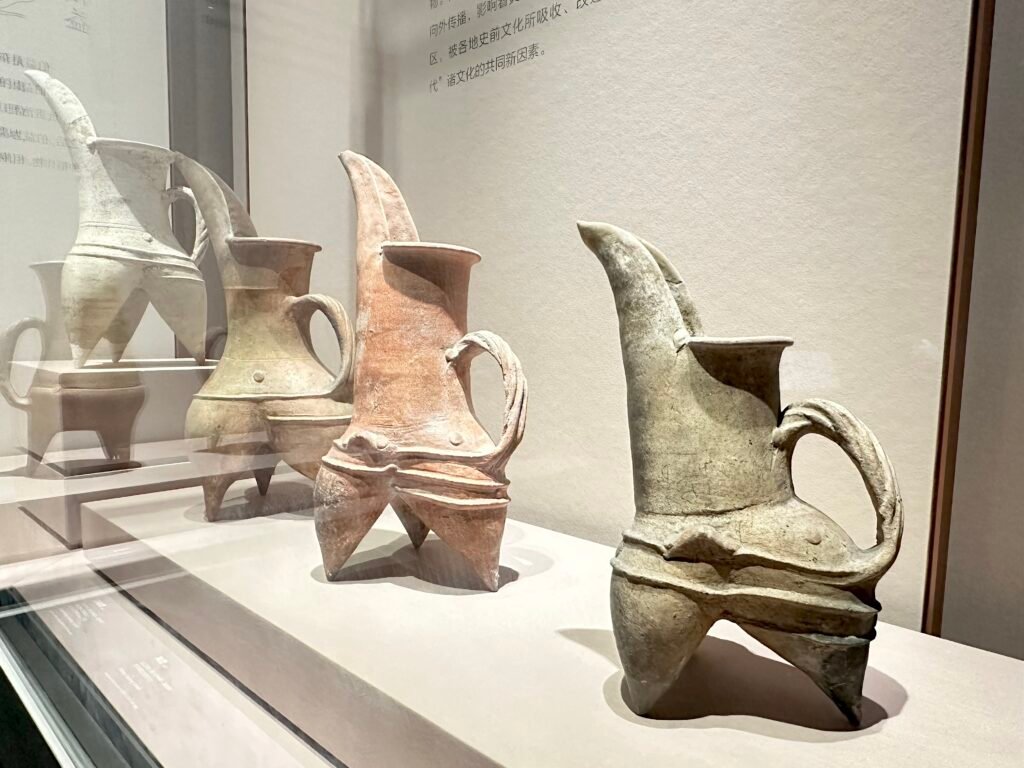
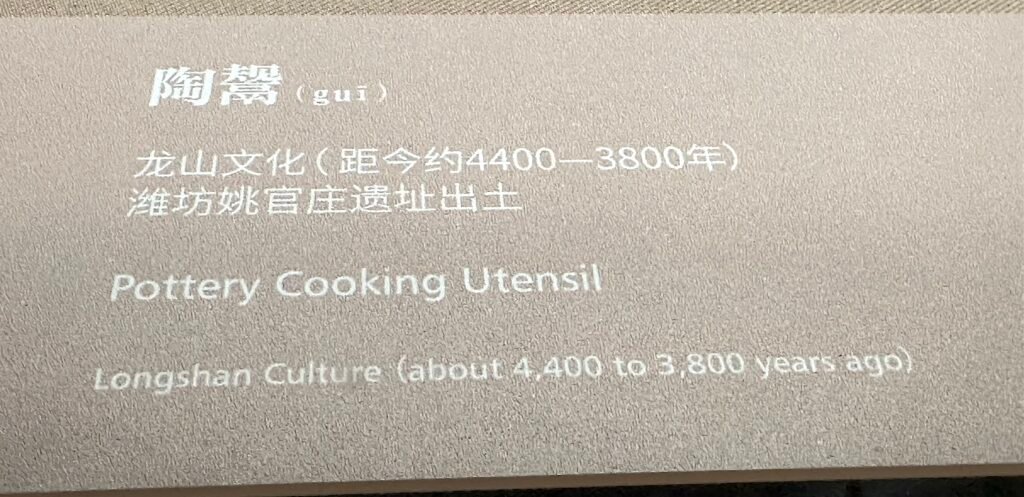
Photo Note: Before the Ding 鼎 — Dinner 4,000 Years Ago
These 陶鬶 (táo guī) cooking vessels from Shandong’s Longshan Culture (龙山文化) date to roughly 4,400–3,800 years ago. Their three hollow legs allowed the pot to stand above a fire while food or liquids were heated.
Look at those three legs carefully. 👀
In later Bronze Age China, three-legged vessels developed into much more elaborate forms—including the famous bronze 鼎 (dǐng), which went far beyond cooking to become a powerful symbol of ritual, status and political authority.
So here we begin with something wonderfully ordinary:
fire → cooking pot → dinner
And later encounter:
bronze → ritual vessel → power.
🔥 Sometimes Chinese civilization can be followed through the evolution of a cooking pot.
Photo by Dad at the Shandong Museum, Jinan.
Who had the:
skill,
specialization,
technology,
time
and:
social organization
to produce something like this?
🔥
Now:
pottery
becomes:
evidence.
And archaeology:
考古 — kǎogǔ
starts talking.
Rabbit 2 — A Bronze Vessel Starts Talking About Zhou
A little later, another object sent Dad westward.
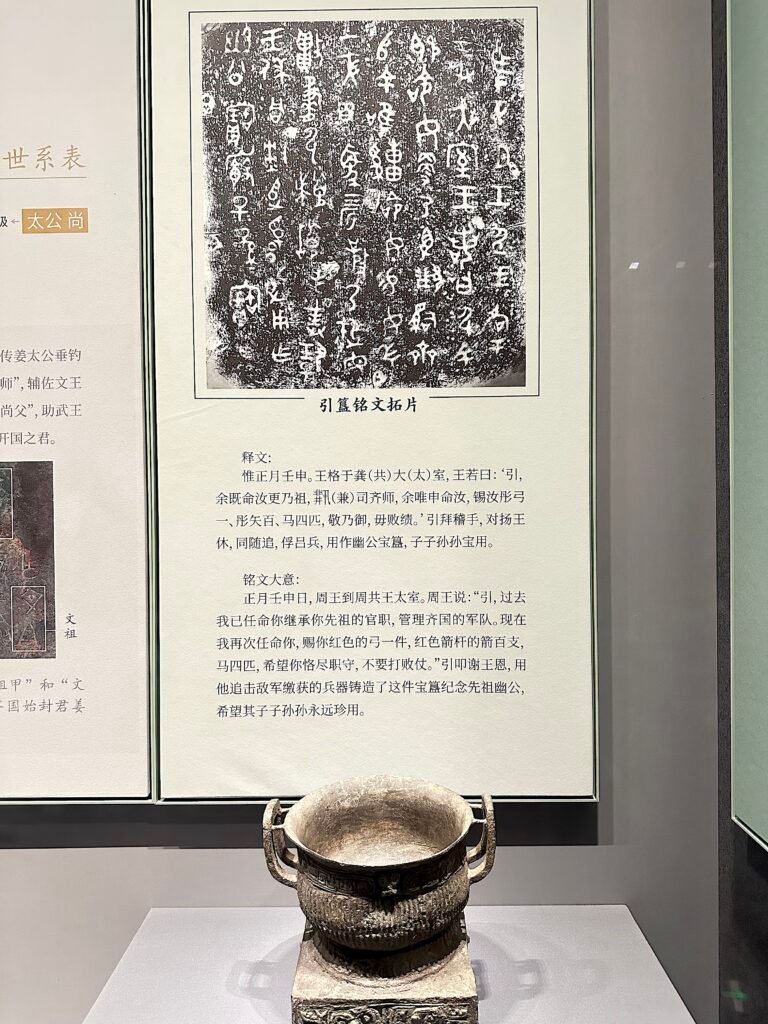
The 铭文 (míngwén) — bronze inscription records a royal command from the Zhou king to a man named Yin (引).
Brief translation
“In the first month, on the day jiashen, the Zhou king arrived at the royal hall. The king said: ‘Yin, I previously appointed you to succeed your ancestor’s office and administer the military forces of Qi. I now command you again and bestow upon you a red bow, one hundred red-shafted arrows, four horses and other honors. Carry out your duties carefully and do not fail.’”
Photo Note: Now the Cooking Vessel Becomes Politics
Remember those simple three-legged Longshan pottery cooking vessels from thousands of years ago?
By the Zhou dynasty (周, 1046–256 BCE), vessels had entered a very different world.
This bronze bears an inscription recording a royal command. According to the museum’s explanation, the Zhou king addresses a man named Yin (引), referring to an earlier appointment connected with managing the Qi military forces, and now rewards him with ceremonial gifts—including a red bow, arrows and horses. Yin then had this bronze vessel cast to commemorate the honor and his ancestor.
🔥 That is the important Zhou connection.
Bronze vessels were no longer simply about:
cook → serve → eat.
Among the Zhou elite, bronze vessels could become:
ritual objects → symbols of rank → records of royal favor → family memory.
And sometimes the inscription inside preserves the event for three thousand years.
That helps international travelers understand why archaeologists get so excited about Zhou bronzes. Before China’s historical record becomes abundant, inscriptions like these give us contemporary evidence of kings, appointments, military authority, rewards, ancestors and political relationships.
From Pot to Power
Longshan Culture 龙山文化
→ pottery vessel
→ everyday life and cooking
↓
Shang 商
→ magnificent ritual bronzes
↓
Zhou 周
→ bronze + ritual + lineage + political authority + written record
So when you see a Zhou bronze in a Chinese museum, don’t just admire the shape.
Look for the writing.
Sometimes you’re looking at a 3,000-year-old government memo cast in bronze. 😂
Photo by Dad at the Shandong Museum, Jinan.
We encountered a bronze vessel and an inscription rubbing identified in the exhibition as:
引簋铭文拓片
Yǐn guǐ míngwén tàpiàn
Let’s unpack that.
簋 — guǐ
an ancient ritual food vessel
铭文 — míngwén
inscription
拓片 — tàpiàn
rubbing / ink rubbing of an inscription
🔥
The exhibition’s interpretation connects the inscription with a:
周王 — Zhōu Wáng
King of Zhou
and records a royal command involving military responsibility.
Suddenly:
Shandong
has thrown us back toward:
Zhou (周).
🐇
One Useful Word: 铭
铭 — míng
inscribe / inscription, depending on usage
Then:
铭文 — míngwén
inscribed text
Bronze inscriptions matter because they can preserve:
names,
appointments,
lineages,
ritual events,
military actions
and:
political relationships.
🔥
So once again:
OBJECT
becomes:
DOCUMENT.
🐇 And Dad Has Already Followed THAT Rabbit
Because Dad & Elaine have traveled to:
Zhouyuan (周原, Zhōuyuán)
and:
Qishan (岐山, Qíshān)
in Shaanxi.
We’ve visited places associated with the historical world of:
Western Zhou (西周, Xī Zhōu)
and:
Duke of Zhou (周公, Zhōugōng).
😳
So an inscription in a Jinan museum isn’t isolated anymore.
It connects:
SHANDONG
↓
ZHOU
↓
SHAANXI
↓
another journey.
That’s the rabbit-hole method working exactly as intended.
Rabbit 3 — Then Qi Walks Into the Room
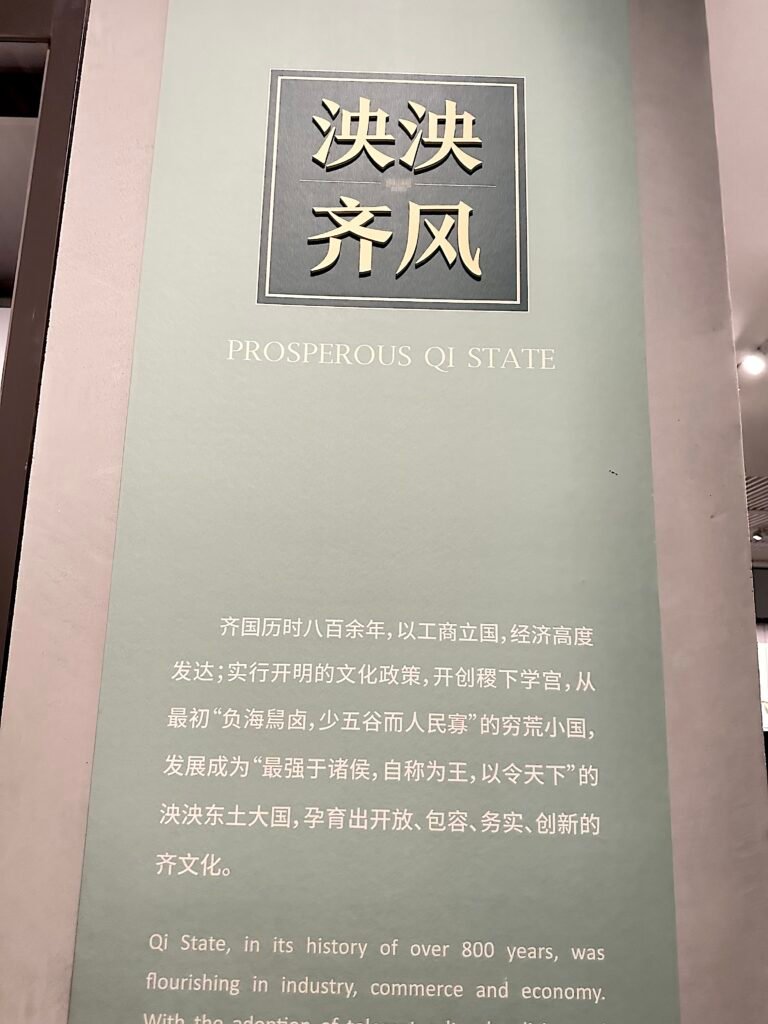
Photo Note: When Qi Became a Powerhouse
泱泱齐风 (Yāngyāng Qí Fēng) evokes the grand and flourishing spirit of Qi.
The museum explains that during its history of more than 800 years, the State of Qi (齐国) developed strong industry, commerce and agriculture, while encouraging relatively open cultural policies. From modest beginnings, Qi grew into one of the great powers of eastern China and became a major center of intellectual life.
🔥 This is the key to understanding ancient Shandong:
Qi wasn’t just another state on the map. It became rich, powerful—and unusually fertile ground for new ideas.
And that sets up our next rabbit hole perfectly:
Qi → prosperity → intellectual openness → Jixia Academy (稷下学宫). 🐇
Photo by Dad at the Shandong Museum, Jinan.
And this one matters enormously for the rest of our Shandong journey.
Dad & Elaine encountered an exhibition headed:
泱泱齐风
Yāngyāng Qí Fēng
The English display calls it:
PROSPEROUS QI STATE.
🔥
The exhibition introduces:
Qi (齐国, Qí Guó)
as a major historical state associated with:
industry,
commerce,
economic development
and:
intellectual culture.
And there, sitting inside the museum explanation, was a name we now know very well:
Jixia Academy (稷下学宫, Jìxià Xuégōng).
😬
Rabbit detected.
🐇 Museum → Linzi
Where was the capital of Qi?
Linzi (临淄, Línzī).
Where is Linzi today?
Part of:
Zibo (淄博, Zībó).
And Dad & Elaine went there too. Remember Zibo BBQ?
🔥
So the museum gives us:
齐 — Qi
but the rabbit says:
Don’t stop here. Go to the place.
Museum:
齐文化 — Qí Wénhuà
Qi culture
↓
physical journey:
临淄 — Linzi
↓
political question:
What did “China” look like before Qin unified the competing states?
🐇
Now you understand why our Linzi fried rice exists.
Lu State: The Other Shandong — Ritual, Agriculture and Confucius
If Qi (齐国, Qíguó) was Shandong’s commercially energetic, outward-looking powerhouse, neighboring Lu (鲁国, Lǔguó) gives us a different window into ancient China.
And Dad found a very useful clue in the Shandong Museum:
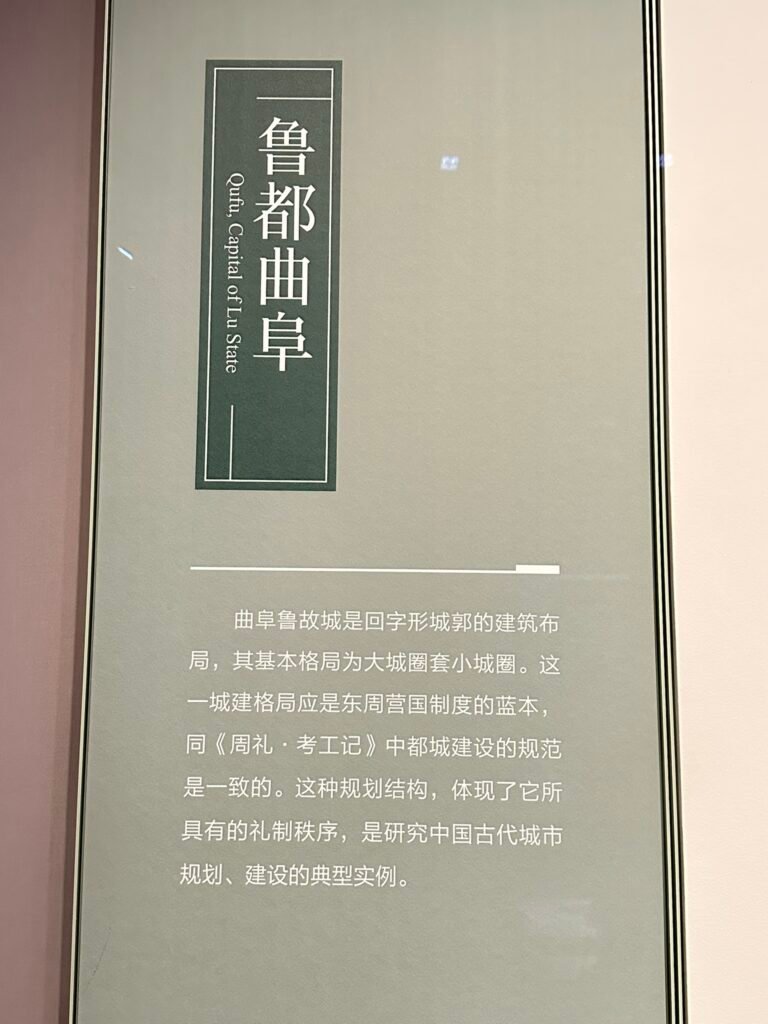
鲁都曲阜 — Qufu, Capital of Lu
Yes — the modern city of Qufu (曲阜, Qūfù) that travelers visit for Confucius was once the capital of the ancient State of Lu.
But the museum explains something more interesting.
🏙️ Even the Capital Reflected Zhou Ideas
Ancient Qufu was laid out as a 回字形 (huízìxíng) city — roughly a large outer enclosure surrounding a smaller inner city.
The museum says this arrangement followed principles associated with the Western Zhou system of enfeoffment and corresponded with city-planning rules recorded in the Kaogong Ji (考工记) section of the Rites of Zhou.
In other words:
city planning reflected political order.
The physical arrangement of the capital expressed the 礼制 (lǐzhì) — the Zhou system of ritual hierarchy and social order.
🔥 That’s important when we eventually meet Confucius.
He wasn’t inventing the idea of 礼 (lǐ) out of nowhere.
He grew up in a state where memories and institutions associated with Zhou ritual culture remained especially important.
🌾 Lu Was Built on Agriculture
The museum also emphasizes another foundation of Lu:
强农固本 — “Strengthen Agriculture, Secure the Foundation.”
Lu occupied fertile plains and lake country suitable for farming.
During the Spring and Autumn period, it promoted improved agricultural tools and introduced an early form of land taxation, recognizing private landholding for tax purposes.
So while neighboring Qi became famous for:
commerce + industry + wealth + intellectual openness,
Lu’s story was more strongly rooted in:
agriculture + ritual order + lineage + Zhou political tradition.
Don’t make that contrast too absolute — both were complex states — but it gives first-time readers a useful handrail.
👑 But Lu Had a Political Problem
The second museum board shows the genealogy of Lu’s rulers.
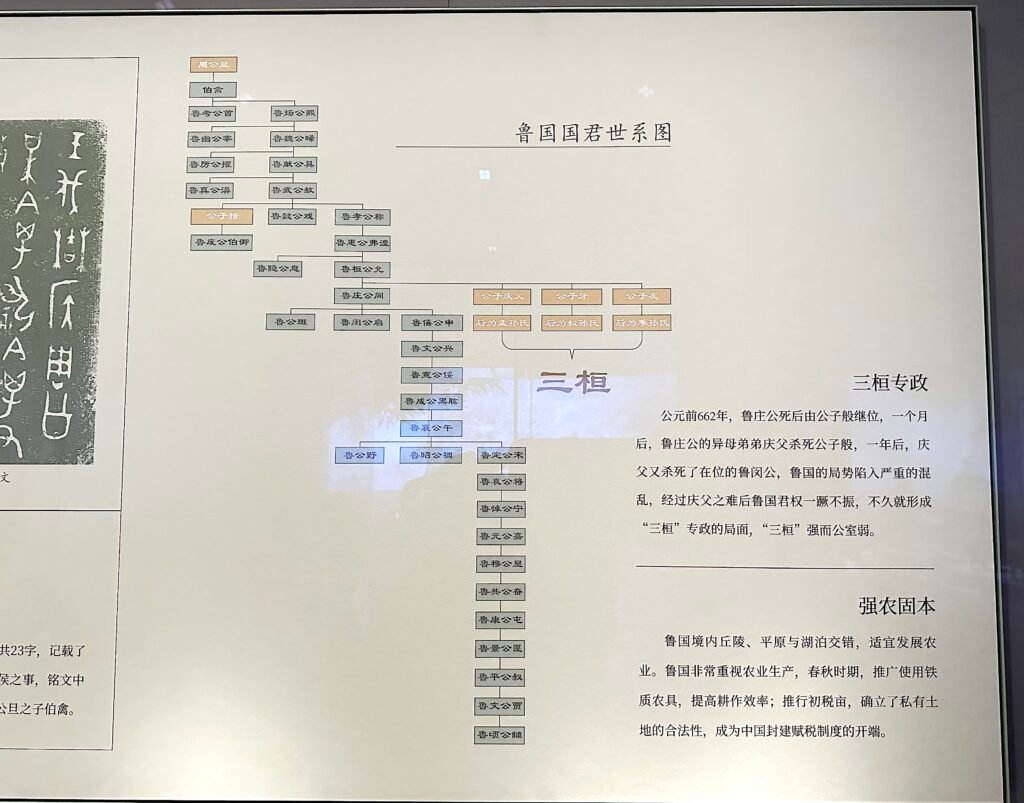
And then, suddenly:
三桓 — Sān Huán
“The Three Huan Families”
By 662 BCE, after the death of Duke Zhuang of Lu, succession struggles and political instability weakened the ruling duke.
Three powerful aristocratic lineages descended from Duke Huan increasingly dominated Lu politics:
季孙氏 — Jìsūn clan
叔孙氏 — Shūsūn clan
孟孙氏 — Mèngsūn clan
Together they became known as the:
三桓 — Three Huan.
The museum summarizes the situation beautifully:
三桓强而公室弱
“The Three Huan grew strong while the ducal house grew weak.”
🔥 Now remember this.
Because when Confucius (孔子, Kǒngzǐ) later enters Lu politics, he is entering a state where the ruler theoretically sits at the top…
but powerful aristocratic families hold enormous practical power.
Suddenly Confucius’s concern with:
proper roles, ritual, hierarchy, legitimate authority and political order
doesn’t feel quite so abstract anymore.
He was thinking about these questions inside a political system where the established order wasn’t working particularly well.
🐇 And Now Qufu Makes More Sense
This is why visiting Qufu after learning about Lu changes the experience.
You are not simply visiting:
“the hometown of Confucius.”
You are walking through the former capital of a Zhou-era state with its own political institutions, agricultural economy, aristocratic struggles and deeply rooted ritual traditions.
And out of that environment came Confucius.
So the rabbit runs:
Western Zhou
↓
State of Lu 鲁国
↓
Qufu becomes its capital
↓
Zhou ritual order 礼
↓
Three Huan 三桓 weaken the ruler
↓
political disorder
↓
CONFUCIUS
🔥
Perhaps the better question isn’t simply:
“Why was Confucius born in Qufu?”
but:
“Why did someone like Confucius emerge from a place like Lu?”
Now that is a rabbit hole worth following. 🐇
Western Handrail: The Museum Is Becoming a Menu
😂
At this point Dad is no longer walking through a museum thinking:
Nice object.
Nice object.
Nice object.
Instead:
Longshan
→ Before China Michelin course.
Zhou
→ Zhouyuan.
Qi
→ Linzi.
Lu
→ Qufu.
😬
Shandong Museum is beginning to look less like:
the destination
and more like:
the menu card.
But then we reached the bamboo slips.
🔥🔥🔥
Rabbit 4 — Before Paper, How Did China Store Information?
The museum has an excellent doorway into:
简牍时代 — Jiǎndú Shídài
the Bamboo and Wooden Slips Era
Beginner Chinese:
简 — jiǎn
bamboo slip
牍 — dú
wooden tablet / wooden slip
Together:
简牍 — jiǎndú
bamboo and wooden slips/documents
And:
竹简 — zhújiǎn
bamboo slips.
🔥
Before paper became the dominant writing medium, bamboo and wood were widely used for written documents.
The museum explicitly connects these materials with:
knowledge transmission,
administrative documentation
and:
cultural transmission.
Now Dad’s Political Science rabbit wakes up again.
😂
💾 Western Handrail: Ancient Information Storage
No.
A bamboo slip is not:
an ancient USB stick.
😭😂
But the handrail helps us ask a serious question:
How does a large state store, organize and transmit information?
Government needs:
records,
orders,
laws,
accounts,
reports
and:
texts.
🔥
A bureaucracy isn’t powered only by:
officials.
It is powered by:
INFORMATION.
So:
竹简
isn’t merely:
“cute old Chinese writing material.”
It belongs to the history of:
how states remember and communicate.
🐇
That links directly to our Michelin question:
How Did One Emperor Govern Such a Huge Country?
And Then Dad Found THE Bamboo Slips
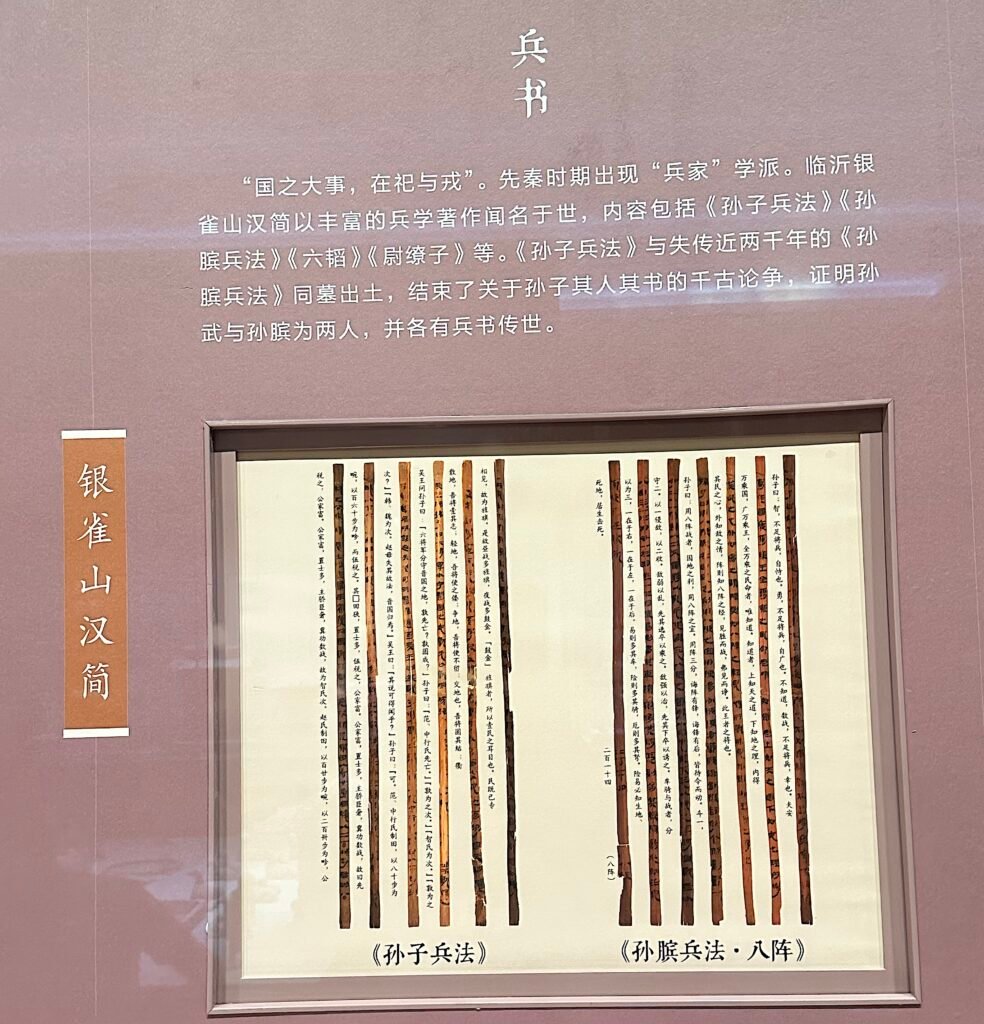
Photo Note: When a Han Tomb 汉墓 Became an Ancient Library
In April 1972, construction workers at Yinqueshan (银雀山, Yínquèshān) in Linyi, Shandong, accidentally uncovered two early Western Han tombs.
Inside archaeologists found an extraordinary treasure: nearly 5,000 bamboo slips, buried for more than 2,000 years. The manuscripts date to the early Western Han period and preserve texts whose origins reach back into the earlier intellectual world of the Warring States.
And it wasn’t just The Art of War.
The cache included:
《孙子兵法》 — Sun Tzu’s Art of War
《孙膑兵法》 — Sun Bin’s Art of War
《六韬》 — Six Secret Teachings
《尉缭子》 — Wei Liaozi
《晏子》 — writings associated with Yanzi
plus works on government, law, military affairs, calendars and divination, including texts that had disappeared from the later literary tradition.
🔥 The biggest surprise was finding Sun Tzu and Sun Bin’s military texts together. Sun Bin’s Art of War had been lost for centuries, and scholars had long debated whether Sun Wu and Sun Bin—and their books—were really distinct. Yinqueshan provided powerful archaeological evidence that they were separate figures with separate military traditions.
So think of Yinqueshan as:
a 2,000-year-old library accidentally sealed inside a tomb.
It didn’t merely preserve old books. It allowed historians to check texts handed down for centuries against manuscripts actually buried in the Han dynasty—and even recover books that China had lost.
Photo by Dad at the Shandong Museum, Jinan.
This was the moment.
In the exhibition were materials concerning the:
Yinqueshan Han Tomb Bamboo Slips
银雀山汉墓竹简
Yínquèshān Hànmù Zhújiǎn
discovered at:
Yinqueshan (银雀山, Yínquèshān)
in:
Linyi (临沂, Línyí), Shandong.
Among the excavated texts were bamboo-slip versions associated with:
《孙子兵法》 — Sūnzǐ Bīngfǎ
The Art of War
and:
《孙膑兵法》 — Sūn Bìn Bīngfǎ
Sun Bin’s Military Methods.
🔥🔥🔥
Dad stopped.
Dad’s 值回票价 Moment
Dad looked at Elaine and said:
“值回票价了!”
Zhí huí piàojià le!
😂
🐇 Dad Says: Okay, My Museum Ticket Has Already Paid for Itself
Dad knew Sun Tzu (孙子, Sūnzǐ) and The Art of War.
Dad had also heard of Sun Bin (孙膑, Sūn Bìn).
But there was a problem that puzzled Chinese scholars for centuries:
Were Sun Tzu and Sun Bin actually two different people?
Ancient sources seemed to say yes.
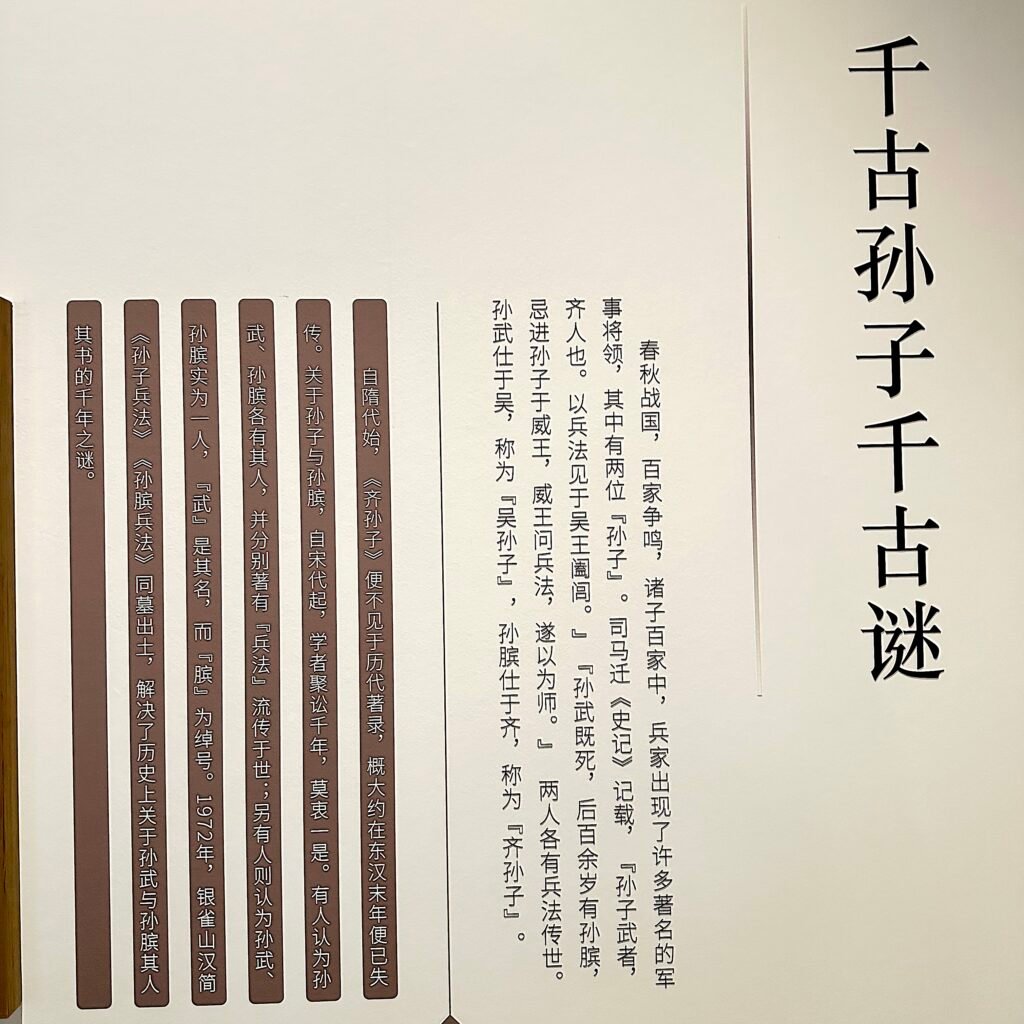
Sima Qian (司马迁) — our old friend again! — wrote in the Records of the Grand Historian that Sun Wu (孙武) served the State of Wu, while Sun Bin lived more than a century later and served the State of Qi.
Both were associated with military writings.
But over the centuries, Sun Bin’s military text disappeared.
By the Song dynasty, scholars could no longer find it. That created a historical puzzle: perhaps Sun Wu and Sun Bin were really the same person? Perhaps there had only ever been one Art of War?
For nearly 1,000 years, nobody could prove the answer.
Then, in 1972…
Workers digging at Yinqueshan (银雀山) in Linyi, Shandong uncovered Western Han tombs containing thousands of ancient bamboo slips.
Among them were:
《孙子兵法》
Sun Tzu’s Art of War
and — sitting in the same archaeological discovery —
《孙膑兵法》
Sun Bin’s Art of War
😳
Two different texts.
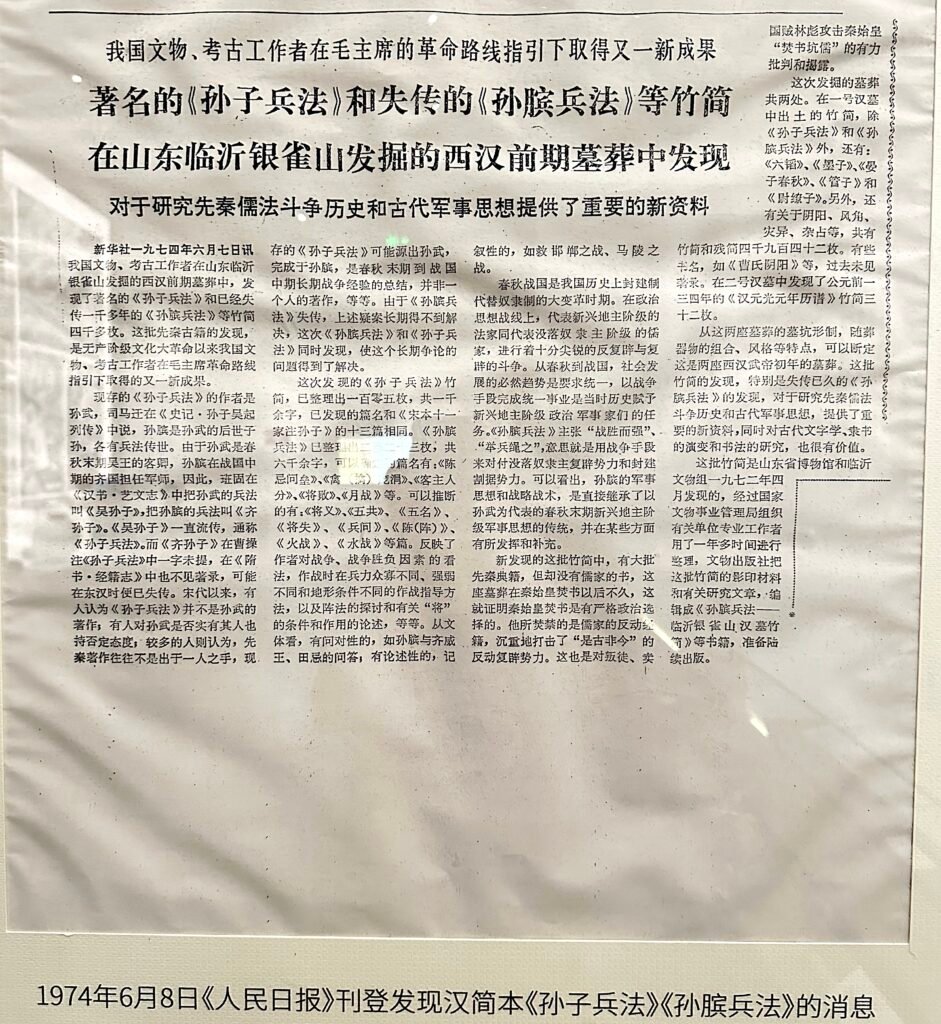
The discovery provided powerful physical evidence supporting the traditional accounts: Sun Wu and Sun Bin represented distinct military traditions, and the long-lost Sun Bin’s Art of War really had existed.
The importance was big enough that on June 8, 1974, the People’s Daily reported the discovery of the two bamboo-slip texts — the newspaper report Dad photographed here in the museum.
This Is Why Dad Loves Museums
You begin with:
“Here are some old bamboo strips.”
Then suddenly:
Sima Qian wrote something 2,000 years ago
↓
a book disappears
↓
scholars argue for centuries
↓
workers dig a tomb in Shandong in 1972
↓
two ancient books come out of the ground
↓
ARCHAEOLOGY ANSWERS THE QUESTION.
😂
At that point Dad looked at Elaine and mentally declared:
“Okay. Museum ticket price recovered.”
And we hadn’t even finished the exhibition.
Photos by Dad at the Shandong Museum, Jinan.
For Mandarin beginners:
值 — zhí
be worth / value
票 — piào
ticket
价 — jià
price
So:
值回票价
worth the price of the ticket / worth the trip
But Dad wasn’t talking about:
the museum admission ticket.
😂😂😂
Dad meant:
the air tickets (机票, jīpiào),
the high-speed rail tickets (高铁票, gāotiě piào),
and:
the journey to Shandong.
Seeing these bamboo slips with:
our own eyes
already made the trip worthwhile.
🔥
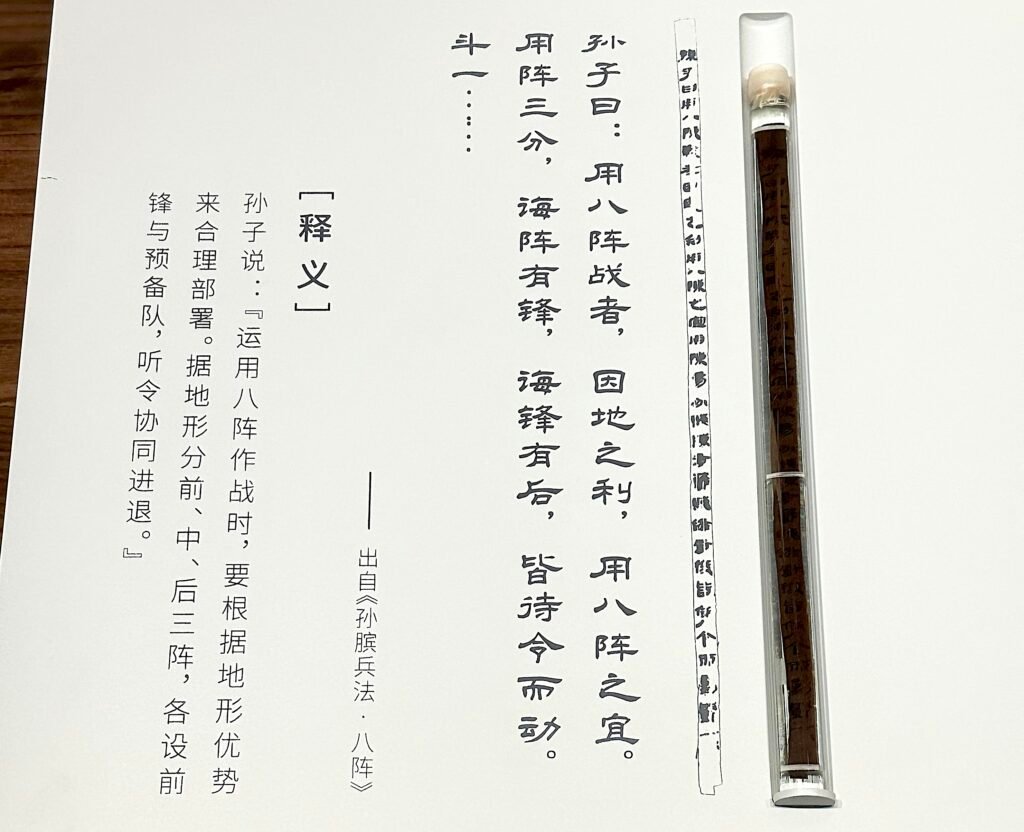
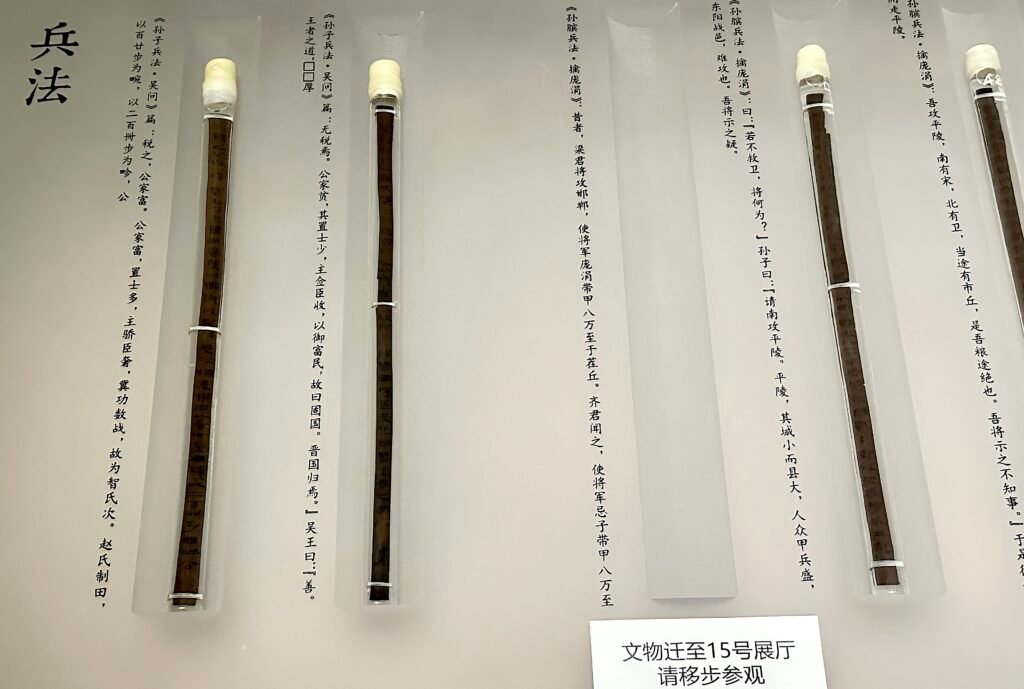
Photo Note: What Is Sun Bin 孙膑 Actually Teaching Here?
This bamboo-slip passage from 《孙膑兵法·八阵》 (Sun Bin’s Art of War: Eight Formations) preserves Sun Bin’s advice on how to deploy an army.
His point is surprisingly practical: don’t use one formation everywhere. Study the terrain first, then divide the army into front, middle and rear formations, each with its own vanguard and reserves, so the units can coordinate their advance and retreat.
In other words, more than 2,000 years ago Sun Bin was already teaching:
Read the ground → arrange your forces accordingly → keep reserves → coordinate the whole army.
And this isn’t a later summary of his ideas. The words survived on ancient bamboo slips buried in a Han tomb at Yinqueshan, Shandong.
Photo by Dad at the Shandong Museum, Jinan.
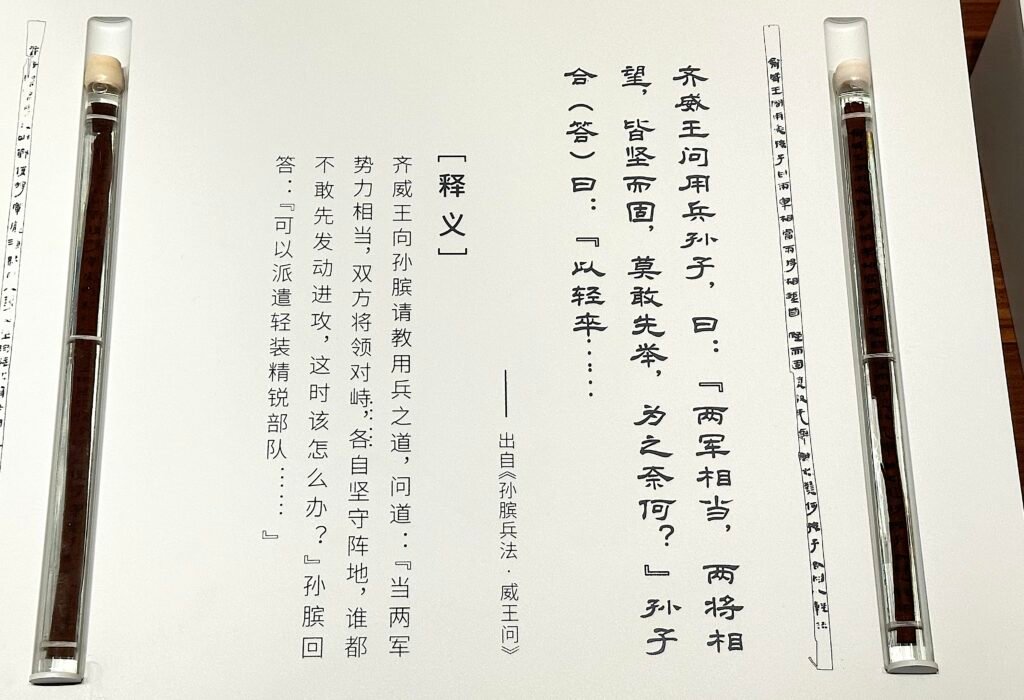
Photo Note: Sun Bin 孙膑 Advises the King of Qi 齐威王
This passage from 《孙膑兵法·威王问》 (Sun Bin’s Art of War: King Wei’s Questions) records King Wei of Qi (齐威王) asking Sun Bin what to do when two armies are evenly matched, both sides are strongly positioned, and neither wants to attack first.
Sun Bin’s answer? Don’t simply charge. Send forward a light, elite force to probe and draw out the opponent while keeping the main force prepared to respond.
🔥 For internation al readers, the important detail is the conversation itself:
King Wei of Qi 齐威王 asks → Sun Bin 孙膑 answers.
This places this “Master Sun” firmly in the world of Qi during the Warring States period—another piece of evidence that Sun Bin 孙膑 was not the earlier Sun Tzu/Sun Wu.
Photo by Dad at the Shandong Museum, Jinan.
🐇 And Here Is the Evidence: Another “Master Sun”!
For centuries there was a problem.
Both Sun Wu (孙武)—the Sun Tzu traditionally associated with The Art of War—and the later strategist Sun Bin (孙膑)could be referred to as:
孙子 — Sūnzǐ
“Master Sun”
Confusing enough? 😂
Then Yinqueshan changed everything.
Among the bamboo manuscripts excavated in Shandong in 1972 was a separate military work whose contents place its “Master Sun” unmistakably in the world of Qi.
One passage begins:
齐威王问用兵孙子曰……
“King Wei of Qi asked Master Sun about the use of troops…”
🔥 There it is.
This “Master Sun” is interacting with King Wei of Qi, the fourth-century BCE ruler associated with Sun Bin’s career.
Meanwhile, the separately discovered 《孙子兵法》 preserves the military tradition associated with the earlier Sun Wu.
So the tomb gave historians:
Sun Wu 孙武
→ earlier strategist
→ associated with Wu 吴
and
Sun Bin 孙膑
→ later strategist
→ associated with Qi 齐
Two Suns. Two military texts.
And both had been lying underground together for more than 2,000 years.
😂🔥
Dad wasn’t merely looking at an ancient copy of a famous book.
He was looking at part of the evidence that helped solve a historical mystery lasting nearly a thousand years.
At this point:
Museum ticket price: VERY recovered. 😂
Photos by Dad at the Shandong Museum, Jinan.
👀 Because We Could Have Read About Them at Home
Dad could have told Elaine:
Ancient Chinese books were sometimes written on bamboo slips.
Done.
Five seconds.
😂
We could have opened a website.
Watched a documentary.
Looked at a photograph.
Dad could even have prepared:
a PowerPoint presentation.
Elaine would probably have disappeared.
😭😂
Instead:
the object was right there.
Ancient writing.
Physical strips.
A text connected with one of the most famous military traditions in world history.
And we were:
standing in front of it.
This Is Why Dad Brings Elaine to Historical Places
This moment explains much of:
Deep China.
Dad isn’t trying to teach Elaine Chinese history by starting with:
Xia.
Shang.
Zhou.
Qin.
Han.
Please memorize.
😂
Instead:
SEE
the object.
↓
ASK
why it matters.
↓
CONNECT
it to another story.
↓
UNDERSTAND
the bigger historical pattern.
↓
FOLLOW
the next rabbit.
🐇
That’s much harder to forget.
Rabbit 5 — Wait… There Were TWO “Sun Tzus”?
Now the bamboo slips give us another problem.
International readers probably know:
Sun Tzu
and:
The Art of War.
But Chinese history gives us:
Sun Wu (孙武, Sūn Wǔ)
and:
Sun Bin (孙膑, Sūn Bìn).
Different figures in the standard modern historical understanding.
🔥
Sun Wu is traditionally associated with:
《孙子兵法》
while Sun Bin is associated with:
《孙膑兵法》.
But for centuries, questions surrounded the relationship between these traditions and the long-lost Sun Bin text.
Then archaeology entered the argument.
Archaeology Changes the Conversation
The Yinqueshan Han tombs were excavated in:
1972.
Among the bamboo-slip texts discovered were:
《孙子兵法》
and:
《孙膑兵法》.
😳
The discovery of material associated with both works provided enormously important evidence for understanding the two textual traditions.
Your museum even displays historical reporting about the discovery.
Now look at our Deep China evidence ladder:
传世文献 — chuánshì wénxiàn
transmitted texts
↓
历史疑问 — lìshǐ yíwèn
historical questions
↓
考古 — kǎogǔ
archaeology
↓
出土文献 — chūtǔ wénxiàn
excavated texts
↓
NEW EVIDENCE.
🔥🔥🔥
This is exactly why archaeology matters.
History Isn’t Just “What the Old Book Says”
This is one of the most important lessons Dad wants Elaine—and international readers—to understand.
Historical knowledge can come from:
文献 — wénxiàn
texts / documentary sources
but also:
考古发现 — kǎogǔ fāxiàn
archaeological discoveries.
Sometimes:
the text
and:
the object
support each other.
Sometimes they complicate each other.
Sometimes a new excavation forces historians to:
ask the question again.
🔥
That’s why Deep China keeps separating:
ARCHAEOLOGY
TEXTUAL TRADITION
LEGEND
and:
CULTURAL MEMORY.
They can interact.
But they aren’t automatically:
the same evidence.
🐇 And Sun Bin Sends Us Back to the Warring States
Remember our:
Linzi (临淄)
article?
The Warring States weren’t merely:
philosophers arguing.
They were:
states fighting.
😂
Military thought mattered.
Strategy mattered.
Organization mattered.
Command mattered.
So:
孙武
and:
孙膑
belong to the same enormous historical world in which:
states competed to survive.
Now the bamboo slips have connected:
JINAN
↓
MILITARY TEXT
↓
WARRING STATES
↓
QI
↓
LINZI.
🐇🔥
Again:
museum → place.
Halfway Sting Check — The Museum Wasn’t the End of the Journey
We walked into:
Shandong Museum
thinking:
“Let’s learn a little about Shandong.”
😂
Instead:
Longshan black pottery
↓
Before China
🐇
Zhou bronze inscriptions
↓
Zhouyuan
🐇
Qi
↓
Linzi
🐇
Lu
↓
Qufu
🐇
bamboo slips
↓
information + government
🐇
Sun Wu + Sun Bin
↓
archaeology + texts
↓
Warring States
🐇🐇🐇
Dad had discovered the problem.
The museum was full of rabbits.
😭😂🔥
And that’s when Jinan’s role in our Shandong journey finally became clear.
Jinan isn’t merely the first destination.
It is:
THE COAT RACK.
The museum gives you:
the questions.
Then Dad’s answer is:
Go to the places.
Go to:
Mount Tai (泰山).
Go to:
Qufu (曲阜).
Go to:
Linzi (临淄).
Go to:
Dezhou (德州).
🔥
Section 3 — How to Visit Jinan — and Use It as the Front Door to a Deeper Shandong Journey
By now, Jinan has become rather more dangerous than expected.
😂
You arrived for:
泉 — quán
springs
Then Dad & Elaine walked into:
Shandong Museum (山东博物馆, Shāndōng Bówùguǎn)
and found:
Longshan Culture (龙山文化),
Zhou inscriptions (周代铭文),
Qi (齐),
Lu (鲁),
bamboo slips (竹简),
Sun Wu (孙武),
Sun Bin (孙膑)
and:
far too many rabbits.
🐇🐇🐇
So the practical question now is:
How should an international traveler actually use Jinan?
Dad’s answer:
Don’t rush it.
Jinan shouldn’t merely be the railway station before:
Mount Tai (泰山).
Use it as:
your introduction to Shandong.
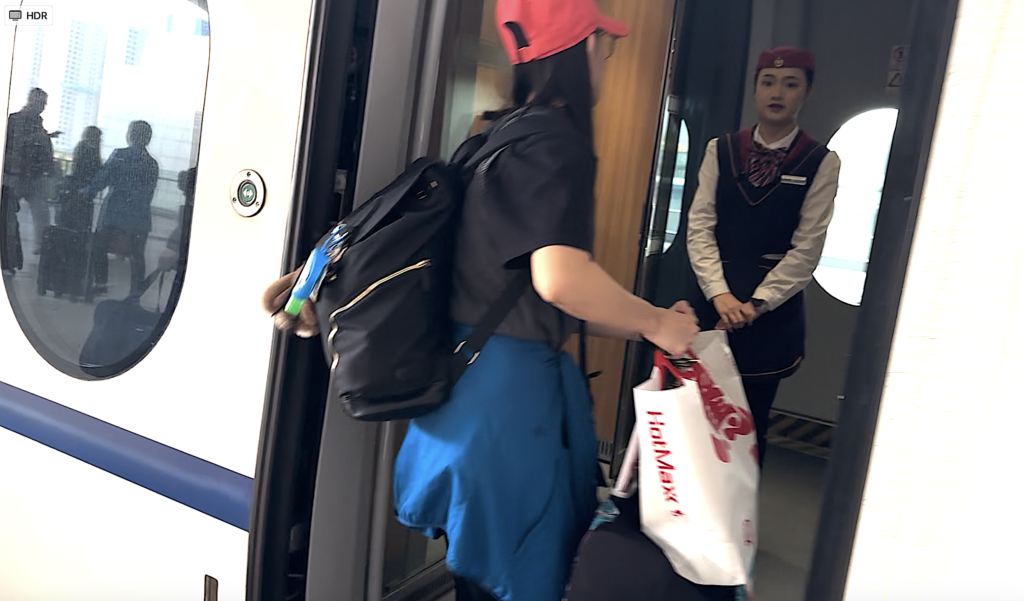
🚄 Getting to Jinan From Beijing
Jinan is one of the easiest Shandong cities to add after:
Beijing (北京, Běijīng).
High-speed trains:
高铁 — gāotiě
connect Beijing with Jinan frequently.
The journey on faster services can be roughly:
around 1½–2½ hours
depending on the train and station combination.
🔥
When searching tickets, pay attention to the station name.
Two names international travelers may encounter are:
济南西站 — Jǐnán Xī Zhàn
Jinan West Railway Station
and:
济南站 — Jǐnán Zhàn
Jinan Railway Station
Beginner Chinese:
西 — xī
west
站 — zhàn
station
So:
济南西站
Jinan West Station
Don’t simply search:
“Jinan.”
Always check:
which station.
😂
How Long Should You Give Jinan?
Could you see:
Baotu Spring (趵突泉)
and continue to Mount Tai the same day?
Technically, you can build all kinds of ambitious itineraries.
😂
Dad wouldn’t.
For a Deep China traveler, I’d give:
at least one full day
to Jinan.
And if your schedule allows:
one night
makes the whole journey much more comfortable.
Why?
Because Dad wants you to experience:
TWO JINANS.
💧 JINAN No. 1 — The City of Springs
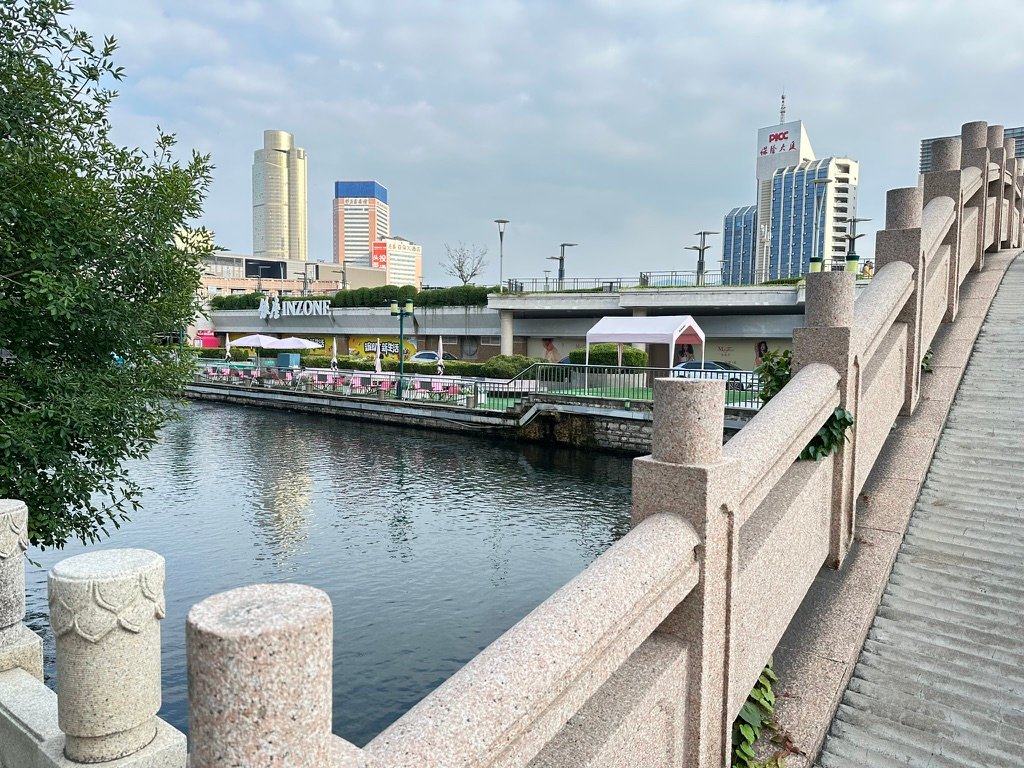
Spend part of your time around the historic spring-and-lake landscape.
The obvious starting point is:
Baotu Spring (趵突泉, Bàotū Quán).
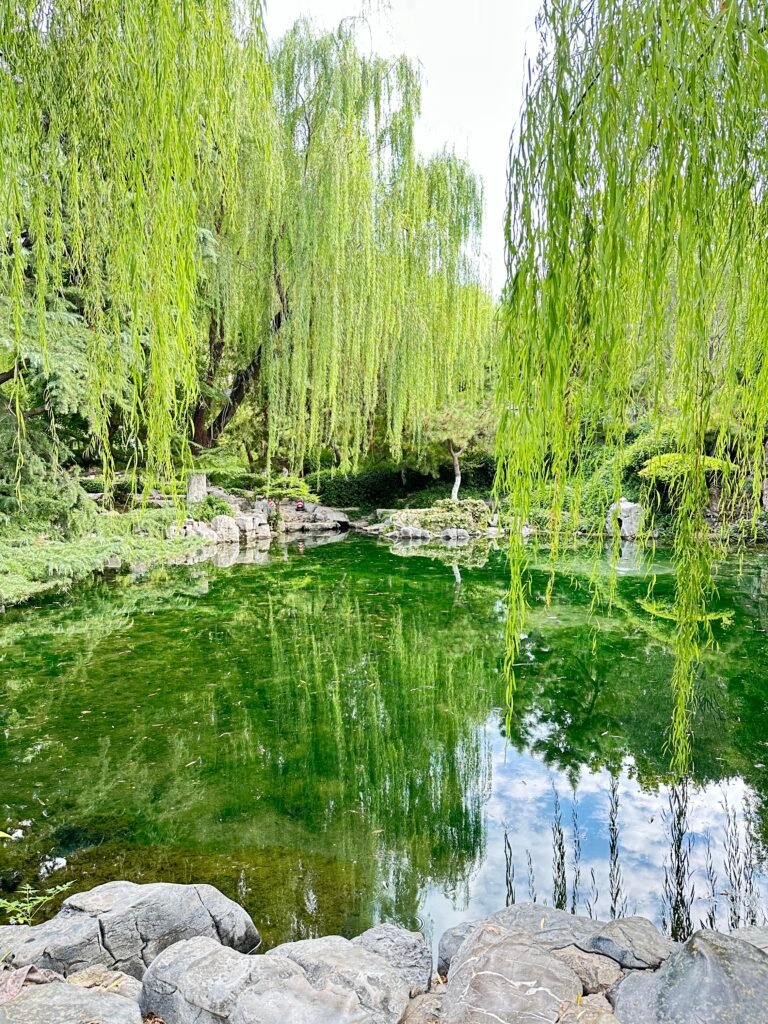
Then explore more of Jinan’s:
泉水 — quánshuǐ
spring water
and:
湖 — hú
lake
landscape.
Depending on your route and time, that can include:
Daming Lake (大明湖, Dàmíng Hú).
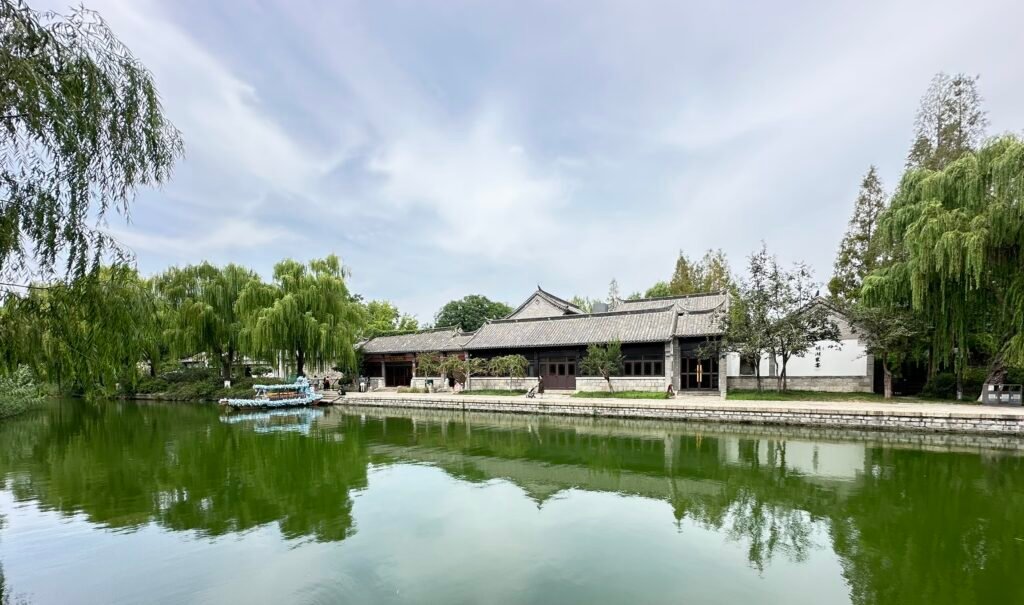
🔥
Don’t treat these simply as:
attractions.
Look at how:
water,
architecture,
trees,
inscriptions
and:
urban life
come together.
Remember Section 1:
nature becomes cultural landscape.
And Yes — Read the Stones
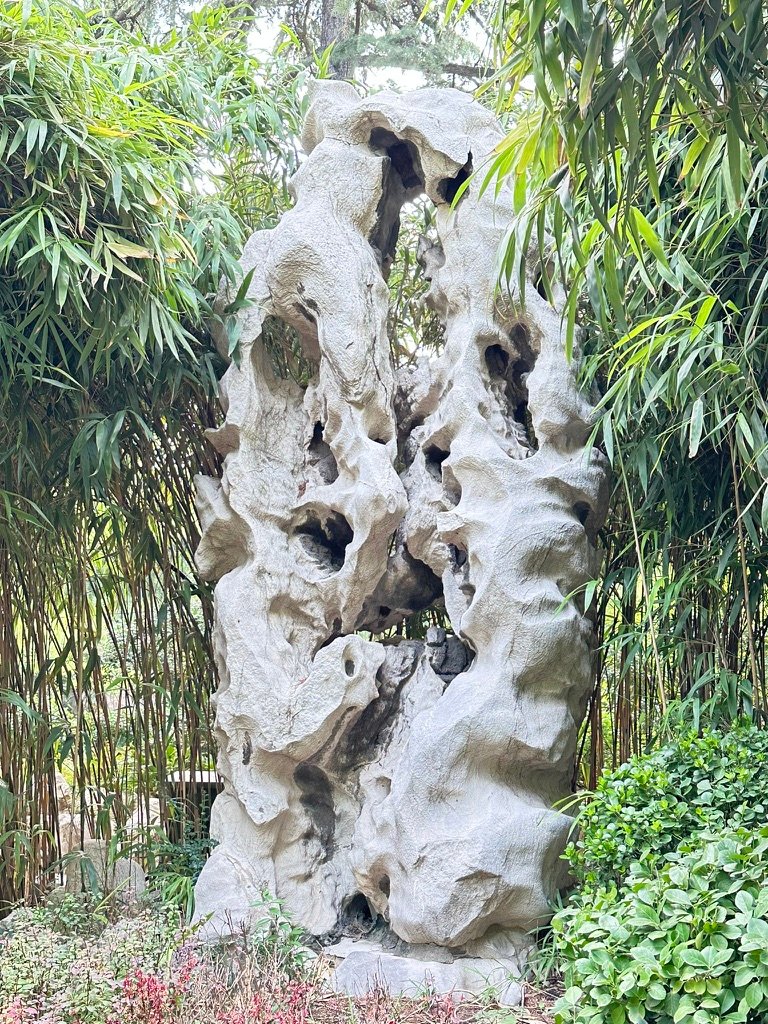
😂
Dad isn’t giving up.
At the historic spring sites, look for:
碑 — bēi
stele
碑文 — bēiwén
inscription
石刻 — shíkè
stone inscription
and:
题字 — tízì
inscribed calligraphy.
Take photographs with enough context to investigate later.
Don’t merely photograph:
three beautiful Chinese characters
and then discover at home that nobody remembers:
where they came from.
😭😂
Look for Li Qingzhao Too
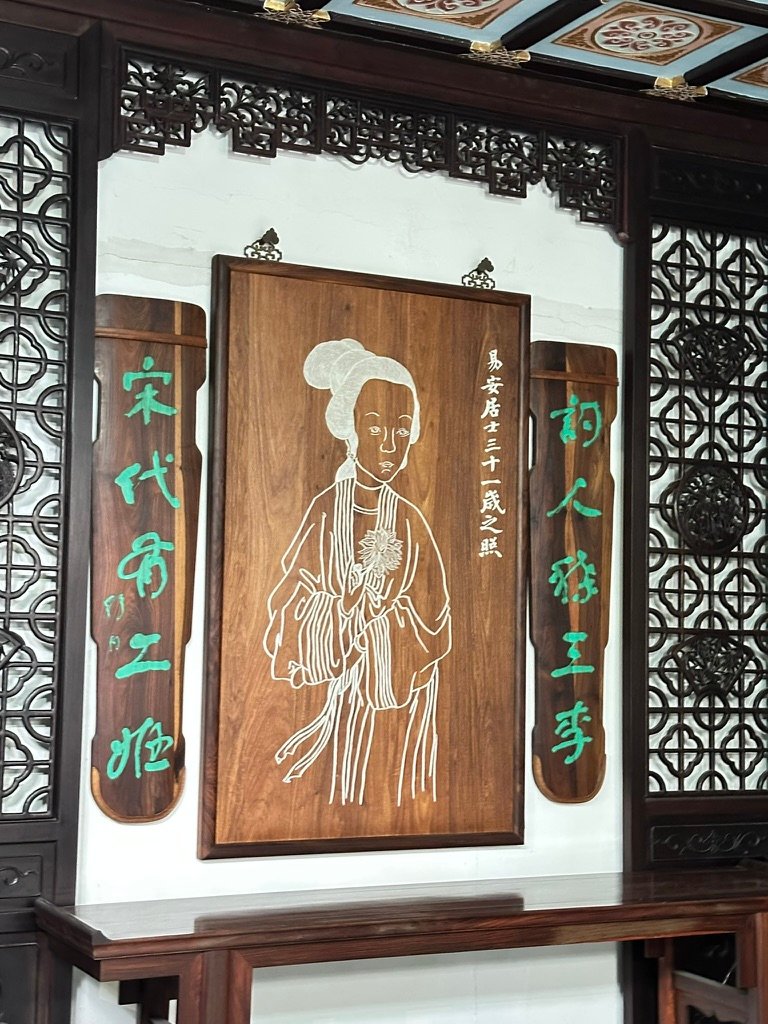
Remember:
Li Qingzhao (李清照, Lǐ Qīngzhào).
Her connection with the Jinan region gives you another historical layer.
Useful Chinese:
词 — cí
lyric-poetry form
宋朝 — Sòng Cháo
Song dynasty
北宋 — Běi Sòng
Northern Song
南宋 — Nán Sòng
Southern Song
🔥
You don’t need to become an expert on Song poetry before lunch.
The point is simpler:
Chinese history isn’t only emperors and wars.
Literature can preserve:
how historical change felt to a human being.
That’s another rabbit worth remembering.
JINAN No. 2 — Shandong Museum
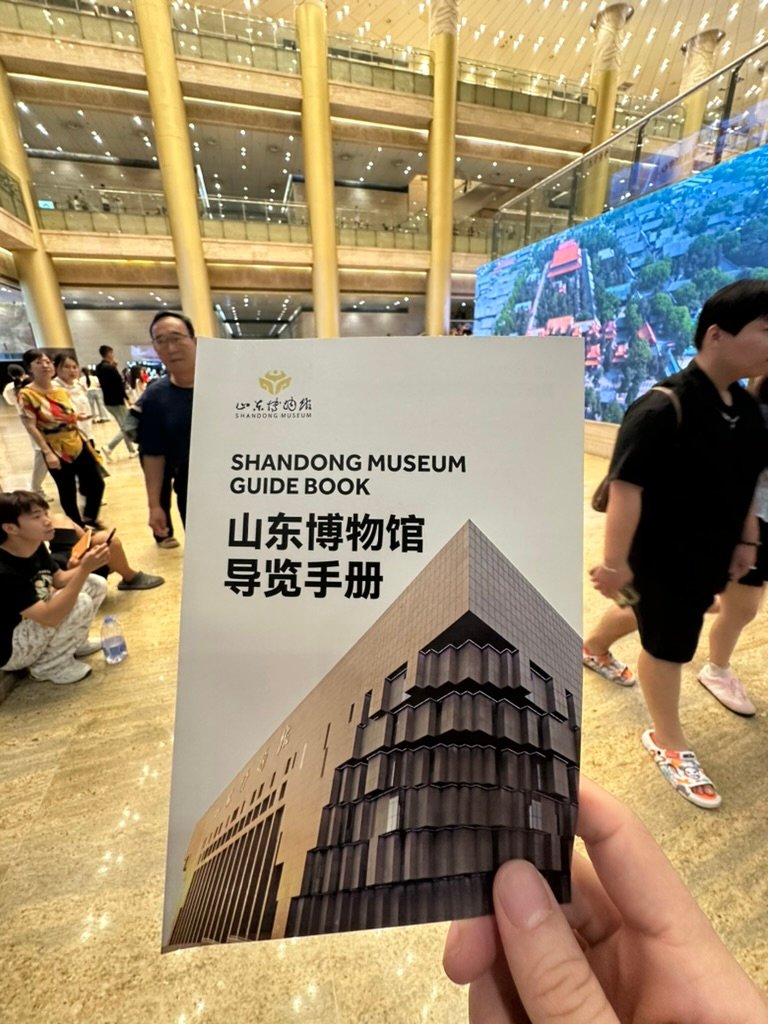
Then Dad would give:
Shandong Museum
proper time.
Not:
“We have 45 minutes before dinner.”
😂
For anyone interested in Deep China, allow:
several hours.
The collection spans far more than the handful of objects we’ve highlighted in this article.
And exhibitions can change.
So don’t enter with:
a rigid scavenger hunt.
Instead, Dad would carry:
a few questions.
🐇 Question 1 — What Was Here Before the Dynasties I Know?
Look for:
Longshan Culture (龙山文化)
and objects such as the remarkable:
蛋壳黑陶
dànké hēitáo
eggshell black pottery.
Then ask:
What can archaeology actually tell us about societies before China’s securely documented imperial history?
🔥
That rabbit leads toward:
Before China — When Does Chinese Civilization Actually Begin?
🐇 Question 2 — When Does an Object Become a Document?
Look at:
bronzes (青铜器, qīngtóngqì)
and:
铭文 — míngwén
inscriptions.
A bronze vessel may be:
an artifact.
But once it contains writing recording:
a person,
appointment,
event
or:
political relationship,
it also becomes:
a historical source.
🔥
That’s where:
archaeology
starts talking with:
texts.
🐇 Question 3 — What Were Qi and Lu?
Remember:
齐鲁 — Qílǔ.
Don’t let those remain two decorative characters.
齐 — Qi
points you toward:
Linzi (临淄)
and:
Jixia Academy (稷下学宫).
鲁 — Lu
points you toward:
Qufu (曲阜)
and:
Confucius (孔子).
🔥
This is where the museum stops being:
the end of the history lesson
and becomes:
the beginning of the journey.
🐇 Question 4 — How Did Ancient China Store Information?
Look for:
简牍 — jiǎndú
bamboo and wooden slips/documents
and:
竹简 — zhújiǎn
bamboo slips.
Then don’t ask only:
“What did people write on before paper?”
Ask:
“How does a government work without a way to record and transmit information?”
😳
Records.
Orders.
Accounts.
Laws.
Military information.
Texts.
Now:
writing technology
connects with:
state capacity.
Question 5 — What Is YOUR 值回票价 Object?
This one is Dad’s challenge.
😂
Dad’s was:
银雀山汉墓竹简
Yínquèshān Hànmù Zhújiǎn
Yinqueshan Han Tomb Bamboo Slips.
Standing there with Elaine, looking at material connected with:
《孙子兵法》
and:
《孙膑兵法》,
Dad said:
值回票价了!
Zhí huí piàojià le!
Worth the ticket.
Except Dad meant:
the air ticket.
the HSR ticket.
the whole Shandong journey.
😂🔥
So when YOU visit:
find your:
值回票价 object.
The thing that makes you stop.
Look.
Ask:
Why does this matter?
That’s usually where your rabbit is hiding.
🐇
Do You Need an English-Speaking Guide in Jinan?
For:
Baotu Spring
and central Jinan sightseeing?
Not necessarily.
A reasonably prepared independent traveler can enjoy the city.
For:
Shandong Museum,
however, the calculation is different.
If you’re seriously interested in:
archaeology,
pre-Qin history,
Qi and Lu,
bronze inscriptions,
bamboo manuscripts
and:
Chinese intellectual history,
a knowledgeable:
English-speaking guide (英语导游, Yīngyǔ dǎoyóu)
or specialist interpretation can add considerable value.
🔥
Dad would ask specifically for someone strong in:
Shandong history
rather than simply:
“English-speaking Jinan guide.”
But Don’t Let the Guide Do All the Thinking
😂
Ask questions.
Especially:
Is this archaeology or later tradition?
What does the inscription actually say?
Where was this object excavated?
What do historians know confidently?
What remains debated?
Useful Chinese:
考古 — kǎogǔ
archaeology
文献 — wénxiàn
documentary / textual sources
出土 — chūtǔ
excavated / unearthed
传说 — chuánshuō
legend / transmitted story
🔥
Those distinctions matter.
Ten Chinese Words to Bring Home From Jinan
This plate has given us plenty.
泉 — quán
spring
水 — shuǐ
water
泉城 — Quánchéng
City of Springs
博物馆 — bówùguǎn
museum
考古 — kǎogǔ
archaeology
青铜器 — qīngtóngqì
bronze vessel / bronze artifact
铭文 — míngwén
inscription
竹简 — zhújiǎn
bamboo slips
齐鲁 — Qílǔ
Qi and Lu
and Dad’s favorite:
值回票价 — zhí huí piàojià
worth the price / worth the trip
😂🔥
That’s a pretty good Mandarin lesson from one city.
Now Jinan Reveals Its Real Job
Remember what we originally thought?
JINAN
↓
SPRINGS
↓
WATER.
Good dish.
But incomplete.
After Shandong Museum:
JINAN
becomes:
THE COAT RACK.
🔥
Because the museum points:
BACKWARD
toward prehistoric Shandong.
And:
OUTWARD
toward the places we’re about to visit.
🍽️ The Museum Becomes the Menu
Now look at our journey.
🏺 LONGSHAN 龙山
asks:
When does Chinese civilization actually begin?
🐇
That leads toward our:
Before China
Big Question.
⛰️ MOUNT TAI 泰山
asks:
Why did emperors need Heaven?
Learn:
天 — tiān
Heaven
and:
封禅 — fēngshàn.
🐇
👨🏫 QUFU 曲阜
asks:
How did one teacher’s ideas become institutions?
Meet:
孔子 — Confucius
儒家 — Confucian tradition
and:
礼 — ritual/propriety.
🐇
And eventually…
Confucius escapes China.
🐇🌏
🏛️ LINZI 临淄
asks:
What did “China” look like before Qin unified the competing states?
Meet:
齐国 — State of Qi
稷下学宫 — Jixia Academy
and:
百家争鸣 — Hundred Schools contending.
🐇
🚢 DEZHOU 德州
asks:
How did imperial China connect itself — and connect with the wider world?
Meet:
大运河 — Grand Canal
漕运 — grain transport
and:
苏禄王墓 — Sulu Royal Tomb.
Then:
Zheng He 郑和
appears.
And the rabbit escapes China again.
🐇🌏
😳 This Is No Longer a Shandong Sightseeing Itinerary
Look at what happened.
JINAN
gives us the coat rack.
↓
TAISHAN
gives us:
HEAVEN.
↓
QUFU
gives us:
IDEAS + INSTITUTIONS.
↓
LINZI
gives us:
STATES + COMPETING IDEAS.
↓
DEZHOU
gives us:
EMPIRE + WORLD.
🔥🔥🔥
And underneath all of them:
PLACES.
Real places you can:
visit.
That’s the whole point.
🐇 Don’t Finish Shandong Inside the Museum
Shandong Museum is excellent.
But Dad doesn’t want you to leave saying:
“Great. Now I understand Shandong history.”
😂
The museum should make you:
hungry.
See:
齐
then go to:
临淄.
See:
鲁
then go to:
曲阜.
Read about:
天
then climb:
泰山.
Learn about imperial networks…
then go to:
德州.
🔥
MUSEUM → QUESTION → PLACE → CONNECTION → HISTORY.
That’s the DEEP China method.
ChinaTravelBUG’s Take
Come to Jinan for:
the springs.
Absolutely.
Walk around:
趵突泉.
Learn:
泉.
Meet:
李清照.
Enjoy the water.
🔥
Then go to:
山东博物馆.
And give it time.
Because somewhere inside there may be:
one object
that completely changes your journey.
For Dad, it was:
a few bamboo slips.
😳
They made the:
机票 — air ticket
worthwhile.
The:
高铁票 — high-speed rail ticket
worthwhile.
The trip:
值回票价.
🔥
And then they did something even more valuable.
They told Dad & Elaine:
where to go next.
🐇
That is why Jinan should be the starting point of our deeper Shandong journey.
Not because it contains:
all the answers.
But because it gives you:
the questions.
And now…
🍽️ we’re ready for the full Shandong Michelin Journey Menu.
🐞🐇🔥
Travel China. Let the places teach you Chinese history.
See the place. Ask the bigger question. Understand China better.