Just a Few Hours From Beijing, Anyang Takes You More Than 3,000 Years Back
Beijing gives a first-time traveler an enormous amount of Chinese history.
The:
Forbidden City.
Great Wall.
Temple of Heaven.
Summer Palace.
Ming.
Qing.
Imperial China everywhere.
So why would Dad tell you to get on another train?
😂
Because a few hours south of Beijing sits:
Anyang (安阳, Ānyáng)
in Henan Province (河南省, Hénán Shěng).
And Anyang can do something Beijing cannot.
IT CAN TAKE YOU BACK MORE THAN 3,000 YEARS.
🔥
Not to another imperial palace.
Not to another Great Wall section.
But into the world of:
SHANG 商
and toward the transition into:
ZHOU 周.
For Dad & Elaine, Anyang eventually opened three completely different historical rabbit holes:
YINXU 殷墟
Hear the Shang speak.
CHINESE WRITING 中国文字
Follow the written tradition for more than 3,000 years.
YOULICHENG 羑里城
Meet the future King Wen while Shang still rules.
Three dishes.
One city.
😂🍚🍚🍚
And that’s why Dad thinks Anyang deserves:
2–3 NIGHTS
rather than being treated as another rushed stop between Beijing and Xi’an.
First Things First — How Do You Get to Anyang?
This is much easier than the history makes it sound.
😂
Anyang is connected to China’s high-speed rail network through:
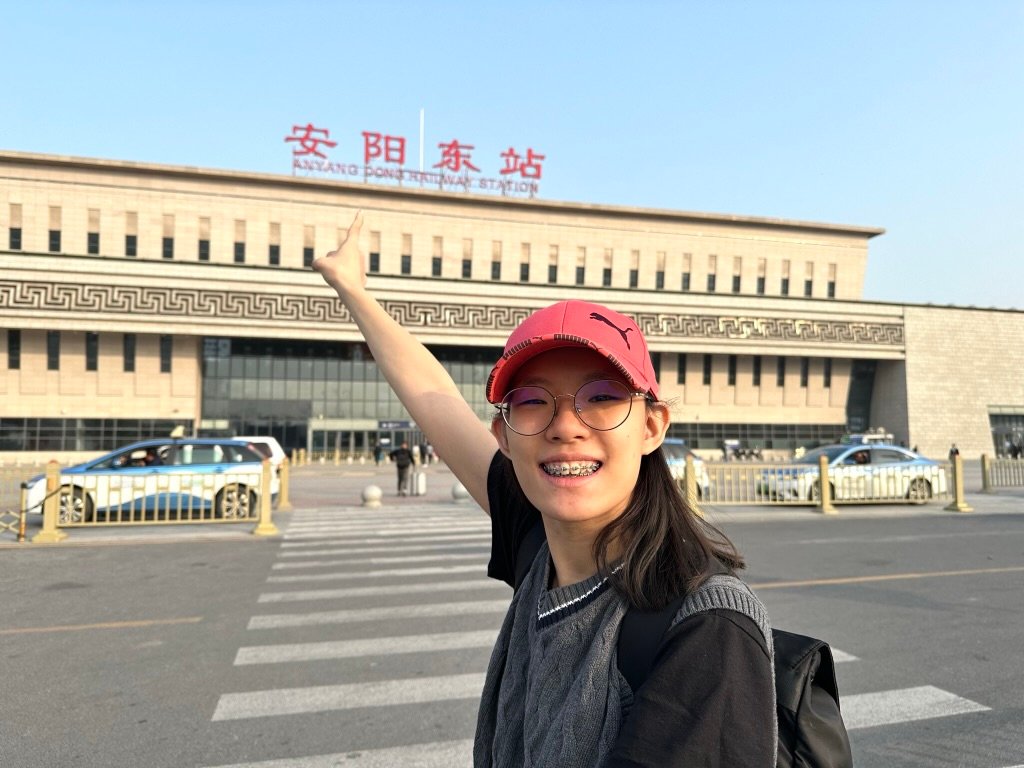
Anyang East Railway Station (安阳东站, Ānyáng Dōngzhàn).
From Beijing, high-speed trains can make the journey in roughly:
2½–3 HOURS
depending on the service.
That gives Dad one of his favorite China-travel propositions:
BREAKFAST IN BEIJING.
BRONZE AGE CHINA AFTER LUNCH.
🔥
If you’re already traveling:
BEIJING → XI’AN
Anyang can also work naturally as an intermediate historical stop rather than a completely separate expedition.
Train schedules and fares change, so check your actual date on:
China Railway 12306
or:
Trip.com
before traveling.

Western Travel Handrail: Don’t Think “Another City”
First-time China travelers already have too many cities.
😂
Beijing.
Xi’an.
Chengdu.
Shanghai.
Maybe Zhangjiajie.
Maybe Guilin.
So Dad is NOT asking:
“Would you like another Chinese city to collect?”
Think of Anyang differently.
ANYANG IS A TIME MACHINE BETWEEN BEIJING AND XI’AN.
Beijing gives you later imperial China.
Xi’an gives you Qin, Han and Tang.
Anyang takes you much further backward:
INTO THE BRONZE AGE.
That fills a historical gap rather than merely adding another destination.
Dad’s Anyang Tasting Menu
If you’re wondering why Anyang needs more than one day, here’s the simple answer.
It contains:
THREE DIFFERENT HISTORICAL EXPERIENCES.
Don’t mash them together.
😂
🍚 DISH 1 — Yinxu 殷墟: Hear the Shang Speak
Start here.
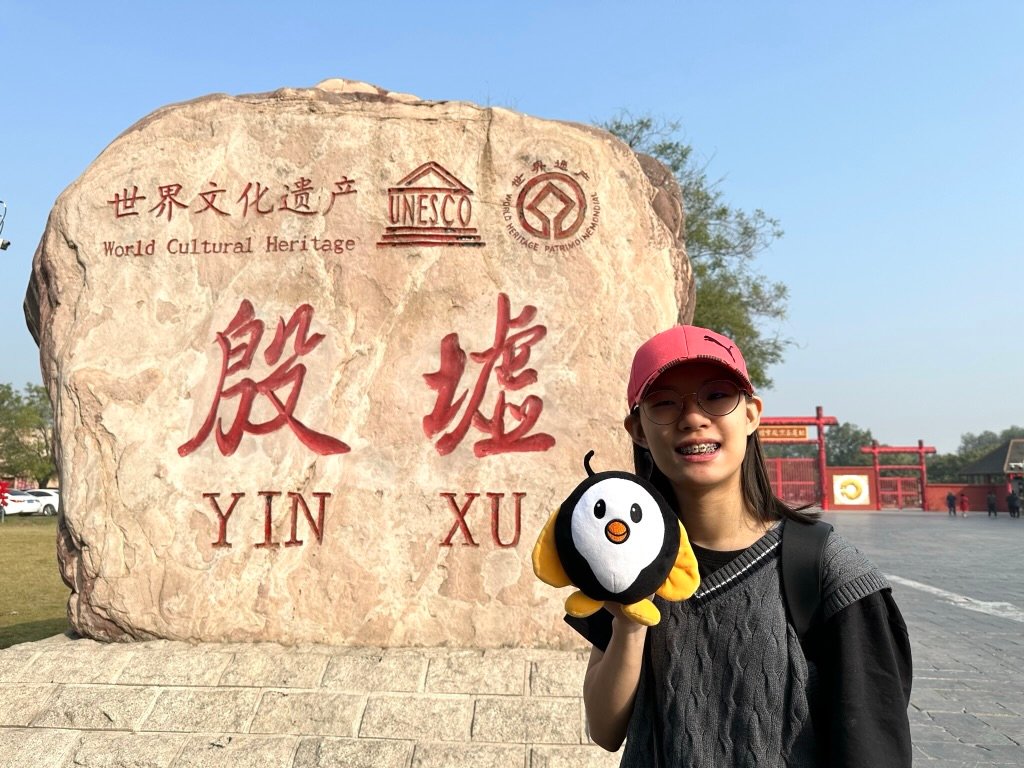
Yinxu (殷墟, Yīnxū)
is the archaeological site of the major late Shang royal center around Anyang and a:
UNESCO WORLD HERITAGE SITE.
🔥
Here you encounter:
palace and temple remains,
royal tombs,
bronze culture,
workshops,
burials
and something extraordinary:
ORACLE-BONE INSCRIPTIONS.
甲骨文 — jiǎgǔwén
These aren’t simply later stories about Shang.
They are:
WORDS PRODUCED INSIDE THE SHANG WORLD ITSELF.
Questions about:
rain,
harvests,
war,
ritual,
health,
childbirth
and:
royal ancestors.
😳
Ancient China stops being silent.
And Meet Fu Hao
At Yinxu, one name becomes wonderfully human:
Fu Hao (妇好, Fù Hǎo).
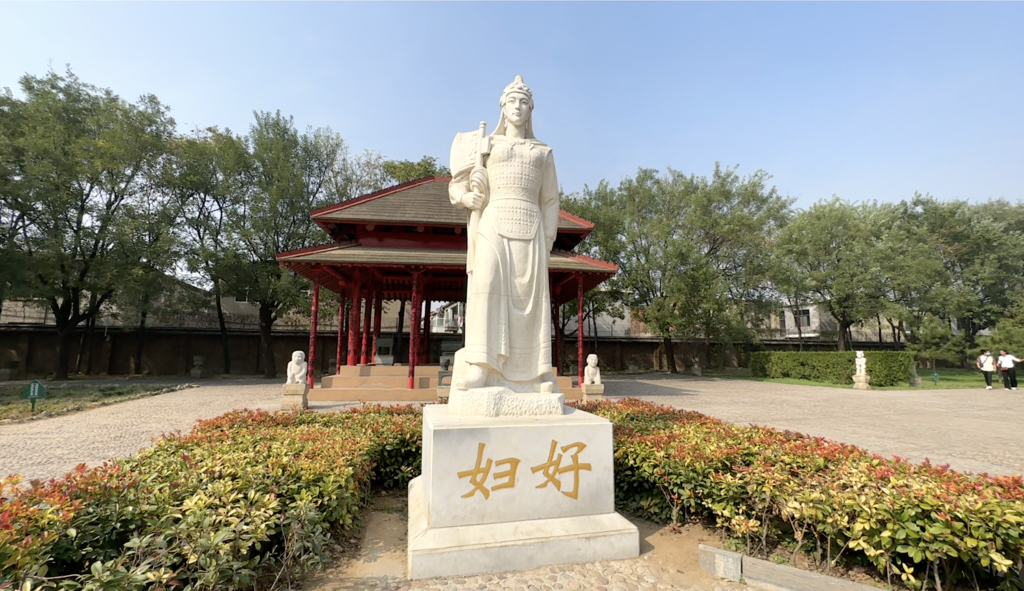
She was a consort of:
King Wu Ding (武丁, Wǔ Dīng)
and appears in contemporary oracle-bone inscriptions associated with:
military activity,
ritual,
health
and:
pregnancy.
Then archaeologists discovered her largely undisturbed tomb in:
1976.
🔥
Now we have:
WRITING
+
A NAMED PERSON
+
A TOMB
+
MATERIAL EVIDENCE.
That’s Yinxu at its best.
🐇 Want the Full Archaeology Rabbit?
Yinxu deserves much more than we can fit into this Anyang overview.
👉 Beyond Beijing: Anyang — Where Oracle Bones Let Us Hear China 3,000 Years Ago →
There Dad & Elaine go much deeper into the oracle bones (甲骨文, jiǎgǔwén), Fu Hao (妇好, Fù Hǎo) and the extraordinary combination of writing, archaeology and material evidence that allows the late Shang world to speak to us in its own words.
🍚 DISH 2 — National Museum of Chinese Writing: Follow the Words
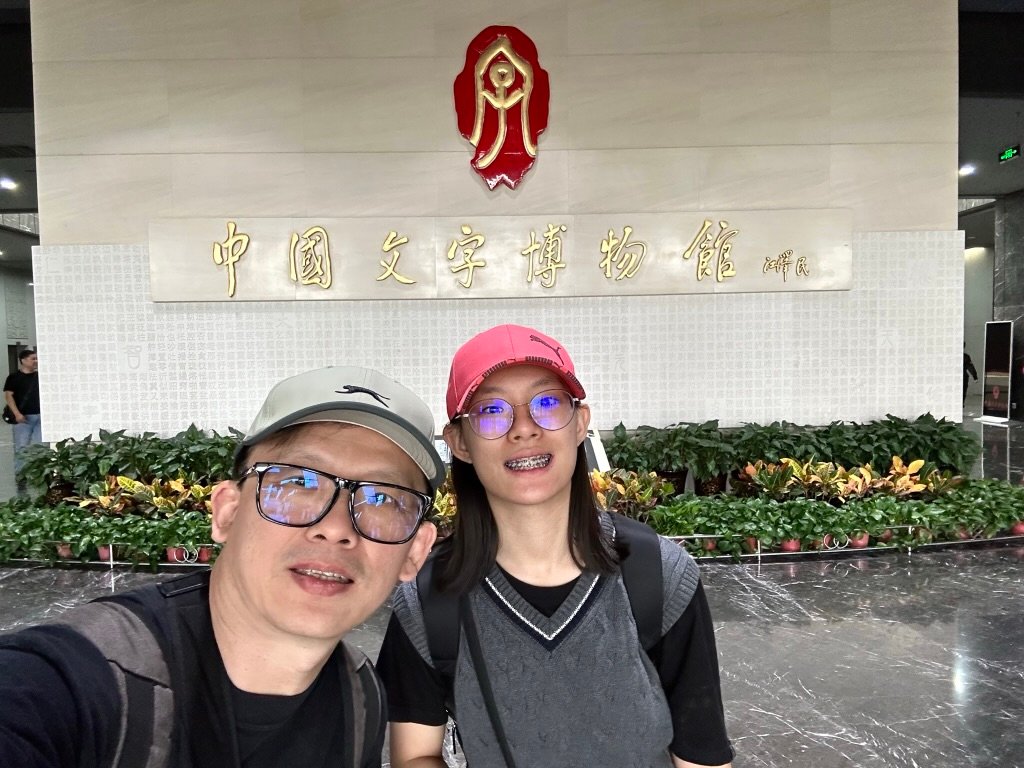
After Yinxu, Dad would take you somewhere completely different.
Not another archaeological ruin.
Not another tomb.
But a museum devoted to something you probably use every day if you read Chinese:
Chinese characters.
The:
National Museum of Chinese Writing
中国文字博物馆
Zhōngguó Wénzì Bówùguǎn
is in Anyang (安阳, Ānyáng).
And its location makes perfect sense.
Because just a short distance away at Yinxu, archaeologists found some of the earliest substantial bodies of mature Chinese writing known to us:
甲骨文 (jiǎgǔwén)
oracle-bone inscriptions.
At Yinxu, Dad and Elaine had seen ancient people using written characters more than 3,000 years ago.
Now the question became:
WHAT HAPPENED TO THOSE CHARACTERS NEXT?
🐇
🦴 Start With 甲骨文 — Oracle-Bone Writing
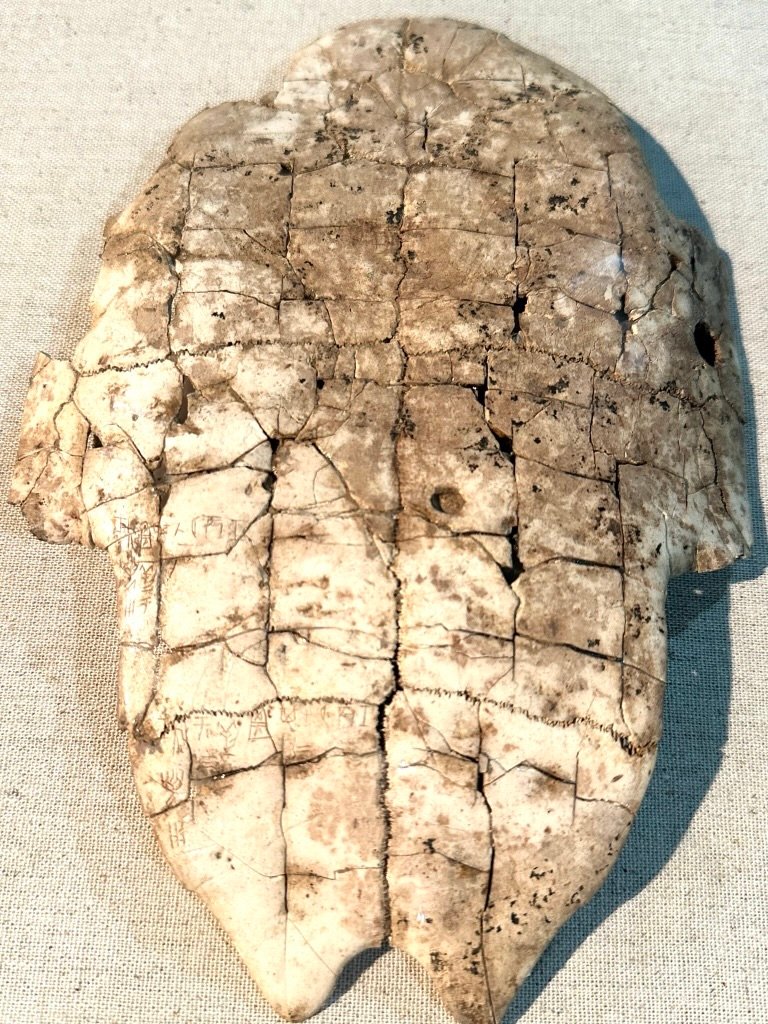
The Chinese name itself tells you what you’re looking at:
甲 (jiǎ) — shell / carapace
骨 (gǔ) — bone
文 (wén) — writing / inscription
So:
甲骨文
writing on shells and bones.
During the late Shang period, inscriptions were carved mainly onto:
ox scapulae
and:
turtle plastrons.
These weren’t children’s handwriting exercises.
😂
They were connected with royal divination.
Questions could concern:
weather,
harvests,
warfare,
hunting,
ritual,
illness,
pregnancy,
and relations with royal ancestors.
That’s why Yinxu is so important.
The Shang didn’t merely leave us bronze vessels and ruins.
They left words.
👀 But Don’t Expect Modern Chinese
If you read Chinese today, some oracle-bone characters may look tantalizingly familiar.
Others?
Not remotely.
😂
The forms are ancient.
Some are highly pictorial.
Some changed considerably over the following millennia.
But that’s precisely what makes the museum fascinating.
You’re not looking at:
“Old Chinese writing that disappeared.”
You’re looking at an early stage in a written tradition that continued to develop.
And the museum lets you follow that development.
🥉 Next Comes 金文 — Writing on Bronze
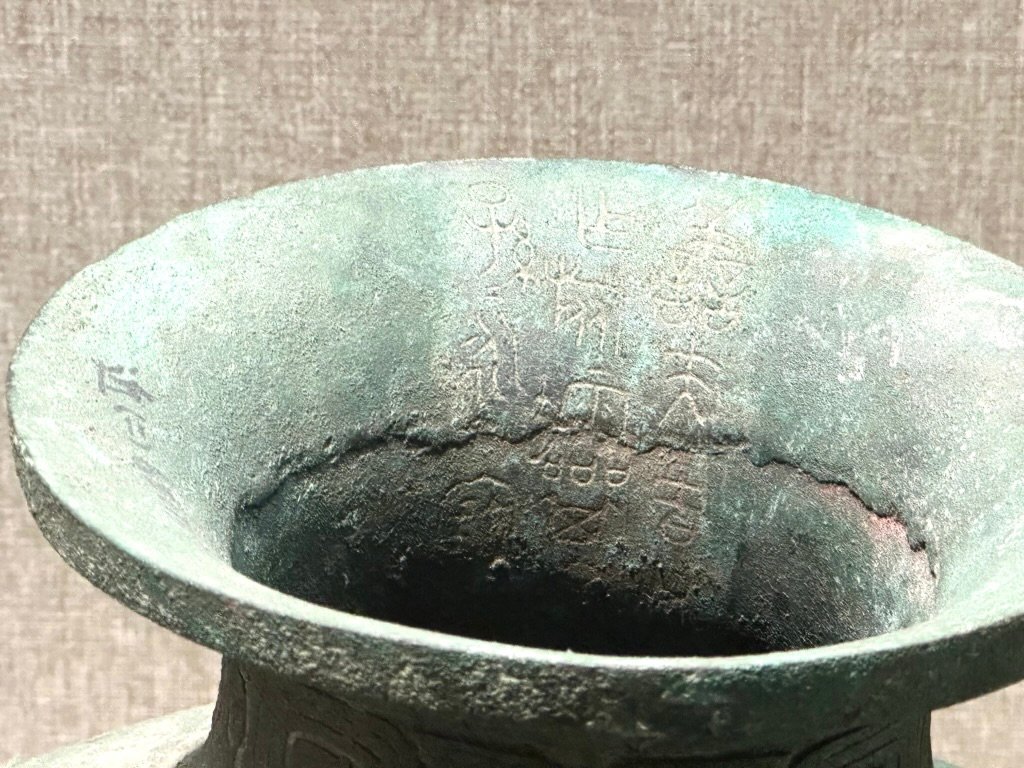
As Dad and Elaine traveled deeper into early Chinese history, another term kept appearing:
金文
jīnwén
bronze inscriptions.
Here:
金 (jīn) can refer to metal.
文 (wén) means writing / inscription.
These inscriptions appear on ancient bronze ritual vessels and other bronze objects.
This becomes especially important as we move from:
Shang (商)
toward:
Zhou (周).
And if you’ve followed Dad & Elaine to Baoji (宝鸡) and Zhouyuan (周原), you’ll understand why Dad gets excited here.
😂
Bronze vessels weren’t simply beautiful ancient objects.
Their inscriptions could preserve:
names,
lineages,
ritual events,
appointments,
rewards,
and political relationships.
The object becomes:
ARTIFACT + WRITING + MEMORY.
✍️ Then the Characters Keep Changing
The museum allows you to follow Chinese writing through later script forms.
For an international reader, Dad wouldn’t try to memorize every palaeographic category.
Keep the coat rack simple.
😂
Think:
甲骨文
jiǎgǔwén
Oracle-bone writing
↓
金文
jīnwén
Bronze inscriptions
↓
篆书
zhuànshū
Seal script
↓
隶书
lìshū
Clerical script
↓
楷书
kǎishū
Regular script
↓
the Chinese characters you still encounter today.
The shapes changed.
Writing materials changed.
Political systems changed.
Dynasties changed.
But the written tradition continued.
📱 And Then Dad Looked at Elaine’s Phone
This was the part Dad loved.
😂
We had spent the day looking at:
bones,
bronzes,
ancient inscriptions,
and characters written thousands of years ago.
Then Elaine took out her phone.
Chinese characters appeared on the screen.
Messages.
Apps.
Maps.
Payments.
Search.
Modern life.
And suddenly Dad had one of those:
WAIT A MINUTE…
moments.
🐇
A Shang diviner carving characters into bone more than 3,000 years ago obviously wasn’t using:
Alipay.
😂
And the characters on Elaine’s smartphone aren’t visually identical to oracle-bone inscriptions.
But there is still a remarkable historical relationship between the ancient writing tradition and the written Chinese used today.
That’s when Dad stopped asking only:
“How old are Chinese characters?”
The more interesting question became:
How did this written tradition keep changing — yet remain connected enough for Chinese civilization to keep talking to its own past?
🧠 Dad’s Political Science Handrail — Writing Is More Than Communication
Writing obviously lets people communicate.
But over very long periods, writing can do something else.
It can preserve:
laws,
rituals,
genealogies,
government records,
historical accounts,
poetry,
philosophy,
religious texts,
and:
collective memory.
Dynasties can collapse.
Capitals can move.
Political systems can change.
Pronunciations can change.
Regional speech can differ enormously.
Yet written texts allow later generations to keep encountering earlier generations.
That doesn’t mean Chinese writing remained unchanged for 3,000 years.
It absolutely did not.
The forms evolved.
The language evolved.
The conventions evolved.
But continuity does not require immobility.
That’s the fascinating part.

🍚 Western Handrail — Think “Family Resemblance,” Not Photocopy
Imagine photographs of the same family across many generations.
Great-grandparent.
Grandparent.
Parent.
Child.
They don’t look identical.
But you may still see relationships.
That’s a better handrail for thinking about Chinese writing than imagining someone carved a modern smartphone character onto a Shang oracle bone and everybody simply copied it unchanged for 3,000 years.
😂
The story is:
continuity THROUGH change.
Not:
continuity WITHOUT change.
🐇 And This Is Why Anyang Needs More Than Yinxu
If you visit only Yinxu, you can come away thinking:
“Wow. The Shang wrote on bones.”
That’s already extraordinary.
But the National Museum of Chinese Writing (中国文字博物馆) gives you the next question:
“What happened to the writing?”
Now Anyang begins connecting:
SHANG
↓
ORACLE BONES
↓
WRITING
↓
LATER CHINESE CIVILIZATION
↓
ELAINE’S PHONE.
😂🔥
That’s why Dad thinks these two Anyang experiences belong together.
Yinxu gives you:
the words.
The Writing Museum lets you:
follow them.
🐇 Want the Full Writing Rabbit?
Anyang made Dad stop asking only:
“How old are Chinese characters?”
The much bigger question became:
How did this written tradition help Chinese civilization keep talking to its own past?
👉 DEEP China: From Oracle Bones to Your Phone — Why Chinese Writing Matters So Much →
That article follows the writing much farther than we need to go in this Anyang overview.
Because Dad still has:
ONE MORE DISH.
😂
And this time, instead of following the words…
we’re going to meet a man who was still living under Shang power while the future Zhou world was beginning to take shape.
🐇
🍚 DISH 3 — Youlicheng 羑里城: Watch Shang Begin to Turn Toward Zhou
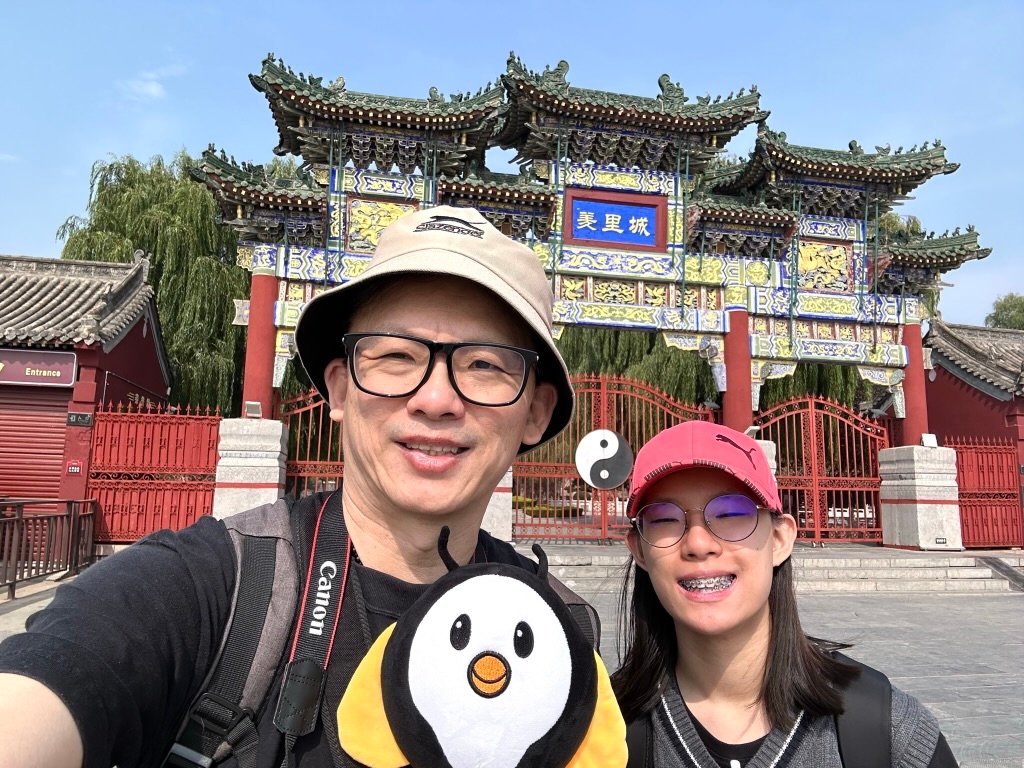
After Yinxu and the National Museum of Chinese Writing, Dad has one more place for you.
And this one is different again.
At:
Yinxu (殷墟, Yīnxū)
you stand inside the late Shang world.
At:
National Museum of Chinese Writing (中国文字博物馆)
you follow the words that world left behind.
Then travel south from central Anyang toward:
Youlicheng (羑里城, Yǒulǐchéng)
near Tangyin (汤阴, Tāngyīn) in Anyang, Henan Province (河南省, Hénán).
And suddenly…
the next dynasty starts appearing before the previous one has disappeared.
🔥
This is why Dad thinks Youlicheng belongs in the same Anyang journey.
👑 Meet Ji Chang — 姬昌
The central figure here is:
Ji Chang (姬昌, Jī Chāng)
Later generations know him much better as:
King Wen of Zhou
周文王 (Zhōu Wénwáng)
But here’s the important part.
He wasn’t yet king of a Zhou dynasty ruling China.
The Shang Dynasty (商朝, Shāng Cháo) still existed.
The traditional account places Ji Chang within the political world of the late Shang, under:
King Zhou of Shang (商纣王, Shāng Zhòuwáng).
And according to later tradition, Ji Chang was detained at:
羑里 — Yǒulǐ
for a period of time.
Now stop.
This is the handrail.
At Yinxu:
SHANG IS STILL THE PRESENT.
At Youlicheng:
ZHOU IS STILL THE FUTURE.
🔥
That is what makes these two places so powerful when visited together.
Dad’s Coat Rack — Don’t Jump Ahead
International travelers often learn Chinese dynasties like this:
Shang → Zhou → Qin → Han
Nice.
Clean.
Easy to memorize.
😂
Real historical transitions are messier.
So at Youlicheng, Dad wants you to resist jumping immediately to:
“And then the Zhou Dynasty began.”
Not yet.
Hang these three things on the coat rack:
SHANG — 商
still rules.
JI CHANG — 姬昌
exists inside that Shang political world.
ZHOU — 周
has not yet replaced Shang.
That’s enough.
Now the place becomes much more interesting.
😳 The Future Zhou King Was Still Under Shang Power
Think about what you’re seeing.
Ji Chang would later become one of the great foundational figures in Zhou political memory.
His son:
King Wu of Zhou (周武王, Zhōu Wǔwáng)
would eventually overthrow Shang.
But at the point remembered at Youlicheng…
that victory hasn’t happened.
The future Zhou story is still subordinate to the Shang world.
For Dad, this is the historical chili.
🌶️
Because when we visit famous capitals, history can look inevitable.
Of course Zhou replaced Shang.
Of course Qin unified China.
Of course Han came after Qin.
Except…
none of those outcomes was inevitable to the people living before they happened.
At Youlicheng, the future is still uncertain.
📜 Then Comes Another Rabbit — 周易
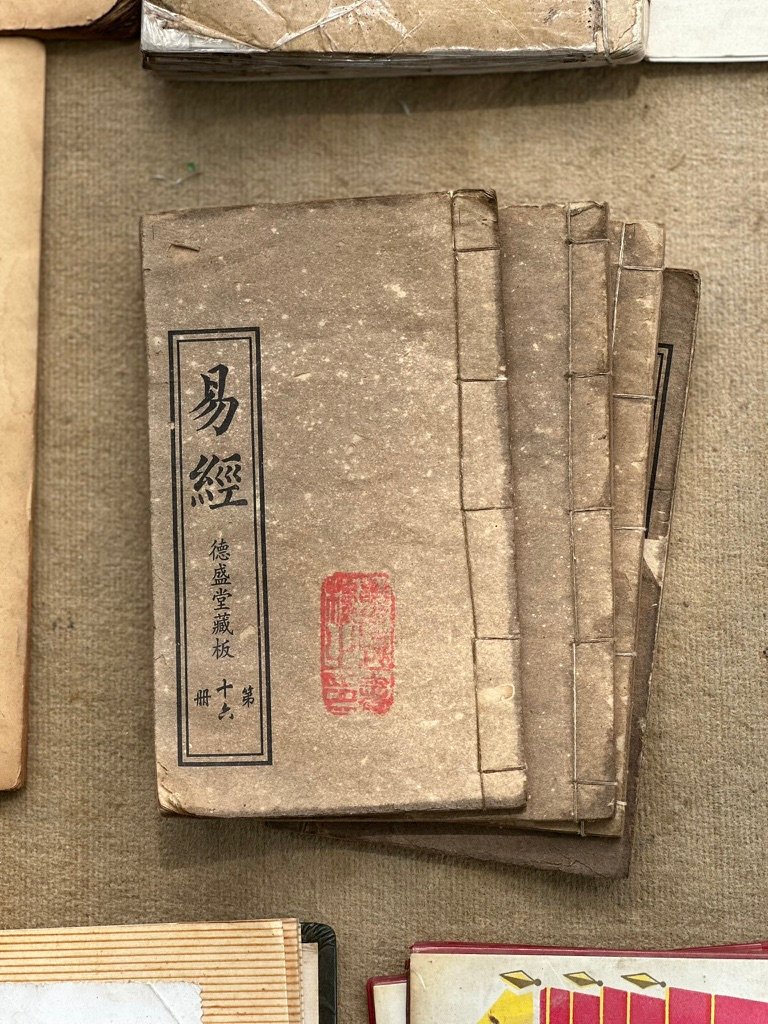
Youlicheng is also traditionally associated with Ji Chang and the development or arrangement of material connected with:
周易
Zhōuyì
— the Zhou Changes.
This work became the textual core of what later generations know as:
易经
Yìjīng
the Book of Changes / Classic of Changes.
And Dad needs another evidence handrail here.
Traditional association is not the same as saying:
“We can prove Ji Chang sat in this exact room and personally wrote every line of the modern Yijing exactly as we have it today.”
😂
The textual history of the Zhouyi / Yijing is much more complicated.
But the traditional connection between:
Ji Chang
Youli
and:
the Zhouyi
became enormously important in Chinese cultural memory.
So once again, Dad keeps the boxes separate:
history
textual development
tradition
cultural memory
They can connect.
But they are not automatically identical.
🧠 Why Does the Yijing 易经Matter So Much?
Even if you’ve never opened the Yijing (易经), you may have encountered one of its most recognizable visual systems:
broken and unbroken lines
arranged into:
trigrams (八卦, bāguà)
and:
hexagrams (卦, guà).
Over China’s long history, the text became associated with:
divination,
philosophy,
cosmology,
political thought,
ideas about change,
and interpretations of how patterns transform over time.
Dad isn’t going to turn this Anyang overview into:
YIJING FOR BEGINNERS — 400 PAGES
😂
The traveler only needs to understand why Youlicheng matters.
A place associated with a man living under Shang power later became linked with one of the most influential textual traditions in Chinese civilization.
That’s quite a rabbit hole for one stop south of Anyang.
🐇 Want the Full King Wen Rabbit?
At Yinxu:
Shang still rules.
At Youlicheng:
the future founding figure of Zhou is still living under Shang power.
That tension deserves its own story.
👉 DEEP China: Youlicheng 羑里城 — When the Future Zhou King Was a Prisoner of Shang →
There we go deeper into Ji Chang (姬昌), King Wen (周文王), the traditional connection with Zhouyi (周易), and why this place helps make the Shang–Zhou transition feel much less like a line in a dynasty chart.
But Ji Chang Doesn’t Personally Finish the Shang Story
This is another useful distinction.
Ji Chang dies before the final overthrow of Shang.
The decisive conquest is associated with his son:
King Wu of Zhou
周武王 (Zhōu Wǔwáng)
and the famous:
Battle of Muye
牧野之战 (Mùyě Zhī Zhàn)
traditionally dated to around:
1046 BCE.
Zhou defeats Shang.
And now our coat rack changes:
SHANG 商
loses dynastic power.
↓
ZHOU 周
becomes the ruling dynasty.
But Dad doesn’t want you to rush west yet.
First, look back at what Anyang has just shown us.
🔥 Put the Three Anyang Dishes Together
Now Dad’s tasting menu finally makes sense.
🍚 DISH 1 — Yinxu 殷墟
SEE SHANG.
Royal center.
Oracle bones.
Bronzes.
Fu Hao.
The late Shang world speaking in its own words.
🍚 DISH 2 — Chinese Writing 中国文字
FOLLOW THE WORDS.
甲骨文.
金文.
Later scripts.
A written tradition that changes enormously while maintaining extraordinary continuity.
🍚 DISH 3 — Youlicheng 羑里城
WATCH SHANG TURN TOWARD ZHOU.
Ji Chang.
King Wen.
Zhouyi.
The future Zhou story still existing under Shang power.
Put them together:
SHANG → WRITING → ZHOU
🔥
That’s why Dad doesn’t think Anyang is simply:
“the city with Yinxu.”
It’s a much richer historical cluster.
🗺️ And Then the Zhou Story Starts Moving West
This is where Anyang becomes part of a much bigger ChinaTravelBUG route.
After Shang falls, the Zhou story increasingly pulls us westward.
From:
Anyang (安阳)
and:
Youlicheng (羑里城)
toward:
Qishan (岐山, Qíshān)
Zhouyuan (周原, Zhōuyuán)
Baoji (宝鸡, Bǎojī)
and eventually toward the wider historical world around:
Xi’an (西安, Xī’ān).
Dad and Elaine later followed exactly that rabbit.
And this is where geography starts teaching the history.
🐇 Follow the Zhou Rabbit West
Our Anyang story doesn’t end when we leave Henan Province (河南省).
Dad & Elaine later followed the Zhou story west into:
Shaanxi Province (陕西省, Shǎnxī)
to Qishan (岐山) and Zhouyuan (周原) — the landscape associated with the Zhou homeland and the world from which Zhou power emerged.
👉 Beyond Xi’an: Qishan 岐山 & Zhouyuan 周原 — Walking Through the Homeland of the Zhou →
That’s where the story you’ve just begun at Youlicheng acquires another landscape.
🥉 And Then Baoji Gives You the Bronzes
Continue farther west and you reach:
Baoji (宝鸡, Bǎojī)
in Shaanxi.
For Dad and Elaine, Baoji opened another major door into the Zhou world through:
bronze vessels,
inscriptions,
lineage,
and the political-cultural world before Qin Shi Huang.
The:
Baoji Bronze Ware Museum
宝鸡青铜器博物院
Bǎojī Qīngtóngqì Bówùyuàn
became one of the reasons Elaine herself wanted Baoji on our itinerary.
And suddenly our Anyang writing rabbit connects beautifully with our Baoji bronze rabbit.
At Anyang:
甲骨文 — oracle-bone writing.
As we move into the Zhou world:
金文 — bronze inscriptions.
Same journey.
Different medium.
Different political world.
🔥
🐇 Beyond Xi’an: Why We Went to Baoji — Into the China Before Qin Shi Huang →
This Is Why Dad Calls It a History Trail
Look at the route:
ANYANG 安阳
↓
YOULICHENG 羑里城
↓
travel west
↓
QISHAN 岐山
↓
ZHOUYUAN 周原
↓
BAOJI 宝鸡
↓
XI’AN 西安
That’s not simply:
six places.
It’s a historical journey.
You can physically move through landscapes associated with:
late Shang
↓
Shang–Zhou transition
↓
Zhou homeland
↓
Zhou bronze culture
↓
and eventually the later Qin world around Xi’an.
Dad completely understands if you don’t want to spend your China holiday doing this.
😂
But if your brain has already started saying:
“Wait… so what happened NEXT?”
then…
congratulations.
The rabbit has escaped.
🐇
❤️ And Now Anyang Makes Sense as a 2–3 Night Stop
If you rushed into Anyang, photographed Yinxu and immediately left…
you’d see something extraordinary.
But you’d miss the sequence.
Dad would rather give the city enough time to let each place do one job:
Yinxu
Shang speaks.
Chinese Writing Museum
the words continue.
Youlicheng
the future Zhou story appears.
That’s a much more satisfying journey than trying to swallow 1,000 years of Chinese history before lunch.
😂
And it sets us up perfectly for the practical question:
How should you actually spend 2–3 nights in Anyang?
That’s next.
🧳 So How Should You Actually Visit Anyang?
After all that Shang, oracle bones, writing and King Wen…
Dad owes you something practical.
😂
If you’re coming from Beijing (北京, Běijīng) and continuing toward Xi’an (西安, Xī’ān), how much time should you actually give:
Anyang (安阳, Ānyáng)?
Dad’s answer:
2 nights minimum
3 nights if you enjoy history and don’t want to rush
You can see Yinxu on a fast stop.
But that misses what makes Anyang special.
The value isn’t one attraction.
It’s the sequence:
YINXU → WRITING → YOULICHENG
or:
SHANG → WORDS → ZHOU
🔥
🚄 Arriving From Beijing
For most international travelers, the easiest arrival point is:
Anyang East Railway Station
安阳东站
Ānyáng Dōngzhàn
This is the city’s main high-speed rail station.
From Beijing, high-speed trains generally make Anyang a very manageable stop on the way south.
Dad’s preferred travel logic is:
BEIJING → ANYANG → XI’AN
rather than:
Beijing → Xi’an → backtrack to Anyang → Xi’an again.
😂
If Anyang interests you, build it naturally into the route.
And always check the current train timetable for your actual travel date rather than relying on an old blog schedule.
🏨 Where Should You Stay?
For a first visit, Dad would prioritize:
convenience
over:
finding the most atmospheric hotel in Henan.
😂
Anyang’s three historical experiences aren’t all sitting beside one another.
You’ll be moving around the city and, for Youlicheng, farther south toward Tangyin (汤阴, Tāngyīn).
So Dad would look for a hotel with:
good DiDi access,
restaurants nearby,
easy movement into central Anyang,
and reasonable access to the railway station.
You don’t need to sleep beside Yinxu to understand Yinxu.
Use the hotel as your base.
Then let DiDi do the work.
📅 Dad’s 3-Day Anyang Plan
This is the version Dad prefers.
Not because there’s only one correct order…
but because each day gets:
ONE BIG IDEA.
That matters when you’re dealing with 3,000-year-old history.
😂
DAY 1 — Arrive + Follow the Words
National Museum of Chinese Writing
中国文字博物馆
Zhōngguó Wénzì Bówùguǎn
Arrive in Anyang.
Check in.
Have lunch.
Then spend the afternoon following:
甲骨文
oracle-bone writing
↓
金文
bronze inscriptions
↓
later scripts
↓
modern Chinese characters.
This is a relatively gentle way to begin.
You haven’t yet thrown yourself into an enormous archaeological landscape.
Instead, you’re giving yourself a vocabulary.
So when you see oracle-bone inscriptions at Yinxu the next day…
they already mean something.
🐇 If the writing itself catches you:
👉 DEEP China: From Oracle Bones to Your Phone — Why Chinese Writing Matters So Much →
🍚 DAY 2 — The Main Course: Yinxu 殷墟
Dad would give the main day to:
Yinxu (殷墟, Yīnxū)
Don’t squeeze this between breakfast and another attraction.
This is the reason Anyang belongs on a serious historical China itinerary.
Here you’re dealing with:
late Shang royal power,
oracle-bone inscriptions,
bronze culture,
burials,
royal archaeology,
and:
Fu Hao (妇好, Fù Hǎo).
Give yourself time.
Stop.
Read.
Look.
Don’t turn a UNESCO World Heritage Site into:
“Photo taken. Next.”
😂
The important idea for Day 2 is:
THE SHANG LEFT WORDS OF THEIR OWN.
That’s the thought Dad wants you carrying when you leave.
🐇 Then, if you want the full archaeological rabbit:
👉 Beyond Beijing: Anyang — Where Oracle Bones Let Us Hear China 3,000 Years Ago →
👑 DAY 3 — Watch the Future Zhou Story Appear
Now head toward:
Youlicheng (羑里城, Yǒulǐchéng)
near:
Tangyin (汤阴, Tāngyīn)
south of central Anyang.
This is where Dad changes the question.
Days 1 and 2 were largely:
“What was Shang?”
Day 3 becomes:
“What came next?”
Here you encounter:
Ji Chang (姬昌, Jī Chāng)
later remembered as:
King Wen of Zhou (周文王, Zhōu Wénwáng)
while the Shang political order still exists.
And that’s the key idea.
THE FUTURE ZHOU IS STILL LIVING UNDER SHANG POWER.
🔥
Don’t rush immediately to the Zhou victory.
Stand in the uncertainty first.
That’s what makes the transition feel historical rather than inevitable.
🐇 For the deeper story:
👉 DEEP China: Youlicheng 羑里城 — When the Future Zhou King Was a Prisoner of Shang →
Then return to Anyang.
Have dinner.
Give your brain a rest.
😂
🛏️ What If You Only Have 2 Nights?
Still worthwhile.
Dad would do:
DAY 1
Arrive → Chinese Writing Museum
DAY 2
Yinxu
DAY 3
Youlicheng → continue onward
That works particularly well if you’re continuing by train toward another city afterward.
But don’t make Day 2:
Writing Museum + Yinxu + Youlicheng + railway station + dinner + existential crisis.
😂
Anyang deserves better than that.
🚕 How Should You Move Around?
Dad’s answer for most international travelers:
DiDi (滴滴, Dīdī).
The attractions are spread out enough that Dad wouldn’t complicate the trip unnecessarily with multiple local bus transfers unless you specifically enjoy that kind of travel.
Keep the Chinese names on your phone:
殷墟
Yinxu
中国文字博物馆
National Museum of Chinese Writing
羑里城
Youlicheng
安阳东站
Anyang East Railway Station
That alone solves a lot of communication problems.
🗣️ A Few Useful Chinese Phrases
You don’t need fluent Mandarin.
A few phrases help.
“Please take me to Yinxu.”
请送我去殷墟。
Qǐng sòng wǒ qù Yīnxū.
“Please take me to the National Museum of Chinese Writing.”
请送我去中国文字博物馆。
Qǐng sòng wǒ qù Zhōngguó Wénzì Bówùguǎn.
Or simply show the Chinese name.
Probably easier.
😂
“Please take me to Youlicheng.”
请送我去羑里城。
Qǐng sòng wǒ qù Yǒulǐchéng.
“How long will it take?”
要多长时间?
Yào duō cháng shíjiān?
“Can I take photos?”
可以拍照吗?
Kěyǐ pāizhào ma?
Useful inside museums and exhibition areas.
🧠 One Big Idea Per Place
This is Dad’s most important practical advice.
Don’t leave Anyang trying to remember:
thirty kings,
twenty archaeological terms,
fifteen dates,
eight scripts,
six battles,
and which guy was whose son.
😂
Remember:
YINXU 殷墟
The Shang left words of their own.
CHINESE WRITING MUSEUM 中国文字博物馆
China developed an extraordinary written memory.
YOULICHENG 羑里城
Before Zhou won, its future founding figure was still under Shang power.
That’s enough.
If those three ideas stay with you…
Anyang has done its job.
👨👩👧 Is Anyang Good for Families?
Yes…
if your family enjoys history.
😂
Dad wouldn’t sell Anyang to a child as:
“Three days of extremely important archaeological chronology.”
That would be cruel.
Instead:
At Yinxu:
find the writing on bones.
At the Writing Museum:
look for characters that still resemble something recognizable today.
At Youlicheng:
tell the story of a future king being held by the ruling power.
Give each place a human question.
That’s much closer to how Dad traveled with Elaine.
The goal isn’t:
memorize.
It’s:
notice.
Then ask.
🤔 Who Should Add Anyang to Their China Trip?
Dad would strongly consider Anyang if you:
love history,
are fascinated by archaeology,
want to understand Chinese writing,
have already decided Beijing and Xi’an aren’t enough,
or keep asking:
“How do we actually KNOW this?”
🔥
Anyang is especially rewarding for travelers who want to move beyond:
monument → photo → next monument.
Because here the pleasure comes from connecting evidence.
😴 Who Might Skip It?
Dad is equally happy to say this.
Skip Anyang on your first trip if:
you have very limited time,
you don’t particularly enjoy ancient history,
you’d rather prioritize landscapes or food,
or your itinerary is already exhausting you.
😂
China is enormous.
Not every excellent destination belongs in every excellent itinerary.
Anyang is for the traveler whose curiosity has already started pulling backward in time.
🚄 The Route Dad Really Likes
Now look at this:
BEIJING 北京
Ming + Qing imperial China
↓
ANYANG 安阳
Shang + writing + Shang–Zhou transition
↓
XI’AN 西安
Zhou world nearby + Qin + Han + Tang
This isn’t simply:
three cities.
You’re moving through:
THOUSANDS OF YEARS OF CHINESE HISTORY.
🔥
And if Dad’s rabbit has already escaped completely…
Anyang can also open the westward route we followed:
Youlicheng 羑里城
↓
Qishan 岐山
↓
Zhouyuan 周原
↓
Baoji 宝鸡
↓
Xi’an 西安
🐇 Beyond Xi’an: Qishan 岐山 & Zhouyuan 周原 — Walking Through the Homeland of the Zhou →
And:
🐇 Beyond Xi’an: Why We Went to Baoji — Into the China Before Qin Shi Huang →
Now you’re not simply traveling across China.
You’re following the chronology across the map.
😂🐇
ChinaTravelBUG’s Take
Dad understands why Anyang isn’t on every first-time China itinerary.
It doesn’t have Beijing’s Forbidden City.
It doesn’t have Xi’an’s Terracotta Warriors.
It doesn’t have Shanghai’s skyline.
But Anyang gives you something those places cannot give you in quite the same way.
At Yinxu:
ancient people speak through their own inscriptions.
At the Writing Museum:
those words begin a journey through thousands of years of written Chinese.
At Youlicheng:
the future Zhou story appears while Shang still rules.
Three places.
Three ideas.
One historical sequence.
That’s why Dad wouldn’t rush Anyang.
Give it 2–3 nights.
Let the pieces connect.
And then, when your train eventually leaves Anyang…
you’ll understand a little more about what came before Xi’an.
And perhaps you’ll start asking the question that got Dad into trouble in the first place:
“Wait… how do we actually KNOW ancient Chinese history?”
If that question has already entered your head…
Dad has only one piece of advice:
GET OFF THE TRAIN IN ANYANG.
😂🔥🐇
See China. Understand It Better.