Dad doesn’t want you to finish our Zhou journey thinking:
“Great. Now I know more about 1046 BCE.”
😂
That’s not the objective.
The real test comes when you:
TRAVEL IN CHINA.
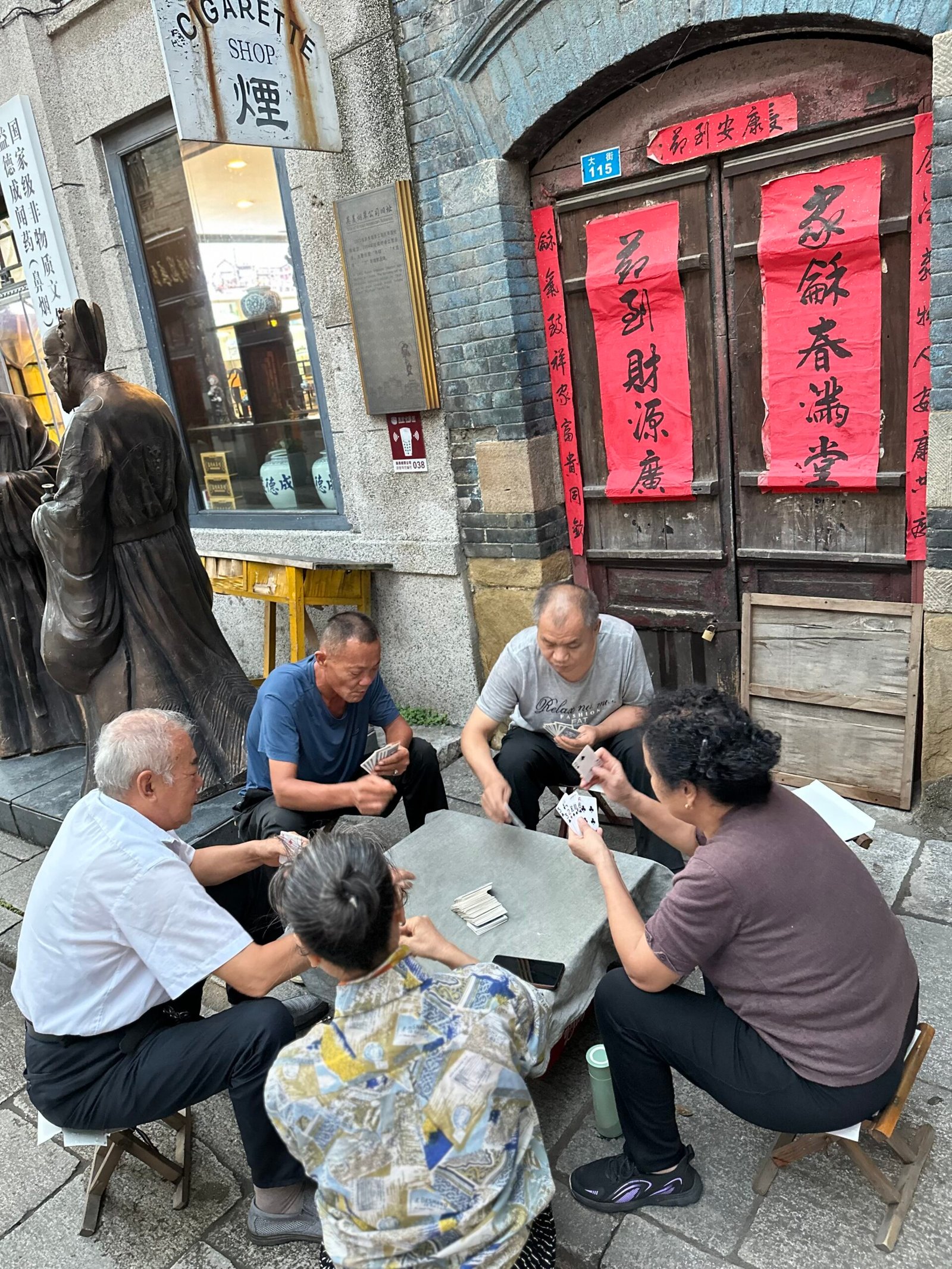
Watch a family eating together.
Notice grandparents with grandchildren.
Walk through an ancestral hall.
Listen to parents discussing education.
Notice how people address elders, teachers, hosts and guests.
Listen when people talk about:
family
relationships
education
order
responsibility
and:
good government.
Then perhaps something clicks:
“Ohhh… now I understand this a little better.”
🔥
⚠️ First — Modern China Is NOT Zhou China
The Zhou dynasty (周朝, Zhōucháo) ended in:
256 BCE.
Since then came:
Qin (秦)
Han (汉)
Tang (唐)
Song (宋)
Yuan (元)
Ming (明)
Qing (清)
and then revolution, industrialization, socialism, reform, globalization and enormous social change.
So don’t say:
“Chinese people do this because of Zhou.”
Too simple.
😂
Think instead:
HISTORICAL LAYERS.
Zhou is one very deep layer.
Later generations repeatedly:
reinterpreted it
changed it
combined it with new ideas
and sometimes:
rejected it.
The point isn’t to find Zhou hiding behind every modern Chinese behavior.
It’s to use history to ask:
BETTER QUESTIONS.
👨👩👧 LENS 1 — FAMILY
In the Zhou world, ancestry and lineage mattered enormously:
宗法
Zōngfǎ
lineage / clan order
Modern Chinese families are obviously not Zhou aristocratic clans.
But when traveling, you may encounter:
祠堂 (Cítáng) — ancestral halls
族谱 (Zúpǔ) — family genealogies
祖先 (Zǔxiān) — ancestors
and strong awareness of generations and family relationships.
Instead of thinking:
“Interesting Chinese custom.”
ask:
Why has family memory remained so important?
Zhou gives us one early layer of that much longer story.
🙏 LENS 2 — 礼 (Lǐ)
This may be Dad’s most useful traveler lens.
礼
Lǐ
ritual · propriety · appropriate conduct
Don’t think only:
ceremony.
Think:
“What is the appropriate way to behave in THIS relationship?”
Who is:
elder?
teacher?
host?
guest?
How is respect shown?
Who speaks first?
Modern Chinese etiquette isn’t Zhou ritual surviving unchanged.
But knowing the long history of 礼 (Lǐ) gives you a better question:
“What relationship do these people think they’re in?”
That can explain much more than memorizing a list of Chinese etiquette rules.
🎓 LENS 3 — EDUCATION
Travel in China long enough and you’ll probably hear about:
EDUCATION.
😂
Schools.
Teachers.
Exams.
Universities.
Children’s results.
Don’t draw a straight line from the Zhou:
六艺
Liùyì
Six Arts
to modern Chinese schooling.
Instead follow the layers:
Zhou ideas about cultivation
↓
Confucius (孔子, Kǒngzǐ)
↓
Confucian education
↓
imperial examination traditions
↓
long social prestige attached to learning
↓
modern China.
Different systems.
But that history helps explain why education can feel like:
MUCH MORE THAN SCHOOL.
🏛️ LENS 4 — ORDER, GOVERNMENT AND RESPONSIBILITY
The Zhou political tradition gave us:
天命
Tiānmìng
Mandate of Heaven
— one ancient way of asking:
What makes rule legitimate?
Modern Chinese politics is obviously not the Mandate of Heaven.
But Chinese history repeatedly wrestled with:
order
competent government
stability
public welfare
and:
the consequences of political failure.
So when you encounter words such as:
秩序 (Zhìxù) — order
稳定 (Wěndìng) — stability
治理 (Zhìlǐ) — governance
don’t conclude:
“That’s Zhou.”
😂
Ask:
How long has China been wrestling with the problem of governing an enormous society?
That’s the more useful historical question.
→ GO DEEPER: Why Does Chinese History Keep Talking About Heaven (天, Tiān)?
🧩 LENS 5 — HOW DOES A HUGE SOCIETY HOLD TOGETHER?
Perhaps this is the biggest question.
Travel through China and you’ll quickly discover:
CHINA IS NOT ONE UNIFORM PLACE.
Different landscapes.
Different foods.
Different dialects and languages.
Different local identities.
Different histories.
So how has such an enormous society repeatedly been held together?
There has never been one answer.
But over Chinese history, important ingredients have included:
family
education
ritual
written culture
institutions
government
and:
shared ideas about social order.
Zhou didn’t create modern China.
But Zhou gives us an early window into people already wrestling with:
HOW DO WE LIVE TOGETHER?
🔥
Dad’s Political Science Handrail
A society isn’t held together only by:
laws
police
and:
government.
It also depends on millions of people having some shared expectations about:
family
relationships
education
appropriate behavior
authority
and:
responsibility.
Those expectations change.
China changed.
But understanding where some of these historical conversations began gives travelers:
BETTER EYES.
👀 Now Go Out and Look at China Again
Watch a family having dinner.
Walk through an ancestral hall.
Notice how people address a teacher.
Watch the choreography of a wedding.
Listen to parents discussing education.
Visit a Confucian temple.
Notice how people talk about order, responsibility and government.
Don’t think:
“Ah — Zhou!”
😂
Think:
“I wonder how this became important?”
Then follow the historical layers.
That’s the difference between:
SEEING CHINA
and:
TRYING TO UNDERSTAND IT.
ChinaTravelBUG’s Take
The Zhou dynasty (周朝, Zhōucháo) ended more than 2,000 years ago.
Its political world is gone.
But some of the questions people were already wrestling with remain remarkably recognizable:
How should we live together?
What do we owe our families?
What makes authority legitimate?
What should an educated person become?
How do you maintain order across an enormous society?
The answers changed.
They are still changing.
And that’s why understanding China’s past can help you understand:
THE CHINA YOU SEE TODAY
and give you better questions for thinking about:
THE CHINA OF TOMORROW.
🔥
That’s what DEEP China is for.
🐇 Follow the Zhou Trilogy
← WHY: Why Does the Zhou Dynasty (周朝, Zhōucháo) Matter So Much to Chinese History?
Start with the big coat rack:
天命 (Tiānmìng) · 礼 (Lǐ) · family · education · writing · Confucius
← HOW: How Did the Zhou Dynasty (周朝, Zhōucháo) Last Nearly 800 Years?
Regional states became stronger.
The Zhou king became weaker.
Yet Zhou survived for centuries.
HOW?
WHY → HOW → SO WHAT?
Why Zhou matters
↓
How Zhou lasted
↓
How Zhou can help us look at China today
SEE → ASK → CONNECT → UNDERSTAND → FOLLOW