Dad couldn’t get past one number:
800 YEARS.
The Zhou dynasty (周朝, Zhōucháo) traditionally lasted from roughly:
1046–256 BCE.
Compare:
Qin dynasty (秦朝, Qíncháo)
→ 15 years
Han dynasty (汉朝, Hàncháo)
→ about 400 years, with an interruption
Tang dynasty (唐朝, Tángcháo)
→ almost 300 years
Then:
ZHOU — ALMOST 800.
😳
How?
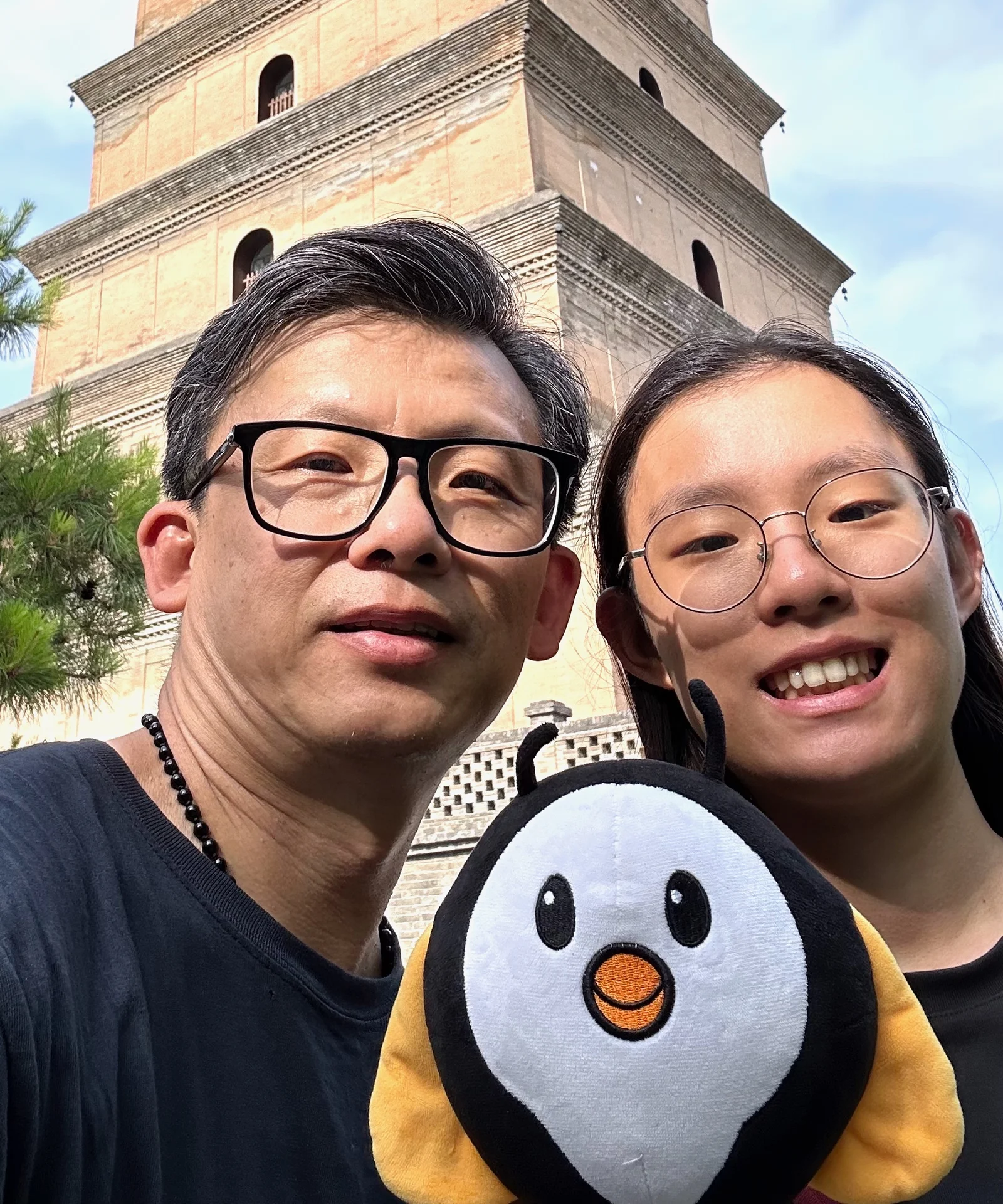
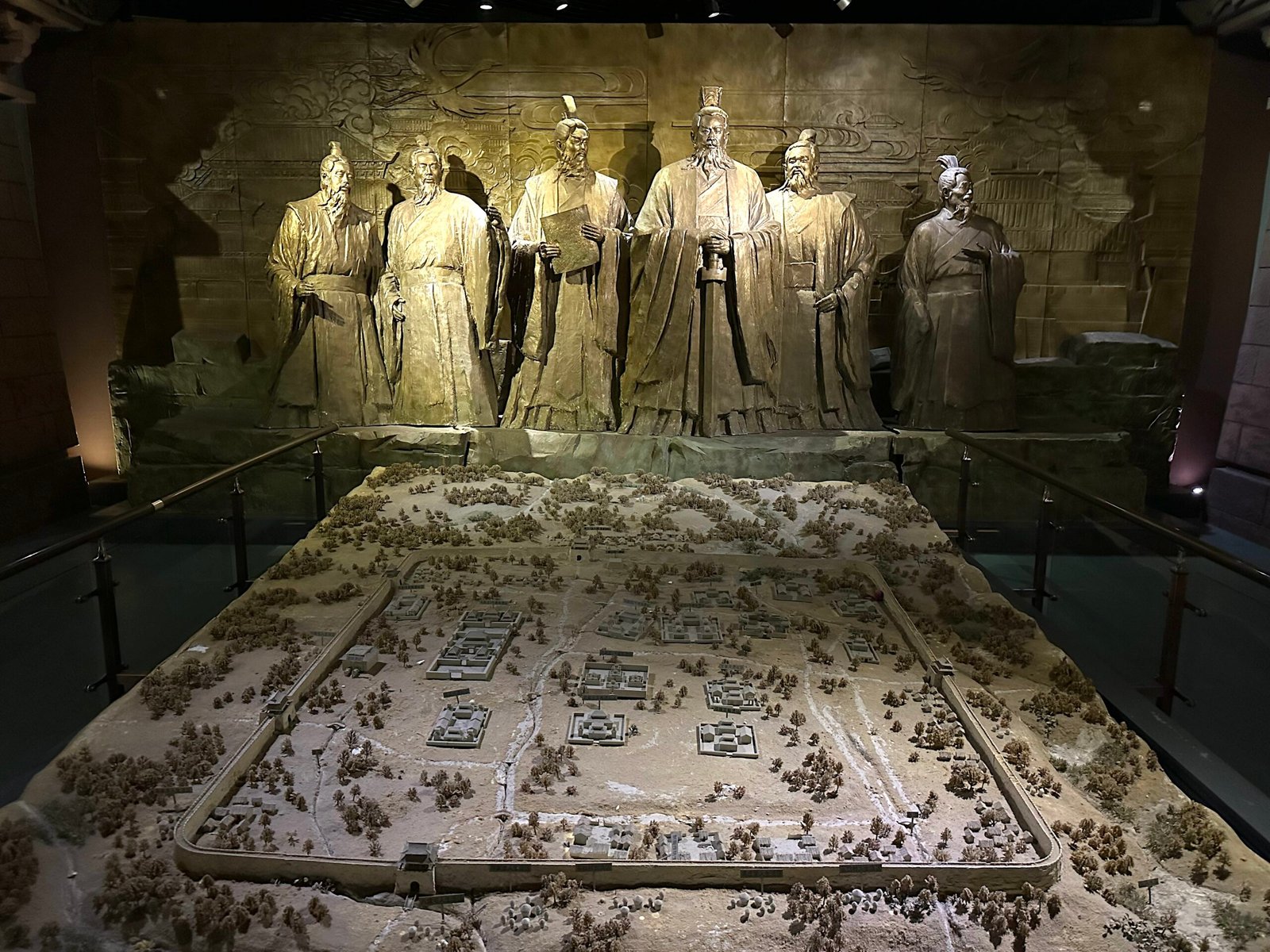
Dad & Elaine found some clues while traveling through the Zhou world around Baoji (宝鸡, Bǎojī), Qishan (岐山, Qíshān) and Zhouyuan (周原, Zhōuyuán).
And the answer isn’t:
“The Zhou kings were incredibly powerful for 800 years.”
Actually…
THE ZHOU KINGS EVENTUALLY BECAME VERY WEAK.
Yet Zhou continued.
That’s the puzzle.
Western Handrail — How Long Is 800 Years?
When the Western Zhou (西周, Xī Zhōu) began around:
1046 BCE
the traditional founding of Rome (罗马, Luómǎ) in 753 BCE was still almost:
300 YEARS AWAY.
Then came:
Classical Greece
Socrates
Plato
Aristotle
Alexander the Great
and:
THERE WAS STILL A ZHOU KING.
But don’t imagine one government controlling the same territory unchanged for 800 years.
That’s exactly the mistake.
Zhou survived partly because Zhou changed.
🔑 1 — 分封制 (Fēnfēngzhì): Don’t Govern Everything Yourself
After defeating the Shang dynasty (商朝, Shāngcháo), Zhou faced a huge problem:
DISTANCE.
No trains.
No telephones.
No instant orders from the capital.
😂
One solution was:
分封制
Fēnfēngzhì
delegated regional rule / enfeoffment
The Zhou king granted authority to regional rulers, including royal relatives, allies and important elites.
Think:
KING
↓
NETWORK
↓
REGIONAL STATES.
The center didn’t need to administer everything directly.
→ GO DEEPER: Qishan (岐山, Qíshān) & Zhouyuan (周原, Zhōuyuán) — Walking Through the Homeland of the Zhou
🔑 2 — 宗法制 (Zōngfǎzhì): Turn Politics Into Relationships
The network wasn’t held together only by territory.
Kinship and lineage mattered.
宗法制
Zōngfǎzhì
lineage / clan organization
Dad’s handrail:
FAMILY TREE + POLITICAL MAP.
😂
Ancestry, generation, inheritance and elite relationships helped organize the Zhou world.
Not every political relationship was literally family.
But lineage gave the system another kind of glue.
🔑 3 — 礼乐 (Lǐyuè): Give the Network Shared Rules
Then:
礼
Lǐ
ritual · propriety · appropriate conduct
and:
乐
Yuè
music
Ritual helped define:
rank
obligations
ceremony
ancestral relationships
and:
appropriate behavior.
Dad’s simplest handrail:
The Zhou didn’t only distribute POWER.
They distributed a WAY OF ORDERING SOCIETY.
🔥
Later tradition particularly associated the Duke of Zhou (周公, Zhōugōng) with establishing rites and music.
→ GO DEEPER: Duke of Zhou (周公, Zhōugōng) — The Man China Kept Looking Back To
🔑 4 — 教育 (Jiàoyù): Teach the Next Generation
A system lasts longer when each generation learns how to operate it.
Later tradition associated Zhou elite education with the:
六艺
Liùyì
Six Arts
礼 (Lǐ) — ritual
乐 (Yuè) — music
射 (Shè) — archery
御 (Yù) — chariot driving
书 (Shū) — writing
数 (Shù) — calculation
Kings die.
Officials die.
But:
TRAIN THE NEXT GENERATION
and institutions can continue.
🔑 5 — 官制 + 金文: Build Institutions and Memory
Family wasn’t enough.
The Zhou world also developed:
government offices
military organization
ritual administration
and:
record keeping.
Then Dad looked inside the bronzes.
金文
Jīnwén
bronze inscriptions
could preserve:
appointments
wars
rewards
dates
families
and:
royal commands.
A system becomes easier to continue when it can:
REMEMBER.
→ GO DEEPER: He Zun (何尊, Hé Zūn) — The 3,000-Year-Old Bronze That Bears 中国 (Zhōngguó)
🔑 6 — 天命 (Tiānmìng): Give Rule Legitimacy
Finally:
天命
Tiānmìng
Mandate of Heaven
The Zhou didn’t explain their victory over Shang simply as:
“We were stronger.”
Political authority could be understood as connected with:
Heaven (天, Tiān).
And the mandate could be:
LOST.
That gave Zhou rule a moral and political explanation larger than one king.
→ GO DEEPER: Why Does Chinese History Keep Talking About Heaven (天, Tiān)?
💥 The Zhou Paradox
And now Dad finally sees the trick.
The system worked.
Perhaps:
TOO WELL.
😂
Regional states developed:
territories
armies
administrations
economic power
and eventually:
AMBITIONS.
The Zhou king weakened.
But the wider Zhou political world:
KEPT GOING.
Western Zhou (西周, Xī Zhōu)
↓
Eastern Zhou (东周, Dōng Zhōu)
↓
Spring and Autumn period (春秋时期, Chūnqiū Shíqī)
↓
Warring States period (战国时期, Zhànguó Shíqī).
By then, powerful states increasingly dominated politics.
Yet for centuries:
THERE WAS STILL A ZHOU KING.
😳
Perhaps the secret of Zhou’s extraordinary longevity wasn’t that one powerful government remained unchanged.
It was almost the opposite:
ZHOU BECAME BIGGER THAN THE KING.
Its network could survive even as the center weakened.
Until eventually:
Qin (秦, Qín)
changed the game.
⭐ ChinaTravelBUG’s Take
So how did Zhou last almost 800 years?
Not because Zhou remained:
THE SAME.
But because it created layers of:
regional authority
relationships
ritual
education
institutions
written memory
and:
political legitimacy.
Then those layers changed.
Regional states grew stronger.
The king grew weaker.
Yet Zhou continued.
🔥
🐇 Where Does the Zhou Rabbit Go Next?
We’ve now answered:
HOW DID ZHOU LAST SO LONG?
But this story sits between two bigger questions.
← FIRST: WHY Does the Zhou Dynasty (周朝, Zhōucháo) Matter So Much to Chinese History?
Start here if you want the big coat rack:
天命 (Tiānmìng)
礼 (Lǐ)
family and lineage
education
writing
Confucius (孔子, Kǒngzǐ)
and why later Chinese history kept returning to the Zhou world.
→ NEXT: Can Understanding the Zhou Dynasty (周朝, Zhōucháo) Help You Understand China Today?
This is where Dad takes the history:
OUT OF THE MUSEUM
and back onto the streets of China.
Family.
Relationships.
Education.
Order.
Government.
Social expectations.
Not:
“Modern China is still Zhou.”
😂
But:
Can knowing this deep historical layer help you understand some of what you SEE in China today?
That’s our next DEEP China rabbit hole.
🐇
WHY → HOW → SO WHAT?
Why Zhou matters
↓
How Zhou lasted
↓
What Zhou can help us understand today
SEE → ASK → CONNECT → UNDERSTAND → FOLLOW