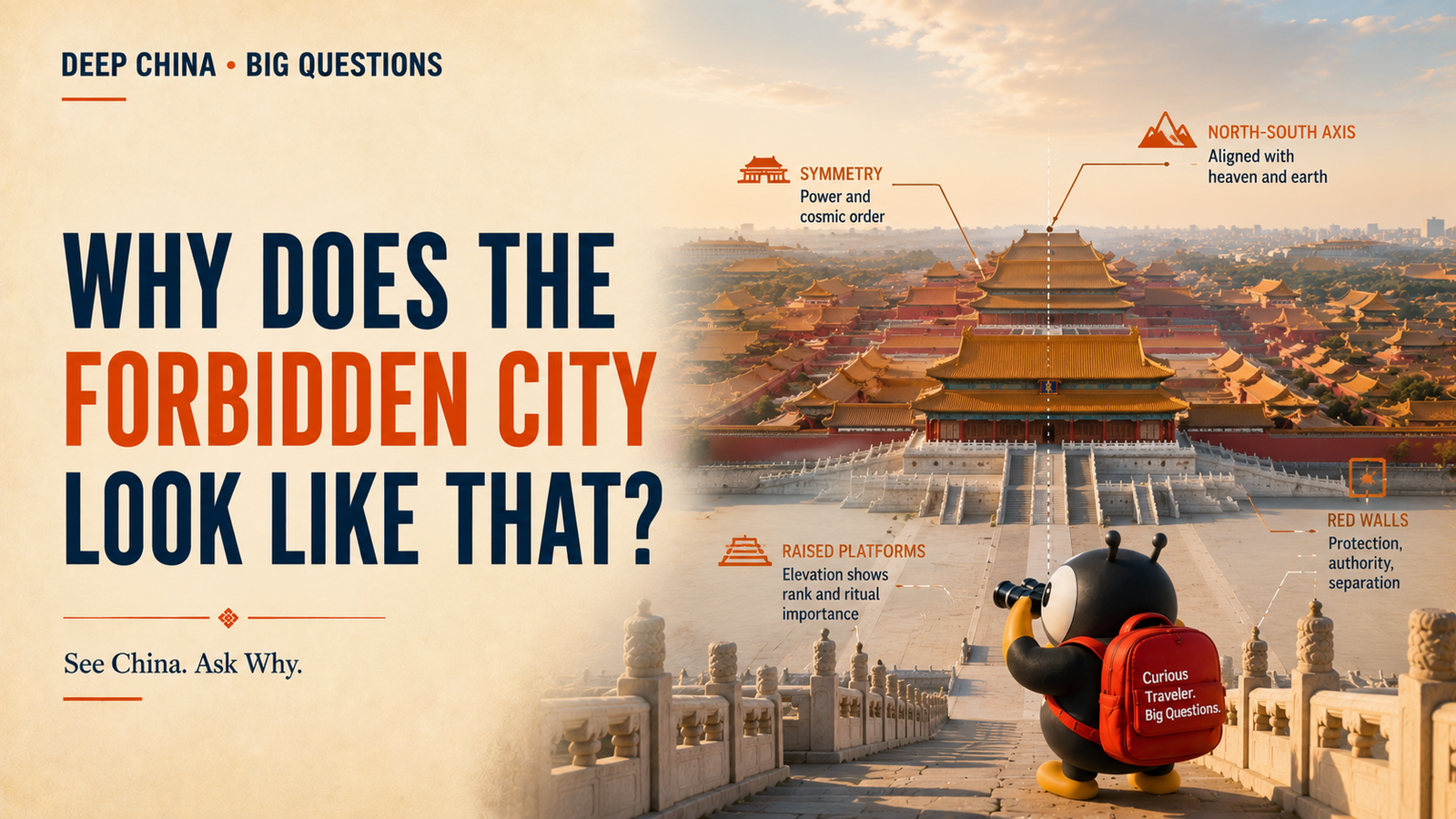
Section 1 — Gate. Courtyard. Hall. Another Gate. Is This Really Necessary?
For almost every first-time traveler to:
Beijing (北京, Běijīng)
the:
Forbidden City (故宫, Gùgōng)
is a must.
You enter through:
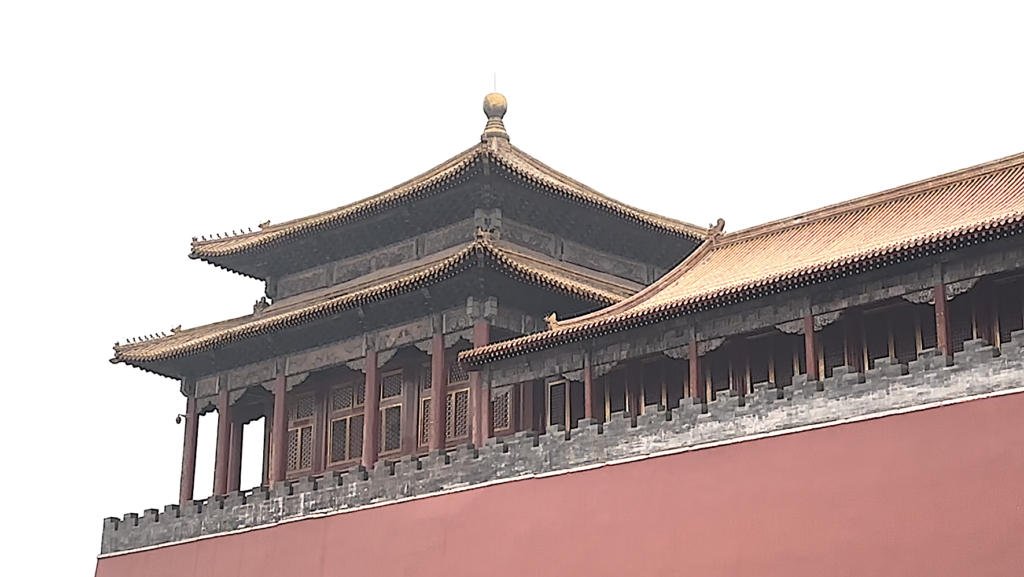
Meridian Gate (午门, Wǔmén).
Then:
courtyard.
↓
gate.
↓
another enormous courtyard.
↓
another hall.
↓
another gate.
↓
another courtyard.
😂
At some point, a perfectly reasonable Western traveler may wonder:
How many gates and courtyards does one emperor actually need?
Excellent question.
Because once you ask it, the Forbidden City stops being merely:
“a very large palace with beautiful Chinese buildings.”
The layout itself begins talking.
🔥
First: The Forbidden City Was Designed to Create Order
Look at the basic vocabulary around you:
gate (门, mén)
hall (殿, diàn)
palace (宫, gōng)
courtyard (院落, yuànluò)
wall (墙, qiáng)
axis (轴线, zhóuxiàn).
These aren’t randomly scattered around.
The Forbidden City was organized according to:
hierarchy (等级, děngjí)
ritual (礼, lǐ)
order (秩序, zhìxù)
and:
function (功能, gōngnéng).
🔥
So when everything feels:
very organized
that’s because it is.
🍚 Western Handrail: Architecture Can Tell You Who Matters
Think about a courtroom.
Where does the judge sit?
Usually:
not randomly beside the door.
😂
Think about a church.
A throne room.
A parliament.
A military headquarters.
Architecture can communicate:
authority,
access,
importance
and:
status.
The Forbidden City does this on an enormous scale.
So don’t ask only:
“What happened inside this building?”
Also ask:
“Why is THIS building HERE?”
🐇
That question changes the visit.
🧭 The First Key: The Central Axis
One of the most important ideas for understanding Beijing is:
the Central Axis (中轴线, Zhōngzhóuxiàn).
The Forbidden City’s major ceremonial buildings are arranged along a:
north–south axis (南北轴线, nánběi zhóuxiàn).
But here’s the bigger surprise:
the axis doesn’t stop at the Forbidden City.
It belongs to the much larger:
Beijing Central Axis (北京中轴线, Běijīng Zhōngzhóuxiàn).
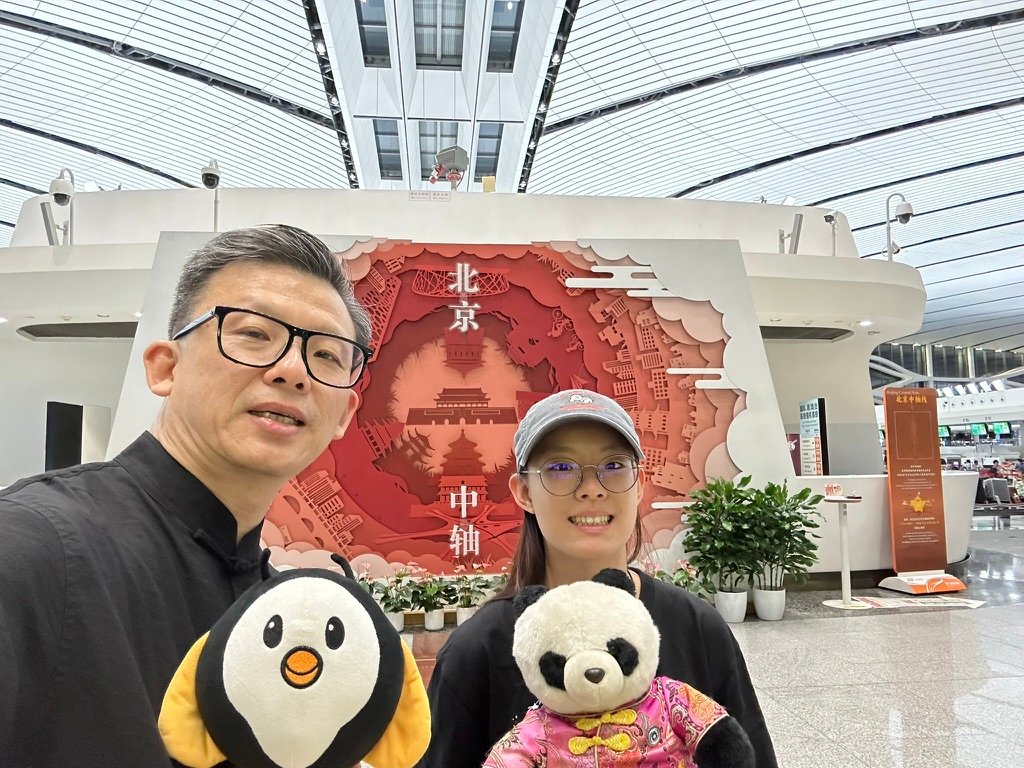
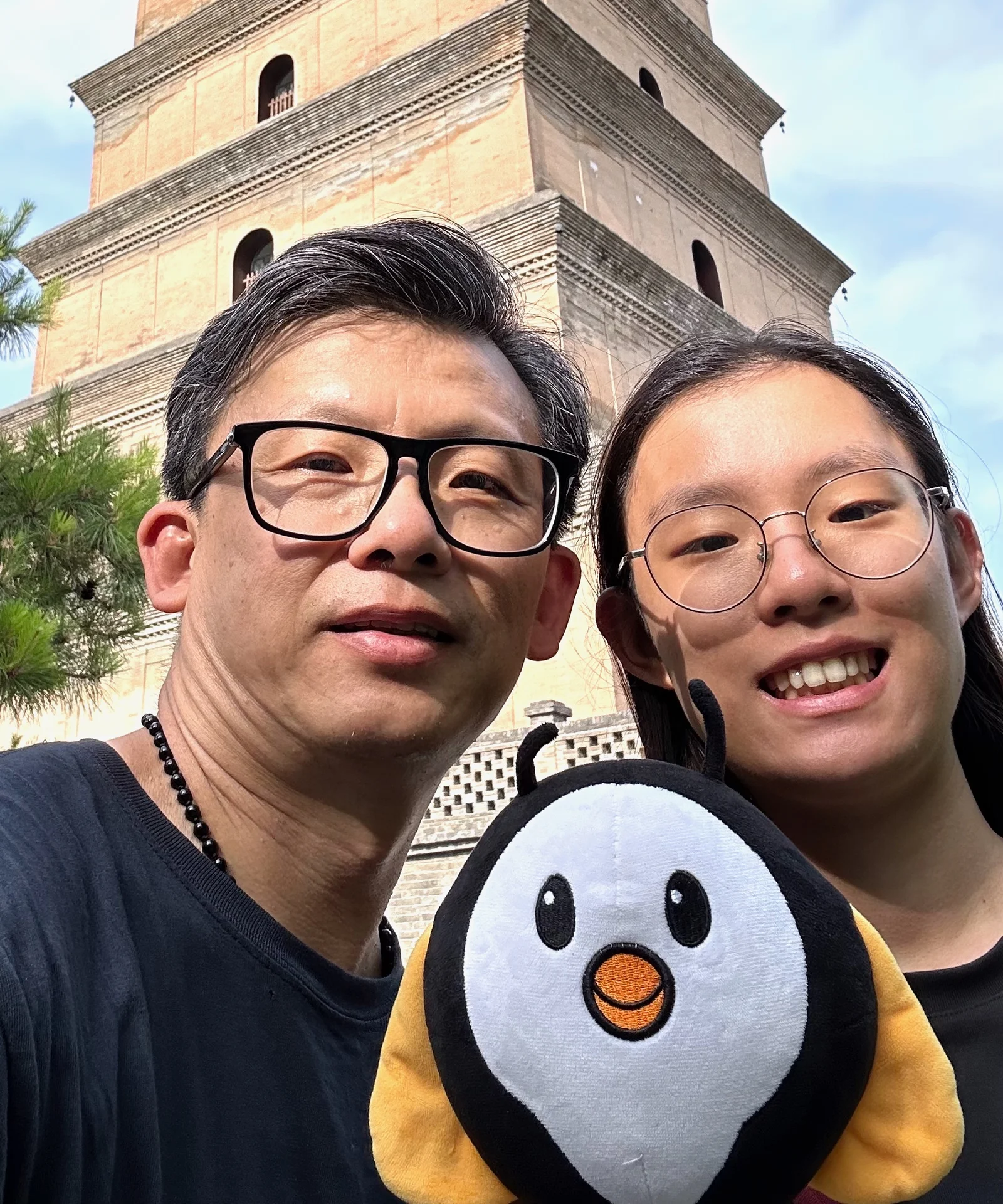
Dad and Elaine at Beijing Daxing International Airport — as Beijing celebrates Beijing’s Central Axis (北京中轴线), inscribed on the UNESCO World Heritage List in 2024.
This historic urban axis extends through the heart of old Beijing.
And in:
2024
the:
Beijing Central Axis
was inscribed on the:
UNESCO World Heritage List.
🔥
So the Forbidden City isn’t merely:
a palace placed somewhere in Beijing.
It is a central component of:
a planned imperial capital.
🌏 Beijing’s Central Axis Is UNESCO Heritage
UNESCO describes the Beijing Central Axis as an urban ensemble expressing the:
ideal order of the Chinese capital.
It includes:
imperial palaces,
gardens,
ceremonial structures,
sacrificial sites,
public buildings
and:
historic urban spaces.
The planning emphasizes ideas of:
center (中心, zhōngxīn)
symmetry (对称, duìchèn)
balance (平衡, pínghéng)
and:
ritual order (礼制秩序, lǐzhì zhìxù).
🔥
That means the axis isn’t merely:
“because straight lines look nice.”
It communicates an idea about:
ordered space.
And ordered space can express:
ordered society.
🐇 Where Did These Ideas Come From?
Now we encounter an ancient Chinese text:
Kaogong Ji / Record of Trades (考工记, Kǎogōng Jì).
The Kaogong Ji (考工记) contains influential ideas concerning the planning of an ideal royal capital.
And it belongs to the textual tradition associated with:
Rites of Zhou (周礼, Zhōulǐ).
😳
Uh-oh.
Zhou 周 again.
🐇🐇🐇
Dad & Elaine Keep Running Into the Zhou Dynasty
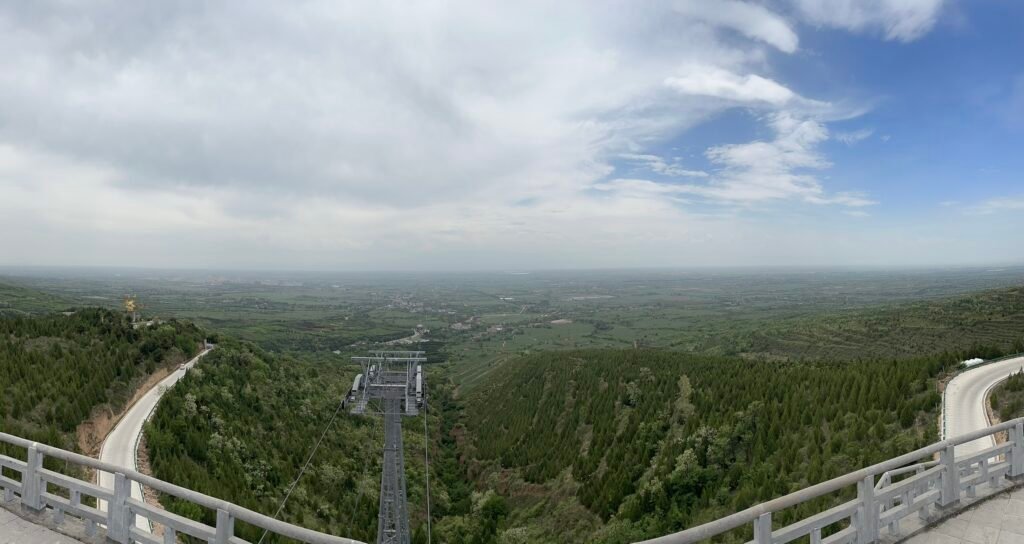
We visited:
Zhouyuan (周原, Zhōuyuán)
near:
Baoji (宝鸡, Bǎojī).
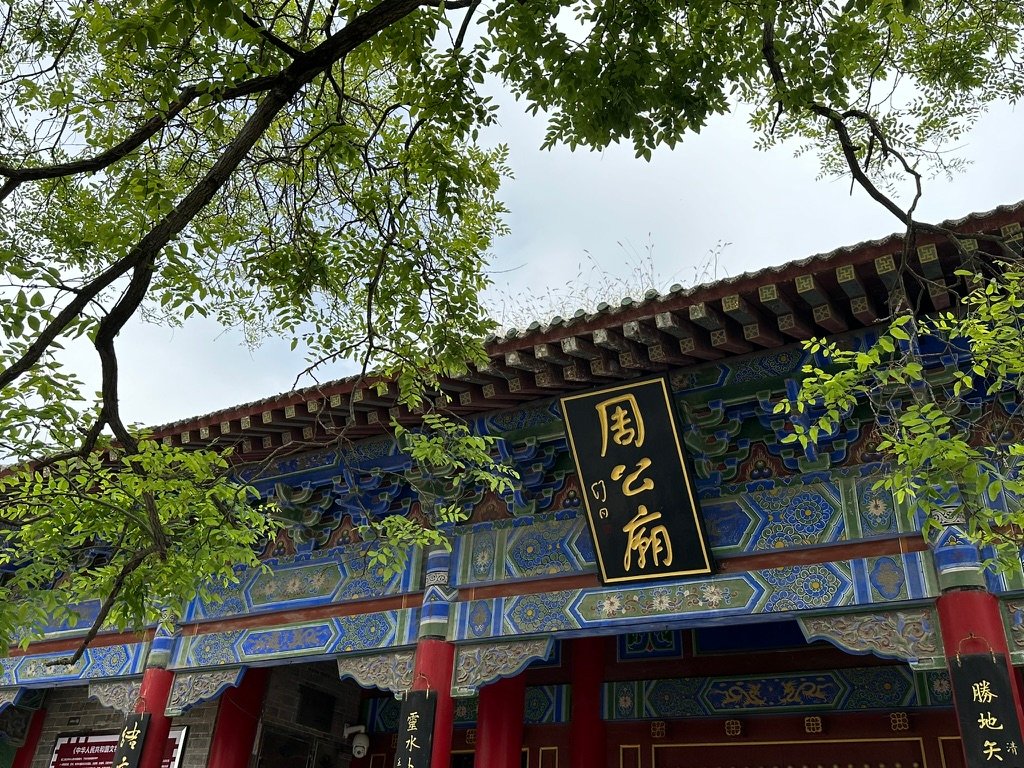
We visited:
Zhougong Temple (周公庙, Zhōugōng Miào)
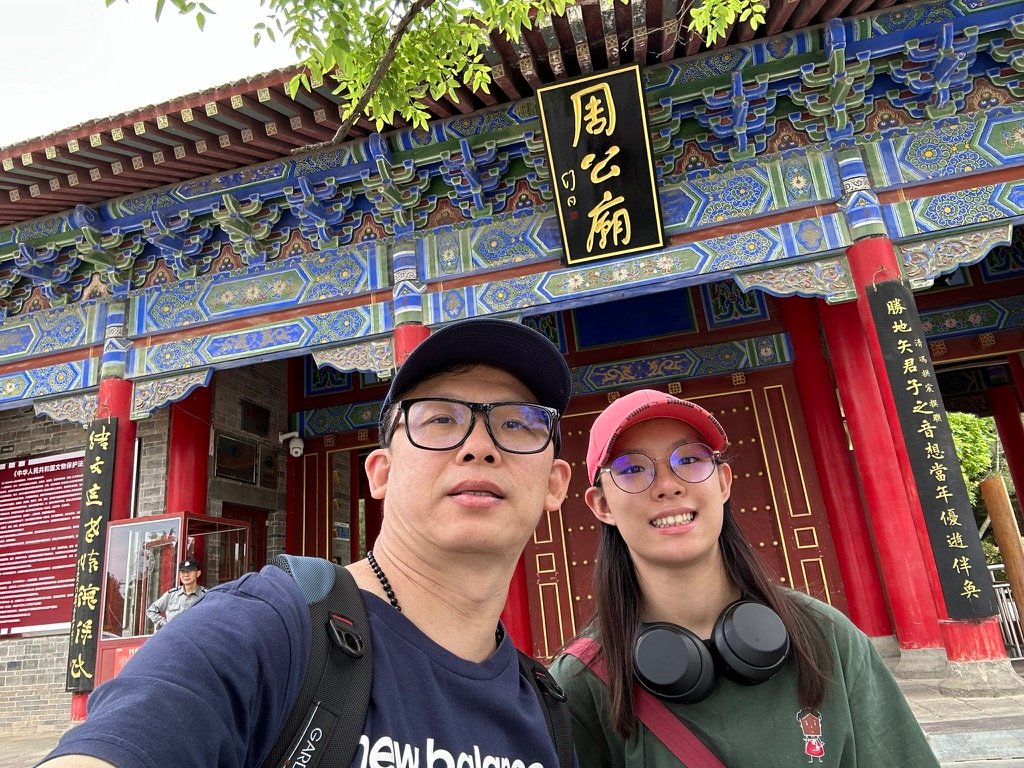
associated with:
the Duke of Zhou (周公, Zhōugōng).
And we’ve already learned how enormously influential the:
Zhou dynasty (周朝, Zhōu Cháo)
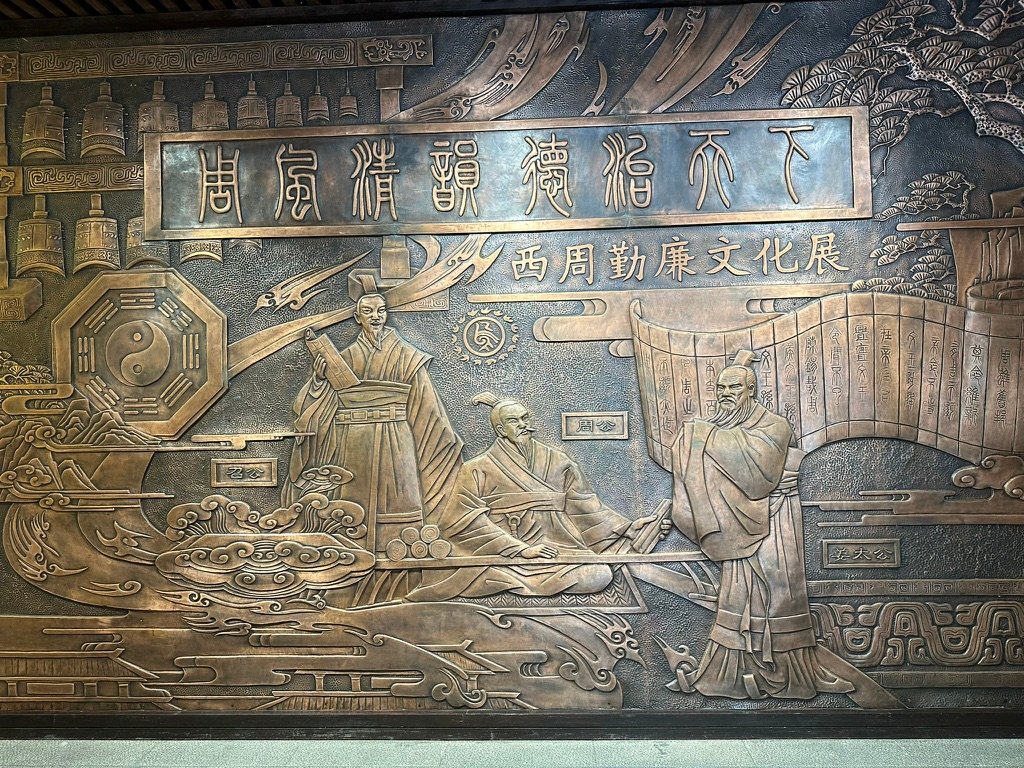
became to later Chinese ideas about:
government,
ritual (礼, lǐ),
political legitimacy
and:
social order.
Now Dad walks into the Forbidden City…
more than two thousand years later…
and:
the Zhou intellectual tradition is still lurking in the conversation about how an ideal capital should be organized.
😬😂
That’s a proper rabbit hole.
🌶️ But Be Careful
This does NOT mean:
“The Duke of Zhou designed the Forbidden City.”
😂
No.
Beijing’s imperial urban form developed much later, including major development under the Yuan, Ming and Qing dynasties.
The important point is more subtle:
Ideas about ritual, hierarchy and ideal political space developed over very long periods and continued influencing later Chinese capital planning.
That’s much more interesting anyway.
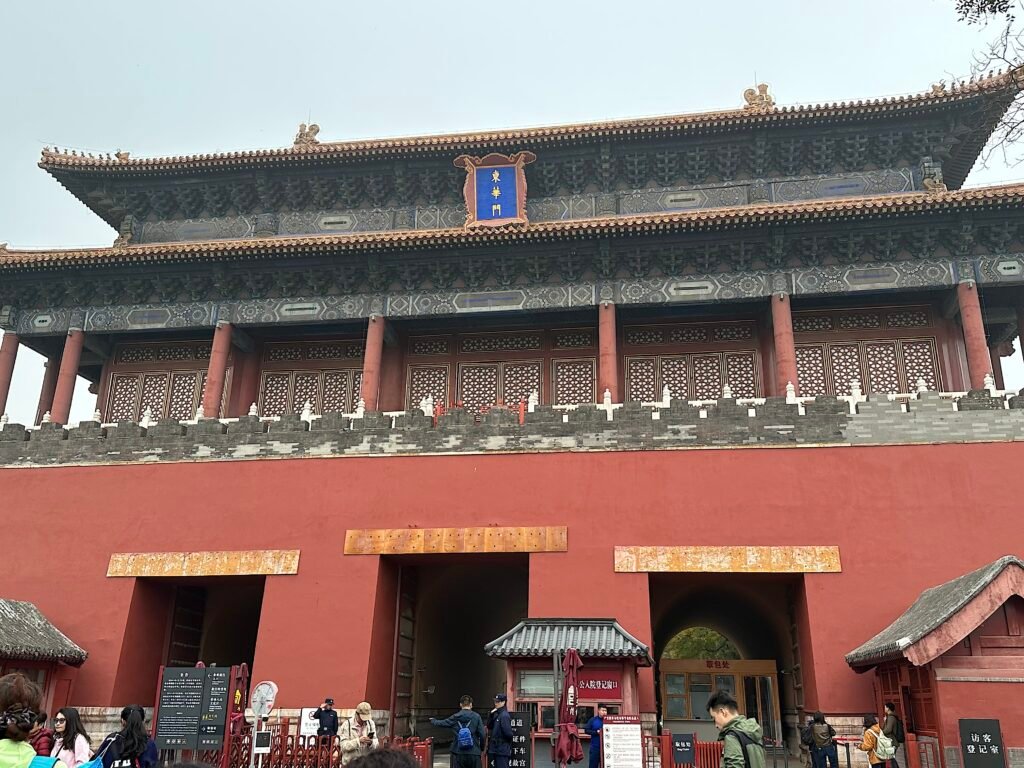
🏯 The Second Key: Outer Court and Inner Court
Now return inside the Forbidden City.
One of the easiest ways to understand the palace is to divide its core into two broad functional worlds:
Outer Court (外朝, Wàicháo)
and:
Inner Court (内廷, Nèitíng).
🔥
This immediately makes the palace easier to read.
Outer Court (外朝): The Public Imperial World
The ceremonial heart of the Outer Court contains the famous:
Three Great Halls (三大殿, Sān Dàdiàn).
They are:
Hall of Supreme Harmony (太和殿, Tàihé Diàn)
Hall of Central Harmony (中和殿, Zhōnghé Diàn)
Hall of Preserving Harmony (保和殿, Bǎohé Diàn).
These great buildings formed the ceremonial core for major state occasions.
🔥
And notice something in their Chinese names:
太和
中和
保和
The same character appears again and again:
和 — hé
harmony
Hmm.
🐇
Even the building names are beginning to tell you something.
🍚 Beginner Chinese: Learn One Character
If you’re just beginning Chinese, remember:
和 (hé) = harmony
You’ll encounter this character repeatedly in Chinese historical and cultural contexts.
So instead of trying to memorize:
Hall Number One, Hall Number Two, Hall Number Three…
😭
notice:
太和殿
中和殿
保和殿
All three contain:
和.
Now the Chinese names become useful rather than intimidating.
🔥
Inner Court (内廷): The Imperial Household
Continue north and the function changes.
The central Inner Court includes:
Palace of Heavenly Purity (乾清宫, Qiánqīng Gōng)
Hall of Union (交泰殿, Jiāotài Diàn)
and:
Palace of Earthly Tranquility (坤宁宫, Kūnníng Gōng).
Together they form the central:
Three Rear Palaces (后三宫, Hòu Sān Gōng).
This was the core world associated with:
imperial family life (宫廷生活, gōngtíng shēnghuó).
So the broad pattern becomes:
FRONT
state + ceremony
↓
BACK
imperial household.
🔥
🍚 Western Handrail: Office in Front, Home Behind
Very rough analogy.
😂
But useful.
Think:
PUBLIC ROLE
in front
and:
HOUSEHOLD ROLE
behind.
Obviously an emperor’s household was still deeply political.
Marriage.
Succession.
Imperial relatives.
Palace women.
Eunuchs.
Household administration.
Nothing about imperial family life was simply:
“Dad finishes work and goes upstairs.”
😭😂
But the spatial distinction helps first-time visitors understand why different parts of the palace exist.
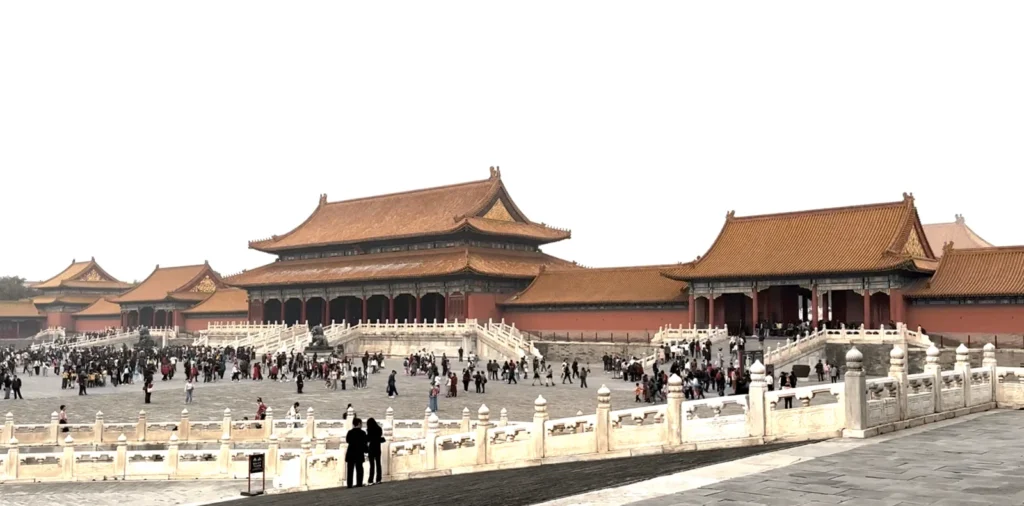
🚪 The Third Key: Gates Control Access
Now think about all those:
gates (门, mén).
Maybe they aren’t annoying after all.
😂
A gate can:
control entry and exit (控制出入, kòngzhì chūrù).
Who may enter?
How far may they go?
What is their rank?
What function brings them here?
Different spaces were not equally accessible.
So:
gate (门)
becomes:
hierarchy made physical.
🔥
You don’t merely read:
“Imperial society was hierarchical.”
You physically move through:
layers of space.
🐇 Courtyards Do Something Similar
A:
courtyard (院落, yuànluò)
isn’t merely:
empty space between the interesting buildings.
It creates:
distance (距离, jùlí),
approach,
visibility,
ceremonial space
and:
separation (分隔, fēngé).
Walk across the enormous courtyard toward:
Hall of Supreme Harmony (太和殿).
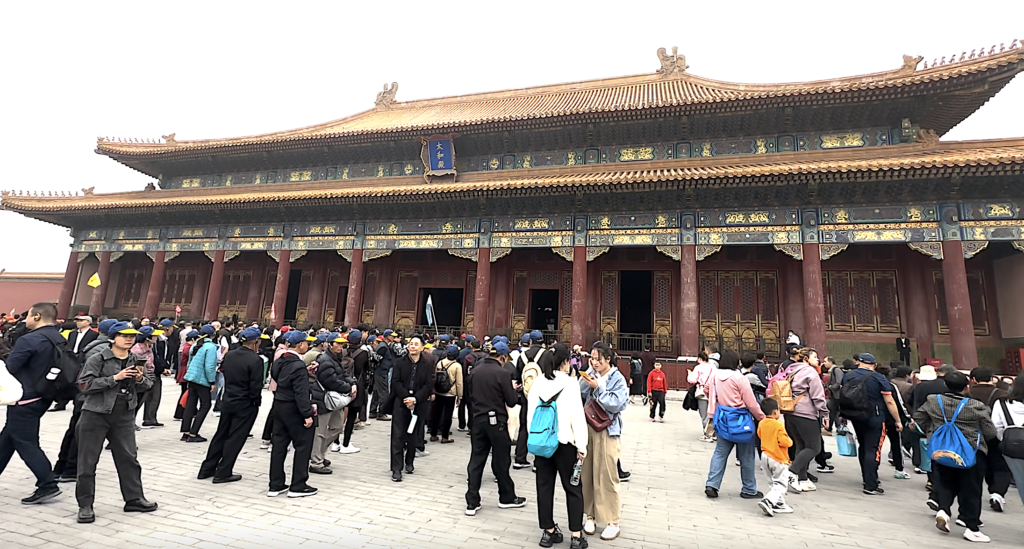
The hall doesn’t simply:
appear.
You:
approach it.
🔥
Distance gives the building drama.
Scale gives it importance.
Your own body experiences the hierarchy.
That’s much more powerful than reading:
“The emperor was important.”
🏛️ Height Matters Too
Major ceremonial halls stand on raised:
platforms / terraces (台基, táijī).
You approach.
Then climb.
The important building rises above the surrounding space.
Again:
architecture communicates rank.
🔥
Human societies everywhere use:
height,
scale,
distance
and:
controlled access
to communicate authority.
The Forbidden City develops these ideas through a particularly sophisticated Chinese architectural language.
🌶️ The Forbidden City Makes You Move Through Order
This may be the most important idea in Section 1.
Architecture isn’t merely:
shelter (遮蔽, zhēbì).
At the Forbidden City, it also:
directs movement (引导通行, yǐndǎo tōngxíng).
You enter here.
Walk there.
Cross this courtyard.
Pass through that gate.
Approach this hall.
🔥
Different people historically had different levels of access.
So architecture helps create:
ritual behavior (礼仪, lǐyí)
and:
social hierarchy (社会等级, shèhuì děngjí).
In other words:
The Forbidden City doesn’t merely REPRESENT order. It makes people MOVE THROUGH order.
🌶️🌶️🌶️
That’s the key.
And Beijing Does This on an Even Bigger Scale
Now zoom out.
Forbidden City (故宫)
↓
Imperial City
↓
historic Beijing
↓
Beijing Central Axis (北京中轴线).
The city itself participates in:
political space (政治空间, zhèngzhì kōngjiān).
The Forbidden City isn’t simply:
a palace inside Beijing.
It is part of a much larger vision of:
an imperial capital (帝都, dìdū).
🔥
🐞 Sting Check
You entered the Forbidden City thinking:
“Beautiful Chinese palace.”
Now you’ve acquired:
Central Axis (中轴线)
↓
Kaogong Ji (考工记)
↓
Rites of Zhou (周礼)
↓
ritual (礼)
↓
hierarchy (等级)
↓
Outer Court (外朝)
↓
Inner Court (内廷)
↓
Three Great Halls (三大殿)
↓
harmony (和)
↓
gate (门)
↓
courtyard (院落)
↓
platform (台基)
↓
controlled access (控制出入)
↓
political order (政治秩序).
😬
And suddenly:
“Why are there so many bloody courtyards?”
has acquired an answer.
😂
Because the Forbidden City wasn’t designed merely to:
house an emperor.
It was designed to:
express an imperial order — and make people physically move through it.
🔥
Section 2 — Look Up: Roofs, Colors, Animals and Numbers Are Telling You Who Matters
Section 1 gave us the basic grammar of the:
Forbidden City (故宫, Gùgōng).
We learned to notice:
Central Axis (中轴线, zhōngzhóuxiàn),
gates (门, mén),
courtyards (院落, yuànluò),
halls (殿, diàn),
Outer Court (外朝, Wàicháo),
and:
Inner Court (内廷, Nèitíng).
Now comes the fun part.
LOOK UP.
😂
Roofs.
Colors.
Dragons.
Tiny animals.
Then look down again.
Stone terraces.
Carvings.
Water vats.
Even the names written above the halls.
The Forbidden City isn’t simply decorated.
Many of these features help communicate:
rank (等级, děngjí),
imperial authority (皇权, huángquán),
and:
ritual order (礼制秩序, lǐzhì zhìxù).
🔥
🏯 Not Every Building Is Equal
After walking through the Forbidden City for several hours, the Western traveler’s brain may eventually reduce everything to:
red building + yellow roof + courtyard = palace.
😭😂
Don’t.
Buildings had different:
functions (功能, gōngnéng),
positions (位置, wèizhì),
sizes (大小, dàxiǎo),
and:
levels of importance (等级, děngjí).
The architecture helps show those differences.
The clearest example is:
Hall of Supreme Harmony (太和殿, Tàihé Diàn).
This is the monumental ceremonial hall sitting at the heart of the:
Outer Court (外朝).
Look at:
its position,
its scale,
its raised terrace,
its roof,
and:
its decoration.
Everything says:
THIS BUILDING MATTERS.
🔥
🐇 Start With the Roof
Useful Chinese vocabulary:
roof (屋顶, wūdǐng)
roof tile (瓦, wǎ)
glazed tile (琉璃瓦, liúlíwǎ)
roof ridge (屋脊, wūjǐ)
eaves (屋檐, wūyán).
Different traditional roof forms could carry different levels of architectural prestige.
The Hall of Supreme Harmony uses one of the most prestigious:
double-eaved hip roof (重檐庑殿顶, chóngyán wǔdiàndǐng).
😳
Don’t memorize that for an exam.
😂
Remember only:
The roof can tell you about the building’s status.
Now when you look up, you’re no longer seeing:
“Chinese-style roof.”
You’re seeing:
architectural hierarchy.
🟡 Why So Much Yellow?
Another easy Chinese word:
yellow (黄, huáng).
Across much of the Forbidden City you’ll see:
yellow glazed roof tiles (黄色琉璃瓦, huángsè liúlíwǎ).
In Ming and Qing imperial architecture, yellow was strongly associated with:
the emperor (皇帝, huángdì)
and:
imperial authority (皇权, huángquán).
So color isn’t merely:
“yellow looks good with red.”
😂
It participates in the visual language of imperial rank.
🔴 And the Red?
red (红, hóng).
Look at:
red walls (红墙, hóngqiáng)
red columns (红柱, hóngzhù)
and:
red gates (红门, hóngmén).
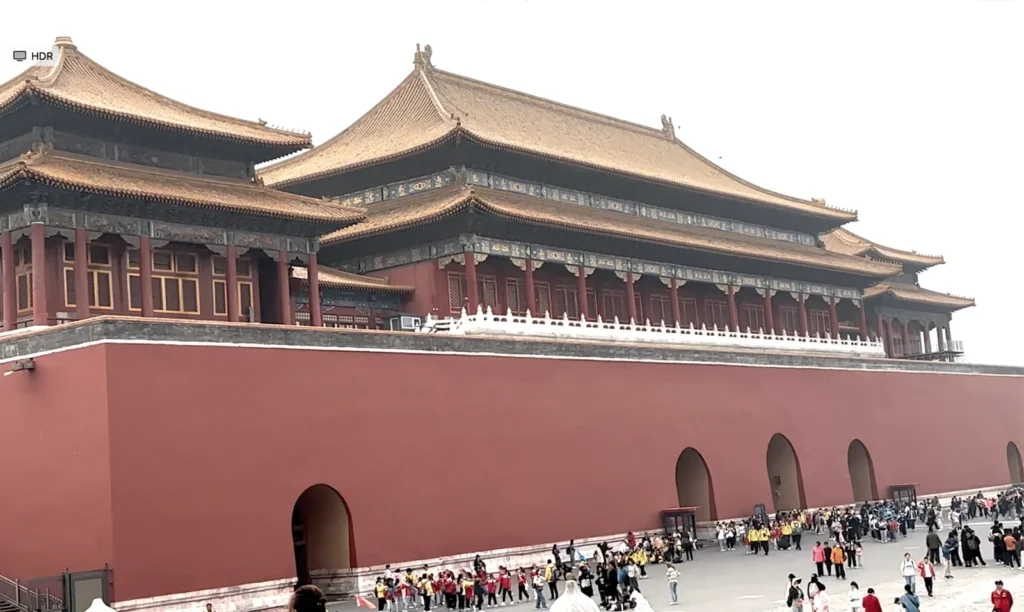
Red carried strong auspicious and ceremonial associations in traditional Chinese culture.
Together:
red walls + yellow roofs
became one of the most recognizable visual signatures of China’s imperial palace architecture.
🔥
Beginner Chinese bonus:
红 — hóng — red
黄 — huáng — yellow
墙 — qiáng — wall
门 — mén — gate
瓦 — wǎ — tile
殿 — diàn — hall
宫 — gōng — palace
You’re learning Chinese accidentally.
😂
🐉 Now Find the Dragon
This one is impossible to miss:
dragon (龙, lóng).
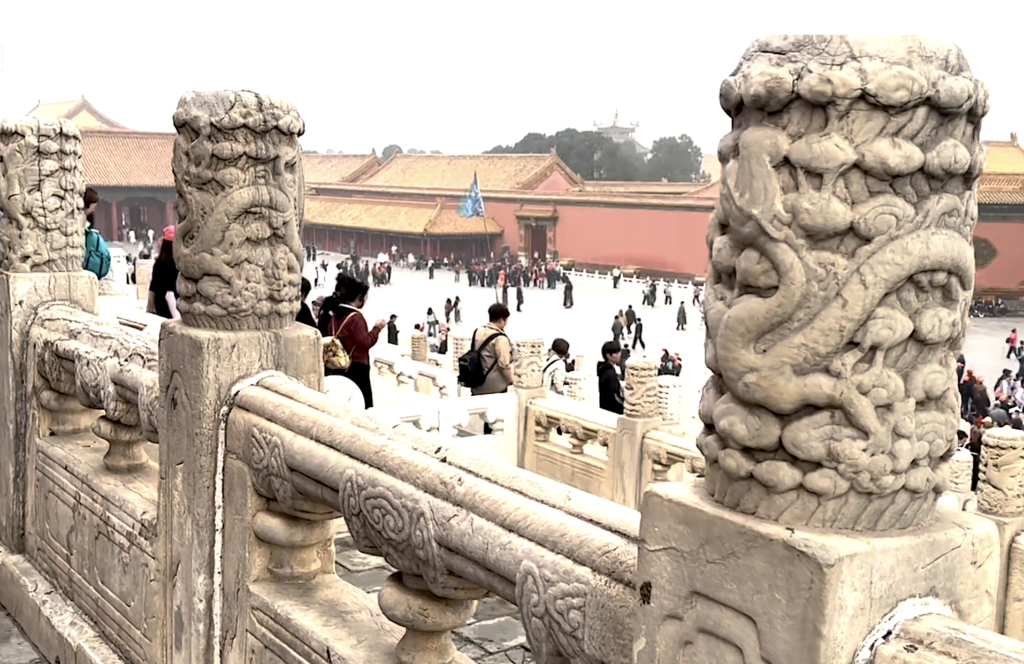
Dragons appear throughout imperial decoration.
Inside this particular setting, the dragon was closely associated with:
the emperor (皇帝)
and:
imperial power (皇权).
So when you see:
dragon motif (龙纹, lóngwén),
dragon carving (龙雕, lóngdiāo),
or:
dragon throne (龙椅, lóngyǐ),
don’t simply think:
“Chinese decoration.”
Think:
imperial context.
🔥
🍚 Chinese Dragon ≠ Western Dragon
Useful Western handrail.
The Chinese:
dragon (龙, lóng)
isn’t simply the Chinese version of a European:
fire-breathing monster guarding treasure.
😂
Different cultural tradition.
In Chinese imperial symbolism, dragons could carry associations with:
power,
authority,
auspicious forces,
and:
the emperor.
So please leave the Game of Thrones dragon outside:
Meridian Gate (午门, Wǔmén).
😂
🐦 And Look for the Phoenix
Another important symbol is:
phoenix (凤凰, fènghuáng).
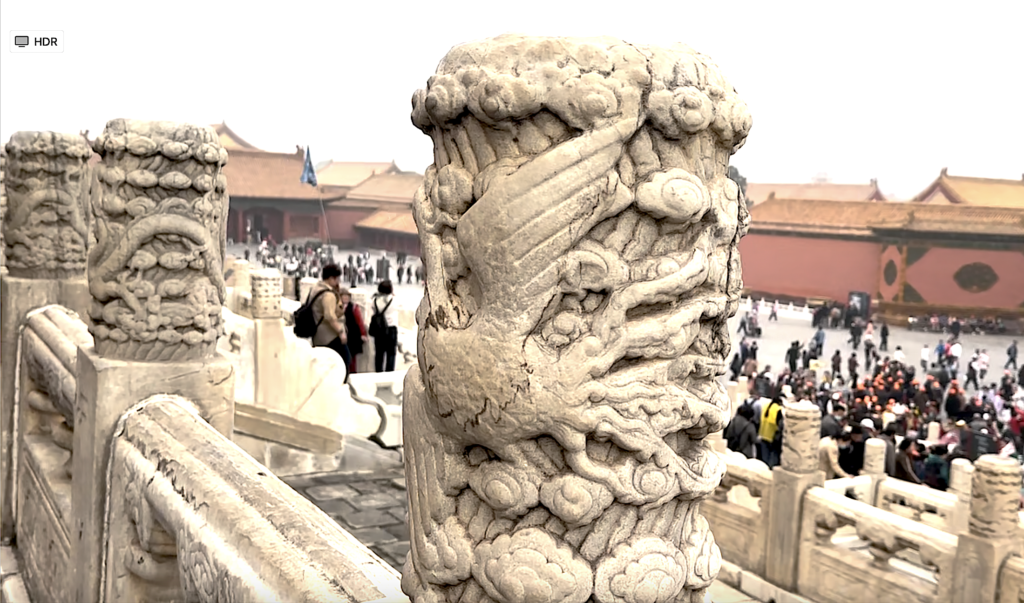
In imperial contexts, the phoenix could be particularly associated with:
the empress (皇后, huánghòu).
So one useful visual handrail becomes:
emperor (皇帝) → dragon (龙)
and:
empress (皇后) → phoenix (凤凰).
🔥
Don’t turn every dragon and phoenix in China into a rigid code.
Context matters.
But inside the imperial palace, these associations are very useful.
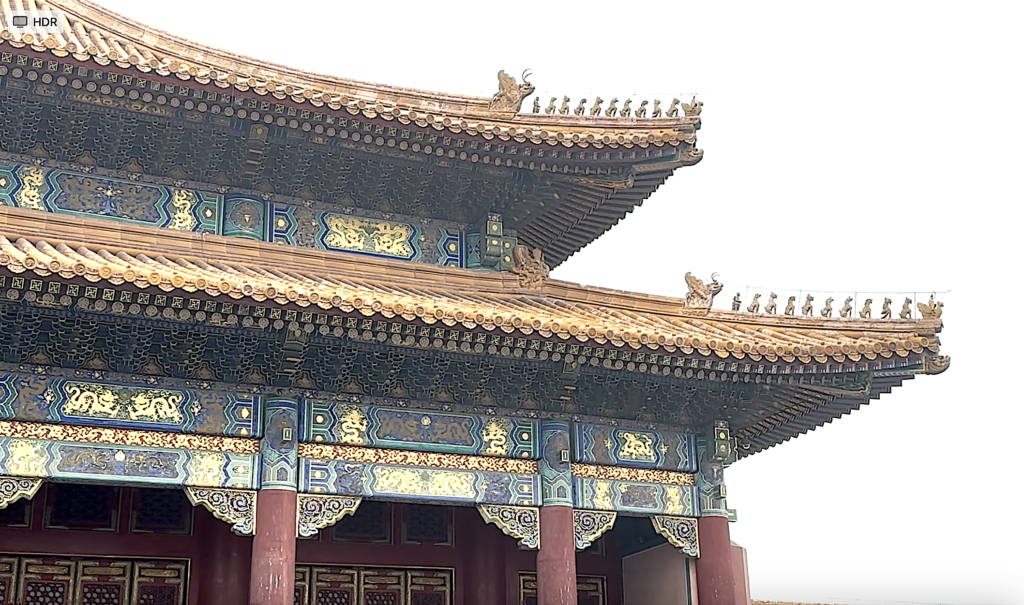
🐲 Who Are Those Tiny Animals on the Roof?
Now look along the:
roof ridge (屋脊, wūjǐ).
You’ll notice small:
roof-ridge figurines (脊兽, jǐshòu).
From ground level they look like:
tiny animals lining up for something.
😂
But their number and arrangement could indicate the rank and importance of a building.
And which building receives the most elaborate treatment?
Of course:
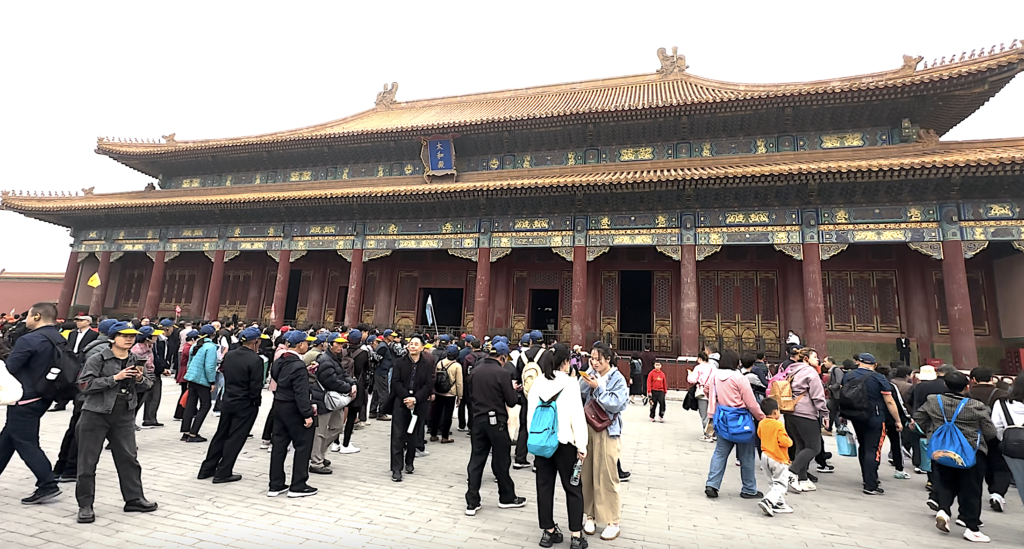
Hall of Supreme Harmony (太和殿).
🔥
Its roof-ridge arrangement is exceptional within the Forbidden City.
So the first-time tourist sees:
cute roof animals.
Deep China sees:
another layer of hierarchy.
🔢 And Then There’s Nine
Another Chinese character worth recognizing:
nine (九, jiǔ).
Nine developed strong imperial associations in traditional Chinese numerological culture.
Visitors may notice large palace doors decorated with:
door studs (门钉, méndīng)
arranged in regular grids.
On important imperial gates, arrangements involving:
nine (九)
are especially prominent.
🔥
But careful.
Don’t turn the Forbidden City into:
“Find nine everywhere and unlock the secret emperor code.”
😭😂
Symbolism matters.
So does architectural function.
🪨 Now Look Down
We’ve spent enough time staring at roofs.
😂
Look at the enormous:
stone terraces / platforms (台基, táijī)
beneath the major halls.
You’ll also see:
stone steps (石阶, shíjiē)
balustrades (栏杆, lángān)
and extensive use of:
white marble (汉白玉, hànbáiyù).
The Hall of Supreme Harmony rises dramatically above the surrounding courtyard.
Why does that matter?
Because:
height creates distinction.
You approach.
You climb.
The hall rises above you.
🔥
Your body experiences:
hierarchy.
That’s much more powerful than reading:
“The emperor was important.”
😂 汉白玉 Is NOT Jade
Beginner Chinese trap.
The word:
Hanbaiyu (汉白玉, hànbáiyù)
contains:
玉 — yù — jade.
But 汉白玉 refers to a fine white marble used extensively in monumental Chinese architecture.
So please don’t return home and write:
“Dad climbed the enormous jade staircase.”
😂
Different stone.
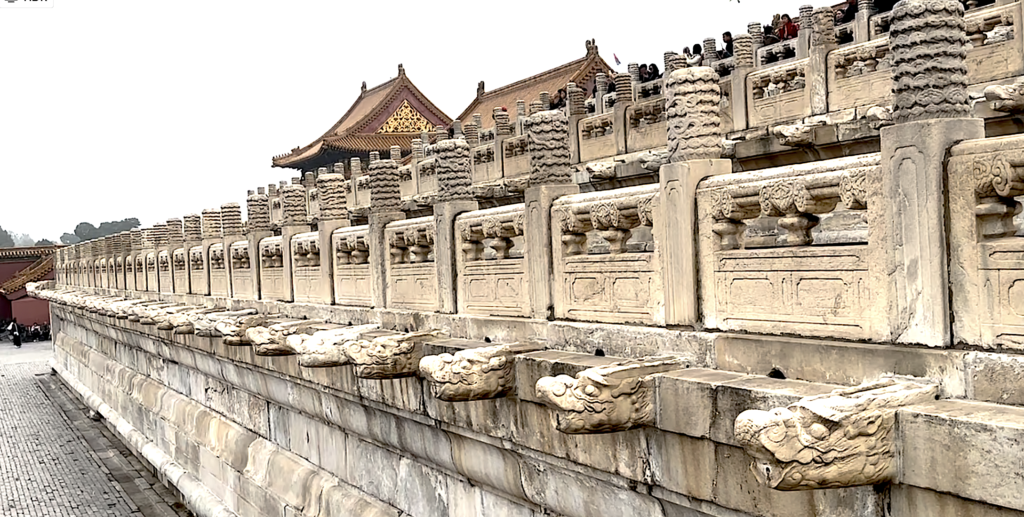
💧 And Those Stone Dragon Heads Have a Job
Around the raised terraces you may notice carved stone drainage outlets, including dragon-like:
chi-dragon heads (螭首, chīshǒu).
They look decorative.
They are.
But they also help:
drain rainwater (排水, páishuǐ).
🔥
This is one of my favorite Forbidden City lessons.
The same architectural element can be:
beautiful
+
symbolic
+
practical.
During heavy rain, water pours through the drainage outlets.
Suddenly:
imperial dragon
becomes:
plumbing.
😭😂
🔥 And Don’t Ignore the Giant Water Vats
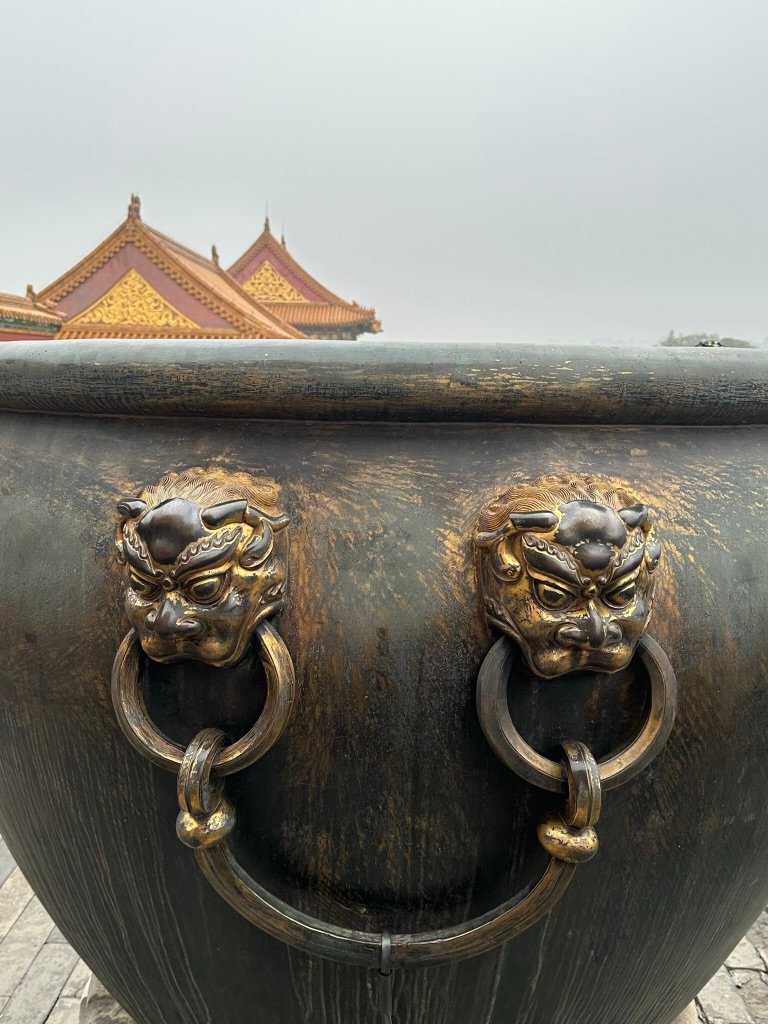
Around the Forbidden City you’ll also encounter large:
water vats (水缸 / 大缸, shuǐgāng / dàgāng).
Why?
Because much traditional palace architecture relies heavily on:
wood (木, mù).
And wood has one serious historical problem:
fire (火, huǒ).
🔥
The vats could store water for:
fire prevention and firefighting (防火, fánghuǒ).
Again:
the Forbidden City wasn’t merely:
symbolic architecture.
It was a:
working palace complex.
Roofs had to drain.
Buildings had to survive.
People had to move.
Fire had to be controlled.
🌶️ Symbolism + Engineering
This is important.
Don’t explain every feature of the Forbidden City with:
“Chinese symbolism.”
That’s lazy.
😂
A:
roof (屋顶)
also keeps out rain.
A:
wall (墙)
also separates spaces.
A:
gate (门)
also controls movement.
A:
courtyard (院落)
also creates circulation and usable space.
A:
water vat (水缸)
also fights fire.
The genius is that:
function + hierarchy + symbolism
can operate together.
🔥
🏷️ Now Read the Building Names
Here’s where Chinese-speaking and beginner-Chinese travelers get an extra reward.
Don’t ignore the names.
Remember the:
Three Great Halls (三大殿, Sān Dàdiàn).
Hall of Supreme Harmony (太和殿, Tàihé Diàn)
Hall of Central Harmony (中和殿, Zhōnghé Diàn)
Hall of Preserving Harmony (保和殿, Bǎohé Diàn).
Notice one repeated character:
和 — hé — harmony.
🔥
Three major ceremonial halls.
Three appearances of:
harmony (和).
That isn’t a bad word to remember when trying to understand traditional Chinese ideas about:
political order (政治秩序, zhèngzhì zhìxù).
🐇 Then Read the Inner Court Names
Move toward the:
Inner Court (内廷, Nèitíng)
and you’ll encounter:
Palace of Heavenly Purity (乾清宫, Qiánqīng Gōng)
and:
Palace of Earthly Tranquility (坤宁宫, Kūnníng Gōng).
Now notice:
Qian (乾, qián)
and:
Kun (坤, kūn).
These carry cosmological associations with:
Heaven (天, Tiān)
and:
Earth (地, Dì).
😳
Uh-oh.
Another rabbit hole.
🐇
🌶️ Palace Names Aren’t Random Labels
Across imperial architecture you’ll repeatedly encounter words associated with:
harmony (和, hé)
peace (安, ān)
tranquility (宁, níng)
purity (清, qīng)
Heaven (天, Tiān)
and:
Earth (地, Dì).
These aren’t simply:
pretty names chosen by the palace marketing department.
😂
They belong to a larger language of:
order,
ritual,
cosmology
and:
good government.
And now Course 4 begins quietly pointing toward another famous Beijing attraction:
Temple of Heaven (天坛, Tiāntán).
🐇🐇🐇
But Dad is controlling the rabbit.
For now.
😂
📸 Photograph the Forbidden City Differently
After reading this, don’t come home with:
83 photographs of red buildings.
😭😂
Try collecting:
One gate (门, mén)
Look at the door studs (门钉).
One roof (屋顶, wūdǐng)
Notice its form and glazed tiles (琉璃瓦).
One roof ridge (屋脊, wūjǐ)
Look for roof-ridge figurines (脊兽).
One dragon (龙, lóng)
Ask what space you’re seeing it in.
One stone terrace (台基, táijī)
Notice how height creates importance.
One water vat (水缸, shuǐgāng)
Remember fire prevention (防火).
One building name
Try reading the Chinese characters.
🔥
Now your photographs become:
historical clues
instead of:
duplicates.
🐞 Sting Check
You started Section 2 looking at:
“beautiful Chinese decoration.”
Now you’ve acquired:
roof (屋顶)
↓
glazed tile (琉璃瓦)
↓
yellow (黄)
↓
red (红)
↓
dragon (龙)
↓
phoenix (凤凰)
↓
roof-ridge figurines (脊兽)
↓
nine (九)
↓
door studs (门钉)
↓
white marble (汉白玉)
↓
stone platform (台基)
↓
drainage (排水)
↓
water vat (水缸)
↓
fire prevention (防火)
↓
harmony (和)
↓
Heaven (天)
↓
Earth (地).
😬
Same Forbidden City.
But now:
the details are talking to you.
🔥
The roof tells you about rank.
The gate tells you about access.
The platform tells you about hierarchy.
The water vat tells you the palace had practical problems.
And the names begin revealing ideas about:
order, harmony and the cosmos.
Section 3 — Go Back to the Forbidden City. Now Let the Architecture Talk.
So what should a first-time traveler remember from all this?
Not:
“I need to memorize 重檐庑殿顶 before entering the Forbidden City.”
😭😂
Absolutely not.
Remember one simple idea:
The Forbidden City is not merely beautiful architecture.
Its:
layout (布局, bùjú),
axis (轴线, zhóuxiàn),
gates (门, mén),
courtyards (院落, yuànluò),
roofs (屋顶, wūdǐng),
colors (颜色, yánsè),
names (名称, míngchēng)
and:
decorations (装饰, zhuāngshì)
help communicate:
order (秩序, zhìxù), hierarchy (等级, děngjí) and imperial authority (皇权, huángquán).
🔥
Once you understand that, your Forbidden City visit changes.
1. Before You Enter: Look for the Axis
Start with:
Meridian Gate (午门, Wǔmén).
Then notice how the major spaces keep drawing you along the:
Central Axis (中轴线, Zhōngzhóuxiàn).
Don’t rush immediately toward:
“Where’s the emperor’s throne?”
😂
Instead, notice the sequence:
GATE
↓
COURTYARD
↓
GATE
↓
HALL
↓
COURTYARD
↓
ANOTHER LAYER OF ACCESS.
You’re not simply walking:
through buildings.
You’re moving through:
hierarchy.
🔥
2. At the Hall of Supreme Harmony: Stop
When you reach:
Hall of Supreme Harmony (太和殿, Tàihé Diàn)
don’t photograph it and immediately move on.
Stop.
Look.
Ask:
Why does THIS building feel more important than the others?
Now you know what to look for:
central position (中心位置, zhōngxīn wèizhì),
scale (规模, guīmó),
raised platform (台基, táijī),
prestigious roof form (屋顶形式, wūdǐng xíngshì),
yellow glazed tiles (黄色琉璃瓦, huángsè liúlíwǎ),
roof-ridge figurines (脊兽, jǐshòu),
and:
imperial decoration (皇家装饰, huángjiā zhuāngshì).
🔥
The building is practically shouting:
RANK.
You just learned how to hear it.
3. Then Start Reading the Chinese
Even if you’re a beginner, recognize a few characters:
门 — mén — gate
宫 — gōng — palace
殿 — diàn — hall
和 — hé — harmony
天 — tiān — Heaven
地 — dì — Earth
龙 — lóng — dragon
九 — jiǔ — nine
🔥
Suddenly Chinese names aren’t simply:
“those characters Dad can’t read quickly enough before Elaine walks away.”
😂
They contain clues.
Look again at:
Hall of Supreme Harmony (太和殿)
Hall of Central Harmony (中和殿)
Hall of Preserving Harmony (保和殿).
You already recognize:
和 — harmony.
One character.
Three buildings.
One little historical handrail.
That’s enough.
🐇 Then Something Interesting Happens
You reach:
Palace of Heavenly Purity (乾清宫, Qiánqīng Gōng)
and:
Palace of Earthly Tranquility (坤宁宫, Kūnníng Gōng).
You encounter ideas associated with:
Heaven (天, Tiān)
and:
Earth (地, Dì).
Then you remember that the emperor was traditionally called:
Son of Heaven (天子, Tiānzǐ).
😳
And perhaps the next day your Beijing itinerary says:
Temple of Heaven (天坛, Tiāntán).
Uh-oh.
🐇
Now you have another question:
Why does Chinese history keep talking about Heaven?
🔥🔥🔥
That’s exactly where our next Big Question will take you.
4. Zoom Out Before You Leave
At the end of your Forbidden City visit, don’t think only about:
the palace.
Remember the:
Beijing Central Axis (北京中轴线, Běijīng Zhōngzhóuxiàn).
The Forbidden City belongs to a much larger planned imperial landscape.
And the Beijing Central Axis itself became a:
UNESCO World Heritage Site in 2024.
So zoom out:
Forbidden City (故宫)
↓
imperial city
↓
Central Axis (中轴线)
↓
Beijing (北京)
↓
imperial capital (帝都, dìdū).
🔥
The palace wasn’t randomly placed inside the city.
It belonged to a much bigger idea about:
center, order and rulership.
🐞 Final Sting
Perhaps this is your first China trip.
You entered the Forbidden City thinking:
“I came to see the emperor’s palace.”
Excellent.
But now:
courtyard (院落)
↓
gate (门)
↓
axis (中轴线)
↓
hierarchy (等级)
↓
ritual (礼)
↓
Hall of Supreme Harmony (太和殿)
↓
harmony (和)
↓
Heaven (天)
↓
Son of Heaven (天子)
↓
Temple of Heaven (天坛)
🐇🐇🐇
One famous Beijing attraction has just created the question for another.
😂🔥
And somewhere farther down that rabbit hole are:
Zhouyuan (周原, Zhōuyuán)
Baoji (宝鸡, Bǎojī)
Zhougong Temple (周公庙, Zhōugōng Miào)
and:
the Zhou dynasty (周朝, Zhōu Cháo).
Places most first-time travelers have never heard of.
Yet.
🐞
Travel Tips: How to Visit Baoji 宝鸡 from Xi’an 西安 (For Foreign Travelers)
Beyond Xi’an: Why We Went to Baoji 宝鸡— Into the China Before Qin Shi Huang 秦始皇
ChinaTravelBUG’s Take
By all means:
photograph the red walls.
Photograph the golden roofs.
Photograph the dragons.
They’re beautiful.
But when you visit the Forbidden City, try something else too.
Read the space.
Ask:
Why is this gate here?
Why is that hall higher?
Why do I have to cross this enormous courtyard?
Why is everything arranged around an axis?
Why does 和 — harmony — keep appearing?
Those questions turn:
architecture
into:
Chinese history.
🔥
And once that happens, the Forbidden City stops being:
a collection of beautiful old buildings.
It becomes something much more interesting:
an imperial idea expressed in wood, stone, space and movement.
Same Forbidden City.
Different eyes.
🐞🐇🔥
See the place. Ask the bigger question. Understand China better.
🐇 Go Deeper: The Next Big Question
The Forbidden City placed the emperor at the center of an ordered world. But his authority was supposed to come from somewhere even higher.
Read next: Michelin Course 5: Why Does Chinese History Keep Talking About Heaven? →