Section 1 — You’re Standing in the Forbidden City. But Who Actually Ran China?
For most first-time travelers to:
Beijing (北京, Běijīng)
the:
Forbidden City (故宫, Gùgōng)
is almost compulsory.
You walk through enormous:
gates (门, mén),
courtyards (院, yuàn),
and:
palace halls (殿, diàn).
Red walls.
Golden roofs.
Marble terraces.
Dragons everywhere.
And naturally, the story seems to be about one person:
the emperor (皇帝, huángdì).
The emperor lived here.
The emperor ruled China.
Fine.
But Deep China has a slightly inconvenient question:
How?

China was enormous.
The emperor was:
ONE MAN.
No telephone.
No email.
No Zoom.
No high-speed rail.
No spreadsheet.

Yet taxes had to be collected.
Officials had to be appointed.
Crimes had to be handled.
Armies had to be supplied.
Floods had to be reported.
Granaries had to function.
Public works had to be organized.
Orders had to travel hundreds or thousands of kilometers.
So when you’re standing inside the Forbidden City, ask:
How did one emperor actually govern all this?

First Answer: He Didn’t Do It Alone
Obvious?
Yes.
But important.
The emperor stood at the top of an enormous political system.
Below him were:
officials (官员, guānyuán)
working through:
government offices (衙门, yámen)
and layers of administration extending from the imperial center toward local society.
The exact system changed enormously across Chinese history.
Tang government was not identical to Ming government.
Ming government was not identical to Qing government.
So don’t imagine:
Qin invented one bureaucracy in 221 BCE and everybody used the same organization for 2,000 years.
No.
Institutions changed.
But one broad problem remained:
How do you turn the emperor’s authority into actual government across a vast territory?

 Put Imperial Government on a Simple Timeline
We don’t need an entire course in Chinese bureaucracy.
Keep the coat rack simple.
QIN DYNASTY (秦朝, Qín Cháo)
221–206 BCE
Qin creates a new unified imperial order and expands direct territorial administration through:
commanderies and counties (郡县, jùnxiàn).
↓
HAN DYNASTY (汉朝, Hàn Cháo)
206 BCE–220 CE
The imperial state develops and modifies institutions inherited from Qin.
↓
SUI / TANG (隋唐, Suí–Táng)
Major bureaucratic institutions develop further.
The:
Six Ministries (六部, Liùbù)
become important parts of central administration.
↓
SONG / YUAN (宋元, Sòng–Yuán)
Institutions continue changing as governments confront new political and administrative problems.
↓
MING DYNASTY (明朝, Míng Cháo)
1368–1644
Imperial power becomes highly centralized.
The Forbidden City is constructed in Beijing during the early 15th century.
↓
QING DYNASTY (清朝, Qīng Cháo)
1644–1912
The Qing inherit and modify the imperial governing system while ruling an enormous multiethnic empire.
↓
TODAY
Dad walks into the Forbidden City…
and asks why there are so many gates.
 The Forbidden City Was the Top of the Pyramid
This is the first mental picture to install.
Imagine:
EMPEROR (皇帝)
↓
CENTRAL GOVERNMENT (中央政府, zhōngyāng zhèngfǔ)
↓
PROVINCIAL / REGIONAL ADMINISTRATION
↓
PREFECTURES (府, fǔ)
↓
COUNTIES (县, xiàn)
↓
LOCAL SOCIETY
Reality was more complicated than this.
Different dynasties used different structures.
Some places had different administrative status.
And government didn’t penetrate every village equally.
But for a Western beginner:
this is the coat rack.
The emperor was at the top.
He depended on layers of people underneath.
 Western Handrail: CEO of an Enormous Organization
Dangerous analogy.
But useful.
Imagine the CEO of a company employing hundreds of thousands of people.
Does the CEO personally:
approve every invoice,
hire every employee,
inspect every warehouse,
and:
answer every customer complaint?
Obviously not.
There are:
departments,
managers,
reporting systems,
rules
and:
chains of responsibility.
Imperial China faced a vastly more complicated version of that problem.
The emperor might be:
supreme authority
without personally performing:
every administrative task.
Meet the Six Ministries
For Ming and Qing government, one useful set of names for beginners is:
the Six Ministries (六部, Liùbù).
Don’t memorize them for an exam.
Just look at the jobs.
Ministry of Personnel (吏部, Lìbù)
Officials.
Appointments.
Careers.
↓
Ministry of Revenue (户部, Hùbù)
Population registers.
Taxation.
Finance.
↓
Ministry of Rites (礼部, Lǐbù)
State ritual.
Ceremonies.
Education-related and diplomatic functions in different contexts.
↓
Ministry of War (兵部, Bīngbù)
Military administration.
↓
Ministry of Punishments (刑部, Xíngbù)
Judicial and penal administration.
↓
Ministry of Works (工部, Gōngbù)
Construction.
Infrastructure.
Public works.
Now government begins looking less like:
“Emperor says things.”
and more like:
administration.
 And Ming China Made the Emperor Even More Central
This is especially useful when you’re visiting the Forbidden City.
The founder of the Ming dynasty:
Hongwu Emperor (洪武帝, Hóngwǔ Dì)
also known as:
Zhu Yuanzhang (朱元璋, Zhū Yuánzhāng)
abolished the office of:
chief minister / chancellor (丞相, chéngxiàng)
in:
1380.
After that reform, the Six Ministries became directly responsible to the emperor.
Think about what that means.
Remove a powerful chief minister between:
emperor
and:
government departments
and the emperor potentially becomes much more directly involved in central administration.
The Ming founder wanted:
control.
A lot of it.
But One Emperor Still Cannot Read Everything
And here comes the obvious practical problem.
If you concentrate enormous authority in the emperor…
somebody still has to:
read documents,
prepare information,
draft responses,
organize paperwork
and:
advise the throne.
Over time, Ming:
Grand Secretaries (内阁大学士, Nèigé Dàxuéshì)
became increasingly important advisers who helped bridge the gap between:
the throne
and:
the bureaucracy.
This is another recurring lesson:
Institutions evolve because practical problems don’t care about political theory.
 Imagine the Paperwork
Now stand in the Forbidden City again.
Somewhere in the empire:
a flood occurs.
A harvest fails.
A local official reports unrest.
A military commander needs supplies.
A tax problem appears.
A judicial case requires review.
Information moves upward.
Decisions move downward.
This depends on:
documents (文书, wénshū)
reports (奏报, zòubào)
memorials to the throne (奏折, zòuzhé)
and enormous amounts of:
writing (文字, wénzì).
An empire is not governed only by soldiers.
It is also governed by:
paperwork.
And Who Could Read and Write All This?
Excellent question.
Now we encounter one of the most famous institutions in Chinese history:
the imperial examination system (科举制度, kējǔ zhìdù).
Over many centuries—and in changing forms—the examinations became an important route for recruiting educated men into government service.
Candidates studied texts associated particularly with:
Confucian learning (儒学, rúxué).
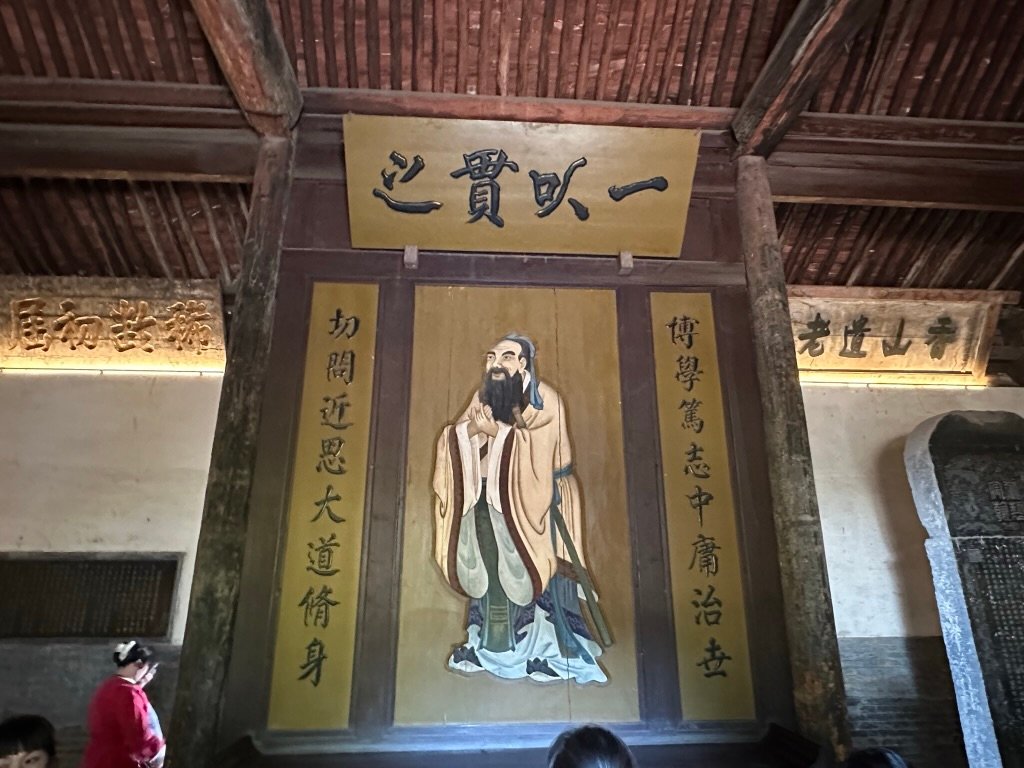
Success could open the path toward becoming:
an official (官, guān).
Now Confucius suddenly isn’t simply:
“old Chinese philosopher tourists visit in Qufu.”
His intellectual tradition became deeply connected with:
the people who staffed imperial government.
Western Handrail: Exam Results Could Change a Family’s Future
Imagine an examination so important that success could transform:
status,
career,
family prospects
and:
social prestige.

Now multiply that cultural importance across generations.
The examination system was never perfectly meritocratic.
Family resources mattered.
Education cost time and money.
Connections could matter.
Different periods operated differently.
But the ideal that:
learning could lead to office
became extraordinarily powerful.
And it helped produce a shared elite political culture across an enormous empire.
From the Forbidden City to the County
Now we leave Beijing.
Because this is where Dad & Elaine’s lesser-known places become useful.
If the Forbidden City represents:
the TOP of imperial government
where do we go to see:
the BOTTOM end of formal local administration?
A very useful answer is:
the county government office (县衙, xiànyá).
The:
county (县, xiàn)
was one of the fundamental units of imperial local administration.
And the county magistrate:
magistrate (知县, zhīxiàn)
was, for many ordinary people, far more immediate than the emperor sitting in Beijing.
Think About That
The emperor may be:
Son of Heaven.
Very impressive.
But if you have:
a legal dispute,
a tax issue,
a local administrative problem,
or:
a criminal case,
you’re not walking to the Forbidden City and saying:
“Excuse me, Your Majesty…”
Local government mattered.
And the county magistrate became one of the most important human faces of imperial authority.
One Emperor, More Than a Thousand Counties
This gives us the scale of the problem.
During the Ming dynasty, the empire was administered through roughly:
1,100 counties
along with prefectures and other administrative units.
And the formal civilian bureaucracy itself was surprisingly small relative to the population it governed.
That means imperial government depended not only on formally appointed officials, but also on:
clerks,
assistants,
local elites,
community institutions
and:
established administrative practices.
The state could not put:
one Beijing official behind every farmer.
It governed through layers.
 And This Is Where Hancheng Becomes Interesting
Dad & Elaine visited:
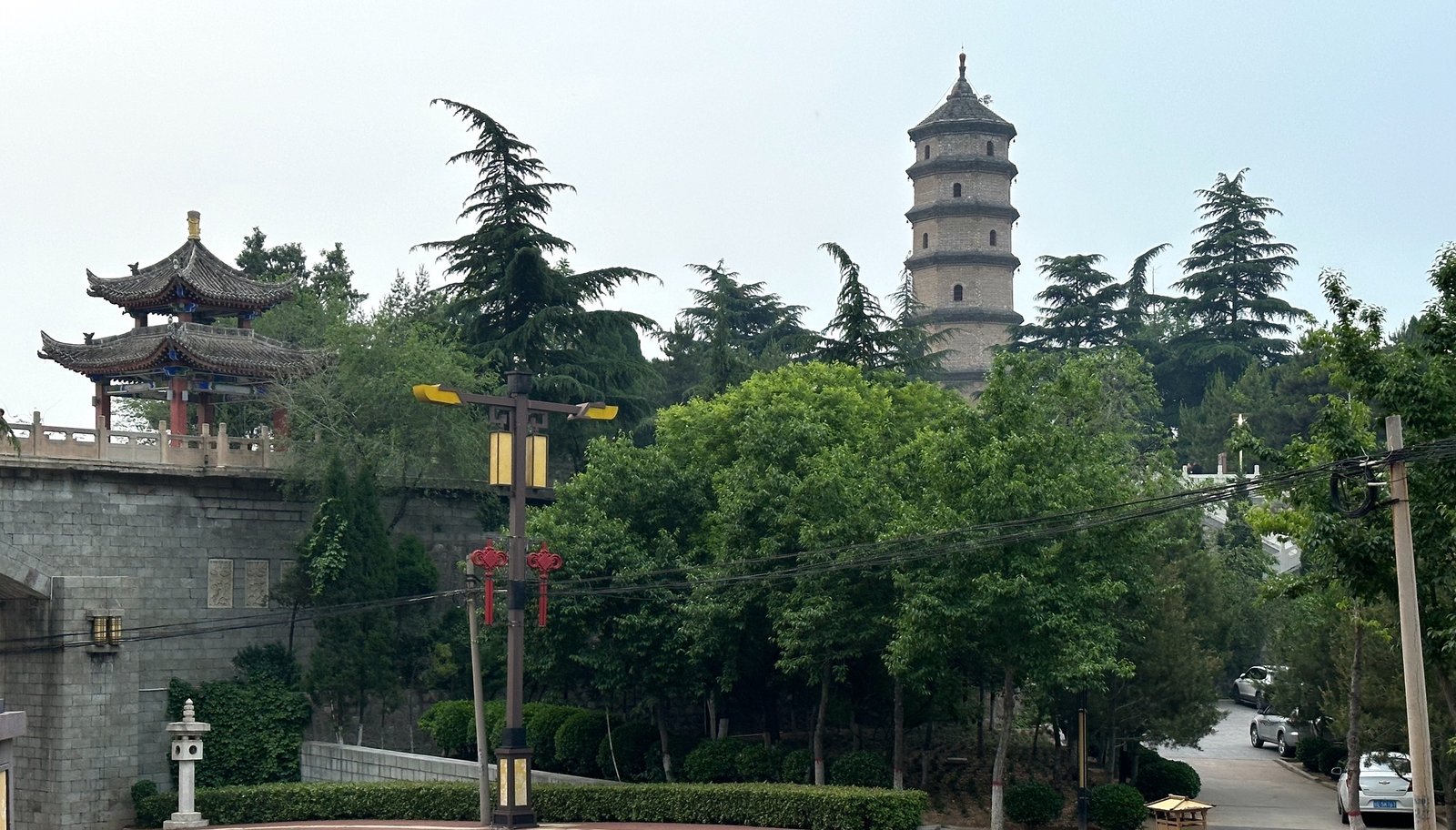
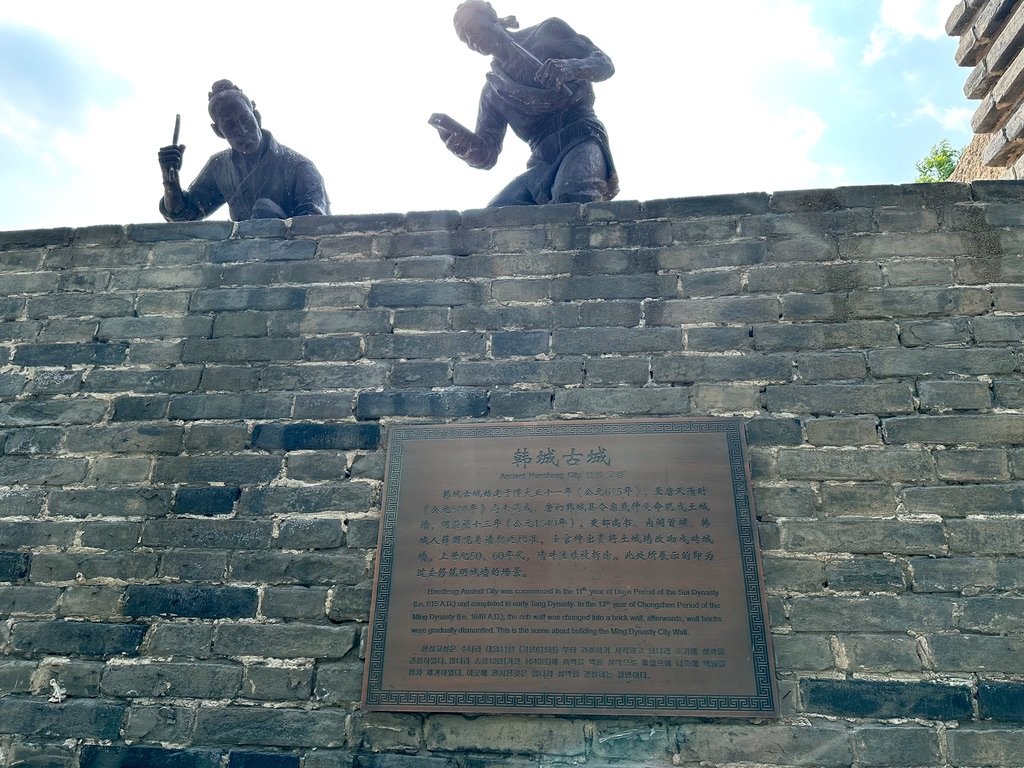
Hancheng Ancient City (韩城古城, Hánchéng Gǔchéng)
in Shaanxi.
And places like Hancheng allow us to see the traditional county-town world much more clearly than the Forbidden City can.
There you encounter the kinds of institutions that made up local political and cultural life:
county government office (县衙, xiànyá)
Confucian Temple (文庙, Wénmiào)
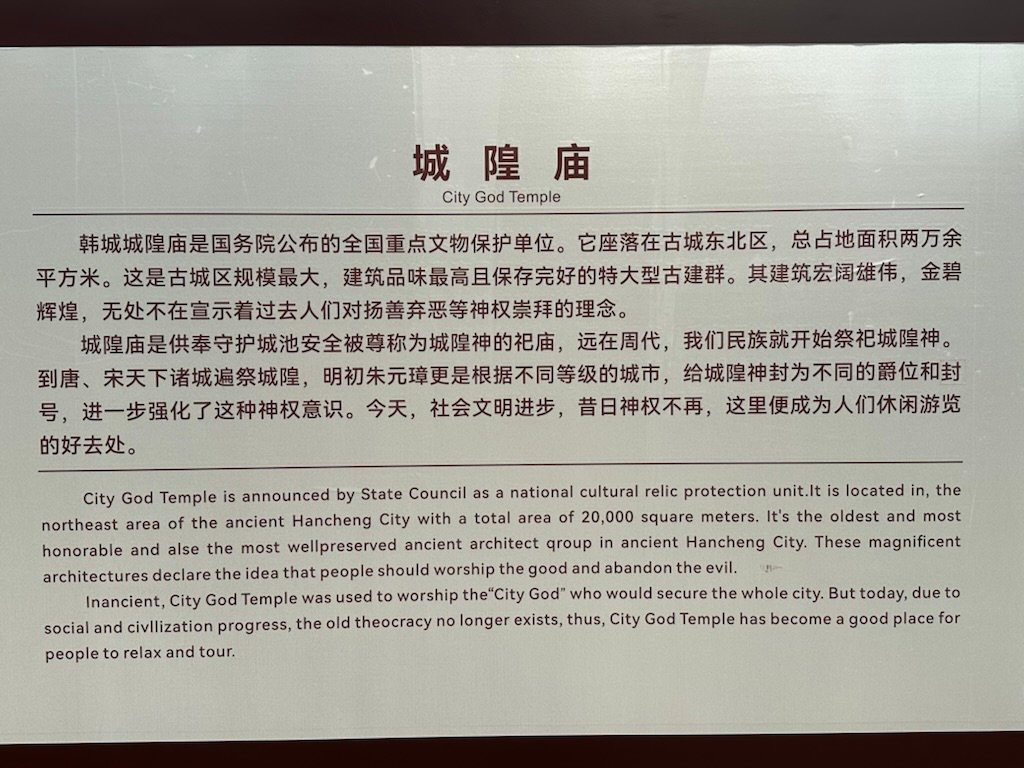
City God Temple (城隍庙, Chénghuáng Miào)
streets and markets (街市, jiēshì)
and:
traditional residences (民居, mínjū).
Now the imperial system becomes physical.
Not merely:
diagram in a textbook.
You can walk through it.
Pingyao Gives Us Another Doorway
Dad & Elaine also visited:
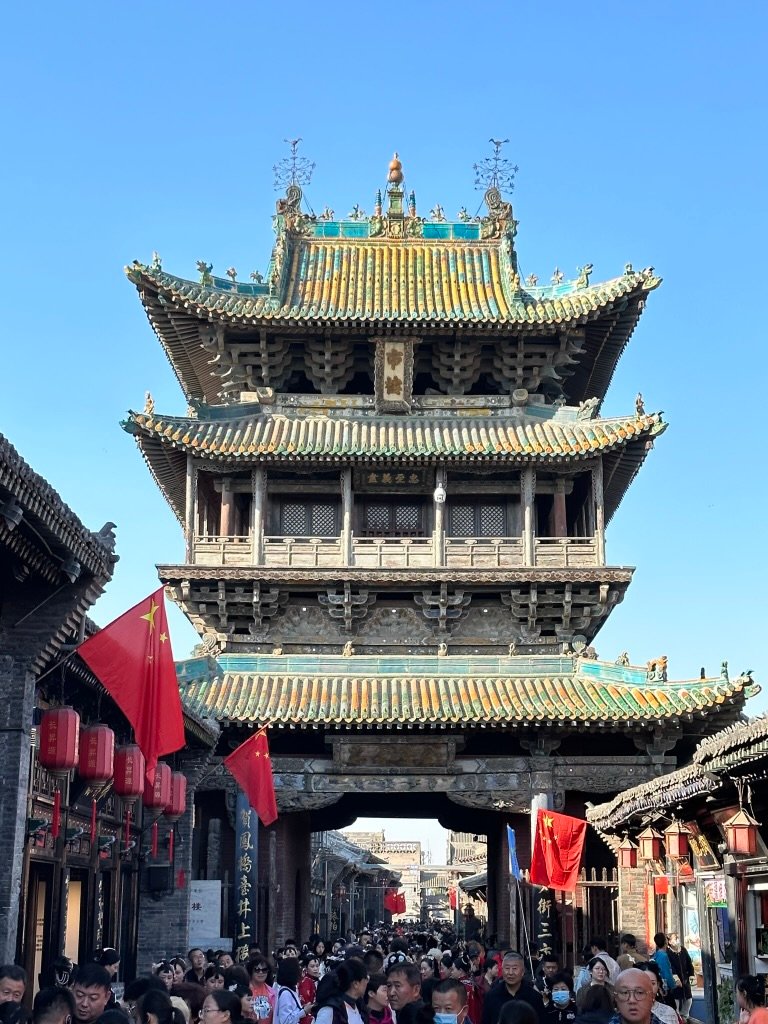
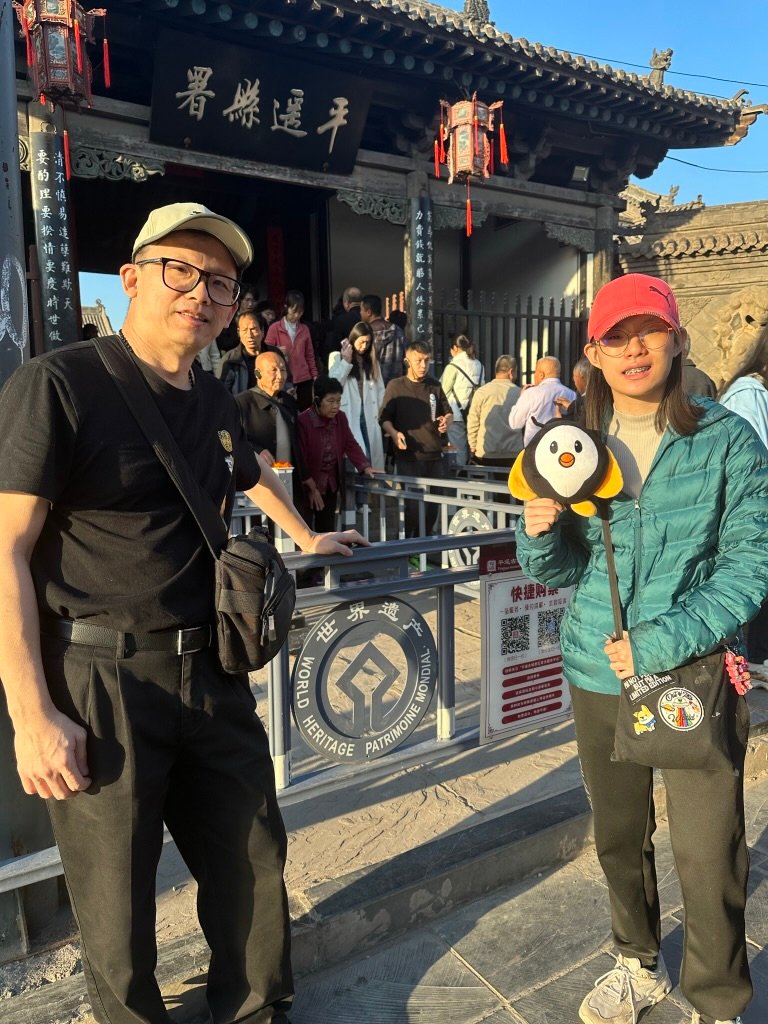
Pingyao Ancient City (平遥古城, Píngyáo Gǔchéng)
in Shanxi.
Most travelers know Pingyao for:
city walls,
Shanxi merchants (晋商, Jìnshāng),
and:
draft banks (票号, piàohào).
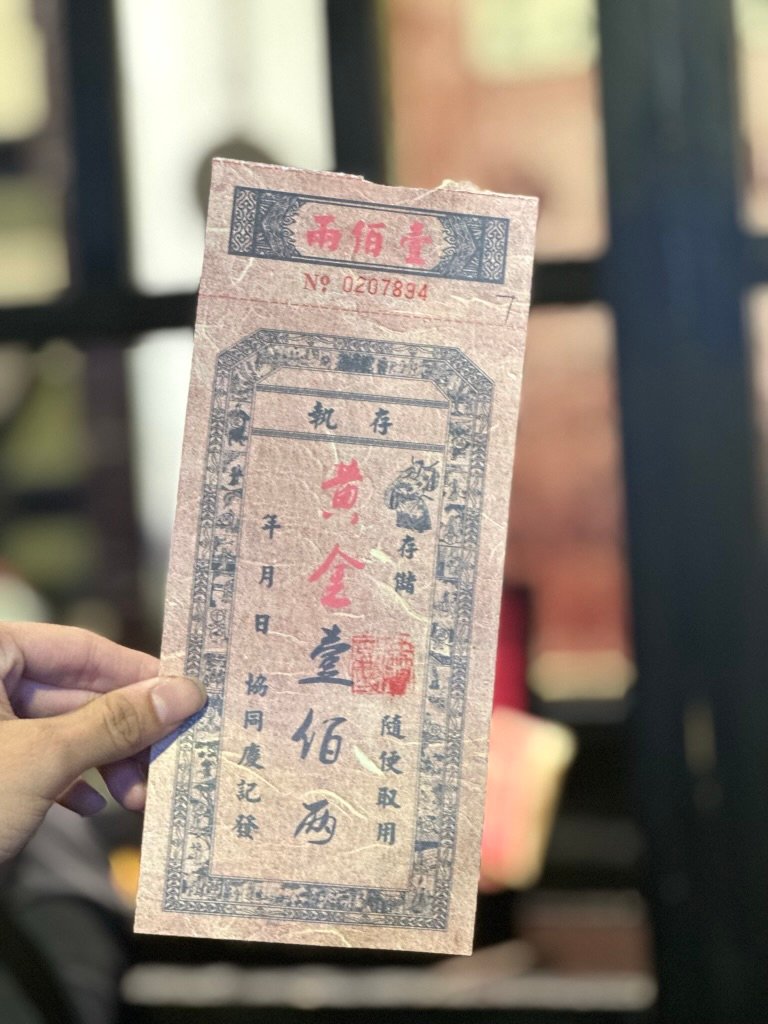
But Pingyao also preserves a traditional:
county government office (县衙, xiànyá).
So now:
FORBIDDEN CITY
↓
imperial center
↓
COUNTY GOVERNMENT
↓
local administration
↓
PINGYAO / HANCHENG
The lesser-known place answers the question raised by the famous one.
That’s exactly what Deep China is supposed to do.
 Sting Check
You entered the Forbidden City thinking:
“The emperor ruled China from here.”
Correct.
But incomplete.
Now you’ve acquired:
emperor (皇帝)
↓
central government (中央政府)
↓
Six Ministries (六部)
↓
officials (官员)
↓
imperial examinations (科举制度)
↓
prefectures (府)
↓
counties (县)
↓
county magistrate (知县)
↓
county government office (县衙)
↓
Hancheng + Pingyao
And suddenly the Forbidden City no longer looks like:
a gigantic emperor’s house.
It looks like:
the political center of a governing system reaching far beyond Beijing.
And that raises our next question:
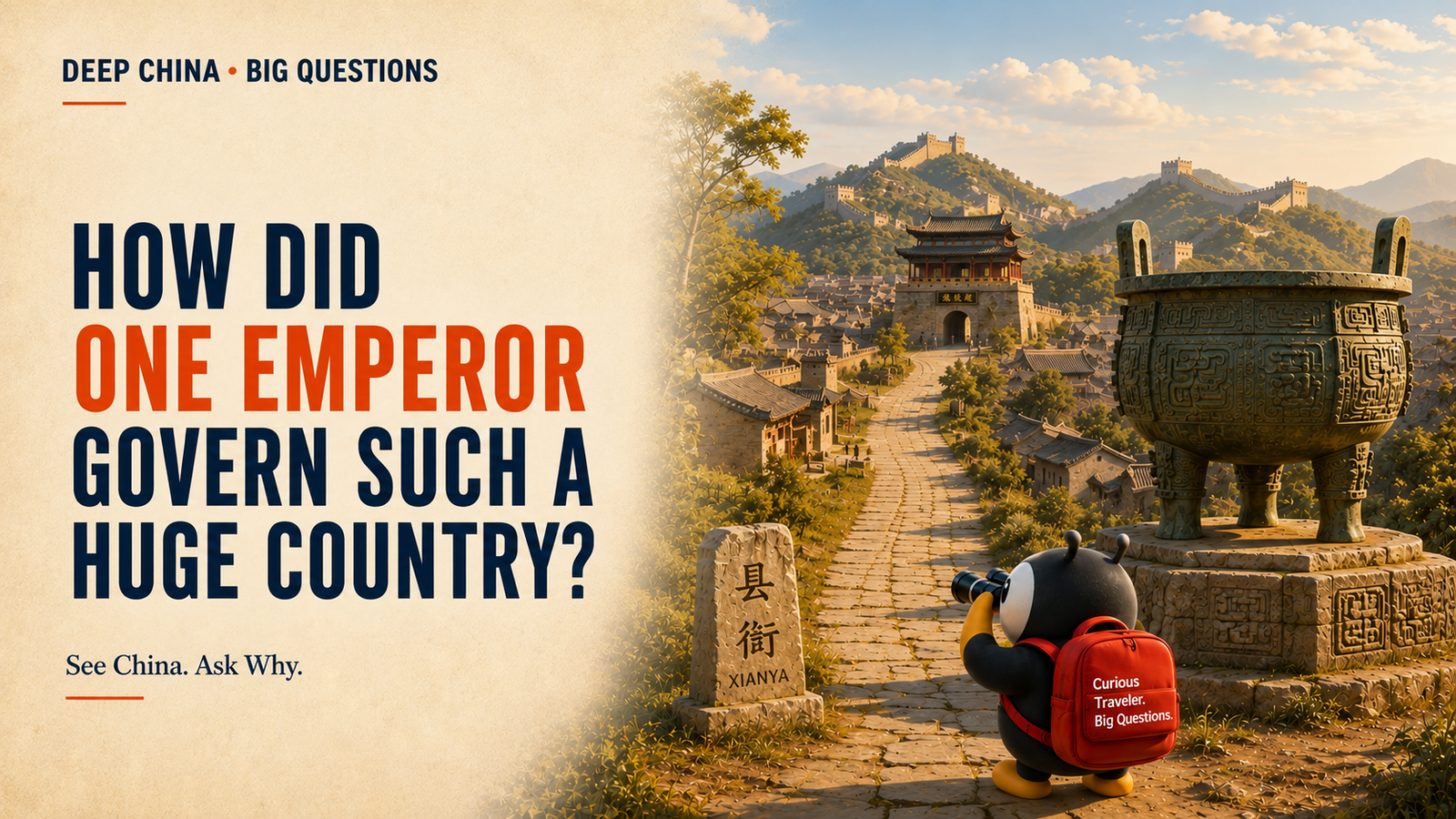
Deep China: How Did One Emperor Govern Such a Huge Country?
Section 2 — From Beijing to the County: How Imperial Government Reached Ordinary People
Section 1 took us from:
the Forbidden City (故宫, Gùgōng)
↓
the emperor (皇帝, huángdì)
↓
central government (中央政府, zhōngyāng zhèngfǔ)
↓
officials (官员, guānyuán)
↓
imperial examinations (科举制度, kējǔ zhìdù)
↓
all the way down to:
the county (县, xiàn).
Now comes the more interesting question.
Imagine you’re a farmer, merchant or shopkeeper living hundreds of kilometers from Beijing.
You may never see:
the Forbidden City.
You will certainly never have tea with:
the emperor.
So how does this enormous imperial state become real in your everyday life?
The answer begins much closer to home.
Meet the County Magistrate
At the local level, one of the most important representatives of imperial government was the:
county magistrate (知县, zhīxiàn).
For many ordinary people, this official was a much more immediate face of government than the emperor.
The magistrate worked from the:
county government office (县衙, xiànyá).
And his responsibilities could be remarkably broad.
Depending on the period and circumstances, local administration could involve:
taxation (赋税, fùshuì),
law and justice (司法, sīfǎ),
public order (治安, zhì’ān),
registration of population and land,
public works (工程, gōngchéng),
disaster relief (赈灾, zhènzāi),
and:
reporting information upward through the bureaucracy.
One official.
Many jobs.
Dad complains about multitasking.
That’s a useful starting comparison.
But don’t take it literally.
A county magistrate wasn’t simply:
“the ancient Chinese mayor.”
His responsibilities crossed categories that modern governments often separate.
He could have:
administrative,
judicial,
fiscal
and:
ritual responsibilities.
That’s why older Western writing sometimes called the magistrate:
the “father-and-mother official”
reflecting the Chinese expression:
父母官 — fùmǔguān.
The ideal suggested that a local official should care for the people under his jurisdiction as parents cared for a family.
The reality, naturally…
could be rather more complicated.
Here comes the same problem again.
We began with:
One emperor cannot govern China alone.
Now:
One magistrate cannot govern an entire county alone either.
Around the formal official existed:
clerks (吏, lì),
runners and attendants (衙役, yáyì),
local assistants,
and various people involved in carrying out everyday administrative work.
And beyond the formal government office, the imperial state often depended upon:
local elites (地方士绅, dìfāng shìshēn)
and:
gentry (绅士 / 士绅, shēnshì / shìshēn)
who possessed:
education,
land,
social standing,
family networks
and:
local influence.
This is crucial.
Imperial government wasn’t:
Beijing → official → every individual person.
There were many layers in between.
This is one of the most interesting things for Western beginners.
Imperial China could govern an enormous population with a formal bureaucracy that was:
relatively small
compared with a modern state.
There wasn’t:
a modern police station on every corner,
a giant social-security administration,
electronic tax records,
national ID databases,
or:
millions of modern civil servants.
So how did it work?
Partly through:
delegation.
Partly through:
local society.
Partly through:
families and communities.
Partly through:
shared institutions and norms.
And partly through a bureaucracy that depended heavily on:
writing, records and hierarchy.
Paperwork Connects the County to Beijing
Imagine the flow.
Something happens in a county.
↓
Local officials investigate or record it.
↓
Information moves upward through administrative channels.
↓
Higher officials review it.
↓
Important matters may move farther upward.
↓
Imperial decisions or regulations move downward.
This required:
official documents (公文, gōngwén)
registers (册, cè)
reports (报告 / 奏报, bàogào / zòubào)
and:
seals (印, yìn).
That last object matters.
A government seal wasn’t decoration.
It represented:
official authority.
A piece of paper bearing the appropriate seal could carry the authority of an institution far beyond the physical presence of the emperor.
Documents don’t teleport.
Neither do officials.
So imperial government depended upon:
roads (道路, dàolù)
postal relay stations (驿站, yìzhàn)
messengers (信使, xìnshǐ)
and:
transport networks.
Now geography becomes part of government.
A vast empire isn’t held together only by:
laws.
It also needs:
communication.
This is one reason roads, canals and transport systems repeatedly matter in Chinese history.
And Then Comes Grain
Here’s another thing the Forbidden City can hide from you.
An emperor can issue:
imperial edicts (诏令, zhàolìng).
But emperors cannot eat:
edicts.
Beijing needed:
food.
Armies needed:
food.
Officials needed salaries and supplies.
Cities needed grain.
So government was also deeply concerned with:
agriculture (农业, nóngyè)
taxation (赋税, fùshuì)
and:
grain (粮食, liángshi).
Now the apparently boring question:
“How do you move grain?”
becomes a question about:
imperial survival.
One of the great pieces of infrastructure in Chinese history is the:
Grand Canal (大运河, Dàyùnhé).
It linked major river systems and regions across eastern China.
During later imperial periods, it became particularly important for moving:
tax grain (漕粮, cáoliáng)
and other goods toward northern political centers, including Beijing.
Now suddenly:
the Forbidden City
depends on:
farmers
↓
tax grain
↓
boats
↓
canals
↓
administrators
↓
warehouses
↓
Beijing.
The emperor’s palace was connected to an enormous material system far beyond its red walls.
This is the conceptual upgrade we want.
A first-time traveler sees:
THRONE
and naturally thinks:
POWER.
Correct.
But power also looks like:
tax register
county office
official seal
road
canal
grain warehouse
examination hall
and:
clerk with paperwork.
Less photogenic.
Just as important.
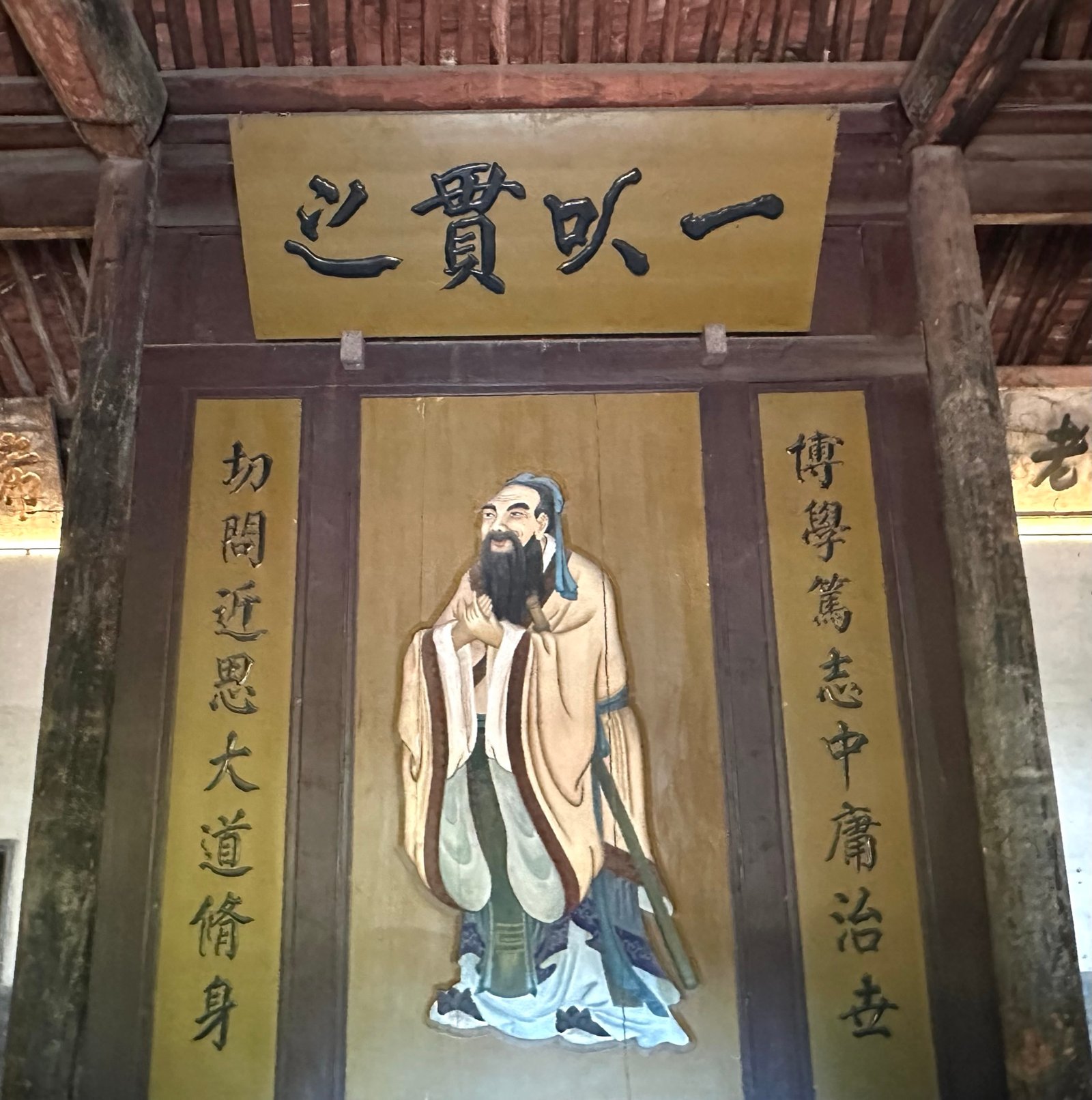
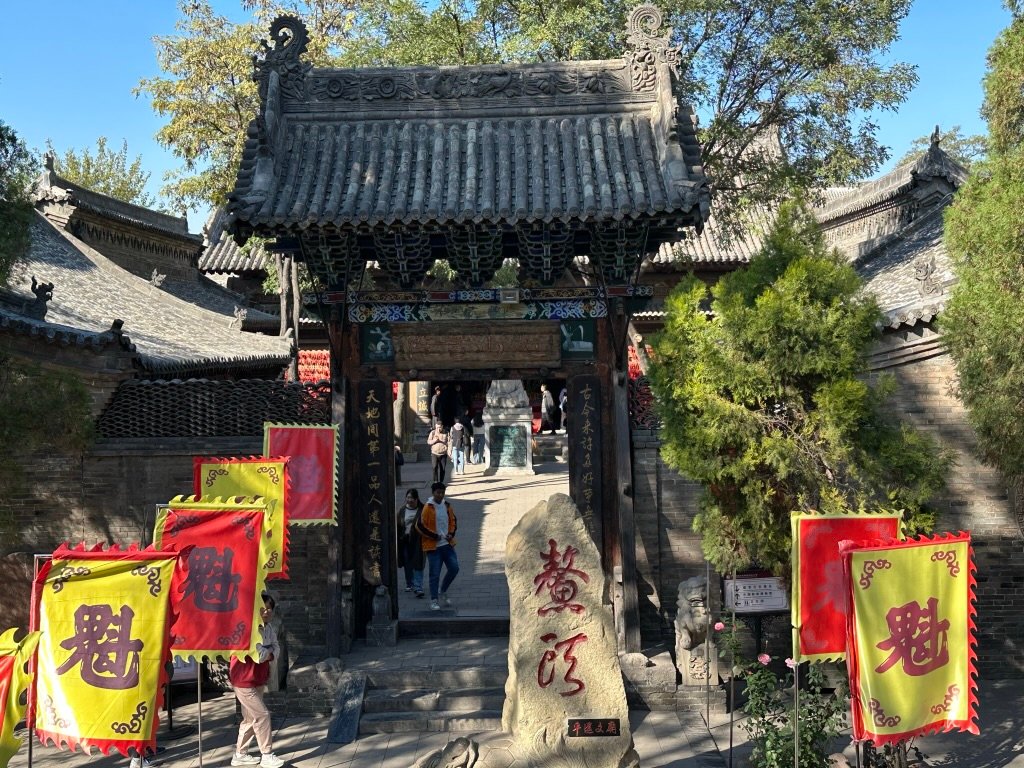
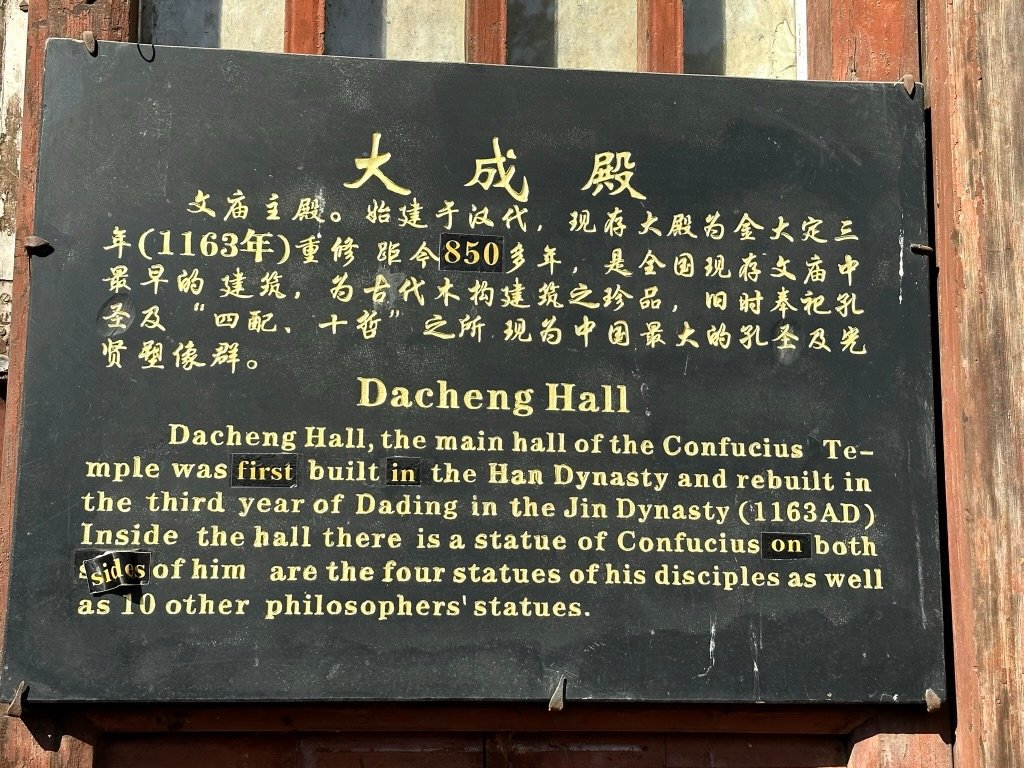
And Confucius Appears Again
Remember the:
imperial examination system (科举制度, kējǔ zhìdù)?
The intellectual world of educated officials was deeply shaped by:
Confucian learning (儒学, rúxué).
That means a local town might contain not only a:
county government office (县衙, xiànyá)
but also a:
Confucian Temple (文庙, Wénmiào).
Now two buildings begin talking to each other.
The:
县衙
represents:
administration.
The:
文庙
connects with:
education + Confucian political culture.
Because Confucius (孔子, Kǒngzǐ) wasn’t merely:
“a philosopher who lived a long time ago.”
Confucian learning became deeply intertwined with:
education (教育, jiàoyù),
elite culture,
ritual (礼, lǐ),
and:
government service.
So the traditional county town could physically place:
government
and:
Confucian culture
inside the same urban landscape.
That’s a powerful thing to notice when traveling.
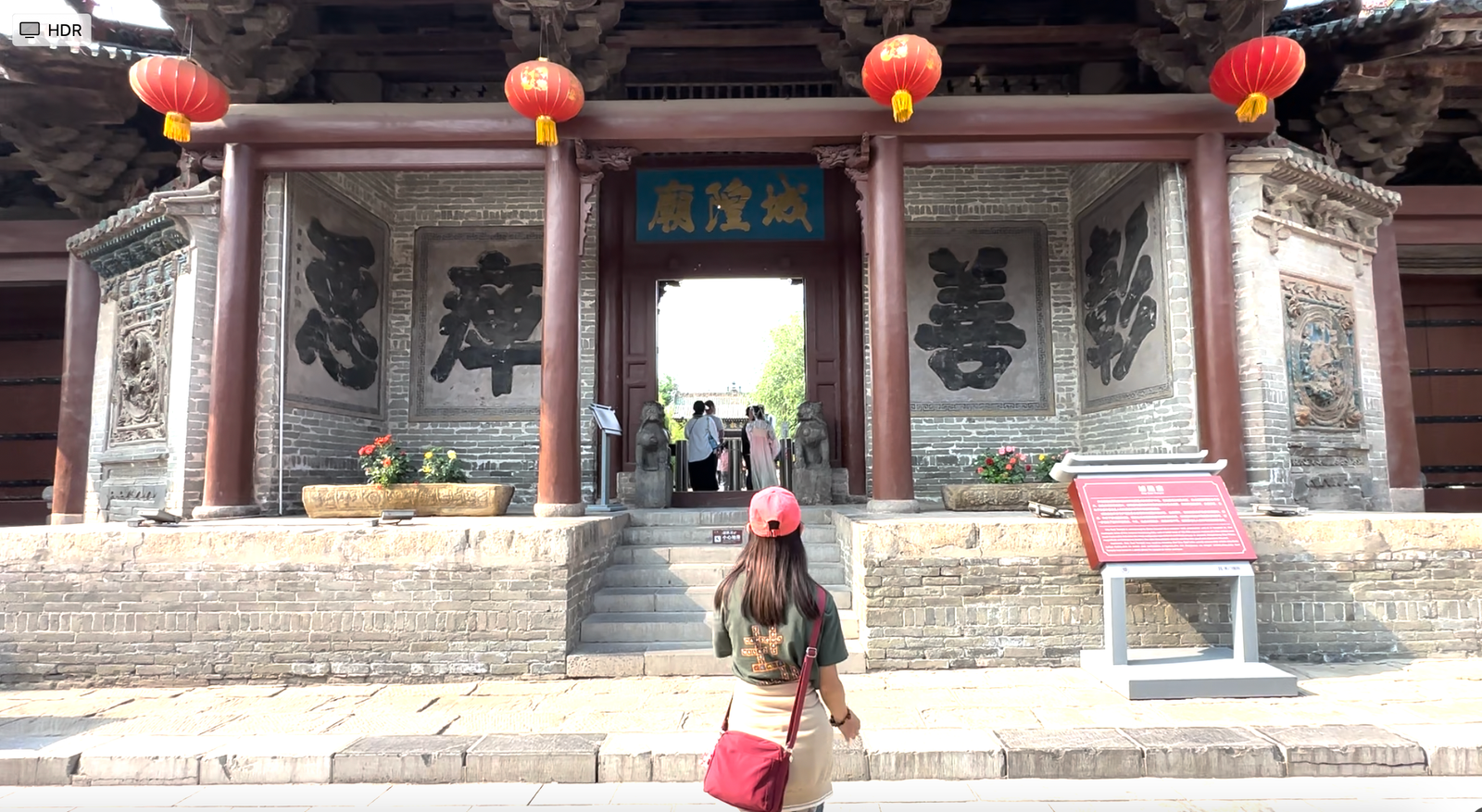
And Then There’s the City God
Now things get even more interesting.
Many traditional Chinese towns also contained a:
City God Temple (城隍庙, Chénghuáng Miào).
The:
City God (城隍, Chénghuáng)
was understood as a supernatural guardian associated with the local community.
For Western beginners, here’s the delicious handrail:
the county had an earthly bureaucracy…
and traditional religious imagination could envision:
a supernatural bureaucracy too.
Officials.
Jurisdictions.
Records.
Judgment.
Different world.
Strangely familiar administrative language.
Now put the traditional town together:
County government office (县衙)
→ political / administrative order
↓
Confucian Temple (文庙)
→ education / ritual / official culture
↓
City God Temple (城隍庙)
→ religious / moral order
↓
market streets (街市, jiēshì)
→ commerce
↓
traditional residences (民居, mínjū)
→ family and everyday life.
Now an old Chinese town stops looking like:
“lots of pretty old buildings.”
Its architecture begins showing you:
how society was organized.
Dad & Elaine Saw This at Hancheng
This is why:
Hancheng Ancient City (韩城古城, Hánchéng Gǔchéng)
matters to our story.
Most first-time international travelers won’t go there.
That’s fine.
The traveler starts with:
Forbidden City.
The Forbidden City creates the question:
How did the emperor govern people far away?
Then Hancheng gives us:
the local answer.
That’s what the Deep China rabbit holes are for.
And Pingyao Makes the System Even Easier to See
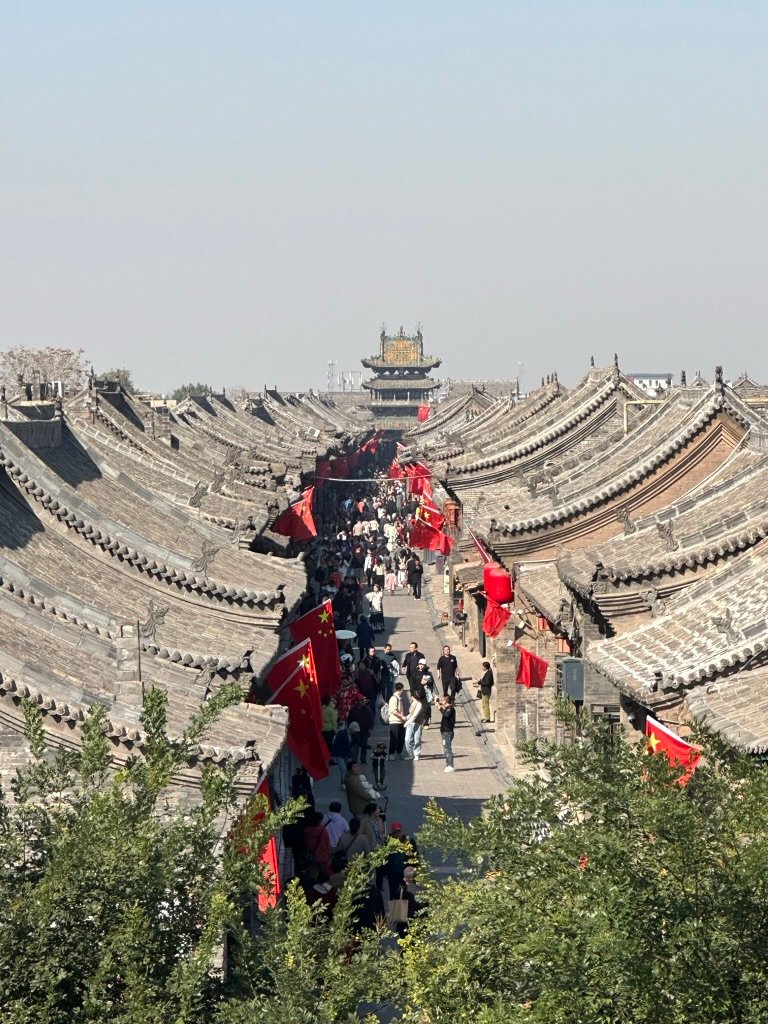
At:
Pingyao Ancient City (平遥古城, Píngyáo Gǔchéng)
the preserved urban fabric allows travelers to encounter:
city walls (城墙, chéngqiáng),
streets (街, jiē),
shops (商铺, shāngpù),
residences (民居, mínjū),
temples (寺庙, sìmiào),
and:
the county government office (县衙, xiànyá).
So if Beijing gives you:
imperial China from the TOP
Pingyao and Hancheng can help you see:
imperial China closer to the GROUND.
That’s why these lesser-known places matter.
No.
And this is important.
The imperial state was powerful.
But don’t imagine a modern centralized government with perfect information and direct control over every household.
Distance mattered.
Local conditions mattered.
Family and lineage networks mattered.
Local elites mattered.
Communication could be slow.
Officials could be:
competent,
overworked,
corrupt,
effective,
or:
all four depending on the situation.
Real government was messy.
This is one of the more sophisticated ideas we want a beginner to leave with.
The emperor could possess:
extraordinary formal authority.
But exercising that authority depended upon:
institutions,
officials,
information,
transport,
resources
and:
local cooperation.
An imperial order issued in Beijing still had to become:
action
somewhere far away.
That’s the difference between:
having authority
and:
governing.
You began this article inside:
the Forbidden City
thinking:
“The emperor ruled China.”
Now you’ve acquired:
county magistrate (知县)
↓
county government office (县衙)
↓
clerks (吏)
↓
local elites (士绅)
↓
documents (文书)
↓
seals (印)
↓
roads (道路)
↓
postal stations (驿站)
↓
grain (粮食)
↓
Grand Canal (大运河)
↓
Confucian Temple (文庙)
↓
City God Temple (城隍庙)
↓
Hancheng + Pingyao
That’s quite a bureaucracy hiding behind:
“Emperor lives in big palace.”
The Bigger Lesson
The Forbidden City was enormously important.
But it worked only because:
a much larger governing system existed beyond it.
The emperor sat at the center.
Officials carried authority outward.
Information moved inward.
Taxes and resources moved.
Local society helped make government possible.
And across the empire, thousands of places translated:
imperial authority
into:
local administration.
So the next time you stand in front of the emperor’s throne inside the Forbidden City…
don’t look only at:
the throne.
Imagine:
the network.
That’s where imperial China actually becomes governable.

Section 3 — Go Back to the Forbidden City. Now See the Empire Behind the Palace.
So what should a first-time traveler remember from all this?
Not:
“I need to memorize the Six Ministries before visiting the Forbidden City.”
Absolutely not.
Remember one simple idea:
The Forbidden City was the center of the empire — not the whole machinery of government.
The emperor mattered enormously.
But between:
the emperor (皇帝, huángdì)
and:
an ordinary person thousands of kilometers away
stood an entire system of:
officials (官员, guānyuán),
government offices (衙门, yámen),
counties (县, xiàn),
documents (文书, wénshū),
taxes (赋税, fùshuì),
roads (道路, dàolù),
postal stations (驿站, yìzhàn),
canals (运河, yùnhé)
and:
local communities.
1. At the Forbidden City: Don’t See Only an Emperor’s Home
When you walk through:
the Forbidden City (故宫, Gùgōng)
it’s easy to become fascinated by:
imperial bedrooms,
concubines,
ceremonies,
dragons,
treasures
and:
palace intrigue.
All interesting.
But remember:
this was also the political center of an enormous empire.
So when you see:
Hall of Supreme Harmony (太和殿, Tàihé Diàn)
or other great ceremonial spaces, ask:
“What happened after imperial authority left this palace?”
That’s the bigger question.
2. Imagine the Network Beyond Beijing
Picture the empire stretching outward:
BEIJING (北京)
↓
central government (中央政府)
↓
officials (官员)
↓
prefectures (府)
↓
counties (县)
↓
county magistrates (知县)
↓
local society.
Now the Forbidden City becomes:
the center of a network
rather than:
a giant palace floating above China.
3. Then Look for the Other End of the System
If your first China trip begins in Beijing, you may not visit:
Hancheng Ancient City (韩城古城, Hánchéng Gǔchéng)
or:
Pingyao Ancient City (平遥古城, Píngyáo Gǔchéng).
That’s fine.
But if you’ve been stung…
these places become much more interesting on a future journey.
Why?
Because there you can encounter:
county government offices (县衙, xiànyá)
and the urban institutions of traditional local society.
The famous place gives you:
the emperor.
The rabbit hole gives you:
the people who made imperial government work.
One Beijing Visit Creates Another China Question
You entered the Forbidden City asking:
“Where did the emperor live?”
Now perhaps you’re asking:
“Who collected the taxes?”
Then:
“How were officials chosen?”
Then:
“What was the imperial examination system (科举制度, kējǔ zhìdù) actually like?”
Then:
“What did a county government office look like?”
And suddenly:
Pingyao
and:
Hancheng
have appeared on your future China map.
That’s how the sting works.
ChinaTravelBUG’s Take
By all means, marvel at the Forbidden City.
You should.
But don’t leave thinking imperial China was simply:
emperor + palace + subjects.
The more useful picture is:
EMPEROR
↓
INSTITUTIONS
↓
OFFICIALS
↓
INFORMATION
↓
LOCAL GOVERNMENT
↓
LOCAL SOCIETY.
And remember something else.
Imperial government was powerful.
But it wasn’t magical.
An emperor could issue an order.
Someone still had to:
write it,
carry it,
interpret it,
fund it,
and:
actually make it happen.
That’s government.

Final Sting
Perhaps this is your first trip to China.
You visited:
the Forbidden City.
Excellent.
But now the palace has pointed you toward:
imperial examinations (科举制度)
↓
Confucian learning (儒学)
↓
officials (官员)
↓
county magistrates (知县)
↓
county government offices (县衙)
↓
Pingyao (平遥)
↓
Hancheng (韩城)
↓
another question…
And perhaps on your second or third China trip, you’ll walk into an old county government office and suddenly remember:
“Ahhh. THIS is how Beijing reached the local level.”
At that moment, the Forbidden City and the little county office are no longer two unrelated tourist attractions.
They’re two ends of the same historical story.
And that’s exactly what we wanted you to see.
See the place. Ask the bigger question. Understand China better.
Go Deeper: The Next Big Question
The emperor may have sat at the top of the system—but even his palace was designed to express how that system was supposed to work.
Read next: Michelin Course 4: Why Does the Forbidden City Look Like THAT? →