Xi’an (西安, Xī’ān) → Hancheng (韩城, Hánchéng) → Yuncheng (运城, Yùnchéng) → Linfen (临汾, Línfén) → Xi’an (西安, Xī’ān)
Qin (秦, Qín). Sima Qian (司马迁, Sīmǎ Qiān). Yu (禹, Yǔ). Shun (舜, Shùn). Yao (尧, Yáo). Taosi (陶寺, Táosì). Two green trains. One unexpected lunch. Then back to Xi’an.
Most first-time travelers come to Xi’an (西安, Xī’ān) for a very good reason.
The Terracotta Warriors (兵马俑, Bīngmǎyǒng).
You stand in front of thousands of soldiers created for Qin Shi Huang (秦始皇, Qín Shǐhuáng), the ruler who unified the competing states in 221 BCE.
It’s one of the great moments in Chinese history.
And for many travelers, that’s enough.
See the warriors.
Walk the Xi’an City Wall (西安城墙, Xī’ān Chéngqiáng).
Eat your way through the Muslim Quarter (回民街, Huímín Jiē).
Then move on.
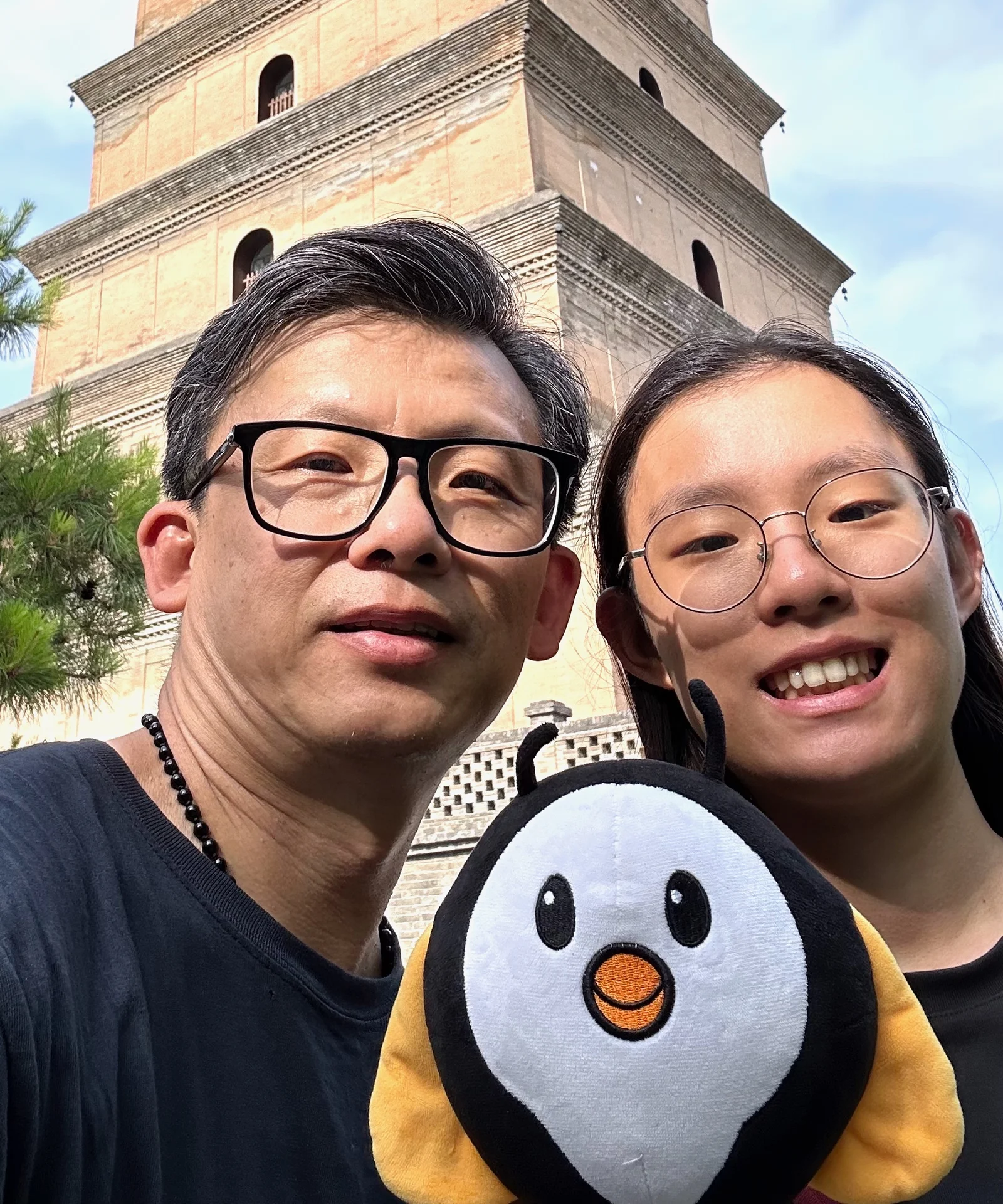
Dad had a problem.
Xi’an made him hungry.
Not for noodles.
Well… not only for noodles.
😂
It made him hungry for the story behind the story.
The Question Xi’an Gave Us
Standing in the world of Qin (秦, Qín), Dad kept wondering:
What came before this?
If Qin Shi Huang (秦始皇, Qín Shǐhuáng) unified China in 221 BCE…
what exactly was he unifying?
Who lived here before the Qin dynasty (秦朝, Qíncháo)?
What did people believe?
Who ruled them?
How did they understand where they lived?
And how far backwards could Dad and Elaine actually follow that story?
That’s when we stopped planning another Xi’an sightseeing day.
We started planning a journey.
Not to China’s next famous destination.
But into places many international travelers have probably never considered.
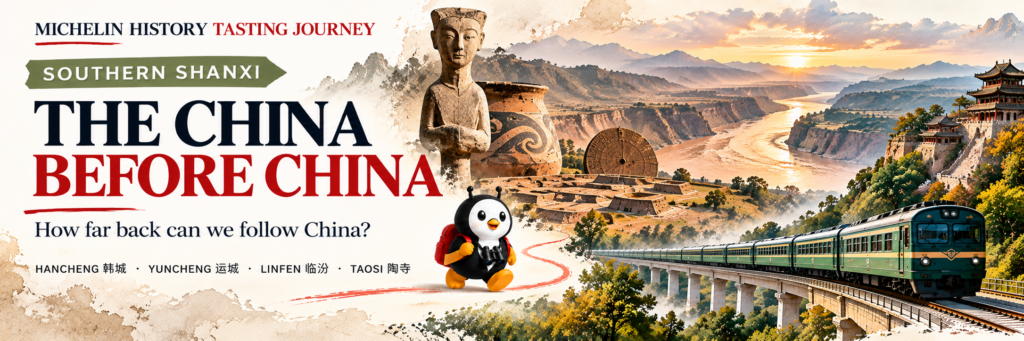
Our Menu
Think of this journey as a tasting menu.
You don’t need to become a Chinese historian.
And you definitely don’t need to memorise 4,000 years of dates before boarding the train.
Each place serves one COURSE.
Each course gives you one IDEA.
And each idea makes the next place taste different.
🥂 APÉRITIF — Xi’an (西安, Xī’ān)
THE FLAVOR: Qin (秦, Qín) · Unification · Empire
THE QUESTION:
What came before Qin (秦, Qín)?
↓
🍽️ COURSE 1 — Hancheng (韩城, Hánchéng)
THE FLAVOR: Sima Qian (司马迁, Sīmǎ Qiān) · Records of the Grand Historian (史记, Shǐjì) · Yu the Great (大禹, Dà Yǔ)
THE QUESTION:
How did China remember what came before?
↓
🍜 PALATE CLEANSER — Houma (侯马, Hóumǎ)
THE FLAVOR: Green train (绿皮车, Lǜpíchē) · Three-hour stopover · Lunch
THE QUESTION:
Where should we eat?
😂
↓
🍽️ COURSE 2 — Yuncheng (运城, Yùnchéng)
THE FLAVOR: Shun (舜, Shùn) · Yu the Great (大禹, Dà Yǔ) · Southern Shanxi (山西, Shānxī)
THE QUESTION:
Where does history meet cultural memory?
↓
🍽️ COURSE 3 — Linfen (临汾, Línfén)
THE FLAVOR: Yao (尧, Yáo) · Taosi (陶寺, Táosì) · Archaeology (考古, Kǎogǔ) · Astronomy (天文, Tiānwén)
THE QUESTION:
When does “China” begin?
↓
🍰 DESSERT — Back to Xi’an (西安, Xī’ān)
THE FLAVOR: Qin (秦, Qín) — again.
But now the question is different.
Does Qin still feel like the beginning?
This Isn’t a Perfect Tourist Route
Good.
We didn’t travel it perfectly.
There were fast trains.
There were slow trains.
There were green trains (绿皮车, Lǜpíchē).
At one point, getting from one place to another meant changing trains in Houma (侯马, Hóumǎ) with several hours to spare.
So Dad and Elaine did what travelers should occasionally do.
We went outside and looked for lunch.
That unexpected stop became one of our stories.
→ No Direct Train to Hancheng (韩城, Hánchéng) — So We Got Off in Houma (侯马, Hóumǎ) for Lunch
That’s why this isn’t simply a list of historical attractions.
Dad and Elaine actually traveled this journey.
We carried bags.
Waited for trains.
Found food.
Got tired.
Stayed overnight.
And occasionally discovered that the inconvenient way was the more interesting way.
How to Use This Journey
You don’t have to copy every stop.
Think of it as a menu.
🍽️ TASTE
Visit the place and take away one big idea.
🐇 GO DEEPER
Open the related ChinaTravelBUG story or guide when something catches your curiosity.
⭐ GO MICHELIN
Stop sightseeing for a moment and ask the bigger question behind the place.
And we’re going to begin with the easiest question of all.
We’re standing in Xi’an (西安, Xī’ān).
We’ve met Qin Shi Huang (秦始皇, Qín Shǐhuáng).
We’ve seen the Terracotta Warriors (兵马俑, Bīngmǎyǒng).
Now:
What came before Qin?
To answer that, Dad and Elaine got on a train.
First course:
Hancheng (韩城, Hánchéng).
And waiting there was an old friend we hadn’t properly met yet:
Sima Qian (司马迁, Sīmǎ Qiān).
🐇
🍽️ COURSE 1 — Hancheng (韩城, Hánchéng)
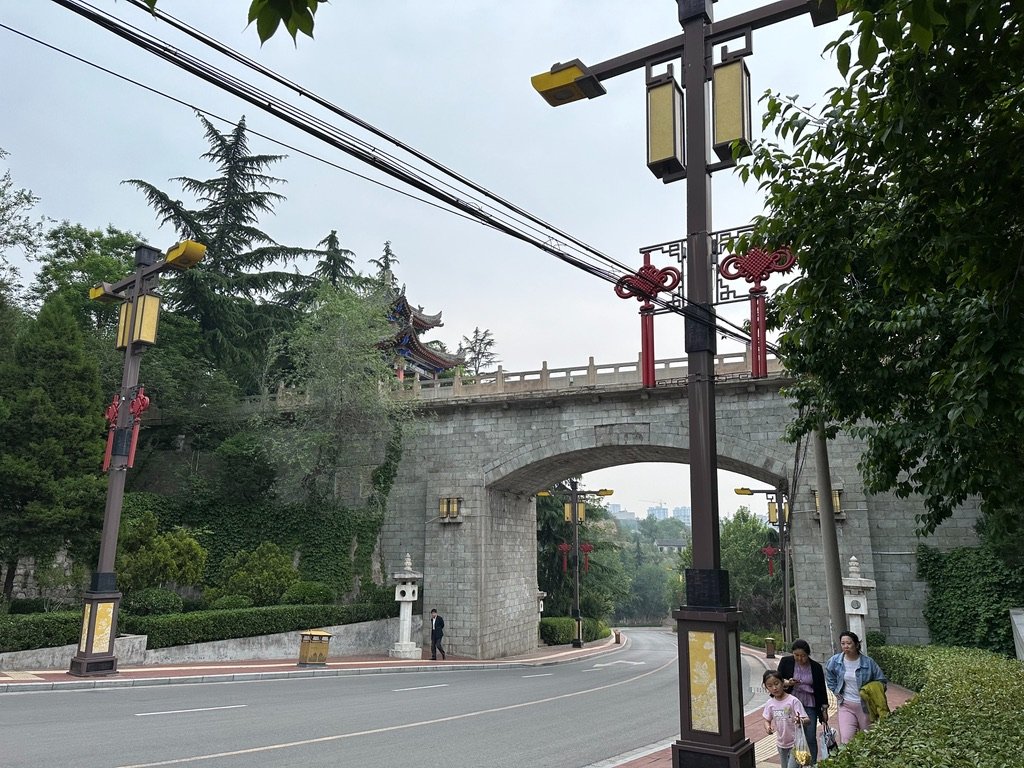
THE DISH: How China Remembered
FLAVOR: Ancient City · Yu the Great (大禹, Dà Yǔ) · Sima Qian (司马迁, Sīmǎ Qiān) · Records of the Grand Historian (史记, Shǐjì)
⭐ THE BIG QUESTION
If nobody records the past, how does a civilisation remember?
From Xi’an (西安, Xī’ān), Dad and Elaine headed for Hancheng (韩城, Hánchéng).
Hancheng isn’t a name most international travelers know.
That’s exactly why this journey gets interesting.
We weren’t coming for another blockbuster attraction.
We were coming because one of the most important people in the entire story we were about to follow came from here:
Sima Qian (司马迁, Sīmǎ Qiān).
But Dad didn’t want Elaine to start with the historian.
First, we needed to meet his city.
→ Hancheng (韩城, Hánchéng) From Xi’an (西安, Xī’ān) — The Overnight Stop That Helped Us Understand 3,000 Years of Chinese Civilisation
🍴 TASTING 1 — Hancheng Ancient City (韩城古城, Hánchéng Gǔchéng)
Taste the place before studying it.
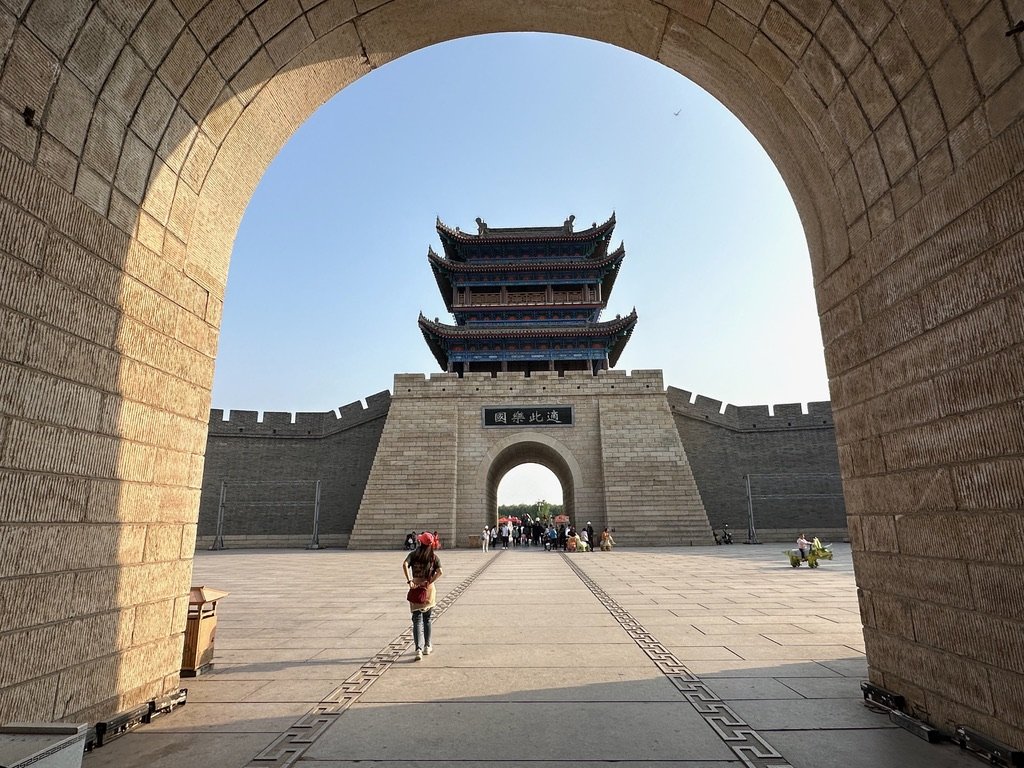
Old streets.
Courtyards.
Temples.
Traditional buildings.
Local people still going about everyday life.
Compared with some of China’s famous ancient towns, Hancheng Ancient City (韩城古城, Hánchéng Gǔchéng) felt quieter to us.
Less like Dad and Elaine had arrived to inspect an attraction.
More like we’d stumbled into somewhere and needed to start looking around.
That’s an important part of this tasting journey.
We’re not going to spend every hour discussing emperors.
Sometimes:
walk first.
look around.
eat something.
let the place introduce itself.
And inside Hancheng Ancient City (韩城古城, Hánchéng Gǔchéng), Dad found our first historical clue.
🍴 TASTING 2 — Dayu Temple (大禹庙, Dà Yǔ Miào)
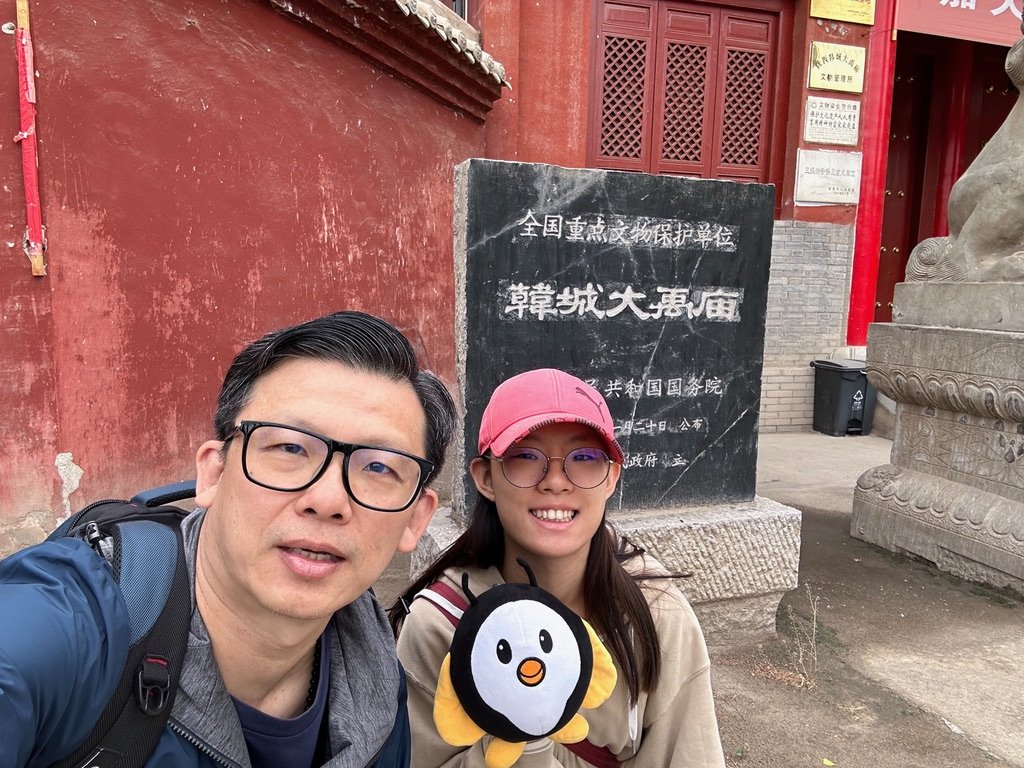
Meet a name that’s going to follow us.
The temple commemorates:
Yu the Great (大禹, Dà Yǔ)
For many international travelers, that name probably means very little.
Don’t worry.
Don’t study him yet.
Just remember the name.
Yu the Great (大禹, Dà Yǔ) belongs to China’s ancient traditions surrounding flood control, rulership and the beginnings of dynastic civilisation.
The famous story is:
大禹治水
Dà Yǔ Zhìshuǐ
“Yu the Great Controls the Floods.”
And in traditional Chinese history, Yu the Great (大禹, Dà Yǔ) eventually becomes associated with the beginning of the:
Xia dynasty (夏朝, Xiàcháo).
But here’s why we’re introducing him now.
Because Dad and Elaine are going to keep running into him.
And two other names:
Yao (尧, Yáo)
↓
Shun (舜, Shùn)
↓
Yu the Great (大禹, Dà Yǔ)
At this point in Hancheng (韩城, Hánchéng), they’re just three ancient names.
By the time we reach Yuncheng (运城, Yùnchéng) and Linfen (临汾, Línfén)…
they’re going to mean much more.
🐇
That’s how this tasting menu works.
One course leaves a flavor that appears again in the next.
🍴 TASTING 3 — Then We Went Looking for Sima Qian (司马迁, Sīmǎ Qiān)
Now we come to the main reason Dad wanted to visit Hancheng (韩城, Hánchéng).
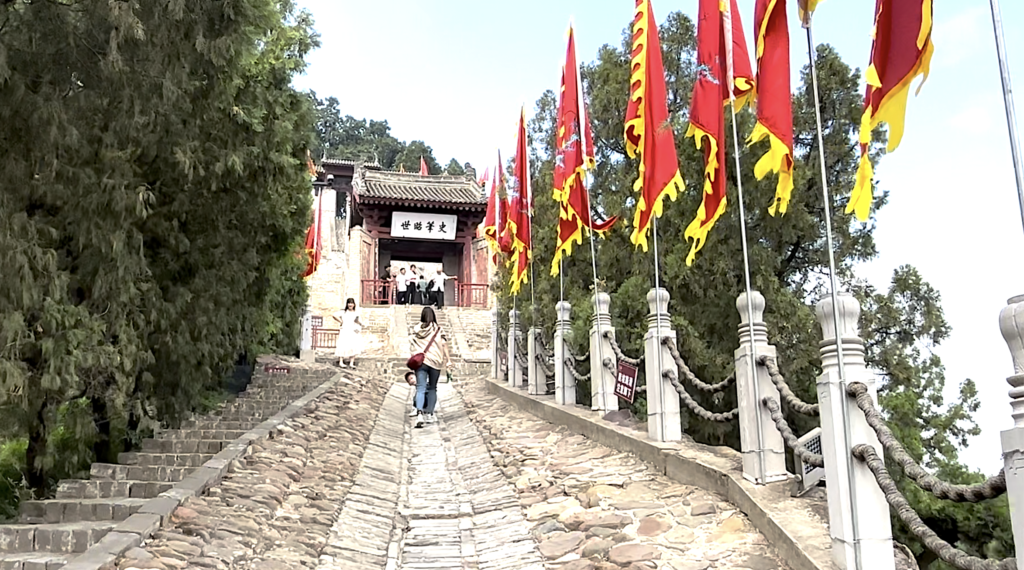
We walked toward the:
Sima Qian Temple and Tomb (司马迁祠墓, Sīmǎ Qiān Címù).
Up the stone paths.
Up the steps.
Higher and higher.
And the journey itself forces you to slow down.
We weren’t climbing toward the tomb of an emperor.
We weren’t coming to admire somebody who conquered enormous territories.
We were coming to pay respect to:
a historian.
Our Old Friend Sima Qian (司马迁, Sīmǎ Qiān)
Sima Qian (司马迁, Sīmǎ Qiān) lived during the:
Han dynasty (汉朝, Hàncháo).
He completed one of the foundational works of Chinese historical writing:
Records of the Grand Historian (史记, Shǐjì).
And this is where Hancheng (韩城, Hánchéng) becomes essential to our entire journey.
Because Sima Qian (司马迁, Sīmǎ Qiān) tried to connect an enormous sweep of China’s remembered past.
His work reaches backwards through:
Qin (秦, Qín)
↓
the Warring States period (战国时期, Zhànguó Shíqī)
↓
the Zhou dynasty (周朝, Zhōucháo)
↓
the Shang dynasty (商朝, Shāngcháo)
↓
the traditional Xia dynasty (夏朝, Xiàcháo)
↓
and into the ancient world of figures such as:
Yao (尧, Yáo)
Shun (舜, Shùn)
and Yu the Great (大禹, Dà Yǔ).
😳
Those are exactly the names we’re about to follow.
This Is Why We Meet the Historian First
Think about what we’re doing on this journey.
We’re going to travel into places associated with some of China’s oldest stories.
But before Dad asks Elaine:
“Was Yao (尧, Yáo) real?”
or:
“What can archaeology tell us about Taosi (陶寺, Táosì)?”
we need to understand something.
How did these ancient stories reach us in the first place?
One important answer is:
people wrote them down.
People collected earlier records.
Compared traditions.
Preserved genealogies.
Tried to organise the past.
And few people became more important to that process than:
Sima Qian (司马迁, Sīmǎ Qiān).
That’s why Dad likes calling him:
our old friend.
😂
He keeps appearing whenever we go DEEP.

Western Handrail: Meet the Historian Before Investigating His Story
Imagine you’re about to investigate stories about rulers said to have lived thousands of years ago.
You have:
ancient traditions
later written histories
archaeological sites
objects excavated from the ground
The trick is not to throw everything into one pot and call it “history.”
Ask:
Who wrote this?
When did they write it?
What evidence did they have?
What can archaeology independently show us?
That’s exactly what we’re going to do later at:
Linfen (临汾, Línfén)
and:
Taosi (陶寺, Táosì).
So Hancheng (韩城, Hánchéng) gives us something extremely valuable before we continue.
Our historian.
⭐ GO MICHELIN
Now stop sightseeing for a moment.
We’re standing at the place associated with a man who dedicated his life to preserving the past.
Ask:
How does a civilisation remember itself?
Buildings disappear.
Cities change.
Dynasties collapse.
Wood burns.
Palaces vanish.
But words can travel much farther.
Sima Qian (司马迁, Sīmǎ Qiān) helped pass China’s remembered past from one generation to another.
There’s a Chinese word Dad likes for this:
传承
Chuánchéng
Passing something meaningful forward.
And that’s the flavor Hancheng (韩城, Hánchéng) leaves with us.
Not simply:
history.
But:
memory.
🐇 Want the Full Hancheng (韩城, Hánchéng) Course?
We’ve only tasted Hancheng here.
Dad and Elaine’s full journey goes much deeper into Hancheng Ancient City (韩城古城, Hánchéng Gǔchéng), Wen Temple (文庙, Wénmiào), Dayu Temple (大禹庙, Dà Yǔ Miào) and Sima Qian (司马迁, Sīmǎ Qiān):
→ Hancheng (韩城, Hánchéng) — The Overnight Stop That Helped Us Understand 3,000 Years of Chinese Civilisation
Planning to reproduce the journey yourself?
→ Travel Tips: How to Visit Hancheng (韩城, Hánchéng) From Xi’an (西安, Xī’ān)
But Now We Had to Get to Yuncheng (运城, Yùnchéng)
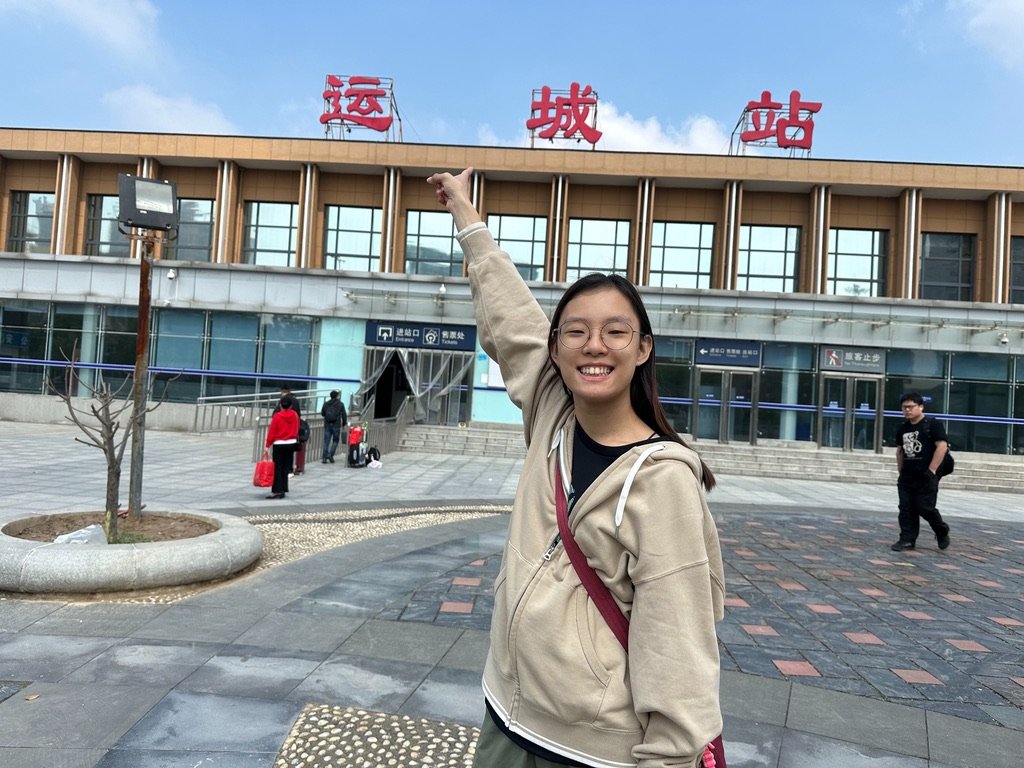
On a Michelin menu, the chef simply brings you the next course.
China had another idea.
😂
There wasn’t a nice, simple high-speed train waiting to carry Dad and Elaine neatly from Hancheng (韩城, Hánchéng) to Yuncheng (运城, Yùnchéng).
Our route involved:
Hancheng (韩城, Hánchéng)
↓
🚂 green train (绿皮车, Lǜpíchē)
↓
Houma (侯马, Hóumǎ)
↓
a long connection
↓
🍜 LUNCH
↓
🚂 another green train (绿皮车, Lǜpíchē)
↓
Yuncheng (运城, Yùnchéng)
Every tasting menu needs a palate cleanser.
Apparently ours was:
Houma (侯马, Hóumǎ).
😂
→ No Direct Train to Hancheng (韩城, Hánchéng) — So We Got Off in Houma (侯马, Hóumǎ) for Lunch
🍜 PALATE CLEANSER — Houma (侯马, Hóumǎ)
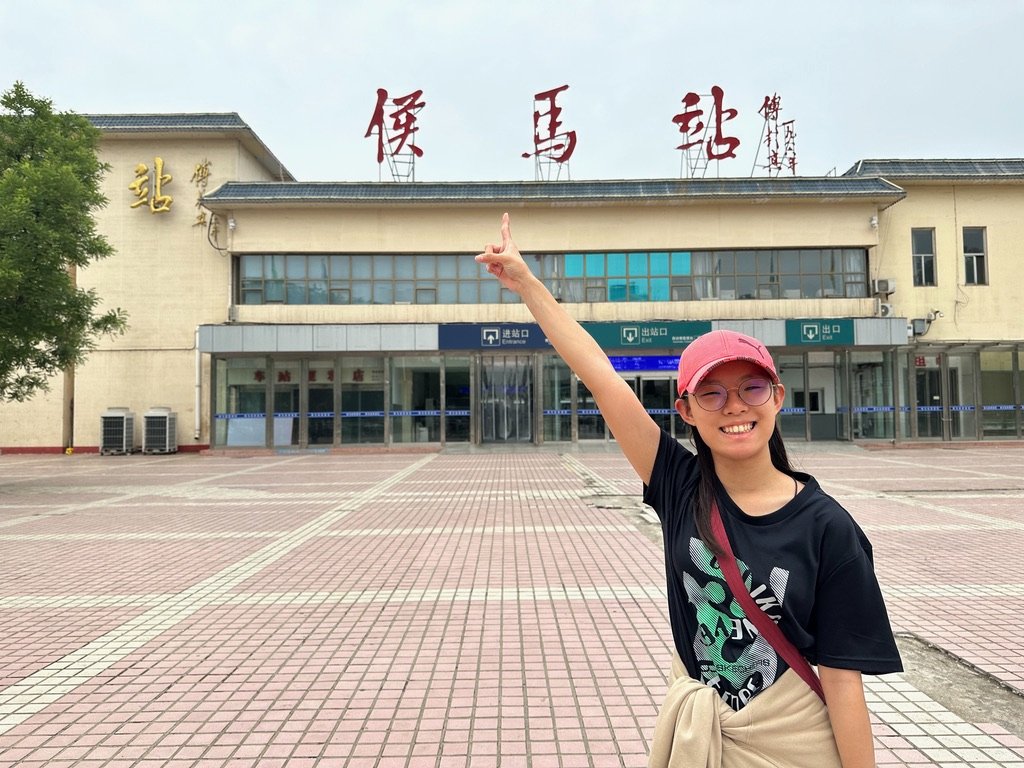
THE DISH: The Train Made Us Stop. So We Ate.
FLAVOR: Green trains (绿皮车, Lǜpíchē) · Unexpected stopover · Local lunch · Real China
⭐ THE QUESTION
What happens when the inconvenient route becomes part of the trip?
Getting between Hancheng (韩城, Hánchéng) and Yuncheng (运城, Yùnchéng) wasn’t the smooth high-speed-rail journey travelers might expect in China.
Our journey involved:
Hancheng (韩城, Hánchéng)
↓
🚂 green train (绿皮车, Lǜpíchē)
↓
Houma (侯马, Hóumǎ)
↓
⏰ several hours to wait
↓
🚂 another green train (绿皮车, Lǜpíchē)
↓
Yuncheng (运城, Yùnchéng)
So what did Dad and Elaine do in Houma (侯马, Hóumǎ)?
We went outside.
And looked for lunch.
😂
→ No Direct Train to Hancheng (韩城, Hánchéng) — So We Got Off in Houma (侯马, Hóumǎ) for Lunch
Sometimes the Slow Train Is the Better Window
The green train (绿皮车, Lǜpíchē) gave us something the high-speed railway usually doesn’t.
Time to look outside.
Fields.
Villages.
Mountains.
Smaller stations.
People getting on and off.
Then Houma (侯马, Hóumǎ) gave us lunch.
We tried yellow-rice-wine braised chicken (黄酒焖鸡, Huángjiǔ Mènjī) and Dayao soda (大窑汽水, Dàyáo Qìshuǐ) before heading back to the station.
Nothing here was on our historical tasting menu.
Which is exactly why it belongs.
🍋 THE PALATE CLEANSER
We had just spent time with Sima Qian (司马迁, Sīmǎ Qiān) and more than 2,000 years of Chinese history.
Before serving the next historical course, China gave us:
a slow train and lunch.
Sometimes the inconvenience is the story.
And then our second green train (绿皮车, Lǜpíchē) carried us toward:
Yuncheng (运城, Yùnchéng)
where three very old names were waiting for us:
Yao (尧, Yáo) → Shun (舜, Shùn) → Yu the Great (大禹, Dà Yǔ).
🐇
🍽️ COURSE 2 — Yuncheng (运城, Yùnchéng)
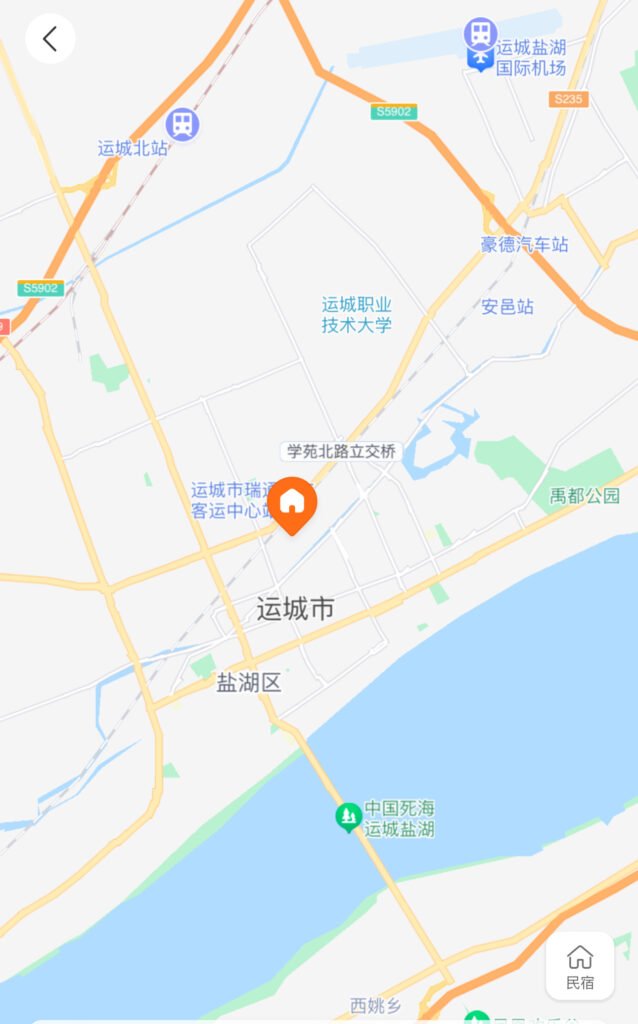
THE DISH: Where Ancient Stories Become a Landscape
FLAVOR: Shun (舜, Shùn) · Yu the Great (大禹, Dà Yǔ) · Yellow River (黄河, Huáng Hé) · Southern Shanxi (山西, Shānxī)
⭐ THE BIG QUESTION
Where does history end — and cultural memory begin?
By the time Dad and Elaine reached Yuncheng (运城, Yùnchéng), three ancient names were already following us:
Yao (尧, Yáo)
↓
Shun (舜, Shùn)
↓
Yu the Great (大禹, Dà Yǔ)
We had already encountered Yu the Great (大禹, Dà Yǔ) at Dayu Temple (大禹庙, Dà Yǔ Miào) in Hancheng (韩城, Hánchéng).
Now, in southern Shanxi (山西, Shānxī), these ancient traditions started becoming attached to actual places.
🍴 TASTING 1 — Following Shun (舜, Shùn)
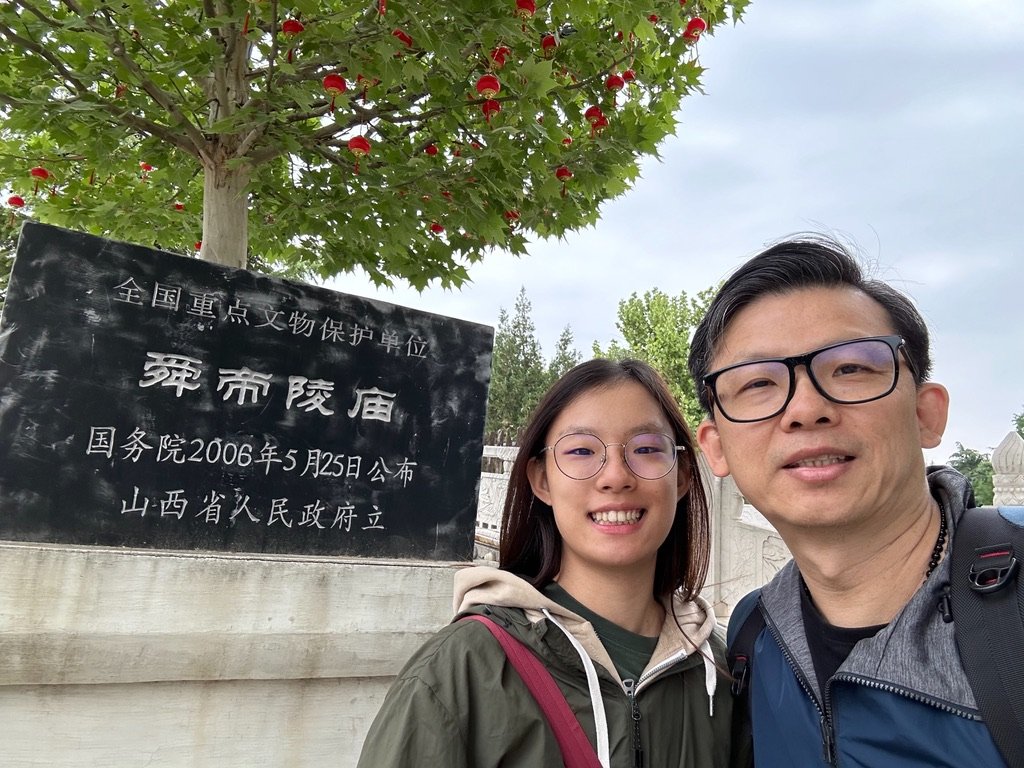
Dad and Elaine visited Shun Emperor Mausoleum (舜帝陵, Shùndì Líng) outside Yuncheng (运城, Yùnchéng).
Shun (舜, Shùn) belongs to the traditional sequence of ancient sage-rulers:
Yao (尧, Yáo)
↓
yields rulership to
↓
Shun (舜, Shùn)
↓
yields rulership to
↓
Yu the Great (大禹, Dà Yǔ)
This ideal of yielding rulership to someone considered worthy is known as:
Shanrang (禅让, Shànràng).
Don’t worry yet about whether every detail can be archaeologically verified.
For this course, taste the idea:
What if the ideal ruler chose the best person to succeed him — rather than simply his own son?
🐇
🍴 TASTING 2 — Yu the Great (大禹, Dà Yǔ) Appears Again
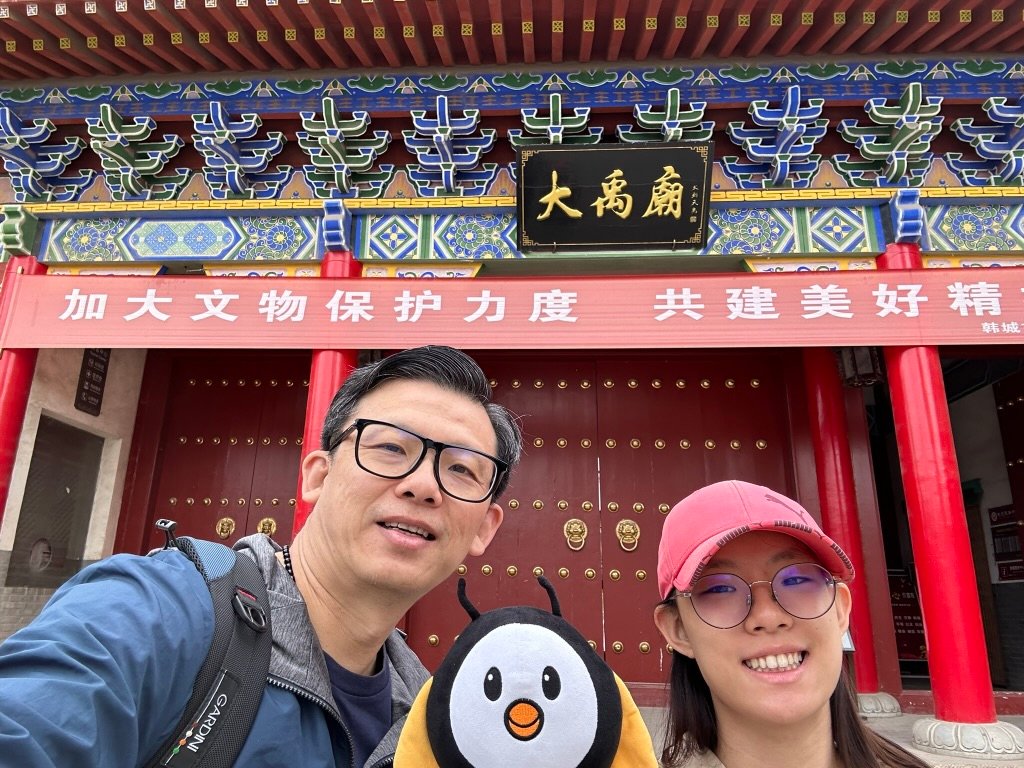
Remember the name Dad planted back in Hancheng (韩城, Hánchéng)?
Here he is again.
Yu the Great (大禹, Dà Yǔ) is remembered above all for:
大禹治水
Dà Yǔ Zhìshuǐ
“Yu the Great Controls the Floods.”
And in traditional Chinese history, Yu (禹, Yǔ) leads us toward the beginning of the:
Xia dynasty (夏朝, Xiàcháo).
The story is getting older.
But also harder to separate neatly into:
history
tradition
memory
and later interpretation.
That’s precisely why we’re traveling through the places rather than simply memorising a timeline.
⭐ GO MICHELIN
Stop sightseeing for a moment.
Ask:
Why did later Chinese generations keep attaching these ancient rulers to real landscapes?
Maybe that’s more interesting than immediately asking:
“Did every story happen exactly this way?”
Places preserve memory differently from archaeology.
We’re going to see that distinction much more clearly at our next destination.
And getting there couldn’t be easier.
🚄 THE NEXT COURSE IS ONLY 44 MINUTES AWAY
In Dad’s sample train search:
Yuncheng North (运城北站, Yùnchéng Běizhàn)
09:50
↓
Linfen West (临汾西站, Línfén Xīzhàn)
10:34
44 minutes.
CNY 39.
After two green trains (绿皮车, Lǜpíchē) and an unexpected lunch in Houma (侯马, Hóumǎ)…
this felt almost too easy.
😂
And waiting in Linfen (临汾, Línfén) was the richest course on our menu:
Yao (尧, Yáo).
Taosi (陶寺, Táosì).
Archaeology (考古, Kǎogǔ).
Astronomy (天文, Tiānwén).
And perhaps the biggest question of the entire journey:
When does “China” begin?
🐇
🍽️ COURSE 3 — Linfen (临汾, Línfén)
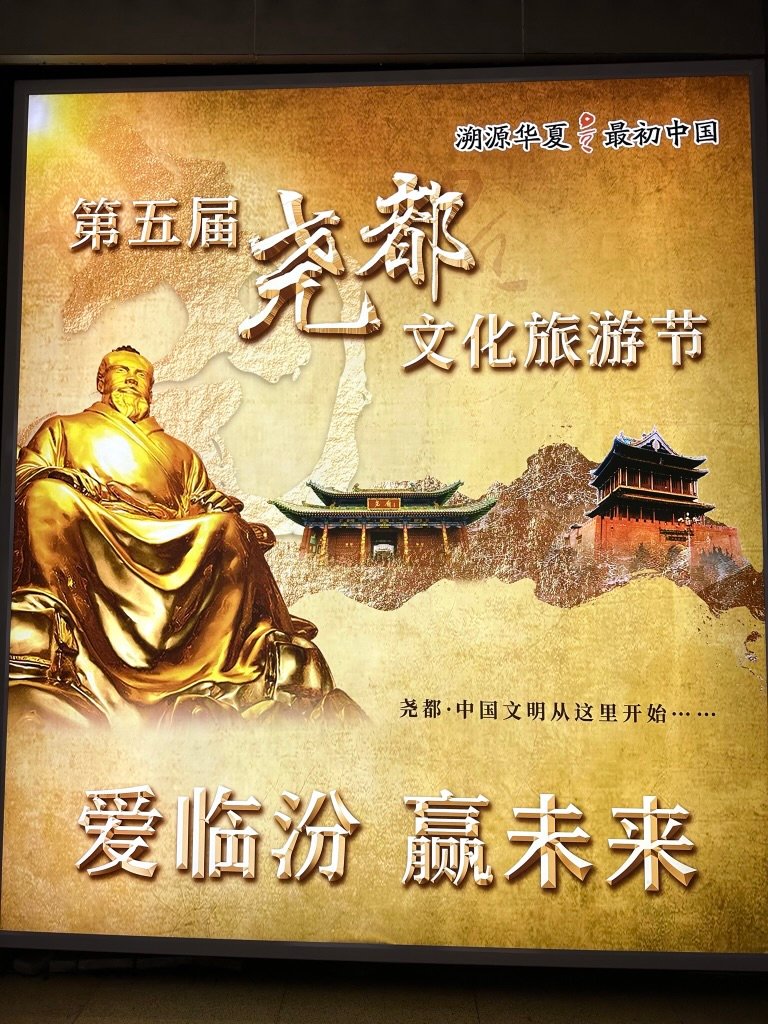
THE DISH: When Ancient Stories Meet Archaeology
FLAVOR: Yao (尧, Yáo) · Taosi (陶寺, Táosì) · Archaeology (考古, Kǎogǔ) · Astronomy (天文, Tiānwén)
⭐ THE BIG QUESTION
When does “China” begin?
By the time Dad and Elaine reached Linfen (临汾, Línfén), we’d already heard the ancient sequence:
Yao (尧, Yáo)
↓
Shun (舜, Shùn)
↓
Yu the Great (大禹, Dà Yǔ)
We’d met Sima Qian (司马迁, Sīmǎ Qiān) in Hancheng (韩城, Hánchéng).
We’d followed traditions surrounding Shun (舜, Shùn) and Yu the Great (大禹, Dà Yǔ) through Yuncheng (运城, Yùnchéng).
Now something changed.
In Linfen (临汾, Línfén), we could start looking at:
what came out of the ground.
🍴 TASTING 1 — Linfen Museum (临汾博物馆, Línfén Bówùguǎn)
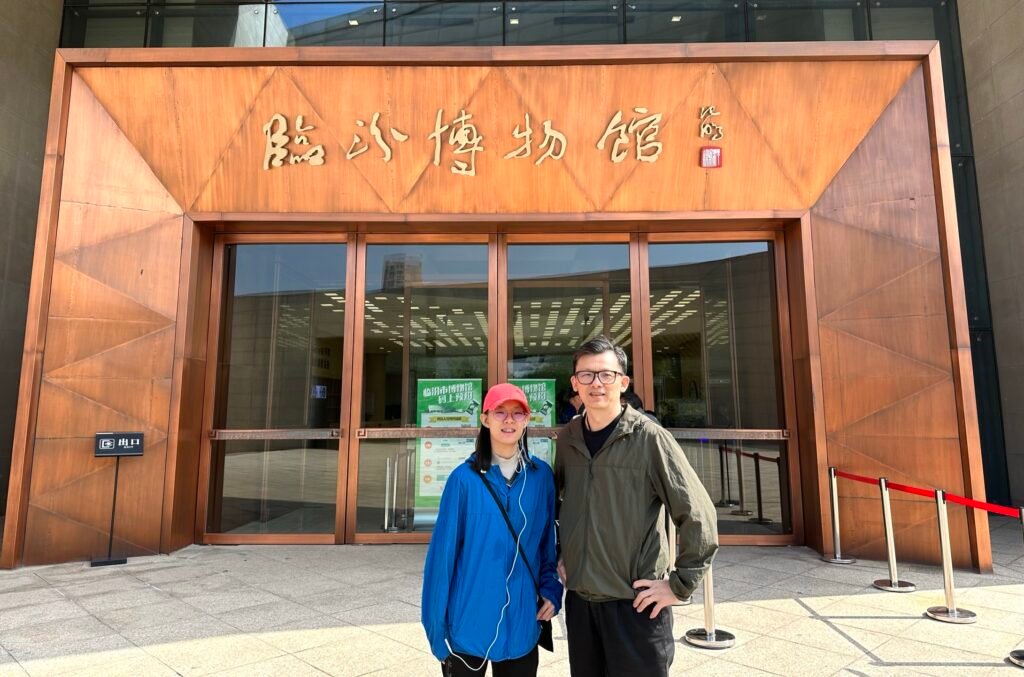
This is where we’d start.
Inside Linfen Museum (临汾博物馆, Línfén Bówùguǎn), Dad found artefacts from Taosi culture (陶寺文化, Táosì Wénhuà), broadly dating to around 2300–1900 BCE.
Stone chimes (石磬, Shíqìng).
Jade (玉, Yù).
Yue-axes (钺, Yuè).
Elite burials.
Ritual objects.
And evidence of a complex society existing roughly 2,000 years before Qin unification (秦统一, Qín Tǒngyī).
Now our tasting journey had crossed an important line.
Tradition was meeting archaeology.
→ Go deeper: Linfen (临汾, Línfén) — Why Travel Beyond Xi’an for a City Most Foreign Travelers Have Never Heard Of
🍴 TASTING 2 — Yao Temple (尧庙, Yáomiào)
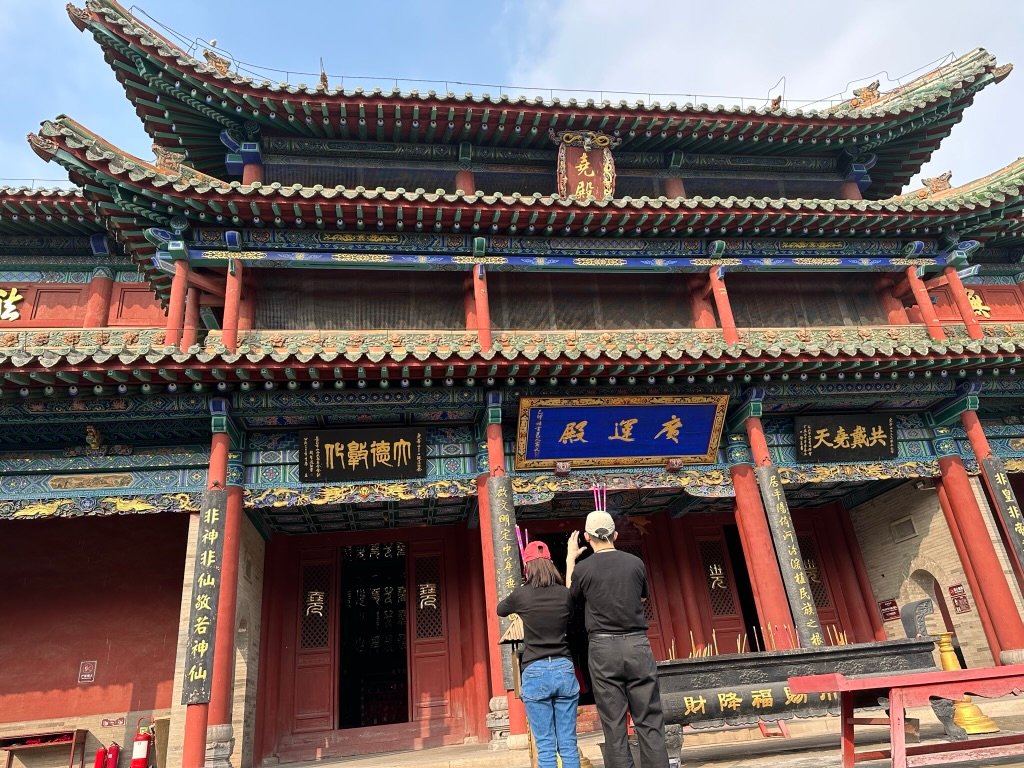
Modern Linfen’s central district is called:
Yaodu (尧都, Yáodū)
literally:
“Yao’s Capital.”
So Dad took Elaine to Yao Temple (尧庙, Yáomiào).
Here we weren’t looking at archaeological proof of Yao (尧, Yáo).
We were looking at something different:
cultural memory.
Generations continued remembering Yao (尧, Yáo) as an ideal ruler.
→ Who Was Emperor Yao (尧帝, Yáodì)? We Went to Yao Temple (尧庙, Yáomiào) to Find Out
Remember the distinction:
Taosi (陶寺, Táosì)
→ archaeology
Yao Temple (尧庙, Yáomiào)
→ memory
Don’t confuse them.
But put them beside each other…
and things get fascinating.
🍴 TASTING 3 — Taosi (陶寺, Táosì)
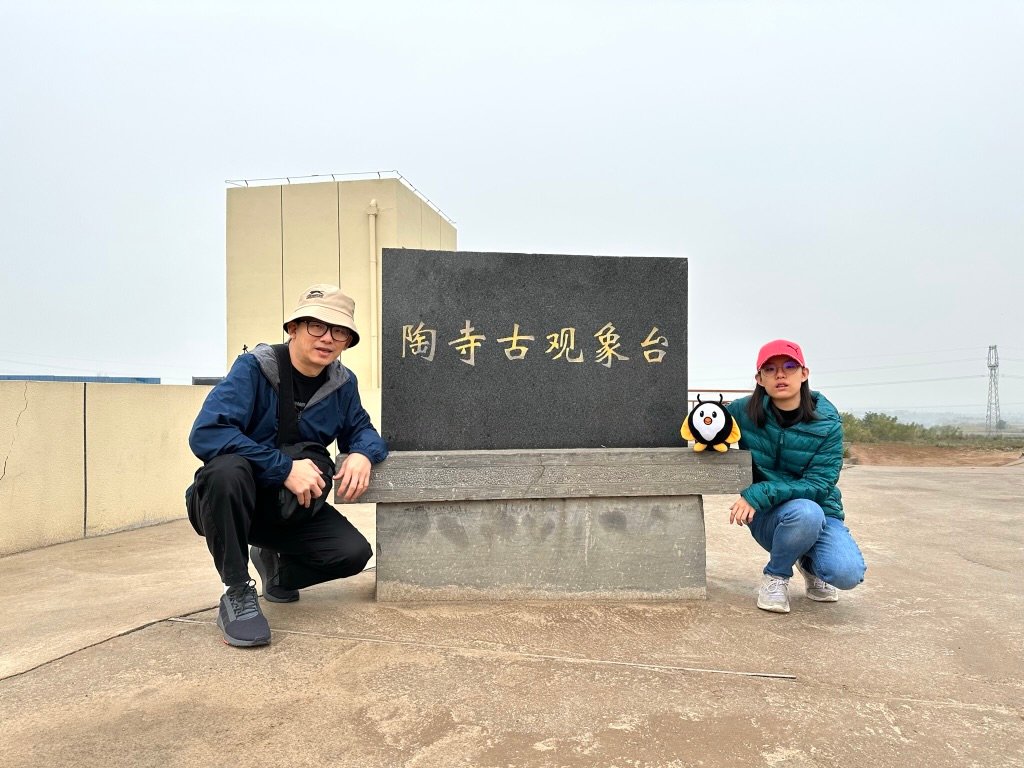
Then Dad and Elaine went outside Linfen (临汾, Línfén).
To Taosi (陶寺, Táosì).
Here was evidence of a large organised settlement more than 4,000 years ago.
And one discovery particularly fascinated Dad:
the:
Taosi Ancient Observatory (陶寺古观象台, Táosì Gǔ Guānxiàngtái).
People here were observing the Sun and horizon.
At Linfen Museum (临汾博物馆, Línfén Bówùguǎn), we’d also encountered the:
Guibiao (圭表, Guībiǎo)
— an ancient shadow-measuring system connected with astronomical and calendrical observation.
Now think about what we’re seeing.
More than four millennia ago, people in this region were trying to understand:
the Sun
the seasons
time
the calendar (历法, Lìfǎ)
and perhaps even ideas about the political and geographical:
centre of the land (地中, Dìzhōng).
→ Go deeper: Taosi (陶寺, Táosì) — Dad & Elaine Go Looking for the China Before China
⭐ GO MICHELIN
Now stop sightseeing.
Remember where our journey began.
Xi’an (西安, Xī’ān).
Qin Shi Huang (秦始皇, Qín Shǐhuáng).
221 BCE.
At the beginning of this journey, that felt ancient.
Now we’re standing in a world roughly 2,000 years older.
So ask:
When does “China” actually begin?
With Qin unification (秦统一, Qín Tǒngyī)?
With the Zhou dynasty (周朝, Zhōucháo)?
With the Shang dynasty (商朝, Shāngcháo)?
With the traditional Xia dynasty (夏朝, Xiàcháo)?
With societies such as Taosi culture (陶寺文化, Táosì Wénhuà)?
There isn’t one neat archaeological layer where somebody digs into the ground and finds:
“CHINA STARTS HERE.”
And that’s the point.
Chinese civilisation accumulated.
Layer upon layer.
Society upon society.
Memory upon memory.
Taosi (陶寺, Táosì) doesn’t give us a birthday for China.
It gives us an extraordinarily early layer.
And after seeing that layer…
Qin suddenly doesn’t feel like the beginning anymore.
🍰 DESSERT — Back to Xi’an (西安, Xī’ān)
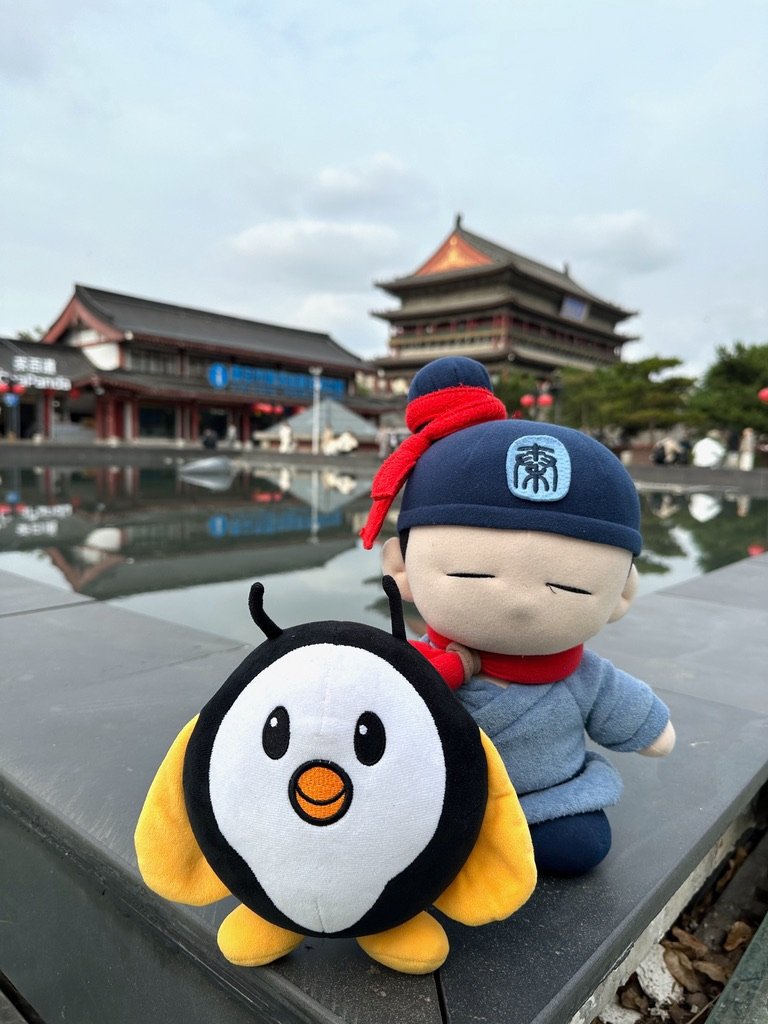
There was only one proper way to finish this tasting menu.
Go back to where we started.
🚄
Linfen West Railway Station (临汾西站, Línfén Xīzhàn)
↓
Xi’an North Railway Station (西安北站, Xī’ān Běizhàn)
In Dad’s sample search, some direct trains make the journey in roughly 1 hour 40 minutes.
And somewhere on that fast ride back, the whole menu comes together.
Qin (秦, Qín).
Sima Qian (司马迁, Sīmǎ Qiān).
Yu the Great (大禹, Dà Yǔ).
Shun (舜, Shùn).
Yao (尧, Yáo).
Taosi (陶寺, Táosì).
We had started with the Terracotta Warriors (兵马俑, Bīngmǎyǒng).
Now we were going back to them.
Same Xi’an (西安, Xī’ān).
Different eyes.
🐇
How to Order This Menu?
A good tasting menu is useless if you can’t find the restaurant.
So here’s the practical version.
The full journey is:
Xi’an (西安, Xī’ān)
↓
Hancheng (韩城, Hánchéng)
↓
Houma (侯马, Hóumǎ) — connection / palate cleanser
↓
Yuncheng (运城, Yùnchéng)
↓
Linfen (临汾, Línfén)
↓
Xi’an (西安, Xī’ān)
This isn’t the fastest possible way to travel around northern China.
That’s not the point.
The route follows the story.
How Many Days?
We’d allow roughly 7–9 days, after whatever time you want for Xi’an (西安, Xī’ān) itself.
A comfortable version:
Hancheng (韩城, Hánchéng) — 2 days / 1 night
Travel via Houma (侯马, Hóumǎ) — part of a day
Yuncheng (运城, Yùnchéng) — 2–3 days
Linfen (临汾, Línfén) — 2 days / 2 nights
Return to Xi’an (西安, Xī’ān)
Don’t squeeze it.
Remember Dad’s rule:
Possible ≠ enjoyable.
🚆 Leg 1 — Xi’an (西安, Xī’ān) → Hancheng (韩城, Hánchéng)
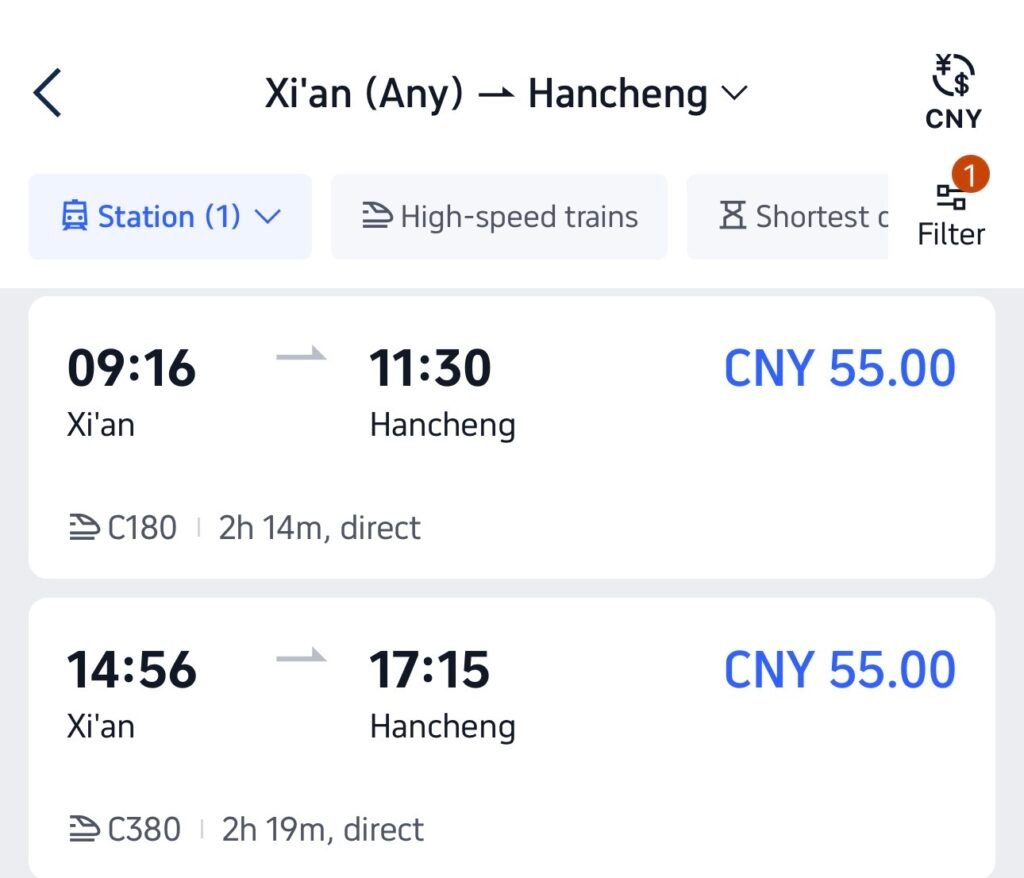
This is where the journey leaves the familiar Xi’an tourist circuit.
Hancheng (韩城, Hánchéng) deserves an overnight.
Give yourself time for:
Hancheng Ancient City (韩城古城, Hánchéng Gǔchéng)
Dayu Temple (大禹庙, Dà Yǔ Miào)
and especially:
Sima Qian Temple and Tomb (司马迁祠墓, Sīmǎ Qiān Címù).
→ How to Visit Hancheng (韩城, Hánchéng) From Xi’an (西安, Xī’ān)
🚂 Leg 2 — Hancheng (韩城, Hánchéng) → Houma (侯马, Hóumǎ) → Yuncheng (运城, Yùnchéng)
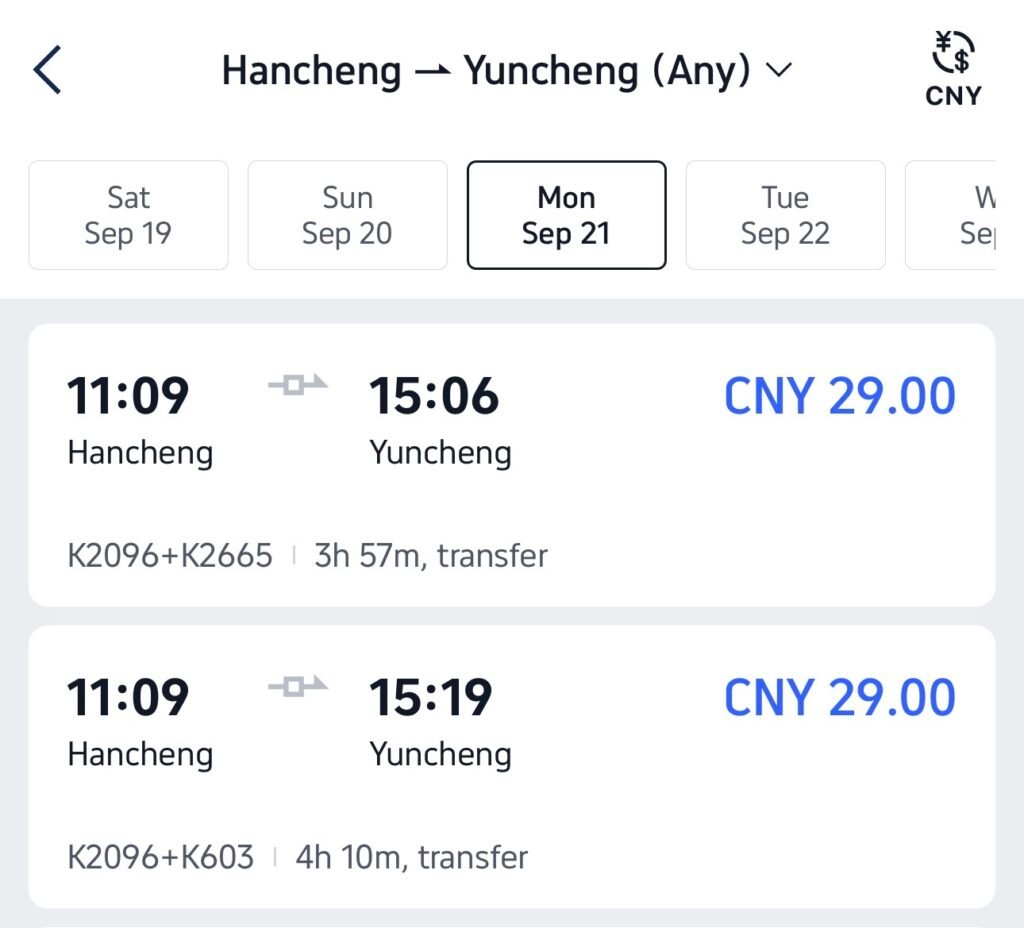
This is the adventure leg.
Don’t expect the seamless high-speed railway experience you may have had elsewhere in China.
This is where the:
green train (绿皮车, Lǜpíchē)
enters the menu.
And Houma (侯马, Hóumǎ) becomes part of the story.
If your connection gives you several hours, don’t necessarily sit inside the station.
Dad and Elaine went looking for lunch.
→ No Direct Train to Hancheng (韩城, Hánchéng) — So We Got Off in Houma (侯马, Hóumǎ) for Lunch
Schedules change.
Check the actual trains available for your travel date rather than assuming Dad and Elaine’s connection will still be yours.
🚄 Leg 3 — Yuncheng (运城, Yùnchéng) → Linfen (临汾, Línfén)
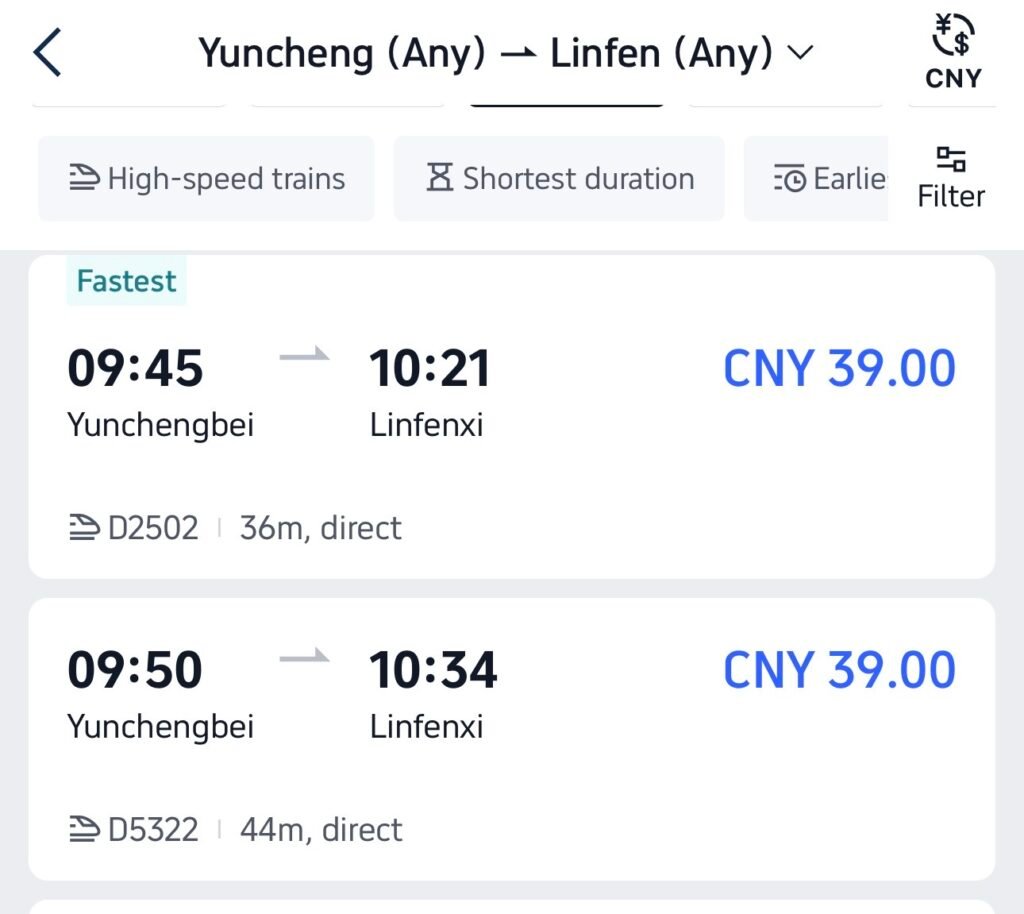
Now China gives you your high-speed railway back.
😂
In Dad’s sample search:
Yuncheng North Railway Station (运城北站, Yùnchéng Běizhàn)
↓
Linfen West Railway Station (临汾西站, Línfén Xīzhàn)
Some journeys were under an hour.
One example:
44 minutes — CNY 39.
Check current fares and schedules before traveling.
This short journey is one of the reasons these two southern Shanxi (山西, Shānxī) stops work so well together.
🚄 Leg 4 — Linfen (临汾, Línfén) → Xi’an (西安, Xī’ān)
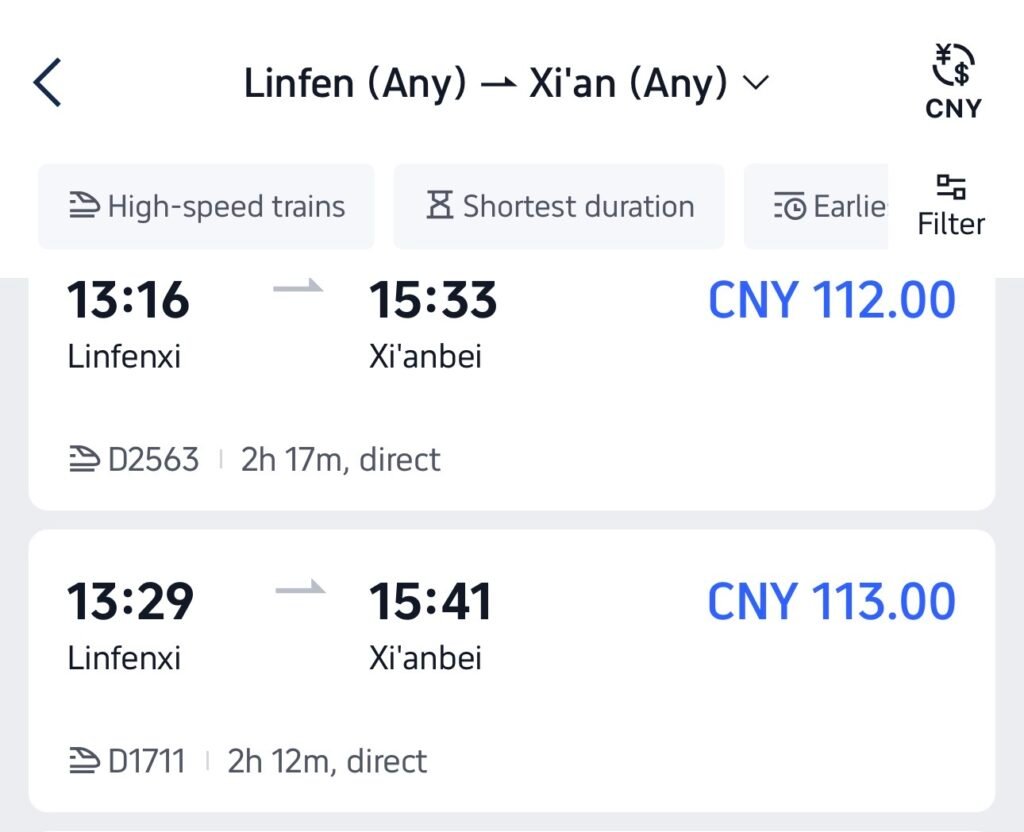
And finally:
back to the beginning.
Linfen West Railway Station (临汾西站, Línfén Xīzhàn)
↓
Xi’an North Railway Station (西安北站, Xī’ān Běizhàn)
Dad’s sample search showed direct journeys of roughly 1½–2 hours.
Easy.
Fast.
And slightly strange after everything you’ve just experienced.
A few hours earlier you may have been thinking about a society that existed more than 4,000 years ago.
Now you’re back in Xi’an.
⭐ WHO SHOULD ORDER THIS MENU?
Not everyone.
If you have 7 days for your first trip to China, don’t do this.
See Beijing (北京, Běijīng).
See Xi’an (西安, Xī’ān).
See the places you’ve dreamed about.
This journey is for the traveler who gets to Xi’an, sees the Terracotta Warriors (兵马俑, Bīngmǎyǒng) and starts asking:
“What came before this?”
It’s for travelers who enjoy:
history
archaeology (考古, Kǎogǔ)
ordinary Chinese cities
slow trains
unexpected meals
places without crowds of international tourists
and asking why rather than only asking what should I see?
🐇 THE TAKEAWAY MENU
You don’t need to eat the whole menu.
Take one course.
Only have 2 extra days?
Try:
Xi’an (西安, Xī’ān) → Hancheng (韩城, Hánchéng) → Xi’an (西安, Xī’ān)
Meet Sima Qian (司马迁, Sīmǎ Qiān).
Want archaeology?
Try:
Xi’an (西安, Xī’ān) → Linfen (临汾, Línfén) → Xi’an (西安, Xī’ān)
Follow Yao (尧, Yáo) and Taosi (陶寺, Táosì).
Want the full DEEP China experience?
Order everything.
Xi’an (西安, Xī’ān)
→ Hancheng (韩城, Hánchéng)
→ Houma (侯马, Hóumǎ)
→ Yuncheng (运城, Yùnchéng)
→ Linfen (临汾, Línfén)
→ Xi’an (西安, Xī’ān)
High-speed trains.
Green trains (绿皮车, Lǜpíchē).
Ancient cities.
Museums.
Temples.
Archaeological sites.
And one lunch we hadn’t planned.
🍵 ONE LAST SIP
We started in Xi’an (西安, Xī’ān) with an emperor who unified China.
We came back having met:
the historian who remembered it — Sima Qian (司马迁, Sīmǎ Qiān)
the ancient rulers tradition remembered — Yao (尧, Yáo), Shun (舜, Shùn) and Yu the Great (大禹, Dà Yǔ)
and
the archaeology beneath those stories — Taosi (陶寺, Táosì).
Did we discover exactly when China began?
No.
Actually, the journey made that question harder.
That’s usually a good sign.
Because China usually has another layer.
And, as Dad and Elaine keep discovering…
China Usually Has Another Way.
🐇