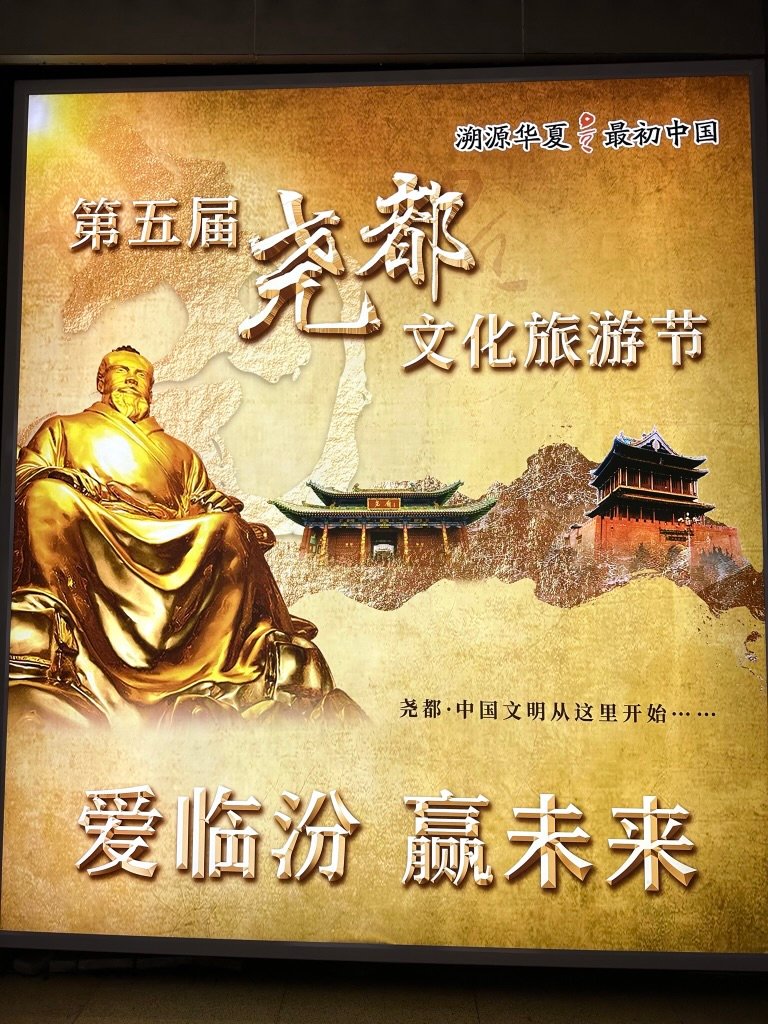
Linfen (临汾, Línfén): We Came for a City — and Found 4,000 Years of China
Most international travelers planning their first trip to China have heard of:
Beijing.
Shanghai.
Xi’an.
Maybe Chengdu and Chongqing.
But:
Linfen?
😂
Dad hadn’t put Linfen (临汾, Línfén) on our journey because it was a famous tourist city.
We came because we kept asking one annoying question in Xi’an:
What came before Qin?
And that question sent Dad & Elaine north.
📍 First Things First — Where Is Linfen 临汾 ?
Linfen (临汾, Línfén) is a city in:
Shanxi Province (山西省, Shānxī Shěng)
in northern China.
Not:
Shaanxi (陕西省, Shǎnxī Shěng)
where Xi’an (西安, Xī’ān) is located.
Yes.
Shanxi and Shaanxi are different provinces!!
Welcome to China.
😂
For a first-time international traveler, the easiest mental map is:
XI’AN (西安, Xī’ān)
Terracotta Warriors · Qin dynasty
📍 Shaanxi Province
↓
🚄 High-Speed Rail
↓
LINFEN (临汾, Línfén)
Yao · Pingyang · Taosi · 4,000+ years
📍 Shanxi Province
Linfen sits in southern Shanxi, in the Fen River (汾河, Fénhé) valley.
That location matters.
For thousands of years, this wider region has been connected with some very early layers of Chinese settlement, political memory and state formation.
But don’t worry.
Dad isn’t starting the 4,000-year history lesson yet.
😂
🚄 Is Linfen Difficult to Reach?
This surprised us.
No.
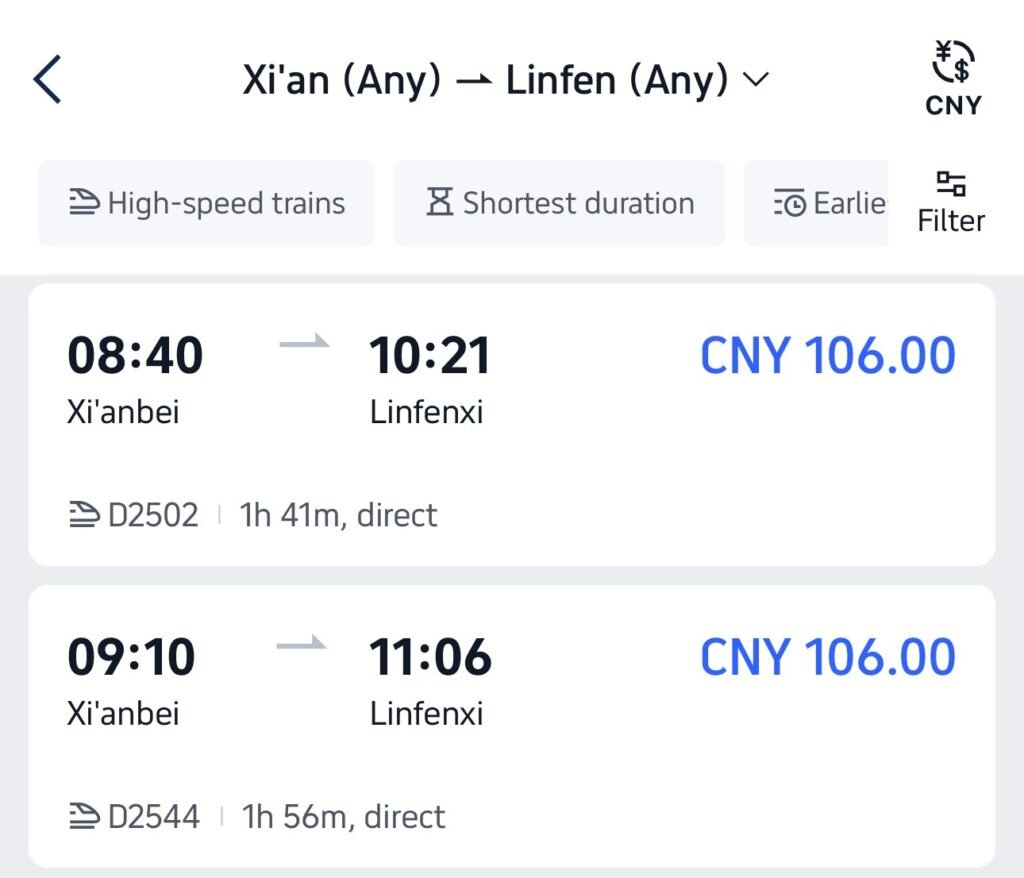
From Xi’an North Railway Station (西安北站, Xī’ān Běizhàn), high-speed trains can reach:
Linfen West Railway Station
(临汾西站, Línfén Xīzhàn)
in roughly two hours, depending on the service.
So you can leave the world of:
Qin Shi Huang (秦始皇, Qín Shǐhuáng)
→ China’s first emperor
and shortly afterward arrive somewhere that pushes the question:
“When did China begin?”
back another:
TWO THOUSAND YEARS.
😳
That’s why Linfen entered our journey.
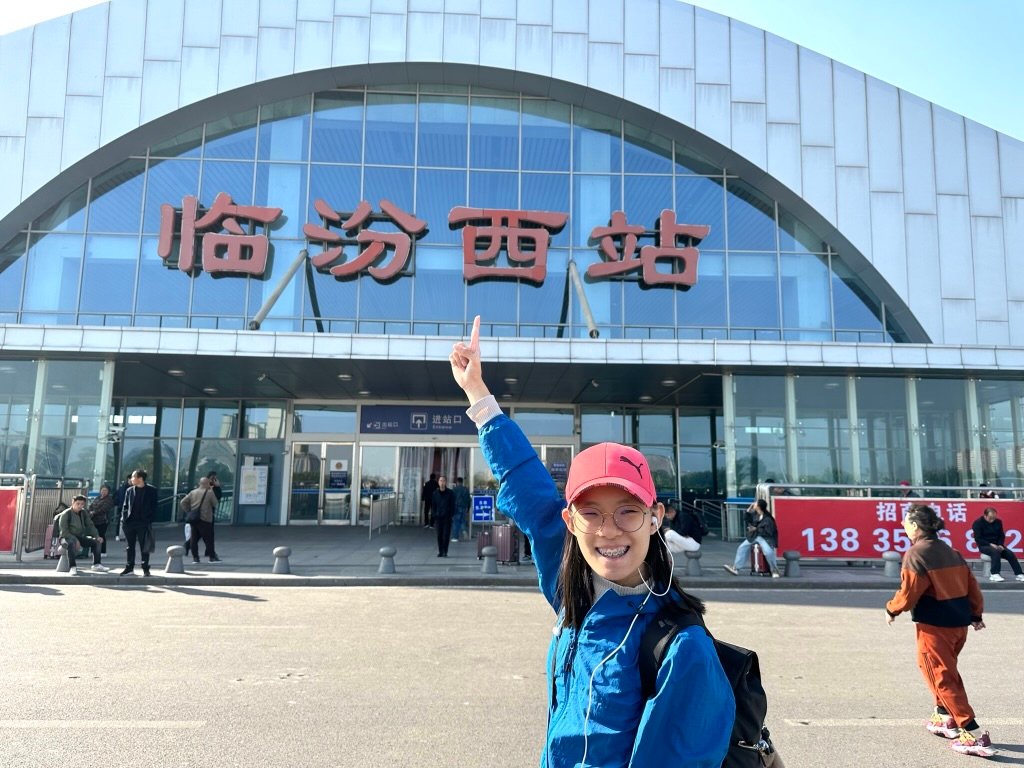
Elaine arriving at Linfen West Railway Station (临汾西站, Línfén Xīzhàn). Linfen has a relatively low profile among international travelers, but high-speed rail makes it surprisingly easy to add to a Xi’an or southern Shanxi journey.
Elaine looks happy.
Dad?
Already thinking about archaeology.
😂
🧭 Why Would an International Traveler Come to Linfen?
Not for one giant bucket-list attraction.
That’s the wrong way to understand this city.
Linfen works because several completely different Chinas overlap here.
You can encounter:
MODERN LINFEN
electric buses · shared scooters · noodles · neighborhood life
↓
PINGYANG (平阳, Píngyáng)
Linfen’s older historical identity
↓
JIN (晋, Jìn)
an ancient state deeply connected with Shanxi’s history
↓
YAO (尧, Yáo)
the legendary sage-ruler whose memory remains embedded in the city
↓
TAOSI (陶寺, Táosì)
a major archaeological site dating roughly to:
2300–1900 BCE.
That’s the trick with Linfen.
At first it looks like:
an ordinary Chinese city.
Then you start asking questions.
And the floor keeps dropping away.
😂🐇
⭐ Is Linfen Worth It for You?
YES — especially if you like:
Chinese history beyond the famous dynasties
archaeology
ordinary Chinese city life
local food
places with few international tourists
Linfen is probably not the place to prioritize if your first China trip is very short and you’re mainly looking for blockbuster sights.
But if you’ve already seen Xi’an (西安, Xī’ān) and found yourself asking:
“What came before Qin?”
Linfen is where that question gets dangerous.
😂🐇
😳 But Dad Had Another Mental Picture of Linfen
Before coming here, Dad knew Linfen for a completely different reason.
Not Yao.
Not Taosi.
Not noodles.
POLLUTION.
Go back roughly two decades and Linfen had an infamous international reputation.
Coal mining, coke production, heavy industry and coal burning contributed to extremely serious air pollution.
In the mid-2000s, Linfen was widely described as one of the most polluted cities in China.
So Dad carried an old mental picture with him.
Then we arrived.
And…
Wait.
😂
🎥 THIS Is Linfen?
Dad & Elaine drove through the city:
What did we actually see?
wide streets
trees
blue sky
modern buildings
electric scooters
new-energy buses
and:
clean-looking public spaces.
Then in the middle of all that modern traffic appeared:
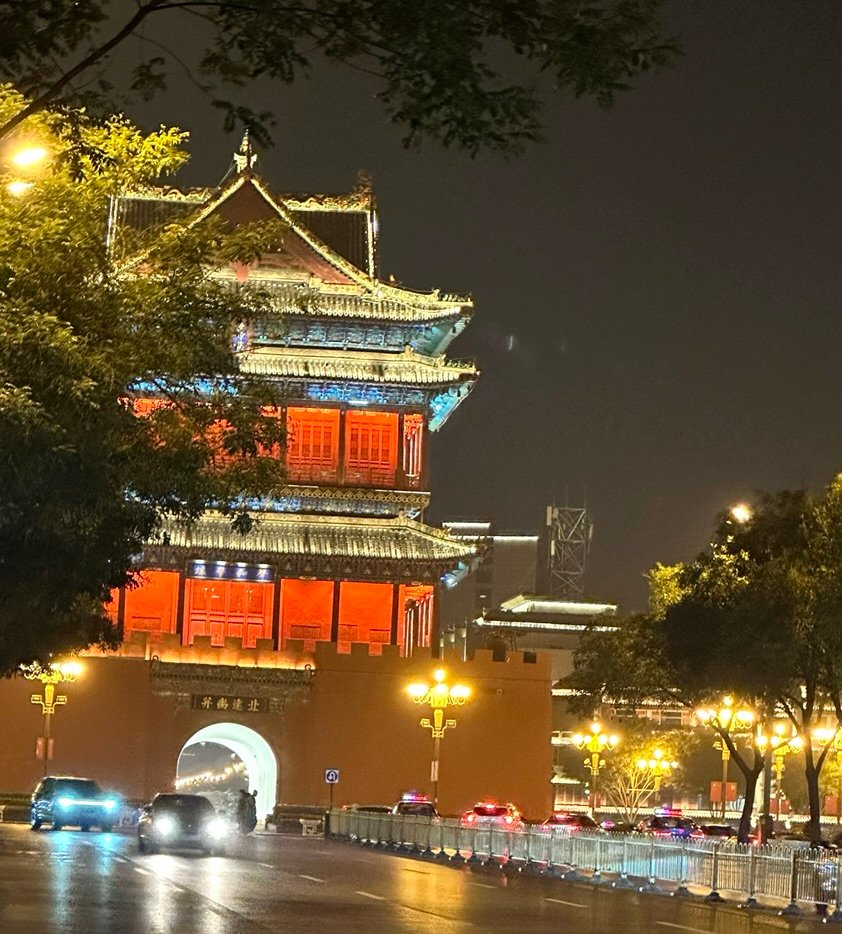
Linfen Drum Tower
(临汾鼓楼, Línfén Gǔlóu)
鼓楼 (Gǔlóu) simply means:
“Drum Tower.”
Old city landmark.
Modern traffic flowing around it.
Very Linfen.
📷 INSERT ELECTRIC BUS PHOTO HERE
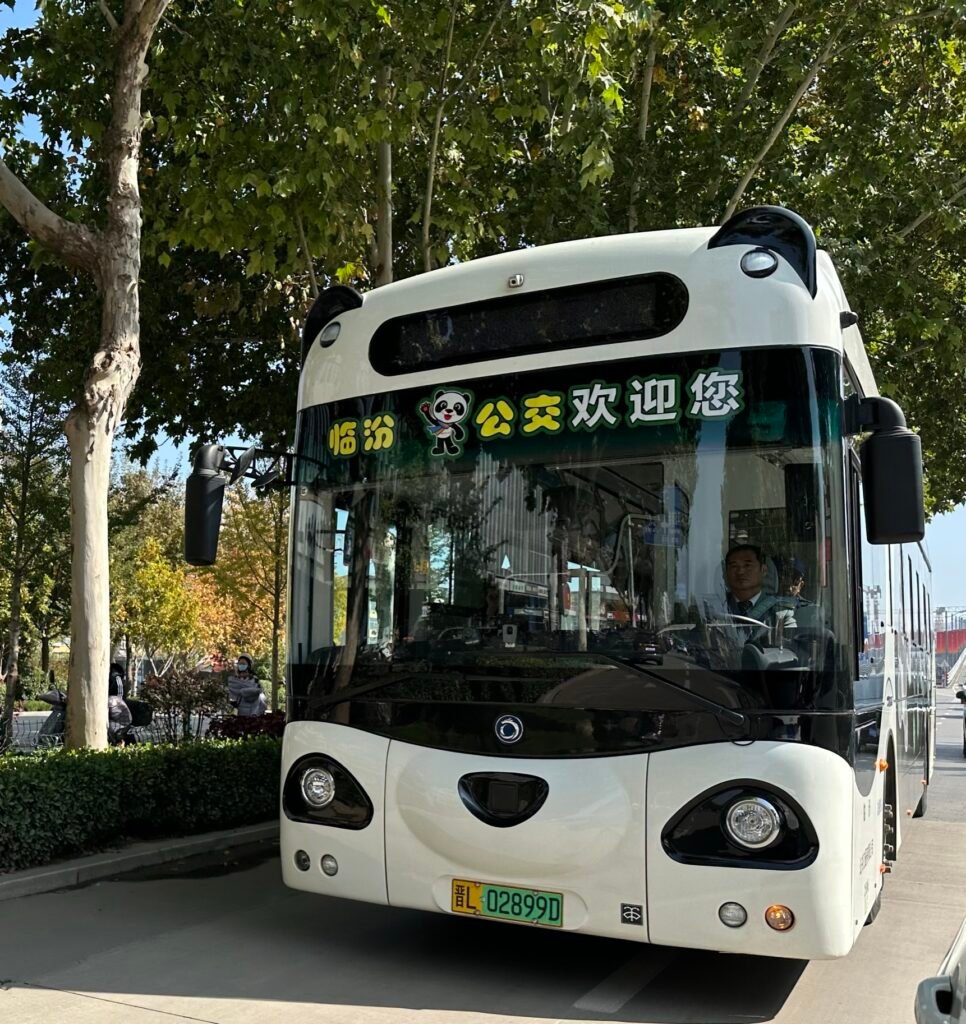
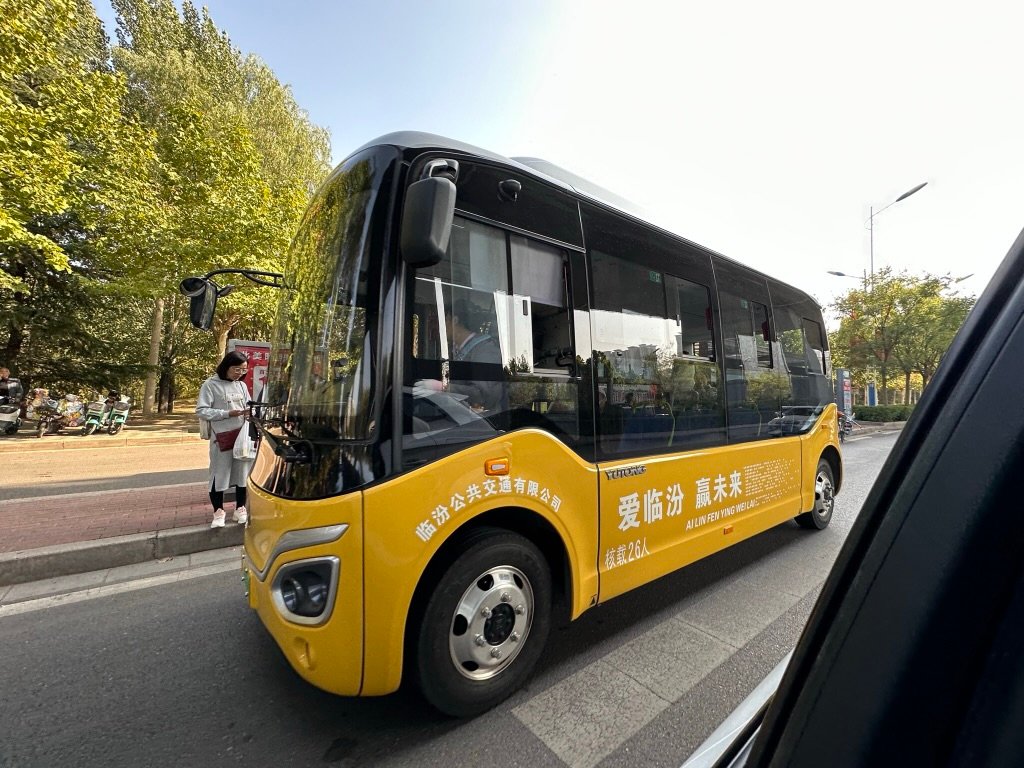
Look at the front:
临汾公交欢迎您
Línfén Gōngjiāo Huānyíng Nín
In plain English:
“Linfen Public Transport Welcomes You.”
One of the new-energy buses Dad & Elaine saw in Linfen. The modern city we encountered looked strikingly different from the Linfen described in old international pollution headlines.
One clear day and a few electric buses don’t prove that every environmental problem has disappeared.
Of course not.
But Dad learned something useful almost immediately:
Don’t visit today’s China with yesterday’s mental picture.
🔥
That lesson would follow us through Linfen.
Because the city kept refusing to be only one thing.
🍜 Elaine, Meanwhile, Had More Important Priorities
Dad:
“Linfen may help us understand the origins of Chinese civilisation…”
Elaine:
“What are we going to eat?!”
😂
Fair question.
And one of our simplest meals became one of Elaine’s strongest memories of the entire trip.
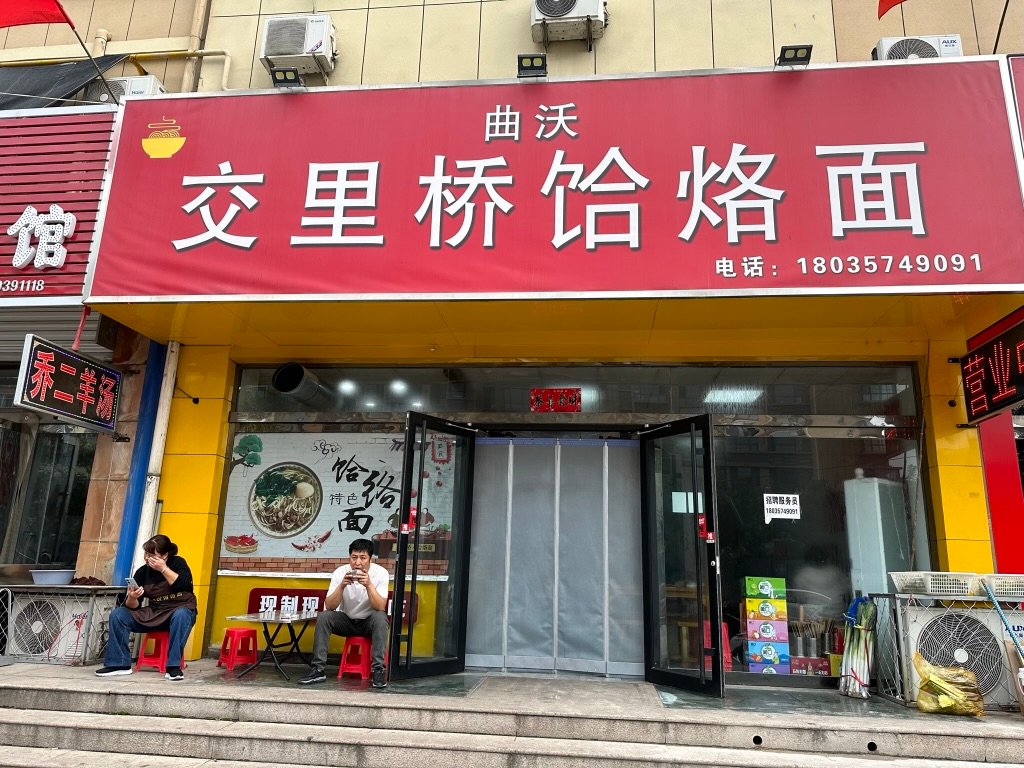
We found a local noodle shop serving:
饸饹面
Hélé Miàn
Hele noodles.
Nothing fancy.
Nothing designed for tourists.
Just noodles.
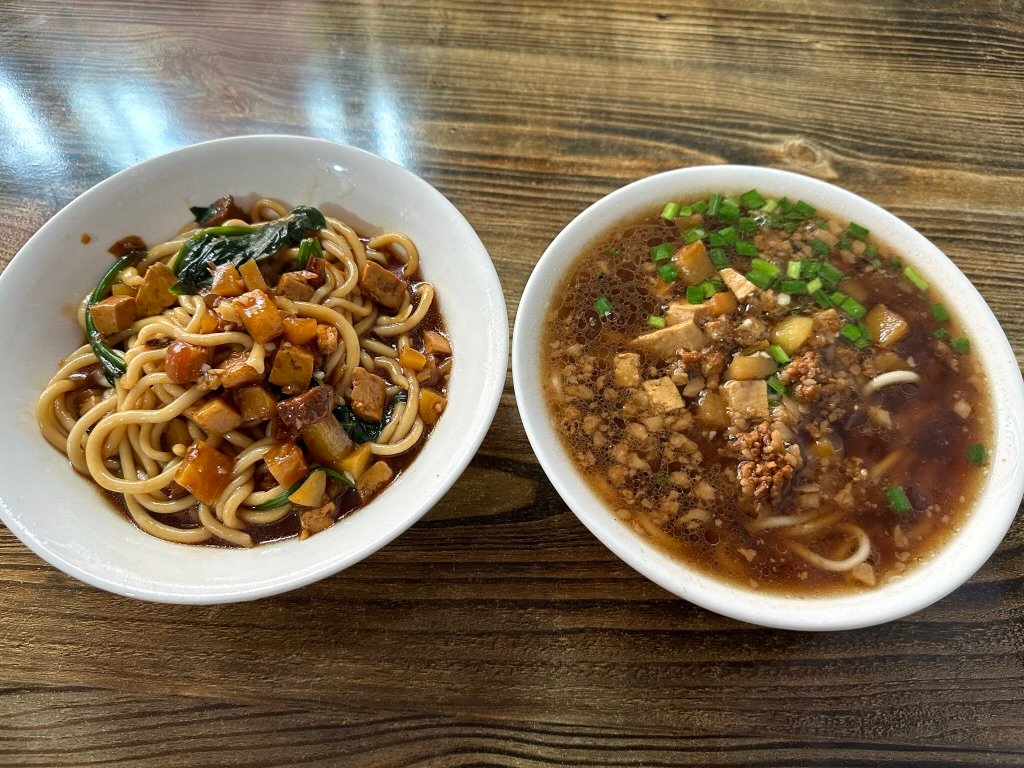
Two simple bowls of hele noodles (饸饹面, Hélé Miàn) in Linfen. Of everything Dad remembers about Linfen’s 4,000 years of history, Elaine still talks about these.
Her verdict months later?
念念不忘
Niànniàn-bùwàng
“Still can’t stop thinking about them.”
😂
But then Dad looked at the shop name.
Uh-oh.
曲沃
Qǔwò
Quwo.
Dad knew that name.
Quwo is also important in the history of the ancient:
State of Jin (晋国, Jìn Guó).
And just like that:
NOODLES
↓
QUWO
↓
JIN
↓
WARRING STATES
↓
QIN
Elaine:
“Dad. Eat your noodles.”
😂
She’s right.
We’ll come back to Jin.
🌙 Sometimes Linfen Was Just… Linfen
This matters.
We didn’t spend every minute hunting ancient China.
We saw street vendors.
People commuting on electric scooters.
Older men concentrating intensely over:
象棋
Xiàngqí
Chinese chess.
We ate.
Walked.
Watched people going home.
And after dark, the Drum Tower lit up above the city.
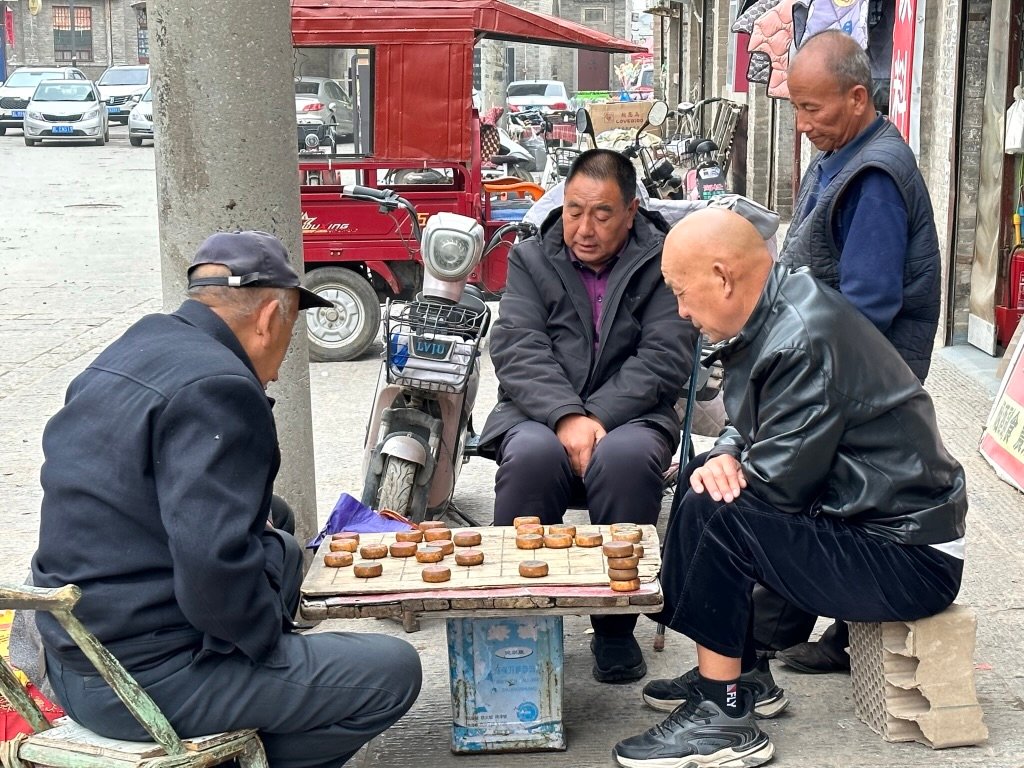
An ordinary game of Chinese chess (象棋, Xiàngqí) on a Linfen street. Dad didn’t know who was winning. Everyone around the board appeared to have a much stronger opinion. 😂
🎥 Linfen After Dark
At night we found:
families walking
people sitting and talking
shared electric scooters
shops
traffic
and the illuminated:
Linfen Drum Tower (临汾鼓楼, Línfén Gǔlóu).
No giant international tourist attraction.
Just:
a Chinese city living its evening.
And Dad increasingly liked that.
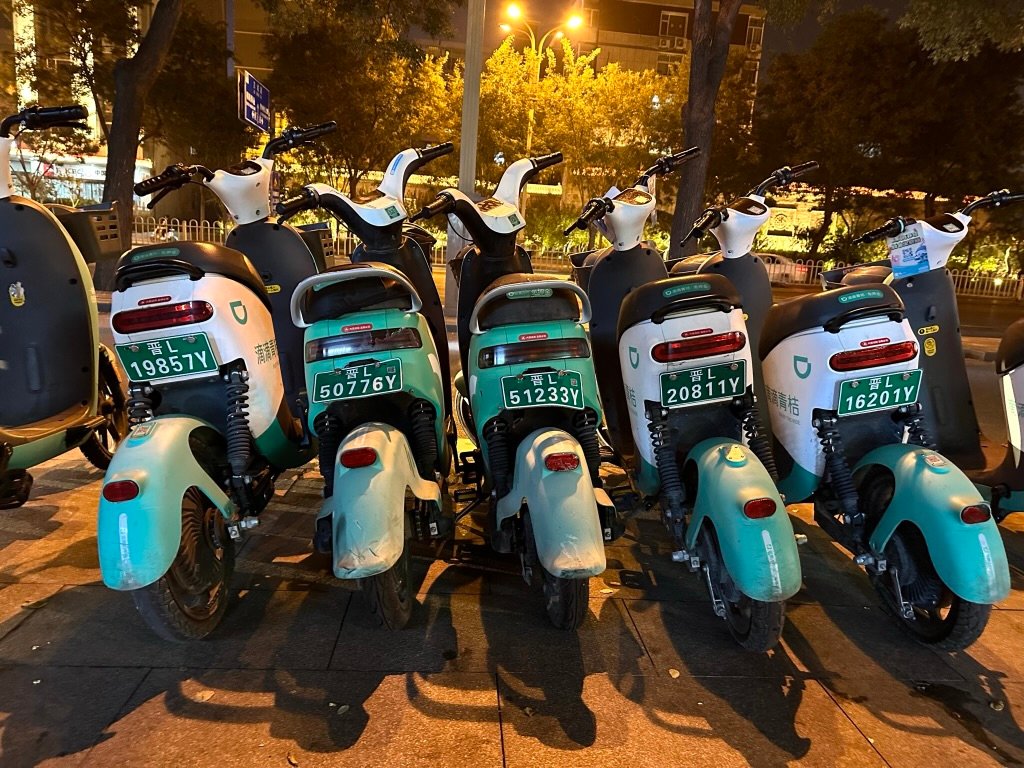
Shared electric scooters lined up after dark in Linfen — a small piece of everyday life in the modern city.
Dad’s Traveler Handrail
Don’t ask only:
“What are Linfen’s Top 10 attractions?”
That’s not really why we’d come.
Eat something.
Walk around.
Watch a game of Chinese chess.
See the Drum Tower after dark.
Then start asking:
Why does the name Pingyang (平阳, Píngyáng) keep appearing?
Why is central Linfen called Yaodu (尧都, Yáodū) — literally “Yao’s Capital”?
Why does Jin (晋, Jìn) keep turning up?
And what on earth is Taosi (陶寺, Táosì)?
That’s when an apparently ordinary city begins changing.
And Dad finally realized:
We need a coat rack.
😂
Our next stop:
Linfen Museum
(临汾博物馆, Línfén Bówùguǎn).
博物馆 (Bówùguǎn) simply means:
“museum.”
But this one was about to become Dad’s:
4,000-YEAR HISTORY COAT RACK.
🐇
🏛️ SECTION 2 — Linfen Museum: Dad’s 4,000-Year Coat Rack
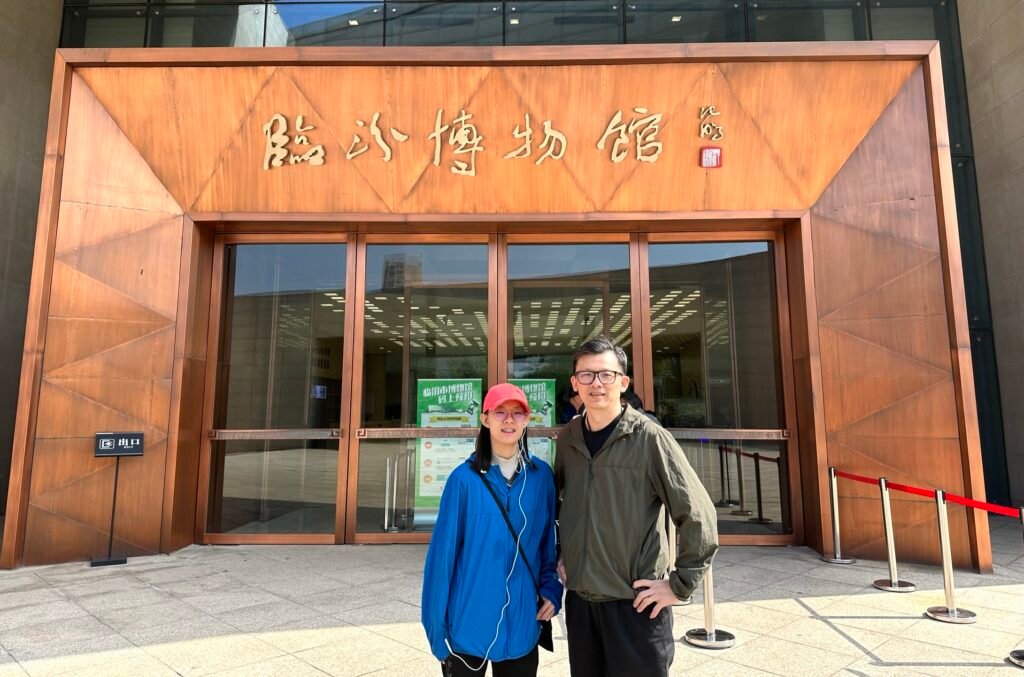
After noodles, buses and Chinese chess…
Dad finally got his museum.
😂
Linfen Museum
(临汾博物馆, Línfén Bówùguǎn)
For an international traveler, this is where Linfen starts making sense.
Don’t try to remember every object.
Don’t try to memorize every dynasty.
Dad used the museum for something simpler:
Build a coat rack.
Hang a few names on it.
Then recognize them when they appear around the city.
🧥 HOOK 1 — Pingyang (平阳, Píngyáng)
The first name to remember is:
平阳
Píngyáng
Pingyang
Today the city is:
Linfen (临汾, Línfén).
But in historical sources, the name Pingyang (平阳, Píngyáng) repeatedly appears in connection with this area.
That’s useful because otherwise an international traveler reads:
“Pingyang…”
and thinks:
Where did we go now?
😂
We didn’t necessarily go anywhere.
The historical name changed.
The geography remained.
Keep Pingyang on the coat rack.
We’ll meet it again outside the museum.
🧥 HOOK 2 — 晋 (Jìn)
Then Dad kept seeing one character:
晋
Jìn
Jin
International travelers may not recognize it.
Chinese travelers see it constantly because:
晋 (Jìn)
is still the standard abbreviation for:
Shanxi Province (山西省, Shānxī Shěng).
Why?
Because this region is deeply connected with the ancient:
State of Jin
(晋国, Jìn Guó).
Now a character on modern Shanxi license plates has opened a door into ancient political history.
🐇
Then Jin Broke Apart
Here’s one wonderfully literal Chinese phrase worth remembering:
三家分晋
Sānjiā Fēn Jìn
“Three Families Partition Jin”
And that’s basically what happened.
😂
Three powerful families eventually emerged as separate states:
韩 — Hán
State of Han (韩国, Hán Guó)
赵 — Zhào
State of Zhao (赵国, Zhào Guó)
魏 — Wèi
State of Wei (魏国, Wèi Guó)
These became three of the major states of the:
Warring States period
(战国时期, Zhànguó Shíqī)
— the competitive political world that eventually ended when:
Qin (秦国, Qín Guó)
defeated the other major states and unified them in:
221 BCE.
🔥
Remember Dad’s annoying question from Xi’an?
What came before Qin?
Linfen Museum has just given us part of the answer.
⚔️ HOOK 3 — Pingyang Had Its Own Heroes
Then one evening outside the museum, Dad & Elaine found two enormous heads.
😂
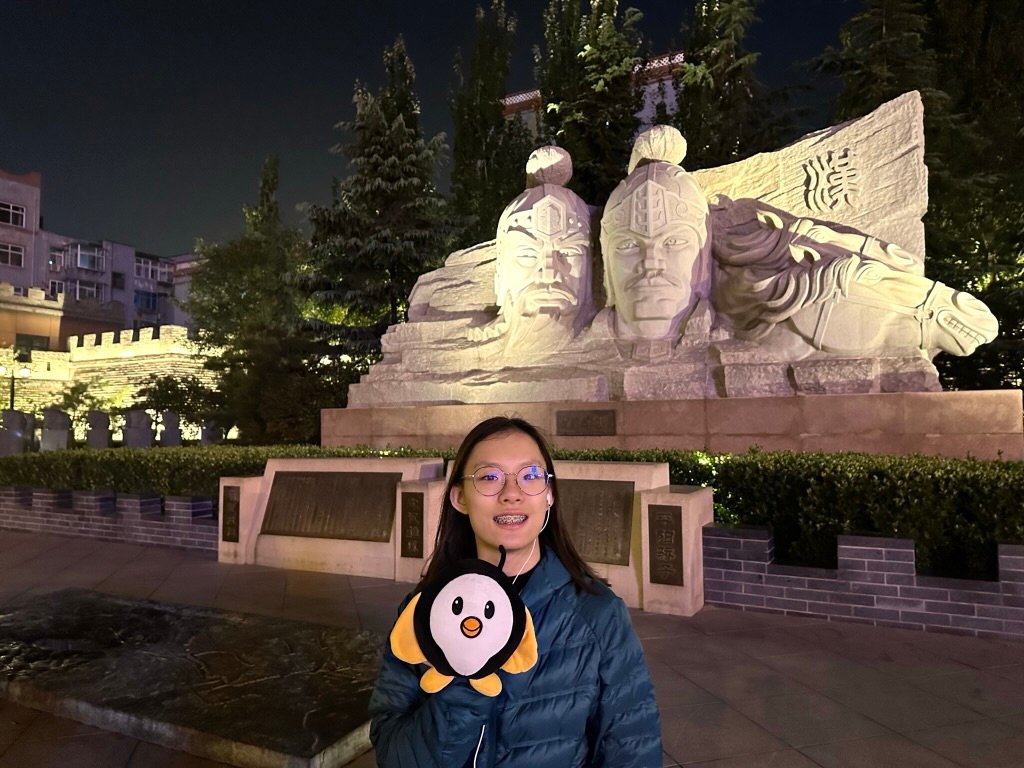
Elaine and Cheers with a Linfen monument commemorating two famous Han dynasty military figures associated with ancient Pingyang (平阳, Píngyáng): Wei Qing (卫青, Wèi Qīng) and Huo Qubing (霍去病, Huò Qùbìng).
Beside them:
平阳骄子
Píngyáng Jiāozǐ
“Outstanding Sons of Pingyang”
There was our old coat-rack name again:
PINGYANG.
🐇
Wei Qing (卫青, Wèi Qīng)
卫青
Wèi Qīng
great Han frontier general
Wei Qing became one of the leading generals under:
Emperor Wu of Han
(汉武帝, Hàn Wǔdì)
— the expansionist Han emperor whose reign transformed China’s northern and western frontiers.
Wei Qing fought major campaigns against the:
Xiongnu (匈奴, Xiōngnú)
— a powerful confederation on the northern frontier.
And then Dad discovered another family rabbit hole.
Wei Qing’s half-sister:
Wei Zifu (卫子夫, Wèi Zǐfū)
became:
Empress.
History is never satisfied with one rabbit.
😂
Huo Qubing (霍去病, Huò Qùbìng)
Then:
霍去病
Huò Qùbìng
brilliant young Han cavalry commander
Huo Qubing was Wei Qing’s nephew.
He became famous for aggressive, fast-moving campaigns against the Xiongnu.
Enormous military reputation.
Then:
dead at only 23.
😳
For many Chinese readers:
Wei Qing + Huo Qubing
are instantly recognizable names.
For many international travelers?
Probably not.
That’s exactly why the Linfen monument is useful.
It tells us that modern Linfen isn’t remembering only:
Yao
or:
Taosi.
Its local historical memory stretches across completely different periods.
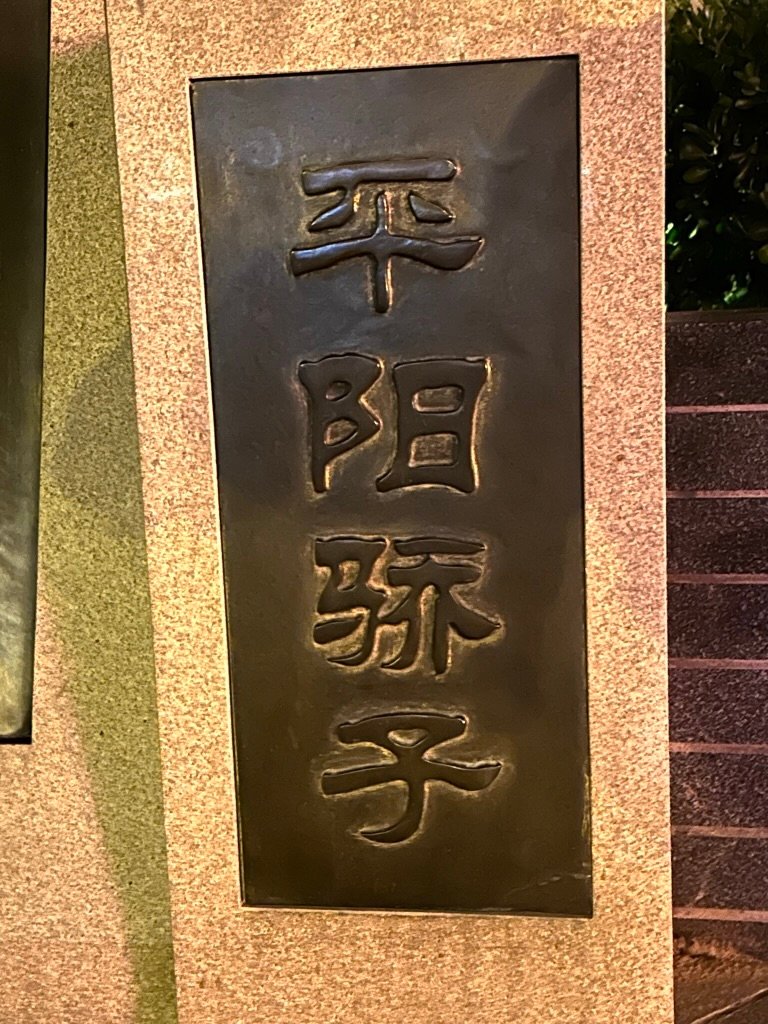
平阳骄子 (Píngyáng Jiāozǐ) — “Outstanding Sons of Pingyang.” Modern Linfen still commemorates the Han-era military figures associated with its older Pingyang identity.
🧥 HOOK 4 — Then Dad Found Taosi (陶寺, Táosì)
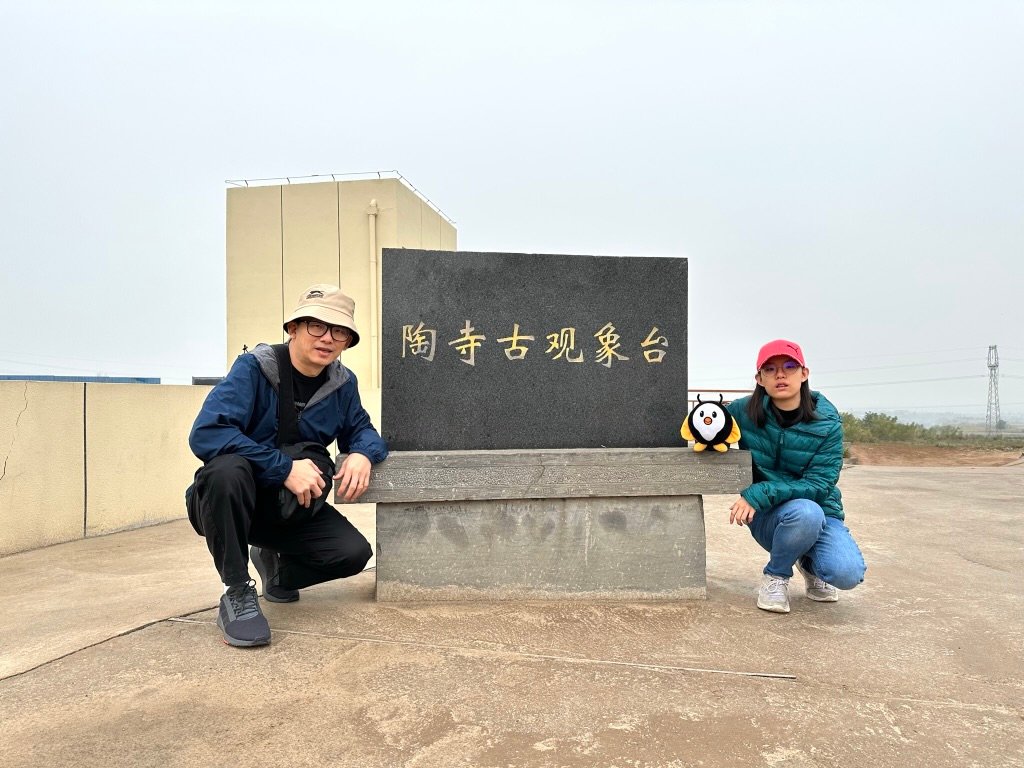
And suddenly…
the floor disappeared.
😂
陶寺
Táosì
Taosi
Taosi is a major archaeological site near Linfen dating broadly to:
c. 2300–1900 BCE.
Now compare:
Qin unification
221 BCE
with:
Taosi
beginning around 2300 BCE.
We’re roughly:
TWO THOUSAND YEARS EARLIER.
😳
Inside Linfen Museum, Dad saw evidence of a surprisingly complex society:
elite burials
jade
ritual objects
stone chimes (石磬, Shíqìng)
ritual music (礼乐, Lǐyuè)
and:
astronomical observation.
That’s enough for this article.
Seriously.
Stop, Dad.
😂
Because Taosi now has its own DEEP China rabbit hole.
→ GO DEEPER: Taosi (陶寺, Táosì) — We Went to Linfen Looking for the China Before China
Linfen Museum gives you:
THE OBJECTS.
Taosi gives you:
THE PLACE.
Do both if you can.
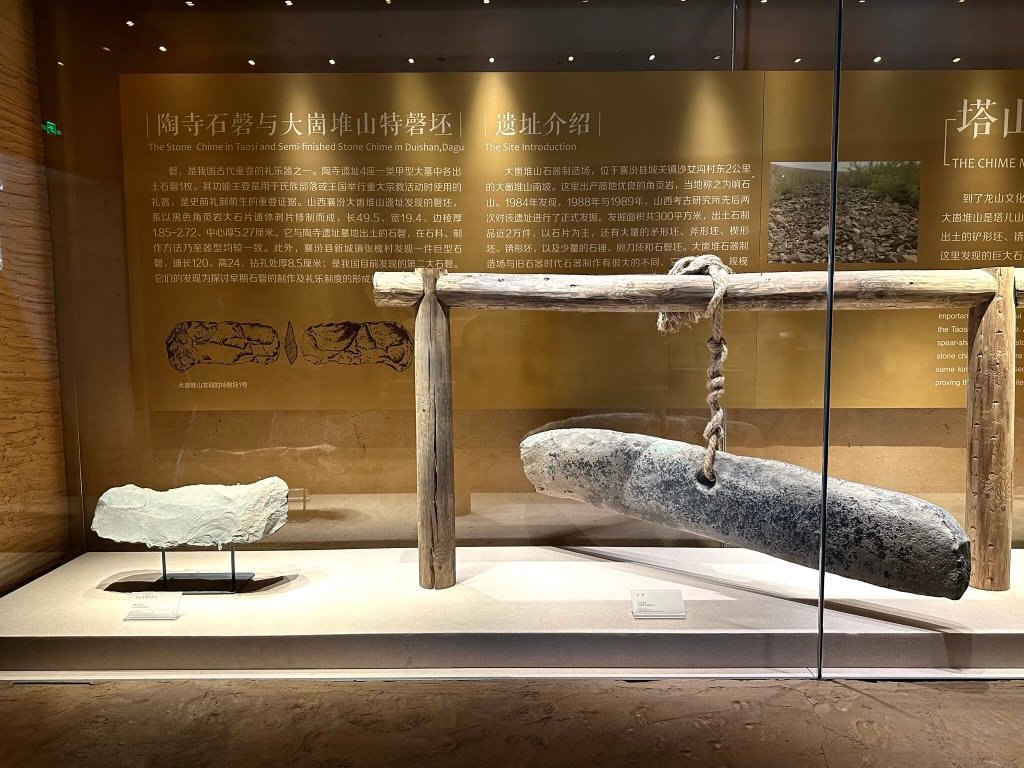
Taosi material at Linfen Museum (临汾博物馆, Línfén Bówùguǎn). The museum is the best place to build the archaeological coat rack before heading out toward the Taosi site itself.
👑 HOOK 5 — Why Is Central Linfen Called “Yao’s Capital”?
Then another name appears everywhere:
尧
Yáo
Yao
One of the ancient sage-rulers remembered in Chinese tradition.
And here’s the detail international travelers can easily miss.
Central Linfen today is:
尧都区
Yáodū Qū
Yaodu District
Break it apart:
尧 (Yáo)
→ Yao
都 (Dū)
→ capital
So:
尧都 — Yáodū
“Yao’s Capital”
😳
Whether archaeology can prove that the historical Yao ruled from exactly here is a much harder question.
Don’t mix:
cultural memory
with:
archaeological proof.
But the modern place-name itself tells us something important:
Linfen has continued associating its identity with Yao for generations.
So Dad & Elaine went to:
Yao Temple
(尧庙, Yáomiào).
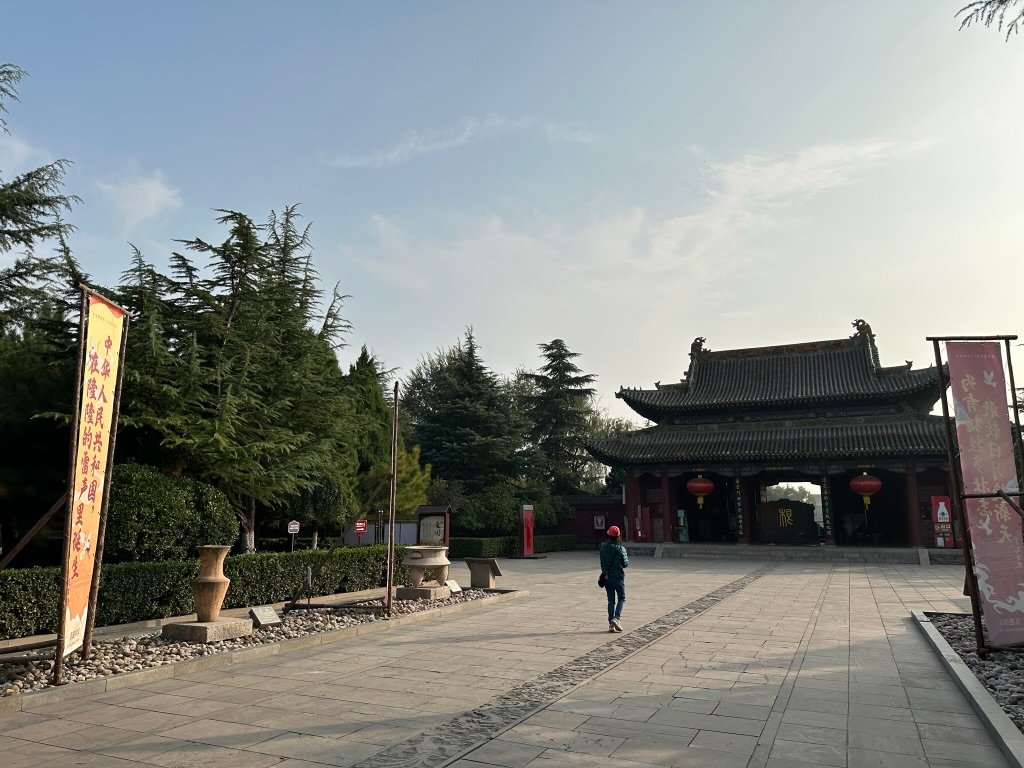
And that deserves its own story too.
→ GO DEEPER: Who Was Emperor Yao (尧帝, Yáodì)? We Went to Yao Temple (尧庙, Yáomiào) to Find Out
⭐ Now Look at Dad’s Coat Rack
One museum.
One city.
But:
TAOSI (陶寺, Táosì)
→ 4,000+ years ago
→ archaeology
↓
YAO (尧, Yáo)
→ ancient cultural memory
↓
JIN (晋, Jìn)
→ ancient state
↓
三家分晋 (Sānjiā Fēn Jìn)
→ “Three Families Partition Jin”
↓
PINGYANG (平阳, Píngyáng)
→ older Linfen identity
↓
WEI QING + HUO QUBING
→ Han frontier heroes
↓
MODERN LINFEN (临汾, Línfén)
🔥
Now the title finally makes sense.
We came for:
a city.
And found:
4,000 years of China.
But Dad still had one problem.
How do you actually visit all this without turning your holiday into a history exam?
😂
🧳 Linfen in Practical Terms
Best base: central Linfen (临汾, Línfén)
Arrival: Linfen West Railway Station (临汾西站, Línfén Xīzhàn)
Getting around the city: DiDi / local taxis are easiest for international travelers.
Taosi (陶寺, Táosì): outside central Linfen — plan this separately rather than treating it like another downtown attraction.
Dad’s pace: 2 days / 2 nights.
Possible in less?
Yes.
Would Dad recommend rushing it?
No. 😂
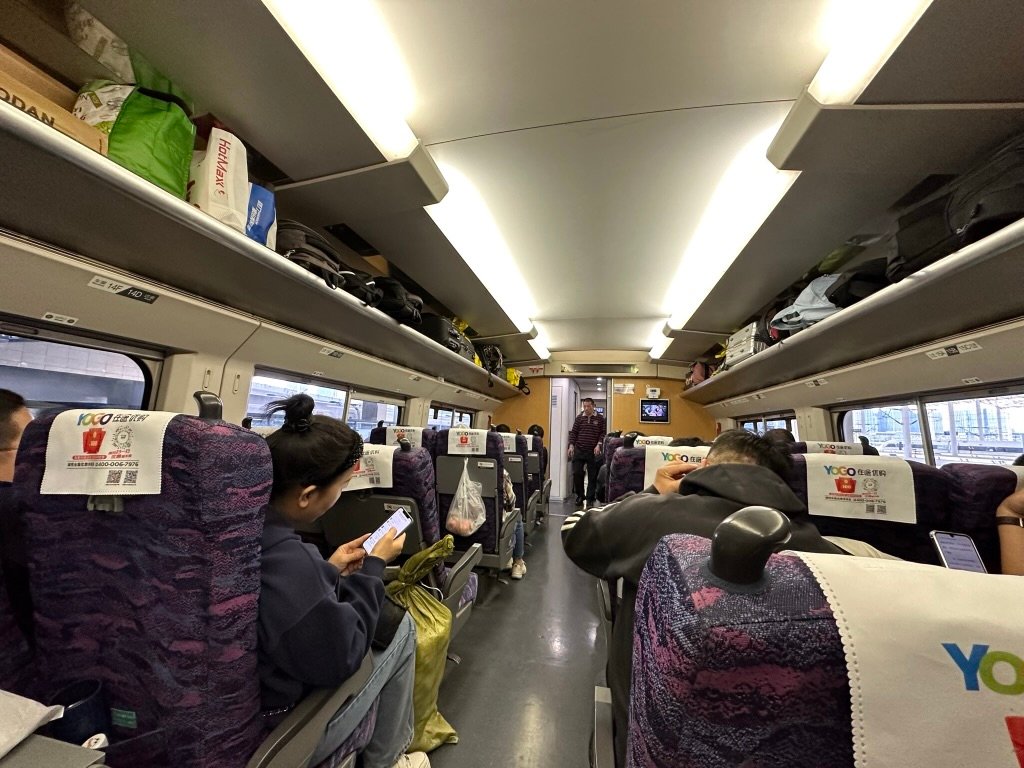
🧭 SECTION 3 — How to Spend 2 Days in Linfen (临汾, Línfén)
Dad’s recommendation:
2 DAYS / 2 NIGHTS
Linfen isn’t difficult to visit.
The mistake is trying to squeeze:
museum + Yao + Taosi + city life
into one heroic day.
😂
DAY 1 — Understand Linfen First
🏛️ Linfen Museum (临汾博物馆, Línfén Bówùguǎn)
Start here.
Use the museum as your:
4,000-YEAR COAT RACK.
Look for:
Taosi (陶寺, Táosì)
→ archaeology
Jin (晋, Jìn)
→ ancient political history
Pingyang (平阳, Píngyáng)
→ Linfen’s older historical identity
Don’t try to remember everything.
Just collect a few hooks.
👑 Yao Temple (尧庙, Yáomiào)
Then go from:
OBJECTS
to:
MEMORY.
Yao Temple asks a different question from the museum:
Why did later generations keep remembering Yao (尧, Yáo)?
→ GO DEEPER: Who Was Emperor Yao (尧帝, Yáodì)? We Went to Yao Temple to Find Out
Then stop studying.
😂
Eat noodles.
Walk around the Drum Tower.
See Linfen after dark.
DAY 2 — Go to Taosi (陶寺, Táosì)
Now leave central Linfen.
Head toward:
Taosi (陶寺, Táosì)
near Xiangfen (襄汾, Xiāngfén).
This is where Dad would deliberately slow down.
Linfen Museum showed us:
THE OBJECTS.
Now go see:
THE LANDSCAPE.
Taosi takes us roughly:
4,000+ YEARS BACK.
Archaeology here raises much bigger questions about:
settlement
social hierarchy
ritual
astronomy
and the development of increasingly complex societies.
But we’re not cooking the whole Taosi dish again here.
😂
It now has its own DEEP China article:
→ GO DEEPER: Taosi (陶寺, Táosì) — We Went to Linfen Looking for the China Before China
⭐ Dad’s Recommended Sequence
Do it in this order:
LINFEN MUSEUM
→ understand the timeline
↓
YAO TEMPLE
→ understand cultural memory
↓
TAOSI
→ encounter the archaeology
That order matters.
By the time you reach Taosi, you’re no longer looking at:
“some ancient ruins.”
You’re asking:
When does “China” begin?
🐇
And if that question catches you…
Linfen doesn’t have to be the end of the journey.
🍽️ SECTION 4 — Want to Turn Linfen Into a Bigger Journey?
Linfen (临汾, Línfén) works perfectly as a:
2-day destination.
But Dad & Elaine didn’t discover these stories in isolation.
The rabbit kept moving.
😂
We eventually connected:
Xi’an (西安, Xī’ān)
→ Qin (秦, Qín) · the familiar starting point
↓
Hancheng (韩城, Hánchéng)
→ Sima Qian (司马迁, Sīmǎ Qiān) · how China remembered its past
↓
Yuncheng (运城, Yùnchéng)
→ Shun (舜, Shùn) · Yu the Great (大禹, Dà Yǔ) · ancient cultural memory
↓
LINFEN (临汾, Línfén)
→ Yao (尧, Yáo) · Taosi (陶寺, Táosì) · archaeology
↓
back to Xi’an (西安, Xī’ān)
And suddenly the question wasn’t:
“What should we see in southern Shanxi?”
It became:
How far back can we follow China?
🔥
We turned that route into one of our:
Michelin History Tasting JOURNEYS.
→ FOLLOW THE FULL JOURNEY: The China Before China — Michelin History Tasting JOURNEY
🐇 Or Keep Going Through Shanxi
Linfen is also only one layer of a much bigger province.
Travel farther through:
Shanxi (山西, Shānxī)
and the historical flavor keeps changing:
Taosi (陶寺, Táosì)
→ archaeology + origins
Pingyao (平遥, Píngyáo)
→ merchants + imperial institutions
Jinci (晋祠, Jìncí)
→ Jin (晋, Jìn) + political memory
Yanmen Pass (雁门关, Yànménguān)
→ frontier + Great Wall
Yungang Grottoes (云冈石窟, Yúngāng Shíkū)
→ Buddhism (佛教, Fójiào) + cultural exchange
Same province.
Completely different Chinas.
→ GO MICHELIN: Shanxi (山西, Shānxī) — Michelin History Tasting JOURNEY: One Province. Multiple Chinas.

⭐ ChinaTravelBUG’s Take
Dad came to Linfen looking for:
ancient China.
But some of our strongest memories aren’t ancient at all.
Elaine still remembers:
the noodles.
😂
Dad remembers:
the men playing Chinese chess
the electric buses
the Drum Tower after dark
and realizing that the modern city looked nothing like the old Linfen in his head.
Then underneath all that:
PINGYANG (平阳, Píngyáng)
↓
JIN (晋, Jìn)
↓
YAO (尧, Yáo)
↓
TAOSI (陶寺, Táosì)
↓
4,000+ YEARS.
That’s why Dad wouldn’t describe Linfen as:
“the city you stay in to visit Taosi.”
Linfen is the destination.
Don’t come looking for:
ONE BLOCKBUSTER ATTRACTION.
Come looking for:
how many different Chinas one ordinary-looking city can contain.
And somewhere between the museum, the noodles and the next rabbit hole…
you may find yourself becoming:
念念不忘
Niànniàn-bùwàng
“Unable to stop thinking about it.”
Just like Elaine and those noodles.
😂🐇
SEE → ASK → CONNECT → UNDERSTAND → FOLLOW
See China. Understand It Better.
China Usually Has Another Way.