After reading our discovering Baoji’s amazing bronze history story, you may be wondering :
“Can I include Baoji in my Xi’an travel itinerary?” The answer is yes.
In fact, Baoji is one of the easiest historical side trips from Xi’an.
Many travellers visiting Xi’an China (西安) focus on famous Xi’an tourist attractions such as the Terracotta Warriors (兵马俑), Xi’an City Wall (西安城墙), Xi’an Muslim Quarter (回民街), and Xi’an Museum (西安博物院).
But if you have extra days and want to explore deeper Chinese history, Baoji is a wonderful journey beyond the usual route.
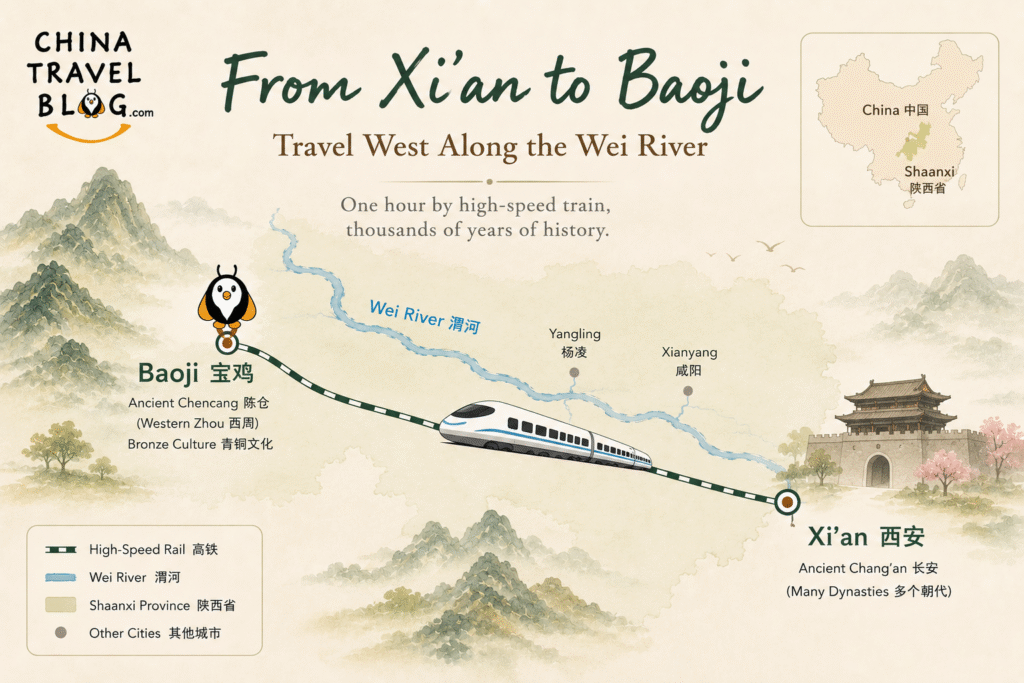
1. How Far Is Baoji from Xi’an?
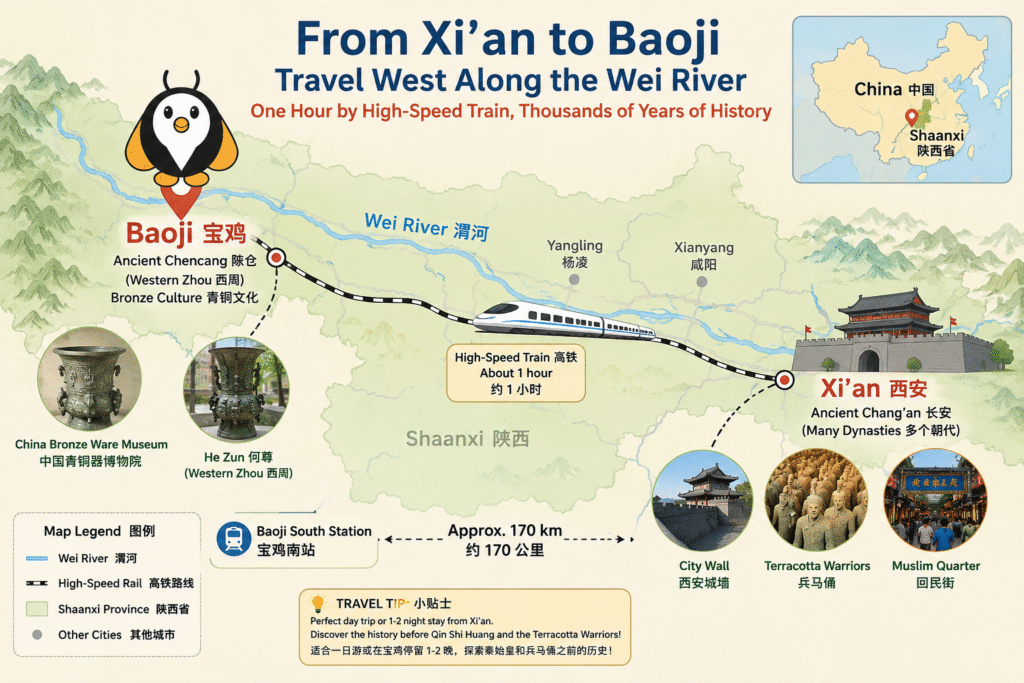
If you look at a Xi’an China map (西安地图), Baoji is located west of Xi’an, along the historically important Wei River (渭河) corridor.
The distance is about 170 km. (only 1 hour by High Sped Rail from Xian. Can even do day trip)
For thousands of years, this route connected important historical regions.
Today, modern trains make the journey very easy.
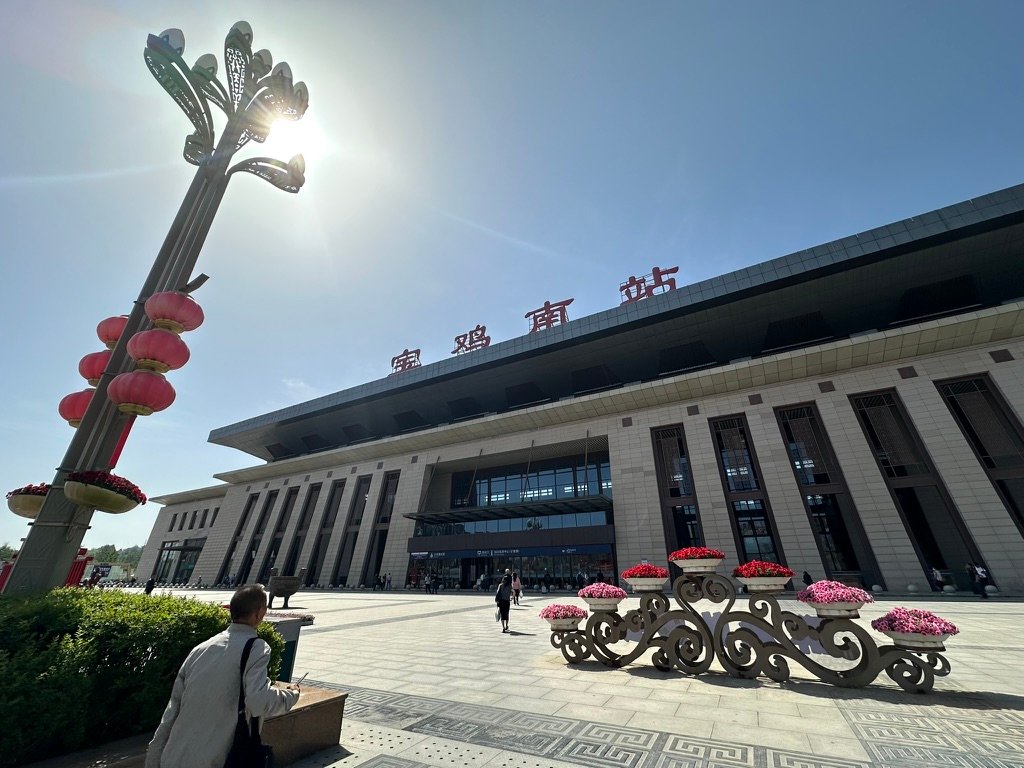
2. Getting to Baoji by High-Speed Train 高铁 (Recommended)
The easiest option for most foreign travellers:
Departure:
Xi’an North Railway Station
西安北站 (Xī’ān Běi Zhàn)
⬇️
Arrival:
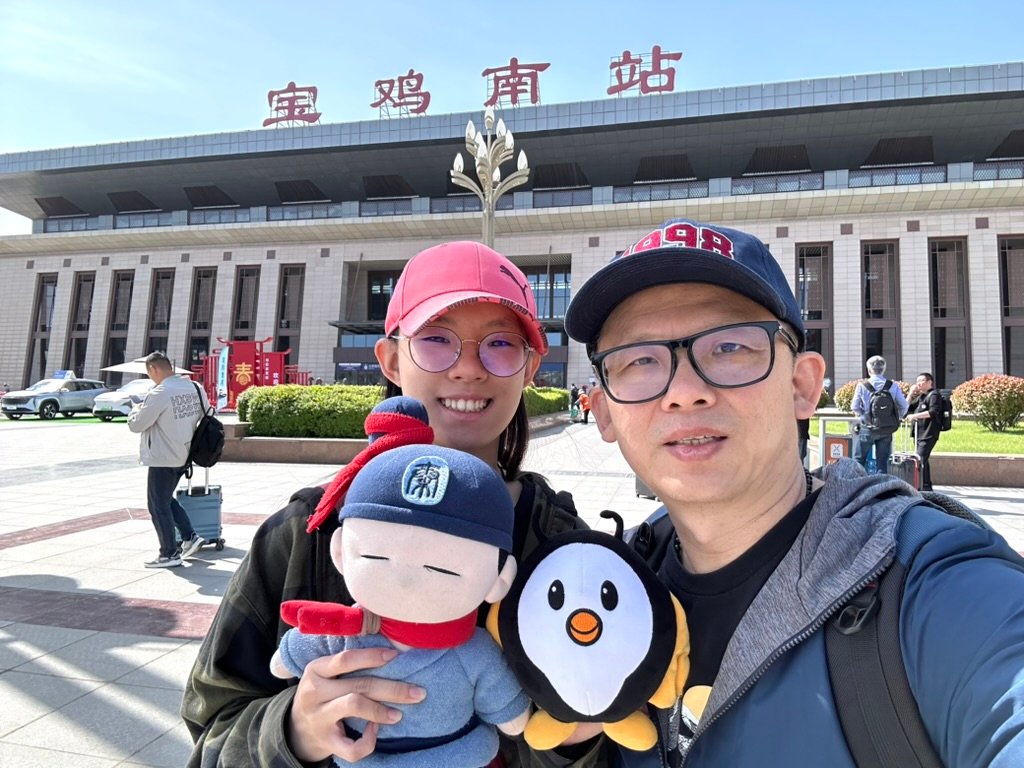
Baoji South Railway Station
宝鸡南站 (Bǎojī Nán Zhàn)
⏱ Travel time:
Around 1 hour
This is usually the best choice because:
- fast
- comfortable
- frequent services
- easy connection with Xi’an metro system
The Chinese high-speed train: 高铁 (gāo tiě) is itself a China travel experience.
3. Important Railway Tip — Xi’an Has More Than One Train Station
This is something many first-time visitors to China do not realise.
Chinese cities often have several railway stations.
For example:
西安站 (Xi’an Railway Station)
Older central station.
Used by many traditional trains.
西安北站 (Xi’an North Railway Station)
Large high-speed rail station.
Connected to China’s HSR network.
The character: 站 (zhàn) means station.
Always check carefully before leaving your hotel.
Going to the wrong station can mean missing your train!
(Yes, Elaine and I learnt this lesson before during our China travels 😄)

4. Trying China’s Traditional Green Trains 绿皮火车
If you have more time and want a different experience, you may try China’s traditional trains.
Many Chinese people call them: 绿皮火车 (lǜ pí huǒ chē) literally “green-skin trains”.
The journey is slower — around 1.5 hours or more depending on the train.
But it gives a different feeling.
High-speed rail shows: Modern China.
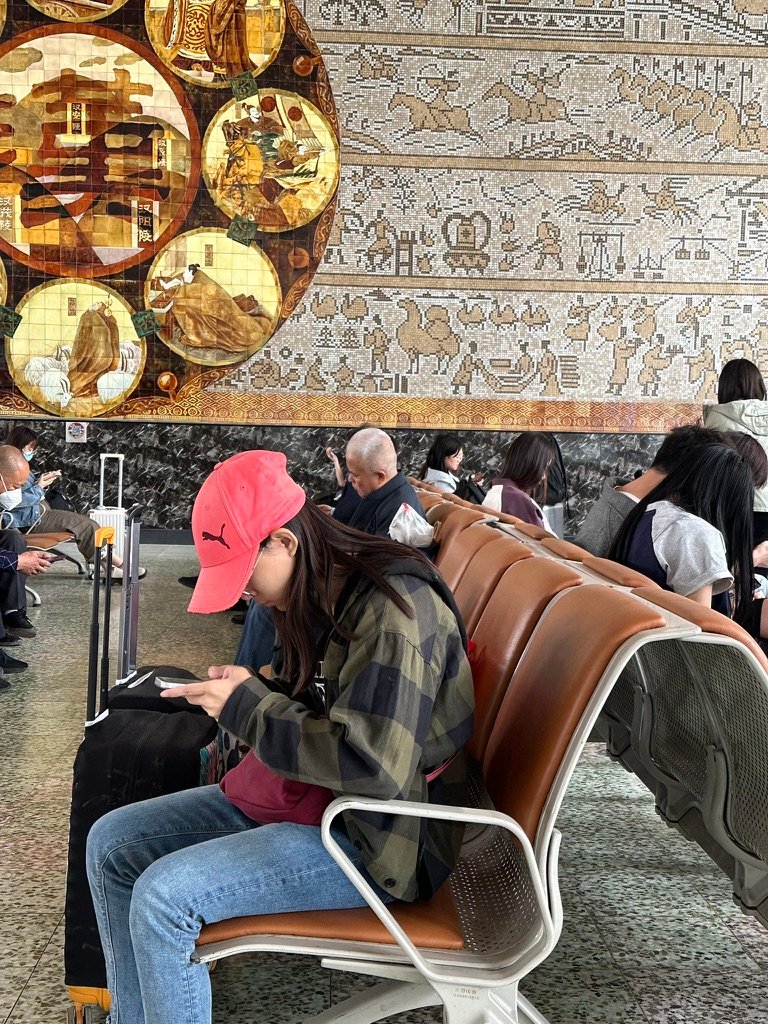
Traditional trains show: Everyday China. Families. Students. Workers. Local travellers.
NOTE: Sometimes there are more passengers than the seats available . We had to stand on crowded train cabins before. That is NORMAL! Don’t get culture shock..
Both experiences tell different stories.
5. Should Baoji Be a Day Trip or Overnight Stay?
Many travellers ask: “Can I visit Baoji in one day?” Yes.
A simple itinerary: Baoji Day Trip From Xi’an
Morning:
🚄 Train Xi’an → Baoji
Visit:
🏛 China Bronze Ware Museum
中国青铜器博物院
Lunch:
Try local Baoji noodles
Afternoon:
Explore nearby areas
Evening:
Return to Xi’an
This works.
But Elaine and I prefer slower travel.
If your China vacation schedule allows: Stay one night. Even better: two nights
NOTE: Elaine & I stayed for 3 nights. Stay tune for our future articles as we disclose where else we visited in and near Baoji, especially for Chinese history BUGs. Huge surprises waiting for you!!
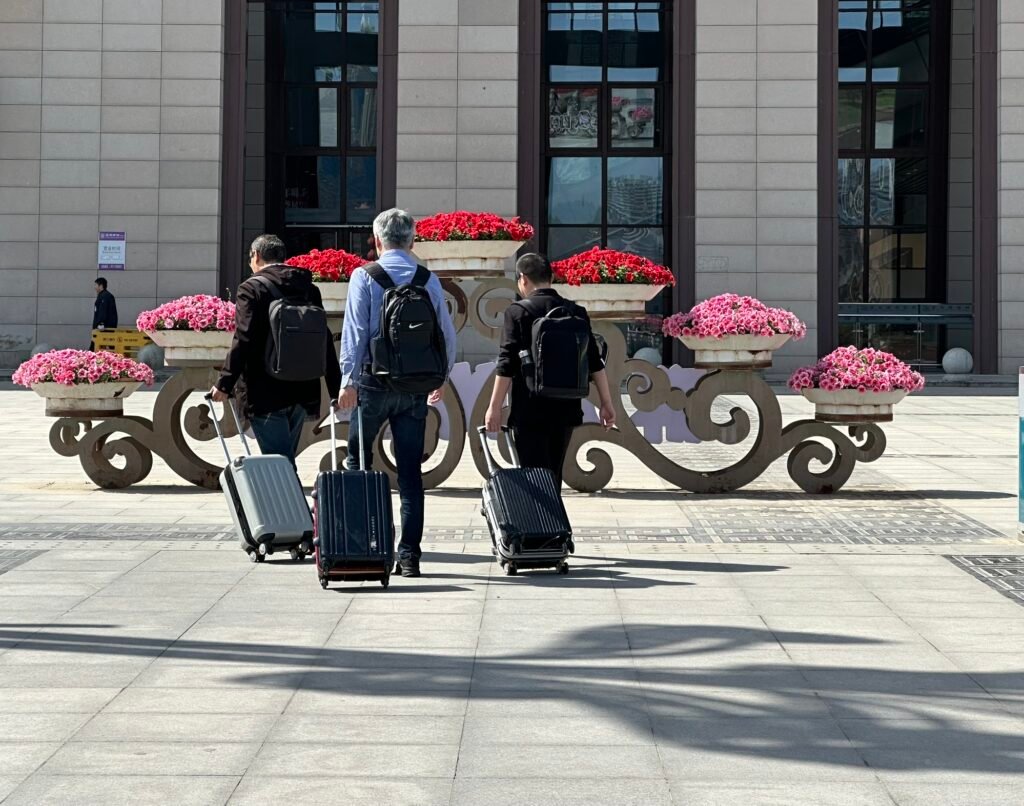
6. Why Stay Overnight in Baoji?
Because a city feels different when you stop rushing.
A day trip lets you see Baoji. An overnight stay lets you feel Baoji.
With more time, you can:
- slowly enjoy China Bronze Ware Museum
- walk along the Wei River area
- explore local neighbourhoods
- discover local food
- visit morning markets
- experience ordinary Chinese daily life
For us, the best memories were not only inside the museum.
They were also: chatting with our homestay auntie, learning Baoji noodles, looking out at the Wei River from our apartment.
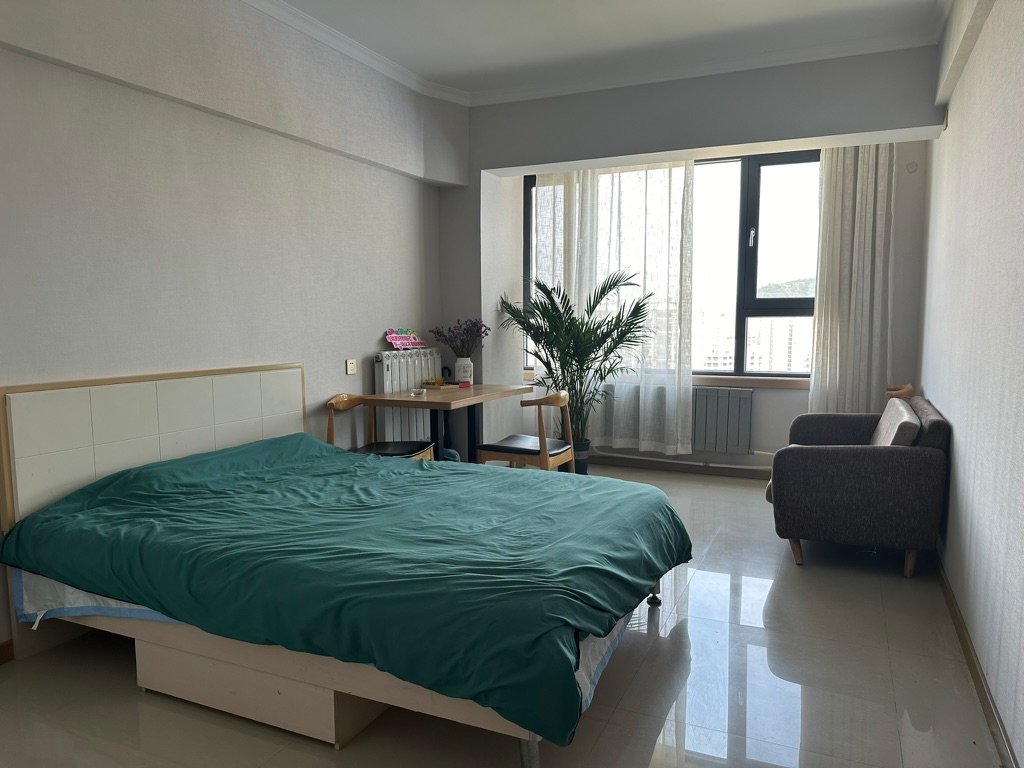
7. Hotel or Homestay 民宿 in Baoji?
Most travellers will be comfortable booking a hotel.
Hotels in Baoji are generally affordable compared with bigger cities like Beijing, Shanghai, or Xi’an.
But Elaine and I often choose:
民宿 (mín sù), homestays. Why?
Because sometimes a good host becomes part of the journey.
Our Baoji host:
- recommended local food
- shared local tips
- taught Elaine cooking
A hotel gives you convenience. A good homestay gives you stories.
8. Suggested Xi’an + Baoji Itinerary
For travellers with enough time:
Day 1–2: Classic Xi’an
Explore:
- Xi’an City Wall 西安城墙
- Muslim Quarter 回民街
- historical streets
- local food
Day 3: Qin History
Visit:
- Terracotta Warriors 兵马俑
- Qin historical sites
Day 4: Museums & Culture
Explore:
- Xi’an Museum 西安博物院
- other cultural sites
Day 5–6: Baoji Extension
Travel west.
Discover:
- Western Zhou 西周
- bronze civilisation 青铜文明
- He Zun 何尊
- Wei River history 渭河
Complete the historical puzzle.
9. Who Should Visit Baoji?
Baoji is especially suitable for:
✔ history lovers
✔ museum lovers
✔ second-time visitors to China
✔ travellers who enjoy slower journeys
✔ families who want educational travel
✔ people curious about China beyond famous attractions
If your dream China trip is only taking photos at famous places, Baoji may not be your first priority.
But if you are the kind of traveller who asks:
“Why?”
“Where did this story begin?”
“What happened before?”
Then Baoji may surprise you.
It certainly surprised Elaine and me!
Bonus tips:
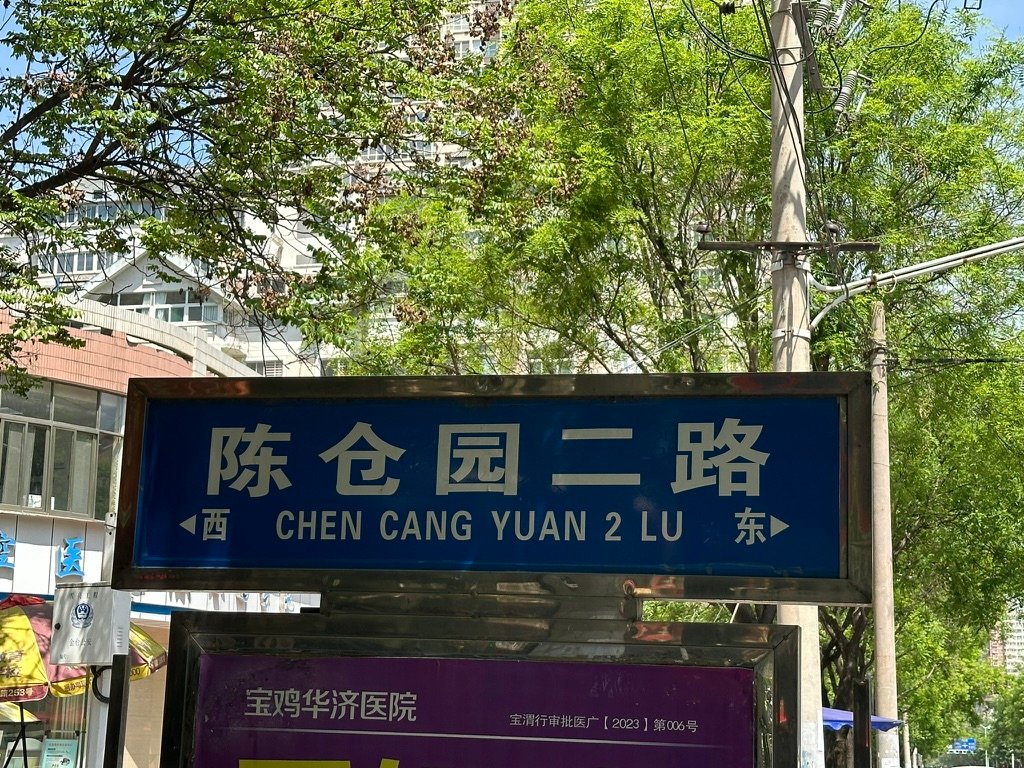
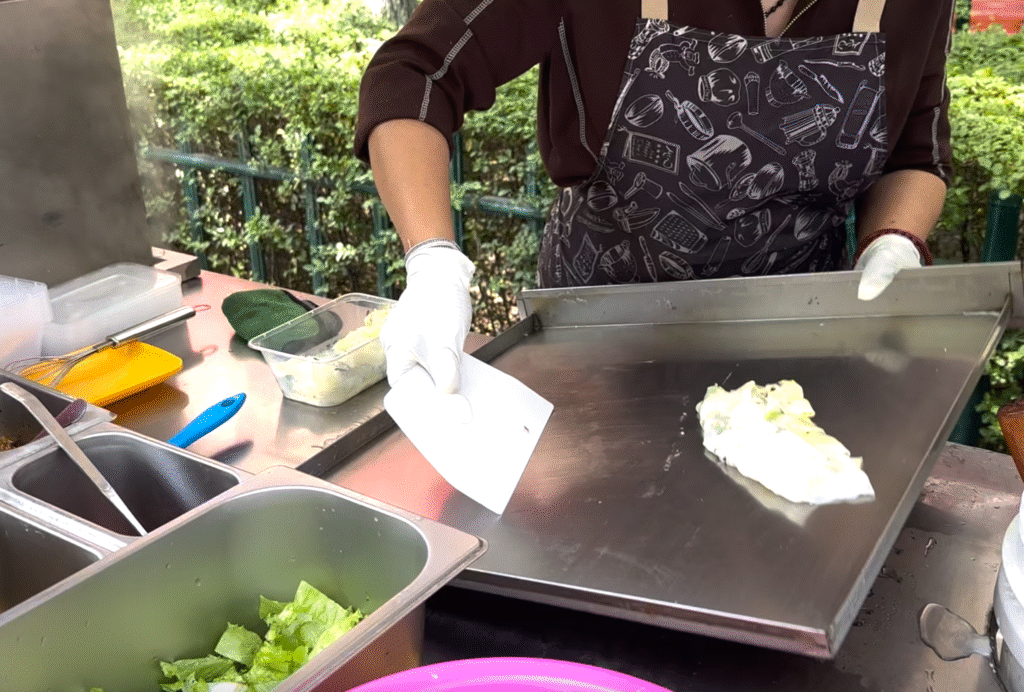
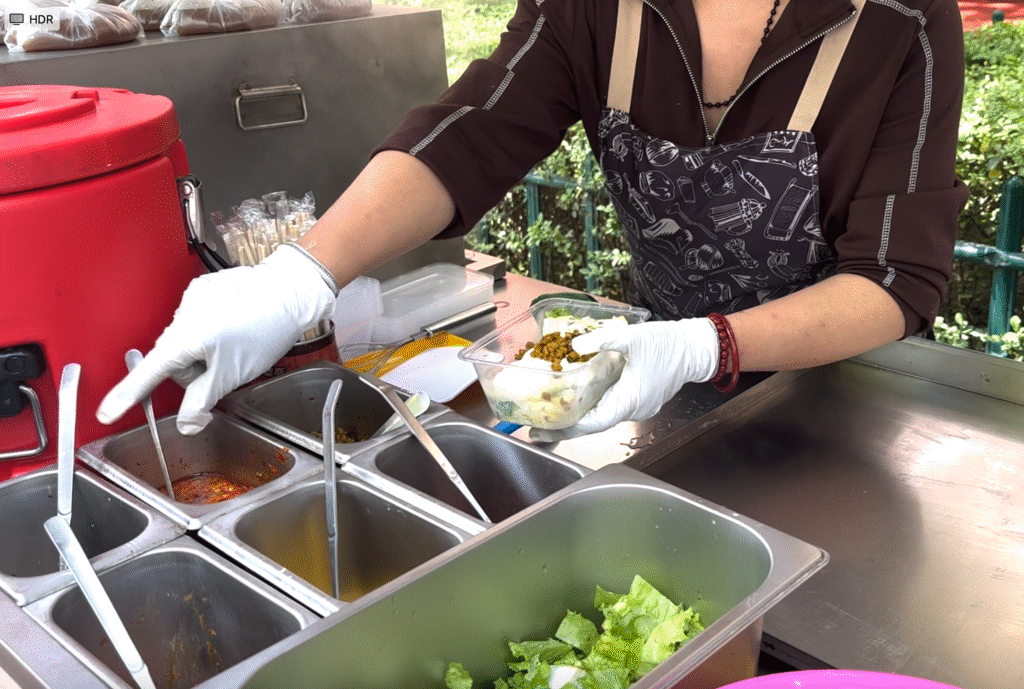
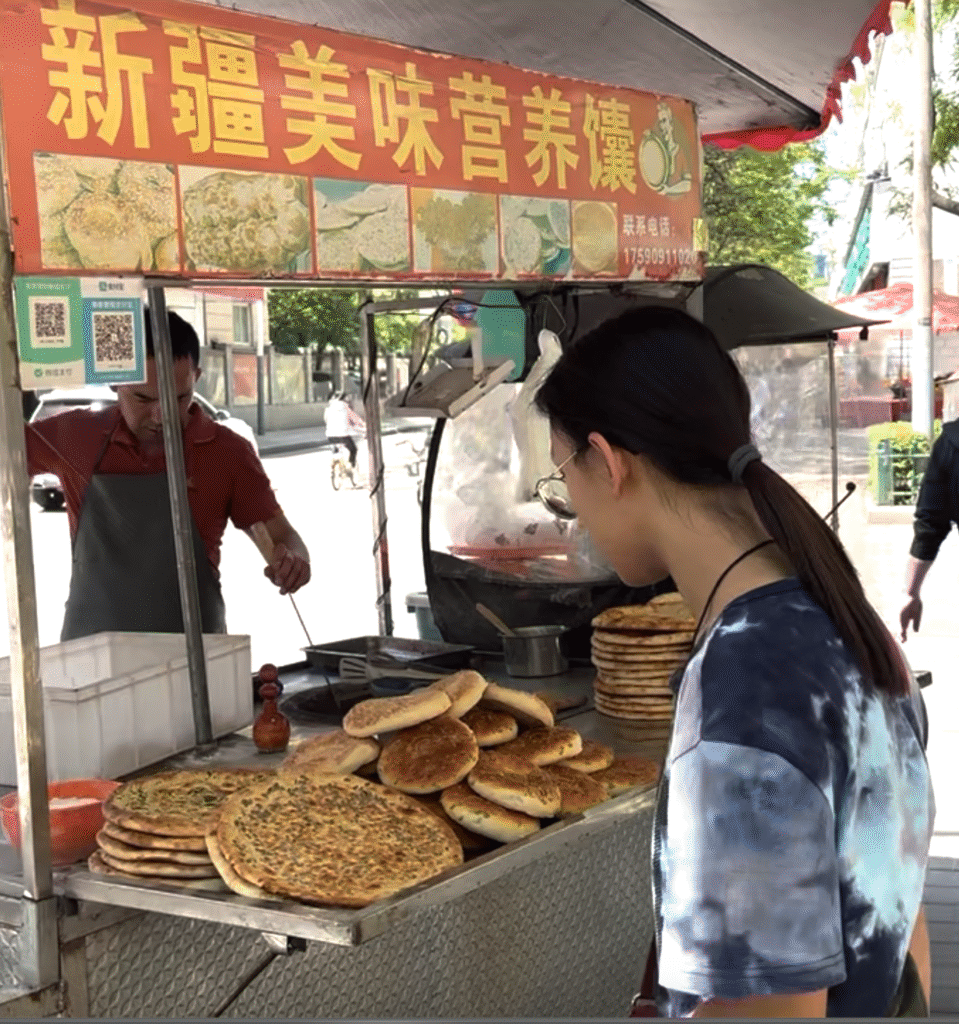
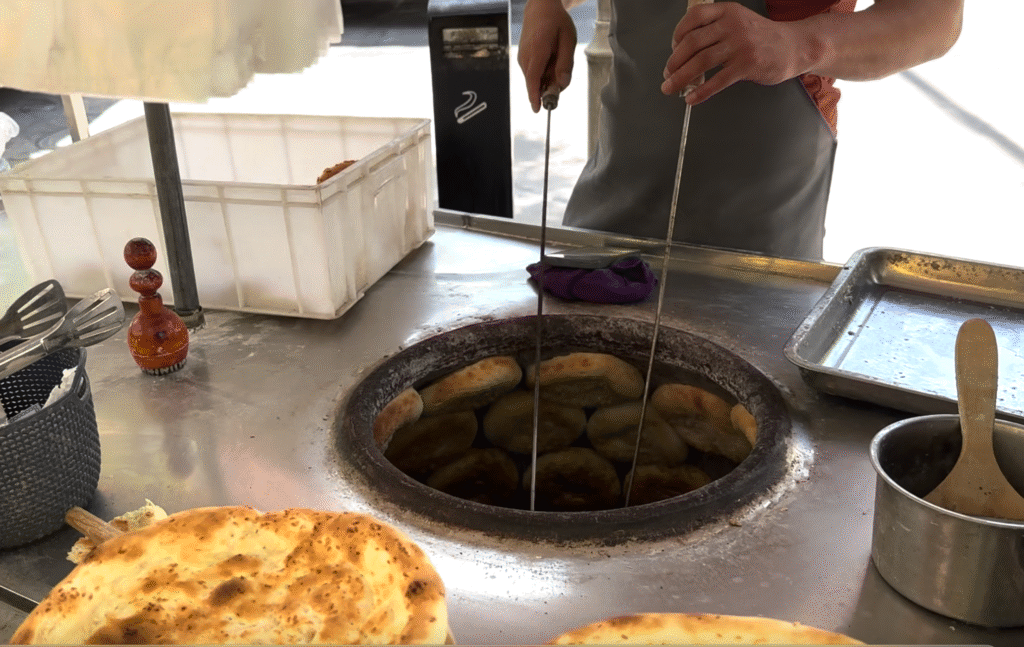
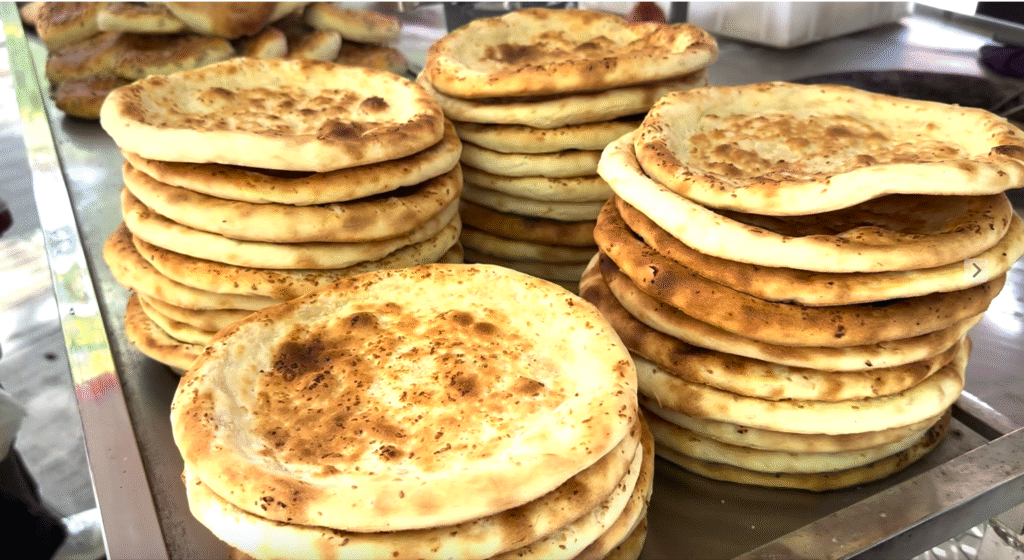
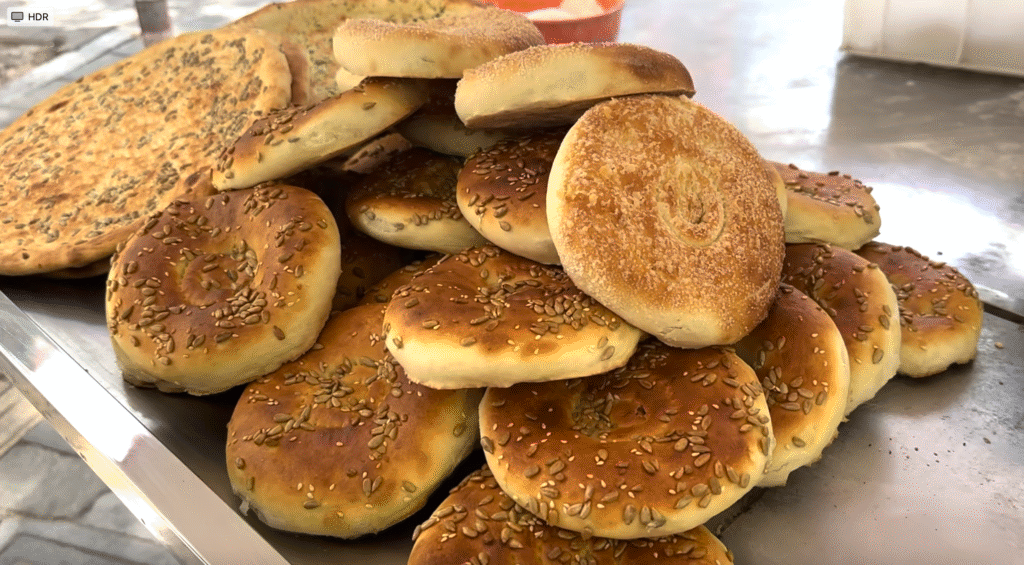
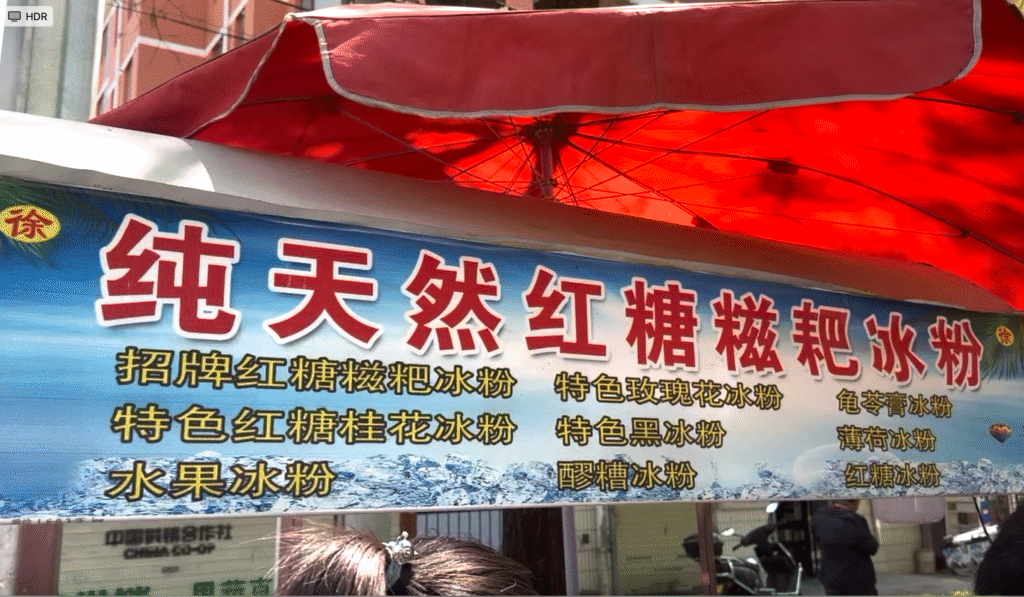
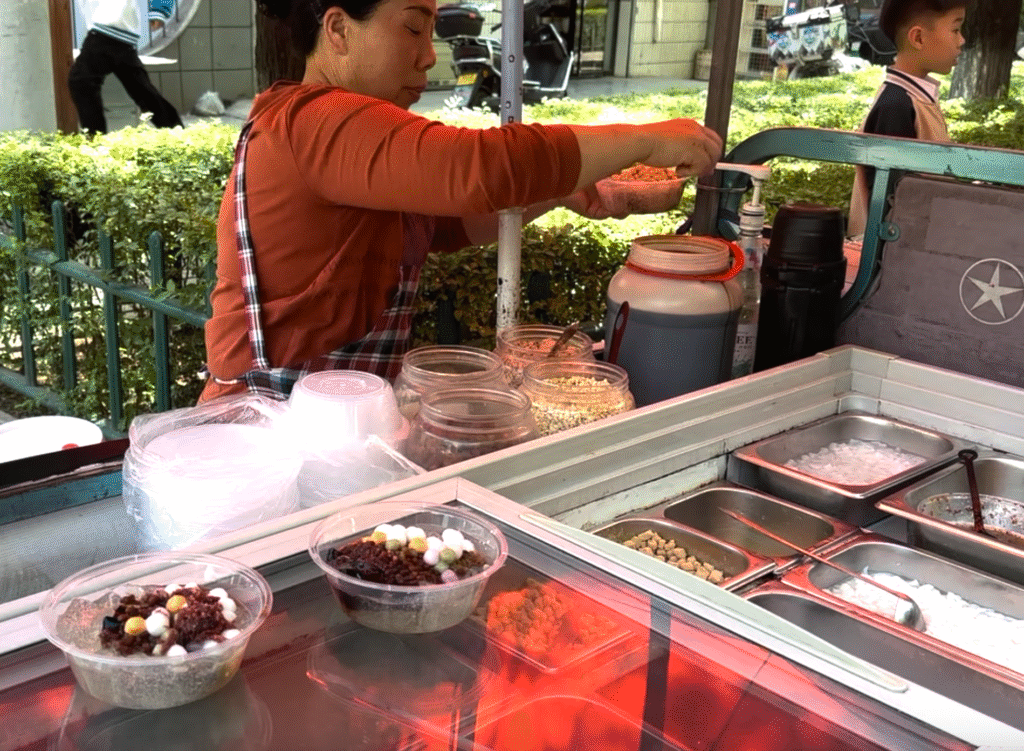
Elaine tasted local food available in Baoji street (name below) on our last day in Baoji, before taking HSR to Xi’an:
Simple street Meals — Discovering Everyday China Beyond Tourist Attractions in Baoji street
NOTE: Elaine and I are not really food hunters when we travel.
ChinaTravelBug is not a food blog, and we usually do not travel from city to city searching for famous restaurants or checking off “must-eat” food lists.
But food often becomes part of our journey because it connects us with ordinary daily life.
One interesting thing about travelling around China today is how regional cultures have moved and mixed. In many Chinese cities, you can now find food from different provinces and ethnic communities.
During our Baoji stay, Elaine tried different simple foods we discovered nearby — some originally from other parts of China, including Guangdong (广东) and Xinjiang (新疆).
These were not famous tourist meals. They were simply part of everyday China. For us, the important memory was not only what we ate. It was walking around the neighborhood.. Talking to local people. Ordering food ourselves. Understanding how local people live. Because sometimes, the small ordinary moments reveal a country better than famous attractions.