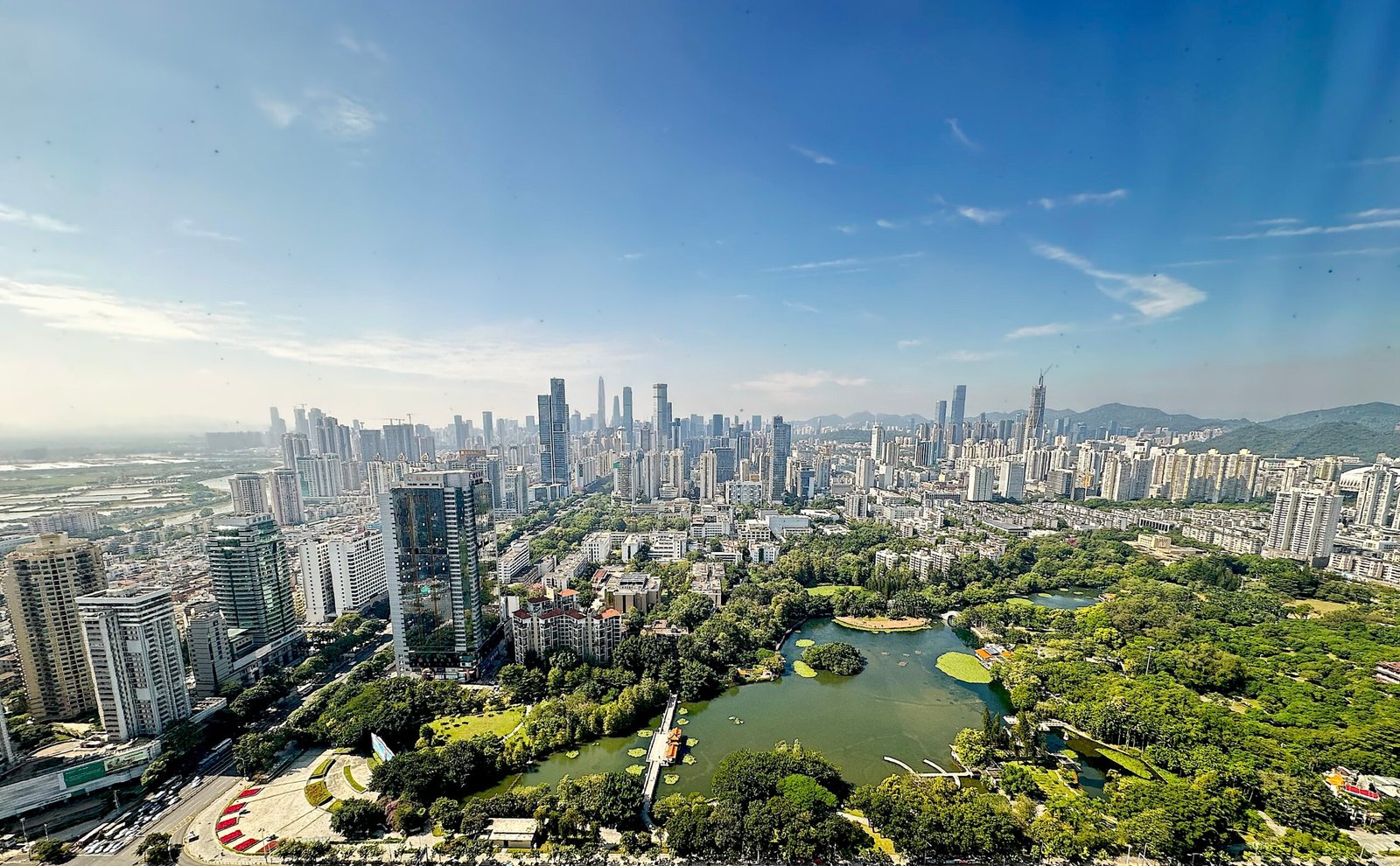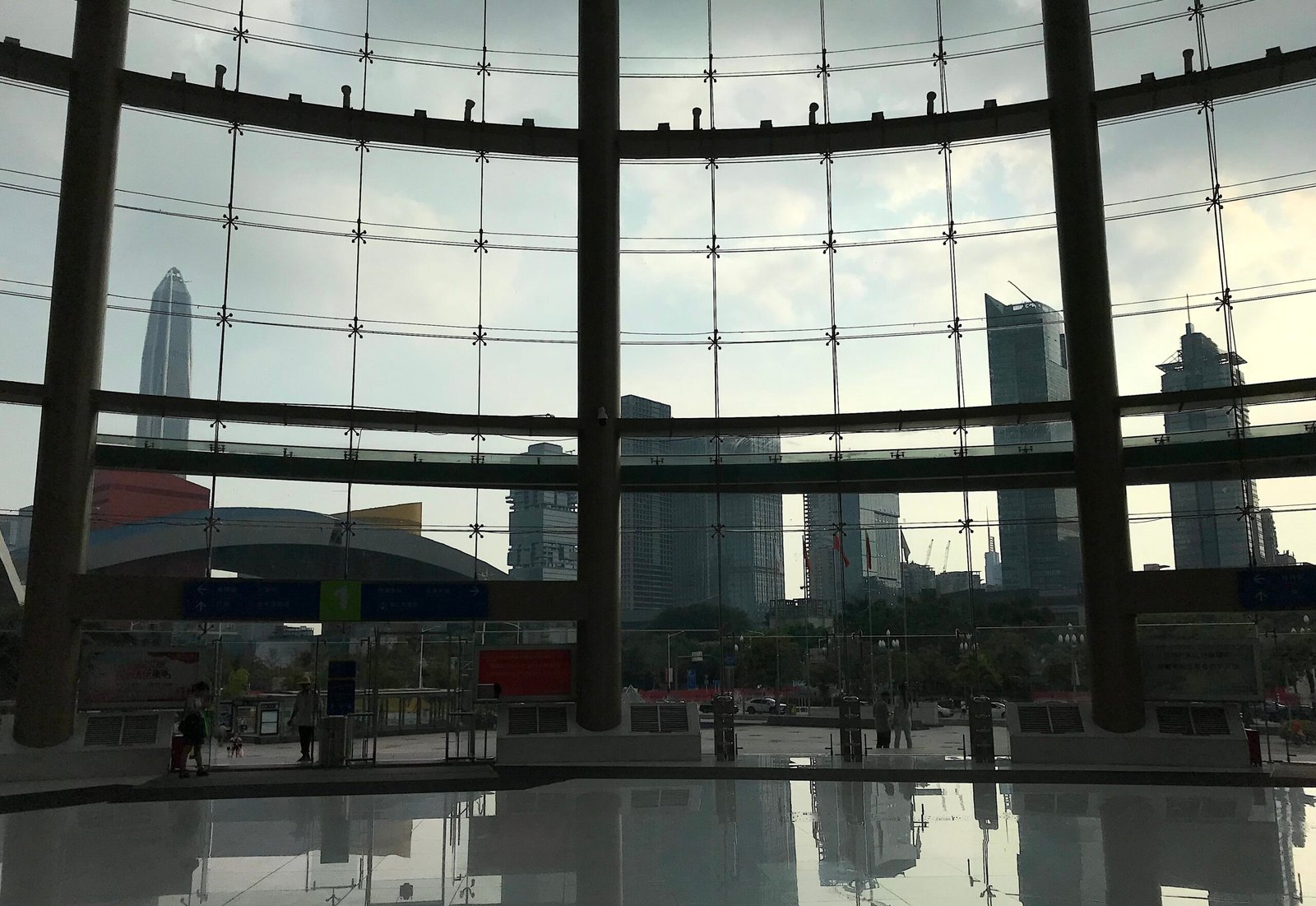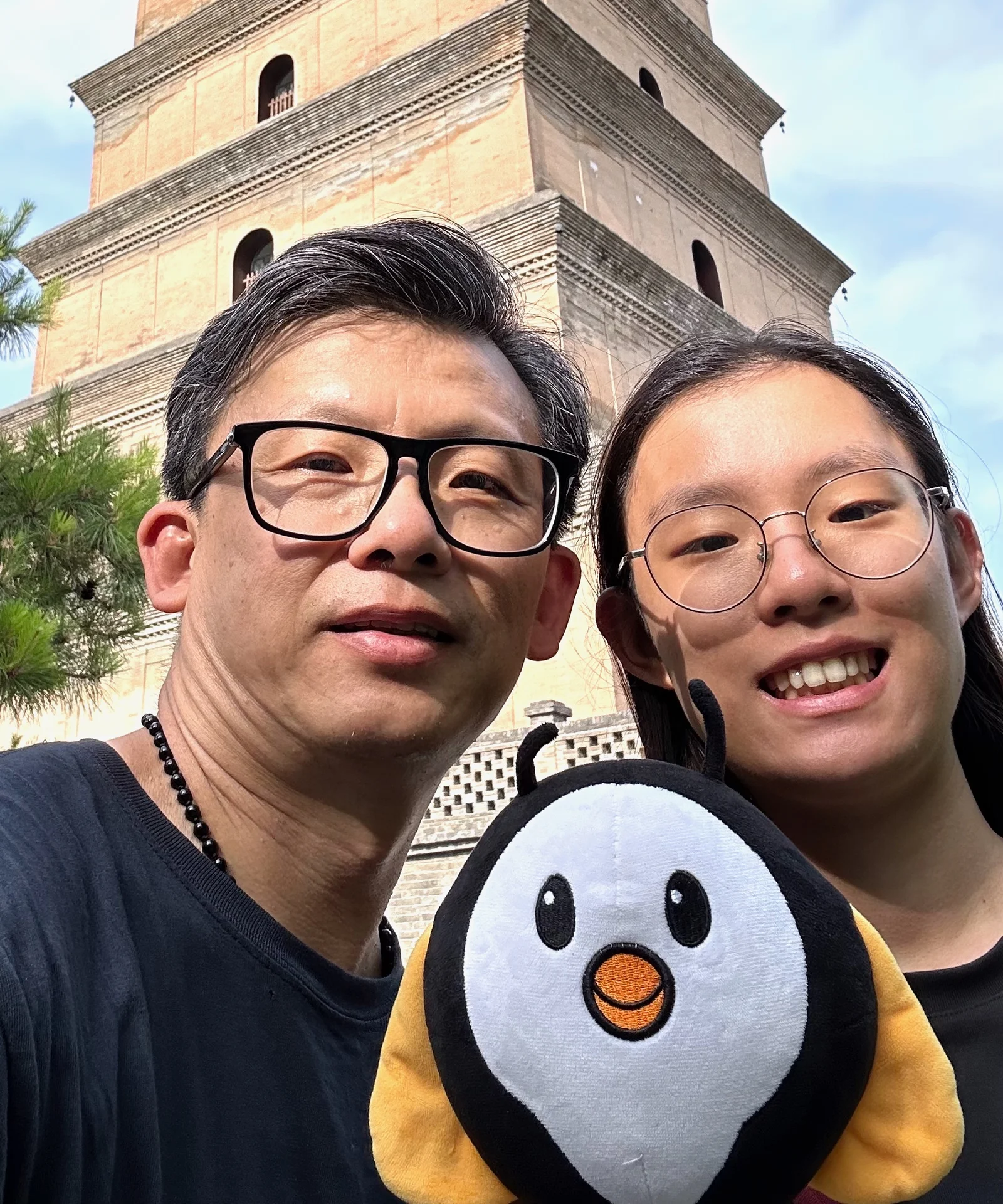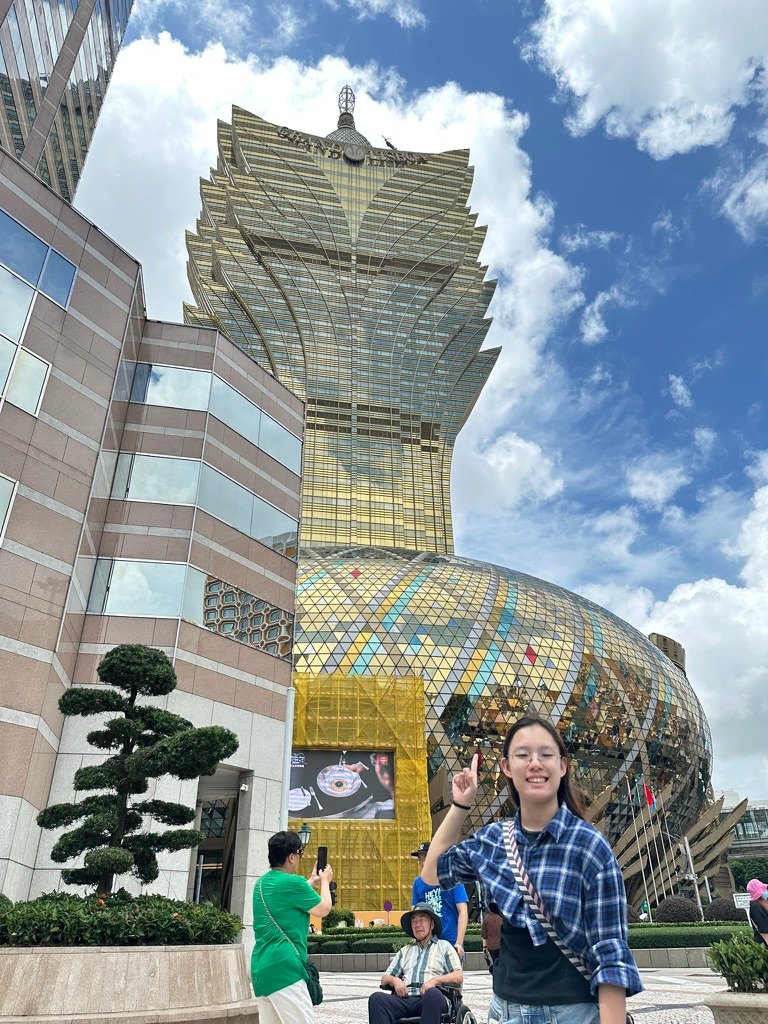
We woke up in Mong Kok (旺角), Kowloon (九龍), Hong Kong.
Our hotel was in Hong Kong.
Our plan for the day?
GO TO SHENZHEN. 😂
Not by plane.
Not by long-distance coach.
Not even by high-speed rail.
We were simply going to take Hong Kong’s MTR (港鐵) toward the border…
and walk across.
For an international traveler looking at Hong Kong and Shenzhen on a map, that can sound slightly unbelievable.
Dad wanted to try it.
Elaine was ready.
🐇 And another ChinaTravelBUG rabbit hole was about to begin.
🚇 STEP 1 — FROM HONG KONG TOWARD THE BORDER
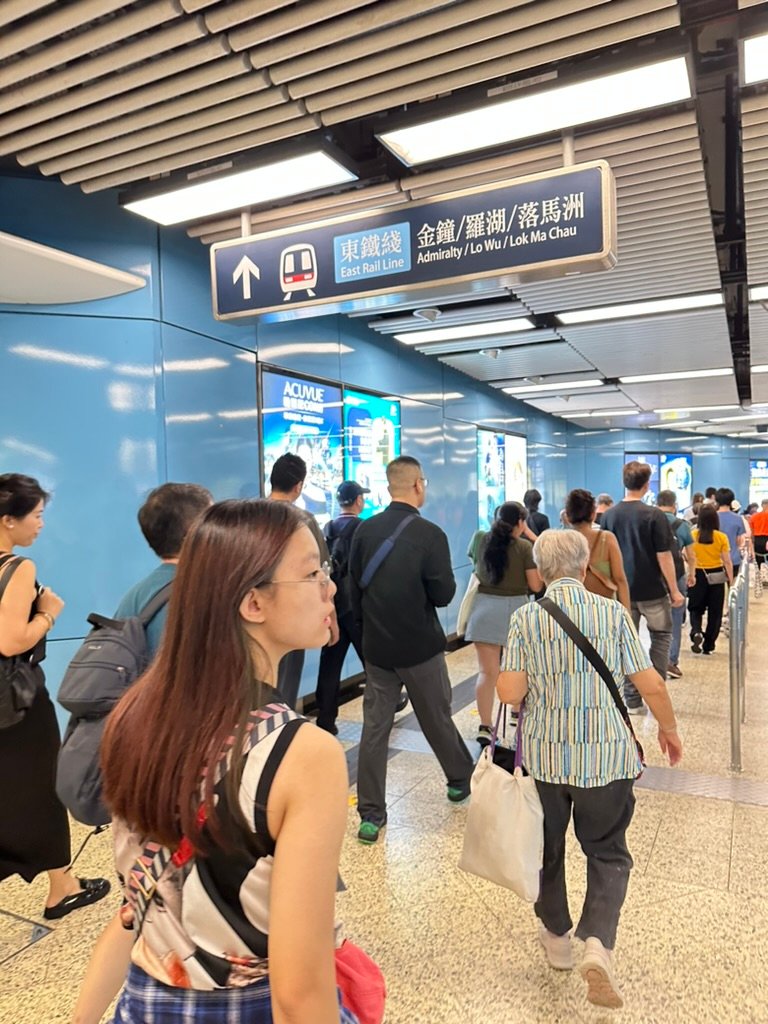
From our Mong Kok base, we made our way onto Hong Kong’s East Rail Line (東鐵綫).
And suddenly the signs became very interesting.
Lo Wu (羅湖).
Lok Ma Chau (落馬洲).
These aren’t merely ordinary MTR destinations.
They lead to boundary crossings into Shenzhen (深圳).
For our journey, Dad and Elaine chose:
LO WU (羅湖).
MTR currently operates East Rail Line services directly toward Lo Wu, and the line connects central Kowloon and Hong Kong Island with the boundary.
🧭 ELAINE: DAD, THIS WAY.
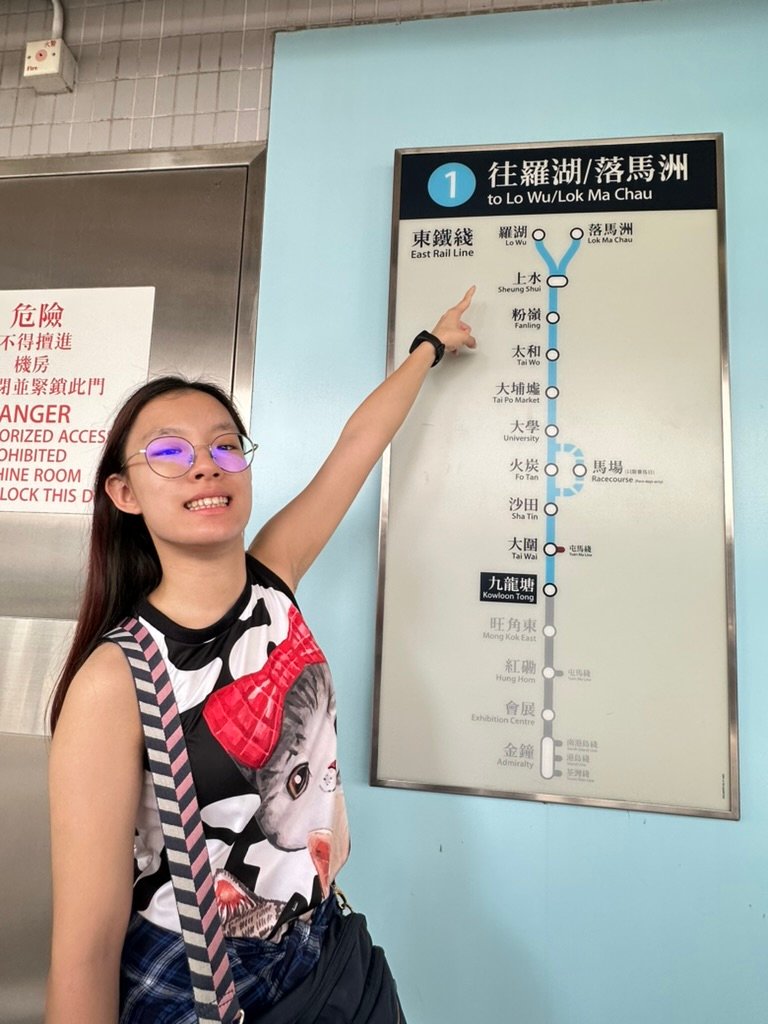
There it was.
Elaine pointed toward the top of the map.
Lo Wu (羅湖).
Dad looked at the MTR diagram.
Hong Kong stations running north…
Tai Wai (大圍).
Sha Tin (沙田).
Tai Po Market (大埔墟).
Fanling (粉嶺).
Sheung Shui (上水).
And then the railway split toward:
Lo Wu (羅湖)
or
Lok Ma Chau (落馬洲).
But Dad noticed something even more interesting.
😲 WAIT… SHENZHEN IS ACTUALLY ON THE HONG KONG MTR MAP?
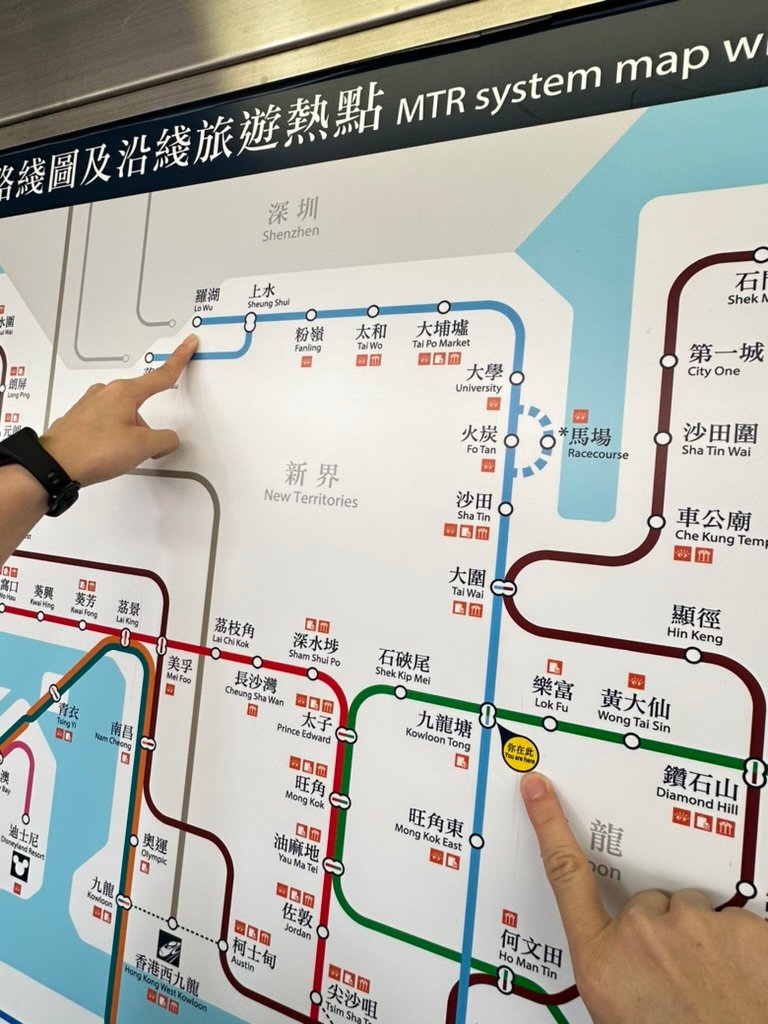
Look carefully.
Above Lo Wu (羅湖), printed faintly beyond Hong Kong’s railway network, is one word:
SHENZHEN.
That little word completely changed Dad’s mental map.
Shenzhen wasn’t some distant Mainland Chinese city that required another major travel day.
It was sitting…
at the other end of Hong Kong’s commuter railway.
Of course, there is still a real boundary.
Hong Kong and Mainland China have separate immigration and customs arrangements, and travelers need the appropriate travel documents and entry permission.
But geographically?
They are neighbors.
Very close neighbors.
🚆 NEXT STOP: LO WU 羅湖
[INSERT PHOTO: TRAIN DISPLAY SHOWING LO WU]
The train continued north through Hong Kong’s New Territories (新界).
Eventually the onboard display showed:
羅湖
LO WU
This was it.
Dad and Elaine weren’t getting off to explore another Hong Kong neighborhood.
We were heading for the boundary.
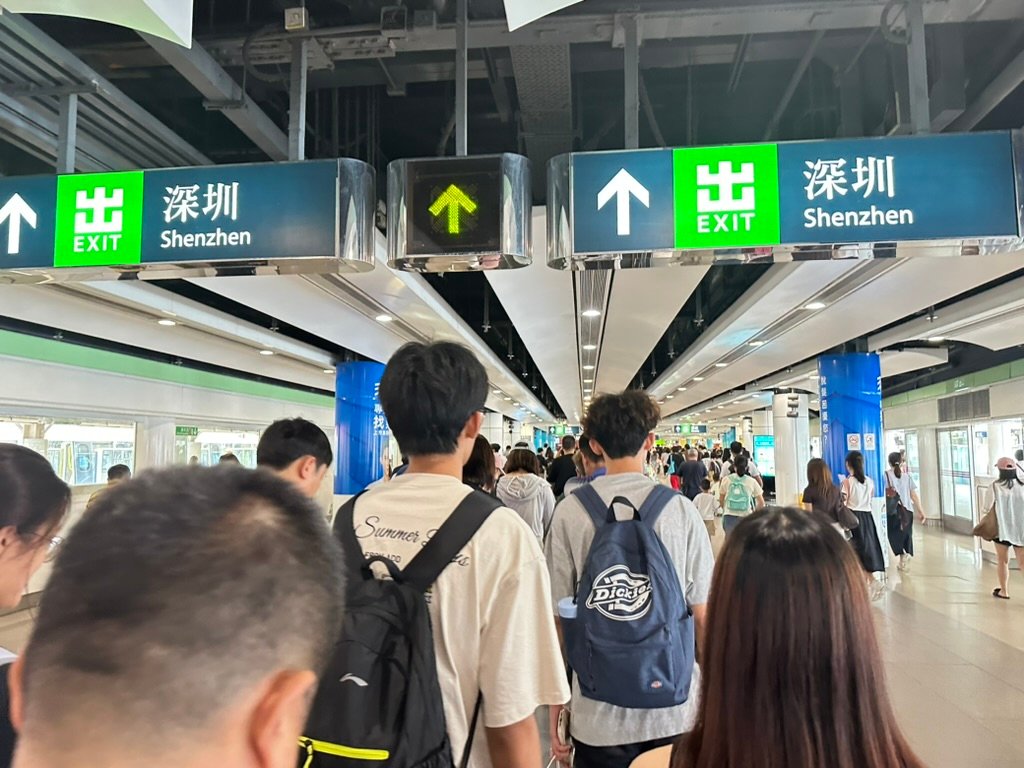
🚶 AND THEN THE SIGN CHANGED
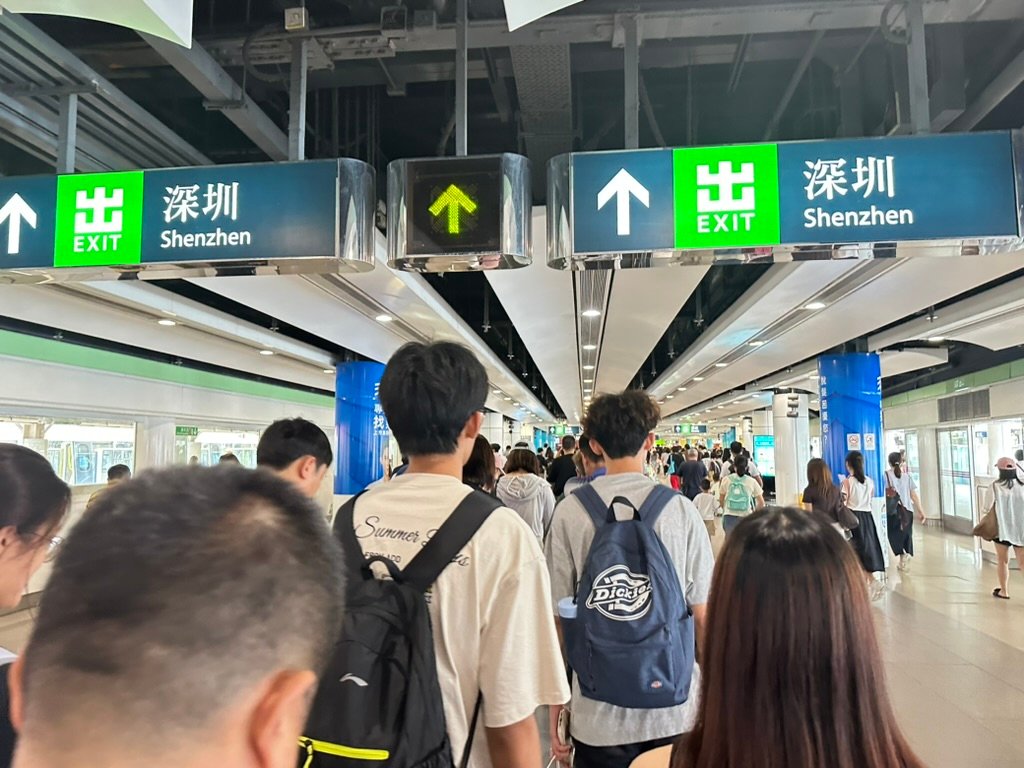
We stepped off the train.
Then Dad saw perhaps the simplest sign of the entire journey:
深圳
SHENZHEN
↑
😂
There really wasn’t much ambiguity.
Follow everybody else.
🛂 HONG KONG → MAINLAND CHINA
Lo Wu (羅湖) on the Hong Kong side connects directly with Luohu Port (羅湖口岸) on the Shenzhen side.
The two sides are separated by the Shenzhen River and connected by pedestrian and railway bridges. Luohu remains one of Shenzhen’s major passenger land crossings. :contentReference[oaicite:1]{index=1}
So although the physical distance is tiny, this is still a genuine boundary crossing.
Travelers pass through the relevant Hong Kong departure and Mainland China entry procedures.
Dad and Elaine followed the signs.
Passport ready.
Keep walking.
And eventually…
“SHENZHEN WELCOMES YOU!”
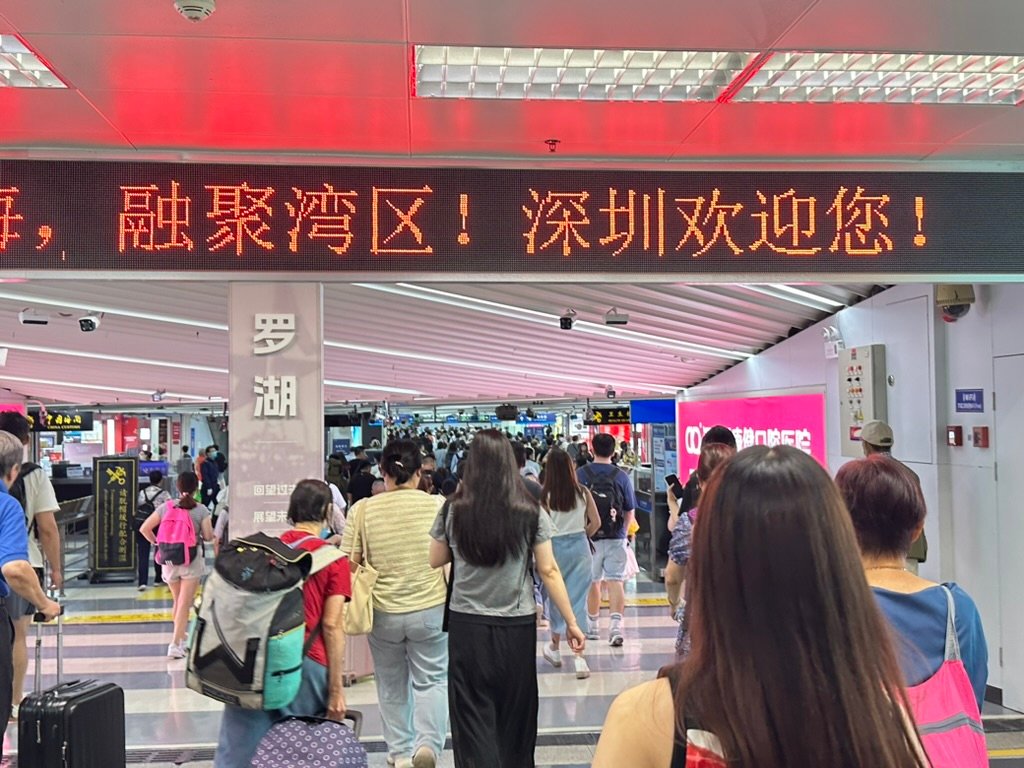
There it was.
深圳欢迎您!
SHENZHEN WELCOMES YOU!
We had left our hotel in Mong Kok that morning.
Taken Hong Kong’s MTR north.
Reached Lo Wu.
Walked through the boundary facilities.
And emerged…
in Mainland China.
No airport.
No flight.
No long-distance train journey.
😂
SOMETIMES A PHOTO EXPLAINS GEOGRAPHY BETTER THAN A MAP
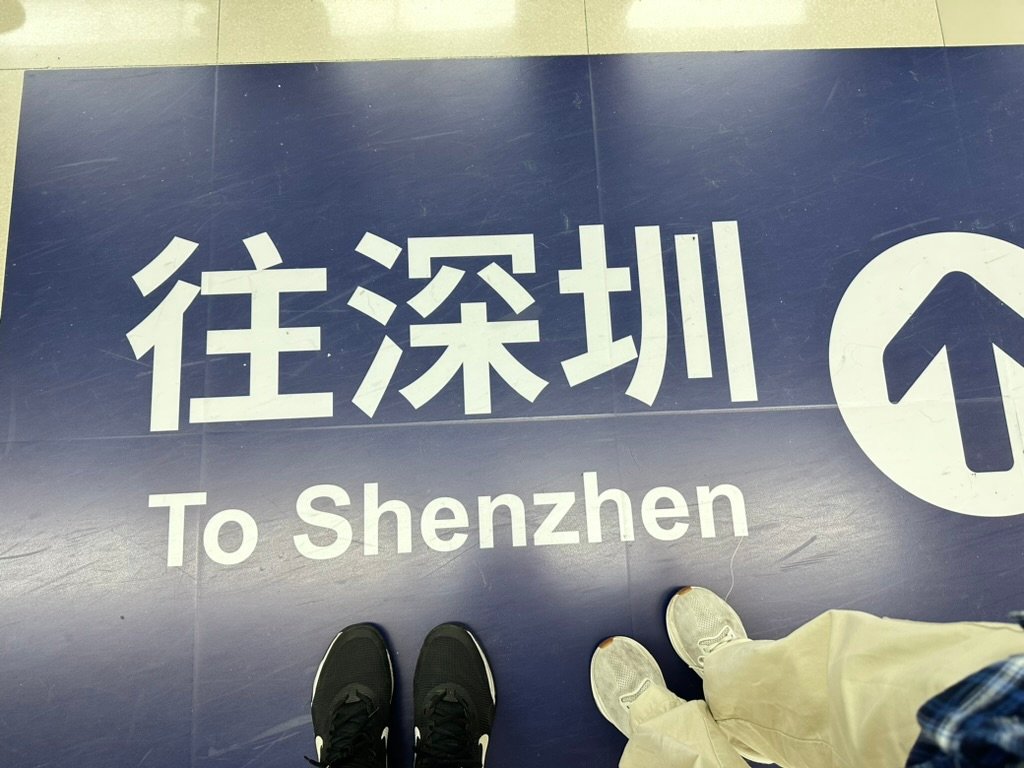
Dad loved this one.
Two pairs of shoes.
One enormous arrow.
TO SHENZHEN.
Sometimes international travelers think of Hong Kong and Mainland China as completely separate travel destinations.
Administratively, crossing between them does involve border formalities.
But physically?
At Lo Wu/Luohu, you can literally walk from one into the other.
That was something Dad understood intellectually before this trip.
Walking it made the geography feel completely different.
🏙️ AND THEN WE WALKED OUT INTO LUOHU
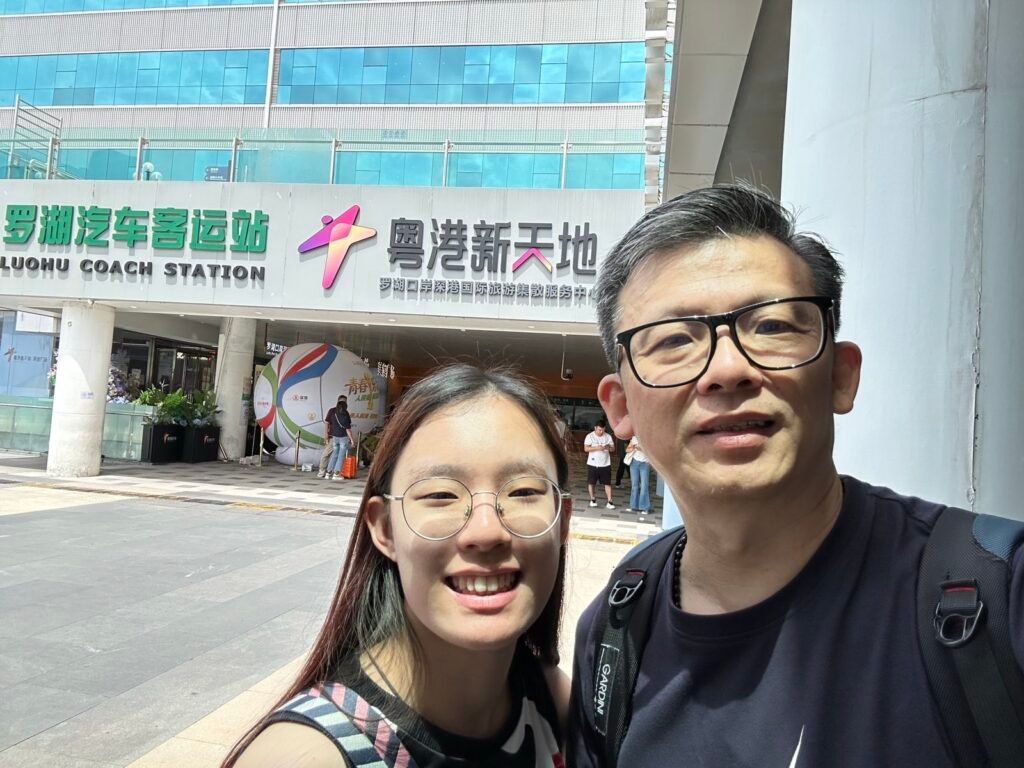
Hello, Shenzhen.
We emerged in Luohu District (羅湖區).
Behind us was the border crossing.
Ahead of us was one of China’s biggest modern cities.
And that contrast contains another enormous rabbit hole.
Luohu was historically one of the major gateways connecting Hong Kong with Shenzhen. The official Shenzhen port authority describes it as one of the city’s busiest passenger land ports and an important window for cross-border movement.
But Dad wasn’t here to study border infrastructure all day.
😂
We had Shenzhen to explore.
🐞 WHAT THIS JOURNEY SHOWED DAD
The practical lesson was surprisingly simple.
If you’re already staying in Hong Kong, Shenzhen can be a realistic day excursion for travelers who meet the relevant Mainland China entry requirements.
And staying in Mong Kok (旺角) worked particularly nicely for us.
Our Hong Kong hotel wasn’t merely a place to sleep.
It became our base for exploring both sides of the boundary.
Hong Kong one day.
Shenzhen the next.
That is something Dad hadn’t fully appreciated when choosing where to stay.
But there was a much bigger lesson hiding underneath this little day trip.
Dad and Elaine had already traveled:
Hong Kong → Macau.
Then:
Macau → Hong Kong across the Hong Kong–Zhuhai–Macao Bridge.
And now:
Hong Kong → Shenzhen.
Dad was beginning to realize that we weren’t simply visiting several unrelated destinations.
We were moving through something much bigger:
THE GUANGDONG–HONG KONG–MACAO GREATER BAY AREA.
🐇🐇🐇
But that’s another rabbit hole.
For now…
Dad and Elaine had crossed the border.
WELCOME TO SHENZHEN. 😂
🍜 FIRST PRIORITY IN SHENZHEN: SATISFY THE CRAVING 😂
We had crossed into Shenzhen.
We were ready to explore.
Elaine said: “Dad, I am hungry!”
WE WERE CRAVING CHINA-STYLE NOODLES. 🍜
😂
Fortunately, we didn’t have to go hunting very far.
Right at Luohu Coach Station (罗湖汽车客运站, Luóhú Qìchē Kèyùn Zhàn), where we arrived, there were plenty of food choices around us.
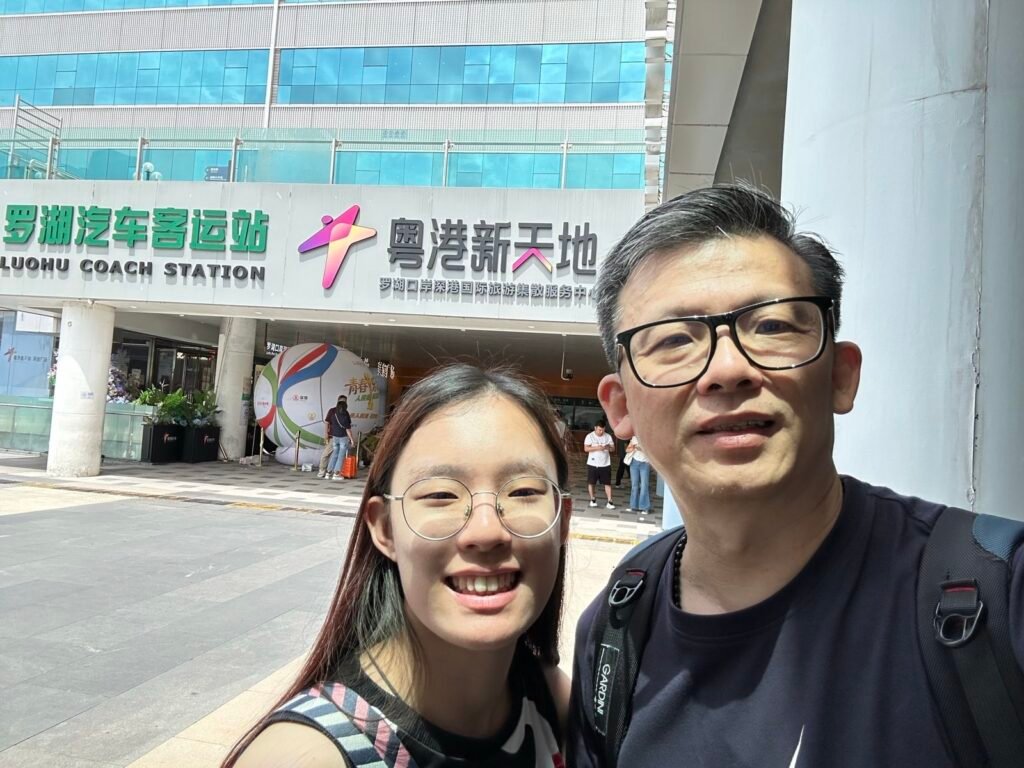
That made things ridiculously convenient.
No need to arrive in Shenzhen hungry and immediately start searching across the city for lunch.
For us, the travel strategy became very simple:
CROSS THE BORDER.
FIND FOOD.
SATISFY THE CRAVING.
THEN EXPLORE SHENZHEN. 😂
And today, both Dad and Elaine wanted noodles.
🥢 FOUND IT: WANLIJI (万利记)
We spotted Wanliji (万利记), serving Hunan-style rice noodles, dry-tossed noodles and freshly stir-fried dishes.
Perfect.
The menu alone was enough to make the decision.
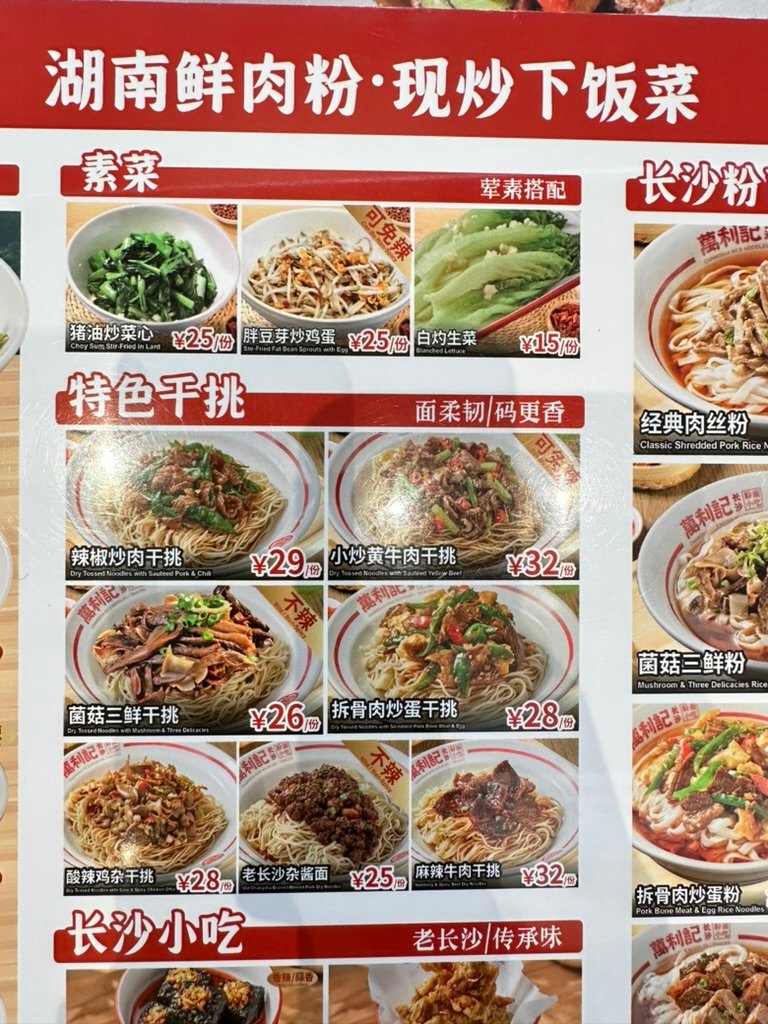
There were Changsha-style rice noodles (长沙粉) and an entire section of dry-tossed noodles (特色干拌), with many dishes around RMB 25–32 when we visited.
Dad and Elaine didn’t need another meeting.
😂
NOODLE CRAVING: SOLVED.
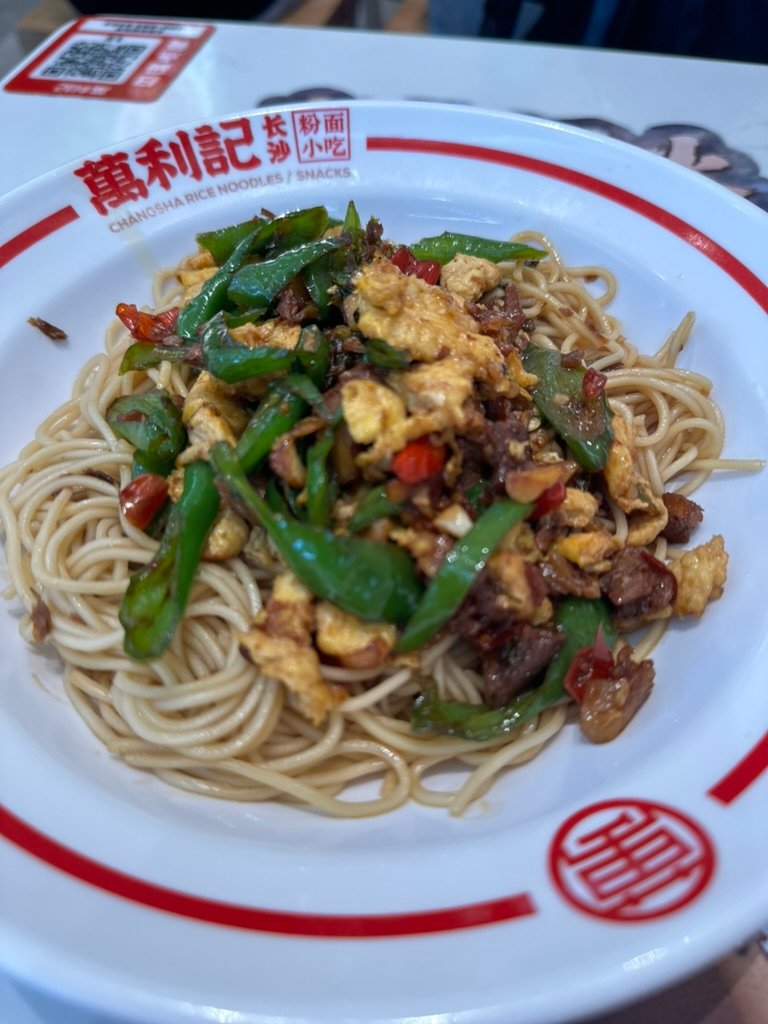
Then came the most important part.
MIX.
LIFT.
SLURP. 🍜😂
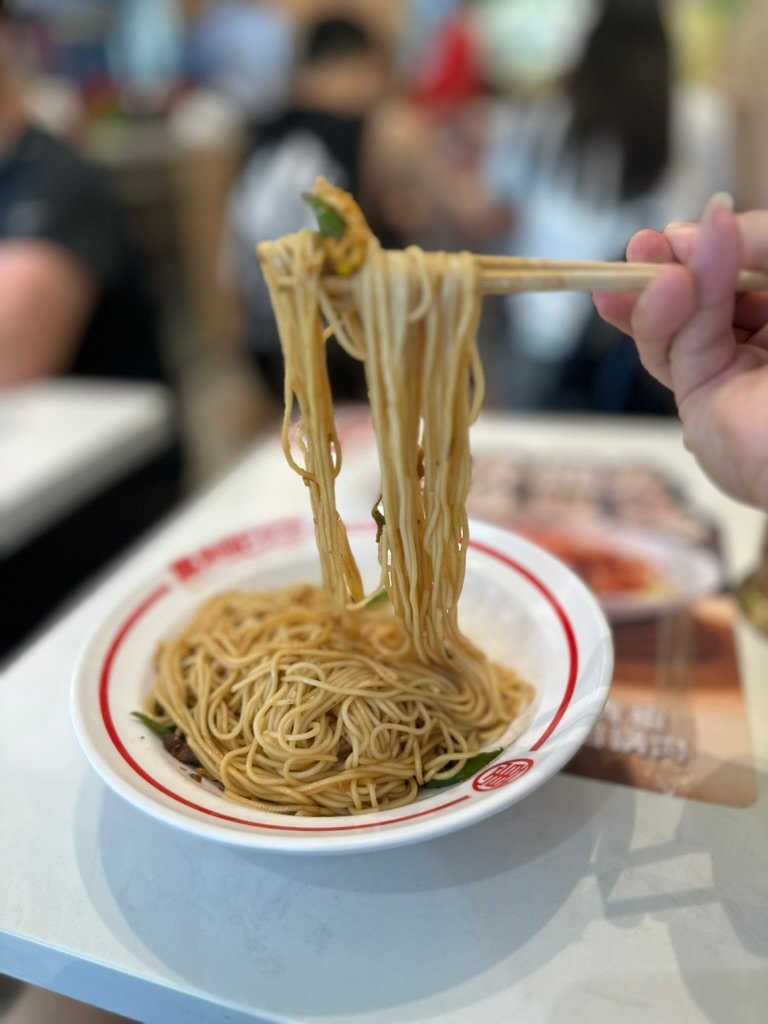
Warm, savory, satisfying noodles before we’d even properly started exploring Shenzhen.
Sometimes the smartest travel decision isn’t another attraction.
It’s dealing with two hungry travelers first.
😂
CRAVINGS SATISFIED.
Now…
Shenzhen.
🍜 Travel Food Tip: Hungry After Crossing Into Shenzhen?
Dad & Elaine ended up trying two noodle shops, and Dad and Elaine highly recommend both.
🌶️ Want stronger, spicier flavors? Try Wanliji (万利记)
Wanliji (万利记) serves Hunan-style rice noodles, dry-tossed noodles and freshly cooked dishes.
Its menu had plenty of choices around RMB 25–32 when we visited, including several chili-heavy options.
(See noodle photos above)
👍 Don’t eat spicy food? Try 沪鲜丰 (Hù Xiān Fēng)
This is the one Dad particularly wants non-spicy eaters to know about.
沪鲜丰 (Hù Xiān Fēng) specializes in Shanghai-style 现炒浇头面 — noodles served with toppings freshly stir-fried to order.
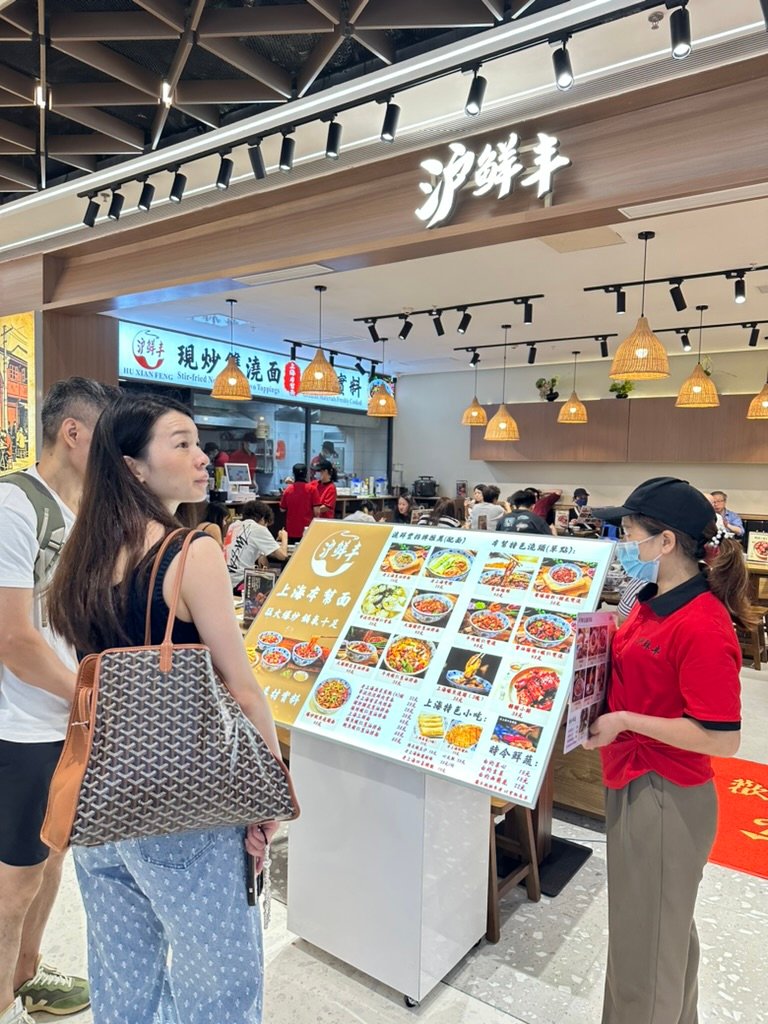
Our noodles initially arrived looking beautifully simple:
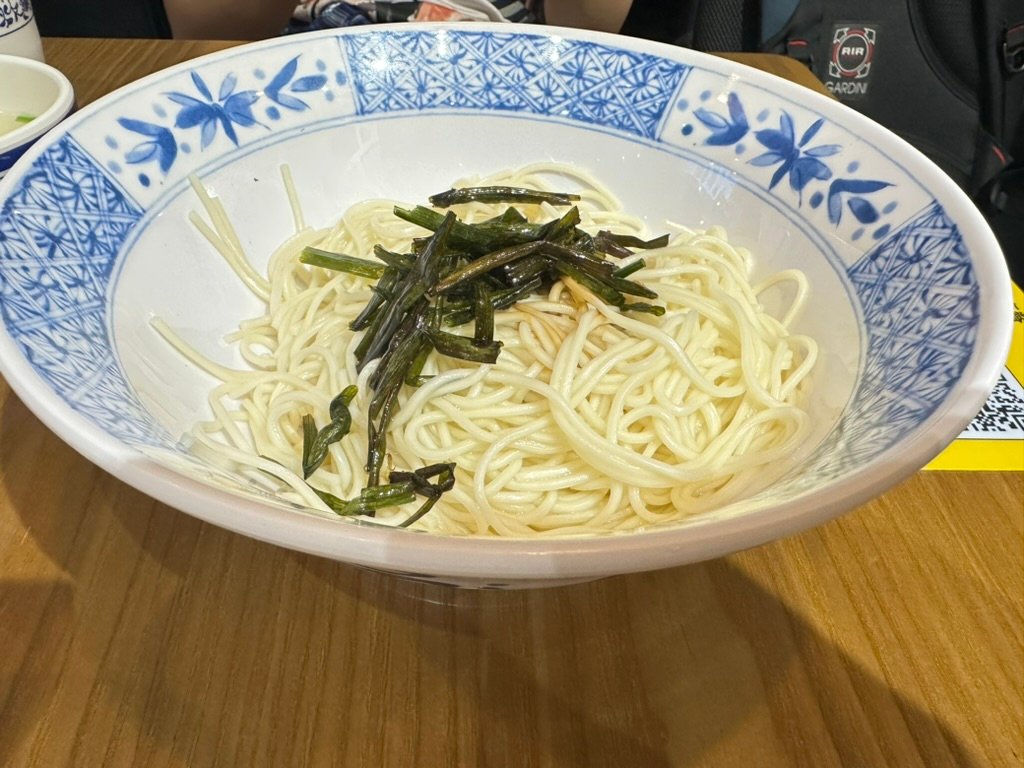
AND OUR SHANGHAI-STYLE NOODLES WERE NOT SPICY. 👍🍜
Simple, savory, comforting — and highly recommended by both Dad and Elaine.
So if you’re traveling with children, seniors, or anyone who isn’t comfortable with spicy Chinese food, this was a very good option from our experience.
Dad’s Luohu Food Tip
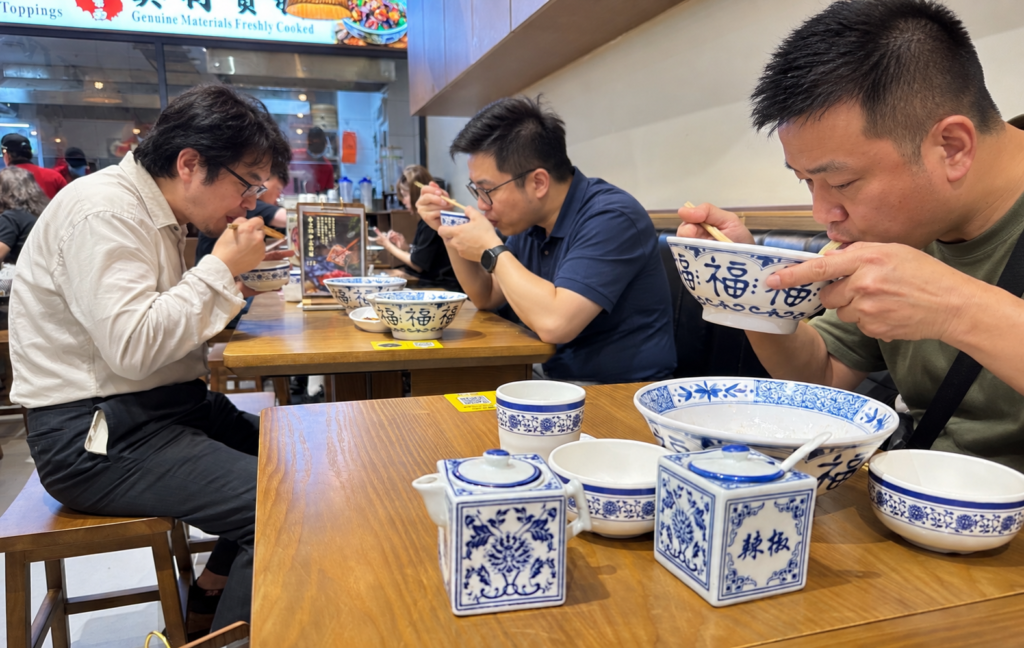
Don’t feel that you have to arrive in Shenzhen and immediately rush off to your first attraction.
There are plenty of food choices around the Luohu arrival area itself.
Our Shenzhen strategy was much simpler:
Cross from Hong Kong.
↓
Find noodles.
↓
Try two noodle shops because apparently one wasn’t enough. 😂
↓
Cravings satisfied.
↓
THEN EXPLORE SHENZHEN.
Sometimes the best first stop in a city isn’t an attraction.
It’s lunch. 🍜
🚇 NEXT: SHENZHEN METRO. ALIPAY BECOMES HANDY AGAIN.
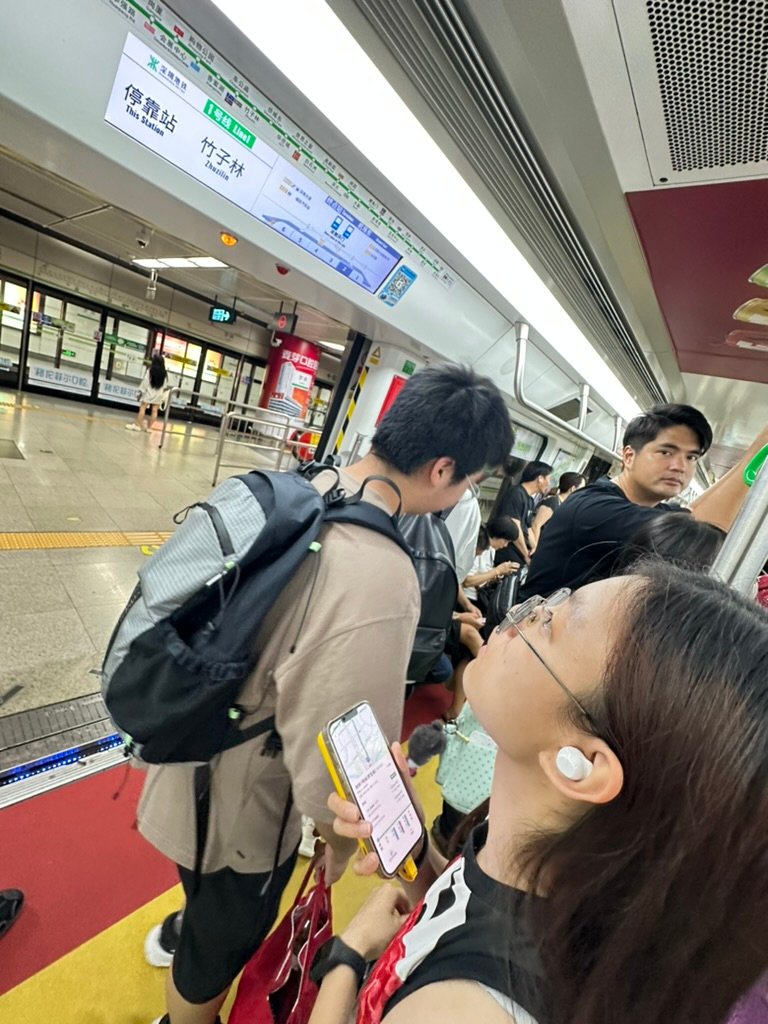
Lunch problem solved.
Now Dad and Elaine had another problem.
How do we get around Shenzhen?
Fortunately, once we were back in Mainland China, something familiar became useful again:
ALIPAY. 😂
For Dad and Elaine, getting around Shenzhen by Metro felt straightforward.
Elaine had her phone out.
Route on screen.
Station signs overhead.
Train arriving.
And off we went.
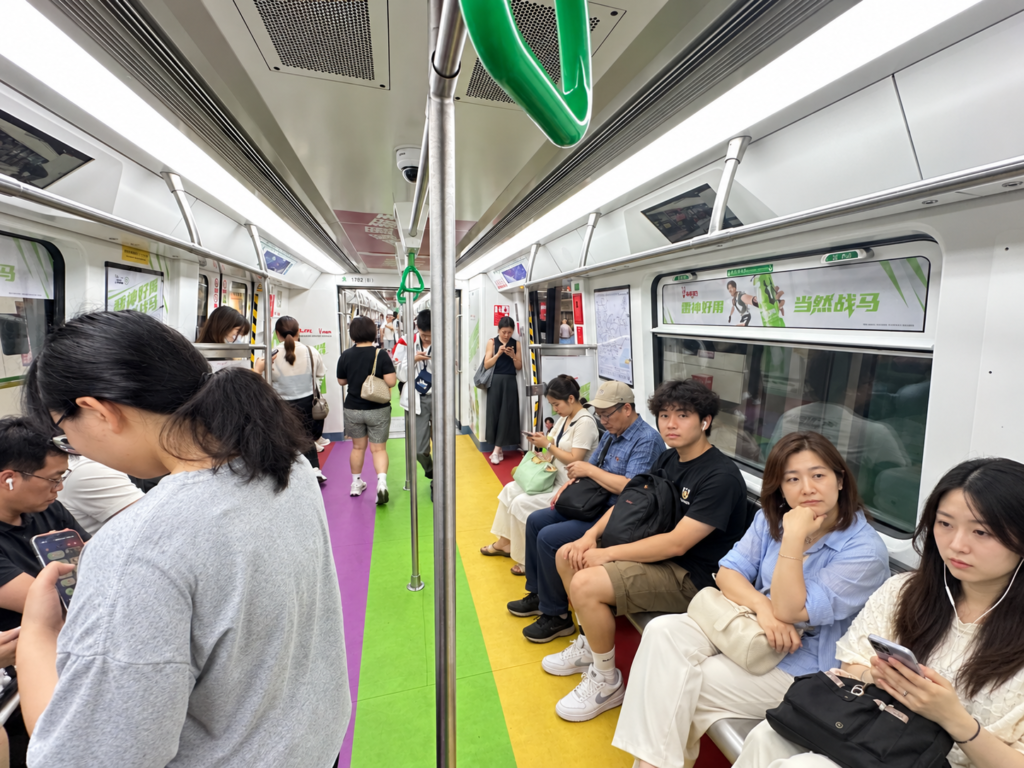
This was another little reminder of how quickly the travel experience had changed.
A short time earlier, we had been traveling around Hong Kong.
Now we were riding the Shenzhen Metro (深圳地铁, Shēnzhèn Dìtiě) through one of Mainland China’s biggest cities.
But Dad wasn’t heading only for another attraction.
There was something he wanted Elaine to see again.
Something she had already encountered on an earlier Shenzhen trip.
And something guaranteed to send her Political Science graduate father down another rabbit hole. 🐇😂
🐇 DAD’S POLITICAL SCIENCE RABBIT HOLE BEGINS
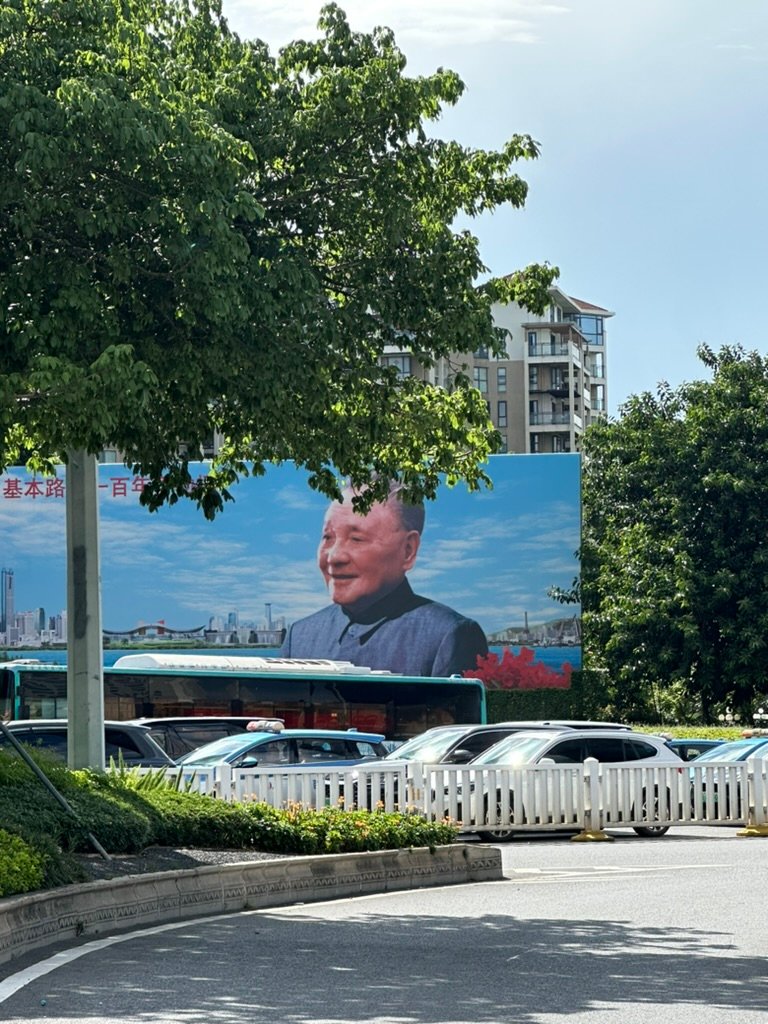
There he was.
Deng Xiaoping (邓小平, Dèng Xiǎopíng).
Elaine had seen this enormous image during an earlier trip to Shenzhen.
Now Dad wanted to bring her back.
Because if you want to understand modern Shenzhen, it is difficult to avoid one enormous question:
HOW DID SHENZHEN BECOME… SHENZHEN?
The answer takes us back to one of the biggest turning points in modern Chinese history.
In December 1978, the Third Plenary Session of the 11th Central Committee marked China’s major shift toward economic development and what became known as reform and opening-up (改革开放, gǎigé kāifàng). Deng Xiaoping became the central political figure associated with that transformation. :
But Shenzhen’s story didn’t happen because one man simply pressed a button.
Guangdong leaders pushed proposals for greater economic experimentation. The central government approved special policies for Guangdong and Fujian in 1979, and in August 1980 Shenzhen became one of China’s first four Special Economic Zones, together with Zhuhai, Shantou and Xiamen.
Shenzhen became something extraordinary:
AN EXPERIMENT.
A place where China could try new approaches to foreign investment, trade, enterprise and economic management — and see what worked.
That is why Dad didn’t see the giant Deng Xiaoping image simply as another Shenzhen photo stop.
For a Political Science graduate…
it was practically bait. 😂🐇
🧠 THEN DAD STARTED CONNECTING THE DOTS
Look at where Shenzhen is.
Right beside Hong Kong (香港).
That geography mattered.
We had just experienced it ourselves.
Hong Kong.
Border crossing.
Shenzhen.
Metro.
Lunch.
Museum.
All within the same journey.
More than four decades earlier, this same border region became one of the places where China experimented with opening its economy outward.
Shenzhen’s official history still describes the city as a window through which the outside world can observe China’s reform and opening-up.
Suddenly Dad’s rabbit hole wasn’t really about one billboard anymore.
It was about the city around us.
SHENZHEN ITSELF IS PART OF THE STORY OF CHINA’S TRANSFORMATION.
🏛️ AND THEN WE WENT TO THE SHENZHEN MUSEUM
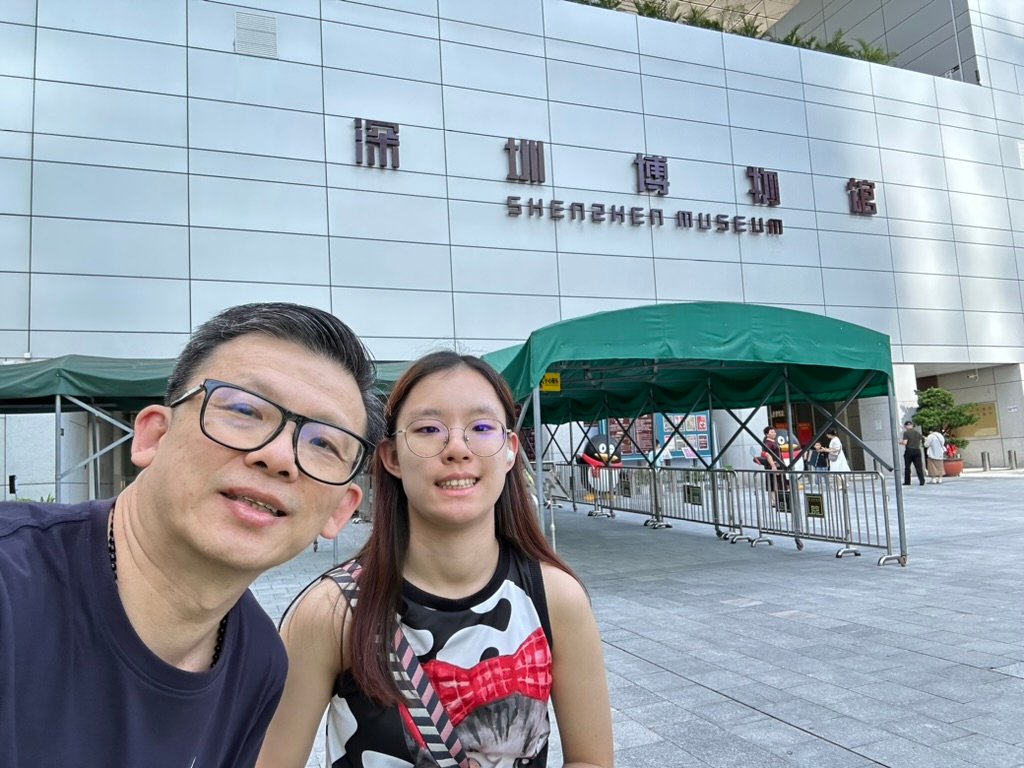
Which, of course, was dangerous.
Because putting Dad inside a museum immediately after triggering a Political Science rabbit hole is rarely a short activity. 😂
The Shenzhen Museum (深圳博物馆, Shēnzhèn Bówùguǎn) has collected material documenting the city’s reform-and-opening era, including objects connected with Shenzhen’s economic experimentation and Deng Xiaoping’s visits to the city.
And now the question Dad wanted Elaine to think about had changed.
Not:
“Who is the man on that billboard?”
But:
“WHY DID SHENZHEN MATTER?”
That is a much more interesting question.
And it is the question that would take us deeper into the museum.
🐇 Rabbit hole officially open.
🐇 THEN DAD CAME FACE TO FACE WITH AN OLD FRIEND
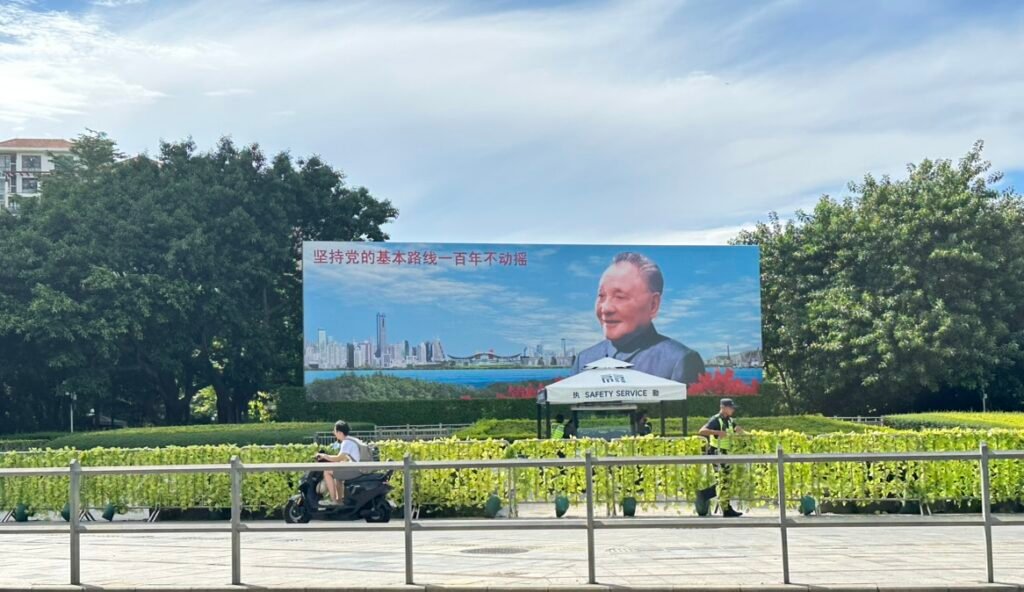
On our way through Shenzhen (深圳, Shēnzhèn), we passed a face Dad immediately recognized.
Deng Xiaoping (邓小平, Dèng Xiǎopíng).
Dad had been here before.
Back in 2013, Dad had stood in front of this enormous image of Deng Xiaoping.
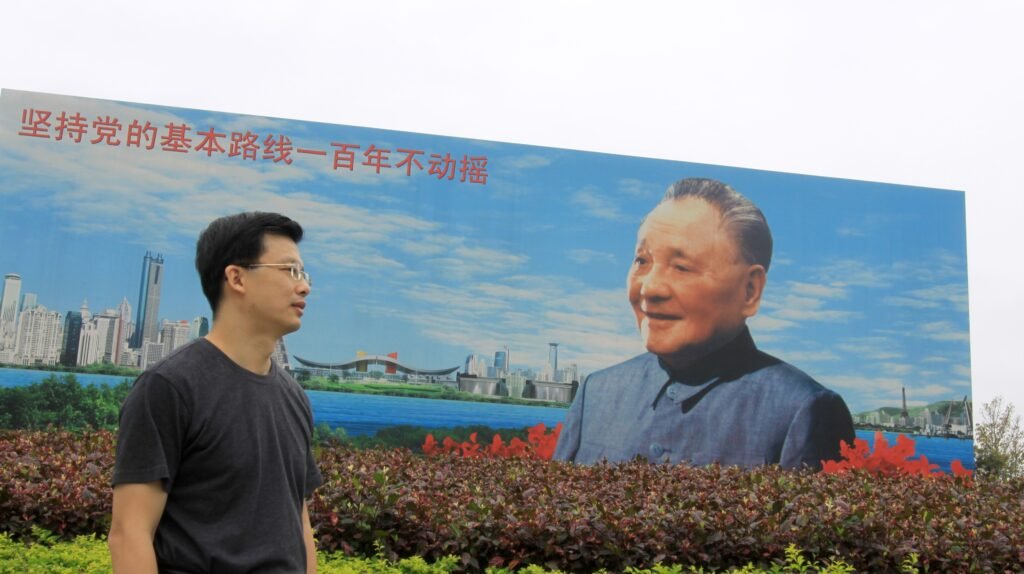
Now, more than a decade later, Dad was back.
Another visit.
Another photograph.
Another Political Science rabbit hole. 😂🐇
Because for Dad, this wasn’t simply a giant billboard.
It represented one of the biggest questions behind modern Shenzhen:
HOW DID THIS CITY BECOME… THIS CITY?
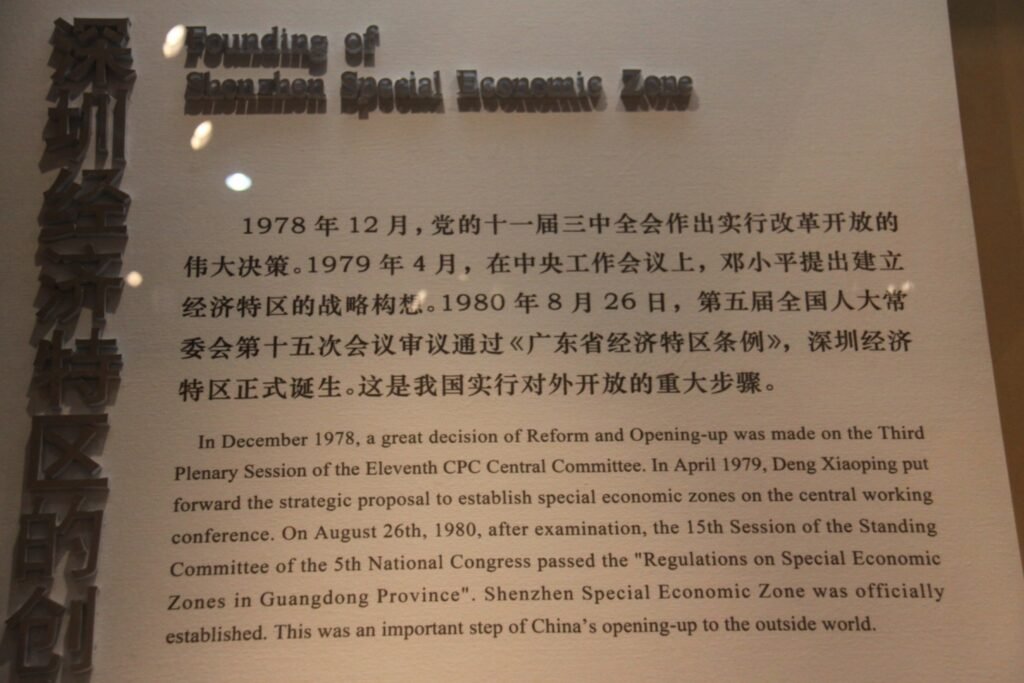
1978: The Year the Story Changed
Deng Xiaoping is the political figure most closely associated with China’s reform and opening-up era.
But the story is more interesting than saying one man simply “opened China.”
In December 1978, the Third Plenary Session of the 11th Central Committee marked a major shift toward economic development and reform and opening-up.
Then came experimentation.
In 1979, Guangdong leaders proposed greater economic flexibility. Deng supported the idea of creating special zones where new approaches could be tried.
And in August 1980, Shenzhen became one of China’s first Special Economic Zones, alongside Zhuhai (珠海, Zhūhǎi), Shantou (汕头, Shàntóu) and Xiamen (厦门, Xiàmén).
Shenzhen became one of China’s great economic laboratories.
New approaches to investment.
Trade.
Enterprise.
Employment.
Land.
Foreign capital.
And, importantly, Shenzhen sat right beside Hong Kong (香港).
Dad’s Political Science brain was now fully awake. 😂
The Shenzhen we were traveling through — Metro trains, skyscrapers, digital payments and enormous commercial districts — was part of the result.
🏛️ THEN WE RETURNED TO SHENZHEN MUSEUM
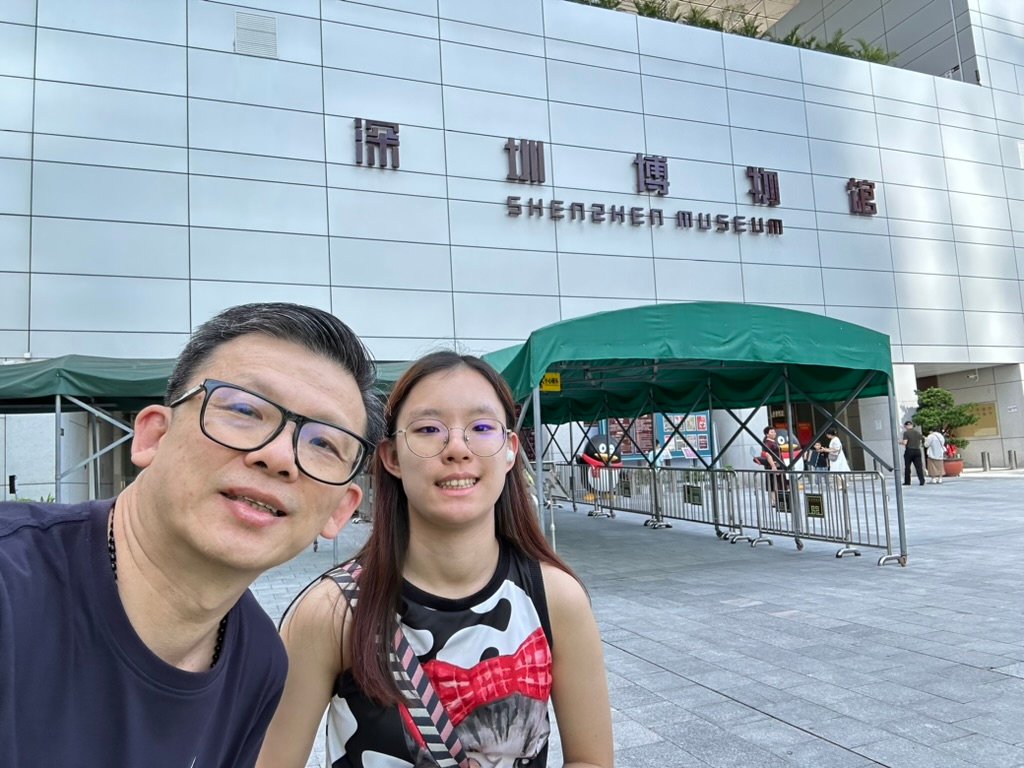
This wasn’t Elaine’s first visit either.
Elaine first visited the Shenzhen Museum (深圳博物馆, Shēnzhèn Bówùguǎn) in 2018.
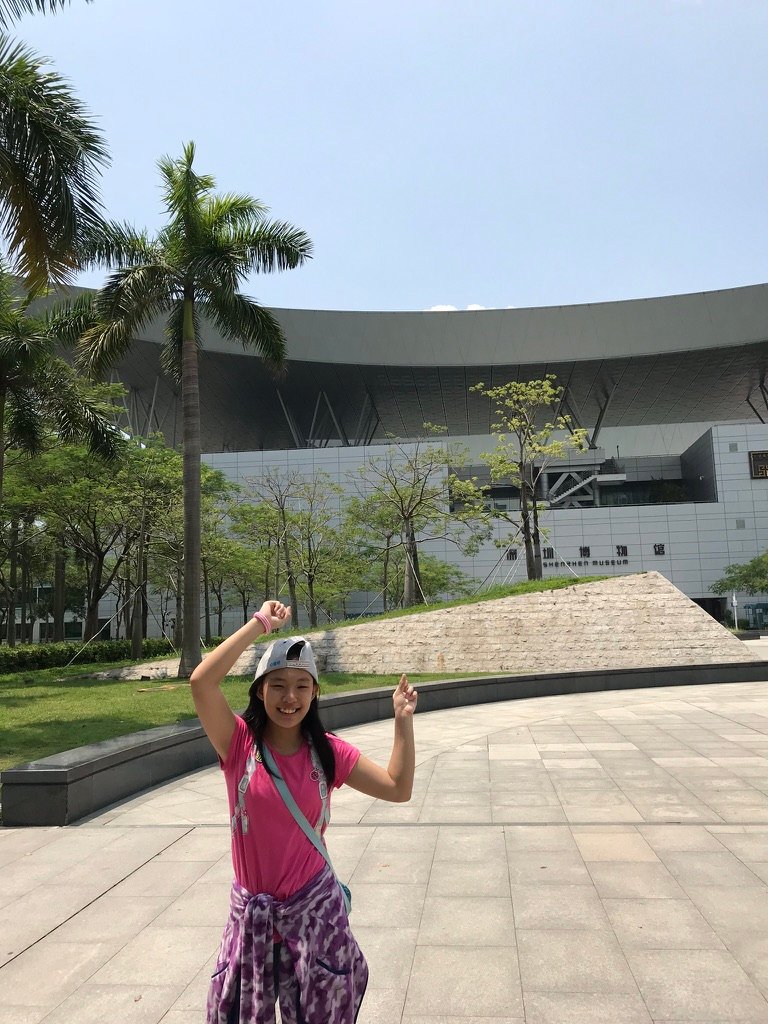
Eight years later…
we were back.
Same traveler.
Very different Elaine. 😂
And Dad had another reason for bringing her here.
The museum is one of the places where a traveler can begin understanding the extraordinary transformation of Shenzhen.
Not because Shenzhen had literally been just one fishing village — its history stretches much further back than that.
But the contrast is still remarkable:
from a relatively poor border region with towns, villages, agriculture and fishing…
to one of China’s major modern metropolises.
That transformation is difficult to understand without understanding reform and opening-up and the creation of the Shenzhen Special Economic Zone.
😭 EXCEPT THIS TIME… WE COULDN’T SEE THE PART DAD WANTED
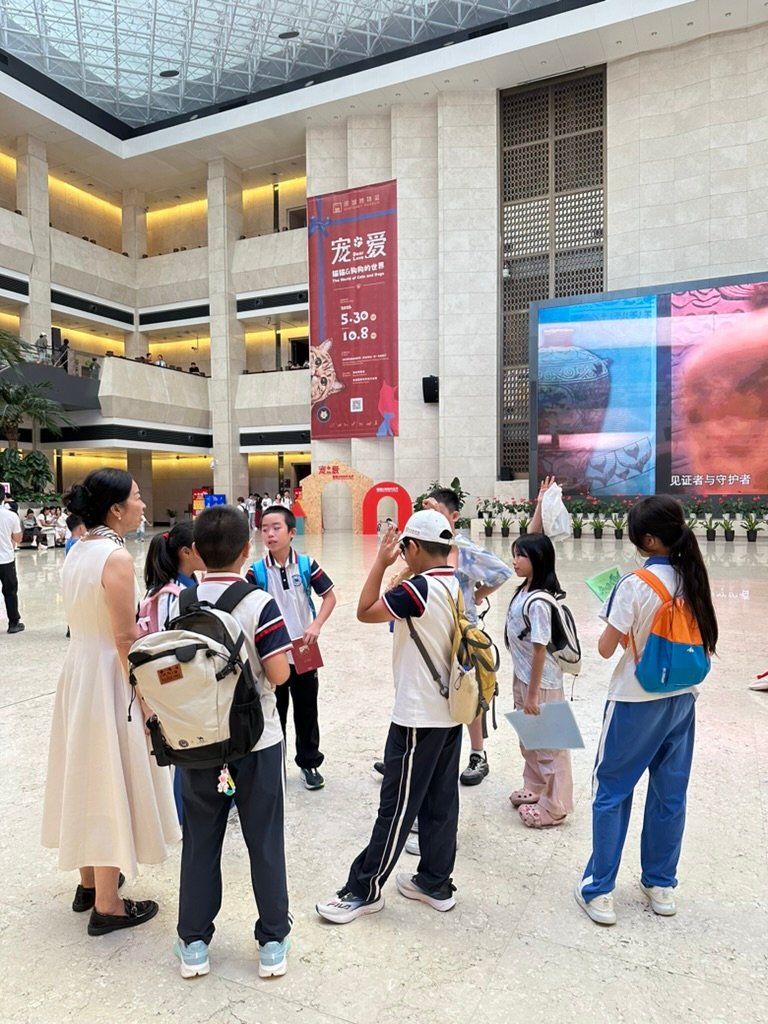
We walked inside.
Dad knew exactly which story he wanted Elaine to revisit.
Modern Shenzhen.
The reform era.
The Special Economic Zone.
The transformation of the city.
Except…
the Shenzhen Reform and Opening-Up History exhibition was closed.
As of our 2026 visit, the museum had officially announced the closure of that exhibition. So we couldn’t revisit the modern Shenzhen galleries that Dad had hoped to show Elaine.
Sometimes travel works like that. 😂
You return to a place eight years later…
and the museum has changed too.
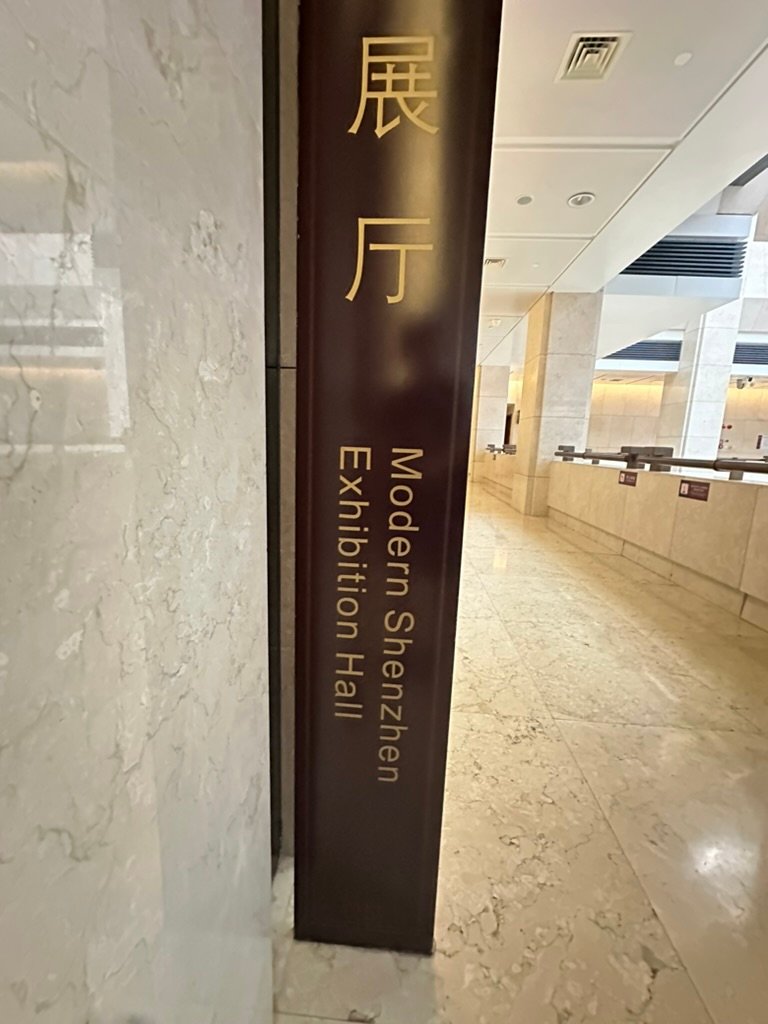
But Dad’s advice to future travelers remains the same:
WHEN THE REFORM AND OPENING-UP EXHIBITION REOPENS, PUT IT ON YOUR SHENZHEN LIST.
Check the museum’s current exhibition status before you go.
Because Shenzhen’s skyscrapers tell you what happened.
The Metro tells you what Shenzhen is like today.
But the city’s reform-and-opening story helps explain:
WHY SHENZHEN BECAME SHENZHEN.
And once you understand that…
Shenzhen stops looking like merely another enormous modern Chinese city.
You begin seeing it as one of the places where China’s economic transformation was tested, built and made visible.
For Dad, that is where sightseeing becomes much more interesting.
SEE → ASK → CONNECT → UNDERSTAND → FOLLOW.
🐇 Political Science rabbit hole: officially open.
📚 OUR LAST BIG STOP — Elaine Wanted to Go Back to Shenzhen Book City
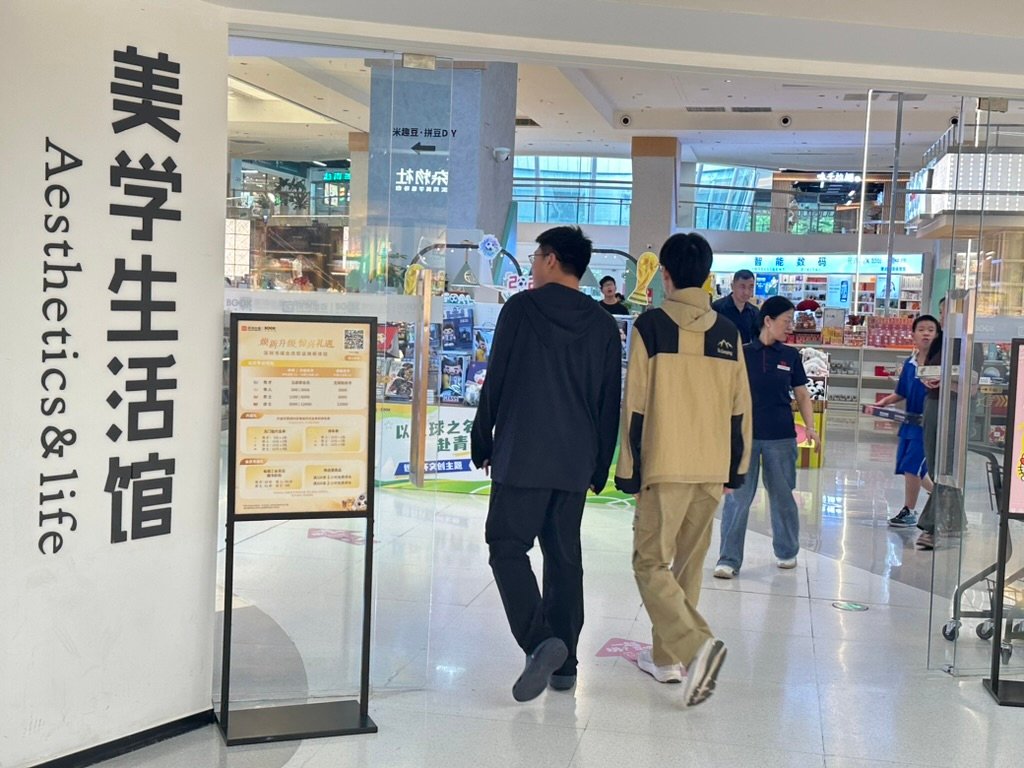
There was one place Elaine specifically wanted to visit again.
Shenzhen Book City · Central City (深圳书城·中心城, Shēnzhèn Shūchéng · Zhōngxīnchéng).
That immediately made Dad curious.
Of all the places we could visit during a casual half-day crossover from Hong Kong, why return to a bookstore?
Then we walked inside.
😂
Okay.
Calling this simply a bookstore doesn’t quite describe the experience.
It felt more like a giant space built around books, reading, creativity, shopping, food and hanging out.
And that made it surprisingly interesting even for an international traveler who cannot read much Chinese.
📖 Yes, There Are A LOT of Chinese Books
Let’s get the obvious part out of the way.
There are books.
Lots and lots of books.
Most are naturally in Chinese.
We found only a much more limited selection of English-language books, so if you’re coming here expecting a giant English bookstore, that isn’t really the reason we’d recommend it.
But Dad soon realized something.
You don’t necessarily have to read Chinese to enjoy wandering around Shenzhen Book City.
Because books are only part of what you’ll find here.
🎨 WAIT… THIS ISN’T JUST ABOUT BOOKS
Elaine wandered.
Dad followed.
And the bookstore kept changing.
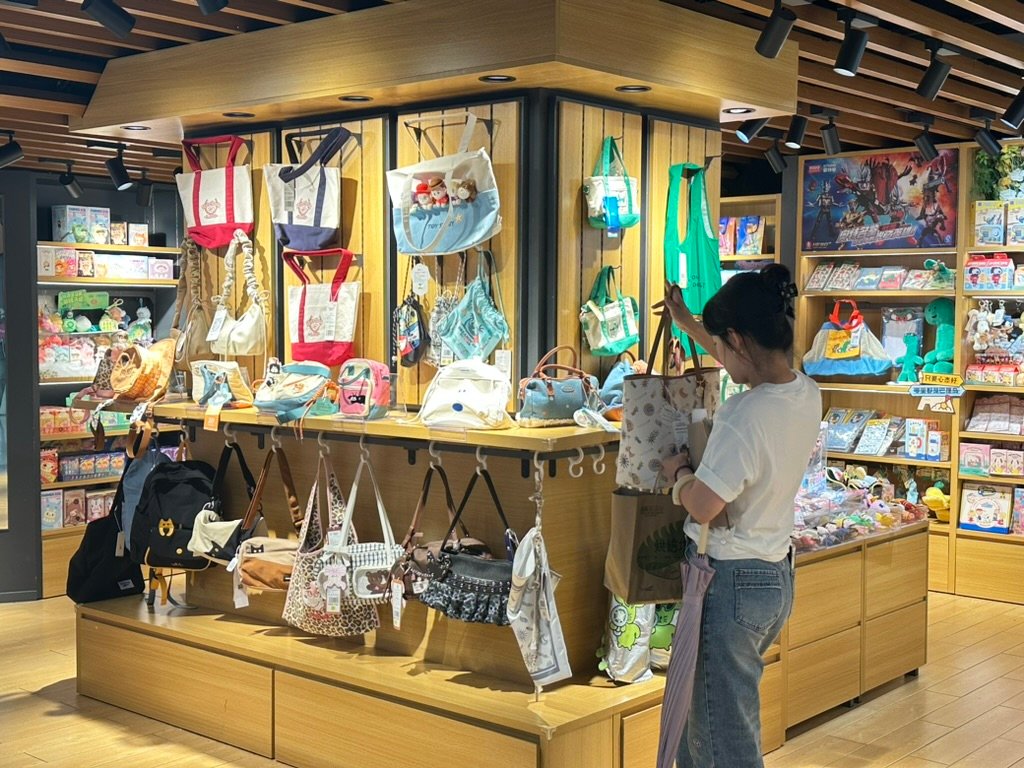
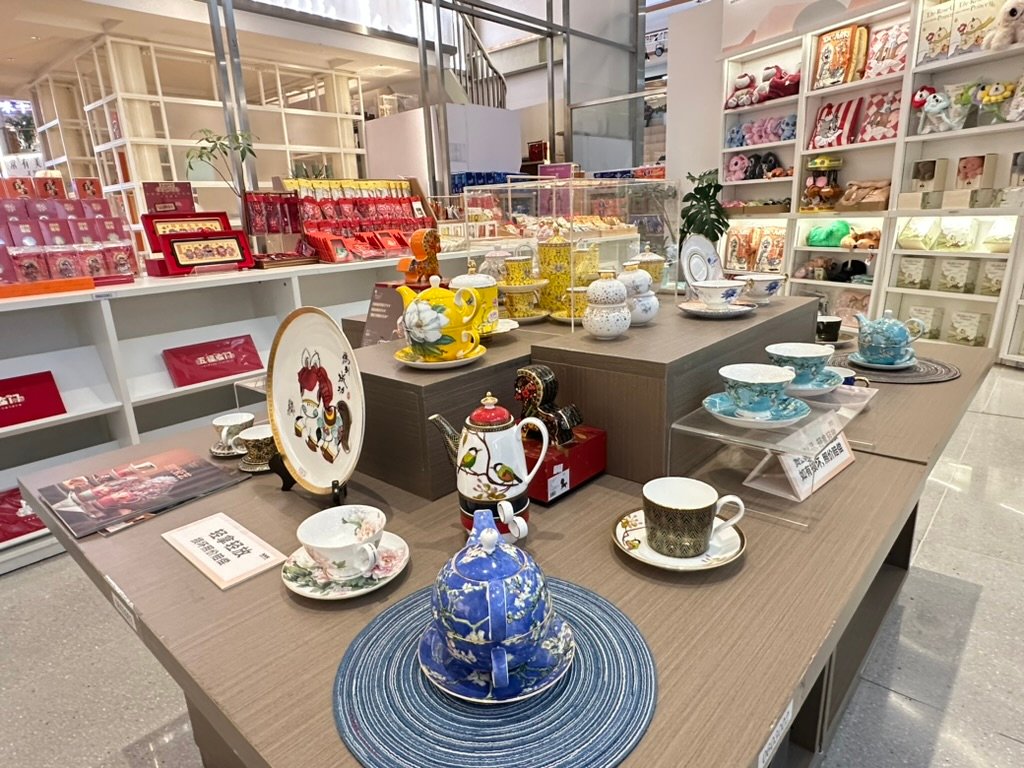
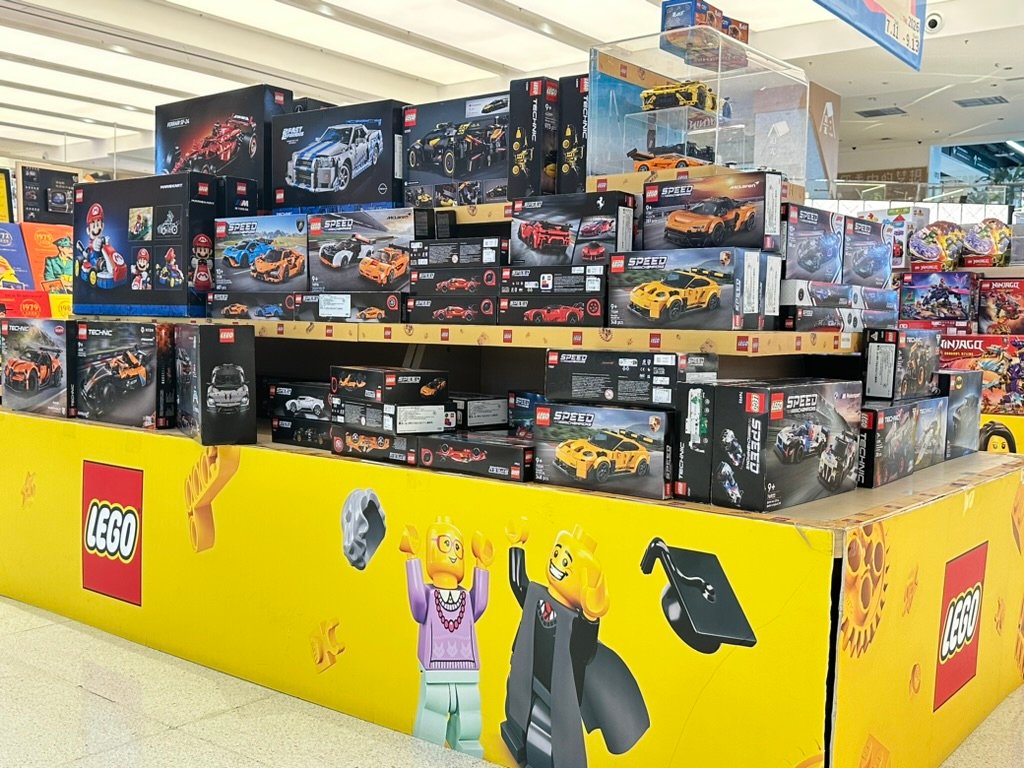
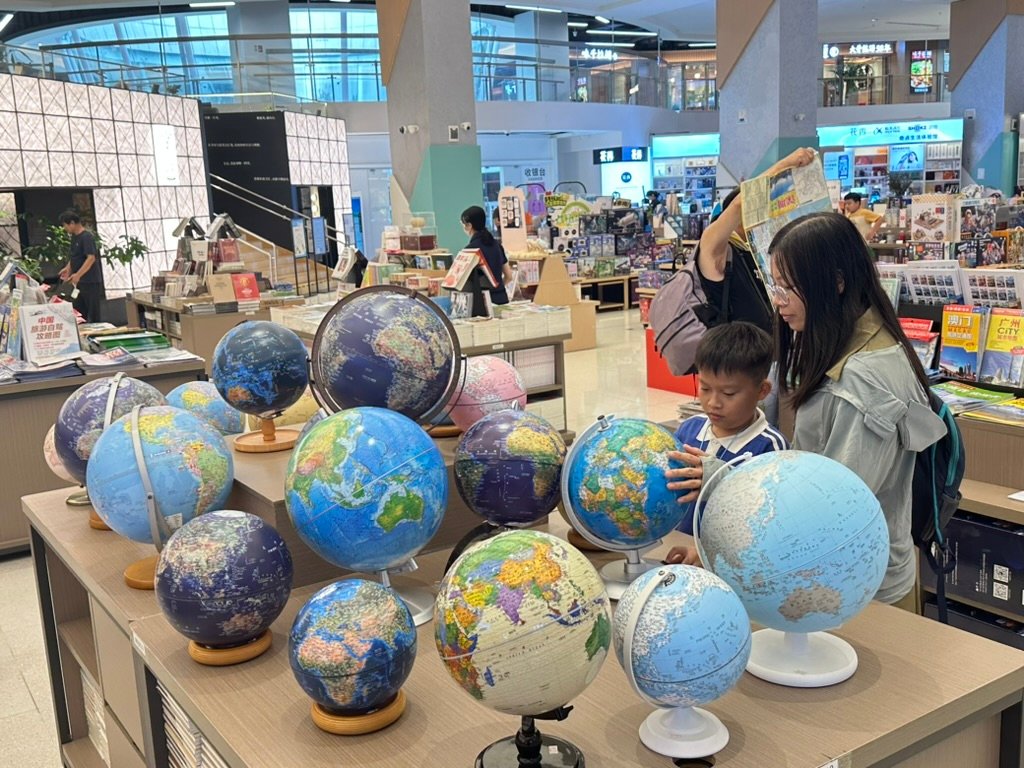
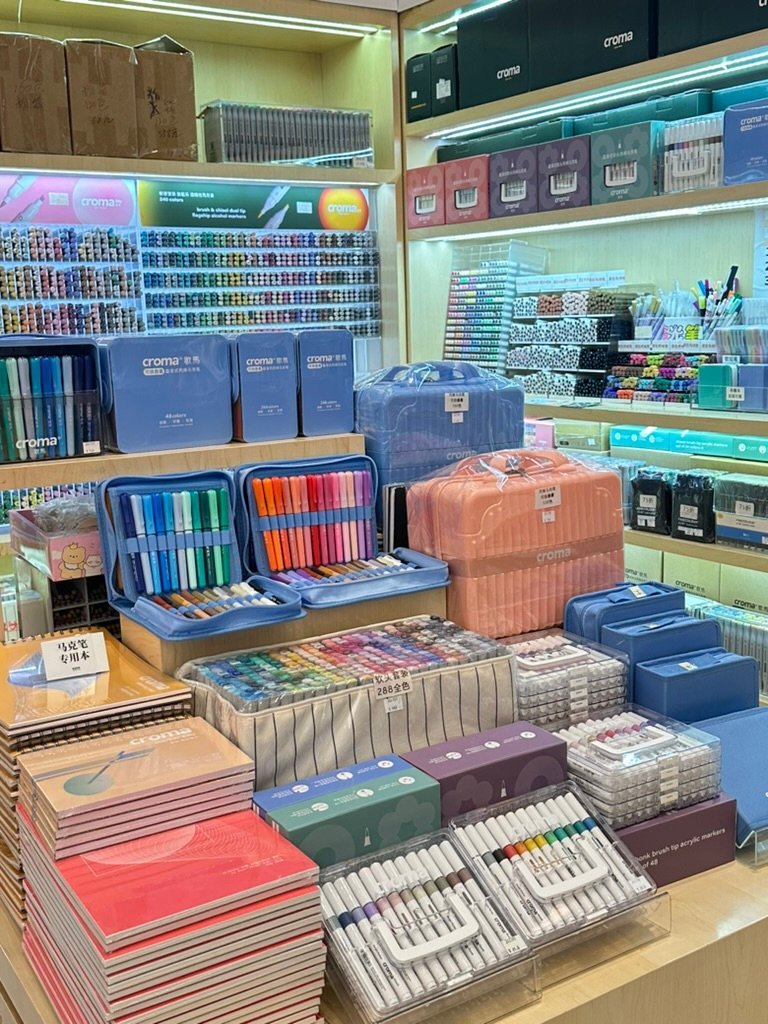
We found:
- stationery
- notebooks
- pens and markers
- painting and art supplies
- art and design books
- toys and puzzles
- LEGO
- bags and cute accessories
- ceramics and handicrafts
- tea ware
- gifts and souvenirs
There were whole sections where an international traveler could happily browse without reading a single Chinese novel.
Elaine was especially interested in the stationery and creative products.
Dad?
Dad was beginning to understand why she wanted to come back. 😂
This wasn’t simply somewhere to buy a book.
It was somewhere you could spend time.
🐞 Dad’s Tip for International Travelers
If you want a souvenir from Shenzhen that isn’t another generic fridge magnet, have a look around here.
You may find stationery, art products, illustrated books, design objects, ceramics, bags or other locally sold creative products that are much more interesting to bring home.
And because you’re browsing what local residents browse, the experience itself tells you a little about everyday Shenzhen.
☕ AND YOU DON’T HAVE TO LEAVE WHEN YOU GET HUNGRY
Another reason Shenzhen Book City works well during a casual visit:
there are places to eat and drink.
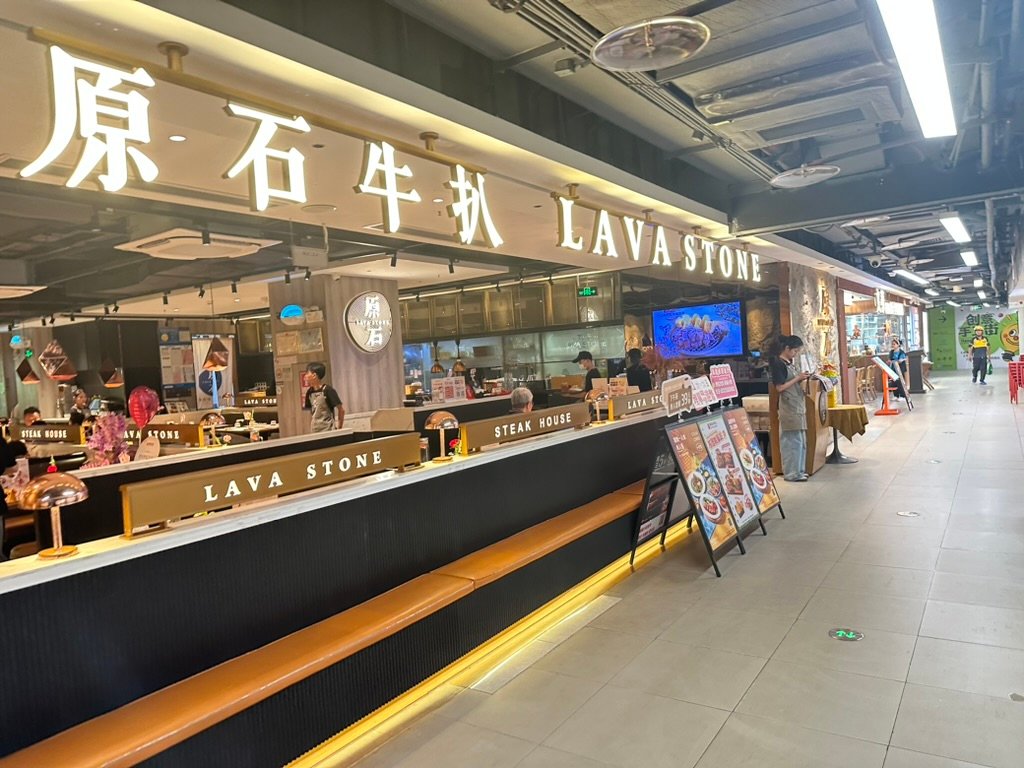
We saw restaurants and cafés around the complex, including familiar coffee options.
So this doesn’t have to be:
Enter bookstore → find book → pay → leave.
You can browse.
Stop for coffee.
Browse some more.
Eat.
Watch people.
Then continue exploring.
For travelers crossing over from Hong Kong without an aggressive sightseeing checklist, that’s actually quite a nice way to experience a piece of the city.
But then something happened that changed Dad’s impression of Shenzhen Book City completely.
😂 WE STUMBLED INTO A BOOK EVENT
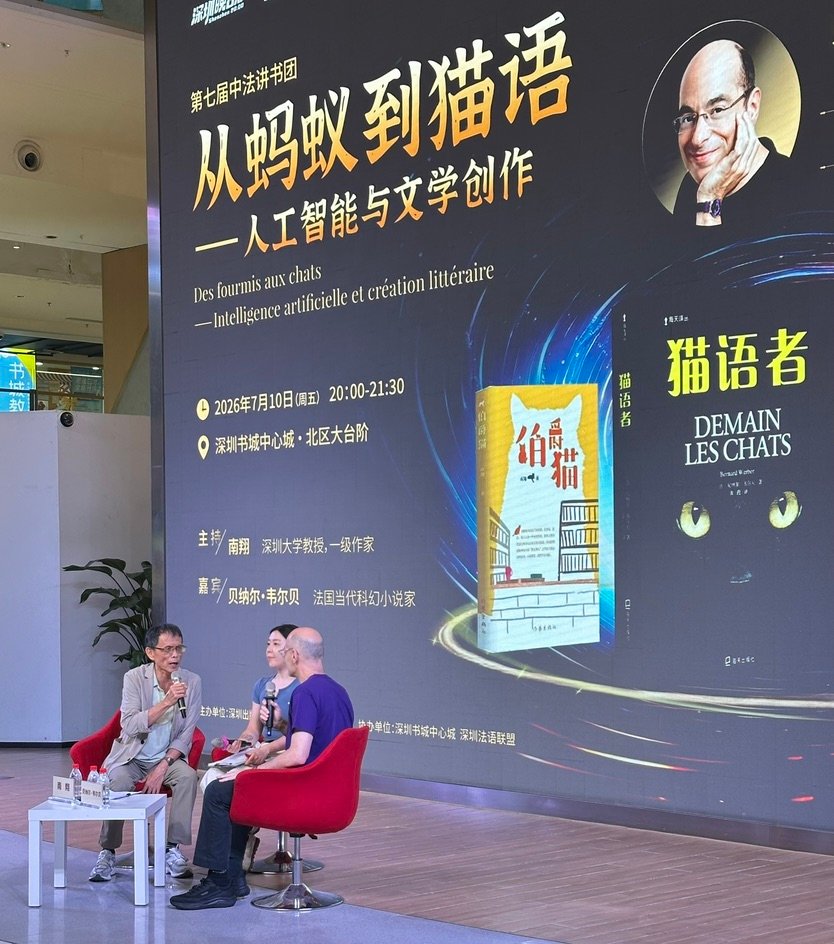
We hadn’t planned it.
We hadn’t bought tickets for it.
We didn’t even know it was happening.
We simply walked into the bookstore…
…and discovered a literary event underway.
The guest was French science-fiction writer Bernard Werber.
The event was part of the 7th Sino-French Lecture Series (第七届中法讲书团).
And the subject on the enormous screen behind the speakers caught Dad’s attention immediately:
FROM ANTS TO CATS — ARTIFICIAL INTELLIGENCE AND LITERARY CREATION
😂😂😂
Dad is an AI watcher.
We had crossed from Hong Kong into Shenzhen for a casual visit…
and somehow walked into a French author’s discussion about AI and writing.
China Usually Has Another Way. 🐇
But something else caught Dad’s attention even more.
LOOK AT THE AUDIENCE.
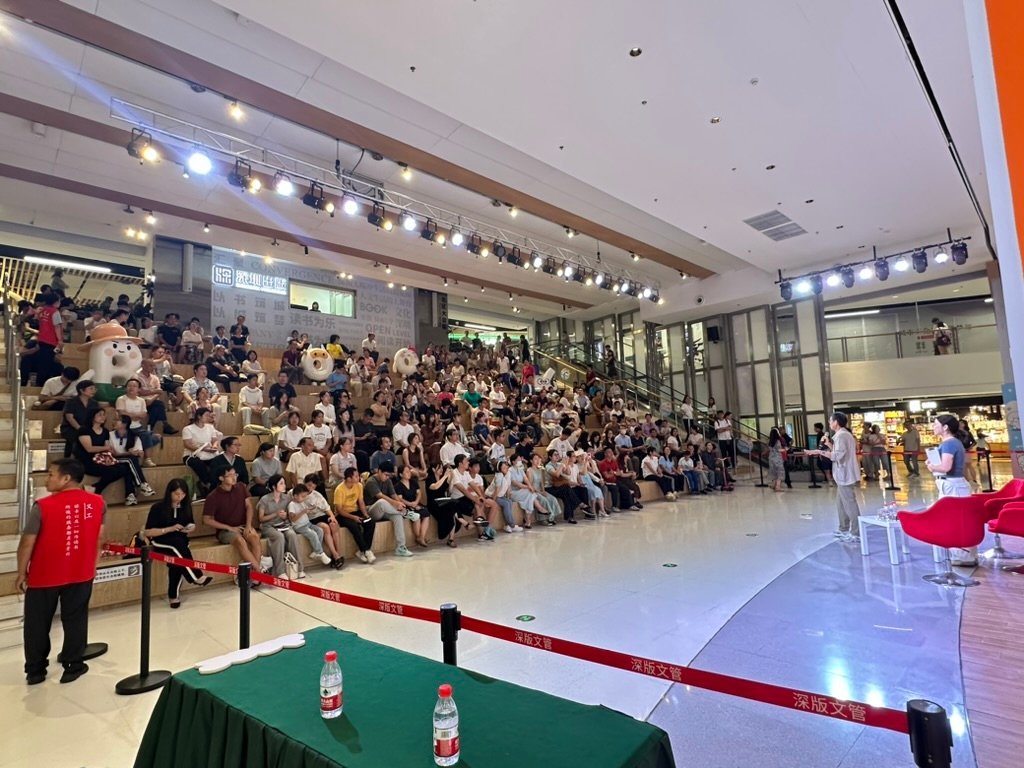
The seating area was packed.
People weren’t merely walking past.
They were sitting there listening.
Young people.
Older people.
Families.
Readers.
A large public space inside a bookstore had become a venue for discussing books, ideas, artificial intelligence and literature.
Dad looked around.
And another question appeared.
WAIT… IS READING PART OF SHENZHEN’S CITY CULTURE?
That wasn’t a question we had come to Shenzhen intending to investigate.
But travel does this.
Sometimes the interesting questions arrive after you arrive.
We had already seen people browsing books.
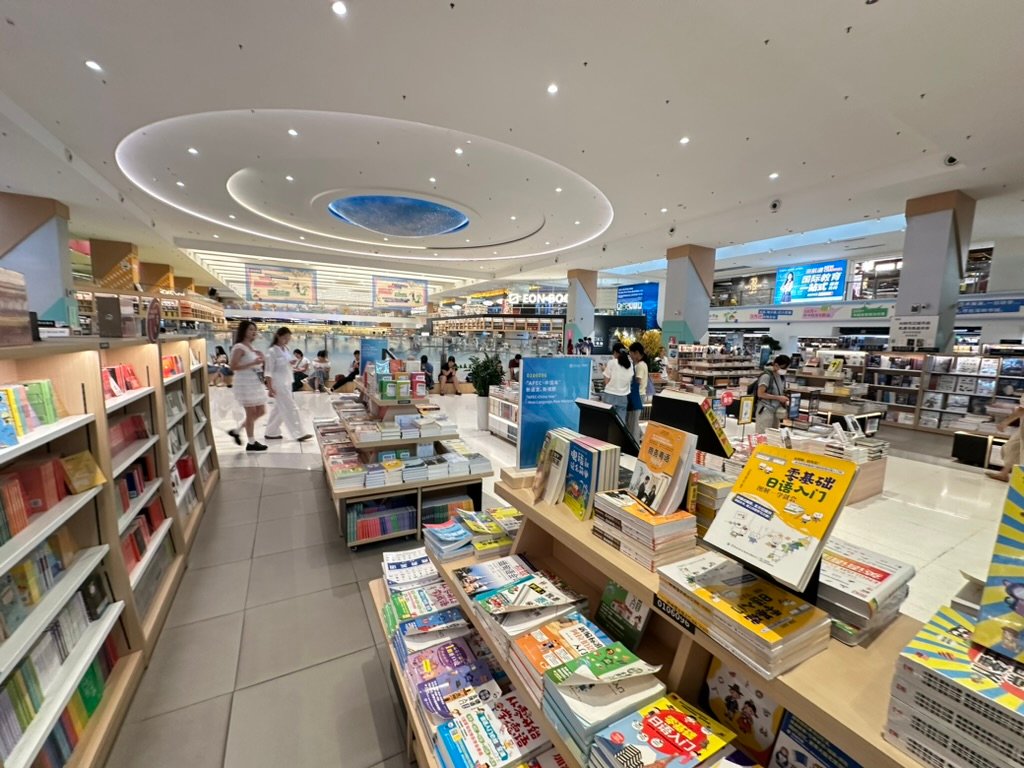
We had seen the art and design sections.
We had seen families wandering around.
We had seen people sitting over coffee.
And now we were standing beside a packed literary event.
One accidental afternoon certainly isn’t enough to make sweeping conclusions about an entire city.
But it gave Dad something worth following.
🐇
Why does Shenzhen seem to invest so much space in books, reading and public cultural life?
That’s a rabbit hole for another story.
🐞 WOULD WE RECOMMEND SHENZHEN BOOK CITY?
Yes — especially if you enjoy books, stationery, art, design, cafés or simply watching how people use a city.
Don’t come expecting a huge English-language bookstore.
Come because it offers something different.
It gives you a small window into contemporary urban life in Shenzhen (深圳, Shēnzhèn).
For a casual visit, allow roughly 1–3 hours, depending on how much you enjoy browsing and whether you stop for food or coffee.
And don’t schedule every minute.
Because sometimes the thing you remember isn’t the attraction you planned.
It’s the thing you accidentally walked into.
Dad and Elaine went to Shenzhen Book City because Elaine wanted to return.
Dad left with another Shenzhen question.
😂🐇
🍜 SO WHAT ELSE SHOULD A FIRST-TIME VISITOR DO IN SHENZHEN?
Our visit wasn’t designed to be the definitive Shenzhen itinerary.
That was never the point.
We were showing ourselves something much simpler:
YOU CAN CROSS FROM HONG KONG AND HAVE A CASUAL TASTE OF SHENZHEN.
If you have more time than we did, you could build your visit around one or two interests, rather than trying to race across this enormous city.
For example:
Modern Shenzhen — explore Futian (福田, Fútián), the Civic Center area and the contemporary skyline.
Urban parks and skyline views — spend some time in one of Shenzhen’s large public green spaces rather than staying indoors all day.
Technology and electronics — travelers interested in Shenzhen’s famous technology ecosystem may want to explore Huaqiangbei (华强北, Huáqiángběi).
Culture and design — museums, galleries, creative spaces and Shenzhen Book City can easily become the focus of a slower visit.
Shopping — from huge malls to electronics, stationery and Chinese brands, Shenzhen can be interesting even if you’re simply browsing.
And then there is food.
🥢 WHAT SHOULD YOU EAT IN SHENZHEN?
Here’s where we’d encourage international travelers not to search for one mythical “Shenzhen dish.”
Shenzhen is a migrant city.
People have arrived here from across China, bringing their food with them.
That means part of the fun is the variety.
You can look for Cantonese food and dim sum, but you can also use Shenzhen as an opportunity to try noodles, dumplings, hotpot, barbecue and regional cuisines from elsewhere in China.
For a short crossover visit, Dad wouldn’t turn lunch into another complicated research project.
Find somewhere busy.
Look at what people around you are ordering.
Use translation on your phone if necessary.
Order something.
😂
Sometimes that’s enough.
🐇 BUT DAD WASN’T FINISHED WITH SHENZHEN
There was one problem with spending only half a day here.
The more Dad saw…
the less Shenzhen made sense as merely a side trip from Hong Kong.
Look at the skyline.
Look at the infrastructure.
Look at the scale of the city.
Look at the technology.
Look at the people who have moved here.
And then ask one very simple question:
HOW DID THIS HAPPEN SO FAST?
That question deserves a completely different ChinaTravelBUG story.
Not another border-crossing guide.
Not another list of attractions.
A DEEP China story.
We’ll return to the museum boards and the evidence we collected in Shenzhen to explore how a city beside Hong Kong became one of the most important urban and economic centers in modern China.
🐇 That is Dad’s next Shenzhen rabbit hole.
For now, though, our mission was much simpler.
Cross the border.
Eat something.
Walk around.
Let Elaine revisit her bookstore.
See a little of Shenzhen.
Then head back to Hong Kong.
And that may be the biggest lesson from our little crossover.
YOU DON’T HAVE TO “DO SHENZHEN” TO START EXPERIENCING SHENZHEN.
Sometimes half a day is enough to open the door.
And sometimes opening the door creates far more questions than it answers.
😂🐇
😂 DAD THOUGHT WE WERE FINISHED WITH SHENZHEN.
We had crossed from Hong Kong into Shenzhen.
We had ridden the Metro.
We had wandered through Shenzhen Book City (深圳书城, Shēnzhèn Shūchéng).
We had found food and coffee.
We had even stumbled upon a packed literary event featuring a French author.
For what was supposed to be a simple day crossover from Hong Kong, Shenzhen had already given Dad plenty to think about.
It was getting late.
Time to head back to Hong Kong.
Simple.
Except…
💡 ELAINE HAD ANOTHER IDEA.
Instead of simply retracing our journey back the same way we had entered Shenzhen, Elaine suggested:
Why don’t we try another border crossing?
😂
Dad liked the idea immediately.
We had entered Shenzhen one way.
Why not leave another way?
So instead of treating the return journey as something we simply had to get through, we turned it into one more part of the travel experience.
Our destination:
HUANGGANG PORT (皇岗口岸, Huánggǎng Kǒu’àn).
🛂 ANOTHER BORDER. ANOTHER WAY BACK TO HONG KONG.
By the time we reached Huanggang Port (皇岗口岸), Shenzhen Book City was glowing behind us in the night.
Elaine still had her shopping bag.
Dad still had Shenzhen questions bouncing around inside his head.
And ahead of us was something that had become unexpectedly interesting during this trip:
another border crossing.
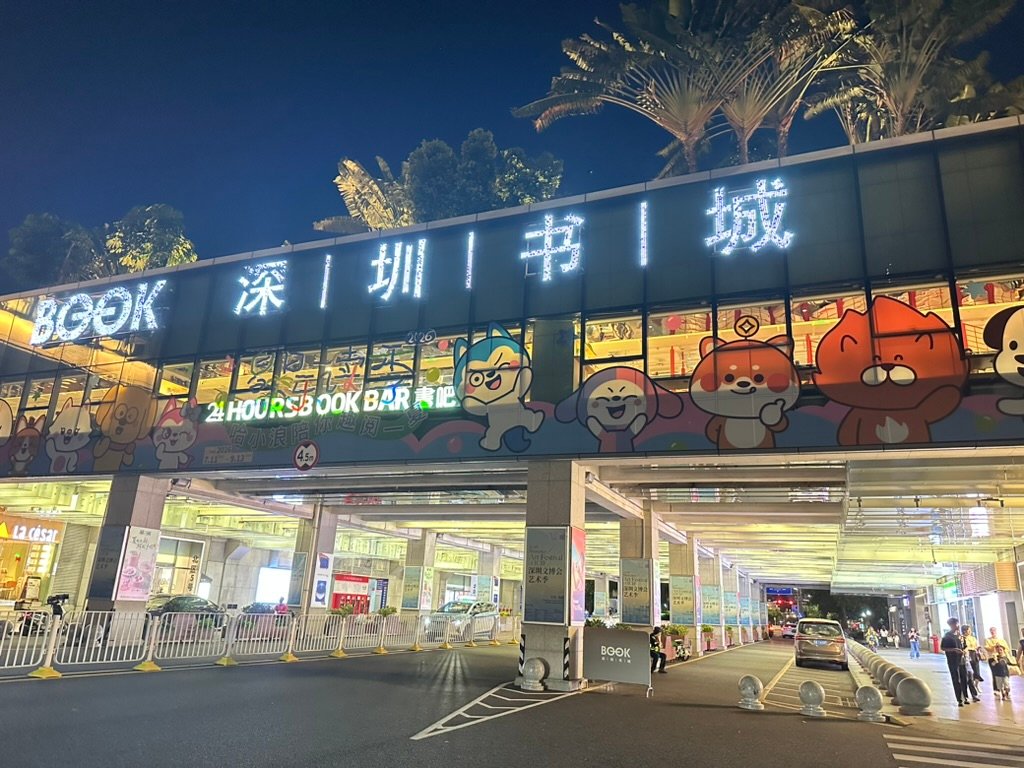
Huanggang gave us a completely different departure experience from simply reversing our earlier route.
There it was:
皇岗口岸 — Huanggang Port.
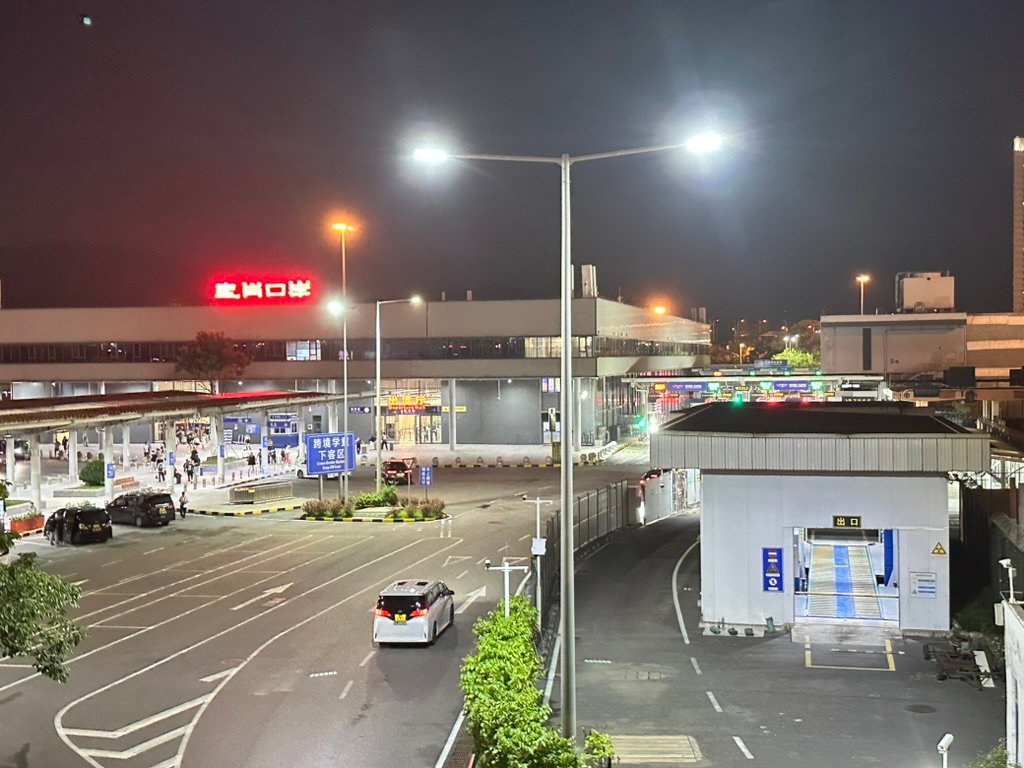
And then the sign that mattered:
出境厅 — DEPARTURE HALL
↑ TO HONG KONG
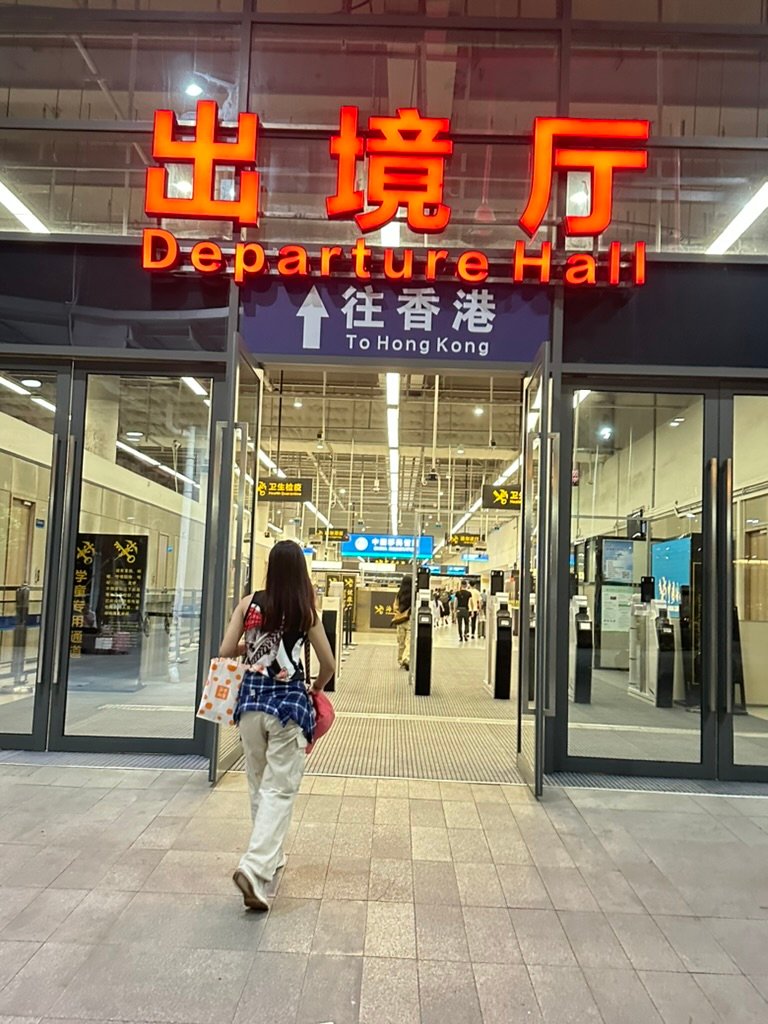
That photograph tells the story better than Dad can.
Elaine walking ahead.
Shopping bag in hand.
Hong Kong straight ahead.
😂
🚌 AND THEN WE WERE ON A BUS BACK TO HONG KONG.
After completing the border formalities, we continued our journey by bus.
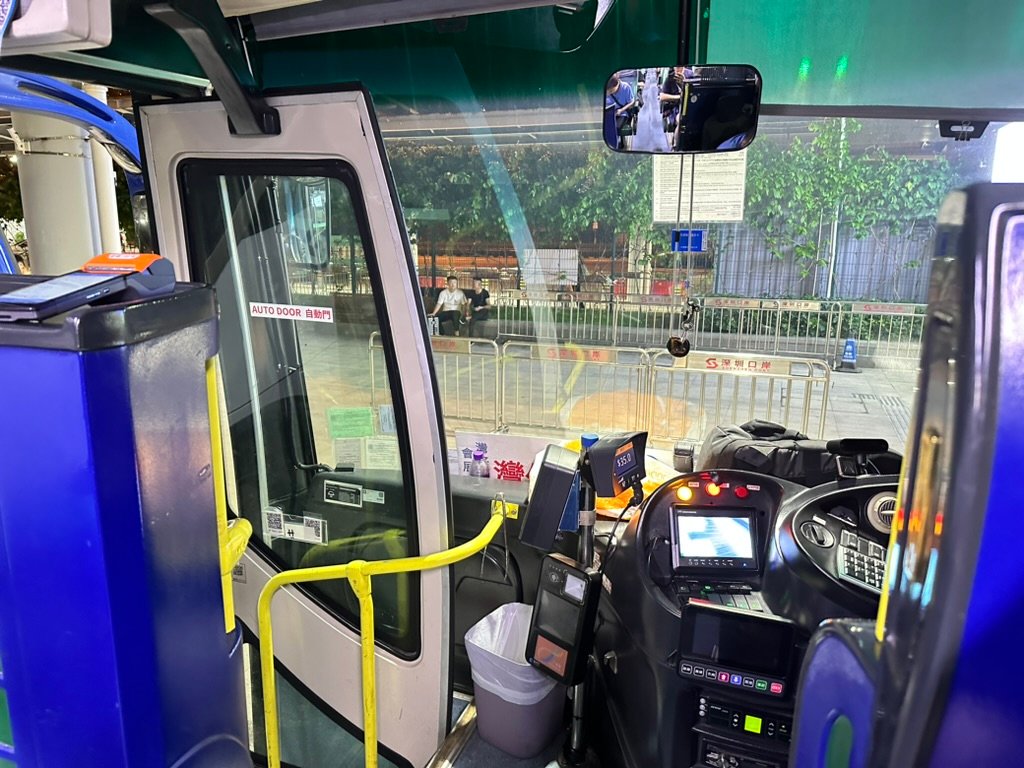
No airport.
No high-speed train.
No complicated tour.
Earlier that day, Dad and Elaine had been in Hong Kong.
Then we were wandering around Shenzhen.
Now we were crossing the boundary again and heading back toward Mong Kok (旺角).
That is one of the things this little experiment taught Dad:
HONG KONG AND SHENZHEN CAN WORK AS TWO PARTS OF THE SAME TRAVEL JOURNEY.
But they are not the same place.
You still cross an immigration boundary.
The transport systems change.
The payment environment can change.
The language environment changes.
The feeling of the city certainly changes.
And that contrast is precisely what made the crossover so interesting.
🌃 OR… DON’T GO BACK TO HONG KONG YET.
This is the other option Dad would seriously consider.
If Shenzhen starts becoming more interesting than you expected, don’t force it into half a day just because that’s how we did it.
Stay overnight.
That gives you time to slow down, have dinner, experience Shenzhen after dark and continue exploring the next morning without watching the clock for your return border crossing.
For a first visit, choosing a hotel near a Metro station in a convenient part of Futian (福田, Fútián) can make exploring much easier.
Value for money ≠ cheapest hotel.
Location matters.
Especially in a city this large.
👉 Check Shenzhen hotels and current prices on Trip.com
ChinaTravelBUG may earn a commission if you book through our Trip.com links, at no extra cost to you.
🐞 AND WHERE DID DAD AND ELAINE END UP?
Back where this little Shenzhen experiment had begun:
Mong Kok (旺角), Kowloon (九龍).
For this part of our Hong Kong journey, we were staying at iclub Mong Kok Hotel.
And this was exactly why Dad liked using Mong Kok as a base.
We could spend the day crossing into Mainland China, explore Shenzhen, experiment with another border crossing on the way home…
…and still return to the energy, food and streets of Mong Kok at night.
👉 Check iclub Mong Kok Hotel and current prices on Trip.com
ChinaTravelBUG may earn a commission if you book through our Trip.com links, at no extra cost to you.
📚 ELAINE WENT BACK WITH HER BOOKSTORE SHOPPING.
Dad came back with something else.
A question.
Look at Shenzhen today.
The Metro.
The shopping.
The technology.
The bookstores.
The restaurants and coffee shops.
The crowds attending a literary event with an international author.
The infrastructure.
The sheer scale of the city.
Then remember something extraordinary:
Shenzhen sits immediately beside Hong Kong.
And earlier in this journey, Dad and Elaine had also crossed between Hong Kong and Macau.
Suddenly these didn’t feel like three completely separate travel stories anymore.
Hong Kong.
Shenzhen.
Macau.
Zhuhai.
Guangzhou.
Dad’s Political Science CPU started overheating again. 😂
Because behind our simple border-crossing adventures was a much bigger question:
WHAT EXACTLY IS THE GREATER BAY AREA?
And what happens when infrastructure makes a group of very different cities increasingly easy to move between?
🐇
That is a much bigger rabbit hole.
And Dad wasn’t going to solve it at Huanggang Port.
But now he knew he wanted to follow it.
SEE → ASK → CONNECT → UNDERSTAND → FOLLOW.
ChinaTravelBUG — See China. Understand It Better.