FOLLOW OUR STORIES → WHAT WE ATE
When people ask what to eat in Beijing (北京, Běijīng), the famous answers usually come first.
北京烤鸭 (Běijīng kǎoyā) — Peking duck.
炸酱面 (zhájiàngmiàn) — noodles with fried soybean and meat sauce.
饺子 (jiǎozi) — dumplings.
And perhaps, for the brave, 豆汁 (dòuzhī) — Beijing’s famously challenging fermented mung-bean drink. 😂
But one of Dad & Elaine’s favorite places to eat during our Beijing travels wasn’t a famous restaurant at all.
It was 南城香 (Nánchéngxiāng).
And we didn’t eat there just once.
We kept going back. 😂
🍚 Not Every Meal Needs to Be Famous
This is something Dad has gradually learned from traveling around China.
When you’re visiting for a few days, perhaps you want every meal to be an experience.
But when you’re traveling for longer?
Sometimes you just want:
something hot + something familiar + vegetables + rice + somewhere comfortable to sit.
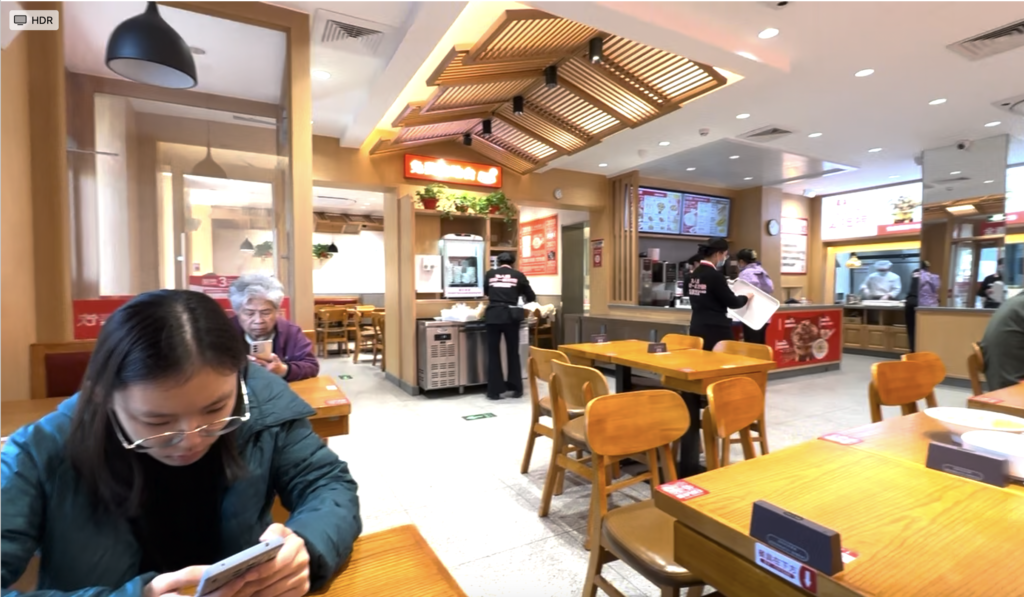
南城香 became that kind of place for us.
It wasn’t somewhere we traveled across Beijing specially to visit.
It was simply a casual local restaurant chain that worked.
Bright.
Clean.
Affordable.
Plenty of choices.
And filled with ordinary people having ordinary meals.
That last part mattered.
Because sometimes experiencing China isn’t about finding another attraction.
Sometimes it’s sitting down and eating dinner where everybody else is eating dinner.
❤️ How a Restaurant Becomes “Our Place”
After eating somewhere once, you know roughly what to expect.
After the second visit, ordering becomes easier.
And after several visits…
Dad & Elaine had effectively developed a Beijing fallback:
“Don’t know what to eat?”
“南城香?”
“Okay.” 😂
That may not sound like much of a travel story.
But anyone who has traveled for several weeks will probably understand.
Finding one place where you know you can sit down, understand the system and find something everybody wants to eat is strangely comforting.
🍆 What Did Dad Actually Eat?
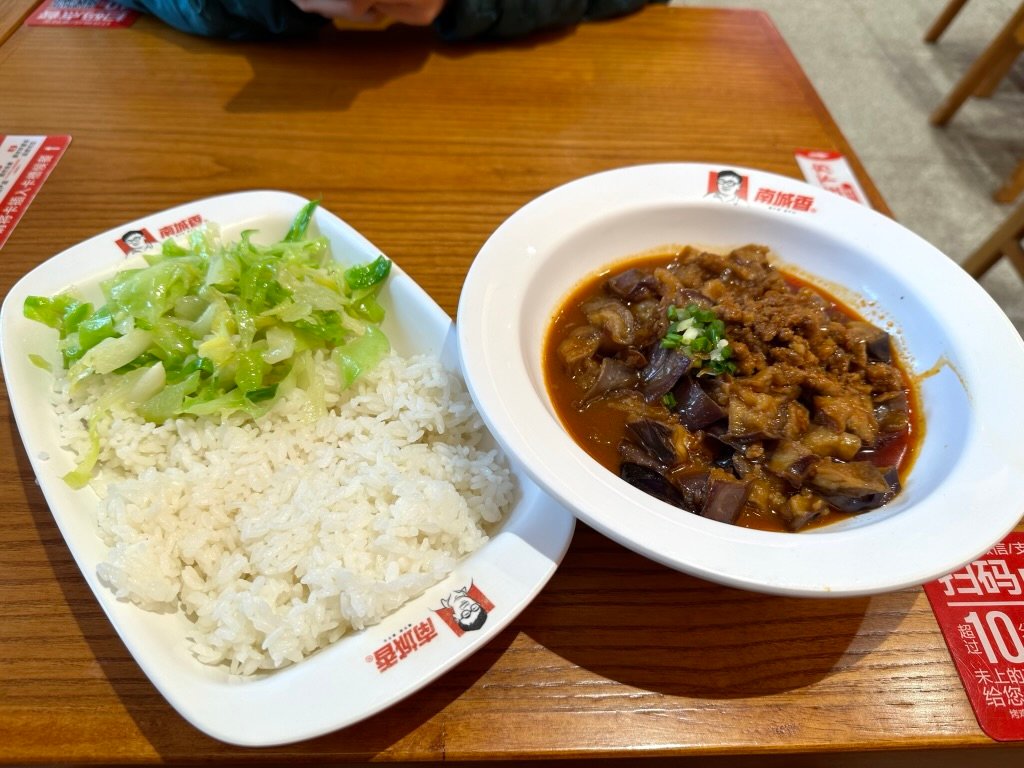
This photograph is probably the most Dad-looking meal imaginable. 😂
Rice.
Vegetables.
And 肉酱茄子饭 (ròujiàng qiézi fàn) — rice with eggplant in a savory minced-meat sauce.
A few useful Chinese food words:
米饭 (mǐfàn) — cooked rice
青菜 (qīngcài) — green vegetables
茄子 (qiézi) — eggplant
肉酱 (ròujiàng) — meat sauce
Nothing fancy.
Nothing that required a food guide.
Nothing Dad needed to photograph from six different angles before eating. 😂
But after a long day walking around Beijing, sometimes this was exactly what Dad wanted.
Rice. Vegetables. A proper hot dish. Done.
🥟 Elaine’s Wontons
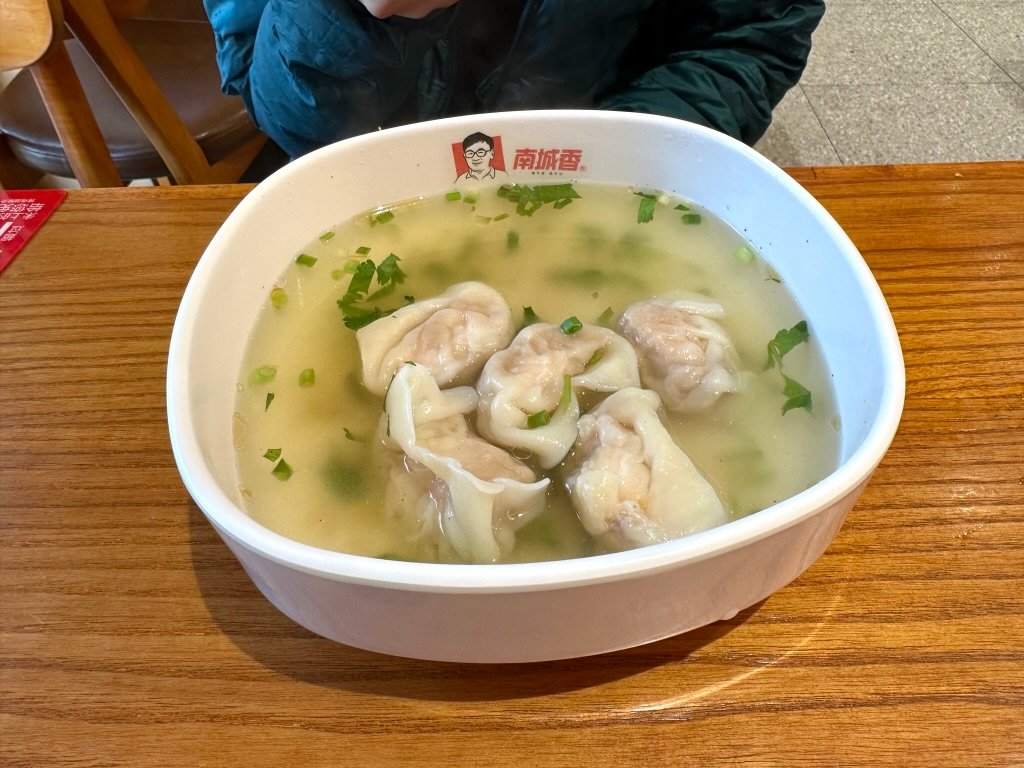
Another easy choice was:
三鲜大馄饨 (sānxiān dà húntun) — large “three-fresh” wontons served in soup.
The menu described the filling as containing:
- 鲜肉 (xiānròu) — fresh pork
- 木耳 (mù’ěr) — wood ear mushroom
- 鸡蛋 (jīdàn) — egg
- 菌菇 (jūngū) — mushrooms
The menu also offered a 半份 (bàn fèn) — half portion.
That meant five wontons.
Simple.
Warm.
Comforting.
And importantly when you’re traveling:
you didn’t have to order an enormous restaurant meal just because you wanted something to eat.
📱 Then Dad Had to Learn How to Order 😂
There wasn’t necessarily a waiter arriving with a thick printed menu.
Instead, there was this:
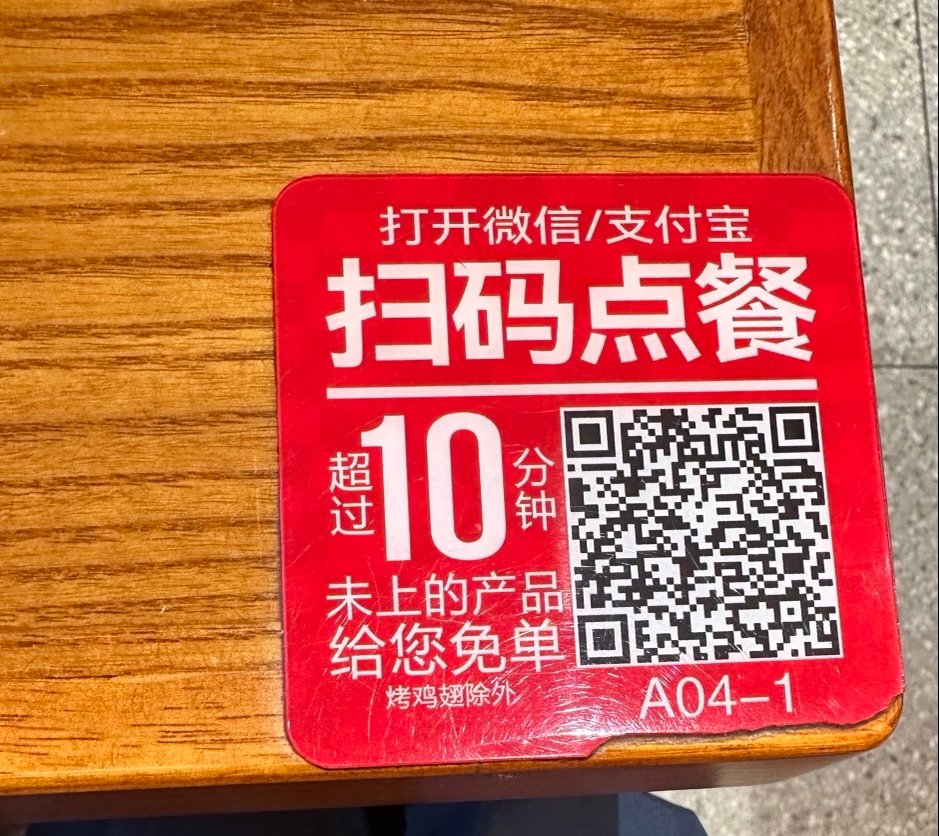
A QR code.
The Chinese instruction was:
扫码点餐 (sǎomǎ diǎncān)
Literally:
scan the code to order.
You scan the code with your phone, open the digital menu, choose the dishes and place the order.
Depending on the restaurant’s system, payment can also be completed digitally.
For first-time international travelers, that can initially produce a:
“Errr… where’s the menu?” 😬
moment.
Dad understands.
We had those moments too.
ChinaTravelBUG has a separate explanation here:
👉 Why Do Some Restaurants in China Make You Scan a QR Code to Order?
😂 Dad’s Secret Weapon: PICTURES
Fortunately, the digital menu showed photographs.
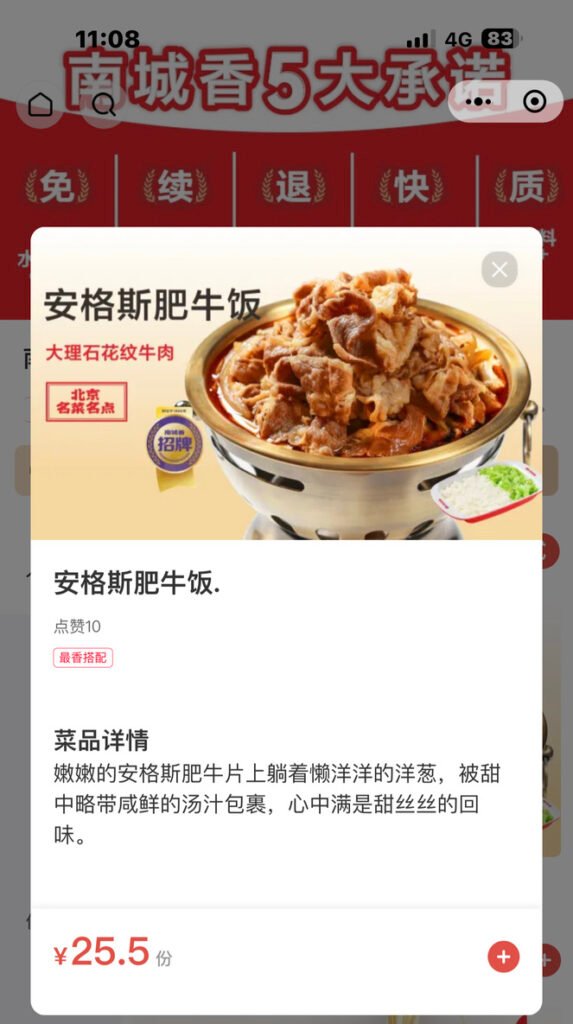
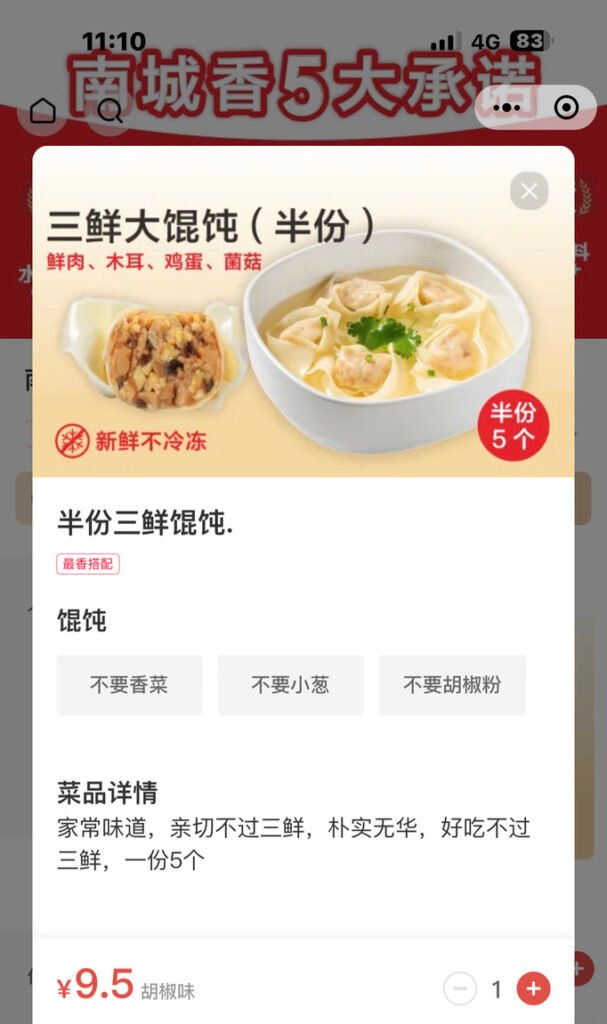
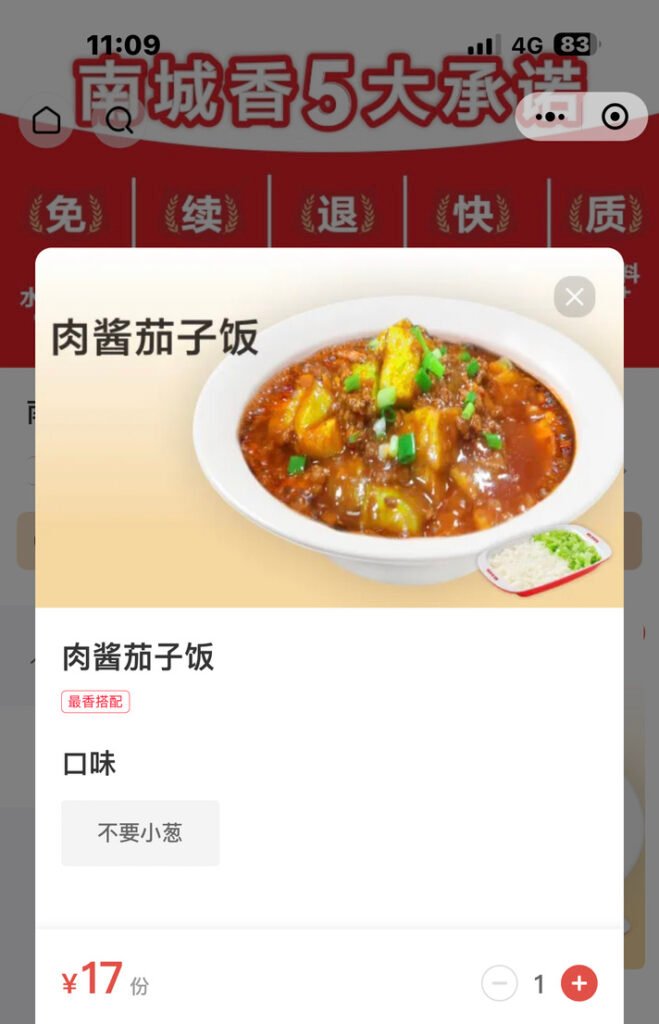
That made life much easier.
Dad could look.
Elaine could read.
And together we could work out what Dad was actually about to order. 😂
During our October 2023 Beijing trip, for example, we saw:
安格斯肥牛饭 (Āngésī féiniú fàn)
Angus fatty-beef rice — RMB 25.50
肉酱茄子饭 (ròujiàng qiézi fàn)
Rice with eggplant and minced-meat sauce — RMB 17
三鲜大馄饨(半份)(sānxiān dà húntun, bàn fèn)
Half portion of three-fresh wontons — RMB 9.50
⚠️ Important Price Note
Those are October 2023 prices from our own visit.
They are NOT current-price quotations.
Menus, portion sizes and prices change.
We’re showing them because they provide a useful snapshot of what this kind of everyday Beijing meal cost when Dad & Elaine ate there in October 2023.
💳 And Yes — We Paid With the Phone
Mobile payment was already simply part of everyday life around us.
Two Chinese terms international travelers will quickly encounter are:
支付宝 (Zhīfùbǎo) — Alipay
微信支付 (Wēixìn Zhīfù) — WeChat Pay
If you’re preparing for your first China trip, set these up before you arrive rather than trying to figure everything out while standing hungry beside a restaurant table.
👉 How to Use Alipay & WeChat Pay in China — First-Time Visitor’s Guide
🀄 Dad’s Mini Chinese Menu
You don’t need to learn Chinese to eat in China.
But knowing a few words makes the experience more interesting.
南城香 (Nánchéngxiāng) — the restaurant chain
米饭 (mǐfàn) — cooked rice
青菜 (qīngcài) — green vegetables
茄子 (qiézi) — eggplant
牛肉 (niúròu) — beef
猪肉 (zhūròu) — pork
馄饨 (húntun) — wonton
半份 (bàn fèn) — half portion
扫码点餐 (sǎomǎ diǎncān) — scan the QR code to order
And two particularly useful ones:
不要香菜 (bú yào xiāngcài) — no cilantro/coriander
不要小葱 (bú yào xiǎocōng) — no scallions
Dad suspects the last two may be more useful to some travelers than learning how to say “Where is the Forbidden City?” 😂
🏙️ This Was Also Part of Seeing Beijing
When first-time travelers imagine Beijing, they naturally think about:
the Forbidden City,
the Great Wall,
the Temple of Heaven,
Tiananmen,
hutongs,
Peking duck.
Of course.
Those are part of Beijing.
But this was Beijing too.
[PHOTO — restaurant interior with local diners]
Families eating.
People coming in after work.
Someone scanning a QR code.
Someone collecting dinner.
Dad eating his rice.
Elaine having wontons.
Nothing particularly remarkable was happening.
And that’s precisely why Dad remembers it.
This was everyday Beijing.
🐞 ChinaTravelBUG’s Take
南城香 isn’t on Dad’s list because we’re claiming it serves “the best food in Beijing.”
We don’t know that.
And that’s not the point.
It became memorable because we actually used it.
Again.
And again.
When we were tired, it worked.
When Dad wanted rice and vegetables, it worked.
When Elaine wanted something simple, it worked.
When nobody wanted to spend another 20 minutes deciding where to eat…
it definitely worked. 😂
Travel isn’t made entirely from bucket-list experiences.
Some memories come from the ordinary places that quietly become part of your journey.
For Dad & Elaine, 南城香 (Nánchéngxiāng) became one of those places in Beijing.
And if you’re looking for Beijing’s famous dishes rather than our everyday comfort food, continue here:
Our visit: October 2023
Prices shown: October 2023 firsthand prices
Restaurant: 南城香 (Nánchéngxiāng), Beijing
ChinaTravelBUG: Real journeys. Real stories. Real China.