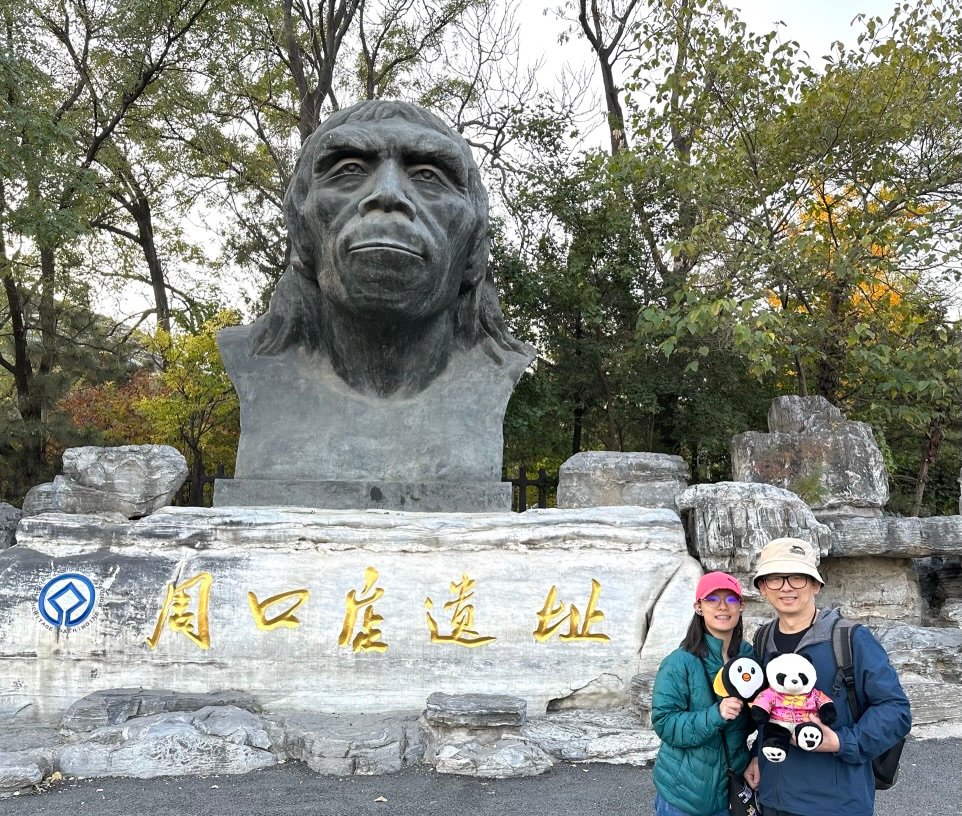
Just Outside Beijing (北京, Běijīng), Dad & Elaine Found a Human Story Hundreds of Thousands of Years Older Than Imperial China
When international travelers come to:
Beijing (北京, Běijīng)
we naturally think of history.
The:
Forbidden City (故宫, Gùgōng).
The:
Great Wall (长城, Chángchéng).
The:
Temple of Heaven (天坛, Tiāntán).
Emperors.
Dynasties.
Palaces.
Walls.
Imperial China.
But one day Dad & Elaine traveled southwest from central Beijing (北京, Běijīng)…
and the historical clock suddenly broke.
🎥 First — Come Inside Zhoukoudian With Dad & Elaine
Before we travel hundreds of thousands of years into human prehistory…
come inside the Zhoukoudian Site Museum (周口店遗址博物馆, Zhōukǒudiàn Yízhǐ Bówùguǎn) with us!
🎬 Video 1 — Entering the Zhoukoudian Site Museum
🎬 Video 2 — Meeting the Prehistoric People of Zhoukoudian
Now that you’ve had a glimpse inside the museum…
let’s turn the historical clock back.
Not 500 years.
Not 5,000 years.
But
HUNDREDS OF THOUSANDS OF YEARS.
To:
Zhoukoudian (周口店, Zhōukǒudiàn)
in:
Fangshan District (房山区, Fángshān Qū)
Beijing Municipality (北京市, Běijīng Shì).
And that’s where Dad realized something.
Before Beijing (北京, Běijīng)…
before the Great Wall (长城, Chángchéng)…
before Qin Shi Huang (秦始皇, Qín Shǐ Huáng)…
before the Shang Dynasty (商朝, Shāng Cháo)…
before the Zhou Dynasty (周朝, Zhōu Cháo)…
there were already humans living in this landscape.
🔥
🌍 UNESCO WORLD HERITAGE SITE
The:
Zhoukoudian Peking Man Site (周口店北京人遗址, Zhōukǒudiàn Běijīngrén Yízhǐ)
is a:
UNESCO WORLD HERITAGE SITE.
But Dad wants to clear up one potentially confusing point immediately.
There are two related things international travelers may encounter:
Zhoukoudian Peking Man Site (周口店北京人遗址, Zhōukǒudiàn Běijīngrén Yízhǐ)
— the archaeological site and UNESCO property.
And:
Zhoukoudian Site Museum (周口店遗址博物馆, Zhōukǒudiàn Yízhǐ Bówùguǎn)
— the museum where visitors can learn about the discoveries, fossils, excavations and prehistoric human populations associated with Zhoukoudian (周口店, Zhōukǒudiàn).
Dad & Elaine visited the:
Zhoukoudian Site Museum (周口店遗址博物馆, Zhōukǒudiàn Yízhǐ Bówùguǎn).
And Dad needs to confess something very early in this article.
😂
😂 Dad & Elaine Did NOT Finish Zhoukoudian (周口店, Zhōukǒudiàn)
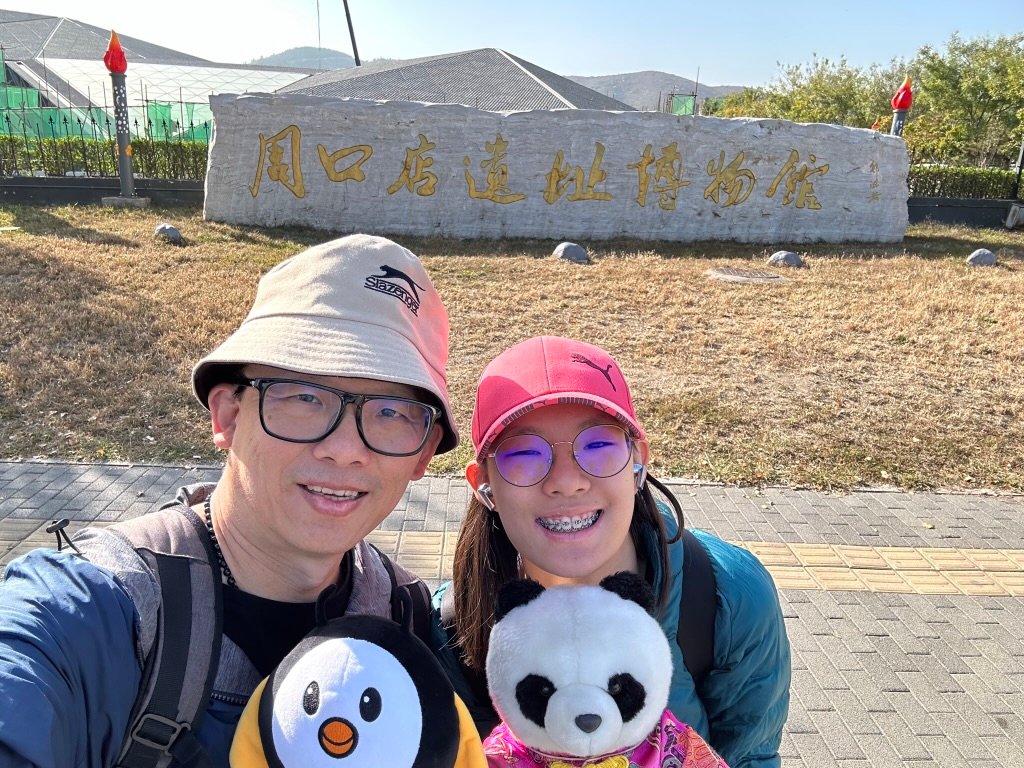
We visited the:
Zhoukoudian Site Museum (周口店遗址博物馆, Zhōukǒudiàn Yízhǐ Bówùguǎn).
We learned about:
Peking Man (北京人, Běijīngrén),
Upper Cave People (山顶洞人, Shāndǐngdòngrén),
the excavations,
the fossils,
and the extraordinary prehistoric human story preserved around Zhoukoudian (周口店, Zhōukǒudiàn).
Then came the archaeological localities themselves.
Dad looked at Elaine.
Elaine looked at Dad.
Our legs held a meeting.
😂
And our legs voted:
NO.
So Dad & Elaine did not complete the archaeological-site walk after the museum.
That’s useful information.
Because later in this article, when Dad tells you:
“Give Zhoukoudian (周口店, Zhōukǒudiàn) enough time — and enough energy,”
we’re not repeating something copied from a travel brochure.
We learned it ourselves.
😂
First — Dad’s Deep-Time Coat Rack
Before we meet Peking Man (北京人, Běijīngrén) properly, Dad needs to fix one problem.
The numbers are enormous.
If Dad says:
“Hundreds of thousands of years ago…”
your brain may politely reply:
“Okay.”
Then immediately forget what that means.
😂
So let’s hang a few coats.
PEKING MAN (北京人, Běijīngrén)
🎬 Watch the Video
Homo erectus
Hundreds of thousands of years ago.
↓
UPPER CAVE PEOPLE (山顶洞人, Shāndǐngdòngrén)
Homo sapiens
Tens of thousands of years ago.
↓
NEOLITHIC PERIOD (新石器时代, Xīnshíqì Shídài)
Farming communities.
Settlements.
Pottery.
Increasing social complexity.
↓
TAOSI ARCHAEOLOGICAL SITE (陶寺遗址, Táosì Yízhǐ)
Roughly 4,000 years ago.
And suddenly…
4,000 years ago starts looking rather recent.
😂
↓
SHANG DYNASTY (商朝, Shāng Cháo)
Late Shang Dynasty (商朝, Shāng Cháo) gives us the world of:
Yinxu (殷墟, Yīnxū)
and:
oracle-bone inscriptions (甲骨文, Jiǎgǔwén).
↓
ZHOU DYNASTY (周朝, Zhōu Cháo)
↓
QIN SHI HUANG (秦始皇, Qín Shǐ Huáng)
↓
IMPERIAL BEIJING (北京, Běijīng)
↓
DAD & ELAINE
😂
Now we have a Coat Rack.
And look at the enormous space near the top.
That’s the world we’re entering.
🧠 Dad’s First Sting — “Ancient China” Is Still Much Too Young
This is what Zhoukoudian (周口店, Zhōukǒudiàn) did to Dad’s brain.
Dad had already spent years falling into rabbit holes about:
Qin Shi Huang (秦始皇, Qín Shǐ Huáng),
Confucius (孔子, Kǒngzǐ),
Zhou Dynasty (周朝, Zhōu Cháo),
Shang Dynasty (商朝, Shāng Cháo),
and archaeological places such as:
Taosi Archaeological Site (陶寺遗址, Táosì Yízhǐ).
Those are OLD.
Very old.
But compared with Peking Man (北京人, Běijīngrén)?
THEY ARE YOUNG.
😂🔥
That’s the first mental adjustment international travelers need at Zhoukoudian (周口店, Zhōukǒudiàn).
This isn’t primarily:
Chinese dynastic history.
It is:
HUMAN PREHISTORY.
🦴 So Who Was Peking Man (北京人, Běijīngrén)?
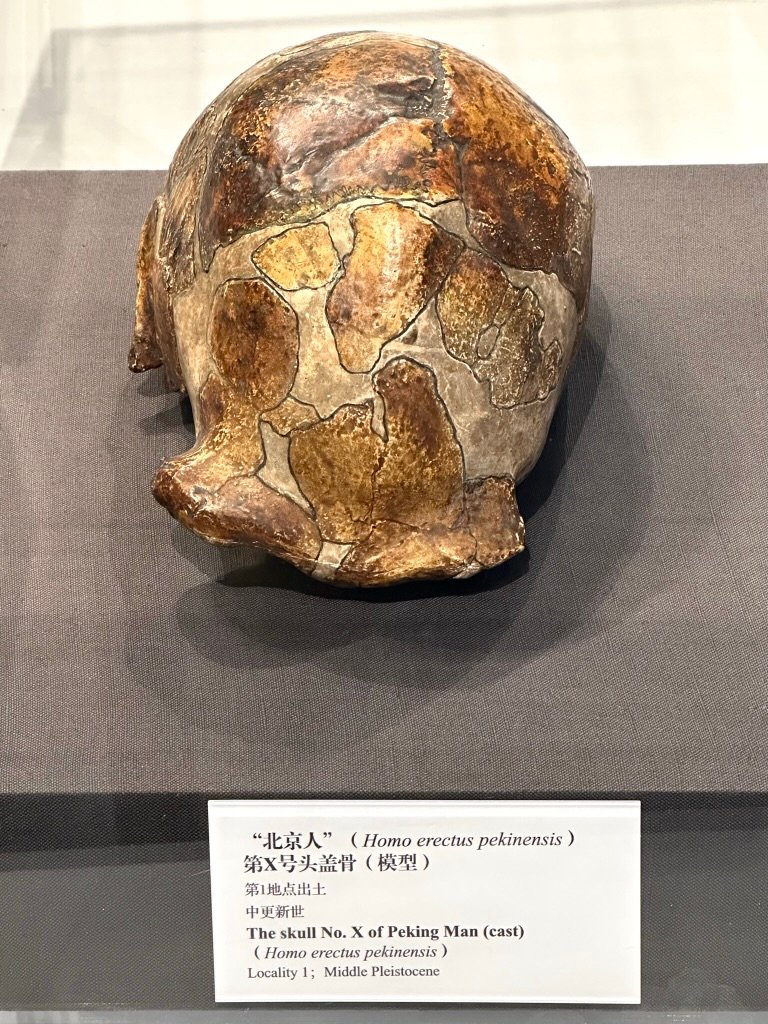
The famous:
Peking Man (北京人, Běijīngrén)
refers to fossil remains classified as:
Homo erectus
found at Zhoukoudian (周口店, Zhōukǒudiàn).
The discoveries became internationally important to the study of human evolution.
Researchers uncovered fossil material associated with multiple individuals, together with stone tools and other archaeological evidence.
And because the site lies within modern Beijing Municipality (北京市, Běijīng Shì), the name:
Peking Man (北京人, Běijīngrén)
became famous around the world.
But Dad needs to put a giant warning sign here.
🌶️ The ONE Thing Dad Does Not Want You to Take Away
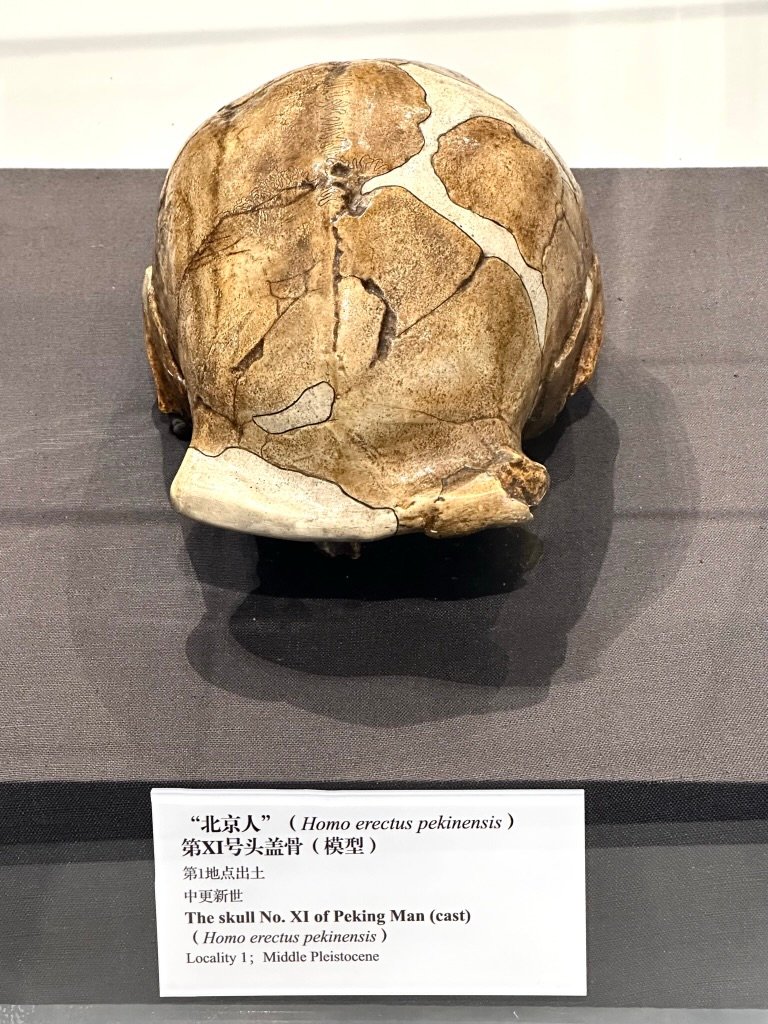
PEKING MAN (北京人, Běijīngrén) WAS NOT “THE FIRST CHINESE PERSON.”
🔥
Please don’t leave Zhoukoudian (周口店, Zhōukǒudiàn) thinking:
Peking Man (北京人, Běijīngrén)
↓
ancient Chinese
↓
modern Chinese
as though we have a simple straight family tree.
NO.
Peking Man (北京人, Běijīngrén) belongs to a prehistoric human population classified as:
Homo erectus.
Modern humans are:
Homo sapiens.
And concepts such as:
China,
Chinese civilization,
Chinese ethnicity,
Chinese nationality,
and:
modern Chinese identity
belong to vastly later historical worlds.
So Dad’s evidence handrail is:
PREHISTORIC HUMAN POPULATION ≠ MODERN NATIONAL IDENTITY.
This distinction matters enormously.
And it will matter even more when we meet:
Upper Cave People (山顶洞人, Shāndǐngdòngrén).
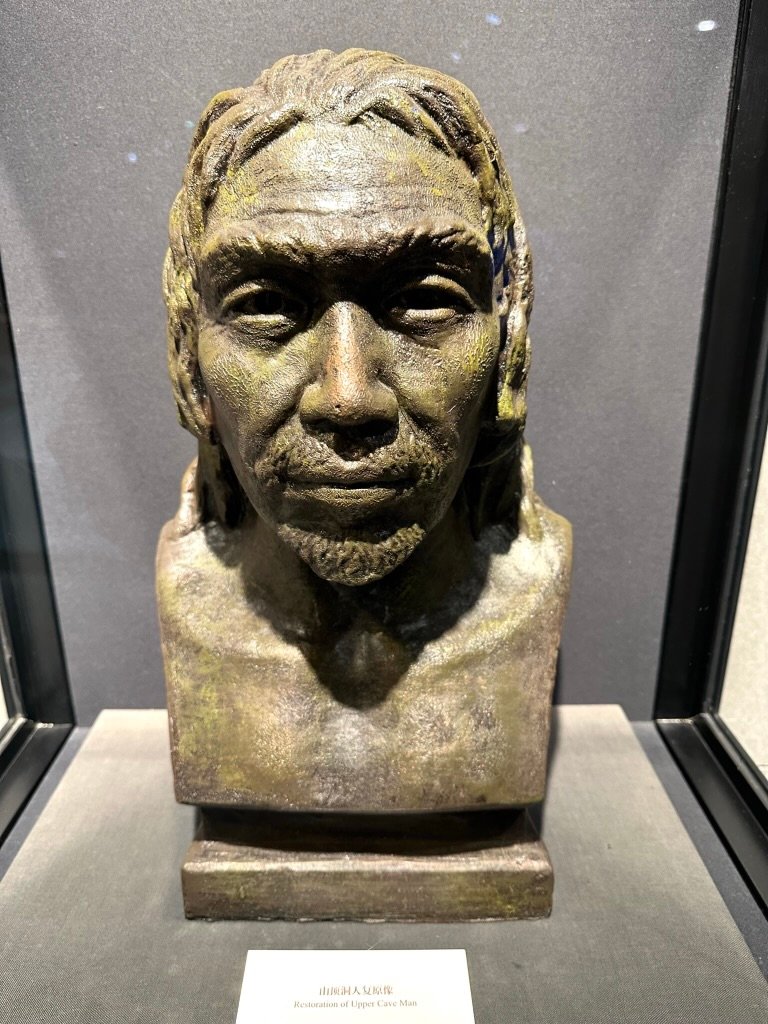
Because they were not simply:
“Peking Man (北京人, Běijīngrén), but later.”
They represent another chapter in the human story.
And that’s where we’re going next.
🐇
🦴 Two Very Different Human Worlds at Zhoukoudian (周口店, Zhōukǒudiàn)
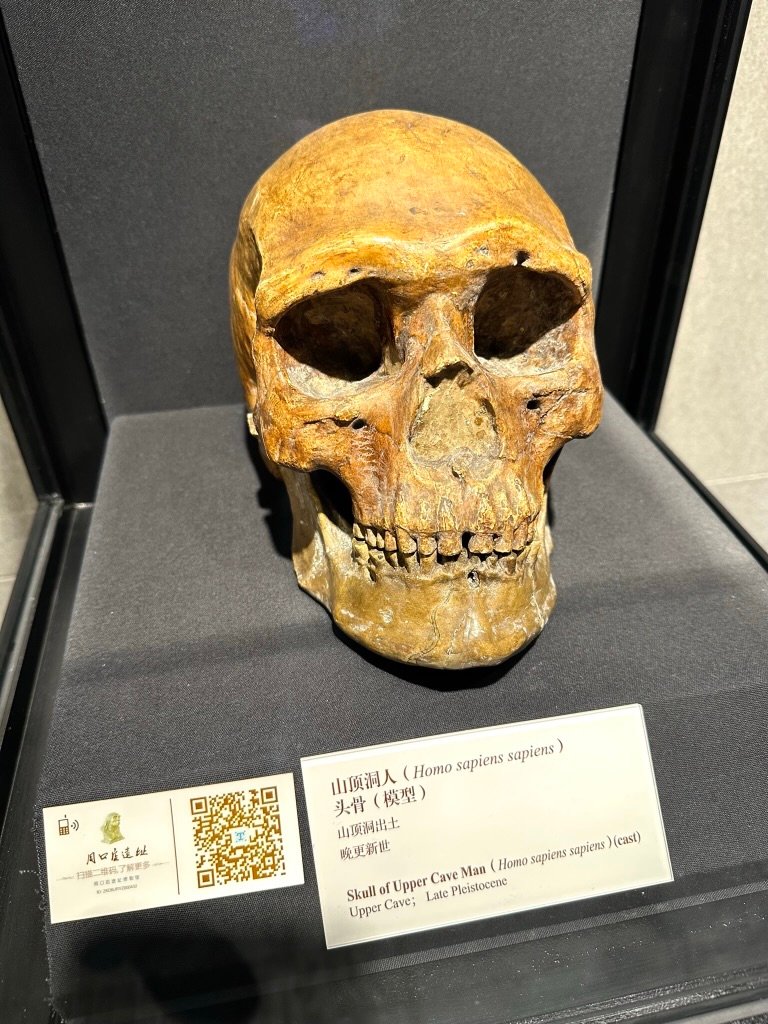
This is where Zhoukoudian (周口店, Zhōukǒudiàn) becomes much more interesting than:
“Here are some very old bones.”
😂
Because the site preserves evidence associated with human populations separated by an enormous amount of time.
Two names matter especially for an international traveler:
Peking Man (北京人, Běijīngrén)
and:
Upper Cave People (山顶洞人, Shāndǐngdòngrén).
At first, Dad made the obvious beginner’s mistake.
Earlier people.
Later people.
So perhaps:
Peking Man (北京人, Běijīngrén)
↓
slowly becomes
↓
Upper Cave People (山顶洞人, Shāndǐngdòngrén)
↓
slowly becomes
↓
us?
Nice straight line.
Easy.
And…
WRONG HANDRAIL.
😂
Let’s separate them properly.
👤 Peking Man (北京人, Běijīngrén)
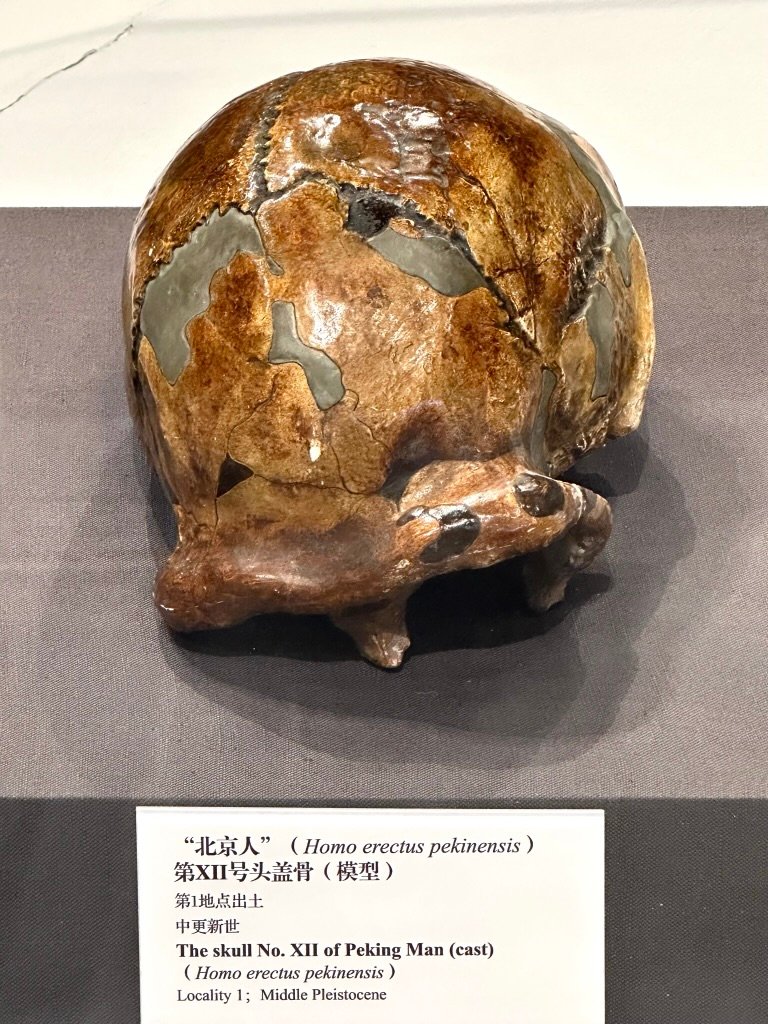
The fossils known as:
Peking Man (北京人, Běijīngrén)
are classified as:
Homo erectus.
These prehistoric humans lived in the Zhoukoudian (周口店, Zhōukǒudiàn) area hundreds of thousands of years ago.
Think about that number for a moment.
Not:
before the Ming Dynasty (明朝, Míng Cháo).
Not:
before the Qin Dynasty (秦朝, Qín Cháo).
Not:
before the Shang Dynasty (商朝, Shāng Cháo).
But:
HUNDREDS OF THOUSANDS OF YEARS AGO.
🔥
That’s why Dad’s normal Chinese-history Coat Rack almost becomes useless here.
We’re on another clock.
🪨 Don’t Just Look at the Skull — Look at the Stuffs They Left Behind
This is one thing Dad wants international travelers to remember when visiting a prehistoric museum.
The bones attract our attention.
Naturally.
They look dramatic.
But archaeology isn’t only asking:
“What did these humans look like?”
It is also asking:
“WHAT WERE THEY DOING?”
That’s where:
The stuffs they left behind
become important.
Artifacts associated with Peking Man (北京人, Běijīngrén) and the wider archaeological deposits at Zhoukoudian (周口店, Zhōukǒudiàn) give researchers evidence about human activity.
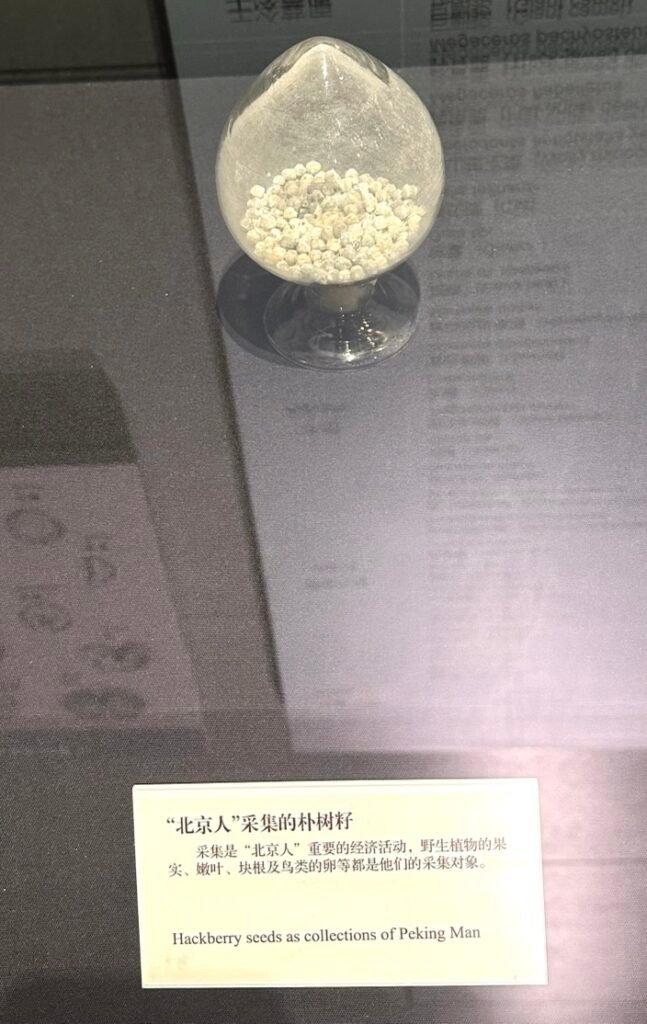
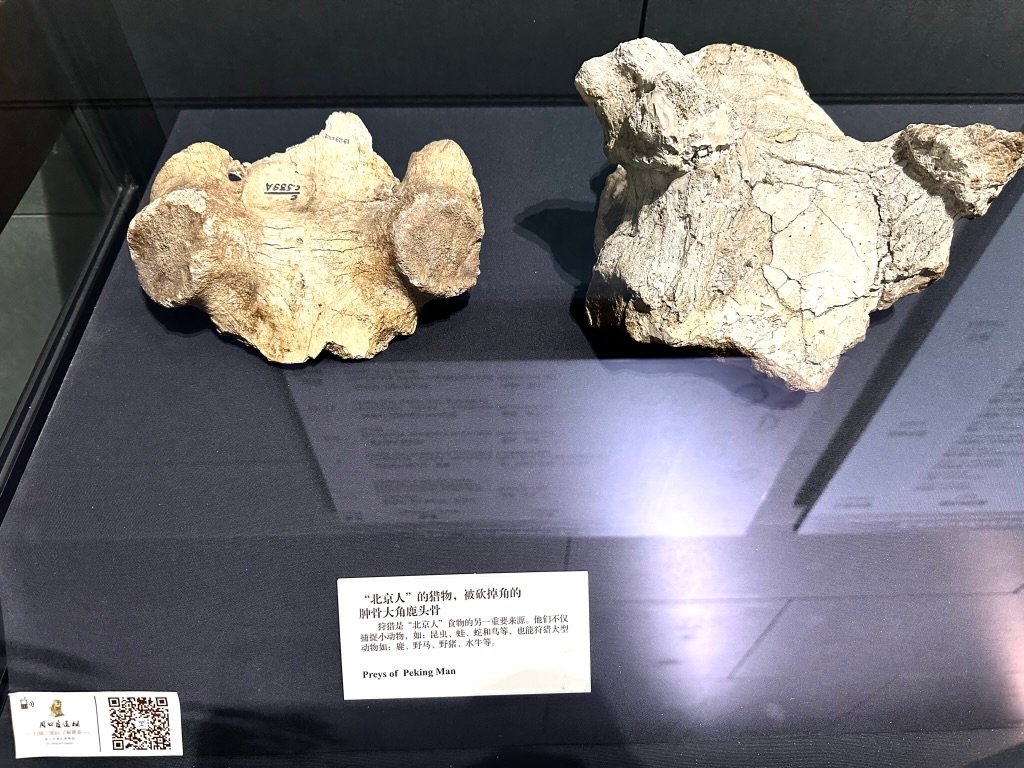
It becomes part of a much bigger question:
What might it have been used for?
What does the surrounding archaeological context tell us?
That’s how prehistory starts speaking without written words.
🔥 What About Fire?
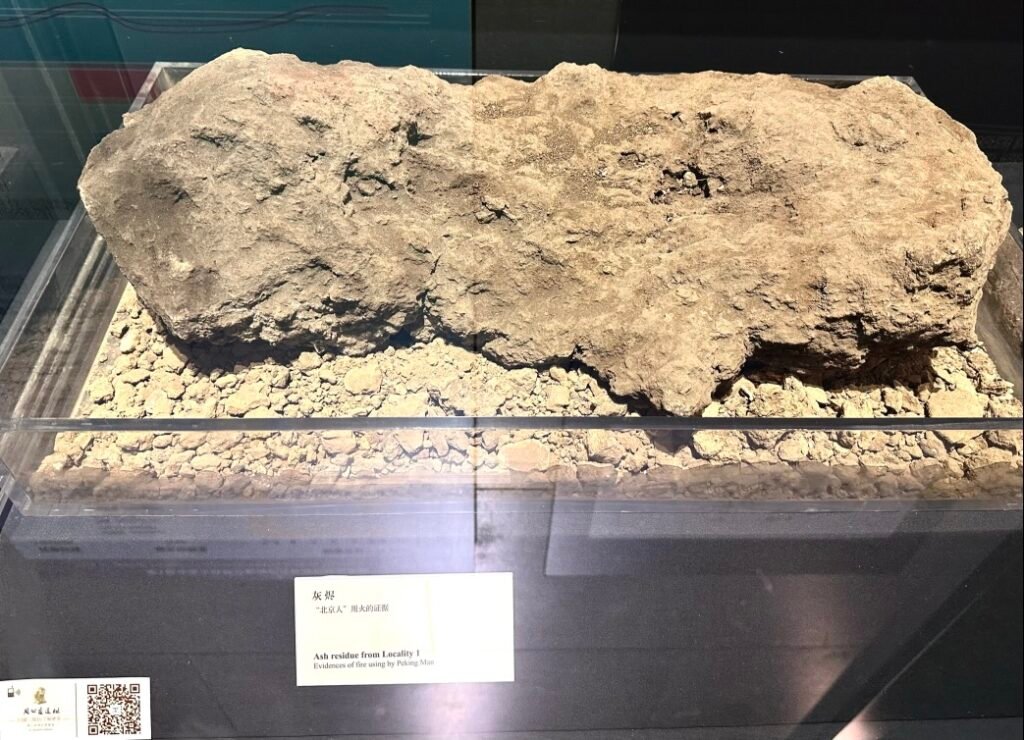
This is one of the famous Zhoukoudian (周口店, Zhōukǒudiàn) questions.
Evidence connected with fire at the site has played an important role in archaeological discussion.
And Dad wants to be careful here.
Finding:
burned material,
ash-like deposits,
or evidence affected by heat
doesn’t automatically answer every question about:
who produced the fire,
whether humans controlled it,
how regularly they used it,
or:
exactly what they were doing with it.
Those questions depend on archaeological context and interpretation.
So Dad’s rule remains:
EVIDENCE FIRST.
Then:
INTERPRETATION.
Not:
GREAT STORY FIRST → FORCE THE EVIDENCE TO FIT.
😂
That distinction will become extremely important later in this article.

🧠 Western Handrail — Imagine a Crime Scene Without Witnesses
Here’s Dad’s handrail for prehistory.
Imagine arriving at a crime scene…
hundreds of thousands of years late.
😂
Nobody is there to interview.
There are no:
diaries,
photographs,
newspapers,
government records,
or:
oracle-bone inscriptions (甲骨文, Jiǎgǔwén).
Instead, you have:
bones,
stones,
sediments,
animal remains,
burned material,
and:
where everything was found.
From those clues, researchers try to reconstruct:
WHAT HAPPENED HERE?
That’s archaeology.
And that’s why context matters so much.
😳 Then Dad Met the Upper Cave People (山顶洞人, Shāndǐngdòngrén)
Now jump forward an enormous amount of time.
At Zhoukoudian (周口店, Zhōukǒudiàn), another famous set of human remains became associated with:
Upper Cave (山顶洞, Shāndǐngdòng).
Hence the name:
Upper Cave People (山顶洞人, Shāndǐngdòngrén).
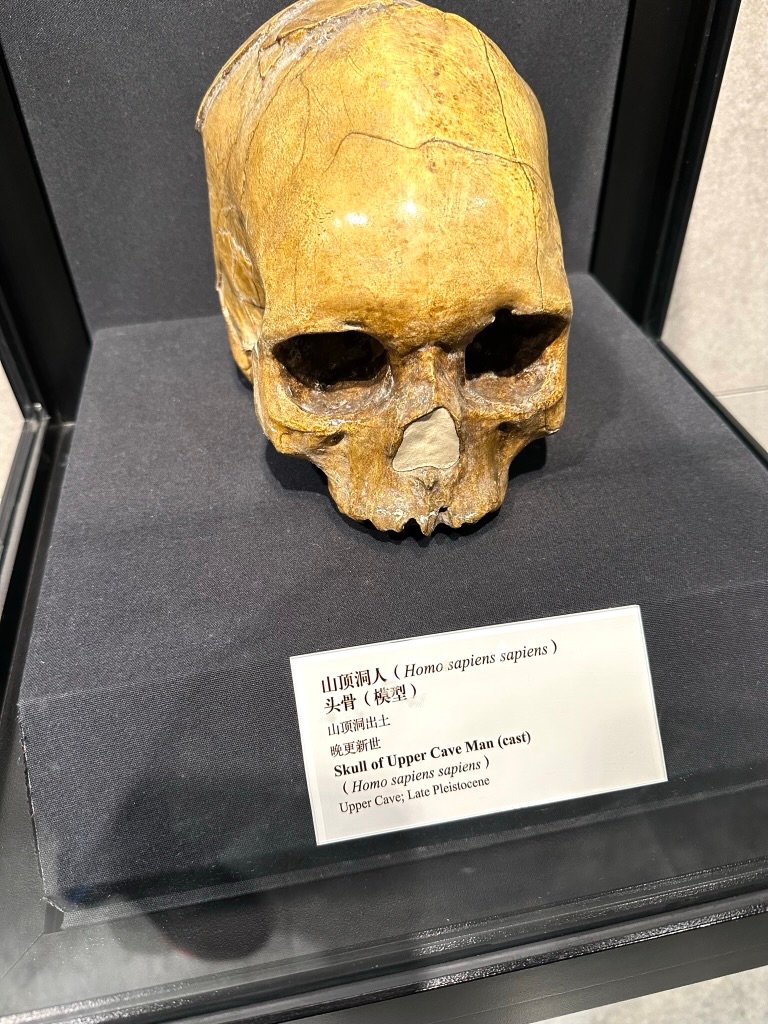
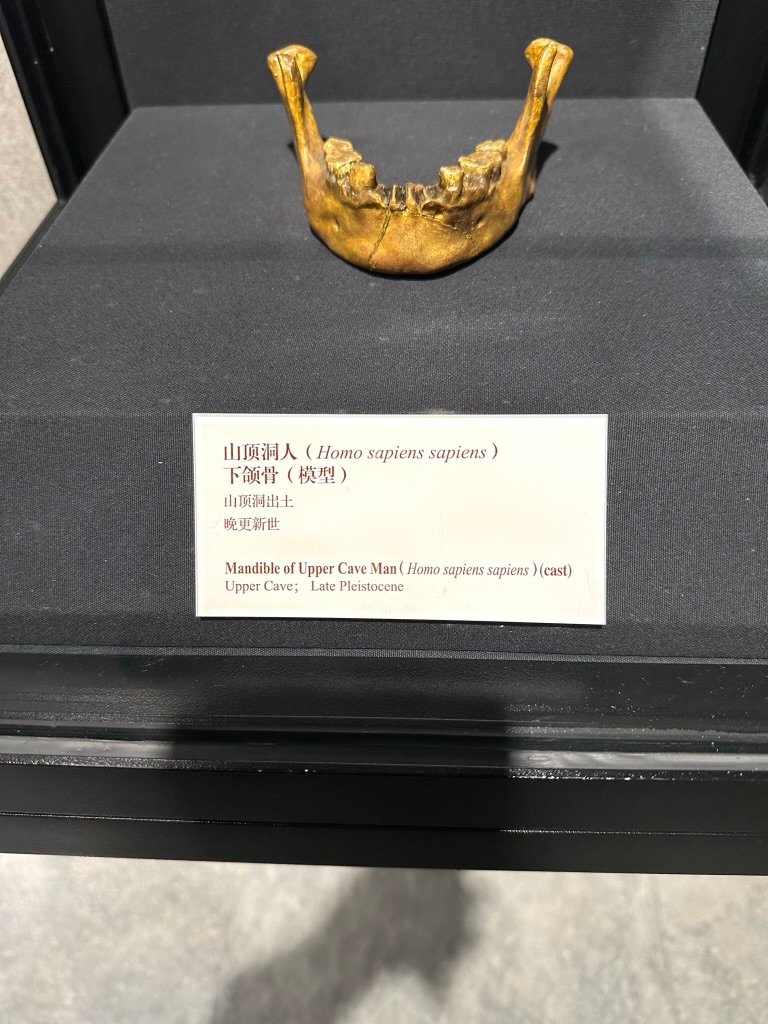
But these weren’t simply another group of:
Homo erectus.
The Upper Cave People (山顶洞人, Shāndǐngdòngrén) were:
Homo sapiens.
In other words:
modern humans.
Now Dad’s Coat Rack changes dramatically.
Don’t Build This Ladder
Please don’t imagine:
Peking Man (北京人, Běijīngrén)
↓
Upper Cave People (山顶洞人, Shāndǐngdòngrén)
↓
modern Chinese people
as one neat local family line.
❌❌❌
That’s exactly the mistake Dad wants this article to prevent.
The two populations are separated by a vast amount of time.
They belong to different parts of the human evolutionary story.
And the presence of both at Zhoukoudian (周口店, Zhōukǒudiàn) does not prove a simple direct biological succession from one to the other.
Same place does not mean same population.
🔥
That’s a useful rule well beyond Zhoukoudian (周口店, Zhōukǒudiàn).
🌶️ Peking Man (北京人, Běijīngrén) ≠ Upper Cave People (山顶洞人, Shāndǐngdòngrén)
Dad would put this on a giant museum handrail:
PEKING MAN (北京人, Běijīngrén)
Homo erectus
versus:
UPPER CAVE PEOPLE (山顶洞人, Shāndǐngdòngrén)
Homo sapiens
Don’t merge them.
And don’t turn either one automatically into:
“Chinese people.”
We’re still in:
HUMAN PREHISTORY.
Not Chinese national history.
Not dynastic history.
Not even the early civilizational world Dad normally spends far too much time rabbit-holing into.
😂
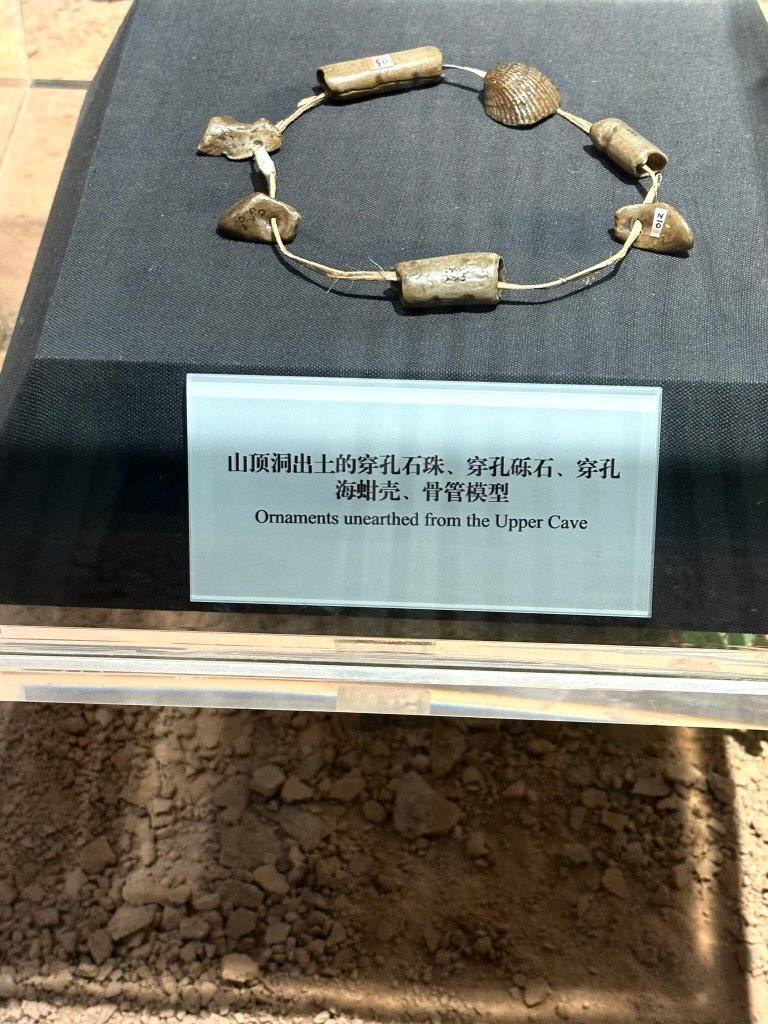
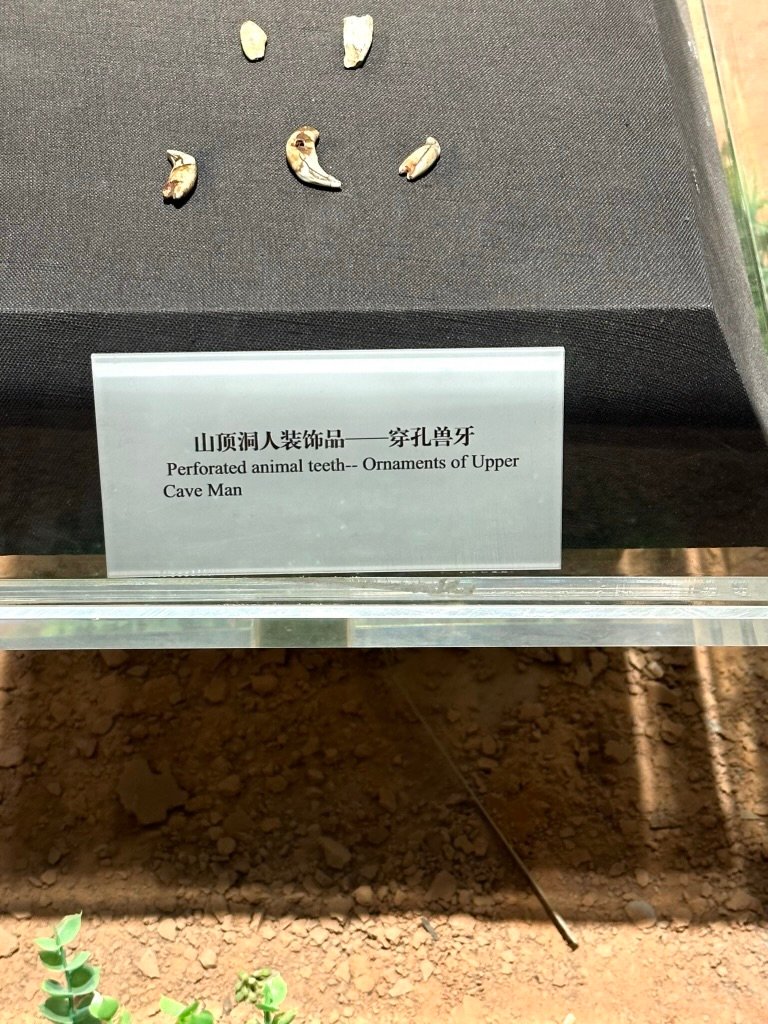
📿 Then Some Tiny Objects Change the Question
This is where Dad thinks the Upper Cave People (山顶洞人, Shāndǐngdòngrén) become particularly fascinating.
Among the archaeological finds associated with Upper Cave (山顶洞, Shāndǐngdòng) were:
ornaments.
Small objects.
Not a palace.
Not a bronze cauldron.
Not a Great Wall.
Tiny things.
And yet…
they can open an enormous human question.
WHY DECORATE YOURSELF?
🐇
👀 A Tool and an Ornament Tell Us Different Things
Think about a stone tool.
Its practical purpose may relate to:
cutting,
scraping,
processing,
or another physical task.
Now think about:
an ornament.
An ornament can potentially communicate something beyond immediate survival.
Perhaps:
identity,
belonging,
status,
personal preference,
social relationships,
or:
symbolic meaning.
We have to be careful.
Archaeology doesn’t let Dad interview an Upper Cave person (山顶洞人, Shāndǐngdòngrén) and ask:
“Excuse me. What exactly does your necklace mean?”
😂
So don’t overclaim.
But the existence of ornaments changes the kinds of questions we can ask.
⌚ Dad’s Watch, Elaine’s Bracelet
Dad likes this handrail.
Imagine archaeologists 30,000 years from now digging up:
Dad’s watch
and:
Elaine’s bracelet.
😂
Both are objects.
But they aren’t necessarily communicating the same thing.
Dad’s watch has an obvious practical function.
Elaine’s bracelet may have:
personal,
decorative,
social,
or:
symbolic meaning.
Now imagine trying to work that out without:
Dad,
Elaine,
photographs,
receipts,
Instagram,
or:
this article.
😂
That’s roughly the problem archaeologists face.
Objects survive.
Meanings don’t always survive with them.
So the job becomes:
INFERENCE WITH DISCIPLINE.
🧠 And That’s a Very Human Moment
This is where the emotional distance between us and prehistoric humans can suddenly shrink.
When Dad sees:
stone tools
he thinks:
survival.
When Dad sees:
ornaments
he starts thinking:
identity.
beauty.
belonging.
communication.
perhaps memory.
Not because every ornament proves all those things.
It doesn’t.
But because ornamentation opens questions that feel strikingly human.
And suddenly people living tens of thousands of years ago don’t feel like:
“prehistoric specimens.”
They start feeling like:
PEOPLE.
🔥
🐇 But Don’t Jump From “Human” to “Chinese”
This is the second major evidence guardrail.
We may recognize human behaviors that feel familiar.
Adornment.
Tool use.
Social relationships.
Burial practices.
Perhaps symbolic behavior.
But that does not mean we should project much later identities backward.
So:
HUMAN CONNECTION ❤️
does not equal:
MODERN ETHNIC CONTINUITY ❌
and does not equal:
MODERN NATIONAL IDENTITY ❌
That’s precisely why Zhoukoudian (周口店, Zhōukǒudiàn) belongs in DEEP China.
It forces us to ask:
When does it actually make sense to start talking about “China”?
Not here.
Not yet.
🐇
And that makes another DEEP China question much more interesting:
If prehistoric humans living around modern Beijing (北京, Běijīng) weren’t “Chinese” in the modern sense…
THEN WHO IS CHINESE?
That’s a rabbit for later.
😂
💥 Sting Check — Two Populations, Two Different Worlds
Don’t memorize another timeline.
Just keep this distinction:
PEKING MAN (北京人, Běijīngrén)
Homo erectus
hundreds of thousands of years ago
stone tools
prehistoric human activity
↓
HUGE TIME GAP
↓
UPPER CAVE PEOPLE (山顶洞人, Shāndǐngdòngrén)
Homo sapiens
tens of thousands of years ago
ornaments
different kinds of evidence about human behavior
That’s enough.
🔥
But now Dad has a problem.
Much of the fossil material that made Peking Man (北京人, Běijīngrén) famous…
DISAPPEARED.
😳
Not thousands of years ago.
Not in prehistoric times.
During the:
SECOND WORLD WAR (第二次世界大战, Dì Èr Cì Shìjiè Dàzhàn).
And the original fossils have never been securely recovered.
Now our prehistory article turns into:
archaeology
+
war
+
missing fossils
+
one of the great unresolved mysteries in the history of paleoanthropology.
🐇🐇🐇
That’s where we’re going next.
😳 Then the Peking Man (北京人, Běijīngrén) Fossils Disappeared
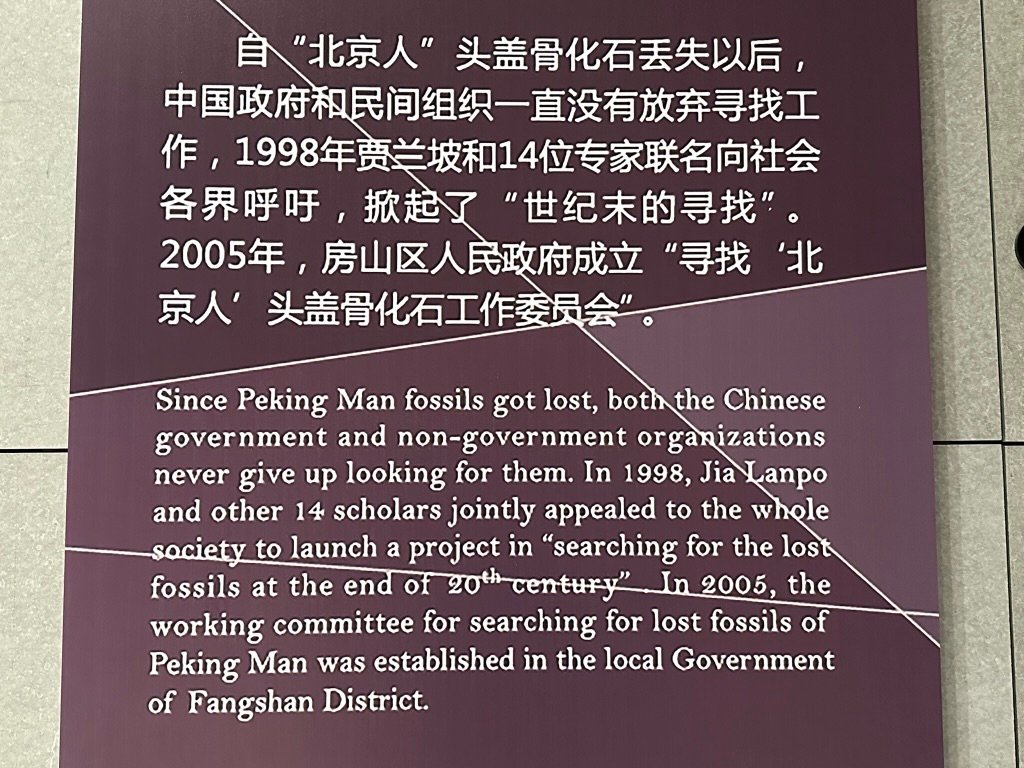
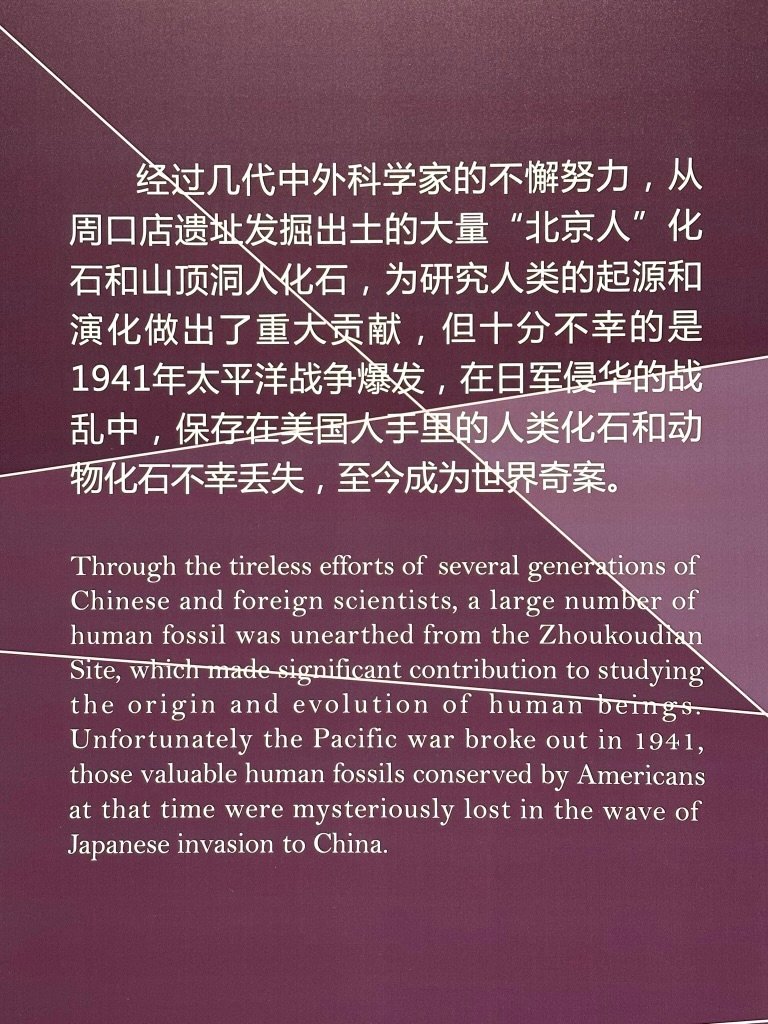
Just when Dad thought the story of Zhoukoudian (周口店, Zhōukǒudiàn) was already extraordinary enough…
it turned into a mystery.
😂
The fossils associated with Peking Man (北京人, Běijīngrén) helped make Zhoukoudian (周口店, Zhōukǒudiàn) internationally famous.
Scientists studied them.
Photographs were taken.
Measurements were made.
Casts were produced.
Research was published.
Then came war.
And in:
1941
some of the most important original Peking Man (北京人, Běijīngrén) fossils disappeared.
They have never been securely recovered.
😳
Now our archaeological rabbit hole becomes:
PREHISTORY
+
SCIENCE
+
WAR
+
A MISSING-FOSSILS MYSTERY.
🐇
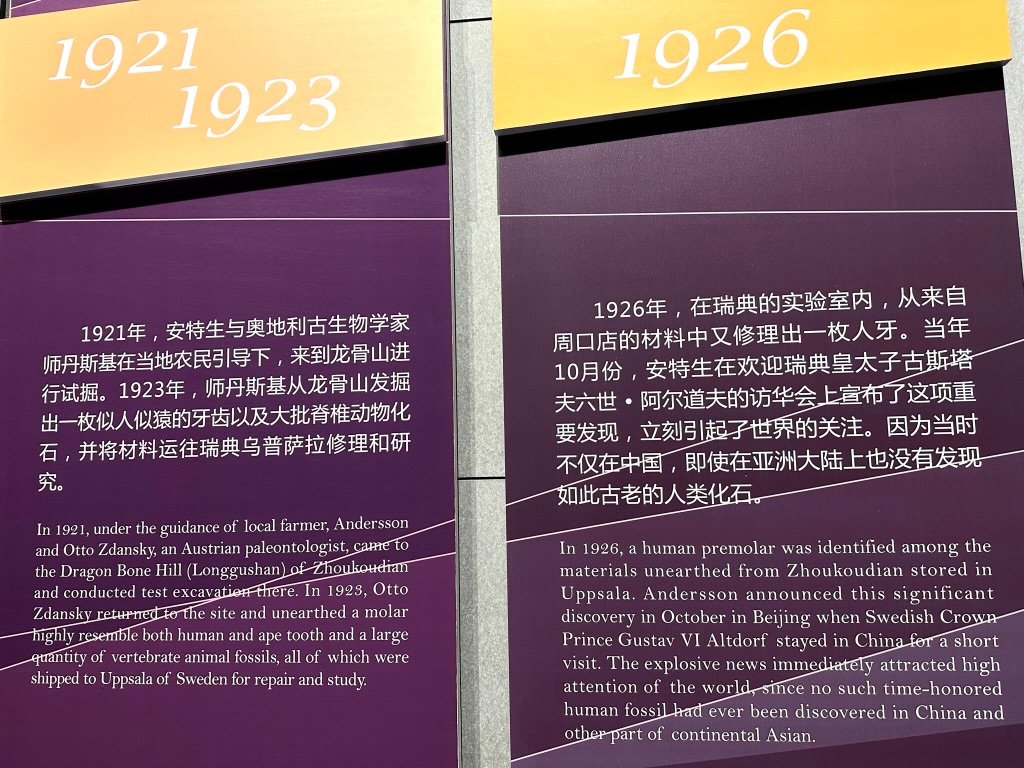
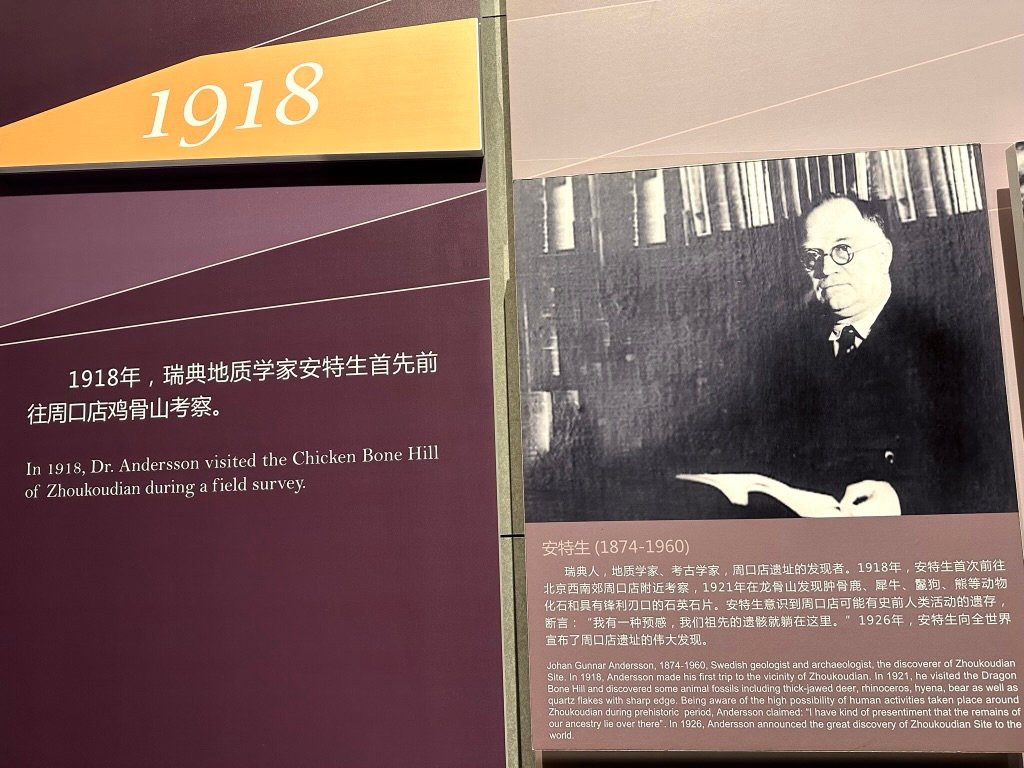
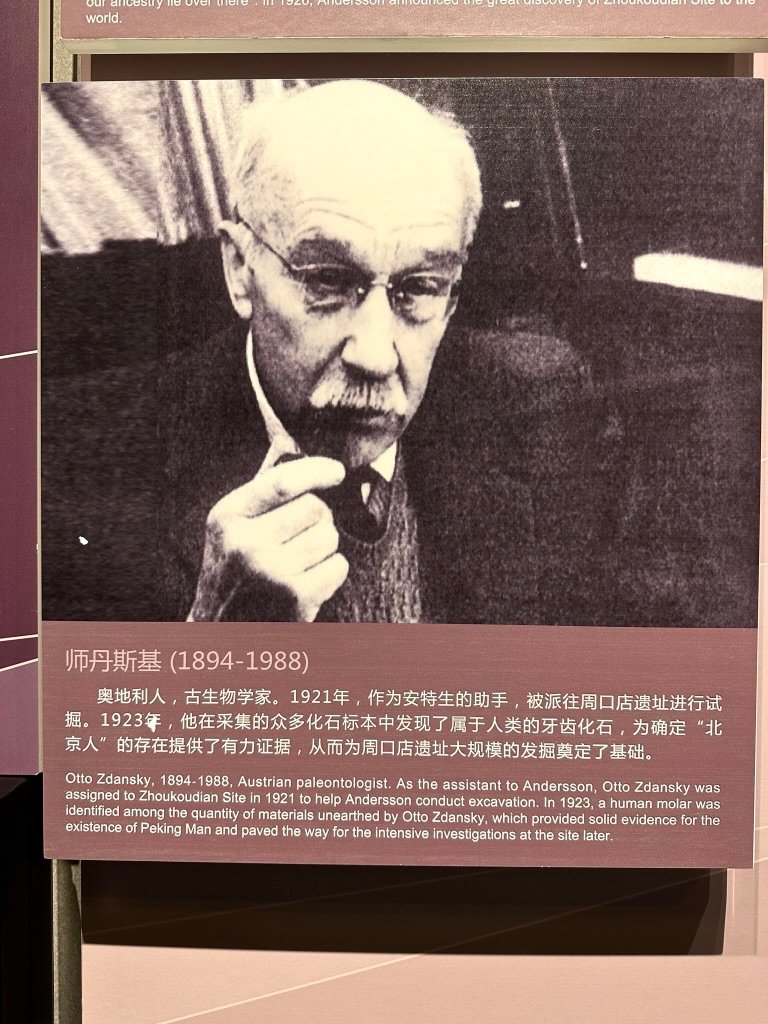
⏳ First — The Discovery Timeline
Dad doesn’t want another giant Coat Rack.
Just remember a few anchors.
1920s
Scientific excavation and research at Zhoukoudian (周口店, Zhōukǒudiàn) develop.
↓
1929
Chinese archaeologist:
Pei Wenzhong (裴文中, Péi Wénzhōng)
discovered the first relatively complete skullcap associated with:
Peking Man (北京人, Běijīngrén).
🔥
This became one of the landmark discoveries associated with Zhoukoudian (周口店, Zhōukǒudiàn).
↓
1930s
Further excavation and research continued.
Another important chapter emerged at:
Upper Cave (山顶洞, Shāndǐngdòng)
where remains associated with:
Upper Cave People (山顶洞人, Shāndǐngdòngrén)
were discovered.
↓
1937
War dramatically changed the environment in which archaeological research was taking place.
↓
1941
The famous original Peking Man (北京人, Běijīngrén) fossil collection was prepared for movement to greater safety.
Then…
IT DISAPPEARED.
🧳 Imagine Packing Some of the World’s Most Important Fossils
This is the part Dad finds almost cinematic.
Imagine you’re responsible for irreplaceable fossils.
War is spreading.
The security situation is deteriorating.
You know the material could be:
damaged,
destroyed,
looted,
or lost.
So an attempt is made to move it somewhere safer.
The fossils are packed.
They begin their journey.
And somewhere in the chaos surrounding the war…
the trail goes cold.
😳
Decades later:
the original fossils are still missing.
🕵️ So Where Are the Peking Man (北京人, Běijīngrén) Fossils?
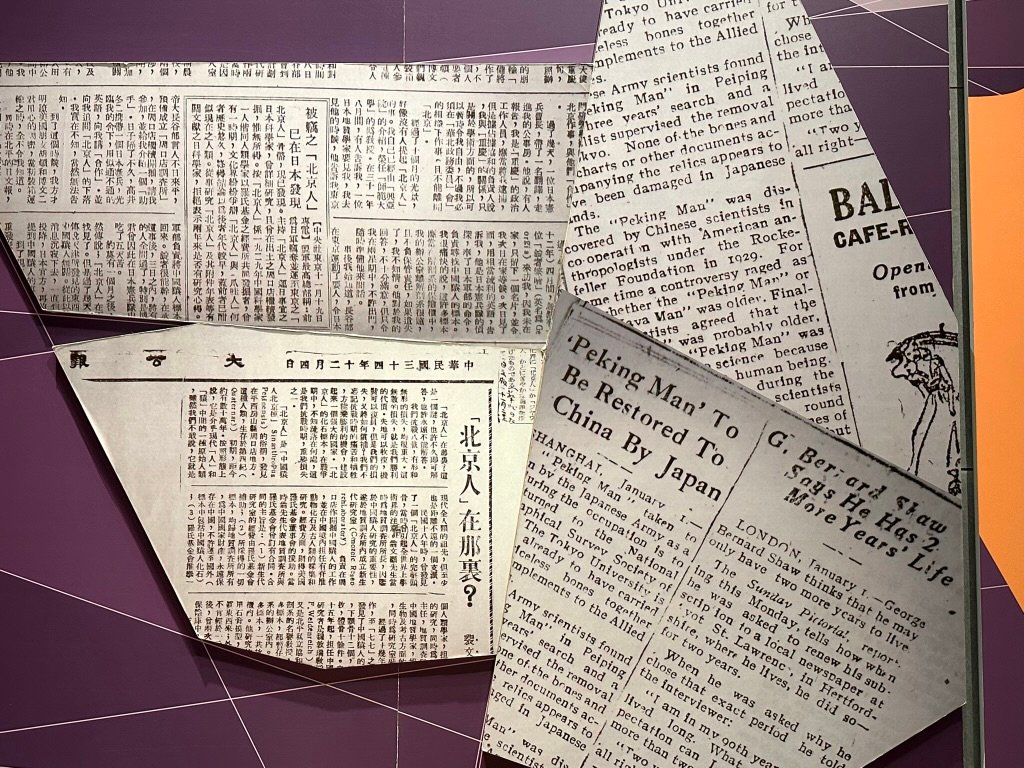
There have been many theories.
Hidden somewhere?
Buried?
Lost at sea?
Destroyed during wartime?
Still sitting undiscovered in some forgotten location?
Dad knows exactly what happens next.
😂
The rabbit-hole brain switches on.
“Maybe they are…”
STOP.
This is where DEEP China needs an evidence rule.
MYSTERY IS NOT EVIDENCE.
🔥
The fossils are missing.
That is established.
There have been attempts to trace them.
That is established.
Different theories have been proposed.
Also established.
But:
WE DO NOT CURRENTLY KNOW WITH CERTAINTY WHAT HAPPENED TO THEM.
And sometimes…
“We don’t know”
is the correct historical answer.
🧠 Dad’s Evidence Handrail — Don’t Reward the Most Exciting Story
This is useful far beyond Zhoukoudian (周口店, Zhōukǒudiàn).
When several explanations are possible, our brains naturally prefer:
the most dramatic one.
Secret treasure.
Hidden cave.
Sunken ship.
Conspiracy.
😂
But historical research doesn’t work by awarding the prize to:
BEST MOVIE SCRIPT.
It asks:
What evidence survives?
Where did the evidence come from?
How reliable is it?
Can it be independently checked?
What remains uncertain?
That’s much less exciting.
And much more useful.
😬 But If the Original Fossils Are Missing, How Can Scientists Still Study Peking Man (北京人, Běijīngrén)?
Excellent question.
This is where the story becomes more interesting than:
“Fossils lost. End of science.”
Before the original fossils disappeared, researchers had already produced:
measurements,
photographs,
descriptions,
drawings,
and:
casts.
Those records didn’t magically replace the originals.
The loss remains enormous.
But they preserved scientific information.
And importantly…
EXCAVATION AT ZHOUKOUDIAN (周口店, Zhōukǒudiàn) DIDN’T END IN 1941.
Later discoveries added further fossil and archaeological material.
Science kept moving.
👨🔬 Pei Wenzhong (裴文中, Péi Wénzhōng) Matters
There’s another reason Dad wants international travelers to remember:
Pei Wenzhong (裴文中, Péi Wénzhōng).
Older popular retellings of archaeology can sometimes fall into a familiar pattern:
Western scientist arrives.
↓
ancient site is “discovered.”
↓
everybody else becomes background scenery.
😂
The actual history of research at Zhoukoudian (周口店, Zhōukǒudiàn) was international and involved both Chinese and foreign researchers.
And Pei Wenzhong (裴文中, Péi Wénzhōng) occupies an important place in that history.
His 1929 discovery of the first relatively complete Peking Man (北京人, Běijīngrén) skullcap became one of the defining moments in the site’s scientific story.
Later Chinese researchers, including:
Jia Lanpo (贾兰坡, Jiǎ Lánpō)
also became important in continued research at Zhoukoudian (周口店, Zhōukǒudiàn).
So when you visit the:
Zhoukoudian Site Museum (周口店遗址博物馆, Zhōukǒudiàn Yízhǐ Bówùguǎn)
don’t remember only:
PEKING MAN (北京人, Běijīngrén).
Remember some of the people who actually did the archaeology too.
🔎 Archaeology Doesn’t Freeze When the Museum Label Is Printed
This is another lesson Dad took away from Zhoukoudian (周口店, Zhōukǒudiàn).
Scientific understanding changes.
Researchers obtain:
new evidence,
new dating results,
new analytical techniques,
and:
new interpretations.
That means a date you read in an old book may not be the best current estimate.
A reconstruction may change.
An interpretation may be challenged.
A classification may be refined.
🔥
That’s not archaeology failing.
THAT IS SCIENCE WORKING.
🗓️ One Very Useful Word — “Currently”
Dad loves this word in DEEP China articles.
😂
When dealing with archaeology, say:
“Current evidence suggests…”
or:
“Current dating places…”
rather than:
“Scientists have finally proved forever…”
Why?
Because tomorrow somebody may:
excavate another layer,
reanalyze an old specimen,
improve a dating method,
or discover something completely unexpected.
Then the Coat Rack gets adjusted.
That’s okay.
🦴 Even the Upper Cave People (山顶洞人, Shāndǐngdòngrén) Story Can Change
Remember the:
Upper Cave People (山顶洞人, Shāndǐngdòngrén)?
They are Homo sapiens associated with Upper Cave (山顶洞, Shāndǐngdòng) at Zhoukoudian (周口店, Zhōukǒudiàn).
Researchers have continued reassessing:
their dating,
their archaeological context,
and:
what the finds can tell us about human behavior.
That’s exactly why Dad doesn’t want this article to become:
“Here are the final five facts about prehistoric China.”
😂
There are no final five facts.
There is:
EVIDENCE.
Then:
INTERPRETATION.
Then sometimes:
NEW EVIDENCE.
Then:
BETTER INTERPRETATION.
🧩 Western Handrail — Archaeology Is a Puzzle With Missing Pieces
Imagine doing a 10,000-piece jigsaw puzzle.
Now throw away:
7,000 pieces.
😂
Then remove the picture from the box.
Then scatter the remaining pieces through layers of soil.
Then wait:
30,000 years.
Or:
300,000 years.
Then ask archaeologists:
“So what happened?”
😂
That’s the job.
They aren’t simply:
finding old things.
They are reconstructing human behavior from:
INCOMPLETE EVIDENCE.
And at Zhoukoudian (周口店, Zhōukǒudiàn)…
some of the most famous pieces literally went missing.
💥 The Irony of Zhoukoudian (周口店, Zhōukǒudiàn)
Dad loves the irony.
Zhoukoudian (周口店, Zhōukǒudiàn) became famous because scientists found extraordinarily important fossils.
Then some of the most famous fossils disappeared.
And yet…
the site remained scientifically important.
Why?
Because archaeology isn’t built on:
ONE MAGIC OBJECT.
It is built from:
sites,
contexts,
records,
multiple discoveries,
comparisons,
dating,
analysis,
and:
continued research.
🔥
The missing fossils matter enormously.
But they don’t erase the archaeology.
🐇 And Now the Identity Question Returns
Remember Dad’s warning from Section 1?
Peking Man (北京人, Běijīngrén) was NOT “the first Chinese person.”
The deeper we go into the archaeology, the more important that distinction becomes.
Zhoukoudian (周口店, Zhōukǒudiàn) tells us about:
HUMAN PREHISTORY.
Much later, we will encounter:
farming communities,
complex settlements,
early political societies,
legendary ancestral memory,
dynasties,
and eventually:
ideas of China and Chinese identity.
Those are different historical questions.
Don’t collapse them into one.
And if Dad’s warning has already made you ask:
“Then when does it make sense to start talking about who is Chinese?”
good.
😂🐇
That’s exactly the kind of question DEEP China is supposed to produce.
That live DEEP China Big Questions series takes the identity problem much later in Chinese history — into the worlds of the Northern Wei Dynasty (北魏, Běi Wèi), Liao Dynasty (辽朝, Liáo Cháo), Yuan Dynasty (元朝, Yuán Cháo) and Qing Dynasty (清朝, Qīng Cháo).
Different period.
Different evidence.
Different question.
But the evidence discipline begins here:
DON’T PROJECT A LATER IDENTITY BACKWARD JUST BECAUSE IT MAKES THE STORY NEATER.
🔥
🧳 Enough Missing Fossils — How Do I Actually Visit Zhoukoudian (周口店, Zhōukǒudiàn)?
😂
Excellent.
We’ve done:
Homo erectus.
Homo sapiens.
Stone tools.
Ornaments.
Missing fossils.
War.
Archaeological evidence.
Now Dad owes the traveler something practical.
Where exactly is:
Zhoukoudian (周口店, Zhōukǒudiàn)?
How far is it from central:
Beijing (北京, Běijīng)?
Should you use:
DiDi (滴滴, Dīdī)?
How much time should you allow?
And most importantly…
how do you avoid making Dad & Elaine’s mistake and running out of energy before you’ve properly explored the archaeological localities?
😂
That’s next.
🐇 So When Does the Story Start Becoming “China”?
This was the question Dad couldn’t avoid.
At Zhoukoudian (周口店, Zhōukǒudiàn) we had gone so far backward that:
Beijing (北京, Běijīng) didn’t exist.
the Great Wall (长城, Chángchéng) didn’t exist.
Qin Shi Huang (秦始皇, Qín Shǐ Huáng) didn’t exist.
the Zhou Dynasty (周朝, Zhōu Cháo) didn’t exist.
the Shang Dynasty (商朝, Shāng Cháo) didn’t exist.
And even asking:
“Were these people Chinese?”
was using a much later identity for a prehistoric human world.
So Dad’s next question became:
WHEN CAN WE START TALKING ABOUT “CHINA”?
😳🐇
The answer isn’t:
one date.
There isn’t a morning when everybody wakes up and says:
“Good news. China starts today.”
😂
Instead, we have to move forward through several very different human worlds — and several very different kinds of evidence.
🌾 First Come Farming Communities
Long after Peking Man (北京人, Běijīngrén)…
and long after the Upper Cave People (山顶洞人, Shāndǐngdòngrén)…
human communities across what is now China increasingly developed settled ways of life.
Now we enter the:
NEOLITHIC PERIOD (新石器时代, Xīnshíqì Shídài).
Dad’s Coat Rack begins acquiring things that feel much more familiar:
agriculture (农业, Nóngyè),
settlements (聚落, Jùluò),
pottery (陶器, Táoqì),
burials (墓葬, Mùzàng),
houses,
food preparation,
and:
increasingly organized community life.
But again:
DON’T JUMP TOO FAST.
A prehistoric farming community located within the borders of modern China does not automatically equal:
“China.”
Modern borders cannot simply be projected thousands of years backward.
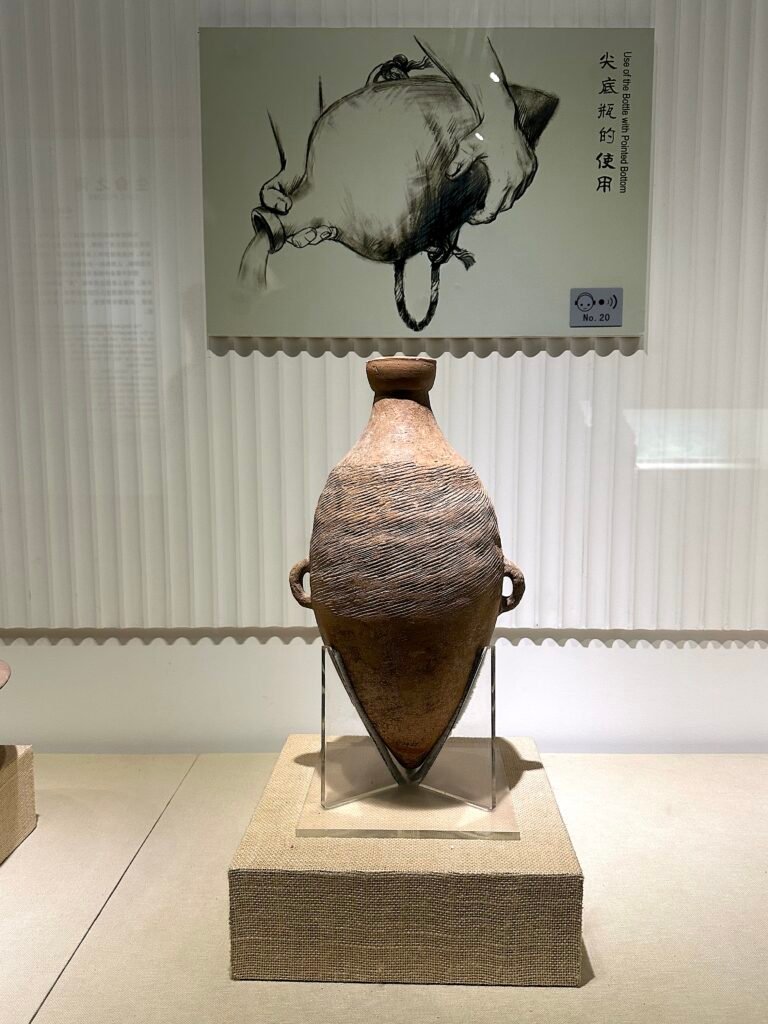
🏠 Banpo Site (半坡遗址, Bànpō Yízhǐ) Gives This Prehistoric World a Human Face
This is where another place Dad & Elaine actually visited becomes very useful:
Banpo Site (半坡遗址, Bànpō Yízhǐ)
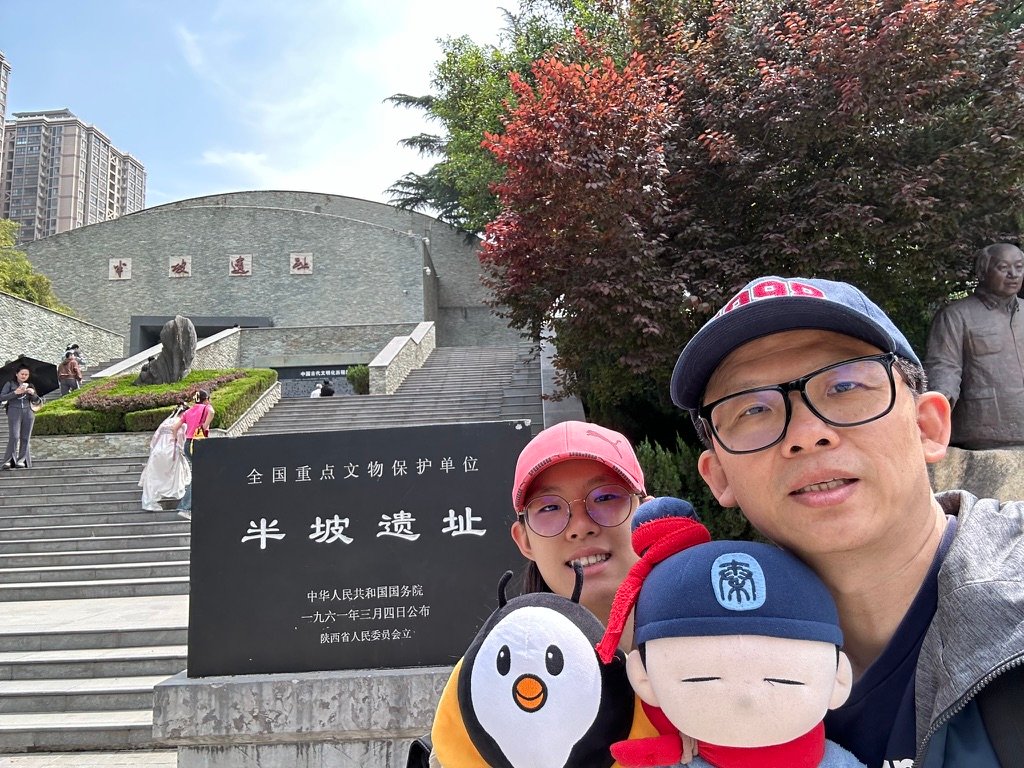
in:
Xi’an (西安, Xī’ān), Shaanxi Province (陕西省, Shǎnxī Shěng).
The:
Banpo Museum (半坡博物馆, Bànpō Bówùguǎn)
is built around the archaeological remains of a Neolithic settlement associated with the:
Yangshao Culture (仰韶文化, Yǎngsháo Wénhuà).
Now look at the difference.
At Zhoukoudian (周口店, Zhōukǒudiàn), Dad was asking:
How did prehistoric humans survive?
At Banpo Site (半坡遗址, Bànpō Yízhǐ), the questions start becoming:
Where did people live?
What did they eat?
How did they make pottery?
How did they organize a settlement?
How did they bury their dead?
🔥
Suddenly prehistory starts looking less like:
fossils in a cabinet
and more like:
A COMMUNITY.
👨👩👧 This Was One of Elaine’s Eye-Opening Museums
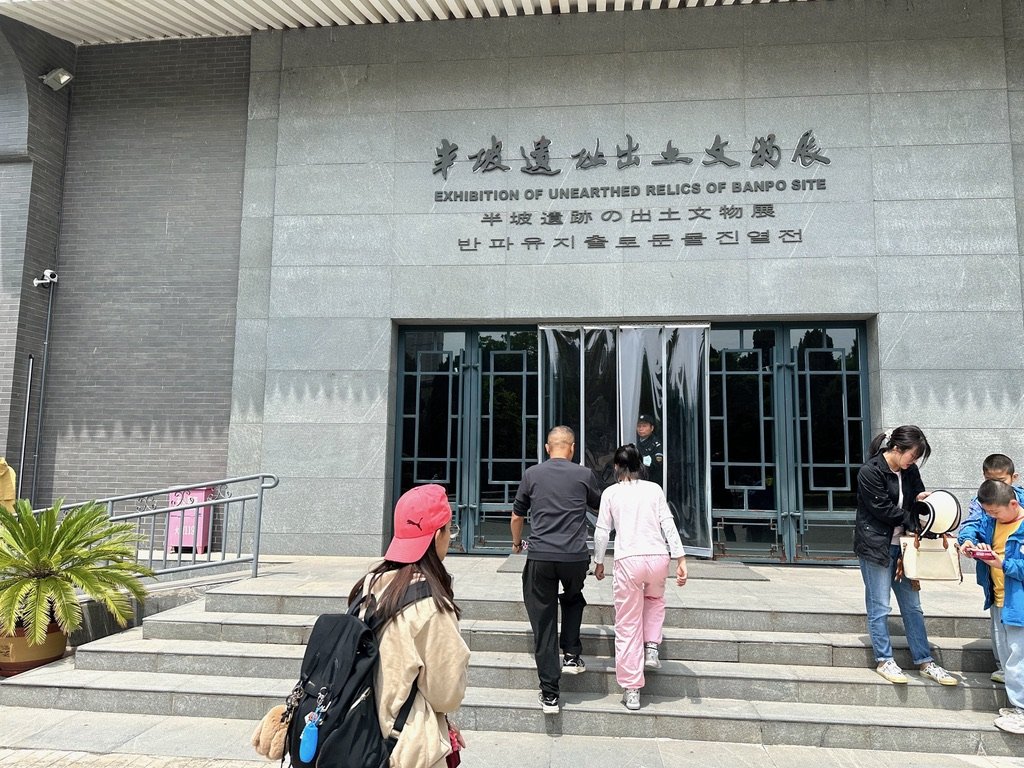
Dad & Elaine could actually walk above parts of the archaeological remains at the:
Banpo Museum (半坡博物馆, Bànpō Bówùguǎn)
and look down into the remains of a settlement roughly:
6,000 YEARS OLD.
Elaine encountered:
pottery,
tools,
fishing equipment,
houses,
food preparation,
and the everyday material life of people who lived thousands of years before:
Qin Shi Huang (秦始皇, Qín Shǐ Huáng).
That’s why Dad likes Banpo Site (半坡遗址, Bànpō Yízhǐ) as a handrail for international travelers.
It isn’t about:
emperors,
palaces,
or:
wars.
It’s about:
ORDINARY PEOPLE.
And that makes the enormous journey from Zhoukoudian (周口店, Zhōukǒudiàn) toward later civilization much easier to imagine.
🌶️ But Banpo Site (半坡遗址, Bànpō Yízhǐ) Still Isn’t “China”
This distinction is important.
Dad doesn’t want to replace one oversimplification:
Peking Man (北京人, Běijīngrén) = first Chinese person
with another:
Banpo Site (半坡遗址, Bànpō Yízhǐ) = China begins.
😂
No.
Banpo Site (半坡遗址, Bànpō Yízhǐ) gives us archaeological evidence of a prehistoric community.
It tells us about:
settlement,
agriculture,
pottery,
everyday life,
and:
social organization.
That is enormously important.
But we’re still dealing with:
PREHISTORIC SOCIETIES.
The bigger question —
When does Chinese civilization actually begin?
— remains open.
🐇
🏺 Then Taosi Archaeological Site (陶寺遗址, Táosì Yízhǐ) Changes the Scale Again
Now move forward.
Dad & Elaine later followed another rabbit hole to:
Taosi Archaeological Site (陶寺遗址, Táosì Yízhǐ)
near:
Linfen (临汾, Línfén)
in:
Shanxi Province (山西省, Shānxī Shěng).
At Zhoukoudian (周口店, Zhōukǒudiàn), Dad was thinking in:
HUNDREDS OF THOUSANDS OF YEARS.
At Banpo Site (半坡遗址, Bànpō Yízhǐ):
ABOUT 6,000 YEARS AGO.
At Taosi Archaeological Site (陶寺遗址, Táosì Yízhǐ)…
we’re looking at a world roughly:
4,000 YEARS AGO.
Normally Dad would call that:
extremely ancient.
After Zhoukoudian (周口店, Zhōukǒudiàn)?
😂
It almost feels young.
🧠 And the Questions Change Again
At Banpo Site (半坡遗址, Bànpō Yízhǐ), Dad can imagine:
village life.
At Taosi Archaeological Site (陶寺遗址, Táosì Yízhǐ), the scale becomes much more complicated.
Archaeologists have uncovered evidence of a large and socially complex settlement.
Now our questions become:
How was society organized?
Was there social hierarchy?
How was space organized?
What kinds of political or ritual authority existed?
How complex had society become?
🔥
We’re getting closer to the kinds of questions Dad normally asks in DEEP China.
But:
closer to early civilization
still does not mean:
“we have found China.”
Keep the evidence brake on.
🐇 Beyond Xi’an: We Went to Linfen (临汾, Línfén) Looking for the China Before China →
That journey takes Dad & Elaine directly into Taosi Archaeological Site (陶寺遗址, Táosì Yízhǐ) and the landscape where archaeology begins colliding with traditions surrounding Yao (尧, Yáo).
🐇 And Then Legend Starts Appearing Beside Archaeology
This is where things get really interesting.
The broad prehistoric world around places such as Taosi Archaeological Site (陶寺遗址, Táosì Yízhǐ) begins overlapping in traditional Chinese chronology with the world of legendary rulers and ancestors.
Names such as:
Yandi (炎帝, Yándì)
Huangdi (黄帝, Huángdì)
Yao (尧, Yáo)
Shun (舜, Shùn)
and:
Yu the Great (大禹, Dà Yǔ)
begin appearing in China’s transmitted traditions.
Now Dad has two very different boxes sitting beside one another.
ARCHAEOLOGY (考古, Kǎogǔ)
and:
LEGEND / TRANSMITTED TRADITION (传说, Chuánshuō).
🔥
Please don’t quietly merge them.
⚠️ Dad’s Evidence Rule — A Legend and an Archaeological Site Are Not the Same Thing
Suppose archaeology (考古, Kǎogǔ) shows that a complex society existed around a certain period.
That does not automatically prove:
“Therefore this was the capital of Yao (尧, Yáo).”
Or:
“Therefore this object belonged to Huangdi (黄帝, Huángdì).”
😂
Archaeology (考古, Kǎogǔ) gives us:
material evidence.
Legend / transmitted tradition (传说, Chuánshuō) gives us:
remembered stories about the ancient past.
Those can sometimes be compared.
They can sometimes illuminate one another.
But:
THEY ARE NOT INTERCHANGEABLE.
That’s the same evidence discipline Dad used at Zhoukoudian (周口店, Zhōukǒudiàn).
Different time.
Same rule.
👨👩👧 Then the Legendary Ancestors Enter the Story
Dad & Elaine later followed another rabbit hole involving:
Yandi (炎帝, Yándì)
Huangdi (黄帝, Huángdì)
and:
Chiyou (蚩尤, Chīyóu).
Now we’re no longer talking about:
Homo erectus
or:
prehistoric Homo sapiens ornaments.
We’re entering the world of:
ancestral memory,
legendary conflict,
Huaxia (华夏, Huáxià),
surnames (姓氏, Xìngshì),
and:
later ideas about Chinese civilizational ancestry.
That’s a completely different layer of the story.
Notice the progression.
At Zhoukoudian (周口店, Zhōukǒudiàn):
HUMAN PREHISTORY.
At Banpo Site (半坡遗址, Bànpō Yízhǐ):
SETTLED NEOLITHIC COMMUNITY.
At Taosi Archaeological Site (陶寺遗址, Táosì Yízhǐ):
LARGE, COMPLEX PREHISTORIC SOCIETY.
Then:
LEGENDARY ANCESTRAL MEMORY.
And eventually:
DOCUMENTED DYNASTIC HISTORY.
🔥
Now Dad’s Coat Rack is becoming very long.
😂
✍️ Then Something Extraordinary Happens — People Start Leaving Words
This is one of Dad’s favorite transitions.
For most of the world we’ve been exploring so far…
there are:
no written voices.
At Zhoukoudian (周口店, Zhōukǒudiàn), nobody leaves Dad a diary.
At Banpo Site (半坡遗址, Bànpō Yízhǐ), archaeology reconstructs everyday life through:
houses,
pottery,
tools,
burials,
and:
settlement remains.
At Taosi Archaeological Site (陶寺遗址, Táosì Yízhǐ), archaeology gives us evidence of a much more complex prehistoric society.
Then we reach the late:
SHANG DYNASTY (商朝, Shāng Cháo).
And at:
YINXU (殷墟, Yīnxū)
in:
Anyang (安阳, Ānyáng), Henan Province (河南省, Hénán Shěng)
something changes.
We get:
ORACLE-BONE INSCRIPTIONS (甲骨文, Jiǎgǔwén).
🔥
Now ancient people aren’t only leaving:
things.
They’re leaving:
WORDS.
😳 That’s Why Anyang (安阳, Ānyáng) Feels So Different After Zhoukoudian (周口店, Zhōukǒudiàn)
At Zhoukoudian (周口店, Zhōukǒudiàn):
Dad asks:
What can bones and stone tools tell us?
At Banpo Site (半坡遗址, Bànpō Yízhǐ):
Dad asks:
What can houses, pottery and everyday objects tell us about settled community life?
At Taosi Archaeological Site (陶寺遗址, Táosì Yízhǐ):
Dad asks:
What can a large settlement tell us about increasingly complex society?
In the world of Yandi (炎帝, Yándì) and Huangdi (黄帝, Huángdì):
Dad asks:
How did later generations remember their legendary ancestors?
Then at Yinxu (殷墟, Yīnxū):
Dad can ask:
WHAT DID PEOPLE THEMSELVES WRITE?
That’s a huge evidentiary shift.
And it’s why the next natural historical rabbit after this prehistoric journey is:
At Anyang (安阳, Ānyáng), Dad’s Coat Rack finally moves from:
PREHISTORY
toward:
A WORLD THAT CAN SPEAK TO US IN WRITING.
🔥
Dad’s One-Line Coat Rack
Don’t memorize everything we just covered.
😂
Remember only this:
ZHOUKOUDIAN (周口店, Zhōukǒudiàn)
human prehistory
↓
BANPO SITE (半坡遗址, Bànpō Yízhǐ)
settled Neolithic community
↓
TAOSI ARCHAEOLOGICAL SITE (陶寺遗址, Táosì Yízhǐ)
large, complex prehistoric society
↓
LEGENDARY ANCESTRAL MEMORY (祖先传说, Zǔxiān Chuánshuō)
Yandi (炎帝, Yándì) + Huangdi (黄帝, Huángdì) + other ancient traditions
↓
SHANG DYNASTY (商朝, Shāng Cháo)
Yinxu (殷墟, Yīnxū) + oracle-bone inscriptions (甲骨文, Jiǎgǔwén)
↓
ZHOU DYNASTY (周朝, Zhōu Cháo)
↓
QIN DYNASTY (秦朝, Qín Cháo)
↓
IMPERIAL CHINA
Now Zhoukoudian (周口店, Zhōukǒudiàn) finally has its place.
Not:
“the beginning of Chinese people.”
But:
A HUMAN PREHISTORY FAR DEEPER THAN CHINESE CIVILIZATION.
🔥
And that distinction makes the whole story more interesting — not less.
Because now Dad can ask a better question.
Not:
“Where did the Chinese begin?”
But:
“WHAT DIFFERENT STEPS EVENTUALLY HELPED CREATE THE WORLD WE LATER CALL CHINESE CIVILIZATION?”
🐇
And that question opens a much bigger door.
🏘️ One More Useful Stop — Banpo (半坡, Bànpō)
There is another place Dad & Elaine visited that fits beautifully between the enormous deep time of Zhoukoudian (周口店, Zhōukǒudiàn) and the increasingly complex world of Taosi Archaeological Site (陶寺遗址, Táosì Yízhǐ).
Right inside modern:
Xi’an (西安, Xī’ān)
is:
Banpo Museum (半坡博物馆, Bànpō Bówùguǎn)
built beside the archaeological remains of:
Banpo Site (半坡遗址, Bànpō Yízhǐ).
Banpo Site (半坡遗址, Bànpō Yízhǐ) is associated with the:
Yangshao Culture (仰韶文化, Yǎngsháo Wénhuà)
of the Neolithic Period (新石器时代, Xīnshíqì Shídài).
And for an international traveler, this is a wonderful Coat Rack stop.
Why?
Because at Zhoukoudian (周口店, Zhōukǒudiàn), Dad is thinking about:
prehistoric humans,
stone tools,
caves,
and:
survival.
At Banpo Site (半坡遗址, Bànpō Yízhǐ), the questions begin to look different.
Now we can see evidence connected with:
houses,
a settled community,
pottery,
food production,
burials,
and:
everyday village life.
🔥
We’re still thousands of years before the:
Qin Dynasty (秦朝, Qín Cháo)
and long before modern Xi’an (西安, Xī’ān).
But the human landscape is changing.
😳 The Xi’an (西安, Xī’ān) Time Machine
This is something Dad thinks first-time travelers to Xi’an (西安, Xī’ān) may miss.
You can come to Xi’an (西安, Xī’ān) for:
Terracotta Warriors (兵马俑, Bīngmǎyǒng)
and:
Qin Shi Huang (秦始皇, Qín Shǐ Huáng).
Perfectly understandable.
😂
But visit Banpo Site (半坡遗址, Bànpō Yízhǐ)…
and suddenly you’re standing in a human community thousands of years before the:
Qin Dynasty (秦朝, Qín Cháo).
That’s why Dad likes Banpo Site (半坡遗址, Bànpō Yízhǐ) as a bridge.
It doesn’t answer:
“When did China begin?”
But it gives the traveler another visible stage between:
HUMAN PREHISTORY
and:
COMPLEX SOCIETIES.
— Before Xi’an (西安, Xī’ān), Before Qin Shi Huang (秦始皇, Qín Shǐ Huáng)
🍽️ Want the Full “When Did China Begin?” Rabbit Hole?
This article only needs to put Zhoukoudian (周口店, Zhōukǒudiàn) in its proper place.
But if Dad has now infected you with the much bigger question:
“So when DOES Chinese civilization actually begin?”
don’t make this Zhoukoudian (周口店, Zhōukǒudiàn) article carry the whole burden.
😂
Go Michelin.
🐇 DEEP China: Before China — When Does Chinese Civilization Actually Begin? →
There Dad’s Coat Rack goes much farther:
Peking Man (北京人, Běijīngrén)
↓
Upper Cave People (山顶洞人, Shāndǐngdòngrén)
↓
Neolithic Period (新石器时代, Xīnshíqì Shídài)
↓
Banpo Site (半坡遗址, Bànpō Yízhǐ)
↓
Taosi Archaeological Site (陶寺遗址, Táosì Yízhǐ)
↓
Erlitou Site (二里头遗址, Èrlǐtóu Yízhǐ)
↓
Shang Dynasty (商朝, Shāng Cháo)
↓
Zhou Dynasty (周朝, Zhōu Cháo)
↓
Qin unification (秦统一, Qín Tǒngyī).
Different thresholds.
Different evidence.
Different answers.
That’s the bigger rabbit.
🐇🔥
🧠 And That’s the Real Gift of Zhoukoudian (周口店, Zhōukǒudiàn)
Zhoukoudian (周口店, Zhōukǒudiàn) doesn’t give Dad a neat:
“China began here.”
It does something more useful.
It forces us to separate:
HUMAN HISTORY
from:
CIVILIZATIONAL HISTORY
from:
DYNASTIC HISTORY
from:
MODERN NATIONAL IDENTITY.
🔥
Those things eventually intersect.
But they are not the same thing.
And once Dad understood that…
the whole DEEP China Coat Rack became clearer.
🧳 Now Dad Owes You the Practical Part
We’ve gone from:
Peking Man (北京人, Běijīngrén)
to:
Upper Cave People (山顶洞人, Shāndǐngdòngrén)
to:
missing fossils
to:
Banpo Site (半坡遗址, Bànpō Yízhǐ)
to:
Taosi Archaeological Site (陶寺遗址, Táosì Yízhǐ)
to:
legendary ancestors
to:
Yinxu (殷墟, Yīnxū) and writing.
😂
Enough.
If you’re actually staying in:
Beijing (北京, Běijīng)
and thinking:
“Dad, should I really spend most of a day going all the way out to Zhoukoudian (周口店, Zhōukǒudiàn)?”
that’s the right question.
Where exactly is:
Zhoukoudian (周口店, Zhōukǒudiàn)?
How long does it take from central:
Beijing (北京, Běijīng)?
Should you use:
DiDi (滴滴, Dīdī)?
Should you visit the:
Zhoukoudian Site Museum (周口店遗址博物馆, Zhōukǒudiàn Yízhǐ Bówùguǎn)
first…
or the:
Zhoukoudian Peking Man Site (周口店北京人遗址, Zhōukǒudiàn Běijīngrén Yízhǐ)?
How much walking should you expect?
How much time should you allow?
And most importantly…
how do you avoid Dad & Elaine’s mistake and run out of energy before you’ve properly explored the archaeological site?
😂
That’s next.
🧳 How to Visit Zhoukoudian (周口店, Zhōukǒudiàn) From Beijing (北京, Běijīng)
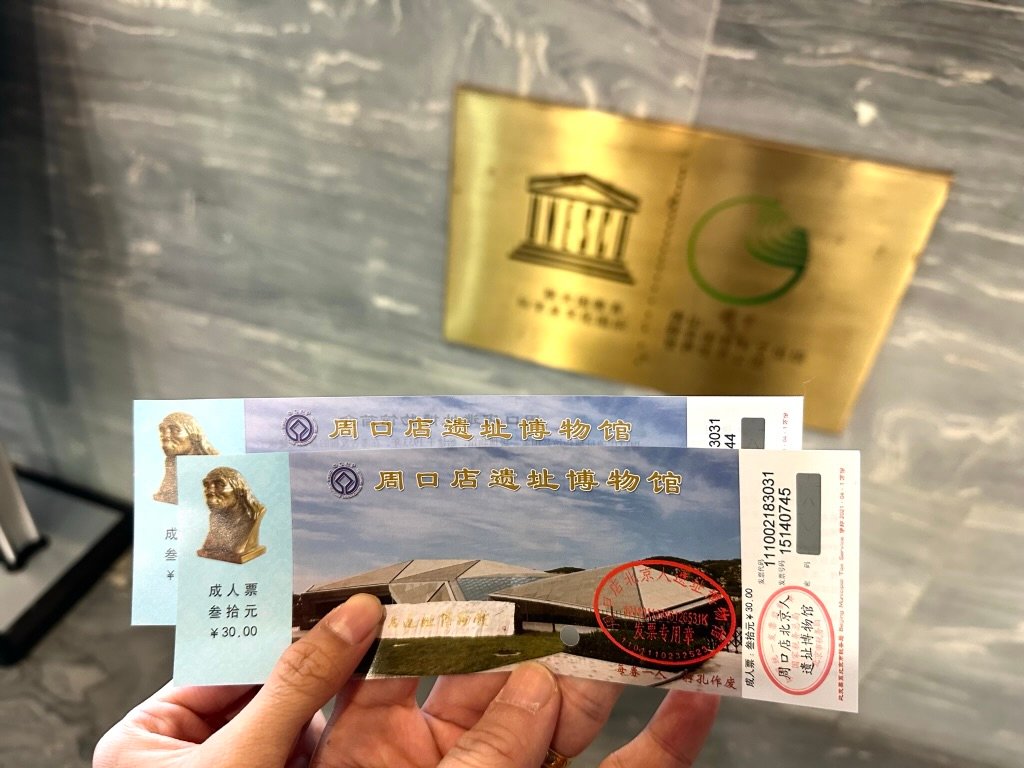
Okay.
We’ve done:
Peking Man (北京人, Běijīngrén)
Upper Cave People (山顶洞人, Shāndǐngdòngrén)
Homo erectus
Homo sapiens
missing fossils
Pei Wenzhong (裴文中, Péi Wénzhōng)
Banpo Site (半坡遗址, Bànpō Yízhǐ)
Taosi Archaeological Site (陶寺遗址, Táosì Yízhǐ)
and somehow…
Dad has dragged you from human evolution all the way toward the beginnings of Chinese civilization.
😂
Now the traveler’s question:
“Dad. How do I actually get there?”
Much easier.
📍 Where Is Zhoukoudian (周口店, Zhōukǒudiàn)?
The Zhoukoudian Peking Man Site (周口店北京人遗址, Zhōukǒudiàn Běijīngrén Yízhǐ) is in:
Fangshan District (房山区, Fángshān Qū)
in southwestern:
Beijing Municipality (北京市, Běijīng Shì).
It is roughly:
40–50 km southwest of central Beijing (北京, Běijīng)
depending on where you’re starting from.
So don’t think:
“Another Beijing museum. We’ll squeeze it in after lunch.”
😂
This is a proper excursion out from central Beijing (北京, Běijīng).
🚕 How Dad & Elaine Actually Went — DiDi (滴滴, Dīdī)
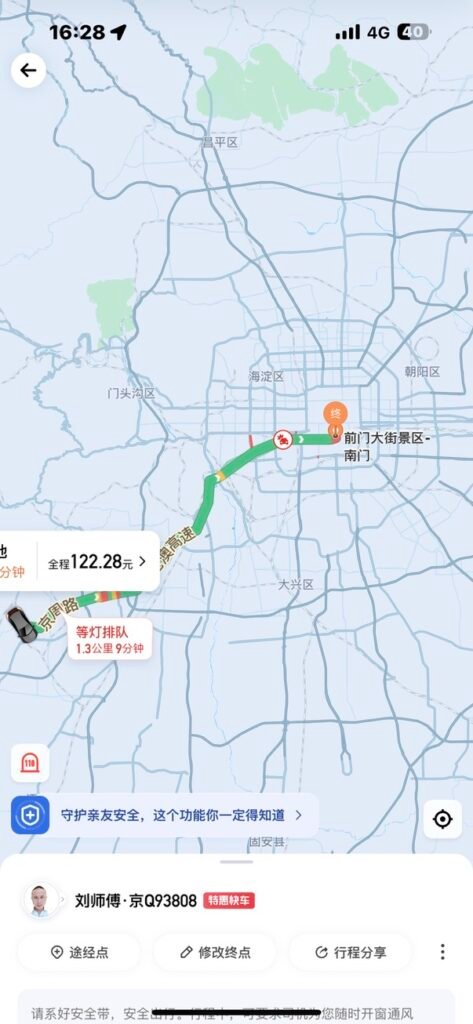
We kept it simple.
Dad & Elaine used:
DiDi (滴滴, Dīdī)
from central Beijing (北京, Běijīng) to Zhoukoudian (周口店, Zhōukǒudiàn).
Then:
DiDi (滴滴, Dīdī)
back to central Beijing (北京, Běijīng).
No bus transfers.
No complicated route planning.
No Dad standing at a suburban bus stop telling Elaine:
“I think this is the correct one.”
😂
For our journey:
Beijing (北京, Běijīng) → Zhoukoudian (周口店, Zhōukǒudiàn)
was:
more than RMB 100
and the return journey was also:
more than RMB 100.
So Dad would use:
RMB 200+ RETURN
only as a rough indication from our own journey.
It is not a fixed fare.
Your actual DiDi (滴滴, Dīdī) fare depends on:
where you’re staying,
traffic,
time of day,
vehicle category,
and:
dynamic pricing.
⏰ How Long Does It Take?
For planning:
🚕 DiDi (滴滴, Dīdī) / taxi / private car
about 1–1½ hours each way
depending heavily on traffic.
This is Beijing (北京, Běijīng).
😂
Traffic gets a vote.
So don’t build a military operation around:
8:00 leave hotel
8:58 arrive museum.
Give yourself buffer.
🚌 Can You Go by Public Transport?
Yes.
And it will normally be much cheaper.
Depending on your starting point and current routes, expect some combination of:
Beijing Metro (北京地铁, Běijīng Dìtiě)
+
public bus (公交车, Gōngjiāochē).
As a planning handrail, Dad would allow roughly:
1½–2 hours EACH WAY
by public transport.
That can mean:
3–4 HOURS OF TRANSPORT
during the day.
🔥
So the real calculation isn’t merely:
DiDi (滴滴, Dīdī) = expensive
versus:
public transport = cheap.
It is:
MONEY + TIME + ENERGY.
For one budget traveler?
Public transport can make excellent sense.
For two people, a couple, family or small group?
Compare.
Because the time and energy saved by DiDi (滴滴, Dīdī) may be worth paying for.
For Dad & Elaine?
DiDi won.
😂
📱 Save These Chinese Names
This will make maps and ride-hailing much easier.
For the museum:
周口店遗址博物馆
Zhōukǒudiàn Yízhǐ Bówùguǎn
Zhoukoudian Site Museum
For the archaeological site:
周口店北京人遗址
Zhōukǒudiàn Běijīngrén Yízhǐ
Zhoukoudian Peking Man Site
This distinction matters.
The:
Zhoukoudian Site Museum (周口店遗址博物馆, Zhōukǒudiàn Yízhǐ Bówùguǎn)
and the:
Zhoukoudian Peking Man Site (周口店北京人遗址, Zhōukǒudiàn Běijīngrén Yízhǐ)
belong to the same historical experience…
but they are not the same visitor experience.
Dad & Elaine learned that physically.
😂
🏛️ Dad Recommends: Museum FIRST
For an international traveler who doesn’t already know much about paleoanthropology, Dad would begin with:
Zhoukoudian Site Museum (周口店遗址博物馆, Zhōukǒudiàn Yízhǐ Bówùguǎn).
Why?
Because the museum installs the Coat Rack.
You learn:
Peking Man (北京人, Běijīngrén)
↓
Homo erectus
↓
stone tools (石器, Shíqì)
↓
fire (火, Huǒ)
↓
Upper Cave People (山顶洞人, Shāndǐngdòngrén)
↓
Homo sapiens
↓
Pei Wenzhong (裴文中, Péi Wénzhōng)
↓
missing fossils.
🔥
Then go outside.
Now the archaeological landscape has:
A STORY ATTACHED TO IT.
Without the Coat Rack, an archaeological locality can sometimes look suspiciously like:
“Dad…
are we looking at rocks?”
😂
🧭 THEN — Go to the Archaeological Localities
This is where the museum explanation becomes:
PLACE.
Among the names to recognize is:
Locality 1 (第1地点, Dì Yī Dìdiǎn)
— the famous locality associated with Peking Man (北京人, Běijīngrén).
The wider Zhoukoudian Peking Man Site (周口店北京人遗址, Zhōukǒudiàn Běijīngrén Yízhǐ) contains multiple archaeological localities representing different periods of prehistory.
And…
THIS IS WHERE DAD & ELAINE FAILED.
😂
Remember our confession at the beginning?
We did the museum.
Then our legs had already had enough.
We did not properly continue through the archaeological localities.
Dad’s historical brain said:
“Hundreds of thousands of years of human history!”
Dad’s legs said:
“Tomorrow.”
😭😂
So please learn from us.
🔥 Budget ENERGY — Not Just Time
This is probably Dad’s most useful practical advice in the whole article.
Don’t calculate:
Museum = X hours.
Archaeological site = X hours.
Transport = X hours.
and stop there.
Also calculate:
ENERGY.
You’ve already traveled a considerable distance from central Beijing (北京, Běijīng).
You’ll spend time inside the museum.
You may want lunch.
You’ll walk.
Then you still have the archaeological landscape.
Then you need to return to central Beijing (北京, Běijīng).
So Dad’s recommendation is simple:
GIVE ZHOUKOUDIAN (周口店, Zhōukǒudiàn) MOST OF A DAY.
Not because everybody needs eight hours inside.
Because rushing this particular excursion defeats the purpose.
☕ Dad’s Comfortable Zhoukoudian (周口店, Zhōukǒudiàn) Day
MORNING
Leave central:
Beijing (北京, Běijīng)
↓
travel to:
Zhoukoudian (周口店, Zhōukǒudiàn)
↓
visit:
Zhoukoudian Site Museum (周口店遗址博物馆, Zhōukǒudiàn Yízhǐ Bówùguǎn)
LUNCH / BREAK
休息
Xiūxi
Rest
Yes.
Dad has officially inserted:
REST
into a DEEP China itinerary.
😂
AFTERNOON
Continue into:
Zhoukoudian Peking Man Site (周口店北京人遗址, Zhōukǒudiàn Běijīngrén Yízhǐ)
Explore the archaeological localities at a comfortable pace.
Then return to:
Beijing (北京, Běijīng).
Much better than:
“Elaine! Hurry! Dad’s DiDi is arriving in 14 minutes!”
😂
🗣️ A Few Useful Chinese Phrases
If you’re using DiDi (滴滴, Dīdī) or asking locally:
我要去周口店遗址博物馆。
Wǒ yào qù Zhōukǒudiàn Yízhǐ Bówùguǎn.
I’d like to go to the Zhoukoudian Site Museum.
北京人遗址在哪里?
Běijīngrén Yízhǐ zài nǎlǐ?
Where is the Peking Man Site?
博物馆和遗址是一起的吗?
Bówùguǎn hé yízhǐ shì yìqǐ de ma?
Are the museum and archaeological site together?
And Dad’s newly important phrase:
我们先休息一下。
Wǒmen xiān xiūxi yíxià.
Let’s rest first.
😂
Elaine approves.
🎟️ Check Current Visitor Arrangements Before Going
Opening days, hours, ticketing arrangements and access conditions can change.
So shortly before your visit, check the current arrangements for both:
Zhoukoudian Site Museum (周口店遗址博物馆, Zhōukǒudiàn Yízhǐ Bówùguǎn)
and:
Zhoukoudian Peking Man Site (周口店北京人遗址, Zhōukǒudiàn Běijīngrén Yízhǐ).
Don’t assume:
MUSEUM OPEN = EVERYTHING OPEN.
And don’t plan a long journey from central Beijing (北京, Běijīng) around an old screenshot of opening hours.
🤔 Should YOU Go to Zhoukoudian (周口店, Zhōukǒudiàn)?
Dad would not automatically send every first-time visitor here.
If you have only:
3–4 days in Beijing (北京, Běijīng)
and you haven’t seen the:
Forbidden City (故宫, Gùgōng)
or:
Great Wall (长城, Chángchéng)…
go there first.
😂
But Zhoukoudian (周口店, Zhōukǒudiàn) becomes much more compelling if:
archaeology interests you,
human evolution interests you,
you’re collecting UNESCO World Heritage Sites,
you’ve already seen Beijing’s headline attractions,
you’re traveling with older children or teenagers who enjoy science and history,
or:
you want to understand what existed here before there was anything resembling “China.”
For that traveler?
GO.
🔥
🕰️ Same Beijing (北京, Běijīng). Completely Different Clock.
This may be Dad’s favorite way to explain Zhoukoudian (周口店, Zhōukǒudiàn).
Visit the:
Forbidden City (故宫, Gùgōng)
and you’re thinking in:
CENTURIES.
Walk the:
Great Wall (长城, Chángchéng)
and you’re moving through:
CENTURIES OF BUILDING, REBUILDING AND FRONTIER HISTORY.
Go to:
Zhoukoudian (周口店, Zhōukǒudiàn)
and suddenly you’re thinking in:
HUNDREDS OF THOUSANDS OF YEARS.
🔥
SAME BEIJING (北京, Běijīng).
COMPLETELY DIFFERENT CLOCK.
That’s why Dad thinks Zhoukoudian (周口店, Zhōukǒudiàn) deserves its place in DEEP China.
ChinaTravelBUG’s Take
Don’t go to Zhoukoudian (周口店, Zhōukǒudiàn) expecting:
palaces,
temples,
imperial gardens,
or:
Instagram-perfect ancient streets.
Go because you want to rewind.
Past:
Qin Shi Huang (秦始皇, Qín Shǐ Huáng).
Past:
Zhou Dynasty (周朝, Zhōu Cháo).
Past:
Shang Dynasty (商朝, Shāng Cháo).
Past:
legendary ancestors.
Past:
agriculture.
Past:
villages.
Until eventually…
the word:
China (中国, Zhōngguó)
doesn’t make sense anymore.
And you’re left with something much older.
PEOPLE.
Humans trying to:
survive,
adapt,
make tools,
use fire,
move through landscapes,
and — much later — decorate themselves with objects that may have carried meanings we can only try to reconstruct.
🔥
Before the:
Forbidden City (故宫, Gùgōng).
Before the:
Great Wall (长城, Chángchéng).
Before the:
First Emperor — Qin Shi Huang (秦始皇, Qín Shǐ Huáng).
Before the:
Shang Dynasty (商朝, Shāng Cháo).
Before the:
Zhou Dynasty (周朝, Zhōu Cháo).
Before anything we could reasonably call:
CHINA (中国, Zhōngguó).
There were already:
HUMAN STORIES.
And standing just outside modern Beijing (北京, Běijīng)…
that’s quite a thought.
🐞🐇🔥
See China. Understand It Better.