Section 1 — If Qin Shi Huang “Unified China,” When Did China Begin?
For many first-time international travelers, the historical journey through China begins in:
Xi’an (西安, Xī’ān).
And very often, it begins with:
Terracotta Warriors (兵马俑, Bīngmǎyǒng).
Thousands of life-sized clay soldiers.
Horses.
Chariots.
An enormous underground army created for:
Qin Shi Huang (秦始皇, Qín Shǐhuáng)
the:
First Emperor (始皇帝, Shǐ Huángdì).
[INSERT DAD & ELAINE TERRACOTTA WARRIORS PHOTO]
And somewhere during your visit, you’ll almost certainly hear:
“Qin Shi Huang unified China in 221 BCE.”
Our previous Deep China journey explained what that:
unification (统一, tǒngyī)
actually meant.
But now that answer creates an even bigger question.
🐇
If Qin Shi Huang:
unified China
then…
when did China begin?
😳
Before Qin?
Zhou?
Shang?
Xia?
Taosi?
Or should we go all the way back to:
Peking Man (北京人, Běijīngrén)?
Welcome to the deepest rabbit hole in our first eight-course dinner.
😂🔥
First: “How Old Is China?” Is Actually Several Questions
You’ve probably heard:
“China has 5,000 years of history.”
You’ll also encounter:
3,000 years of recorded history.
Or:
more than 4,000 years of civilization.
And occasionally somebody will point toward Peking Man and push the story back:
hundreds of thousands of years.
😬
Can all of these numbers describe the same thing?
Not really.
The problem is that we’re mixing together several completely different questions.
🧠 Install This Coat Rack First
These are NOT the same question:
When did humans first live in the territory of modern China?
↓
When did farming communities develop?
↓
When did large and socially complex settlements appear?
↓
When did early states emerge?
↓
When do the dynasties described in later Chinese historical tradition begin?
↓
When do we have contemporary written records?
↓
When was a large political realm unified under one emperor?
↓
When does something resembling our modern idea of “China” emerge?
🔥
Different question.
Different evidence.
Potentially:
different answer.
So perhaps historians aren’t arguing over:
China’s birthday.
😂
Perhaps:
“birthday” is the wrong way to think about civilization in the first place.

🍚 Western Handrail: England Didn’t Begin With the First Human in England
Imagine archaeologists discover that humans lived in what is now:
England
hundreds of thousands of years ago.
Would we say:
“England is 500,000 years old”?
Obviously not.
😂
Why?
Because:
human occupation
is not the same thing as:
civilization
which is not necessarily the same thing as:
state
which is not the same thing as:
modern nation.
Keep that distinction in your pocket.
We’re going to need it.
A lot.
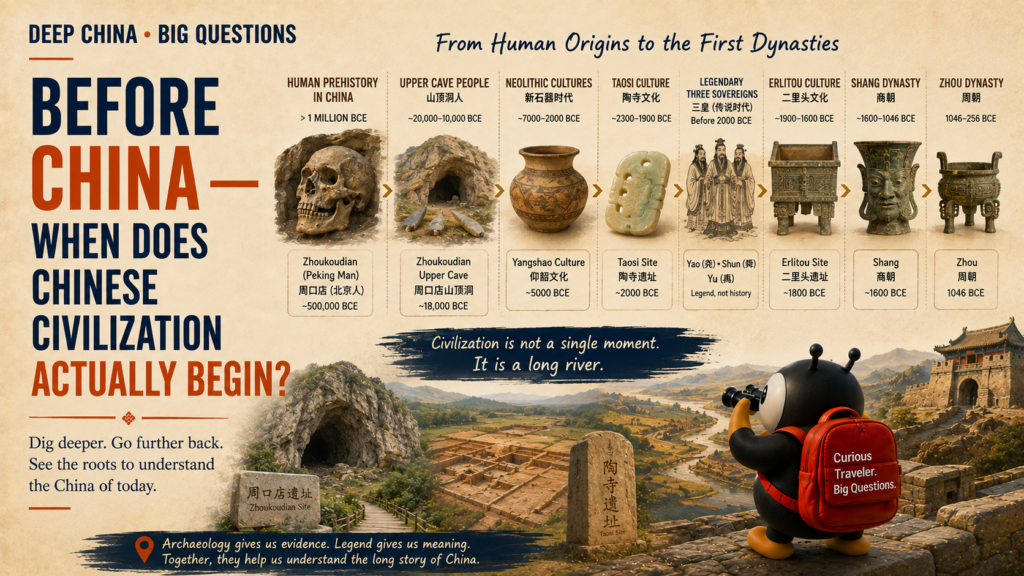
🕰️ The Biggest Deep China Timeline Yet
Don’t memorize this.
Just look at the scale.
PEKING MAN (北京人, Běijīngrén)
Homo erectus
hundreds of thousands of years ago
↓
↓
↓
UPPER CAVE PEOPLE (山顶洞人, Shāndǐngdòngrén)
Homo sapiens (智人, Zhìrén)
tens of thousands of years ago
↓
↓
NEOLITHIC PERIOD (新石器时代, Xīnshíqì Shídài)
farming communities and increasingly complex societies develop in different regions
↓
TAOSI (陶寺, Táosì)
roughly:
2300–1900 BCE
large late-Neolithic settlement and complex society
↓
ERLITOU CULTURE (二里头文化, Èrlǐtóu Wénhuà)
early Bronze Age urban and political center
↓
SHANG DYNASTY (商朝, Shāng Cháo)
↓
YINXU (殷墟, Yīnxū)
late Shang royal center at Anyang
↓
ORACLE-BONE INSCRIPTIONS (甲骨文, jiǎgǔwén)
contemporary writing
↓
WESTERN ZHOU (西周, Xī Zhōu)
↓
SPRING AND AUTUMN (春秋时期, Chūnqiū Shíqī)
↓
WARRING STATES (战国时期, Zhànguó Shíqī)
↓
QIN UNIFICATION (秦统一, Qín Tǒngyī)
221 BCE
↓
IMPERIAL CHINA
dynasties, divisions and reunifications
↓
MODERN CHINA
😳
Now look again at:
Peking Man
and:
Qin Shi Huang.
The gap is enormous.
That entire gap cannot simply be labeled:
“5,000 years of China.”
We need better tools.
🔥
🐇 Let’s Start With the Most Extreme Candidate: Peking Man
Dad & Elaine visited:
Zhoukoudian Peking Man Site (周口店北京人遗址, Zhōukǒudiàn Běijīngrén Yízhǐ)
southwest of:
Beijing (北京, Běijīng).
It’s a:
UNESCO World Heritage Site.
There we encountered:
Peking Man (北京人)
belonging to:
Homo erectus
and, vastly later:
Upper Cave people (山顶洞人)
belonging to our own species:
Homo sapiens (智人, Zhìrén).
🔥
So…
is this where Chinese history begins?
No.
At least not if by:
Chinese history
we mean the history of Chinese civilization, states or political communities.
🌶️ Peking Man Was NOT “the First Chinese”
This distinction is extremely important.
Peking Man lived in territory that is:
today part of China.
But hundreds of thousands of years ago there was no:
China (中国, Zhōngguó),
Chinese state,
Chinese writing (汉字 / 文字),
dynasty (朝代, cháodài),
emperor (皇帝, huángdì),
or:
Chinese civilization in the historical sense.
🔥
So Zhoukoudian belongs to the story of:
human evolution (人类进化, rénlèi jìnhuà)
and:
human prehistory (人类史前史, rénlèi shǐqiánshǐ).
That’s enormously important.
But:
Peking Man ≠ “the first Chinese person.”
Different question.
Different history.
🐇 Then What About the Upper Cave People?
Much later at Zhoukoudian we encounter:
Upper Cave people (山顶洞人, Shāndǐngdòngrén).
Unlike Peking Man, these were:
Homo sapiens (智人).
Our species.
Their archaeological remains bring us much closer to recognizably modern human behavior.
But even then:
Homo sapiens living near modern Beijing
does not equal:
Chinese civilization.
🔥
We’re still in:
prehistory (史前时期, shǐqián shíqī).
The China story hasn’t begun simply because modern humans are present.
🐇 So Move Forward: Agriculture Changes Everything
Eventually we reach the:
Neolithic period (新石器时代, Xīnshíqì Shídài).
Now human societies across different parts of what is today China increasingly develop:
agriculture (农业, nóngyè)
settlements (聚落, jùluò)
pottery (陶器, táoqì)
and increasingly complex:
social organization (社会组织, shèhuì zǔzhī).
🔥
People stay in settlements.
Populations grow.
Food production changes.
Craft specialization develops.
Social differences become more visible.
Now we’re approaching something very different from:
Peking Man.
But we’re still not at:
Qin Shi Huang.
Not even close.
😂
🌏 Another Important Correction: There Wasn’t One “Chinese Neolithic”
This is important for Western beginners.
It’s tempting to imagine:
Yellow River (黄河, Huáng Hé)
↓
first Chinese village
↓
bigger Chinese village
↓
Xia
↓
Shang
↓
Zhou
↓
Qin
↓
China.
Beautiful straight line.
😂
Archaeology gives us something much messier.
And much more interesting.
Complex prehistoric cultures developed across:
multiple regions.
The:
Yellow River basin (黄河流域, Huáng Hé Liúyù)
was enormously important.
But so were regions around:
Yangtze River (长江, Cháng Jiāng)
and other parts of what is now China.
🔥
So the deep roots of Chinese civilization increasingly look:
multi-regional (多区域, duō qūyù)
rather than:
one civilization appearing fully formed in one valley.
That’s an important archaeological lesson.
🐇 Then Dad & Elaine Arrive at Taosi
Now the story becomes personal again.
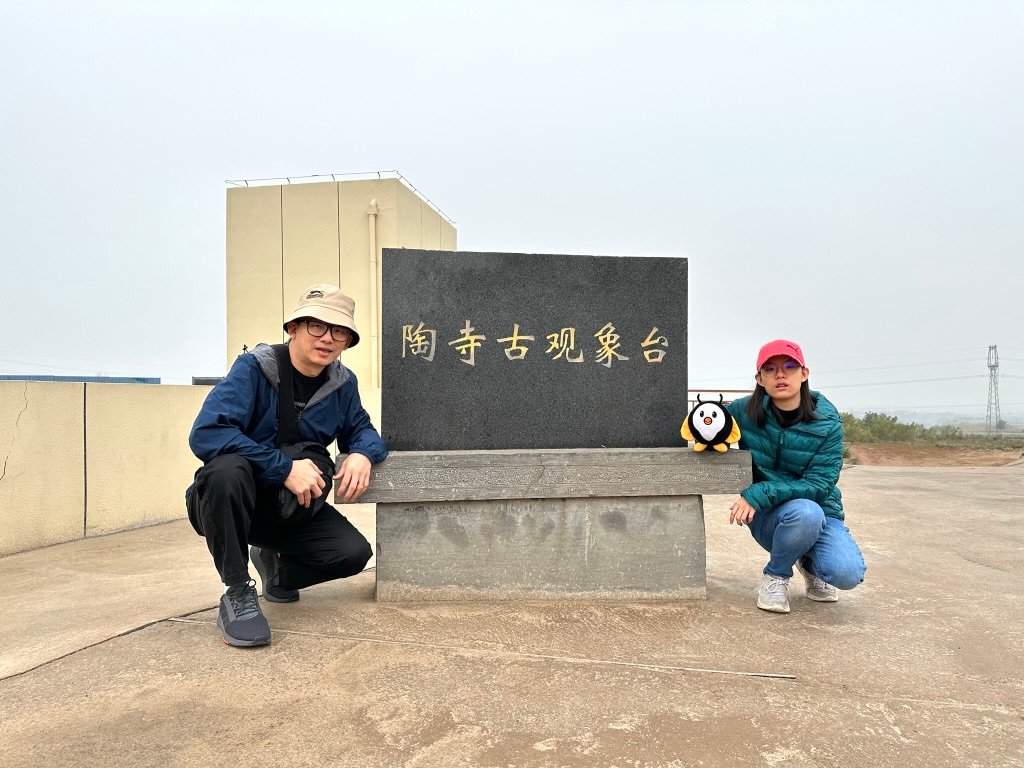
We visited:
Taosi Archaeological Site (陶寺遗址, Táosì Yízhǐ)
near:
Linfen (临汾, Línfén)
in:
Shanxi (山西, Shānxī).
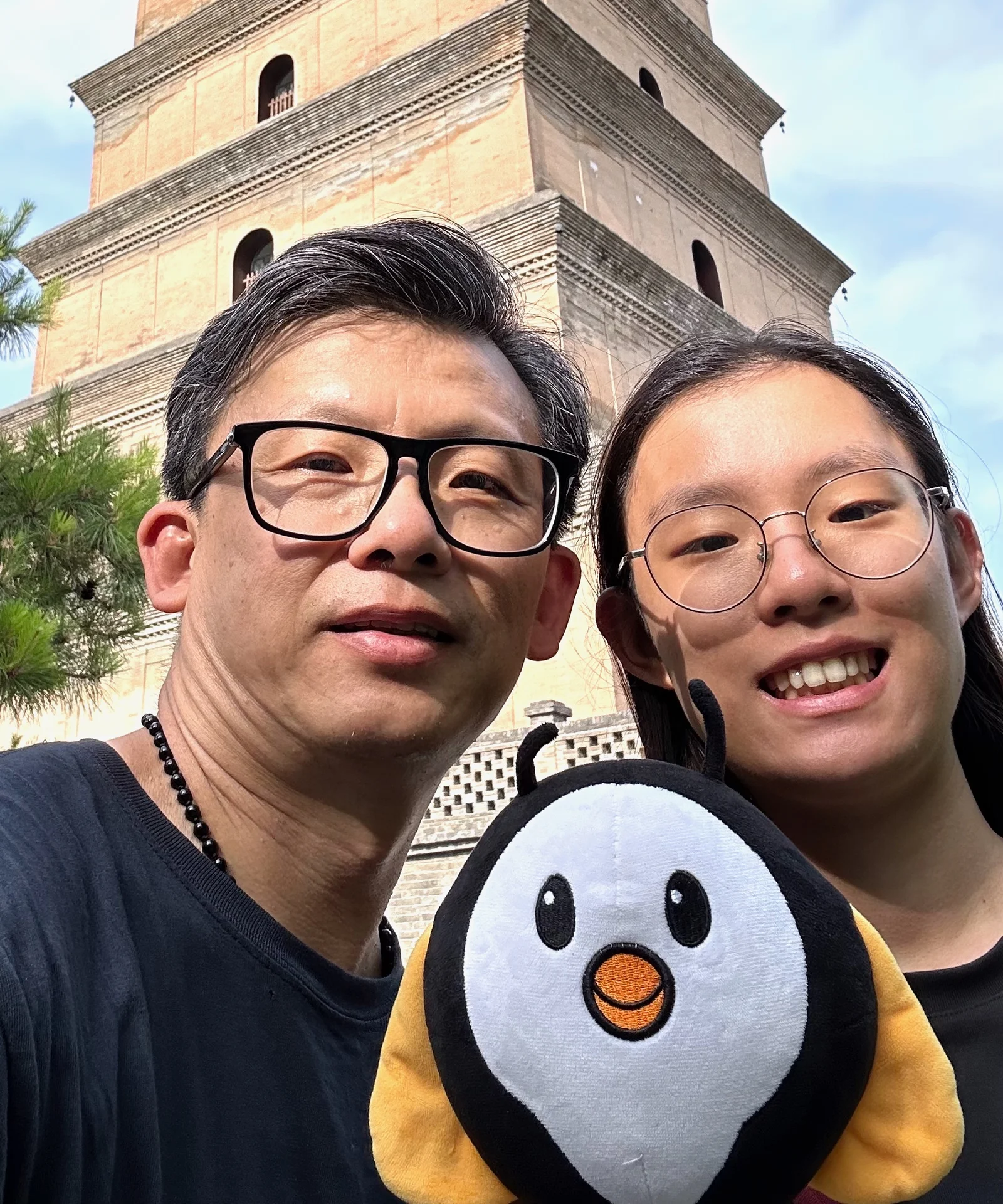
[INSERT DAD & ELAINE TAOSI PHOTO]
Taosi belongs broadly to the late Neolithic world, around:
2300–1900 BCE.
And here our question changes again.
We’re not simply looking at:
a farming village.
Taosi was a very large settlement with evidence of:
social hierarchy (社会等级, shèhuì děngjí)
elite burials (高等级墓葬, gāo děngjí mùzàng)
specialized crafts (专业手工业, zhuānyè shǒugōngyè)
and:
large-scale construction.
🔥
Now archaeologists can ask:
How politically complex was this society?
Was this an early urban center?
What kind of elite controlled resources?
Are we approaching early state formation (早期国家形成, zǎoqī guójiā xíngchéng)?
Those are civilization questions.
🌶️ And Then Emperor Yao 尧帝 Walks Into the Room
The Linfen region has long been associated in Chinese historical tradition with:
Emperor Yao (尧, Yáo)
one of the legendary:
sage rulers (圣王, shèngwáng).
So naturally people ask:
Was Taosi Yao’s capital?
🐇🐇🐇
Tempting.
Very tempting.
But this is where Deep China needs discipline.
Archaeology (考古学, kǎogǔxué)
and:
historical tradition (历史传说 / 文献传统)
are different kinds of evidence.
Finding a complex ancient settlement in a region associated with Yao does NOT automatically prove:
“We found Emperor Yao.”
🔥
Taosi is extraordinary without forcing the archaeology to say more than it can.
🍚 Western Handrail: Real Site ≠ Every Later Story Proven
Suppose archaeologists uncover a real ancient city connected in later tradition with a famous legendary ruler.
That proves:
the archaeological site exists.
It doesn’t automatically prove:
every later story about the ruler.
😂
Historical traditions deserve study.
Archaeology deserves study.
Sometimes they may illuminate each other.
But:
one should not simply be used to certify the other.
That’s particularly important when we get to:
Xia (夏).
🐇
🐞 First Sting Check
We began at:
Terracotta Warriors
asking:
“When did China begin?”
And we’ve already traveled backward through:
Qin (秦)
↓
Zhou (周)
↓
Taosi (陶寺)
↓
Neolithic period (新石器时代)
↓
agriculture (农业)
↓
settlements (聚落)
↓
Upper Cave people (山顶洞人)
↓
Peking Man (北京人)
↓
human evolution (人类进化).
😬
And we’ve learned our first big rule:
OLD ≠ CHINA.
Something can be:
extremely ancient
and:
extremely important
without being evidence that:
“China existed then.”
🔥
That’s a surprisingly important distinction.
The Bigger Lesson So Far
We aren’t looking for:
the oldest thing Dad can photograph in China.
😂
We’re looking for historical thresholds.
When do we see:
settled communities?
When do we see:
social complexity?
When do we see:
early states?
When do we see:
writing?
When do rulers begin speaking to us through their own contemporary records?
🔥
And that’s where the next part of our journey becomes especially important.
Between:
Taosi (陶寺)
and:
Shang (商)
sits:
Erlitou (二里头, Èrlǐtóu)
and the enormous question of:
Xia dynasty (夏朝, Xià Cháo).
Then at:
Anyang (安阳, Ānyáng)
something changes dramatically.
We find:
Yinxu (殷墟, Yīnxū)
and:
oracle-bone inscriptions (甲骨文, jiǎgǔwén).
The ancient people begin:
writing to us.
🔥🔥🔥
Section 2 — From Erlitou to Anyang: When Archaeology Meets Written History
Section 1 took us on an enormous journey backward:
Qin (秦)
↓
Zhou (周)
↓
Taosi (陶寺)
↓
Neolithic cultures (新石器时代文化)
↓
Zhoukoudian (周口店)
↓
Peking Man (北京人).
And we learned our first important rule:
OLD ≠ CHINA.
😂
Humans living in the territory of modern China hundreds of thousands of years ago does not mean:
“China existed hundreds of thousands of years ago.”
So now we move forward again.
And somewhere between:
Taosi (陶寺, Táosì)
and:
Anyang (安阳, Ānyáng)
something extraordinary is happening.
Large settlements.
Political power.
Bronze technology.
Elite culture.
And eventually:
writing (文字, wénzì).
🔥
This is where our question becomes much harder:
When does prehistory begin turning into Chinese history?
🐇 First Stop: Erlitou
Our next stop is:
Erlitou (二里头, Èrlǐtóu)
near:
Luoyang (洛阳, Luòyáng)
in:
Henan (河南, Hénán).
Dad & Elaine haven’t visited Erlitou yet.
It’s on a future Deep China journey.
😂
But we cannot tell this story responsibly without putting Erlitou on the coat rack.
Why?
Because Erlitou is one of the most important archaeological sites for understanding:
early state formation (早期国家形成, zǎoqī guójiā xíngchéng)
in the:
Central Plains (中原, Zhōngyuán).
Archaeologists have uncovered evidence of a large and complex political center with:
palatial architecture (宫殿建筑, gōngdiàn jiànzhù),
roads (道路, dàolù),
elite burials (高等级墓葬, gāo děngjí mùzàng),
jade objects (玉器, yùqì),
and:
bronze production (青铜铸造, qīngtóng zhùzào).
🔥
We’re clearly looking at something far beyond:
“big Neolithic village.”
Scholars treat Erlitou as a major site for studying early cities, political complexity and state formation in China.
🌶️ Then Comes the Dangerous Question: Is Erlitou Xia?
Traditional Chinese histories place:
Xia dynasty (夏朝, Xià Cháo)
before:
Shang dynasty (商朝, Shāng Cháo).
And the archaeological dates and geography of Erlitou overlap substantially with traditional reconstructions of the Xia period.
So naturally:
Erlitou = Xia?
🐇🐇🐇
This is where Dad’s Michelin chef puts down the chilli bottle.
😂
Careful.
What Can Archaeology Actually Say?
Erlitou unquestionably gives us archaeological evidence for:
a large and complex early political center.
What we do NOT have from Erlitou is a body of contemporary writing saying:
“Welcome to the capital of Xia.”
😂
That’s the problem.
Many Chinese archaeologists and historians have associated Erlitou with the:
Xia dynasty (夏朝).
Other scholars are more cautious about identifying an:
archaeological culture (考古学文化, kǎogǔxué wénhuà)
directly with:
a dynasty (朝代, cháodài)
known principally from texts written much later.
This remains a genuine scholarly debate.
🍚 Western Handrail: Pottery Doesn’t Introduce Itself
Imagine archaeologists uncover:
palaces,
graves,
roads,
bronzes,
and:
pottery.
Fantastic.
But the pottery doesn’t say:
“Hi. I’m Xia.”
😭😂
Archaeologists can study:
dates,
settlement patterns,
material culture,
technology,
social hierarchy
and:
regional connections.
But connecting an archaeological culture directly with a named dynasty from later literature requires:
another step of interpretation.
That’s why:
Erlitou is enormously important even if we leave the Xia identification open.
🔥
We don’t need to force an answer to make the site exciting.
🌶️ But Erlitou May Still Be a Major Civilization Threshold
Here’s where the question gets even more interesting.
Scholar Sarah Allan has argued that the elite culture crystallizing at Erlitou—particularly traditions involving bronze ritual vessels and ancestral ritual—can legitimately be understood as an early stage of:
Chinese civilization (中华文明, Zhōnghuá Wénmíng).
Other archaeological approaches emphasize questions of:
state formation (国家形成, guójiā xíngchéng),
urbanism (城市化, chéngshìhuà),
civilization (文明, wénmíng)
and:
dynastic history (王朝历史, wángcháo lìshǐ)
as related but distinct problems. :contentReference[oaicite:2]{index=2}
🔥
That’s exactly the distinction this article is trying to teach.
The question:
“Was Erlitou Xia?”
is NOT identical to:
“Was Erlitou important in the formation of Chinese civilization?”
Very different questions.
🐇 Then We Arrive Somewhere Dad & Elaine HAVE Visited
Now travel east and forward in time to:
Anyang (安阳, Ānyáng)
in:
Henan (河南, Hénán).
And specifically:
Yinxu (殷墟, Yīnxū).
Dad & Elaine visited.
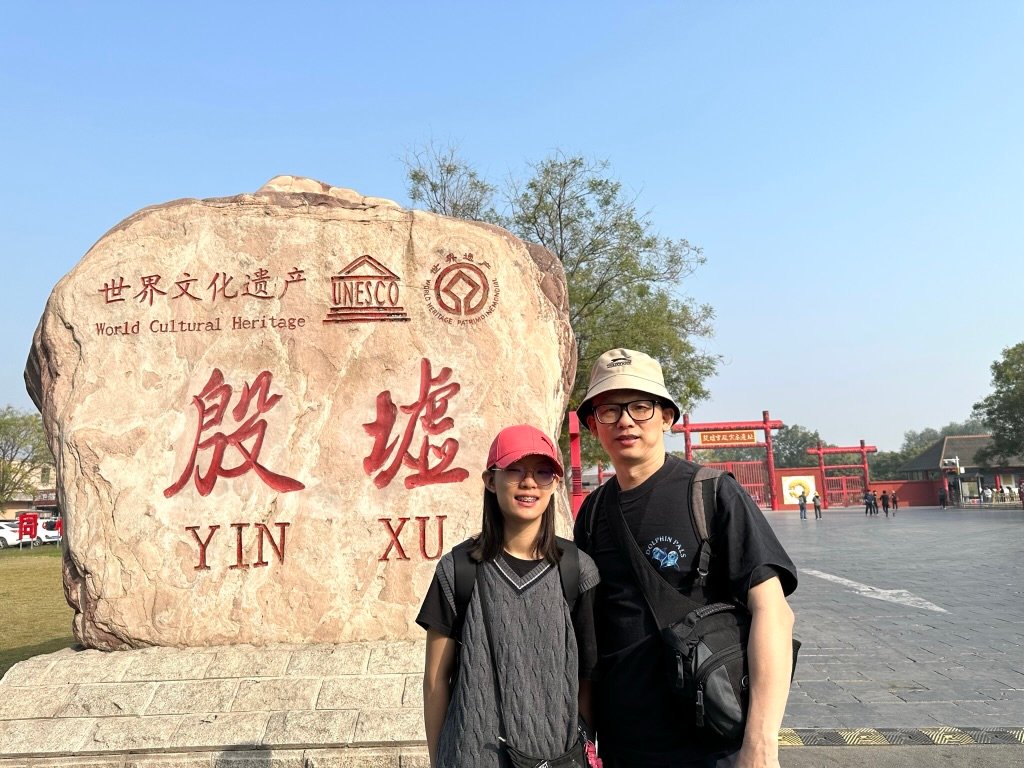
And here something changes dramatically.
Yinxu was a late royal center of the:
Shang dynasty (商朝, Shāng Cháo).
Today it is:
a UNESCO World Heritage Site.
And unlike our Xia problem…
at Yinxu:
the ancient people left writing.
🔥🔥🔥
📖 Meet the Oracle Bones
One of the greatest archaeological discoveries in Chinese history is:
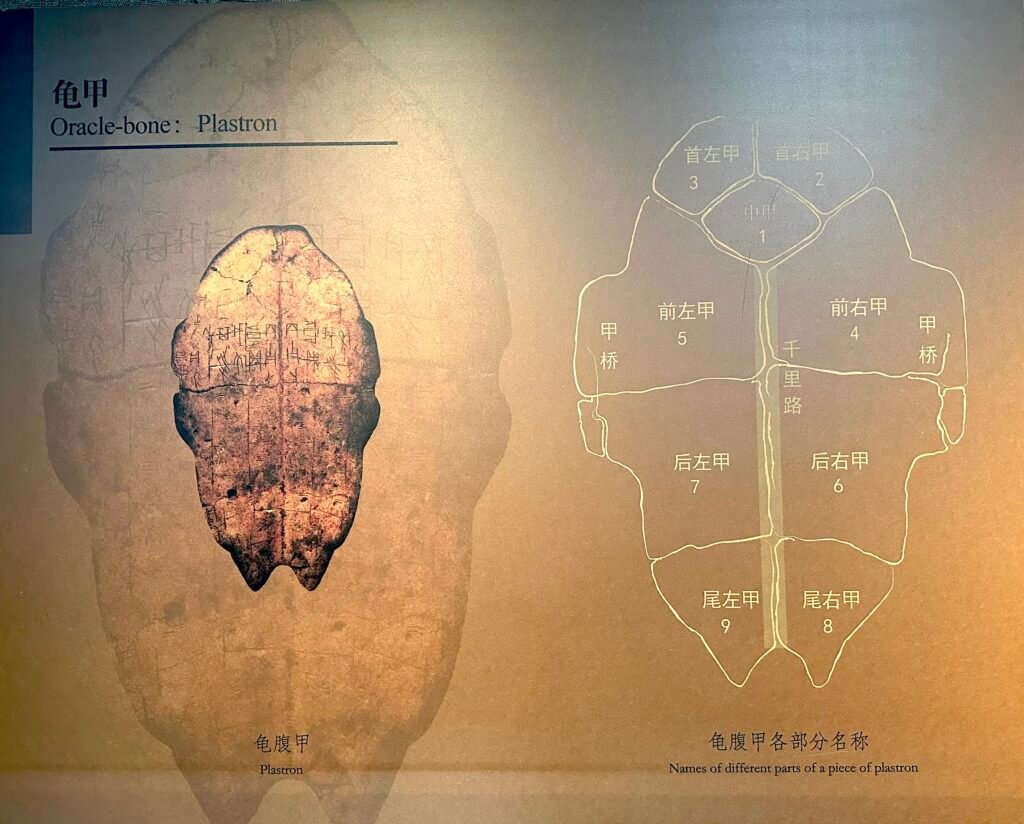
Oracle bone inscription, photographed by Dad at the National Museum of Chinese Writing (中国文字博物馆) in Anyang — follow these ancient characters back to Yinxu (殷墟), where some of China’s earliest surviving written records were unearthed.
oracle bones (甲骨, jiǎgǔ).
These included:
turtle plastrons (龟甲, guījiǎ)
and:
animal bones (兽骨, shòugǔ)
used in royal:
divination (占卜, zhānbǔ).
On them were carved:
oracle-bone inscriptions (甲骨文, jiǎgǔwén).
🔥
UNESCO describes these inscriptions as the earliest known mature systematic writing in China and as invaluable evidence for Shang history, beliefs and society.
Now our evidence has changed.
🔥 At Taosi, Archaeology Does Most of the Talking
At:
Taosi (陶寺)
we have:
settlement layout,
burials (墓葬, mùzàng),
artifacts (文物, wénwù),
architecture,
social differences
and:
material remains.
Archaeologists reconstruct society from:
things people left behind.
🔥 At Yinxu, Ancient People Start Talking Back
At:
Yinxu (殷墟)
we still have archaeology.
But now we also have:
words.
😳
The oracle-bone inscriptions contain information involving:
royal ancestors (王室祖先, wángshì zǔxiān),
warfare (战争, zhànzhēng),
harvests (收成, shōuchéng),
weather (天气, tiānqì),
sacrifices (祭祀, jìsì),
hunting (狩猎, shòuliè),
childbirth,
and:
royal affairs.
🔥
Now:
archaeology (考古学)
and:
written evidence (文字资料, wénzì zīliào)
can begin talking to each other.
That is a major historical threshold.
🍚 Western Handrail: Imagine Finding the King’s Diary
Not literally.
😂
Oracle bones aren’t:
“Dear Diary, today I invaded my neighbor.”
But the handrail helps.
Before writing, archaeologists reconstruct a society mainly from material evidence.
With contemporary inscriptions, suddenly we gain access to:
names
questions
events
and:
categories that people themselves used.
🔥
We’re no longer only asking:
“What do these ruins suggest?”
We can also ask:
“What did these people themselves record?”
👑 And the Shang Kings Have Names
This is where Yinxu becomes especially important.
The oracle-bone inscriptions name Shang rulers and royal ancestors.
And the royal sequence preserved in these contemporary inscriptions substantially corresponds with Shang king lists preserved in later Chinese historical traditions.
🔥
That matters enormously.
At:
Xia
we have a difficult relationship between later textual tradition and archaeology.
At late:
Shang
we have:
archaeology + contemporary writing + named rulers.
The historical ground has become firmer.
🐇 So Is Shang Where “Chinese History” Begins?
Ahhh.
Tempting.
😂
If by:
recorded history (有文字记载的历史, yǒu wénzì jìzǎi de lìshǐ)
we mean history supported by substantial contemporary written evidence…
late Shang at Yinxu is an extraordinarily important threshold.
UNESCO explicitly emphasizes that the oracle-bone inscriptions provide evidence for Shang history and the early development of Chinese writing.
But does that mean:
“Chinese civilization begins at Yinxu”?
Not necessarily.
Because:
civilization can exist before surviving writing.
🔥
Erlitou didn’t suddenly become unimportant because its people haven’t left us comparable readable records.
Taosi didn’t disappear.
Earlier regional cultures didn’t disappear.
Again:
different question → different threshold.
🌶️ Writing Is a Threshold, Not a Starting Gun
This is important.
Writing gives historians an extraordinary new kind of evidence.
But civilization doesn’t wait politely for somebody to invent writing before beginning.
😂
We can identify:
cities,
social hierarchy,
political organization,
ritual systems,
craft specialization
and:
long-distance exchange
archaeologically.
So:
writing (文字)
is one extremely important threshold.
It isn’t automatically:
the birthday of civilization.
🔥
🏺 And Look at the Shang Bronzes
At Anyang, Dad & Elaine also entered the extraordinary world of:
Shang bronze culture (商代青铜文化, Shāngdài Qīngtóng Wénhuà).
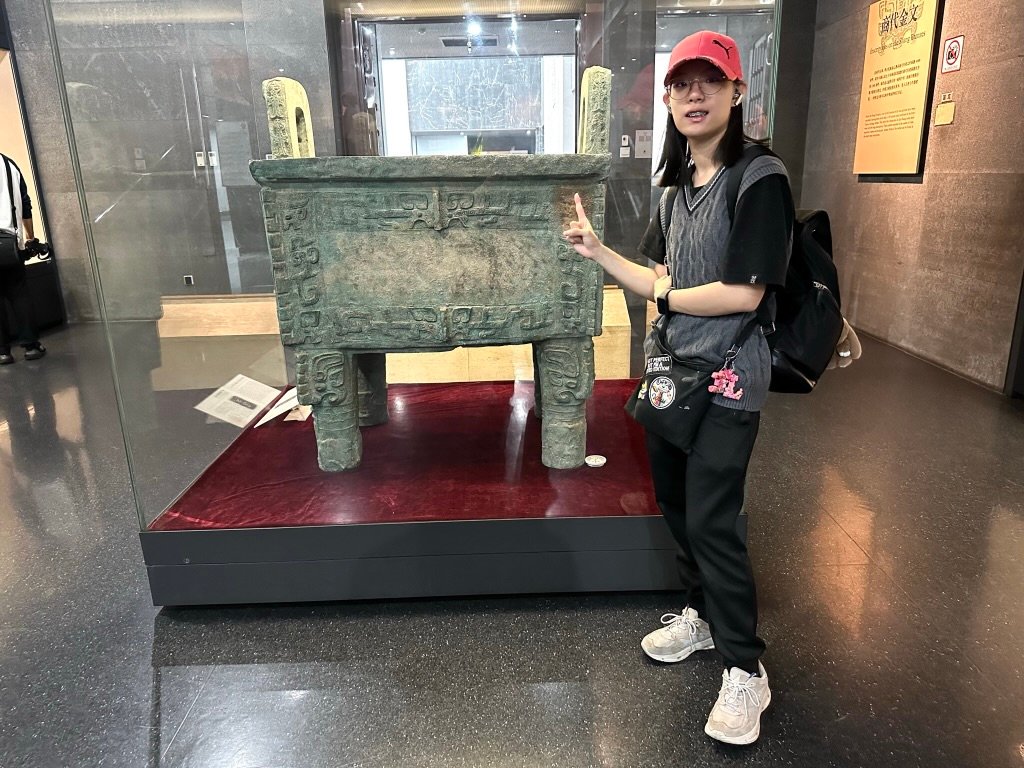
Elaine with a Shang-dynasty bronze vessel, photographed by Dad at the National Museum of Chinese Writing (中国文字博物馆) in Anyang — bronze, ritual and writing together open a window into the world of ancient Shang China.
Large:
ritual bronze vessels (青铜礼器, qīngtóng lǐqì)
required sophisticated:
mining,
metal production,
craft specialization,
labor organization
and:
elite control of resources.
🔥
These objects weren’t simply:
ancient Chinese decorative vases.
They participated in:
ritual (礼 / 祭祀)
ancestral worship (祖先崇拜, zǔxiān chóngbài)
and:
political authority.
Again, objects are telling us how society worked.
🐇 Then Comes Fu Hao
One of the most famous people from Yinxu is:
Fu Hao (妇好, Fù Hǎo).
She was a royal consort of:
King Wu Ding (武丁, Wǔ Dīng)
and appears in oracle-bone inscriptions.
Her tomb:
Tomb of Fu Hao (妇好墓, Fù Hǎo Mù)
was discovered intact at Yinxu.
🔥
This is archaeological magic.
We have:
a named person in contemporary inscriptions
and:
her archaeological tomb.
😳
Now early Chinese history suddenly becomes:
human.
Not merely:
dynasty → date → next dynasty.
Fu Hao lived.
Her name was recorded.
Her tomb survives.
🌶️ Now Compare Our Evidence
This is the Michelin moment.
ZHOUKOUDIAN (周口店)
human fossils + stone tools
↓
human prehistory
TAOSI (陶寺)
large settlement + elite burials + social complexity
↓
complex prehistoric society
ERLITOU (二里头)
urban center + palatial architecture + elite bronze culture + political complexity
↓
early state / civilization debate
YINXU (殷墟)
royal center + tombs + bronzes + named kings + contemporary writing
↓
archaeology meets recorded dynastic history
🔥🔥🔥
Now we’re finally building a sensible answer to:
“When did China begin?”
Not with one date.
With:
thresholds.
🐇 But We’re Still Not at Qin
Now move forward again.
The:
Shang dynasty (商朝)
falls.
↓
The:
Zhou dynasty (周朝)
emerges.
↓
And Dad & Elaine’s journey moves back toward:
Baoji (宝鸡)
and:
Zhouyuan (周原).
🔥
Here we encounter:
bronze inscriptions (青铜器铭文, qīngtóngqì míngwén)
Mandate of Heaven (天命, Tiānmìng)
Duke of Zhou (周公, Zhōugōng)
and:
He Zun (何尊, Hé Zūn).
And one tiny pair of characters is about to create another huge problem:
中国 — Zhōngguó.
😳🐇
🐞 Sting Check
You began Section 2 with:
Erlitou (二里头).
Now you’ve acquired:
Xia (夏)
↓
archaeological culture (考古学文化)
↓
dynasty (朝代)
↓
state formation (国家形成)
↓
Anyang (安阳)
↓
Yinxu (殷墟)
↓
Shang (商)
↓
oracle bones (甲骨)
↓
oracle-bone inscriptions (甲骨文)
↓
writing (文字)
↓
Fu Hao (妇好)
↓
ritual bronzes (青铜礼器)
↓
recorded history
↓
Zhou (周)
↓
and finally:
中国 — Zhōngguó.
😬
Uh-oh.
Because now the obvious question is:
If the characters 中国 already existed during the Zhou dynasty, does THAT mean China had finally begun?
😂🔥
Not so fast.
Section 3 — So When Did “China” Begin? The Answer Depends on What You Mean
We began this article at:
Terracotta Warriors (兵马俑, Bīngmǎyǒng)
outside:
Xi’an (西安, Xī’ān).
We asked:
If Qin Shi Huang unified China in 221 BCE… what existed before the unification?
Then we fell backward through:
Qin (秦)
↓
Zhou (周)
↓
Shang (商)
↓
Yinxu (殷墟)
↓
Erlitou (二里头)
↓
Taosi (陶寺)
↓
Neolithic cultures (新石器时代文化)
↓
Zhoukoudian (周口店)
↓
Peking Man (北京人).
😭😂
And now we can finally answer our question.
Except…
there isn’t one answer.
🔥
Because:
“When did China begin?” depends on what you mean by China.
1. If You Mean Human Occupation…
Then we can go back:
hundreds of thousands of years.
At:
Zhoukoudian Peking Man Site (周口店北京人遗址, Zhōukǒudiàn Běijīngrén Yízhǐ)
we have evidence of:
Peking Man (北京人)
and later:
Upper Cave people (山顶洞人).
But remember:
human occupation (人类活动)
does NOT equal:
Chinese civilization (中华文明, Zhōnghuá Wénmíng).
🔥
Peking Man wasn’t:
“the first Chinese person.”
The territory is modern China.
The identity is not.
2. If You Mean Complex Prehistoric Society…
Then places such as:
Taosi Archaeological Site (陶寺遗址, Táosì Yízhǐ)
become extremely important.
At Taosi we encounter:
large settlements (大型聚落, dàxíng jùluò),
social hierarchy (社会等级, shèhuì děngjí),
elite burials (高等级墓葬, gāo děngjí mùzàng),
specialized production
and:
large-scale organization.
🔥
Now we’re asking questions about:
urbanization (城市化, chéngshìhuà)
and:
early state formation (早期国家形成, zǎoqī guójiā xíngchéng).
That’s a much more plausible place to discuss:
the development of civilization.
But even here…
there isn’t a sign saying:
WELCOME TO CHINA — ESTABLISHED 2300 BCE.
😂
3. If You Mean an Early State and Bronze-Age Political Center…
Then:
Erlitou (二里头, Èrlǐtóu)
becomes central.
Erlitou gives us:
palatial architecture (宫殿建筑),
elite burials,
bronze production (青铜铸造),
roads,
craft specialization
and:
political complexity.
🔥
And then:
Xia dynasty (夏朝, Xià Cháo)
enters the conversation.
But remember our Michelin rule:
Erlitou is enormously important without pretending the Erlitou = Xia question is completely settled.
Archaeology first.
Interpretation second.
4. If You Mean Contemporary Written Dynastic History…
Then:
Anyang (安阳, Ānyáng)
and:
Yinxu (殷墟, Yīnxū)
give us one of the strongest thresholds.
Here we have:
Shang dynasty (商朝, Shāng Cháo)
+
archaeology (考古学, kǎogǔxué)
+
named rulers
+
oracle-bone inscriptions (甲骨文, jiǎgǔwén).
🔥🔥🔥
The ancient people are leaving contemporary written records.
So if someone asks:
“Where does securely documented early Chinese dynastic history become much clearer?”
late Shang:
Yinxu
is an extremely important answer.
🐇 Then We Reach Zhou — and 中国 Appears
Now travel to:
Western Zhou (西周, Xī Zhōu).
Dad & Elaine visited:
Baoji (宝鸡, Bǎojī)
and:
Zhouyuan (周原, Zhōuyuán).
And at the:
Baoji Bronze Ware Museum (宝鸡青铜器博物院)
we encounter:
He Zun (何尊, Hé Zūn).
This early Western Zhou bronze is famous because its inscription contains:
中国 — Zhōngguó.
😳
There it is.
The same two characters used today for:
China.
So…
CASE CLOSED?
China existed in the Western Zhou?
😂
Not so fast.
🌶️ 中国 Did NOT Always Mean Modern “China”
This is one of the most important beginner lessons in the entire Michelin series.
中 — zhōng
center / middle
国 — guó
state / polity / realm, depending on historical context
Together:
中国 — Zhōngguó.
But words:
change meaning over time.
🔥
The early Zhou use of 中国 should not simply be read as:
“the modern Chinese nation-state.”
In early contexts, the term could refer to central territories or the political center.
So seeing:
中国
on a 3,000-year-old bronze is extraordinary.
But it doesn’t mean:
“The People’s Republic of China existed 3,000 years ago.”
😭😂
Same characters.
Different historical world.
🍚 Western Handrail: Same Word, Different World
Think of the word:
Rome.
It might refer to:
a city,
a republic,
an empire,
a civilization
or:
modern Rome.
Same name.
Very different political worlds.
🔥
Historical vocabulary needs:
historical context.
Exactly the same discipline applies to:
中国 — Zhōngguó.
🐇 And Zhou Gives Us More Than a Name
Western Zhou also gives us political ideas we’ve already encountered:
Mandate of Heaven (天命, Tiānmìng)
Son of Heaven (天子, Tiānzǐ)
ritual (礼, lǐ)
and:
Duke of Zhou (周公, Zhōugōng).
🔥
These concepts became extraordinarily influential in later Chinese political culture.
So if someone asks:
“When do some ideas recognizably important throughout later Chinese history become especially visible?”
Western Zhou is an excellent place to look.
Now Dad & Elaine’s:
Zhouyuan
and:
Baoji
rabbit holes make sense again.
5. If You Mean a Unified Imperial Political Order…
Then finally:
Qin (秦).
We return to:
221 BCE.
Qin Shi Huang conquers the rival Warring States.
↓
creates the title:
emperor (皇帝, huángdì)
↓
expands:
commanderies and counties (郡县, jùnxiàn)
↓
promotes:
standardization
↓
and attempts to govern the conquered realm as:
one imperial political order.
🔥
If your question is:
“When does the unified imperial system that shaped so much later Chinese political history begin?”
then:
QIN
is the obvious major threshold.
But remember:
imperial China ≠ beginning of Chinese civilization.
Civilization is much older.
🌶️ So Which Date Is Correct?
Here’s our Michelin answer:
There isn’t one magic date.
Instead, use:
THRESHOLDS.
Zhoukoudian (周口店)
→ human prehistory
Neolithic cultures (新石器时代文化)
→ farming + settled communities + growing complexity
Taosi (陶寺)
→ large complex prehistoric society
Erlitou (二里头)
→ major early Bronze Age political center / early-state debate
Yinxu (殷墟)
→ late Shang + contemporary writing + named rulers
Western Zhou (西周)
→ influential political and ritual traditions + early 中国 inscription
Qin (秦)
→ unified imperial order
🔥🔥🔥
Different doorway.
Different answer.
🐇 And This Is Why “5,000 Years of Chinese Civilization” Needs Context
The phrase:
5,000 years of Chinese civilization (中华文明五千年)
is deeply familiar in Chinese cultural discourse.
For a Western beginner, don’t respond by saying:
“TRUE!”
or:
“FALSE!”
😂
Ask:
What does “civilization” mean in this sentence?
If we’re discussing the development of complex societies and cultural traditions across what became China, archaeological roots extend deep into the Neolithic.
If we’re asking for:
contemporary written historical records
the threshold is later.
If we’re asking for:
unified empire
later still.
🔥
Once again:
definition matters.
🍚 You Don’t Need to Pick a Team
This isn’t:
Team 5,000 Years
versus:
Team 3,000 Years.
😂
A curious traveler can simply understand:
different claims may be measuring different things.
That’s already a major upgrade.
And it prevents us from confusing:
archaeology,
legend,
written history,
civilization,
state formation
and:
modern national identity.
🐇 Now Go Back to Xi’an
We have traveled absurdly far.
😂
Time to return to:
Terracotta Warriors (兵马俑)
outside Xi’an.
Remember the sentence:
“Qin Shi Huang unified China in 221 BCE.”
Now you hear it differently.
You know:
there was already a very long history before Qin.
Shang existed.
Zhou existed.
Writing existed.
Bronze culture existed.
Cities existed.
States existed.
Political thought existed.
🔥
Qin didn’t:
begin Chinese civilization.
Qin transformed:
its political organization.
That’s a much more accurate—and much more interesting—way to understand Qin Shi Huang.
🐞 And Now the Rabbit Holes Become Dangerous
Your first China trip took you to:
Xi’an.
Then Qin made you ask:
What came before Qin?
🐇
Answer:
Zhou.
So now:
Baoji + Zhouyuan.
🐇🐇
Then:
What came before Zhou?
Shang.
So:
Anyang + Yinxu.
🐇🐇🐇
Then:
What came before Shang?
Now:
Erlitou.
Then:
Taosi.
Then:
Neolithic China.
Then:
Zhoukoudian.
😭😂
And suddenly your:
“one China trip”
has become:
the next ten years of travel plans.
🐞🔥
Exactly.
📍 Dad & Elaine’s Deep China Trail
Look at what our own travels have accidentally created:
Zhoukoudian (周口店)
human prehistory
↓
Taosi (陶寺)
complex prehistoric society
↓
[FUTURE] Erlitou (二里头)
early state formation / Xia question
↓
Anyang / Yinxu (安阳 / 殷墟)
Shang + writing
↓
Baoji / Zhouyuan (宝鸡 / 周原)
Western Zhou
↓
Xi’an / Xianyang (西安 / 咸阳)
Qin imperial unification
↓
Beijing (北京)
later imperial China.
🔥🔥🔥
That’s no longer a collection of:
“Dad’s weird historical destinations.”
😂
It’s becoming:
a physical journey through the formation and transformation of Chinese civilization.
ChinaTravelBUG’s Take
So:
When did Chinese civilization begin?
Our answer is:
Don’t look for one birthday. Look for the thresholds.
Human occupation is one story.
Agriculture is another.
Complex society is another.
State formation is another.
Writing is another.
Dynastic history is another.
Imperial unification is another.
And modern China is another again.
🔥
Once you separate those layers, Chinese history becomes:
less confusing
rather than:
more complicated.
Because now you have somewhere to put each piece.
That’s the coat rack.

🐞 Final Sting
You began this eight-course Michelin dinner as a first-time traveler visiting:
Beijing + Xi’an.
You saw:
Great Wall (长城)
Forbidden City (故宫)
Temple of Heaven (天坛)
and:
Terracotta Warriors (兵马俑).
Then you asked:
WHY?
And those famous places led you toward:
Yanmenguan (雁门关)
Yungang (云冈石窟)
Wutai Shan (五台山)
Hancheng (韩城)
Pingyao (平遥)
Zhouyuan (周原)
Baoji (宝鸡)
Anyang (安阳)
Yinxu (殷墟)
Taosi (陶寺)
and eventually:
Erlitou (二里头).
😬🐇🐇🐇
That’s the whole point.
Your first China trip shouldn’t turn you into:
a historian.
It should give you enough understanding to look at China and think:
“Wait… I want to know more.”
🐞
Then one famous place becomes one question.
One question becomes another place.
And another place creates another trip.
You’ve been stung.
😂🔥🐇
See the place. Ask the bigger question. Understand China better.
🍰 Ready for Dessert?
We’ve jumped across thousands of years—from China before emperors to Qin unification, Heaven, walls and the Forbidden City.
Before we go any deeper, let’s put the whole story onto one simple timeline made for travelers.
Dessert: The Only Chinese History Timeline a First-Time Traveler Really Needs →