Stay a few days around Baoji (宝鸡, Bǎojī) and something strange happens to the timeline.
One day, Dad & Elaine were following:
Qishan (岐山, Qíshān)
Zhouyuan (周原, Zhōuyuán)
Duke of Zhou (周公, Zhōugōng)
and the world of the:
Western Zhou dynasty (西周, Xī Zhōu)
— more than 3,000 years ago.
Then our next rabbit hole jumped forward more than a thousand years.
To:
234 CE.
And one of the most famous names in Chinese history:
Zhuge Liang (诸葛亮, Zhūgě Liàng).
Our destination:
Wuzhangyuan (五丈原, Wǔzhàngyuán).
😂
Same wider Baoji journey.
Completely different China.
🕰️ Where Are We?
Keep only this coat rack:
WESTERN ZHOU (西周, Xī Zhōu)
c. 1046–771 BCE
📍 Qishan (岐山, Qíshān) / Zhouyuan (周原, Zhōuyuán)
↓
QIN DYNASTY (秦朝, Qíncháo)
221–206 BCE
↓
HAN DYNASTY (汉朝, Hàncháo)
206 BCE–220 CE
↓
THREE KINGDOMS PERIOD (三国时期, Sānguó Shíqī)
220–280 CE
↓
📍 WUZHANGYUAN (五丈原, Wǔzhàngyuán)
234 CE
🔥
That’s the first lesson.
Places don’t belong to one dynasty.
The rulers change.
The states change.
The armies change.
But:
mountains remain
river valleys remain
strategic corridors remain.
Geography doesn’t care which dynasty Dad happens to be studying.
😂
🎥 Come Into Wuzhangyuan With Dad
Before the history lesson, let’s actually go there.
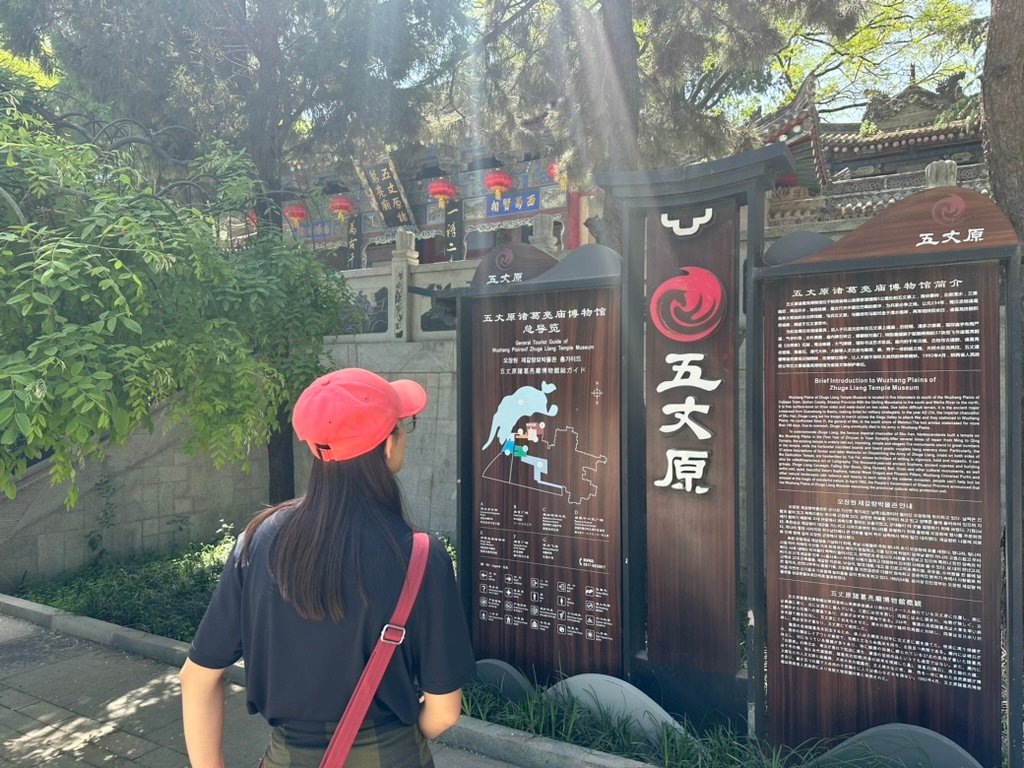
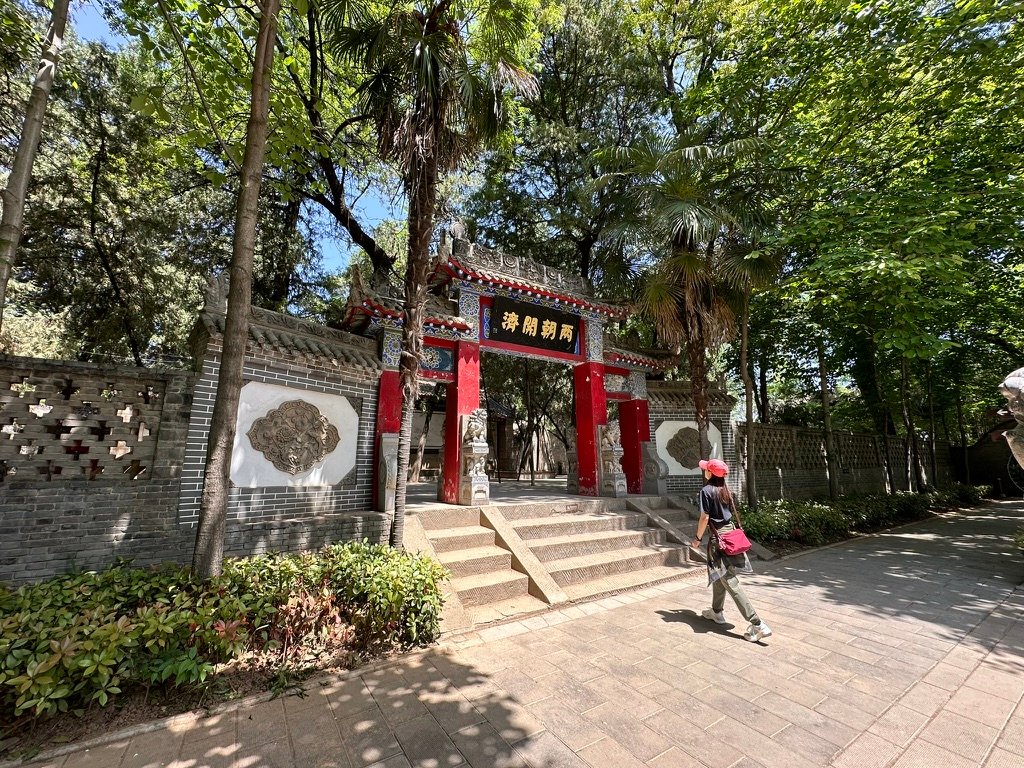
Dad is standing outside:
Wuzhangyuan Zhuge Liang Temple
(五丈原诸葛亮庙, Wǔzhàngyuán Zhūgě Liàng Miào)
in Qishan County (岐山县, Qíshān Xiàn).
Behind him are the temple gate, exhibition halls and a site devoted to the memory of Zhuge Liang (诸葛亮, Zhūgě Liàng).
Dad explains the basic story:
Shu Han (蜀汉, Shǔ Hàn)
↓
Northern Expeditions (北伐, Běifá)
↓
Fifth Northern Expedition (第五次北伐, Dì Wǔ Cì Běifá)
↓
Wuzhangyuan (五丈原, Wǔzhàngyuán)
↓
234 CE.
One correction to Dad’s field commentary:
You’ll hear Dad mention 227 CE.
That belongs to the earlier Northern Expedition story.
The date that matters here at Wuzhangyuan is:
234 CE
— Zhuge Liang’s final Northern Expedition and the year he died during the campaign.
And Dad corrects another important point himself in the video:
the commemorative tomb here is not his bodily burial place.
Good.
Now let’s go inside.
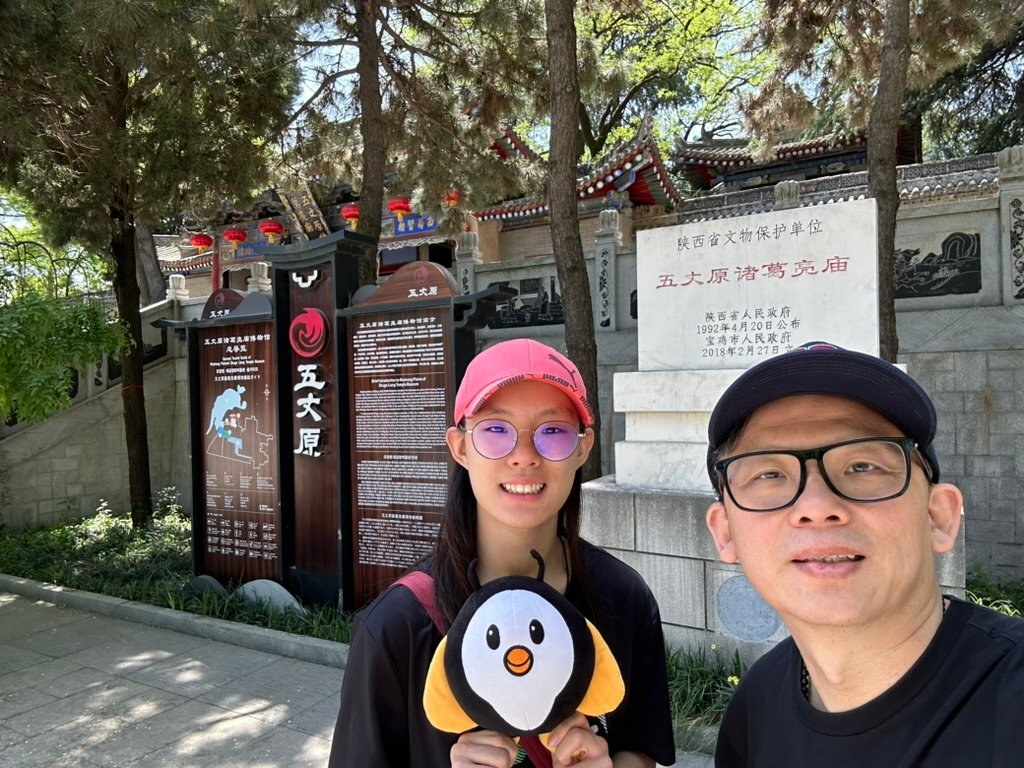
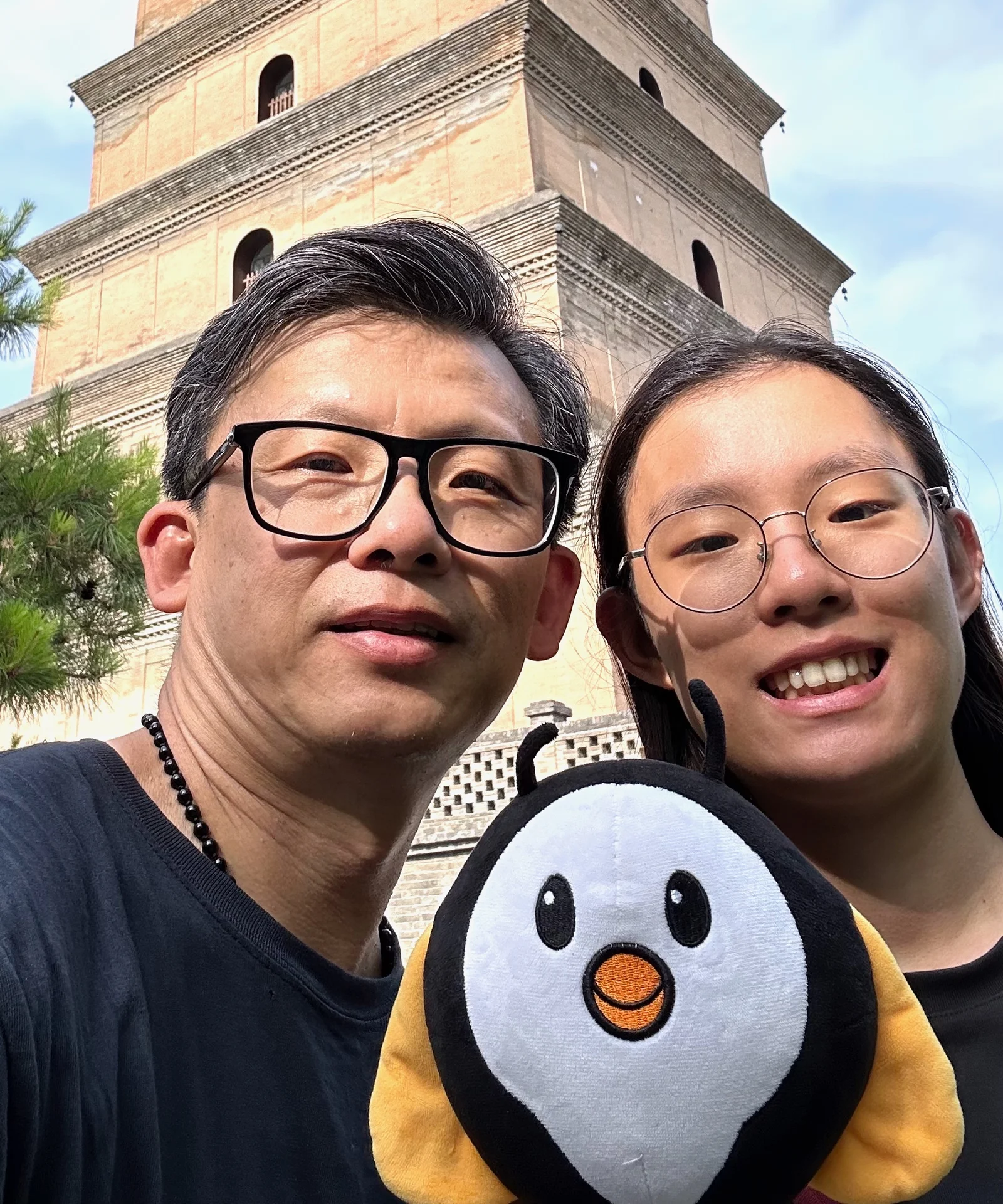
Dad, Elaine and Cheers at Wuzhangyuan Zhuge Liang Temple (五丈原诸葛亮庙, Wǔzhàngyuán Zhūgě Liàng Miào) in Qishan County (岐山县, Qíshān Xiàn). We had come from Baoji (宝鸡, Bǎojī) following another historical rabbit hole.
🐇 三国迷 — You Already Know How This Ends
If you’re a:
三国迷 (Sānguó Mí)
Three Kingdoms fan
Dad doesn’t need to spend the next 2,000 words telling you that Zhuge Liang was famous.
😂
You already know the names:
Zhuge Liang (诸葛亮, Zhūgě Liàng)
Sima Yi (司马懿, Sīmǎ Yì)
Shu Han (蜀汉, Shǔ Hàn)
Cao Wei (曹魏, Cáo Wèi)
Northern Expeditions (北伐, Běifá)
and:
Wuzhangyuan (五丈原, Wǔzhàngyuán).
You know how the story ends.
But knowing the story…
and:
standing where the final campaign ended
are completely different things.
For everyone else, here’s the one-minute coat rack.
🍚 Three Kingdoms in One Minute
The Han dynasty (汉朝, Hàncháo) formally ended in:
220 CE.
Three major rival states dominate the world we remember as the:
Three Kingdoms (三国, Sānguó)
Cao Wei (曹魏, Cáo Wèi)
in the north
Shu Han (蜀汉, Shǔ Hàn)
in the southwest
Eastern Wu (东吴, Dōng Wú)
in the southeast.
Zhuge Liang (诸葛亮, Zhūgě Liàng) served:
Shu Han (蜀汉, Shǔ Hàn).
Its political centre was:
Chengdu (成都, Chéngdū).
And Zhuge Liang repeatedly tried to push north against:
Cao Wei (曹魏, Cáo Wèi).
Those campaigns became known as his:
北伐 — Běifá
Northern Expeditions.
Now we have enough history.
Let’s follow Elaine.
Elaine Walks Into the Five Northern Expeditions
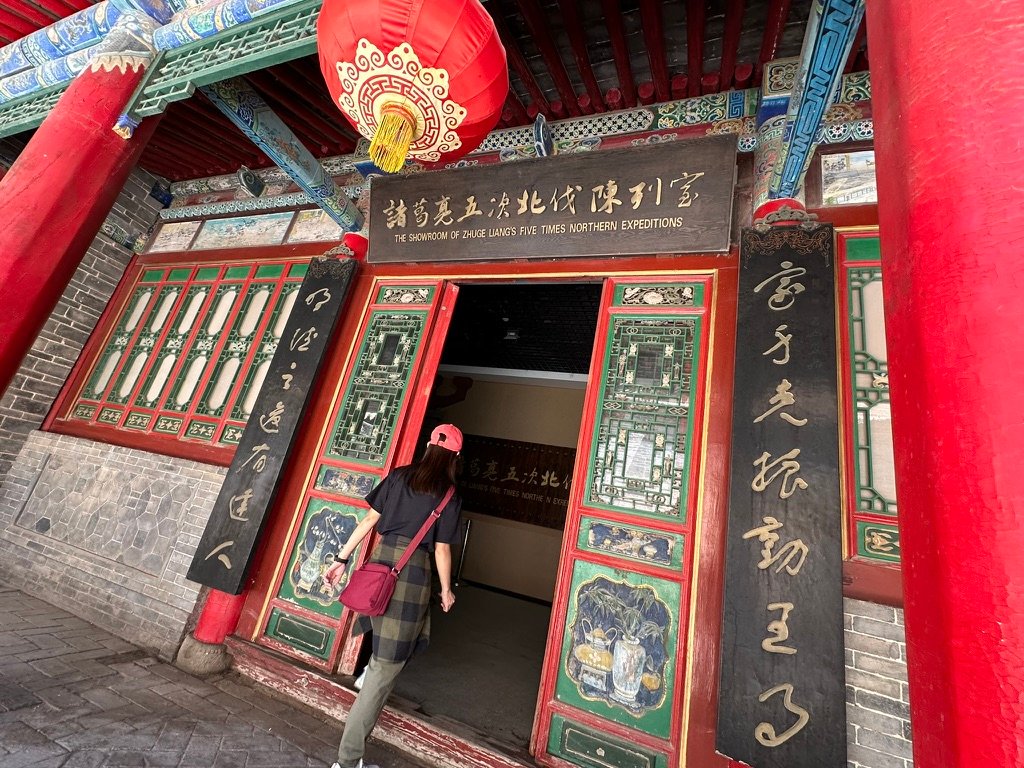
Look at the sign above her:
诸葛亮五次北伐陈列室
Zhūgě Liàng Wǔ Cì Běifá Chénlièshì
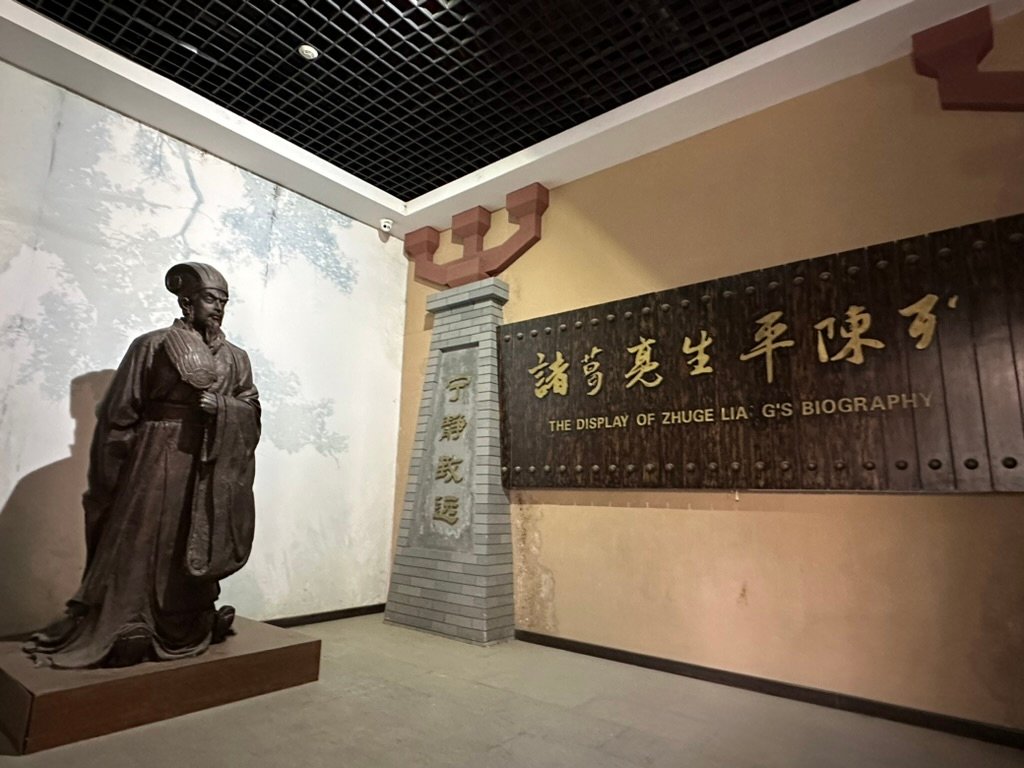
Exhibition Hall of Zhuge Liang’s Five Northern Expeditions
Dad called this the:
“fifth conquest”
in the video.
Inside, the museum lays the campaigns out one after another:
第一次北伐 (Dì Yī Cì Běifá)
First Northern Expedition
↓
第二次北伐 (Dì Èr Cì Běifá)
↓
第三次北伐 (Dì Sān Cì Běifá)
↓
第四次北伐 (Dì Sì Cì Běifá)
↓
第五次北伐 (Dì Wǔ Cì Běifá)
Fifth Northern Expedition
And now look where the final route takes us:
五丈原
Wǔzhàngyuán.
📷 INSERT FIFTH NORTHERN EXPEDITION ROUTE MAP HERE
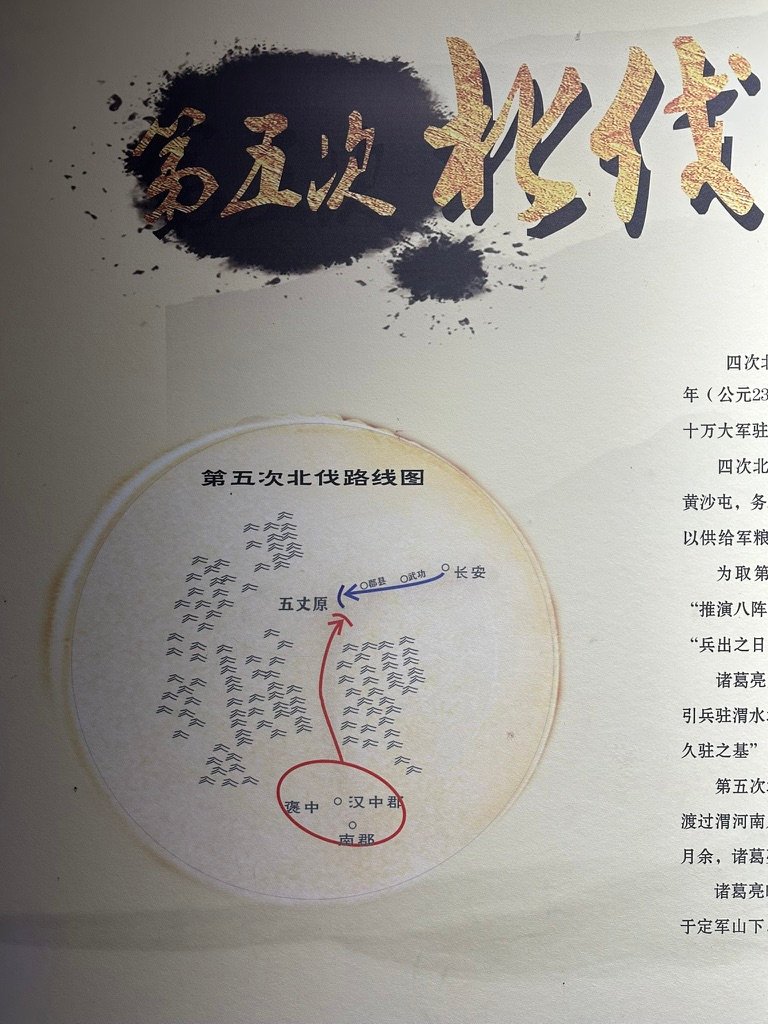
The exhibition’s route map for Zhuge Liang’s (诸葛亮, Zhūgě Liàng) Fifth Northern Expedition. In 234 CE, the campaign brought his Shu Han (蜀汉, Shǔ Hàn) forces to Wuzhangyuan (五丈原, Wǔzhàngyuán) for the final confrontation with the Cao Wei (曹魏, Cáo Wèi) forces commanded by Sima Yi (司马懿, Sīmǎ Yì).
👀 Then Step Outside
The exhibition gives you:
THE MAP.
Wuzhangyuan gives you:
THE LANDSCAPE.
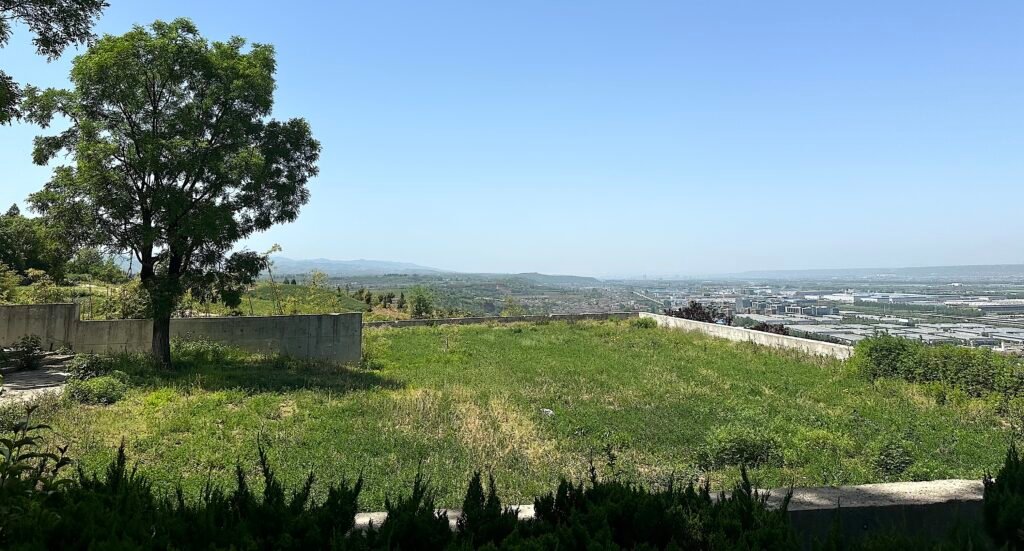
Looking across the landscape from Wuzhangyuan (五丈原, Wǔzhàngyuán), associated with Zhuge Liang’s Fifth Northern Expedition and final campaign in 234 CE.
Today?
Green.
Quiet.
Trees.
Fields.
Modern development in the distance.
But now you’ve seen the campaign map.
And suddenly Dad doesn’t want you looking only for:
“Where exactly did Zhuge Liang stand?”
Look at the whole landscape.
Because Zhuge Liang wasn’t fighting only:
Sima Yi (司马懿, Sīmǎ Yì).
He was also fighting:
GEOGRAPHY
+
LOGISTICS
+
RESOURCES
+
TIME.
And eventually:
his own health.
🔥
That’s where Wuzhangyuan becomes much more interesting than:
“the place where Zhuge Liang died.”
The museum tells us:
WHAT HAPPENED.
Standing here lets us start asking:
WHY WAS THIS CAMPAIGN SO DIFFICULT?
🐇
🌊 SECTION 2 — The Wei River (渭河, Wèihé), Logistics and the Limits of Genius
Before Wuzhangyuan (五丈原, Wǔzhàngyuán), Dad & Elaine had already met one important piece of this geography.
We just didn’t realize how important it was yet.
At our apartment in:
Baoji (宝鸡, Bǎojī)
our homestay host pointed across the city.
There:
渭河
Wèihé
Wei River
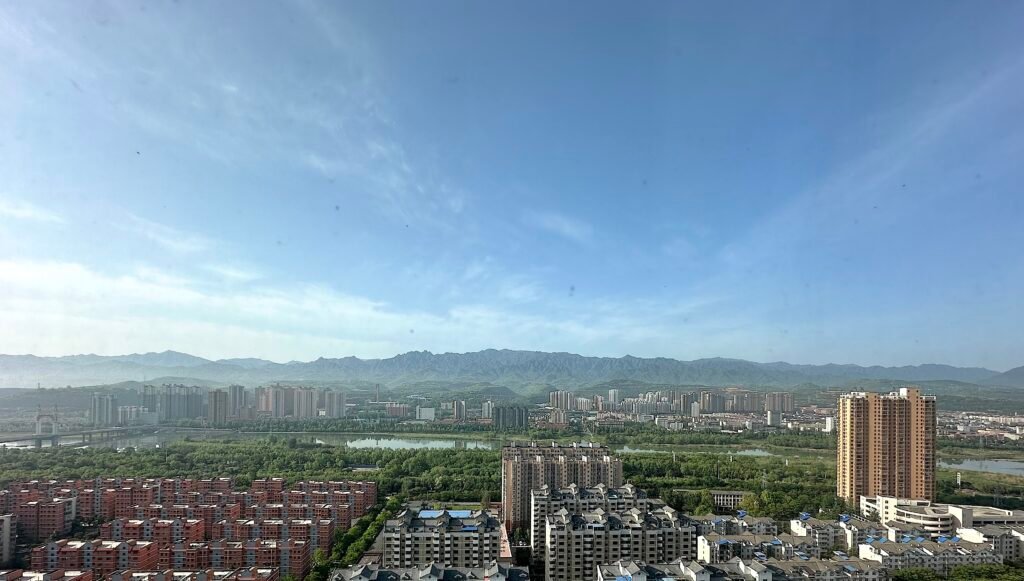
The Wei River (渭河, Wèihé), photographed from Dad & Elaine’s apartment in Baoji (宝鸡, Bǎojī). Our homestay host pointed it out to us. Later, at Wuzhangyuan, the same river appeared again — this time as part of Zhuge Liang’s military geography.
At the time?
Nice view.
😂
Then we reached Wuzhangyuan.
We looked at the campaign maps.
And:
渭河 — Wèihé
appeared again.
🐇 Wait… Haven’t We Seen This River Before?
At Wuzhangyuan (五丈原, Wǔzhàngyuán), Dad kept seeing one name on the campaign maps:
渭河
Wèihé
Wei River
Hang on.
This fellow again? 😂
Our Baoji (宝鸡, Bǎojī) homestay host had already pointed it out from our apartment.
Then Dad remembered:
we had seen the same wider Wei River landscape from:
Fenghuangshan (凤凰山, Fènghuáng Shān)
while exploring Qishan (岐山, Qíshān) and the homeland of the Zhou (周, Zhōu).
But that was a completely different history lesson.
At Fenghuangshan:
WESTERN ZHOU (西周, Xī Zhōu)
3,000+ years ago
At Wuzhangyuan:
THREE KINGDOMS (三国, Sānguó)
234 CE
Same river.
Same mountains.
Same valley.
Completely different people running around making history.
😂
The Zhou were here.
Qin came later.
Han came later.
Then Zhuge Liang (诸葛亮, Zhūgě Liàng) arrived with an army…
and the Wei River was still sitting there.
“Oh. You again.” 😂
And that’s when Dad’s rule became impossible to forget:
Geography doesn’t care which dynasty you’re studying.
Dynasties come.
Dynasties go.
The Wei River?
Still there. 🌊😂
🐇
Why Did the Wei River 渭河 Matter?
Look at the geography around Baoji (宝鸡, Bǎojī), Qishan (岐山, Qíshān) and the wider Guanzhong region (关中, Guānzhōng).
The Wei River valley forms a major east-west corridor.
And farther east lay the great prize:
Chang’an (长安, Cháng’ān).
For Zhuge Liang (诸葛亮, Zhūgě Liàng), campaigning north wasn’t simply:
“March toward Chang’an.”
Between his Shu Han base and the Wei River valley stood difficult terrain and a much less glamorous military problem:
How do you feed an army?
🍚 Armies Eat
This may be the least romantic part of the Three Kingdoms.
It may also be one of the most important.
😂
Every campaign required:
grain
animals
weapons
equipment
replacement troops
and:
transport.
Move thousands of soldiers farther from home and the supply line stretches with them.
Lose supplies?
The campaign can collapse without losing one glorious battle.
That helps explain why Zhuge Liang’s Northern Expeditions repeatedly ran into the same stubborn problem:
LOGISTICS.
🐇 Even Huang Yueying (黄月英, Huáng Yuèyīng) Enters the Story
Inside Wuzhangyuan Zhuge Liang Temple (五丈原诸葛亮庙, Wǔzhàngyuán Zhūgě Liàng Miào), Dad found:
月英殿
Yuèyīng Diàn
Yueying Hall
It commemorates Zhuge Liang’s wife, commonly remembered as:
Huang Yueying (黄月英, Huáng Yuèyīng).
The temple board describes her as exceptionally talented.
Then it uses one very important phrase:
相传 — Xiāngchuán
“According to tradition…”
According to that tradition, Huang Yueying helped Zhuge Liang develop the:
木牛流马
Mùniú Liúmǎ
Wooden Ox and Gliding Horse
— devices traditionally associated with moving supplies during Zhuge Liang’s campaigns.
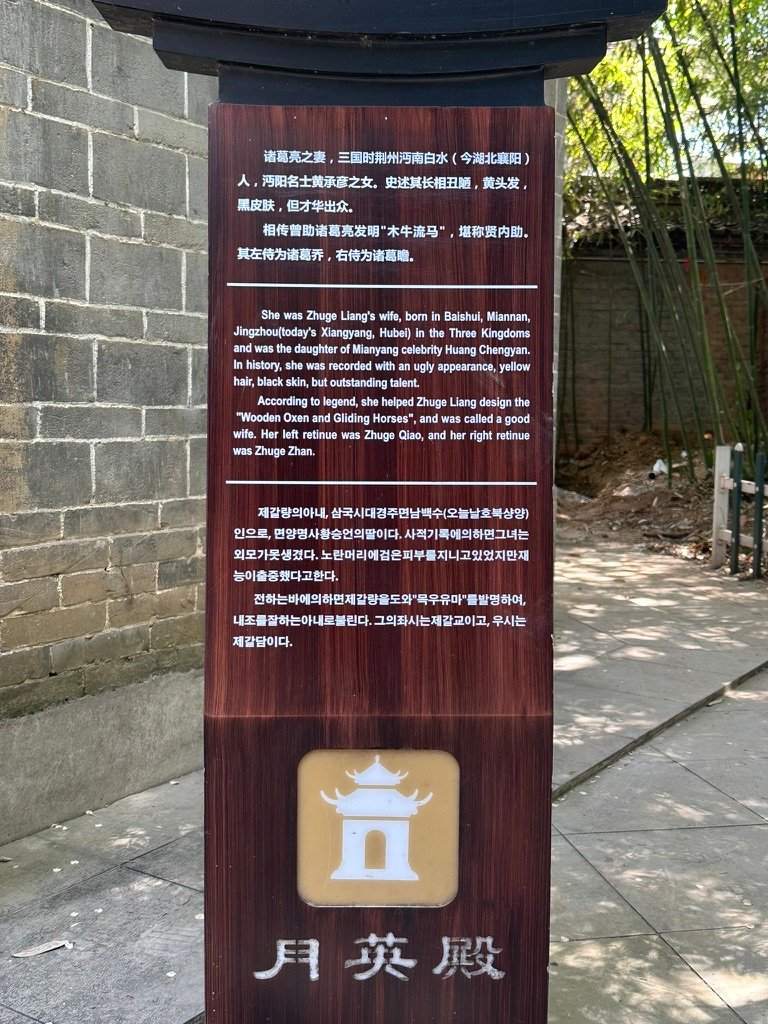
Yueying Hall (月英殿, Yuèyīng Diàn). Notice the temple board’s careful word 相传 (Xiāngchuán) — “according to tradition” — when connecting Huang Yueying (黄月英, Huáng Yuèyīng) with the Wooden Ox and Gliding Horse (木牛流马, Mùniú Liúmǎ).
Dad likes that little word:
相传.
Because it reminds us:
historical record
is not always the same thing as:
later tradition.
We’ll come back to that.
⭐ GO MICHELIN — Can Genius Beat Geography?
Zhuge Liang has one of the greatest reputations for intelligence and strategy in Chinese cultural memory.
But Wuzhangyuan asks a harder question:
Can even a brilliant strategist overcome structural disadvantages?
Shu Han (蜀汉, Shǔ Hàn) was fighting a larger and generally better-resourced rival:
Cao Wei (曹魏, Cáo Wèi).
Zhuge Liang had to contend with:
distance
mountains
supply
manpower
enemy resistance
and:
time.
Across from him was also a commander who understood something very important:
Sima Yi (司马懿, Sīmǎ Yì).
He didn’t necessarily need to give Zhuge Liang the decisive battle Zhuge Liang wanted.
Waiting could itself become strategy.
The longer the confrontation continued…
the more Shu Han’s logistical disadvantages mattered.

Dad’s Political Science Handrail
This is where Dad stops seeing Zhuge Liang as simply:
“genius military strategist.”
Leadership operates inside constraints.
A brilliant leader can make better decisions.
But intelligence cannot magically create:
more grain
shorter mountains
unlimited soldiers
or:
more time.
That’s what the landscape around Wuzhangyuan teaches better than another story about a clever stratagem.
Even genius has constraints.
🔥
And Then Time Ran Out
During the Fifth Northern Expedition in:
234 CE
Zhuge Liang became seriously ill.
He died at Wuzhangyuan.
Age:
53.
For a 三国迷 (Sānguó Mí), this is the moment you’ve known was coming.
But standing here makes it feel different.
Five Northern Expeditions.
Years of preparation.
An unfinished strategic objective.
And then:
the commander is gone.
But thousands of Shu Han soldiers are still in enemy territory.
So what happens next?
The army doesn’t disappear.
Someone has to get it home.
🐇
⚔️ SECTION 3 — Zhuge Liang Dies. What Happens to the Army?
Zhuge Liang (诸葛亮, Zhūgě Liàng) died at Wuzhangyuan (五丈原, Wǔzhàngyuán) in:
234 CE.
But this wasn’t:
“The commander died. The End.”
Thousands of Shu Han (蜀汉, Shǔ Hàn) troops were still campaigning far from home.
They still had to withdraw safely.
Yang Yi (杨仪, Yáng Yí) — Getting the Army Home
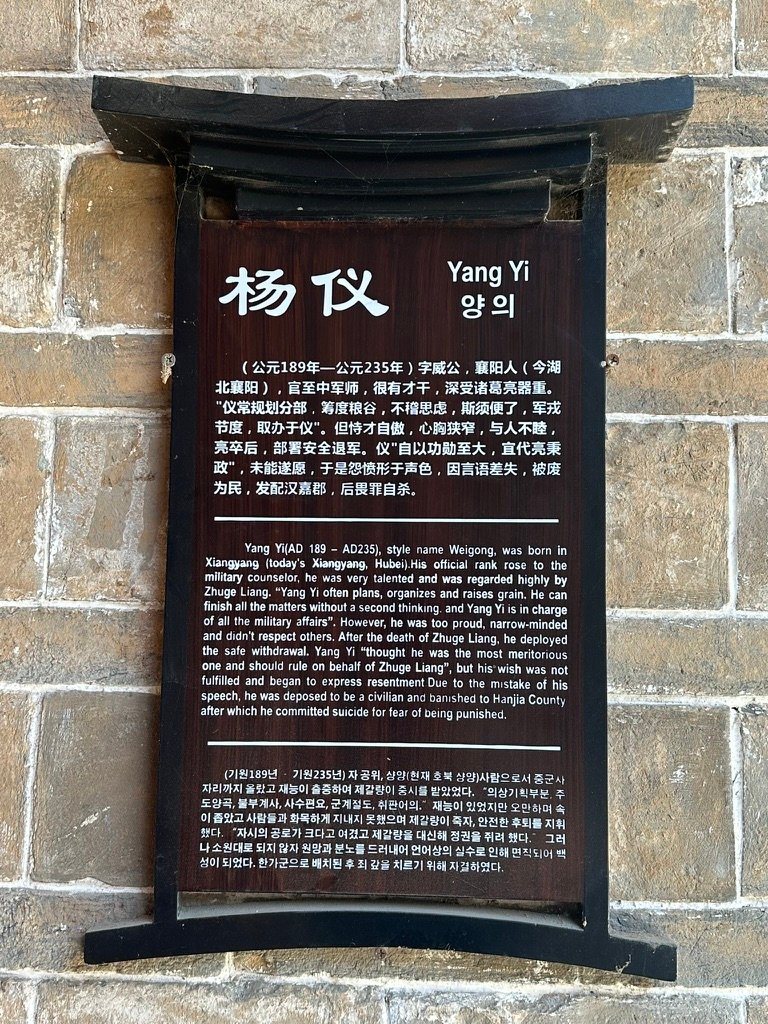
One important figure was:
Yang Yi (杨仪, Yáng Yí)
a senior Shu Han official who played an important role in organizing the withdrawal after Zhuge Liang’s death.
That matters.
A military retreat in enemy territory can be extremely dangerous.
And across from Shu Han was still:
Sima Yi (司马懿, Sīmǎ Yì)
and the army of:
Cao Wei (曹魏, Cáo Wèi).
So Zhuge Liang’s death created an immediate practical problem:
How do you bring the army home?
🐇 Then Another Familiar Name Appears
Inside the exhibition, Dad & Elaine also encountered:
Jiang Wei (姜维, Jiāng Wéi).
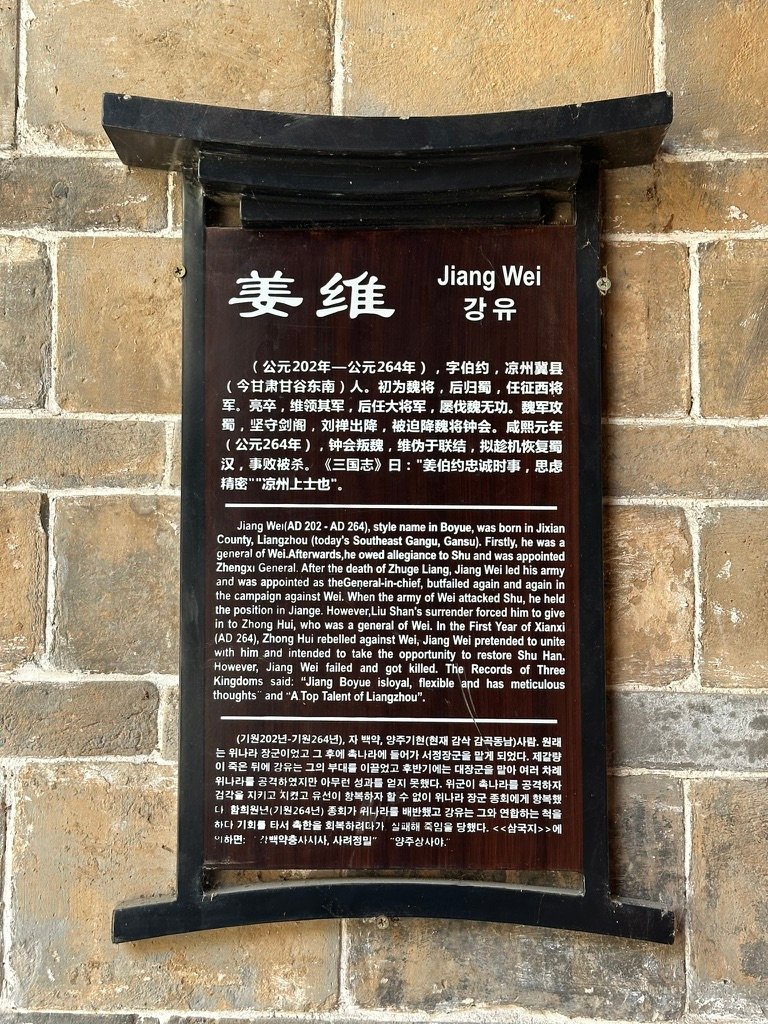
三国迷 (Sānguó Mí) will know where this rabbit is going.
😂
Jiang Wei eventually became one of Shu Han’s leading military commanders and continued launching northern campaigns against Cao Wei.
So:
Zhuge Liang dies
↓
the army withdraws
↓
Shu Han survives
↓
Jiang Wei continues the struggle.
That’s an important distinction.
Wuzhangyuan was the end of Zhuge Liang’s Northern Expeditions.
It was not the end of Shu Han.
Shu Han survived until:
263 CE.
⭐ The Unfinished Mission
This is one reason Zhuge Liang’s death became so emotionally powerful in later Chinese memory.
He didn’t die after completing his great objective.
He died:
before finishing it.
The attempt to defeat Cao Wei and restore the Han political order remained incomplete.
And that unfinished quality became part of how later generations remembered him:
loyal
disciplined
intelligent
devoted
but ultimately:
unsuccessful in his grand strategic objective.
That last part matters.
If we turn Zhuge Liang into an unbeatable superhero, we actually make his story less interesting.

Dad’s Political Science Handrail
Sometimes historical greatness comes from:
winning.
Sometimes it comes from:
what somebody represents despite not winning.
Zhuge Liang didn’t destroy Cao Wei.
He didn’t restore Han rule over the Central Plains (中原, Zhōngyuán).
He didn’t return triumphantly to Chang’an (长安, Cháng’ān).
Yet nearly 1,800 years later…
Dad & Elaine traveled all the way to Wuzhangyuan to find him.
😳
So now the really interesting question becomes:
How did a failed final campaign produce such an enduring cultural hero?
To answer that, we need to leave the battlefield.
And enter:
MEMORY.
🏯 A Battlefield Became a Place of Memory
Zhuge Liang died here in:
234 CE.
But Wuzhangyuan didn’t stop being important in 234.
Later generations:
remembered him
↓
built shrines
↓
repaired them
↓
rebuilt them
↓
wrote about him
↓
and:
carved that memory into stone.
Dad photographed one particularly useful piece of evidence.
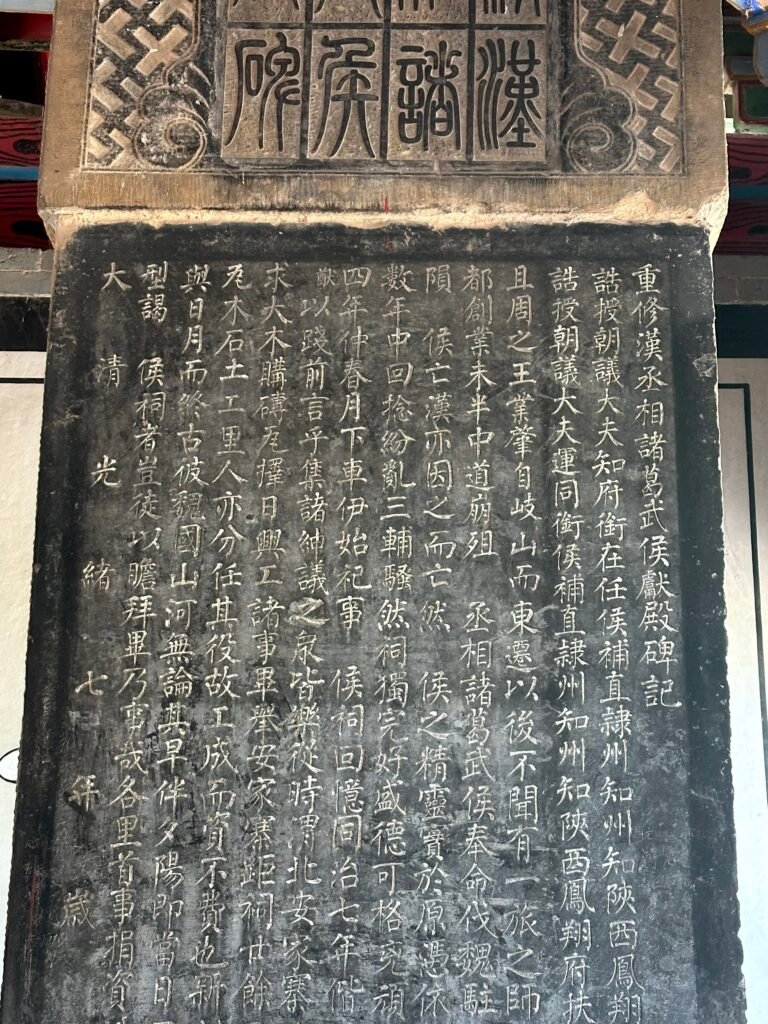
Look at the heading:
重修汉丞相诸葛武侯献殿碑记
Chóngxiū Hàn Chéngxiàng Zhūgě Wǔhóu Xiàndiàn Bēijì
In essence:
a stele recording the reconstruction of the offering hall dedicated to Zhuge Liang, Marquis Wu.
And look at the date:
大清光绪七年
Dà Qīng Guāngxù Qī Nián
7th year of the Guangxu reign — 1881
Zhuge Liang died in:
234 CE.
This reconstruction record came roughly:
1,650 years later.
🔥
People were still maintaining the place where his memory lived.
That’s something a battlefield map cannot show you.
The battlefield tells us:
WHAT HAPPENED HERE.
The reconstruction stele tells us:
WHAT LATER GENERATIONS DECIDED WAS WORTH PRESERVING.
And the Memory Kept Growing
Now we’re ready to meet:
THREE ZHUGE LIANGS.
① The Historical Zhuge Liang
诸葛亮 (Zhūgě Liàng)
Statesman.
Administrator.
Military commander.
A real person who lived from:
181–234 CE.
② The Remembered Zhuge Liang
忠 (Zhōng) — loyalty
智慧 (Zhìhuì) — wisdom
尽瘁 (Jìncuì) — exhausting oneself in devoted service
The man later generations increasingly treated as a moral and political ideal.
③ The Zhuge Liang of Literature
The almost superhuman strategist millions know from:
《三国演义》
Sānguó Yǎnyì
Romance of the Three Kingdoms
These three Zhuge Liangs overlap.
But they are:
not exactly the same person.
🐇
And Wuzhangyuan is one of the best places to watch those layers accumulate.
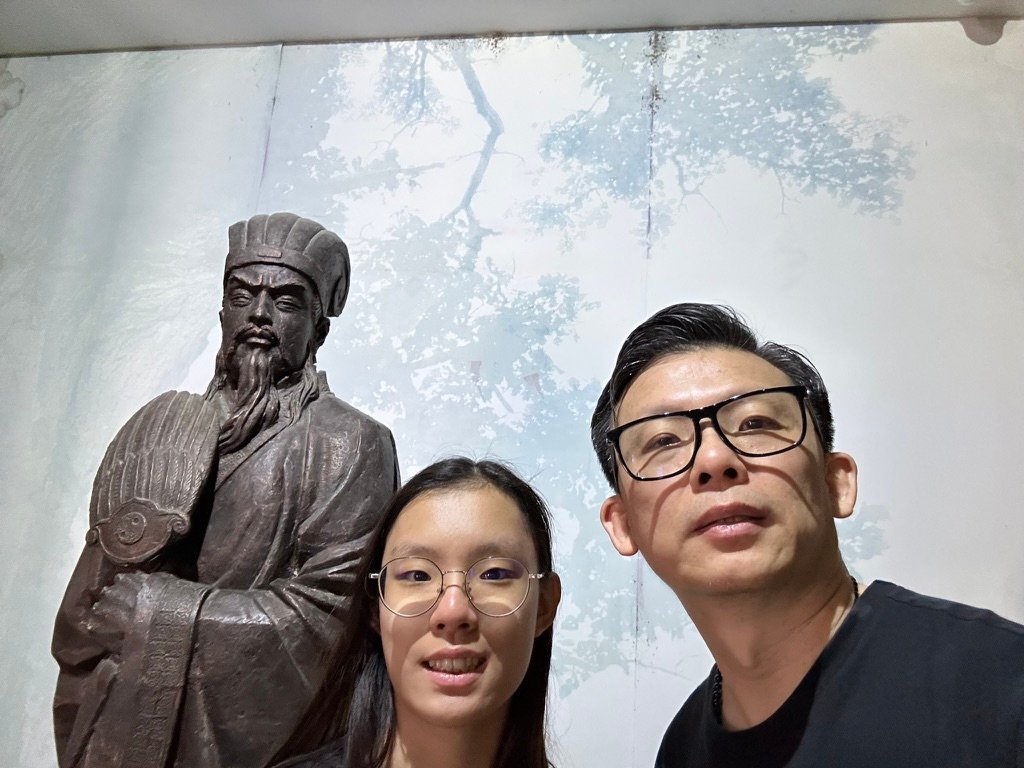
Dad & Elaine with Zhuge Liang (诸葛亮, Zhūgě Liàng) at Wuzhangyuan. We came looking for the historical strategist — but everywhere around us we also encountered the Zhuge Liang later generations chose to remember.
Which Zhuge Liang Did You Come Looking For?
For a first-time international traveler, perhaps:
“the famous Chinese strategist.”
For a 三国迷 (Sānguó Mí), perhaps the Zhuge Liang of:
三顾茅庐 (Sāngù Máolú)
Three Visits to the Thatched Cottage
草船借箭 (Cǎochuán Jiè Jiàn)
Borrowing Arrows with Straw Boats
or:
空城计 (Kōngchéng Jì)
Empty Fort Strategy.
But here’s the more interesting question to carry around Wuzhangyuan:
Which parts belong to history?
Which belong to later memory?
Which were magnified by literature?
Don’t use that distinction to ruin the stories.
😂
Use it to appreciate them more.
Because the transformation of Zhuge Liang from:
historical statesman
↓
remembered loyal minister
↓
literary genius
is itself part of Chinese history.
And Dad & Elaine were about to find that memory literally:
carved into stone.
🐇
✍️ SECTION 4 — 《出师表》, Yue Fei (岳飞, Yuè Fēi) and Memory Across Centuries
Inside Wuzhangyuan Zhuge Liang Temple (五丈原诸葛亮庙, Wǔzhàngyuán Zhūgě Liàng Miào), Elaine sat beneath walls of calligraphy.
For an international traveler?
It can look like:
lots of beautiful old Chinese writing.
😂
But Dad stopped.
Because these panels connect:
Zhuge Liang (诸葛亮, Zhūgě Liàng)
with another famous Chinese general who lived almost 900 years later:
Yue Fei (岳飞, Yuè Fēi).
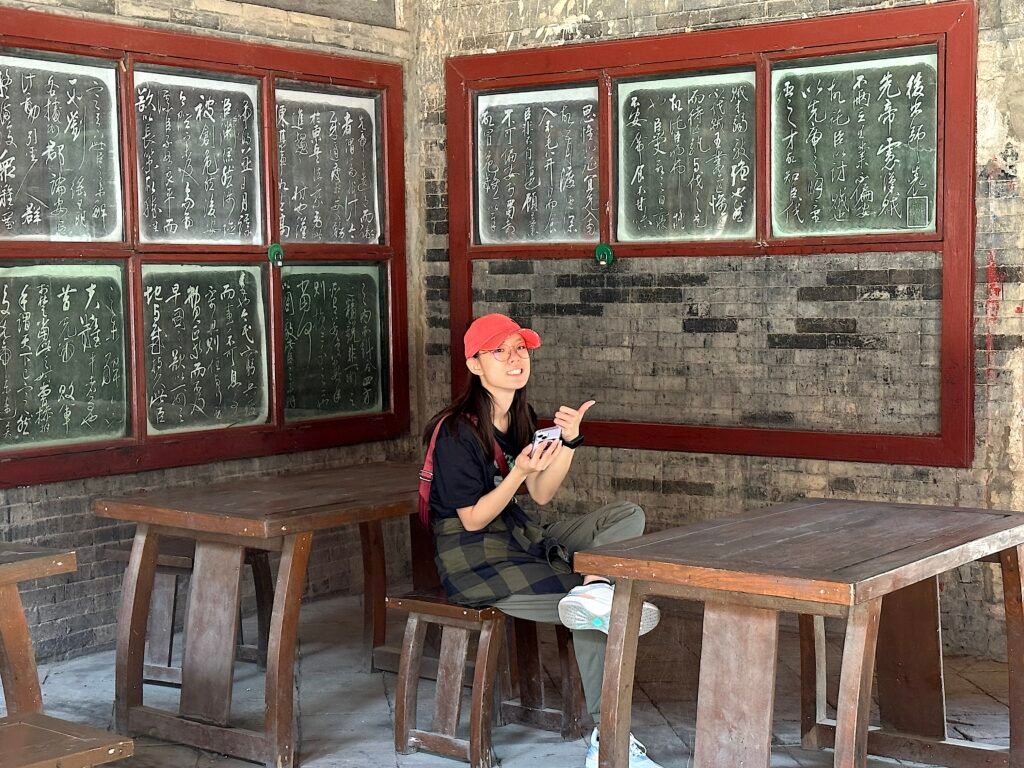
Elaine beneath the 《出师表》 (Chūshī Biǎo) stone-rubbing panels at Wuzhangyuan Zhuge Liang Temple. The calligraphic tradition displayed here is associated with Southern Song general Yue Fei (岳飞, Yuè Fēi).
First — What Is 《出师表》?
出师表
Chūshī Biǎo
Memorial on Dispatching the Troops
The famous Former Memorial on Dispatching the Troops (《前出师表》, Qián Chūshī Biǎo) is traditionally attributed to Zhuge Liang before one of his northern campaigns.
It was addressed to the Shu Han emperor:
Liu Shan (刘禅, Liú Shàn),
son of:
Liu Bei (刘备, Liú Bèi).
This isn’t simply a military document.
It speaks about:
government
responsibility
worthy officials
the late Liu Bei
the survival of Shu Han
and Zhuge Liang’s own duty to continue the struggle.
That helps explain why later generations read it as something much bigger than:
“General asks permission to go to war.”
One Famous Ending
Toward the end comes:
临表涕零,不知所言
Lín biǎo tì líng, bù zhī suǒ yán
In essence:
As I finish this memorial, tears fall; I scarcely know what I am saying.
For later readers, Zhuge Liang wasn’t simply presenting military strategy.
He was expressing:
DUTY.
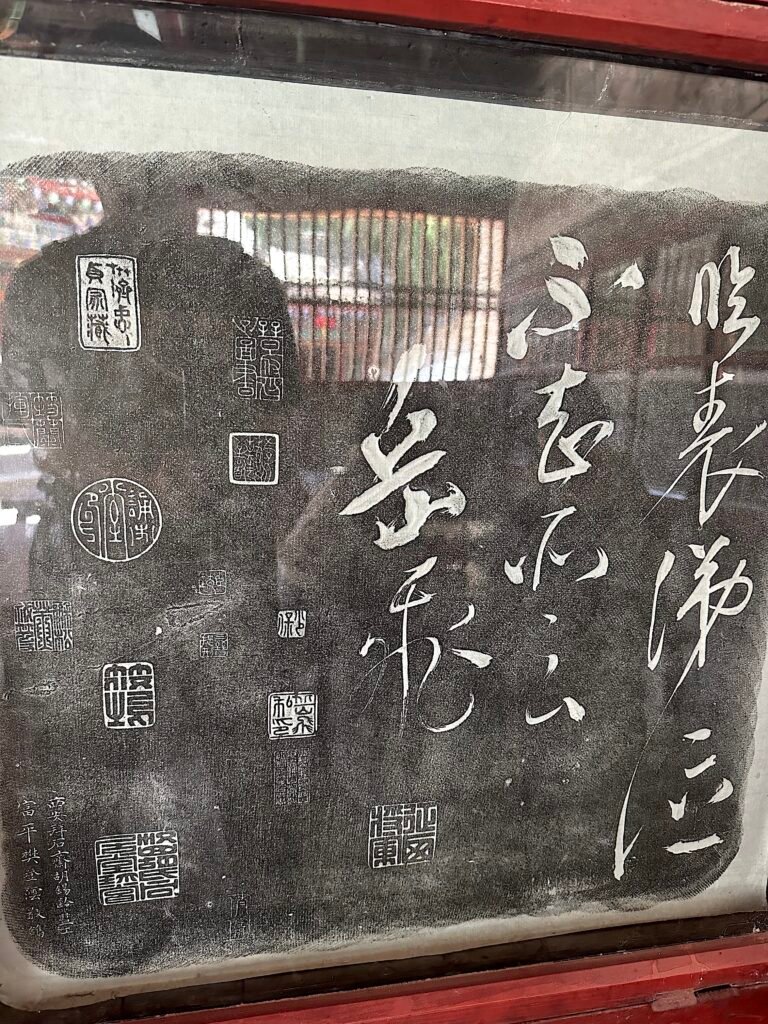
The closing lines of the 《出师表》 calligraphic tradition displayed at Wuzhangyuan, together with the name Yue Fei (岳飞, Yuè Fēi).
🐇 Wait — Yue Fei 岳飞 ?
Now the timeline jumps again.
Zhuge Liang:
181–234 CE
Yue Fei:
1103–1142 CE
Yue Fei was a celebrated general of the:
Southern Song dynasty (南宋, Nán Sòng).
The two men never met.
Obviously.
😂
So why connect them?
Because later Chinese cultural memory saw something powerful in both:
忠 — Zhōng
loyalty
Both became associated with devoted service to a political cause that remained unfinished.
Zhuge Liang:
restore Han
Yue Fei:
fight to recover territory lost to the Jurchen-led Jin dynasty (金朝, Jīncháo)
Different centuries.
Different enemies.
Different political worlds.
But later memory could place them in conversation with one another.

Western Handrail — Heroes Can Meet Across Time
Imagine a later national hero copying the words of an earlier hero because he sees his own ideals reflected in them.
That’s the useful handrail.
Not:
“Zhuge Liang and Yue Fei worked together.”
😂
But:
one generation remembering another.
And then another generation preserves that connection.
And another.
Until Dad & Elaine arrive centuries later and photograph it.
🔥
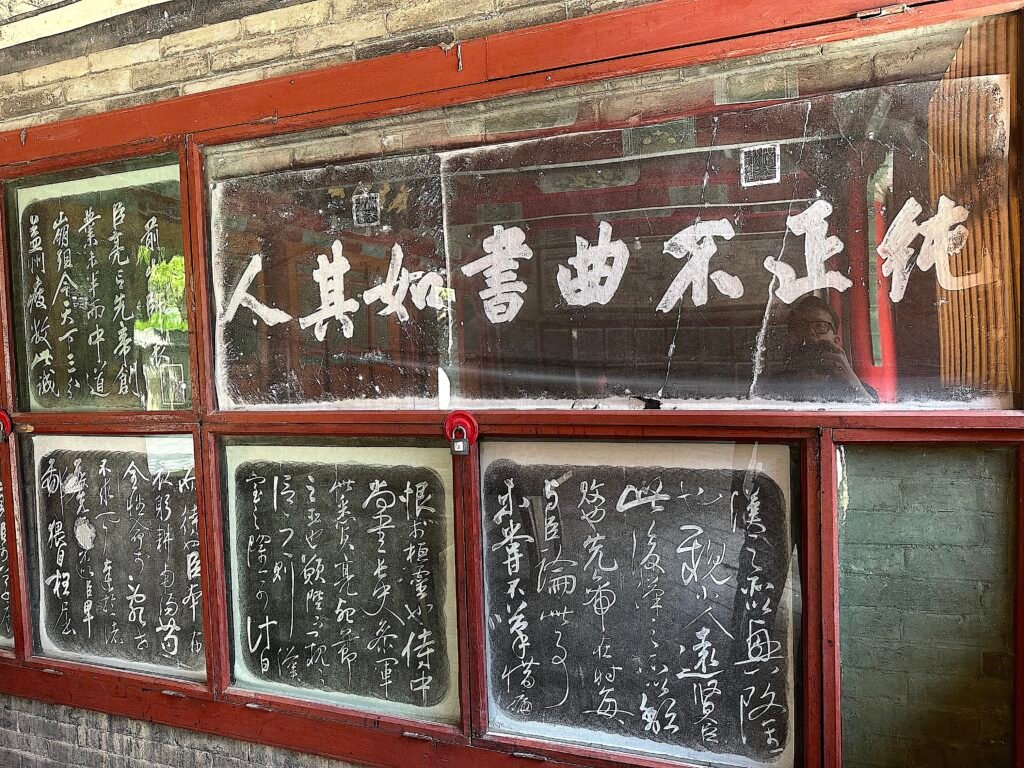
Look Above the Calligraphy
Another inscription comments on the character of the writing:
纯正不曲,书如其人
Chúnzhèng bù qū, shū rú qí rén
A useful sense is:
Upright and unbending — the writing resembles the man.
Notice what’s happening.
Calligraphy isn’t being judged only as:
ART.
The writing becomes connected with:
character
↓
morality
↓
loyalty
↓
the person himself.
That’s another DEEP China rabbit hole.
鞠躬尽瘁 — Four Characters That Follow Zhuge Liang
Elsewhere in the temple, Dad photographed:
鞠躬尽瘁
Jūgōng jìncuì
A useful sense is:
Devote oneself completely to the task.
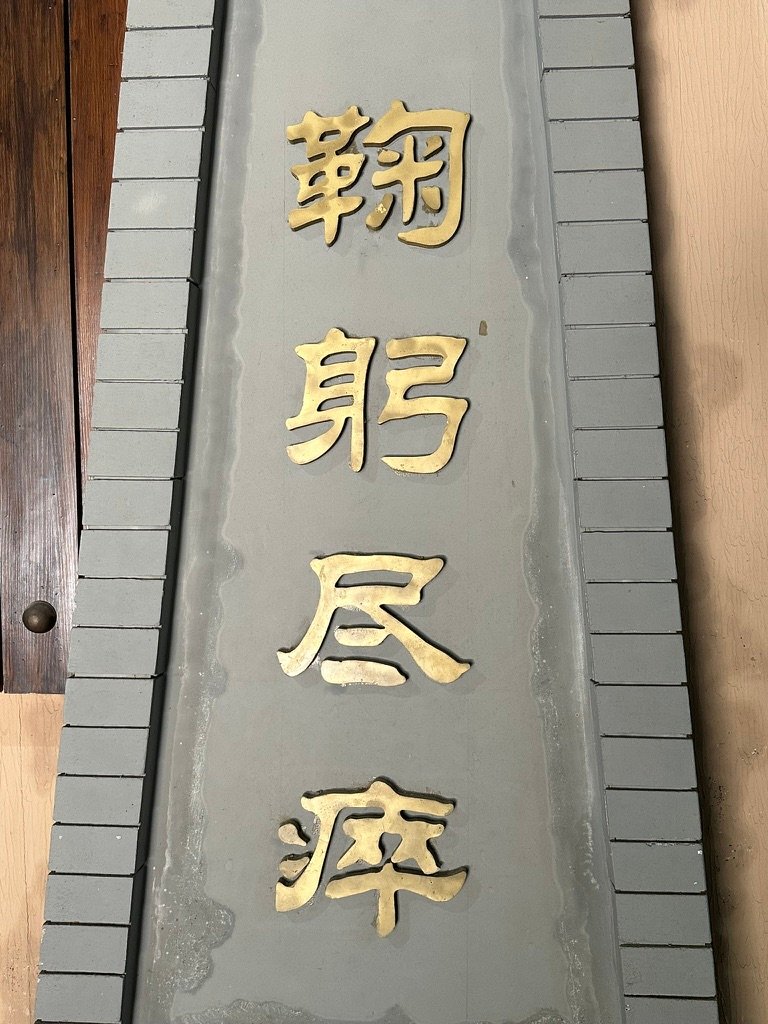
鞠躬尽瘁 (Jūgōng jìncuì) at Wuzhangyuan — four characters that became deeply associated with Zhuge Liang’s image of devoted service.
The fuller famous expression is:
鞠躬尽瘁,死而后已
Jūgōng jìncuì, sǐ ér hòu yǐ
In essence:
Give everything to the task, until death.
Whatever else later generations added to Zhuge Liang’s image, this idea helps explain why his failure to conquer Cao Wei did not destroy his reputation.
In a strange way:
the unfinished mission strengthened the memory.
He tried.
He persisted.
And he died before completing it.
🪨 More Than 1,200 Years Later…
Then Dad found another stone.
This one wasn’t from Zhuge Liang’s lifetime.
It was dated:
弘治十四年
Hóngzhì Shísì Nián
14th year of the Hongzhi reign — 1501
during the:
Ming dynasty (明朝, Míngcháo).
Zhuge Liang died in:
234 CE.
Do the subtraction.
😂
More than:
1,200 YEARS LATER
people were still writing poems praising him at Wuzhangyuan.
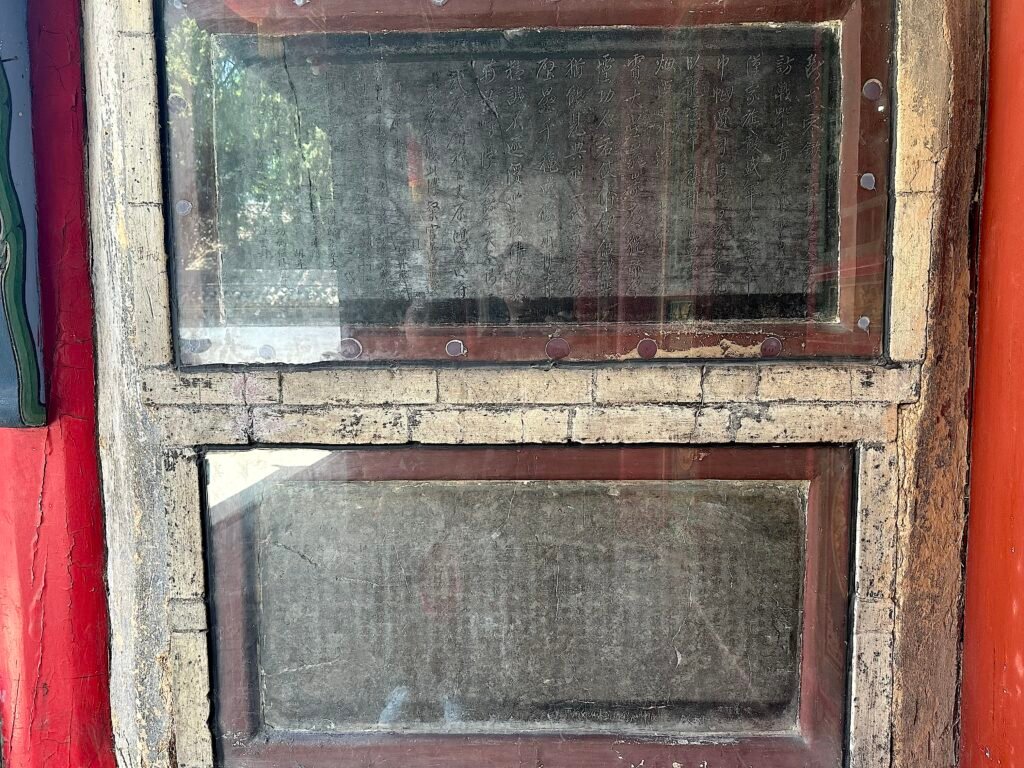
(Inscriptional attribution at the far left): 弘治十四年岁次辛酉冬十月 (14th year of Hongzhi reign, Ming Dynasty – Oct/Nov 1501)
Line-by-Line English Translation & Interpretation
- 卧龙一去许身亲 (When the Sleeping Dragon stepped forth, he pledged his entire life to the cause): Refers to Zhuge Liang’s nickname “Sleeping Dragon” (Wolong) leaving his secluded life at Nanyang to serve Liu Bei.
- 访草厖隆感后民 (The three visits to his thatched cottage deeply moved future generations): Honors the legendary “Three Visits to the Thatched Cottage” (San Gu Mao Lu) by Liu Bei.
- 仅与成敏开国统 (Through sharp intellect and dedication, he laid the foundation of the state): Acknowledges his role in establishing the Shu Han kingdom and political lineage.
- 申明纪律整兵频 (Strictly enforcing military discipline, he frequently reorganized the troops): Highlights Zhuge Liang’s famous reputation as a disciplined, fair, and meticulous military administrator.
- 烟火一路安群黎 (Where his armies passed, peace and stability were brought to the common people):Commends his humanitarian governance, ensuring civilian welfare even during times of war.
- 霄功大德冠绝伦 (His towering achievements and supreme virtue were second to none): Praises his moral character and strategic brilliance as unmatched in history.
- 雪恨功成归故土 (Endeavoring to avenge past wrongs and reclaim the ancestral lands): Refers to his lifelong mission to defeat Cao Wei and restore the Central Plains to the Han Dynasty.
- 术傲千秋照代人 (His mastery and wisdom stand proud through a thousand autumns, guiding generations):Celebrates his enduring legacy and military treatises.
- 愿总兵马出祁山 (Leading his vast armies forth through Mount Qishan): Recalls his famous Northern Expeditions launched through Qishan against Wei.
- 精诚不遂复汉邦 (Yet despite supreme devotion, his dream of restoring the Han state was left unfulfilled): A poignant nod to his tragic fate—dying before achieving ultimate victory.
- 英雄几许出五丈 (How many true heroes have fallen here at Wuzhangyuan?): Directly ties the poem to the site of his death in 234 AD on the Wuzhangyuan Plateau.
- 后世长怀武侯名 (Future generations will forever cherish and remember the name of Marquis Wu):Concludes with eternal homage to Zhuge Liang (Wuhou).
Historical Significance
- Date: Inscribed during the Ming Dynasty (1501 AD), demonstrating that Wuzhangyuan has served as a central shrine of veneration for over 500 years.
- Theme: Captures the core historical tragedy of Zhuge Liang celebrated in Chinese literature—a heroic leader who sacrificed everything for loyalty and duty (Jūgōng jìncuì, sǐ ér hòu yǐ – “bending his back to the task until death”), making it one of the most resonant stone inscriptions at the Wuzhangyuan complex.
This Ming dynasty inscription at Wuzhangyuan is dated to 1501 — more than 1,200 years after Zhuge Liang’s death. It praises the “Sleeping Dragon” (卧龙, Wòlóng), his campaigns, loyalty and enduring reputation as Marquis Wu (武侯, Wǔhóu).
⭐ Now Look at What Wuzhangyuan Has Become
234 CE
Zhuge Liang dies during his final campaign.
↓
later generations
remember his service.
↓
temples
commemorate him.
↓
《出师表》 (Chūshī Biǎo)
becomes part of the cultural memory.
↓
Yue Fei (岳飞, Yuè Fēi)
becomes connected with that tradition centuries later.
↓
1501
Ming-era visitors are still praising Zhuge Liang.
↓
1881
the Qing-era reconstruction stele records people still repairing his temple.
↓
Dad & Elaine
arrive with Cheers.
😂
This is no longer simply:
HISTORY.
It’s:
HISTORY
↓
MEMORY
↓
MEMORY OF THE MEMORY.
And we still haven’t added the most powerful memory machine of all:
《三国演义》
Sānguó Yǎnyì
Romance of the Three Kingdoms
🐇
📖 SECTION 5 — History vs 《三国演义》
Did Zhuge Liang (诸葛亮, Zhūgě Liàng) Really Do All Those Things?
For many 三国迷 (Sānguó Mí), Zhuge Liang first arrives through:
《三国演义》
Sānguó Yǎnyì
Romance of the Three Kingdoms
But Dad wants one handrail:
HISTORY ≠ NOVEL
《三国演义》 draws on real people, places and conflicts — then turns them into one of China’s great works of historical fiction.
So keep three Zhuge Liangs in your head:
HISTORICAL ZHUGE LIANG
→ statesman · administrator · military commander
REMEMBERED ZHUGE LIANG
→ wisdom · loyalty · devoted service
LITERARY ZHUGE LIANG
→ the extraordinary strategist of 《三国演义》
They overlap.
But they aren’t identical.
🐇 Three Famous Stories
三顾茅庐 (Sāngù Máolú)
Three Visits to the Thatched Cottage
Liu Bei (刘备, Liú Bèi) seeking Zhuge Liang’s service has a historical foundation, although later storytelling greatly enriched the scene.
草船借箭 (Cǎochuán Jiè Jiàn)
Borrowing Arrows with Straw Boats
One of the most famous Zhuge Liang stories.
Treat it primarily as part of the literary Zhuge Liang.
空城计 (Kōngchéng Jì)
Empty Fort Strategy
Zhuge Liang calmly faces down Sima Yi (司马懿, Sīmǎ Yì) with an apparently undefended city.
Wonderful story.
Not something Dad would use as straightforward historical biography.
😂

Western Handrail
Think of Shakespeare.
A historical figure can be real.
Later literature can use that figure.
And eventually the literary character becomes more famous than the historical person.
Something similar happened to Zhuge Liang.
But don’t use that distinction to spoil 《三国演义》.
Use it to ask a better question:
How did a real statesman become a cultural superhero?
Wuzhangyuan (五丈原, Wǔzhàngyuán) is particularly powerful because here the layers meet:
real campaign
↓
real death in 234 CE
↓
centuries of commemoration
↓
literature and legend
↓
三国迷 still coming today.
🔥
🐇 三国迷 — One More Place Belongs With Wuzhangyuan
If Wuzhangyuan gives you:
THE FINAL CAMPAIGN,
then another essential Zhuge Liang place gives you the political world he served:
Chengdu Wuhou Shrine
(成都武侯祠, Chéngdū Wǔhóu Cí)
CHENGDU (成都, Chéngdū)
→ Liu Bei (刘备, Liú Bèi)
→ Shu Han (蜀汉, Shǔ Hàn)
→ Zhuge Liang’s political world
↓
WUZHANGYUAN (五丈原, Wǔzhàngyuán)
→ Fifth Northern Expedition
→ Sima Yi (司马懿, Sīmǎ Yì)
→ 234 CE
→ the campaign he never returned from.
One helps you understand:
WHAT HE SERVED.
The other:
WHERE HIS CAMPAIGN ENDED.
For 三国迷, they belong on the same mental map.
🐇
And after all the legends, calligraphy and temples, Dad wants to finish by returning to something very simple:
the actual place.
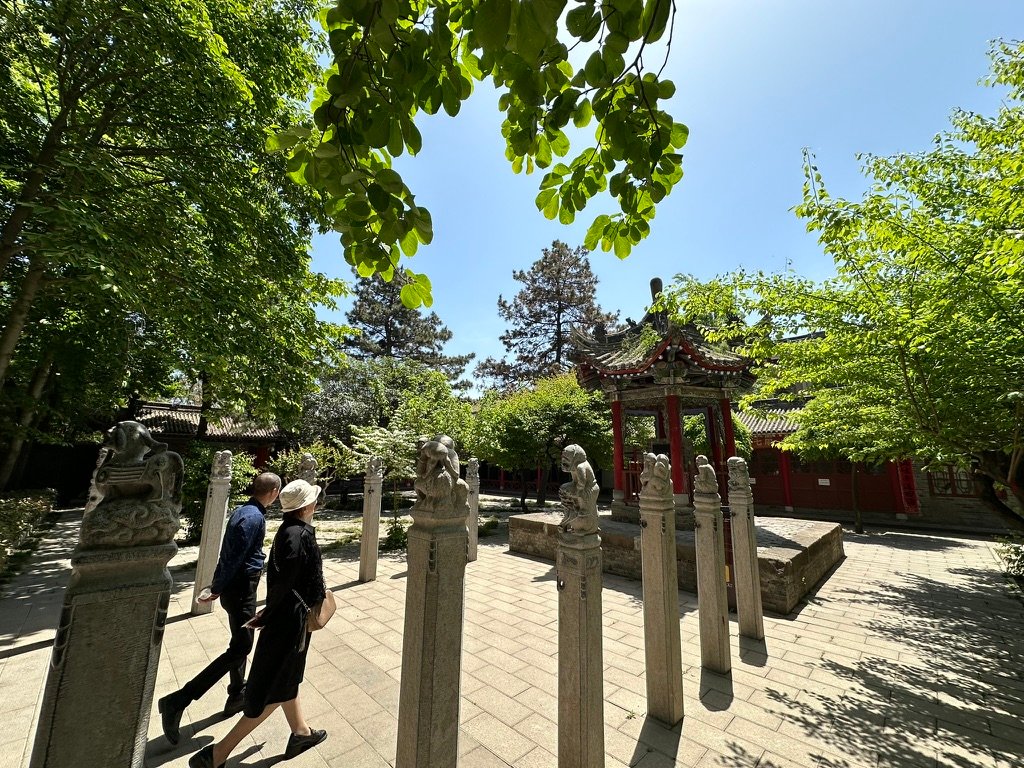
🧭 SECTION 6 — Why Wuzhangyuan (五丈原, Wǔzhàngyuán) Is Worth the Trip
You don’t need to be a:
三国迷 (Sānguó Mí)
to come here.
But if you are one…
definitely come.
😂
Wuzhangyuan gives you something books and dramas cannot:
the landscape
the distance
the Wei River (渭河, Wèihé) geography
the Five Northern Expeditions
the temple
the inscriptions
and the place where Zhuge Liang’s final campaign ended in:
234 CE.
🚄 How Dad & Elaine Got There
We used Baoji (宝鸡, Bǎojī) as our base.
Our route was:
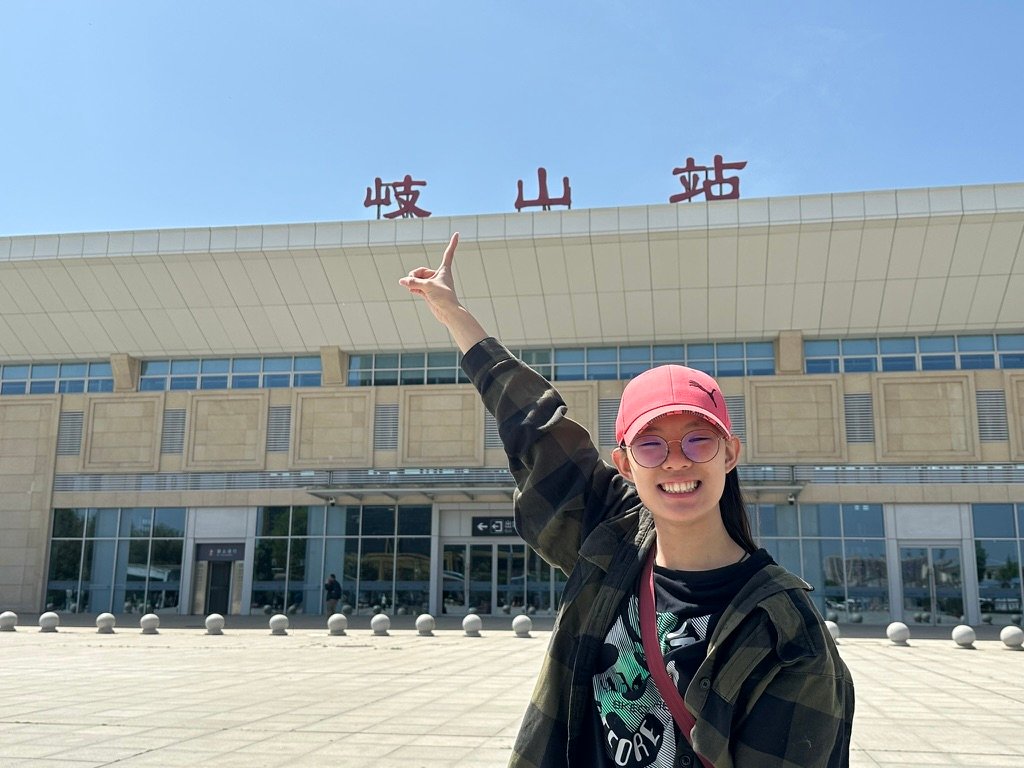
Baoji South Railway Station (宝鸡南站, Bǎojī Nánzhàn)
↓
🚄
Qishan Railway Station (岐山站, Qíshān Zhàn)
↓
🚗 local ride-hailing
↓
Wuzhangyuan (五丈原, Wǔzhàngyuán)
Dad explains the journey in the arrival video near the top of this article.
The important takeaway:
DEEP China doesn’t always mean difficult China.
⏱️ How Long?
Dad would allow:
at least half a day.
Don’t come only for the temple gate.
Give yourself time for:
Five Northern Expeditions exhibition
↓
Zhuge Liang Temple (诸葛亮庙, Zhūgě Liàng Miào)
↓
stelae and 《出师表》 (Chūshī Biǎo)
↓
the surrounding landscape.
For 三国迷, you’ll probably want longer.
😂
🍽️ And Wuzhangyuan Is Only One Course
This is what surprised Dad most about staying around Baoji.
One day:
He Zun (何尊, Hé Zūn)
Zhouyuan (周原, Zhōuyuán)
Duke of Zhou (周公, Zhōugōng)
Western Zhou (西周, Xī Zhōu)
Then suddenly:
Zhuge Liang — 234 CE.
More than a thousand years disappear between courses.
That’s why Wuzhangyuan became the Chef’s Surprise in our:
→ What Came Before Qin? — West of Xi’an Michelin History Tasting JOURNEY
Same broader landscape.
Completely different China.

⭐ ChinaTravelBUG’s Take
Dad came to Wuzhangyuan knowing how Zhuge Liang’s story ended.
We left understanding better why it never really ended.
234 CE
→ history
temple + stelae
→ memory
《出师表》
→ loyalty
《三国演义》
→ legend
三国迷 today
→ the story continues.
So if you come here, don’t only ask:
“Where did Zhuge Liang die?”
Stand on the plateau.
Look at the landscape.
Walk through the exhibition.
Read what later generations carved into stone.
Then ask:
Which Zhuge Liang did I come looking for?
And:
Did being here change the Zhuge Liang I thought I knew?
For Dad…
that’s worth the journey.
🐇
🧭 How to Go to Wuzhangyuan (五丈原, Wǔzhàngyuán)
Dad & Elaine Did It as a Day Trip From Baoji (宝鸡, Bǎojī)
And this is the part that may surprise international travelers.
Wuzhangyuan sounds:
DEEP China.
Getting there wasn’t particularly difficult.
😂
Dad & Elaine were staying in:
Baoji (宝鸡, Bǎojī).
We traveled:
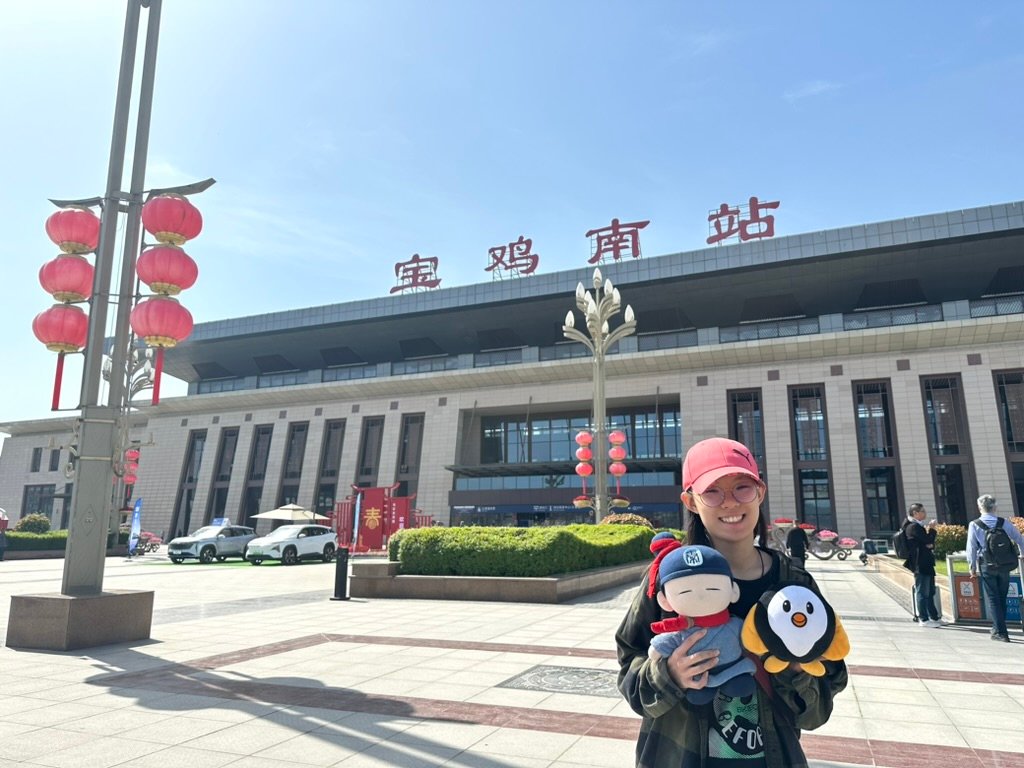
Baoji South Railway Station (宝鸡南站, Bǎojī Nánzhàn)
↓
🚄 High-Speed Rail
↓
Qishan Railway Station (岐山站, Qíshān Zhàn)
↓
🚗 local ride-hailing / DiDi
↓
Wuzhangyuan Zhuge Liang Temple (五丈原诸葛亮庙, Wǔzhàngyuán Zhūgě Liàng Miào)
Then we returned to Baoji the same day.
No hotel change.
No complicated expedition.
Very unlike Zhuge Liang.
😂
🎫 Dad Kept the Train Record

Dad & Elaine’s return high-speed-rail booking from Qishan Railway Station (岐山站, Qíshān Zhàn) to Baoji South (宝鸡南站, Bǎojī Nánzhàn) on 25 April: second class, ¥11.50 per person. Our booked G3177 journey was 15:28–15:42 — just 14 minutes.
The timetable can change, so don’t copy our exact train.
The useful lesson is:
Baoji → Qishan is a very short HSR hop.
From Qishan Railway Station, continue by local car / ride-hailing to Wuzhangyuan.
Current visitor information also lists public-transport connections, but for international travelers Dad would choose:
HSR + DiDi.
Simple.
⏱️ How Much Time?
Dad would make Wuzhangyuan:
a comfortable day trip from Baoji.
Don’t rush through just to photograph the temple gate.
Give yourself time for:
Five Northern Expeditions exhibition
↓
Zhuge Liang Temple
↓
《出师表》 (Chūshī Biǎo) calligraphy
↓
historical stelae
↓
Yueying Hall (月英殿, Yuèyīng Diàn)
↓
and most importantly:
the Wuzhangyuan landscape.
For 三国迷 (Sānguó Mí)?
Allow yourself to linger.
You already know why.
😂
🐇 Dad’s Suggested Baoji History Cluster
This is where Baoji becomes much more interesting than a one-night stop.
DAY 1 — Baoji (宝鸡, Bǎojī)
Baoji Bronze Museum (宝鸡青铜器博物院, Bǎojī Qīngtóngqì Bówùyuàn)
→ He Zun (何尊, Hé Zūn)
→ 中国 (Zhōngguó)
→ Western Zhou (西周, Xī Zhōu)
DAY 2 — Qishan (岐山, Qíshān) / Zhouyuan (周原, Zhōuyuán)
→ Zhou homeland
→ Duke of Zhou (周公, Zhōugōng)
→ early Chinese political ideas
DAY 3 — Wuzhangyuan (五丈原, Wǔzhàngyuán)
→ Zhuge Liang (诸葛亮, Zhūgě Liàng)
→ Five Northern Expeditions
→ Sima Yi (司马懿, Sīmǎ Yì)
→ 234 CE
Look at that jump:
WESTERN ZHOU
↓
1,200+ YEARS
↓
THREE KINGDOMS
Same Baoji base.
Completely different Chinas.
That’s why Wuzhangyuan became the surprise final course in our:
→ What Came Before Qin? — West of Xi’an Michelin History Tasting JOURNEY
Wuzhangyuan is not difficult to reach.
A 14-minute HSR ride from Baoji took Dad & Elaine more than 1,700 years back in history. 😂
It’s difficult to leave without another question.
😂
Dad & Elaine came because of:
Zhuge Liang.
We left thinking about:
geography
logistics
loyalty
failure
memory
and how one man who died here in 234 CE could still bring 三国迷 to the same plateau nearly 1,800 years later.
That’s DEEP China.
SEE → ASK → CONNECT → UNDERSTAND → FOLLOW
See China. Understand It Better.
China Usually Has Another Way.