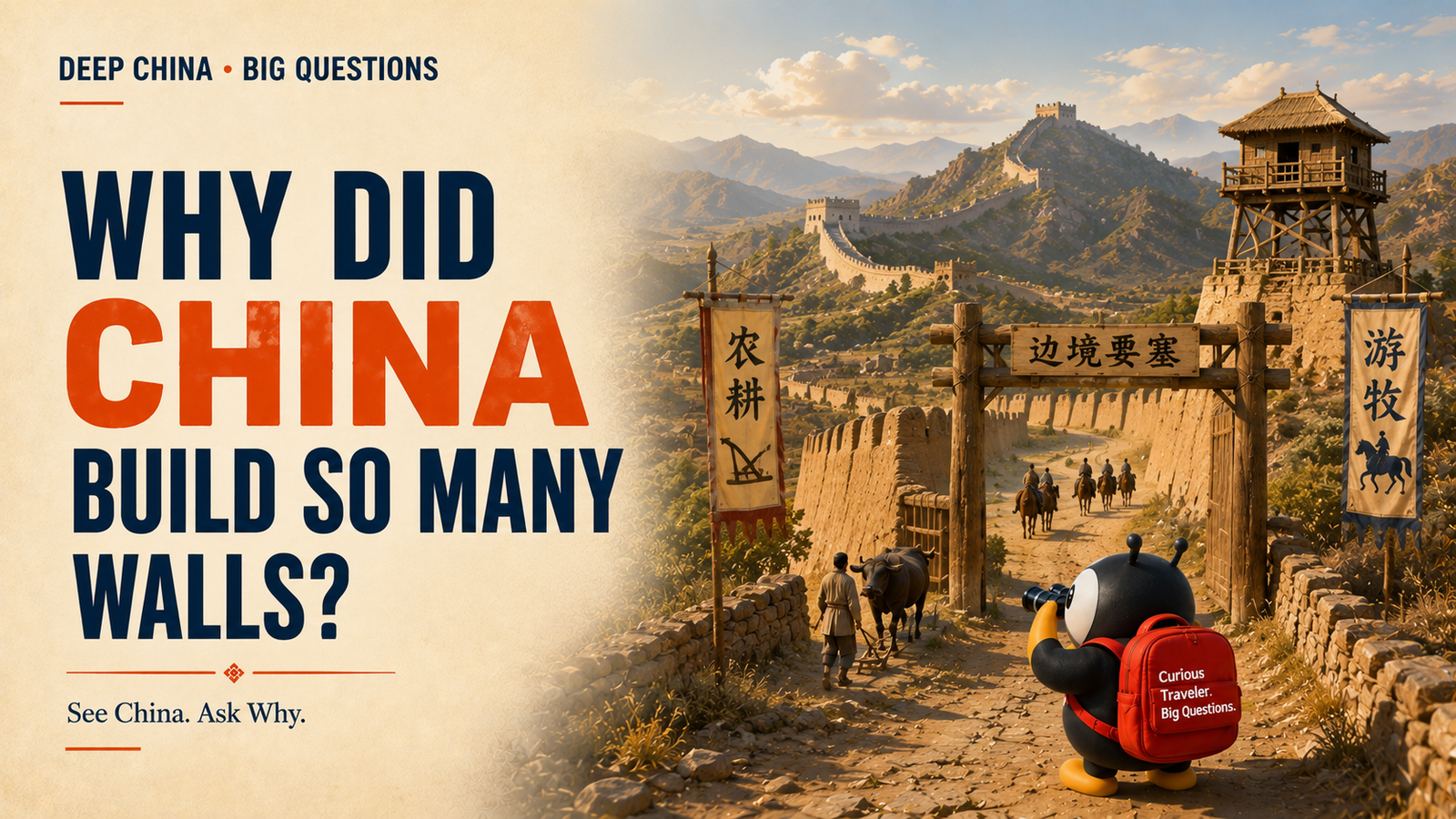
Section 1 — You’re Standing on the Great Wall. But Whose Wall Is It?
For many first-time international travelers, there are certain places in China that almost feel compulsory.
The Forbidden City (故宫, Gùgōng).
The Terracotta Warriors (兵马俑, Bīngmǎyǒng).
And:
the Great Wall (长城, Chángchéng).
If Egypt has the pyramids, China has the Great Wall.
😂
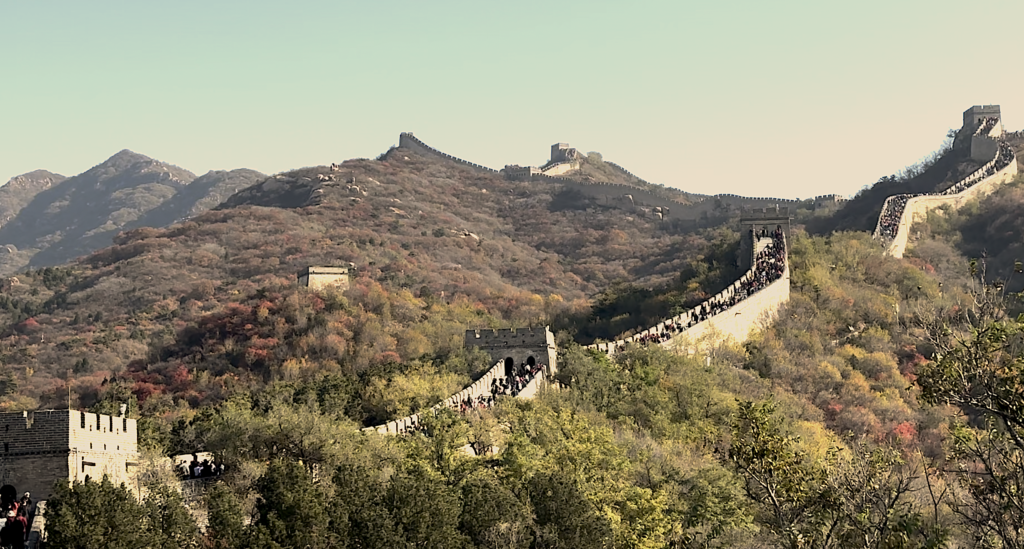
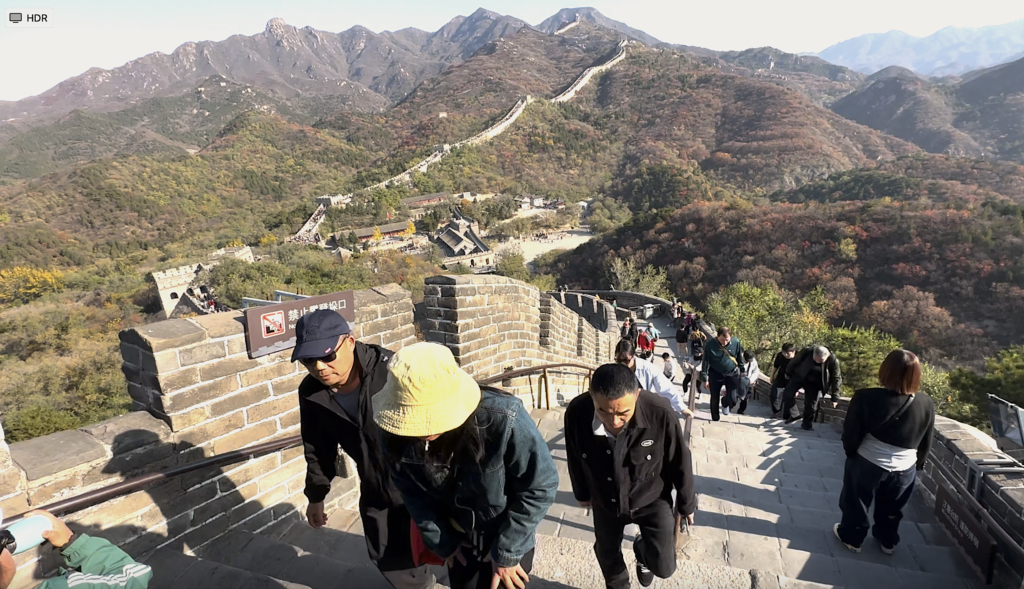
So you leave Beijing (北京, Běijīng), travel into the mountains, climb onto the wall and take the photograph you’ve probably imagined since before you booked the trip.
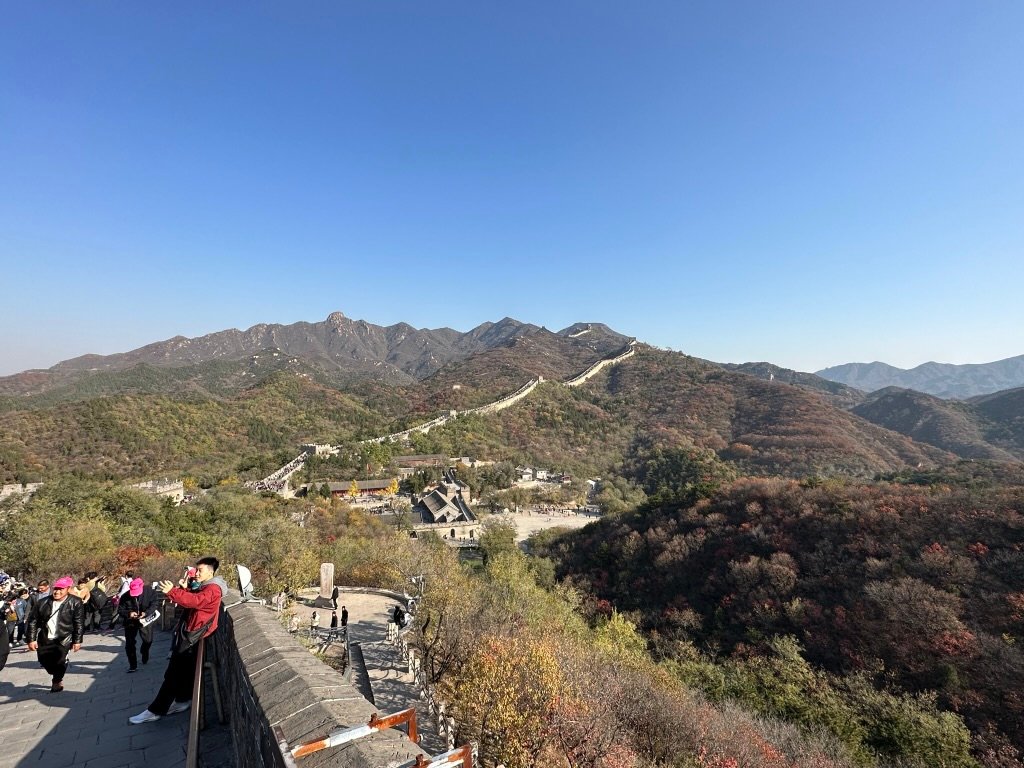
Mountains.
Watchtowers.
Stone steps disappearing along the ridges.
And the obvious reaction is:
“Wow.”
That’s perfectly reasonable.
But Deep China has another question:
Why is this enormous thing here?
And once you ask that…
the Great Wall becomes much more interesting.
🐇
First Surprise: Qin Shi Huang Didn’t Build the Wall You’re Standing On
This is probably the first misconception we should remove.
Many first-time visitors have a simple story in their heads:
Qin Shi Huang (秦始皇, Qín Shǐhuáng)
↓
unified China
↓
built:
the Great Wall.
There’s truth buried inside that story.
But it’s far too simple.
Walls and fortifications existed before Qin unified the competing states in 221 BCE.
Different states had already constructed defensive barriers for their own strategic purposes.
After unification, Qin Shi Huang ordered earlier northern fortifications to be connected and extended as part of a larger frontier-defense system.
But the impressive:
brick-and-stone Great Wall
that most travelers visit around Beijing today?
Much of that belongs to a vastly later world:
the Ming dynasty (明朝, Míng Cháo)
1368–1644.
😳
That’s more than:
1,500 years after Qin Shi Huang.
So if you’re standing at a famous Beijing section such as:
Badaling (八达岭, Bādálǐng),
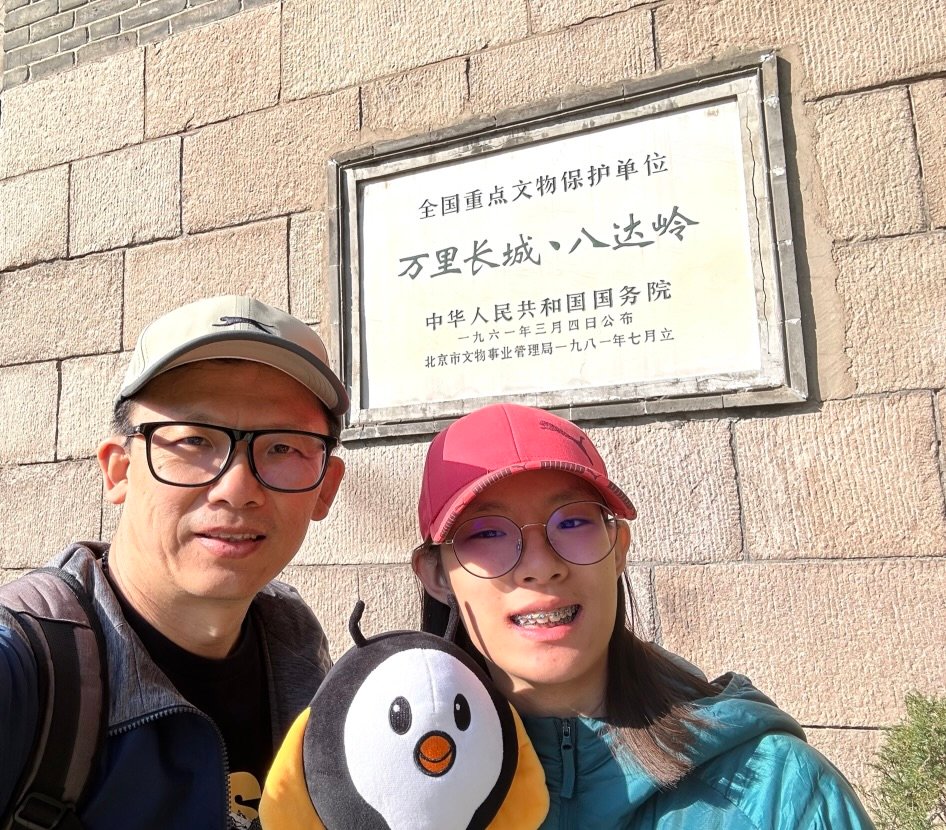
Mutianyu (慕田峪, Mùtiányù),
or:
Jinshanling (金山岭, Jīnshānlǐng),
don’t imagine:
“Qin Shi Huang built these stairs.”
😂
He didn’t.
🕰️ Put the Great Wall on the Timeline
This is the first coat rack.
SPRING AND AUTUMN / WARRING STATES
春秋战国
Different states construct walls and fortifications.
↓
QIN (秦)
221–206 BCE
Qin Shi Huang unifies the competing states.
Earlier northern fortifications are connected and extended.
↓
HAN DYNASTY (汉朝, Hàn Cháo)
206 BCE–220 CE
Frontier defenses expand and change during prolonged interaction and conflict with northern peoples, especially the:
Xiongnu (匈奴, Xiōngnú).
↓
MANY CENTURIES, MANY DIFFERENT FRONTIER STRATEGIES
Not every dynasty builds or uses walls in the same way.
↓
MING DYNASTY (明朝, Míng Cháo)
1368–1644
Major construction and rebuilding produces much of the spectacular masonry Great Wall familiar to modern travelers.
↓
TODAY
Dad and Elaine arrive.
😂
That timeline gives us the first big lesson:
There was never just ONE Great Wall built at ONE moment for ONE reason.
🔥
So Maybe We Should Stop Saying “The Wall”
The Chinese name:
Great Wall (长城, Chángchéng)
literally means something like:
Long Wall.
And historically, that’s actually helpful.
What we now collectively call:
“The Great Wall of China”
is better understood as a vast, changing system of:
walls,
passes (关, guān),
fortresses (堡, bǎo),
watchtowers,
beacon towers (烽火台, fēnghuǒtái),
garrison positions,
and:
military routes
constructed, abandoned, rebuilt and modified across different periods.
🔥
Suddenly:
“Why did China build THE wall?”
isn’t quite the right question.
A better question is:
Why did different Chinese states and dynasties keep returning to walls as one way of managing particular frontiers?
Now we’re cooking.
🌶️
🐇 Wait — The First Walls Weren’t Necessarily About “Foreigners”
This is important.
Before China became a unified empire under Qin, there were competing states.
During the:
Warring States period (战国时期, Zhànguó Shíqī)
roughly 475–221 BCE
states fought:
each other.
So walls weren’t always:
Chinese people inside
versus:
foreigners outside.
😂
Some fortifications were built in the context of warfare among states that later became part of the political world unified by Qin.
That alone should make us suspicious of the simple:
CHINA | WALL | BARBARIANS
picture.
History was messier.
And This Is Where King Wuling of Zhao Enters
Dad & Elaine’s Deep China journey gives us another doorway.
We visited:
Handan (邯郸, Hándān)
the famous capital associated with the ancient:
State of Zhao (赵国, Zhàoguó).
One of Zhao’s most famous rulers was:
King Wuling of Zhao (赵武灵王, Zhào Wǔlíng Wáng)
who ruled during the fourth and third centuries BCE.
He is particularly famous for the policy traditionally summarized as:
“Hu clothing and mounted archery” (胡服骑射, Húfú Qíshè).
In simple terms:
Zhao faced powerful military challenges along its northern frontier.
And King Wuling didn’t respond simply by saying:
“Our way is Chinese. Their way is foreign. Ignore them.”
Quite the opposite.
He adopted military practices associated with northern peoples — particularly clothing suitable for mounted warfare and:
mounted archery (骑射, qíshè).
🔥
That’s already an important lesson.
A frontier can produce:
conflict
but also:
adaptation.
🌶️ And Zhao 赵国 Built Northern Walls Too
The State of Zhao 赵国 also constructed defensive walls along parts of its northern frontier.
Now the Great Wall story begins changing.
Before Qin Shi Huang:
Zhao was already dealing with the northern frontier.
Before a unified Chinese empire:
walls were already part of the strategic toolkit.
And before anybody could draw a simple line between:
“Chinese civilization”
and:
“northern outsiders,”
King Wuling was already borrowing useful military practices from the people beyond that supposed cultural line.
🔥🔥🔥
The frontier wasn’t merely a barrier.
It was a place where societies:
fought,
watched,
traded,
negotiated,
borrowed
and:
changed.

🍚 Western Handrail: Think Frontier, Not Border
Modern travelers are accustomed to:
international borders.
Line on map.
Passport checkpoint.
Country A.
Country B.
But ancient frontiers often worked differently.
A:
frontier (边疆, biānjiāng)
could be a broad zone where:
different political authorities,
economic systems,
languages,
communities
and:
ways of life
interacted.
Control could expand.
Contract.
Shift.
Disappear.
Return.
So when looking at an ancient wall, don’t automatically imagine:
modern national border made of bricks.
That’s the wrong handrail.
🌾 Then We Reach Dad’s Big Question: Farmers and Pastoral Peoples
Now we’re ready for the spicy part.
Across much of northern Chinese history, geography created a recurring tension.
To the south were regions where:
settled agriculture (农耕, nónggēng)
could support:
villages,
cities,
grain taxation,
large populations
and:
bureaucratic states.
Farther north and northwest were environments where:
pastoralism (畜牧, xùmù)
and mobile ways of life could be better adapted to:
grasslands,
livestock,
seasonal movement
and:
mounted warfare.
These weren’t two completely sealed civilizations.
But the ecological difference mattered.
A lot.
🔥
Why?
Because settled agricultural societies have something difficult to move:
fields.
😂
Grain stores.
Villages.
Irrigation.
Houses.
Cities.
Tax bases.
A mobile mounted force can move.
The rice field cannot.
So rulers of settled agricultural states faced a recurring strategic problem:
How do you protect fixed populations, farmland and political centers from highly mobile forces operating across an enormous frontier?
One possible answer:
walls.
🌶️🌶️🌶️
But Be Careful: “Farmers vs Nomads” Is NOT the Whole Story
This is where Deep China needs discipline.
It would be tempting to say:
China was agricultural.
The north was nomadic.
Therefore China built the Great Wall.
Done.
😂
Too simple.
Walls also responded to:
wars between states,
changing political boundaries,
different military technologies,
specific strategic threats,
and the priorities of particular dynasties.
Meanwhile the frontier itself supported:
trade,
migration,
diplomacy,
intermarriage,
tribute,
markets
and:
cultural exchange.
So:
agrarian–pastoral interaction is a powerful key.
But it is:
a key — not the entire house.
🔥
And This Is Why UNESCO’s Description Is Interesting
The Great Wall became a:
UNESCO World Heritage Site
in:
1987.
UNESCO describes the Great Wall not only as a vast military-defense system but also as physical evidence of both:
collision
and:
exchange
between agricultural and nomadic civilizations in ancient China.
That word:
exchange
matters.
Because it prevents us from imagining the wall as:
a giant cultural NO ENTRY sign.
😂
The wall could separate.
But the frontier around it could still connect.
🐇 Now Leave Beijing
This is where our first-time traveler gets properly stung.
You came to China.
You visited:
the Great Wall outside Beijing.
Excellent.
But now Dad asks:
Would you like to understand the wall more deeply?
Then we need to leave Beijing.
And travel west into:
Shanxi (山西, Shānxī)
to:
Yanmenguan Pass (雁门关, Yànménguān).
🔥
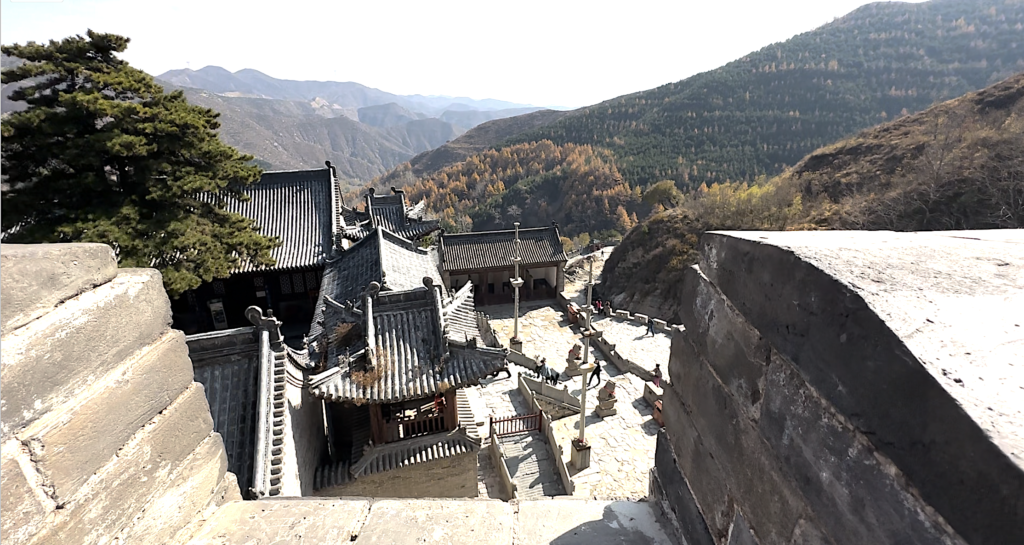
Elaine and I went there.
And unlike the heavily visited Beijing Great Wall sections, Yanmenguan 雁门关 opens a different doorway into the frontier story.
Because this wasn’t simply:
wall.
It was:
PASS.
Why Does a Pass Matter?
Mountains already create barriers.
People naturally move through:
valleys,
gaps,
and:
passes (关, guān).
Control the pass…
and you can influence movement through the landscape.
Military forces.
Travelers.
Messengers.
Trade.
Animals.
Supplies.
🔥
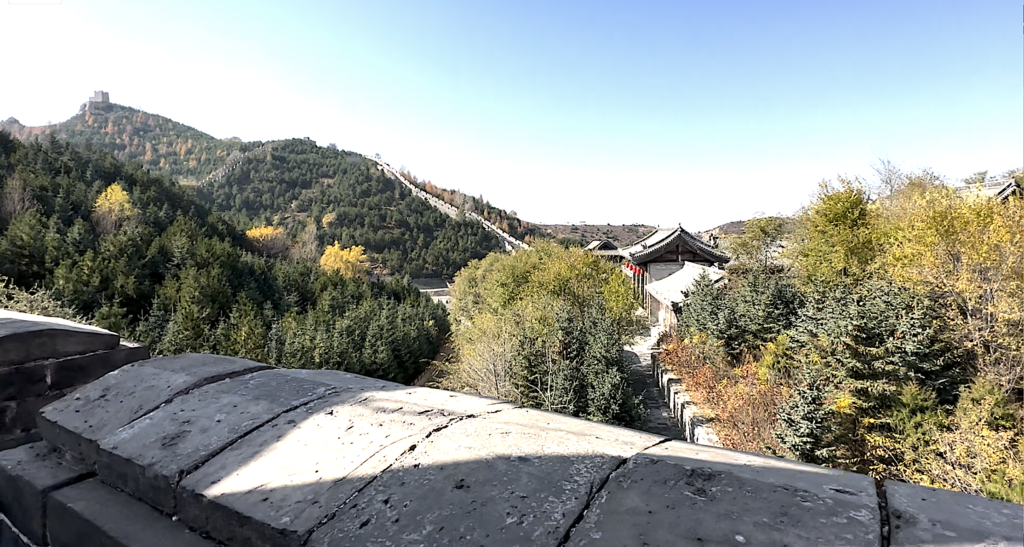
Yanmenguan (雁门关, Yànménguān), Shanxi — more than a wall. Its gates, fortifications, mountain passes, watchpoints, and surrounding terrain worked together as an integrated frontier defense system. Photo by Dad / ChinaTravelBUG.
So a place such as:
Yanmenguan Pass (雁门关)
helps us understand something the beautiful wall snaking across the Beijing mountains can obscure:
The Great Wall was a system, not merely a wall.
Walls mattered.
But so did:
passes,
fortifications,
garrisons,
roads,
watchtowers
and:
communication.
📸 Dad & Elaine at Yanmenguan
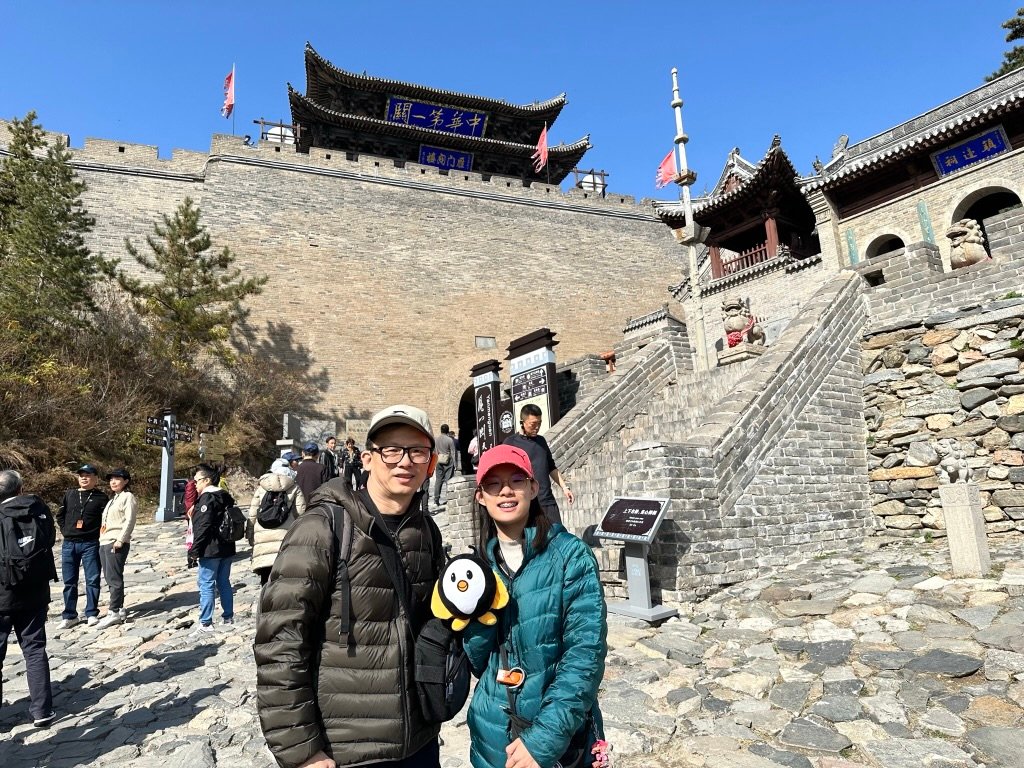
When Elaine and I visited Yanmenguan, I began thinking about the Great Wall less as:
one giant object
and more as:
a recurring response to a recurring frontier problem.
Different rulers.
Different centuries.
Different enemies.
Different technologies.
Different walls.
But again and again:
DEFEND.
WATCH.
CONTROL MOVEMENT.
ADAPT.
🔥
And that raises the question that takes us into Section 2:
Who exactly was on the other side?
Because once we meet:
Xiongnu (匈奴, Xiōngnú),
Xianbei (鲜卑, Xiānbēi),
Khitan (契丹, Qìdān),
Mongols (蒙古, Měnggǔ)
and others…
the simple story:
CHINA INSIDE / FOREIGNERS OUTSIDE
begins collapsing very quickly.
🐇🐇🐇
That’s where the Great Wall story gets much more interesting.
😂
Section 2 — Who Was on the Other Side? The Great Wall Was a Frontier, Not a Sealed Door
At the end of Section 1, we left the famous Great Wall outside Beijing and traveled deeper into the frontier story.
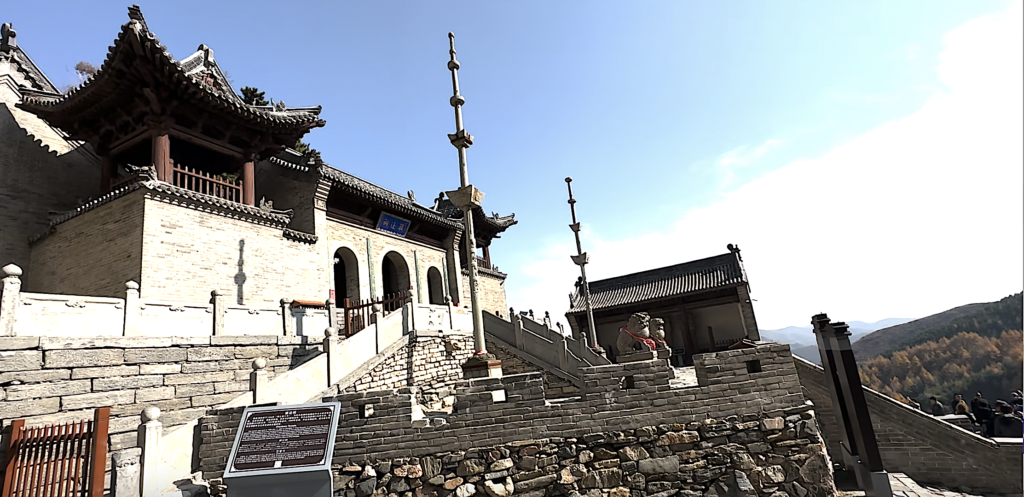
We reached:
Yanmenguan Pass (雁门关, Yànménguān)
in Shanxi 山西。
And that raised the next obvious question:
Who exactly was the wall supposed to keep out?
Many Western travelers arrive with a simple mental picture:
CHINA
↓
GREAT WALL
↓
NOMADS / INVADERS
😂
Useful as a starting point.
Historically?
Far too simple.
Because the peoples beyond different sections of China’s northern frontiers changed enormously across time.
And sometimes…
they ended up ruling China themselves.
🐇🐇🐇
🕰️ First: Put Some Names on the Frontier Timeline
You do NOT need to memorize this.
Use it as a coat rack.
WARRING STATES PERIOD (战国时期, Zhànguó Shíqī)
475–221 BCE
States such as Zhao, Yan and Qin confront different northern frontier peoples while also fighting one another.
↓
QIN DYNASTY (秦朝, Qín Cháo)
221–206 BCE
Qin Shi Huang (秦始皇, Qín Shǐhuáng) unifies the competing states and connects or extends earlier northern defenses.
↓
HAN DYNASTY (汉朝, Hàn Cháo)
206 BCE–220 CE
A major northern power is the:
Xiongnu (匈奴, Xiōngnú).
War.
Negotiation.
Trade.
Marriage diplomacy.
Changing frontiers.
↓
NORTHERN WEI (北魏, Běi Wèi)
386–534
Founded by the:
Tuoba Xianbei (拓跋鲜卑, Tuòbá Xiānbēi).
Their rulers govern much of northern China.
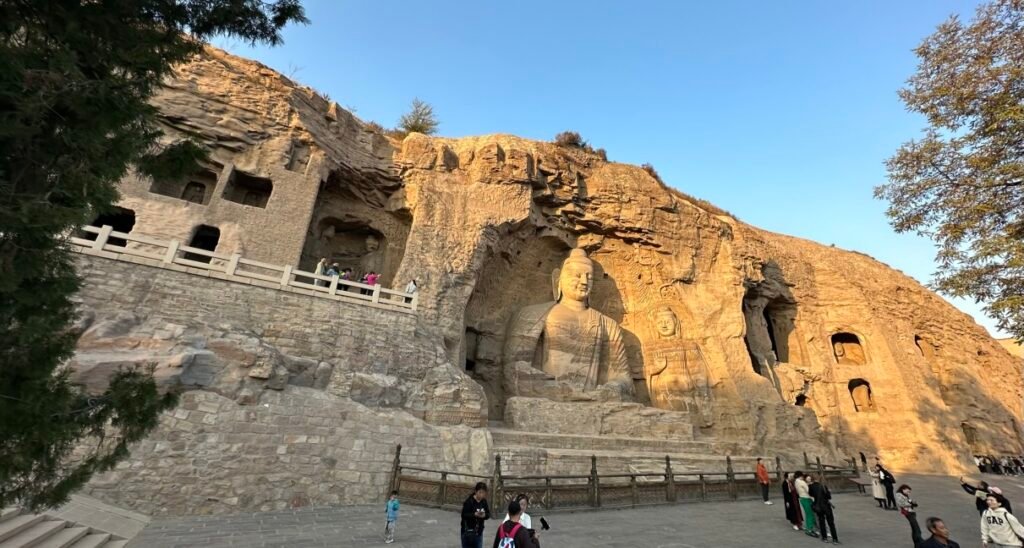
They give us:
Yungang Grottoes (云冈石窟, Yúngāng Shíkū).
↓
LIAO DYNASTY (辽朝, Liáo Cháo)
907–1125
Founded by the:
Khitan (契丹, Qìdān).
They rule substantial territories in northern China and Inner Asia.
↓
YUAN DYNASTY (元朝, Yuán Cháo)
1271–1368
Mongols (蒙古, Měnggǔ)
rule China as part of a much larger imperial world.
↓
MING DYNASTY (明朝, Míng Cháo)
1368–1644
Much of the monumental Great Wall familiar to travelers today is built or extensively reconstructed.
↓
QING DYNASTY (清朝, Qīng Cháo)
1644–1912
The:
Manchus (满洲, Mǎnzhōu)
rule China.
😳
Look at the timeline again.
Some peoples associated with worlds beyond earlier northern Chinese frontiers didn’t remain:
“people outside the wall.”
They entered Chinese political history.
Some eventually:
ruled enormous parts of China.
🔥
Already, the wall has become more complicated.
🐇 Meet the Xiongnu
During the Han dynasty, one of the most powerful forces north of the Chinese empire was the:
Xiongnu (匈奴, Xiōngnú).
Western readers sometimes encounter them described simply as:
“nomadic barbarians.”
That doesn’t help very much.
😂
The Xiongnu developed a powerful political confederation across the steppe world north of Han China.
They possessed:
political leadership,
military organization,
diplomatic relationships,
economic networks
and highly mobile mounted forces.
This wasn’t:
organized China versus random horsemen.
It was:
one powerful political system dealing with another.
🔥
🐎 Why Were Mounted Peoples Such a Challenge?
Return to geography.
A cavalry force can move:
fast.
A farming population cannot move:
fields,
grain stores,
villages,
irrigation systems
and:
cities
every time danger appears.
😂
That difference helped create recurring military problems along parts of the northern frontier.
But the answer wasn’t simply:
build wall → problem solved.
If it had been…
Chinese history would be much shorter.
😂
🌶️ The Han Used More Than Walls
The Han response to the Xiongnu included different strategies at different times:
war (战争, zhànzhēng)
diplomacy (外交, wàijiāo)
trade (贸易, màoyì)
and:
heqin (和亲, héqīn)
— marriage-alliance diplomacy.
This is important.
Because now the frontier isn’t simply:
attack / defend.
It’s also:
negotiate / exchange / accommodate / compete.
🔥
🐇 What Was Heqin (和亲)?
The Chinese term:
heqin (和亲, héqīn)
is commonly used for political marriage arrangements in which women from the Chinese imperial side were married to rulers or elites of another polity as part of diplomatic relations.
For a Western beginner, the handrail is:
dynastic marriage as diplomacy.
European royal families did this too.
Different political systems.
Different cultural context.
But the basic idea is understandable:
marriage can be political.
And This Brings Us Back to Yanmenguan
One of the most famous figures associated with Han–Xiongnu relations is:
Wang Zhaojun (王昭君, Wáng Zhāojūn).
According to the traditional historical story, Wang Zhaojun left Han territory to marry:
Huhanye Chanyu (呼韩邪单于, Hūhányé Chányú)
a Xiongnu ruler.
Her story later became one of the famous narratives of:
Zhaojun Going Beyond the Frontier (昭君出塞, Zhāojūn Chūsài).
🔥
And the phrase:
出塞 — chūsài
literally carries the idea of:
going out beyond the frontier / frontier passes.
Now Yanmenguan isn’t merely:
“beautiful Great Wall place Dad visited.”
It sits inside a cultural world where:
soldiers,
officials,
envoys,
merchants
and people involved in diplomatic marriages
could move through frontier landscapes.
🍚 Western Handrail: A Wall With Doors
Here’s a useful way to think about it.
Imagine a medieval city wall.
Its purpose is defensive.
But does that mean:
nobody enters or leaves?
Of course not.
There are:
gates,
guards,
markets,
taxes,
travelers
and:
controlled movement.
The same basic correction helps with the Great Wall.
A wall can:
restrict movement
without:
eliminating movement.
🔥
So Was China Isolated Behind the Great Wall?
No.
And this is one of the biggest misconceptions the Great Wall can accidentally create for Western travelers.
The existence of enormous frontier defenses doesn’t mean China was:
sealed off from the world.
Across different periods, northern frontiers also saw:
trade (贸易, màoyì),
diplomacy (外交, wàijiāo),
migration (迁徙, qiānxǐ),
warfare (战争, zhànzhēng),
marriage alliances (和亲, héqīn),
and:
cultural exchange (文化交流, wénhuà jiāoliú).
🔥
The wall was one tool inside that much bigger world.
🐇 And Then the Xianbei Walk Straight Into Our Story
Now things get really interesting.
Centuries after the Han–Xiongnu world, northern China saw the rise of different peoples and states.
Among them were:
the Xianbei (鲜卑, Xiānbēi).
One Xianbei group:
the Tuoba (拓跋, Tuòbá)
established the:
Northern Wei dynasty (北魏, Běi Wèi).
And their rulers eventually controlled much of northern China.
😳
Now ask the obvious question:
Are they still simply “foreigners outside China”?
Hmm.
🐇
Dad & Elaine Already Met Them
Remember:
Yungang Grottoes (云冈石窟, Yúngāng Shíkū)
near:
Datong (大同, Dàtóng)?
Elaine and I visited those enormous Buddhist grottoes.
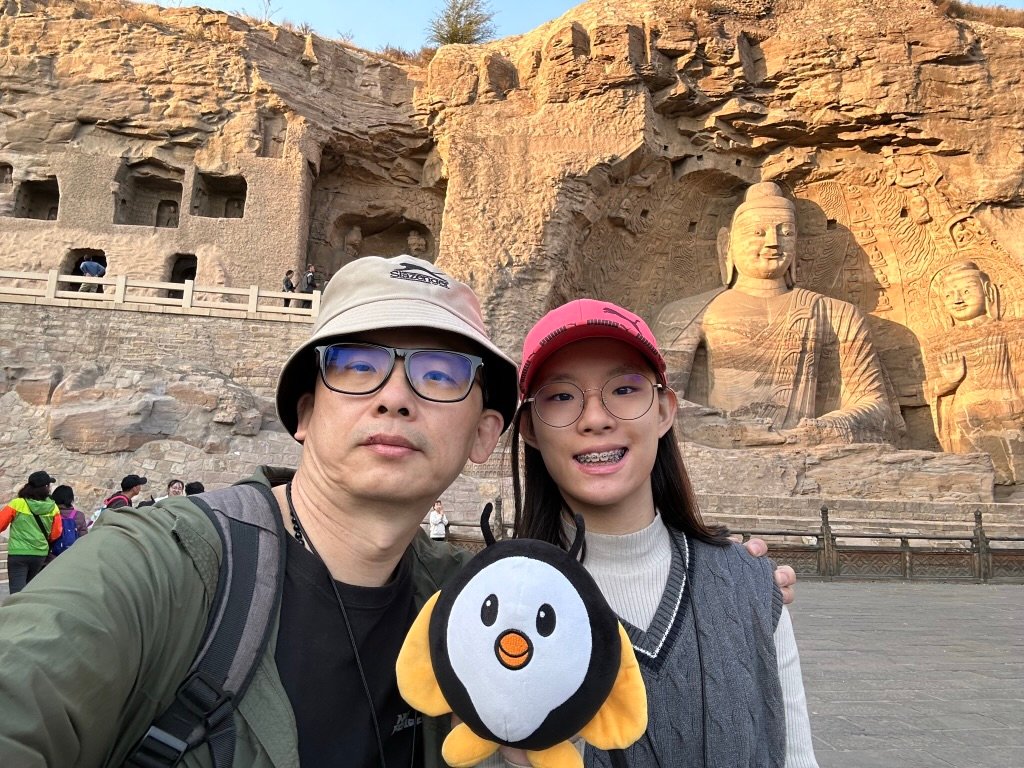
And who sponsored their creation?
Northern Wei rulers.
The ruling elite had Tuoba Xianbei origins.
🔥
So now the same broad northern-frontier world that first looked like:
“China versus outsiders”
has produced rulers who are:
governing northern China,
patronizing Buddhism,
building monumental religious art,
and:
participating in the transformation of Chinese civilization.
That’s a very different story.
🌶️ Frontier Peoples Didn’t Just Attack China
They also:
changed China.
And China changed them.
That’s important.
The old-fashioned story sometimes sounds like:
outsiders arrive
↓
adopt Chinese civilization
↓
become Chinese
↓
end.
😂
Modern historical scholarship treats these processes much more carefully.
There could be:
adaptation,
intermarriage,
political borrowing,
language change,
religious exchange,
institutional change
and:
new hybrid identities.
The frontier wasn’t simply where China stopped.
Sometimes it was where:
new forms of China were being created.
🔥🔥🔥
🐇 Then Come the Khitan
Several centuries later:
the Khitan (契丹, Qìdān)
established the:
Liao dynasty (辽朝, Liáo Cháo).
Again:
not simply:
raiders outside China.
The Liao governed a sophisticated state spanning different populations and environments.
And Dad & Elaine have already met their world too.
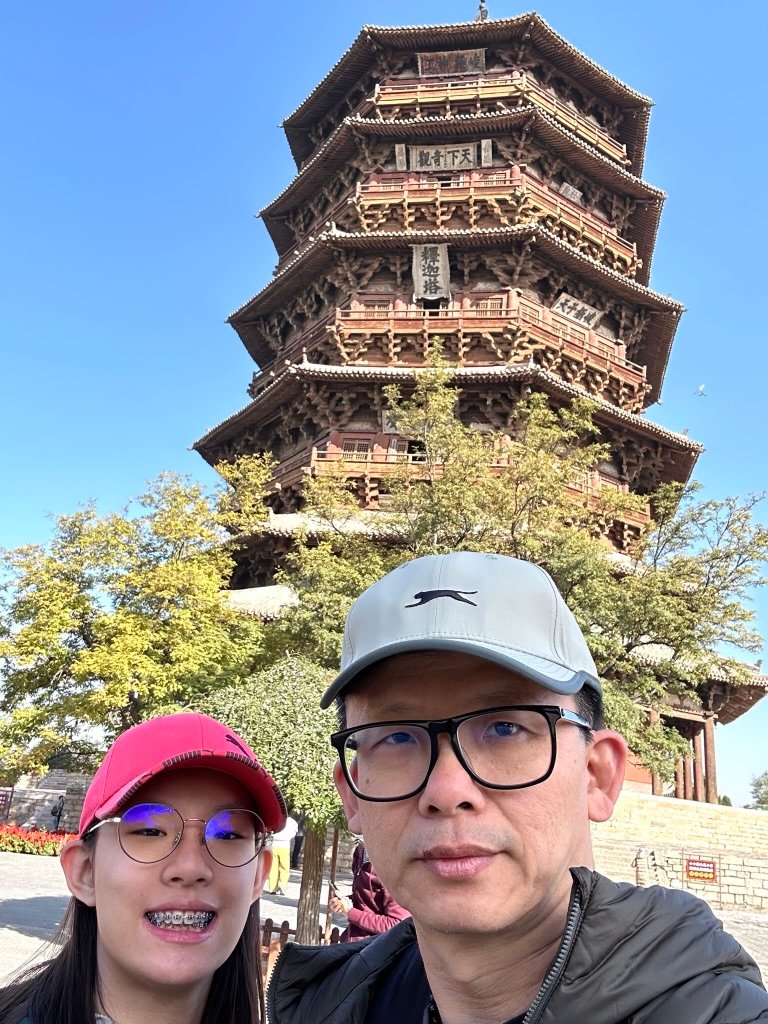
Where?
Yingxian Wooden Pagoda (应县木塔, Yìngxiàn Mùtǎ).
Built in:
1056
during the Liao dynasty.
🔥
A magnificent Buddhist wooden structure.
Khitan rulers.
Chinese architectural traditions.
Buddhism.
Northern China.
Everything is mixing again.
😂 And the Khitan Give Us “Cathay”
Here’s one of Dad’s favorite rabbit holes.
The name:
Khitan (契丹, Qìdān)
traveled westward through Eurasian languages.
Forms derived from the Khitan name eventually gave Western languages:
Cathay
— an old European name for China.
😳
So:
Cathay Pacific
has a linguistic rabbit hole leading all the way back toward:
the Khitan.
😂
You’re welcome.
Now try forgetting them.
🐇 Then Mongols Rule China
Fast-forward again.
Mongols (蒙古, Měnggǔ)
establish the:
Yuan dynasty (元朝, Yuán Cháo).
Now one of the peoples emerging from the wider Inner Asian world doesn’t merely cross the northern frontier.
They rule:
all of China
within a much larger Mongol imperial system.
And suddenly our original Great Wall question has mutated into:
If people from beyond earlier Chinese frontiers can become emperors of China, what exactly does “inside” and “outside” mean?
🌶️🌶️🌶️🌶️
That question deserves its own Big Questions article later.
But the Great Wall has already opened the door.
And Then the Manchus Do It Again
In the seventeenth century:
the Manchus (满洲, Mǎnzhōu)
conquer Beijing and establish the:
Qing dynasty (清朝, Qīng Cháo)
which rules from:
1644 to 1912.
Think about that from the perspective of the wall.
The Ming had invested enormously in northern frontier defenses.
Then a dynasty founded by people originating beyond the Ming’s northeastern political frontier came to rule China.
😳
Walls can shape history.
They cannot freeze it.
🔥
🍚 So Did the Great Wall “Fail”?
Careful.
That’s another tempting simplification.
A fortification doesn’t need to create an eternally impenetrable border to have military value.
Walls can:
delay movement,
channel movement,
protect particular corridors,
support garrisons,
improve surveillance,
control passes
and:
buy time.
Whether they work depends on:
troops,
supplies,
leadership,
politics,
terrain
and:
the enemy.
A wall without people and institutions behind it is:
just masonry.
🔥
🌶️ The Bigger Lesson: Frontiers Change BOTH Sides
Now we can finally return to Dad’s agrarian–pastoral question from Section 1.
Yes:
different ecological zones mattered.
Yes:
settled agricultural states faced recurring challenges from highly mobile mounted powers.
Yes:
walls were one response.
But centuries of frontier interaction also produced:
exchange.
Military techniques moved.
People moved.
Religions moved.
Goods moved.
Political institutions changed.
And ruling elites themselves changed.
🔥
So the northern frontier wasn’t simply:
a defensive edge of Chinese civilization.
It was also:
one of the places where Chinese civilization kept changing.
That’s a much more interesting Great Wall story.

🐞 Sting Check
You started at the Great Wall outside Beijing thinking:
“China built this to keep invaders out.”
Now you’ve acquired:
Warring States walls
↓
Qin
↓
Xiongnu (匈奴)
↓
war + diplomacy + trade
↓
heqin (和亲)
↓
Wang Zhaojun (王昭君)
↓
Yanmenguan (雁门关)
↓
Xianbei (鲜卑)
↓
Northern Wei (北魏)
↓
Yungang Grottoes (云冈石窟)
↓
Khitan (契丹)
↓
Liao (辽)
↓
Yingxian Wooden Pagoda (应县木塔)
↓
Cathay
↓
Mongols → Yuan
↓
Manchus → Qing
😬
That is a very long journey from:
“big wall keeps people out.”
😂
Now Go Back to the Great Wall
Imagine you’re standing again at:
Mutianyu (慕田峪, Mùtiányù)
or:
Badaling (八达岭, Bādálǐng)
outside Beijing.
The stones haven’t changed.
The mountains haven’t changed.
But hopefully:
YOU are seeing something different.
The wall is no longer merely:
China’s giant barrier against outsiders.
It becomes evidence of:
changing frontiers,
different political worlds,
military adaptation,
ecological differences,
conflict,
diplomacy,
migration
and:
cultural exchange.
🔥
And perhaps the most important lesson is this:
The Great Wall marked frontiers. It never completely sealed China from the world beyond them.
People crossed.
Ideas crossed.
Religions crossed.
Armies crossed.
Rulers crossed.
And sometimes…
the people who crossed the frontier eventually sat on the Chinese throne.
😳🔥🐇🐞
Section 3 — See the Great Wall Differently
So what should a first-time traveler actually take from all this?
Not:
“I need to memorize the Xiongnu, Xianbei, Khitan and every dynasty before visiting the Great Wall.”
😂
Absolutely not.
Remember just four things.
1. The Great Wall Isn’t One Wall
What we call the:
Great Wall (长城, Chángchéng)
is a changing system of walls, passes, towers and fortifications constructed and rebuilt across many centuries.
The spectacular sections most travelers visit around Beijing today are largely associated with the:
Ming dynasty (明朝, Míng Cháo).
So when somebody says:
“Qin Shi Huang built the Great Wall.”
your new answer is:
“Well… it’s more complicated than that.”
🐇
Congratulations.
You’ve been stung.
😂
2. Think “Frontier,” Not Simply “Border”
The wall didn’t permanently divide:
CHINESE
from:
FOREIGNERS.
Ancient frontiers were much more fluid.
There was:
warfare (战争, zhànzhēng),
trade (贸易, màoyì),
diplomacy (外交, wàijiāo),
migration (迁徙, qiānxǐ),
and:
cultural exchange (文化交流, wénhuà jiāoliú).
The wall could restrict and channel movement.
It couldn’t stop history.
🔥
3. The Great Wall Was Part of a System
When you’re standing on the wall, look beyond the bricks.
Look at:
mountains (山, shān)
passes (关, guān)
watchtowers (敌楼, dílóu)
beacon towers (烽火台, fēnghuǒtái)
and the routes through the landscape.
Then remember:
Yanmenguan Pass (雁门关, Yànménguān).
Walls mattered.
But so did:
terrain,
soldiers,
communications,
supplies
and:
control of movement.
That’s how you begin seeing the Great Wall as:
a frontier-defense system
rather than one impossibly long piece of masonry.
4. The People Beyond the Wall Were Part of China’s Story Too
This may be the biggest lesson.
The northern frontier brought Chinese states into contact with peoples including:
Xiongnu (匈奴, Xiōngnú),
Xianbei (鲜卑, Xiānbēi),
Khitan (契丹, Qìdān),
Mongols (蒙古, Měnggǔ)
and:
Manchus (满洲, Mǎnzhōu).
Some fought Chinese dynasties.
Some traded with them.
Some influenced them.
Some established dynasties themselves.
🔥
So the frontier wasn’t merely where:
China ended.
It was also one of the places where:
China kept changing.
🐇 If You’ve Been Stung…
Your first China trip may take you to the Great Wall outside Beijing.
Excellent.
But now perhaps another place has appeared on your map:
Yanmenguan Pass (雁门关, Yànménguān)
in:
Shanxi (山西, Shānxī).
And Yanmenguan may lead you to:
Datong (大同, Dàtóng)
↓
Yungang Grottoes (云冈石窟, Yúngāng Shíkū)
↓
Northern Wei (北魏)
↓
Xianbei (鲜卑)
↓
Yingxian Wooden Pagoda (应县木塔)
↓
Khitan (契丹)
↓
another question…
🐇🐇🐇
That’s how it starts.
😂

ChinaTravelBUG’s Take
By all means, go to the Great Wall.
For a first trip to Beijing, it’s one of those experiences we wouldn’t want you to miss.
Take the photograph.
Climb the watchtower.
Look across the mountains.
But before you leave, ask:
“Why did people keep building walls here?”
That one question turns a famous tourist attraction into a doorway to:
geography,
warfare,
frontier societies,
trade,
migration
and:
Chinese history itself.
And if you return home wanting to know who the Xianbei were…
or why a Khitan dynasty built one of the world’s great surviving wooden pagodas…
then our work here is done.
You’ve been stung. 🐞
And there’s another rabbit hole waiting.
🐇🔥
See the place. Ask the bigger question. Understand China better.
🐇 Go Deeper: The Next Big Question
China built walls to control its frontiers. But did those walls really isolate China from the world?
Read next: Michelin Course 2: Was China Really Isolated Behind the Great Wall? →