Section 1 — Fifteen Years?! Then Why Is Qin Shi Huang Such a Giant in Chinese History?
You’re standing in front of:
Terracotta Warriors (兵马俑, Bīngmǎyǒng)
outside:
Xi’an (西安, Xī’ān).
Thousands of soldiers.
Horses.
Chariots.
One of the greatest archaeological discoveries of the twentieth century.
And all of them belonged to the enormous mausoleum complex of:
Qin Shi Huang (秦始皇, Qín Shǐhuáng)
the:
First Emperor (始皇帝, Shǐ Huángdì).
You’ve probably already heard:
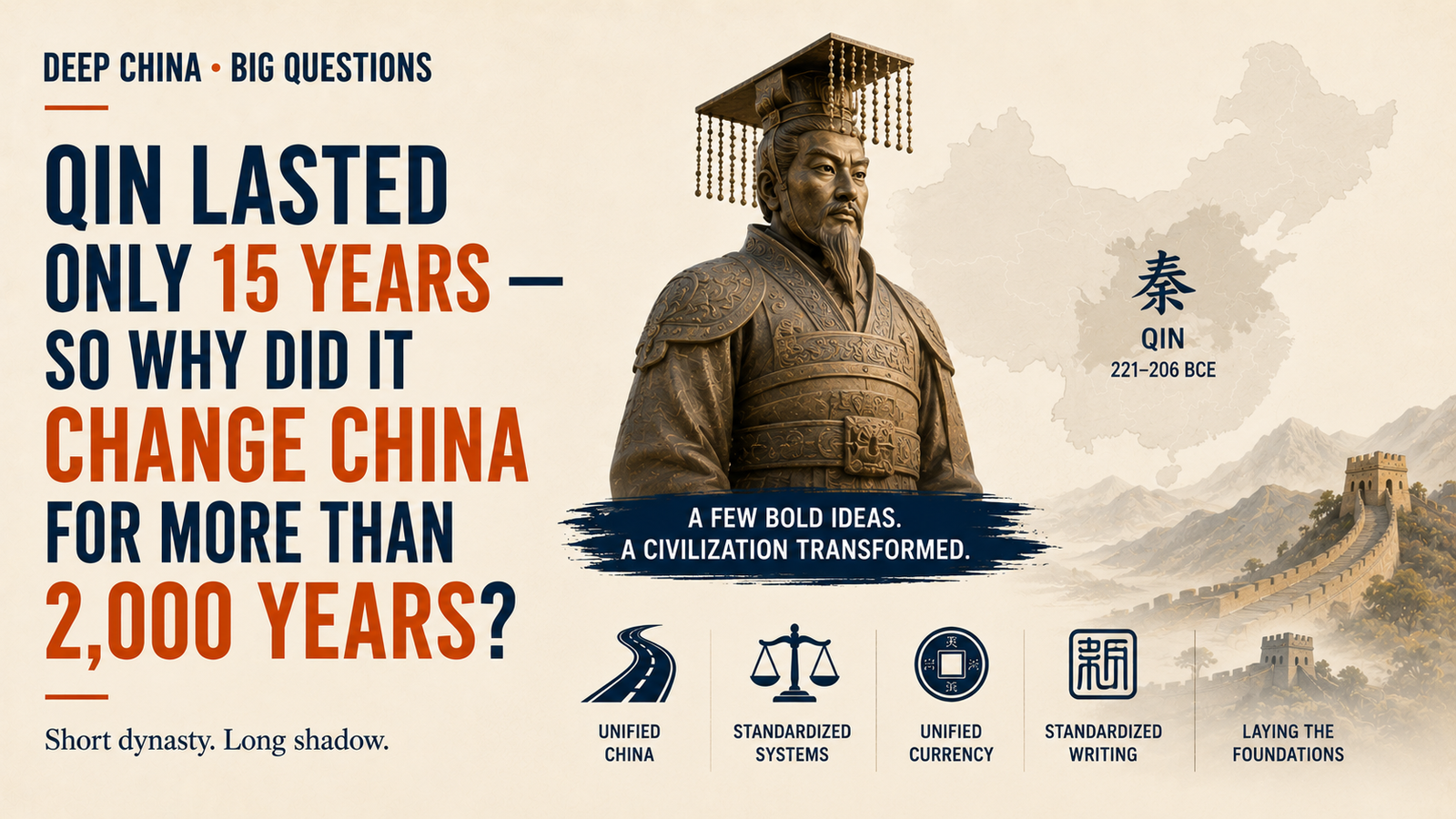
Qin Shi Huang unified China in 221 BCE.
Course 6 explained what that actually meant.
But now Dad has another inconvenient question.
😂
Qin dynasty begins:
221 BCE.
Qin dynasty ends:
206 BCE.
Wait.
FIFTEEN YEARS?!
😭😂
All those wars.
All that unification.
All those clay soldiers.
All those enormous construction projects.
And the dynasty barely survives longer than some people’s mortgages?
So why is Qin Shi Huang still one of the biggest names in Chinese history?
🔥
🕰️ First: Put the Problem on the Timeline
230–221 BCE
The:
State of Qin (秦国, Qín Guó)
conquers the six rival Warring States.
↓
221 BCE
unification (统一, tǒngyī)
King Zheng of Qin becomes:
First Emperor (始皇帝).
↓
210 BCE
Qin Shi Huang dies.
↓
209 BCE
Major rebellion erupts.
↓
207 BCE
The Qin ruler surrenders.
↓
206 BCE
The Qin imperial order has collapsed amid rebellion and warfare.
↓
Eventually:
HAN DYNASTY (汉朝, Hàn Cháo)
206 BCE–220 CE
emerges from the struggle.
😳
Compare:
QIN — about 15 years
with:
HAN — more than four centuries
interrupted by the short-lived Xin dynasty (新朝, Xīn Cháo).
So perhaps the better question is:
If Qin’s system was so important, why did Qin collapse so quickly?
And then:
Why didn’t the victors simply throw the whole Qin system away?
🐇🐇🐇
THAT is Course 7.
First: Qin Changed the Political Scale
Before:
221 BCE
the political world had been dominated by competing:
states (国, guó).
Qin conquered them.
Then Qin tried to govern the conquered realm under:
one emperor (皇帝, huángdì)
through a much more centralized territorial system.
🔥
Remember:
commanderies and counties (郡县, jùnxiàn).
Instead of simply restoring six defeated royal houses and saying:
“Congratulations. Everybody go back to being separate kingdoms.”
Qin expanded direct imperial administration.
That was a huge political transformation.
🐇 The Emperor Himself Was New
Before Qin Shi Huang:
king (王, wáng)
was the great royal title.
After unification, King Zheng created:
Huangdi / Emperor (皇帝, Huángdì).
And called himself:
First Emperor (始皇帝, Shǐ Huángdì).
Beginner Chinese:
始 — shǐ
beginning / first
皇帝 — huángdì
emperor
🔥
Qin Shi Huang wasn’t announcing:
“I’m the latest king.”
He was announcing:
a new kind of supreme rulership.
And later Chinese rulers continued using:
皇帝
for more than two millennia.
That’s already quite a legacy for a fifteen-year dynasty.
🌶️ Qin Tried to Make the Empire Work as One System
Course 6 introduced Qin’s famous programs involving:
written forms (文字, wénzì)
weights and measures (度量衡, dùliànghéng)
currency (货币, huòbì)
roads (道路, dàolù)
and:
territorial administration (地方行政, dìfāng xíngzhèng).
The basic problem was obvious.
Conquest gives you:
territory.
It does not automatically give you:
integration.
🔥
Qin tried to turn conquered states into:
one governable imperial realm.
That distinction matters.

🍚 Western Handrail: Winning the War Isn’t the Same as Building the Country
Imagine seven political systems have just been forced under one government.
You now need:
officials,
taxation,
laws,
records,
transport,
communication
and:
compatible standards.
Otherwise:
one map
doesn’t necessarily equal:
one functioning state.
😂
Qin’s importance lies partly in trying to solve that second problem.
But Then Qin Went Too Far
Now comes the other side.
The Qin state was extraordinarily good at:
mobilization (动员, dòngyuán).
It could mobilize:
soldiers (士兵, shìbīng),
laborers (劳役, láoyì),
taxes (赋税, fùshuì),
materials,
and:
administrative resources.
🔥
That’s how you get:
major roads,
frontier works,
imperial palaces,
and:
the enormous mausoleum of Qin Shi Huang (秦始皇陵, Qín Shǐhuáng Líng).
But enormous state capacity can become:
enormous state pressure.
🌶️
🏺 Look at the Terracotta Warriors Again
The:
Terracotta Army (兵马俑)
is breathtaking.
But don’t see only:
art.
Ask:
How much labor did this require?
How much material?
How many workshops?
How much organization?
How much food to support the workers?
🔥
The mausoleum complex demonstrates the extraordinary ability of the Qin state to:
mobilize people and resources.
That’s impressive.
But now ask:
How did the people being mobilized feel about it?
😬
Different perspective.
🌶️ Qin’s Strength Became Part of Its Weakness
Historical sources portray Qin rule as imposing:
heavy labor obligations,
military service,
tax burdens,
and:
strict penal law.
The empire was also trying to consolidate newly conquered territories at enormous speed.
Then:
Qin Shi Huang died in 210 BCE.
🔥
And succession became a disaster.
🐇 The First Emperor Wanted Ten Thousand Generations
There’s an almost perfect historical irony here.
Qin Shi Huang imagined:
First Emperor (始皇帝)
↓
Second Emperor (二世皇帝, Èrshì Huángdì)
↓
Third Emperor
↓
and onward through:
ten thousand generations (万世, wànshì).
😳
In reality:
First Emperor
↓
Second Emperor
↓
Qin collapses.
😭😂
History has a sense of humor.
A cruel one.
👑 Meet Qin Er Shi
Qin Shi Huang’s successor became:
Qin Er Shi (秦二世, Qín Èrshì)
Second Emperor of Qin.
His reign began amid palace intrigue and manipulation involving powerful figures including:
Zhao Gao (赵高, Zhào Gāo).
The new regime lacked the authority and political control of the First Emperor.
Meanwhile:
resentment was already widespread.
Then came rebellion.
🔥
🐇 Two Men Are Late
One of the most famous stories begins in:
209 BCE.
Two military conscripts:
Chen Sheng (陈胜, Chén Shèng)
and:
Wu Guang (吴广, Wú Guǎng)
were leading men toward assigned service.
According to the traditional account, bad weather delayed them.
Under Qin law, failure to arrive on time could bring severe punishment.
So the logic became:
If we’re going to die anyway…
😬
Rebel.
🌶️ “Are Kings and Generals Born That Way?”
Chen Sheng is traditionally associated with one of the most famous rebellious lines in Chinese history:
王侯将相宁有种乎?
Wáng hóu jiàng xiàng nìng yǒu zhǒng hū?
Very roughly:
“Are kings, nobles, generals and ministers born to their positions?”
🔥🔥🔥
You don’t need to memorize it.
But it’s a fantastic glimpse into the social explosion occurring beneath Qin rule.
The rebellion spread.
Other forces joined the struggle.
And the new empire began falling apart.
⚠️ But One Rebellion Didn’t Single-Handedly Destroy Qin
Important.
Don’t reduce the collapse to:
“Two angry peasants overthrew Qin.”
😂
The fall involved:
multiple rebellions,
regional forces,
former aristocratic interests,
military leaders,
court instability
and:
political fragmentation.
Two figures eventually became especially important:
Xiang Yu (项羽, Xiàng Yǔ)
and:
Liu Bang (刘邦, Liú Bāng).
🐇
Now we’re heading toward Han.
🐇 Liu Bang Was Not Born an Emperor
This is another wonderful contrast.
Liu Bang (刘邦)
came from a relatively modest background and served as a low-ranking local official before becoming a rebel leader.
Eventually:
he won.
And became:
Emperor Gaozu of Han (汉高祖, Hàn Gāozǔ)
founder of the:
Han dynasty (汉朝).
🔥
Qin’s First Emperor had tried to create an imperial line lasting forever.
Within a few years of Qin’s collapse…
a man from a very different social background sat at the top of the empire.
Chinese history has moved again.
🍚 So Han Rejected Qin?
Here’s the surprising answer:
NOT ENTIRELY.
🔥🔥🔥
This is the key to the entire course.
Han rulers criticized aspects of Qin rule.
They adjusted policies.
They changed institutions.
They initially combined:
commandery-county administration (郡县)
with:
enfeoffed kingdoms (封国, fēngguó).
They didn’t simply recreate Qin unchanged.
But they also did NOT return completely to the fragmented Warring States political world.
🔥
The:
imperial framework survived.
That’s the great Qin paradox.
🌶️ Qin Failed. The Empire Didn’t.
Read that again.
QIN DYNASTY FAILED.
But:
THE IDEA OF A UNIFIED IMPERIAL ORDER SURVIVED.
🔥🔥🔥
That may be Qin Shi Huang’s most consequential historical legacy.
The next successful ruling house didn’t say:
“The empire was a terrible idea. Let’s restore seven independent states.”
Instead:
Han inherited, modified and stabilized much of the imperial framework.
That is why Course 7 isn’t really:
“Qin was amazing.”
It’s:
“Why did later rulers preserve so much of the political transformation Qin had created?”

🐞 Sting Check
You started Section 1 asking:
“Fifteen years?! Why does Qin matter?”
Now you’ve acquired:
emperor (皇帝)
↓
commanderies and counties (郡县)
↓
standardization
↓
state mobilization (国家动员)
↓
labor service (劳役)
↓
Qin Shi Huang’s death
↓
Qin Er Shi (秦二世)
↓
Chen Sheng (陈胜)
↓
Wu Guang (吴广)
↓
rebellion (起义, qǐyì)
↓
Xiang Yu (项羽)
↓
Liu Bang (刘邦)
↓
Han dynasty (汉朝).
😬
And now we’ve reached the real question:
What did Han KEEP from Qin—and what did Han CHANGE?
Because THAT is how a fifteen-year dynasty leaves a legacy lasting far beyond fifteen years.
🔥🐇🐞
Section 2 — Han Didn’t Restore the Old World: It Kept the Empire and Changed the Recipe
At the end of Section 1, Qin had collapsed.
Qin dynasty (秦朝, Qín Cháo)
221 BCE
↓
206 BCE
↓
GONE.
😭😂
The:
Han dynasty (汉朝, Hàn Cháo)
eventually emerged from the civil wars that followed.
Its founder:
Liu Bang (刘邦, Liú Bāng)
became:
Emperor Gaozu of Han (汉高祖, Hàn Gāozǔ).
Now imagine the decision facing the new rulers.
Qin had just collapsed spectacularly.
So perhaps Han should simply:
throw away everything Qin created
and return to the old political world.
Except…
that’s NOT what happened.
🔥
Han criticized Qin.
Han changed Qin.
Han softened important aspects of Qin government.
But Han also preserved major features of:
the unified imperial order (大一统帝国秩序, dàyītǒng dìguó zhìxù).
That’s why Qin’s fifteen years matter so much.
🕰️ First: Qin Falls, Han Does Not Turn the Clock Back
Before Qin:
Warring States (战国, Zhànguó)
↓
multiple rival kingdoms.
Then:
QIN
↓
one emperor
↓
centralized territorial administration
↓
unification.
Then Qin collapses.
What does Han do?
Not:
BACK TO SEVEN WARRING STATES.
🔥
Instead, the Han rulers retain the basic idea that:
one emperor (皇帝, huángdì)
should rule:
one imperial political realm.
That is the first enormous Qin legacy.
🌶️ The Title 皇帝 Survives
Remember what Qin Shi Huang created after the conquest of 221 BCE:
emperor (皇帝, huángdì).
Qin collapses.
Does Liu Bang return to:
king (王, wáng)?
No.
He becomes:
皇帝 — emperor.
🔥
That alone tells us something important.
The dynasty changed.
The new conception of supreme imperial rulership:
survived.
For the next two thousand years, rulers of successive Chinese dynasties would continue using:
皇帝.
Qin disappeared.
The emperor remained.
🐇 Han Also Kept Counties and Commanderies
Remember:
commandery (郡, jùn)
and:
county (县, xiàn).
Qin had greatly expanded direct territorial administration through:
commanderies and counties (郡县, jùnxiàn).
Han retained this system across substantial parts of the empire.
But here’s the important correction:
Han did NOT simply copy Qin perfectly.
Early Han also established:
kingdoms (王国, wángguó)
granted to members of the imperial family and others.
So early Han government contained a mixture of:
direct imperial administration
and:
regional kingdoms.
🔥
History rarely says:
CTRL+C → CTRL+V.
😂
🍚 Western Handrail: Keep the Operating System, Change Some Settings
Dangerous analogy.
But Dad likes it.
😂
Think:
Qin creates a new:
imperial operating system.
It crashes spectacularly.
Han arrives.
Does Han reinstall:
Warring States 7.0?
No.
😂
Han keeps important parts of the imperial framework…
then:
modifies,
adjusts,
softens
and:
develops
them.
That’s much closer to what happened.
🌶️ And the Han Learned From Qin’s Failure
Early Han rulers faced a very obvious historical warning:
Don’t become Qin 2.0.
😂
Qin had become associated with:
heavy labor obligations (徭役, yáoyì),
harsh punishments (严刑, yánxíng),
enormous mobilization,
and:
intense demands on the population.
Early Han rulers reduced some burdens and adopted comparatively lighter policies in important areas.
This doesn’t mean:
Qin = evil, Han = nice.
Too simple.
But Han rulers were operating in the shadow of:
Qin’s very recent collapse.
🔥
The lesson was impossible to ignore.
🐇 Then Confucianism Enters the Imperial State
Now another huge historical development.
Under Qin, thinkers and policies later associated with:
Legalism (法家, Fǎjiā)
had been particularly influential.
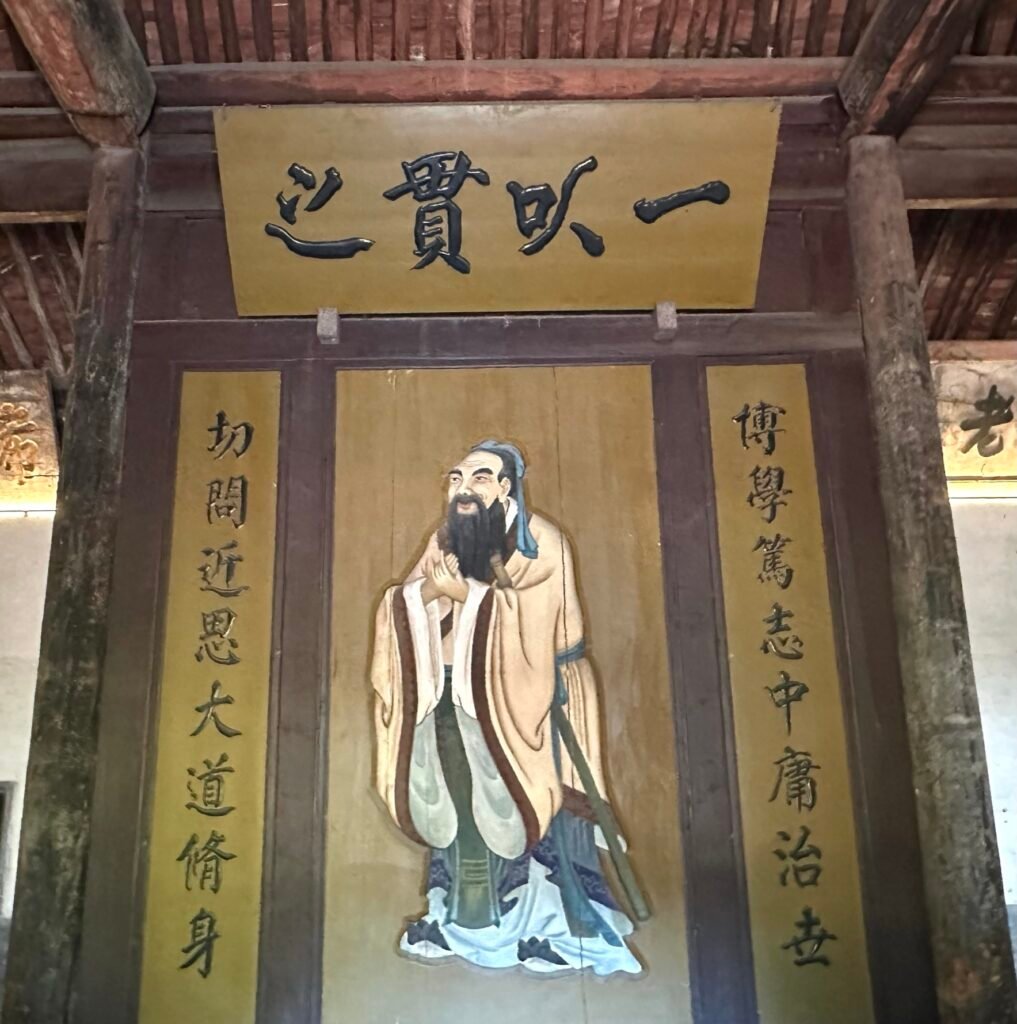
During Han, especially under:
Emperor Wu of Han (汉武帝, Hàn Wǔdì)
reigned 141–87 BCE
the imperial state increasingly promoted:
Confucian learning (儒学, rúxué).
🔥
Now don’t turn this into:
Qin = Legalist
↓
Han = Confucian
↓
done.
😂
Han government continued using:
law,
bureaucracy,
administrative control,
and institutions with important pre-Han and Qin precedents.
But Confucian political and ethical learning became increasingly influential in the ideological world of the imperial state.
🌶️ This Creates One of Imperial China’s Great Combinations
Here’s a useful beginner’s handrail.
The later imperial tradition could combine:
centralized government
with:
Confucian political ideals.
🔥
The state needs:
laws (法, fǎ),
officials (官, guān),
administration (行政, xíngzhèng),
taxes (赋税, fùshuì),
and:
punishments (刑, xíng).
But rulers and officials also speak about:
virtue (德, dé),
ritual (礼, lǐ),
benevolent government (仁政, rénzhèng),
and:
proper relationships.
Now Course 5 and Course 7 have started talking to each other.
🐇
🐇 Qin + Zhou + Han Begin Mixing
Look at what has happened.
From:
Zhou (周)
later political culture inherits enormously influential ideas about:
Heaven (天),
Mandate of Heaven (天命),
ritual (礼),
and:
legitimate rulership.
↓
From the Warring States world come intense debates about:
government,
law,
war,
administration
and:
human behavior.
↓
Qin creates:
a new unified imperial order.
↓
Han:
inherits + modifies + stabilizes.
🔥🔥🔥
Chinese imperial civilization isn’t one dynasty inventing everything.
It is:
historical layering.
That’s the Michelin lesson.
👑 And Han Lasts Long Enough to Make the System Stick
This matters enormously.
Qin:
15 years.
Han, counting Western and Eastern Han around the interruption of Wang Mang’s Xin dynasty:
more than four centuries.
😳
That’s enough time for:
institutions to develop,
administrative habits to deepen,
imperial political culture to mature,
and:
the idea of a unified empire to acquire enormous historical weight.
🔥
Qin created the dramatic break.
Han gave the imperial system:
durability.
🐇 And “Han” Becomes Much Bigger Than a Dynasty Name
Here’s another rabbit hole first-time travelers should know.
Han dynasty (汉朝, Hàn Cháo)
eventually gives us one of the most important identity terms in modern China:
Han Chinese (汉族, Hànzú).
😳
That does NOT mean:
everyone living under the Han dynasty instantly became today’s Han ethnic group.
History and identity formation are much more complicated.
But the fact that:
汉 — Hàn
became such an enduring cultural and ethnic label tells you something about the dynasty’s enormous historical prestige.
🔥
Qin gives modern China its English name through a commonly proposed historical linguistic connection?
Careful — debated enough that Dad is NOT frying that rabbit today.
😂
But:
Han → 汉族
is right in front of us.
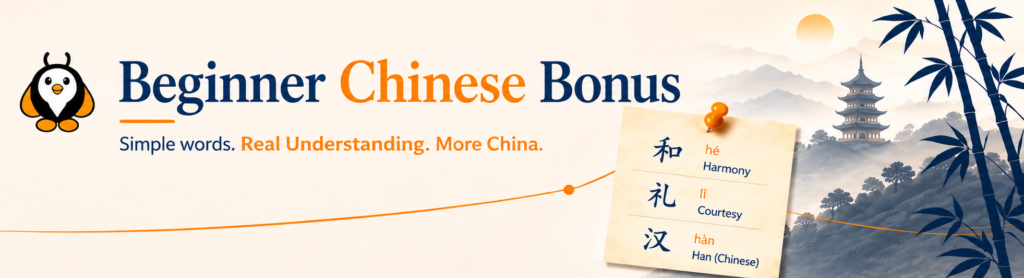
🍚 Beginner Chinese Bonus
You’ll see:
汉 — Hàn
everywhere.
Han dynasty (汉朝, Hàn Cháo)
Han Chinese (汉族, Hànzú)
Chinese language / Mandarin in compounds such as 汉语 (Hànyǔ)
Chinese characters in the term 汉字 (Hànzì).
🔥
One dynasty name became embedded deeply in later Chinese cultural vocabulary.
That’s another reason Han matters enormously.
🌶️ But Unity Did NOT Mean China Stayed United Forever
This is crucial.
Do NOT leave this article thinking:
Qin unified China in 221 BCE.
↓
China remained unified for 2,000 years.
❌
Absolutely not.
After Han eventually collapsed, China experienced long periods of:
division (分裂, fēnliè).
Different states.
Different dynasties.
Northern and southern regimes.
Competing rulers.
Foreign-origin ruling houses.
Political fragmentation.
🔥
Then reunification.
Then division again.
Chinese history is not:
one uninterrupted unified empire.
🐇 Then Why Does Qin Still Matter?
Because after Qin, the possibility of:
one unified imperial order
had become a powerful political precedent.
Later rulers didn’t have to imagine unity from scratch.
There was already a model:
一统天下 — yītǒng tiānxià
unifying All-under-Heaven.
🔥
And later dynasties repeatedly claimed to restore or recreate:
unified rule (统一, tǒngyī).
That doesn’t mean every period valued unity in exactly the same way.
But Qin created a historical benchmark that later political history could not easily forget.
🌶️ Here Is the Real Qin Legacy
Not:
“Everything Qin did lasted unchanged for 2,000 years.”
That would be nonsense.
😂
Instead:
Qin established a powerful imperial precedent.
One supreme emperor.
↓
Territorial administration.
↓
Central authority.
↓
Standardization.
↓
A political ideal of unified rule.
↓
Later dynasties:
adapt it.
modify it.
argue over it.
rebuild it.
🔥
That’s much more historically defensible.
🐇 And Michelin Course 3 Suddenly Makes More Sense
Remember our Forbidden City question?
How did one emperor govern such a huge country?
We traveled:
emperor (皇帝)
↓
central government
↓
officials (官员)
↓
counties (县)
↓
county magistrates (知县).
Now we’ve traveled backward more than:
1,600 years before the Forbidden City
and discovered:
Qin and Han helping establish some of the long-term foundations of that imperial governing tradition.
🔥
The Forbidden City didn’t appear from nowhere.
It sits near the far end of a very long institutional history.
🐇 And Michelin Course 5 Makes More Sense Too
Qin Shi Huang created the title:
emperor (皇帝).
But older political concepts continued:
Son of Heaven (天子)
Mandate of Heaven (天命)
All-under-Heaven (天下).
🔥
So later imperial China combines political traditions from different historical layers.
Again:
Zhou + Warring States + Qin + Han
rather than:
“one founder invented China.”
That’s the deeper picture.
🏺 Now Return to the Terracotta Warriors
Look again at:
Terracotta Warriors (兵马俑).
Before:
Amazing clay army.
After Course 6:
Army of the ruler who conquered the Warring States and created a unified imperial order.
After Course 7:
Army of a dynasty that collapsed almost immediately—but whose imperial transformation was too important for its successors simply to discard.
😳
Same warriors.
Different eyes.
🔥
🐞 Sting Check
You began Section 2 asking:
“What did Han keep?”
Now you’ve acquired:
emperor (皇帝)
↓
commanderies and counties (郡县)
↓
kingdoms (王国)
↓
Qin institutions
↓
Han modification
↓
Legalism (法家)
↓
Confucian learning (儒学)
↓
virtue (德)
↓
ritual (礼)
↓
Emperor Wu of Han (汉武帝)
↓
Han dynasty (汉朝)
↓
Han Chinese (汉族)
↓
division (分裂)
↓
reunification (统一)
↓
unifying All-under-Heaven (一统天下).
😬
That’s how:
a fifteen-year dynasty
can cast a shadow over:
two thousand years of imperial history.
The Bigger Lesson
Qin Shi Huang’s greatest historical significance isn’t that:
everything he created survived unchanged.
It didn’t.
Qin itself proved:
too brittle to survive.
🔥
The more interesting story is:
Qin changed the political possibilities of the Chinese world.
Then Han demonstrated that the imperial framework could be:
modified
stabilized
and:
made durable.
Qin created the breakthrough.
Han made imperial China sustainable.
And together:
Qin–Han (秦汉, Qín–Hàn)
became one of the foundational transformations in Chinese history.
🔥🐇🐞
Section 3 — Go Back to the Terracotta Warriors. Now See Qin Differently.
So what should a first-time traveler remember from all this?
Not:
“Qin invented everything and China remained unchanged for 2,000 years.”
😂
Definitely not.
Remember something much more interesting:
Qin failed as a dynasty.
But:
Qin succeeded in changing the political possibilities of China.
🔥
Then:
Han (汉, Hàn)
took important parts of that new imperial framework…
and made them last.
1. At the Terracotta Warriors: Don’t See Only an Army
When you stand before:
Terracotta Warriors (兵马俑, Bīngmǎyǒng)
look beyond:
soldiers (士兵, shìbīng),
horses (马, mǎ),
chariots (战车, zhànchē)
and:
weapons (武器, wǔqì).
Ask:
“What kind of STATE could create this?”
🐇
Behind the army were:
agriculture (农业, nóngyè),
taxation (赋税, fùshuì),
labor (劳役, láoyì),
workshops (作坊, zuōfang),
officials (官员, guānyuán),
laws (法律, fǎlǜ),
roads (道路, dàolù)
and:
administration (行政, xíngzhèng).
🔥
The Terracotta Army is spectacular.
But the invisible:
state machinery
behind it may be even more historically important.
2. Remember the Qin Paradox
Keep this simple timeline in your head:
221 BCE
Qin Shi Huang (秦始皇) completes the conquest of the rival states.
↓
210 BCE
First Emperor dies.
↓
206 BCE
Qin dynasty collapses.
↓
HAN DYNASTY (汉朝)
emerges.
↓
Han retains and modifies important features of the imperial framework.
🔥
That’s the paradox:
Qin was too short-lived to become a durable dynasty.
Yet:
the unified imperial order proved too important simply to abandon.
3. Qin Gave Later China a Powerful Political Precedent
Qin’s long-term importance lies partly in ideas and institutions such as:
emperor (皇帝, huángdì)
unified rule (统一, tǒngyī)
commanderies and counties (郡县, jùnxiàn)
central authority (中央权力, zhōngyāng quánlì)
and:
standardization (统一规范, tǒngyī guīfàn).
Later dynasties changed these institutions enormously.
China repeatedly experienced:
division (分裂, fēnliè)
as well as:
reunification (统一, tǒngyī).
So there was no:
unchanging Qin system lasting 2,000 years.
😂
What survived was something broader:
the precedent of a unified imperial political order.
🔥
🐇 And Han Is Half the Story
This is why we shouldn’t give Qin Shi Huang all the credit.
Qin created the dramatic transformation.
But:
Han dynasty (汉朝, Hàn Cháo)
helped make the imperial framework:
more durable,
more adaptable,
and:
more deeply rooted.
So perhaps the better historical shorthand is:
Qin–Han (秦汉, Qín–Hàn).
🔥
Qin:
breakthrough.
Han:
consolidation.
Together they helped shape the foundations of the imperial political world that later dynasties repeatedly inherited and transformed.
4. Now Connect Xi’an to Beijing
This is where our Michelin courses begin joining together.
At:
Xi’an / Xianyang (西安 / 咸阳)
we encounter:
Qin Shi Huang
and the creation of the imperial order.
↓
Centuries pass.
Dynasties rise.
Dynasties fall.
China divides.
China reunifies.
↓
Eventually we reach:
Beijing (北京)
and:
the Forbidden City (故宫).
🔥
Remember Course 3?
We asked:
How did one emperor govern such a huge country?
Now you know that the:
emperor (皇帝)
at the Forbidden City stood at the far end of a political tradition whose imperial beginnings take us back toward:
Qin.
😳
Xi’an and Beijing have just connected.
🐇 And Michelin Course 5 Connects Too
At the:
Temple of Heaven (天坛, Tiāntán)
we learned about:
Son of Heaven (天子, Tiānzǐ)
Mandate of Heaven (天命, Tiānmìng)
and:
All-under-Heaven (天下, Tiānxià).
Those ideas take us back toward:
Zhou (周).
Meanwhile:
emperor (皇帝)
takes us toward:
Qin (秦).
🔥
Now look at the coat rack:
ZHOU
Heaven + legitimacy + ritual
↓
WARRING STATES
competition + political experimentation
↓
QIN
unification + emperor + centralized imperial order
↓
HAN
adaptation + consolidation
↓
later imperial China.
😳
This is exactly the basic historical framework we want a first-time traveler to acquire.
🐞 If You’ve Been Stung…
You came to Xi’an because:
Terracotta Warriors.
Of course.
But now perhaps:
Qin Shi Huang
has led you backward to:
Zhouyuan (周原, Zhōuyuán)
and:
Baoji (宝鸡, Bǎojī).
🐇
Then you wonder:
What existed before Zhou?
Uh-oh.
🐇🐇
That leads toward:
Shang dynasty (商朝, Shāng Cháo)
and:
Anyang (安阳, Ānyáng)
with:
Yinxu (殷墟, Yīnxū)
and:
oracle-bone inscriptions (甲骨文, jiǎgǔwén).
Then:
What existed before Shang?
🐇🐇🐇
Now:
Taosi Archaeological Site (陶寺遗址, Táosì Yízhǐ)
appears.
And eventually:
Zhoukoudian (周口店, Zhōukǒudiàn).
😭😂
The Terracotta Warriors have caused a serious problem.
Your Xi’an trip is no longer enough.

ChinaTravelBUG’s Take
Qin Shi Huang deserves his enormous place in Chinese history.
But not because:
“He created everything Chinese.”
He didn’t.
And not because:
“His system remained unchanged for 2,000 years.”
It didn’t.
His significance is more interesting:
Qin transformed a politically divided Warring States world into a unified imperial order—and later dynasties chose to inherit, modify and rebuild much of that imperial framework rather than simply return to the old world.
🔥
The:
Qin dynasty
lasted only:
about fifteen years.
But the political question Qin answered—
Can this vast realm be ruled under one emperor?
—did not disappear with Qin.
For more than two millennia, Chinese rulers would repeatedly confront versions of that question.

🐞 Final Sting
You started with:
Terracotta Warriors (兵马俑).
Then:
Qin Shi Huang (秦始皇)
↓
unification (统一)
↓
emperor (皇帝)
↓
Qin collapse
↓
Liu Bang (刘邦)
↓
Han dynasty (汉朝)
↓
Qin–Han (秦汉)
↓
imperial government
↓
division (分裂)
↓
reunification (统一)
↓
Forbidden City (故宫)
↓
and then…
What came BEFORE all of this?
🐇🐇🐇🐇🐇
Excellent.
Because that’s the final course.
We’re going to take the sentence:
“China has thousands of years of history.”
and ask:
Where should that history actually begin?
Peking Man?
Taosi?
Shang?
Zhou?
Qin?
😈🌶️
Time for dessert.
See the place. Ask the bigger question. Understand China better.
🐇 Go Deeper: The Next Big Question
Qin created China’s first unified imperial state in 221 BCE.
But that raises an even bigger question:
Was that really when “China” began?
Read next: Michelin Course 8: Before China — When Does Chinese Civilization Actually Begin?