From China’s Most Dramatic Yellow Waterfall to the River Behind Some of Its Oldest Civilizations
Section 1 — You Came for the Waterfall. Look at the River.
Dad & Elaine came to:
Hukou Waterfall (壶口瀑布, Húkǒu Pùbù)
for the obvious reason.
It’s spectacular.
Section 1 — You Came for the Waterfall. Look at the River.
Dad & Elaine came to:
Hukou Waterfall (壶口瀑布, Húkǒu Pùbù)
for the obvious reason.
It’s spectacular.
🎥 First, Hear the Yellow River ROAR
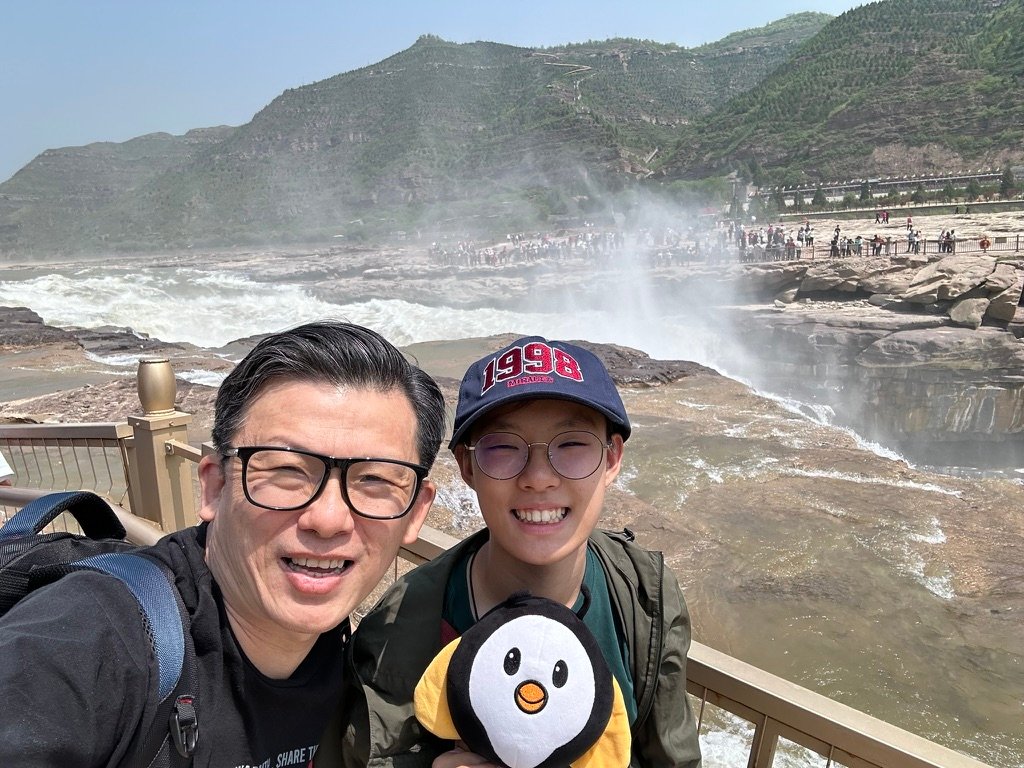
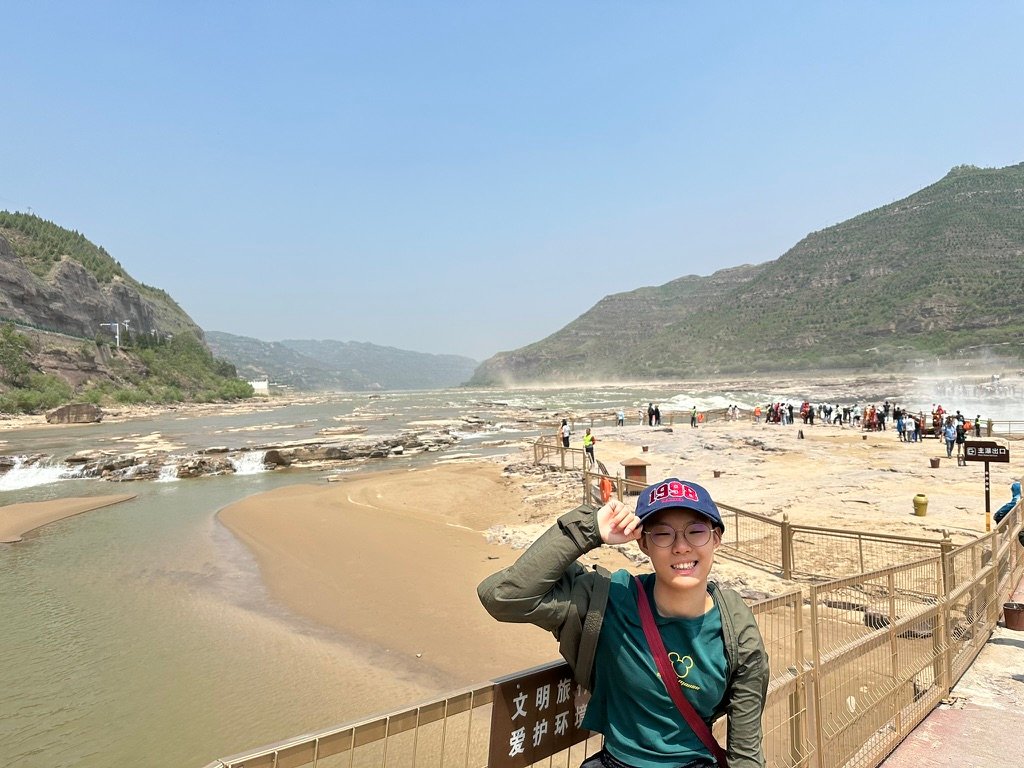
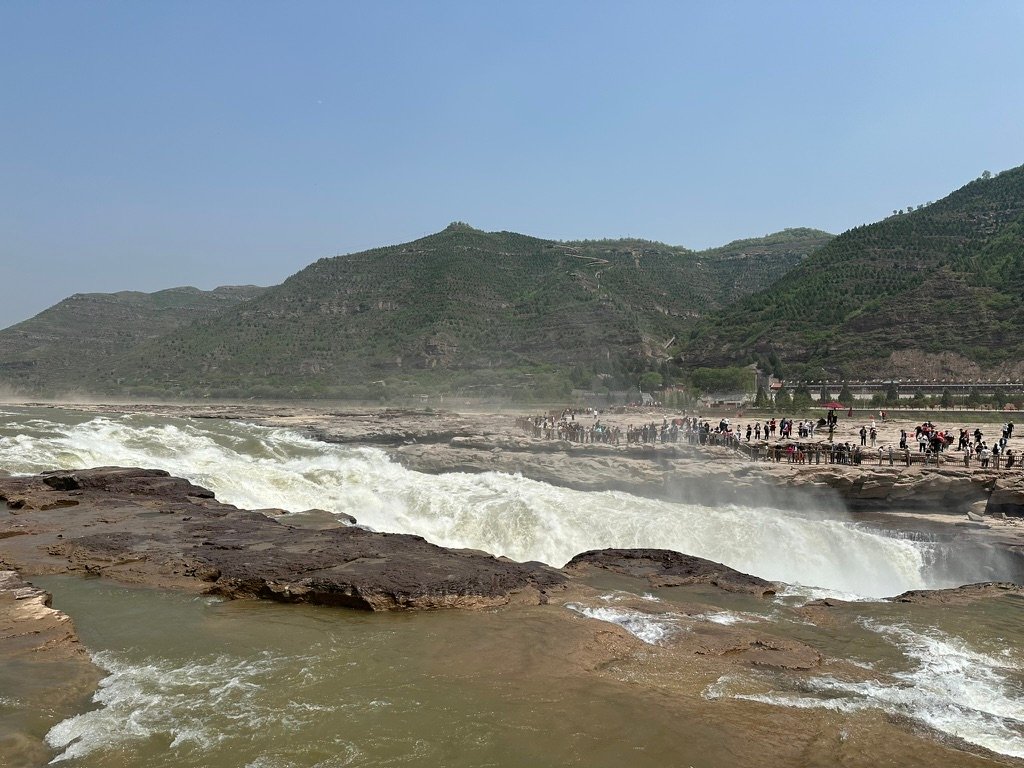
This was Hukou Waterfall from the Shaanxi side when Dad & Elaine visited.
Crowds line the viewing platform.
Mist rises above the gorge.
Across the river, visitors stand on the opposite:
Shanxi (山西, Shānxī)
bank.
And between us…
the:
Yellow River (黄河, Huáng Hé)
is being forced through a dramatically narrowing rocky channel.
🔥
Before Dad starts talking about:
civilization,
archaeology,
floods,
sediment,
Yu the Great,
Taosi,
Shang,
Zhou
and another 27 rabbits…
😂
just:
LOOK AT THE WATER.
And listen to it.
Because the power you’re seeing is the beginning of the question behind this entire article:
WHY HAS THIS RIVER MATTERED SO MUCH TO CHINA?
😂
The:
Yellow River (黄河, Huáng Hé)
comes roaring through a canyon between:
Shanxi (山西, Shānxī)
and:
Shaanxi (陕西, Shǎnxī).
Then the river suddenly narrows.
The water crashes downward.
Spray rises.
The whole landscape seems to shake.
🔥
And naturally, everybody takes the photograph.
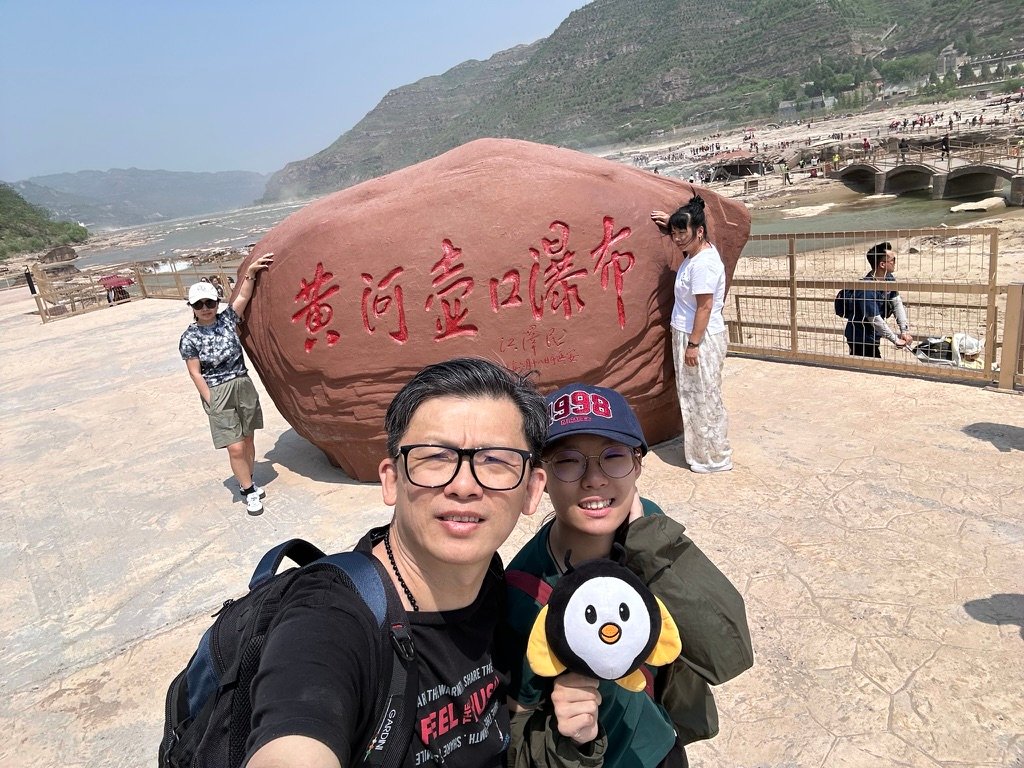
Dad.
Elaine.
Cheers.
And behind us, four extremely useful Chinese characters:
黄河壶口瀑布
Even an HSK beginner can start pulling this apart.
🇨🇳 Beginner Chinese: Read the Sign
黄 — huáng
yellow
河 — hé
river
Together:
黄河 — Huáng Hé
Yellow River
Then:
壶 — hú
pot / kettle
口 — kǒu
mouth / opening
Together:
壶口 — Húkǒu
literally, “kettle mouth” or “pot mouth”
And:
瀑布 — pùbù
waterfall
So:
黄河壶口瀑布
Huáng Hé Húkǒu Pùbù
means:
Yellow River Hukou Waterfall.
🔥
Five useful characters before we’ve even entered the rabbit hole.
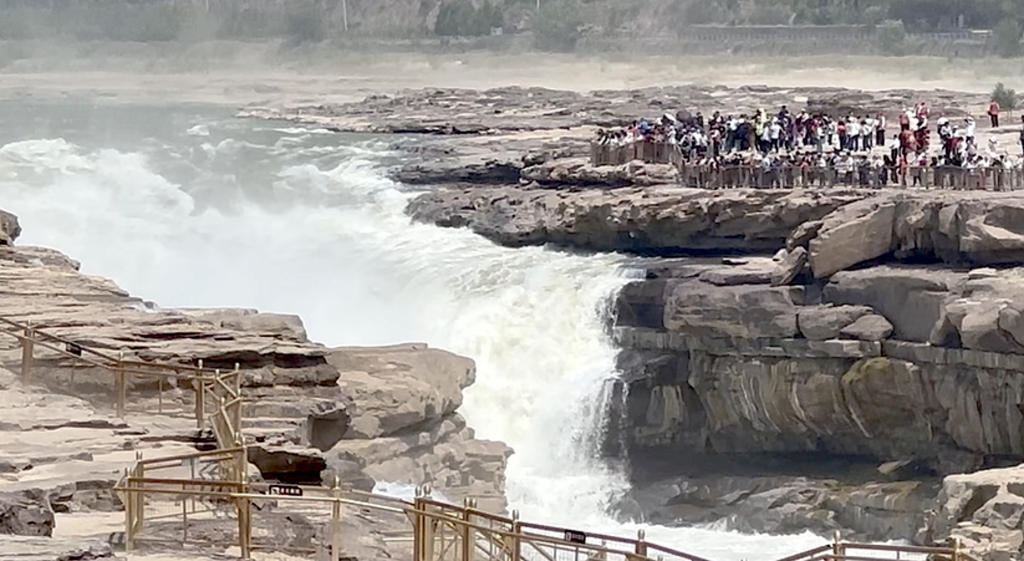
🫖 Why Is It Called “Hukou” — Kettle Mouth?
This one is beautifully visual.
Upstream, the Yellow River is much broader.
At Hukou, steep rock walls constrain the river and force an enormous volume of water into a much narrower channel.
The effect reminded people of water pouring through the mouth of a:
pot / kettle (壶, hú).
Hence:
壶口 — Húkǒu.
🔥
You don’t need to memorize a geological lecture.
Stand there.
Look at the river being squeezed.
Then remember:
壶 + 口 = pot + mouth.
The Chinese name suddenly makes sense.
🌊 And Hukou Sits Between TWO Provinces
Here’s another useful China-travel detail.
The Yellow River at Hukou forms part of the boundary between:
Shanxi (山西)
and:
Shaanxi (陕西).
Yes.
😂
Those are two different provinces.
And yes, their English names look ridiculously similar.
Chinese makes it much easier:
山西 — Shānxī
versus:
陕西 — Shǎnxī.
🔥
Dad & Elaine’s photograph was taken in this dramatic Yellow River border landscape.
On the Shanxi side lies:
Ji County (吉县, Jíxiàn)
in the Linfen area.
On the Shaanxi side lies:
Yichuan County (宜川县, Yíchuān Xiàn)
in the Yan’an area.
The waterfall belongs to:
both sides of the river.
The Ministry of Culture and Tourism describes Hukou as a shared scenic area between Shanxi and Shaanxi.
😂 Wait. Why Is the Yellow River Actually YELLOW?
Now we’re asking the useful question.
The:
Yellow River (黄河)
is famous for carrying enormous amounts of:
sediment (泥沙, níshā).
Beginner Chinese:
泥 — ní
mud
沙 — shā
sand
Together:
泥沙 — níshā
sediment / silt
🔥
Look at Dad’s Hukou photograph again.
That brown-yellow water isn’t:
special-effect lighting.
😂
The river is carrying material eroded from the enormous landscapes through which it flows.
And one landscape matters especially:
Loess Plateau (黄土高原, Huángtǔ Gāoyuán).
🟨 Another Useful 黄 Appears
Now our secret yellow sauce begins.
😂
黄 — huáng
yellow
土 — tǔ
earth / soil
高原 — gāoyuán
plateau
So:
黄土高原 — Huángtǔ Gāoyuán
Loess Plateau
Literally, the Chinese characters give you something close to:
“Yellow-Earth Plateau.”
🔥
The plateau covers a huge area of northern China.
Its fine, easily eroded loess soils have historically contributed enormous quantities of sediment to the Yellow River system.
Chinese environmental authorities identify soil erosion on the Loess Plateau as a major source of the Yellow River’s famous sediment load.
So:
黄土
helps explain:
黄河.
🐇
Yellow earth.
Yellow river.
Now geography is talking to language.
🏔️ But Hukou Isn’t Just a Waterfall
This is where Deep China starts becoming annoying.
😂
You came to photograph:
瀑布 — pùbù — waterfall.
But look around.
You’re standing within the broader landscape of:
Yellow River (黄河)
+
Loess Plateau (黄土高原)
+
Yellow River canyon
+
Shanxi (山西)
+
Shaanxi (陕西).
🔥
And suddenly this isn’t merely:
“a beautiful waterfall.”
It’s a doorway into the geography of:
northern Chinese history.
🐇 Why Does the Yellow River Keep Appearing in Chinese History?
If you start reading Chinese history, the:
Yellow River (黄河)
keeps coming back.
Again.
And again.
And again.
😂
You’ll encounter:
Yellow River basin (黄河流域, Huáng Hé Liúyù)
Central Plains (中原, Zhōngyuán)
Loess Plateau (黄土高原)
floods (洪水, hóngshuǐ)
agriculture (农业, nóngyè)
water control (治水, zhìshuǐ)
and:
early civilization (早期文明, zǎoqī wénmíng).
Why?
Because the Yellow River basin was one of the major regions in which increasingly complex societies developed in prehistoric and early historic China.
🔥
But notice Dad said:
ONE OF.
Not:
THE ONLY ONE.
That’s important.
🌶️ Michelin Guardrail: “Chinese Civilization Began on the Yellow River”
You’ve probably heard:
“The Yellow River is the cradle of Chinese civilization.”
Useful beginner handrail.
But don’t turn it into:
“All Chinese civilization began in one Yellow River valley and then spread everywhere else.”
Too simple.
🔥
Modern archaeology has revealed important early cultural developments across multiple regions of what is now China.
The:
Yellow River basin (黄河流域)
was enormously important.
But so were other regions, including parts of the:
Yangtze River basin (长江流域, Cháng Jiāng Liúyù)
and beyond.
So our better sentence is:
The Yellow River basin was one of the great heartlands in the long, multi-regional development of Chinese civilization.
Less catchy.
Much better history.
😂
🌾 Why Rivers Matter to Early Societies
This isn’t uniquely Chinese.
Early societies often benefited from access to:
water (水, shuǐ),
fertile land (沃土, wòtǔ),
agriculture (农业, nóngyè),
transport (交通, jiāotōng)
and:
settlement (聚落, jùluò).
🔥
Rivers can support life.
But rivers can also:
destroy it.
And few rivers demonstrate that contradiction more dramatically than:
the Yellow River.
😬 The Mother River Could Be a Terrible Mother
The Yellow River is often described in modern Chinese cultural language as:
Mother River (母亲河, Mǔqīn Hé).
Beginner Chinese:
母亲 — mǔqīn
mother
河 — hé
river
So:
母亲河
Mother River
It’s a powerful cultural image.
The river nourished agricultural communities and historical heartlands.
But historically, the Yellow River was also notorious for:
flooding (洪水, hóngshuǐ)
and:
changing course (改道, gǎidào).
🔥
It gave.
It destroyed.
It deposited sediment.
It shifted.
People built:
dikes (堤坝, dībà)
and tried to manage:
water (治水, zhìshuǐ).
Now the Mother River looks much more complicated.
🇨🇳 One Chinese Word Worth Remembering: 治水
治 — zhì
govern / manage / control
水 — shuǐ
water
Together:
治水 — zhìshuǐ
water control / water management
🔥
That little word is going to become very important.
Because once you start asking:
“Who controlled the floods?”
an ancient figure walks into the story.
His name is:
Yu the Great (大禹, Dà Yǔ).
🐇
Uh-oh.
🐇 Yu the Great Is Waiting Downstream
Traditional Chinese accounts remember:
Yu the Great (大禹)
for controlling a catastrophic flood.
And Yu becomes associated with:
Xia dynasty (夏朝, Xià Cháo).
😬
Now look what our simple waterfall has done.
Hukou Waterfall
↓
Yellow River
↓
flooding
↓
water control (治水)
↓
Yu the Great (大禹)
↓
Xia (夏)
↓
Erlitou (二里头).
🐇🐇🐇🐇
Dad hasn’t even finished Section 1.
😭😂
🌶️ STOP. History Versus Tradition.
Before we fall in:
Deep China guardrail.
The traditional stories about:
Yu the Great
and:
Xia
are enormously important in Chinese historical tradition.
But archaeology doesn’t allow us simply to say:
“A flood happened, archaeologists found it, therefore Yu the Great has been proven.”
No.
🔥
Remember our Michelin rule:
tradition (传说, chuánshuō)
is one kind of evidence.
historical texts (史料, shǐliào)
are another.
archaeology (考古学, kǎogǔxué)
is another.
They can:
talk to each other.
But they aren’t automatically:
the same thing.
🐇 And Dad & Elaine Have Already Followed the River Into Archaeology
This is where the trip gets personal.
The Yellow River story eventually takes us toward places Dad & Elaine have already explored.
For example:
Taosi Archaeological Site (陶寺遗址, Táosì Yízhǐ)
in:
Shanxi (山西).
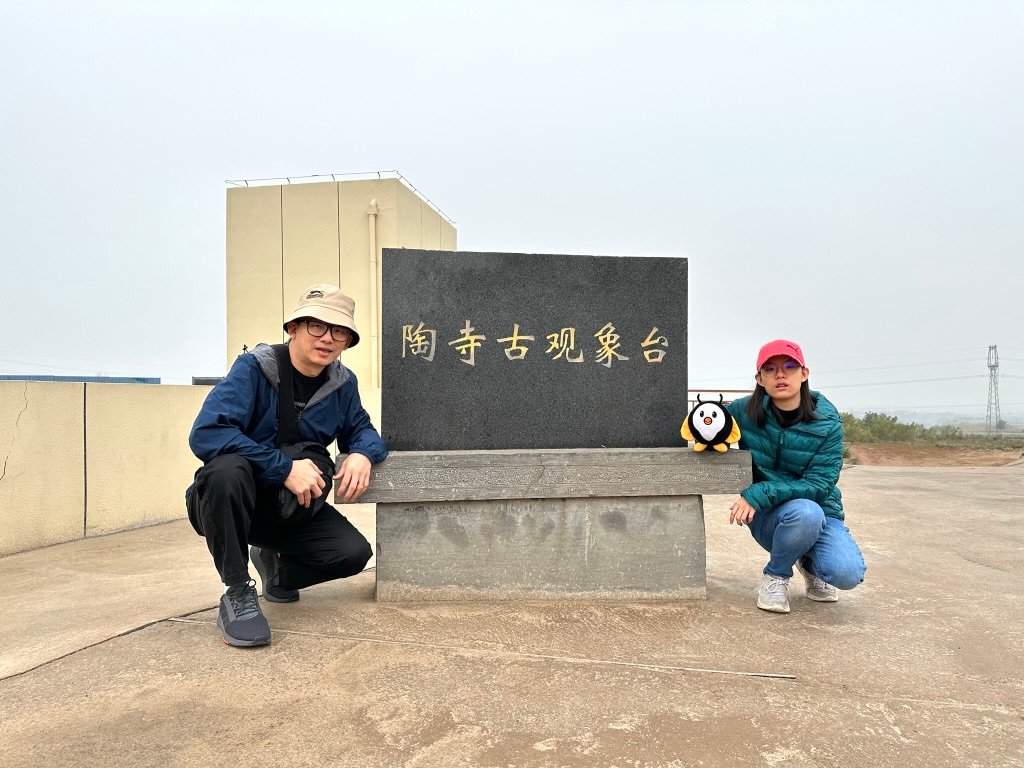
There, archaeology reveals a large and socially complex late Neolithic settlement.
Then farther downstream:
Anyang (安阳, Ānyáng)
and:
Yinxu (殷墟, Yīnxū)
bring us into the world of the:
Shang dynasty (商朝, Shāng Cháo)
and:
oracle-bone inscriptions (甲骨文, jiǎgǔwén).
🔥
Now the Yellow River isn’t simply:
scenery.
It becomes:
a geographical thread connecting some of the places where we investigate China’s early civilizations.
📍 And One Big Stop Is Still Waiting
On Dad & Elaine’s future Deep China list:
Erlitou (二里头, Èrlǐtóu)
near:
Luoyang (洛阳, Luòyáng).
🔥
Erlitou is one of the most important archaeological sites for understanding early Bronze Age political complexity in China.
And, inevitably:
the Xia question
is waiting there.
🐇
That’s another trip.
Another article.
Another rabbit hole.

🐞 That’s the First Sting
You came to:
Hukou Waterfall (壶口瀑布)
thinking:
“Wow. Look at that yellow water.”
Then:
yellow water
↓
sediment (泥沙)
↓
Loess Plateau (黄土高原)
↓
Yellow River (黄河)
↓
Mother River (母亲河)
↓
agriculture (农业)
↓
flood (洪水)
↓
water control (治水)
↓
Yu the Great (大禹)
↓
Xia (夏)
↓
Erlitou (二里头)
↓
Taosi (陶寺)
↓
early Chinese civilization (早期中华文明).
😬
All because Dad stopped looking at:
the waterfall
and started looking at:
the river.
🔥
🟨 And Then Another 黄 Appears…
One final thing.
You’ve spent this whole section learning:
黄河 — Huáng Hé
Yellow River
and:
黄土 — huángtǔ
yellow earth / loess.
But Chinese stories about civilization’s beginnings contain another extremely famous:
黄.
😬
黄帝 — Huángdì
Yellow Emperor.
Same:
黄 — huáng.
So…
Was the Yellow Emperor named after the Yellow River?
🐇
Don’t answer yet.
😂
Different 黄.
Different story.
And an entirely different kind of evidence.
That’s our next fried-rice dish.
Section 2 — The “Mother River” Didn’t Create China Alone
At:
Hukou Waterfall (壶口瀑布, Húkǒu Pùbù),
the:
Yellow River (黄河, Huáng Hé)
is impossible to ignore.
It’s loud.
Brown-yellow.
Powerful.
And very physical.
But somewhere between Hukou and the history books, the river becomes something else:
Mother River (母亲河, Mǔqīn Hé).
🔥
That’s no longer merely geography.
It’s:
cultural memory (文化记忆, wénhuà jìyì).
So why did this particular river become so closely associated with the beginnings of Chinese civilization?
🌾 Start With the River Basin
The useful phrase is:
黄河流域 — Huáng Hé Liúyù
Yellow River basin
Beginner Chinese:
流 — liú
flow
域 — yù
region / area
So:
流域 — liúyù
river basin / drainage basin
🔥
Across parts of the Yellow River basin, prehistoric communities developed increasingly sophisticated forms of:
agriculture (农业, nóngyè),
settlement (聚落, jùluò),
craft production (手工业, shǒugōngyè),
social organization (社会组织, shèhuì zǔzhī)
and eventually:
large political centers.
But this didn’t happen overnight.
And it certainly didn’t begin with:
an emperor.
🐇 Before Dynasties, There Were Archaeological Cultures
This is one of the most useful distinctions for beginners.
When we move far enough backward, we can’t simply keep saying:
“Which dynasty was this?”
😂
Archaeologists instead identify material patterns and archaeological cultures through things such as:
pottery (陶器, táoqì),
burials (墓葬, mùzàng),
settlements (聚落),
tools (工具, gōngjù)
and:
architecture (建筑, jiànzhù).
One name you’ll encounter frequently in the Yellow River story is:
Yangshao Culture (仰韶文化, Yǎngsháo Wénhuà).
Another is:
Longshan Culture (龙山文化, Lóngshān Wénhuà).
🔥
These names aren’t dynasties.
They are archaeological classifications used to understand prehistoric societies.
That’s a very useful coat hook.
🇨🇳 Beginner Chinese: 文明 Is Bigger Than 王朝
Two words worth separating:
文明 — wénmíng
civilization
and:
王朝 — wángcháo
dynasty
They are NOT the same thing.
🔥
Civilization can develop across:
many communities,
many regions,
many centuries
and:
different political systems.
So asking:
“When did Chinese civilization begin?”
is much harder than asking:
“When did the Qin dynasty begin?”
🐇
That’s exactly why we built a whole Big Question around it.
🏺 Now Follow the Yellow River Toward Taosi
Dad & Elaine have already followed this rabbit hole to:
Taosi (陶寺, Táosì)
near:
Linfen (临汾, Línfén)
in:
Shanxi (山西).
🔥
Taosi belongs to the late Neolithic world of the Yellow River region.
Archaeological work there has revealed a large settlement with evidence of:
social differentiation,
elite burials,
large-scale architecture,
craft specialization
and:
organized public space.
In other words:
complex society.
🐇 And Then Chinese Tradition Says: Yao 尧
Now things get spicy.
Traditional Chinese historical accounts tell us about:
Emperor Yao (尧, Yáo).
Yao is one of the great sage rulers remembered from China’s remote antiquity.
And later tradition associates Yao strongly with the:
Pingyang (平阳, Píngyáng)
region around modern Linfen.
😳
Taosi is also near Linfen.
So naturally people ask:
“Is Taosi the capital of Yao尧 ?”
🐇🐇🐇
Interesting question.
But:
archaeology cannot currently put a name tag saying 尧 on an excavated ruler.
😂
Taosi is archaeological evidence.
Yao belongs to transmitted historical and legendary traditions.
The relationship between them remains a subject requiring careful interpretation.
🌶️ Deep China Rule: Don’t Force Archaeology to Prove the Legend
This rule is going to save us repeatedly.
传说 — chuánshuō
legend / transmitted story
文献 — wénxiàn
written sources / documents
考古 — kǎogǔ
archaeology
🔥
They can illuminate one another.
But:
传说 ≠ 考古证明
legend ≠ archaeological proof
That’s important for:
Yao (尧),
Yu (禹),
Xia (夏)
and very soon:
Huangdi (黄帝).
😬
Remember that last one.
🐇 Then Comes Erlitou
Travel farther east toward:
Luoyang (洛阳, Luòyáng)
in:
Henan (河南, Hénán),
and we encounter:
Erlitou (二里头, Èrlǐtóu).
Erlitou represents an extraordinarily important early Bronze Age center.
Archaeology has revealed:
large palatial foundations,
elite burials,
bronze production,
road networks
and:
increasing political complexity.
🔥
And then Chinese historical tradition gives us another name:
Xia dynasty (夏朝, Xià Cháo).
Uh-oh.
😂
🌶️ Erlitou = Xia?
You’ll often see:
“Erlitou was the Xia dynasty.”
Be careful.
Many Chinese scholars have connected Erlitou with the historical Xia tradition, and the chronological and geographical relationship makes the question extremely important.
But there is still no securely deciphered contemporary written evidence from Erlitou saying:
“We are Xia.”
🔥
So for Deep China:
Erlitou is central to investigating the historical problem of Xia, but the archaeological culture and the dynasty named in later texts should not simply be treated as automatically identical.
Less exciting than:
“WE FOUND XIA!”
😂
Much better history.
📍 And Erlitou Is Still Waiting for Us
Dad & Elaine haven’t visited:
Erlitou (二里头)
yet.
It’s on our planned:
Zhengzhou → Erlitou → Luoyang → Kaifeng
Deep China journey.
🔥
So this particular rabbit hole remains:
OPEN.
When we get there, we’ll bring back:
the photographs,
the museum,
the archaeological landscape
and inevitably:
more questions.
🐇
🏺 Then We Reach Firmer Historical Ground at Anyang
Now move farther through the Yellow River world toward:
Anyang (安阳, Ānyáng)
in northern Henan.
Dad & Elaine have been there.
And here something changes.
At:
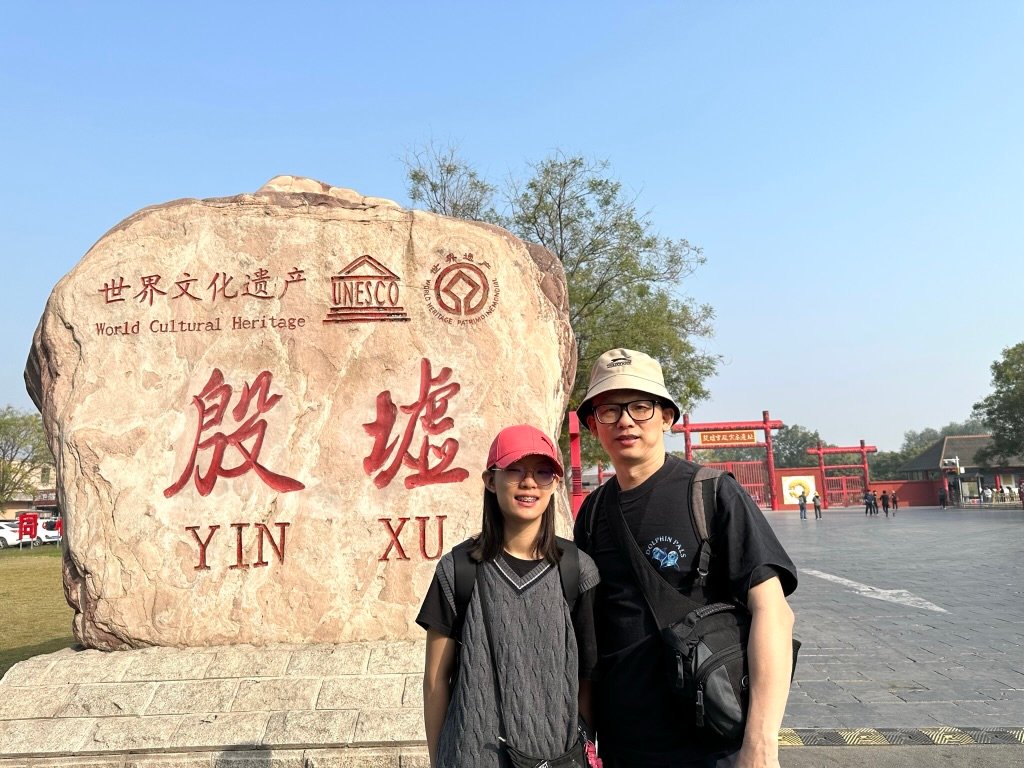
Yinxu (殷墟, Yīnxū)
we enter the late:
Shang dynasty (商朝, Shāng Cháo).
And now we have something enormously important:
writing (文字, wénzì).
🔥
Specifically:
oracle-bone inscriptions (甲骨文, jiǎgǔwén).
🇨🇳 Beginner Chinese: 甲骨文
甲 — jiǎ
shell / armor; here associated especially with turtle plastrons
骨 — gǔ
bone
文 — wén
writing / script / pattern, depending on context
So:
甲骨文 — jiǎgǔwén
oracle-bone inscriptions
🔥
These inscriptions give us contemporary written evidence from the late Shang royal world.
Now rulers have:
names.
Places have:
names.
Rituals appear in:
contemporary writing.
We have crossed an important evidentiary threshold.
🐇 This Is Why Anyang Feels Different From Taosi
At:
Taosi
we have extraordinary archaeology.
At:
Erlitou
we have extraordinary archaeology.
At:
Yinxu
we have:
archaeology + contemporary writing.
🔥🔥🔥
That’s why historians can speak about late Shang political history with a different kind of confidence.
Not because everything suddenly becomes easy.
😂
But because the evidence changes.
📸 Dad & Elaine Followed the Writing Too
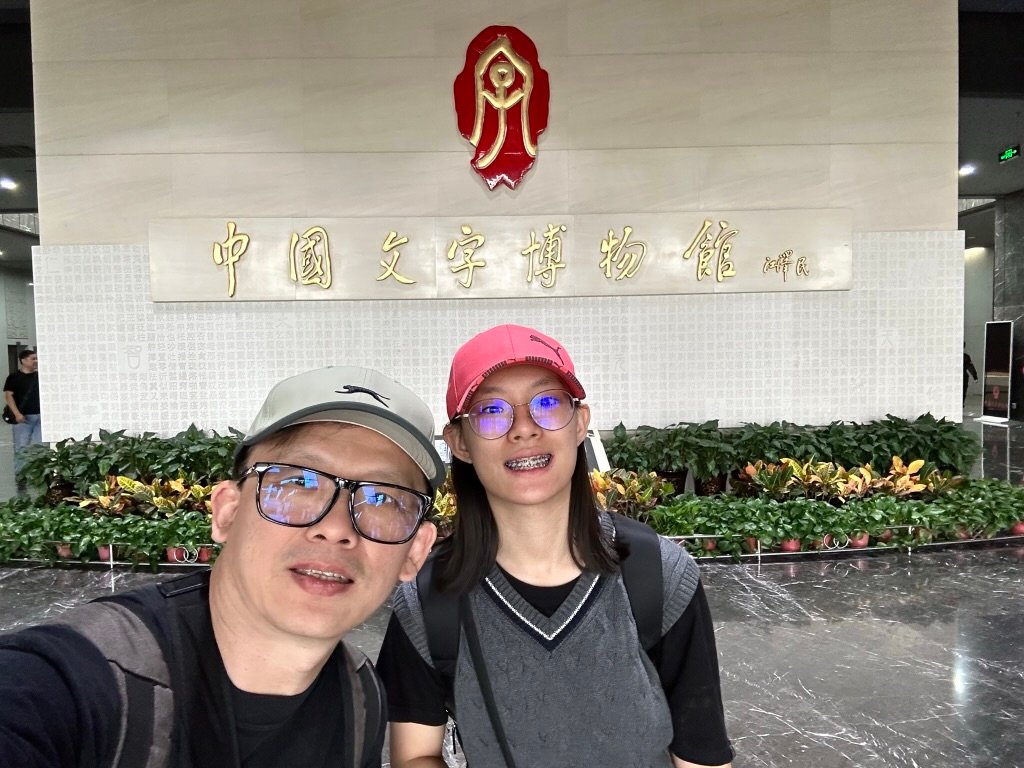
At Anyang, Dad & Elaine also visited:
National Museum of Chinese Writing (中国文字博物馆, Zhōngguó Wénzì Bówùguǎn).
Beginner Chinese:
中国 — Zhōngguó
China
文字 — wénzì
writing / written characters
博物馆 — bówùguǎn
museum
🔥
That’s another beautiful Deep China connection:
Yellow River
↓
early settlements
↓
complex societies
↓
Shang
↓
oracle bones
↓
Chinese writing.
One river has now taken us very far from Hukou.
😂
👑 Then Zhou and Qin Enter the Story
After Shang comes:
Zhou dynasty (周朝, Zhōu Cháo).
Dad & Elaine followed that story toward:
Baoji (宝鸡, Bǎojī)
and:
Zhouyuan (周原, Zhōuyuán).
There we encountered:
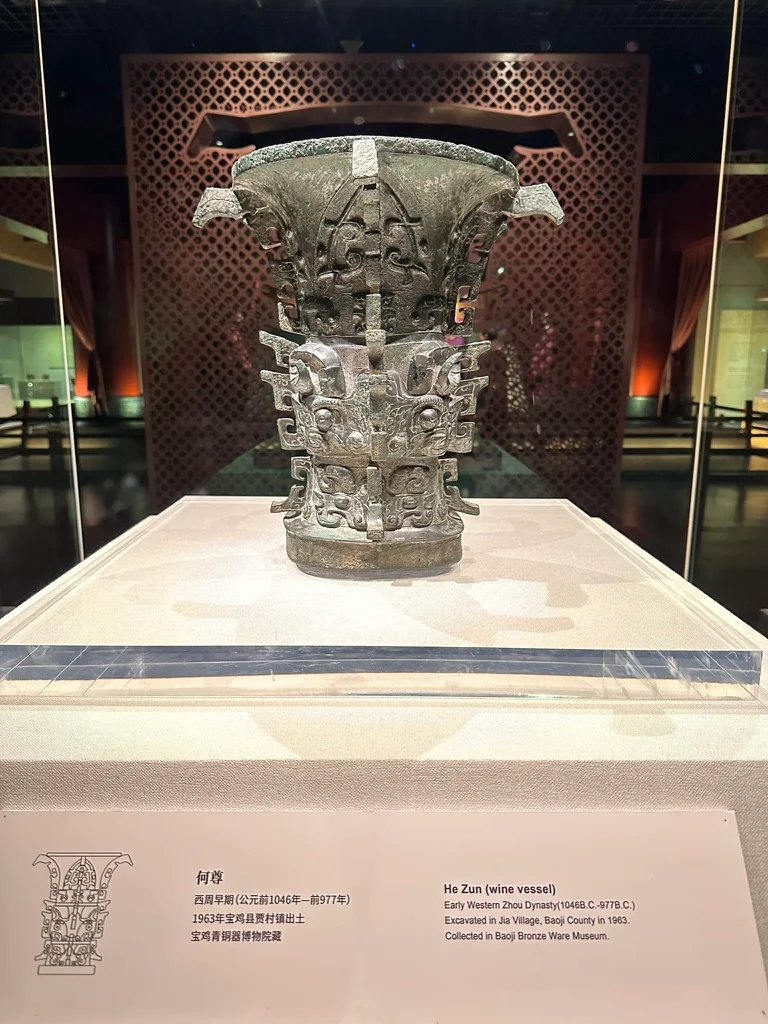
Duke of Zhou (周公, Zhōugōng)
and:
He Zun (何尊, Hé Zūn).
🔥
Then eventually:
Qin (秦)
rises from the western political world.
↓
Qin Shi Huang (秦始皇)
↓
221 BCE
↓
unification (统一, tǒngyī).
And suddenly the Yellow River story has carried us from:
prehistoric villages
to:
China’s first imperial unification.
😳
🌶️ But Don’t Turn This Into “Yellow River = China”
This is where we need our strongest guardrail.
The Yellow River basin was:
enormously important.
But Chinese civilization developed through interactions among:
multiple regions (多元区域, duōyuán qūyù).
Archaeology has revealed major prehistoric centers far beyond the Yellow River heartland.
Think:
Liangzhu Culture (良渚文化, Liángzhǔ Wénhuà)
in the lower Yangtze region.
🔥
Its sophisticated jade culture, large settlement, water-management system and social hierarchy make it impossible to tell China’s beginnings as:
“Everything started beside the Yellow River.”
🧩 A Better Chinese Phrase: 多元一体
Here’s a useful expression:
多元一体 — duōyuán yītǐ
Very roughly:
many origins/elements, one integrated whole.
🔥
The phrase has particular intellectual and modern historical contexts, so we shouldn’t casually turn it into an archaeological law.
But as a beginner’s handrail, it helps us remember:
Chinese civilization developed through multiple regional traditions that increasingly interacted and became connected.
That’s much closer to the archaeological picture than:
one river created everything.
🌊 Yellow River + Yangtze River
So keep two enormous rivers in your head:
黄河 — Huáng Hé
Yellow River
and:
长江 — Cháng Jiāng
Yangtze River
Beginner Chinese:
长 — cháng
long
江 — jiāng
river
So:
长江
literally, “Long River.”
🔥
Two rivers.
Different environments.
Different archaeological traditions.
Increasing interaction over very long periods.
Now China’s beginnings look:
multi-regional
rather than:
single-source.
🐇 So Why Call the Yellow River “Mother River”?
Now we can answer more carefully.
Not because:
every Chinese person literally descends from one ancient community beside this river.
And not because:
all Chinese civilization began here and nowhere else.
🔥
The Yellow River became deeply associated with:
important prehistoric cultures,
early political centers,
Shang and Zhou history,
the Central Plains
and:
later narratives of Chinese civilization.
Over time it acquired enormous:
historical
and:
symbolic meaning.
That’s why:
母亲河 — Mother River
works as cultural language.
Not as a literal archaeological formula.
🐞 Now Look at Hukou Again
Go back to Dad & Elaine’s photograph.
Behind us:
黄河壶口瀑布.
Before this article:
Big yellow waterfall.
😂
Now:
黄河
means:
geography
↓
黄土高原
↓
泥沙
↓
农业
↓
洪水
↓
治水
↓
陶寺
↓
二里头
↓
殷墟
↓
甲骨文
↓
周
↓
秦.
😬
That’s a lot hiding inside two characters:
黄河.
🟨 But Geography Is Only Half the Origin Story
The river gives us:
the landscape.
Archaeology gives us:
material evidence.
But civilizations also remember their beginnings through:
stories (传说),
ancestors (祖先, zǔxiān)
and:
ritual (祭祀, jìsì).
🔥
And that’s where our second yellow dish enters.
Remember:
黄河 — Yellow River.
Now meet:
黄帝 — Huangdi / Yellow Emperor.
At:
Huangdi Mausoleum (黄帝陵, Huángdì Líng)
in northern Shaanxi, Dad & Elaine encountered:
初祖 — chūzǔ
founding / primordial ancestor
and:
炎黄子孙 — Yán-Huáng Zǐsūn
descendants of Yan and Huang.
😳
Now our question changes completely.
The Yellow River asks:
Where did early civilizations develop?
The Yellow Emperor asks:
How did later Chinese people remember where they came from?
Those are:
NOT the same question.
🔥🔥🔥
And that’s exactly why we need both dishes.
🐞 Halfway Sting Check
You began with:
Mother River (母亲河).
You ended with:
founding ancestor (初祖).
One is:
GEOGRAPHY.
The other is:
CULTURAL MEMORY.
Between them sits:
ARCHAEOLOGY.
😬
And when those three begin talking to each other…
we finally reach the bigger question:
Before “China” — when does Chinese civilization actually begin?
🐇🐇🐇
But before Dad sends you there, Section 3 will bring us back to travel:
Section 3 — How to Visit Hukou Waterfall — and Follow the Yellow River Rabbit Hole
By now Dad has probably ruined your simple waterfall visit.
😂
You came to:
Hukou Waterfall (壶口瀑布, Húkǒu Pùbù)
to see:
water (水, shuǐ).
Now you’re thinking about:
Yellow River (黄河, Huáng Hé),
Loess Plateau (黄土高原, Huángtǔ Gāoyuán),
sediment (泥沙, níshā),
floods (洪水, hóngshuǐ),
water control (治水, zhìshuǐ),
Taosi (陶寺, Táosì),
Erlitou (二里头, Èrlǐtóu)
and:
Chinese civilization (中华文明, Zhōnghuá Wénmíng).
😬
Excellent.
🐞
But let’s return to the travel question.
How do you actually visit Hukou Waterfall?
📍 First: Where Is Hukou Waterfall?
Hukou sits on the:
Yellow River (黄河)
where the river forms the boundary between:
Shanxi (山西, Shānxī)
and:
Shaanxi (陕西, Shǎnxī).
Yes.
Two provinces.
😂
Remember the Chinese and life becomes easier:
山西 — Shānxī
Shanxi
陕西 — Shǎnxī
Shaanxi
On the Shanxi side is:
Ji County (吉县, Jíxiàn)
in the Linfen area.
Across the river on the Shaanxi side is:
Yichuan County (宜川县, Yíchuān Xiàn)
in the Yan’an area.
So when planning your visit, one of your first decisions is:
Which side?
🌊 Shanxi Side or Shaanxi Side?
Both sides look toward the same:
Hukou Waterfall.
But the:
viewing angles,
visitor facilities,
access arrangements
and:
river conditions
can differ.
🔥
And here’s the most important practical point:
Don’t assume you can casually cross the river at the waterfall.
If your China itinerary is already taking you through:
Shanxi
then the Shanxi side may make more logistical sense.
If you’re traveling through:
Yan’an (延安, Yán’ān)
or northern Shaanxi, the Shaanxi side may fit better.
Choose according to:
your route
rather than trying to decide which province has won the:
“BEST HUKOU VIEW”
internet argument.
😂
🚗 This Is One Place Where Road Transport Makes Sense
Hukou isn’t like:
Forbidden City (故宫)
where you step out of the Beijing subway.
Nor is it a simple city-center attraction.
You’re traveling through a more rural:
Yellow River landscape.
🔥
For many international travelers, the easiest option will be:
private car (包车, bāochē)
or:
car + local guide (包车加导游, bāochē jiā dǎoyóu).
Especially if Hukou forms part of a wider Deep China route.
Public transportation options can change, so check current local connections before relying on a specific bus.
🐇 Don’t Travel All This Way for Only 20 Minutes
The waterfall itself doesn’t require:
an entire day of staring at water.
😂
But getting there takes effort.
So build Hukou into:
a route.
That’s where it becomes much more interesting.
For example, if you’re exploring Shanxi, Hukou can connect naturally with:
Linfen (临汾, Línfén)
and the wider historical landscape of southern Shanxi.
And that creates a particularly delicious CTB route:
Hukou Waterfall (壶口瀑布)
↓
Yellow River (黄河)
↓
Linfen (临汾)
↓
Taosi (陶寺).
😳
You begin with:
geography.
You end with:
archaeology.
That’s a very Deep China day.
⏰ How Much Time Should You Allow?
For the waterfall viewing area itself, roughly:
1.5–3 hours
will be enough for many visitors.
That gives you time to:
walk the viewing areas,
see the river from different angles,
take photographs,
read the interpretation
and:
actually look at the landscape.
🔥
But the important number is:
total travel time.
Depending on where you’re coming from, Hukou can involve substantial road travel.
So realistically:
treat Hukou as a half-day or full-day component of a wider itinerary.
Don’t look only at:
“Time needed at attraction.”
Look at:
door-to-door time.
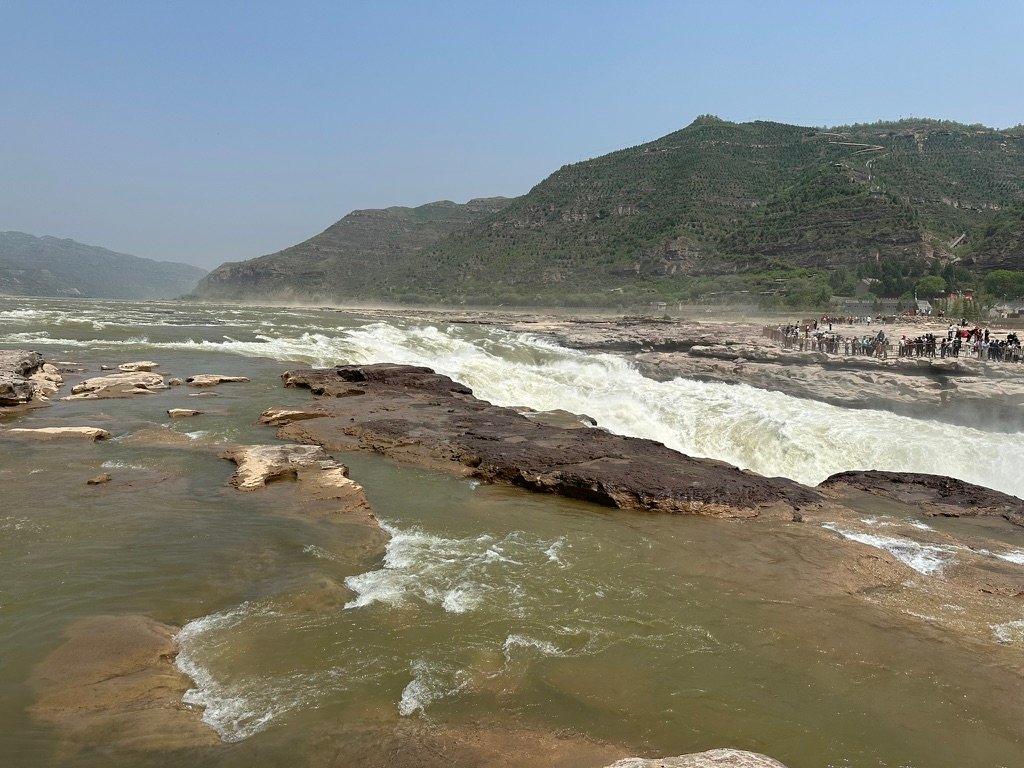
🌦️ Hukou Does NOT Always Look Like Dad’s Photograph
This matters.
The Yellow River is:
a living river.
Water volume changes.
Sediment conditions change.
Season changes.
Weather changes.
🔥
So the Hukou you see may not look exactly like:
Dad & Elaine’s Hukou!
At different times, the waterfall can appear:
broader,
narrower,
more turbulent,
more yellow-brown
or:
dramatically affected by seasonal conditions.
In winter, freezing conditions can create a completely different landscape.
That’s part of the attraction.
⚠️ Respect the River
Hukou is spectacular precisely because:
the water is powerful.
This isn’t the place to chase the perfect selfie by ignoring barriers.
😂
Observe:
safety barriers (安全护栏, ānquán hùlán)
and:
warning signs (警示牌, jǐngshìpái).
Conditions around a large waterfall and canyon can change.
The photograph isn’t worth becoming:
part of the Yellow River.
😭😂
Five Chinese Words to Bring With You
Since we’re already learning Chinese through Deep China, take these to Hukou:
黄河 — Huáng Hé
Yellow River
瀑布 — pùbù
waterfall
泥沙 — níshā
sediment / silt
洪水 — hóngshuǐ
flood
治水 — zhìshuǐ
water control / water management
🔥
If you remember those five, you’ve already learned more useful Chinese from the waterfall than from buying a:
“I ❤️ XI’AN”
fridge magnet.
😂
📸 Dad’s Photo Challenge
Take the obvious photograph.
Of course.
1. THE WATERFALL
Get your Hukou panorama.
Then:
2. THE RIVER
Turn around.
Look upstream and downstream.
Photograph:
黄河
rather than only:
壶口瀑布.
🔥
And:
3. THE LANDSCAPE
Look at:
canyon walls,
sediment,
rock,
plateau landscape
and:
the relationship between river and land.
Because the real subject of this article isn’t:
the waterfall.
It’s:
the river.

🐞 Now You’re Ready for the Sting
Before leaving Hukou, Dad wants you to carry away:
three questions.
Not 37 dates.
Not 14 archaeological cultures.
😂
Three questions.
🐇 QUESTION 1 — Why Is the Yellow River Called China’s “Mother River”?
You’ve now seen:
母亲河 — Mǔqīn Hé.
But remember:
it doesn’t mean:
“All Chinese civilization came from one river.”
The better question is:
How did the Yellow River basin become one of the great heartlands of early Chinese civilization?
That leads toward:
Taosi (陶寺)
Erlitou (二里头)
Anyang / Yinxu (安阳 / 殷墟)
and:
Zhou (周).
🐇
🐇 QUESTION 2 — Why Does Chinese History Keep Talking About Controlling Water?
You learned:
治水 — zhìshuǐ.
Water can support:
agriculture (农业).
But:
洪水 — floods
can destroy communities.
🔥
Then Chinese tradition introduces:
Yu the Great (大禹, Dà Yǔ).
And Yu leads toward:
Xia dynasty (夏朝, Xià Cháo).
Then archaeology gives us:
Erlitou.
😬
Now we have:
legend + history + archaeology.
Exactly the kind of mess Dad enjoys.
😂🐇
🐇 QUESTION 3 — What Does “5,000 Years of Chinese Civilization” Actually Mean?
Ah.
There it is.
🌶️🌶️🌶️
The Yellow River takes us toward:
Neolithic societies,
agriculture,
complex settlements,
early states,
Shang writing,
Zhou political culture
and eventually:
Qin imperial unification.
But different milestones produce:
different starting dates.
So:
When does Chinese civilization actually begin?
That’s not a one-paragraph answer.
Luckily…
Dad has already cooked the Michelin course.
😂

🟨 Ready for the Yellow Rabbit Hole?
And now our secret sauce.
You came to see:
黄河 — Huáng Hé
Yellow River.
You learned about:
黄土 — huángtǔ
yellow earth / loess.
Then Chinese civilization’s origin traditions introduce:
黄帝 — Huángdì
Yellow Emperor.
😳
Same:
黄 — huáng.
But don’t make the beginner mistake:
“The Yellow Emperor must be the emperor of the Yellow River.”
NO.
😂
Same character.
Different historical story.
👑 READ NEXT — The Yellow Emperor
Dad & Elaine followed that second:
黄
to:
Huangdi Mausoleum (黄帝陵, Huángdì Líng)
at:
Qiaoshan (桥山, Qiáoshān)
in northern:
Shaanxi (陕西).
There we encountered:
Xuanyuan Huangdi (轩辕黄帝, Xuānyuán Huángdì)
founding ancestor (初祖, chūzǔ)
and:
Descendants of Yan and Huang (炎黄子孙, Yán-Huáng Zǐsūn).
🔥
But then archaeology creates an awkward question:
What can we actually prove about Huangdi?
And centuries of ceremonies create an even better one:
Why did Huangdi remain such a powerful cultural ancestor even thousands of years later?
🐇🐇🐇
That’s our next Deep China fried-rice dish.
🍽️ THEN — Go Michelin
If the Yellow River has properly stung you:
READ: Before China — When Does Chinese Civilization Actually Begin?
That’s where:
Zhoukoudian (周口店)
↓
Taosi (陶寺)
↓
Erlitou (二里头)
↓
Yinxu (殷墟)
↓
Zhou (周)
↓
Qin (秦)
finally go onto one coat rack.
🔥
And if you want to understand how Qin turned that much older world into an imperial one:
READ: What Did Qin Shi Huang Actually “Unify”?
Another rabbit.
😂

🐞 ChinaTravelBUG’s Take
Absolutely go to Hukou for:
the waterfall.
Stand beside:
黄河壶口瀑布.
Take Dad’s photograph.
Feel the spray.
Hear the roar.
Say:
WOW.
😂
But before you leave…
stop looking only at:
壶口 — Hukou.
Look at:
黄河 — the Yellow River.
Because that river leads toward:
geography (地理),
agriculture (农业),
floods (洪水),
water control (治水),
archaeology (考古),
civilization (文明)
and:
cultural memory (文化记忆).
🔥
One waterfall.
One river.
Several thousand years of questions.
And then another:
黄
appears.
😬
黄帝 — Huangdi.
Time to follow it.
🐞🐇🔥
🐇 Continue the Journey
You’ve followed:
Hukou Waterfall (壶口瀑布, Húkǒu Pùbù)
↓
Yellow River (黄河, Huáng Hé)
↓
Yellow earth (黄土, huángtǔ)
↓
early Chinese civilization (早期中华文明, zǎoqī Zhōnghuá wénmíng).
But there’s another famous:
黄 — huáng
waiting for you.
👑 NEXT: The Yellow Emperor — Why Is Huangdi Called China’s Founding Ancestor?
At:
Huangdi Mausoleum (黄帝陵, Huángdì Líng)
Dad & Elaine encountered:
Xuanyuan Huangdi (轩辕黄帝, Xuānyuán Huángdì),
founding ancestor (初祖, chūzǔ),
Descendants of Yan and Huang (炎黄子孙, Yán-Huáng Zǐsūn),
ancient traditions,
imperial rituals,
and one rather unexpected:
Manchu Qing emperor.
😬🐇
The Yellow River gave us the:
GEOGRAPHY of China’s beginnings.
Now Huangdi gives us the:
MEMORY of China’s beginnings.
👉 READ NEXT: The Yellow Emperor — Why Is Huangdi Called China’s Founding Ancestor?
🐞🐇🔥